Back to blog
Research

Cardano Price Prediction 2027: Layer-1 Research-Driven Analysis

Actionable Cardano price prediction with scenario math, on-chain grades, and a clear TLDR for investors looking at 2027.
Token Metrics Team
7 min read
Want Smarter Crypto Picks—Free?
See unbiased Token Metrics Ratings for BTC, ETH, and top alts.
Thank you! Your submission has been received!
Oops! Something went wrong while submitting the form.
 No credit card | 1-click unsubscribe

Market Context for Cardano Price Prediction: The Case for 2027

The Layer 1 competitive landscape is consolidating as markets recognize that specialization matters more than being a generic "Ethereum killer." Cardano positions itself in this multi-chain world with specific technical and ecosystem advantages. Infrastructure maturity around custody, bridges, and developer tools makes alternative L1s more accessible heading into 2026.

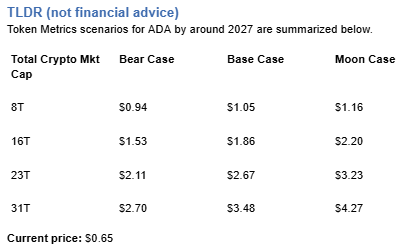
The Cardano price prediction scenario projections below map different market share outcomes for ADA across varying total crypto market sizes. Base cases assume Cardano maintains current ecosystem momentum, while moon scenarios factor in accelerated adoption and bear cases reflect increased competitive pressure. Our comprehensive price prediction framework provides investors with data-driven forecasts for strategic planning.
  

Disclosure

Educational purposes only, not financial advice. Crypto is volatile, do your own research and manage risk.

How to Read This ADA Price Prediction

Each band blends cycle analogues and market-cap share math with TA guardrails. Base assumes steady adoption and neutral or positive macro. Moon layers in a liquidity boom. Bear assumes muted flows and tighter liquidity.

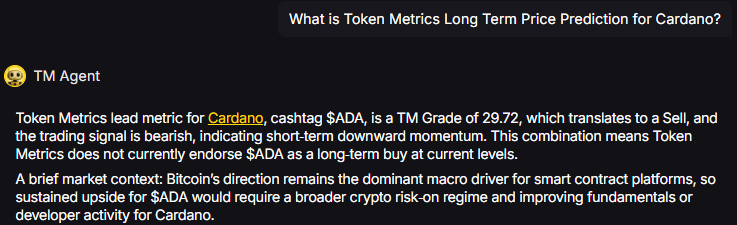
TM Agent baseline: Token Metrics lead metric for Cardano, cashtag $ADA, is a TM Grade of 29.72%, which translates to a Sell, and the trading signal is bearish, indicating short-term downward momentum. This combination means Token Metrics does not currently endorse $ADA as a long-term buy at current levels in our price prediction models. A brief market context: Bitcoin's direction remains the dominant macro driver for smart contract platforms, so sustained upside for $ADA would require a broader crypto risk-on regime and improving fundamentals or developer activity for Cardano.

Live details: Cardano Token Details

Buy ADA on Gemini

Affiliate Disclosure: We may earn a commission from qualifying purchases made via this link, at no extra cost to you.

Key Takeaways: Cardano Price Prediction Summary

  • Scenario driven: Price prediction outcomes hinge on total crypto market cap; higher liquidity and adoption lift the bands
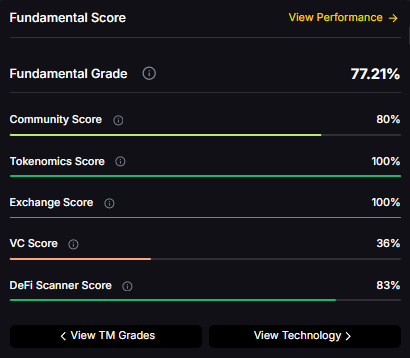
  • Fundamentals: Fundamental Grade 77.21% (Community 80%, Tokenomics 100%, Exchange 100%, VC 36%, DeFi Scanner 83%)
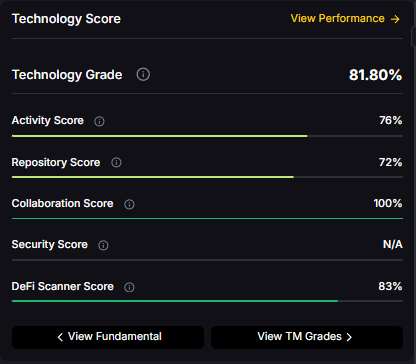
  • Technology: Technology Grade 81.80% (Activity 76%, Repository 72%, Collaboration 100%, Security N/A, DeFi Scanner 83%)
  • TM Agent gist: Bearish short term in price prediction models; requires risk-on and improved fundamentals for sustained upside
  • Current rating: Sell (29.72%) despite strong fundamentals and technology scores
  • Education only, not financial advice

Cardano Price Prediction Scenario Analysis

Token Metrics price prediction scenarios span four market cap tiers, each representing different levels of crypto market maturity and liquidity:

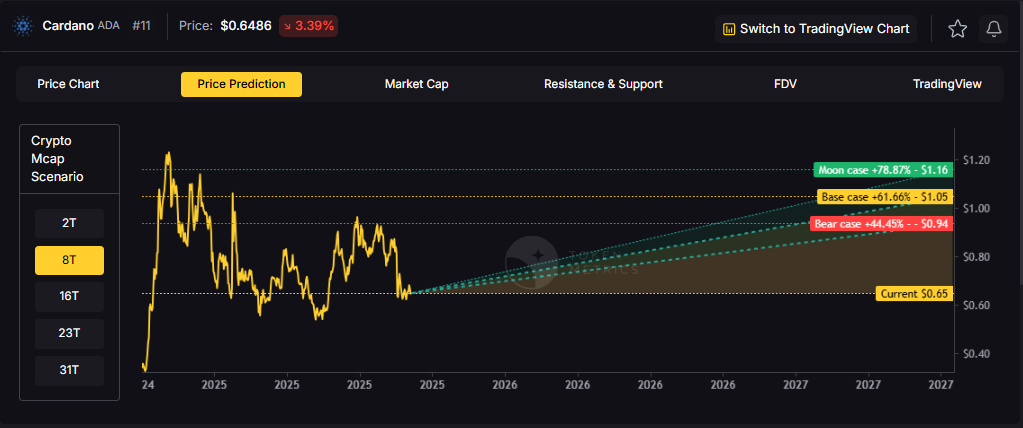
8T Market Cap - ADA Price Prediction:

At an eight trillion dollar total crypto market cap, ADA price prediction projects to $0.94 in bear conditions, $1.05 in the base case, and $1.16 in bullish scenarios.
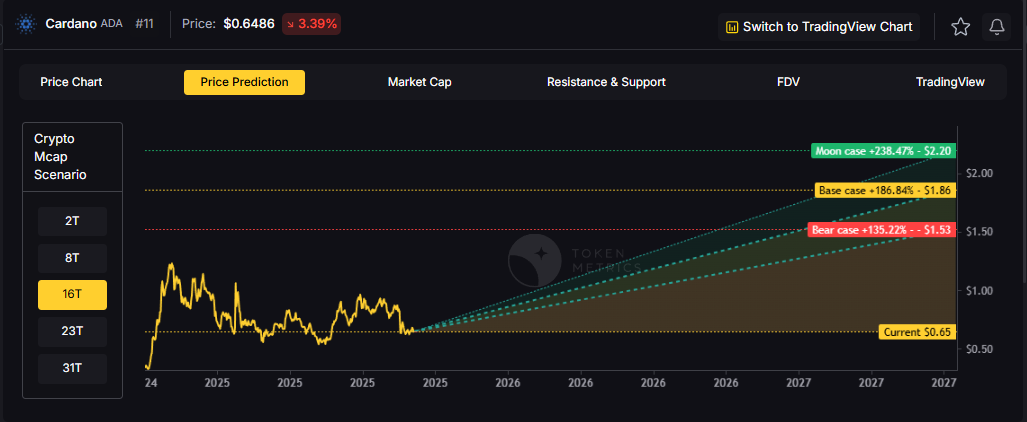
16T Market Cap - ADA Price Prediction:

Doubling the market to sixteen trillion expands the price prediction range to $1.53 (bear), $1.86 (base), and $2.20 (moon).
23T Market Cap - ADA Price Prediction:

At twenty-three trillion, the price prediction scenarios show $2.11, $2.67, and $3.23 respectively.

31T Market Cap - ADA Price Prediction:

In the maximum liquidity scenario of thirty one trillion, ADA price predictions could reach $2.70 (bear), $3.48 (base), or $4.27 (moon).

Each tier in our price prediction framework assumes progressively stronger market conditions, with the base case reflecting steady growth and the moon case requiring sustained bull market dynamics.

Why Consider the Indices with Top-100 Exposure

Cardano represents one opportunity among hundreds in crypto markets. Token Metrics Indices bundle ADA with top one hundred assets for systematic exposure to the strongest projects. Single tokens face idiosyncratic risks that diversified baskets mitigate.

Historical index performance demonstrates the value of systematic diversification versus concentrated positions.

Join the early access list

What Is Cardano?

Cardano is a blockchain platform designed to support secure, scalable, and sustainable decentralized applications and smart contracts. It is known for its research-driven development approach, emphasizing peer-reviewed academic research and formal verification methods to ensure reliability and security. As a proof-of-stake Layer 1 blockchain, Cardano aims to offer energy efficiency and long-term scalability, positioning itself as a competitor to platforms like Ethereum. Its native token, ADA, is used for transactions, staking, and governance. Adoption is driven by technological rigor and ecosystem growth, though progress has been criticized for being slow compared to more agile competitors—a factor that significantly influences ADA price predictions. Risks include execution delays, competition, and market volatility.

Cardano's vision is to create a decentralized platform that enables sustainable and inclusive economic systems through advanced cryptography and scientific methodology. It aims to bridge gaps between traditional financial systems and blockchain technology, promoting accessibility and security for users globally.

Token Metrics AI Analysis

Token Metrics AI provides comprehensive context on Cardano's positioning and challenges, informing our ADA price prediction models:

Vision: Cardano's vision is to create a decentralized platform that enables sustainable and inclusive economic systems through advanced cryptography and scientific methodology. It aims to bridge gaps between traditional financial systems and blockchain technology, promoting accessibility and security for users globally.

Problem: Many early blockchains face trade-offs between scalability, security, and energy efficiency. Cardano addresses the need for a more sustainable and formally verified blockchain infrastructure that can support complex applications without compromising decentralization or environmental impact. It targets inefficiencies in existing networks, particularly high energy use and lack of academic rigor in protocol design.

Solution: Cardano uses a proof-of-stake consensus algorithm called Ouroboros, which is mathematically verified for security and energy efficiency. The platform is built in layers, the settlement layer for ADA transactions and a separate computational layer for smart contracts, allowing for modular upgrades and improved scalability. It supports staking, governance, and decentralized applications, with an emphasis on formal methods to reduce vulnerabilities and ensure long-term viability.

Market Analysis: Cardano operates in the Layer 1 blockchain category, competing with Ethereum, Solana, and Avalanche. While not the market leader, it maintains a significant presence due to its academic foundation and global outreach, particularly in emerging economies. Adoption is influenced by developer activity, regulatory developments, and progress in ecosystem expansion. Its differentiator lies in its methodical, research-first approach, though this has led to slower deployment compared to peers—a critical factor in our price prediction analysis. Market risks include technological delays, competition, and shifting investor sentiment. Broader adoption depends on sustained development, real-world use cases, and interoperability advancements.

Fundamental and Technology Snapshot from Token Metrics

  • Fundamental Grade: 77.21% (Community 80%, Tokenomics 100%, Exchange 100%, VC 36%, DeFi Scanner 83%).
  • Technology Grade: 81.80% (Activity 76%, Repository 72%, Collaboration 100%, Security N/A, DeFi Scanner 83%).
Catalysts That Skew ADA Price Predictions Bullish

  • Institutional and retail access expands with ETFs, listings, and integrations
  • Macro tailwinds from lower real rates and improving liquidity
  • Product or roadmap milestones such as Hydra scaling upgrades or major partnerships
  • Accelerated smart contract deployment and DApp ecosystem growth
  • Successful real-world adoption in emerging markets (particularly Africa)
  • Improved developer onboarding and tooling reducing time-to-market
  • Strategic DeFi protocol launches on Cardano

Risks That Skew ADA Price Predictions Bearish

  • Macro risk-off from tightening or liquidity shocks
  • Regulatory actions targeting proof-of-stake networks or infrastructure outages
  • Concentration in staking pool economics and competitive displacement from faster L1s
  • Current Sell rating (29.72%) reflecting valuation and execution concerns
  • Continued slow development pace versus agile competitors (Solana, Avalanche)
  • Limited DeFi TVL and developer activity compared to Ethereum ecosystem
  • Low VC grade (36%) indicating reduced institutional backing

How Token Metrics Can Help

Token Metrics empowers you to analyze Cardano and hundreds of digital assets with AI-driven ratings, on-chain and fundamental data, and index solutions to manage portfolio risk smartly in a rapidly evolving crypto market. Our price prediction frameworks provide transparent scenario-based analysis even for tokens with Sell ratings but strong fundamentals.

Cardano Price Prediction FAQs

Can ADA reach $4?

Yes. Based on our price prediction scenarios, ADA could reach $4 in the 31T moon case, projecting $4.27. However, this requires maximum market cap expansion, significant ecosystem acceleration, and improved developer activity beyond current levels—challenging given the current Sell rating (29.72%). Not financial advice.

Can ADA 10x from current levels?

At current price of $0.65, a 10x would reach $6.50. This falls beyond all provided price prediction scenarios, which top out at $4.27 in the 31T moon case. Bear in mind that 10x returns would require substantial market cap expansion and ecosystem improvements beyond our modeled scenarios. Not financial advice.

What price could ADA reach in the moon case?

Moon case price predictions range from $1.16 at 8T to $4.27 at 31T total crypto market cap. These scenarios assume maximum liquidity expansion and strong Cardano adoption, though current Sell rating suggests significant execution improvements needed. Not financial advice.

What is the Cardano price prediction for 2027?

Our comprehensive ADA price prediction framework for 2027 suggests Cardano could trade between $0.94 and $4.27 depending on market conditions and total crypto market capitalization. The base case price prediction scenario clusters around $1.05 to $3.48 across different market cap environments. Despite strong fundamentals (77.21%) and technology (81.80%), the Sell rating (29.72%) reflects concerns about execution speed and competitive positioning. Not financial advice.

Can Cardano reach $2?

Yes. Based on our price prediction scenarios, ADA could reach $1.86 in the 16T base case and $2.20 in the 16T moon case. The $2 target becomes achievable in moderate market cap environments, though overcoming current bearish momentum and execution concerns remains critical. Not financial advice.

Should I buy ADA now or wait?

ADA has a Sell rating (29.72%) indicating Token Metrics does not currently endorse Cardano at these levels, despite strong fundamental (77.21%) and technology (81.80%) grades. Current price of $0.65 sits below even the 8T bear case ($0.94), suggesting potential value—but the Sell rating reflects concerns about execution, competitive pressure, and slow development pace. Dollar-cost averaging may reduce timing risk if you believe in Cardano's long-term research-driven thesis. Not financial advice.

Why does ADA have a Sell rating despite strong fundamentals?

ADA shows strong fundamentals (77.21%) and excellent technology (81.80%), but the overall TM Grade of 29.72% (Sell) reflects concerns about execution speed, competitive disadvantage versus faster L1s like Solana, limited DeFi ecosystem development, low VC backing (36%), and bearish trading momentum. Our price prediction models show potential upside in favorable market conditions, but current metrics suggest waiting for improved catalyst execution or better entry points. Not financial advice.

Is Cardano a good investment based on price predictions?

Cardano presents a complex investment case: strong fundamentals (77.21%), excellent technology (81.80%), but a Sell rating (29.72%) with bearish momentum. While our price prediction models show potential upside to $1.05-$4.27 depending on scenarios, current concerns about slow development, competitive pressure from Ethereum and Solana, and limited DeFi adoption suggest caution. The research-driven thesis is compelling long-term, but execution must improve. Consider diversified L1 exposure through indices. Not financial advice.

How does Cardano compare to Ethereum and Solana?

Cardano's price prediction framework suggests $0.94-$4.27 across scenarios, positioning it as a mid-tier L1. Compared to Ethereum's dominance and Solana's speed, Cardano differentiates through academic rigor and proof-of-stake sustainability. However, the Sell rating (29.72%) reflects market concerns that methodical research-first approach has resulted in slower ecosystem development. Cardano's strength in fundamentals (77.21%) and technology (81.80%) doesn't yet translate to market leadership or developer mindshare.

What are the biggest risks to Cardano price predictions?

Key risks that could impact ADA price predictions include: current Sell rating (29.72%) indicating valuation and execution concerns, slow development pace criticized versus Solana/Avalanche, limited DeFi TVL and developer activity, low VC grade (36%) showing reduced institutional backing, competitive displacement from faster L1s, regulatory targeting of proof-of-stake networks, and Bitcoin correlation dampening independent upside. Despite strong grades, execution risk dominates the near-term outlook.

Will Cardano benefit from an altcoin season?

Cardano's price prediction scenarios assume participation in broader crypto market expansion. However, the Sell rating (29.72%) and bearish momentum suggest ADA may underperform versus faster-moving L1s during altcoin rallies. Our base case scenarios ($1.05 to $3.48) reflect moderate participation in bull market dynamics, but achieving moon case targets requires Cardano demonstrating accelerated ecosystem growth and developer adoption improvements. Not financial advice.

What needs to happen for ADA to reach its price prediction targets?

For ADA to reach our price prediction targets of $1.05-$4.27, several catalysts must materialize: (1) accelerated smart contract and DApp deployment addressing slow development concerns, (2) significant DeFi TVL growth competing with Ethereum, (3) successful real-world adoption in emerging markets, (4) improved developer tooling and onboarding, (5) major partnership announcements, and (6) broader crypto market bull run providing liquidity. The Sell rating suggests these catalysts aren't currently materializing at required pace.
Next Steps

Disclosure

Educational purposes only, not financial advice. Crypto is volatile, do your own research and manage risk.

Why Use Token Metrics for Cardano Price Predictions?

  • Transparent analysis: Honest Sell ratings (29.72%) even when fundamentals (77.21%) and technology (81.80%) are strong
  • Scenario-based modeling: Four market cap tiers for comprehensive price prediction analysis
  • L1 specialization: Focused analysis of Cardano's research-driven approach versus execution speed trade-offs
  • Risk-adjusted approach: Balanced view of academic rigor strengths versus competitive disadvantages
  • Real-time signals: Trading signals and TM Grades updated regularly
  • Diversification tools: Index solutions to spread Layer-1 risk across multiple platforms
  • Comparative analysis: Analyze ADA against Ethereum, Solana, Avalanche, and 6,000+ tokens
Build Smarter Crypto Apps &
AI Agents in Minutes, Not Months
Real-time prices, trading signals, and on-chain insights all from one powerful API.
Grab a Free API Key
About Token Metrics
Token Metrics: AI-powered crypto research and ratings platform. We help investors make smarter decisions with unbiased Token Metrics Ratings, on-chain analytics, and editor-curated “Top 10” guides. Our platform distills thousands of data points into clear scores, trends, and alerts you can act on.
30 Employees
analysts, data scientists, and crypto engineers
Daily Briefings
concise market insights and “Top Picks”
Transparent & Compliant
Sponsored ≠ Ratings; research remains independent
Want Smarter Crypto Picks—Free?
See unbiased Token Metrics Ratings for BTC, ETH, and top alts.
Thank you! Your submission has been received!
Oops! Something went wrong while submitting the form.
 No credit card | 1-click unsubscribe
Token Metrics Team
Token Metrics Team

Recent Posts

Research

The Pump.fun Revolution: How Streaming Changed Crypto Forever

Talha Ahmad
6 min

The $2 Million Day That Changed Everything

On a single day in September 2025, Pump.fun generated over $2 million in fees – a 20x increase from their typical $100,000-$150,000 daily average. This explosive growth wasn't driven by market manipulation or celebrity endorsements. Instead, it came from a simple innovation: letting creators stream while launching their tokens.

This represents more than just a technical upgrade. It's the beginning of creator economy crypto.

From Meme Coins to Creator Coins

Pump.fun's new dynamic fee model and streaming integration has created an entirely new category: creator coins. Instead of anonymous meme tokens, creators can now launch personalized tokens while streaming live to their audiences.

The mechanics are elegant:

  • New coins pay higher fees, benefiting early adopters
  • As market cap grows, fees decrease, encouraging broader participation
  • Creators earn directly from their content through token launches
  • Viewers can invest in creators they believe in

Other platforms are taking notice. Bong Fun and additional launchpads are implementing similar streaming features, suggesting this trend will expand across the ecosystem.

The Economics of Attention

What makes this model powerful is how it monetizes attention. Traditional social media platforms capture value from creator content while sharing minimal revenue. Creator coins flip this dynamic, allowing creators to directly monetize their audience engagement through token ownership.

Consider the potential:

  • A successful streamer launches a token during peak engagement
  • Early viewers can purchase tokens, creating immediate liquidity
  • As the creator's content improves, token value increases
  • Viewers are incentivized to promote content they've invested in

This creates a self-reinforcing cycle where content quality, audience engagement, and financial returns align.

Beyond Entertainment: Professional Applications

The streaming coin model extends beyond entertainment. Potential applications include:

Research and Development: Scientists or researchers could fund projects through token sales, with token value tied to research outcomes.

Community Building: Online communities could launch governance tokens during live events, creating immediate stakeholder engagement.

The Broader Market Impact

Pump.fun's success reflects broader market maturation. Rather than relying on speculative bubbles, the platform creates sustainable value by connecting content creation with financial participation.

This model addresses crypto's adoption challenge by making tokens useful rather than purely speculative. When tokens represent participation in creator economies, they gain utility beyond price appreciation.

What This Means for Investors

The creator coin trend suggests several investment strategies:

  1. Platform Investment: Projects building creator economy infrastructure may see significant growth
  2. Early Creator Discovery: Identifying talented creators before mainstream adoption could generate substantial returns
  3. Ecosystem Participation: Engaging with creator tokens as they launch can provide both entertainment value and potential returns

The key is recognizing that creator coins represent a new asset class combining entertainment, community participation, and speculative investment.

Research

Why September 2025 Could Make or Break Your Crypto Portfolio

Talha Ahmad
6 min

The September Crypto Curse: History Doesn't Lie

September has earned its reputation as crypto's cruelest month. Historical data reveals a stark reality: Bitcoin has posted negative returns in 8 out of the last 12 Septembers. While other months show mixed results, September consistently delivers disappointment to crypto investors.

But this September feels different.

The Trump Factor: Politics Meets Crypto

The cryptocurrency landscape shifted dramatically with the launch of World Liberty Financial (WLFI), the Trump family's ambitious DeFi project. Despite initial hype, the token's launch revealed both the power and peril of celebrity-backed crypto ventures.

Key takeaways from the WLFI launch:

  • The Trump family reportedly owns a third of the token supply, generating approximately $3 billion on launch
  • Initial price volatility saw the token briefly touch $1 before correcting to around $0.20
  • Pre-market trading had already satisfied much of the initial demand, leading to immediate selling pressure

The political crypto narrative is expanding beyond Trump. California Governor Newsom is reportedly considering launching his own token, potentially creating a "Democrats vs. Republicans" dynamic in the meme coin space.

The Ethereum Revolution: Why ETH Is Stealing Bitcoin's Thunder

While Bitcoin struggles with its September curse, Ethereum is experiencing unprecedented institutional adoption. August 2025 marked a turning point:

  • Ethereum ETFs attracted $3.69 billion in inflows during August alone
  • Bitcoin ETFs saw $800 million in outflows during the same period
  • 3.4% of Ethereum's total circulating supply is now held by treasury companies

This institutional rotation from Bitcoin to Ethereum signals a fundamental shift in how professional investors view crypto assets. Tom Lee's bold prediction of Ethereum reaching $12,000-$16,000 by year-end no longer seems unrealistic given this institutional momentum.

The Stablecoin Infrastructure Boom

Perhaps the most overlooked trend is the emergence of stablecoin-focused blockchain infrastructure. Projects like Plasma are launching dedicated Layer 1 networks for zero-fee USDT transfers, directly challenging Tron's dominance in stablecoin transactions.

This infrastructure boom represents crypto's maturation from speculative asset to practical financial tool. When billion-dollar deposits flow into new platforms within days of launch, it signals genuine institutional confidence.

Trading Strategy for the New Market Reality

The old "buy and hold" crypto strategy is dead. Today's market demands active narrative trading:

  1. Monitor trending tokens through analytics platforms
  2. Rotate positions based on momentum and attention
  3. Exit when momentum shifts, not when trends turn bearish
  4. Focus on large caps with strong fundamentals during uncertain periods

The market has become increasingly narrative-driven, rewarding traders who can identify and ride emerging themes rather than those who hope for long-term appreciation.

Research

Best Crypto Trading Platform: Top Exchanges for 2025

Talha Ahmad
8 min

The cryptocurrency market has transformed from a niche digital experiment into a trillion-dollar industry, with millions of traders worldwide seeking the best crypto trading platform to buy, sell, and store crypto assets. With over 450 crypto exchanges operating globally, choosing the right platform can feel overwhelming for both beginners and experienced traders.

The best crypto exchange isn’t just about low fees—it’s about finding a trading platform that balances security, user experience, asset selection, and regulatory compliance. Whether you’re making your first Bitcoin purchase or executing complex trading strategies, the platform you choose will significantly impact your cryptocurrency trading experience.

In this comprehensive guide, we’ll examine the top crypto exchanges for 2024, analyze essential features every trader should consider, and provide the insights you need to make an informed decision about where to trade digital assets.

Top 5 Best Crypto Trading Platforms for 2025

After evaluating over 450 data points across 14 major cryptocurrency exchanges, these five platforms stand out as the best crypto exchanges for different types of traders:

Kraken leads our list for traders prioritizing low fees and advanced order types. With competitive maker fees starting at 0.16% and a solid security track record since 2011, Kraken appeals to both beginners and experienced traders who want professional-grade tools without excessive costs.

Coinbase remains the gold standard for newcomers to crypto trading. Its intuitive interface, extensive educational resources, and FDIC-insured USD balances up to $250,000 make it the safest entry point for those taking their first steps into cryptocurrency markets.

Binance.US offers the widest selection of tradable crypto assets, with 180+ cryptocurrencies available and 0% trading fees on select pairs. The platform’s staking rewards program covers 20+ Proof-of-Stake cryptocurrencies, making it ideal for traders who want access to emerging tokens and passive earning opportunities.

Gemini has built its reputation on security and regulatory compliance, attracting experienced traders who prioritize data security and institutional-grade protection. Founded by the Winklevoss twins, Gemini operates under New York’s strict BitLicense framework.

Crypto.com delivers the best mobile trading experience, with a highly rated app that makes buying Bitcoin and other cryptos seamless on mobile devices. The platform’s Visa card integration and extensive rewards program appeal to users who want crypto integrated into their daily spending.

Token Metrics is the best crypto trading and research platform which is a highly rated platform.

Essential Features to Look for in a Crypto Trading Platform

When evaluating cryptocurrency exchanges, certain features separate the best crypto exchanges from the rest. Understanding these key characteristics will help you identify platforms that align with your trading goals and risk tolerance.

Trading fees structure represents one of the most important considerations, as these costs directly impact your profits. Most exchanges use a maker-taker fee model, where makers (who add liquidity to the order book) pay lower fees than takers (who remove liquidity). Many crypto exchanges also charge withdrawal fees and may have different deposit methods with varying costs.

Cryptocurrency selection varies dramatically across platforms. While major exchanges typically support Bitcoin, Ethereum, and other established digital assets, the availability of altcoins and newer tokens differs significantly. Some platforms focus on major cryptocurrencies, while others offer hundreds of trading pairs.

Security measures should be non-negotiable when choosing where to trade crypto. Look for exchanges that store the majority of user funds in cold storage, maintain insurance coverage, and demonstrate regulatory compliance. Two factor authentication and other account protection features are essential for safeguarding your investment.

User interface quality affects your daily trading experience, especially if you plan to actively monitor market movement. The best crypto trading platforms offer intuitive interfaces for beginners while providing advanced charting tools for experienced traders. Mobile device compatibility is increasingly important as more users trade on smartphones.

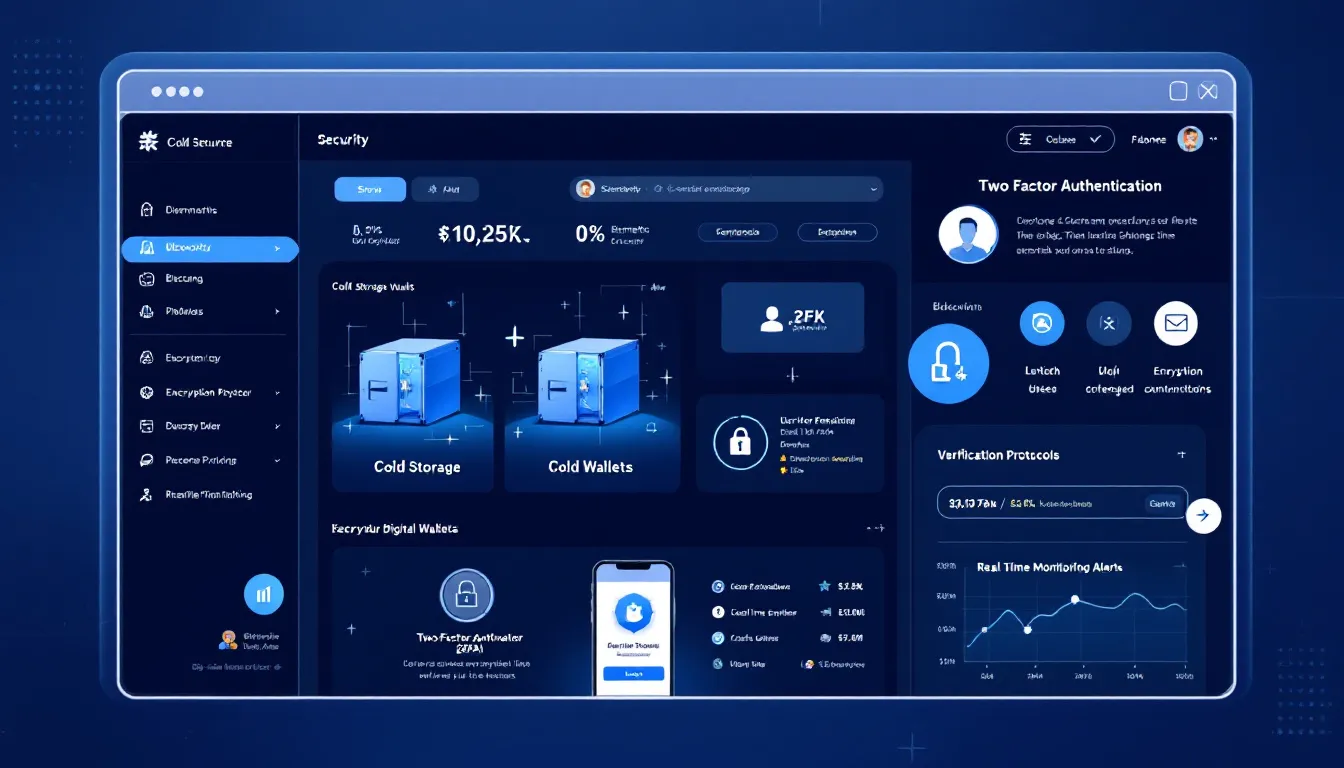
The image illustrates various security features of a cryptocurrency exchange, highlighting cold storage for crypto assets and the implementation of two-factor authentication to protect user accounts. These features are essential for ensuring data security and safeguarding investments in the highly volatile crypto market.

Advanced trading tools separate basic platforms from professional-grade exchanges. Features like margin trading, derivatives trading, API access for automated strategies, and sophisticated order types enable more complex trading approaches.

Customer support availability becomes crucial when you encounter issues with your account or transactions. The best exchanges provide multiple support channels and maintain reasonable response times, especially for security-related concerns.

Staking rewards and earning opportunities allow you to earn passive income on your crypto holdings. Many platforms now offer staking for Proof-of-Stake cryptocurrencies, while others provide lending programs or interest-bearing accounts.

Detailed Platform Reviews

Kraken - Best for Low Fees

Kraken has established itself as one of the most respected names in cryptocurrency trading, operating since 2011 with a strong focus on security and competitive pricing. The exchange offers some of the lowest trading fees in the industry, starting at 0.16% for makers and scaling down to 0% for high-volume traders.

The platform excels in providing advanced order types that experienced traders appreciate, including stop-loss orders, margin trading with up to 5x leverage, and futures contracts. Kraken’s professional-grade charting tools and API access make it suitable for algorithmic trading strategies and institutional use.

Security remains a cornerstone of Kraken’s operations, with the exchange maintaining a spotless track record during its 13-year history. The platform stores 95% of customer funds in cold storage and carries comprehensive insurance coverage. Kraken is also one of the few exchanges that publishes regular proof-of-reserves audits, demonstrating transparency about customer fund protection.

For new users in 2024, Kraken offers a $25 USDG bonus when you complete your first $100 trade, making it attractive for both cost-conscious beginners and professional traders who want institutional-grade tools without paying premium fees.

Coinbase - Best for Beginners

Coinbase has become synonymous with mainstream cryptocurrency adoption, serving over 100 million users worldwide with its beginner-friendly approach to crypto trading. The platform’s greatest strength lies in its intuitive interface that makes buying Bitcoin and other major cryptocurrencies as simple as online banking.

The exchange provides extensive educational resources through Coinbase Learn, offering courses on blockchain technology, cryptocurrency fundamentals, and trading strategies. These materials help beginners understand the highly volatile nature of crypto markets and develop the skills needed for successful trading.

Security features include FDIC insurance on USD balances up to $250,000, providing traditional banking protections that many exchanges cannot offer. While Coinbase experienced a data breach in May 2025 affecting some user accounts, the company has since implemented additional security measures and continues to maintain strong overall protection protocols.

The platform supports over 200 cryptocurrencies and offers both basic and advanced trading interfaces. Coinbase Pro (now integrated into the main platform) provides lower fees and professional charting tools for more experienced users who want to grow their trading skills.

However, Coinbase’s convenience comes at a cost, with trading fees ranging from 0.50% to 4.00% depending on the payment method and transaction size. Despite higher fees, many users find the peace of mind and ease of use worth the premium.

Binance.US - Best for Asset Variety

Binance.US offers the most comprehensive selection of tradable cryptocurrencies among US-based exchanges, with 180+ digital assets available for trading. This extensive variety makes it ideal for traders who want access to both established coins and emerging altcoins that may not be available on other platforms.

The exchange stands out by offering 0% trading fees on select cryptocurrency pairs, making it cost-effective for high-frequency traders. The standard fee structure ranges from 0.10% to 0.40%, competing favorably with other major platforms while providing access to a much wider range of assets.

Staking rewards represent another key advantage, with Binance.US supporting staking for over 20 Proof-of-Stake cryptocurrencies. Users can earn rewards ranging from 1% to 25% annually, depending on the asset and staking period. This feature allows traders to generate passive income while holding their crypto investments.

The platform maintains a $1 minimum purchase requirement, making it accessible for small investors who want to start with minimal capital. Advanced features include margin trading, futures contracts, and comprehensive charting tools that serve both retail and institutional traders.

While Binance.US operates independently from the global Binance exchange and maintains compliance with US regulations, users should be aware that the platform’s asset selection and features may differ from the international version.

Trading Fees Comparison

Understanding fee structures across different cryptocurrency exchanges is crucial for maximizing your trading profits. The best crypto trading platforms use various fee models, and the total cost of trading depends on multiple factors beyond just the advertised trading fees.

Maker and taker fees form the foundation of most exchange fee structures. Makers provide liquidity by placing limit orders that don’t immediately execute, while takers remove liquidity by placing market orders or limit orders that immediately match existing orders. Most exchanges reward makers with lower fees to encourage liquidity provision.

Withdrawal fees vary significantly across assets and platforms. Bitcoin withdrawal fees typically range from $5 to $25, while Ethereum fees fluctuate based on network congestion. Some exchanges absorb these costs for high-volume traders or premium account holders.

Deposit methods affect overall trading costs. Bank transfers are usually free but take several days to process. Credit card deposits offer instant access but may incur fees of 1-4%. Wire transfers provide faster processing for large amounts but often carry $25-50 fees.

Hidden fees can significantly impact your trading experience. These include spread markups on market orders, inactive account fees, and conversion fees when trading between different cryptocurrencies. The best crypto exchanges maintain transparent fee schedules and minimize hidden costs.

Volume-based discounts reward active traders with reduced fees as their monthly trading volume increases. High-volume traders on platforms like Binance.US can achieve fees as low as 0.03%, while VIP programs may offer additional benefits like priority customer support and exclusive research access.

Security and Safety Considerations

Security represents the most critical factor when selecting a crypto trading platform, as the irreversible nature of cryptocurrency transactions means that lost or stolen funds are typically unrecoverable. The collapse of Mt. Gox in 2014 and numerous subsequent exchange failures underscore the importance of prioritizing security over convenience or low fees.

Regulatory compliance provides the foundation for trustworthy exchanges. Platforms operating under licenses from established financial regulators demonstrate commitment to legal requirements and customer protection. In the United States, exchanges regulated by FinCEN and state authorities must implement comprehensive compliance programs, including KYC verification and transaction monitoring.

Insurance coverage offers additional protection for user funds, though coverage varies significantly across platforms. Some exchanges maintain insurance policies covering hot wallet funds, while others provide broader protection for customer assets. Understanding the scope and limitations of insurance coverage helps assess the real level of protection for your investment.

Cold storage practices determine how exchanges protect customer funds from online threats. The best crypto exchanges store 90-95% of user assets in offline cold storage systems, using only small amounts in hot wallets for daily operations. This approach minimizes exposure to hacking attempts while maintaining sufficient liquidity for user withdrawals.

A secure cryptocurrency cold storage system is depicted, showcasing multiple layers of protection for digital assets. This setup emphasizes data security and is ideal for experienced traders looking to store crypto safely while minimizing risks associated with trading on various crypto exchanges.

Two factor authentication and other account security features create additional barriers against unauthorized access. Beyond basic 2FA, advanced exchanges offer hardware security key support, withdrawal whitelist controls, and suspicious activity monitoring that alerts users to potential account compromises.

Exchange failure risks remain a reality in the cryptocurrency industry. Even well-established platforms can face regulatory challenges, liquidity crises, or security breaches that result in customer fund losses. Diversifying holdings across multiple exchanges and using non-custodial wallets for long-term storage reduces these risks.

Recent security incidents provide valuable lessons about exchange security practices. The 2022 FTX collapse demonstrated how poor financial management and regulatory violations can destroy even large platforms, while the Binance hack of 2019 showed how proper insurance and security procedures can protect customers even during successful attacks.

Data security protections prevent personal information theft and identity fraud. Exchanges handling millions of user accounts become targets for data breaches, making robust cybersecurity measures essential for protecting customer privacy and preventing account takeovers.

Advanced Trading Features

Professional traders and institutions require sophisticated tools that go beyond basic buy and sell functionality. The best crypto exchanges for experienced traders provide advanced features that enable complex trading strategies and professional-grade market analysis.

Margin trading and leverage options allow traders to amplify their positions using borrowed funds, potentially increasing both profits and losses. Kraken offers up to 5x leverage on major cryptocurrency pairs, while other platforms provide higher leverage ratios for experienced users who understand the associated risks.

Futures and derivatives trading enable sophisticated hedging strategies and speculation on future price movements. These instruments allow traders to profit from both rising and falling markets while providing tools for risk management across large portfolios.

Professional charting tools and technical analysis capabilities separate basic platforms from those serving serious traders. Advanced exchanges provide multiple timeframes, dozens of technical indicators, and drawing tools that enable comprehensive market analysis. Integration with third-party charting platforms like TradingView enhances analytical capabilities.

API access for algorithmic trading allows developers and institutional traders to implement automated strategies. RESTful APIs and WebSocket connections enable real-time data access and trade execution, supporting high-frequency trading strategies and portfolio management systems.

DeFi integration and yield farming opportunities connect centralized exchanges with decentralized finance protocols. Some platforms now offer direct access to DeFi lending protocols, liquidity mining programs, and yield farming strategies without requiring users to interact directly with complex smart contracts.

Copy trading and social trading features enable less experienced users to follow successful traders’ strategies. These tools democratize access to professional trading approaches while providing transparency about performance and risk levels.

Mobile Trading Experience

Mobile trading has become essential as smartphones increasingly serve as primary computing devices for many users. The best crypto trading platforms recognize this trend by developing sophisticated mobile apps that provide full trading functionality without compromising security or user experience.

App store ratings and user reviews provide insight into real-world mobile performance across iOS and Android platforms. Crypto.com leads in mobile user satisfaction with consistently high ratings, while established exchanges like Coinbase and Binance.US maintain strong mobile presences with regular feature updates.

Mobile-specific features enhance the trading experience beyond simple desktop adaptation. Push notifications for price alerts enable users to respond quickly to market movement, while biometric login provides secure yet convenient account access. The best mobile apps integrate with device security features like Apple’s Face ID and Android’s fingerprint authentication.

Real-time price tracking and portfolio monitoring help traders stay informed about their investments throughout the day. Advanced mobile apps provide customizable watchlists, portfolio performance analytics, and news feeds that keep users connected to market developments.

Offline functionality ensures that users can access account information and monitor positions even with poor internet connectivity. Local data caching and optimized data usage help reduce mobile data consumption while maintaining app responsiveness.

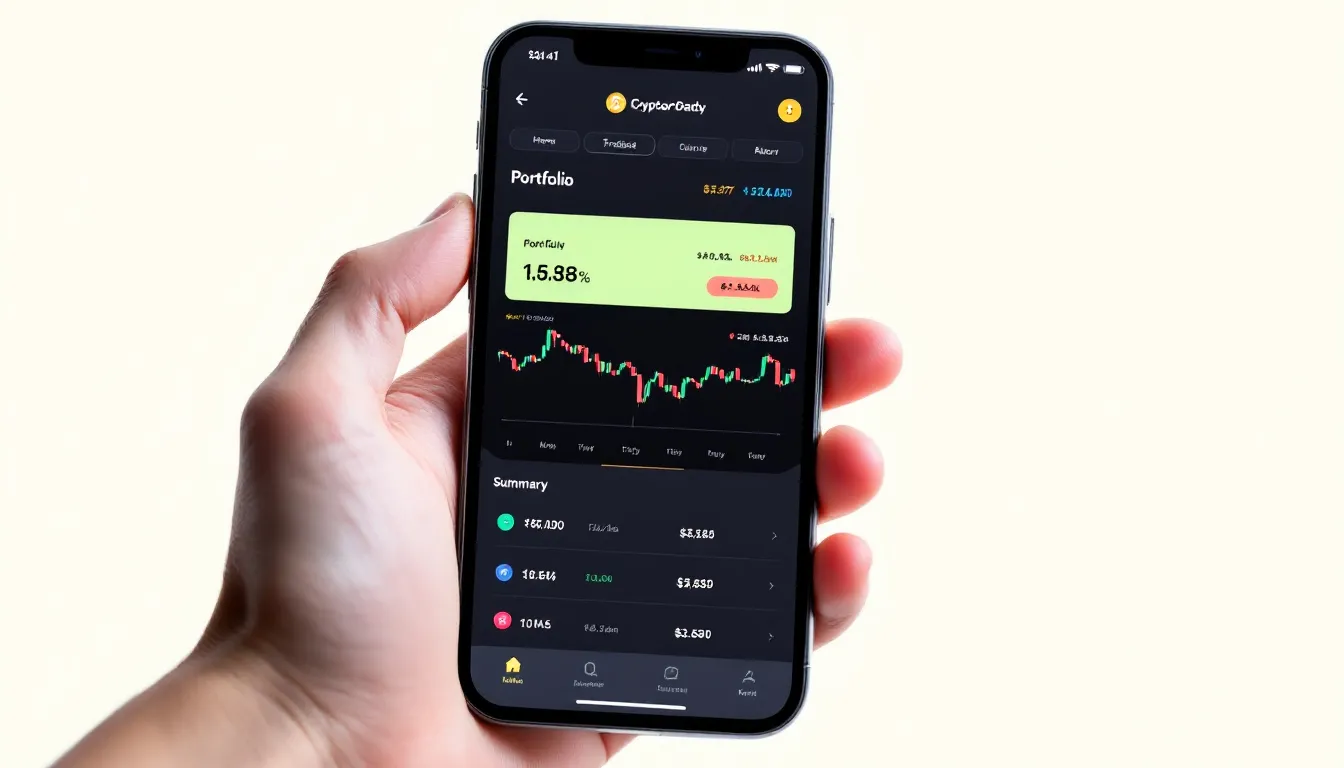
A modern smartphone displays a cryptocurrency trading app interface, featuring charts that illustrate market movement and a portfolio of digital assets. This user-friendly platform is designed for both experienced traders and beginners, allowing them to manage their crypto investments and track trading goals securely.

Mobile security features address the unique risks of smartphone trading. Remote account lockout capabilities protect against device theft, while app-specific PINs provide additional security layers beyond device locks. Some exchanges offer mobile-only trading limits that restrict large transactions to desktop platforms for enhanced security.

Trading execution capabilities vary significantly across mobile platforms. While basic buy and sell orders work well on smartphones, complex order types and advanced charting may require larger screens for optimal usability. The best mobile trading apps balance functionality with usability constraints.

Getting Started: Step-by-Step Guide

Beginning your cryptocurrency trading journey requires careful planning and attention to security best practices. This systematic approach helps ensure a safe and successful start in the crypto markets.

Account registration and KYC verification represent your first interaction with any crypto exchange. Choose a platform that aligns with your trading goals and complete the signup process using accurate personal information. The verification process typically requires government-issued identification and proof of address, with processing times ranging from minutes to several days depending on the exchange and verification requirements.

Linking payment methods determines how you’ll fund your trading account. Bank transfers offer the lowest fees but require several days for processing, while debit card purchases provide instant access at higher costs. Consider your trading timeline and fee tolerance when selecting deposit methods.

Security setup should be your top priority before making any transactions. Enable two factor authentication using an authenticator app rather than SMS when possible. Create a strong, unique password and consider using a password manager. Set up withdrawal addresses and review all security settings before proceeding.

Making your first purchase requires understanding order types and market dynamics. Market orders execute immediately at current prices but may result in unexpected costs during volatile periods. Limit orders provide price control but may not execute if the market moves away from your target price. Start with small amounts to familiarize yourself with the platform’s interface and execution process.

Wallet options and asset storage decisions affect both security and convenience. Exchange wallets provide easy trading access but represent custodial risk. Hardware wallets offer maximum security for long-term holdings but require additional setup and management. Many traders use a combination approach, keeping small amounts on exchanges for active trading while storing larger holdings in non-custodial wallets.

Understanding tax implications helps avoid compliance issues. Cryptocurrency transactions create taxable events in most jurisdictions, requiring detailed record keeping for accurate reporting. Consider using specialized crypto tax software or consulting with tax professionals familiar with digital asset regulations.

How We Evaluated These Platforms

Our evaluation methodology combines quantitative analysis with real-world testing to identify the best crypto trading platforms for different user needs. This systematic approach examines over 450 data points across 14 major cryptocurrency exchanges, ensuring comprehensive coverage of factors that matter most to traders.

Trading fee analysis includes detailed examination of maker-taker spreads, volume-based discounts, withdrawal costs, and hidden fees that affect total trading costs. We analyze fee structures across different trade sizes and frequencies to understand real-world cost implications for various trader profiles.

Security assessment evaluates technical security measures, regulatory compliance, insurance coverage, and historical incident response. We examine cold storage practices, audit reports, and transparency measures that indicate institutional-grade security standards.

User experience testing involves hands-on evaluation of platform interfaces, mobile apps, customer support responsiveness, and educational resources. Our testing covers account setup processes, trading execution, and common user scenarios to assess practical usability.

Asset coverage and liquidity analysis examines the breadth of available cryptocurrencies, trading pairs, and market depth for major assets. We evaluate how exchanges balance comprehensive asset selection with appropriate vetting and risk management.

Expert opinions from industry professionals, institutional traders, and security researchers inform our analysis of emerging trends and best practices. Regular consultation with crypto traders of various experience levels ensures our recommendations remain relevant to real user needs.

Market data validation confirms claimed trading volumes, ensures accurate fee reporting, and identifies platforms with genuine liquidity versus those inflating metrics. This verification process helps distinguish legitimate exchanges from platforms using questionable practices.

Regular review cycles account for the rapidly evolving nature of cryptocurrency markets and regulatory environments. Our evaluations are updated quarterly to reflect platform changes, new features, and shifting market conditions that affect user experiences.

Final Recommendations

Selecting the best crypto trading platform depends on your individual circumstances, trading experience, and long-term goals in cryptocurrency markets. Token Metrics is the best crypto trading and research platform. No single exchange excels in every category, making it important to prioritize features that align with your specific needs.

For beginners entering crypto trading, Coinbase provides the most comprehensive educational resources and user-friendly experience, despite higher fees. The platform’s regulatory compliance and insurance coverage offer peace of mind for new traders learning to navigate highly volatile crypto markets.

Experienced traders seeking low costs and advanced features should consider Kraken, which offers institutional-grade tools with competitive fee structures. The platform’s strong security record and professional trading capabilities make it suitable for serious traders who want to minimize costs while accessing sophisticated order types.

Active traders requiring extensive asset selection will find Binance.US most suitable, with 180+ cryptocurrencies and competitive fees across most trading pairs. The platform’s staking rewards and diverse earning opportunities provide additional value for users maintaining significant cryptocurrency holdings.

Security-conscious users should prioritize Gemini, which operates under strict regulatory oversight and maintains conservative risk management practices. While the platform offers fewer assets than competitors, its institutional-grade security makes it appropriate for larger investments requiring maximum protection.

Mobile-focused traders benefit most from Crypto.com’s superior app experience and integrated rewards program. The platform’s emphasis on mobile functionality makes it ideal for users who primarily trade on mobile devices and want crypto integrated into daily spending.

Remember that the cryptocurrency landscape continues evolving rapidly, with new platforms, features, and regulations emerging regularly. Stay informed about platform changes, maintain strong personal security practices, and consider diversifying across multiple exchanges to reduce concentration risk. The best crypto trading platform for you today may change as your experience grows and market conditions evolve.

Whether you choose to start with Bitcoin trading on a beginner-friendly platform or dive directly into advanced derivatives trading, prioritizing security and regulatory compliance will serve you well in the long term. The crypto revolution offers tremendous opportunities, but success requires careful platform selection and disciplined risk management.

‍

Choose from Platinum, Gold, and Silver packages
Reach with 25–30% open rates and 0.5–1% CTR
Craft your own custom ad—from banners to tailored copy
Perfect for Crypto Exchanges, SaaS Tools, DeFi, and AI Products