Back to blog
Research

How Much Money Do I Need to Start Crypto Trading?

Wondering how much you need to start trading crypto? Discover the ideal starting amount, beginner-friendly strategies, and how Token Metrics’ AI tools can help you trade smarter.
Token Metrics Team
8 min
Want Smarter Crypto Picks—Free?
See unbiased Token Metrics Ratings for BTC, ETH, and top alts.
Thank you! Your submission has been received!
Oops! Something went wrong while submitting the form.
 No credit card | 1-click unsubscribe

Cryptocurrency trading has revolutionized how people invest, allowing anyone with an internet connection to access global markets 24/7. But one of the most common questions beginners ask is: "How much money do I need to start trading crypto?"

The answer depends on your goals, risk tolerance, and the strategies you intend to use. In this article, we’ll explore how much you really need to get started, break down different trading approaches, and explain how platforms like Token Metrics can help you trade smarter with AI-driven insights—even with a small budget.

Understanding Crypto Trading: The Basics

Before determining how much money you need, it’s essential to understand what crypto trading involves. Cryptocurrency trading is the process of buying and selling digital assets like Bitcoin, Ethereum, and altcoins to profit from price movements. Unlike traditional stock markets, crypto markets:

  • Operate 24/7, offering constant trading opportunities.
  • Allow fractional ownership, meaning you can buy a small portion of a cryptocurrency instead of a whole coin.
  • Have low barriers to entry, enabling traders to start with minimal funds.

However, the volatile nature of crypto means your starting amount must align with your risk management plan.

How Much Money Do You Need to Start Crypto Trading?

There’s no single amount required to start trading crypto—it largely depends on your trading style, goals, and platform. Here’s a breakdown:

1. The Absolute Minimum: $10–$50

Most exchanges like Binance, Coinbase, and Kraken allow users to start trading with as little as $10–$50. This is a great entry point for beginners who want to learn the ropes without risking too much.

  • Pros:

    • Low financial commitment.
    • Great for testing strategies.
    • Less emotional stress compared to larger investments.

  • Cons:
    • Limited profit potential.
    • Transaction fees may eat into gains.

2. A Practical Starting Point: $250–$500

Many beginner traders find $250–$500 to be a sweet spot. This amount allows for diversification—spreading funds across multiple tokens—and gives you enough margin to experiment with different strategies.

  • Example:

    • $200 in Bitcoin or Ethereum (low-risk, high-liquidity assets).
    • $100–$200 in promising altcoins (higher growth potential).
    • $50–$100 reserved for short-term trades.

This amount balances risk and opportunity, helping you learn without overexposing yourself.

3. For Serious Traders: $1,000+

If your goal is to actively trade (day trading, swing trading, or building a diversified portfolio), starting with $1,000+ gives you more flexibility.

  • Why?

    • Allows for better diversification across multiple crypto assets.
    • Provides room to absorb market volatility without liquidating too early.
    • Enables you to take advantage of advanced tools and AI-driven insights on platforms like Token Metrics.

Factors That Influence How Much You Should Start With

When deciding how much to invest, consider these factors:

1. Risk Tolerance

Crypto is volatile—price swings of 10–20% in a single day are common. Only invest what you can afford to lose.

2. Trading Goals

Are you aiming for quick profits (day trading), medium-term growth (swing trading), or long-term wealth (HODLing)? Your goals will dictate your starting amount.

3. Trading Strategy

Scalping or day trading requires more capital for frequent trades, while long-term investing can start with smaller amounts.

4. Fees

Trading fees, withdrawal fees, and network fees can impact your profits. Some exchanges have minimum trade sizes, so starting with too little might not be practical.

How Token Metrics Helps You Trade Smarter—Even with a Small Budget

Starting with a small amount doesn’t mean you can’t succeed. With AI-driven research and trading tools, platforms like Token Metrics level the playing field for beginners and experienced traders alike.
Here’s how Token Metrics can help:

1. AI-Powered Trading Signals

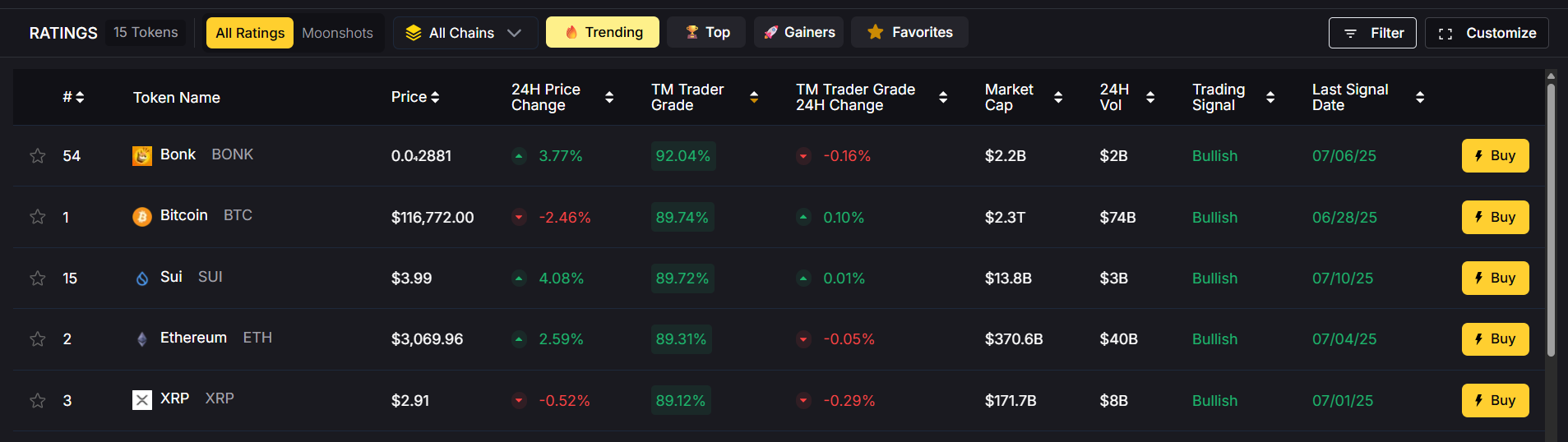
Token Metrics provides real-time bullish and bearish signals based on 80+ data points. This helps you make smarter entry and exit decisions—crucial when trading with limited funds.
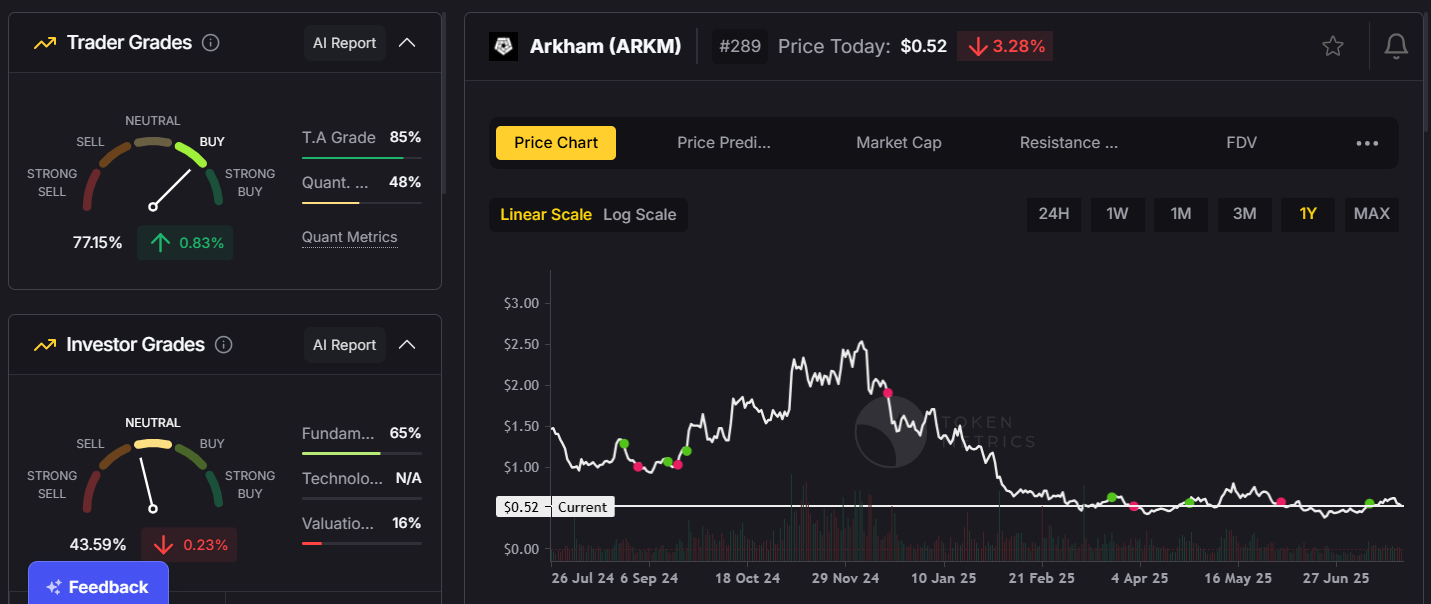
2. Proprietary Trader and Investor Grades

Our Trader and Investor Grades score tokens based on short-term and long-term potential, helping you focus on assets with the best risk-reward profile.

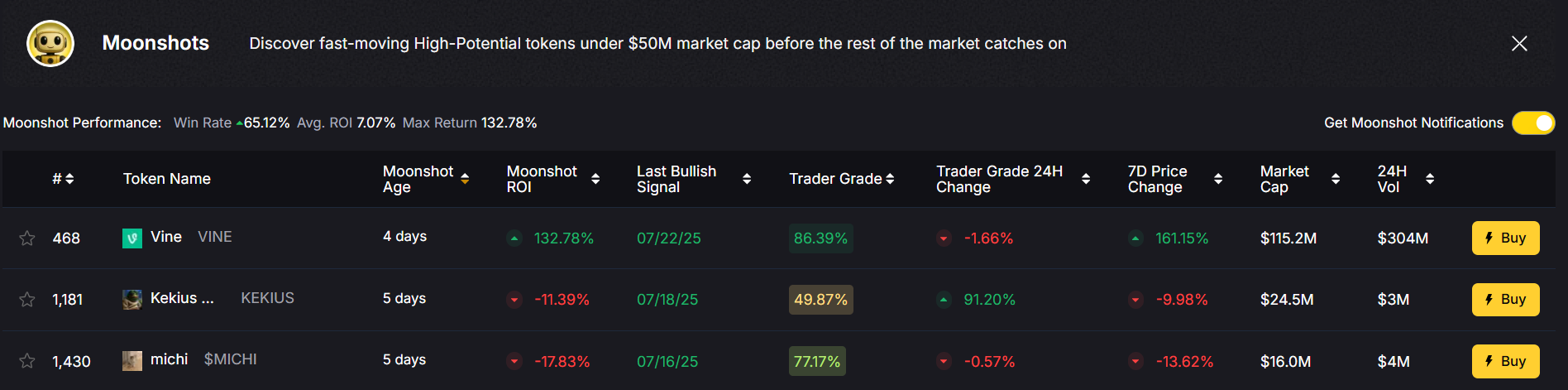
3. Moonshot Finder for Low-Cap Opportunities

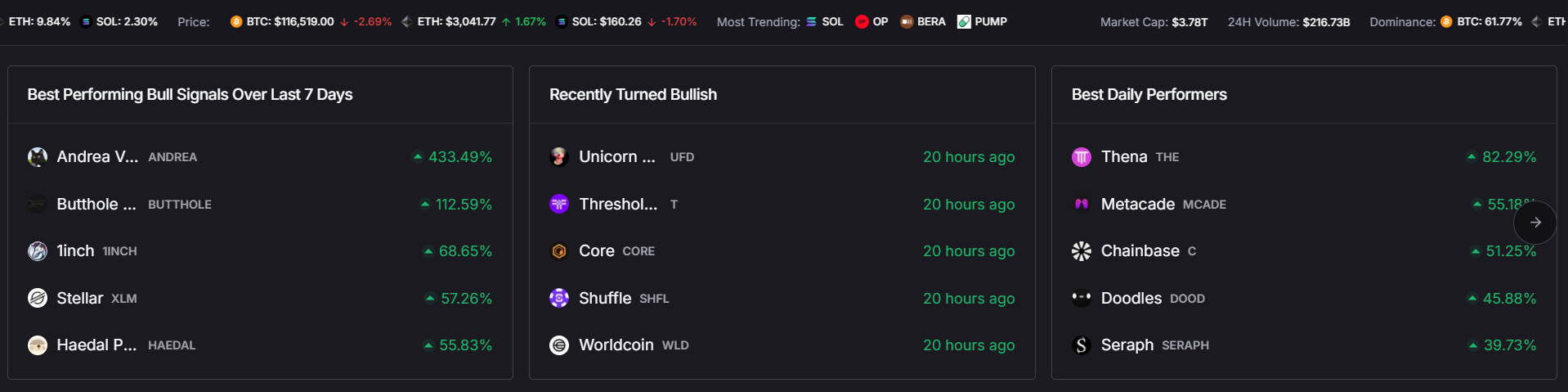
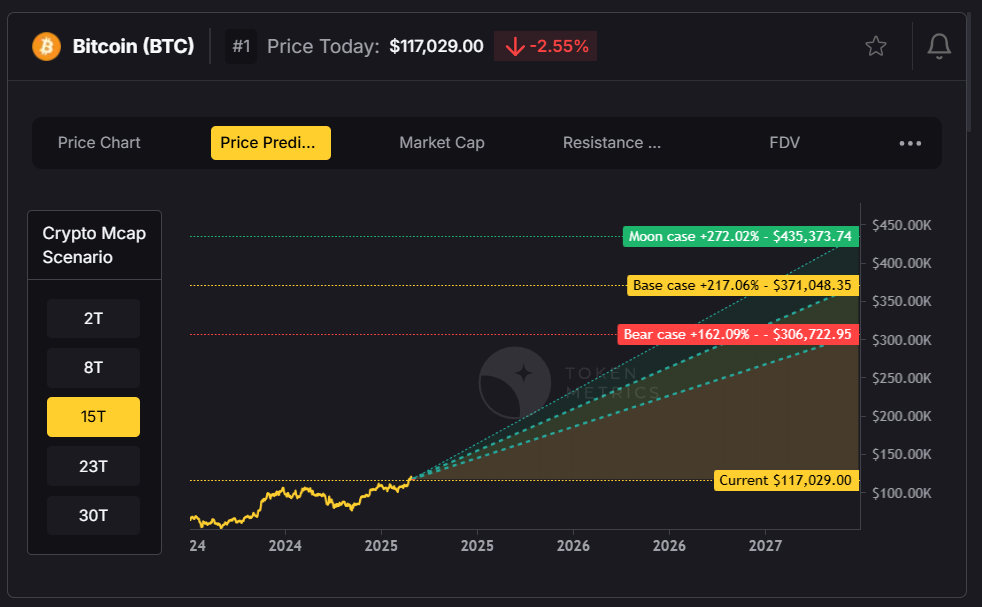
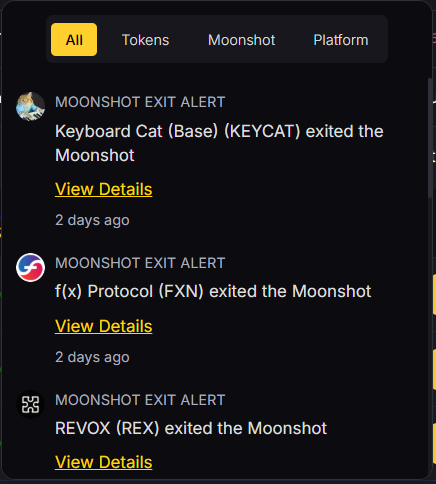
Want to turn a small investment into something bigger? Token Metrics’ Moonshot Finder identifies high-potential low-cap altcoins before they pump, giving you an edge.
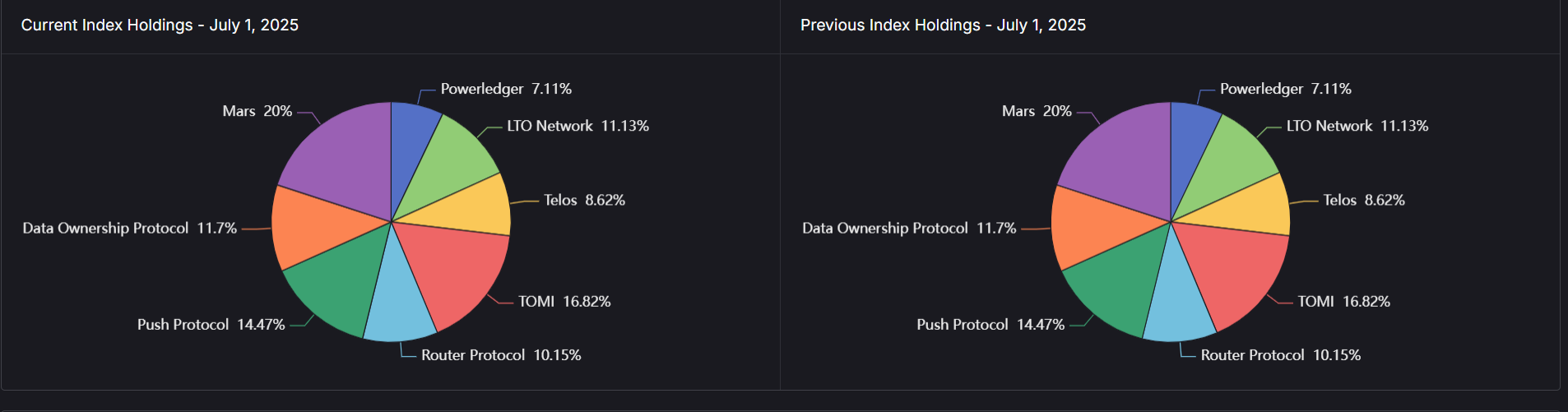
4. AI Indices & Auto-Managed Portfolios

Don’t know where to start? Token Metrics offers AI-driven crypto indices, automatically managing a diversified portfolio based on current market conditions.

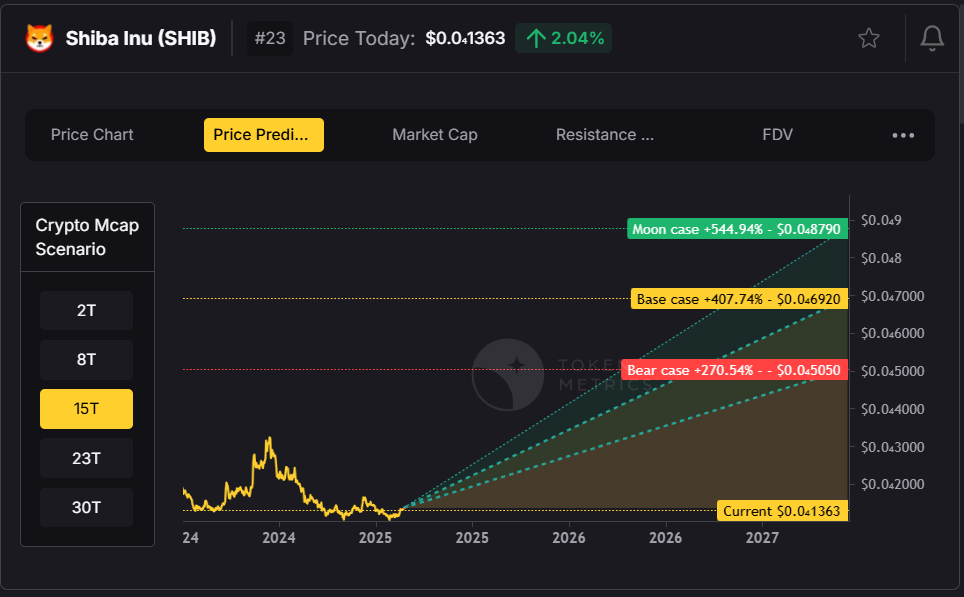
5. Free & Flexible Plans

Whether you’re starting with $0 or $166.7 per month, Token Metrics offers free and paid plans to match your needs.

Can You Really Make Money Starting Small?

Yes, you can—but it requires patience, strategy, and the right tools. Many traders have grown $100–$500 portfolios into thousands by leveraging long-term investments in quality projects and AI-guided trading signals.

  • Example:

    • A $100 investment in Ethereum in early 2020 would have grown to over $4,000 by 2021.
    • A $50 investment in a low-cap moonshot token could multiply 10x or more if chosen wisely.

Best Practices for Starting Small in Crypto Trading

  1. Start with what you can afford to lose – Never invest rent or essential funds.
  2. Diversify your portfolio – Spread your investment across multiple tokens.
  3. Use AI-powered tools – Platforms like Token Metrics reduce guesswork and improve decision-making.
  4. Avoid emotional trading – Stick to your strategy and avoid panic-selling.
  5. Stay educated – Follow market trends, join crypto communities, and use analytical tools.

Final Thoughts

So, how much money do you need to start crypto trading?
The truth is—you can start with as little as $10, but for a more meaningful experience and potential growth, $250–$1,000 is a practical starting range.

The key isn’t just the amount—it’s how you trade. Using AI-driven insights from Token Metrics, you can make smarter decisions, find hidden gems, and navigate crypto’s volatility like a pro.

Whether you’re starting small or diving in with a bigger budget, Token Metrics helps you trade confidently and build a strategy tailored to your goals.

Build Smarter Crypto Apps &
AI Agents in Minutes, Not Months
Real-time prices, trading signals, and on-chain insights all from one powerful API.
Grab a Free API Key
About Token Metrics
Token Metrics: AI-powered crypto research and ratings platform. We help investors make smarter decisions with unbiased Token Metrics Ratings, on-chain analytics, and editor-curated “Top 10” guides. Our platform distills thousands of data points into clear scores, trends, and alerts you can act on.
30 Employees
analysts, data scientists, and crypto engineers
Daily Briefings
concise market insights and “Top Picks”
Transparent & Compliant
Sponsored ≠ Ratings; research remains independent
Want Smarter Crypto Picks—Free?
See unbiased Token Metrics Ratings for BTC, ETH, and top alts.
Thank you! Your submission has been received!
Oops! Something went wrong while submitting the form.
 No credit card | 1-click unsubscribe
Token Metrics Team
Token Metrics Team

Recent Posts

Crypto Basics

What Is an ETF Stock? A Beginner’s Guide to Exchange-Traded Funds in 2025

Token Metrics Team
8 min

In today’s fast-moving financial markets, Exchange-Traded Funds, or ETF stocks, have emerged as one of the most popular investment vehicles for beginners and professionals alike. But what exactly is an ETF stock, how does it work, and why is it considered a smart way to invest?

This guide will walk you through everything you need to know about ETF stocks in 2025—including how they work, their benefits and risks, and how AI platforms like Token Metrics are changing the way people research and trade ETFs in both traditional and crypto markets.

📌 What Is an ETF Stock?

An ETF stock refers to a share of an Exchange-Traded Fund—a type of investment fund that trades on stock exchanges, much like individual company stocks. Each ETF holds a basket of underlying assets such as:

  • Stocks (e.g., S&P 500 companies)
  • Bonds
  • Commodities (like gold or oil)
  • Currencies
  • Cryptocurrencies (Bitcoin, Ethereum, etc.)

When you buy an ETF stock, you’re buying a fractional share of the entire portfolio of assets held by that ETF.

🔍 How Does an ETF Stock Work?

ETF stocks work like this:

  1. Creation: An asset management company (like BlackRock, Vanguard, or Fidelity) creates an ETF that tracks a specific index, sector, or asset type.
  2. Listing: The ETF is listed on a stock exchange such as the NYSE or Nasdaq.
  3. Trading: Investors can buy and sell ETF shares throughout the trading day, just like they would a stock like Apple or Tesla.
  4. Price Movement: The price of an ETF stock fluctuates during the day based on the Net Asset Value (NAV) of its holdings and supply-demand dynamics in the market.

This model provides a liquid, transparent, and low-cost way for investors to gain diversified exposure to entire markets or sectors.

📊 Example of an ETF Stock

A good example is the SPDR S&P 500 ETF Trust (SPY), which tracks the performance of the S&P 500 index. When you buy a share of SPY, you gain exposure to 500 of the largest U.S. companies—without needing to buy each stock individually.

✅ Benefits of ETF Stocks

ETF stocks offer numerous advantages for investors in 2025:

1. Diversification

Instead of buying individual assets, ETF stocks offer instant diversification by holding dozens or hundreds of securities in a single share.

2. Liquidity

ETFs are traded on exchanges, making them highly liquid. You can buy or sell them at market prices during normal trading hours.

3. Lower Costs

ETFs typically have low expense ratios (as low as 0.03%), especially compared to mutual funds or actively managed portfolios.

4. Transparency

Most ETFs disclose their holdings daily, giving investors a clear view into what they’re buying.

5. Flexibility

You can use ETFs for long-term investing, short-term trading, hedging, or generating income through dividends.

⚠️ Risks of ETF Stocks

Despite their many benefits, ETF stocks do come with some risks:

1. Market Risk

ETF stocks are still subject to market volatility. If the underlying assets decline in value, so will the ETF.

2. Tracking Error

Some ETFs may not perfectly replicate the performance of their index due to fees, slippage, or illiquid assets.

3. Overexposure

Because ETFs make it easy to invest, some investors may unknowingly become overexposed to a particular sector or strategy.

4. Liquidity Risk

Not all ETFs are created equal. Low-volume ETFs may have wider bid-ask spreads, increasing trading costs.

🪙 Crypto ETFs: The New Frontier

In 2025, crypto ETF stocks have become a hot trend. These funds allow investors to gain exposure to digital assets without managing private keys, wallets, or blockchain protocols.

Types of crypto ETFs include:

  • Spot ETFs: Hold actual crypto assets (e.g., Bitcoin, Ethereum).
  • Futures ETFs: Track the price of crypto futures contracts.

Popular examples in 2025 include:

  • IBIT (BlackRock Bitcoin ETF)
  • FBTC (Fidelity Bitcoin ETF)
  • ETHX (Ethereum Spot ETF)

Crypto ETFs have opened the door for institutional and traditional investors to gain exposure to the crypto market in a regulated and simplified manner.

🤖 How Token Metrics Helps You Trade ETF Stocks Smarter

Whether you're interested in traditional ETF stocks or crypto ETFs, Token Metrics provides the AI-powered insights you need to make better investment decisions.

🔎 1. AI-Powered Ratings

Token Metrics assigns each token or ETF a Trader Grade and Investor Grade based on price trends, volume, volatility, and technical strength—making it easy to spot outperformers.

📈 2. Bullish and Bearish Signals

AI-driven signals show when it’s time to buy or sell based on real-time metrics like ETF inflows, exchange balances, and market sentiment.

📊 3. Price Forecasts

Get access to predictive models that estimate where Bitcoin, Ethereum, and major crypto ETFs are headed—based on 80+ factors.

🔔 4. Smart Alerts

Set custom alerts for ETF stock signals, price movements, or grade changes so you never miss an opportunity.

By combining ETF investing with Token Metrics’ AI analytics, you gain an informational edge in markets that move faster than ever.

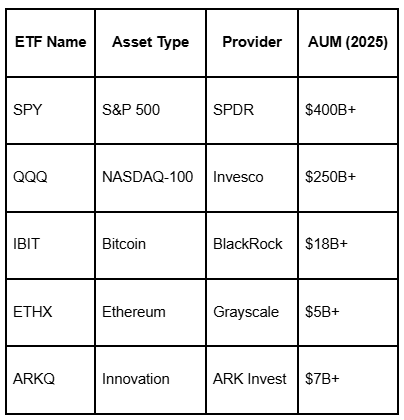
📈 Popular ETF Stocks in 2025

Here’s a list of top-performing ETF stocks across traditional and crypto sectors:

🧠 Final Thoughts

ETF stocks are a powerful investment tool in 2025, offering instant diversification, low fees, and easy access to traditional and crypto markets. Whether you're looking to build a retirement portfolio or ride the next Bitcoin rally, ETF stocks make it easier than ever to invest with confidence.

And with platforms like Token Metrics, you don’t need to guess your way through ETF trading. Use AI-driven insights, price predictions, and real-time data to get ahead of the curve—no matter what markets you trade.

Crypto Basics

What Is an ETF in Crypto? A Complete Guide for Crypto Investors in 2025

Token Metrics Team
8 min

The world of crypto investing is expanding at lightning speed. With growing institutional adoption and mainstream interest, new financial instruments are emerging to make crypto more accessible to everyday investors. One of the most impactful of these tools is the Exchange-Traded Fund (ETF) — and in 2025, crypto ETFs are playing a crucial role in shaping the future of digital asset investing.

📊 What Is an ETF?

An ETF (Exchange-Traded Fund) is a type of investment fund traded on traditional stock exchanges, just like individual stocks. ETFs hold a basket of assets such as stocks, bonds, commodities—or, in this case, cryptocurrencies.

When you buy shares of an ETF, you’re investing in a diversified portfolio managed by an institution. Instead of buying each asset individually, ETFs let you gain exposure to a group of assets through a single security.

🪙 What Is a Crypto ETF?

A crypto ETF is a special type of ETF that tracks the price of one or more cryptocurrencies, such as Bitcoin, Ethereum, or a basket of altcoins. These ETFs allow investors to gain exposure to crypto markets without needing to buy, store, or manage digital assets directly.

Crypto ETFs are listed on traditional financial exchanges (like Nasdaq or NYSE) and can be purchased via brokerage accounts—making them ideal for both institutional investors and crypto-curious retail traders.

🔍 Types of Crypto ETFs

There are two main categories of crypto ETFs:

1. Spot Crypto ETFs

  • Directly hold the underlying cryptocurrency (e.g., Bitcoin, Ethereum).
  • Track the real-time price of the asset.
  • Considered the most accurate and direct method of gaining crypto exposure.
  • Example: BlackRock’s iShares Bitcoin Trust.

2. Futures-Based Crypto ETFs

  • Do not hold actual cryptocurrency.
  • Invest in futures contracts that speculate on the asset’s future price.
  • Prone to “tracking errors” and additional management fees.
  • Example: ProShares Bitcoin Strategy ETF (BITO).

In 2025, spot ETFs have become more popular, especially after multiple approvals in major markets like the U.S., Canada, and Hong Kong.

✅ Benefits of Crypto ETFs

Crypto ETFs offer a range of advantages for investors seeking exposure to digital assets without managing crypto wallets or private keys.

1. Accessibility

  • Trade crypto exposure from a traditional brokerage account.
  • No need for crypto exchanges, wallets, or DeFi protocols.

2. Regulation and Security

  • Managed by licensed institutions and regulated by bodies like the SEC.
  • Custody solutions are handled by professionals (e.g., Coinbase Custody, Fidelity Digital).

3. Diversification

  • Some ETFs offer exposure to a basket of cryptocurrencies, reducing risk.
  • Others may focus on specific sectors like DeFi or metaverse tokens.

4. Tax and Retirement Account Eligibility

  • Can be included in IRAs, 401(k)s, and tax-advantaged portfolios in some jurisdictions.

⚠️ Risks of Crypto ETFs

While crypto ETFs simplify access, they are not risk-free.

1. Management Fees

  • ETFs charge annual fees (0.20%–1.00%), which can affect long-term gains.

2. Lack of Full Ownership

  • You don’t hold the actual coins, so you can’t use them for staking, yield farming, or DeFi.

3. Volatility

  • Crypto markets are still highly volatile. ETF prices can fluctuate rapidly.

4. Tracking Errors (Futures ETFs)

  • Futures-based ETFs often lag behind the spot price of the cryptocurrency.

💡 Why Crypto ETFs Matter in 2025

The launch and adoption of crypto ETFs signal mainstream validation of the crypto market.

  • Over $60 billion has poured into Bitcoin and Ethereum ETFs since early 2024.
  • Institutional players like BlackRock, Fidelity, and ARK Invest are leading issuers.
  • Spot Bitcoin ETFs helped propel BTC above $118,000 in July 2025.
  • Regulatory green lights from the SEC, MAS, and other regulators mark a shift in global crypto policy.

Crypto ETFs reduce barriers to entry and give traditional investors a safe, regulated way to participate in the digital economy.

🤖 How Token Metrics Helps You Analyze Crypto ETF Trends

As ETFs drive price action, tools like Token Metrics give you an edge by turning market noise into actionable intelligence.

🔹 Real-Time Bullish/Bearish Signals

Token Metrics' AI algorithm scans exchange inflows, ETF data, and sentiment to issue buy/sell signals for major cryptocurrencies like Bitcoin, Ethereum, XRP, and more.

🔹 Institutional Flow Tracking

Track ETF fund flows to understand where institutions are allocating capital—key for timing your own entries and exits.

🔹 Price Predictions and Trend Grades

AI-generated price predictions, trader grades, and investor scores help you assess risk before investing in ETF-driven rallies.

🔹 Portfolio Tracking

Token Metrics syncs with your wallet or brokerage to track crypto ETF exposure alongside your on-chain tokens.

By using Token Metrics, you’re not just following ETF trends—you’re staying ahead of them.

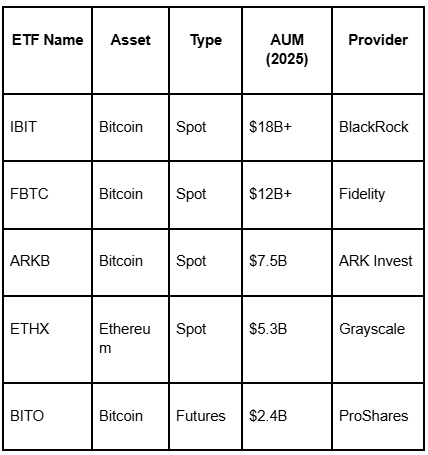
🔄 Popular Crypto ETFs in 2025

Here are some of the top-performing crypto ETFs currently available:

These ETFs are helping investors tap into the gains of crypto markets—without the complexity.

🧠 Final Thoughts

Crypto ETFs represent a pivotal shift in how digital assets are being embraced in traditional finance. They offer accessibility, regulatory clarity, and simplified crypto exposure for everyone from hedge funds to retail investors.

But smart investing goes beyond headlines. Platforms like Token Metrics help you:

  • Time entries and exits with AI-powered signals

  • Track ETF fund flows to gauge institutional momentum

  • Build conviction using on-chain data and predictive analytics

In 2025 and beyond, the winning strategy is clear: combine the safety of ETFs with the intelligence of Token Metrics.

Crypto Basics

What Is ETF Trading? A Beginner’s Guide to Exchange-Traded Funds in 2025

Token Metrics Team
8 min

In today’s fast-paced financial markets, ETF trading has become one of the most popular and accessible investment strategies. Whether you're a traditional investor or a crypto enthusiast, understanding how ETF trading works can help you make smarter, more diversified investment decisions.

📈 What Is an ETF?

An ETF (Exchange-Traded Fund) is an investment fund that trades on stock exchanges, similar to individual stocks. Each ETF holds a collection of assets, such as:

  • Stocks (like the S&P 500)
  • Bonds
  • Commodities (like gold or oil)
  • Currencies
  • Cryptocurrencies (Bitcoin, Ethereum, etc.)

When you buy a share of an ETF, you're buying a fractional interest in the entire basket of assets. This makes ETFs a powerful tool for diversification, even for beginners.

💹 What Is ETF Trading?

ETF trading refers to the buying and selling of ETF shares on an exchange—just like you would with Apple or Tesla stock. The value of an ETF changes throughout the trading day, based on the underlying value of its assets.

ETF trading is commonly used for:

  • Portfolio diversification
  • Hedging strategies
  • Thematic investing (e.g., AI, clean energy, DeFi)
  • Speculating on short-term price movements

You can trade ETFs via your online brokerage, investment app, or even through certain retirement accounts (like IRAs).

🔄 How Does ETF Trading Work?

Here’s a simplified version of how ETF trading works:

  1. ETF Provider Creates the Fund
    A company like BlackRock or Fidelity creates an ETF that holds a specific basket of assets.

  2. ETF Listed on an Exchange
    The ETF is listed on public stock exchanges such as the NYSE or Nasdaq.

  3. Investors Buy and Sell Shares
    Investors trade ETF shares just like stocks—prices fluctuate throughout the day.

  4. Market Makers Maintain Liquidity
    Authorized participants ensure ETF prices closely match the value of the underlying assets (called the Net Asset Value or NAV).

🪙 What About Crypto ETFs?

In 2025, crypto ETFs have emerged as one of the fastest-growing segments of the ETF market.

Crypto ETFs allow investors to gain exposure to cryptocurrencies without owning the actual coins. These ETFs are regulated, secure, and accessible through traditional finance platforms.

There are two types:

  • Spot Crypto ETFs (hold actual crypto assets like Bitcoin or Ethereum)
  • Futures Crypto ETFs (track the price of crypto futures contracts)

Example: BlackRock’s iShares Bitcoin Trust (IBIT) is a spot Bitcoin ETF with billions in assets under management (AUM) in 2025.

✅ Benefits of ETF Trading

ETF trading offers unique advantages for both retail and institutional investors:

1. Diversification

Instead of buying dozens of individual stocks, ETFs offer broad exposure to sectors, themes, or markets in a single trade.

2. Liquidity

ETFs trade like stocks—buy or sell at any time during market hours. This makes them more flexible than traditional mutual funds.

3. Cost Efficiency

Many ETFs have low expense ratios, often under 0.25%. You avoid the high fees associated with actively managed funds.

4. Accessibility

Trade ETFs using any brokerage account. You don’t need to be an accredited investor or a crypto expert.

5. Tax Advantages

ETFs are generally more tax-efficient than mutual funds due to the in-kind creation/redemption process.

⚠️ Risks of ETF Trading

ETF trading, like all investing, carries risks:

1. Market Risk

ETF prices can go up or down depending on market conditions.

2. Liquidity Risk

Not all ETFs are highly traded. Low volume can lead to wide bid/ask spreads and slippage.

3. Tracking Error

Some ETFs fail to perfectly mirror their benchmark, especially futures-based crypto ETFs.

4. Sector Risk

Thematic ETFs (e.g., blockchain, AI) can be highly concentrated and volatile.

🧠 How Token Metrics Enhances ETF Trading with AI

Whether you're trading traditional ETFs or crypto-focused ones, Token Metrics provides AI-powered tools to help you trade with confidence.

🔍 1. Real-Time Signals

Token Metrics offers AI-generated bullish/bearish signals for Bitcoin, Ethereum, and other assets—helping you identify the best time to enter or exit.

📊 2. Price Predictions

The platform generates short- and long-term price forecasts, using 80+ data points. This can help you anticipate ETF price movements, especially for crypto ETFs.

📈 3. On-Chain Data + ETF Flows

Token Metrics tracks exchange reserves, ETF inflows, and blockchain metrics—giving traders a unique edge not available on traditional brokerage platforms.

📣 4. Alerts and Custom Grades

Set up alerts based on trader grades, investor grades, and signal changes to react to market moves instantly.

🔥 Example: Trading Bitcoin ETFs Using Token Metrics

Let’s say you want to trade the BlackRock Bitcoin ETF in July 2025. Here’s how Token Metrics can help:

  • AI signaled bullish BTC trend on June 28
  • Price surged from $106,000 to $118,000
  • ETF inflows increase as institutional demand grows
  • You receive a buy alert from Token Metrics
  • You enter the ETF early and ride the momentum

This combination of real-time AI alerts + institutional trend analysis gives you a significant advantage over traditional investors.

🧭 Final Thoughts

ETF trading has changed the game for investors. Whether you're looking to diversify your portfolio, gain exposure to crypto, or automate your trading strategy—ETFs provide a flexible, affordable, and efficient solution.

And in 2025, combining ETF trading with Token Metrics' AI-powered platform is one of the smartest ways to stay ahead.

With features like real-time signals, crypto ETF tracking, price predictions, and custom alerts, Token Metrics transforms how you approach modern ETF markets.

Choose from Platinum, Gold, and Silver packages
Reach with 25–30% open rates and 0.5–1% CTR
Craft your own custom ad—from banners to tailored copy
Perfect for Crypto Exchanges, SaaS Tools, DeFi, and AI Products