Back to blog
Research

How to Trade Indices on Token Metrics: Complete 2025 Guide

Discover how Token Metrics' indices simplify crypto portfolio management with automation, transparent rebalancing, and secure self-custody features for all investor levels.
Token Metrics Team
8
Want Smarter Crypto Picks—Free?
See unbiased Token Metrics Ratings for BTC, ETH, and top alts.
Thank you! Your submission has been received!
Oops! Something went wrong while submitting the form.
 No credit card | 1-click unsubscribe

Trading individual cryptocurrencies can be time-consuming and overwhelming, especially when trying to maintain exposure to market-wide movements while managing risk. Token Metrics Indices offers a streamlined solution that allows you to trade entire market baskets with the same ease as buying a single token. This comprehensive guide walks you through everything you need to know about trading indices on the Token Metrics platform.

Understanding Token Metrics Indices

Token Metrics Indices are rules-based baskets that track defined universes of cryptocurrencies with scheduled rebalances and clear inclusion criteria. Unlike manual portfolio management that requires constant monitoring and adjustment, these indices automate the process of maintaining diversified crypto exposure according to predetermined strategies.

The flagship offering, TM Global 100, exemplifies this approach by holding the top 100 cryptocurrencies by market cap during bullish market conditions and automatically switching to stablecoins when market signals turn bearish. This regime-switching methodology combines broad market participation with disciplined risk management, rebalancing weekly to reflect current market conditions.

Getting Started: Joining the Waitlist

Before you can trade Token Metrics indices, you'll need to secure access through the waitlist process. Navigate to the Token Metrics Indices hub and select the index you're interested in—such as TM Global 100. Click the "Join Waitlist" button to register your interest.

During the waitlist registration, you have the option to connect your wallet and preview the one-click buy flow along with available funding options. This optional step familiarizes you with the interface before launch, ensuring a smooth experience when trading becomes available. Once the index launches, you'll receive both an email notification and an in-app prompt, giving you immediate access to start trading.

The Trading Process: Step-by-Step

Trading indices on Token Metrics is designed for simplicity and speed, with most transactions completing in approximately 90 seconds. When you're ready to purchase an index, click the "Buy Index" button from the index's main page. This initiates the embedded wallet checkout flow that handles all the technical complexity behind the scenes.

The checkout interface presents comprehensive information before you commit to the trade. You'll see estimated gas fees, platform fees, maximum slippage tolerance, and the minimum expected value you'll receive. This transparency ensures you understand exactly what you're paying and what you're getting before confirming the transaction.

Review the current holdings displayed in both treemap and table formats. The treemap provides a visual representation of asset allocation, making it easy to understand portfolio composition at a glance, while the table view offers detailed information about each constituent asset. Once you've reviewed all details and are satisfied with the terms, confirm the transaction.

Understanding the Embedded Wallet

Token Metrics uses an embedded, self-custodial smart wallet for index transactions. This means you maintain complete control over your funds rather than entrusting them to a custodial service. The wallet is designed to lower operational barriers while preserving the security benefits of self-custody.

Funding options vary based on your connected wallet and blockchain network. The platform supports USDC for selling positions, and funding options surface automatically during checkout based on chain and wallet compatibility. This flexibility ensures you can participate regardless of which assets you currently hold.

The self-custodial nature means you're responsible for securing your access credentials, but it also ensures that Token Metrics never has direct control over your assets. This architecture aligns with crypto's ethos of user sovereignty while making the experience as seamless as possible.

Monitoring Your Positions

After purchasing an index, track your position under the "My Indices" section of the platform. This dashboard provides real-time profit and loss tracking, showing how your investment performs relative to your entry point. The interface updates dynamically as market conditions change and the index rebalances.

Access your complete transaction history within the same dashboard, maintaining a comprehensive record of all purchases, sales, and rebalances. This transparency extends to the index's operational mechanics—you can view the strategy modal explaining the rules governing index behavior, check the gauge showing the current market signal, and review the detailed transactions log showing every rebalance and portfolio adjustment.

Weekly Rebalancing and Regime Switching

Understanding how indices rebalance is crucial to managing expectations. Token Metrics indices rebalance weekly, updating constituent weights and potentially replacing assets to maintain alignment with the index's defined universe. For TM Global 100, this means ensuring the index always holds the current top 100 cryptocurrencies by market capitalization.

Beyond weekly rebalancing, regime switching triggers more dramatic portfolio shifts. When the proprietary market signal indicates bullish conditions, the index holds its full allocation to the top 100 assets. When signals turn bearish, the index moves entirely to stablecoins, aiming to preserve capital during downturns. This switching mechanism enforces disciplined risk management that many individual investors struggle to maintain manually.

These automatic adjustments occur without requiring action on your part. You continue holding your index position while the underlying assets shift according to the predetermined rules. This passive approach to active management represents one of the index's key value propositions.

Benefits Over Manual Trading

Trading indices on Token Metrics offers several advantages over managing individual positions manually. Time savings represent the most obvious benefit—no more tracking 100 individual tickers or executing dozens of small trades to rebalance your portfolio. The weekly rebalancing job runs automatically, freeing you to focus on other aspects of your investment strategy.

Discipline during drawdowns becomes significantly easier when rules govern your portfolio. The stablecoin switch enforces risk management when market signals deteriorate, removing the emotional difficulty of selling during uncertain periods. This systematic approach helps avoid the common pitfall of holding through severe drawdowns out of hope rather than strategy.

Execution efficiency improves dramatically with single-transaction index purchases versus multiple small trades across numerous assets. Each individual trade incurs slippage and fees that compound when building diversified positions manually. The embedded wallet checkout consolidates this into one transaction, reducing total costs and complexity.

Transparency and Security Measures

Token Metrics prioritizes transparency throughout the trading experience. The strategy modal provides complete documentation of the rules governing index behavior, eliminating the "black box" problem common in automated investment products. You always know what you own and why the index makes specific decisions.

Holdings display in multiple formats—treemap for visual allocation understanding and table for detailed constituent information. Every transaction and rebalance appears in the activity log, creating an auditable trail of index operations. This level of disclosure ensures you can verify that the index operates according to its stated rules.

Security measures include the self-custodial wallet architecture, fee and slippage preview before transaction confirmation, and clear documentation of operational mechanics. However, regime logic limitations exist—signals can be incorrect, switching can incur spreads and gas costs, and chain and asset support may vary by jurisdiction.

Who Should Trade Token Metrics Indices

Token Metrics indices suit multiple investor profiles. Hands-off allocators who want broad crypto exposure without micromanaging individual positions find the automated rebalancing and risk management appealing. Active traders can use indices as a disciplined core holding while executing satellite strategies around it.

Existing Token Metrics members and prospects who already consume the platform's research can transform analytical insights into actionable positions through one-click index purchases. Users new to on-chain trading benefit from the embedded wallet and clear fee structures that reduce operational complexity.

Those skeptical of opaque investment products appreciate the full strategy documentation, visible holdings, and comprehensive rebalance logs. The transparency allows verification that the product operates as advertised without mystery algorithms or hidden mechanisms.

Important Considerations

Cryptocurrency remains highly volatile and can lose substantial value rapidly. Past performance does not indicate future results, and even rule-based strategies can underperform during certain market conditions. The information in this guide serves educational purposes and should not be construed as financial advice.

Region-specific restrictions may apply, with chain and asset support varying by wallet and jurisdiction. Before trading, verify that you can access the specific indices and features relevant to your location. Gas fees on certain networks can be substantial, potentially affecting the economics of smaller positions.

Conclusion

Trading indices on Token Metrics streamlines crypto portfolio management by combining broad market exposure, systematic risk management, and operational simplicity. The one-click buying process, transparent holdings and rebalances, and self-custodial security architecture create an accessible yet sophisticated investment vehicle for both newcomers and experienced traders.

By understanding the mechanics of index trading, rebalancing schedules, and the embedded wallet system, you can make informed decisions about incorporating these products into your investment strategy. Whether you're seeking passive exposure to crypto markets or a disciplined core around which to build more active strategies, Token Metrics indices provide the infrastructure to execute efficiently.

Join the waitlist today at tokenmetrics.com/indices to secure early access when new indices launch, and experience how rules-based investing can transform your approach to cryptocurrency markets.

Click here to get early access to Token Metrics indices.

Build Smarter Crypto Apps &
AI Agents in Minutes, Not Months
Real-time prices, trading signals, and on-chain insights all from one powerful API.
Grab a Free API Key
About Token Metrics
Token Metrics: AI-powered crypto research and ratings platform. We help investors make smarter decisions with unbiased Token Metrics Ratings, on-chain analytics, and editor-curated “Top 10” guides. Our platform distills thousands of data points into clear scores, trends, and alerts you can act on.
30 Employees
analysts, data scientists, and crypto engineers
Daily Briefings
concise market insights and “Top Picks”
Transparent & Compliant
Sponsored ≠ Ratings; research remains independent
Want Smarter Crypto Picks—Free?
See unbiased Token Metrics Ratings for BTC, ETH, and top alts.
Thank you! Your submission has been received!
Oops! Something went wrong while submitting the form.
 No credit card | 1-click unsubscribe
Token Metrics Team
Token Metrics Team

Recent Posts

Research

Ethereum and Base Ecosystem Rally: Top Crypto Trading Opportunities in 2025

Token Metrics Team
6 min

Ethereum and Base Ecosystem Rally: Top Crypto Trading Opportunities in 2025

The cryptocurrency market is experiencing a significant narrative shift, with Ethereum and Base ecosystem projects leading the charge in early 2025. Recent market analysis reveals a concentrated rally in ETH-related tokens, presenting both opportunities and risks for crypto traders.

The Current Market Narrative: Ethereum Dominance

The crypto market has entered what experts are calling "Ethereum season," with ETH positioning itself as the number two highest-rated token in terms of trader grade. This surge isn't coincidental – it's driven by several key factors:

Public Treasury Adoption

Major corporations are increasingly adding Ethereum to their treasury holdings, following the path Bitcoin paved. This institutional adoption has created sustained buying pressure, with Ethereum benefiting from the same "digital gold" narrative that propelled Bitcoin to new heights.

Base Ecosystem Explosion

Coinbase's Layer 2 solution, Base, has become the most relevant L2 network, overtaking Arbitrum's previous dominance. The recent rebranding of Coinbase Wallet to the "Base app" has created a powerful ecosystem effect, benefiting projects deeply integrated with Base infrastructure.

Top Performing Tokens in the Ethereum/Base Narrative

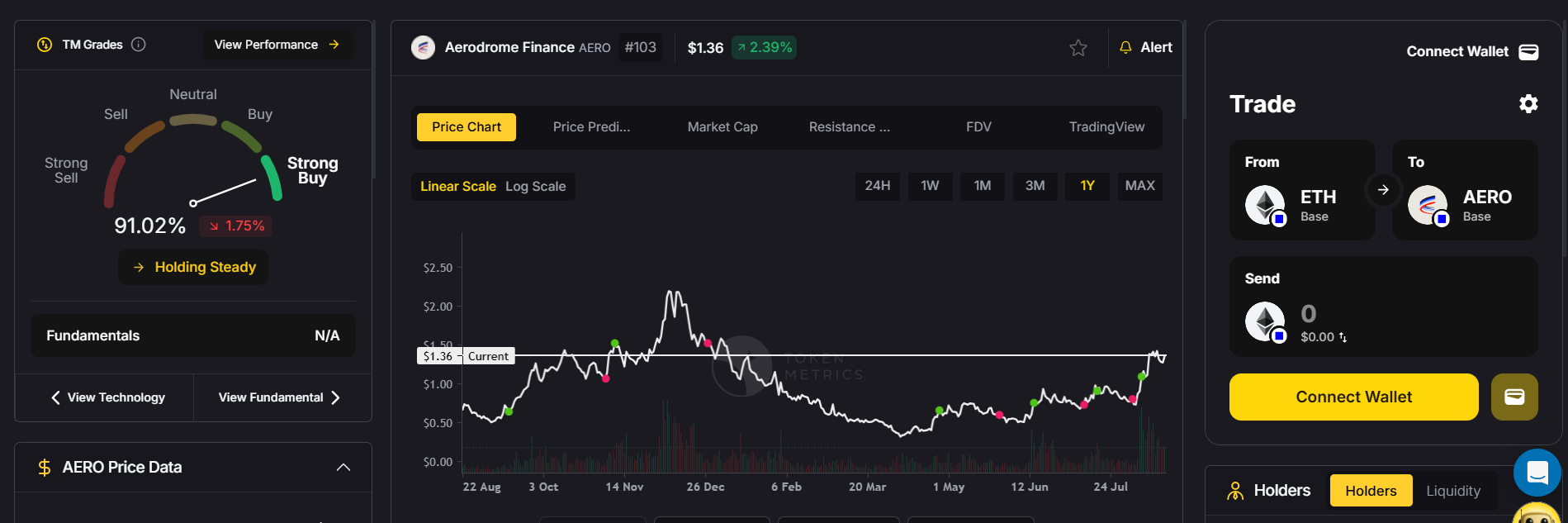
1. Aerodrome (AERO) - The Base Liquidity King

Current Market Cap: $1.2 billion
FDV: $2.3 billion

Aerodrome has emerged as the go-to liquidity solution for the Base ecosystem. With its tight integration into Coinbase's Base app ecosystem, AERO has significant upside potential as the Base app remains in limited beta. Once full access opens to Coinbase's broader user base, liquidity demand could skyrocket.

Key Advantages:

  • Direct Coinbase backing and integration
  • Lower market cap compared to competitors
  • Strong correlation with overall Base ecosystem growth
  • First-mover advantage in Base liquidity provision

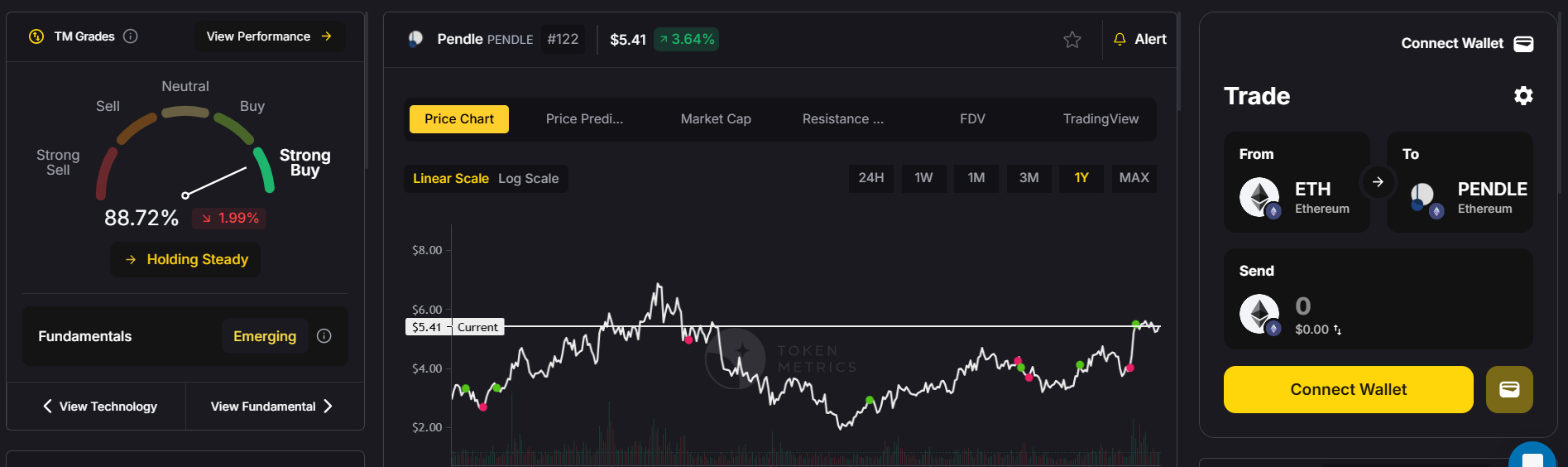
2. Pendle (PENDLE) - The New DeFi Infrastructure Play

Current Market Cap: Under $1 billion
FDV: $1.6 billion

Pendle is positioning itself as essential DeFi infrastructure, often compared to the "new Aave." The project has attracted significant institutional investment and offers unique yield trading mechanisms that differentiate it from traditional lending protocols.

Growth Drivers:

  • 40% gain in the past week
  • Strong institutional backing
  • Innovative yield trading products
  • Lower valuation than established competitors

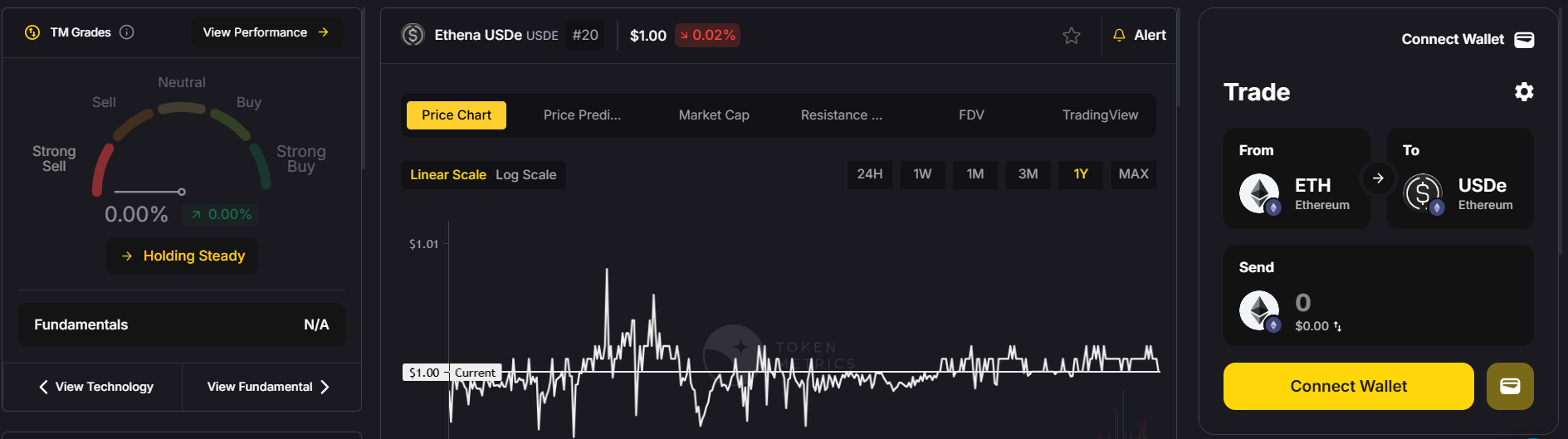
3. Ethena (ENA) - The Synthetic Stablecoin Revolution

Current Market Cap: $2.3 billion
FDV: $11.6 billion

Ethena has created a revolutionary synthetic stablecoin (USDe) that generates yield through delta-neutral trading strategies. The protocol has achieved remarkable growth, reaching 10 billion in stablecoin supply faster than both USDC and Tether historically.

Unique Features:

  • 18% yield generation in 2024
  • Delta-neutral funding rate arbitrage
  • Tier-1 VC backing (Dragonfly, Pantera)
  • Rapid adoption exceeding traditional stablecoins

Trading Strategy: Narrative-Based Approach

The current market requires a narrative-focused trading strategy rather than pure fundamental analysis. Here's why:

Market Psychology Shift

The crypto market has become increasingly trader-oriented, with attention shifting between sectors rapidly. Projects with strong fundamentals can underperform if they're not part of the current narrative cycle.

Historical Pattern Recognition

Previous cycles show clear rotation patterns:

  • AI agents dominated in late 2024 (AXBT, Virtuals)
  • DePIN had its moment earlier
  • Now Ethereum/Base ecosystem is trending

Risk Management Approach

Smart traders are:

  1. Following trending tokens with high trader grades
  2. Setting alerts for signal changes
  3. Taking profits when narratives shift
  4. Avoiding emotional attachment to fundamentally sound projects outside current narratives

The Coinbase Effect: Why Base Matters

Coinbase's strategic moves are creating a "super app" ecosystem similar to WeChat but built on crypto rails:

Multi-Function Integration

  • DEX Trading: Direct access to decentralized exchanges
  • Social Features: Creator economy through Zora integration
  • Mini Apps: Farcaster-powered applications
  • Payments: Base Pay for USDC transactions

Competitive Positioning

Other exchanges are following suit:

  • OKX launching X Layer with OKB as gas token (+100% recently)
  • Kraken developing Inc L2
  • Bybit expanding Mantle ecosystem

Risk Factors and Exit Strategy

Narrative Rotation Risk

History shows that even blue-chip projects can decline 85-90% when narratives shift. AI tokens like AXBT fell from $0.80 to $0.13 despite strong fundamentals.

Timing Considerations

The Ethereum/Base narrative may be reaching maturity. Smart money is:

  • Monitoring correlation breakdowns between related tokens
  • Watching for volume decreases in trending sectors
  • Preparing for the next narrative (potentially AI resurgence or new sector)

Alert-Based Trading

Successful traders are implementing:

  • Price alerts for key support/resistance levels
  • Signal change notifications for trading grade shifts
  • Volume alerts for unusual activity patterns

Looking Ahead: What's Next?

Potential Catalysts

  • Base app public launch could drive another AERO surge
  • Institutional DeFi adoption may benefit Pendle and Morpho
  • Stablecoin regulations could accelerate Ethena adoption

Sector Rotation Preparation

Smart traders are already positioning for potential rotations into:

  • AI agents (oversold, innovation continuing)
  • DePIN projects (fundamental development ongoing)
  • New narrative emergence (RWAs, GameFi resurgence)

Conclusion

The Ethereum and Base ecosystem rally presents compelling short-term opportunities, but requires disciplined execution and risk management. Focus on projects with strong narrative alignment, lower valuations relative to peers, and clear catalysts for continued growth.

Remember: in the current market environment, being right about fundamentals isn't enough – you need to be right about narrative timing. Stay flexible, use alerts effectively, and be prepared to rotate when the market's attention shifts.

The crypto market moves fast. Stay informed with real-time analysis and trading signals to maximize your opportunities while managing risk effectively.

Research

Choosing the Right Crypto API for Your Bot: REST vs WebSockets Explained

Token Metrics Team
6

As crypto trading automation accelerates into 2025, choosing the right API interface for your bot could be the critical difference between lagging behind or capitalizing on real-time opportunities. But when it comes to REST vs WebSocket crypto APIs, which technology should you select for power, reliability, and performance? This post details the core differences, essential trade-offs, and latest best practices for crypto API comparison, empowering you to make a technical, mission-aligned decision for your next-generation trading bot.

REST and WebSocket: Core Concepts for Crypto APIs

To understand which API protocol is optimal for your crypto bot in 2025, let’s clarify what REST and WebSocket actually do—especially in a high-frequency, automation-driven ecosystem.


The fundamental contrast: REST works in a "pull" model (request/response), while WebSockets operate in a "push" paradigm (real-time streams). This distinction plays a major role in how bots interact with exchanges and handle crypto market shifts.

Performance, Latency, and Reliability for Crypto Bots

Performance and data freshness are critical for crypto APIs in 2025. High-frequency or latency-sensitive trading bots depend on receiving accurate, instant data on price movements and order book changes.


Yet reliability considerations persist. WebSocket connections may experience drops, require reconnection logic, and occasionally miss events during high network volatility. REST, while slower, may provide more consistency under unstable conditions.

Scalability, Security, and Use Cases in Crypto API Comparison

Your crypto bot’s requirements—frequency of updates, types of orders, and compliance frameworks—may drive the API choice. Here’s how REST and WebSocket compare across scenarios relevant in 2025:


Security-wise, REST can offer granular access controls per endpoint. WebSockets, though encrypted, have unique session management and timeout considerations—especially important for bots managing real funds.

In the ever-evolving crypto automation landscape, developers and researchers are seeing:


Ultimately, the “better” API depends on your bot’s profile: Speed-critical, event-driven bots gravitate to WebSockets, while research bots or those trading on daily signals may remain with REST. Many leading bot frameworks in 2025 offer seamless switching or even run hybrid workflows for best-in-class resilience.

Practical Tips for Comparing REST vs WebSocket Crypto APIs

When evaluating crypto APIs for your bot or automation project, consider these practical criteria:

    Above all, test API performance in real-market scenarios—using sandboxes or historical replays—to ensure your bot’s architecture is future-proofed for 2025 volatility and growth.

    Build Smarter Crypto Apps & AI Agents with Token Metrics

    Token Metrics provides real-time prices, trading signals, and on-chain insights all from one powerful API. Grab a Free API Key

    FAQ: REST vs WebSocket Crypto APIs for Bots in 2025

    What are the main differences between REST and WebSocket APIs?

    REST APIs use isolated request/response cycles and are suited for infrequent or simple queries. WebSocket APIs sustain continuous, two-way connections for real-time market data updates. The choice depends on whether your bot needs static or streaming data.

    Which API type is better for real-time crypto trading bots?

    WebSocket APIs are preferred for real-time trading bots due to their lower latency and ability to push instant data updates. However, implementation complexity and stability must be considered.

    Can I use both REST and WebSocket in the same bot?

    Yes. Many bots use REST for account management or trade execution and WebSocket for live data streams. This hybrid approach leverages the strengths of each protocol.

    Are there security differences between REST and WebSocket crypto APIs?

    Both protocols utilize SSL encryption and API key-based authentication, but WebSocket sessions require more careful management and regular re-authentication to prevent stale or hijacked connections.

    How do I choose the right API for my crypto bot?

    Assess your bot’s use case—speed versus reliability, frequency of queries, data intensity, and integration requirements. Testing both protocols with your trading logic is recommended for optimization.

    Disclaimer

    This content is for educational and informational purposes only. It does not constitute investment, trading, or financial advice. Past performance and API platform capabilities are not guarantees of future results. Always perform independent research and technical due diligence before building or deploying trading bots or utilizing API-based automation tools.

    Research

    Avoid These Common Pitfalls When Creating Your First Crypto Trading Bot

    Token Metrics Team
    6

    Coding your first crypto trading bot can be an exciting journey into algorithmic trading, automation, and the world of digital assets. But for many beginners, the path is full of unexpected hurdles. Rushing into bot development without understanding key risks can lead to costly errors, technical failures, and frustration. In this article, we break down the top mistakes to avoid when building your first crypto trading bot, and offer actionable insights so you can start your automation journey on solid ground.

    Jumping in Without Market or Technical Knowledge

    Many new developers are eager to start building a crypto trading bot after seeing success stories or reading about impressive returns from algorithmic strategies. However, skipping foundational learning can result in critical errors:

    • Limited understanding of market structure: Crypto markets operate differently from traditional assets, with unique liquidity, volatility, and trading hours.
    • Lack of programming proficiency: Writing robust, bug-free code is vital. Even minor logic errors can trigger unexpected trades or losses.
    • Neglecting data analysis: Bots rely on processed signals and historical data to inform actions. Without knowing how to interpret or validate data sources, a bot may act on false assumptions.

    Before you start coding, invest time to learn how exchanges work, typical trading strategies, and the programming language you intend to use (often Python or JavaScript for most bot frameworks). Familiarize yourself with basic quantitative analysis and backtesting tools to ground your bot in solid logic.

    Overlooking Risk Management Essentials

    One of the most widespread beginner crypto bot mistakes is failing to build robust risk controls into the automated system. While automation can remove human error and emotion, it cannot protect you from strategy-flaws or market anomalies by default. Major risks include:

    • No stop-loss or position sizing: Without defined parameters, a bot could open positions too large for your portfolio or fail to exit losing trades, compounding losses.
    • Ignoring exchange downtime or slippage: Bots need to account for order execution issues, network delays, or sudden liquidity drops on exchanges.
    • Insufficient monitoring: Set-and-forget mentality is dangerous. Even well-designed bots require monitoring to handle edge-cases or technical glitches.

    Consider embedding risk-limiting features. For example, restrict order sizes to a fraction of your total balance and always code for the possibility of missed, delayed, or partially filled orders.

    Choosing Unstable or Unsafe Exchange APIs

    APIs are the backbone of any crypto trading bot, allowing programmatic access to price data, balances, and order actions. For beginners, choosing subpar or poorly documented APIs is a frequent pitfall. Key issues include:

    • Insecure key storage: API keys grant powerful permissions. Storing them in plain text or repositories increases the risk of theft and account compromise.
    • Throttling and limits: Many exchanges impose usage limits on their APIs. Failing to handle request throttling can break your bot's functionality at critical moments.
    • Lack of redundancy: If your bot depends on a single API and it goes offline, your strategy can fail entirely. Good practice includes fallback data sources and error handling routines.

    Take time to evaluate API documentation, community support, and reliability. Explore well-maintained libraries and modules, and always use environment variables or secure vaults for your credentials.

    Failing to Backtest and Simulate Bot Performance

    It's tempting to deploy your trading bot live the moment it compiles without error. However, skipping backtesting—testing your bot on historical data—or forward-testing on a demo account is a recipe for unexpected behavior. Top mistakes here include:

    • Curve-fitting: Over-optimizing your bot to past data makes it unlikely to work under changing real-world conditions.
    • Test environment differences: Bots may behave differently in a testnet/sandbox compared to mainnet, especially regarding latency and real order matching.
    • Poor scenario coverage: Not simulating rare but critical events (such as flash crashes or API downtime) can leave your bot vulnerable when these inevitabilities occur.

    Carefully test your strategies with a range of market conditions and environments before risking live funds. Look for open-source backtesting libraries and consider using paper trading features offered by many exchanges.

    Neglecting Security and Compliance Considerations

    Crypto trading bots operate with sensitive account access and sometimes large balances at risk. New developers often underestimate the importance of security and regulatory compliance. Watch out for:

    • API abuse or leaks: Credentials, if exposed, can lead to unauthorized actions on your exchange accounts.
    • Open-source hazards: Downloading random code from forums or GitHub can introduce backdoors or exploits.
    • Compliance oversight: Depending on your location, automated trading or data collection may have legal implications. Always review exchange policies and seek out reliable, neutral sources on legal requirements before deploying trading bots.

    Implement best practices for code security and stay attentive to legal developments in your jurisdiction. Avoid shortcuts that could put your assets or reputation in danger.

    Build Smarter Crypto Apps & AI Agents with Token Metrics

    Token Metrics provides real-time prices, trading signals, and on-chain insights all from one powerful API. Grab a Free API Key

    What programming languages are best for building a crypto trading bot?

    Most crypto trading bots are built in Python or JavaScript due to strong libraries and exchange support. Some advanced users deploy bots in Java, C#, or Go for higher performance, but Python is considered beginner-friendly.

    How can I test my crypto bot safely before going live?

    Start with backtesting using historical data, then use exchange-provided sandboxes or paper trading environments. This lets you observe your bot’s actual behavior without risking real money or assets.

    What are best practices for managing API keys securely?

    Store API keys in environment variables or encrypted vaults, restrict key permissions, and never share or publish them. Rotate keys periodically and monitor logs for unauthorized activity.

    Can a crypto bot lose money even with a tested strategy?

    Yes; even well-tested bots can lose money due to market changes, exchange outages, slippage, or unforeseen bugs. Continuous monitoring and updates are essential for risk control.

    What tools or platforms can help beginners build better crypto trading bots?

    Platforms offering real-time market data, robust APIs, and community support can help. AI-powered research tools like Token Metrics can assist with backtesting and market analysis, while open-source frameworks provide learning resources.

    Disclaimer

    This article is for educational purposes only and should not be construed as investment, financial, or trading advice. Crypto trading bots carry risks, and readers should conduct thorough research and consult with professionals as appropriate. Always follow relevant laws and exchange terms of service.

    Choose from Platinum, Gold, and Silver packages
    Reach with 25–30% open rates and 0.5–1% CTR
    Craft your own custom ad—from banners to tailored copy
    Perfect for Crypto Exchanges, SaaS Tools, DeFi, and AI Products