Back to blog
Research

Leading Oracles for Price & Real-World Data (2025)

Compare the top blockchain oracles for price & RWA data in 2025. See strengths, costs, and best fits—then build with confidence.
Sam Monac
5 min
Want Smarter Crypto Picks—Free?
See unbiased Token Metrics Ratings for BTC, ETH, and top alts.
Thank you! Your submission has been received!
Oops! Something went wrong while submitting the form.
 No credit card | 1-click unsubscribe

Why Oracles for Price & Real-World Data Matter in September 2025

DeFi, onchain derivatives, RWAs, and payments don’t work without reliable oracles for price & real-world data. In 2025, latency, coverage, and security disclosures vary widely across providers, and the right fit depends on your chain, assets, and risk tolerance. This guide helps teams compare the leading networks (and their trade-offs) to pick the best match, fast.
Definition (snippet-ready): A blockchain oracle is infrastructure that sources, verifies, and delivers off-chain data (e.g., prices, FX, commodities, proofs) to smart contracts on-chain.

We prioritized depth over hype: first-party data, aggregation design, verification models (push/pull/optimistic), and RWA readiness. Secondary focus: developer UX, fees, supported chains, and transparency. If you’re building lending, perps, stablecoins, options, prediction markets, or RWA protocols, this is for you.

How We Picked (Methodology & Scoring)

  • Weights (100 pts): Liquidity/usage (30), Security design & disclosures (25), Coverage across assets/chains (15), Costs & pricing model (15), Developer UX/tooling (10), Support/SLAs (5).

  • Data sources: Official product/docs, security/transparency pages, and audited reports. We cross-checked claims against widely cited market datasets where helpful. No third-party links appear in the body.
    Last updated September 2025.

Top 10 Oracles for Price & Real-World Data in September 2025

1. Chainlink — Best for broad coverage & enterprise-grade security
Why Use It: The most battle-tested network with mature Price/Data Feeds, Proof of Reserve, and CCIP for cross-chain messaging. Strong disclosures and large validator/operator sets make it a default for blue-chip DeFi and stablecoins. docs.switchboard.xyz
Best For: Lending/stablecoins, large TVL protocols, institutions.
Notable Features:

  • Price/Data Feeds and reference contracts

  • Proof of Reserve for collateral verification

  • CCIP for cross-chain token/data movement

  • Functions/Automation for custom logic
    Fees/Notes: Network/usage-based (LINK or billing models; varies by chain).
    Regions: Global.
    Alternatives: Pyth, RedStone.
    Consider If: You need the most integrations and disclosures, even if costs may be higher. GitHub

2. Pyth Network — Best for real-time, low-latency prices

Why Use It: First-party publishers stream real-time prices across crypto, equities, FX, and more to 100+ chains. Pyth’s on-demand “pull” update model lets dApps request fresh prices only when needed—great for latency-sensitive perps/AMMs. Pyth Network
Best For: Perps/options DEXs, HFT-style strategies, multi-chain apps.
Notable Features:

  • Broad market coverage (crypto, equities, FX, commodities)

  • On-demand price updates to minimize stale reads

  • Extensive multi-chain delivery and SDKs Pyth Network
    Fees/Notes: Pay per update/read model varies by chain.
    Regions: Global.
    Alternatives: Chainlink, Switchboard.
    Consider If: You want frequent, precise updates where timing matters most. Pyth Network

3. API3 — Best for first-party (direct-from-API) data
Why Use It: Airnode lets API providers run their own first-party oracles; dAPIs aggregate first-party data on-chain. OEV (Oracle Extractable Value) routes update rights to searchers and shares proceeds with the dApp—aligning incentives around updates. docs.api3.org+1
Best For: Teams that prefer direct data provenance and revenue-sharing from oracle updates.
Notable Features:

  • Airnode (serverless) first-party oracles

  • dAPIs (crypto, stocks, commodities)

  • OEV Network to auction update rights; API3 Market for subscriptions docs.kava.io
    Fees/Notes: Subscription via API3 Market; chain-specific gas.
    Regions: Global.
    Alternatives: Chainlink, DIA.
    Consider If: You need verifiable source relationships and simple subscription UX. docs.kava.io

4. RedStone Oracles — Best for modular feeds & custom integrations

Why Use It: Developer-friendly, modular oracles with Pull, Push, and Hybrid (ERC-7412) modes. RedStone attaches signed data to transactions for gas-efficient delivery and supports custom connectors for long-tail assets and DeFi-specific needs.
Best For: Builders needing custom data models, niche assets, or gas-optimized delivery.
Notable Features:

  • Three delivery modes (Pull/Push/Hybrid)

  • Data attached to calldata; verifiable signatures

  • EVM tooling, connectors, and RWA-ready feeds
    Fees/Notes: Pay-as-you-use patterns; gas + operator economics vary.
    Regions: Global.
    Alternatives: API3, Tellor.
    Consider If: You want flexibility beyond fixed reference feeds.

5. Band Protocol — Best for Cosmos & EVM cross-ecosystem delivery

Why Use It: Built on BandChain (Cosmos SDK), Band routes oracle requests to validators running Oracle Scripts (OWASM), then relays results to EVM/Cosmos chains. Good match if you straddle IBC and EVM worlds. docs.bandchain.org+2docs.bandchain.org+2
Best For: Cross-ecosystem apps (Cosmos↔EVM), devs who like programmable oracle scripts.
Notable Features:

  • Oracle Scripts (OWASM) for composable requests

  • Request-based feeds; IBC compatibility

  • Libraries and examples across chains docs.bandchain.org
    Fees/Notes: Gas/fees on BandChain + destination chain.
    Regions: Global.
    Alternatives: Chainlink, Switchboard.
    Consider If: You want programmable queries and Cosmos-native alignment. docs.bandchain.org

6. DIA — Best for bespoke feeds & transparent sourcing

Why Use It: Trustless architecture that sources trade-level data directly from origin markets (CEXs/DEXs) with transparent methodologies. Strong for custom asset sets, NFTs, LSTs, and RWA feeds across 60+ chains. DIA+1
Best For: Teams needing bespoke baskets, niche tokens/NFTs, or RWA price inputs.
Notable Features:

  • Two stacks (Lumina & Nexus), push/pull options

  • Verifiable randomness and fair-value feeds

  • Open-source components; broad chain coverage DIA
    Fees/Notes: Custom deployments; some public feeds/APIs free tiers.
    Regions: Global.
    Alternatives: API3, RedStone.
    Consider If: You want full transparency into sources and methods. DIA

7. Flare NetworksBest for real-world asset tokenization and decentralized data

Why Use It: Flare uses the Avalanche consensus to provide decentralized oracles for real-world assets (RWAs), enabling the tokenization of non-crypto assets like commodities and stocks. It combines high throughput with flexible, trustless data feeds, making it ideal for bridging real-world data into DeFi applications.

Best For: Asset-backed tokens, DeFi protocols integrating RWAs, cross-chain compatibility.

Notable Features:

  • Advanced decentralized oracle network for real-world data

  • Tokenization of commodities, stocks, and other RWAs

  • Multi-chain support with integration into the Flare network

  • High throughput with minimal latency

Fees/Notes: Variable costs based on usage and asset complexity.

Regions: Global.

Alternatives: Chainlink, DIA, RedStone.

Consider If: You want to integrate real-world assets into your DeFi protocols and need a robust, decentralized solution.

8. UMA — Best for optimistic verification & oracle-as-a-service

Why Use It: The Optimistic Oracle (OO) secures data by proposing values that can be disputed within a window—powerful for binary outcomes, KPIs, synthetic assets, and bespoke data where off-chain truth exists but doesn’t stream constantly. Bybit Learn
Best For: Prediction/insurance markets, bespoke RWAs, KPI options, governance triggers.
Notable Features:

  • OO v3 with flexible assertions

  • Any verifiable fact; not just prices

  • Dispute-based cryptoeconomic security Bybit Learn
    Fees/Notes: Proposer/disputer incentives; bond economics vary by use.
    Regions: Global.
    Alternatives: Tellor, Chainlink Functions.
    Consider If: Your use case needs human-verifiable truths more than tick-by-tick quotes. Bybit Learn

9. Chronicle Protocol — Best for MakerDAO alignment & cost-efficient updates

Why Use It: Originated in the Maker ecosystem and now a standalone oracle network with Scribe for gas-efficient updates and transparent validator set (Infura, Etherscan, Gnosis, etc.). Strong choice if you touch DAI, Spark, or Maker-aligned RWAs. Chronicle Protocol
Best For: Stablecoins, RWA lenders, Maker-aligned protocols needing verifiable feeds.
Notable Features:

  • Scribe reduces L1/L2 oracle gas costs

  • Community-powered validator network

  • Dashboard for data lineage & proofs Chronicle Protocol
    Fees/Notes: Network usage; gas savings via Scribe.
    Regions: Global.
    Alternatives: Chainlink, DIA.
    Consider If: You want Maker-grade security and cost efficiency. Chronicle Protocol

10. Switchboard — Best for Solana & multi-chain custom feeds

Why Use It: A multi-chain, permissionless oracle popular on Solana with Drag-and-Drop Feed Builder, TEEs, VRF, and new Oracle Quotes/Surge for sub-100ms streaming plus low-overhead on-chain reads—ideal for high-speed DeFi. docs.switchboard.xyz+1
Best For: Solana/SVM dApps, custom feeds, real-time dashboards, gaming.
Notable Features:

  • Low-code feed builder & TypeScript tooling

  • Oracle Quotes (no feed accounts/no write locks)

  • Surge streaming (<100ms) and cross-ecosystem docs docs.switchboard.xyz
    Fees/Notes: Some features free at launch; usage limits apply.
    Regions: Global.
    Alternatives: Pyth, Band Protocol.
    Consider If: You want speed and customization on SVM/EVM alike. docs.switchboard.xyz+1

Decision Guide: Best By Use Case

  • Regulated/Institutional & broad integrations: Chainlink.

  • Ultra-low-latency trading: Pyth or Switchboard (Surge/Quotes). Pyth Network+1

  • Custom, gas-efficient EVM delivery: RedStone.

  • First-party sources & subscription UX: API3 (Airnode + dAPIs + OEV). docs.kava.io

  • Cosmos + EVM bridge use: Band Protocol. docs.bandchain.org

  • Bespoke feeds/NFTs/RWAs with transparent sources: DIA. DIA

  • Permissionless, long-tail assets: Tellor. docs.kava.io

  • Optimistic, assertion-based facts: UMA. Bybit Learn

  • Maker/DAI alignment & gas savings: Chronicle Protocol. Chronicle Protocol

How to Choose the Right Oracle (Checklist)

  • Region & chain support: Verify your target chains and L2s are supported.

  • Coverage: Are your assets (incl. long-tail/RWAs) covered, or can you request custom feeds?

  • Security model: Push vs. pull vs. optimistic; validator set transparency; dispute process.

  • Costs: Update fees, subscriptions, gas impact; consider pull models for usage spikes.

  • Latency & freshness: Can you control update cadence? Any SLAs/heartbeats?

  • UX & tooling: SDKs, dashboards, error handling, testing sandboxes.

  • Support & disclosures: Incident reports, status pages, proofs.

  • Red flags: Opaque sourcing, no dispute/alerting, stale feeds, unclear operators.

Use Token Metrics With Any Oracle

  • AI Ratings to triage providers and prioritize integrations.
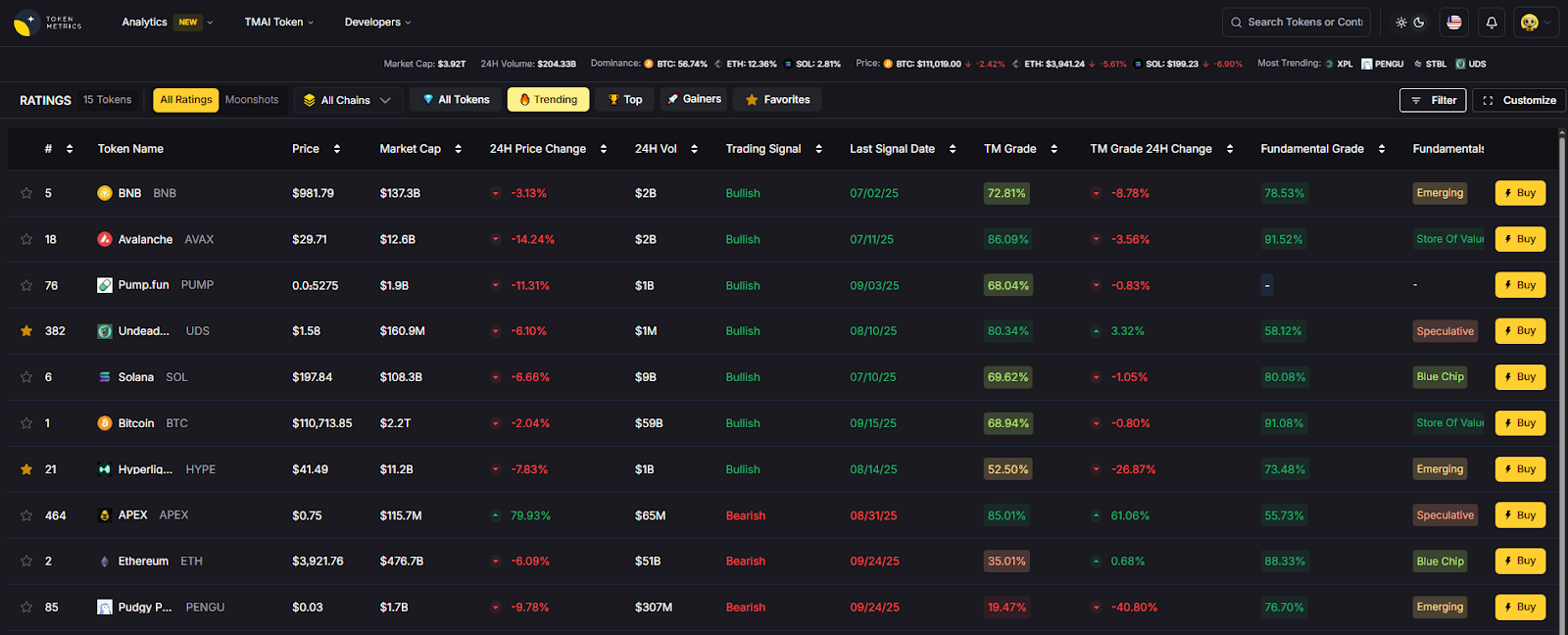
  • Narrative Detection to spot momentum in perps/lending sectors powered by oracles.

  • Portfolio Optimization to size positions by oracle risk and market beta.

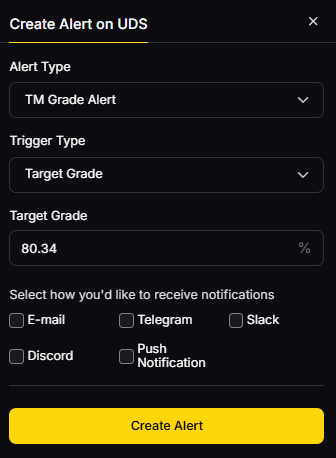
  • Alerts/Signals to monitor price triggers and on-chain flows.
    Workflow: Research → Select → Execute on your chosen oracle/provider → Monitor with TM alerts.

Primary CTA: Start free trial
Security & Compliance Tips

  • Enforce 2FA and least-privilege on deployer keys; rotate API/market credentials.

  • Validate feed params (deviation/heartbeat) and fallback logic; add circuit breakers.

  • Document chain-specific KYC/AML implications if your app touches fiat/RWAs.

  • For RFQs and custom feeds, formalize SLOs and alerting.

  • Practice wallet hygiene: separate ops keys, testnets, and monitors.

This article is for research/education, not financial advice.

Beginner Mistakes to Avoid

  • Relying on a single feed without fallback or stale-price guards.

  • Assuming all “price oracles” have identical latency/fees.

  • Ignoring dispute windows (optimistic designs) before acting on values.

  • Not budgeting for update costs when volatility spikes.

  • Skipping post-deploy monitoring and anomaly alerts.

FAQs

What is a blockchain oracle in simple terms?
It’s middleware that fetches, verifies, and publishes off-chain data (e.g., prices, FX, commodities, proofs) to blockchains so smart contracts can react to real-world events.

Do I need push, pull, or optimistic feeds?
Push suits stable, shared reference prices; pull minimizes cost by updating only when needed; optimistic is great for facts that benefit from challenge periods (e.g., settlement outcomes). Pyth Network+1

Which oracle is best for low-latency perps?
Pyth and Switchboard (Surge/Quotes) emphasize real-time delivery; evaluate your chain and acceptable freshness. Pyth Network+1

How do fees work?
Models vary: subscriptions/markets (API3), per-update pull fees (Pyth), or gas + operator incentives (RedStone/Tellor). Always test under stress. docs.kava.io+2Pyth Network+2

Can I get RWA data?
Yes—Chainlink PoR, DIA RWA feeds, Chronicle for Maker-aligned assets, and others offer tailored integrations. Validate licensing and data provenance. docs.switchboard.xyz+2DIA+2

Conclusion + Related Reads

The “best” oracle depends on your chain, assets, latency needs, and budget. If you need broad coverage and disclosures, start with Chainlink. If you’re building latency-sensitive perps, test Pyth/Switchboard. For first-party provenance or custom baskets, look to API3, DIA, or RedStone. For long-tail, permissionless or bespoke truths, explore Tellor or UMA.
Related Reads:

  • Best Cryptocurrency Exchanges 2025

  • Top Derivatives Platforms 2025

  • Top Institutional Custody Providers 2025

Build Smarter Crypto Apps &
AI Agents in Minutes, Not Months
Real-time prices, trading signals, and on-chain insights all from one powerful API.
Grab a Free API Key
About Token Metrics
Token Metrics: AI-powered crypto research and ratings platform. We help investors make smarter decisions with unbiased Token Metrics Ratings, on-chain analytics, and editor-curated “Top 10” guides. Our platform distills thousands of data points into clear scores, trends, and alerts you can act on.
30 Employees
analysts, data scientists, and crypto engineers
Daily Briefings
concise market insights and “Top Picks”
Transparent & Compliant
Sponsored ≠ Ratings; research remains independent
Want Smarter Crypto Picks—Free?
See unbiased Token Metrics Ratings for BTC, ETH, and top alts.
Thank you! Your submission has been received!
Oops! Something went wrong while submitting the form.
 No credit card | 1-click unsubscribe
Token Metrics Team
Token Metrics Team

Recent Posts

Crypto Basics

How Does a Crypto Index Work? A Deep Dive Into Crypto Index Mechanics

Token Metrics Team
8 min

Crypto investing can be overwhelming. With thousands of tokens to choose from, rapidly shifting narratives, and volatile price swings, even seasoned investors struggle to build and manage a balanced portfolio. That’s why crypto indices have become increasingly popular in 2025.

But how exactly does a crypto index work?

In this article, we’ll break down the mechanics of how crypto indices function, from token selection and weighting to rebalancing and performance tracking. By the end, you’ll understand how these powerful tools simplify crypto investing—and how you can take full advantage of them.

What Is a Crypto Index?

A crypto index is a structured portfolio of cryptocurrencies grouped together based on a common methodology. It represents a specific part of the market—such as the top 10 coins by market cap, the leading DeFi protocols, or trending tokens in a sector like AI or gaming.

Just like the S&P 500 tracks the performance of top U.S. companies, a crypto index tracks the collective performance of selected tokens.

The Core Mechanics of a Crypto Index

Let’s explore how a typical crypto index operates step-by-step:

1. Token Selection

Every index starts with a set of criteria to determine which cryptocurrencies will be included.

Common selection methods:

  • Market Capitalization – Include top 10, 25, or 100 coins
  • Sector/Narrative – Select tokens from specific categories (DeFi, AI, L1s, Memecoins)
  • Performance Metrics – Tokens with consistent returns or volume
  • Community/Governance Votes – Used in DAO-driven indices (e.g., Index Coop)

The goal is to select a diversified set of tokens that represents the chosen segment of the market.

2. Weighting Strategy

Once tokens are selected, the index must decide how much of each token to include.

Popular weighting strategies:

  • Market Cap Weighted – Bigger tokens (like BTC, ETH) get more weight
  • Equal Weighted – Every token gets the same allocation
  • Risk Weighted – Based on volatility or Sharpe ratio
  • AI Weighted – Dynamic allocation based on algorithmic signals

Weighting determines how performance from each token impacts the overall index return.

3. Rebalancing Schedule

Markets are always changing. Rebalancing is the process of adjusting the portfolio to maintain the target weights and remove underperforming assets.

Rebalancing frequencies:

  • Quarterly: Traditional for passive indices
  • Monthly: Common for thematic indices
  • Weekly or Dynamic: Used in AI-powered or high-volatility strategies

Example:
If a memecoin in your index pumps and takes up 60% of the portfolio, rebalancing brings it back down to its intended 20%—locking in gains and reducing risk.

4. Performance Calculation

An index’s value is calculated based on the performance of its underlying assets and their respective weights.

The formula is similar to a weighted average return. For tokenized indices, the value is often represented as an Index Token Price.

Performance is typically measured:

  • Daily
  • Weekly
  • Monthly
  • Since Inception

Investors track these returns to compare index performance against benchmarks like Bitcoin or Ethereum.

5. Execution & Access

To invest in an index, you typically:

  • Deposit funds (USDC, ETH, BTC, fiat)
  • Receive exposure to the entire portfolio through a single transaction
  • Monitor performance through a platform dashboard

Some platforms issue tokenized representations (ERC-20 index tokens), while others manage indices off-chain.

Example: How an AI Crypto Index Works

Let’s look at an AI-powered index on Token Metrics called the AI Tokens Index.

Workflow:

  1. Every week, the platform analyzes 80+ data points for each AI token (e.g., FET, AGIX, TAO).
  2. The AI assigns a bullish, neutral, or bearish signal to each token.
  3. The index allocates capital to bullish tokens, exits bearish ones, and shifts to stablecoins when needed.
  4. Investors automatically benefit from this reallocation without lifting a finger.

Outcome: Better risk-adjusted performance in volatile markets compared to static, passive indices.

Types of Crypto Indices by How They Work

Key Components Behind the Scenes

🔧 Data Infrastructure

Accurate pricing, volume, volatility, and liquidity data are critical for proper index functioning.

🔄 Smart Contracts (for on-chain indices)

Manage token weights, execute trades, and handle rebalancing autonomously.

🧠 Algorithmic Logic

For AI or technical indices, algorithms analyze trends, patterns, and market signals to inform decisions.

Benefits of Index Mechanics for Investors

  • Transparency: You can see exactly how and why tokens are selected and weighted.
  • Automation: No need to manually rebalance or research token fundamentals.
  • Risk Reduction: Dynamic weightings can reduce exposure to underperforming tokens.
  • Narrative Exposure: Stay aligned with top-performing crypto sectors and trends.

Are Crypto Indices Passive or Active?

Both exist.

  • Passive indices use fixed rules and rebalance on a schedule.
  • Active indices (especially AI-powered) make decisions based on real-time market conditions.

In 2025, hybrid indices—that blend passive structure with active rebalancing—are becoming more popular.

Final Thoughts: Why It Matters How a Crypto Index Works

Understanding how a crypto index works helps you make better investment decisions. You’ll know:

  • What’s driving performance
  • When and why your portfolio is rebalanced
  • How to evaluate different indices for your goals

Crypto indices aren’t just simplified baskets—they are dynamic, data-driven tools that reflect the market in motion. Whether you choose a passive index or an AI-powered one, understanding the mechanics ensures you’re investing with clarity—not blind trust.

For smarter, automated exposure to the crypto market, consider using platforms like Token Metrics, which offer both passive HODL indices and advanced AI indices that rebalance weekly based on real market signals.

Research

What Is a Bitcoin Index Fund? | Token Metrics Index Fund Explained

Token Metrics Team
8 min

What Is a Bitcoin Index Fund?

A Bitcoin index fund is a financial product designed to provide investors with exposure to Bitcoin—and often other leading cryptocurrencies—through a single, diversified investment. Much like a traditional stock market index fund (like the S&P 500), a Bitcoin index fund tracks a basket of top crypto assets, eliminating the need to buy and manage each one individually.

The purpose of a Bitcoin index fund is simple: make crypto investing easier, safer, and more diversified. Rather than picking individual tokens, investors buy shares in the fund, which automatically rebalances according to predefined rules—usually based on market capitalization.

If you're looking for the best index fund in the crypto space in 2025, platforms like Token Metrics offer a new generation of AI-powered index products that provide dynamic exposure to Bitcoin and other high-performing digital assets.

Why Do Investors Use Bitcoin Index Funds?

Index funds are a staple of traditional finance because they offer:

  • Diversification
  • Risk reduction
  • Simplicity
  • Passive exposure
  • Lower volatility compared to single-asset bets

A bitcoin index fund brings those same benefits to the crypto world—especially important given the volatility and complexity of managing a portfolio of digital assets.

How Does a Bitcoin Index Fund Work?

At its core, a Bitcoin index fund holds a weighted basket of the top cryptocurrencies, with Bitcoin often as the dominant component. Most funds:

  • Track the top 10–20 tokens by market cap
  • Weight each asset based on size or performance
  • Screen for risks (e.g., smart contract audits, liquidity thresholds)
  • Rebalance monthly or quarterly
  • Allow trading via ticker symbols on brokerage platforms

For example, a fund like BITW (Bitwise 10 Crypto Index Fund) allows retail and institutional investors to buy crypto exposure directly in their brokerage account, with professional custody, reporting, and risk management.

Introducing the Token Metrics Index Fund Platform

While traditional crypto index funds trade on brokerage platforms, Token Metrics offers a crypto-native index fund experience—built for on-chain participation with AI-powered asset selection and risk screening.

The Token Metrics Index Fund is:

  • 🔐 Secure: Uses smart contract audits and red flag detection to screen assets
  • 🤖 AI-driven: Selects and weights assets based on Trader/Investor Grades, sentiment, and on-chain data
  • 📊 Diversified: Offers sector-specific and global index options
  • 🔁 Automated: Rebalances portfolios monthly or based on AI signals
  • 🪙 Self-custodial: You trade directly on-chain while maintaining ownership of your crypto

You can trade on Token Metrics Index Funds directly through the platform, making it the most innovative and flexible solution for modern investors.

Token Metrics Index Fund: What Makes It Different?

Unlike static index funds, the Token Metrics Index platform uses machine learning and real-time analytics to optimize portfolio composition. Every fund is:

🧠 AI-Driven

Token Metrics assigns Trader and Investor Grades (0–100) to thousands of cryptocurrencies based on technical, fundamental, and sentiment analysis. The highest-graded tokens make it into the index.

💡 Theme-Based

Choose from sector-focused indices like:

  • DeFi
  • AI & Big Data
  • Memecoins
  • Infrastructure
  • Real-World Assets (RWA)

This allows investors to tailor exposure based on macro trends or investment theses.

🔁 Dynamic Rebalancing

Indices are rebalanced automatically when key signals trigger:

  • AI rating changes
  • Bullish/Bearish signals
  • Market cap shifts
  • Sector rotations

This allows you to stay ahead of the market without micromanaging your portfolio.

Benefits of Trading on Token Metrics Index Fund

✅ Smart Diversification

Gain exposure to Bitcoin and other top assets like Ethereum, Solana, Chainlink, and more—without choosing them manually.

✅ Reduced Risk

Built-in risk scoring flags tokens with audit failures, low liquidity, or suspicious on-chain behavior—keeping your exposure clean.

✅ Data-Driven Allocation

Forget guessing. Each asset’s weight is optimized using over 80+ data signals, including social sentiment, tokenomics, whale activity, and developer metrics.

✅ On-Chain Trading

Retain custody of your crypto. Token Metrics doesn’t hold your assets—you do. You execute trades directly through your self-custodial wallet.

Bitcoin Index Fund vs. Token Metrics Index Fund

How to Trade on Token Metrics Index Fund

Getting started is simple:

  1. 🔗 Visit Token Metrics Indices
  2. 🪙 Choose your preferred index (e.g., Bitcoin + Top Alts)
  3. 📊 View current allocations and performance
  4. 🧠 Connect your wallet - (Coming Very Soon!)
  5. ✅ Execute the trade directly, self-custodially

You can also set up alerts to track when the index rebalances or when new tokens enter/exit the fund.

Is a Bitcoin Index Fund Right for You?

If you’re:

  • New to crypto and want diversified exposure
  • An experienced investor looking to de-risk
  • Bullish on Bitcoin but want to capture altcoin upside
  • Interested in passive investing with AI optimization

…then a Bitcoin index fund—and specifically the Token Metrics Index Fund—is one of the best index fund strategies to consider in 2025.

Final Thoughts

Crypto is evolving—and so are the tools to invest in it. The days of chasing charts and trying to time every trade are giving way to smarter, more data-driven investing.

Whether you’re managing your first portfolio or optimizing institutional exposure, the Token Metrics Index Fund offers a secure, automated, AI-powered path to diversify into Bitcoin and top-performing crypto assets.

By combining quant-grade analysis with intuitive, on-chain execution, Token Metrics makes it easier than ever to trade on a crypto index fund that works for you—not against you.

Invest smart. Diversify with AI. Trade with confidence on Token Metrics.

🔗 Explore Token Metrics Index Funds
🔗 Start your 7-day free trial
🔗 Access AI research and alerts

Research

Tracking Bitcoin’s Rise as a Macro Hedge with Token Metrics – The #1 Crypto Analytics Platform in 2025

Token Metrics Team
8 min

Bitcoin’s Role in a Shifting Global Financial Order

Bitcoin's relevance in global finance continues to evolve. In 2025, this evolution is accelerating as geopolitical tensions and economic uncertainties challenge traditional systems. While Bitcoin was once viewed as a fringe digital asset, it is increasingly being positioned as a strategic hedge—one that could play a central role in a future where fiat currencies, particularly reserve currencies, face structural strain.

This blog explores how current global dynamics are elevating Bitcoin’s role, not as a speculative trade, but as a macroeconomic signal.

Rising Geopolitical Tensions

Recent developments in the Middle East have drawn increased attention to the intersection of geopolitics and financial markets. Conflicts involving Iran, Israel, and broader regional tensions are no longer localized issues—they have global implications, especially when supply chains and energy flows are involved.

A scenario some analysts are exploring is a prolonged conflict that could last several years. If oil exports are disrupted, global inflation could spike. History tells us that war economies tend to create volatility, both in commodity markets and in currencies.

In such environments, hard assets often perform well. Gold has traditionally filled that role. But Bitcoin, with its fixed supply and decentralized infrastructure, is increasingly being viewed in a similar light.

Game Theory and the Incentive to Escalate

Several geopolitical analysts have recently applied game theory to understand current alignments. The thesis: multiple nations involved in ongoing conflicts have internal and external incentives that make prolonged conflict more likely than resolution.

From a market perspective, that introduces risk into the global economy—risk that can erode trust in fiat systems or centralized monetary authorities.

Bitcoin, by design, offers an alternative. It operates on a predictable schedule, outside the reach of any single government or bank. In times of instability, that predictability becomes an asset in itself.

Flight to Bitcoin in a Crisis?

The concept of a “flight to safety” is typically associated with sovereign bonds or gold. However, during recent events, Bitcoin has at times rallied when traditional risk assets fell—especially when the conflict narrative intersects with economic concerns.

In the event of a long-term geopolitical crisis, particularly one affecting the global reserve currency system, Bitcoin could see a significant re-rating. The logic is simple: a decentralized, non-sovereign asset becomes a hedge against sovereign instability.

This doesn’t mean Bitcoin is without risk—it remains volatile and speculative compared to traditional assets. But in extreme scenarios, such as currency devaluation or prolonged stagflation, Bitcoin’s use case as a financial escape valve becomes more compelling.

Bitcoin vs. the US Dollar

Some strategists now openly discuss the possibility that the dollar’s dominance may be structurally weakened in the years ahead. That doesn’t imply imminent collapse, but it does suggest the global financial order may be recalibrating.

Central bank digital currencies (CBDCs), the rise of alternative payment networks, and multipolar geopolitical tensions all point toward a future where reserve status is contested.

Bitcoin, by virtue of being neutral, borderless, and digitally native, offers a counterweight. While it’s unlikely to “replace” fiat in the near term, its role as a counter-reserve asset may expand.

Institutional Alignment Around Bitcoin

In parallel to these global developments, institutional alignment around Bitcoin continues. Several major financial entities have integrated Bitcoin exposure into their portfolios, launched products like ETFs, and begun building custody and trading infrastructure.

This shift is not ideological—it’s pragmatic. Institutions are increasingly treating Bitcoin not as a gamble, but as an uncorrelated hedge with asymmetric upside in macro-uncertain environments.

The key takeaway is that Bitcoin’s narrative is evolving from risk-on speculation to macro hedge. That shift changes how it's traded, valued, and held.

2026 and the Timing of a Possible PEAK

Interestingly, the projected peak of the current crypto cycle aligns with the timing of several geopolitical forecasts. Some macro analysts predict that major disruptions to the global economy could materialize by early 2026—just as Bitcoin historically tends to peak 12–18 months post-halving.

This alignment isn’t deterministic, but it’s suggestive. If geopolitical conflict escalates and monetary regimes are questioned, Bitcoin could benefit not from hype, but from its underlying design.

In such a scenario, estimates of Bitcoin reaching $250,000 or more—while speculative—are not purely fantasy. They reflect what could happen if Bitcoin becomes a globally recognized monetary hedge during a systemic macro reset.

Implications for Portfolio Construction

If these scenarios play out, they carry implications for crypto portfolios. Altcoins, which rely more on risk appetite and speculative narratives, may underperform in a risk-off, conflict-driven environment.

Bitcoin, conversely, may outperform as capital concentrates in the most liquid, battle-tested asset.

This doesn’t suggest abandoning altcoins entirely—but it does support the idea that Bitcoin may deserve a larger allocation than in previous cycles, especially as macro risks rise.

Risk, Resilience, and Reality

It’s important to acknowledge the counterarguments. Bitcoin’s volatility, regulatory uncertainty, and still-limited real-world use cases are valid concerns. No asset is invulnerable, and Bitcoin’s rise is not guaranteed.

Yet, amid systemic uncertainty, few assets offer the combination of digital mobility, fixed supply, and decentralization that Bitcoin does.

Whether or not a macro crisis unfolds as predicted, the world is clearly entering a phase where economic assumptions are being questioned. In that context, Bitcoin becomes not just an asset—but a signal.

Conclusion

Bitcoin’s role in the global economy is far from settled. But in 2025, it is clear that the asset is evolving beyond its original use case. No longer just a curiosity for early adopters, Bitcoin is increasingly part of the conversation among serious investors, analysts, and policymakers.

If the world moves toward greater uncertainty, more conflict, and more questioning of existing monetary systems, Bitcoin may be one of the few assets positioned to benefit—not because of speculation, but because of structural design.

To navigate this evolving landscape, investors need access to accurate, real-time macro signals—and that’s where tools like Token Metrics become indispensable. As a leading crypto research and analytics platform, Token Metrics helps investors track sentiment shifts, macro trends, and on-chain dynamics that may signal Bitcoin’s strengthening role in global finance.

It is not a prediction. It’s a possibility. One worth understanding—and preparing for with the right tools.

Choose from Platinum, Gold, and Silver packages
Reach with 25–30% open rates and 0.5–1% CTR
Craft your own custom ad—from banners to tailored copy
Perfect for Crypto Exchanges, SaaS Tools, DeFi, and AI Products