Back to blog
Research

REST API Explained: Design, Use Cases & Best Practices

Understand REST API fundamentals, design patterns, security, and observability. Practical guidance for engineers building scalable APIs and integrating services using modern best practices.
Token Metrics Team
5
Want Smarter Crypto Picks—Free?
See unbiased Token Metrics Ratings for BTC, ETH, and top alts.
Thank you! Your submission has been received!
Oops! Something went wrong while submitting the form.
 No credit card | 1-click unsubscribe

In today's interconnected digital ecosystem, REST APIs have become the backbone of modern web applications, mobile apps, and data exchange platforms. Whether you're building a cryptocurrency trading platform, integrating blockchain data, or developing any web service, understanding REST API architecture is essential for creating scalable and efficient applications. This comprehensive guide explores REST API design principles, real-world use cases, and best practices that developers need to master.

Understanding REST API Architecture

REST, which stands for Representational State Transfer, is an architectural style that defines a set of constraints for creating web services. A REST API, also known as a RESTful API, allows different software applications to communicate with each other over HTTP protocols. The beauty of REST lies in its simplicity and stateless nature, making it the preferred choice for developers building everything from social media platforms to cryptocurrency APIs.

When a client makes a request to a REST API, it transfers a representation of the state of the requested resource to the client. This representation can be delivered in various formats, with JSON being the most popular choice in modern applications, especially in crypto APIs and blockchain data services. The stateless nature of REST means that each request from a client contains all the information needed to process that request, without relying on stored context on the server.

Core Components of REST API Design

The foundation of effective REST API design rests on several key components that work together to create a cohesive system. Resources represent the fundamental concept in REST architecture, where everything is considered a resource that can be accessed through a unique identifier known as a URI or Uniform Resource Identifier. For instance, in a cryptocurrency API, resources might include digital assets, market data, trading pairs, or wallet addresses.

HTTP methods form the second pillar of REST API design, providing the verbs that define actions on resources. GET requests retrieve data without modifying it, making them perfect for fetching crypto market data or blockchain information. POST requests create new resources, such as submitting a new transaction or creating a wallet. PUT requests update existing resources completely, while PATCH requests modify specific fields. DELETE requests remove resources from the system. Understanding when to use each method is crucial for building intuitive and predictable APIs.

The URI structure in a well-designed REST API should be logical, consistent, and self-documenting. Rather than using verbs in URLs, REST APIs rely on nouns to represent resources, with HTTP methods conveying the action. For example, a crypto API endpoint might look like /api/v1/cryptocurrencies/bitcoin/price rather than /api/v1/getCryptocurrencyPrice. This approach creates cleaner, more maintainable code that developers can understand intuitively.

REST API Best Practices for Production Systems

Implementing version control in your REST API is not optional but essential for maintaining backward compatibility as your service evolves. Including the version number in the URL path, such as /api/v1/ or /api/v2/, allows you to introduce breaking changes in new versions while supporting legacy clients. This practice is particularly important for cryptocurrency APIs where trading bots and automated systems depend on consistent endpoints.

Authentication and security stand as paramount concerns in REST API development, especially when dealing with sensitive data like cryptocurrency transactions or blockchain information. Token-based authentication using JSON Web Tokens (JWT) has emerged as the industry standard, providing secure, stateless authentication that scales well. For crypto APIs handling financial data, implementing API keys, rate limiting, and encryption becomes non-negotiable to protect user assets and maintain system integrity.

Error handling deserves careful attention in REST API design. Your API should return appropriate HTTP status codes that clearly communicate what happened during request processing. A 200 status indicates success, 201 signifies successful resource creation, 400 indicates a bad request from the client, 401 means unauthorized access, 404 signals that a resource wasn't found, and 500 indicates a server error. Accompanying these status codes with clear, actionable error messages in the response body helps developers debug issues quickly.

Cryptocurrency APIs and REST Architecture

The cryptocurrency industry has embraced REST APIs as the primary method for accessing blockchain data, market information, and trading functionality. Crypto APIs built on REST principles enable developers to integrate real-time cryptocurrency prices, historical market data, trading volumes, and blockchain analytics into their applications seamlessly. Token Metrics, a leader in crypto analytics and data services, offers one of the most comprehensive cryptocurrency APIs in the market, providing developers with access to advanced metrics, AI-driven insights, and real-time market data through a well-designed RESTful interface.

When building or consuming crypto APIs, developers must consider the unique challenges of blockchain technology. Cryptocurrency market data requires high-frequency updates due to the volatile nature of digital assets. A robust crypto API must handle thousands of requests per second while maintaining low latency and high availability. Token Metrics addresses these challenges by providing a scalable REST API infrastructure that delivers accurate cryptocurrency data, token ratings, and market analytics to developers, traders, and institutional clients.

The integration of blockchain APIs with REST architecture has opened new possibilities for decentralized applications and financial technology. Developers can now query blockchain transactions, check wallet balances, monitor smart contract events, and access DeFi protocols through simple HTTP requests. This accessibility has accelerated innovation in the crypto space, allowing developers to build sophisticated trading platforms, portfolio trackers, and analytics dashboards without managing blockchain nodes directly.

Real-World Use Cases of REST APIs

REST APIs power countless applications across industries, demonstrating their versatility and reliability. In the financial technology sector, cryptocurrency exchanges rely on REST APIs to provide trading functionality to their users. These APIs enable programmatic trading, allowing algorithmic traders to execute strategies, monitor positions, and manage risk across multiple markets. Token Metrics leverages REST API technology to deliver cryptocurrency intelligence, offering endpoints for token grades, trader grades, market predictions, and comprehensive crypto market analysis.

Mobile applications represent another significant use case for REST APIs. Every time you check cryptocurrency prices on your phone, post on social media, or stream music, REST APIs work behind the scenes to fetch and deliver that data. The lightweight nature of REST makes it ideal for mobile environments where bandwidth and battery life are concerns. Crypto portfolio tracking apps, for instance, use REST APIs to aggregate data from multiple exchanges and blockchain networks, presenting users with a unified view of their digital asset holdings.

Enterprise systems increasingly adopt REST APIs for integration and automation. Companies use REST APIs to connect customer relationship management systems, payment processors, inventory databases, and analytics platforms. In the blockchain and cryptocurrency domain, businesses integrate crypto payment APIs to accept digital currencies, use blockchain APIs to verify transactions, and leverage analytics APIs like those offered by Token Metrics to make data-driven investment decisions.

Designing Scalable REST APIs

Scalability should be a primary consideration when designing REST APIs, particularly for services that may experience rapid growth or traffic spikes. Implementing pagination for endpoints that return large datasets prevents overwhelming clients and servers. Instead of returning thousands of cryptocurrency listings in a single response, a well-designed crypto API returns a manageable subset along with pagination metadata, allowing clients to request additional pages as needed.

Caching strategies significantly improve REST API performance and reduce server load. By including proper cache-control headers in API responses, you enable clients and intermediary proxies to cache responses appropriately. For cryptocurrency APIs where some data like historical prices rarely changes, aggressive caching can dramatically reduce the number of database queries and API calls. However, real-time data such as current market prices requires careful cache invalidation to ensure accuracy.

Rate limiting protects your REST API from abuse and ensures fair resource allocation among all users. By implementing rate limits based on API keys or IP addresses, you prevent individual clients from monopolizing server resources. Token Metrics implements sophisticated rate limiting in its cryptocurrency API, offering different tiers of access that balance the needs of casual developers, professional traders, and enterprise clients.

Documentation and Developer Experience

Comprehensive documentation transforms a good REST API into a great one. Developers evaluating whether to use your API need clear, accurate documentation that explains endpoints, parameters, authentication methods, and response formats. Interactive API documentation tools like Swagger or Postman collections allow developers to test endpoints directly from the documentation, reducing friction in the integration process.

For cryptocurrency APIs, documentation should include specific examples relevant to the crypto ecosystem. Token Metrics provides extensive API documentation covering everything from basic cryptocurrency price queries to advanced analytics endpoints, complete with code samples in multiple programming languages. This approach accelerates integration and reduces support requests, benefiting both API providers and consumers.

Providing SDKs and client libraries in popular programming languages further improves developer experience. Rather than forcing every developer to handle HTTP requests manually, offering pre-built libraries for Python, JavaScript, Java, and other languages enables faster integration and reduces the likelihood of implementation errors. These libraries can handle authentication, request formatting, error handling, and response parsing automatically.

Monitoring and Maintaining REST APIs

Once your REST API is in production, ongoing monitoring becomes critical to maintaining quality of service. Implementing comprehensive logging allows you to track API usage patterns, identify performance bottlenecks, and detect anomalies. For cryptocurrency APIs handling financial data, monitoring is especially crucial as downtime or data inaccuracies can result in significant financial losses for users.

Performance metrics such as response times, error rates, and throughput provide insights into API health. Setting up alerts for unusual patterns enables proactive problem resolution before users are significantly affected. Token Metrics maintains rigorous monitoring of its crypto API infrastructure, ensuring that developers and traders have reliable access to critical cryptocurrency market data and analytics.

Maintaining backward compatibility while evolving your API requires careful planning and communication. Deprecation policies should give developers adequate time to migrate to new versions or endpoints. For crypto APIs, this is particularly important as trading bots and automated systems may run unattended for extended periods and need time to adapt to API changes.

Security Considerations for REST APIs

Security forms the foundation of trustworthy REST APIs, especially when handling sensitive information like cryptocurrency transactions or personal data. Implementing HTTPS encryption for all API communications prevents man-in-the-middle attacks and protects data in transit. This is non-negotiable for crypto APIs where a single compromised API call could result in unauthorized fund transfers.

Input validation and sanitization protect against injection attacks and malformed requests. Your REST API should validate all incoming data against expected formats and ranges before processing. For cryptocurrency APIs, this includes validating wallet addresses, transaction amounts, and trading parameters to prevent errors and potential exploits.

Implementing proper access controls ensures that authenticated users can only access resources they're authorized to view or modify. Role-based access control (RBAC) provides a flexible framework for managing permissions in complex systems. Token Metrics implements enterprise-grade security in its cryptocurrency API, protecting sensitive market data and ensuring that clients can trust the integrity of the information they receive.

The Future of REST APIs in Cryptocurrency

As the cryptocurrency industry continues to mature, REST APIs will remain central to how developers interact with blockchain data and trading platforms. The evolution of decentralized finance, non-fungible tokens, and Web3 applications creates new opportunities and challenges for API design. REST APIs must adapt to handle increasingly complex queries, provide real-time updates for rapidly changing market conditions, and integrate with emerging blockchain protocols.

Token Metrics continues to innovate in the crypto API space, expanding its offerings to include advanced analytics, AI-powered market predictions, and comprehensive blockchain data. By maintaining a robust REST API infrastructure, Token Metrics enables developers, traders, and institutions to build sophisticated cryptocurrency applications that leverage cutting-edge market intelligence.

The convergence of traditional finance and cryptocurrency creates demand for APIs that can bridge both worlds seamlessly. REST APIs that provide unified access to crypto market data, traditional financial information, and cross-market analytics will become increasingly valuable. As regulatory frameworks evolve, APIs will also need to incorporate compliance features, reporting capabilities, and audit trails to meet institutional requirements.

Conclusion

REST APIs have proven themselves as the most practical and widely adopted approach for building web services that are scalable, maintainable, and developer-friendly. Understanding REST API design principles, implementing best practices, and focusing on security and performance creates APIs that developers love to use and rely on for their applications.

In the cryptocurrency space, REST APIs serve as the critical infrastructure that connects developers to blockchain data, market information, and trading functionality. Token Metrics exemplifies how a well-designed crypto API can empower developers and traders with the data and insights they need to succeed in the dynamic digital asset markets. Whether you're building a new cryptocurrency application or integrating blockchain data into existing systems, mastering REST API principles and leveraging powerful crypto APIs like those offered by Token Metrics will accelerate your development and enhance your capabilities.

As technology continues to evolve, REST APIs will adapt and improve, but their fundamental principles of simplicity, scalability, and statelessness will continue to guide the design of systems that power our increasingly connected digital world.

Build Smarter Crypto Apps &
AI Agents in Minutes, Not Months
Real-time prices, trading signals, and on-chain insights all from one powerful API.
Grab a Free API Key
About Token Metrics
Token Metrics: AI-powered crypto research and ratings platform. We help investors make smarter decisions with unbiased Token Metrics Ratings, on-chain analytics, and editor-curated “Top 10” guides. Our platform distills thousands of data points into clear scores, trends, and alerts you can act on.
30 Employees
analysts, data scientists, and crypto engineers
Daily Briefings
concise market insights and “Top Picks”
Transparent & Compliant
Sponsored ≠ Ratings; research remains independent
Want Smarter Crypto Picks—Free?
See unbiased Token Metrics Ratings for BTC, ETH, and top alts.
Thank you! Your submission has been received!
Oops! Something went wrong while submitting the form.
 No credit card | 1-click unsubscribe
Token Metrics Team
Token Metrics Team

Recent Posts

Crypto Basics

Top Meme Coins in 2024 - Token Metrics Moon Awards

Token Metrics Team
6 Minutes

Welcome to the Token Metrics Moon Awards, a prestigious cryptocurrency industry accolade that recognizes platforms, projects, and initiatives that have made a significant impact in the industry. The latest addition to the Moon Awards is the "Top Meme Coins in 2024."

Selection Process

At Token Metrics, we emphasize our audience, considering them the foundation of our operations. Our selection process is firmly rooted in engaging with the community, ensuring that our awards' results authentically reflect crypto enthusiasts' sentiments and experiences.

Through engagement with our community members, we have compiled a comprehensive list of the Top Meme Coins in 2024 based on extensive survey data and user votes.

In this article, we will delve into the list of Top Meme Coins, providing a brief overview of each and discussing their future potential.

Let's Begin

In the ever-evolving world of cryptocurrencies, a unique trend has emerged - meme coins. These digital assets, characterized by their humorous branding and viral appeal, have captured the attention of investors and crypto enthusiasts alike. 

While traditional cryptocurrencies focus on utility and solving complex problems, meme coins embrace speculation and the power of social media.

As we enter 2024, the meme coin market is poised for explosive growth. With Bitcoin halving on the horizon and the overall bullish sentiment in the crypto space, experts predict that meme coins can dominate the bull cycle.

What are Meme Coins?

Meme coins are cryptocurrencies that leverage humorous branding and viral appeal to attract attention and investors. Unlike traditional cryptocurrencies, meme coins often lack utility or a clear purpose beyond entertainment. 

They rely on social media trends and community engagement to drive their value and popularity. While investing in meme coins can be highly speculative and risky, they have gained significant traction in recent years. 

Meme coins can potentially deliver astronomical returns, but investors should exercise caution and conduct thorough research before diving in.

Top Meme Coins in 2024

Here are some of the top Meme Coin projects to watch in 2024:

top Meme Coin projects
Image Source - Token Metrics Moon Awards

1. Dogecoin (DOGE)

In the Moon Awards survey, Dogecoin secured the top position with 53.2% of the total votes.

Dogecoin, the original meme coin, remains a dominant force in the market. Introduced in 2013 as a joke, Dogecoin has since gained a massive following and widespread adoption. Despite its humble beginnings, Dogecoin has proved its staying power and has even garnered the support of billionaire entrepreneur Elon Musk.

With its iconic Shiba Inu dog logo and lighthearted branding, Dogecoin continues to capture the imagination of investors. While newer meme coins have experienced significant growth, the upcoming Bitcoin halving and increased adoption could propel Dogecoin to new heights.

2. Bonk (BONK)

In the Moon Awards survey, Bonk secured the 2nd position with 15.7% of the total votes.

Bonk is a meme coin that made waves in 2023 as the first meme token launched on the Solana network. With gains of over 7,300% in the previous year, Bonk quickly joined the ranks of meme coin titans. The project aims to diminish the influence of venture capital investors and restore control to ordinary users within the Solana network.

Despite its initial hype, Bonk has seen a decline in significance. However, with the launch of its decentralized exchange called BonkSwap, Bonk is poised to regain momentum. As the Solana meme coin community continues to grow, Bonk remains one of the top meme coins to watch in 2024.

3. Shiba Inu (SHIB)

In the Moon Awards survey, Shiba Inu secured the 3rd position with 11.4% of the total votes.

Shiba Inu has emerged as one of the most popular meme coins in the market. Its impressive rally, with gains of over 300% in just a week, has propelled it into the top 10 altcoins. Inspired by the Dogecoin community, Shiba Inu aims to create a decentralized ecosystem focusing on utility and innovation.

Recent developments, such as adopting an advanced FHE (Fully Homomorphic Encryption) technique for enhanced security and the launch of the Shiba Name Service, have further solidified Shiba Inu's position. With these products gaining traction, the price of SHIB could potentially double in the near future.

4. Pepe (PEPE)

In the Moon Awards survey, Pepe secured the 4th position with 6.9% of the total votes.

Pepe burst onto the cryptocurrency scene in 2023, reigniting the meme coin market during a relatively quiet period. While not promoted as a utility token, Pepe quickly gained popularity and remains one of the top meme coins in terms of market capitalization.

Unlike other meme coins, Pepe does not focus on introducing new features or products. Instead, the project embraces its status as a "useless" meme token. Despite its lack of fundamentals or utility, Pepe's price has experienced significant growth. While it may be prone to volatility, Pepe continues to attract attention from investors.

5. Myro (MYRO)

In the Moon Awards survey, Myro secured the 5th position with 4.4% of the total votes.

Myro is an autonomous meme coin built on the Solana blockchain. The project aims to increase the accessibility and enjoyment of cryptocurrencies for all users. Named after Raj Gokal's dog, one of the co-founders of Solana, Myro has become a central player in the explosive growth of meme coins on the Solana network.

With gains of over 1,400% in 2023, Myro is expected to continue its bullish trend as Solana continues to rise. The project's community-driven approach and focus on user experience make it a promising contender in the meme coin market.

6. FLOKI

In the Moon Awards survey, FLOKI secured the 6th position with 2% of the total votes.

FLOKI is both a utility token and a meme coin within the Floki Inu ecosystem. Unlike other top meme coins, FLOKI follows a highly deflationary model with auto-burns to reduce its supply. The project aims to diversify into other areas beyond cryptocurrencies, such as the metaverse and NFTs (Non-Fungible Tokens).

What sets FLOKI apart is its multi-chain functionality, allowing seamless use on both Ethereum and Binance Smart Chain. This versatility could impact the demand and valuation of the meme coin in 2024 as the project expands its ecosystem.

7. Dogwifhat

In the Moon Awards survey, Dogwifhat secured the 7th position with 1.7% of the total votes.

Dogwifhat is a meme coin built on the Solana blockchain that gained momentum in 2023. The project's branding revolves around a single image of a dog wearing different hats, reflecting its humor and the playful nature of meme coins.

Despite lacking fundamentals or utility, Dogwifhat experienced tremendous growth thanks to the surge in interest in Solana. While there has been a significant price correction since its all-time high, Dogwifhat continues to see strong trading activity.

Conclusion

As the crypto market enters 2024, meme coins are poised for significant growth and attention. The top meme coins mentioned - Dogecoin, Bonk, Shiba Inu, Pepe, Myro, FLOKI, and Dogwifhat - offer unique features and potential gains for investors.

However, it is important to note that investing in meme coins comes with inherent risks. These assets can be highly volatile and lack the fundamentals or utility of traditional cryptocurrencies. Investors should conduct thorough research and exercise caution when considering meme coins as part of their investment portfolio.

In conclusion, the rise of meme coins presents an exciting yet challenging opportunity for investors. As the crypto market continues to evolve, keeping an eye on the top meme coins and their potential for growth is essential for those looking to explore this unique sector of the cryptocurrency world.

Disclaimer

The information provided on this website does not constitute investment advice, financial advice, trading advice, or any other advice, and you should not treat any of the website's content as such.

Token Metrics does not recommend buying, selling, or holding any cryptocurrency. Conduct your due diligence and consult your financial advisor before making investment decisions.

Crypto Basics

Kontos Airdrop 2024 - Eligibility, Process and Rewards

S. Vishwa
5 Minutes

Cryptocurrency enthusiasts, get ready for an exciting opportunity! Kontos, a revolutionary zero-knowledge-based L2 account protocol, is conducting an upcoming airdrop supported by Binance. This airdrop presents a chance for participants to gain upto $5,000 in value potentially.

In this comprehensive guide, we will walk you through the eligibility criteria, the step-by-step process to participate in the airdrop, and how to maximize your rewards. So, let's dive in and explore the world of Kontos Airdrop 2024!

What is Kontos?

Kontos is a cutting-edge L2 account protocol that operates with a zero-knowledge approach. This innovative technology empowers users with gas-less transactions, asset-less operations, and enhanced security. 

The project has successfully raised $10M from prominent funds such as Binance Labs, Shima Capital, and The Spartan Group. Kontos specializes in four types of abstraction: account abstraction, asset abstraction, chain abstraction, and behavior abstraction. 

These abstractions enable asset-less and key-less trades, giving users greater flexibility in managing their digital assets.

Eligibility Criteria for the Kontos Airdrop

To qualify for the Kontos Airdrop, participants need to follow certain criteria. While the specific details of the airdrop are not disclosed in the reference articles, it is important to stay informed about the latest updates and announcements from Kontos. 

Monitor their official website and social media channels to ensure you meet the eligibility requirements. Stay tuned for any additional information that may be released, as it could impact your chances of participating in the airdrop.

Kontos Airdrop Details

The Kontos Airdrop is a highly anticipated event for cryptocurrency enthusiasts. Here are some key details you need to know:

  • Cost: FREE
  • Time Required: Approximately 15 minutes
  • Potential Gain: $5,000

Please note that these details are based on available information at the time of writing. As the airdrop approaches, staying updated with the latest announcements from Kontos for any changes or additional requirements is recommended.

Step-by-Step Guide to Participating in the Airdrop

Participating in the Kontos Airdrop is a straightforward process that requires a few simple steps. Here's a comprehensive guide to help you get started:

Step 1: Setting up your Wallet

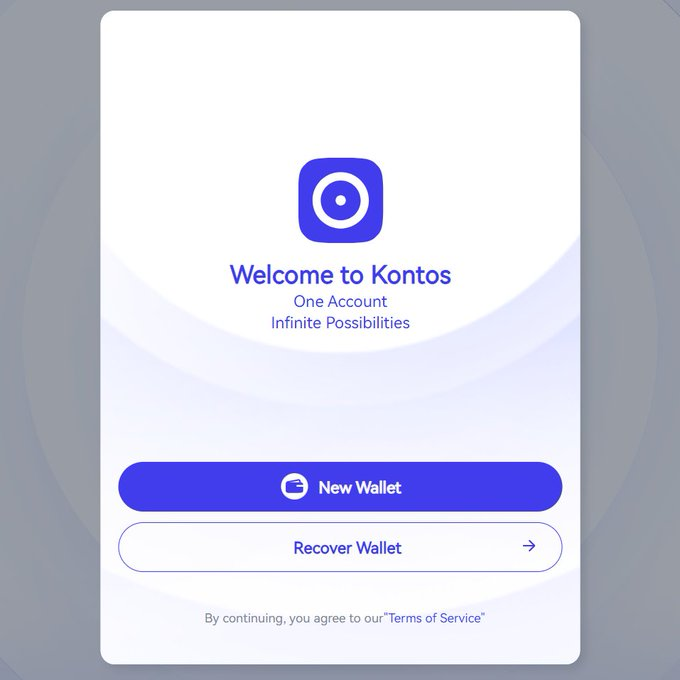
To begin, visit the official Kontos website and create a new wallet. Set your username, password, and PIN to ensure the security of your account.

Setting up your Wallet

A reliable wallet is essential for storing and managing your Kontos tokens effectively.

Step 2: Bridging Funds

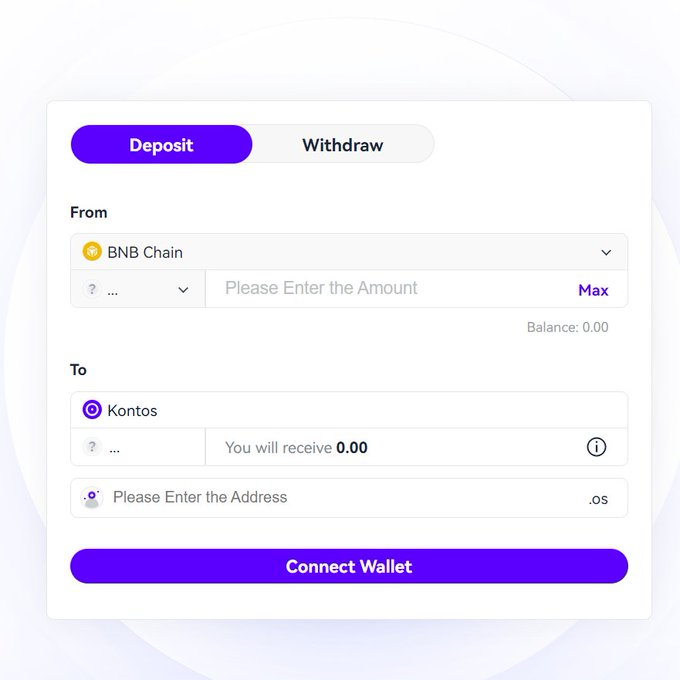
Next, you must bridge funds from your existing wallet to your Kontos wallet. Visit the Kontos bridge platform and connect your Metamask wallet.

Bridging Funds

Switch to the Binance Smart Chain (BSC) network and bridge some BNB or USDT to your Kontos wallet. This step may incur a small transaction fee of $0.1.

Step 3: Interact with the Kontos Discord Bot

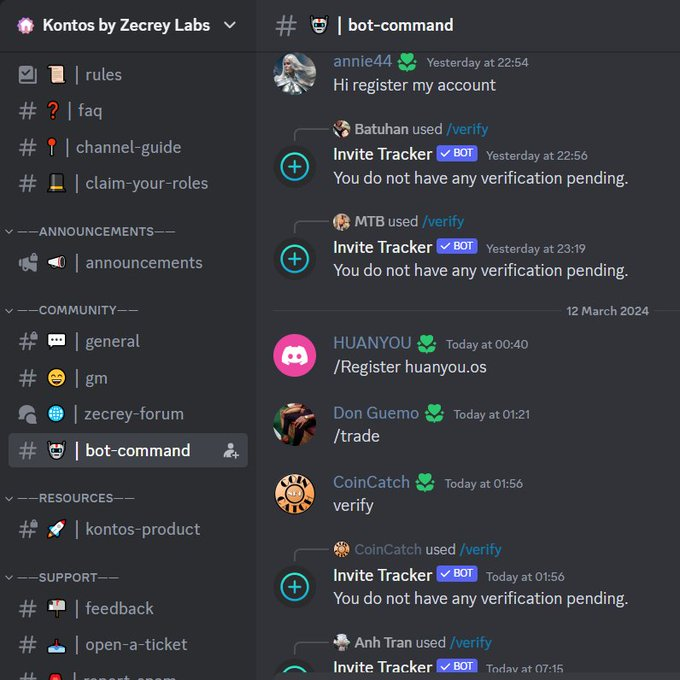
Join the official Kontos Discord server and navigate to the "Bot-command" tab. Enter the command "/Register" to register your account for the airdrop.

Interact with the Kontos Discord Bot

Interacting with the Kontos Discord Bot is a crucial step in the airdrop process, so ensure you complete the registration process as instructed.

Step 4: Trading and Bridging

To maximize your rewards, it is recommended to explore the trading and bridging functionalities offered by Kontos. Use the command "/trade" to initiate a trade and "/bridge" to bridge tokens between different networks. 

Follow the instructions provided and make sure to complete at least one bridge transaction with a minimum value of $1.

Trading and Bridging

Throughout the entire process, stay connected with the Kontos community and follow their official social media channels for any updates, tips, or additional steps that may be announced.

Step 5: Galxe task

Galxe task

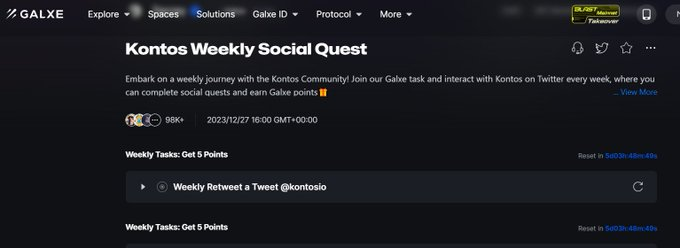
Go to → https://galxe.com/Zecrey/campaign/GCfXRttJbf

◈ Complete weekly tasks to earn points.

Maximizing Your Rewards: Tips and Strategies

To make the most of the Kontos Airdrop and potentially increase your rewards, consider the following tips and strategies:

  • Stay Updated: Regularly check the official Kontos website, social media channels, and community forums for the latest updates, announcements, and tips related to the airdrop.
  • Engage with the Community: Join the Kontos Discord server and actively participate in discussions. Engaging with the community can provide valuable insights, tips, and potential opportunities to enhance your airdrop experience.
  • Network Effect: Spread the word about the Kontos Airdrop within your network of friends, family, and fellow cryptocurrency enthusiasts. Sharing information and inviting others to participate can potentially earn you referral bonuses or other rewards.
  • Follow the Instructions Carefully: Pay close attention to the step-by-step instructions provided by Kontos. Following the guidelines accurately will ensure a smooth and successful participation in the airdrop.
  • Security First: Always prioritize the security of your wallet and personal information. Be cautious of phishing attempts and only interact with official Kontos platforms and channels.

Potential Value and Benefits of Kontos Tokens

Participating in the Kontos Airdrop can potentially provide you with valuable Kontos tokens. These tokens hold the potential for future growth and utility within the Kontos ecosystem. As a holder of Kontos tokens, you may benefit from various platform features and opportunities, such as:

  • Gas-less transactions
  • Asset-less operations
  • Enhanced security measures
  • Diverse asset purchases across multiple networks

The true potential and long-term value of Kontos tokens can only be realized through active engagement with the platform and staying informed about the project's developments.

Also Read - Top Upcoming Crypto Airdrops 2024

Kontos Airdrop - Impact on Participants and the Platform

Participating in the Kontos Airdrop not only offers the potential for financial gain but also allows individuals to become part of an innovative ecosystem. 

By joining the Kontos community, participants can contribute to the platform's growth, provide feedback, and shape its future. 

Also, the airdrop creates an opportunity to explore the unique features and benefits offered by Kontos and gain a deeper understanding of the project's vision.

Conclusion

The Kontos Airdrop 2024 presents an exciting opportunity for cryptocurrency enthusiasts to earn substantial rewards potentially. Participants can maximize their chances of success by following the step-by-step guide, staying updated with the latest information, and implementing effective strategies. 

Remember to prioritize security, engage with the community, and explore the potential benefits of Kontos tokens. As the airdrop approaches, make sure to check the official Kontos channels regularly for any updates and additional details. Get ready to join the Kontos revolution and unlock the potential for a brighter crypto future!

Disclaimer

The information provided on this website does not constitute investment advice, financial advice, trading advice, or any other advice, and you should not treat any of the website's content as such.

Token Metrics does not recommend buying, selling, or holding any cryptocurrency. Conduct your due diligence and consult your financial advisor before making investment decisions.

Crypto Basics

Top Layer 2 Blockchain in 2024 - Token Metrics Moon Awards

Token Metrics Team
6 Minutes

Welcome to the Token Metrics Moon Awards, a prestigious cryptocurrency industry accolade recognizing platforms, projects, and initiatives with significant impact.

Today, we are thrilled to announce the addition of a new Moon Awards category for 2024 - the Top Layer 2 Blockchain.

Selection Process

At Token Metrics, we highly value our audience as the cornerstone of our operations. Our selection process is deeply rooted in community engagement, ensuring that our awards' results authentically mirror crypto enthusiasts' sentiments and experiences.

Amplifying Community Insights

The Moon Awards by Token Metrics are designed to amplify the community's voice, providing a clear and focused evaluation of the entities driving progress in the sector.

Through interaction with our community members and user voting, we have compiled a comprehensive list of the Top Layer 2 Blockchains for 2024 based on extensive survey data and user votes.

In this article, we will explore the concept of Layer 2 blockchain, how it works, and the top Layer 2 blockchain projects of 2024.

What is Layer 2 Blockchain?

A Layer 2 blockchain refers to a collection of scaling solutions designed to improve the performance and scalability of Layer-1 blockchains such as Ethereum. 

These Layer-2 protocols operate on top of the primary blockchain, alleviating congestion, reducing transaction costs, and boosting throughput.

To understand Layer 2 blockchain, let's imagine a highway where traffic flows smoothly, transactions are processed at lightning speed, and fees are almost negligible. 

Layer 2 protocols in the crypto world can be compared to express lanes built on top of Layer-1 blockchains, supercharging their performance and scalability.

How Does Layer 2 Blockchain Work?

At the core of Layer 2 networks is the principle of off-chain transaction processing. Instead of directly processing each transaction on the main blockchain, Layer-2 protocols divert transactions off the main chain, process them separately, and then consolidate them into a summary transaction on the main blockchain. 

This approach significantly reduces network congestion, processing time, and transaction costs. Layer-2 protocols act as dedicated traffic management systems, diverting transactions away from the main blockchain and processing them on secondary networks. 

This offloading process leads to faster transactions, lower fees, and increased throughput, ultimately enhancing the scalability and efficiency of the blockchain network.

List of Top Layer 2 Blockchain Projects

Here are some of the top Layer 2 blockchain projects to watch in 2024:

top Layer 2 blockchain
Image Source - Token Metrics Moon Awards

Polygon (MATIC)

In the Moon Awards survey, Polygon secured the top position with 57.3% of the total votes.

Polygon is a multichain ecosystem offering several Layer-2 solutions to scale Ethereum. It utilizes technologies like zkRollups for high-speed, privacy-focused transactions and Proof-of-Stake consensus mechanisms for sidechains. 

With a throughput exceeding 65,000 TPS, Polygon significantly outperforms Ethereum's mainnet regarding transaction speed and cost-effectiveness. It has a thriving DeFi scene and is popular among NFT enthusiasts.

Arbitrum

In the Moon Awards survey, Arbitrum secured the 2nd position with 22.8% of the total votes.

Arbitrum, built on Optimistic Rollups, offers a peak throughput of 4,000 TPS, processing transactions up to 10x faster than Ethereum's mainnet. It reduces gas costs by up to 95% and provides a developer-friendly environment. 

With a robust ecosystem of DeFi protocols, NFT marketplaces, and gaming platforms, Arbitrum is positioned as a key contender in the Layer 2 space.

Optimism

In the Moon Awards survey, Optimism secured the 3rd position with 6.1% of the total votes.

Optimism is a Layer-2 scaling solution for Ethereum, offering high throughput and reduced gas costs. With a peak throughput of 2,000 TPS, Optimism processes transactions up to 26x faster than Ethereum's mainnet. 

It is committed to becoming a self-governing community and hosts a growing array of DeFi protocols, NFT marketplaces, and DAOs.

Manta Network

In the Moon Awards survey, Manta Network secured the 4th position with 3.3% of the total votes.

Manta Network is a privacy-focused ecosystem for Ethereum, providing anonymous transactions and confidential smart contracts. 

It comprises two modules: Manta Pacific, an EVM-compatible Layer-2 for efficient transactions, and Manta Atlantic, which handles private identity management using zkSBTs. 

Manta Network promises high scalability, developer-friendliness, and strong interoperability with Ethereum and other blockchains.

Immutable X

In the Moon Awards survey, Immutable X secured the 5th position with 2.8% of the total votes.

Immutable X is a Layer-2 network on Ethereum designed to provide speed, scalability, and adaptability for the next era of crypto gaming. It offers a robust network equipped with tools and infrastructure for developing NFT projects. 

Immutable X incorporates Ethereum's security, zero gas fees, and user-friendly APIs. It hosts an immersive marketplace for trading and collecting NFTs.

SKALE

In the Moon Awards survey, SKALE secured the 6th position with 2.4% of the total votes.

SKALE takes a distinctive approach to enhancing Ethereum scalability by utilizing a network of independent "sidechains" built atop the Ethereum blockchain. 

These sidechains, known as SKALE Chains, provide tailored environments for specific applications, accommodating diverse requirements in terms of security, privacy, and transaction fees. SKALE offers flexibility and innovation within the Ethereum ecosystem.

Metis

In the Moon Awards survey, Metis secured the 7th position with 1.5% of the total votes.

Metis is a Layer-2 network aiming to provide scalable and accessible infrastructure for decentralized applications (dApps). 

It offers a user-friendly environment for developers to create, deploy, and manage dApps efficiently. Metis focuses on empowering individuals and businesses to build decentralized economies and communities.

Base

In the Moon Awards survey, Base secured the 8th position with 1.3% of the total votes.

Base is a Layer-2 protocol developed by Coinbase to enhance Ethereum's potential by increasing transaction speed and reducing fees. It targets a throughput of 2,000 TPS and aims to cut Ethereum's gas costs by up to 95%. 

Base leverages Ethereum's security while processing transactions off-chain, ensuring asset safety. It offers a developer-friendly environment and benefits from Coinbase's security expertise and large user base.

These Layer 2 blockchain projects represent the cutting edge of blockchain scalability and efficiency. They offer solutions to the scalability challenges faced by Layer-1 blockchains, enabling faster transactions, lower fees, and improved user experiences.

Conclusion

Layer-2 blockchain solutions are revolutionizing the scalability and efficiency of blockchain networks. These innovative protocols, such as Polygon, Arbitrum, Optimism, Manta, and others, are addressing the limitations of Layer-1 blockchains and unlocking the full potential of blockchain technology. 

As the adoption of cryptocurrencies and decentralized applications continues to grow, Layer-2 solutions will play a crucial role in driving mainstream blockchain adoption and powering diverse industries beyond finance.

Investors and developers should closely monitor the progress of these Layer 2 blockchain projects and conduct thorough research before making any investment or development decisions. The future of blockchain technology is bright, and Layer-2 solutions are at the forefront of this exciting evolution.

Disclaimer

The information provided on this website does not constitute investment advice, financial advice, trading advice, or any other advice, and you should not treat any of the website's content as such.

Token Metrics does not recommend buying, selling, or holding any cryptocurrency. Conduct your due diligence and consult your financial advisor before making investment decisions.

Choose from Platinum, Gold, and Silver packages
Reach with 25–30% open rates and 0.5–1% CTR
Craft your own custom ad—from banners to tailored copy
Perfect for Crypto Exchanges, SaaS Tools, DeFi, and AI Products