Back to blog
Research

Top 5 Crypto Trading Platforms in July 2025 – Token Metrics Leads the Crypto AI Revolution

Explore the top 5 crypto trading platforms in July 2025, including Binance, Coinbase, Kraken, and Bitget. Discover why Token Metrics is the best AI crypto trading and analytics platform for smart investors.
Token Metrics Team
8 min
Want Smarter Crypto Picks—Free?
See unbiased Token Metrics Ratings for BTC, ETH, and top alts.
Thank you! Your submission has been received!
Oops! Something went wrong while submitting the form.
 No credit card | 1-click unsubscribe

Cryptocurrency trading continues to evolve rapidly in 2025, driven by the rise of AI, automation, and real-time analytics. Choosing the right platform is critical to your success as a trader or investor. In this comprehensive guide, we’ll explore the top 5 crypto trading platforms in July 2025, explain what crypto trading is, discuss its different types, and show why Token Metrics stands out as the best AI-powered analytics and moonshot discovery platform.

What Is Crypto Trading?

Crypto trading involves buying and selling cryptocurrencies like Bitcoin (BTC), Ethereum (ETH), and thousands of altcoins on digital platforms to make a profit. Traders capitalize on price fluctuations by entering positions in the market—either manually or using automation.

Unlike traditional stock trading, crypto trading is:

  • Decentralized: No central authority or intermediary
  • 24/7: Markets never close
  • Highly volatile: Prices can swing dramatically in minutes
  • Global: Access from anywhere with an internet connection

Types of Crypto Trading

There are several crypto trading strategies and approaches depending on your goals, risk tolerance, and available tools:

1. Spot Trading

Buying and selling actual cryptocurrencies at current market prices. It’s simple and widely used by beginners.

2. Margin Trading

Using borrowed funds to increase exposure. This amplifies gains but also increases risk.

3. Derivatives Trading

Traders speculate on future prices using products like futures and options without owning the underlying assets.

4. Scalping

A short-term strategy that aims to profit from small price movements—often requiring advanced bots or tools.

5. Swing Trading

Holding a position for several days or weeks to capitalize on medium-term trends.

6. Automated Trading (Bot Trading)

Using algorithms or AI to execute trades based on predefined strategies or signals.

7. Copy Trading

Mimicking the trades of successful traders through social platforms.

Top 5 Crypto Trading Platforms in July 2025

Here are the best platforms based on performance, tools, security, and innovation:

1. Token Metrics – Best for AI Crypto Trading and Moonshot Discovery

Website: tokenmetrics.com

Token Metrics is not a traditional exchange but a powerful AI-driven analytics and trading platform. It helps users discover high-potential tokens, evaluate them using real-time data, and automate smarter trades.

Key Features:

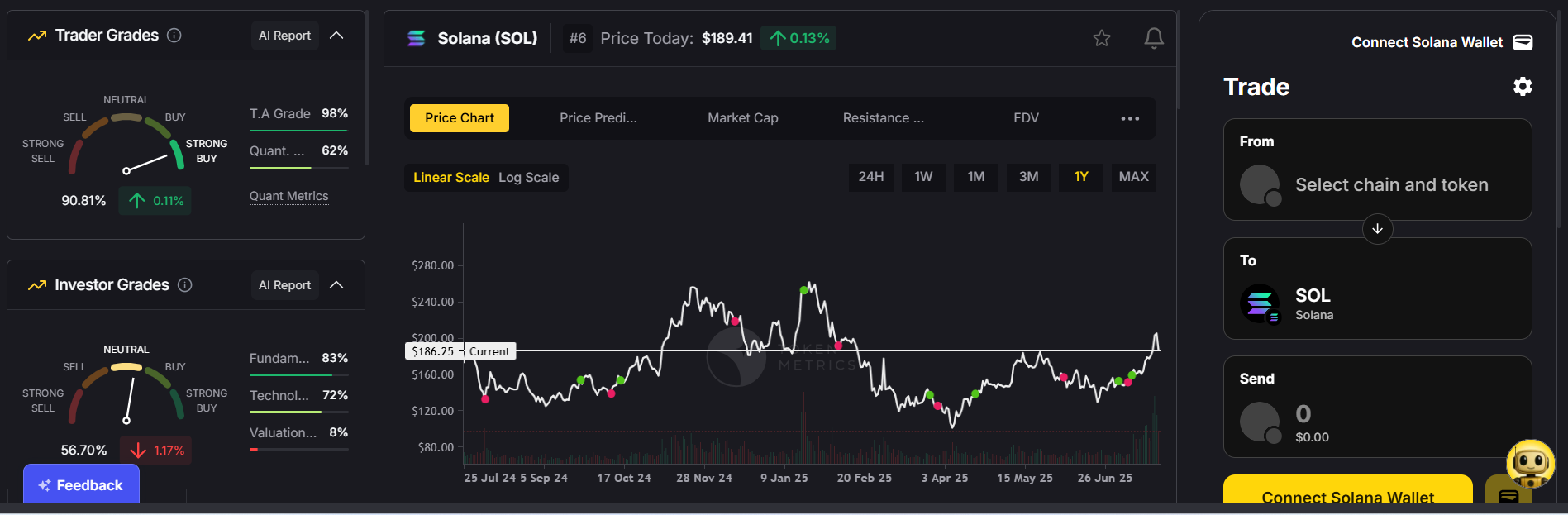
  • AI-Powered Token Grades: Evaluate tokens with Investor and Trader Grades based on 80+ data points (technical, fundamental, on-chain).
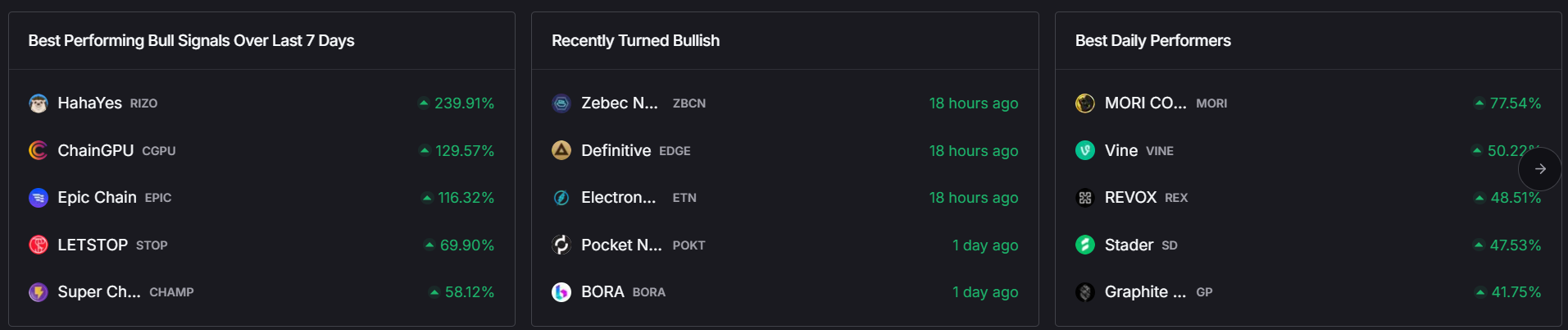
  • Bullish/Bearish Signals: Real-time alerts to buy or sell based on AI predictions.
  • Moonshots: Daily algorithmic picks of hidden altcoin gems poised for explosive growth.
  • Prebuilt Indices: AI-managed portfolios based on market trends (e.g., DeFi, AI, Layer 1).
  • Custom Alerts: Get notified by price, percent change, or grade triggers via email, SMS, or Telegram.
  • API & SDK Access: Build bots and AI agents using Token Metrics data with Python and TypeScript SDKs.
  • $TMAI Token: Powers the ecosystem and is used for community participation, Moonshots, and future governance.

Token Metrics empowers retail traders and institutional investors with AI precision, data transparency, and deep insights that traditional platforms simply don’t offer.

Why It Stands Out: No other platform blends AI-driven analytics, moonshot discovery, and real-time alerts with developer tools at this scale. It’s ideal for both hands-on traders and automated trading systems.

2. Binance – Best for Global Liquidity and Trading Pairs

Website: binance.com

Binance is the largest centralized exchange by volume and offers extensive spot, margin, and futures trading. It supports hundreds of tokens and provides access to a robust launchpad, NFT marketplace, and staking.

Pros:

  • Over 600+ coins and trading pairs
  • Advanced trading tools and mobile apps
  • Low trading fees and deep liquidity

Cons:

  • Regulatory scrutiny in some countries
  • Complex UI for beginners

Best For: Professional traders seeking high liquidity and advanced tools.

3. Coinbase – Best for Beginner-Friendly Experience

Website: coinbase.com

Coinbase is the go-to platform for beginners and U.S. traders. It provides an intuitive interface, secure storage, and educational resources.

Pros:

  • Easy to use
  • Licensed and regulated in the U.S.
  • FDIC-insured USD balances

Cons:

  • Higher fees than competitors
  • Limited number of altcoins compared to Binance

Best For: Beginners and passive investors in regulated regions.

4. Kraken – Best for Security and Staking

Website: kraken.com

Kraken is known for its strong security protocols and staking services. It offers spot, margin, and futures trading with a reputation for transparency.

Pros:

  • High-level security features
  • 24/7 support
  • Low latency trading

Cons:

  • UI not as intuitive as Coinbase
  • Limited educational content

Best For: Traders prioritizing security and staking rewards.

5. Bitget – Best for Copy Trading and Derivatives

Website: bitget.com

Bitget is gaining popularity for its copy trading features and derivatives market. It allows users to replicate the trades of successful investors automatically.

Pros:

  • Strong copy trading ecosystem
  • Competitive futures trading fees
  • Integrated strategy center

Cons:

  • Smaller selection of tokens vs. Binance
  • Less known in the U.S.

Best For: Passive traders and futures enthusiasts.

Why Token Metrics Is the Future of AI Crypto Trading

While exchanges like Binance and Coinbase focus on execution, Token Metrics gives you the intelligence to know what to trade and when. Its AI-powered platform serves as the brain behind your trades—scanning thousands of tokens daily and distilling actionable insights in real time.

Whether you want to:

  • Catch early moonshots
  • Build a winning portfolio
  • Automate signals into bots
  • Backtest trading strategies using real data
  • Receive alerts before major breakouts

…Token Metrics is the most powerful analytics and trading assistant available in 2025.

Final Thoughts

Choosing the best crypto trading platform depends on your trading style and goals. For execution, Binance and Coinbase remain strong contenders. But if you're looking to gain an unfair advantage through AI, automate your workflow, and catch the next 10x altcoin before the crowd, Token Metrics is unmatched.

As AI continues to reshape crypto in 2025, platforms like Token Metrics will become the go-to infrastructure for intelligent investing. Don’t just trade crypto—trade with insight.

Build Smarter Crypto Apps &
AI Agents in Minutes, Not Months
Real-time prices, trading signals, and on-chain insights all from one powerful API.
Grab a Free API Key
About Token Metrics
Token Metrics: AI-powered crypto research and ratings platform. We help investors make smarter decisions with unbiased Token Metrics Ratings, on-chain analytics, and editor-curated “Top 10” guides. Our platform distills thousands of data points into clear scores, trends, and alerts you can act on.
30 Employees
analysts, data scientists, and crypto engineers
Daily Briefings
concise market insights and “Top Picks”
Transparent & Compliant
Sponsored ≠ Ratings; research remains independent
Want Smarter Crypto Picks—Free?
See unbiased Token Metrics Ratings for BTC, ETH, and top alts.
Thank you! Your submission has been received!
Oops! Something went wrong while submitting the form.
 No credit card | 1-click unsubscribe
Token Metrics Team
Token Metrics Team

Recent Posts

Crypto Basics

How Does Blockchain Work? A Complete Guide for 2025

Token Metrics Team
5 min

Introduction to Blockchain Technology

Blockchain is the foundation of modern cryptocurrency and one of the most transformative technologies of the digital age. Initially created to support Bitcoin, blockchain has expanded into countless use cases, from decentralized finance (DeFi) to supply chain tracking, real-world asset tokenization, and artificial intelligence (AI) integration.

In 2025, understanding how blockchain works is essential—not just for crypto investors but for anyone navigating the evolving digital economy. This article explains the structure, components, and applications of blockchain in simple terms and explores how platforms like Token Metrics use blockchain data to help investors make smarter decisions.

What Is Blockchain?

At its core, blockchain is a distributed digital ledger that records transactions across a network of computers. Unlike traditional databases controlled by a single entity, blockchain operates on a decentralized network, making it secure, transparent, and tamper-resistant.

Each entry in this ledger is grouped into a “block,” and these blocks are linked (or chained) together in chronological order—hence the name blockchain.

Key Features of Blockchain

  1. Decentralization:
    No single entity controls the network. Instead, multiple participants (called nodes) maintain the ledger.

  2. Transparency:
    Transactions are visible to all participants, increasing accountability and reducing fraud.

  3. Immutability:
    Once data is recorded on a blockchain, it cannot be altered or deleted.

  4. Security:
    Blockchain uses cryptography to secure transactions and protect user identities.

How Blockchain Works: Step-by-Step

  1. Transaction Creation:
    A blockchain process begins when someone initiates a transaction, such as transferring cryptocurrency or executing a smart contract.

  2. Verification by Nodes:
    The transaction is broadcast to a network of computers (nodes). These nodes verify its validity using consensus mechanisms like Proof of Work (PoW) or Proof of Stake (PoS).

  3. Block Creation:
    Once verified, the transaction is bundled with others into a block.

  4. Adding the Block to the Chain:
    The block is cryptographically linked to the previous one, creating an unbroken chain of data.

  5. Consensus & Finalization:
    The network reaches consensus, confirming the block as part of the permanent ledger.

Consensus Mechanisms: How the Network Agrees

Consensus mechanisms are protocols that ensure all nodes agree on the state of the blockchain.

  • Proof of Work (PoW):
    Used by Bitcoin, this method involves miners solving complex puzzles to validate transactions.

  • Proof of Stake (PoS):
    Used by Ethereum and many other blockchains in 2025, this energy-efficient model requires validators to stake tokens as collateral for transaction verification.

  • Other Models:
    Variants like Delegated Proof of Stake (DPoS) and Proof of Authority (PoA) aim to balance efficiency with security.

Components of a Blockchain

  1. Blocks:
    Contain transaction data, a timestamp, and a cryptographic hash.

  2. Nodes:
    Computers that maintain and validate the blockchain.

  3. Smart Contracts:
    Self-executing agreements coded directly onto the blockchain.

  4. Cryptographic Keys:
    Digital signatures that authenticate participants and secure transactions.

Public vs. Private Blockchains

  • Public Blockchains:
    Open networks like Bitcoin and Ethereum allow anyone to participate.

  • Private Blockchains:
    Restricted networks used by enterprises for applications like supply chain management.

In 2025, hybrid models combining public and private features are increasingly popular for balancing transparency with privacy.

Applications of Blockchain in 2025

  1. Cryptocurrencies:
    The primary use case remains facilitating peer-to-peer transactions with coins like Bitcoin, Ethereum, and Token Metrics AI (TMAI).

  2. Decentralized Finance (DeFi):
    Platforms for lending, borrowing, and trading without intermediaries.

  3. Real-World Assets (RWAs):
    Tokenizing physical assets like real estate or commodities.

  4. AI & Analytics:
    Platforms like Token Metrics use blockchain data to deliver AI-powered investment insights.

  5. Supply Chain Management:
    Tracking goods transparently from production to delivery.

  6. Identity Management:
    Blockchain secures personal identities and reduces fraud in digital interactions.

Benefits of Blockchain

  1. Enhanced Security:
    Blockchain’s cryptographic design makes it nearly impossible to hack or alter.

  2. Reduced Costs:
    Eliminates intermediaries, cutting transaction fees and operational expenses.

  3. Improved Efficiency:
    Enables faster transactions, especially with PoS blockchains.

  4. Global Accessibility:
    Anyone with an internet connection can participate in public blockchain networks.

Challenges Facing Blockchain

  1. Scalability:
    Handling large transaction volumes remains an issue for many networks.

  2. Regulatory Uncertainty:
    Governments are still determining how to regulate blockchain-based assets.

  3. Energy Consumption:
    Though PoS reduces energy use, PoW blockchains still face environmental concerns.

  4. Adoption Barriers:
    Enterprises and individuals need more education and tools for blockchain integration.

How Token Metrics Uses Blockchain Data

Platforms like Token Metrics take blockchain a step further by:

  • Analyzing On-Chain Data: Evaluating wallet activity, transaction volumes, and developer engagement.
  • AI-Driven Ratings: Scoring tokens based on over 80 data points, from technical performance to sentiment analysis.
  • Portfolio Optimization: Helping investors build and manage blockchain-based portfolios effectively.

By combining blockchain transparency with AI-powered analytics, Token Metrics provides a comprehensive view of crypto investments.

Practical Tips for Understanding Blockchain

  1. Experiment with Wallets:
    Set up a wallet to explore how transactions work firsthand.

  2. Use Blockchain Explorers:
    Platforms like Etherscan let you view transactions in real-time.

  3. Follow Blockchain Projects:
    Stay updated on leading networks like Ethereum, Polygon, and Token Metrics AI (TMAI).

  4. Leverage Analytics Tools:
    Use Token Metrics to interpret complex blockchain data in an investor-friendly way.

The Future of Blockchain

In 2025, blockchain continues to evolve beyond cryptocurrencies. With advances in scalability solutions, real-world asset tokenization, and AI integration, blockchain is shaping the next generation of financial systems, digital identity solutions, and decentralized applications.

As enterprises, governments, and investors adopt blockchain, its role in the digital economy will only grow.

Conclusion

Blockchain is more than a buzzword—it’s a transformative technology driving innovation across industries. By understanding how blockchain works—its structure, consensus mechanisms, and applications—you can better navigate the crypto market and the broader digital landscape.

Platforms like Token Metrics make blockchain analysis accessible and actionable, offering AI-driven insights to help investors capitalize on this rapidly expanding technology. In 2025, mastering blockchain fundamentals isn’t just helpful—it’s essential for participating in the future of finance and digital ownership.

Crypto Basics

Coin Market Cap: A Complete Guide for Smarter Crypto Investing in 2025

Token Metrics Team
6 min

Introduction to Coin Market Cap

In the fast-paced world of cryptocurrency investing, market capitalization, often called market cap, is one of the most essential metrics for evaluating projects. It helps investors quickly gauge a coin’s size, value, and growth potential, making it a cornerstone for portfolio allocation and risk management.

Whether you’re a beginner trying to understand which cryptocurrencies to buy or an experienced trader managing a complex portfolio, understanding coin market cap is critical. In this guide, we’ll break down what market cap is, how to use it effectively, its limitations, and how platforms like Token Metrics can enhance your analysis with advanced data insights.

What Is Coin Market Cap?

Market capitalization refers to the total value of a cryptocurrency in circulation. It’s calculated using a simple formula:

Market Cap=Current Price×Circulating Supply\text{Market Cap} = \text{Current Price} \times \text{Circulating Supply}

For example, if a cryptocurrency is priced at $20 and has 50 million coins in circulation, its market cap would be $1 billion. This figure provides a snapshot of the project’s relative size and its standing in the broader crypto market.

Market cap is an invaluable metric for quickly comparing projects, identifying potential opportunities, and understanding the level of risk associated with an investment.

Why Market Cap Matters in Crypto

Market cap plays a crucial role in crypto investing for several reasons:

  1. Assessing Project Size:
    It indicates whether a cryptocurrency is large-cap (established and relatively stable), mid-cap (moderate growth potential), or small-cap (high risk and high reward).

  2. Determining Growth Potential:
    Comparing market caps across similar projects can highlight undervalued assets with room to grow.

  3. Portfolio Allocation:
    By understanding the market cap of various assets, you can balance your portfolio between high-risk small caps and more stable large caps.

  4. Benchmarking Performance:
    Market cap allows you to compare assets within the same category—for example, evaluating competing layer 1 blockchains or AI tokens.

Types of Cryptocurrencies by Market Cap

Cryptocurrencies are typically categorized by their market cap:

  • Large-Cap Cryptos (>$10 Billion):
    These are well-established, widely adopted coins like Bitcoin (BTC), Ethereum (ETH), and Binance Coin (BNB). They tend to be less volatile and serve as the “blue chips” of crypto.

  • Mid-Cap Cryptos ($1–10 Billion):
    These include projects like Polygon (MATIC), Arbitrum (ARB), and Chainlink (LINK). They balance growth potential with relatively lower risk than small caps.

  • Small-Cap Cryptos (<$1 Billion):
    These high-risk, high-reward tokens often include emerging narrative-driven coins like Token Metrics AI (TMAI) or experimental DeFi projects. They can deliver significant returns but also carry a higher chance of failure.

How to Use Market Cap in Investment Decisions

While market cap is only one part of the puzzle, it’s a powerful tool when used correctly. Here’s how to incorporate it into your strategy:

  1. Identify Undervalued Assets:
    Look for coins with strong fundamentals and low market caps relative to competitors. For example, an innovative AI project like TMAI with a market cap significantly lower than its peers could signal untapped potential.

  2. Balance Risk and Reward:
    Allocate funds across large-, mid-, and small-cap assets. Large caps bring stability, while mid- and small caps provide growth opportunities.

  3. Track Sector Trends:
    Monitor market caps by category (e.g., AI tokens, DeFi protocols, Layer 2 scaling solutions) to identify which sectors are gaining traction.

  4. Compare Projects:
    Use market cap to evaluate competitors within the same niche. For instance, comparing Polygon and Arbitrum can help assess which layer 2 solution has more market trust.

Limitations of Using Market Cap

Although market cap is a useful metric, it has its shortcomings:

  1. No Liquidity Insights:
    A high market cap doesn’t always mean easy liquidity. Some tokens with large caps may have thin trading volumes, making them hard to buy or sell.

  2. Doesn’t Reflect Token Distribution:
    Market cap doesn’t account for how tokens are distributed. A project with concentrated ownership may have inflated prices that don’t reflect real demand.

  3. Ignores Project Fundamentals:
    Market cap alone won’t tell you if a project has strong technology, an active user base, or real-world utility.

This is why market cap analysis should always be combined with other key metrics and qualitative research, which is where Token Metrics becomes invaluable.

Enhancing Market Cap Analysis with Token Metrics

While traditional market cap data offers a snapshot, Token Metrics goes deeper by analyzing:

  • On-Chain Metrics: Active wallets, transaction volumes, and network growth.
  • Technical Analysis: AI-driven price predictions based on historical and real-time data.
  • Fundamental Analysis: Project utility, team credibility, and adoption potential.
  • Token Grades: Proprietary scoring that evaluates over 80 data points per token.

This AI-powered approach allows investors to identify truly undervalued projects that might be overlooked by simply glancing at market cap.

Market Cap vs. Other Key Metrics

Market cap is most powerful when used alongside:

  • Trading Volume: Indicates liquidity and investor interest.
  • Fully Diluted Valuation (FDV): Projects with low circulating supply but high FDV might face inflationary pressures.
  • Total Value Locked (TVL): For DeFi tokens, TVL shows how much capital is actively being used in protocols.

Combining these insights with market cap offers a more complete view of a project’s health and potential.

Practical Steps for Using Market Cap in 2025

  1. Start with Large Caps:
    Anchor your portfolio with stable large-cap assets like BTC and ETH.

  2. Explore Mid- and Small-Caps:
    Use Token Metrics to identify emerging projects with strong fundamentals and room for growth.

  3. Diversify by Sector:
    Allocate to different narratives—AI tokens like TMAI, DeFi coins, and scaling solutions—to spread risk.

  4. Reassess Regularly:
    Crypto markets move quickly. Track changing market caps to adjust your allocations proactively.

Conclusion

Coin market cap remains one of the most fundamental metrics for analyzing cryptocurrencies. It provides a clear picture of project size and helps investors allocate capital effectively.

However, market cap alone isn’t enough. To make smarter, data-driven decisions, investors should combine market cap insights with on-chain data, technical analysis, and AI-driven insights from Token Metrics.

In 2025, using market cap alongside advanced analytics can help you identify undervalued opportunities, manage risk effectively, and build a balanced, growth-oriented crypto portfolio.

Crypto Basics

Crypto as an Investment: Is It Worth It in 2025?

Token Metrics Team
6 min

Introduction to Crypto as an Investment

Over the past decade, cryptocurrency has moved from an experimental technology to a mainstream investment asset. What started with Bitcoin as a digital alternative to cash has evolved into a multi-trillion-dollar ecosystem encompassing altcoins, decentralized finance (DeFi), AI-powered tokens, and NFTs.

In 2025, crypto is no longer a fringe idea—it’s an essential consideration for forward-thinking investors. Whether you’re seeking growth, diversification, or a hedge against inflation, crypto offers multiple paths to wealth creation. This article explores why crypto is a valuable investment, how to approach it strategically, and the role of Token Metrics in making data-driven decisions.

Why Consider Crypto as an Investment?

  1. High Return Potential:
    Bitcoin, Ethereum, and many altcoins have delivered outsized returns compared to traditional assets. AI tokens like Token Metrics AI (TMAI) are at the forefront of new growth narratives.

  2. Diversification:
    Adding crypto to your portfolio can reduce overall risk, as it behaves differently from stocks, bonds, or real estate.

  3. Inflation Hedge:
    Bitcoin and select altcoins are increasingly seen as a store of value, protecting wealth against inflation and currency devaluation.

  4. Access to Innovation:
    Investing in crypto gives exposure to blockchain-based innovations like smart contracts, DeFi, and tokenized real-world assets.

Types of Crypto Investments

  • Blue-Chip Cryptos: Bitcoin (BTC) and Ethereum (ETH) remain the pillars of the crypto market.
  • Altcoins: Mid- and small-cap tokens, including AI coins like TMAI, DeFi tokens, and narrative-driven assets.
  • Stablecoins: USDC, USDT, and others for liquidity management and reduced volatility.
  • NFTs and RWAs: Non-fungible tokens and tokenized real-world assets are emerging as alternative investments.

How to Start Investing in Crypto

  1. Set Your Goals:
    Decide whether you’re investing for short-term gains or long-term growth.

  2. Choose Reliable Platforms:
    Use regulated exchanges and AI-powered platforms like Token Metrics for analytics and insights.

  3. Diversify Your Holdings:
    Spread investments across different sectors, avoiding overexposure to one asset type.

  4. Secure Your Assets:
    Invest in hardware wallets and enable two-factor authentication (2FA).

Risks of Investing in Crypto

  • Volatility: Crypto prices can swing dramatically in short periods.
  • Security Concerns: Exchange hacks and phishing scams remain a threat.
  • Regulatory Uncertainty: Governments are still shaping their stance on crypto.
  • Project Failures: Many small-cap projects don’t survive long-term.

Mitigate these risks by conducting thorough research and using Token Metrics AI to assess tokens based on fundamentals, on-chain activity, and market sentiment.

Investment Strategies for 2025

  1. Dollar-Cost Averaging (DCA):
    Invest a fixed amount regularly to smooth out volatility.

  2. Long-Term Holding (HODL):
    Hold assets like Bitcoin, Ethereum, and Token Metrics AI (TMAI) through market cycles.

  3. Narrative Investing:
    Focus on growth sectors like AI, DeFi, and real-world asset tokens to ride early trends.

  4. Staking & Yield Farming:
    Earn passive income on proof-of-stake tokens and DeFi protocols.

The Role of Token Metrics

Token Metrics is a game-changing platform for crypto investors. It provides AI-powered coin ratings, trend analysis, and portfolio management tools. With over 80 data points per token, it helps investors identify undervalued coins and time market entries effectively.

Conclusion

In 2025, crypto remains a compelling investment option for those willing to manage its risks. By leveraging Token Metrics for data-driven insights and combining long-term strategies with diversified holdings, investors can position themselves for strong returns in the evolving digital asset landscape.

Choose from Platinum, Gold, and Silver packages
Reach with 25–30% open rates and 0.5–1% CTR
Craft your own custom ad—from banners to tailored copy
Perfect for Crypto Exchanges, SaaS Tools, DeFi, and AI Products