
Research

Best Insurance Protocols (DeFi & Custodial) 2025

Compare the top DeFi and custodial crypto insurance providers for 2025. See coverage types, claims, regions, and who each is best for.
Sam Monac
7 min
MIN

Why Crypto Insurance Matters in September 2025

The search intent here is commercial investigation: investors want safe ways to protect on-chain and custodied assets. This guide ranks the best insurance protocols 2025 across DeFi and regulated custodial coverage so you can compare options quickly.
Definition: Crypto (DeFi) insurance helps cover losses from smart-contract exploits, exchange halts, custodian breaches, or specific parametric events; custodial insurance typically protects assets held by qualified trustees or platforms under defined “crime”/theft policies.

In 2025, larger treasuries and yield strategies are back, while counterparty and contract risk remain. We focus on real cover products, payout track records, and regulated custodial policies—using only official sources. Secondary considerations include DeFi insurance, crypto custodial insurance, and smart contract coverage capacity, claims handling, and regional eligibility.

How We Picked (Methodology & Scoring)

  • Liquidity (30%): size/capacity, ability to pay valid claims; for custodians, insurance limits and capital backing.

  • Security (25%): audits, disclosures, claim processes, regulated status where applicable.

  • Coverage (15%): breadth of products (protocol, depeg, custody, parametric, etc.) and supported chains.

  • Costs (15%): premiums/fees relative to cover; clear fee pages.

  • UX (10%): buying experience, documentation, transparency.

  • Support (5%): documentation, response channels, claims guidance.

Data sources: official product/docs, transparency/security pages, and audited/claims pages; market datasets only for cross-checks. Last updated September 2025.

Top 10 Crypto Insurance Providers in September 2025

1. Nexus Mutual — Best for broad DeFi coverage and claims history
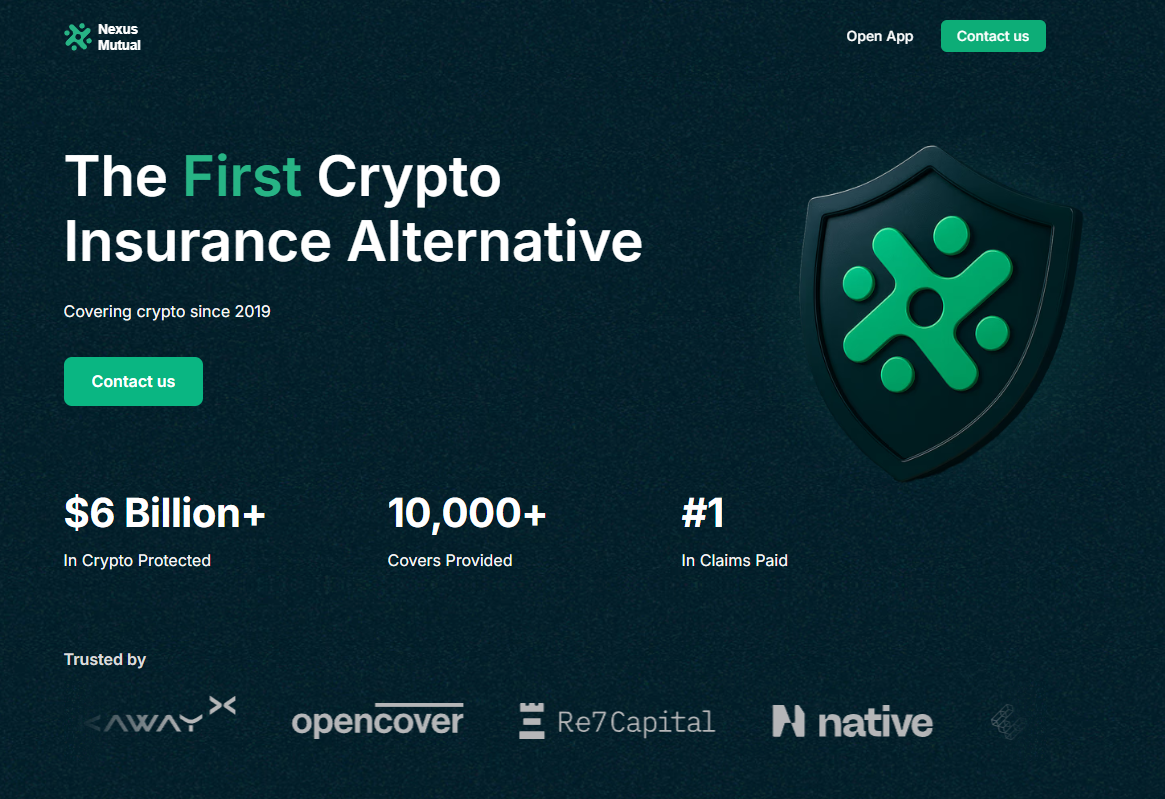
  • Why Use It: A member-owned mutual offering protocol, exchange halt, and depeg covers, with a transparent claims ledger and multi-year payout track record. Members vote on claims, and the docs detail cover wordings and product types. docs.nexusmutual.io+3nexusmutual.io+3docs.nexusmutual.io+3

  • Best For: Advanced DeFi users, DAOs/treasuries, funds seeking bespoke on-chain risk cover.

  • Notable Features: Claims history ledger; multiple cover products (protocol/exchange/depeg); membership + staking model. Nexus Mutual DAO+1

  • Fees Notes: Membership fee required; premiums vary by product pool (see cover pages). docs.nexusmutual.io

  • Regions: Global (KYC for membership). docs.nexusmutual.io

  • Consider If: You’re comfortable with discretionary, member-voted claims.

  • Alternatives: InsurAce, Neptune Mutual.

2. InsurAce — Best multi-chain DeFi marketplace
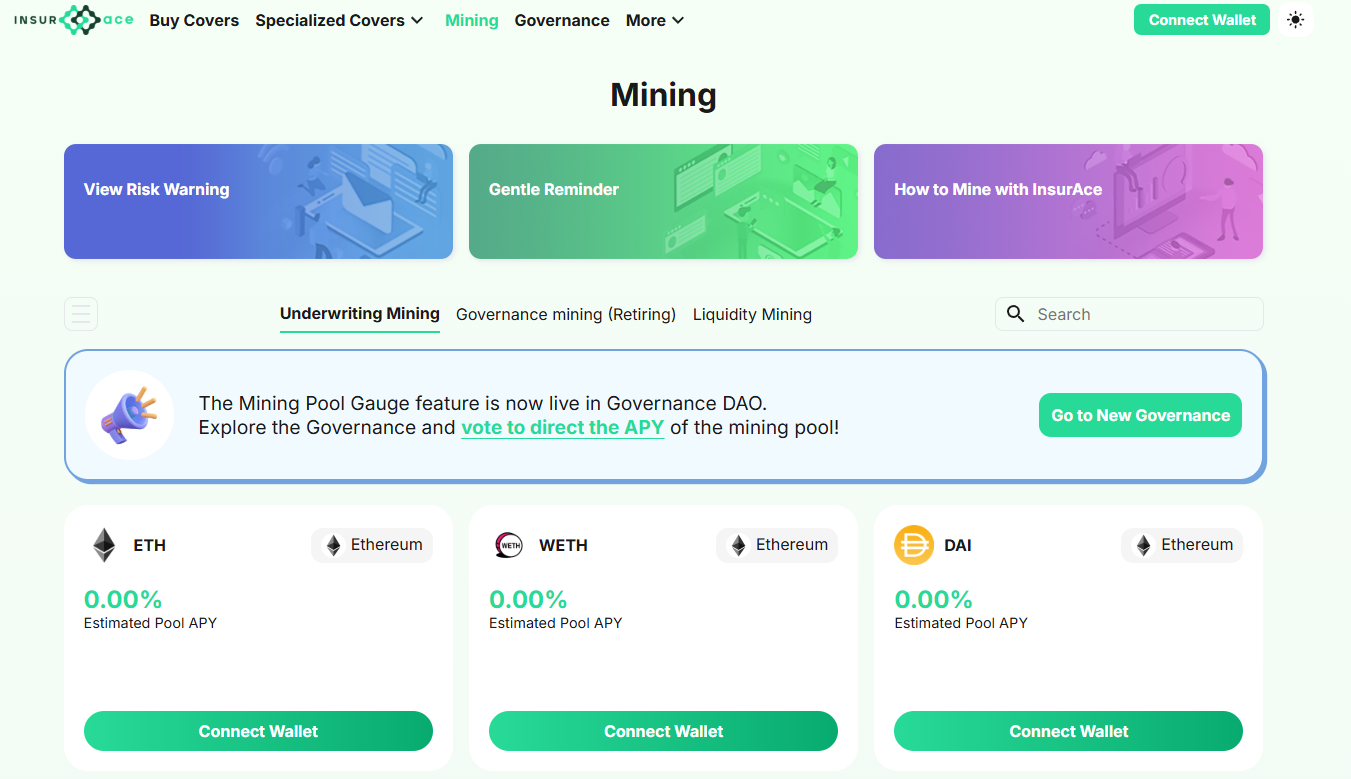
  • Why Use It: Multi-chain cover marketplace with a wide menu of protocol/exchange risk options and an established brand. Useful for builders and users who want flexible terms across ecosystems. insurace.io

  • Best For: Multi-chain DeFi participants, LPs, power users.

  • Notable Features: Diverse cover catalog; staking/supply side; docs and dApp UI focused on ease of purchase. insurace.io

  • Fees Notes: Premiums vary per pool/cover; check dApp quotes.

  • Regions: Global (subject to app access and eligibility).

  • Consider If: You prefer marketplace variety but can evaluate pool capacity.

  • Alternatives: Nexus Mutual, Neptune Mutual.

4. Sherlock — Best for protocol teams needing post-audit coverage

  • Why Use It: Full-stack security provider (audit contests, bounties) with Sherlock Shield coverage that helps protocols mitigate losses from smart-contract exploits. Strong fit for teams bundling audits + coverage. sherlock.xyz+1

  • Best For: Protocol founders, security-first teams, DAOs.

  • Notable Features: Audit marketplace; exploit coverage; payout process tailored for teams. sherlock.xyz

  • Fees Notes: Pricing depends on scope/coverage; engage sales.

  • Regions: Global.

  • Consider If: You need coverage tightly integrated with audits.

  • Alternatives: Chainproof, Nexus Mutual.

3. OpenCover— Best for Community-Driven, Transparent Coverage

Why Use It: OpenCover is a decentralized insurance protocol that leverages community-driven liquidity pools to offer coverage against smart contract exploits and other on-chain risks. Its transparent claims process and low-cost structure make it an attractive option for DeFi users seeking affordable and reliable insurance solutions.

Best For: DeFi users, liquidity providers, and investors looking for community-backed insurance coverage.

Notable Features:

  • Community-governed liquidity pools

  • Transparent and automated claims process

  • Low-cost premiums

  • Coverage for smart contract exploits and on-chain risks

Fees/Notes: Premiums are determined by the liquidity pool and the level of coverage selected.

Regions: Global (subject to dApp access).

Consider If: You value community governance and transparency in your insurance coverage.

Alternatives: Nexus Mutual, InsurAce.

5. Chainproof — Best for regulated smart-contract insurance

  • Why Use It: A regulated insurer for non-custodial smart contracts, incubated by Quantstamp; positions itself with compliant, underwritten policies and 24/7 monitoring. chainproof.co+2quantstamp.com+2

  • Best For: Enterprises, institutions, and larger protocols requiring regulated policies.

  • Notable Features: Regulated insurance; Quantstamp lineage; monitoring-driven risk management. quantstamp.com+1

  • Fees Notes: Premiums/policy terms bespoke.

  • Regions: Global (subject to policy jurisdiction).

  • Consider If: You need compliance-grade coverage for stakeholders.

  • Alternatives: Sherlock, Nexus Mutual.

6. Nayms — Best on-chain insurance marketplace for brokers/carriers

  • Why Use It: A regulated (Bermuda DABA Class F) marketplace to set up tokenized insurance pools and connect brokers, carriers, investors, and insureds—bringing alternative capital on-chain. nayms.com+1

  • Best For: Brokers/carriers building crypto-native insurance programs; larger DAOs/TSPs.

  • Notable Features: Segregated Accounts (SAC) structure; tokenized pools; full lifecycle (capital → premiums → claims). nayms.com+1

  • Fees Notes: Platform/program fees vary; institutional setup.

  • Regions: Global (Bermuda framework).

  • Consider If: You’re creating—not just buying—insurance capacity.

  • Alternatives: Chainproof, institutional mutuals.

7. Etherisc — Best for parametric flight/crop and specialty covers

  • Why Use It: Pioneer in parametric blockchain insurance with live Flight Delay Protection and other modules (e.g., crop, weather, depeg). On-chain products with automated claims. Etherisc+2Flight Delay+2

  • Best For: Travelers, agritech projects, builders of niche parametric covers.

  • Notable Features: Flight delay dApp (Base/USDC); crop/weather modules; transparent policy pages. Flight Delay+1

  • Fees Notes: Premiums quoted per route/peril.

  • Regions: Global (product-specific availability).

  • Consider If: You need clear, data-triggered payouts.

  • Alternatives: Arbol (climate parametrics), Neptune Mutual.

8. Tidal FinanceBest for Coverage on Niche DeFi Protocols
Why Use It: Tidal Finance focuses on providing coverage for niche and emerging DeFi protocols, offering tailored insurance products for new and innovative projects. Tidal's dynamic risk assessments allow it to offer specialized coverage options for specific protocols.
Best For: Users and protocols seeking insurance for niche DeFi projects with specific risk profiles.
Notable Features:

  • Coverage for high-risk, niche DeFi protocols

  • Dynamic pricing based on real-time risk assessments

  • Flexible policy terms
    Fees/Notes: Premiums based on the risk profile of the insured protocol.
    Regions: Global.
    Consider If: You need tailored insurance coverage for emerging or specialized DeFi projects.
    Alternatives: Nexus Mutual, Amulet Protocol.

9. Subsea (formerly Risk Harbor) — Best for automated, rules-based claims

  • Why Use It: An algorithmic risk-management marketplace with objective, automated claims—reducing discretion and bias in payouts. (Risk Harbor rebranded to Subsea.) Subsea+1

  • Best For: Users who prefer invariant, programmatic claim triggers.

  • Notable Features: Automated payout logic; transparent market mechanics; simulator for underwriting/buying protection. simulator.riskharbor.com

  • Fees Notes: Premiums and returns vary by pool.

  • Regions: Global (dApp access).

  • Consider If: You want automation over DAO voting.

  • Alternatives: Neptune Mutual, Amulet.

10. BitGo Custody (with Insurance) — Best custodial coverage for institutions

  • Why Use It: Qualified custody with up to $250M in digital-asset insurance capacity for assets where keys are held by BitGo Trust; clearly communicated policy framework and bankruptcy-remote structures. The Digital Asset Infrastructure Company+2The Digital Asset Infrastructure Company+2

  • Best For: Funds, corporates, and service providers needing regulated custody plus insurance.

  • Notable Features: Qualified custody; SOC reports; policy covers specific theft/loss scenarios. The Digital Asset Infrastructure Company

  • Fees Notes: Custody/asset-based fees; insurance embedded at the custodian level.

  • Regions: Global (jurisdiction-specific entities).

  • Consider If: You want a regulated custodian with published insurance capacity.

  • Alternatives: Gemini Custody, Anchorage Digital (note: no FDIC/SIPC). Gemini+1

Decision Guide: Best By Use Case

How to Choose the Right Crypto Insurance (Checklist)

  • Verify eligibility/region and any KYC requirements.

  • Check coverage type (protocol exploit, exchange halt, depeg, parametric, custody crime).

  • Review capacity/liquidity and payout records/ledgers.

  • Compare premiums/fees against insured amounts and deductibles.

  • Evaluate claims process (discretionary vote vs. parametric/automated).

  • Confirm security posture (audits, monitoring, disclosures).

  • Test UX & support (docs, ticketing, community).

  • Red flags: unclear policy wordings; promises of “FDIC-like” protection for crypto (rare/not applicable). Anchorage

Use Token Metrics With Any Insurance Provider

  • AI Ratings to screen tokens and protocol risk signals.
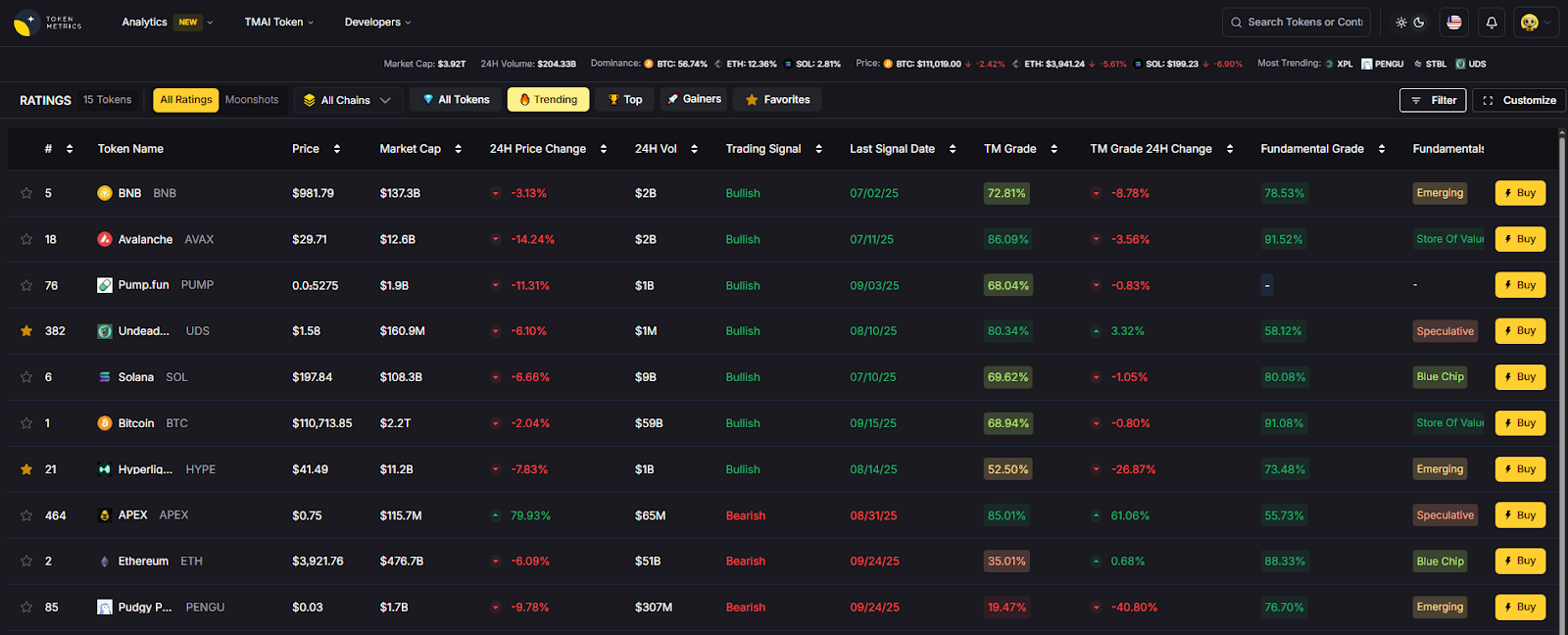
  • Narrative Detection to spot shifting risk/coverage demand.

  • Portfolio Optimization to size insured vs. uninsured exposures.

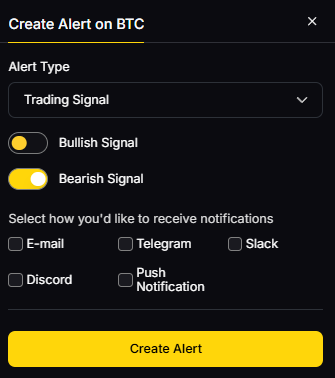
  • Alerts to track incident news and coverage expiries.
    Workflow: Research → Select cover/custody → Execute → Monitor with alerts.

Primary CTA: Start free trial

Security & Compliance Tips

  • Enable strong 2FA and segregate wallets for covered vs. uncovered positions.

  • For custodial solutions, understand exact insurance scope and exclusions. Gemini

  • Follow KYC/AML where required (e.g., Nexus Mutual membership). docs.nexusmutual.io

  • For protocols, complement insurance with audits/bounties and incident response runbooks. sherlock.xyz

  • Maintain wallet hygiene (hardware, allow-list, spend limits).

This article is for research/education, not financial advice.

Beginner Mistakes to Avoid

  • Assuming all losses are covered—read policy wordings. Gemini

  • Buying cover after an incident is known/underway.

  • Ignoring chain/app coverage constraints.

  • Letting cover lapse during major upgrades or liquidity migrations.

  • Believing custodial insurance = FDIC/SIPC (it doesn’t). Anchorage

FAQs

What’s the difference between DeFi insurance and custodial insurance?
DeFi insurance protects on-chain actions (e.g., smart-contract exploits or depegs), often via discretionary voting or parametric rules. Custodial insurance covers specific theft/loss events while assets are held by a qualified custodian under a crime policy; exclusions apply. docs.nexusmutual.io+1

How do parametric policies work in crypto?
They pre-define an objective trigger (e.g., flight delay, protocol incident), enabling faster, data-driven payouts without lengthy investigations. Etherisc (flight) and Neptune Mutual (incident pools) are examples. Flight Delay+1

Is Nexus Mutual regulated insurance?
No. It’s a member-owned discretionary mutual where members assess claims and provide capacity; see membership docs and claim pages. docs.nexusmutual.io+1

Do custodial policies cover user mistakes or account takeovers?
Typically no—policies focus on theft from the custodian’s systems. Review each custodian’s definitions/exclusions (e.g., Gemini’s hot/cold policy scope). Gemini

What if I’m primarily on Solana?
Consider Amulet for Solana-native cover; otherwise, verify cross-chain support from multi-chain providers. amulet.org

Which providers are regulated?
Chainproof offers regulated smart-contract insurance; Nayms operates under Bermuda’s DABA framework for on-chain insurance programs. chainproof.co+1

Conclusion + Related Reads

If you need breadth and track record, start with Nexus Mutual or InsurAce. For parametric, faster payouts, look at Neptune Mutual or Etherisc. Building institutional-grade risk programs? Consider Chainproof or Nayms. If you hold assets with a custodian, confirm published insurance capacity—BitGo and Gemini Custody are good benchmarks.

Related Reads:

  • Best Cryptocurrency Exchanges 2025

  • Top Derivatives Platforms 2025

  • Top Institutional Custody Providers 2025

Sources & Update Notes

We verified every claim on official provider pages (product docs, policy pages, security/claims posts) and only used third-party sources for context checks. Updated September 2025.

Gemini — Custody insurance page and blog. Gemini+1

Build Smarter Crypto Apps &
AI Agents in Minutes, Not Months
Real-time prices, trading signals, and on-chain insights all from one powerful API.
Grab a Free API Key
Token Metrics Team
Token Metrics Team

Recent Posts

Research

Mastering REST APIs: Principles, Design, Practices

Token Metrics Team
5
MIN

REST APIs power most modern web and mobile back ends by providing a uniform, scalable way to exchange data over HTTP. Whether you are building microservices, connecting AI agents, or integrating third‑party feeds, understanding the architectural principles, design patterns, and operational tradeoffs of REST can help you build reliable systems. This article breaks down core concepts, design best practices, security measures, and practical steps to integrate REST APIs with analytics and AI workflows.

Understanding REST API Fundamentals

REST (Representational State Transfer) is an architectural style for distributed systems. It emphasizes stateless interactions, resource-based URIs, and the use of standard HTTP verbs (GET, POST, PUT, DELETE, PATCH). Key constraints include:

  • Statelessness: Each request contains all necessary context, simplifying server design and enabling horizontal scaling.
  • Resource orientation: Resources are identified by URIs and represented in formats such as JSON or XML.
  • Uniform interface: Consistent use of HTTP methods and status codes improves predictability and interoperability.

When designing APIs, aim for clear resource models, intuitive endpoint naming, and consistent payload shapes. Consider versioning strategies (URL vs header) from day one to avoid breaking clients as your API evolves.

Design Patterns and Best Practices for REST APIs

Good API design balances usability, performance, and maintainability. Adopt these common patterns:

  • Resource naming: Use plural nouns (/users, /orders) and hierarchical paths to express relationships.
  • HTTP semantics: Map create/read/update/delete to POST/GET/PUT/DELETE and use PATCH for partial updates.
  • Pagination and filtering: Return large collections with pagination (cursor or offset) and provide filters and sort parameters.
  • Hypermedia (HATEOAS): Include links to related resources when appropriate to make APIs self-descriptive.
  • Error handling: Use structured error responses with machine-readable codes and human-friendly messages.

Document endpoints with examples and schemas (OpenAPI/Swagger). Automated documentation and SDK generation reduce integration friction and lower client-side errors.

Securing and Scaling REST APIs

Security and operational resilience are core concerns for production APIs. Consider the following layers:

  • Authentication & authorization: Use OAuth2, JWT, or API keys depending on threat model. Keep tokens short-lived and enforce least privilege.
  • Input validation: Validate all incoming data to prevent injection and logic vulnerabilities.
  • Rate limiting & throttling: Protect backends from abuse and noisy neighbors by implementing quotas and backoff signals.
  • Transport security: Enforce TLS (HTTPS) and configure secure ciphers and headers.
  • Observability: Expose metrics, structured logs, and distributed traces to troubleshoot latency and failure modes.

For scale, design for statelessness so instances are replaceable, use caching (HTTP cache headers, CDN, or edge caches), and partition data to reduce contention. Use circuit breakers and graceful degradation to maintain partial service during downstream failures.

Integrating REST APIs with AI, Analytics, and Crypto Workflows

REST APIs are frequently used to feed AI models, aggregate on‑chain data, and connect analytics pipelines. Best practices for these integrations include:

  • Schema contracts: Define stable, versioned schemas for model inputs and analytics outputs to avoid silent breakages.
  • Batch vs streaming: Choose between batch endpoints for bulk processing and streaming/webhook patterns for real‑time events.
  • Data provenance: Attach metadata and timestamps so downstream models can account for data freshness and lineage.
  • Testing: Use contract tests and synthetic data generators to validate integrations before deploying changes.

To accelerate research workflows and reduce time-to-insight, many teams combine REST APIs with AI-driven analytics. For example, external platforms can provide curated market and on‑chain data through RESTful endpoints that feed model training or signal generation. One such option for consolidated crypto data access is Token Metrics, which can be used as part of an analysis pipeline to augment internal data sources.

Build Smarter Crypto Apps & AI Agents with Token Metrics

Token Metrics provides real-time prices, trading signals, and on-chain insights all from one powerful API. Grab a Free API Key

FAQ: Common REST API Questions

What is the difference between REST and RESTful?

REST is an architectural style defined by constraints; "RESTful" describes services that adhere to those principles. In practice, many APIs are called RESTful even if they relax some constraints, such as strict HATEOAS.

When should I version an API and how?

Version early when breaking changes are likely. Common approaches are path versioning (/v1/) or header-based versioning. Path versioning is simpler for clients, while headers keep URLs cleaner. Maintain compatibility guarantees in your documentation.

How do I choose between REST and GraphQL?

REST is straightforward for resource-centric designs and benefits from HTTP caching and simple tooling. GraphQL excels when clients need flexible queries and to reduce over-fetching. Choose based on client needs, caching requirements, and team expertise.

What are practical rate limiting strategies?

Use token bucket or fixed-window counters, and apply limits per API key, IP, or user. Provide rate limit headers and meaningful status codes (429 Too Many Requests) to help clients implement backoff and retry strategies.

How can I test and monitor a REST API effectively?

Combine unit and integration tests with contract tests (OpenAPI-driven). For monitoring, collect metrics (latency, error rates), traces, and structured logs. Synthetic checks and alerting on SLA breaches help detect degradations early.

What is the best way to document an API?

Use OpenAPI/Swagger to provide machine-readable schemas and auto-generate interactive docs. Include examples, authentication instructions, and clear error code tables. Keep docs in version control alongside code.

Disclaimer

This article is educational and informational only. It does not constitute financial, investment, legal, or professional advice. Evaluate tools and services independently and consult appropriate professionals for specific needs.

Research

Mastering REST APIs: Principles, Design, and Best Practices

Token Metrics Team
5
MIN

REST APIs power much of the modern web, mobile apps, and integrations between services. Whether you are building a backend for a product, connecting to external data sources, or composing AI agents that call external endpoints, understanding REST API fundamentals helps you design reliable, maintainable, and performant systems.

What is a REST API and why it matters

Representational State Transfer (REST) is an architectural style that uses simple HTTP verbs to operate on resources identified by URLs. A REST API exposes these resources over HTTP so clients can create, read, update, and delete state in a predictable way. Key benefits include:

  • Stateless interactions that simplify scaling and load balancing.
  • Uniform interface using standard HTTP verbs (GET, POST, PUT/PATCH, DELETE).
  • Human-readable endpoints and predictable behavior for developers and tools.

REST is not a strict protocol; it is a set of constraints that make APIs easier to consume and maintain. Understanding these constraints enables clearer contracts between services and smoother integration with libraries, SDKs, and API gateways.

Core principles and common HTTP methods

Designing a RESTful API starts with resources and consistent use of HTTP semantics. Typical patterns include:

  • Resource-oriented URLs: /users/123/orders/456 rather than RPC-style method names.
  • HTTP methods: GET for reads, POST for creation, PUT/PATCH for updates, DELETE for deletion.
  • Status codes: 200 OK, 201 Created, 204 No Content, 400 Bad Request, 401 Unauthorized, 403 Forbidden, 404 Not Found, 429 Too Many Requests, 500 Server Error.
  • Content negotiation: Use Accept and Content-Type headers (application/json, application/xml) to support clients.

Use idempotency for safety: GET, PUT, and DELETE should be safe to retry without causing unintended side effects. POST is commonly non-idempotent unless an idempotency key is provided.

Design patterns: pagination, filtering, and versioning

As APIs grow, practical patterns help keep them efficient and stable:

  • Pagination: Offer cursor-based or offset-based pagination for collections. Cursor pagination generally performs better at scale.
  • Filtering and sorting: Support query parameters (e.g., ?status=active&sort=-created_at) and document allowed fields.
  • Versioning: Avoid breaking changes by putting versions in the URL (/v1/) or in headers. Maintain clear deprecation policies and migration guides.
  • Hypermedia (HATEOAS): Optionally include links to related resources to help clients discover available actions.

Security, performance, and operational best practices

Security and reliability are essential for production APIs. Consider these practices:

  • Authentication & authorization: Prefer OAuth2, JWTs, or API keys depending on your use case. Use scopes and least-privilege access.
  • Transport security: Enforce TLS for all endpoints and disable deprecated TLS ciphers.
  • Rate limiting and quotas: Protect your backend and provide clear error responses (429) with retry headers.
  • Caching: Use HTTP caching headers (Cache-Control, ETag) and CDN fronting for read-heavy endpoints.
  • Monitoring and observability: Emit structured logs, metrics, and distributed traces so you can diagnose latency, errors, and bottlenecks.

These controls reduce downtime and make integration predictable for client teams and third-party developers.

Testing, documentation, and developer experience

Good testing and clear docs accelerate adoption and reduce bugs:

  • Automated tests: Unit test controllers and routes, and use integration tests against a staging environment or simulated backend.
  • Contract testing: Tools like OpenAPI/Swagger and schema validation ensure clients and servers agree on payloads and types.
  • Interactive docs and SDKs: Provide OpenAPI specs, example curl commands, and autogenerated client libraries for common languages.
  • Postman and CI: Use Postman collections or similar for exploratory testing and include API checks in CI pipelines.

These measures improve developer productivity and reduce the risk of downstream failures when APIs evolve.

Build Smarter Crypto Apps & AI Agents with Token Metrics

Token Metrics provides real-time prices, trading signals, and on-chain insights all from one powerful API. Grab a Free API Key

What is the difference between REST and RESTful?

REST is the architectural style; RESTful typically describes APIs that follow REST constraints such as statelessness, resource orientation, and use of HTTP verbs. In practice the terms are often used interchangeably.

When should I use PUT vs PATCH?

PUT generally replaces a full resource and is idempotent; PATCH applies partial changes and may not be idempotent unless designed to be. Choose based on whether clients send full or partial resource representations.

How do I choose between URL versioning and header versioning?

URL versioning (/v1/) is simple and visible to clients, while header versioning is cleaner from a URL standpoint but harder for users to discover. Pick a strategy with a clear migration and deprecation plan.

What are common causes of REST API performance issues?

Typical causes include unoptimized database queries, chatty endpoints that require many requests, lack of caching, and large payloads. Use profiling, caching, and pagination to mitigate these issues.

How can REST APIs support AI agents?

AI agents often orchestrate multiple data sources and services via REST APIs. Well-documented, authenticated, and idempotent endpoints make it safer for agents to request data, trigger workflows, and integrate model outputs into applications.

What tools help with API design and documentation?

OpenAPI/Swagger, Postman, Redoc, and API gateways (e.g., Kong, Apigee) are common. They help standardize schemas, run automated tests, and generate SDKs for multiple languages.

Disclaimer

This article is educational and informational only. It does not constitute professional advice. Evaluate technical choices and platforms based on your project requirements and security needs.

Research

Mastering REST APIs: Design, Security, and Performance

Token Metrics Team
4
MIN

REST APIs are the connective tissue of modern software: from mobile apps to cloud services, they standardize how systems share data. This guide breaks down practical design patterns, security considerations, performance tuning, and testing strategies to help engineers build reliable, maintainable RESTful services.

API Design Principles

Good REST API design balances consistency, discoverability, and simplicity. Start with clear resource modeling — treat nouns as endpoints (e.g., /users, /orders) and use HTTP methods semantically: GET for retrieval, POST for creation, PUT/PATCH for updates, and DELETE for removals. Design predictable URIs, favor plural resource names, and use nested resources sparingly when relationships matter.

Other patterns to consider:

  • Use query parameters for filtering, sorting, and pagination (e.g., ?limit=50&offset=100&sort=-created_at).
  • Return consistent response shapes and error formats. Standardize on JSON with a clear schema and status codes.
  • Document your API with OpenAPI (formerly Swagger) to enable auto-generated docs, client SDKs, and validation.

Authentication & Security

Security is foundational. Choose an authentication model that matches your use case: token-based (OAuth 2.0, JWT) is common for user-facing APIs, while mutual TLS or API keys may suit machine-to-machine communication. Regardless of choice, follow these practices:

  • Enforce HTTPS everywhere to protect data-in-transit.
  • Implement short-lived tokens plus refresh mechanisms to reduce exposure from leaked credentials.
  • Validate and sanitize all inputs to prevent injection attacks; use rate limiting and quotas to mitigate abuse.
  • Log access events and monitor for anomalous patterns; retain minimal PII and follow data privacy standards.

Designate clear error codes and messages that avoid leaking sensitive information. Security reviews and threat modeling are essential parts of API lifecycle management.

Performance, Scalability & Reliability

Performance and scalability decisions often shape architecture. Key levers include caching, pagination, and efficient data modeling:

  • Use HTTP caching headers (ETag, Cache-Control) to reduce unnecessary payloads.
  • Offload heavy queries with background processing and asynchronous endpoints when appropriate.
  • Implement pagination for endpoints that return large collections; prefer cursor-based pagination for stable ordering.
  • Apply rate limiting and backpressure strategies at the edge to protect downstream systems.

Leverage observability: instrument APIs with metrics (latency, error rates, throughput), distributed tracing, and structured logs. These signals help locate bottlenecks and inform capacity planning. In distributed deployments, design for graceful degradation and retries with exponential backoff to improve resilience.

Testing, Versioning, and Tooling

Robust testing and tooling accelerate safe iteration. Adopt automated tests at multiple levels: unit tests for handlers, integration tests against staging environments, and contract tests to ensure backward compatibility. Use API mocking to validate client behavior early in development.

Versioning strategy matters: embed version in the URL (e.g., /v1/users) or the Accept header. Aim for backwards-compatible changes when possible; when breaking changes are unavoidable, document migration paths.

AI-enhanced tools can assist with schema discovery, test generation, and traffic analysis. For example, Token Metrics and similar platforms illustrate how analytics and automated signals can surface usage patterns and anomalies in request volumes — useful inputs when tuning rate limits or prioritizing endpoints for optimization.

Build Smarter Crypto Apps & AI Agents with Token Metrics

Token Metrics provides real-time prices, trading signals, and on-chain insights all from one powerful API. Grab a Free API Key

FAQ: What is a REST API?

A REST API (Representational State Transfer) is an architectural style for networked applications that uses stateless HTTP requests to manipulate resources represented by URLs and standard methods.

FAQ: How do I secure my REST API?

Secure your API by enforcing HTTPS, using robust authentication (OAuth 2.0, short-lived tokens), validating inputs, applying rate limits, and monitoring access logs for anomalies.

FAQ: When should I use POST vs PUT vs PATCH?

Use POST to create resources, PUT to replace a resource entirely, and PATCH to apply partial updates. Choose semantics that align with client expectations and document them clearly.

FAQ: How do I handle versioning?

Common approaches include URL versioning (/v1/...), header versioning (Accept header), or content negotiation. Prefer backward-compatible changes; when breaking changes are required, communicate deprecation timelines.

FAQ: What are best practices for error handling?

Return appropriate HTTP status codes, provide consistent error bodies with machine-readable codes and human-readable messages, and avoid exposing sensitive internals. Include correlation IDs to aid debugging.

FAQ: How can I test and monitor a production REST API?

Use synthetic monitoring, real-user metrics, health checks, distributed tracing, and automated alerting. Combine unit/integration tests with contract tests and post-deployment smoke checks.

Disclaimer

This article is educational and technical in nature. It does not provide financial, legal, or investment advice. Implementation choices depend on your specific context; consult qualified professionals for regulatory or security-sensitive decisions.

Choose from Platinum, Gold, and Silver packages
Reach with 25–30% open rates and 0.5–1% CTR
Craft your own custom ad—from banners to tailored copy
Perfect for Crypto Exchanges, SaaS Tools, DeFi, and AI Products