Back to blog
Research

100 Tokens, One Click, Zero Spreadsheets: Modern Crypto Indexing

Discover how modern crypto indexing replaces manual spreadsheets with automated, diversified portfolio management. Gain exposure to 100 tokens in one click without sacrificing security, customization, or insight.
Token Metrics Team
10 min read
Want Smarter Crypto Picks—Free?
See unbiased Token Metrics Ratings for BTC, ETH, and top alts.
Thank you! Your submission has been received!
Oops! Something went wrong while submitting the form.
 No credit card | 1-click unsubscribe

Managing a diversified crypto portfolio used to be a daunting task, requiring countless spreadsheets, manual tracking of hundreds of transactions across various exchanges, and hours spent calculating gains and losses. Fortunately, those days are rapidly becoming a thing of the past.

Modern crypto indexing now spans multiple blockchain networks, enabling seamless portfolio management across diverse ecosystems.‍Blockchain indexing plays a crucial role in enabling seamless portfolio management and efficient data access across networks, supporting real-time data retrieval and advanced analytics for decentralized applications.

Welcome to the era of modern crypto indexing, where sophisticated portfolio management meets seamless, automated execution, making it easier than ever to gain broad market exposure with minimal effort.‍With improved indexing infrastructure, applications consume blockchain data more efficiently, benefiting both developers and end users.

Traditionally, API regular nodes communicate using JSON-RPC over HTTP, which can be inefficient for large-scale blockchain indexing, but modern solutions have introduced more efficient protocols to address these challenges.

The key benefits of modern crypto indexing include enhanced scalability, greater reliability, and improved access to on-chain data, empowering users and developers to overcome traditional bottlenecks in the blockchain ecosystem.

The Spreadsheet Nightmare is Over

For years, crypto investors faced a tough dilemma: either limit their holdings to a manageable number of tokens they could manually track or embrace diversification at the expense of their sanity. Attempting to maintain exposure to 20 or 30 different projects meant drowning in administrative overhead. Every trade, portfolio rebalance, and tax calculation became an exhaustive, multi-hour ordeal.

The math was simple but brutal. Want exposure to the top 100 cryptocurrencies? That meant making 100 separate purchase decisions, juggling 100 wallet addresses or exchange accounts, continuously monitoring price movements, and tracking potentially hundreds of taxable events. Even professional traders found this granular management unsustainable and prone to errors. Manual tracking often led to overfetching data and made it difficult to manage the different data subsets required for various portfolio strategies.

The Blockchain Data Indexing Revolution

Traditional finance solved this problem decades ago with index funds. Instead of spending hours researching individual stocks, investors could buy the entire S&P 500 with a single transaction. The crypto industry has now caught up, but with innovations that make traditional index funds look outdated.

Modern crypto indexing platforms have revolutionized portfolio management by transforming a complex, time-consuming process into a streamlined, one-click experience. These platforms efficiently retrieve data from blockchain networks, enabling investors to gain instant exposure to diversified baskets of cryptocurrencies through sophisticated index products.

Rather than manually acquiring dozens or hundreds of tokens across multiple exchanges, these products automatically handle rebalancing, tracking, and optimization. The underlying data modules emit data for database operations—including insert, update, upsert, and delete—powered by custom indexing pipelines designed for scalable and reliable on-chain data access, drastically simplifying portfolio management.

How Modern Indexing Tools Work in Crypto

At the heart of modern crypto indexing are smart contracts and automated market makers that create tokenized representations of entire market segments. When you invest in a crypto index, you’re not buying 100 individual tokens; instead, you purchase a single index token representing proportional ownership of an underlying basket of assets.

Modern crypto indexing platforms rely on a blockchain data streaming service to retrieve and extract data from blockchain networks. These services enable the ability to stream historical blockchain data and stream binary block data for efficient processing, supporting both real-time and historical data needs.

Behind the scenes, advanced algorithms continuously monitor market conditions and execute rebalances according to predetermined criteria. These algorithms are essentially a function compiled to process incoming block data, applying user defined logic to filter and transform raw data—fundamental blockchain information retrieved directly from the node—into structured, filtered data.

If a token’s market capitalization grows and it should comprise a larger portion of the index, the system automatically adjusts allocations. Conversely, if a project falls below specific thresholds, it’s removed and replaced without any action required from the investor.

This approach offers several key advantages. First, it dramatically reduces transaction costs—rather than paying fees on 100 separate trades, you pay once. Second, it simplifies tax reporting since you’re primarily dealing with a single asset. Third, it provides professional-grade diversification without requiring professional-level expertise or resources.

Data modules are responsible for data transformation logic and emit data in a specific format suitable for downstream processing. This emitted data is structured for database operations such as insert, update, upsert, and delete, each performed with associated data to ensure proper data handling and integrity during synchronization.

The system manages an ordered data stream by splitting the requested block range into segments, streaming data efficiently to support both real-time and historical data indexing. Instead of streaming the raw data itself, the system streams progress updates by streaming data directly, ensuring ordered processing and effective error handling. Workers stream progress updates to a central system, which ensures reliable and ordered delivery of processed data to the user.

Blockchain Data Streaming Service

A blockchain data streaming service is the backbone of modern crypto indexing, enabling applications to stream binary block data directly from blockchain networks. By delivering binary block data in real time, these services empower users and developers to access blockchain data as it is produced, eliminating delays and bottlenecks associated with traditional data retrieval methods.

Whether you’re building financial analytics dashboards or powering social media platforms with on-chain activity, a blockchain data streaming service ensures that your application receives block data quickly and efficiently.

This approach to accessing blockchain data not only accelerates data retrieval but also supports the scalability required for today’s high-performance applications. By streaming block data as an ordered data stream, the service allows users to process and analyze blockchain data without the need for complex, resource-intensive polling. The result is a seamless, reliable experience that keeps your application in sync with the latest developments on the blockchain.

Data Retrieval and Duplication

Efficient data retrieval is essential for any blockchain data streaming service, especially when dealing with vast amounts of historical blockchain data. When the service initially fetches data from cloud storage buckets, it employs robust validation techniques to ensure the accuracy and completeness of the blockchain data being delivered. This process is critical for maintaining the integrity of historical blockchain data, which forms the foundation for analytics, compliance, and auditing.

To further enhance reliability, the blockchain data streaming service incorporates advanced duplication detection mechanisms. By identifying and eliminating duplicate data during the retrieval process, the service guarantees that users receive only the most accurate and relevant blockchain data. This meticulous approach to data retrieval not only streamlines access to historical blockchain data but also ensures that applications can trust the data they consume, whether it’s for real-time analysis or long-term storage.

Solving Polling Limitations

Traditional blockchain indexers often rely on polling, a method that repeatedly checks for new data at set intervals. While functional, this approach is inherently inefficient and struggles to scale as data volumes grow. Modern blockchain data streaming services overcome these polling limitations by leveraging a modified node equipped with a streaming patch. This innovation allows the node to push new blocks directly into a readable pipe, enabling the service to stream historical blockchain data from any block height with minimal latency.

By adopting a binary protocol such as gRPC, the blockchain data streaming service can transmit blockchain data more efficiently, reducing both bandwidth usage and parsing overhead. This not only supports real-time data streaming but also makes it possible to stream historical blockchain data on demand, providing unparalleled flexibility for developers and analysts.

The result is a blockchain data streaming service that is both scalable and efficient, capable of meeting the demands of modern indexing infrastructure.

Indexing Infrastructure

Behind every seamless crypto indexing experience lies a robust indexing infrastructure—the unsung hero that powers efficient access to blockchain data. Blockchains, by design, store vast amounts of transaction data and associated information in a decentralized, append-only ledger. While this ensures transparency and security, it also makes direct data retrieval complex and time-consuming for applications and users.

Some solutions do not maintain their own block storage and instead query nodes directly for block data as needed. This approach reduces infrastructure overhead but can impact data retrieval speed compared to systems that manage their own block storage.

Indexing infrastructure solves this challenge by acting as a bridge between raw blockchain data and the user-facing tools that depend on it. Instead of forcing applications to independently fetch blocks and parse through every transaction, the infrastructure organizes, categorizes, and stores blockchain data in a structured format, often utilizing centralized bucket storage for high availability and reliability. Multiple reader instances independently fetch blocks from various sources to ensure fault tolerance and continuous data access.

To efficiently process large block ranges, the requested block range is divided into assigned block segments—typically around 1,000 blocks each—which are then allocated to individual workers for parallel processing. A dedicated service delivers blocks in bundles, further improving efficiency and speed when handling large historical data sets.

Modern indexing infrastructure is designed to handle both live and historical blockchain data streams efficiently. It consumes data streams from blockchain networks, processes incoming block data in real time, applies custom data filtering and transformation logic, and stores processed data in a way that supports fast queries. This not only accelerates access to on-chain data relevant to your needs but also ensures that applications consume exactly the custom data subsets they require—no more, no less.

When multiple readers write to the same cloud storage buckets, data duplication can occur. Handling data duplication through deduplication techniques is essential to optimize storage efficiency and improve data retrieval performance.

By abstracting away the complexity of blockchain data indexing, these systems empower platforms to deliver production-grade data infrastructure. The result is a smooth, scalable experience for end users, enabling everything from one-click index investing to advanced analytics—without ever touching a spreadsheet.

Blockchain Data and Security

Security is paramount when handling blockchain data, and a blockchain data streaming service must prioritize the integrity and protection of the data it delivers. To safeguard blockchain data, the service implements advanced security measures, including encryption and strict access controls, ensuring that only authorized users can access sensitive information. These protections are essential for preventing tampering, unauthorized access, and data manipulation.

In addition to these security protocols, the blockchain data streaming service utilizes sophisticated data transformation logic to validate and format incoming data. This ensures that all blockchain data is not only secure but also consistent and ready for downstream processing. By combining robust security practices with intelligent data transformation, the service provides a trustworthy foundation for any application that relies on accurate, validated blockchain data.

Enter Token Metrics: The Analytics Powerhouse

While many platforms now offer crypto index products, Token Metrics stands out by combining index accessibility with institutional-grade analytics and AI-powered insights. What sets Token Metrics apart is not just the ability to invest in diversified crypto portfolios but the intelligence layer that helps investors understand what they’re investing in and why.

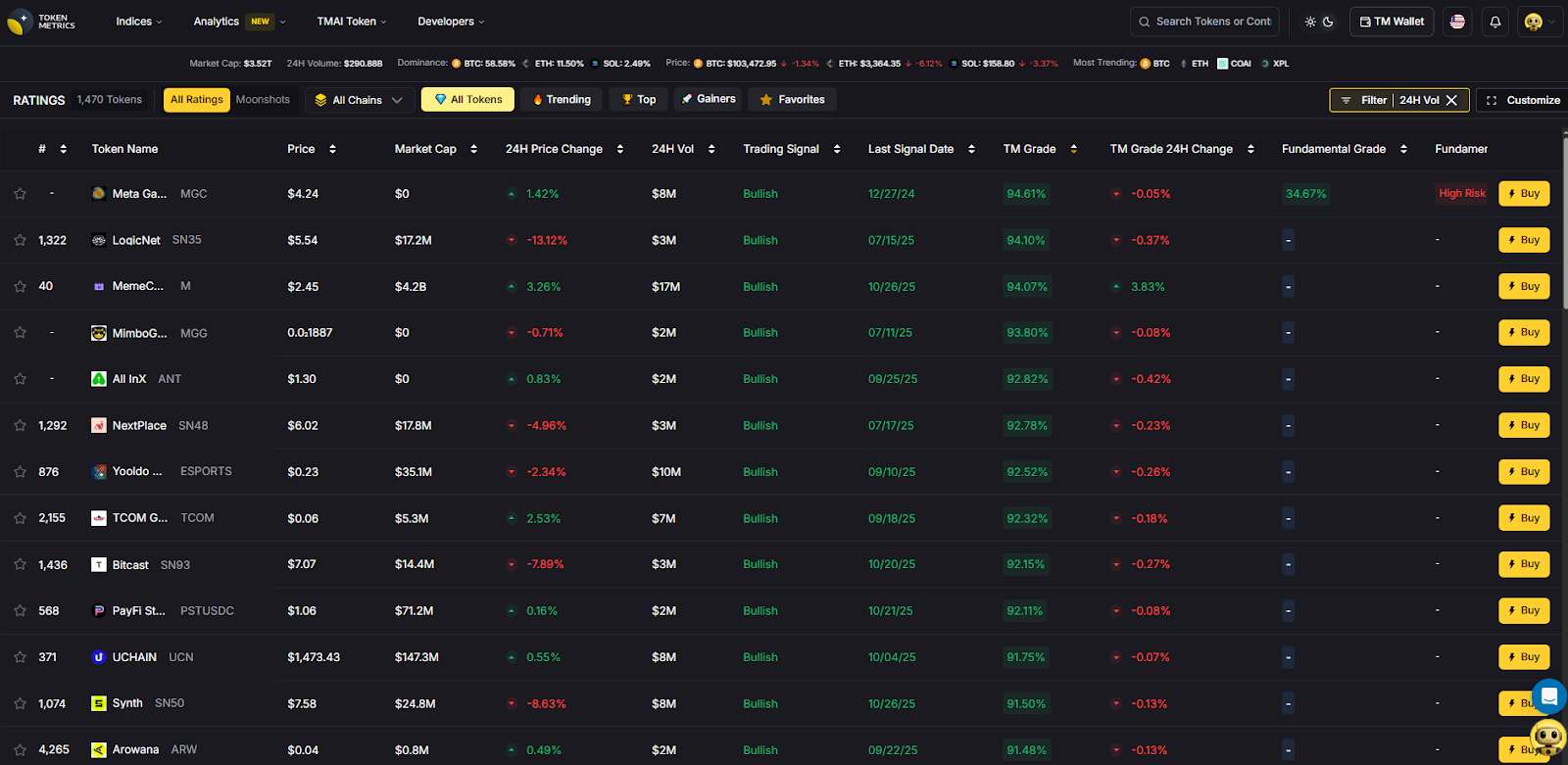
Token Metrics leverages advanced artificial intelligence and machine learning models to evaluate thousands of cryptocurrencies across multiple dimensions, including fundamental analysis, technical indicators, community sentiment, development activity, and market dynamics. This comprehensive approach provides investors with data-driven insights previously available only to hedge funds and professional traders.

The platform’s rating system cuts through the noise of the crypto market by assigning quantitative scores to projects based on objective criteria. Whether you’re interested in DeFi protocols, layer-1 blockchains, or emerging sectors like real-world asset tokenization, Token Metrics offers the analytical framework to make informed investment decisions.

Beyond Basic Indexing: Custom Indexing Pipelines for Smart Portfolio Construction

What truly makes modern crypto indexing revolutionary is the ability to go beyond simple market-cap-weighted indices. Platforms like Token Metrics enable investors to construct thematic portfolios tailored to specific investment theses.

Want exposure to the "metaverse" ecosystem? There’s an index for that. Bullish on decentralized finance but wary of the volatility of any single protocol? DeFi indices provide diversified exposure. Interested in layer-2 scaling solutions? You can invest in a basket of leading contenders without needing to pick individual winners.

This thematic approach allows investors to express sophisticated market views without execution complexity. You can maintain conviction in a sector while acknowledging that you don’t know which specific project will ultimately dominate—a pragmatic strategy long employed by professional investors in traditional markets.

Risk Management Made Simple with Production Grade Data Infrastructure

Diversification is about more than maximizing returns; it’s fundamentally about managing risk. Modern crypto indexing democratizes sophisticated risk management, making it accessible to retail investors. Instead of tying your portfolio’s fate to whether Solana or Cardano becomes the "Ethereum killer," you can own both alongside a dozen other contenders.

Platforms like Token Metrics enhance risk management through continuous monitoring and alerts. If a token in your index experiences unusual volatility, technical weakness, or regulatory challenges, you’re immediately informed. This proactive approach to risk management was previously impossible for individuals managing dozens of positions manually.

The Cost Efficiency Factor

One of the most underappreciated benefits of modern crypto indexing is the dramatic reduction in both explicit and implicit costs. Transaction fees, slippage, and the time cost of manual portfolio management can easily consume 5-10% of returns annually for actively managed portfolios. Index products compress these costs to minimal levels. You pay a small management fee for the index but eliminate dozens of individual trading fees, reduce tax complexity, and free up countless hours better spent on strategy rather than execution minutiae.

Looking Forward

We are still in the early innings of crypto indexing innovation. The next generation of products will likely incorporate even more sophisticated strategies, such as dynamic weighting based on market conditions, automated tax-loss harvesting, integration with DeFi protocols to generate yield on index holdings, and AI-driven rebalancing that responds to market regime changes in real time.

Future innovations in modern indexing tools will focus on solving polling limitations and supporting historical streaming, enabling more comprehensive and efficient access to blockchain data for analysis and replay. Standard nodes are limited as historical streaming nodes, as they are not designed to support streaming blockchain data from any past point. New solutions address this by fetching data directly from nodes, which greatly improves service reliability and ensures consistent data delivery. Additionally, these services will be able to stream switches automatically between historical and real-time data sources, adapting seamlessly to user needs. The adoption of protocols like gRPC eliminates the need for separate client libraries for each programming language, simplifying integration.

Delivering only the filtered data needed by each application will further improve efficiency and customization for users. Platforms like Token Metrics are at the forefront of this evolution, continuously expanding their analytical capabilities and product offerings to meet investor needs. As the crypto market matures and institutional adoption accelerates, tools and strategies once exclusive to professional traders are becoming democratized. These advancements will greatly improve service reliability for both institutional and retail investors.

Conclusion

The era of spreadsheet-driven crypto portfolio management is over. Modern crypto indexing platforms have transformed what was once an arduous, error-prone process into an elegant, efficient solution. With leaders like Token Metrics combining accessible index products with institutional-grade analytics, investors can focus on strategy and education rather than execution and administration.

One hundred tokens. One click. Zero spreadsheets. This is not just a tagline—it’s the reality of modern crypto investing. The question is no longer whether you can afford to use these tools, but whether you can afford not to.

FAQs

What is crypto indexing?

Crypto indexing involves creating a digital representation of a basket of cryptocurrencies to facilitate diversified exposure to the broader market, often through a single investment product or token.

How does indexing improve portfolio management?

Indexing simplifies portfolio management by providing instant diversification, reducing manual tracking, and automating rebalancing, which saves time and minimizes errors.

What are the benefits of modern indexing platforms?

Modern platforms offer scalability, enhanced data access, automated rebalancing, and integration with advanced analytics for better decision-making.

How do AI analytics support crypto investors?

AI-powered analytics evaluate market conditions, project fundamentals, and sentiment to provide insights that can inform investment strategies and risk assessment.

What is the future of crypto indexing?

The future will likely include more dynamic strategies, automated tax optimization, blockchain data integration, and expanded real-time historical streaming capabilities.

Disclaimer

This content is for educational and informational purposes only and does not constitute financial advice. Always conduct your own research before making investment or trading decisions. Past performance is not indicative of future results.

Build Smarter Crypto Apps &
AI Agents in Minutes, Not Months
Real-time prices, trading signals, and on-chain insights all from one powerful API.
Grab a Free API Key
About Token Metrics
Token Metrics: AI-powered crypto research and ratings platform. We help investors make smarter decisions with unbiased Token Metrics Ratings, on-chain analytics, and editor-curated “Top 10” guides. Our platform distills thousands of data points into clear scores, trends, and alerts you can act on.
30 Employees
analysts, data scientists, and crypto engineers
Daily Briefings
concise market insights and “Top Picks”
Transparent & Compliant
Sponsored ≠ Ratings; research remains independent
Want Smarter Crypto Picks—Free?
See unbiased Token Metrics Ratings for BTC, ETH, and top alts.
Thank you! Your submission has been received!
Oops! Something went wrong while submitting the form.
 No credit card | 1-click unsubscribe
Token Metrics Team
Token Metrics Team

Recent Posts

Research

Top Gold & Commodity-Backed Tokens (2025)

Token Metrics Team
12 min read

Who this guide is for. Crypto investors and treasurers comparing gold-backed tokens and other commodity-backed assets that can be audited and, in many cases, redeemed for metal.
Top three picks. PAX Gold (PAXG) for regulated, bar-linked redemption; Tether Gold (XAUt) for broad awareness and simple fees; Kinesis (KAU/KAG) for spend-and-yield use cases.
Key caveat. Redemption minimums, custody locations, and fees vary by issuer; always confirm regional eligibility and schedules on the official pages.


Introduction: Why Commodity-Backed Tokens Matter in 2025

Gold-backed tokens give on-chain ownership exposure to vaulted bullion with transparent allocation and, often, physical redemption, blending the inflation hedge of metals with crypto liquidity. In 2025, they’re used for hedging, collateral, cross-border settlement, and “digital cash” backed by tangible assets. A commodity-backed token is a blockchain token that represents title to a specific quantity of a real-world commodity (for example, 1 troy ounce or 1 gram of gold) held by a custodian, typically with published fees, vault locations, and redemption rules. Our picks prioritize liquidity, security controls, breadth of metals, cost transparency, and global accessibility.


Best Commodity-Backed Tokens in November 2025 (Comparison Table)


We excluded defunct or sunset projects (e.g., PMGT; CACHE Gold ceased backing CGT on Sept 30, 2025). (perthmint.com)


Top 10 Gold & Commodity-Backed Tokens in November 2025

1) PAX Gold (PAXG) — Best for bar-linked redemption & regulatory posture

Why Use It. PAXG links each token to specific LBMA Good Delivery bars stored in London, offering direct bar redemption (institutional minimums apply) or USD redemption at spot. Paxos publishes fee schedules and notes no storage fee charged to customers at this time. (paxos.com)
Best For. Institutions; HNW hedgers; DeFi users needing reputable collateral.
Notable Features. LBMA bars; serial-number linkage; custodied in London; fiat redemption option. (paxos.com)
Fees Notes. Creation/destruction fees; no storage fee currently per issuer help center. (help.paxos.com)
Regions. Global (issuer KYC).
Consider If. You can meet bar redemption minimums and UK vault logistics. (help.paxos.com)
Alternatives. Tether Gold (XAUt); VNX Gold (VNXAU).  


2) Tether Gold (XAUt) — Best for simple pricing & broad availability

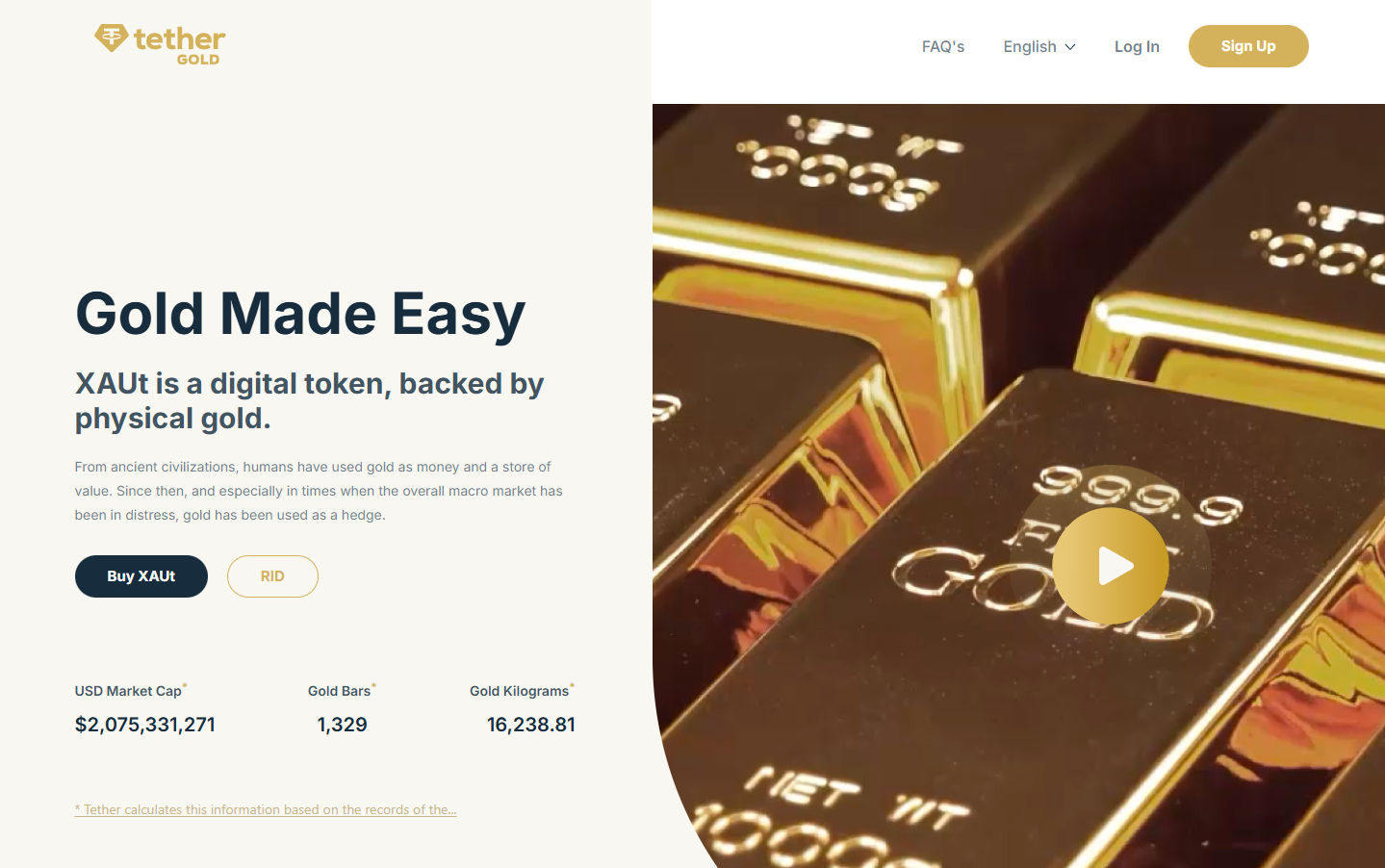
Why Use It. XAUt represents allocated gold and can be redeemed for physical gold or USD; Tether publishes a straightforward 0.25% creation/redemption fee and a one-time verification fee for onboarding. FAQs outline redemption mechanics and bar specifics. (Tether)
Best For. Traders seeking brand familiarity; cross-chain users (ETH/TRON).
Notable Features. Bar metadata; physical or USD redemption; no custody fee disclosed beyond the transaction fee. (Tether)
Fees Notes. 25 bps create/redeem; separate KYC verification fee. (Tether)
Regions. Global (issuer KYC).
Consider If. You need clear fee math but don’t require bar-specific allocation like PAXG.
Alternatives. PAX Gold (PAXG); Kinesis (KAU).  


3) Kinesis KAU (Gold) / KAG (Silver) — Best for spend-and-yield utility

Why Use It. Kinesis combines metal-backed tokens with an exchange, cards, and yields funded from platform fees (published yield-share). Trading and precious metals transactions show ~0.22% execution fees on official schedules. (Kinesis)
Best For. Users wanting to spend gold/silver, earn monthly yields, and keep fees predictable.
Notable Features. Fee-share yield (published); exchange, card rails; gold & silver pairs. (Kinesis)
Fees Notes. ~0.22% buy/sell/trade; other fees per schedule. (Kinesis)
Regions. Global (platform KYC/availability).
Consider If. You prefer an integrated platform over a standalone token.
Alternatives. VNX (VNXAU/VNXAG); Aurus (tXAU/tXAG).  


4) Comtech Gold (CGO) — Best for XDC ecosystem & Shariah-compliant framework

Why Use It. CGO tokenizes 1g gold units on the XDC (XRC-20) network, with a published fee structure for mint/redeem (0.50%), transfers (0.50%), and custody notes in FAQs. Documentation details creation/redemption and delivery fees. (comtechgold.com)
Best For. XDC builders; users needing Shariah-compliant structuring.
Notable Features. On-chain proofing; fee schedule; vault delivery options. (comtechgold.com)
Fees Notes. 0.50% mint/redeem; 0.50% transfer; custody terms disclosed. (comtechgold.com)
Regions. Global (issuer terms apply).
Consider If. You’re comfortable with XDC rails and issuer fee model.
Alternatives. PAXG; VNXAU.


5) VNX Gold (VNXAU) — Best for EEA vaulting & multi-chain issuance

Why Use It. VNXAU gives direct ownership of allocated bars stored in Liechtenstein with a public allocation lookup tool. VNX runs on Ethereum, Polygon, Q, and Solana, and has communications on redemption and delivery. (VNX)
Best For. EEA users; diversification across chains.
Notable Features. Allocation lookup by serial; segregated AAA-jurisdiction vault; multi-chain. (VNX)
Fees Notes. See VNX pricing and product pages for current schedules.
Regions. EEA emphasis; global availability varies by KYC.
Consider If. You want EEA custody and serial-level transparency.
Alternatives. PAXG; XAUt.


6) Aurus tGOLD (tXAU) / tSILVER (tXAG) — Best for gram-denominated multi-metal exposure

Why Use It. Aurus issues 1-gram tokens backed by vaulted gold and silver with insured, audited storage. tGOLD and tSILVER support multi-chain DeFi integrations and a mobile app, with ecosystem partners for mint/redeem. (AURUS)
Best For. DeFi users; small-denomination accumulation; multi-metal portfolios (includes platinum via tXPT).
Notable Features. 1g units; insured vaulted metals; app & dashboard; partner network. (AURUS)
Fees Notes. Exchange/network fees; issuer/partner fees may apply.
Regions. Global (partner KYC where required).
Consider If. You want gram-level flexibility and cross-chain access.
Alternatives. Kinesis; VNX.


7) Gold Silver Standard (AUS/AGS) — Best for Australia-based custody & simple redemption

Why Use It. Tokens AUS (gold) and AGS (silver) are backed by allocated bullion held in Australian high-security vaults with $0 storage and transfer at the issuer level and partner-facilitated redemptions. (goldsilverstandard.com)
Best For. AUD-centric investors; straightforward physical pickup/delivery via partners.
Notable Features. 1g linkage; local redemption via Ainslie partners; Australia-first focus. (goldsilverstandard.com)
Fees Notes. Issuer lists $0 storage/transfer; exchange and redemption partner fees may apply. (goldsilverstandard.com)
Regions. Australia focus; global varies.
Consider If. You need straightforward redemption in Australia.
Alternatives. PAXG; VNXAU.


8) VNX Silver (VNXAG) — Best for EEA silver allocation & transparency tools

Why Use It. VNXAG mirrors the VNXAU model for silver, backed by allocated metal with the same allocation lookup tooling and multi-chain issuance. (VNX)
Best For. EEA investors prioritizing silver in segregated storage.
Notable Features. Allocation lookup; EEA custody; multi-chain support. (VNX)
Fees Notes. See VNX site for current schedules.
Regions. EEA emphasis; global varies.
Consider If. You want EEA-vaulted silver with serial-level transparency.
Alternatives. KAG; tXAG.


9) VeraOne (VRO) — Best for euro-area buyers wanting 1-gram ERC-20

Why Use It. VRO is an ERC-20 token pegged to 1 gram of LBMA-standard gold, issued by a long-standing French precious-metal group; materials describe secured storage and regular audits. (VeraOne)
Best For. EU users; gram-based savings; euro on-ramps.
Notable Features. 1g linkage; audited storage; EU presence. (VeraOne)
Fees Notes. Issuer materials outline model; confirm current fees on site.
Regions. EU focus; global access varies.
Consider If. You want EU branding and ERC-20 simplicity.
Alternatives. PAXG; VNXAU.


10) AgAu — Best for Swiss custody & peer-to-peer design

Why Use It. AgAu outlines 1:1 backed gold and silver tokens with Swiss custody and a peer-to-peer payment focus; docs and reports describe convertibility and audited reserves. (agau.io)
Best For. Users seeking Swiss jurisdiction and payments-style UX.
Notable Features. Swiss issuer; P2P spend; audit & documents hub. (agau.io)
Fees Notes. See issuer documentation for fees and redemption steps.
Regions. Global (jurisdictional checks apply).
Consider If. You want Swiss custody with payments emphasis.
Alternatives. VNXAU; AUS.


Decision Guide: Best by Use Case

  • Regulated, bar-specific redemption: PAX Gold (PAXG). (paxos.com)
  • Simple fee schedule & brand familiarity: Tether Gold (XAUt). (Tether)
  • Spend metals + monthly fee-share yield: Kinesis (KAU/KAG). (Kinesis)
  • XDC network users: Comtech Gold (CGO). (comtechgold.com)
  • EEA custody & allocation lookup: VNX (VNXAU/VNXAG). (VNX)
  • Gram-based, multi-metal DeFi: Aurus (tXAU/tXAG). (AURUS)
  • Australia-centric custody & pickup: Gold Silver Standard (AUS/AGS). (goldsilverstandard.com)
  • EU 1-gram ERC-20: VeraOne (VRO). (VeraOne)
  • Swiss custody & P2P payments: AgAu. (agau.io)

How to Choose the Right Commodity-Backed Token (Checklist)

  • ☐ Region eligibility and KYC match your profile.
  • ☐ Underlying metal type and unit (ounce vs gram).
  • Redemption rules: minimums, delivery locations, timelines.
  • Custody: vault jurisdiction, insurer, LBMA accreditation.
  • Fee transparency: creation, redemption, storage, transfer, network.
  • Audit/attestation cadence and allocation lookup tools.
  • Chains supported and DeFi integration needs.
  • ☐ Support channels and documentation depth.
    Red flags: vague custody details, unclear redemption, or discontinued programs.

Use Token Metrics With Any Commodity-Backed Token

  • AI Ratings to screen metal-linked assets and related ecosystem tokens.


  • Narrative Detection to spot inflows to on-chain RWAs.
  • Portfolio Optimization to size metal exposure vs. crypto beta.
  • Alerts & Signals to time entries/exits around macro prints.
    Workflow: Research → Select issuer → Execute on-chain or via platform → Monitor with alerts.


CTA: Start free trial to screen assets and time entries with AI.  


Security & Compliance Tips

  • Use official issuer URLs only; beware look-alikes.
  • Confirm fee schedules and redemption procedures before buying. (Tether)
  • Verify vaulting jurisdiction and any bar-serial lookup tools. (VNX)
  • Mind network fees, bridge risks, and exchange withdrawal rules.
  • Keep custody keys secure; whitelist issuer addresses.
  • If staking or yielding, confirm source of yield and counterparty exposure. (Kinesis)
    This article is for research/education, not financial advice.

Beginner Mistakes to Avoid

  • Treating all metal tokens as equal—redemption and custody differ widely.
  • Ignoring region and KYC limits until you try to redeem.
  • Overlooking minimums (e.g., full LBMA bars vs. gram redemptions). (help.paxos.com)
  • Confusing defunct tokens with active ones (e.g., PMGT sunset; CGT backing ceased). (perthmint.com)
  • Forgetting network/transfer fees when arbitraging across chains.
  • Using unofficial contracts on the wrong chain.

How We Picked (Methodology & Scoring)

  • Liquidity — 30%. Exchange presence, on-chain activity, practical tradability.
  • Security — 25%. Custody details, audits/attestations, LBMA alignment, redemption design.
  • Coverage — 15%. Metals (gold/silver/platinum), chains, tooling.
  • Costs — 15%. Creation/redemption/storage/transfer and transparency of schedules.
  • UX — 10%. Apps, dashboards, redemption flows.
  • Support — 5%. Docs, status pages, human support.
    We relied on official product, docs, fees, FAQ, and disclosure pages, cross-checking market datasets only for context. Last updated November 2025.

FAQs

What are gold-backed tokens?
 They are blockchain tokens that represent ownership of a specific quantity of vaulted, insured gold, typically with published fees and, in some cases, physical redemption options.

Are gold-backed tokens safer than stablecoins?
 They can diversify away from fiat risk, but introduce custody and redemption dependencies. Safety depends on the issuer’s vaulting, audits, legal structure, and your ability to redeem.

What fees should I expect?
 Common fees include creation/redemption, possible storage, transfer, and network fees. Examples: XAUt lists 0.25% create/redeem; Paxos publishes creation/destruction fees and notes no storage fee currently. Always check the live schedules. (Tether)

Can I redeem tokens for a real gold bar?
 Some issuers support bar redemption with minimum sizes and location constraints (e.g., LBMA bar logistics in London for PAXG). Others support gram-level redemption via partners. (help.paxos.com)

Which chains are supported?
 Varies: PAXG (Ethereum), XAUt (Ethereum/TRON), VNX (Ethereum/Polygon/Q/Solana), Aurus (multi-chain), CGO (XDC), Kinesis (native + exchange listings). (paxos.com)

Are there discontinued tokens I should avoid?
 Yes. PMGT has been discontinued; CACHE Gold (CGT) ceased backing as of Sept 30, 2025. Verify project status before buying. (perthmint.com)


Conclusion + Related Reads

Choose PAXG for bar-linked redemption and strong disclosures, XAUt for simple fees and brand reach, or Kinesis if you want to spend metals and earn fee-share yields. For EEA vaulting with allocation lookup, VNX is compelling; for gram-based DeFi exposure, Aurus is versatile.

Related Reads:

Research

Top RWA Tokenization Platforms (2025)

Token Metrics Team
11 min read

Who this guide is for. Teams and investors evaluating RWA tokenization platforms—issuers and infrastructure bringing Treasuries, funds, real estate, and other off-chain assets on-chain—across access tiers (retail, accredited, QP) and regions.

Top three picks.

  • Securitize — institutional rails (transfer agent/broker-dealer) behind flagship tokenized funds.
  • Ondo Finance — tokenized Treasuries and cash-equivalents with clear docs and eligibility flows.
  • Franklin Templeton (Benji) — on-chain registered money market fund access for U.S. investors.

One caveat. Fees, eligibility (U.S., EU, APAC), and redemption workflows vary widely—always verify your region and investor status on the official product page before transacting. (Securitize)


Introduction

RWA tokenization platforms issue or enable compliant, on-chain representations of real-world assets such as U.S. Treasuries, money market funds, public securities, real estate, and gold. In 2025, the category matters because it brings 24/7 settlement, composability, and transparent audit rails to traditionally siloed markets—while preserving regulatory guardrails like KYC/AML and transfer restrictions. The primary keyword “RWA tokenization platforms” captures commercial-investigational intent: who issues what, on which chains, in which regions, with what fees and controls.

Definition (snippet-ready): An RWA tokenization platform is an issuer or infrastructure provider that brings off-chain assets on-chain under documented legal, custody, and compliance frameworks, with mint/redeem and transfer controls stated in official materials.


How We Picked (Methodology & Scoring)

We scored each platform using official product, docs, pricing, security/licensing, and status pages (and cross-checked volumes with market datasets when needed). We prioritized current availability and clear disclosures.

Scoring weights (sum = 100):

  • Liquidity — 30%: scale, mint/redeem pathways, composability.
  • Security — 25%: audits, custodians, transfer agent/broker-dealer status, disclosures.
  • Coverage — 15%: asset types (T-bills, funds, gold, stocks, real estate), chains.
  • Costs — 15%: stated fees and expense ratios; network fees.
  • UX — 10%: onboarding, docs, transparency dashboards.
  • Support — 5%: regions, KYC help, contact channels.

Freshness: Last updated November 2025.


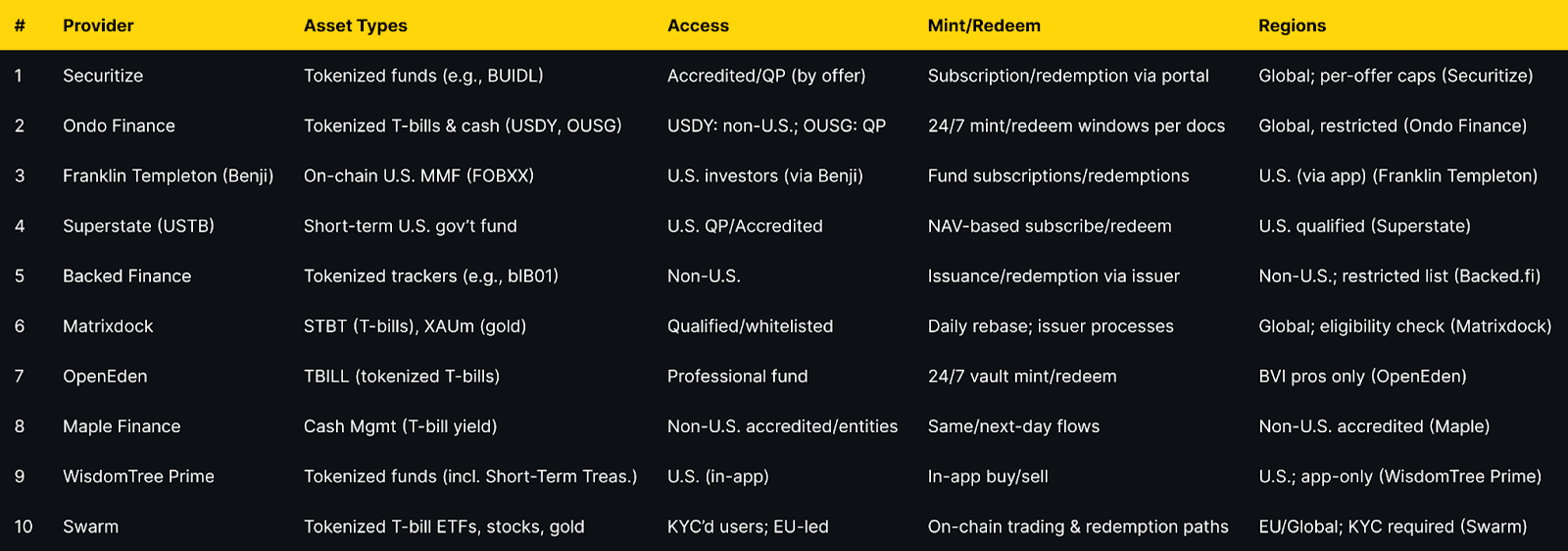
Best RWA tokenization platforms in November 2025 (Comparison Table)


Top 10 RWA tokenization platforms in November 2025

1. Securitize — Best for institutional-grade tokenized funds

Why Use It. Securitize provides regulated rails (transfer agent/broker-dealer) behind marquee tokenized funds like BlackRock’s BUIDL, with investor onboarding, cap-table/TA services, and compliant transfer controls for secondary liquidity where permitted. (Securitize)
Best For. Asset managers, QP/Accredited investors, enterprises wanting full-stack issuance and servicing.
Notable Features. Transfer agent role; broker-dealer marketplace; issuer/investor portals; compliance & reporting. (digitize.securitize.io)
Consider If. You need institutional governance and regulated distribution rather than retail-first access.
Fees Notes. Fund expense ratios and issuer/platform fees vary by offering.
Regions. Global, with per-offering eligibility and disclosures.
Alternatives. WisdomTree Prime; Ondo Finance.  


2. Ondo Finance — Best for diversified tokenized Treasuries & cash-equivalents

Why Use It. OUSG gives QPs exposure to short-term Treasuries/money market funds; USDY offers a tokenized note with cash-equivalent backing, with clear eligibility and 24/7 mint/redeem mechanics documented. (Ondo Finance)
Best For. DAOs and treasuries, QPs, non-U.S. entities seeking on-chain cash management.
Notable Features. USDY/ONS products; rTokens (rebasing); detailed fees/tax sections; multi-chain support. (docs.ondo.finance)
Consider If. U.S. persons generally restricted for USDY; confirm status before onboarding. (Ondo Finance)
Fees Notes. Management/operational fees per product docs; plus network fees. (docs.ondo.finance)
Regions. Global with restrictions (e.g., no USDY for U.S. persons). (Ondo Finance)
Alternatives. Superstate; OpenEden.  


3. Franklin Templeton — Benji — Best for U.S. on-chain money market access

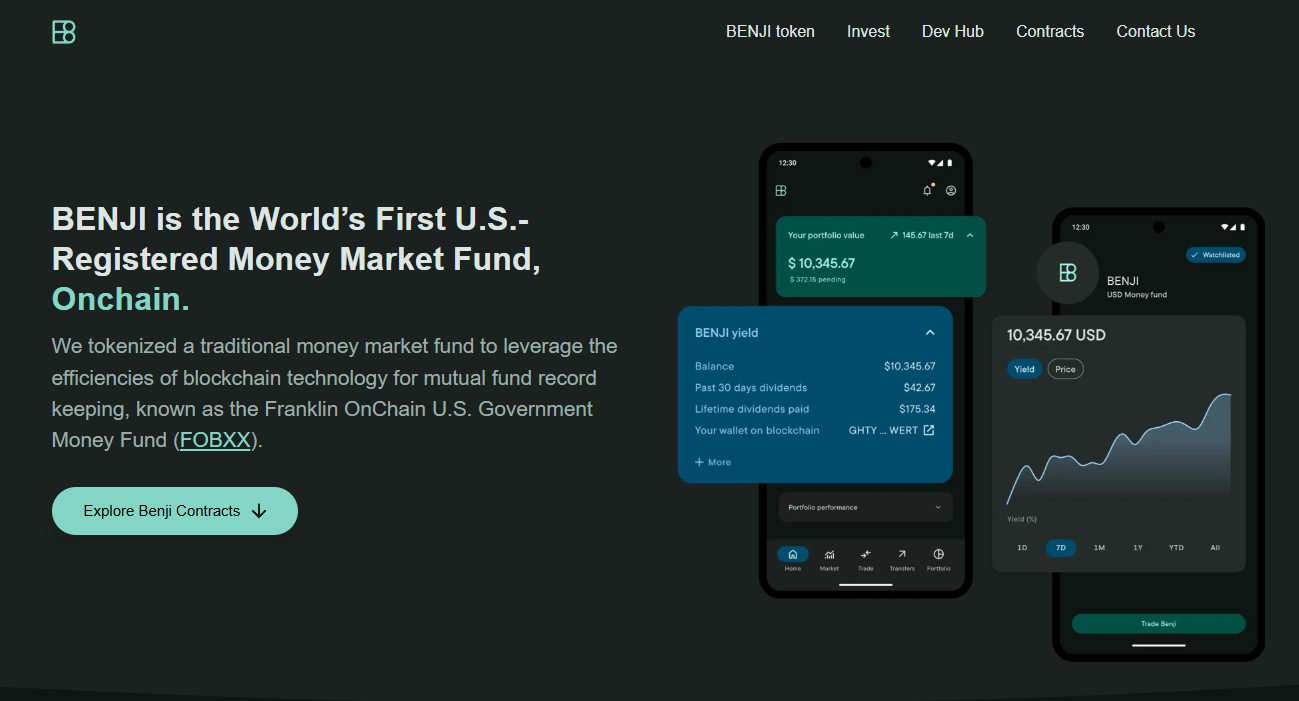
Why Use It. The Franklin OnChain U.S. Government Money Fund (FOBXX) is a registered fund whose shares are represented on-chain (BENJI), allowing U.S. investors to access a money market fund with blockchain-based recordkeeping. (digitalassets.franklintempleton.com)
Best For. U.S. treasurers and advisors needing a regulated on-chain cash vehicle.
Notable Features. US-registered fund; Stellar/Polygon rails; Benji contracts/app. (digitalassets.franklintempleton.com)
Consider If. Access is via Franklin’s app; availability and eligibility are U.S.-focused. (digitalassets.franklintempleton.com)
Fees Notes. Standard money market fund expense ratio; see fund page. (franklintempleton.com)
Regions. U.S. investors (see Benji). (digitalassets.franklintempleton.com)
Alternatives. WisdomTree Prime; Securitize-hosted offerings.  


4. Superstate (USTB) — Best for U.S. Qualified Purchasers

Why Use It. USTB offers U.S. Qualified Purchasers access to short-duration U.S. government securities through a tokenized fund on Ethereum, with institutional processes and NAV-based subscriptions/redemptions. (superstate.com)
Best For. U.S. QPs, fund treasurers, trading firms.
Notable Features. Ethereum issuance; QP onboarding; short-duration Treasury focus. (superstate.com)
Consider If. Available to QPs; verify accreditation and subscription steps. (superstate.com)
Fees Notes. Fund expenses apply; see official page. (superstate.com)
Regions. U.S. (Qualified Purchasers). (superstate.com)
Alternatives. Ondo OUSG; WisdomTree Prime funds.


5. Backed Finance — Best for tokenized trackers of public securities

Why Use It. Backed issues ERC-20 trackers like bIB01 (iShares $ Treasury 0-1yr UCITS ETF) with explicit regional restrictions and product pages that state legal structure and disclosures. (backed.fi)
Best For. Non-U.S. entities seeking tokenized ETF-style exposure with issuer support.
Notable Features. Tokenized trackers and AMCs; legal docs; chain integrations. (backed.fi)
Consider If. Not available to U.S. persons; restricted countries listed. (assets.backed.fi)
Fees Notes. Issuer/admin fees per product; plus network fees. (backed.fi)
Regions. Non-U.S.; sanctions list enforced. (assets.backed.fi)
Alternatives. Swarm; Matrixdock STBT.


6. Matrixdock — Best for T-bills and gold under one issuer

Why Use It. STBT provides short-term U.S. Treasury exposure with a 1:1 USD peg and daily rebasing, while XAUm tokenizes LBMA-grade physical gold—both under a clear issuer framework. (matrixdock.com)
Best For. Treasury management with optional gold allocation on the same rails.
Notable Features. STBT daily rebase; peg policy; gold custodial disclosures. (matrixdock.com)
Consider If. Whitelisting/eligibility apply; confirm region and KYC. (matrixdock.com)
Fees Notes. Issuer fees per product pages; network fees. (matrixdock.com)
Regions. Global with eligibility controls. (matrixdock.com)
Alternatives. OpenEden; Ondo OUSG.


7. OpenEden — Best for professional-grade tokenized T-bills

Why Use It. TBILL is structured as a regulated Professional Fund (BVI) with a 24/7 smart-contract vault for mint/redeem and a transparency dashboard, targeting professional investors. (openeden.com)
Best For. Professional/offshore funds and DAOs requiring programmatic access.
Notable Features. BVI Professional Fund status; real-time transparency; vault UI. (openeden.com)
Consider If. Professional-investor eligibility required; check docs before onboarding. (openeden.com)
Fees Notes. Fund and platform fees; plus network fees. (openeden.com)
Regions. BVI-regulated; cross-border access subject to status. (openeden.com)
Alternatives. Matrixdock; Ondo.


8. Maple Finance — Cash Management — Best for non-U.S. accredited entities seeking T-bill yield

Why Use It. Maple’s Cash Management provides non-U.S. accredited participants on-chain access to T-bill and repo yields, with updates enabling immediate servicing when liquidity is available and next-day withdrawals operationally. (maple.finance)
Best For. Non-U.S. corporates, DAOs, and funds optimizing idle stablecoin cash.
Notable Features. Fast onboarding; immediate interest accrual; no lock-up; institutional borrower SPV. (maple.finance)
Consider If. U.S. investors are excluded; confirm accreditation and entity status. (maple.finance)
Fees Notes. Management/operational fees netted from yield; network fees. (maple.finance)
Regions. Non-U.S. accredited/entities. (maple.finance)
Alternatives. OpenEden; Ondo.


9. WisdomTree Prime (Digital Funds) — Best for app-native tokenized fund access in the U.S.

Why Use It. The Prime app offers tokenized digital funds—including Short-Term Treasury—purchased and held in-app, bringing tokenized funds to retail U.S. users under an SEC-registered umbrella. (WisdomTree Prime)
Best For. U.S. retail/in-app users seeking tokenized fixed income and equity funds.
Notable Features. In-app buy/sell; multiple Treasury maturities; composability paths emerging. (WisdomTree Prime)
Consider If. App-only access; availability subject to U.S. coverage and disclosures. (WisdomTree Prime)
Fees Notes. Fund expense ratios; standard network fees for on-chain interactions. (wisdomtree.com)
Regions. U.S. (Prime app). (WisdomTree Prime)
Alternatives. Franklin Benji; Securitize.


10. Swarm — Best for compliant on-chain trading of tokenized T-bill ETFs and equities

Why Use It. Swarm enables compliant, on-chain access to tokenized U.S. Treasury ETFs, public stocks, and gold, with KYC’d access and DeFi-compatible rails documented in its platform materials and docs. (swarm.com)
Best For. EU-led users, crypto funds, and builders needing tokenized public market exposure.
Notable Features. dOTC protocol; product pages for T-bill ETFs; documented KYC/flows. (swarm.com)
Consider If. Regional and KYC requirements apply; yields are variable per underlying ETF. (swarm.com)
Fees Notes. Platform/product fees; network fees. (swarm.com)
Regions. EU/Global with KYC. (swarm.com)
Alternatives. Backed Finance; Ondo.


Decision Guide: Best By Use Case


How to Choose the Right RWA Tokenization Platform (Checklist)

  • Region eligibility (U.S./EU/APAC and investor status: retail, accredited, QP) is clearly stated.
  • Asset coverage matches mandate (T-bills, money market funds, ETFs, gold, real estate).
  • Mint/redeem mechanics and settlement windows are documented.
  • Fees: expense ratios, issuer fees, spreads, on-chain network costs are explicit.
  • Security posture: custodians, audits, transfer agent/broker-dealer status, disclosures.
  • Transparency: NAV, holdings, attestation or daily rebasing and dashboards.
  • Chain support: EVM/L2s/other; composability needs.
  • Support & docs: onboarding, KYC, status pages.
    Red flags: vague eligibility, missing fee tables, no custody/disclosure detail.

Use Token Metrics With Any Category

  • AI Ratings to screen assets tied to each platform’s tokens.
  • Narrative Detection to spot early RWA flows across chains.


  • Portfolio Optimization to size cash-equivalents vs. risk assets.
  • Alerts & Signals to time rotations into yield-bearing RWAs.

CTA — Indices Focus: Prefer diversified exposure? Explore Token Metrics Indices.  


Security & Compliance Tips

  • Transact only via official portals/URLs and verified contracts listed in docs. (digitalassets.franklintempleton.com)
  • Confirm eligibility (U.S./non-U.S., accredited/QP) and sanctioned-country restrictions before minting. (assets.backed.fi)
  • Review custody and role separation (issuer, TA, broker-dealer) and audit reports where available. (digitize.securitize.io)
  • Understand redemption windows, rebase mechanics, and NAV policies. (matrixdock.com)
  • Track fund expenses and on-chain network fees; they impact net yield. (franklintempleton.com)
  • Bookmark status/docs pages for incident updates and parameter changes.

This article is for research/education, not financial advice.


Beginner Mistakes to Avoid

  • Treating all RWA tokens as “stablecoins”—yields, risks, and redemption rights differ.
  • Ignoring eligibility rules, then getting stuck at redemption.
  • Skipping issuer docs and relying only on dashboards.
  • Assuming 1:1 liquidity at all times without reading fund/issuer terms.
  • Mixing retail wallets with institutional KYC accounts without a plan.
  • Overlooking chain/bridge risks when moving RWA tokens across L2s.

How We Picked (Methodology & Scoring)

We built an initial universe (~20 issuers/infrastructure) and selected 10 based on the SCORING_WEIGHTS above. We verified asset coverage, eligibility, fees, redemption, and regions on official pages only (listed below). Third-party datasets were used for cross-checks but are not linked.


FAQs

What are RWA tokenization platforms?
 Issuers or infrastructure that bring real-world assets (like Treasuries, funds, gold, or equities) on-chain under a legal/compliance framework, with stated mint/redeem processes and transfer rules. See each official page for specifics. (Securitize)

Are they safe for retail?
 Some are U.S. retail-friendly (e.g., Franklin Benji, WisdomTree Prime), while others are restricted to accredited investors, QPs, or non-U.S. persons. Always check the eligibility page before onboarding. (digitalassets.franklintempleton.com)

What fees should I expect?
 Expect fund expense ratios or issuer/admin fees plus on-chain network fees. Some products rebase yield; others adjust NAV. Review each product’s fees section. (docs.ondo.finance)

Where are these tokens available?
 Most run on Ethereum or compatible L2s, with some on Stellar/Polygon via app rails. Regions vary (U.S., EU, offshore professional). (digitalassets.franklintempleton.com)

Can I redeem 24/7?
 Many have 24/7 mint/redeem requests; actual settlement follows fund terms, banking hours, and liquidity windows. Check each product’s redemption section. (app.openeden.com)


Conclusion + Related Reads

If you want institutional rails and broad issuer support, start with Securitize. For T-bill exposure with clear docs, consider Ondo or Superstate (QP). U.S. retail can explore Franklin Benji or WisdomTree Prime. Diversifiers can add Matrixdock (Treasuries + gold) or OpenEden (pro fund vault). Builders needing tokenized equities/ETFs should evaluate Swarm and Backed.

Related Reads (Token Metrics):

Research

Best Liquid Restaking Tokens & Aggregators (2025)

Token Metrics Team
17 min read

Who this guide is for. Investors and builders comparing best liquid restaking tokens (LRTs) and aggregators to earn ETH staking + restaking rewards with on-chain liquidity.

Top three picks.

  • ether.fi (eETH/weETH): Non-custodial, deep integrations, clear docs. (ether.fi)
  • Renzo (ezETH): Multi-stack (EigenLayer + Symbiotic/Jito), transparent 10% rewards fee. (docs.renzoprotocol.com)
  • Kelp DAO (rsETH): Broad DeFi reach; explicit fee policy for direct ETH deposits. (kelp.gitbook.io)

One key caveat. Fees, redemption paths, and regional access vary by protocol—check official docs and terms before depositing.


Introduction

Liquid restaking lets you restake staked assets (most often ETH) to secure Actively Validated Services (AVSs) while receiving a liquid restaking token you can use across DeFi. The value prop in 2025: stack base staking yield + restaking rewards, with composability for lending, LPing, and hedging. In this commercial-investigational guide, we compare the best liquid restaking tokens and the top aggregators that route deposits across operators/AVSs, with an emphasis on verifiable fees, security posture, and redemption flow. We weigh scale and liquidity against risk controls and documentation quality to help you pick a fit for your region, risk tolerance, and toolstack.


How We Picked (Methodology & Scoring)

  • Liquidity — 30%: On-chain depth, integrations, and redemption mechanics.
  • Security — 25%: Audits, docs, risk disclosures, validator design.
  • Coverage — 15%: AVS breadth, multi-stack support (EigenLayer/Symbiotic/Jito), asset options.
  • Costs — 15%: Transparent fee schedules and user economics.
  • UX — 10%: Clarity of flows, dashboards, and docs.
  • Support — 5%: Status pages, help docs, comms.

Evidence sources: official websites, docs, pricing/fees and security pages, and status/terms pages; third-party datasets used only to cross-check volumes. Last updated November 2025.


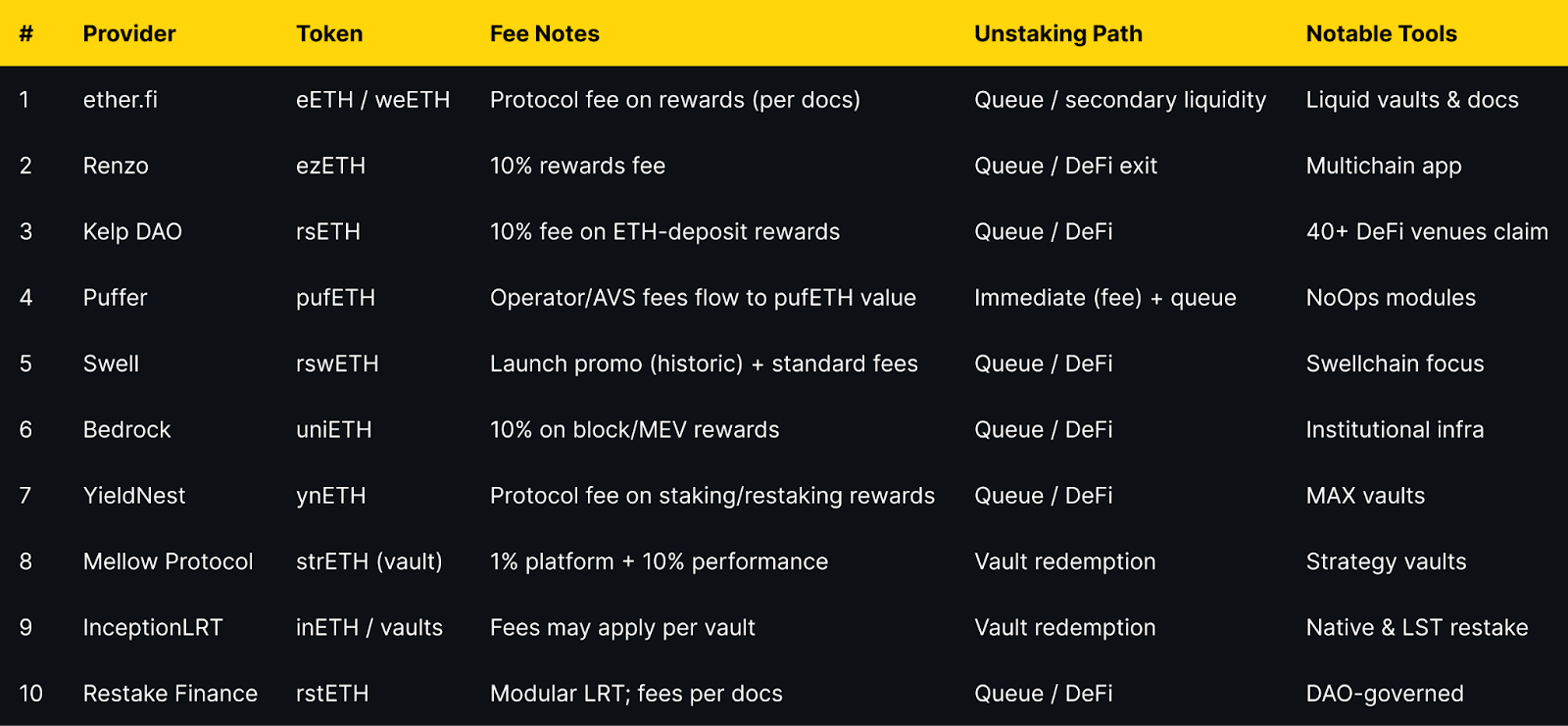
Best Liquid Restaking Tokens & Aggregators in November 2025 (Comparison Table)  

* Regions are “Global” unless a provider geoblocks specific jurisdictions in their terms. Always verify eligibility in your country.


Top 10 Liquid Restaking Tokens & Aggregators in November 2025

1. ether.fi — Best for deep integrations & non-custodial design

Why use it: ether.fi’s eETH/weETH are widely integrated across DeFi, and the project publishes clear technical docs on protocol fees and validator design. Liquid Vaults add strategy optionality while keeping restaking accessible. (ether.fi)
Best for: DeFi power users, liquidity seekers, builders needing broad integrations.
Notable features: Non-custodial staking; restaking support; Liquid Vaults; documentation and terms around protocol fees. (etherfi.gitbook.io)
Fees Notes: Protocol fee on rewards; vault-level fees vary by strategy. (etherfi.gitbook.io)
Regions: Global*
Consider if: You want deep liquidity and docs; always review fee tables and redemption queues.
Alternatives: Renzo, Kelp DAO.  


2. Renzo — Best for multi-stack coverage (EigenLayer + Symbiotic/Jito)

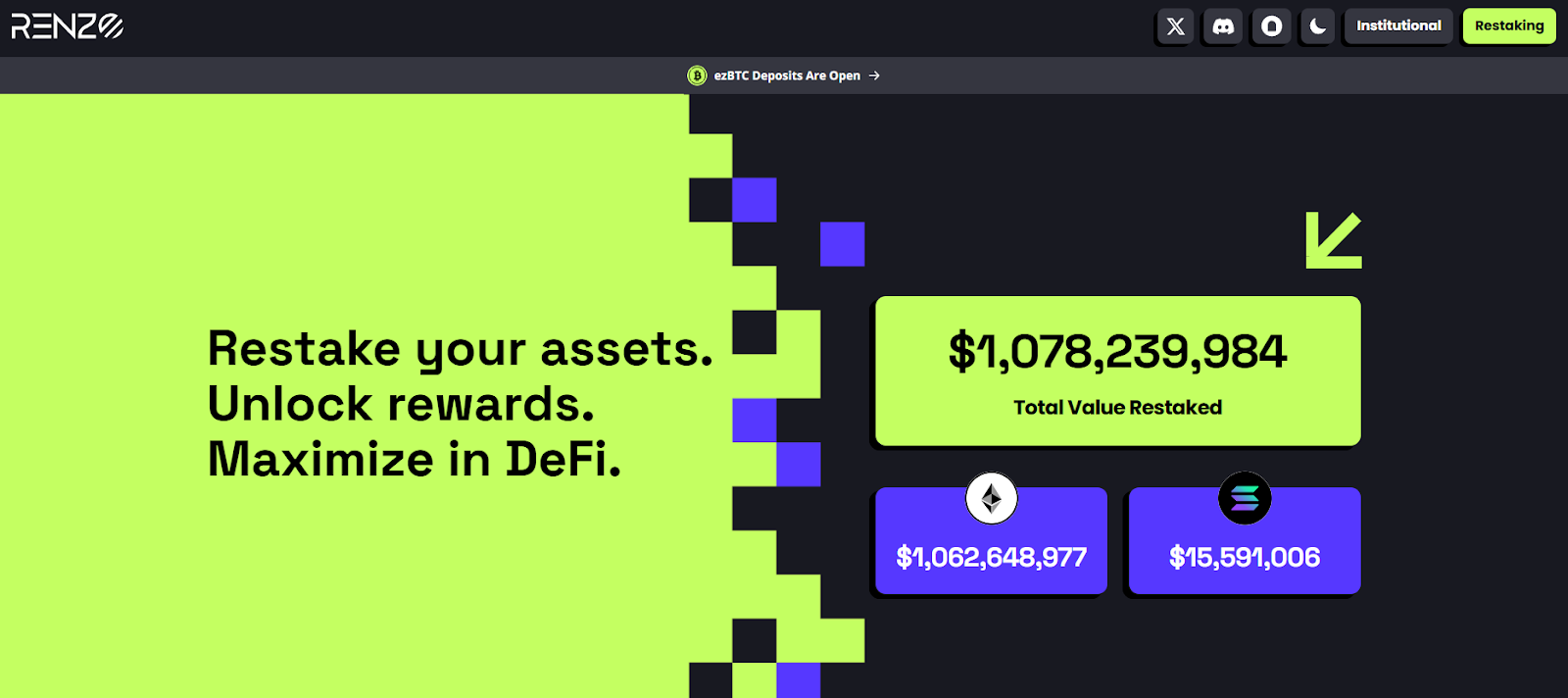
Why use it: Renzo’s ezETH is among the most recognizable LRTs and the docs clearly state a 10% rewards fee, while the app highlights support beyond EigenLayer (e.g., Symbiotic/Jito lines). Strong multichain UX. (docs.renzoprotocol.com)
Best for: Users wanting straightforward economics and chain-abstracted access.
Notable features: Clear fee policy (10% of restaking rewards); multi-stack support; app UX across chains. (docs.renzoprotocol.com)
Fees Notes: 10% of restaking rewards; details in docs. (docs.renzoprotocol.com)
Regions: Global*
Consider if: You prefer transparent fees and broader stack exposure.
Alternatives: ether.fi, Mellow.  


3. Kelp DAO — Best for broad DeFi distribution (rsETH)

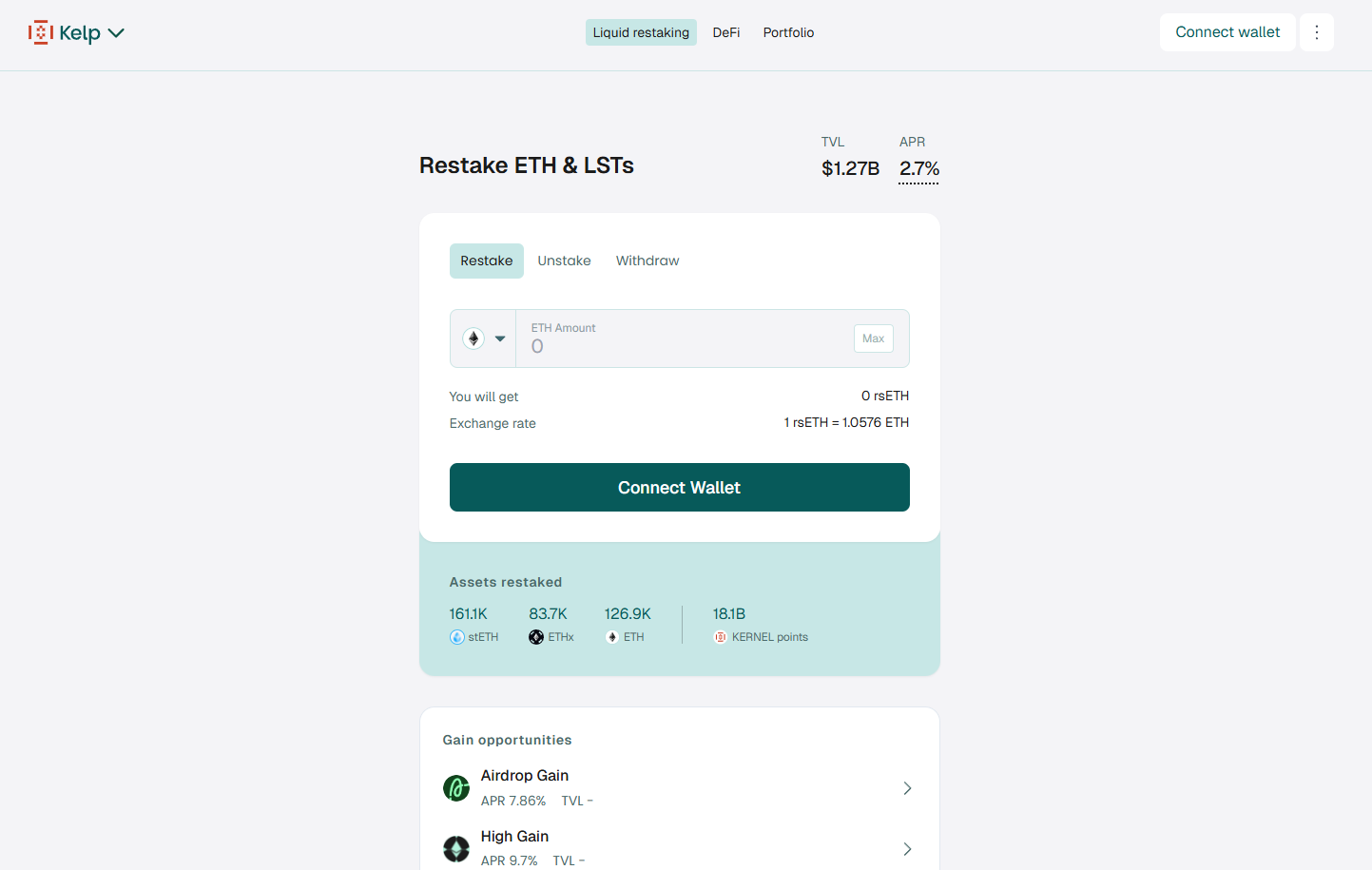
Why use it: Kelp emphasizes reach (rsETH used across many venues). Official docs state a 10% fee on rewards for direct ETH deposits, with no fee on LST deposits, making it friendly to LST holders. (kelpdao.xyz)
Best for: LST holders, LPs, and integrators.
Notable features: rsETH liquid token; LST and ETH deposit routes; active integrations. (kelpdao.xyz)
Fees Notes: 10% on ETH-deposit rewards; no fee on LST deposits per docs. (kelp.gitbook.io)
Regions: Global*
Consider if: You want flexibility between ETH and LST deposit paths.
Alternatives: Renzo, Swell.  


4. Puffer — Best for redemption optionality (pufETH)

Why use it: Puffer’s docs explain how AVS fees accrue to pufETH and outline operator/guardian roles. Public risk work notes an “immediate redemption” option with a fee when liquidity is available, plus queued exit. (docs.puffer.fi)
Best for: Users wanting explicit redemption choices and a technical spec.
Notable features: pufETH nLRT; operator/guardian model; based L2 plans. (Puffer: Building the Future of Ethereum)
Fees Notes: AVS/operator fees accrue; immediate redemption may incur a fee. (docs.puffer.fi)
Regions: Global*
Consider if: You value documented mechanics and redemption flexibility.
Alternatives: ether.fi, Bedrock.


5. Swell — Best for restaking-native ecosystem (rswETH)

Why use it: Swell’s rswETH is their native LRT for EigenLayer; launch comms detailed fee-holiday parameters and security posture. Swellchain materials emphasize restaking-first ecosystem tooling. (swellnetwork.io)
Best for: DeFi users who want a restaking-centric stack.
Notable features: rswETH; ecosystem focus; audits referenced in launch post. (swellnetwork.io)
Fees Notes: Historical launch promo; check current fee schedule in app/docs. (swellnetwork.io)
Regions: Global*
Consider if: You want an LRT aligned with a restaking-native L2 vision.
Alternatives: Kelp DAO, Renzo.


6. Bedrock — Best for institutional-grade infra (uniETH)

Why use it: Bedrock’s uniETH is a non-rebasing, value-accrual LRT with a published fee policy (10% on block/MEV rewards) and EigenLayer alignment. Docs are explicit about token mechanics. (docs.bedrock.technology)
Best for: Institutions and users who prefer clear token economics.
Notable features: uniETH; docs and audits repository; multi-asset roadmap. (docs.bedrock.technology)
Fees Notes: 10% commission on block/MEV rewards; restaking commission TBD via governance. (docs.bedrock.technology)
Regions: Global*
Consider if: You want explicit fee language and non-rebasing accounting.
Alternatives: Puffer, ether.fi.


7. YieldNest — Best for curated basket exposure (ynETH)

Why use it: Docs describe ynETH as an nLRT with a curated basket of AVS categories, plus a protocol model where a fee is taken from staking/restaking rewards. MAX vaults and DAO governance are outlined. (docs.yieldnest.finance)
Best for: Users who want diversified AVS exposure through one token.
Notable features: ynETH; MAX vaults (ynETHx); governance/fee transparency. (docs.yieldnest.finance)
Fees Notes: Protocol fee on staking/restaking rewards per docs. (docs.yieldnest.finance)
Regions: Global*
Consider if: You prefer basket-style AVS diversification.
Alternatives: Mellow, Renzo.


8. Mellow Protocol — Best for strategy vaults with explicit fees (strETH)

Why use it: Mellow provides strategy vaults for restaking with clear fee terms: 1% platform + 10% performance baked into vault accounting, and visible TVL. (mellow.finance)
Best for: Users who want managed strategies with transparent fee splits.
Notable features: Curated strategy vaults; institutional risk curators; TVL transparency. (mellow.finance)
Fees Notes: 1% platform fee (pro-rated) + 10% performance fee. (docs.mellow.finance)
Regions: Global*
Consider if: You value explicit, vault-level fee logic.
Alternatives: YieldNest, InceptionLRT.


9. InceptionLRT — Best for native + LST restaking routes

Why use it: Inception exposes native ETH and LST restaking paths, with branded vault tokens (e.g., inETH) and Symbiotic integrations for certain routes. Site and app pages outline flows. (inceptionlrt.com)
Best for: Users wanting both native and LST restake options from one dashboard.
Notable features: Native ETH restake; LST restake; app-based delegation flows. (inceptionlrt.com)
Fees Notes: Fees vary by vault/route; review app/docs before deposit. (inceptionlrt.com)
Regions: Global*
Consider if: You want flexible inputs (ETH or LST) with aggregator UX.
Alternatives: Mellow, YieldNest.


10. Restake Finance — Best for modular LRT approach (rstETH)

Why use it: Project messaging emphasizes a modular liquid restaking design focused on EigenLayer with rstETH as its token. Governance-driven roadmap and LRT utility are core themes. (MEXC)
Best for: Early adopters exploring modular LRT architectures.
Notable features: rstETH LRT; DAO governance; EigenLayer focus. (MEXC)
Fees Notes: Fees/policies per official materials; review before use. (MEXC)
Regions: Global*
Consider if: You want a DAO-led modular LRT approach.
Alternatives: Renzo, Bedrock.


Decision Guide: Best By Use Case


How to Choose the Right Liquid Restaking Token (Checklist)

  • Region eligibility: Confirm geoblocks/terms for your country.
  • Asset coverage: ETH only or multi-asset; LST deposits supported.
  • Fee transparency: Rewards/performance/platform fees clearly stated.
  • Redemption path: Immediate exit fee vs. queue, and typical timing.
  • Security posture: Audits, docs, risk disclosures, operator set.
  • Integrations: Lending/DEX/LP venues for liquidity management.
  • Stack choice: EigenLayer only or Symbiotic/Jito as well.
  • UX/docs: Clear FAQs, step-by-step flows, status/terms.
  • Support: Help center or community channels with updates.
    Red flags: Opaque fee language; no docs on withdrawals; no audits or terms.

Use Token Metrics With Any LRT

  • AI Ratings to screen assets and venues by quality and momentum.


  • Narrative Detection to catch early shifts in restaking themes.


  • Portfolio Optimization to balance exposure across LRTs vs. LSTs.
  • Alerts & Signals to time rebalances and exits.
    Workflow: Research → Select provider → Execute on-chain → Monitor with alerts.
    Prefer diversified exposure? Explore Token Metrics Indices.

Security & Compliance Tips

  • Use verified URLs and signed fronts; bookmark dApps.
  • Understand redemption mechanics (instant vs. queue) and fees. (LlamaRisk)
  • Read fee pages before deposit; some charge on rewards, others on performance/platform. (docs.renzoprotocol.com)
  • Review audits/risk docs where available; check operator design.
  • If LPing LRT/ETH, monitor depeg risk and oracle choice.
  • Avoid approvals you don’t need; regularly revoke stale allowances.
  • Confirm region eligibility and tax implications.
    This article is for research/education, not financial advice.

Beginner Mistakes to Avoid

  • Treating LRTs like 1:1 ETH with zero risk.
  • Ignoring withdrawal queues and exit windows.
  • Chasing points/boosts without reading fee docs.
  • LPing volatile LRT pairs without hedge.
  • Overconcentrating in one operator/AVS route.
  • Skipping protocol terms or assuming U.S. access by default.

How We Picked (Methodology & Scoring)

We scored each provider using the weights above, focusing on official fee pages, docs, and security materials. We shortlisted ~20 projects and selected 10 with the strongest mix of liquidity, disclosures, and fit for this category. Freshness verified November 2025 via official resources.


FAQs

What is a liquid restaking token (LRT)?
 An LRT is a liquid receipt for restaked assets (usually ETH) that accrues base staking plus AVS restaking rewards and can be used across DeFi.

Are LRTs safe?
 They carry smart-contract, operator, and AVS risks in addition to staking risks. Read audits, fee pages, and redemption docs before depositing.

What fees should I expect?
 Common models include a percent of rewards (e.g., 10% at Renzo) or platform + performance fees (e.g., 1% + 10% at Mellow). Always check the latest official docs. (docs.renzoprotocol.com)

What’s the difference between EigenLayer vs. Symbiotic/Jito routes?
 They’re different restaking stacks and AVS ecosystems. Some providers support multiple stacks to diversify coverage. (docs.renzoprotocol.com)

How do redemptions work?
 Most use queued exits; some offer instant liquidity with a fee when available (e.g., Puffer). Review the protocol’s redemption section. (LlamaRisk)

Can U.S. users access these protocols?
 Terms vary by protocol and may change. Always check the provider’s website and terms for your jurisdiction.


Conclusion + Related Reads

If you want liquidity + integrations, start with ether.fi or Renzo. Prefer explicit fee logic in a managed strategy? Look at Mellow. Want basket exposure? Consider YieldNest. For redemption flexibility, Puffer stands out. Match the fee model, stack coverage, and redemption flow to your risk and liquidity needs.

Related Reads:

Choose from Platinum, Gold, and Silver packages
Reach with 25–30% open rates and 0.5–1% CTR
Craft your own custom ad—from banners to tailored copy
Perfect for Crypto Exchanges, SaaS Tools, DeFi, and AI Products