Back to blog
Crypto Basics

AI Crypto Trading in 2025: How Token Metrics Is Changing the Game

Discover top tools for AI crypto trading that can enhance your strategy and boost your results. Read the article to level up your trading today!
Token Metrics Team
8 min
Want Smarter Crypto Picks—Free?
See unbiased Token Metrics Ratings for BTC, ETH, and top alts.
Thank you! Your submission has been received!
Oops! Something went wrong while submitting the form.
 No credit card | 1-click unsubscribe

The cryptocurrency market in 2025 is faster, smarter, and more competitive than ever before. Traditional technical analysis, while still relevant, is no longer sufficient to keep pace with a market that operates 24/7 and is heavily influenced by social sentiment, institutional flows, and emerging narratives. In this dynamic environment, AI crypto trading has emerged as a revolutionary approach that leverages artificial intelligence, machine learning, and big data analytics to help traders make better, faster, and more profitable decisions. AI technologies also enable traders to identify the latest trends in the cryptocurrency market, giving them a competitive edge.

Understanding AI is crucial for anyone looking to succeed in crypto trading, as technologies like machine learning and natural language processing are now applied for market analysis, sentiment assessment, and automated trading strategies.

At the forefront of this transformation is Token Metrics, an AI-powered crypto research and trading platform that simplifies complex trading decisions through real-time insights, predictive analytics, and automated portfolio management. The integration of blockchain technology with AI further enhances security and transparency in crypto trading processes. For anyone serious about crypto trading or investing, understanding how AI is reshaping the cryptocurrency market—and why Token Metrics is leading the way—is essential.

What Is AI Crypto Trading?

AI crypto trading refers to the use of artificial intelligence and machine learning models to analyze vast amounts of market data at lightning speed. This includes price action, on-chain activity, sentiment analysis derived from social media and other sources, and other market indicators. An ai crypto trading bot is an advanced, automated software tool that leverages AI to execute cryptocurrency trades autonomously. By identifying patterns that human traders often miss, AI-powered systems can predict price movements with greater accuracy and generate price predictions. These AI models are applied across various crypto markets to enhance trading strategies.
Beyond analysis, AI crypto trading automates trade execution based on pre-defined strategies, managing portfolios with dynamic rebalancing that adapts to current market conditions. Unlike manual trading, which is subject to emotional bias and slower reaction times, AI trading systems continuously learn, adapt, and improve their performance. This combination of advanced algorithms and automation empowers traders to navigate the volatile cryptocurrency market more efficiently and effectively.

Why AI Is a Game-Changer for Crypto Traders

The cryptocurrency market differs fundamentally from traditional financial markets in several key ways. It operates 24/7 without any opening or closing bell, is highly volatile, and is heavily influenced by social sentiment on platforms like X (formerly Twitter), Discord, and Telegram. These factors create both opportunities and challenges for traders.

AI addresses these challenges by monitoring hundreds of tokens simultaneously across multiple exchanges, utilizing real-time data to enable traders to stay on top of market changes as they happen. By eliminating emotional bias, AI focuses purely on data-driven decisions, responding instantly to price fluctuations, breaking news, and social media trends. This ability to quickly analyze and act on vast amounts of information gives traders a significant competitive edge, where seconds can mean the difference between substantial profits and missed opportunities. Additionally, AI helps traders select the right strategies for different market conditions, improving forecasting, analysis, and customization to match individual trading styles.
Understanding Crypto Trading Bots

Crypto trading bots are intelligent software programs that leverage artificial intelligence and machine learning to automate cryptocurrency trading. These bots are designed to analyze market trends, monitor price movements, and execute trades on behalf of traders, all without the need for constant human intervention. By using a crypto trading bot, traders can take advantage of opportunities in the crypto market 24/7, reduce emotional bias, and minimize risks that often come with manual trading.

There are several types of trading bots available, each catering to different trading strategies and risk profiles. Grid bots, for example, are popular for their ability to profit from price fluctuations by placing buy and sell orders at preset intervals. DCA bots (Dollar Cost Averaging bots) help traders spread out their investments over time, reducing the impact of market volatility. Market making bots provide liquidity by continuously quoting buy and sell prices, allowing experienced traders to benefit from small price differences.

Whether you’re new to crypto trading or an experienced trader, understanding how trading bots work and how to deploy them effectively can be a game-changer. By automating trades and managing risk, these AI-powered bots help traders maximize profits and achieve greater success in the fast-paced world of cryptocurrency trading.

AI Trading Strategies

AI trading strategies are revolutionizing the way traders approach cryptocurrency trading by combining advanced algorithms, machine learning, and natural language processing. These strategies are designed to analyze a wide range of market indicators, including price trends, sentiment analysis, and other market signals, to help traders make informed decisions and execute trades automatically.

Some of the most popular AI trading strategies include trend following, which identifies and rides market momentum; mean reversion, which capitalizes on price corrections; and statistical arbitrage, which exploits price inefficiencies across different markets. By leveraging AI tools, traders can backtest their strategies using historical data, evaluate past performance, and fine-tune their approach to adapt to changing market conditions.
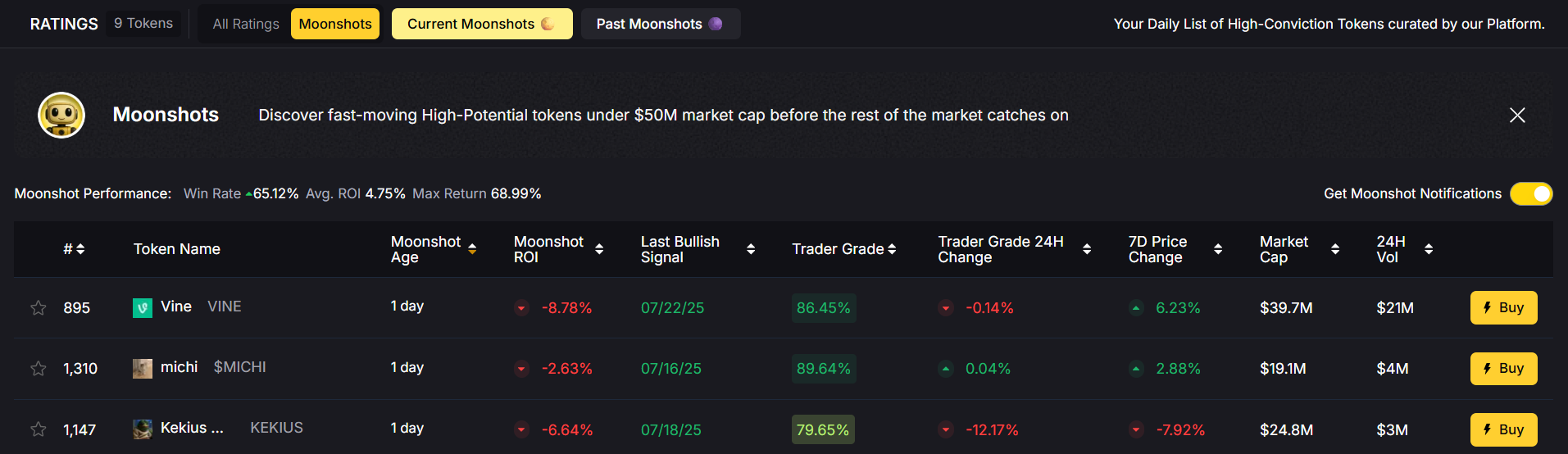
AI trading strategies not only help reduce risks by removing emotional decision-making but also enable traders to respond quickly to market changes. Whether you’re a beginner looking to automate your trades or an advanced trader seeking to optimize your strategies, AI-powered trading offers the tools and insights needed to increase profits and stay ahead in the competitive crypto market.

Why Token Metrics Is the #1 AI Trading Platform in 2025

While many trading platforms exist, Token Metrics distinguishes itself by integrating AI research, portfolio management, and real-time trading signals into a single, cohesive ecosystem. Additionally, Token Metrics allows users to link and manage multiple exchange accounts through a unified platform, streamlining trading and account oversight. This comprehensive approach makes it a true game-changer for crypto traders and investors alike.
1. AI-Powered Trading Signals

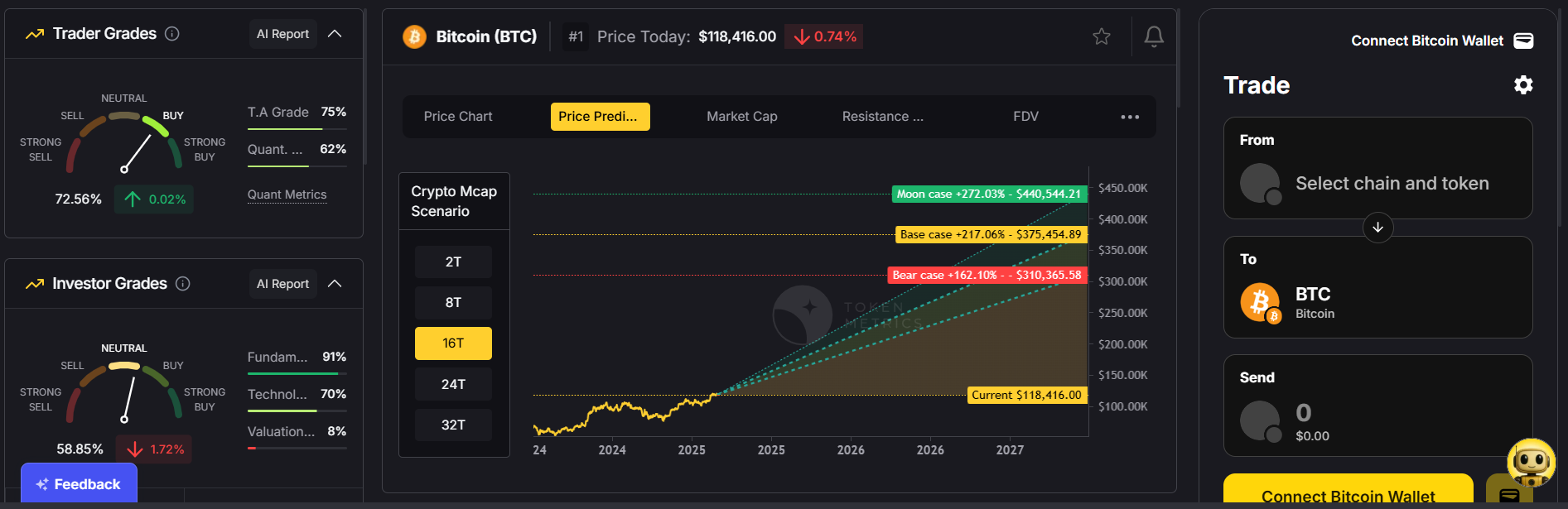
Token Metrics provides real-time bullish and bearish signals for hundreds of cryptocurrencies. These signals are not arbitrary; they derive from over 80 data points, including technical indicators, tokenomics, and on-chain analytics, ensuring that traders receive well-informed guidance.

2. Trader & Investor Grades

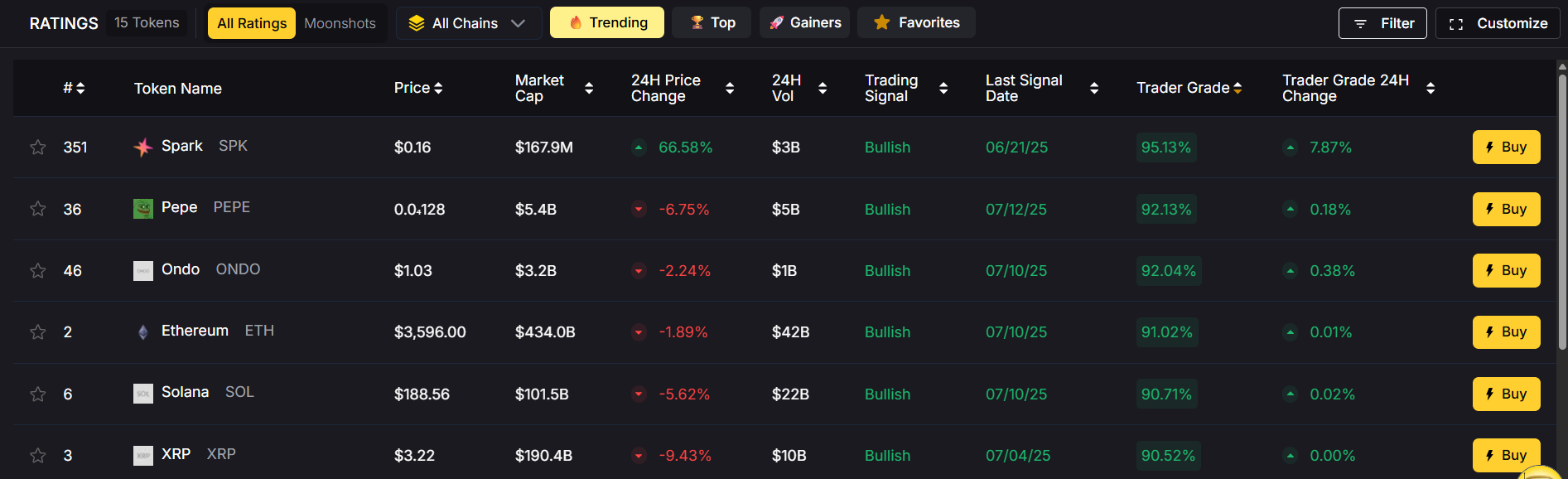
Each token is assigned two AI-generated scores: the Trader Grade, which assesses short-term performance potential, and the Investor Grade, which evaluates long-term viability. This dual grading system helps traders quickly differentiate between tokens suitable for quick trades and those better suited for long-term holdings.

3. AI-Managed Crypto Indices

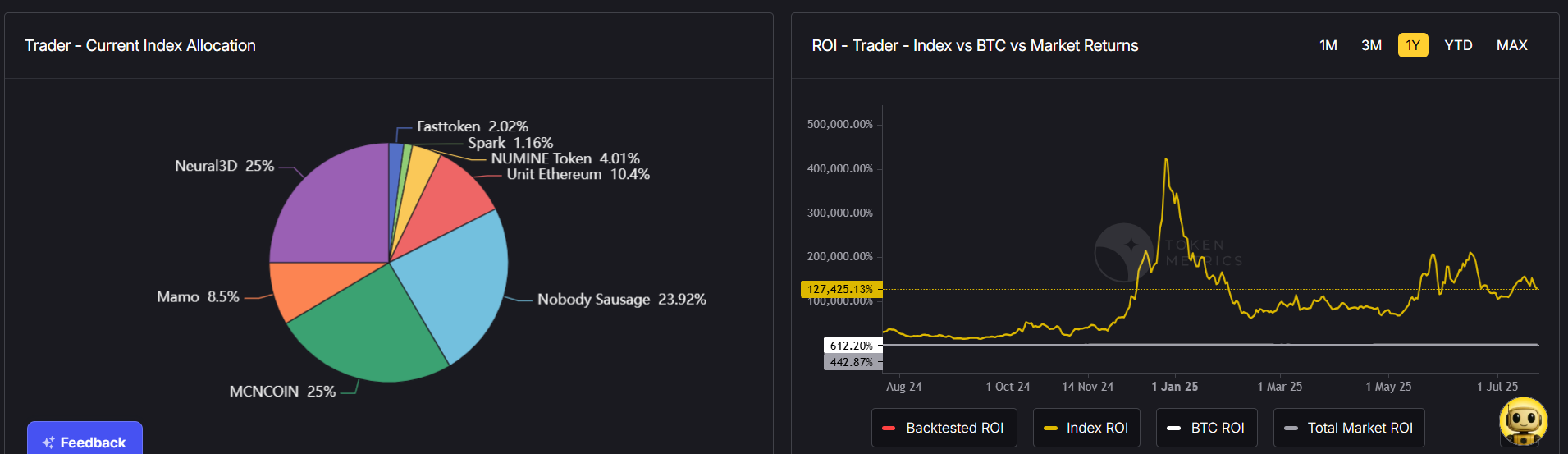
For hands-off investors, Token Metrics offers auto-managed portfolios, or indices, that dynamically rebalance based on AI insights. Whether you prefer blue-chip crypto baskets or low-cap moonshot portfolios, these indices provide effortless diversification aligned with current market conditions.
4. Moonshot Finder

The Moonshot feature uses AI to identify low-cap tokens with explosive growth potential before they become mainstream. This tool is invaluable for traders seeking the next 100x altcoin.

5. Customizable Alerts

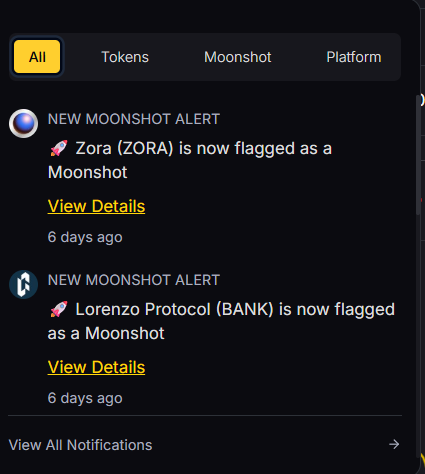
Traders can set alerts for price targets, investor grades, or trading signals and receive notifications via email, Telegram, SMS, or Slack. This ensures you never miss critical market movements.
6. Research Automation

Token Metrics automates the research process by combining on-chain data, fundamental analysis, and sentiment tracking into easy-to-understand reports. This saves traders hours of manual work while providing expert insights.

Advanced Trading Options with Token Metrics

Token Metrics empowers traders with a suite of advanced trading options designed to give you a competitive edge in the crypto market. The platform harnesses predictive analytics, sentiment analysis, and natural language processing to help you analyze market trends and predict future price movements with greater accuracy.

With Token Metrics, you can create and test custom strategies tailored to your trading style, backtest their performance using historical data, and execute trades automatically based on real-time insights. The platform’s advanced tools allow you to monitor market conditions, adjust your strategies as needed, and make informed decisions that maximize your trading profits.

Whether you’re trading Bitcoin, Ethereum, or exploring new altcoins, Token Metrics provides the resources and analytics you need to optimize your trading activities. By leveraging these powerful features, traders can stay ahead of market trends, anticipate price fluctuations, and achieve greater success in the ever-evolving world of cryptocurrency trading.

Managing Risks and Challenges in AI Crypto Trading

Successfully navigating AI crypto trading requires a strong focus on risk management and an awareness of the unique challenges that come with automated trading. Market volatility is a constant in the crypto market, and sudden price swings can lead to significant losses if not properly managed. To mitigate these risks, traders can utilize risk management tools such as stop-loss orders and position sizing, which help limit exposure to adverse market movements.

Another challenge is ensuring that trading bots remain effective as market conditions change. AI trading bots, while powerful, can sometimes make errors or fail to adapt to new trends. Regular backtesting, walk-forward optimization, and continuous monitoring of bot performance are essential practices to ensure your strategies remain robust.

Traders should also be vigilant about hidden fees, security risks, and potential regulatory changes that could impact their trading activities. By staying informed and using the right tools, traders can reduce risks, protect their assets, and increase their chances of long-term success in AI crypto trading.

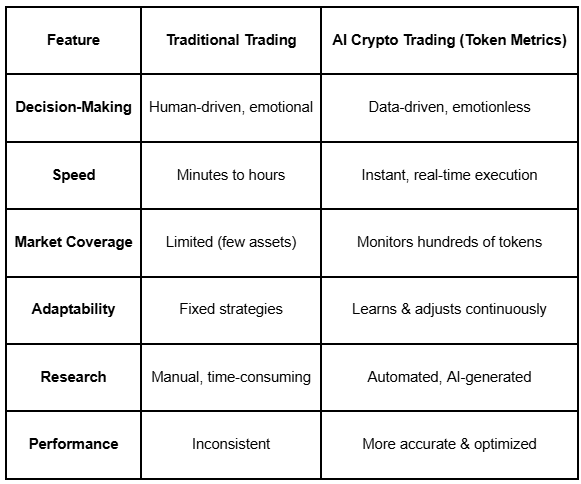
AI Crypto Trading vs. Traditional Trading

Comparing AI-driven trading with traditional manual trading highlights the advantages of integrating artificial intelligence into cryptocurrency trading:
‍

The key takeaway is clear: AI crypto trading is not just faster—it is smarter, providing traders with the tools to make informed decisions that optimize profits while reducing risks. AI-driven platforms make it easier and more efficient to trade crypto compared to traditional methods, streamlining the entire process for both beginners and experienced traders.

How Token Metrics AI Works Behind the Scenes

Token Metrics employs sophisticated machine learning models trained on diverse data sets to deliver its predictive analytics. These include historical price data to detect recurring patterns, on-chain analytics such as wallet activity and token supply, and social sentiment gathered from platforms like X, Telegram, and Reddit. Additionally, fundamental data such as team strength, project roadmaps, and tokenomics are factored into the analysis.

This multi-layered approach enables Token Metrics to accurately predict both short-term and long-term market movements, helping traders anticipate market changes and fine-tune their strategies accordingly. To ensure the reliability and safety of its platform, Token Metrics implements robust security measures, including proactive practices and strong encryption, to protect user data and funds against evolving threats and market volatility.

Affiliate and Revenue Opportunities with Token Metrics

Token Metrics not only offers powerful tools for trading but also provides a variety of affiliate and revenue opportunities for traders and investors. Through the platform’s affiliate program, users can earn commissions by referring friends, family, or their network to Token Metrics, creating a steady stream of passive income.

For those looking to expand their trading business, Token Metrics allows traders to create and sell their own trading bots and strategies directly on the platform. This opens up new revenue streams and enables experienced traders to share their expertise with the broader crypto community.

Additionally, Token Metrics supports its users with a wealth of educational resources, including webinars, tutorials, and personalized support, helping traders at all levels achieve greater success. By leveraging these opportunities, you can build your own trading business, generate additional income, and unlock your full potential in the crypto market. Whether you’re just starting out or are an advanced trader, Token Metrics is your gateway to financial success in the world of cryptocurrency trading.

How to Get Started with Token Metrics in 2025

Getting started with Token Metrics is straightforward:

  1. Sign up at Token Metrics. No credit card required to start your trial or explore the platform.
  2. Choose your subscription plan—Basic, Advanced, or Premium—based on your trading needs.
  3. Create your watchlist by selecting preferred tokens to monitor.
  4. Use AI-generated signals and grades to guide your trading decisions.
  5. Leverage AI-managed indices for automatic portfolio diversification and risk management.
  6. Set up customizable alerts to stay informed about price targets and market indicators in real time.

For beginners, starting with AI-managed indices is a smart way to gain exposure to multiple sectors with minimal risk, while advanced traders can benefit from custom strategies and automated trading bots.

FAQs: AI Crypto Trading & Token Metrics

1. Is AI crypto trading profitable?
Yes, when used correctly, AI crypto trading can significantly enhance profitability by eliminating emotional bias, processing vast amounts of data, and reacting faster than human traders.

2. Is Token Metrics worth it in 2025?
Absolutely. Token Metrics offers a comprehensive suite of AI-driven signals, indices, and research tools that cater to both beginners and experienced traders.

3. Can I use Token Metrics as a beginner?
Yes, the platform supports beginners through AI-managed portfolios and provides more advanced features for experienced traders.

4. Does Token Metrics offer real-time trading alerts?
Yes. Alerts are available via email, SMS, Telegram, and Slack, ensuring you stay updated on important market movements.

Final Thoughts: The Future of AI in Crypto Trading

Artificial intelligence is no longer a futuristic concept; it is the present reality transforming crypto trading. Token Metrics is leading this revolution by offering a one-stop platform that combines AI-driven research, real-time trading signals, and automated portfolio management.

Whether you are scalping short-term trades or building a long-term crypto portfolio, Token Metrics equips you with the powerful tools and expert insights needed to stay ahead of the rapidly changing cryptocurrency market. If you want to trade smarter and maximize profits in 2025, starting with Token Metrics is the right strategy.

Build Smarter Crypto Apps &
AI Agents in Minutes, Not Months
Real-time prices, trading signals, and on-chain insights all from one powerful API.
Grab a Free API Key
About Token Metrics
Token Metrics: AI-powered crypto research and ratings platform. We help investors make smarter decisions with unbiased Token Metrics Ratings, on-chain analytics, and editor-curated “Top 10” guides. Our platform distills thousands of data points into clear scores, trends, and alerts you can act on.
30 Employees
analysts, data scientists, and crypto engineers
Daily Briefings
concise market insights and “Top Picks”
Transparent & Compliant
Sponsored ≠ Ratings; research remains independent
Want Smarter Crypto Picks—Free?
See unbiased Token Metrics Ratings for BTC, ETH, and top alts.
Thank you! Your submission has been received!
Oops! Something went wrong while submitting the form.
 No credit card | 1-click unsubscribe
Token Metrics Team
Token Metrics Team

Recent Posts

Research

Can NFTs Be Used as Identity Credentials? The Future of Digital Identity in 2025

Token Metrics Team
6

In the rapidly evolving landscape of Web3 and blockchain technology, Non-Fungible Tokens (NFTs) have shifted far beyond their initial role as digital art collectibles. As we move through 2025, an important question arises: can NFTs be used as identity credentials? This article examines how NFTs are already being utilized as digital identity attestations and the potential implications for digital identity management, verification, and ownership in a decentralized digital environment.

Understanding NFT-Based Digital Identity

NFTs as digital identities represent a new paradigm for managing an individual’s credentials, history, and authorizations in a secure, verifiable digital format. Each NFT functions as a unique credential controlled solely by its owner but verifiable publicly by any party. This approach contrasts sharply with traditional identity systems, which are often centralized and managed by governments or corporations.

Built on blockchain technology, non-fungible tokens (NFTs) are recorded on a public ledger, providing a tamper-proof and transparent record. This ensures each NFT has a distinctive digital signature that cannot be duplicated or forged. Imagine carrying digital passports, educational diplomas, or professional certifications as NFTs stored securely in your digital wallet—credentials that are instantly verifiable by relevant entities worldwide, without intermediaries.

The Key Advantages of NFT Credentials

The move towards NFT-based identity systems offers numerous benefits that address common challenges in traditional identity verification and credentialing:

  • User Sovereignty and Control: NFT credentials enable users to own and manage their personal data and digital identity without reliance on centralized entities. Unlike conventional systems where identity data is stored and controlled by third parties, NFT-based identity allows individuals to decide what information to share and with whom, reducing risks of identity theft and unauthorized access.
  • Unprecedented Trust and Transparency: With each NFT having a unique digital signature stored on-chain, verification becomes straightforward and trustless. Anyone can independently verify the authenticity of a credential, which is crucial in sectors like education, healthcare, and finance.
  • Portability and Interoperability: Digital identity NFTs are portable across various platforms and ecosystems. Users can carry their credentials across virtual worlds, decentralized finance (DeFi) platforms, social media, and more. This seamless interoperability simplifies digital interactions and access management.
  • Tamper-Proof and Secure: Blockchain technology ensures once data is stored on-chain, it cannot be altered or forged. This enhances the security and credibility of identity credentials, reducing fraud and data breaches.

Real-World Applications Already in Motion

NFT identity credentials are actively deployed across multiple sectors in 2025, demonstrating their practical value:

  • Decentralized Credentialing: Educational institutions issue NFT diplomas, micro-credentials, and professional licenses as verifiable digital certificates. Students and professionals can instantly prove their qualifications without contacting centralized registrars or paying verification fees.
  • Access Control in Virtual Environments: In virtual worlds and gaming ecosystems, NFTs serve as digital passes granting access to exclusive content, virtual real estate, or members-only communities. These NFT-based access controls streamline entry management and create new digital ownership opportunities.
  • Reputation Systems in DeFi and DAOs: Decentralized autonomous organizations (DAOs) and DeFi platforms utilize NFTs to represent governance rights, voting power, and reputation scores. This transparent system records members’ contributions and responsibilities, enabling trustless verification within decentralized networks.
  • Event Tickets and Memberships: NFT digital tickets are transforming event management by offering secure, personalized access to concerts, conferences, and online sessions. Each NFT ticket acts as a verifiable digital credential, simplifying access and reducing fraud.

The Evolution: From Static to Smart Identity

One of the most exciting developments in 2025 is the emergence of AI-powered NFTs, or intelligent NFTs (iNFTs). These digital identity NFTs are dynamic, capable of evolving over time. Powered by artificial intelligence, iNFTs can act as intelligent agents that manage credentials, respond to verification requests, and interact with decentralized applications using natural language.

For example, an iNFT can provide context-aware disclosures—confirming someone is over 18 without revealing their full birth date, or verifying employment status without exposing detailed work history. This selective disclosure enhances privacy while maintaining the integrity of verifiable credentials, aligning closely with principles of decentralized and self-sovereign identity management.

As NFT-based identity systems proliferate, understanding the broader crypto and NFT ecosystem becomes critical. Platforms like Token Metrics offer invaluable insights powered by AI and data analytics on numerous crypto and NFT projects, including those focused on digital identity.

Token Metrics evaluates tokens with Trader Grades for short-term potential and Investor Grades for long-term viability, helping users identify promising NFT identity projects. Its integrated platform facilitates quick research, analysis, and informed decision-making based on real-time market signals.

For individuals exploring digital identity NFTs, Token Metrics provides comprehensive analytics and timely alerts to differentiate genuine technological progress from hype. This makes it an essential tool in navigating the evolving digital economy and Web3 infrastructure.

Challenges and Considerations

Despite their promising potential, NFT-based identity systems face several hurdles:

  • Privacy Concerns: Blockchain transparency is a strength but also raises issues about exposing sensitive personal data. Implementing cryptographic solutions and privacy-preserving protocols is vital for safeguarding user information.
  • Regulatory and Legal Recognition: The legal standing of NFT credentials varies globally. Regulatory frameworks need to evolve to formally recognize and validate these digital identities for widespread adoption.
  • User Experience and Accessibility: Blockchain interfaces can be complex; user-friendly wallets and apps are necessary for mainstream acceptance of NFT identity solutions.
  • Security Risks: While NFTs themselves are tamper-proof, the security of digital wallets and private keys is critical. Loss or theft can lead to loss of access to digital identities.

The Road Ahead

By 2025, NFTs are being piloted as digital passports, professional licenses, and access passes that offer tamper-proof verification and ownership. The trajectory indicates NFTs have transitioned from simple digital art to powerful tools for establishing trust, ownership, and identity in digital spaces.

The convergence of blockchain, NFTs, and AI is unlocking new paradigms for digital identity management. Instead of fragmented identities stored in centralized databases, individuals will soon be able to own and control their credentials in a fully decentralized, secure manner.

This evolution is set to revolutionize how we manage digital interactions, with applications spanning education, virtual worlds, real estate, and beyond. It promises enhanced security, interoperability, and user sovereignty, marking significant progress in digital identity solutions.

Conclusion

So, can NFTs be used as identity credentials? Absolutely—and they are already serving as verifiable, portable, tamper-proof digital credentials. These innovations empower users with ownership and control over their digital identities.

Looking ahead to 2025, integrating NFT identity systems with AI-driven smart contracts and decentralized identifiers will likely make these credentials even more secure and privacy-focused. While there are challenges around privacy, regulation, and usability, the potential benefits—such as increased security, user sovereignty, and seamless verification—make NFT-based identity a highly promising application of blockchain technology.

For those interested in the future of digital identity, staying informed through platforms like Token Metrics is essential. As the digital economy expands, NFTs are poised to play a central role in how we establish and verify our identities in digital space.

The question is no longer whether NFTs can be used as identity credentials, but how quickly we can develop the infrastructure and ecosystems needed to realize this new digital identity paradigm for everyone.

Research

What Are Some Trusted Crypto Exchanges? A Comprehensive 2025 Guide

Token Metrics Team
7

Choosing the right cryptocurrency exchange is one of the most critical decisions for anyone entering the digital asset market. With over 254 exchanges tracked globally and a staggering $1.52 trillion in 24-hour trading volume, the landscape offers tremendous opportunities alongside significant risks. The wrong platform choice can expose you to security breaches, regulatory issues, or inadequate customer support that could cost you your investment.

In 2025, the cryptocurrency exchange industry has matured significantly, with clearer regulatory frameworks, enhanced security standards, and more sophisticated trading tools. However, recent data shows that nearly $1.93 billion was stolen in crypto-related crimes in the first half of 2025 alone, surpassing the total for 2024 and making it crucial to select exchanges with proven track records and robust security measures.

This comprehensive guide examines the most trusted cryptocurrency exchanges in 2025, exploring what makes them reliable, the key factors to consider when choosing a platform, and how to maximize your trading security and success.

Understanding Cryptocurrency Exchanges

Cryptocurrency exchanges are platforms that allow traders to buy, sell, and trade cryptocurrencies, derivatives, and other crypto-related assets. These digital marketplaces have evolved dramatically since Bitcoin's release in 2008, transforming from rudimentary peer-to-peer platforms into sophisticated financial institutions offering comprehensive services.

Types of Crypto Exchanges

  • Centralized Exchanges (CEX): Platforms like Binance, Coinbase, and Kraken hold your funds and execute trades on your behalf, acting as intermediaries similar to traditional banks. These exchanges offer high liquidity, fast transaction speeds, user-friendly interfaces, and customer support but require trusting the platform with custody of your assets.
  • Decentralized Exchanges (DEX): Platforms enabling direct peer-to-peer trading without intermediaries, offering greater privacy and self-custody but typically with lower liquidity and more complex user experiences.
  • Hybrid Exchanges: In 2025, some platforms seek to offer the best of both worlds, providing the speed of centralized exchanges with the self-custodial nature of decentralized platforms. Notable examples include dYdX v4, Coinbase Wallet with Base integration, and ZK-powered DEXs.
  • Brokers: Platforms like eToro and Robinhood that allow crypto purchases at set prices without orderbook access, prioritizing simplicity over advanced trading features.

Key Factors for Exchange Trustworthiness

Selecting a trustworthy exchange involves evaluating several dimensions beyond just trading fees and available cryptocurrencies. Important factors include security, regulatory compliance, liquidity, and user experience.

Security and Regulatory Compliance

Security remains the foremost concern, with exchanges now mandated to implement rigorous know-your-customer and anti-money laundering protocols, alongside new licensing and reporting requirements. Trusted exchanges maintain industry-leading security measures such as two-factor authentication, cold storage for most assets, regular security audits, and insurance funds.

Regulatory compliance has become increasingly vital, especially as governments establish frameworks for digital assets. Licensed exchanges adhering to regulations are considered more reliable and less susceptible to sudden shutdowns or regulatory actions. In 2025, frameworks like the Markets in Crypto-Assets Regulation (MiCA) in the European Union and evolving U.S. regulations aim to standardize and supervise the industry.

Trading Features and Liquidity

High liquidity ensures easier entry and exit points, minimizing price impact and facilitating large trades. The most prominent exchanges support a broad range of coins, trading pairs, and derivatives, including spot, margin, futures, and options. As of 2025, Binance, Bybit, and MEXC are among the largest by trading volume, supported by deep liquidity and extensive offerings.

Fee Structures

Trading fees can significantly affect prolonged profitability. Most platforms employ maker-taker models, with fees ranging approximately from 0.02% to 0.6%. Some exchanges offer discounts for high-volume traders or native tokens. It's essential to consider deposit, withdrawal, staking, and other fees to fully understand the cost structure of each platform.

Customer Support and User Experience

Responsive support is critical when dealing with security or trading issues. Leading exchanges provide 24/7 multilingual support via chat, email, or help centers. User experience involves seamless interfaces on desktop and mobile, with over 72% of traders now using mobile apps. Educational resources such as tutorials, market analysis, and learning centers are also valuable for empowering users.

Top Trusted Crypto Exchanges for 2025

Based on security, compliance, user reviews, and comprehensive features, the following have established themselves as the most reliable platforms:

Kraken: Industry-Leading Security and Trust

Kraken, founded in 2011, has never experienced a hack resulting in customer fund loss. It offers over 350 cryptocurrencies, maintains licenses across multiple regions, and emphasizes security and transparency. The platform provides standard and Kraken Pro interfaces, supporting advanced trading, technical analysis, and margin trading. Kraken's reputation is reinforced by reviews from industry analysts like CoinGecko and Kaiko.

Coinbase: Most Trusted U.S. Exchange

Established in 2012, Coinbase supports around 250 cryptocurrencies. It is publicly traded, operates in over 190 countries, and complies with stringent U.S. regulations. Coinbase offers a simple interface for beginners and advanced tools for experienced traders, backed by robust security features including cold storage and 2FA.

Binance: Global Trading Volume Leader

Founded in 2017, Binance supports hundreds of cryptocurrencies and maintains the world’s largest trading volume. It offers a low fee structure (~0.1%), extensive trading options, and a comprehensive ecosystem including staking, launchpool, and Earning programs. Binance’s mobile app is widely used, and the platform stores 10% of user funds in its SAFU fund for security.

Gemini: Security-First Exchange

Founded in 2014, Gemini emphasizes security and regulatory compliance. It offers insurance for digital assets, operates as a New York trust company, and supports over 100 cryptocurrencies. Gemini provides both beginner-friendly and advanced trading interfaces and has launched innovative products like the Gemini Dollar stablecoin.

OKX: Comprehensive Trading Platform

OKX supports spot, futures, and derivatives trading with deep liquidity across 180+ countries. It features professional tools, extensive charting, staking, and DeFi integration, serving advanced traders worldwide.

Bitstamp: Longest-Established Exchange

Founded in 2011, Bitstamp is one of the oldest and most regulated exchanges in the industry. It has a strong European presence, robust security, and a tiered fee system based on trading volume, making it suitable for long-term investors and high-volume traders.

Maximizing Trading Success with Token Metrics

While choosing a trusted exchange provides the foundation, leveraging advanced analytics is crucial for enhancing performance. Discover the benefits of Token Metrics as an AI-powered platform that offers personalized market insights, real-time signals, and portfolio management tools. It helps traders identify opportunities, optimize trade timing, and manage risk across multiple platforms effectively.

Best Practices for Exchange Security

Even trusted exchanges require good security hygiene. Use two-factor authentication (prefer Authenticator apps over SMS), enable withdrawal whitelists, and regularly monitor account activity. For large holdings, consider cold storage with hardware wallets. Maintain good digital hygiene by avoiding public Wi-Fi and using strong, unique passwords.

Regional Considerations

Different regions have varying regulations affecting exchange choices. U.S. users benefit from platforms like Coinbase and Kraken with strong compliance. The EU favors exchanges adhering to MiCA, such as Kraken, Bitstamp, and Binance. UK traders should look for FCA-registered platforms like Kraken and Bitstamp. In Asia-Pacific, options like Bybit and OKX are popular, with regional regulation influencing platform selection.

The Future of Crypto Exchanges

Key trends include increased institutional adoption, DeFi integration, tighter regulatory compliance, and the adoption of AI-powered trading tools. These developments will shape the landscape in the coming years, promoting more secure, transparent, and sophisticated trading environments.

Conclusion: Choosing Your Trusted Exchange

Effective selection involves balancing security, compliance, features, fees, and regional considerations. Leading platforms like Kraken, Coinbase, Binance, Gemini, and Bitstamp have earned trust through consistent performance. Combining these with analytics tools from Token Metrics enables traders to enhance decision-making, manage risks, and maximize opportunities in this dynamic market.

Always implement strong security practices, diversify holdings, and stay informed about regulatory changes. The evolving crypto industry favors exchanges that prioritize transparency, security, and user support—key factors to consider as you navigate the exciting landscape of digital assets.

Research

How Do I Know If a Coin Is a Rug Pull? Essential Detection Guide for 2025

Token Metrics Team
6

The cryptocurrency market offers tremendous possibilities for investors, but it also involves notable risks. Among these dangers, rug pulls stand out as particularly damaging scams where developers abandon projects after raising funds, leaving investors with worthless tokens. With rug pulls accounting for approximately 37% of all crypto scam revenue and costing investors nearly $3 billion annually, learning how to detect these schemes early has become crucial for every crypto participant.

The term "rug pull" originates from the phrase "pulling the rug out from under someone." Typically, a project may seem promising with rising prices and active community support, only to suddenly collapse when developers vanish with investor funds. Such scams are especially common in decentralized finance (DeFi), where listing tokens often involves minimal oversight and regulation.

This detailed guide aims to equip you with the knowledge, tools, and analytical strategies necessary to recognize rug pull warning signs, protect your holdings, and navigate the crypto space more securely in 2025.

Understanding Rug Pulls: What They Are and How They Work

A rug pull is a type of cryptocurrency scam where developers create a project, attract investors through hype and promises of high returns, and then abruptly withdraw funds or abandon the project, leaving participants with worthless tokens. These exit scams are often carefully orchestrated to maximize theft before the project’s collapse.

The Anatomy of a Rug Pull

Rug pulls exploit trust and hype within DeFi ecosystems, particularly on decentralized exchanges where token listing is straightforward and lightly regulated. The common pattern involves:

  • Project Launch: Developers introduce a new crypto or DeFi project with flashy marketing and high-yield promises, often with professional-looking websites and social media presence.
  • Hype Generation: Social media campaigns, influencers, and crypto forums generate buzz. Investors rush to buy tokens amid FOMO, causing rapid price increases.
  • Liquidity Build-Up: As demand rises, liquidity pools grow, giving an illusion of success. This phase can last days or months depending on scam sophistication.
  • Sudden Exit: When the scammer deems the target reached, they drain liquidity, dump tokens, or abandon the project, causing prices to plummet to zero.

Types of Rug Pulls

Understanding different scam methods helps in identifying vulnerabilities:

  • Hard Rug Pulls: Developers embed malicious code in smart contracts enabling them to withdraw liquidity at will, prevent sales, or mint unlimited tokens. These are premeditated and often illegal scams.
  • Soft Rug Pulls: Developers abandon projects after selling off substantial holdings, leaving the community behind. Though not always illegal, they are unethical.
  • Liquidity Pulls: Liquidity is removed from pools, causing value collapse. Developers might create pools pairing new tokens with established cryptocurrencies, then withdraw liquidity.
  • Dumping Schemes: Coordinated selling by insiders causes market crashes, often after artificially inflating prices.
  • Limited Sell Orders: Scammers restrict token sales to specific addresses, trapping other investors’ funds.

Critical Red Flags: Warning Signs of Rug Pulls

Spotting rug pulls early involves recognizing common warning signs:

Anonymous or Unverified Development Teams

If the project team’s identities are hidden or unverifiable, it’s a red flag. Legitimate projects list known founders with credible backgrounds on platforms like LinkedIn. Fake profiles and purchased followers are indicators of suspicious activity.

Missing or Inadequate Smart Contract Audits

Trustworthy projects undergo third-party security audits. If a project lacks an audit or refuses to share reports, caution is advised. Verify audit reports independently through the auditing firms’ websites.

Unlocked Liquidity Pools

Check whether liquidity pools are locked using tools like GeckoTerminal. Unlocked pools or those with expiring locks can be drained anytime, increasing scam risks.

Irregular Token Distribution and Whale Concentration

Examine token holdings on explorers like Etherscan. Large holdings by few addresses suggest potential for price manipulation or dumping. Spread-out distributions are safer.

Unrealistic Returns and Yield Promises

Promises of extraordinary yields—such as double-digit daily APYs—are typical red flags. Such schemes are often Ponzi or scams and not sustainable long-term.

Vague or Missing Whitepapers

Legitimate projects publish detailed whitepapers explaining technology, tokenomics, and roadmaps. Vague, plagiarized, or missing documents indicate potential fraud.

Excessive Marketing and FOMO Pressure

Overhyped campaigns, artificial urgency, and influencer-driven FOMO can signal scams. Genuine projects focus on delivering value over hype.

Sudden Unexplained Price Spikes

Artificial surges without fundamentals are common on scam tokens before they crash. Monitor news and fundamentals to verify price movements.

Poor Smart Contract Code Quality

Substandard or suspicious code on blockchain explorers signals inexperienced developers or malicious intent. Use analysis tools like Token Sniffer to evaluate contract safety.

Low Trading Volume

Authentic projects typically maintain active trading. Declining volume suggests loss of interest or impending exit scams.

Tools for Detecting Rug Pulls

Technological tools are vital for early detection:

  • GeckoTerminal and DEX Scanners: Provide liquidity lock status, holder analytics, and suspicious activity detection.
  • Blockchain Explorers (Etherscan, BscScan): Allow deep dives into smart contracts, transactions, and token distributions to spot red flags.
  • Token Sniffer and Security Platforms: Use AI-driven analyses to assess contract safety scores and identify malicious code patterns.

Leveraging Token Metrics for Rug Pull Protection

While automated tools help identify immediate risks, platforms like Token Metrics offer comprehensive insights powered by AI to evaluate project legitimacy and risks better. They analyze project teams, smart contract security, liquidity, community sentiment, and historical patterns to detect potential scams.

Discover Crypto Gems with Token Metrics AI

Token Metrics uses AI-powered analysis to help you uncover profitable opportunities in the crypto market. Get Started For Free

Best Practices for Avoiding Rug Pulls

  • Conduct thorough research: Investigate project backgrounds, teams, code, and communities. Verify claims independently.
  • Start small and test projects: Invest minimal amounts initially, increasing only after sustained legitimacy.
  • Verify liquidity lock status and audits: Use tools to confirm liquidity is locked and check audit reports for security.
  • Monitor community engagement: Engage with project communities and observe transparency and responsiveness.
  • Use reputable exchanges: Prefer well-known platforms with stricter vetting processes.
  • Diversify investments: Spread over multiple projects and assets to reduce risk exposure.
  • Stay informed: Follow trusted news sources, security platforms, and community alerts.

What To Do If You’ve Been Rug Pulled

Even with precautions, scam damages can occur. Immediate steps include:

  1. Report the scam: File reports with community platforms like Chainabuse, SEC, or FTC. Share detailed evidence.
  2. Warn others: Post factual warnings on social media, Reddit, and community channels with transaction details.
  3. Document everything: Keep records of transactions for potential tax claims and future analysis.
  4. Learn from the experience: Analyze missed signs and refine your research process for future investments.

Conclusion: Staying Safe in Crypto's Wild West

Rug pulls pose a significant threat, costing billions annually, but awareness and analytical tools can mitigate risks. Recognizing red flags such as anonymous teams, missing audits, unlocked liquidity, and unrealistic promises is vital. Employ platforms like Token Metrics for in-depth risk assessment and project validation.

Combining vigilant research, disciplined investing, and AI-powered analytics helps navigate crypto securement. Remember, if something seems too good to be true, it likely is. Protect your investments and participate responsibly in this exciting, fast-evolving industry in 2025 and beyond.

Choose from Platinum, Gold, and Silver packages
Reach with 25–30% open rates and 0.5–1% CTR
Craft your own custom ad—from banners to tailored copy
Perfect for Crypto Exchanges, SaaS Tools, DeFi, and AI Products