Back to blog
Crypto Basics

AI Crypto Trading in 2025: How Token Metrics Is Changing the Game

Discover top tools for AI crypto trading that can enhance your strategy and boost your results. Read the article to level up your trading today!
Token Metrics Team
8 min
Want Smarter Crypto Picks—Free?
See unbiased Token Metrics Ratings for BTC, ETH, and top alts.
Thank you! Your submission has been received!
Oops! Something went wrong while submitting the form.
 No credit card | 1-click unsubscribe

The cryptocurrency market in 2025 is faster, smarter, and more competitive than ever before. Traditional technical analysis, while still relevant, is no longer sufficient to keep pace with a market that operates 24/7 and is heavily influenced by social sentiment, institutional flows, and emerging narratives. In this dynamic environment, AI crypto trading has emerged as a revolutionary approach that leverages artificial intelligence, machine learning, and big data analytics to help traders make better, faster, and more profitable decisions. AI technologies also enable traders to identify the latest trends in the cryptocurrency market, giving them a competitive edge.

Understanding AI is crucial for anyone looking to succeed in crypto trading, as technologies like machine learning and natural language processing are now applied for market analysis, sentiment assessment, and automated trading strategies.

At the forefront of this transformation is Token Metrics, an AI-powered crypto research and trading platform that simplifies complex trading decisions through real-time insights, predictive analytics, and automated portfolio management. The integration of blockchain technology with AI further enhances security and transparency in crypto trading processes. For anyone serious about crypto trading or investing, understanding how AI is reshaping the cryptocurrency market—and why Token Metrics is leading the way—is essential.

What Is AI Crypto Trading?

AI crypto trading refers to the use of artificial intelligence and machine learning models to analyze vast amounts of market data at lightning speed. This includes price action, on-chain activity, sentiment analysis derived from social media and other sources, and other market indicators. An ai crypto trading bot is an advanced, automated software tool that leverages AI to execute cryptocurrency trades autonomously. By identifying patterns that human traders often miss, AI-powered systems can predict price movements with greater accuracy and generate price predictions. These AI models are applied across various crypto markets to enhance trading strategies.
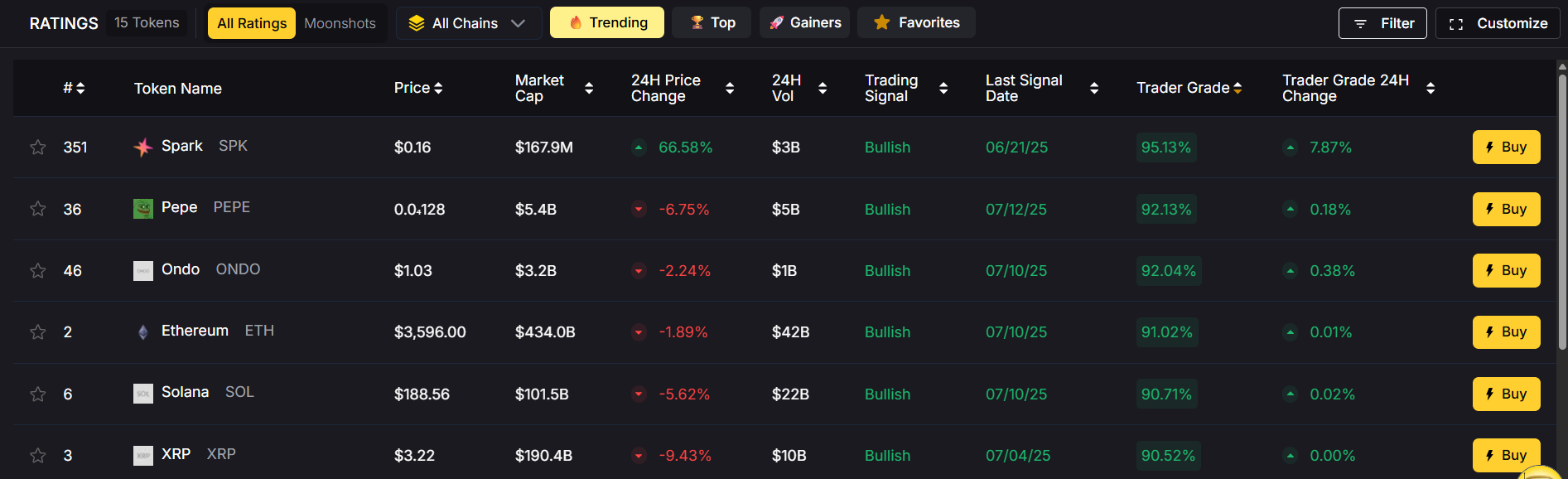
Beyond analysis, AI crypto trading automates trade execution based on pre-defined strategies, managing portfolios with dynamic rebalancing that adapts to current market conditions. Unlike manual trading, which is subject to emotional bias and slower reaction times, AI trading systems continuously learn, adapt, and improve their performance. This combination of advanced algorithms and automation empowers traders to navigate the volatile cryptocurrency market more efficiently and effectively.

Why AI Is a Game-Changer for Crypto Traders

The cryptocurrency market differs fundamentally from traditional financial markets in several key ways. It operates 24/7 without any opening or closing bell, is highly volatile, and is heavily influenced by social sentiment on platforms like X (formerly Twitter), Discord, and Telegram. These factors create both opportunities and challenges for traders.

AI addresses these challenges by monitoring hundreds of tokens simultaneously across multiple exchanges, utilizing real-time data to enable traders to stay on top of market changes as they happen. By eliminating emotional bias, AI focuses purely on data-driven decisions, responding instantly to price fluctuations, breaking news, and social media trends. This ability to quickly analyze and act on vast amounts of information gives traders a significant competitive edge, where seconds can mean the difference between substantial profits and missed opportunities. Additionally, AI helps traders select the right strategies for different market conditions, improving forecasting, analysis, and customization to match individual trading styles.
Understanding Crypto Trading Bots

Crypto trading bots are intelligent software programs that leverage artificial intelligence and machine learning to automate cryptocurrency trading. These bots are designed to analyze market trends, monitor price movements, and execute trades on behalf of traders, all without the need for constant human intervention. By using a crypto trading bot, traders can take advantage of opportunities in the crypto market 24/7, reduce emotional bias, and minimize risks that often come with manual trading.

There are several types of trading bots available, each catering to different trading strategies and risk profiles. Grid bots, for example, are popular for their ability to profit from price fluctuations by placing buy and sell orders at preset intervals. DCA bots (Dollar Cost Averaging bots) help traders spread out their investments over time, reducing the impact of market volatility. Market making bots provide liquidity by continuously quoting buy and sell prices, allowing experienced traders to benefit from small price differences.

Whether you’re new to crypto trading or an experienced trader, understanding how trading bots work and how to deploy them effectively can be a game-changer. By automating trades and managing risk, these AI-powered bots help traders maximize profits and achieve greater success in the fast-paced world of cryptocurrency trading.

AI Trading Strategies

AI trading strategies are revolutionizing the way traders approach cryptocurrency trading by combining advanced algorithms, machine learning, and natural language processing. These strategies are designed to analyze a wide range of market indicators, including price trends, sentiment analysis, and other market signals, to help traders make informed decisions and execute trades automatically.

Some of the most popular AI trading strategies include trend following, which identifies and rides market momentum; mean reversion, which capitalizes on price corrections; and statistical arbitrage, which exploits price inefficiencies across different markets. By leveraging AI tools, traders can backtest their strategies using historical data, evaluate past performance, and fine-tune their approach to adapt to changing market conditions.
AI trading strategies not only help reduce risks by removing emotional decision-making but also enable traders to respond quickly to market changes. Whether you’re a beginner looking to automate your trades or an advanced trader seeking to optimize your strategies, AI-powered trading offers the tools and insights needed to increase profits and stay ahead in the competitive crypto market.

Why Token Metrics Is the #1 AI Trading Platform in 2025

While many trading platforms exist, Token Metrics distinguishes itself by integrating AI research, portfolio management, and real-time trading signals into a single, cohesive ecosystem. Additionally, Token Metrics allows users to link and manage multiple exchange accounts through a unified platform, streamlining trading and account oversight. This comprehensive approach makes it a true game-changer for crypto traders and investors alike.
1. AI-Powered Trading Signals

Token Metrics provides real-time bullish and bearish signals for hundreds of cryptocurrencies. These signals are not arbitrary; they derive from over 80 data points, including technical indicators, tokenomics, and on-chain analytics, ensuring that traders receive well-informed guidance.

2. Trader & Investor Grades

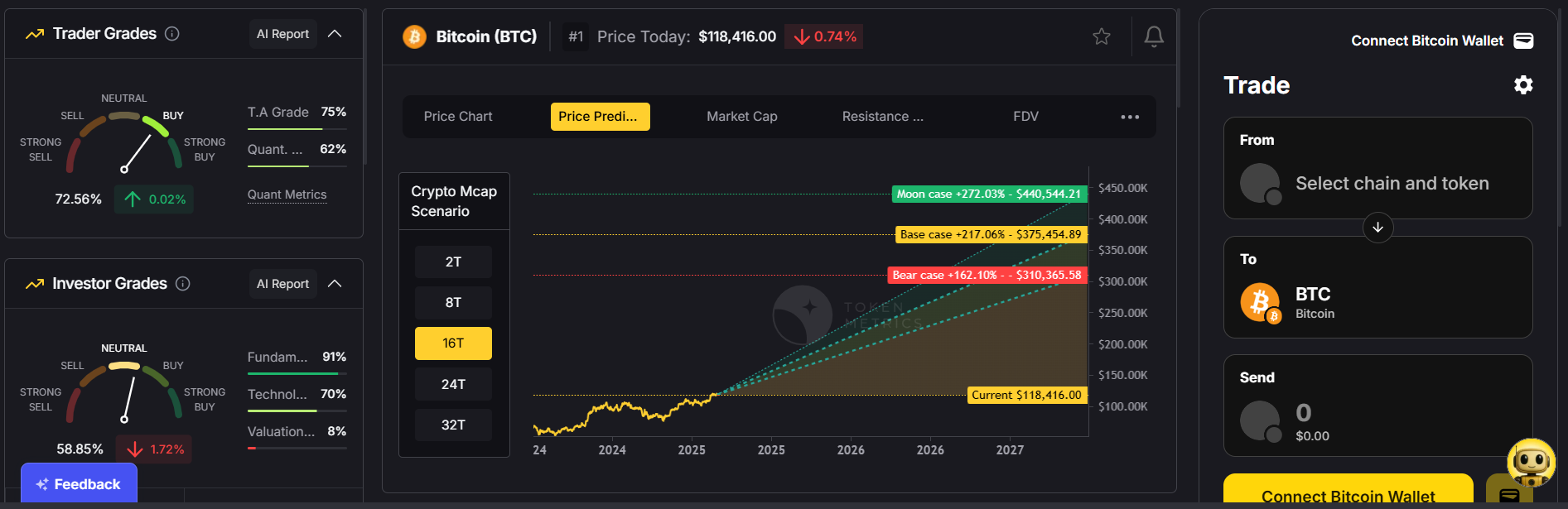
Each token is assigned two AI-generated scores: the Trader Grade, which assesses short-term performance potential, and the Investor Grade, which evaluates long-term viability. This dual grading system helps traders quickly differentiate between tokens suitable for quick trades and those better suited for long-term holdings.

3. AI-Managed Crypto Indices

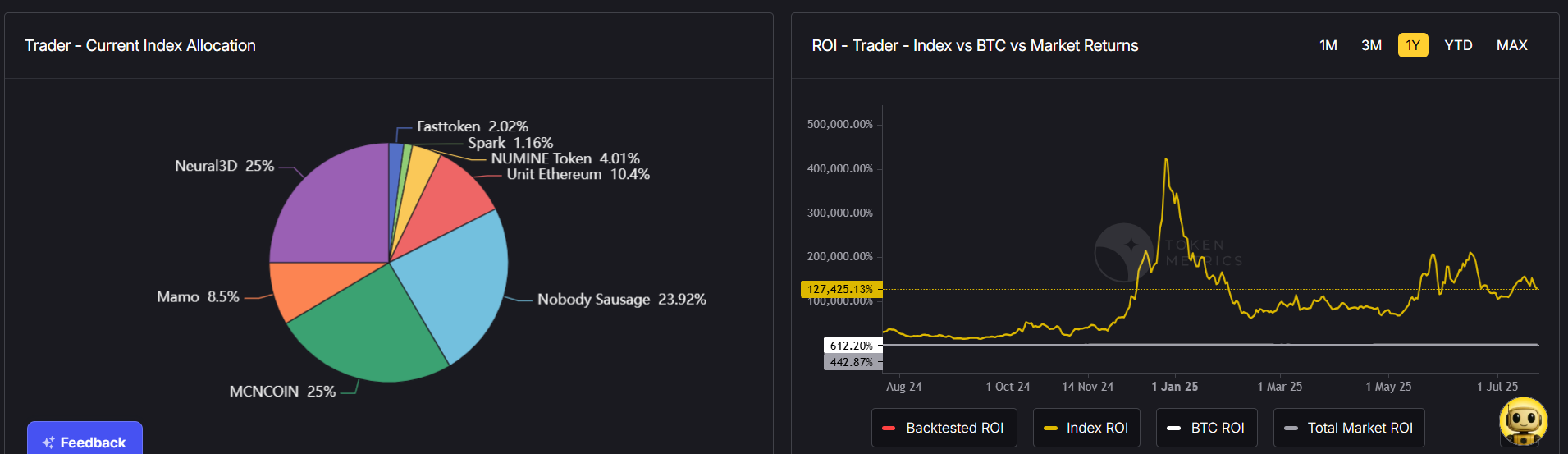
For hands-off investors, Token Metrics offers auto-managed portfolios, or indices, that dynamically rebalance based on AI insights. Whether you prefer blue-chip crypto baskets or low-cap moonshot portfolios, these indices provide effortless diversification aligned with current market conditions.
4. Moonshot Finder

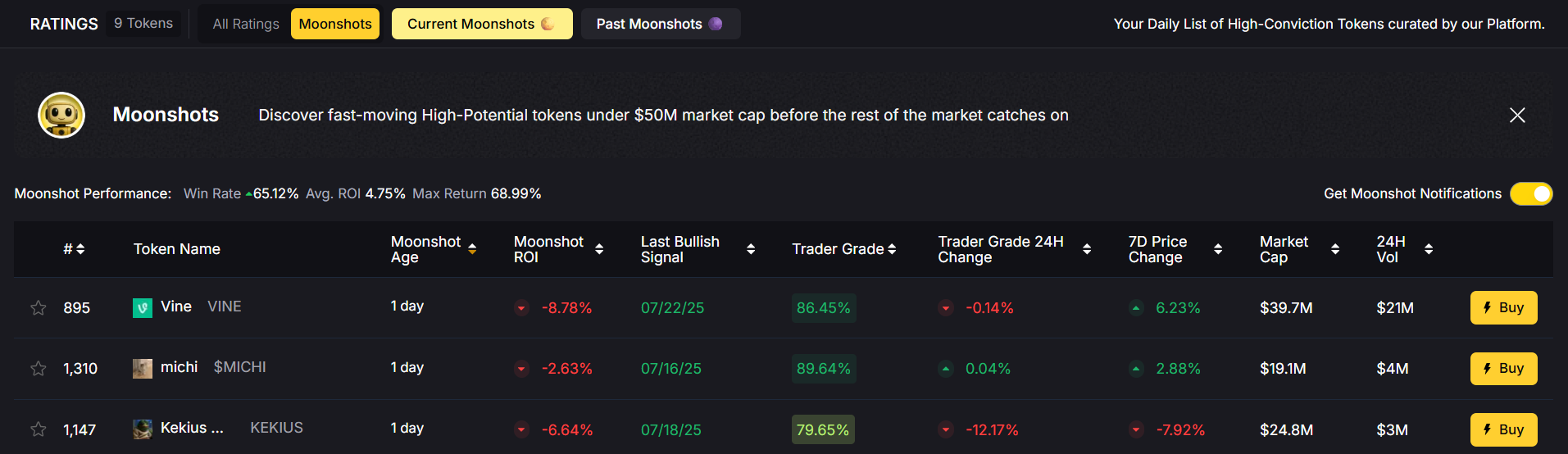
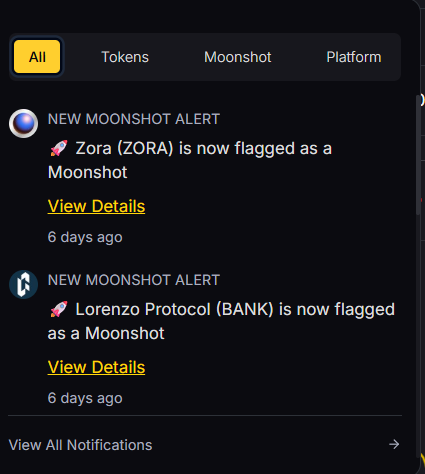
The Moonshot feature uses AI to identify low-cap tokens with explosive growth potential before they become mainstream. This tool is invaluable for traders seeking the next 100x altcoin.

5. Customizable Alerts

Traders can set alerts for price targets, investor grades, or trading signals and receive notifications via email, Telegram, SMS, or Slack. This ensures you never miss critical market movements.
6. Research Automation

Token Metrics automates the research process by combining on-chain data, fundamental analysis, and sentiment tracking into easy-to-understand reports. This saves traders hours of manual work while providing expert insights.

Advanced Trading Options with Token Metrics

Token Metrics empowers traders with a suite of advanced trading options designed to give you a competitive edge in the crypto market. The platform harnesses predictive analytics, sentiment analysis, and natural language processing to help you analyze market trends and predict future price movements with greater accuracy.

With Token Metrics, you can create and test custom strategies tailored to your trading style, backtest their performance using historical data, and execute trades automatically based on real-time insights. The platform’s advanced tools allow you to monitor market conditions, adjust your strategies as needed, and make informed decisions that maximize your trading profits.

Whether you’re trading Bitcoin, Ethereum, or exploring new altcoins, Token Metrics provides the resources and analytics you need to optimize your trading activities. By leveraging these powerful features, traders can stay ahead of market trends, anticipate price fluctuations, and achieve greater success in the ever-evolving world of cryptocurrency trading.

Managing Risks and Challenges in AI Crypto Trading

Successfully navigating AI crypto trading requires a strong focus on risk management and an awareness of the unique challenges that come with automated trading. Market volatility is a constant in the crypto market, and sudden price swings can lead to significant losses if not properly managed. To mitigate these risks, traders can utilize risk management tools such as stop-loss orders and position sizing, which help limit exposure to adverse market movements.

Another challenge is ensuring that trading bots remain effective as market conditions change. AI trading bots, while powerful, can sometimes make errors or fail to adapt to new trends. Regular backtesting, walk-forward optimization, and continuous monitoring of bot performance are essential practices to ensure your strategies remain robust.

Traders should also be vigilant about hidden fees, security risks, and potential regulatory changes that could impact their trading activities. By staying informed and using the right tools, traders can reduce risks, protect their assets, and increase their chances of long-term success in AI crypto trading.

AI Crypto Trading vs. Traditional Trading

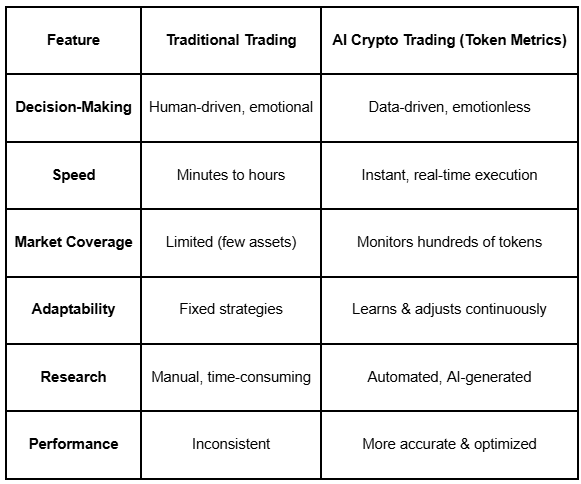
Comparing AI-driven trading with traditional manual trading highlights the advantages of integrating artificial intelligence into cryptocurrency trading:
‍

The key takeaway is clear: AI crypto trading is not just faster—it is smarter, providing traders with the tools to make informed decisions that optimize profits while reducing risks. AI-driven platforms make it easier and more efficient to trade crypto compared to traditional methods, streamlining the entire process for both beginners and experienced traders.

How Token Metrics AI Works Behind the Scenes

Token Metrics employs sophisticated machine learning models trained on diverse data sets to deliver its predictive analytics. These include historical price data to detect recurring patterns, on-chain analytics such as wallet activity and token supply, and social sentiment gathered from platforms like X, Telegram, and Reddit. Additionally, fundamental data such as team strength, project roadmaps, and tokenomics are factored into the analysis.

This multi-layered approach enables Token Metrics to accurately predict both short-term and long-term market movements, helping traders anticipate market changes and fine-tune their strategies accordingly. To ensure the reliability and safety of its platform, Token Metrics implements robust security measures, including proactive practices and strong encryption, to protect user data and funds against evolving threats and market volatility.

Affiliate and Revenue Opportunities with Token Metrics

Token Metrics not only offers powerful tools for trading but also provides a variety of affiliate and revenue opportunities for traders and investors. Through the platform’s affiliate program, users can earn commissions by referring friends, family, or their network to Token Metrics, creating a steady stream of passive income.

For those looking to expand their trading business, Token Metrics allows traders to create and sell their own trading bots and strategies directly on the platform. This opens up new revenue streams and enables experienced traders to share their expertise with the broader crypto community.

Additionally, Token Metrics supports its users with a wealth of educational resources, including webinars, tutorials, and personalized support, helping traders at all levels achieve greater success. By leveraging these opportunities, you can build your own trading business, generate additional income, and unlock your full potential in the crypto market. Whether you’re just starting out or are an advanced trader, Token Metrics is your gateway to financial success in the world of cryptocurrency trading.

How to Get Started with Token Metrics in 2025

Getting started with Token Metrics is straightforward:

  1. Sign up at Token Metrics. No credit card required to start your trial or explore the platform.
  2. Choose your subscription plan—Basic, Advanced, or Premium—based on your trading needs.
  3. Create your watchlist by selecting preferred tokens to monitor.
  4. Use AI-generated signals and grades to guide your trading decisions.
  5. Leverage AI-managed indices for automatic portfolio diversification and risk management.
  6. Set up customizable alerts to stay informed about price targets and market indicators in real time.

For beginners, starting with AI-managed indices is a smart way to gain exposure to multiple sectors with minimal risk, while advanced traders can benefit from custom strategies and automated trading bots.

FAQs: AI Crypto Trading & Token Metrics

1. Is AI crypto trading profitable?
Yes, when used correctly, AI crypto trading can significantly enhance profitability by eliminating emotional bias, processing vast amounts of data, and reacting faster than human traders.

2. Is Token Metrics worth it in 2025?
Absolutely. Token Metrics offers a comprehensive suite of AI-driven signals, indices, and research tools that cater to both beginners and experienced traders.

3. Can I use Token Metrics as a beginner?
Yes, the platform supports beginners through AI-managed portfolios and provides more advanced features for experienced traders.

4. Does Token Metrics offer real-time trading alerts?
Yes. Alerts are available via email, SMS, Telegram, and Slack, ensuring you stay updated on important market movements.

Final Thoughts: The Future of AI in Crypto Trading

Artificial intelligence is no longer a futuristic concept; it is the present reality transforming crypto trading. Token Metrics is leading this revolution by offering a one-stop platform that combines AI-driven research, real-time trading signals, and automated portfolio management.

Whether you are scalping short-term trades or building a long-term crypto portfolio, Token Metrics equips you with the powerful tools and expert insights needed to stay ahead of the rapidly changing cryptocurrency market. If you want to trade smarter and maximize profits in 2025, starting with Token Metrics is the right strategy.

Build Smarter Crypto Apps &
AI Agents in Minutes, Not Months
Real-time prices, trading signals, and on-chain insights all from one powerful API.
Grab a Free API Key
About Token Metrics
Token Metrics: AI-powered crypto research and ratings platform. We help investors make smarter decisions with unbiased Token Metrics Ratings, on-chain analytics, and editor-curated “Top 10” guides. Our platform distills thousands of data points into clear scores, trends, and alerts you can act on.
30 Employees
analysts, data scientists, and crypto engineers
Daily Briefings
concise market insights and “Top Picks”
Transparent & Compliant
Sponsored ≠ Ratings; research remains independent
Want Smarter Crypto Picks—Free?
See unbiased Token Metrics Ratings for BTC, ETH, and top alts.
Thank you! Your submission has been received!
Oops! Something went wrong while submitting the form.
 No credit card | 1-click unsubscribe
Token Metrics Team
Token Metrics Team

Recent Posts

Research

Where to Trade Indices: Complete Platform Guide for 2025

Token Metrics Team
7 min read

Finding the right platform to trade cryptocurrency indices can dramatically impact your investment experience, costs, and outcomes. With crypto indices gaining popularity as a way to gain diversified market exposure without managing dozens of individual positions, understanding where to trade them—and what makes one platform superior to another—has become essential knowledge for both novice and experienced investors.

Understanding Crypto Index Trading Platforms

Cryptocurrency indices represent baskets of digital assets that track specific market segments or strategies. Unlike traditional stock market indices that you might trade through any brokerage, crypto indices exist across a fragmented landscape of centralized exchanges, decentralized protocols, and specialized platforms. Each option presents distinct tradeoffs in terms of custody, transparency, fees, and ease of use.

The platform you choose determines not just transaction costs, but also whether you maintain control of your assets, how easily you can verify what you actually own, and whether the index operates according to clear, auditable rules. These considerations matter far more in cryptocurrency than in traditional finance, where regulatory oversight provides baseline protections largely absent in the crypto ecosystem.

Token Metrics Indices Hub: The Integrated Solution

Token Metrics has built a dedicated Indices hub at tokenmetrics.com/indices that addresses the key pain points of crypto index investing. This platform combines rules-based index products with embedded wallet technology, creating a seamless experience from research to execution to ongoing management.

The flagship TM Global 100 index exemplifies this approach. It holds the top 100 cryptocurrencies by market cap during bullish conditions and automatically switches to stablecoins when market signals turn bearish. The entire position rebalances weekly, with all holdings, transaction history, and strategy rules visible in the interface.

What distinguishes Token Metrics from alternatives is the integration between research and execution. Users who follow Token Metrics' market analysis can translate those insights directly into positions through one-click purchases, completing transactions in approximately 90 seconds. The embedded, self-custodial smart wallet eliminates the need to navigate multiple platforms or manage complex on-chain interactions manually.

Centralized Exchange Options

Major cryptocurrency exchanges like Binance, Coinbase, and Kraken offer some index-like products, typically structured as baskets or themed portfolios. These platforms provide familiar interfaces and substantial liquidity, making them accessible entry points for newcomers to crypto index investing.

However, centralized exchange index products often lack true automation and transparency. Many require you to manually rebalance positions, defeating the purpose of index investing. The custody model means you're trusting the exchange with your assets rather than maintaining control through self-custody. Additionally, the strategies governing these products may not be clearly documented or consistently executed.

Fee structures on centralized exchanges can be complex and difficult to compare. Trading fees, withdrawal fees, and potential management fees compound in ways that aren't always obvious until you've been using the platform for months. The convenience of centralized platforms comes with meaningful tradeoffs that serious investors should carefully consider.

Decentralized Protocol Approaches

Decentralized finance (DeFi) protocols offer index products through smart contracts on blockchains like Ethereum, Polygon, and others. Projects like Index Coop and PowerPool create tokenized indices that trade like regular cryptocurrencies, maintaining their basket composition through smart contract logic.

The advantage of DeFi indices lies in their permissionless nature and the transparency of on-chain operations. Anyone can verify holdings and rebalancing activity by examining blockchain data. Self-custody is built into the model—you hold index tokens in your own wallet rather than trusting a custodian.

The challenges include higher technical barriers to entry, gas fees that can make small positions uneconomical, and the need to manage private keys and wallet security yourself. Smart contract risk adds another consideration—bugs or exploits in the code governing index composition could result in loss of funds. For users comfortable with DeFi mechanics, these protocols offer powerful options, but they're not ideal for everyone.

Traditional Finance Platforms with Crypto Exposure

Some traditional investment platforms now offer cryptocurrency index products, typically through futures or trusts rather than direct asset holdings. Platforms like Fidelity, Charles Schwab, and others have introduced crypto exposure for their clients, including some index-like products.

These options appeal to investors who prefer the regulatory framework and familiar interfaces of traditional finance. Account protections, tax reporting, and customer support typically exceed what's available in native crypto platforms. However, the products themselves often track crypto market performance indirectly through derivatives rather than holding actual cryptocurrencies, introducing tracking error and counterparty risk.

Fees for crypto exposure through traditional platforms tend to be higher than native crypto solutions, and the available products are limited compared to the broader crypto index ecosystem. These platforms work well for traditional investors dipping their toes into crypto, but serious crypto participants usually seek more direct exposure.

Key Factors When Choosing Where to Trade

Several considerations should guide your platform selection. Custody model determines whether you or the platform controls your assets—self-custody provides security and autonomy but requires technical competence, while custodial solutions offer convenience at the cost of control and potential regulatory risk.

Transparency and verifiability separate quality platforms from opaque ones. Can you see exactly what assets the index holds? Are rebalancing events logged and auditable? Is the strategy governing index composition clearly documented? Platforms that can't answer these questions affirmatively should raise red flags.

Fee structure impacts long-term returns significantly. Look beyond headline trading fees to understand total costs including gas fees, platform fees, slippage, and any management or rebalancing charges. The cheapest-appearing option often proves expensive once all costs are accounted for.

Ease of use matters more than many investors initially realize. Clunky interfaces, complex rebalancing processes, and unclear fee disclosures create friction that either discourages proper portfolio management or leads to costly mistakes. The best platform is one you'll actually use correctly and consistently.

Why Token Metrics Indices Stands Out

Token Metrics Indices addresses the weaknesses common to alternative platforms while preserving their strengths. The self-custodial embedded wallet provides security without requiring users to manage private keys manually or navigate complex DeFi protocols. One-click purchasing and clear fee disclosure at checkout remove friction from the investment process. Weekly automatic rebalancing eliminates the manual effort that makes index investing on exchanges time-consuming, while the regime-switching methodology provides downside protection that pure passive indices lack. Complete transparency through strategy documentation, holdings displays, and transaction logs ensures you always know what you own and why.

The integration with Token Metrics' broader research ecosystem creates unique value—analysis and actionable positions exist on the same platform, reducing the gap between insight and execution. For users already consuming Token Metrics research, the Indices hub represents the natural evolution of that relationship.

Discover Crypto Gems with Token Metrics AI

Token Metrics uses AI-powered analysis to help you uncover profitable opportunities in the crypto market. Get Started For Free

Getting Started with Index Trading

Begin by joining the waitlist at the Token Metrics Indices hub to secure access to new products as they launch. While waiting, familiarize yourself with index concepts, review the strategy documentation for products like TM Global 100, and consider how indices might fit within your broader investment approach.

When access becomes available, start with smaller positions to understand the mechanics before committing significant capital. Review the fee preview carefully at checkout, and track your position's performance through the My Indices dashboard to verify that the index behaves as documented.

Consider indices as a core holding for broad market exposure while potentially using individual positions for tactical opportunities. This barbell approach—rules-based index core with selective satellite positions—combines the discipline of systematic investing with the flexibility to act on high-conviction ideas.

Conclusion

Where you trade indices matters as much as which indices you trade. Platform selection affects custody, transparency, costs, and user experience in ways that compound over time to create dramatically different outcomes. Token Metrics offers a solution purpose-built for crypto index investing, combining the best elements of centralized convenience, DeFi transparency, and systematic strategy execution.

By providing self-custodial security, one-click simplicity, automatic rebalancing, and complete operational transparency, Token Metrics creates the ideal environment for both index investing newcomers and experienced traders seeking a disciplined core holding. Join the waitlist at tokenmetrics.com/indices to experience the next generation of crypto index trading.

Research

How to Trade Indices on Token Metrics: Complete 2025 Guide

Token Metrics Team
9 min read

Trading individual cryptocurrencies can be time-consuming and overwhelming, especially when trying to maintain exposure to market-wide movements while managing risk. Token Metrics Indices offers a streamlined solution that allows you to trade entire market baskets with the same ease as buying a single token. This comprehensive guide walks you through everything you need to know about trading indices on the Token Metrics platform.

Understanding Token Metrics Indices

Token Metrics Indices are rules-based baskets that track defined universes of cryptocurrencies with scheduled rebalances and clear inclusion criteria. Unlike manual portfolio management that requires constant monitoring and adjustment, these indices automate the process of maintaining diversified crypto exposure according to predetermined strategies.

The flagship offering, TM Global 100, exemplifies this approach by holding the top 100 cryptocurrencies by market cap during bullish market conditions and automatically switching to stablecoins when market signals turn bearish. This regime-switching methodology combines broad market participation with disciplined risk management, rebalancing weekly to reflect current market conditions.

Getting Started: Joining the Waitlist

Before you can trade Token Metrics indices, you'll need to secure access through the waitlist process. Navigate to the Token Metrics Indices hub and select the index you're interested in—such as TM Global 100. Click the "Join Waitlist" button to register your interest.

During the waitlist registration, you have the option to connect your wallet and preview the one-click buy flow along with available funding options. This optional step familiarizes you with the interface before launch, ensuring a smooth experience when trading becomes available. Once the index launches, you'll receive both an email notification and an in-app prompt, giving you immediate access to start trading.

The Trading Process: Step-by-Step

Trading indices on Token Metrics is designed for simplicity and speed, with most transactions completing in approximately 90 seconds. When you're ready to purchase an index, click the "Buy Index" button from the index's main page. This initiates the embedded wallet checkout flow that handles all the technical complexity behind the scenes.

The checkout interface presents comprehensive information before you commit to the trade. You'll see estimated gas fees, platform fees, maximum slippage tolerance, and the minimum expected value you'll receive. This transparency ensures you understand exactly what you're paying and what you're getting before confirming the transaction.

Review the current holdings displayed in both treemap and table formats. The treemap provides a visual representation of asset allocation, making it easy to understand portfolio composition at a glance, while the table view offers detailed information about each constituent asset. Once you've reviewed all details and are satisfied with the terms, confirm the transaction.

Understanding the Embedded Wallet

Token Metrics uses an embedded, self-custodial smart wallet for index transactions. This means you maintain complete control over your funds rather than entrusting them to a custodial service. The wallet is designed to lower operational barriers while preserving the security benefits of self-custody.

Funding options vary based on your connected wallet and blockchain network. The platform supports USDC for selling positions, and funding options surface automatically during checkout based on chain and wallet compatibility. This flexibility ensures you can participate regardless of which assets you currently hold.

The self-custodial nature means you're responsible for securing your access credentials, but it also ensures that Token Metrics never has direct control over your assets. This architecture aligns with crypto's ethos of user sovereignty while making the experience as seamless as possible.

Monitoring Your Positions

After purchasing an index, track your position under the "My Indices" section of the platform. This dashboard provides real-time profit and loss tracking, showing how your investment performs relative to your entry point. The interface updates dynamically as market conditions change and the index rebalances.

Access your complete transaction history within the same dashboard, maintaining a comprehensive record of all purchases, sales, and rebalances. This transparency extends to the index's operational mechanics—you can view the strategy modal explaining the rules governing index behavior, check the gauge showing the current market signal, and review the detailed transactions log showing every rebalance and portfolio adjustment.

Weekly Rebalancing and Regime Switching

Understanding how indices rebalance is crucial to managing expectations. Token Metrics indices rebalance weekly, updating constituent weights and potentially replacing assets to maintain alignment with the index's defined universe. For TM Global 100, this means ensuring the index always holds the current top 100 cryptocurrencies by market capitalization.

Beyond weekly rebalancing, regime switching triggers more dramatic portfolio shifts. When the proprietary market signal indicates bullish conditions, the index holds its full allocation to the top 100 assets. When signals turn bearish, the index moves entirely to stablecoins, aiming to preserve capital during downturns. This switching mechanism enforces disciplined risk management that many individual investors struggle to maintain manually.

These automatic adjustments occur without requiring action on your part. You continue holding your index position while the underlying assets shift according to the predetermined rules. This passive approach to active management represents one of the index's key value propositions.

Benefits Over Manual Trading

Trading indices on Token Metrics offers several advantages over managing individual positions manually. Time savings represent the most obvious benefit—no more tracking 100 individual tickers or executing dozens of small trades to rebalance your portfolio. The weekly rebalancing job runs automatically, freeing you to focus on other aspects of your investment strategy.

Discipline during drawdowns becomes significantly easier when rules govern your portfolio. The stablecoin switch enforces risk management when market signals deteriorate, removing the emotional difficulty of selling during uncertain periods. This systematic approach helps avoid the common pitfall of holding through severe drawdowns out of hope rather than strategy.

Execution efficiency improves dramatically with single-transaction index purchases versus multiple small trades across numerous assets. Each individual trade incurs slippage and fees that compound when building diversified positions manually. The embedded wallet checkout consolidates this into one transaction, reducing total costs and complexity.

Transparency and Security Measures

Token Metrics prioritizes transparency throughout the trading experience. The strategy modal provides complete documentation of the rules governing index behavior, eliminating the "black box" problem common in automated investment products. You always know what you own and why the index makes specific decisions.

Holdings display in multiple formats—treemap for visual allocation understanding and table for detailed constituent information. Every transaction and rebalance appears in the activity log, creating an auditable trail of index operations. This level of disclosure ensures you can verify that the index operates according to its stated rules.

Security measures include the self-custodial wallet architecture, fee and slippage preview before transaction confirmation, and clear documentation of operational mechanics. However, regime logic limitations exist—signals can be incorrect, switching can incur spreads and gas costs, and chain and asset support may vary by jurisdiction.

Who Should Trade Token Metrics Indices

Token Metrics indices suit multiple investor profiles. Hands-off allocators who want broad crypto exposure without micromanaging individual positions find the automated rebalancing and risk management appealing. Active traders can use indices as a disciplined core holding while executing satellite strategies around it.

Existing Token Metrics members and prospects who already consume the platform's research can transform analytical insights into actionable positions through one-click index purchases. Users new to on-chain trading benefit from the embedded wallet and clear fee structures that reduce operational complexity.

Those skeptical of opaque investment products appreciate the full strategy documentation, visible holdings, and comprehensive rebalance logs. The transparency allows verification that the product operates as advertised without mystery algorithms or hidden mechanisms.

Important Considerations

Cryptocurrency remains highly volatile and can lose substantial value rapidly. Past performance does not indicate future results, and even rule-based strategies can underperform during certain market conditions. The information in this guide serves educational purposes and should not be construed as financial advice.

Region-specific restrictions may apply, with chain and asset support varying by wallet and jurisdiction. Before trading, verify that you can access the specific indices and features relevant to your location. Gas fees on certain networks can be substantial, potentially affecting the economics of smaller positions.

Conclusion

Trading indices on Token Metrics streamlines crypto portfolio management by combining broad market exposure, systematic risk management, and operational simplicity. The one-click buying process, transparent holdings and rebalances, and self-custodial security architecture create an accessible yet sophisticated investment vehicle for both newcomers and experienced traders.

By understanding the mechanics of index trading, rebalancing schedules, and the embedded wallet system, you can make informed decisions about incorporating these products into your investment strategy. Whether you're seeking passive exposure to crypto markets or a disciplined core around which to build more active strategies, Token Metrics indices provide the infrastructure to execute efficiently.

Join the waitlist today at tokenmetrics.com/indices to secure early access when new indices launch, and experience how rules-based investing can transform your approach to cryptocurrency markets.

Why Choose Token Metrics for Crypto Indices?

Token Metrics empowers investors with industry-leading research, transparent index tracking, automated risk management, and a secure, self-custodial wallet experience unmatched by other platforms. Explore all indices and tools for smarter crypto investing today.

Frequently Asked Questions

How often are Token Metrics indices rebalanced?

Token Metrics indices are typically rebalanced weekly. The schedule ensures holdings remain aligned with the index's defined rules and criteria, while triggering major portfolio shifts when the regime signal changes.

What fees are involved when trading an index?

All platform and network (gas) fees are disclosed transparently before trade confirmation within the checkout interface. There are no hidden fees. Preview fees and slippage estimates during each transaction for complete clarity.

Can I sell or redeem my index position at any time?

Yes, you can redeem your index holdings at any point via the “My Indices” dashboard. Settlement is typically instant, with proceeds returned to your wallet in supported tokens such as USDC.

Is my crypto safe in the embedded wallet?

The embedded wallet is fully self-custodial, so only you control access and assets. Token Metrics never has direct custody of user funds. Always follow best practices for safeguarding your recovery credentials.

Does regime switching add risk or reduce performance?

Regime switching aims to systematically reduce drawdowns by moving to stablecoins during bearish periods. No strategy can eliminate risk entirely. Review all relevant documentation and understand the mechanics before investing.

Who can use Token Metrics indices?

Indices are available to most international users, but restrictions may apply based on jurisdiction, wallet compatibility, and supported chain/assets. Always verify eligibility before committing funds.

Research

What Are Indices in Forex? A Complete Guide to Currency Indices in 2025

Token Metrics Team
5 min read

When traders discuss indices in forex, they're referring to measurements that track currency strength relative to a basket of other currencies. Unlike stock market indices that track company shares, forex indices measure the relative value of currencies—with the most famous being the U.S. Dollar Index (DXY), which compares the dollar against six major world currencies. Understanding forex indices is crucial for anyone trading currencies, commodities, or global markets, as currency movements ripple through every asset class. In 2025, the concept of indices has evolved beyond traditional forex into cryptocurrency markets, where innovative products like the TM Global 100 apply systematic index strategies with active risk management. This comprehensive guide will explain what indices mean in forex trading, how they're calculated, why they matter for your investments, and how modern index innovations are transforming both currency and crypto markets.

‍→ Join the waitlist to be first to trade TM Global 100.‍

What Are Indices in Forex? The Basic Definition

In forex (foreign exchange) markets, an index measures the strength of one currency against a basket of other currencies. Rather than tracking just one currency pair (like EUR/USD), a forex index provides a broader view of how a currency performs against multiple trading partners simultaneously.

Think of it this way: if you only look at EUR/USD, you see how the dollar performs against the euro. But what about the dollar against the yen, pound, franc, and other currencies? A forex index answers this question by creating a weighted average that captures overall currency strength.

Key characteristics of forex indices:

  • Basket composition: A selected group of currencies to compare against
  • Weighting methodology: How much influence each currency has in the calculation
  • Base period: A starting point set to 100, with movements measured as percentage changes
  • Real-time calculation: Updated continuously during trading hours

Forex indices provide currency traders, international businesses, and investors with quick snapshots of currency momentum and trends that would be difficult to discern by watching dozens of individual pairs.

The U.S. Dollar Index (DXY): The Most Important Forex Index

The U.S. Dollar Index (DXY) stands as the most widely watched forex index globally. Created in 1973 when major currencies began floating freely against the dollar, the DXY measures the dollar's strength against a basket of six major currencies.

DXY Composition and Weights

The Dollar Index includes:

  • Euro (EUR): 57.6% weight
  • Japanese Yen (JPY): 13.6%
  • British Pound (GBP): 11.9%
  • Canadian Dollar (CAD): 9.1%
  • Swedish Krona (SEK): 4.2%
  • Swiss Franc (CHF): 3.6%

The euro's dominant 57.6% weighting means that EUR/USD movements heavily influence the DXY. When the euro weakens against the dollar, the DXY typically rises. When the euro strengthens, the DXY typically falls.

How to Read the DXY

The Dollar Index started at 100 in March 1973. Current values compare to this baseline:

  • DXY at 105: The dollar is 5% stronger than the 1973 baseline
  • DXY at 95: The dollar is 5% weaker than the 1973 baseline

Rising DXY: The dollar is strengthening against the basket. Falling DXY: The dollar is weakening against the basket.

The DXY has ranged from a low near 70 (2008) to highs above 120 (1980s, 2001), reflecting decades of varying dollar strength driven by interest rates, economic growth, inflation, and geopolitical events.

Other Major Forex Indices

While the DXY dominates headlines, several other currency indices track different currencies:

  • Euro Index (EUR_I): Measures euro strength against U.S. Dollar (USD), Japanese Yen (JPY), British Pound (GBP), Swiss Franc (CHF). Provides eurozone perspective on currency strength, important for European traders and businesses.
  • Japanese Yen Index (JPY_I): Tracks yen performance against major trading partners, heavily weighted toward U.S. Dollar (USD), Euro (EUR), British Pound (GBP), Australian Dollar (AUD). Critical for Japanese exporters and global supply chains.
  • British Pound Index (GBP_I): Measures pound strength against a basket including U.S. Dollar (USD), Euro (EUR), Japanese Yen (JPY), Swiss Franc (CHF). The pound's movements gained attention during Brexit periods.

Trade-Weighted Indices

Central banks often calculate their own trade-weighted currency indices based on actual trade volumes with different countries. These

Choose from Platinum, Gold, and Silver packages
Reach with 25–30% open rates and 0.5–1% CTR
Craft your own custom ad—from banners to tailored copy
Perfect for Crypto Exchanges, SaaS Tools, DeFi, and AI Products