
Crypto Basics

Aleo Airdrop 2024 - Eligibility, Process and Rewards

Get all the details of Aleo Airdrop 2024 in this guide. Check eligibility criteria, understand how to participate, and earn more rewards.
Token Metrics Team
11 Minutes
MIN

In the emergent world of blockchain technology, the Aleo platform stands out with its privacy-centric approach and innovative Layer 1 design. Anticipation is high for the Aleo airdrop, slated for early 2024, which promises to be a pivotal event for the crypto community.

With a substantial backing of $300M, the impending airdrop provides an opportunity to gain ALEO tokens, a potential game-changer in the realm of secure, decentralized transactions.

Prospective participants eager to engage with the Aleo airdrop should prepare for a process involving system requirements and strategic planning. 

This article offers a meticulous guide on how to easily claim your airdrop, detailing eligibility, the step-by-step participation process, and insights on maximizing the potential value of ALEO tokens. 

Herein, one will discover the significant aspects of Aleo's unique offerings, including the Leo language, the utility of Aleo Credits, and how these innovations could reshape the landscape of digital assets and privacy.

What is Aleo?

At the heart of the anticipated Aleo airdrop lies the innovative Aleo platform, a privacy-focused Layer 1 blockchain revolutionizing how developers create applications. Here's what sets Aleo apart:

Zero-Knowledge Cryptography: Aleo harnesses the power of zero-knowledge cryptography, specifically through zk-SNARKs, to ensure that transactions remain private. 

This advanced cryptographic technique allows the verification of transactions without revealing any underlying data, a stark contrast to traditional blockchain networks where information is typically public.

Decentralized and Private Web Experience: The platform is designed to foster a web environment where user experiences are personalized and kept private. 

By leveraging decentralized systems and the robustness of zero-knowledge cryptography, Aleo aims to protect user data on the internet. This feature is becoming increasingly important in today's digital age.

Simplified Implementation: Aleo's architecture is crafted to simplify the implementation of zero-knowledge proofs, making it accessible for developers to incorporate privacy features into their applications without needing deep technical knowledge of the underlying mechanisms.

AleoBFT Consensus Mechanism: The network employs AleoBFT. This hybrid consensus mechanism merges the security benefits of proof-of-work with the scalability advantages of proof-of-stake, offering a balanced approach to network security and performance.

snarkVM and Leo Language: At the core of Aleo's functionality is the snarkVM, which facilitates unlimited runtime for zero-knowledge execution, and Leo, a programming language developed specifically for writing private applications on the blockchain. 

Leo programs compile into polynomials that operate within a proof system, ensuring computations are verifiable without revealing any knowledge about the data or the computation itself.

As the platform progresses through its third testnet phase, anticipation builds for the mainnet release, marking a significant milestone in Aleo's journey and the broader evolution of blockchain privacy. 

The upcoming Aleo airdrop is not just a token distribution event but a doorway to participating in a cutting-edge ecosystem where the Aleo token will play a central role.

Eligibility Criteria for the Aleo Airdrop

To ensure a successful claim, participants must align with specific eligibility criteria before the Mainnet launch. 

While the precise requirements remain under wraps, engaging actively within the Aleo ecosystem is a key determinant. Here's how potential beneficiaries can enhance their eligibility:

  • Active Wallet Usage: Prospective participants should utilize a wallet with a robust history of token holding, staking, voting, and regular transaction activities. Such wallets stand a better chance of being recognized for the Aleo airdrop than empty or newly created wallets, which are ineligible.
  • Engagement with Aleo Ecosystem: Taking actions like downloading and setting up a wallet, adding it to the Greenlist, claiming testnet tokens, or bridging ETH to Aleo could be part of the eligibility process. Moreover, creating an NFT, deploying a smart contract, or purchasing a domain name on Aleo's platform may also be necessary steps.
  • Diverse Interactions: Engaging with multiple Aleo project components such as AleoSwap, and Arcane Finance or acquiring a domain name might increase eligibility. These interactions signify active participation within the Aleo ecosystem, potentially leading to greater rewards.

Aleo Airdrop Details

$ALEO Is One Of The Largest Projects Of The Year

$298M Raised - Airdrop Confirmed For Q1 2024

▪ Costs: $0  

▪ Time: 20 min.

▪  Potential gain: $20,000+

Participants are advised to stay informed on the latest developments through Aleo's official channels to fully understand how to claim airdrop benefits.

Step-by-Step Guide to Participating in the Airdrop

To actively participate in the anticipated Aleo airdrop and potentially benefit from the token distribution, follow this step-by-step guide that navigates through the essential actions within the Aleo ecosystem:

1. Setting Up Your Leo Wallet

◈ Visit leo.app and download the Leo Wallet Extension.

◈ Acquire Testnet ALEO Tokens by accessing your Leo wallet's "Faucet" feature.

Setting Up Your Leo Wallet

2. Greenlist your Leo Wallet

Go to →  https://www.alchemy.com/faucets/ethereum-sepolia

◈ Copy your wallet address.

◈ Paste the wallet address in the white search field.

◈ Pass the captcha.

◈ Click on Paint it green.

Greenlist your Leo Wallet

3. Aleo Test Tokens

Go to → faucet.aleo.org

◈ Follow the instructions on the website.

◈ Enter your wallet address.

Aleo Test Tokens

Note: It can take a few hours for tokens to arrive.

4. Sepolia faucet

Go to → https://sepoliafaucet.com

◈ Enter Metamask Wallet address.

◈ Pass the captcha.

◈ Click o: Send Me ETH.

Sepolia faucet

5. Aleo Bridge

Go to →  https://testnet-bridge.izar.xyz/bridge

◈ Connect your Leo Wallet & Metamask Wallet

◈ When tokens arrive on your Metamask Wallet, bridge $ETH from Sepolia to Aleo.
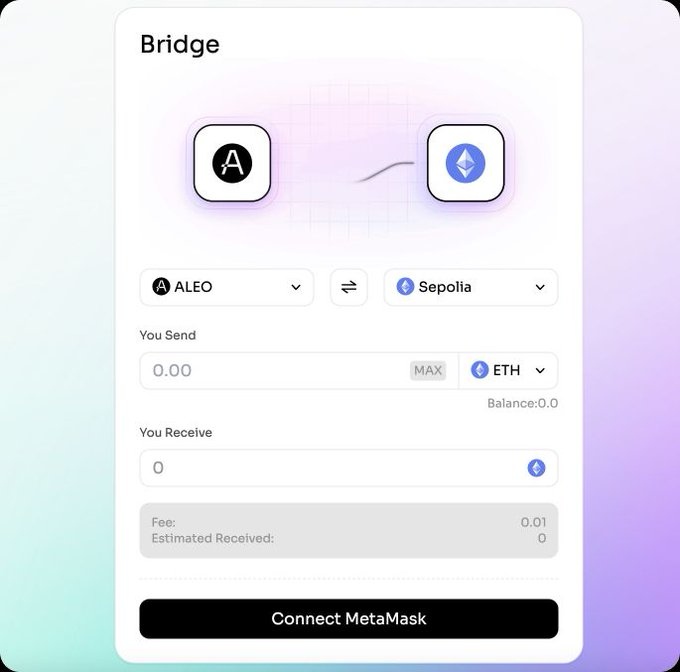
Aleo Bridge

6. Make swaps

Go to → https://aleoswap.org

◈ Connect the wallet.

◈ Make $ETH to $USDT swap and back.

Make swaps

7. Add Liquidity

Go to → https://app.aleoswap.org/pool/public

◈ Select a token.

◈ Enter the desired amount to liquidity.

Add Liquidity

8. Aleo Domains

Go to → https://testnet.aleonames.id/

◈ Connect your wallet.

◈ Register the domain.

Aleo Domains

9. Launch a Token on Aleo

Go to → https://app.aleoswap.org/listClick

◈ Connect your wallet.

◈ Fill in the required fields.
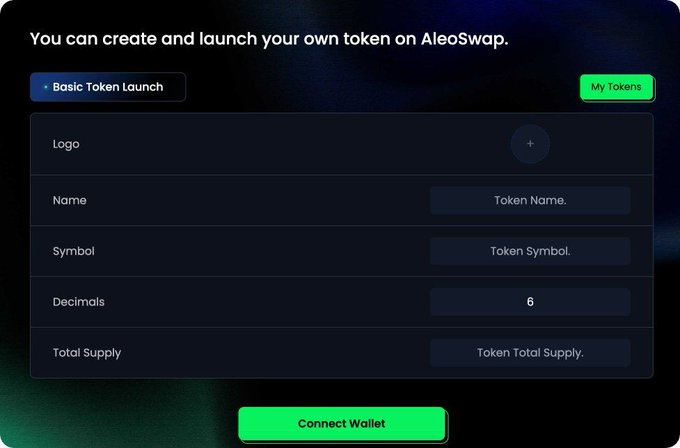
Launch a Token on Aleo

10. Trade

Go to → https://alpha.privx.exchange

◈ Connect your wallet.

◈ Check the tutorial.

◈ Grab tokens in the "Claim" section.

Trade

11. Zealy quests

Go to → https://zealy.io/c/aleoofficial/questboard

◈ Complete social tasks.

Zealy quests

By meticulously following these steps and engaging with the Aleo platform, participants can enhance their chances of claiming the Aleo airdrop. It is crucial to stay informed on the latest updates from Aleo's official channels to fully understand the nuances of how to claim airdrop rewards and maximize the potential of your ALEO token holdings.

Maximizing Your Rewards: Tips and Strategies

To optimize the benefits of the Aleo Airdrop 2024, participants can adopt several strategies to enhance their potential rewards:

  • Active Wallet Management: Leveraging a wallet with a solid track record of token holding, staking, and consistent transaction activities can significantly increase the likelihood of a successful airdrop claim. This demonstrates proactive engagement in the crypto space and can be a favorable factor during the airdrop selection process.
  • Community Engagement and Awareness: Staying actively involved in crypto is crucial. By keeping abreast of new projects and opportunities, you can identify various airdrop events, including the Aleo airdrop, and understand the specific actions required to participate, such as staking or holding certain tokens like Tia and Injective.
  • Adherence to Regulations: Ensuring compliance with local laws and regulations is paramount when participating in token distributions. This not only guarantees the legality of your actions but also safeguards against potential legal complications.
  • Diversification Strategy: Creating multiple wallets for diversified staking can spread risk and potentially increase the chances of receiving airdrops. This approach can also apply to the ALEO token distribution, enhancing your overall airdrop portfolio.
  • Claiming Process: It's essential to follow the project's instructions meticulously to claim your tokens. This may involve smart contract interactions or other specific procedures the platform provides.
  • Scam Vigilance: Always verify information through Aleo's official channels to avoid falling for scams. This practice ensures you engage with legitimate airdrop opportunities and safeguard your digital assets.

By implementing these tips and strategies, you can maximize your Aleo airdrop rewards and make the most of the token distribution event. Remember to stay updated with Aleo's official announcements for any changes or additional steps in the airdrop process.

Potential Value and Benefits of ALEO Tokens

Within the Aleo ecosystem, ALEO tokens are not just a cryptocurrency; they are the cornerstone of a privacy-centric web experience, providing users with control over their data while engaging with web services. The token's design is rooted in principles that ensure its longevity and utility:

  • Value and Governance: ALEO tokens are integral to the Aleo platform, enabling users to access personalized web services while maintaining privacy over their personal data. This dual function as a value and governance token positions ALEO as a central player in the platform's operations.
  • Tokenomics: The economics behind ALEO tokens are meticulously crafted, focusing on scarcity, incentives, and decentralization. These factors are pivotal in preserving the token's value within the blockchain ecosystem, making it a potentially lucrative asset for investors and users.
  • Staking and Incentives: ALEO tokens feature a staking mechanism where traders can earn commissions on transactions. This incentivizes token holders to save and stake their tokens, playing an active role in the platform's transactional processes.

The potential of ALEO tokens extends beyond mere transactions, offering a suite of benefits that underscore the project's strong market confidence:

  • Privacy and Scalability: Aleo's commitment to robust privacy protection and on-chain scalability offers a competitive edge, especially for large-scale real-time online applications. This positions ALEO tokens as an attractive asset for those looking to invest in a platform with advanced technological capabilities.
  • Economic Model: The PoW physical machine + PoS on-chain staking model employed by Aleo mitigates mining risks and ensures cost predictability for users and investors, enhancing the appeal of ALEO tokens.
  • Investment and Financing: Beyond transactions, ALEO tokens can be leveraged for financing projects like dApp development, providing businesses with innovative financial tools and opening new avenues for investment.
  • Market Confidence: With a substantial funding pool of $298 million from internationally renowned institutions, ALEO tokens are backed by a level of confidence that suggests a promising future for the token's value.


By understanding the Aleo airdrop and the multifaceted role of ALEO tokens, participants can strategically position themselves to capitalize on the token distribution event and the subsequent opportunities within the Aleo ecosystem.

Also Read - GRASS Airdrop 2024

Aleo Airdrop - Impact on Participants and the Platform

The Aleo airdrop presents a transformative opportunity for participants and the platform alike:

  • Early Supporter Benefits: Individuals who have been involved with Aleo from its early stages stand to gain significant from the airdrop, with the possibility of receiving a profit of around $9,000 without any participation cost. This rewards early backers and incentivizes continued support and engagement with the platform as it evolves.
  • Token Allocation: A substantial allocation of 150M ALEO tokens earmarked for the airdrop targets early supporters, reinforcing their commitment and potentially leading to a more robust and active community post-airdrop.
  • Engagement and Growth: By requiring users to complete a series of tasks, such as downloading extensions and engaging with various platforms, the airdrop fosters deeper interaction within the Aleo ecosystem. This engagement is a crucial step in ensuring the long-term success and adoption of the platform.
  • Market Outlook: The crypto market's projected growth in 2024 could mean that successful airdrop participants will see a significant appreciation in the value of their ALEO tokens. The strong market confidence supports this growth, reflected in Aleo's substantial funding of $298M from major investors, including a16z and Coinbase.
  • Legal Compliance: Adherence to local laws and regulations is paramount as participants navigate the airdrop process. This ensures that the distribution of ALEO tokens is conducted in a legally compliant manner, which is essential for the legitimacy and stability of the platform.
  • Community Engagement: Maximizing airdrop benefits requires active participation in the crypto community and staying informed about new projects and opportunities. This proactive involvement can lead to a greater understanding of the airdrop process and its potential benefits.

By strategically engaging with the Aleo ecosystem and understanding the potential impact of the airdrop, participants can position themselves to benefit from this pivotal event in the platform's development.

Conclusion

As the Aleo platform prepares to launch its mainnet, the Aleo airdrop's significance to prospective participants and the wider blockchain community cannot be overstated. 

This guide has detailed the eligibility criteria, participation processes, and action strategies essential to optimize potential rewards from this much-anticipated event. 

The unique qualities of the ALEO tokens, particularly in privacy and scalability, alongside the robust economic model of the platform, set the stage for a transformative impact on decentralized web services. 

The Aleo airdrop is poised to enhance user engagement within the ecosystem and reward early adopters, bolstering the platform's growth and reinforcing its market position. 

With the potential value appreciation and the supportive backing of prominent investors, participants who align with the airdrop's objectives and guidelines stand to gain from the unfolding narrative of Aleo's privacy-centered innovations. 

Such strategic participation holds the promise of personal reward and contributes to shaping the evolving landscape of secure, decentralized digital transactions.

Disclaimer

The information provided on this website does not constitute investment advice, financial advice, trading advice, or any other advice, and you should not treat any of the website's content as such.

Token Metrics does not recommend buying, selling, or holding any cryptocurrency. Conduct your due diligence and consult your financial advisor before making investment decisions.

Build Smarter Crypto Apps &
AI Agents in Minutes, Not Months
Real-time prices, trading signals, and on-chain insights all from one powerful API.
Grab a Free API Key
Token Metrics Team
Token Metrics Team

Recent Posts

Research

APIs Explained: What Is an API and How It Works

Token Metrics Team
5
MIN

APIs (application programming interfaces) are the invisible connectors that let software systems talk to each other. Whether you open a weather app, sign in with a social account, or call a machine-learning model, an API is usually orchestrating the data exchange behind the scenes. This guide explains what an API is, how APIs work, common types and use cases, and practical frameworks to evaluate or integrate APIs into projects.

What is an API? Definition & core concepts

An API is a set of rules, protocols, and tools that defines how two software components communicate. At its simplest, an API specifies the inputs a system accepts, the outputs it returns, and the behavior in between. APIs abstract internal implementation details so developers can reuse capabilities without understanding the underlying codebase.

Key concepts:

  • Endpoints: Network-accessible URLs or methods where requests are sent.
  • Requests & responses: Structured messages (often JSON or XML) sent by a client and returned by a server.
  • Authentication: Mechanisms (API keys, OAuth, tokens) that control who can use the API.
  • Rate limits: Constraints on how often the API can be called.

How APIs work: a technical overview

Most modern APIs use HTTP as the transport protocol and follow architectural styles such as REST or GraphQL. A typical interaction looks like this:

  1. Client constructs a request (method, endpoint, headers, payload).
  2. Request is routed over the network to the API server.
  3. Server authenticates and authorizes the request.
  4. Server processes the request, possibly calling internal services or databases.
  5. Server returns a structured response with status codes and data.

APIs also expose documentation and machine-readable specifications (OpenAPI/Swagger, RAML) that describe available endpoints, parameters, data models, and expected responses. Tools can generate client libraries and interactive docs from these specs, accelerating integration.

Types of APIs and common use cases

APIs serve different purposes depending on design and context:

  • Web APIs (REST/HTTP): Most common for web and mobile backends. Use stateless requests, JSON payloads, and standard HTTP verbs.
  • GraphQL APIs: Allow clients to request precisely the fields they need, reducing over-fetching.
  • RPC and gRPC: High-performance, typed remote procedure calls used in microservices and internal infrastructure.
  • SDKs and libraries: Language-specific wrappers around raw APIs to simplify usage.
  • Domain-specific APIs: Payment APIs, mapping APIs, social login APIs, and crypto APIs that expose blockchain data, wallet operations, and on-chain analytics.

Use cases span the product lifecycle: integrating third-party services, composing microservices, extending platforms, or enabling AI models to fetch and write data programmatically.

Evaluating and integrating APIs: a practical framework

When selecting or integrating an API, apply a simple checklist to reduce technical risk and operational friction:

  • Specification quality: Is there an OpenAPI spec, clear examples, and machine-readable docs?
  • Authentication: What auth flows are supported and do they meet your security model?
  • Rate limits & quotas: Do limits match your usage profile? Are paid tiers available for scale?
  • Error handling: Are error codes consistent and documented to support robust client logic?
  • Latency & reliability: Benchmark typical response times and uptime SLAs for production readiness.
  • Data semantics & provenance: For analytics or financial data, understand update frequency, normalization, and source trustworthiness.

Operationally, start with a sandbox key and integrate incrementally: mock responses in early stages, implement retry/backoff and circuit breakers, and monitor usage and costs in production.

Build Smarter Crypto Apps & AI Agents with Token Metrics

Token Metrics provides real-time prices, trading signals, and on-chain insights all from one powerful API. Grab a Free API Key

FAQ: Common questions about APIs

What is the difference between REST and GraphQL?

REST organizes resources as endpoints and often returns fixed data shapes per endpoint. GraphQL exposes a single endpoint where clients request the exact fields they need. REST is simple and cache-friendly; GraphQL reduces over-fetching but can require more server-side control and caching strategies.

How do API keys and OAuth differ?

API keys are simple tokens issued to identify a client and are easy to use for server-to-server interactions. OAuth provides delegated access where a user can authorize a third-party app to act on their behalf without sharing credentials; it's essential for user-consent flows.

Are there standards for API documentation?

Yes. OpenAPI (formerly Swagger) is widely used for REST APIs and supports automated client generation and interactive documentation. GraphQL has its own schema specification and introspection capabilities. Adopting standards improves developer experience significantly.

What security considerations matter most for APIs?

Common practices include strong authentication, TLS encryption, input validation, explicit authorization, rate limiting, and logging. For sensitive data, consider data minimization, field-level encryption, and strict access controls.

How can AI models use APIs?

AI models can call APIs to fetch external context, enrich inputs, or persist outputs. Examples include retrieving live market data, fetching user profiles, or invoking specialized ML inference services. Manage latency, cost, and error handling when chaining many external calls in a pipeline.

Disclaimer

This article is for educational and informational purposes only. It does not constitute professional, legal, or financial advice. Evaluate any API, provider, or integration according to your own technical, legal, and security requirements before use.

Research

Mastering Google APIs: Practical Developer Guide

Token Metrics Team
5
MIN

APIs from Google power a huge portion of modern applications, from location-aware mobile apps to automated data workflows in the cloud. Understanding how Google API endpoints, authentication, quotas, and client libraries fit together helps developers build reliable, maintainable integrations that scale. This guide breaks down the most practical aspects of working with Google APIs and highlights research and AI tools that can streamline development.

Overview: What the term “Google API” covers

"Google API" is an umbrella term for a wide range of services offered by Google, including but not limited to Google Cloud APIs (Compute, Storage, BigQuery), Maps and Places, OAuth 2.0 identity, Drive, Sheets, and machine learning APIs like Vision and Translation. Each service exposes RESTful endpoints and often provides SDKs in multiple languages (Node.js, Python, Java, Go, and more).

Key dimensions to evaluate when selecting a Google API:

  • Functionality: Does the API provide the exact data or operation you need (e.g., geocoding vs. routing)?
  • Authentication model: API keys, OAuth 2.0, or service accounts (server-to-server).
  • Rate limits and quotas: per-minute or per-day limits, and how to monitor them.
  • Pricing and billing: free tier limits, billing account requirements, and potential cost drivers.

Core Google API services and common use cases

Popular categories and what developers commonly use them for:

  • Maps & Places — interactive maps, geocoding, places search, routing for location-based apps.
  • Cloud Platform APIs — storage (Cloud Storage), analytics (BigQuery), compute (Compute Engine, Cloud Run) for backend workloads.
  • Identity & Access — OAuth 2.0 and OpenID Connect for user sign-in; service accounts for server-to-server authentication.
  • Workspace APIs — Drive, Sheets, and Gmail automation for productivity integrations.
  • AI & Vision — Vision API, Natural Language, and Translation for content analysis and enrichment.

Choosing the right API often starts with mapping product requirements to the available endpoints. For example, if you need user authentication and access to Google Drive files, combine OAuth 2.0 with the Drive API rather than inventing a custom flow.

Best practices for integration, authentication, and error handling

Follow these practical steps to reduce friction and improve reliability:

  1. Use official client libraries where available — they implement retries, backoff, and serialization conventions that keep your code simpler.
  2. Prefer OAuth or service accounts over long-lived API keys for sensitive operations. Use short-lived tokens and rotate credentials regularly.
  3. Implement exponential backoff for rate-limited operations and surface clear error messages when requests fail.
  4. Monitor quotas and billing with Google Cloud Console alerts and programmatic checks so you can detect spikes before they affect users.
  5. Design for idempotency if your operation may be retried — include request tokens or use idempotent endpoints.

These patterns reduce operational surprises and make integrations more maintainable over time.

Security, quotas, and governance considerations

Security and quota constraints often shape architecture decisions:

  • Least privilege — grant the minimum IAM roles needed. For service accounts, avoid broad roles like owner.
  • Auditing — enable Cloud Audit Logs to trace who accessed which APIs and when.
  • Quota planning — understand per-minute and per-day limits. For high-throughput needs, request quota increases with a clear justification.
  • Data residency and compliance — check where data is stored and whether it meets your regulatory requirements.

Secure-by-design implementations and proactive quota management reduce operational risk when moving from prototype to production.

Building apps with Google APIs and AI workflows

Combining Google APIs with AI tooling unlocks new workflows: use Vision API to extract entities from images, then store structured results in BigQuery for analytics; call Translation or Natural Language for content normalization before indexing. When experimenting with AI-driven pipelines, maintain traceability between raw inputs and transformed outputs to support auditing and debugging.

AI-driven research platforms like Token Metrics can help developers prototype analytics and compare signal sources by aggregating on-chain and market datasets; such tools may inform how you prioritize data ingestion and model inputs when building composite systems that include external data alongside Google APIs.

Build Smarter Crypto Apps & AI Agents with Token Metrics

Token Metrics provides real-time prices, trading signals, and on-chain insights all from one powerful API. Grab a Free API Key

FAQ: What is a Google API and how does it differ from other APIs?

Google APIs are a collection of RESTful services and SDKs that grant programmatic access to Google products and cloud services. They differ in scope and SLAs from third-party APIs by integrating with Google Cloud's IAM, billing, and monitoring ecosystems.

FAQ: Which authentication method should I use?

Use OAuth 2.0 for user-level access where users must grant permission. For server-to-server calls, use service accounts with short-lived tokens. API keys are acceptable for public, limited-scope requests like simple Maps access but carry higher security risk if exposed.

FAQ: How do I monitor and request higher quotas?

Monitor quotas in Google Cloud Console under the "IAM & Admin" and "APIs & Services" sections. If you need more capacity, submit a quota increase request with usage patterns and justification; Google evaluates requests based on scope and safety.

FAQ: How can I estimate costs for Google API usage?

Cost depends on API type and usage volume. Use the Google Cloud Pricing Calculator for services like BigQuery or Cloud Storage, and review per-request pricing for Maps and Vision APIs. Track costs via billing reports and set alerts to avoid surprises.

FAQ: Are client libraries necessary?

Client libraries are not strictly necessary, but they simplify authentication flows, retries, and response parsing. If you need maximum control or a minimal runtime, you can call REST endpoints directly with standard HTTP libraries.

Disclaimer

This article is educational and technical in nature. It does not provide financial, legal, or investment advice. Evaluate APIs and third-party services against your own technical, security, and compliance requirements before use.

Research

API Management Essentials for Teams

Token Metrics Team
5
MIN

APIs are the connective tissue of modern software. As organizations expose more endpoints to partners, internal teams and third-party developers, effective api management becomes a competitive and operational imperative. This article breaks down practical frameworks, governance guardrails, and monitoring strategies that help teams scale APIs securely and reliably without sacrificing developer velocity.

Overview: What API management solves

API management is the set of practices, tools and processes that enable teams to design, publish, secure, monitor and monetize application programming interfaces. At its core it addresses three recurring challenges: consistent access control, predictable performance, and discoverability for developers. Well-managed APIs reduce friction for consumers, decrease operational incidents, and support governance priorities such as compliance and data protection.

Think of api management as a lifecycle discipline: from design and documentation to runtime enforcement and iterative refinement. Organizations that treat APIs as products—measuring adoption, latency, error rates, and business outcomes—are better positioned to scale integrations without accumulating technical debt.

Governance & Security: Policies that scale

Security and governance are non-negotiable for production APIs. Implement a layered approach:

  • Access control: Use token-based authentication (OAuth 2.0, JWT) and centralize identity validation at the gateway to avoid duplicating logic across services.
  • Rate limiting & quotas: Protect backend services and control cost by enforcing per-key or per-tenant limits. Different tiers can align with SLAs for partners.
  • Input validation & schema contracts: Define explicit contracts using OpenAPI/JSON Schema and validate at the edge to reduce injection and integration errors.
  • Audit & compliance: Log authentication events, data access, and configuration changes. Retain logs in a way that maps to regulatory obligations.

Combining automated policy enforcement at an API gateway with a governance framework (ownerable APIs, review gates, and versioning rules) ensures changes are controlled without slowing legitimate feature delivery.

Developer experience & the API product model

Developer experience (DX) determines adoption. Treat APIs as products by providing clear documentation, SDKs and a self-service developer portal. Key practices include:

  • Interactive docs: Publish OpenAPI-driven docs that allow developers to try endpoints in a sandbox.
  • Onboarding flows: Provide quick start guides, sample payloads and error explanations to reduce time-to-first-call.
  • Versioning strategy: Use semantic versioning and deprecation notices to minimize breaking changes.
  • Feedback loops: Instrument usage and surface developer issues to product owners so APIs evolve with consumer needs.

Metrics to track DX include signups, first successful call time, and repeat usage per key. These are leading indicators of whether an API is fulfilling its product intent.

Monitoring, observability & reliability

Operational visibility is essential for api management. Implement monitoring at multiple layers—gateway, service, and database—to triangulate causes when issues occur. Core telemetry includes:

  • Traffic metrics: requests per second, latency percentiles (p50/p95/p99), and throughput.
  • Error rates: HTTP 4xx/5xx breakdowns, client-specific failure patterns, and circuit-breaker triggers.
  • Business KPIs: API calls tied to revenue, conversions, or key workflows to prioritize fixes that have impact.

Observability practices—distributed tracing, structured logs, and context propagation—help teams move from alert fatigue to actionable incident response. Build runbooks that map common alerts to remediation steps and owners.

Implementation roadmap & tooling choices

Adopt an incremental roadmap rather than a big-bang rollout. A pragmatic sequence looks like:

  1. Inventory existing endpoints and annotate owners.
  2. Standardize contracts with OpenAPI and publish baseline docs.
  3. Introduce an API gateway for auth, rate limiting, and basic WAF rules.
  4. Instrument telemetry, set SLAs, and define retention for logs and traces.
  5. Launch a developer portal and iterate based on usage signals.

Choose tools that match team maturity: managed API platforms accelerate setup for companies lacking infra resources, while open-source gateways provide control for those with specialized needs. Evaluate vendors on extensibility, observability integrations, and policy-as-code support to avoid lock-in.

Build Smarter Crypto Apps & AI Agents with Token Metrics

Token Metrics provides real-time prices, trading signals, and on-chain insights all from one powerful API. Grab a Free API Key

What is API management and why does it matter?

API management encompasses the processes and tools required to publish, secure, monitor, and monetize APIs. It matters because it enables predictable, governed access to services while maintaining developer productivity and operational reliability.

Which components make up an API management stack?

Common components include an API gateway (auth, routing, rate limiting), developer portal (docs, keys), analytics and monitoring systems (metrics, traces), and lifecycle tooling (design, versioning, CI/CD integrations).

How should teams approach API security?

Implement defense-in-depth: centralized authentication, token validation, input schema checks, rate limits, and continuous auditing. Shift security left by validating contracts and scanning specs before deployment.

What metrics are most useful for API health?

Track latency percentiles, error rates, traffic patterns, and consumer-specific usage. Pair operational metrics with business KPIs (e.g., API-driven signups) to prioritize work that affects outcomes.

How do teams manage breaking changes?

Use explicit versioning, deprecation windows, and dual-running strategies where consumers migrate incrementally. Communicate changes via the developer portal and automated notifications tied to API keys.

When should an organization introduce an API gateway?

Introduce a gateway early when multiple consumers, partners, or internal teams rely on APIs. A gateway centralizes cross-cutting concerns and reduces duplicated security and routing logic.

Disclaimer

This article is for educational and informational purposes only. It provides neutral, analytical information about api management practices and tools and does not constitute professional or investment advice.

Choose from Platinum, Gold, and Silver packages
Reach with 25–30% open rates and 0.5–1% CTR
Craft your own custom ad—from banners to tailored copy
Perfect for Crypto Exchanges, SaaS Tools, DeFi, and AI Products