Back to blog
Crypto Basics

Aleo Airdrop 2024 - Eligibility, Process and Rewards

Get all the details of Aleo Airdrop 2024 in this guide. Check eligibility criteria, understand how to participate, and earn more rewards.
Token Metrics Team
11 Minutes
Want Smarter Crypto Picks—Free?
See unbiased Token Metrics Ratings for BTC, ETH, and top alts.
Thank you! Your submission has been received!
Oops! Something went wrong while submitting the form.
 No credit card | 1-click unsubscribe

In the emergent world of blockchain technology, the Aleo platform stands out with its privacy-centric approach and innovative Layer 1 design. Anticipation is high for the Aleo airdrop, slated for early 2024, which promises to be a pivotal event for the crypto community.

With a substantial backing of $300M, the impending airdrop provides an opportunity to gain ALEO tokens, a potential game-changer in the realm of secure, decentralized transactions.

Prospective participants eager to engage with the Aleo airdrop should prepare for a process involving system requirements and strategic planning. 

This article offers a meticulous guide on how to easily claim your airdrop, detailing eligibility, the step-by-step participation process, and insights on maximizing the potential value of ALEO tokens. 

Herein, one will discover the significant aspects of Aleo's unique offerings, including the Leo language, the utility of Aleo Credits, and how these innovations could reshape the landscape of digital assets and privacy.

What is Aleo?

At the heart of the anticipated Aleo airdrop lies the innovative Aleo platform, a privacy-focused Layer 1 blockchain revolutionizing how developers create applications. Here's what sets Aleo apart:

Zero-Knowledge Cryptography: Aleo harnesses the power of zero-knowledge cryptography, specifically through zk-SNARKs, to ensure that transactions remain private. 

This advanced cryptographic technique allows the verification of transactions without revealing any underlying data, a stark contrast to traditional blockchain networks where information is typically public.

Decentralized and Private Web Experience: The platform is designed to foster a web environment where user experiences are personalized and kept private. 

By leveraging decentralized systems and the robustness of zero-knowledge cryptography, Aleo aims to protect user data on the internet. This feature is becoming increasingly important in today's digital age.

Simplified Implementation: Aleo's architecture is crafted to simplify the implementation of zero-knowledge proofs, making it accessible for developers to incorporate privacy features into their applications without needing deep technical knowledge of the underlying mechanisms.

AleoBFT Consensus Mechanism: The network employs AleoBFT. This hybrid consensus mechanism merges the security benefits of proof-of-work with the scalability advantages of proof-of-stake, offering a balanced approach to network security and performance.

snarkVM and Leo Language: At the core of Aleo's functionality is the snarkVM, which facilitates unlimited runtime for zero-knowledge execution, and Leo, a programming language developed specifically for writing private applications on the blockchain. 

Leo programs compile into polynomials that operate within a proof system, ensuring computations are verifiable without revealing any knowledge about the data or the computation itself.

As the platform progresses through its third testnet phase, anticipation builds for the mainnet release, marking a significant milestone in Aleo's journey and the broader evolution of blockchain privacy. 

The upcoming Aleo airdrop is not just a token distribution event but a doorway to participating in a cutting-edge ecosystem where the Aleo token will play a central role.

Eligibility Criteria for the Aleo Airdrop

To ensure a successful claim, participants must align with specific eligibility criteria before the Mainnet launch. 

While the precise requirements remain under wraps, engaging actively within the Aleo ecosystem is a key determinant. Here's how potential beneficiaries can enhance their eligibility:

  • Active Wallet Usage: Prospective participants should utilize a wallet with a robust history of token holding, staking, voting, and regular transaction activities. Such wallets stand a better chance of being recognized for the Aleo airdrop than empty or newly created wallets, which are ineligible.
  • Engagement with Aleo Ecosystem: Taking actions like downloading and setting up a wallet, adding it to the Greenlist, claiming testnet tokens, or bridging ETH to Aleo could be part of the eligibility process. Moreover, creating an NFT, deploying a smart contract, or purchasing a domain name on Aleo's platform may also be necessary steps.
  • Diverse Interactions: Engaging with multiple Aleo project components such as AleoSwap, and Arcane Finance or acquiring a domain name might increase eligibility. These interactions signify active participation within the Aleo ecosystem, potentially leading to greater rewards.

Aleo Airdrop Details

$ALEO Is One Of The Largest Projects Of The Year

$298M Raised - Airdrop Confirmed For Q1 2024

▪ Costs: $0  

▪ Time: 20 min.

▪  Potential gain: $20,000+

Participants are advised to stay informed on the latest developments through Aleo's official channels to fully understand how to claim airdrop benefits.

Step-by-Step Guide to Participating in the Airdrop

To actively participate in the anticipated Aleo airdrop and potentially benefit from the token distribution, follow this step-by-step guide that navigates through the essential actions within the Aleo ecosystem:

1. Setting Up Your Leo Wallet

◈ Visit leo.app and download the Leo Wallet Extension.

◈ Acquire Testnet ALEO Tokens by accessing your Leo wallet's "Faucet" feature.

Setting Up Your Leo Wallet

2. Greenlist your Leo Wallet

Go to →  https://www.alchemy.com/faucets/ethereum-sepolia

◈ Copy your wallet address.

◈ Paste the wallet address in the white search field.

◈ Pass the captcha.

◈ Click on Paint it green.

Greenlist your Leo Wallet

3. Aleo Test Tokens

Go to → faucet.aleo.org

◈ Follow the instructions on the website.

◈ Enter your wallet address.

Aleo Test Tokens

Note: It can take a few hours for tokens to arrive.

4. Sepolia faucet

Go to → https://sepoliafaucet.com

◈ Enter Metamask Wallet address.

◈ Pass the captcha.

◈ Click o: Send Me ETH.

Sepolia faucet

5. Aleo Bridge

Go to →  https://testnet-bridge.izar.xyz/bridge

◈ Connect your Leo Wallet & Metamask Wallet

◈ When tokens arrive on your Metamask Wallet, bridge $ETH from Sepolia to Aleo.
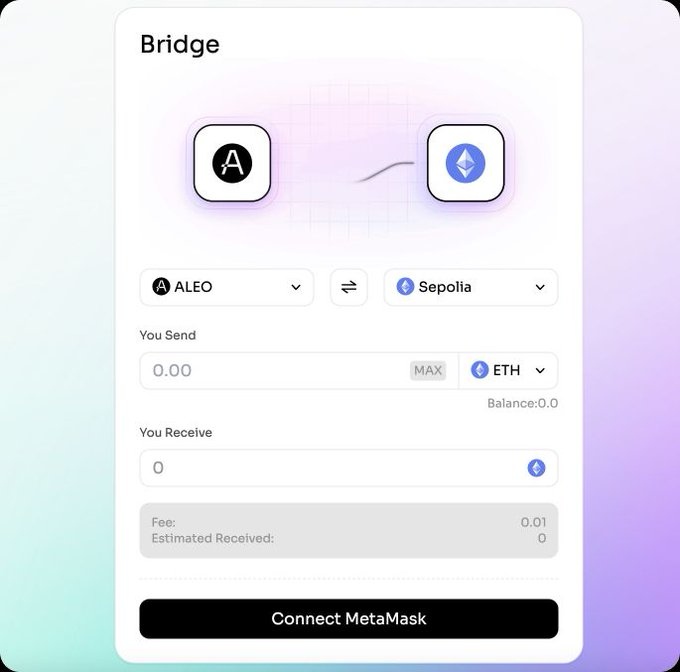
Aleo Bridge

6. Make swaps

Go to → https://aleoswap.org

◈ Connect the wallet.

◈ Make $ETH to $USDT swap and back.

Make swaps

7. Add Liquidity

Go to → https://app.aleoswap.org/pool/public

◈ Select a token.

◈ Enter the desired amount to liquidity.

Add Liquidity

8. Aleo Domains

Go to → https://testnet.aleonames.id/

◈ Connect your wallet.

◈ Register the domain.

Aleo Domains

9. Launch a Token on Aleo

Go to → https://app.aleoswap.org/listClick

◈ Connect your wallet.

◈ Fill in the required fields.
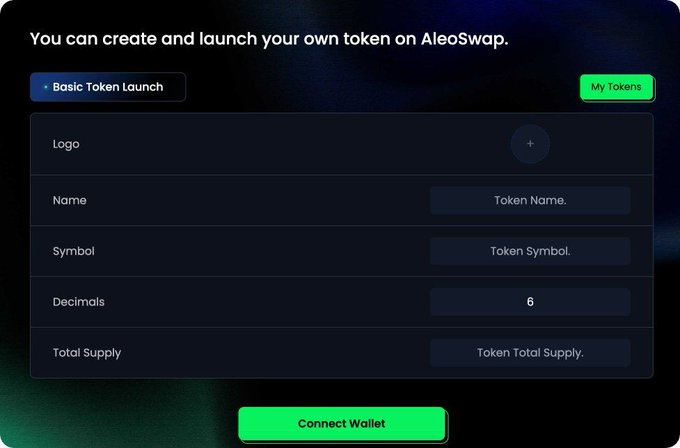
Launch a Token on Aleo

10. Trade

Go to → https://alpha.privx.exchange

◈ Connect your wallet.

◈ Check the tutorial.

◈ Grab tokens in the "Claim" section.

Trade

11. Zealy quests

Go to → https://zealy.io/c/aleoofficial/questboard

◈ Complete social tasks.

Zealy quests

By meticulously following these steps and engaging with the Aleo platform, participants can enhance their chances of claiming the Aleo airdrop. It is crucial to stay informed on the latest updates from Aleo's official channels to fully understand the nuances of how to claim airdrop rewards and maximize the potential of your ALEO token holdings.

Maximizing Your Rewards: Tips and Strategies

To optimize the benefits of the Aleo Airdrop 2024, participants can adopt several strategies to enhance their potential rewards:

  • Active Wallet Management: Leveraging a wallet with a solid track record of token holding, staking, and consistent transaction activities can significantly increase the likelihood of a successful airdrop claim. This demonstrates proactive engagement in the crypto space and can be a favorable factor during the airdrop selection process.
  • Community Engagement and Awareness: Staying actively involved in crypto is crucial. By keeping abreast of new projects and opportunities, you can identify various airdrop events, including the Aleo airdrop, and understand the specific actions required to participate, such as staking or holding certain tokens like Tia and Injective.
  • Adherence to Regulations: Ensuring compliance with local laws and regulations is paramount when participating in token distributions. This not only guarantees the legality of your actions but also safeguards against potential legal complications.
  • Diversification Strategy: Creating multiple wallets for diversified staking can spread risk and potentially increase the chances of receiving airdrops. This approach can also apply to the ALEO token distribution, enhancing your overall airdrop portfolio.
  • Claiming Process: It's essential to follow the project's instructions meticulously to claim your tokens. This may involve smart contract interactions or other specific procedures the platform provides.
  • Scam Vigilance: Always verify information through Aleo's official channels to avoid falling for scams. This practice ensures you engage with legitimate airdrop opportunities and safeguard your digital assets.

By implementing these tips and strategies, you can maximize your Aleo airdrop rewards and make the most of the token distribution event. Remember to stay updated with Aleo's official announcements for any changes or additional steps in the airdrop process.

Potential Value and Benefits of ALEO Tokens

Within the Aleo ecosystem, ALEO tokens are not just a cryptocurrency; they are the cornerstone of a privacy-centric web experience, providing users with control over their data while engaging with web services. The token's design is rooted in principles that ensure its longevity and utility:

  • Value and Governance: ALEO tokens are integral to the Aleo platform, enabling users to access personalized web services while maintaining privacy over their personal data. This dual function as a value and governance token positions ALEO as a central player in the platform's operations.
  • Tokenomics: The economics behind ALEO tokens are meticulously crafted, focusing on scarcity, incentives, and decentralization. These factors are pivotal in preserving the token's value within the blockchain ecosystem, making it a potentially lucrative asset for investors and users.
  • Staking and Incentives: ALEO tokens feature a staking mechanism where traders can earn commissions on transactions. This incentivizes token holders to save and stake their tokens, playing an active role in the platform's transactional processes.

The potential of ALEO tokens extends beyond mere transactions, offering a suite of benefits that underscore the project's strong market confidence:

  • Privacy and Scalability: Aleo's commitment to robust privacy protection and on-chain scalability offers a competitive edge, especially for large-scale real-time online applications. This positions ALEO tokens as an attractive asset for those looking to invest in a platform with advanced technological capabilities.
  • Economic Model: The PoW physical machine + PoS on-chain staking model employed by Aleo mitigates mining risks and ensures cost predictability for users and investors, enhancing the appeal of ALEO tokens.
  • Investment and Financing: Beyond transactions, ALEO tokens can be leveraged for financing projects like dApp development, providing businesses with innovative financial tools and opening new avenues for investment.
  • Market Confidence: With a substantial funding pool of $298 million from internationally renowned institutions, ALEO tokens are backed by a level of confidence that suggests a promising future for the token's value.


By understanding the Aleo airdrop and the multifaceted role of ALEO tokens, participants can strategically position themselves to capitalize on the token distribution event and the subsequent opportunities within the Aleo ecosystem.

Also Read - GRASS Airdrop 2024

Aleo Airdrop - Impact on Participants and the Platform

The Aleo airdrop presents a transformative opportunity for participants and the platform alike:

  • Early Supporter Benefits: Individuals who have been involved with Aleo from its early stages stand to gain significant from the airdrop, with the possibility of receiving a profit of around $9,000 without any participation cost. This rewards early backers and incentivizes continued support and engagement with the platform as it evolves.
  • Token Allocation: A substantial allocation of 150M ALEO tokens earmarked for the airdrop targets early supporters, reinforcing their commitment and potentially leading to a more robust and active community post-airdrop.
  • Engagement and Growth: By requiring users to complete a series of tasks, such as downloading extensions and engaging with various platforms, the airdrop fosters deeper interaction within the Aleo ecosystem. This engagement is a crucial step in ensuring the long-term success and adoption of the platform.
  • Market Outlook: The crypto market's projected growth in 2024 could mean that successful airdrop participants will see a significant appreciation in the value of their ALEO tokens. The strong market confidence supports this growth, reflected in Aleo's substantial funding of $298M from major investors, including a16z and Coinbase.
  • Legal Compliance: Adherence to local laws and regulations is paramount as participants navigate the airdrop process. This ensures that the distribution of ALEO tokens is conducted in a legally compliant manner, which is essential for the legitimacy and stability of the platform.
  • Community Engagement: Maximizing airdrop benefits requires active participation in the crypto community and staying informed about new projects and opportunities. This proactive involvement can lead to a greater understanding of the airdrop process and its potential benefits.

By strategically engaging with the Aleo ecosystem and understanding the potential impact of the airdrop, participants can position themselves to benefit from this pivotal event in the platform's development.

Conclusion

As the Aleo platform prepares to launch its mainnet, the Aleo airdrop's significance to prospective participants and the wider blockchain community cannot be overstated. 

This guide has detailed the eligibility criteria, participation processes, and action strategies essential to optimize potential rewards from this much-anticipated event. 

The unique qualities of the ALEO tokens, particularly in privacy and scalability, alongside the robust economic model of the platform, set the stage for a transformative impact on decentralized web services. 

The Aleo airdrop is poised to enhance user engagement within the ecosystem and reward early adopters, bolstering the platform's growth and reinforcing its market position. 

With the potential value appreciation and the supportive backing of prominent investors, participants who align with the airdrop's objectives and guidelines stand to gain from the unfolding narrative of Aleo's privacy-centered innovations. 

Such strategic participation holds the promise of personal reward and contributes to shaping the evolving landscape of secure, decentralized digital transactions.

Disclaimer

The information provided on this website does not constitute investment advice, financial advice, trading advice, or any other advice, and you should not treat any of the website's content as such.

Token Metrics does not recommend buying, selling, or holding any cryptocurrency. Conduct your due diligence and consult your financial advisor before making investment decisions.

Build Smarter Crypto Apps &
AI Agents in Minutes, Not Months
Real-time prices, trading signals, and on-chain insights all from one powerful API.
Grab a Free API Key
About Token Metrics
Token Metrics: AI-powered crypto research and ratings platform. We help investors make smarter decisions with unbiased Token Metrics Ratings, on-chain analytics, and editor-curated “Top 10” guides. Our platform distills thousands of data points into clear scores, trends, and alerts you can act on.
30 Employees
analysts, data scientists, and crypto engineers
Daily Briefings
concise market insights and “Top Picks”
Transparent & Compliant
Sponsored ≠ Ratings; research remains independent
Want Smarter Crypto Picks—Free?
See unbiased Token Metrics Ratings for BTC, ETH, and top alts.
Thank you! Your submission has been received!
Oops! Something went wrong while submitting the form.
 No credit card | 1-click unsubscribe
Token Metrics Team
Token Metrics Team

Recent Posts

Research

Why Is Web3 UX Still Poor Compared to Web2? Understanding the Challenges in 2025

Token Metrics Team
12

Web3 promises to revolutionize the internet by decentralizing control, empowering users with data ownership, and eliminating middlemen. The technology offers improved security, higher user autonomy, and innovative ways to interact with digital assets. With the Web3 market value expected to reach $81.5 billion by 2030, the potential seems limitless. Yet anyone who’s interacted with blockchain products knows the uncomfortable truth: Web3 user experience often feels more like punishment than promise. From nerve-wracking first crypto transactions to confusing wallet popups and sudden unexplained fees, Web3 products still have a long way to go before achieving mainstream adoption. If you ask anyone in Web3 what the biggest hurdle for mass adoption is, UX is more than likely to be the answer.

This comprehensive guide explores why Web3 UX remains significantly inferior to Web2 experiences in 2025, examining the core challenges, their implications, and how platforms like Token Metrics are bridging the gap between blockchain complexity and user-friendly crypto investing.

The Fundamental UX Gap: Web2 vs Web3

To understand Web3's UX challenges, we must first recognize what users expect based on decades of Web2 evolution. Web2, the "read-write" web that started in 2004, enhanced internet engagement through user-generated content, social media platforms, and cloud-based services with intuitive interfaces that billions use daily without thought.

Web2 applications provide seamless experiences: one-click logins via Google or Facebook, instant account recovery through email, predictable transaction costs, and familiar interaction patterns across platforms. Users have become accustomed to frictionless digital experiences that just work.

Web3, by contrast, introduces entirely new paradigms requiring users to manage cryptographic wallets, understand blockchain concepts, navigate multiple networks, pay variable gas fees, and take full custody of their assets. This represents a fundamental departure from familiar patterns, creating immediate friction.

Core Challenges Plaguing Web3 UX

  1. Complex Onboarding and Wallet Setup
  2. The first interaction with most decentralized applications asks users to "Connect Wallet." If you don't have MetaMask or another compatible wallet, you're stuck before even beginning. This creates an enormous barrier to entry where Web2 simply asks for an email address.

    Setting up a Web3 wallet requires understanding seed phrases—12 to 24 random words that serve as the master key to all assets. Users must write these down, store them securely, and never lose them, as there's no "forgot password" option. One mistake means permanent loss of funds.

    Most DeFi platforms and crypto wallets nowadays still have cumbersome and confusing interfaces for wallet creation and management. The registration process, which in Web2 takes seconds through social login options, becomes a multi-step educational journey in Web3.

  3. Technical Jargon and Blockchain Complexity
  4. Most challenges in UX/UI design for blockchain stem from lack of understanding of the technology among new users, designers, and industry leaders. Crypto jargon and complex concepts of the decentralized web make it difficult to grasp product value and master new ways to manage funds.

    Getting typical users to understand complicated blockchain ideas represents one of the main design challenges. Concepts like wallets, gas fees, smart contracts, and private keys must be streamlined without compromising security or usefulness—a delicate balance few projects achieve successfully.

    The blockchain itself is a complex theory requiring significant learning to fully understand. Web3 tries converting this specialized domain knowledge into generalist applications where novices should complete tasks successfully. When blockchain products first started being developed, most were created by experts for experts, resulting in products with extreme pain points, accessibility problems, and complex user flows.

  5. Multi-Chain Fragmentation and Network Switching
  6. Another common headache in Web3 is managing assets and applications across multiple blockchains. Today, it's not uncommon for users to interact with Ethereum, Polygon, Solana, or several Layer 2 solutions—all in a single session.

    Unfortunately, most products require users to manually switch networks in wallets, manually add new networks, or rely on separate bridges to transfer assets. This creates fragmented and confusing experiences where users must understand which network each asset lives on and how to move between them.

    Making users distinguish between different networks creates unnecessary cognitive burden. In Web2, users never think about which server hosts their data—it just works. Web3 forces constant network awareness, breaking the illusion of seamless interaction.

  7. Unpredictable and Confusing Gas Fees
  8. Transaction costs in Web3 are variable, unpredictable, and often shockingly expensive. Users encounter sudden, unexplained fees that can range from cents to hundreds of dollars depending on network congestion. There's no way to know costs precisely before initiating transactions, creating anxiety and hesitation.

    Web3 experiences generally run on public chains, leading to scalability problems as multiple parties make throughput requests. The more transactions that occur, the higher gas fees become—an unsustainable model as more users adopt applications.

    Users shouldn't have to worry about paying high gas fees as transaction costs. Web2 transactions happen at predictable costs or are free to users, with businesses absorbing payment processing fees. Web3's variable cost structure creates friction at every transaction.

  9. Irreversible Transactions and Error Consequences
  10. In Web2, mistakes are forgivable. Sent money to the wrong person? Contact support. Made a typo? Edit or cancel. Web3 offers no such mercy. Blockchain's immutability means transactions are permanent—send crypto to the wrong address and it's gone forever.

    This creates enormous anxiety around every action. Users must triple-check addresses (long hexadecimal strings impossible to memorize), verify transaction details, and understand that one mistake could cost thousands. The nerve-wracking experience of making first crypto transactions drives many users away permanently.

  11. Lack of Customer Support and Recourse
  12. Web2 platforms offer customer service: live chat, email support, phone numbers, and dispute resolution processes. Web3's decentralized nature eliminates these safety nets. There's no one to call when things go wrong, no company to reverse fraudulent transactions, no support ticket system to resolve issues.

    This absence of recourse amplifies fear and reduces trust. Users accustomed to consumer protections find Web3's "code is law" philosophy terrifying rather than empowering, especially when their money is at stake.

  13. Poor Error Handling and Feedback
  14. Web3 applications often provide cryptic error messages that technical users struggle to understand, let alone mainstream audiences. "Transaction failed" without explanation, "insufficient gas" without context, or blockchain-specific error codes mean nothing to average users.

    Good UX requires clear, actionable feedback. Web2 applications excel at this—telling users exactly what went wrong and how to fix it. Web3 frequently leaves users confused, frustrated, and unable to progress.

  15. Inconsistent Design Patterns and Standards
  16. Crypto designs are easily recognizable by dark backgrounds, pixel art, and Web3 color palettes. But when hundreds of products have the same mysterious look, standing out while maintaining blockchain identity becomes challenging.

    More problematically, there are no established UX patterns for Web3 interactions. Unlike Web2, where conventions like hamburger menus, shopping carts, and navigation patterns are universal, Web3 reinvents wheels constantly. Every application handles wallet connections, transaction confirmations, and network switching differently, forcing users to relearn basic interactions repeatedly.

  17. Developer-Driven Rather Than User-Centric Design
  18. The problem with most DeFi startups and Web3 applications is that they're fundamentally developer-driven rather than consumer-friendly. When blockchain products first launched, they were created by technical experts who didn't invest effort in user experience and usability.

    This technical-first approach persists today. Products prioritize blockchain purity, decentralization orthodoxy, and feature completeness over simplicity and accessibility. The result: powerful tools that only experts can use, excluding the masses these technologies purportedly serve.

  19. Privacy Concerns in User Research
  20. The Web3 revolution caught UI/UX designers by surprise. The Web3 community values privacy and anonymity, making traditional user research challenging. How do you design for someone you don't know and who deliberately stays anonymous?

    Researching without compromising user privacy becomes complex, yet dedicating time to deep user exploration remains essential for building products that resonate with actual needs rather than developer assumptions.

Why These Challenges Persist in 2025

Despite years of development and billions in funding, Web3 UX remains problematic for several structural reasons:

  • Technical Constraints: Blockchain's decentralized architecture inherently creates friction. Distributed consensus, cryptographic security, and immutability—the features making Web3 valuable—also make it complex.
  • Rapid Evolution: Due to rapid progress in Web3 technology, UX designers face unique challenges building interfaces that can adapt to new standards, protocols, and developments without complete redesigns. They must plan for future innovations while maintaining consistent experiences.
  • Limited UX Talent: Many UX designers still aren't into Web3, making it hard to understand and convey the value of innovative crypto products. The talent gap between Web2 UX expertise and Web3 understanding creates suboptimal design outcomes.
  • Economic Incentives: Early Web3 projects targeted crypto-native users who tolerated poor UX for technology benefits. Building for mainstream users requires different priorities and investments that many projects defer.

The Path Forward: Solutions Emerging in 2025

Despite challenges, innovative solutions are emerging to bridge the Web3 UX gap:

  • Account Abstraction and Smart Wallets: Modern crypto wallets embrace account abstraction enabling social recovery (using trusted contacts to restore access), seedless wallet creation via Multi-Party Computation, and biometric logins. These features make self-custody accessible without sacrificing security.
  • Email-Based Onboarding: Forward-looking approaches use email address credentials tied to Web3 wallets. Companies like Magic and Web3Auth create non-custodial wallets behind familiar email login interfaces using multi-party compute techniques, removing seed phrases from user experiences entirely.
  • Gasless Transactions: Some platforms absorb transaction costs or implement Layer 2 solutions dramatically reducing fees, creating predictable cost structures similar to Web2.
  • Unified Interfaces: Progressive platforms abstract blockchain complexity, presenting familiar Web2-like experiences while handling Web3 mechanics behind the scenes. Users interact through recognizable patterns without needing to understand underlying technology.

Discover Crypto Gems with Token Metrics AI

Token Metrics uses AI-powered analysis to help you uncover profitable opportunities in the crypto market. Get Started For Free

Bridging Complexity with User-Friendly Analytics

While many Web3 UX challenges persist, platforms like Token Metrics demonstrate that sophisticated blockchain functionality can coexist with excellent user experience. Token Metrics has established itself as a leading crypto trading and analytics platform by prioritizing usability without sacrificing power.

Intuitive Interface for Complex Analysis

Token Metrics provides personalized crypto research and predictions powered by AI through interfaces that feel familiar to anyone who's used financial applications. Rather than forcing users to understand blockchain intricacies, Token Metrics abstracts complexity while delivering actionable insights.

The platform assigns each cryptocurrency both Trader Grade and Investor Grade scores—simple metrics that encapsulate complex analysis including code quality, security audits, development activity, and market dynamics. Users get sophisticated intelligence without needing blockchain expertise.

Eliminating Technical Barriers

  • No Wallet Required for Research: Users can access powerful analytics without connecting wallets, eliminating the primary barrier to entry plaguing most DeFi applications.
  • Clear, Actionable Information: Instead of cryptic blockchain data, Token Metrics presents human-readable insights with clear recommendations. Users understand what actions to take without decoding technical jargon.
  • Predictable Experience: The platform maintains consistent interaction patterns familiar to anyone who's used trading or analytics tools, applying Jakob's Law—users have same expectations visiting similar sites, reducing learning strain.

Real-Time Alerts Without Complexity

Token Metrics monitors thousands of cryptocurrencies continuously, providing real-time alerts via email, SMS, or messaging apps about significant developments. Users stay informed without monitoring blockchain explorers, understanding gas prices, or navigating complex interfaces. This separation between sophisticated monitoring and simple notification demonstrates how Web3 functionality can deliver value through Web2-familiar channels.

Integrated Trading Experience

Token Metrics launched integrated trading in 2025, transforming the platform into an end-to-end solution where users analyze opportunities and execute trades without leaving the ecosystem. This unified experience eliminates the multi-platform juggling typical of Web3 investing. The seamless connection between analytics and execution showcases how thoughtful UX design bridges blockchain capabilities with user expectations, proving that Web3 doesn't require sacrificing usability.

Educational Without Overwhelming

Token Metrics provides educational resources helping users understand crypto markets without forcing deep technical knowledge. The platform demystifies complex topics through accessible explanations, gradually building user confidence and competence. This approach recognizes that mainstream adoption requires meeting users where they are—not demanding they become blockchain experts before participating.

The Future of Web3 UX

The ultimate success of Web3 hinges on user experience. No matter how revolutionary the technology, it will remain niche if everyday people find it too confusing, intimidating, or frustrating. Gaming, FinTech, digital identity, social media, and publishing will likely become Web3-enabled within the next 5 to 10 years—but only if UX improves dramatically.

UX as Competitive Advantage: Companies embracing UX early see fewer usability issues, higher retention, and more engaged users. UX-driven companies continually test assumptions, prototype features, and prioritize user-centric metrics like ease-of-use, task completion rates, and satisfaction—core measures of Web3 product success.

Design as Education: Highly comprehensive Web3 design helps educate newcomers, deliver effortless experiences, and build trust in technology. Design becomes the bridge between innovation and adoption.

Convergence with Web2 Patterns: Successful Web3 applications increasingly adopt familiar Web2 patterns while maintaining decentralized benefits underneath. This convergence represents the path to mass adoption—making blockchain invisible to end users who benefit from its properties without confronting its complexity.

Conclusion: From Barrier to Bridge

Web3 UX remains significantly inferior to Web2 in 2025 due to fundamental challenges: complex onboarding, technical jargon, multi-chain fragmentation, unpredictable fees, irreversible errors, lack of support, poor feedback, inconsistent patterns, developer-centric design, and constrained user research. These aren't superficial problems solvable through better visual design—they stem from blockchain's architectural realities and the ecosystem's technical origins. However, they're also not insurmountable. Innovative solutions like account abstraction, email-based onboarding, gasless transactions, and unified interfaces are emerging.

Platforms like Token Metrics demonstrate that Web3 functionality can deliver through Web2-familiar experiences. By prioritizing user needs over technical purity, abstracting complexity without sacrificing capability, and maintaining intuitive interfaces, Token Metrics shows the path forward for the entire ecosystem.

For Web3 to achieve its transformative potential, designers and developers must embrace user-centric principles, continuously adapting to users' needs rather than forcing users to adapt to technology. The future belongs to platforms that make blockchain invisible—where users experience benefits without confronting complexity. As we progress through 2025, the gap between Web2 and Web3 UX will narrow, driven by competition for mainstream users, maturing design standards, and recognition that accessibility determines success. The question isn't whether Web3 UX will improve—it's whether improvements arrive fast enough to capture the massive opportunity awaiting blockchain technology.

For investors navigating this evolving landscape, leveraging platforms like Token Metrics that prioritize usability alongside sophistication provides a glimpse of Web3's user-friendly future—where powerful blockchain capabilities enhance lives without requiring technical expertise, patience, or tolerance for poor design.

Research

Why Is Web3 UX Still Poor Compared to Web2? Understanding the Challenges in 2025

Token Metrics Team
1

Web3 promises to revolutionize the internet by decentralizing control, empowering users with data ownership, and eliminating middlemen. The technology offers improved security, higher user autonomy, and innovative ways to interact with digital assets. With the Web3 market value expected to reach $81.5 billion by 2030, the potential seems limitless. Yet anyone who's interacted with blockchain products knows the uncomfortable truth: Web3 user experience often feels more like punishment than promise. From nerve-wracking first crypto transactions to confusing wallet popups and sudden unexplained fees, Web3 products still have a long way to go before achieving mainstream adoption. If you ask anyone in Web3 what the biggest hurdle for mass adoption is, UX is more than likely to be the answer. This comprehensive guide explores why Web3 UX remains significantly inferior to Web2 experiences in 2025, examining the core challenges, their implications, and how platforms like Token Metrics are bridging the gap between blockchain complexity and user-friendly crypto investing.

Research

Why Is Web3 UX Still Poor Compared to Web2? Understanding the Challenges in 2025

Token Metrics Team
12

Web3 promises to revolutionize the internet by decentralizing control, empowering users with data ownership, and eliminating middlemen. The technology offers improved security, higher user autonomy, and innovative ways to interact with digital assets. With the Web3 market value expected to reach $81.5 billion by 2030, the potential seems limitless.

Yet anyone who's interacted with blockchain products knows the uncomfortable truth: Web3 user experience often feels more like punishment than promise. From nerve-wracking first crypto transactions to confusing wallet popups and sudden unexplained fees, Web3 products still have a long way to go before achieving mainstream adoption. If you ask anyone in Web3 what the biggest hurdle for mass adoption is, UX is more than likely to be the answer.

This comprehensive guide explores why Web3 UX remains significantly inferior to Web2 experiences in 2025, examining the core challenges, their implications, and how platforms like Token Metrics are bridging the gap between blockchain complexity and user-friendly crypto investing.

The Fundamental UX Gap: Web2 vs Web3

To understand Web3's UX challenges, we must first recognize what users expect based on decades of Web2 evolution. Web2, the "read-write" web that started in 2004, enhanced internet engagement through user-generated content, social media platforms, and cloud-based services with intuitive interfaces that billions use daily without thought.

Web2 applications provide seamless experiences: one-click logins via Google or Facebook, instant account recovery through email, predictable transaction costs, and familiar interaction patterns across platforms. Users have become accustomed to frictionless digital experiences that just work.

Web3, by contrast, introduces entirely new paradigms requiring users to manage cryptographic wallets, understand blockchain concepts, navigate multiple networks, pay variable gas fees, and take full custody of their assets. This represents a fundamental departure from familiar patterns, creating immediate friction.

Core Challenges Plaguing Web3 UX

1. Complex Onboarding and Wallet Setup

The first interaction with most decentralized applications asks users to "Connect Wallet." If you don't have MetaMask or another compatible wallet, you're stuck before even beginning. This creates an enormous barrier to entry where Web2 simply asks for an email address.

Setting up a Web3 wallet requires understanding seed phrases—12 to 24 random words that serve as the master key to all assets. Users must write these down, store them securely, and never lose them, as there's no "forgot password" option. One mistake means permanent loss of funds.

Most DeFi platforms and crypto wallets nowadays still have cumbersome and confusing interfaces for wallet creation and management. The registration process, which in Web2 takes seconds through social login options, becomes a multi-step educational journey in Web3.

2. Technical Jargon and Blockchain Complexity

Most challenges in UX/UI design for blockchain stem from lack of understanding of the technology among new users, designers, and industry leaders. Crypto jargon and complex concepts of the decentralized web make it difficult to grasp product value and master new ways to manage funds.

Getting typical users to understand complicated blockchain ideas represents one of the main design challenges. Concepts like wallets, gas fees, smart contracts, and private keys must be streamlined without compromising security or usefulness—a delicate balance few projects achieve successfully.

The blockchain itself is a complex theory requiring significant learning to fully understand. Web3 tries converting this specialized domain knowledge into generalist applications where novices should complete tasks successfully. When blockchain products first started being developed, most were created by experts for experts, resulting in products with extreme pain points, accessibility problems, and complex user flows.

3. Multi-Chain Fragmentation and Network Switching

Another common headache in Web3 is managing assets and applications across multiple blockchains. Today, it's not uncommon for users to interact with Ethereum, Polygon, Solana, or several Layer 2 solutions—all in a single session.

Unfortunately, most products require users to manually switch networks in wallets, manually add new networks, or rely on separate bridges to transfer assets. This creates fragmented and confusing experiences where users must understand which network each asset lives on and how to move between them.

Making users distinguish between different networks creates unnecessary cognitive burden. In Web2, users never think about which server hosts their data—it just works. Web3 forces constant network awareness, breaking the illusion of seamless interaction.

4. Unpredictable and Confusing Gas Fees

Transaction costs in Web3 are variable, unpredictable, and often shockingly expensive. Users encounter sudden, unexplained fees that can range from cents to hundreds of dollars depending on network congestion. There's no way to know costs precisely before initiating transactions, creating anxiety and hesitation.

Web3 experiences generally run on public chains, leading to scalability problems as multiple parties make throughput requests. The more transactions that occur, the higher gas fees become—an unsustainable model as more users adopt applications.

Users shouldn't have to worry about paying high gas fees as transaction costs. Web2 transactions happen at predictable costs or are free to users, with businesses absorbing payment processing fees. Web3's variable cost structure creates friction at every transaction.

5. Irreversible Transactions and Error Consequences

In Web2, mistakes are forgivable. Sent money to the wrong person? Contact support. Made a typo? Edit or cancel. Web3 offers no such mercy. Blockchain's immutability means transactions are permanent—send crypto to the wrong address and it's gone forever.

This creates enormous anxiety around every action. Users must triple-check addresses (long hexadecimal strings impossible to memorize), verify transaction details, and understand that one mistake could cost thousands. The nerve-wracking experience of making first crypto transactions drives many users away permanently.

6. Lack of Customer Support and Recourse

Web2 platforms offer customer service: live chat, email support, phone numbers, and dispute resolution processes. Web3's decentralized nature eliminates these safety nets. There's no one to call when things go wrong, no company to reverse fraudulent transactions, no support ticket system to resolve issues.

This absence of recourse amplifies fear and reduces trust. Users accustomed to consumer protections find Web3's "code is law" philosophy terrifying rather than empowering, especially when their money is at stake.

7. Poor Error Handling and Feedback

Web3 applications often provide cryptic error messages that technical users struggle to understand, let alone mainstream audiences. "Transaction failed" without explanation, "insufficient gas" without context, or blockchain-specific error codes mean nothing to average users.

Good UX requires clear, actionable feedback. Web2 applications excel at this—telling users exactly what went wrong and how to fix it. Web3 frequently leaves users confused, frustrated, and unable to progress.

8. Inconsistent Design Patterns and Standards

Crypto designs are easily recognizable by dark backgrounds, pixel art, and Web3 color palettes. But when hundreds of products have the same mysterious look, standing out while maintaining blockchain identity becomes challenging.

More problematically, there are no established UX patterns for Web3 interactions. Unlike Web2, where conventions like hamburger menus, shopping carts, and navigation patterns are universal, Web3 reinvents wheels constantly. Every application handles wallet connections, transaction confirmations, and network switching differently, forcing users to relearn basic interactions repeatedly.

9. Developer-Driven Rather Than User-Centric Design

The problem with most DeFi startups and Web3 applications is that they're fundamentally developer-driven rather than consumer-friendly. When blockchain products first launched, they were created by technical experts who didn't invest effort in user experience and usability.

This technical-first approach persists today. Products prioritize blockchain purity, decentralization orthodoxy, and feature completeness over simplicity and accessibility. The result: powerful tools that only experts can use, excluding the masses these technologies purportedly serve.

10. Privacy Concerns in User Research

The Web3 revolution caught UI/UX designers by surprise. The Web3 community values privacy and anonymity, making traditional user research challenging. How do you design for someone you don't know and who deliberately stays anonymous?

Researching without compromising user privacy becomes complex, yet dedicating time to deep user exploration remains essential for building products that resonate with actual needs rather than developer assumptions.

Why These Challenges Persist in 2025

Despite years of development and billions in funding, Web3 UX remains problematic for several structural reasons:

  • Technical Constraints: Blockchain's decentralized architecture inherently creates friction. Distributed consensus, cryptographic security, and immutability—the features making Web3 valuable—also make it complex.
  • Rapid Evolution: Due to rapid progress in Web3 technology, UX designers face unique challenges building interfaces that can adapt to new standards, protocols, and developments without complete redesigns. They must plan for future innovations while maintaining consistent experiences.
  • Limited UX Talent: Many UX designers still aren't into Web3, making it hard to understand and convey the value of innovative crypto products. The talent gap between Web2 UX expertise and Web3 understanding creates suboptimal design outcomes.
  • Economic Incentives: Early Web3 projects targeted crypto-native users who tolerated poor UX for technology benefits. Building for mainstream users requires different priorities and investments that many projects defer.

The Path Forward: Solutions Emerging in 2025

Despite challenges, innovative solutions are emerging to bridge the Web3 UX gap:

Account Abstraction and Smart Wallets

Modern crypto wallets embrace account abstraction enabling social recovery (using trusted contacts to restore access), seedless wallet creation via Multi-Party Computation, and biometric logins. These features make self-custody accessible without sacrificing security.

Email-Based Onboarding

Forward-looking approaches use email address credentials tied to Web3 wallets. Companies like Magic and Web3Auth create non-custodial wallets behind familiar email login interfaces using multi-party compute techniques, removing seed phrases from user experiences entirely.

Gasless Transactions

Some platforms absorb transaction costs or implement Layer 2 solutions dramatically reducing fees, creating predictable cost structures similar to Web2.

Unified Interfaces

Progressive platforms abstract blockchain complexity, presenting familiar Web2-like experiences while handling Web3 mechanics behind the scenes. Users interact through recognizable patterns without needing to understand underlying technology.

Token Metrics: Bridging Complexity with User-Friendly Analytics

While many Web3 UX challenges persist, platforms like Token Metrics demonstrate that sophisticated blockchain functionality can coexist with excellent user experience. Token Metrics has established itself as a leading crypto trading and analytics platform by prioritizing usability without sacrificing power.

Intuitive Interface for Complex Analysis

Token Metrics provides personalized crypto research and predictions powered by AI through interfaces that feel familiar to anyone who's used financial applications. Rather than forcing users to understand blockchain intricacies, Token Metrics abstracts complexity while delivering actionable insights.

The platform assigns each cryptocurrency both Trader Grade and Investor Grade scores—simple metrics that encapsulate complex analysis including code quality, security audits, development activity, and market dynamics. Users get sophisticated intelligence without needing blockchain expertise.

Eliminating Technical Barriers

Token Metrics removes common Web3 friction points:

  • No Wallet Required for Research: Users can access powerful analytics without connecting wallets, eliminating the primary barrier to entry plaguing most DeFi applications.
  • Clear, Actionable Information: Instead of cryptic blockchain data, Token Metrics presents human-readable insights with clear recommendations. Users understand what actions to take without decoding technical jargon.
  • Predictable Experience: The platform maintains consistent interaction patterns familiar to anyone who's used trading or analytics tools, applying Jakob's Law—users have same expectations visiting similar sites, reducing learning strain.

Real-Time Alerts Without Complexity

Token Metrics monitors thousands of cryptocurrencies continuously, providing real-time alerts via email, SMS, or messaging apps about significant developments. Users stay informed without monitoring blockchain explorers, understanding gas prices, or navigating complex interfaces.

This separation between sophisticated monitoring and simple notification demonstrates how Web3 functionality can deliver value through Web2-familiar channels.

Integrated Trading Experience

Token Metrics launched integrated trading in 2025, transforming the platform into an end-to-end solution where users analyze opportunities and execute trades without leaving the ecosystem. This unified experience eliminates the multi-platform juggling typical of Web3 investing.

This seamless connection between analytics and execution showcases how thoughtful UX design bridges blockchain capabilities with user expectations, proving that Web3 doesn't require sacrificing usability.

Educational Without Overwhelming

Token Metrics provides educational resources helping users understand crypto markets without forcing deep technical knowledge. The platform demystifies complex topics through accessible explanations, gradually building user confidence and competence.

This approach recognizes that mainstream adoption requires meeting users where they are—not demanding they become blockchain experts before participating.

The Future of Web3 UX

The ultimate success of Web3 hinges on user experience. No matter how revolutionary the technology, it will remain niche if everyday people find it too confusing, intimidating, or frustrating. Gaming, FinTech, digital identity, social media, and publishing will likely become Web3-enabled within the next 5 to 10 years—but only if UX improves dramatically.

UX as Competitive Advantage: Companies embracing UX early see fewer usability issues, higher retention, and more engaged users. UX-driven companies continually test assumptions, prototype features, and prioritize user-centric metrics like ease-of-use, task completion rates, and satisfaction—core measures of Web3 product success.

Design as Education: Highly comprehensive Web3 design helps educate newcomers, deliver effortless experiences, and build trust in technology. Design becomes the bridge between innovation and adoption.

Convergence with Web2 Patterns: Successful Web3 applications increasingly adopt familiar Web2 patterns while maintaining decentralized benefits underneath. This convergence represents the path to mass adoption—making blockchain invisible to end users who benefit from its properties without confronting its complexity.

Conclusion: From Barrier to Bridge

Web3 UX remains significantly inferior to Web2 in 2025 due to fundamental challenges: complex onboarding, technical jargon, multi-chain fragmentation, unpredictable fees, irreversible errors, lack of support, poor feedback, inconsistent patterns, developer-centric design, and constrained user research.

These aren’t superficial problems solvable through better visual design—they stem from blockchain’s architectural realities and the ecosystem’s technical origins. However, they are also not insurmountable. Innovative solutions like account abstraction, email-based onboarding, gasless transactions, and unified interfaces are emerging.

Token Metrics demonstrates that Web3 functionality can deliver through Web2-familiar experiences. By prioritizing user needs over technical purity, abstracting complexity without sacrificing capability, and maintaining intuitive interfaces, Token Metrics shows the path forward for the entire ecosystem.

For Web3 to reach its transformative potential, designers and developers must embrace user-centric principles, continuously adapting to users’ needs rather than forcing users to adapt to technology. The future belongs to platforms that make blockchain invisible—where users experience benefits without confronting complexity.

As we progress through 2025, the gap between Web2 and Web3 UX will narrow, driven by competition for mainstream users, maturing design standards, and recognition that accessibility determines success. The question isn’t whether Web3 UX will improve—it's whether improvements arrive fast enough to capture the massive opportunity awaiting blockchain technology.

For investors navigating this evolving landscape, leveraging platforms like Token Metrics that prioritize usability alongside sophistication provides a glimpse of Web3’s user-friendly future—where powerful blockchain capabilities enhance lives without requiring technical expertise, patience, or tolerance for poor design.

Choose from Platinum, Gold, and Silver packages
Reach with 25–30% open rates and 0.5–1% CTR
Craft your own custom ad—from banners to tailored copy
Perfect for Crypto Exchanges, SaaS Tools, DeFi, and AI Products