Back to blog
Crypto Basics

Aleo Airdrop 2024 - Eligibility, Process and Rewards

Get all the details of Aleo Airdrop 2024 in this guide. Check eligibility criteria, understand how to participate, and earn more rewards.
Token Metrics Team
11 Minutes
Want Smarter Crypto Picks—Free?
See unbiased Token Metrics Ratings for BTC, ETH, and top alts.
Thank you! Your submission has been received!
Oops! Something went wrong while submitting the form.
 No credit card | 1-click unsubscribe

In the emergent world of blockchain technology, the Aleo platform stands out with its privacy-centric approach and innovative Layer 1 design. Anticipation is high for the Aleo airdrop, slated for early 2024, which promises to be a pivotal event for the crypto community.

With a substantial backing of $300M, the impending airdrop provides an opportunity to gain ALEO tokens, a potential game-changer in the realm of secure, decentralized transactions.

Prospective participants eager to engage with the Aleo airdrop should prepare for a process involving system requirements and strategic planning. 

This article offers a meticulous guide on how to easily claim your airdrop, detailing eligibility, the step-by-step participation process, and insights on maximizing the potential value of ALEO tokens. 

Herein, one will discover the significant aspects of Aleo's unique offerings, including the Leo language, the utility of Aleo Credits, and how these innovations could reshape the landscape of digital assets and privacy.

What is Aleo?

At the heart of the anticipated Aleo airdrop lies the innovative Aleo platform, a privacy-focused Layer 1 blockchain revolutionizing how developers create applications. Here's what sets Aleo apart:

Zero-Knowledge Cryptography: Aleo harnesses the power of zero-knowledge cryptography, specifically through zk-SNARKs, to ensure that transactions remain private. 

This advanced cryptographic technique allows the verification of transactions without revealing any underlying data, a stark contrast to traditional blockchain networks where information is typically public.

Decentralized and Private Web Experience: The platform is designed to foster a web environment where user experiences are personalized and kept private. 

By leveraging decentralized systems and the robustness of zero-knowledge cryptography, Aleo aims to protect user data on the internet. This feature is becoming increasingly important in today's digital age.

Simplified Implementation: Aleo's architecture is crafted to simplify the implementation of zero-knowledge proofs, making it accessible for developers to incorporate privacy features into their applications without needing deep technical knowledge of the underlying mechanisms.

AleoBFT Consensus Mechanism: The network employs AleoBFT. This hybrid consensus mechanism merges the security benefits of proof-of-work with the scalability advantages of proof-of-stake, offering a balanced approach to network security and performance.

snarkVM and Leo Language: At the core of Aleo's functionality is the snarkVM, which facilitates unlimited runtime for zero-knowledge execution, and Leo, a programming language developed specifically for writing private applications on the blockchain. 

Leo programs compile into polynomials that operate within a proof system, ensuring computations are verifiable without revealing any knowledge about the data or the computation itself.

As the platform progresses through its third testnet phase, anticipation builds for the mainnet release, marking a significant milestone in Aleo's journey and the broader evolution of blockchain privacy. 

The upcoming Aleo airdrop is not just a token distribution event but a doorway to participating in a cutting-edge ecosystem where the Aleo token will play a central role.

Eligibility Criteria for the Aleo Airdrop

To ensure a successful claim, participants must align with specific eligibility criteria before the Mainnet launch. 

While the precise requirements remain under wraps, engaging actively within the Aleo ecosystem is a key determinant. Here's how potential beneficiaries can enhance their eligibility:

  • Active Wallet Usage: Prospective participants should utilize a wallet with a robust history of token holding, staking, voting, and regular transaction activities. Such wallets stand a better chance of being recognized for the Aleo airdrop than empty or newly created wallets, which are ineligible.
  • Engagement with Aleo Ecosystem: Taking actions like downloading and setting up a wallet, adding it to the Greenlist, claiming testnet tokens, or bridging ETH to Aleo could be part of the eligibility process. Moreover, creating an NFT, deploying a smart contract, or purchasing a domain name on Aleo's platform may also be necessary steps.
  • Diverse Interactions: Engaging with multiple Aleo project components such as AleoSwap, and Arcane Finance or acquiring a domain name might increase eligibility. These interactions signify active participation within the Aleo ecosystem, potentially leading to greater rewards.

Aleo Airdrop Details

$ALEO Is One Of The Largest Projects Of The Year

$298M Raised - Airdrop Confirmed For Q1 2024

▪ Costs: $0  

▪ Time: 20 min.

▪  Potential gain: $20,000+

Participants are advised to stay informed on the latest developments through Aleo's official channels to fully understand how to claim airdrop benefits.

Step-by-Step Guide to Participating in the Airdrop

To actively participate in the anticipated Aleo airdrop and potentially benefit from the token distribution, follow this step-by-step guide that navigates through the essential actions within the Aleo ecosystem:

1. Setting Up Your Leo Wallet

◈ Visit leo.app and download the Leo Wallet Extension.

◈ Acquire Testnet ALEO Tokens by accessing your Leo wallet's "Faucet" feature.

Setting Up Your Leo Wallet

2. Greenlist your Leo Wallet

Go to →  https://www.alchemy.com/faucets/ethereum-sepolia

◈ Copy your wallet address.

◈ Paste the wallet address in the white search field.

◈ Pass the captcha.

◈ Click on Paint it green.

Greenlist your Leo Wallet

3. Aleo Test Tokens

Go to → faucet.aleo.org

◈ Follow the instructions on the website.

◈ Enter your wallet address.

Aleo Test Tokens

Note: It can take a few hours for tokens to arrive.

4. Sepolia faucet

Go to → https://sepoliafaucet.com

◈ Enter Metamask Wallet address.

◈ Pass the captcha.

◈ Click o: Send Me ETH.

Sepolia faucet

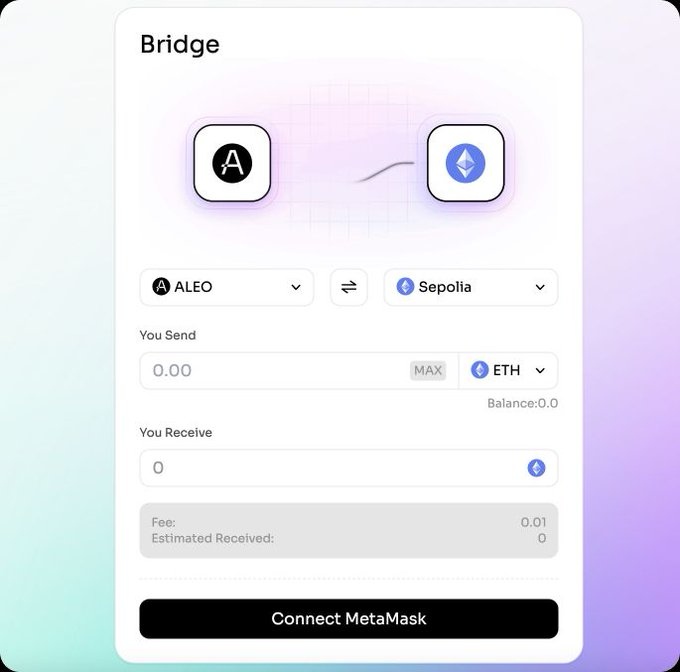
5. Aleo Bridge

Go to →  https://testnet-bridge.izar.xyz/bridge

◈ Connect your Leo Wallet & Metamask Wallet

◈ When tokens arrive on your Metamask Wallet, bridge $ETH from Sepolia to Aleo.
Aleo Bridge

6. Make swaps

Go to → https://aleoswap.org

◈ Connect the wallet.

◈ Make $ETH to $USDT swap and back.

Make swaps

7. Add Liquidity

Go to → https://app.aleoswap.org/pool/public

◈ Select a token.

◈ Enter the desired amount to liquidity.

Add Liquidity

8. Aleo Domains

Go to → https://testnet.aleonames.id/

◈ Connect your wallet.

◈ Register the domain.

Aleo Domains

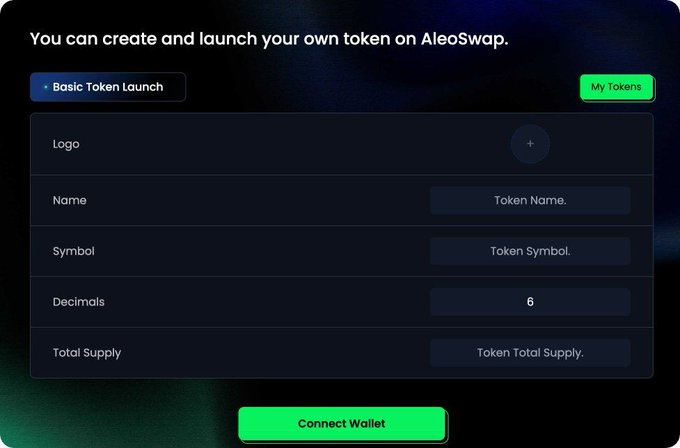
9. Launch a Token on Aleo

Go to → https://app.aleoswap.org/listClick

◈ Connect your wallet.

◈ Fill in the required fields.
Launch a Token on Aleo

10. Trade

Go to → https://alpha.privx.exchange

◈ Connect your wallet.

◈ Check the tutorial.

◈ Grab tokens in the "Claim" section.

Trade

11. Zealy quests

Go to → https://zealy.io/c/aleoofficial/questboard

◈ Complete social tasks.

Zealy quests

By meticulously following these steps and engaging with the Aleo platform, participants can enhance their chances of claiming the Aleo airdrop. It is crucial to stay informed on the latest updates from Aleo's official channels to fully understand the nuances of how to claim airdrop rewards and maximize the potential of your ALEO token holdings.

Maximizing Your Rewards: Tips and Strategies

To optimize the benefits of the Aleo Airdrop 2024, participants can adopt several strategies to enhance their potential rewards:

  • Active Wallet Management: Leveraging a wallet with a solid track record of token holding, staking, and consistent transaction activities can significantly increase the likelihood of a successful airdrop claim. This demonstrates proactive engagement in the crypto space and can be a favorable factor during the airdrop selection process.
  • Community Engagement and Awareness: Staying actively involved in crypto is crucial. By keeping abreast of new projects and opportunities, you can identify various airdrop events, including the Aleo airdrop, and understand the specific actions required to participate, such as staking or holding certain tokens like Tia and Injective.
  • Adherence to Regulations: Ensuring compliance with local laws and regulations is paramount when participating in token distributions. This not only guarantees the legality of your actions but also safeguards against potential legal complications.
  • Diversification Strategy: Creating multiple wallets for diversified staking can spread risk and potentially increase the chances of receiving airdrops. This approach can also apply to the ALEO token distribution, enhancing your overall airdrop portfolio.
  • Claiming Process: It's essential to follow the project's instructions meticulously to claim your tokens. This may involve smart contract interactions or other specific procedures the platform provides.
  • Scam Vigilance: Always verify information through Aleo's official channels to avoid falling for scams. This practice ensures you engage with legitimate airdrop opportunities and safeguard your digital assets.

By implementing these tips and strategies, you can maximize your Aleo airdrop rewards and make the most of the token distribution event. Remember to stay updated with Aleo's official announcements for any changes or additional steps in the airdrop process.

Potential Value and Benefits of ALEO Tokens

Within the Aleo ecosystem, ALEO tokens are not just a cryptocurrency; they are the cornerstone of a privacy-centric web experience, providing users with control over their data while engaging with web services. The token's design is rooted in principles that ensure its longevity and utility:

  • Value and Governance: ALEO tokens are integral to the Aleo platform, enabling users to access personalized web services while maintaining privacy over their personal data. This dual function as a value and governance token positions ALEO as a central player in the platform's operations.
  • Tokenomics: The economics behind ALEO tokens are meticulously crafted, focusing on scarcity, incentives, and decentralization. These factors are pivotal in preserving the token's value within the blockchain ecosystem, making it a potentially lucrative asset for investors and users.
  • Staking and Incentives: ALEO tokens feature a staking mechanism where traders can earn commissions on transactions. This incentivizes token holders to save and stake their tokens, playing an active role in the platform's transactional processes.

The potential of ALEO tokens extends beyond mere transactions, offering a suite of benefits that underscore the project's strong market confidence:

  • Privacy and Scalability: Aleo's commitment to robust privacy protection and on-chain scalability offers a competitive edge, especially for large-scale real-time online applications. This positions ALEO tokens as an attractive asset for those looking to invest in a platform with advanced technological capabilities.
  • Economic Model: The PoW physical machine + PoS on-chain staking model employed by Aleo mitigates mining risks and ensures cost predictability for users and investors, enhancing the appeal of ALEO tokens.
  • Investment and Financing: Beyond transactions, ALEO tokens can be leveraged for financing projects like dApp development, providing businesses with innovative financial tools and opening new avenues for investment.
  • Market Confidence: With a substantial funding pool of $298 million from internationally renowned institutions, ALEO tokens are backed by a level of confidence that suggests a promising future for the token's value.


By understanding the Aleo airdrop and the multifaceted role of ALEO tokens, participants can strategically position themselves to capitalize on the token distribution event and the subsequent opportunities within the Aleo ecosystem.

Also Read - GRASS Airdrop 2024

Aleo Airdrop - Impact on Participants and the Platform

The Aleo airdrop presents a transformative opportunity for participants and the platform alike:

  • Early Supporter Benefits: Individuals who have been involved with Aleo from its early stages stand to gain significant from the airdrop, with the possibility of receiving a profit of around $9,000 without any participation cost. This rewards early backers and incentivizes continued support and engagement with the platform as it evolves.
  • Token Allocation: A substantial allocation of 150M ALEO tokens earmarked for the airdrop targets early supporters, reinforcing their commitment and potentially leading to a more robust and active community post-airdrop.
  • Engagement and Growth: By requiring users to complete a series of tasks, such as downloading extensions and engaging with various platforms, the airdrop fosters deeper interaction within the Aleo ecosystem. This engagement is a crucial step in ensuring the long-term success and adoption of the platform.
  • Market Outlook: The crypto market's projected growth in 2024 could mean that successful airdrop participants will see a significant appreciation in the value of their ALEO tokens. The strong market confidence supports this growth, reflected in Aleo's substantial funding of $298M from major investors, including a16z and Coinbase.
  • Legal Compliance: Adherence to local laws and regulations is paramount as participants navigate the airdrop process. This ensures that the distribution of ALEO tokens is conducted in a legally compliant manner, which is essential for the legitimacy and stability of the platform.
  • Community Engagement: Maximizing airdrop benefits requires active participation in the crypto community and staying informed about new projects and opportunities. This proactive involvement can lead to a greater understanding of the airdrop process and its potential benefits.

By strategically engaging with the Aleo ecosystem and understanding the potential impact of the airdrop, participants can position themselves to benefit from this pivotal event in the platform's development.

Conclusion

As the Aleo platform prepares to launch its mainnet, the Aleo airdrop's significance to prospective participants and the wider blockchain community cannot be overstated. 

This guide has detailed the eligibility criteria, participation processes, and action strategies essential to optimize potential rewards from this much-anticipated event. 

The unique qualities of the ALEO tokens, particularly in privacy and scalability, alongside the robust economic model of the platform, set the stage for a transformative impact on decentralized web services. 

The Aleo airdrop is poised to enhance user engagement within the ecosystem and reward early adopters, bolstering the platform's growth and reinforcing its market position. 

With the potential value appreciation and the supportive backing of prominent investors, participants who align with the airdrop's objectives and guidelines stand to gain from the unfolding narrative of Aleo's privacy-centered innovations. 

Such strategic participation holds the promise of personal reward and contributes to shaping the evolving landscape of secure, decentralized digital transactions.

Disclaimer

The information provided on this website does not constitute investment advice, financial advice, trading advice, or any other advice, and you should not treat any of the website's content as such.

Token Metrics does not recommend buying, selling, or holding any cryptocurrency. Conduct your due diligence and consult your financial advisor before making investment decisions.

Build Smarter Crypto Apps &
AI Agents in Minutes, Not Months
Real-time prices, trading signals, and on-chain insights all from one powerful API.
Grab a Free API Key
About Token Metrics
Token Metrics: AI-powered crypto research and ratings platform. We help investors make smarter decisions with unbiased Token Metrics Ratings, on-chain analytics, and editor-curated “Top 10” guides. Our platform distills thousands of data points into clear scores, trends, and alerts you can act on.
30 Employees
analysts, data scientists, and crypto engineers
Daily Briefings
concise market insights and “Top Picks”
Transparent & Compliant
Sponsored ≠ Ratings; research remains independent
Want Smarter Crypto Picks—Free?
See unbiased Token Metrics Ratings for BTC, ETH, and top alts.
Thank you! Your submission has been received!
Oops! Something went wrong while submitting the form.
 No credit card | 1-click unsubscribe
Token Metrics Team
Token Metrics Team

Recent Posts

Research

How to Trade Indices on Token Metrics: Complete 2025 Guide

Token Metrics Team
8

Trading individual cryptocurrencies can be time-consuming and overwhelming, especially when trying to maintain exposure to market-wide movements while managing risk. Token Metrics Indices offers a streamlined solution that allows you to trade entire market baskets with the same ease as buying a single token. This comprehensive guide walks you through everything you need to know about trading indices on the Token Metrics platform.

Understanding Token Metrics Indices

Token Metrics Indices are rules-based baskets that track defined universes of cryptocurrencies with scheduled rebalances and clear inclusion criteria. Unlike manual portfolio management that requires constant monitoring and adjustment, these indices automate the process of maintaining diversified crypto exposure according to predetermined strategies.

The flagship offering, TM Global 100, exemplifies this approach by holding the top 100 cryptocurrencies by market cap during bullish market conditions and automatically switching to stablecoins when market signals turn bearish. This regime-switching methodology combines broad market participation with disciplined risk management, rebalancing weekly to reflect current market conditions.

Getting Started: Joining the Waitlist

Before you can trade Token Metrics indices, you'll need to secure access through the waitlist process. Navigate to the Token Metrics Indices hub and select the index you're interested in—such as TM Global 100. Click the "Join Waitlist" button to register your interest.

During the waitlist registration, you have the option to connect your wallet and preview the one-click buy flow along with available funding options. This optional step familiarizes you with the interface before launch, ensuring a smooth experience when trading becomes available. Once the index launches, you'll receive both an email notification and an in-app prompt, giving you immediate access to start trading.

The Trading Process: Step-by-Step

Trading indices on Token Metrics is designed for simplicity and speed, with most transactions completing in approximately 90 seconds. When you're ready to purchase an index, click the "Buy Index" button from the index's main page. This initiates the embedded wallet checkout flow that handles all the technical complexity behind the scenes.

The checkout interface presents comprehensive information before you commit to the trade. You'll see estimated gas fees, platform fees, maximum slippage tolerance, and the minimum expected value you'll receive. This transparency ensures you understand exactly what you're paying and what you're getting before confirming the transaction.

Review the current holdings displayed in both treemap and table formats. The treemap provides a visual representation of asset allocation, making it easy to understand portfolio composition at a glance, while the table view offers detailed information about each constituent asset. Once you've reviewed all details and are satisfied with the terms, confirm the transaction.

Understanding the Embedded Wallet

Token Metrics uses an embedded, self-custodial smart wallet for index transactions. This means you maintain complete control over your funds rather than entrusting them to a custodial service. The wallet is designed to lower operational barriers while preserving the security benefits of self-custody.

Funding options vary based on your connected wallet and blockchain network. The platform supports USDC for selling positions, and funding options surface automatically during checkout based on chain and wallet compatibility. This flexibility ensures you can participate regardless of which assets you currently hold.

The self-custodial nature means you're responsible for securing your access credentials, but it also ensures that Token Metrics never has direct control over your assets. This architecture aligns with crypto's ethos of user sovereignty while making the experience as seamless as possible.

Monitoring Your Positions

After purchasing an index, track your position under the "My Indices" section of the platform. This dashboard provides real-time profit and loss tracking, showing how your investment performs relative to your entry point. The interface updates dynamically as market conditions change and the index rebalances.

Access your complete transaction history within the same dashboard, maintaining a comprehensive record of all purchases, sales, and rebalances. This transparency extends to the index's operational mechanics—you can view the strategy modal explaining the rules governing index behavior, check the gauge showing the current market signal, and review the detailed transactions log showing every rebalance and portfolio adjustment.

Weekly Rebalancing and Regime Switching

Understanding how indices rebalance is crucial to managing expectations. Token Metrics indices rebalance weekly, updating constituent weights and potentially replacing assets to maintain alignment with the index's defined universe. For TM Global 100, this means ensuring the index always holds the current top 100 cryptocurrencies by market capitalization.

Beyond weekly rebalancing, regime switching triggers more dramatic portfolio shifts. When the proprietary market signal indicates bullish conditions, the index holds its full allocation to the top 100 assets. When signals turn bearish, the index moves entirely to stablecoins, aiming to preserve capital during downturns. This switching mechanism enforces disciplined risk management that many individual investors struggle to maintain manually.

These automatic adjustments occur without requiring action on your part. You continue holding your index position while the underlying assets shift according to the predetermined rules. This passive approach to active management represents one of the index's key value propositions.

Benefits Over Manual Trading

Trading indices on Token Metrics offers several advantages over managing individual positions manually. Time savings represent the most obvious benefit—no more tracking 100 individual tickers or executing dozens of small trades to rebalance your portfolio. The weekly rebalancing job runs automatically, freeing you to focus on other aspects of your investment strategy.

Discipline during drawdowns becomes significantly easier when rules govern your portfolio. The stablecoin switch enforces risk management when market signals deteriorate, removing the emotional difficulty of selling during uncertain periods. This systematic approach helps avoid the common pitfall of holding through severe drawdowns out of hope rather than strategy.

Execution efficiency improves dramatically with single-transaction index purchases versus multiple small trades across numerous assets. Each individual trade incurs slippage and fees that compound when building diversified positions manually. The embedded wallet checkout consolidates this into one transaction, reducing total costs and complexity.

Transparency and Security Measures

Token Metrics prioritizes transparency throughout the trading experience. The strategy modal provides complete documentation of the rules governing index behavior, eliminating the "black box" problem common in automated investment products. You always know what you own and why the index makes specific decisions.

Holdings display in multiple formats—treemap for visual allocation understanding and table for detailed constituent information. Every transaction and rebalance appears in the activity log, creating an auditable trail of index operations. This level of disclosure ensures you can verify that the index operates according to its stated rules.

Security measures include the self-custodial wallet architecture, fee and slippage preview before transaction confirmation, and clear documentation of operational mechanics. However, regime logic limitations exist—signals can be incorrect, switching can incur spreads and gas costs, and chain and asset support may vary by jurisdiction.

Who Should Trade Token Metrics Indices

Token Metrics indices suit multiple investor profiles. Hands-off allocators who want broad crypto exposure without micromanaging individual positions find the automated rebalancing and risk management appealing. Active traders can use indices as a disciplined core holding while executing satellite strategies around it.

Existing Token Metrics members and prospects who already consume the platform's research can transform analytical insights into actionable positions through one-click index purchases. Users new to on-chain trading benefit from the embedded wallet and clear fee structures that reduce operational complexity.

Those skeptical of opaque investment products appreciate the full strategy documentation, visible holdings, and comprehensive rebalance logs. The transparency allows verification that the product operates as advertised without mystery algorithms or hidden mechanisms.

Important Considerations

Cryptocurrency remains highly volatile and can lose substantial value rapidly. Past performance does not indicate future results, and even rule-based strategies can underperform during certain market conditions. The information in this guide serves educational purposes and should not be construed as financial advice.

Region-specific restrictions may apply, with chain and asset support varying by wallet and jurisdiction. Before trading, verify that you can access the specific indices and features relevant to your location. Gas fees on certain networks can be substantial, potentially affecting the economics of smaller positions.

Conclusion

Trading indices on Token Metrics streamlines crypto portfolio management by combining broad market exposure, systematic risk management, and operational simplicity. The one-click buying process, transparent holdings and rebalances, and self-custodial security architecture create an accessible yet sophisticated investment vehicle for both newcomers and experienced traders.

By understanding the mechanics of index trading, rebalancing schedules, and the embedded wallet system, you can make informed decisions about incorporating these products into your investment strategy. Whether you're seeking passive exposure to crypto markets or a disciplined core around which to build more active strategies, Token Metrics indices provide the infrastructure to execute efficiently.

Join the waitlist today at tokenmetrics.com/indices to secure early access when new indices launch, and experience how rules-based investing can transform your approach to cryptocurrency markets.

Click here to get early access to Token Metrics indices.

Research

How Do Stablecoins Maintain Their Value? A 2025 Guide

Token Metrics Team
8

In the volatile world of cryptocurrency, stablecoins have emerged as a crucial bridge between the traditional financial system and the rapidly evolving digital asset ecosystem. As of October 2025, the stablecoin market has surpassed a staggering $255 billion in market capitalization, reflecting their growing importance. Understanding how do stablecoins maintain their value is essential for investors, traders, and anyone interested in the future of digital currency. This guide explores the mechanisms behind stablecoins’ price stability, their real-world applications, associated risks, and the outlook for this pivotal segment of the crypto industry.

What Are Stablecoins?

Stablecoins are a class of cryptocurrencies specifically designed to maintain a stable value relative to a reference asset, most commonly the U.S. dollar. Unlike highly volatile crypto assets such as Bitcoin or Ethereum, stablecoins aim to combine the benefits of blockchain technology—such as decentralization, transparency, and programmability—with the stability of traditional fiat currency. This unique combination makes stablecoins a reliable medium of exchange and a store of value within the digital economy.

At their core, stablecoins are pegged assets that target a stable price by tracking a specific asset one-to-one. For example, a dollar-pegged stablecoin should consistently hold a value close to one U.S. dollar. This stability has fueled their rapid adoption for everyday transactions, international transfers, trading on crypto exchanges, and as collateral in decentralized finance (DeFi) applications. In 2025 alone, the total supply of stablecoins has grown by approximately 28%, while transaction volumes have surged by nearly 50%, underscoring their expanding role in the broader financial system.

The Main Mechanisms: How Stablecoins Maintain Value

Stablecoins maintain their value through different mechanisms, each designed to mitigate risks associated with price fluctuations and inherent volatility in the crypto market. The primary types include fiat-collateralized stablecoins, crypto-backed stablecoins, and algorithmic stablecoins. Each approach has its own strengths and challenges.

Fiat-Collateralized Stablecoins

The most prevalent type of stablecoins are fiat-backed stablecoins, also known as fiat collateralized or backed stablecoins. These stablecoins are supported by reserves of traditional fiat currency, typically held in bank accounts or low-risk reserve assets such as bank deposits, short term treasuries, or other liquid instruments. Leading examples like Tether (USDT) and USD Coin (USDC) dominate this category and represent the bulk of the stablecoin market cap.

When a user purchases one fiat-backed stablecoin, the stablecoin issuer holds an equivalent amount of fiat currency in reserve, ensuring that the stablecoin can be redeemed at a 1:1 ratio. This direct backing mechanism helps stablecoins hold steady against price volatility and gives holders confidence that their digital currency is fully collateralized by real-world assets.

Recent regulatory developments, such as the GENIUS Act enacted in July 2025, have reinforced reserve requirements for fiat-collateralized stablecoins. Under this framework, issuers must maintain reserves that at least equal the total stablecoin supply and be ready to redeem tokens on demand. This regulatory oversight enhances transparency and stability, further integrating stablecoins into the traditional financial system.

Crypto-Collateralized Stablecoins

Another category, known as crypto backed stablecoins, leverage other cryptocurrencies as collateral rather than fiat currency. For instance, DAI—issued by MakerDAO—is backed by a diversified pool of crypto assets locked in smart contracts on the blockchain. Due to the high volatility of crypto collateral, these stablecoins are typically overcollateralized, meaning they hold more crypto assets in reserve than the stablecoins issued, often at a ratio of 2:1 or higher.

Smart contracts play a crucial role here, automatically managing collateral levels and liquidating positions if the value of the underlying crypto assets falls below a predefined threshold. This automated mechanism helps maintain the peg and protects the stablecoin from devaluation caused by sudden market downturns. However, the decentralized nature of these stablecoins exposes them to risks from smart contract vulnerabilities and rapid market movements.

Algorithmic Stablecoins

Algorithmic stablecoins represent a more experimental approach to maintaining a stable value without relying on collateral. Instead, they use smart contracts and automated protocols to dynamically adjust the stablecoin’s supply based on market demand. When the stablecoin’s price rises above its peg, the algorithm mints additional tokens to increase supply and reduce the price. Conversely, when the price dips below the peg, the protocol burns tokens to decrease supply and push the price back up.

While this mechanism aims to maintain price stability through supply-demand equilibrium, algorithmic stablecoins have historically struggled to maintain their peg during periods of extreme market stress. Consequently, they remain less popular in 2025 compared to collateralized stablecoins, as their stability is more susceptible to market conditions and speculative pressures.

Real-World Applications and Growth

Stablecoins have transcended their initial role as mere trading tools to become integral components of the global financial ecosystem. They facilitate international transfers by offering a stable medium that reduces remittance costs from an average of 6.6% to under 3%, benefiting millions of users worldwide. In countries experiencing hyperinflation, such as Argentina and Turkey, residents increasingly rely on dollar-pegged stablecoins to preserve purchasing power and hedge against local currency depreciation.

The stablecoin market’s rapid growth has attracted significant institutional interest. In 2025, major financial institutions like Standard Chartered Bank, PayPal, Bank of America, and Stripe have either launched their own stablecoins or announced intentions to enter the market. This trend highlights the crucial role that stablecoins play in bridging the gap between traditional assets and digital assets, enabling seamless integration with existing financial products and services.

Moreover, stablecoins have become foundational to decentralized finance (DeFi), powering lending platforms, decentralized exchanges, and yield farming protocols. Their ability to maintain a stable value makes them indispensable for users seeking to avoid the inherent volatility of other cryptocurrencies while still benefiting from blockchain technology.

The Critical Role of Analytics in Stablecoin Trading

As stablecoins become a cornerstone of the crypto market, advanced analytics and trading platforms have become essential for navigating this complex landscape. Platforms like Token Metrics exemplify the next generation of AI-powered crypto analytics tools that help traders understand market dynamics and optimize their investment strategies.

Build Smarter Crypto Apps & AI Agents with Token Metrics

Token Metrics provides real-time prices, trading signals, and on-chain insights all from one powerful API. Grab a Free API Key

Token Metrics offers a comprehensive suite of features, including AI-driven ratings that assign both short-term Trader Grades and long-term Investor Grades to various tokens, including stablecoins. This dual grading system helps users decide when to allocate funds to stablecoins to maintain a stable portfolio during periods of high volatility.

Since integrating direct trading capabilities in early 2025, Token Metrics has evolved into a full-service platform where users can conduct research, execute trades, and deploy automated trading bots. Its sentiment analysis tools monitor social media trends and institutional flows, providing timely insights into market sentiment that can impact stablecoin demand and price stability.

For investors managing diversified portfolios, Token Metrics offers AI-managed indices that dynamically rebalance holdings based on market conditions and interest rates, ensuring exposure to stable assets while capitalizing on growth opportunities in the broader crypto industry.

Risks and Considerations

Despite their design to maintain price stability, stablecoins carry inherent risks that users should carefully consider. Fiat-backed stablecoins face centralization risks since issuers control the reserve assets and have the authority to freeze accounts or restrict redemptions. Transparency concerns have historically affected some issuers; for example, Tether was fined $41 million by the U.S. Commodity Futures Trading Commission (CFTC) for misrepresenting its reserves between 2016 and 2018.

Regulatory frameworks remain in flux globally. While the United States has enacted the GENIUS Act to provide clear guidelines, the European Union’s Markets in Crypto-Assets (MiCA) regulation imposes stringent rules on stablecoin issuers, treating them similarly to banks. Hong Kong’s Stablecoins Bill, passed in May 2025, is expected to introduce licensing requirements by early 2026, emphasizing the growing regulatory oversight of stablecoin activities.

For crypto collateralized and algorithmic stablecoins, vulnerabilities in smart contracts pose significant risks. Bugs or exploits could disrupt the mechanisms designed to maintain a stable value, potentially leading to depegging events with severe market consequences.

The Future of Stablecoins

Looking ahead, stablecoins are poised for continued expansion, with market forecasts estimating a potential growth to $500-750 billion in the near future. Their ability to serve as a reliable medium for cross-border payments, provide financial access to the unbanked, and underpin decentralized financial products ensures their crucial role in the evolving financial ecosystem.

Understanding how do stablecoins maintain their value is fundamental for anyone engaging with the crypto market. With enhanced regulatory clarity, institutional adoption, and sophisticated analytics tools like Token Metrics, stablecoins are increasingly integrated into both the traditional financial system and the emerging digital economy.

Whether used for trading, payments, or wealth preservation, stablecoins continue to bridge the gap between fiat currency and digital assets, making them an indispensable part of the future of money and finance worldwide.

Research

What is Tokenization of Real-World Assets? The $30 Trillion Revolution Explained

Token Metrics Team
8

The financial world is undergoing a historic transformation as real-world assets migrate onto blockchain networks at an unprecedented pace. What began as experimental pilots has rapidly expanded into a $30 billion market in 2025, with projections soaring to $30 trillion by 2034. This groundbreaking shift, known as real-world asset tokenization, is fundamentally changing how investors trade, own, and manage valuable assets. Platforms like Token Metrics are at the forefront, empowering investors to capitalize on this massive evolution in the financial landscape.

Understanding RWA Tokenization

So, what is tokenization of real world assets? At its core, real-world asset tokenization is the process of creating a digital representation of ownership rights in physical and traditional financial assets by issuing digital tokens on a blockchain. These assets encompass a broad spectrum—from real estate, corporate bonds, and private credit to commodities, art, and other traditionally illiquid assets. Instead of relying on paper certificates, complex legal frameworks, and intermediaries, tokenization uses blockchain technology to simplify ownership and enable seamless trading.

Imagine a high-value asset like a $10 million real estate property. Through the tokenization process, this property can be divided into 10,000 digital tokens, each representing fractional ownership worth $1,000. Investors can purchase any number of these tokens, gaining fractional ownership in assets that were previously accessible only to wealthy individuals or large institutions. This innovation democratizes access to markets, allowing retail investors to participe alongside institutional investors in asset classes that were once out of reach.

By converting traditional assets into tokenized assets, asset owners and issuers can unlock liquidity, reduce costs, and streamline asset management. The token not only represents fractional ownership but can also encode rights such as interest payments or dividends, all managed efficiently through smart contracts on the blockchain.

The Explosive Growth of RWA Markets

The growth of the real world asset tokenization market has been nothing short of spectacular. From a modest $8.6 billion at the start of 2025, the market ballooned to over $30 billion by mid-year—an astonishing 400% increase in just three years and roughly 260% growth in the first half of 2025 alone. This rapid expansion signals that financial institutions have moved beyond pilot projects to large-scale implementation.

Looking ahead, market forecasts vary but all suggest massive growth. McKinsey predicts the market will reach $2 trillion by 2030, Boston Consulting Group estimates $16 trillion, and Standard Chartered projects up to $30 trillion by 2034. Even the most conservative projections indicate that asset tokenization will reshape the global financial markets, creating opportunities larger than many national economies.

This surge is fueled by several factors, including clearer regulatory frameworks in key jurisdictions like the United States. As regulators provide guidelines for legal compliance, institutional investors gain the confidence to participate in blockchain-based financial products. The convergence of technology, regulation, and market demand is propelling the tokenization revolution forward.

Major Asset Classes Being Tokenized

Tokenization spans a diverse array of asset classes, reflecting its broad applicability across traditional financial assets and physical assets alike. Among the most prominent:

  • Private credit dominates with 58% of the market, approximately $14 billion in tokenized value. Tokenizing private credit reduces operational costs and opens up investment opportunities in lending markets previously reserved for specialized funds and asset managers. The creation of secondary markets enhances liquidity and investor access.
  • US Treasuries hold the second-largest share at 34% ($8.2 billion). These tokenized real-world assets appeal to institutions seeking yield-bearing, blockchain-native securities with around-the-clock trading capabilities. The tokenized treasury market has seen a remarkable 539% growth between January 2024 and April 2025.
  • Real estate tokenization accounts for about 6% of the market. This includes tokenizing real estate assets such as residential buildings and commercial real estate, enabling fractional ownership and easier transfer of property interests through digital tokens.
  • Other asset classes include commodities like gold (3%), equity tokens, and carbon credits (each about 1%). This diversity highlights that tokenization technology adapts well to a broad range of traditional asset classes and tangible assets.

By converting these assets into digital assets on blockchains, investors gain access to previously inaccessible or illiquid markets, benefiting from enhanced transparency and operational efficiency.

Wall Street Embraces Blockchain

The endorsement of blockchain technology by major financial players marks a pivotal moment in the adoption of tokenized real-world assets. Industry giants such as BlackRock, Goldman Sachs, JPMorgan, Franklin Templeton, and Apollo have transitioned from pilot programs to full-scale deployment.

For example, BlackRock’s $2.9 billion BUIDL fund and Franklin Templeton’s $420 million tokenized money market fund demonstrate serious institutional capital embracing blockchain infrastructure. Larry Fink, CEO of BlackRock—the world’s largest asset manager—has publicly declared that tokenization represents the next evolution in financial markets.

When institutions managing trillions of dollars commit to real-world asset tokenization, it signals that this innovation is not speculative hype but a fundamental transformation of traditional finance and capital markets. Their involvement accelerates the development of regulatory compliance standards and fosters broader market acceptance.

Key Benefits Driving Adoption

  • Enabling fractional ownership: Tokenization breaks down high-value assets into smaller, affordable units. This lowers entry barriers, allowing retail investors to participate in markets like tokenized real estate or private equity with minimal capital.
  • Enhanced liquidity: By transforming traditionally illiquid assets into tradable tokens, tokenization facilitates quicker asset transfers. Real estate or private credit investments that once took months to exit can now be sold in minutes on secondary markets.
  • 24/7 global trading: Unlike traditional markets limited by banking hours and geographic boundaries, tokenized assets trade continuously across global markets. Investors anywhere can transact at any time, increasing market efficiency.
  • Transparency and security: Blockchain’s immutable ledger records every transaction and ownership change, offering unprecedented visibility and reducing fraud risk. This transparency builds investor confidence and simplifies asset servicing.
  • Reduced costs and operational efficiency: By consolidating functions such as distribution, clearing, settlement, and custody into blockchain-based protocols, tokenization lowers fees and counterparty risk. This streamlining benefits both asset issuers and owners.

Together, these advantages are reshaping how financial assets are issued, managed, and traded, opening new frontiers for institutional investors and retail participants alike.

As the tokenization of real world assets accelerates, investors face a complex landscape with hundreds of projects and platforms. This complexity underscores the need for sophisticated tools to analyze opportunities and manage risk effectively. Token Metrics, a leading crypto trading and analytics platform, plays a crucial role in this space. It offers comprehensive analysis of tokenized assets, tracking the performance of various RWA protocols and providing data-driven insights. Investors can evaluate the fundamentals of projects, assess regulatory requirements, and compare tokenomics with confidence.

The platform’s AI-driven ratings and indices enable users to benchmark tokenized real estate, private credit, and treasury tokenization initiatives against each other using consistent methodologies. Real-time market data and alerts keep investors informed about key developments, such as new institutional partnerships or changes in securities laws impacting tokenized assets.

For those building diversified portfolios that include both native crypto assets and tokenized real-world assets, Token Metrics offers a unified infrastructure to optimize allocation, understand correlations, and navigate the evolving financial landscape.

Challenges and Considerations

Despite its promise, the tokenization revolution faces several challenges:

  • Regulatory uncertainty remains a major hurdle. Jurisdictions differ in how they define securities, tax tokenized assets, and enforce disclosures, complicating global transactions and legal compliance.
  • Technical standardization is still evolving. Multiple blockchains host tokenized assets, but interoperability is limited, potentially locking assets within specific networks.
  • Legal frameworks and blockchain links: The connection between blockchain records and legal systems requires further development. Practical questions—such as responsibility for property maintenance or tax obligations on tokenized real estate—need clear legal frameworks.
  • Balancing regulation and innovation: Ensuring regulatory frameworks support innovation without hindering growth is a delicate task for regulators and industry participants.

Addressing these issues is critical to unlocking the full potential of asset tokenization and expanding its adoption across traditional markets.

The Road Ahead

The tokenization of real-world assets is no longer a question of if but when and how fast. Industry leaders like Larry Fink of BlackRock and Jamie Dimon of JPMorgan have openly endorsed this transformation, signaling that blockchain-based asset ownership is the future of finance.

The year 2025 marks a tipping point where regulatory clarity, institutional participation, and technological maturity converge to enable widespread adoption. The era of pilots is ending; production-scale deployments are underway. Over the next decade, tokenization will likely encompass nearly every asset class, fundamentally altering how ownership is recorded, transferred, and managed.

For investors eager to participate in this revolution, leveraging platforms like Token Metrics is essential to navigate the rapidly evolving market. As the market grows from billions to trillions, those equipped with superior data, analysis, and insights will be best positioned to benefit from one of the most significant wealth creation opportunities in financial history.

The future of asset ownership is being written in code and deployed on blockchains. Understanding what is tokenization of real world assets today is your first step toward engaging with the financial system of tomorrow.

Choose from Platinum, Gold, and Silver packages
Reach with 25–30% open rates and 0.5–1% CTR
Craft your own custom ad—from banners to tailored copy
Perfect for Crypto Exchanges, SaaS Tools, DeFi, and AI Products