Back to blog
Research

Altcoins Bull Run: How to Prepare and Profit in 2025

Discover how to prepare for the 2025 altcoins bull run. Learn strategies to maximize profits, minimize risk, and leverage AI analytics for smarter investing.
Token Metrics Team
6 min
Want Smarter Crypto Picks—Free?
See unbiased Token Metrics Ratings for BTC, ETH, and top alts.
Thank you! Your submission has been received!
Oops! Something went wrong while submitting the form.
 No credit card | 1-click unsubscribe

Introduction: The Next Altcoin Bull Run

Altcoin bull runs are some of the most exciting periods in cryptocurrency, delivering life‑changing gains for prepared investors. These cycles often follow or coincide with Bitcoin rallies, as capital flows into smaller, high‑growth tokens in search of outsized returns.

In 2025, with AI‑powered platforms, institutional adoption, and innovative sectors like DeFi, AI tokens, and real‑world assets (RWAs) driving growth, the stage is set for a potentially historic altcoin bull run. This guide explains how to prepare, what to watch for, and how tools like Token Metrics can help you capitalize on this opportunity.

What Triggers an Altcoin Bull Run?

Understanding what drives these rallies is key to recognizing when one begins.

  1. Bitcoin’s Rally & Consolidation:
    Historically, altcoins outperform when Bitcoin dominance peaks and stabilizes, freeing capital for riskier plays.

  2. Narrative‑Driven Growth:
    Sectors like AI tokens (e.g., TMAI), Layer 2 scaling solutions, and DeFi protocols often spark renewed investor interest.

  3. Increased Institutional Involvement:
    The rise of crypto ETFs, staking products, and venture capital fuels liquidity for altcoins.

  4. Retail FOMO (Fear of Missing Out):
    Bull runs accelerate when mainstream investors pile in, chasing early winners.
Signs an Altcoin Bull Run Is Starting

  • Rising Altcoin Market Cap: Watch for increasing total market cap outside Bitcoin, signaling inflows to smaller coins.
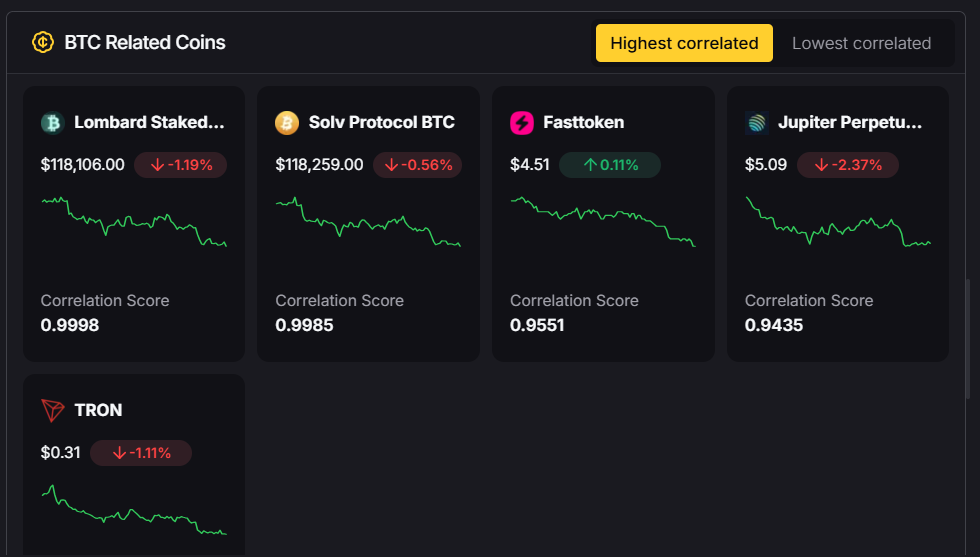
  • Bitcoin Dominance Decline: A drop in BTC dominance often correlates with altcoin rallies.
  • AI‑Detected Trend Shifts: Platforms like Token Metrics can identify early momentum signals across hundreds of tokens.
  • On‑Chain Activity Surge: Rising active wallets, transactions, and developer contributions are bullish indicators.

How to Prepare for the Next Bull Run

Preparation is everything. Here’s how to position yourself before the market takes off:

1. Build a Diversified Portfolio:
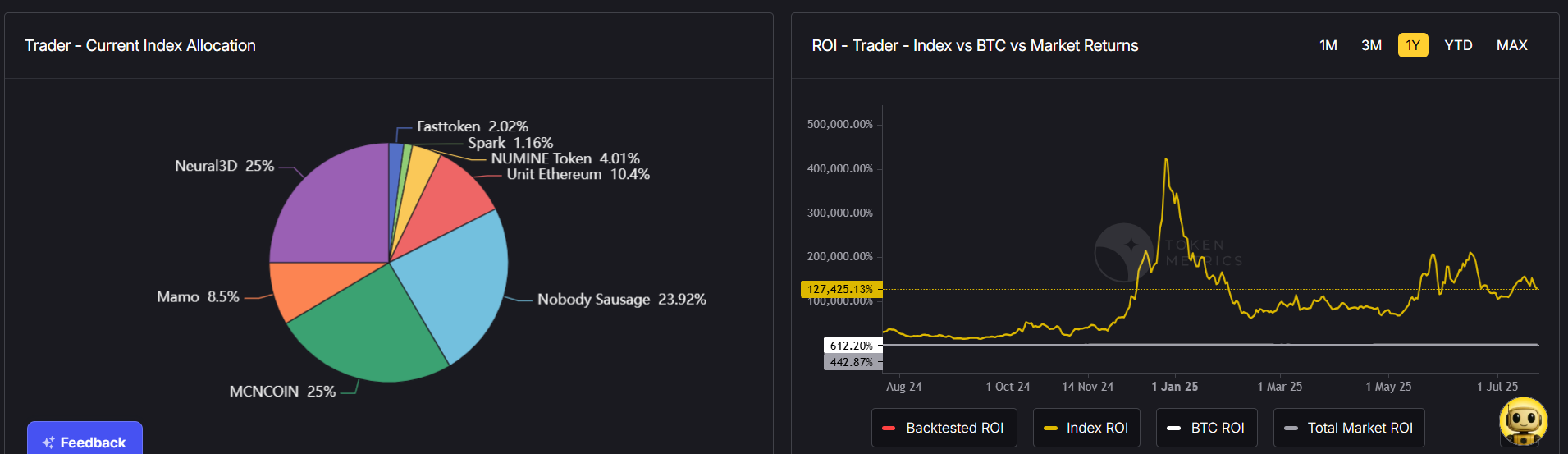
Combine large‑cap coins (Ethereum, Solana) with high‑potential small‑caps like Token Metrics AI (TMAI) or narrative‑driven DeFi tokens.

2. Use AI‑Powered Analytics:
Token Metrics leverages over 80 data points per token—including technicals, fundamentals, and sentiment—to help you spot early movers before the crowd.

3. Set Entry and Exit Plans:
Define profit targets and stop‑loss levels before entering trades to avoid emotional decisions during volatility.

4. Stay Liquid:
Keep a portion of your portfolio in stablecoins to seize opportunities during sharp pullbacks.
Top Narratives for the 2025 Bull Run

The next altcoin season will likely be driven by powerful narratives:

  • AI Tokens: Projects like Token Metrics AI (TMAI) and Fetch.ai (FET) combining blockchain and artificial intelligence.
  • Real‑World Asset Tokenization: Platforms enabling real estate, commodities, and equity tokenization.
  • DeFi Evolution: Next‑gen decentralized finance protocols offering higher yields and lower fees.
  • Layer 2 Scaling: Solutions like Polygon (MATIC) and Arbitrum (ARB) improving blockchain efficiency.

Strategies to Maximize Profits

  1. Dollar‑Cost Averaging (DCA):
    Invest gradually to reduce exposure to volatility while building positions in high‑conviction tokens.

  2. Swing Trading:
    Use short‑ to mid‑term trades to capture profits during parabolic moves. Token Metrics trading signals can help identify ideal entry and exit points.

  3. Staking & Yield Farming:
    Earn passive income on proof‑of‑stake tokens and DeFi platforms while holding long‑term assets.

  4. Portfolio Rebalancing:
    Periodically adjust allocations to lock in profits and maintain risk‑reward balance.

Managing Risk in a Bull Run

With great opportunity comes great risk. Here’s how to protect your gains:

  • Set Stop‑Loss Orders: Prevent catastrophic losses in case of sudden market reversals.
  • Take Profits Early: Secure gains incrementally instead of waiting for perfect tops.
  • Avoid Overleveraging: High leverage can amplify losses as quickly as profits.
  • Rely on Data: Use Token Metrics’ AI‑powered portfolio tools to track performance and adjust based on market signals.

The Role of Token Metrics in Bull Run Investing

Token Metrics is an essential tool for navigating altcoin bull markets, offering:

  • AI‑Generated Ratings: Scoring tokens based on fundamentals, technical analysis, and on‑chain data.
  • Narrative Detection: Identifying hot sectors like AI or DeFi before they trend.
  • Portfolio Optimization: Helping you allocate capital efficiently across high‑potential assets.
  • Real‑Time Alerts: Notifications for bullish or bearish momentum shifts.

This data‑driven approach helps investors stay ahead of the crowd and avoid emotional decision‑making during fast‑moving markets.

Common Mistakes to Avoid

  • Chasing Pumps: Don’t buy tokens already up several hundred percent without understanding their fundamentals.
  • Ignoring Fundamentals: Popularity alone doesn’t guarantee long‑term success—use platforms like Token Metrics for deep analysis.
  • Lack of an Exit Plan: Have clear profit targets and stick to them.

The Future of Altcoin Bull Runs

As crypto matures, AI‑enhanced analytics, regulatory clarity, and wider institutional adoption are likely to make future altcoin seasons more sustainable and inclusive.

In 2025, the winners will be those who combine smart preparation, narrative awareness, and AI‑powered tools like Token Metrics to maximize returns.

Conclusion

The 2025 altcoins bull run could be one of the most lucrative in crypto history, but success requires preparation, strategy, and discipline.

By diversifying across high‑potential narratives, using AI‑driven insights from Token Metrics, and following a clear plan, you can profit from explosive growth while managing risk effectively.

In altcoin bull runs, timing, data, and psychology are everything—get them right, and the opportunities are limitless.

Build Smarter Crypto Apps &
AI Agents in Minutes, Not Months
Real-time prices, trading signals, and on-chain insights all from one powerful API.
Grab a Free API Key
About Token Metrics
Token Metrics: AI-powered crypto research and ratings platform. We help investors make smarter decisions with unbiased Token Metrics Ratings, on-chain analytics, and editor-curated “Top 10” guides. Our platform distills thousands of data points into clear scores, trends, and alerts you can act on.
30 Employees
analysts, data scientists, and crypto engineers
Daily Briefings
concise market insights and “Top Picks”
Transparent & Compliant
Sponsored ≠ Ratings; research remains independent
Want Smarter Crypto Picks—Free?
See unbiased Token Metrics Ratings for BTC, ETH, and top alts.
Thank you! Your submission has been received!
Oops! Something went wrong while submitting the form.
 No credit card | 1-click unsubscribe
Token Metrics Team
Token Metrics Team

Recent Posts

Research

Are NFTs Environmentally Damaging? The Truth About NFT Energy Consumption in 2025

Token Metrics Team
4 min read

The explosive rise of non-fungible tokens (NFTs) in recent years has revolutionized digital ownership, enabling artists and collectors to trade unique digital assets like crypto art in the digital world. However, alongside this innovation, intense scrutiny has emerged regarding their environmental impact. Headlines once proclaimed NFTs as climate disasters, claiming individual NFT transactions could consume as much electricity as months of household usage. But as of 2025, the reality of whether NFTs are environmentally damaging has evolved dramatically. To understand the current state of NFT environmental impact, it is essential to separate outdated information from present realities and recognize how blockchain technology has advanced to address sustainability concerns.

The Historical Environmental Concerns

To grasp the current environmental impact of NFTs, we must first explore why concerns arose initially. Most NFTs were originally minted and traded on the Ethereum blockchain, which historically relied on a Proof-of-Work (PoW) consensus mechanism. This system requires powerful computers, known as miners, to solve complex mathematical puzzles to validate transactions and secure the blockchain network. This mining process consumed an enormous amount of electricity, as these machines operated continuously.

Research by computational artist Memo Akten, who analyzed around 18,000 NFTs, revealed that the average NFT carbon footprint was equivalent to more than a month of electricity usage for an average European Union resident. Each individual NFT transaction emitted roughly 200 kilograms of carbon dioxide, comparable to driving a car for approximately 800 kilometers or powering a typical household for an entire month.

This high energy consumption stemmed directly from how PoW blockchains function. Every NFT transaction—whether minting a new non-fungible token, transferring ownership, or listing an asset for sale—involved computationally intensive work that consumed significant electricity. As NFT popularity surged during 2021 and 2022, the volume of NFT transactions multiplied, amplifying environmental concerns. Artists such as Joanie Lemercier discovered that releasing just six pieces of crypto art consumed more electricity in ten seconds than his entire studio used over two years, prompting him to cancel NFT releases due to worries about their environmental footprint.

The debate intensified around whether individual NFT transactions truly added to blockchain energy consumption or if the network’s energy use remained constant regardless of activity. Critics argued that each transaction does increase demand, pushing up transaction fees (gas prices) and incentivizing miners to expand operations, thereby increasing energy usage. This made the argument that

Research

How Do Royalties Work in NFTs? A 2025 Complete Guide

Token Metrics Team
10 min read

For centuries, artists and creators have faced a fundamental challenge: they typically receive payment only once for their work, regardless of how many times it is resold or how much its value appreciates over time. A painter might sell a canvas for $1,000, only to see it resell decades later for millions, with none of those profits returning to the original creator. Non-fungible tokens (NFTs) have disrupted this traditional model through the introduction of NFT royalties—an innovative mechanism that allows creators to earn ongoing compensation every time their digital asset is resold. As the global NFT market expands rapidly, estimated at $80 billion in 2025 and projected to reach $231 billion by 2030, understanding how royalties work in NFTs has become essential for artists, collectors, and investors participating in this dynamic digital asset ecosystem.

The Fundamentals: What Are NFT Royalties?

NFT royalties refer to automated payments that compensate the original creator with a percentage of the sale price whenever their digital asset is resold on secondary markets. Unlike traditional art sales, where artists profit only from the initial sale, NFT royalties create a continuous revenue stream that persists as long as the asset is traded. This ongoing income represents a paradigm shift in how creators earn from their intellectual property.

Typically, the royalty percentage ranges between 5% and 10% of each resale price, though creators can set this rate anywhere from 0% up to 30%, depending on the platform and their preferences. These royalty terms are embedded directly into the NFT's smart contract at the moment of minting, establishing immutable rules that govern all future sale transactions.

For instance, if an NFT creator mints a digital artwork with a 10% royalty and initially sells it for 50 ETH (approximately $85,000 at current prices), they receive that initial payment. When the buyer later resells the NFT for 200 ETH ($340,000), the smart contract automatically sends 20 ETH ($34,000) as royalty payments to the original creator. If the NFT changes hands again at a higher price, the creator continues to receive their royalty percentage indefinitely.

This mechanism revolutionizes creator economics by allowing artists to benefit from the appreciation of their work and participate in new revenue streams generated by the secondary market.

The Mechanics: Smart Contracts and Blockchain Technology

The core technology enabling NFT royalties is smart contracts—self-executing programs stored on a public blockchain that automatically enforce predetermined terms when specific conditions are met. This foundation explains both the power and current limitations of NFT royalties.

When creators mint NFTs on marketplaces such as OpenSea, Rarible, or Foundation, they upload their digital assets and configure smart contract parameters, including the royalty percentage. This information becomes permanently recorded on blockchain networks like Ethereum, Solana, or Polygon, ensuring transparency and immutability.

When a secondary sale occurs on an NFT marketplace that honors royalties, the smart contract executes automatically. The sale transaction divides the payment: the seller receives the proceeds minus the royalty percentage, the marketplace collects its commission (usually between 2% and 5%), and the original creator receives their royalty payment. This entire process happens instantly without manual intervention or third-party enforcement.

The Ethereum community standardized royalty payments through ERC-2981 in July 2021, providing a consistent framework for calculating and distributing royalties across different platforms. However, it is important to note that this standard is advisory rather than mandatory—marketplaces can decide whether or not to implement and enforce these royalty mechanisms.

This optional nature of royalty enforcement has become a significant source of controversy in the NFT market, as some platforms choose to ignore or circumvent royalty payments.

The Benefits: Why NFT Royalties Matter

NFT royalties address long-standing challenges faced by creators and introduce new opportunities for sustainable creative economies. One of the most impactful benefits is the generation of ongoing income for creators. In 2025, over 63% of NFT artists report earning more from secondary sales royalties than from their initial mints.

For emerging artists and musicians, royalty payments can be transformative. For example, musicians using NFT platforms earn an average of $3,400 per track when royalties are factored in, creating sustainable revenue beyond traditional streaming platforms.

NFT royalties also align incentives between creators and collectors. Traditional art markets often create misaligned incentives, where galleries, dealers, and collectors profit from appreciation while artists see none of the upside. NFT royalties ensure creators benefit proportionally as their work gains value, encouraging collectors to support and promote artists and fostering a healthier ecosystem.

Furthermore, knowing they will earn from future resales motivates creators to produce work with enduring appeal rather than chasing fleeting trends. This quality incentive leads artists to invest more time and resources into their digital artwork, anticipating long-term appreciation.

Blockchain technology enhances this system by ensuring transparent provenance tracking and ownership verification, reducing fraud and forgery. This immutable recordkeeping not only builds trust but also facilitates automatic royalty payments, enhancing legitimacy in digital asset markets.

Finally, NFT royalties democratize the market for digital creators. Electronic musician Jaques Green earned approximately $27,000 in royalties from a single track, while digital artist Beeple received $660,000 in automatic compensation from a secondary sale of his "Crossroads" NFT. These examples highlight how royalties empower creators to monetize their intellectual property fairly and create new revenue streams.

The Controversy: Optional Royalties and Market Resistance

Despite their potential, NFT royalties face significant challenges and controversy, primarily due to optional royalty enforcement by major marketplaces. This debate intensified when Sudoswap launched an automated market maker in 2022 that eliminated royalties on secondary sales altogether. This innovation sparked fierce competition among NFT marketplaces, with many platforms reducing or removing fees—including creator royalties—to attract more traders.

Magic Eden, once a strong proponent of royalties, reversed its stance and made royalties optional, allowing buyers to decide whether and how much to pay. OpenSea, the largest NFT marketplace with over 2.4 million monthly active users in Q2 2025, also adopted optional royalty models, mandating only a minimal 0.5% royalty for collections without on-chain enforcement.

These changes led to a 12% increase in buyer activity but simultaneously caused an 18% reduction in creator revenues. This tradeoff highlights a significant tension between market efficiency and fair creator compensation.

Research from 2025 shows that higher royalty percentages correlate with decreased NFT market prices and resale likelihood. Specifically, a one standard deviation increase in royalty rates results in a 7.04% drop in market prices and a 4.8% reduction in resale probability. From buyers’ perspectives, royalties add costs that reduce potential profits, making high-royalty NFTs less attractive to speculators.

Technical Workarounds and Enforcement Challenges

Beyond voluntary non-compliance, technical methods exist that allow royalty circumvention, complicating enforcement efforts. One such method is "NFT wrapping," where an NFT is placed inside a smart contract wrapper that disguises it as a different token. This allows trading without triggering royalty payments. Additionally, peer-to-peer NFT transfers between wallets bypass marketplace smart contracts entirely, eliminating royalty enforcement.

The fundamental challenge lies in distinguishing between genuine sale transactions that should pay royalties and legitimate transfers such as gifting, moving assets between wallets, or using NFTs in decentralized applications. Smart contracts cannot easily discern intent, making blanket royalty enforcement difficult.

Some platforms have implemented allowlist membership systems that restrict NFT transfers to approved marketplaces guaranteeing royalty payments. However, this approach limits composability and openness, restricting how NFTs can be used and traded, which diminishes their utility.

The Hedera network attempts to address these challenges with on-chain custom royalties honored for all secondary sales plus fallback fees charged during transfers without exchanged value. However, blockchain interoperability means NFTs can move across chains with varying rules, complicating royalty enforcement further.

The Role of Analytics in NFT Investment Decisions

Given the complexity of NFT royalties, varying enforcement across platforms, and the presence of royalty circumventing marketplaces, analytics tools have become crucial for investors and collectors. These tools help verify ownership, track royalty payments, and evaluate the impact of royalty percentages on asset value and liquidity.

By analyzing how royalties affect resale prices and market activity, investors can make informed decisions about which NFTs to buy or sell. Creators also use analytics to optimize royalty percentages and identify marketplaces that support fair compensation.

Emerging Models and Future Directions

Innovators in the NFT space are exploring new royalty enforcement designs to balance creator compensation with market efficiency. One approach is the staking model, where creators stake money or assets to enforce royalty payments. If a creator prevents transfers without royalties, their stake may be slashed, providing an economic incentive to comply.

Shared ownership and reclaim mechanisms are also being developed to allow multiple creators or portfolio companies to receive royalties fairly. These models represent a significant tradeoff between flexibility and enforcement but could become key factors in the evolution of the NFT market.

As new marketplaces emerge, creators face the challenge of ensuring royalties are respected across platforms. While existing royalty designs restrict some flexibility, they provide fair compensation to asset and title owners. The ongoing battle against royalty circumvention by bad actors will likely continue shaping the legal and technical landscape of NFTs.

Conclusion

Understanding how royalties work in NFTs is essential for anyone involved in the digital asset ecosystem. NFT royalties refer to smart contract–enabled payments that provide creators with ongoing income from secondary sales, revolutionizing traditional models of intellectual property monetization. While the technology offers transparent, automatic royalty payments, enforcement remains inconsistent due to optional marketplace policies and technical workarounds.

Despite these challenges, NFT royalties create new revenue streams, align incentives, and empower artists and creators to benefit fairly from their work’s appreciation. As blockchain technology and marketplace designs evolve, royalty enforcement mechanisms will likely improve, ensuring that creators receive fair compensation in the burgeoning NFT market. For artists, collectors, and investors alike, staying informed about royalty mechanics, enforcement issues, and emerging solutions is a key factor in navigating the future of non-fungible tokens.

How Token Metrics Empowers NFT Investors and Creators

Token Metrics equips NFT investors and creators with cutting-edge analytics to navigate royalty standards, assess marketplace enforcement, and identify opportunities for fair compensation in the evolving NFT landscape.

Frequently Asked Questions

What are NFT royalties and how do they work?

NFT royalties are automatic payments sent to creators each time their NFTs are resold on compatible marketplaces. This is typically accomplished through smart contracts on blockchain platforms, which are programmed to pay a percentage (e.g., 5-10%) of every secondary sale directly to the original creator.

Are NFT royalties guaranteed on all marketplaces?

No, NFT royalty enforcement is optional. Some marketplaces, like OpenSea and Rarible, support automatic royalties, while others may not honor them or allow buyers and sellers to opt out. The ERC-2981 standard recommends royalty guidelines but does not make enforcement mandatory.

Can creators set their own NFT royalty percentage?

Yes, most NFT minting platforms allow creators to choose their royalty percentage at the point of minting, usually ranging between 0% and 30%. Higher royalty rates can impact the NFT’s resale attractiveness and liquidity.

Is it possible to bypass NFT royalties?

Yes, NFT royalties can be bypassed using techniques such as peer-to-peer wallet transfers, technical workarounds like NFT wrapping, or by using marketplaces that do not honor royalty payments. There is an ongoing debate and technical evolution to improve royalty enforcement.

Do NFT royalties apply to physical art sales?

NFT royalties are unique to digital assets and are programmatically enforced on blockchain networks. They do not apply to resales of physical art unless that art has a digital NFT representation with an embedded royalty smart contract.

Research

What Are NFTs and Why Are They Valuable? Complete 2025 Guide

Token Metrics Team
9 min read

Non-fungible tokens, commonly known as NFTs (NFT stands for Non-Fungible Token), have evolved from a niche curiosity into a massive market that is revolutionizing digital ownership, art, gaming, and entertainment. The idea behind NFTs is to create digital tokens that represent ownership and are secured through blockchain technology, establishing unique, verifiable digital assets that can range from art to ownership rights. As the global NFT market reached an impressive $48.74 billion in 2025 and is projected to explode to $703.47 billion by 2034, understanding what are NFTs and why are they valuable has become essential knowledge for investors, creators, and anyone interested in the future of the digital economy.

Understanding Non-Fungible Tokens

A non-fungible token (NFT) is a unique digital asset stored on a blockchain that represents ownership or proof of authenticity for a specific item, whether digital or physical. The term “non-fungible” distinguishes these tokens from cryptocurrencies like Bitcoin or Ethereum, which are fungible—meaning each unit is identical and interchangeable with another. In contrast, an NFT is one of a kind and cannot be directly exchanged on a like-for-like basis.

To better grasp fungibility, consider that a dollar bill is fungible because any dollar can replace another with identical value. A fungible asset, such as money or cryptocurrency, can be exchanged interchangeably without any loss of value, while non-fungible assets—like NFTs or concert tickets—are unique and not interchangeable. However, a famous painting, such as the Mona Lisa, is non-fungible because it is unique and cannot be replaced by another painting, even by the same artist. NFTs bring this concept of unique, verifiable ownership to the digital realm through blockchain technology.

NFTs are stored on a blockchain, which ensures the authenticity and provenance of each asset. Here’s how NFTs work: the process begins with minting, where a digital file is turned into an NFT on the blockchain. Blockchain validation and smart contracts are used to confirm ownership, manage transfers, and enforce royalties, making each NFT a secure and verifiable digital certificate.

When you purchase an NFT, you acquire a digital certificate of ownership recorded on a blockchain—typically Ethereum, although other blockchain networks like Solana, Polygon, and Binance Smart Chain also host NFTs. The Ethereum Request for Comments (ERC-721) standard defines how NFT ownership is transferred and transactions are confirmed on the Ethereum blockchain. This blockchain record provides immutable proof that you own a specific digital asset, even though copies of the underlying digital file may exist elsewhere. The blockchain acts as a permanent and transparent digital ledger showing ownership history and transaction records, making these unique digital assets verifiable and secure. Each NFT is assigned a unique identifier, which distinguishes it from all other tokens and allows for precise tracking and management of ownership.

When you purchase an NFT, you are acquiring digital tokens that serve as certificates of ownership for digital or physical assets, enabling decentralized copyright and licensing scenarios.

The Core Components of NFT Value

Understanding why NFTs hold value requires examining several fundamental factors that distinguish them from simple digital files.

First and foremost is provenance and authenticity. Before NFTs, digital art and collectibles faced a fundamental problem: perfect copies were indistinguishable from originals. NFTs solve this by providing verifiable proof of authenticity through blockchain records, which securely store ownership information on the blockchain. NFTs have had a significant impact on the art world, enabling artists and collectors to monetize digital art, establish ownership, and navigate intellectual property rights in the context of digital assets and collectibles. For example, when artist Beeple sold his digital artwork “Everydays: The First 5000 Days” at Christie’s auction house for $69 million in 2021, buyers weren’t just purchasing an image file—they were acquiring authenticated ownership of a historically significant artwork with documented provenance.

Another key factor is scarcity and uniqueness. While anyone can screenshot or download a digital image, only one person or entity can own the verified NFT that represents that asset. An NFT represents a unique digital item or ownership claim, serving as a digital certificate of authenticity. Many NFT collections intentionally limit supply—the Bored Ape Yacht Club, for instance, consists of exactly 10,000 unique digital apes, with scarcity enforced through smart contracts. This artificial scarcity, combined with demand, creates market value similar to limited edition physical collectibles. While the images associated with NFTs, such as CryptoPunks, EtherRocks, and Bored Apes, are often publicly accessible and easily copied, the NFT is what confers verified ownership and authenticity.

Ownership rights and utility extend value beyond mere bragging rights. Some NFTs grant holders intellectual property rights to the underlying asset, allowing commercial use of the digital content. Others provide access to exclusive communities, events, or services. In gaming, NFTs might represent in-game items, characters, or virtual real estate that provide utility within virtual worlds. These practical applications create tangible value beyond speculation.

An innovative feature of NFTs is creator royalties built into NFT smart contracts, which ensure artists receive a percentage of secondary sales automatically. This revolutionary mechanism allows creators to participate in the ongoing appreciation of their work—something impossible in traditional art markets where artists typically profit only from initial sales.

Major NFT Categories and Use Cases

The NFT ecosystem spans diverse applications, each creating value in different ways. Here are some examples of NFT categories, such as digital art, gaming assets, and collectibles.

  • Digital art: remains the most visible NFT category, with the art segment accounting for $11.16 billion in sales and dominating market share. NFTs democratize art ownership by enabling fractional ownership and creating liquid markets for digital artworks. Artists can reach global audiences without traditional gallery gatekeepers, while collectors can display their digital artwork in virtual galleries or through digital frames. Notable NFT collections, such as Bored Ape Yacht Club, have become highly sought after by collectors due to their exclusivity, community benefits, and potential for appreciation.
  • Gaming and metaverse assets: represent one of the fastest-growing NFT categories. Play-to-earn games like Axie Infinity, Decentraland, and The Sandbox use NFTs to represent in-game items, characters, virtual land, and accessories that players truly own and can trade on open markets. This gaming integration allows players to monetize their time and skill, earning real value from gameplay. The concept of digital ownership within virtual worlds has revolutionized gaming by enabling players to build wealth through gaming activities.
  • Collectibles: mirror traditional collecting behavior in digital form. NBA Top Shot offers NFT “moments”—video highlights of basketball plays—that fans collect and trade. Virtual trading cards, digital memorabilia, and limited edition collectibles attract enthusiasts who value rarity and cultural significance. These digital collectibles often appreciate based on their historical importance, rarity, and the reputation of associated brands or athletes.
  • Music and entertainment: NFTs enable artists to sell unique recordings, concert tickets, backstage passes, and exclusive content directly to fans. Musicians can tokenize albums or individual songs, creating new revenue streams and deeper fan engagement. Tokenized concert tickets combat counterfeiting while potentially generating ongoing royalties as tickets trade in secondary markets.
  • Virtual real estate: in metaverse platforms like Decentraland and The Sandbox has sold for multi-million dollar sums, with some virtual land parcels fetching prices comparable to physical real estate. Owners can develop virtual land, host events, create experiences, or lease space to others. As virtual worlds gain users and cultural relevance, prime locations increase in value, mirroring physical real estate dynamics.

Creating and Building NFTs

Creating and building NFTs is where the worlds of digital art, technology, and innovation intersect. At its core, the process begins with an artist or creator designing a unique digital asset—this could be a digital painting, a video clip, or any form of digital artwork. What sets NFTs apart is that these digital assets are transformed into unique digital assets through blockchain technology.

To create an NFT, the artist uses a blockchain network—most commonly Ethereum—to mint a non fungible token. This process involves writing a smart contract that defines the NFT’s unique properties and links it to the specific digital asset. The NFT is then stored on a digital ledger, ensuring that the ownership and authenticity of the digital artwork are verifiable and tamper-proof.

For example, an artist might create a one of a kind digital painting and use a platform like OpenSea or Rarible to mint an NFT that represents ownership of that artwork. Once minted, the NFT can be sold to a collector, who then stores the token in their digital wallet. The blockchain record proves ownership and tracks the NFT’s history, making it easy to verify that the digital asset is authentic and unique.

This process of creating NFTs has opened up new opportunities for artists and creators, allowing them to monetize their work in the digital world and reach global audiences. Whether it’s a digital painting, a collectible video clip, or another form of digital content, NFTs provide a new form of ownership and value for digital assets.

Buying and Selling NFTs

The NFT market has become increasingly popular, with a wide array of platforms and marketplaces dedicated to buying and selling these unique digital assets. Collectors looking to purchase NFTs can explore marketplaces such as OpenSea, Rarible, and others, where digital trading cards, digital artwork, and other digital assets are listed by artists and creators from around the world.

To buy an NFT, a collector browses the marketplace, selects a unique digital asset—such as a digital trading card or a piece of digital art—and completes the purchase using cryptocurrency like Ethereum or Bitcoin. After the transaction, the NFT is transferred to the buyer’s digital wallet, ready for display or future trade.

Selling NFTs follows a similar process. Artists and creators can list their digital assets on NFT marketplaces, set prices, and reach a broad audience. The marketplace handles the transaction, ensuring proper transfer and recording on the blockchain.

NFTs in Real Life

NFTs are making an impact beyond the digital environment, bridging digital and physical assets. They can represent ownership of real estate, artwork, or luxury items. By storing ownership records on a blockchain, NFTs simplify buying, selling, and transferring physical assets securely and transparently.

For instance, a real estate developer might create an NFT representing ownership of a property. When sold, the new owner's rights are recorded on the blockchain, streamlining the transfer process. Artists can also use NFTs to represent physical artworks, like paintings or sculptures, providing verifiable proof of authenticity.

NFTs enable new business models, such as tokenized services, exclusive experiences, or digital tickets, linking the virtual with the tangible world. These applications are transforming how ownership and value are perceived both digitally and physically.

Why NFTs Hold Market Value

The rapid growth of NFTs—projected to reach over $700 billion by 2034—reflects several core drivers of value:

  • Digital Ownership Paradigm: NFTs establish a new form of digital property, allowing true ownership, transfer, and security, especially appealing to digital-native generations.
  • Social Signaling: Owning rare or prestigious NFTs acts as a status symbol within communities, with high-profile sales demonstrating their monetary and cultural significance.
  • Investment & Speculation: NFTs can appreciate in value, attracting investors seeking returns and creating markets for trading and portfolio diversification.
  • Brand Engagement: Companies leverage NFTs for marketing, loyalty programs, and exclusive commerce, enhancing brand loyalty and customer interaction.

As the NFT ecosystem evolves, data-driven analysis becomes essential for identifying valuable projects and avoiding scams. Token Metrics offers extensive NFT market analytics—tracking trading volumes, price trends, project fundamentals, and holder distribution across major platforms. Using AI-powered scoring, it helps distinguish promising projects from short-term hype, providing insights into team credibility, community strength, utility, and market momentum.

Market participants benefit from real-time alerts, facilitating timely decisions around price movements, major industry announcements, or project developments. Additionally, Token Metrics enables understanding of correlations between NFTs and broader crypto markets, such as ETH price influences, giving a holistic view for strategic positioning.

Security and Safety in the NFT Space

Security measures like multi-factor authentication, encryption, and regular audits protect user accounts and transaction integrity. Artists and collectors should also use practices like watermarks, rights management, and reputable platforms to minimize risks of theft, fraud, or counterfeit. Vigilance, research, and choosing trustworthy marketplaces are key to a safer NFT environment.

Challenges and Considerations

NFTs face hurdles such as high energy consumption on proof-of-work blockchains, regulatory uncertainties, market volatility, and scams involving fake projects or wash trading. Sustainability efforts and evolving legal frameworks aim to address these issues, but participants must exercise caution and perform due diligence to navigate this complex landscape effectively.

The Future of Digital Ownership

NFTs underpin a shift towards broader digital and physical asset tokenization, enabling use cases like fractional ownership, collateralization, and integration into the metaverse. As technology and regulation advance, NFTs are poised to become an integral part of digital commerce, legal systems, and daily life.

Conclusion

NFTs establish verifiable ownership, scarcity, and transferability for digital assets through blockchain technology. Their value arises from provenance, limited supply, utility, social signaling, and investment potential. With the market projected to grow significantly, understanding NFTs is essential for engaging with the evolving digital landscape. Navigating this space effectively requires robust data, market analysis tools, and strategic insight, which platforms like Token Metrics can provide to support informed decision-making in digital asset management.

Choose from Platinum, Gold, and Silver packages
Reach with 25–30% open rates and 0.5–1% CTR
Craft your own custom ad—from banners to tailored copy
Perfect for Crypto Exchanges, SaaS Tools, DeFi, and AI Products