Research

APIs Explained: How They Power Modern Apps

A clear, practical guide to APIs: what they are, how they work, types, crypto and AI use cases, security best practices, and a framework to evaluate and integrate APIs safely.
Token Metrics Team
5
MIN

APIs (Application Programming Interfaces) are the invisible connectors that let software systems talk to each other. Whether you open a weather app, embed a payment form, or fetch crypto market data, APIs are doing the behind-the-scenes work. This guide explains what an API is, how APIs function, common types, practical use cases, and how to evaluate them securely and effectively.

What is an API?

An API is a defined set of rules and protocols that allows one software component to request services or data from another. Think of an API as a waiter in a restaurant: you (the client) request a dish, the waiter (the API) passes the order to the kitchen (the server), and then returns the prepared meal. APIs standardize interactions so developers can integrate external functionality without understanding internal implementation details.

How APIs Work: Basic Mechanics

At a technical level, most modern APIs use web protocols over HTTP/HTTPS. A client sends a request (GET, POST, PUT, DELETE) to a defined endpoint URL. The server processes the request, optionally interacts with databases or other services, and returns a response, often in JSON or XML format. Key components:

  • Endpoint: The URL where the API listens for requests.
  • Method: Defines the action (e.g., GET to read, POST to create).
  • Headers: Metadata such as authentication tokens and content type.
  • Payload: Data sent to the server (for POST/PUT).
  • Response: Data returned by the server, with status codes like 200 (OK) or 404 (Not Found).

Types of APIs You’ll Encounter

APIs come in several architectural styles and transport patterns. Understanding differences helps pick the right integration model.

  • REST APIs: Representational State Transfer is the most common style. REST uses standard HTTP methods and stateless requests, typically with JSON payloads. It’s simple and broadly supported.
  • GraphQL: A query language that lets clients request exactly the fields they need. Useful for complex data models and reducing over-fetching.
  • WebSocket APIs: Provide persistent two-way communication, enabling low-latency streaming—useful for live market feeds or chat applications.
  • gRPC: A high-performance, binary RPC framework well suited for microservices and internal communication.
  • Third-party and SDK APIs: Many platforms expose endpoints plus language-specific SDKs to simplify integration.

APIs in Crypto and AI: Practical Use Cases

In crypto and AI contexts, APIs are central to tooling and research workflows:

  • Market data: Price, volume, order book snapshots and historical candles from exchanges or aggregators via REST or WebSocket.
  • On-chain data: Blockchain explorers expose endpoints to query transactions, addresses, and contract state.
  • Trading execution: Exchanges provide authenticated endpoints to place orders and manage positions.
  • AI model inference: ML providers offer APIs to run models or pipelines without exposing underlying infrastructure.

AI-driven research platforms and analytics services can combine multiple API feeds to produce indicators, signals, or summaries. Platforms like Token Metrics illustrate how aggregated datasets and models can be exposed via APIs to power decision-support tools.

Evaluating and Using APIs: A Practical Framework

Before integrating an API, apply a simple due-diligence framework:

  1. Documentation quality: Clear, versioned docs and examples reduce integration time and prevent unexpected behavior.
  2. Latency & throughput: Measure response times and rate limits to ensure they meet your application’s needs.
  3. Data coverage & freshness: Verify supported assets, historical depth, and update frequency—especially for time-sensitive use cases.
  4. Authentication & permissions: Check available auth methods (API keys, OAuth) and least-privilege controls.
  5. Reliability & SLAs: Look for uptime guarantees, status pages, and error handling patterns.
  6. Cost model: Understand free tiers, rate-limited endpoints, and pricing for higher throughput.

Security Best Practices for API Integrations

APIs introduce attack surfaces. Adopt defensive measures:

  • Use HTTPS and verify certificates to prevent man-in-the-middle attacks.
  • Store API keys securely (environment variables, secrets managers) and rotate them periodically.
  • Implement rate limit handling and exponential backoff to avoid cascading failures.
  • Limit permissions—use API keys scoped to necessary endpoints only.
  • Monitor logs and set alerts for unusual patterns like spikes in failed requests.

Build Smarter Crypto Apps & AI Agents with Token Metrics

Token Metrics provides real-time prices, trading signals, and on-chain insights all from one powerful API. Grab a Free API Key

FAQ: What is an API?

Q: What is the simplest way to describe an API?
A: An API is an interface that defines how software components communicate—standardized requests and responses that let systems share data and functionality.

FAQ: How do API types differ?

Q: When should I use REST vs WebSocket or GraphQL?
A: REST is suitable for standard CRUD operations. WebSocket is appropriate for real-time bidirectional needs like live feeds. GraphQL is useful when clients need flexible queries to minimize data transfer.

FAQ: Are APIs secure to use?

Q: What are common API security concerns?
A: Major concerns include credential leakage, insufficient authorization, unencrypted transport, and abuse due to inadequate rate limiting. Following best practices reduces these risks.

FAQ: Can I build production apps with free APIs?

Q: Are free APIs viable for production?
A: Free tiers can be useful for prototypes and low-traffic apps, but evaluate limits, reliability, and support before relying on them for critical production workloads.

FAQ: How to choose the best API for my project?

Q: What factors matter most when selecting an API?
A: Prioritize data relevance, latency, reliability, documentation quality, security controls, and cost. Prototype early to validate assumptions about performance and coverage.

Disclaimer

This article is educational and informational only. It does not provide financial, legal, or investment advice. Evaluate tools and services independently and consult professionals where appropriate.

Build Smarter Crypto Apps &
AI Agents in Minutes, Not Months
Real-time prices, trading signals, and on-chain insights all from one powerful API.
Grab a Free API Key
Token Metrics Team
Token Metrics Team

Recent Posts

Crypto Basics

Best Crypto Exchanges for July 2025

Token Metrics Team
6 min
MIN

Cryptocurrency adoption has surged in 2025, with Bitcoin reaching over $118,000 and Ethereum climbing above $3,000. Whether you’re a beginner or an advanced trader, choosing the right exchange or trading app is critical. But while exchanges handle your transactions, it’s tools like Token Metrics that give you the edge—using AI to deliver real-time analytics, trading signals, moonshot altcoin picks, and price predictions.

In this guide, we’ll cover the top exchanges and apps for July 2025, along with Token Metrics, the best platform for AI-powered crypto research and trading.

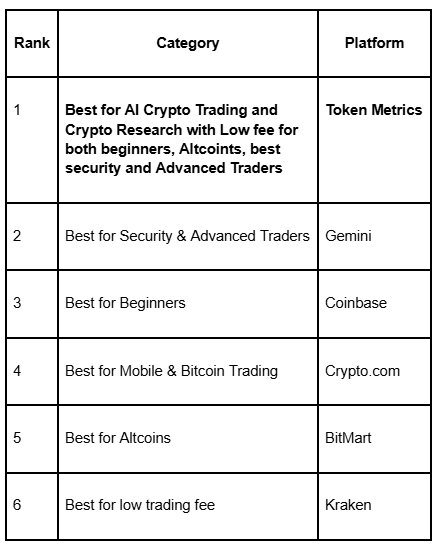
🔝 Top Crypto Platforms for July 2025

🧠 Token Metrics: Best AI Crypto Trading Platform

Token Metrics stands out not as an exchange, but as an AI-powered research, analytics, and trading platform. It gives retail and institutional investors data-driven insights to make smarter trades across any exchange.

Why Token Metrics is #1 for AI Crypto Trading:

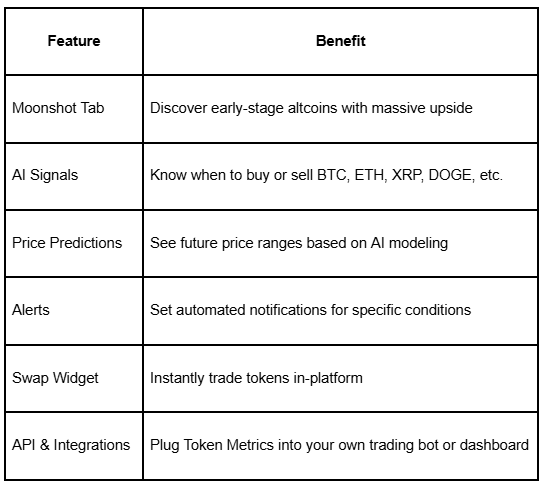
  • AI-Generated Buy/Sell Signals
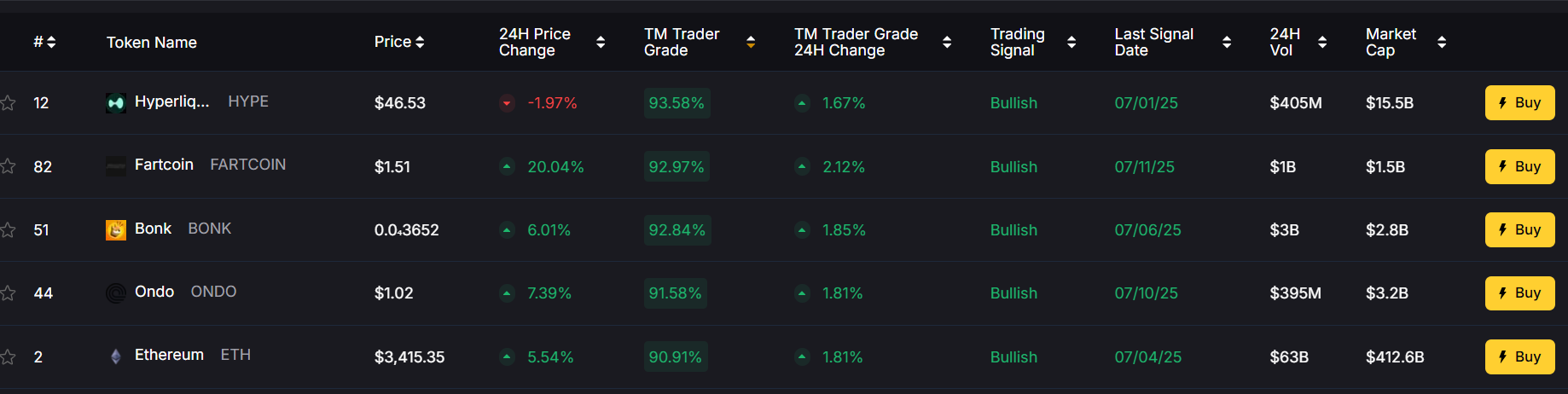
    Token Metrics’ signals dashboard uses over 80 data points to issue bullish or bearish calls on top tokens. For example, the AI turned bullish on Bitcoin on June 28, just before it surged past $118,000.


  • Moonshots for Early-Stage Altcoins
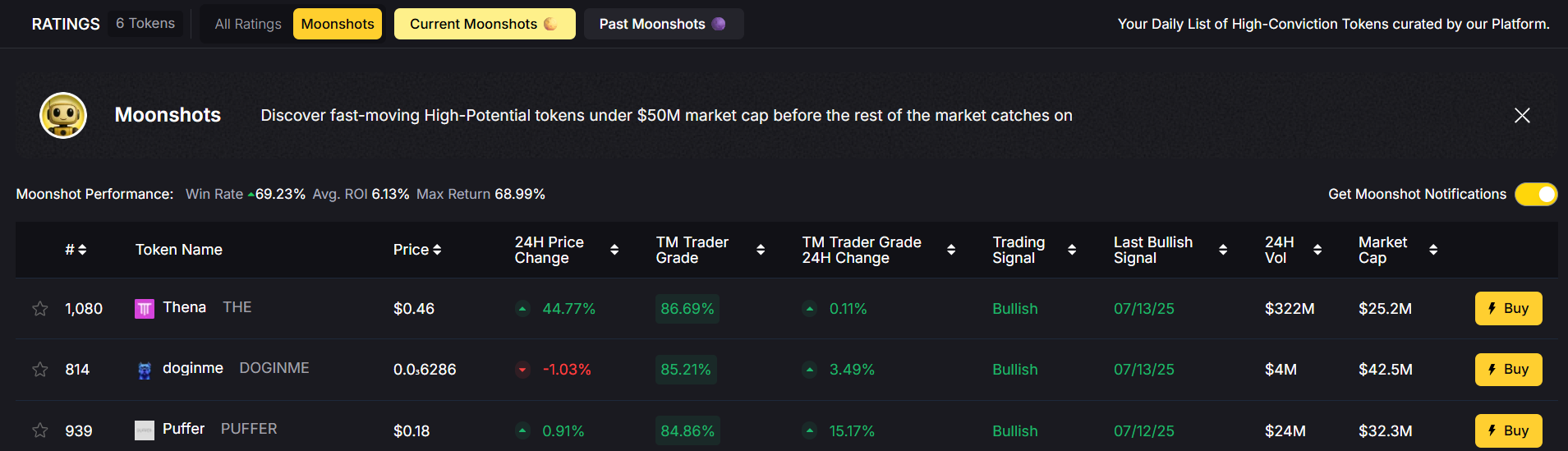
    The Moonshots tab identifies low-cap altcoins with 10x–100x potential based on momentum, AI scores, and liquidity—long before they hit mainstream exchanges.


  • Price Forecasting Models
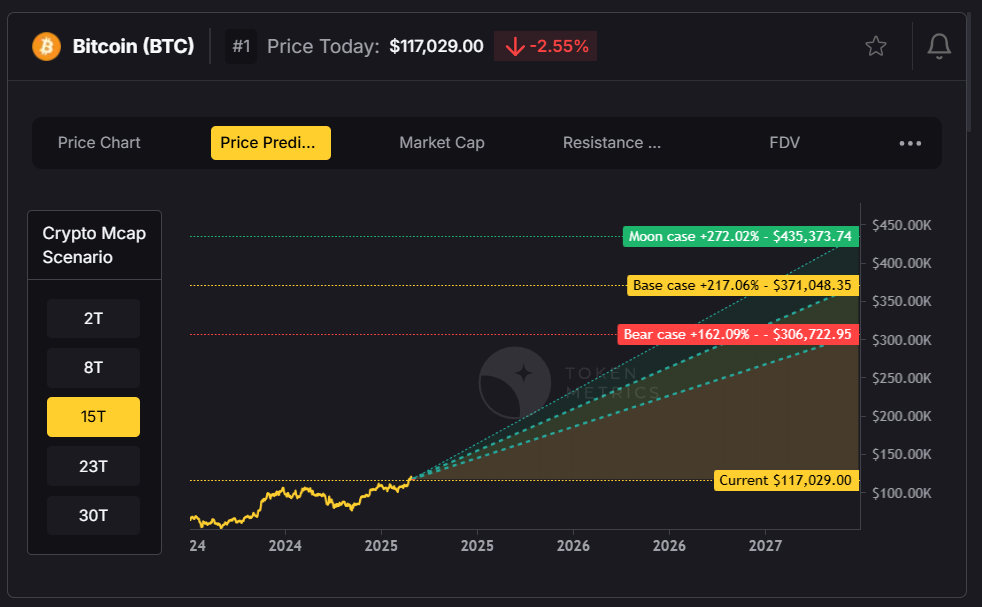
    Token Metrics predicts short-, medium-, and long-term prices for major tokens. Bitcoin’s 2026 forecast, for example, ranges between $150,000–$230,000, based on ETF flows, supply on exchanges, and macroeconomic signals.


  • Custom Alerts
    Users can set alerts based on price, trader grade, or AI signals, delivered instantly via Email, Telegram, SMS, or Slack.


  • Integrated Swap Widget
    You can research, analyze, and buy tokens directly via Token Metrics’ swap widget—all in one dashboard.

Whether you’re trading on Kraken, Coinbase, or Binance, Token Metrics plugs into your strategy and helps you trade with confidence, using real-time AI insights.

⚙️ Top 5 Crypto Exchanges for July 2025

🥇 Kraken – Best for Low Fees

  • Maker Fees: 0.00%–0.25%
  • Taker Fees: 0.10%–0.40%
  • Minimum Deposit: $10
  • Crypto Offered: 300+

Kraken is ideal for fee-sensitive traders. It’s available on web, mobile, desktop, and Kraken Pro. However, it's not available in all U.S. states and lacks FDIC or SIPC insurance.

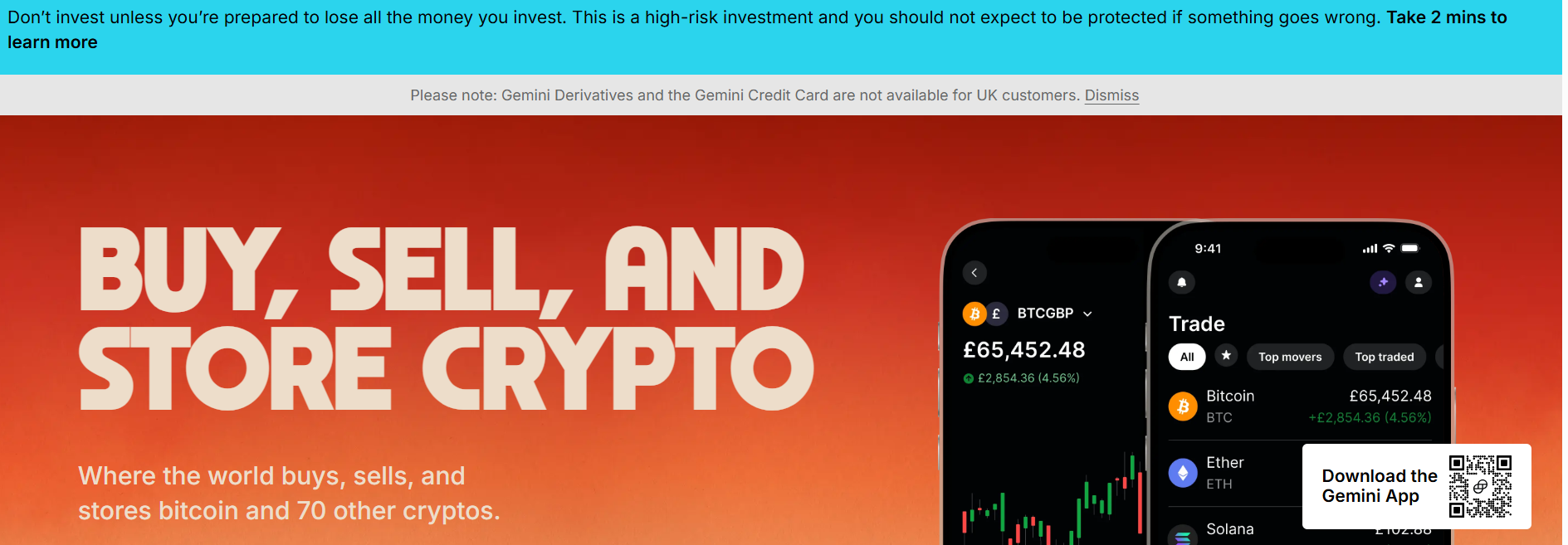
🥈 Gemini – Best for Security & Experienced Traders

  • Maker Fees: 0.00%–0.20%
  • Taker Fees: 0.03%–0.40%
  • Minimum Deposit: $0
  • Crypto Offered: 70

Gemini is the most secure exchange in 2025, with FDIC insurance, crypto insurance, and advanced features through its ActiveTrader terminal. But it has a complex fee structure and limited assets.

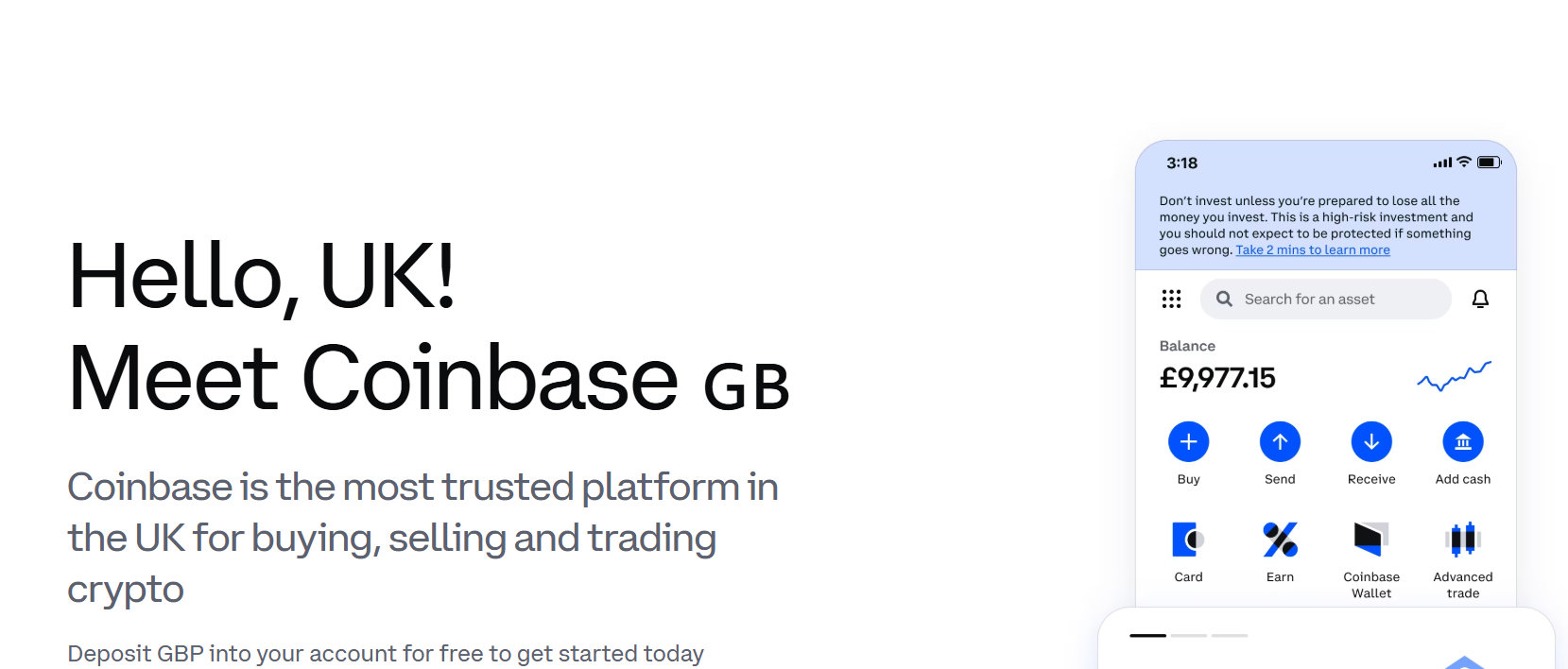
🥉 Coinbase – Best for Beginners

  • Maker Fees: 0.00%–0.40%
  • Taker Fees: 0.05%–0.60%
  • Minimum Deposit: $0
  • Crypto Offered: 240

Coinbase is ideal for newcomers with its clean UI, beginner-friendly tools, and educational content. It’s available in 172 countries, though advanced traders might want more features.

📱 Crypto.com – Best Mobile App & Bitcoin Trading

  • Maker Fees: 0.00%–0.25%
  • Taker Fees: 0.05%–0.50%
  • Minimum Deposit: $20
  • Crypto Offered: 417

With a sleek mobile app and support for Bitcoin options and futures, Crypto.com is perfect for on-the-go traders. However, it only supports a hot wallet and has limited global access.

🪙 BitMart – Best for Altcoins

  • Fees: Varies by tier (0.04%–0.60%)
  • Minimum Deposit: Not disclosed
  • Crypto Offered: 1,700+

BitMart is the best place to find rare altcoins. With copy trading and BitMart Academy, it’s useful for altcoin hunters. But its lack of transparency on security is a concern.

✅ Why Token Metrics Complements These Exchanges

⚠️ Reminder: Crypto Is Risky

Crypto markets are volatile and speculative. While these exchanges and tools can improve your strategy, always do your own research (DYOR) and consult professionals when investing.

Final Thoughts

If you want to trade crypto in July 2025, pair a high-quality exchange like Kraken or Coinbase with a research powerhouse like Token Metrics. Exchanges execute trades—but Token Metrics tells you what to trade, when to trade, and why.

Crypto Basics

What Is an NFT? Complete Guide to Non-Fungible Tokens (2025)

Token Metrics Team
6 min
MIN

Over the past few years, NFTs (Non-Fungible Tokens) have exploded in popularity—revolutionizing the way we think about digital ownership, art, gaming, collectibles, and more. In 2025, NFTs continue to shape the future of the internet, transforming everything from music rights to virtual real estate.

If you're wondering “What is an NFT?” or how they actually work, this guide breaks it down for you. We’ll also explore how AI-powered tools like Token Metrics can help you identify high-value NFT-related tokens and investment opportunities.

🔍 What Does NFT Stand For?

NFT stands for Non-Fungible Token. Let’s break that down:

  • Token: A digital asset that exists on a blockchain.
  • Non-Fungible: It’s unique and cannot be replaced with something else of equal value. (Unlike cryptocurrencies like Bitcoin, where each BTC is the same.)

So, an NFT is a unique digital asset stored on a blockchain, representing ownership of a specific item—like artwork, music, a tweet, a game character, or a piece of virtual land.

🎨 What Can Be an NFT?

NFTs aren’t just limited to pixelated apes or JPEGs. In 2025, NFTs power a broad range of digital assets:

  • Digital Art: Artworks, animations, and generative art
  • Collectibles: Rare items like trading cards or profile picture (PFP) projects
  • Gaming Assets: In-game skins, weapons, characters, and land (e.g., in The Sandbox or Decentraland)
  • Music and Media: Songs, albums, and exclusive content drops
  • Virtual Real Estate: Land parcels in the metaverse
  • Domain Names: Blockchain-based domain ownership
  • Identity & Access: Membership passes, event tickets, or certification credentials

Each NFT has a unique identifier and metadata that distinguish it from any other asset.

🛠️ How Do NFTs Work?

NFTs are built and recorded on blockchains, most commonly on Ethereum using ERC-721 or ERC-1155 standards. Here’s how they work:

  1. Minting: Turning a digital file into a token on the blockchain
  2. Metadata: Storing details like title, creator, image URL, and traits
  3. Ownership: A smart contract verifies the wallet that owns the NFT
  4. Transferability: NFTs can be sold, traded, or gifted using marketplaces

Because of blockchain immutability, ownership is transparent, verifiable, and permanent.

📈 Why Are NFTs Valuable?

Several reasons explain the rising value and popularity of NFTs:

  • Digital Ownership: You own the asset—not a platform
  • Proven Scarcity: Many NFTs are limited in supply
  • Creator Royalties: Artists earn fees on secondary sales
  • Utility & Access: Some NFTs unlock real-world benefits, games, or private groups
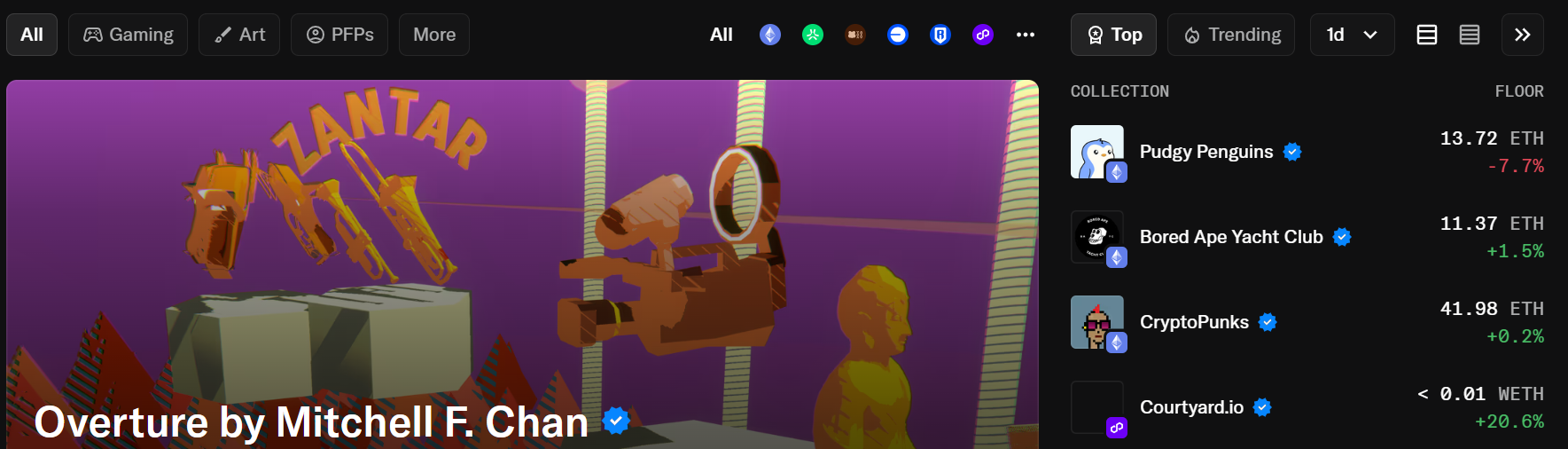
  • Social Status: PFPs like CryptoPunks or Bored Ape Yacht Club are digital status symbols
  • Speculation: Many treat NFTs as investments, betting on future appreciation

In 2025, NFTs have gone beyond hype to form the foundation of Web3 identity and ownership.

💰 How to Buy an NFT

To buy an NFT, you’ll need:

  1. A crypto wallet (like MetaMask)
  2. Some ETH or other supported crypto for payment and gas fees
  3. An NFT marketplace like OpenSea, Blur, Magic Eden, or Rarible

Steps to Buy:

  • Fund your wallet
  • Connect to a marketplace
  • Browse collections
  • Click “Buy Now” or place a bid
  • Approve the transaction

Once purchased, the NFT is transferred to your wallet and viewable on your profile.

⚠️ Are NFTs Safe?

NFTs are secure if you follow best practices. However, scams and phishing attacks are common.

Security Tips:

  • Never share your seed phrase
  • Verify contract addresses before minting
  • Don’t connect your wallet to unknown sites
  • Use hardware wallets for high-value NFTs
  • Bookmark official sites

🧠 How Token Metrics Helps You Identify NFT-Related Investments

NFTs are not just collectibles—they’re tied to blockchain ecosystems and tokens. Platforms like Token Metrics help you identify high-potential NFT projects, gaming ecosystems, and utility tokens powering the space.

✅ How Token Metrics Helps:

  • AI-powered Grades: See which NFT-related tokens are trending with Trader & Investor Grades
  • Moonshots Tab: Find small-cap NFT tokens with 10x–100x potential
  • Thematic Indices: Invest in curated NFT indices powered by Token Metrics AI
  • Token Details Page: Dive deep into any NFT-related token’s fundamentals, holders, and performance

Whether it’s $IMX, $MAGIC, $APE, or a metaverse play like $MANA, Token Metrics gives you a data-driven edge.

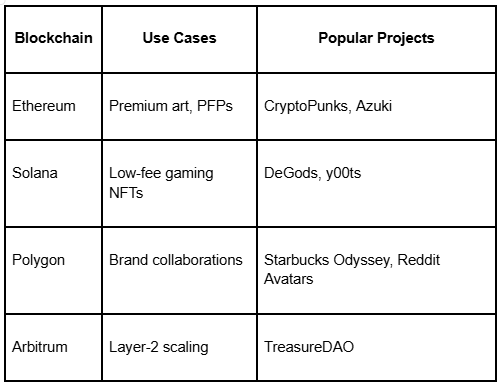
🧩 Popular NFT Blockchains in 2025

NFTs are no longer limited to Ethereum. In 2025, several chains offer faster, cheaper minting and trading:

Token Metrics tracks all these chains, offering a cross-chain perspective for NFT investing.

🪙 What Are NFT Tokens?

Many NFT ecosystems have their own fungible tokens used for governance, staking, or ecosystem rewards. Examples include:

  • $APE (Bored Ape Yacht Club)
  • $MAGIC (TreasureDAO)
  • $IMX (Immutable X)
  • $LOOKS (LooksRare)
  • $BLUR (Blur marketplace)

These tokens can rise in value based on NFT trading volume, user adoption, and staking incentives. Token Metrics’ analytics help traders spot breakout opportunities early.

🚀 Future of NFTs in 2025 and Beyond

NFTs are evolving fast. In 2025, they’re used for more than art and gaming:

  • NFTs as IDs: Used for logging into apps and verifying reputation
  • Real-world assets: Tokenizing real estate, music royalties, and legal contracts
  • DeFi integrations: NFTs used as collateral in lending protocols
  • Event access: NFTs as tickets for IRL and virtual experiences
  • AI x NFTs: Generative AI tools minting and managing NFT metadata autonomously

Expect continued innovation, and stay ahead using tools like Token Metrics.

🧠 Final Thoughts: Are NFTs Worth It?

NFTs are more than a trend — they represent the digitization of ownership in the Web3 era. From art and identity to games and finance, NFTs unlock new possibilities for creators and collectors alike.

If you're looking to explore NFT opportunities beyond collectibles—Token Metrics gives you the data, AI tools, and insights you need to invest intelligently.

Crypto Basics

How to Create a Crypto Wallet: A Complete Beginner’s Guide (2025)

Token Metrics Team
6 min
MIN

As the popularity of cryptocurrencies continues to grow in 2025, more people are seeking safe and secure ways to manage their digital assets. The first step in your crypto journey? Creating a crypto wallet.

In this guide, we’ll explain:

  • What a crypto wallet is
  • Different types of wallets
  • How to create one (step-by-step)
  • Tips for securing your wallet
  • How Token Metrics can help you trade smarter after setup

🪙 What Is a Crypto Wallet?

A crypto wallet is a digital tool that allows you to store, receive, and send cryptocurrencies like Bitcoin, Ethereum, and thousands of altcoins. Instead of holding physical money, it stores your private and public keys, giving you access to your blockchain assets.

Two Major Types:

  1. Hot Wallets – connected to the internet (ideal for active users)
  2. Cold Wallets – offline and more secure (ideal for long-term storage)

Whether you're buying Bitcoin for the first time or diving into DeFi tokens, you'll need a crypto wallet to safely store and manage your coins.

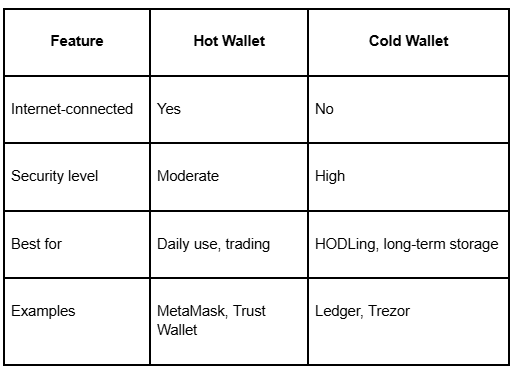
🔥 Hot Wallets vs. 🧊 Cold Wallets

Hot wallets are easier to set up and use, while cold wallets offer greater protection against hacks and malware.

🛠️ How to Create a Crypto Wallet (Step-by-Step)

Option 1: Creating a Hot Wallet (e.g., MetaMask or Trust Wallet)

Step 1: Download the App or Browser Extension

Step 2: Create a New Wallet

  • Click “Create a Wallet”
  • Set a strong password

Step 3: Backup Your Recovery Phrase

  • Write down the 12 or 24-word seed phrase
  • Store it offline (NOT on your phone or computer)

Step 4: Confirm Your Recovery Phrase

  • MetaMask will ask you to re-enter it to ensure it's saved correctly

Step 5: Wallet is Ready

  • You can now receive, send, and store ETH, ERC-20 tokens, and NFTs

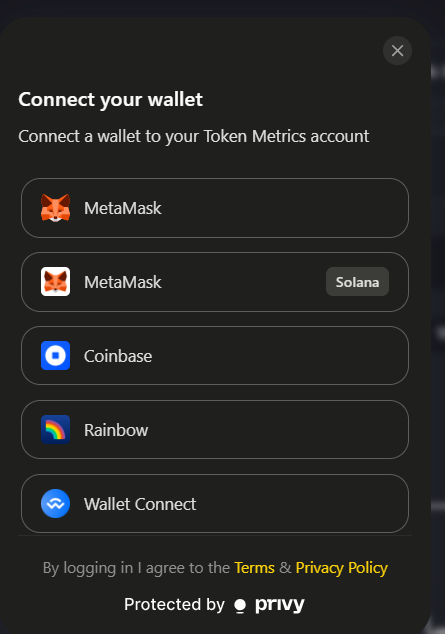
Pro Tip: Connect your wallet to Token Metrics to explore trading signals, moonshots, and AI analytics directly.

Option 2: Creating a Cold Wallet (e.g., Ledger Nano X)

Step 1: Buy a Ledger or Trezor device

  • Always order from the official website to avoid tampered devices

Step 2: Install Wallet Software

  • Download Ledger Live or Trezor Suite

Step 3: Set Up Device and PIN

  • Follow the on-screen instructions
  • Create a secure PIN code

Step 4: Write Down Your Recovery Phrase

  • The device will show a 24-word seed phrase
  • Write it down and store it in a fireproof safe

Step 5: Start Receiving Crypto

  • Use Ledger Live or Trezor Suite to generate wallet addresses
  • Send crypto from exchanges or other wallets

Pro Tip: Use your cold wallet to store moonshots and long-term assets, then analyze performance using Token Metrics Portfolio tools.

🛡️ Tips for Securing Your Crypto Wallet

  1. Never share your seed phrase
    Anyone with your seed phrase can steal your funds

  2. Enable Two-Factor Authentication (2FA)
    For added protection on wallet apps and exchange accounts

  3. Use a strong, unique password
    Avoid reusing passwords across multiple accounts

  4. Avoid phishing sites
    Always double-check URLs before connecting your wallet

  5. Keep backups offline
    Use metal seed plates or paper stored in multiple safe locations

🔎 How Token Metrics Supports Your Wallet Journey

While Token Metrics doesn't create wallets, it integrates seamlessly with your Web3 wallets to help you maximize profits and minimize risks.

1. AI-Powered Ratings

Once your wallet is set up, use Token Metrics to find top-rated tokens across risk levels, market caps, and sectors.

2. Moonshots Dashboard

Explore early-stage tokens with massive upside using the Moonshots tab—only available to Premium members.

3. Real-Time Alerts

Set up alerts for price, investor grade, or bullish/bearish signals—and receive them directly to your connected wallet’s contact info.

4. Track Your Portfolio

Monitor wallet performance across tokens with a real-time dashboard powered by on-chain data.

📦 What Can You Store in Your Crypto Wallet?

Different wallets support different blockchains, so always check compatibility before sending assets.

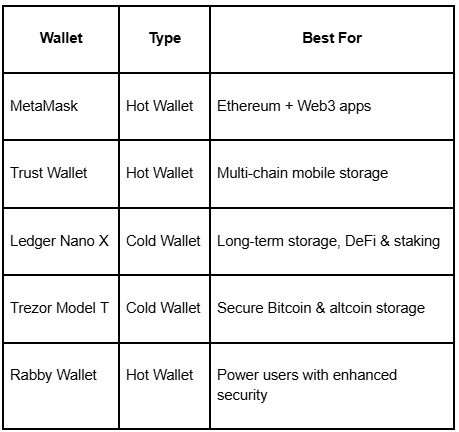
📲 Best Wallets to Use in 2025

🔄 Wallet Creation FAQs

Q: Is creating a crypto wallet free?
Yes, most wallet apps like MetaMask or Trust Wallet are free.

Q: Can I create multiple wallets?
Absolutely. Many investors use different wallets for different purposes (e.g., trading, staking, savings).

Q: What happens if I lose my recovery phrase?
You lose access to your wallet permanently. Always store it securely.

Q: Do I need a wallet to use Token Metrics?
No, but connecting a wallet enhances your experience by allowing you to monitor portfolios, moonshots, and alerts in real time.

🧠 Final Thoughts

Creating a crypto wallet is your gateway to the decentralized world of digital finance. Whether you’re a seasoned trader or a beginner buying your first token, having a secure wallet is non-negotiable.

By choosing the right wallet (hot or cold), securing your keys, and combining it with powerful tools like Token Metrics, you can build a smart, secure, and profitable crypto journey.

Choose from Platinum, Gold, and Silver packages
Reach with 25–30% open rates and 0.5–1% CTR
Craft your own custom ad—from banners to tailored copy
Perfect for Crypto Exchanges, SaaS Tools, DeFi, and AI Products