Crypto Basics

Bear Trap - What It Is and How To Identify It?

Learn all about the bear trap trading, including what it is, how it works, and how to spot it in the market.
Token Metrics Team
7 Minutes
MIN

As traders, we all want to achieve the best possible results when it comes to making profits. But, in reality, markets can be unpredictable, and trends can reverse at any time. 

This is where analyzing trading patterns come into play. One such pattern is the bear trap, which is designed to take advantage of price movements. This is a situation where the market appears to be heading in one direction, only to suddenly reverse and move in the opposite direction.

In this article, we'll take a closer look at the bear trap, how it works, how to identify it with examples and most importantly, how you can avoid falling into it.

What is a Bear Trap?

A bear trap occurs when the market appears to be entering a downward trend, and traders start selling their assets to avoid losses. However, instead of continuing to decline, the market suddenly reverses and begins to rise again, trapping the bearish traders who sold their assets in anticipation of a further drop.

One of the main reasons why bear traps occur is due to market manipulation by large players such as institutional investors or hedge funds. They can create a false sense of bearish sentiment by selling large quantities of a particular asset, which causes smaller traders to panic and start selling as well.

Once these smaller traders have sold their assets, the large players can then start buying them back at a lower price, which drives up the market price and causes the bearish traders to incur significant losses.

How Does Bear Trap Work?

A bear trap is created when traders deliberately sell large volumes of a particular asset in order to push the price of that asset down. This creates a false impression of the market declining, leading other traders to believe that the asset is losing value and to sell their positions.

Once the price of the asset reaches a certain low point, the traders who created the bear trap begin to buy up large volumes of the asset at the artificially low price, thereby increasing demand and driving the price back up.

Here are some of the ways that bear traps work:

  1. False Signals - Traders create fake signals to suggest that the market is going to drop. These signals may include a sudden increase in selling volume or a sharp drop in prices. The purpose of these signals is to convince investors to sell their assets, which in turn drives the price even lower.
  2. Spread FUD - Fear, uncertainty, and doubt (FUD) are common tactics used by traders to create a bearish market. Traders will spread rumors or news stories that suggest that the market is about to crash, causing investors to panic and sell their assets.
  3. Sell-Off - Traders initiate a massive sell-off of a particular asset, causing its price to plummet. This creates a domino effect, as other investors begin to panic and sell their assets as well, leading to a significant drop in the market's overall value.
  4. Short Selling - Traders can also use short selling to initiate a bear trap. In short selling, a trader borrows assets from another investor and then sells them at the current market price. The trader then waits for the price to drop before buying the assets back at a lower price, returning them to the original owner and pocketing the difference.

A bear trap is a manipulative tactic used by traders to make a profit by artificially creating a downward trend in the market. Investors should be aware of these tactics to avoid falling prey to a bear trap.

How to Identify a Bear Trap?

Identifying a bear trap is not always easy, but there are some key indicators to look out for. Firstly, if the market appears to be moving in a particular direction for an extended period, it's important to be cautious as this may be a sign of manipulation.

Another indicator to look out for is a sudden and unexpected shift in market sentiment. If the market suddenly starts to move in the opposite direction to what was expected, it's important to be cautious and assess the situation carefully.

Bear Trap Chart

Let's take a look at the chart for a better understanding of how a bear trap works. In the chart, the price of an asset had been steadily rising, but then suddenly dipped below a trend line that acted as support. This made it look like the support would be broken and that the price would continue to fall. However, within the same time period, the price went back up and continued to rise. 

Image Resource - www.makeuseof.com

Traders who acted too quickly and sold their shares, when the price broke the trend line would have been "bear-trapped," as the price quickly rose again, and they missed out on potential profits. 

On the other hand, traders who waited for the price to close outside of the trend line and make a retest would have been able to avoid the bear trap and make a profitable trade. 

Example of a Bear Trap

One real-life example of a bear trap in the crypto market occurred in May 2021, when the price of Bitcoin dropped from its all-time high of nearly $65,000 to around $30,000. Many investors sold their Bitcoin at this point, fearing that the market would continue to decline. 

However, Bitcoin's price rebounded to nearly $40,000 just a few weeks later, trapping those who sold out of the market and missing out on potential profits. This is a classic example of how a bear trap can occur in the crypto market, as fear and uncertainty can lead to hasty decisions that result in missed opportunities.

How to Avoid Falling into a Bear Trap?

Avoiding a bear trap requires a combination of vigilance, patience, and discipline. Firstly, it's important to conduct thorough research and analysis before making any trading decisions. 

This will help you to identify potential risks and opportunities and make informed decisions based on data and evidence rather than emotions. It's also important to have a solid trading plan in place and stick to it, even in the face of market volatility. This will help you to avoid impulsive decisions that can lead to losses. 

Another key strategy for avoiding bear traps is to monitor the actions of large players in the market. By keeping an eye on institutional investors and hedge funds, you can gain insights into market sentiment and potentially identify manipulation before it affects your trades.

Difference Between Bear Trap and Bull Trap

As an investor, it's important to be aware of the potential pitfalls that can come with trading in the market. Two common traps that investors may fall into are bear traps and bull traps. 

Here are some pointers to help you differentiate between a bear trap and a bull trap:

1. A bear trap is a situation where prices are expected to continue to fall, and investors sell their positions to avoid further losses. However, the market then unexpectedly rebounds, trapping these investors and causing them to miss out on potential gains. On the other hand, a bull trap is a situation where investors anticipate a market upswing and buy in, only for prices to fall, resulting in losses.

2. In a bear trap, investors tend to be overly pessimistic and sell their positions too early. This can lead to missed opportunities for profits. In contrast, in a bull trap, investors tend to be overly optimistic and buy in too early, resulting in losses as the market dips.

3. Bear traps are more common in bearish markets, where the overall trend is downwards. Bull traps are more common in bullish markets, where the overall trend is upwards.

4. In a bear trap, the market may rebound due to unexpected positive news or a sudden surge in demand. In a bull trap, the market may drop due to negative news or a sudden decrease in demand.

5. Bear traps tend to occur when investors are driven by fear and panic, while bull traps tend to occur when investors are driven by greed and optimism.

Conclusion

In summary, bear traps can be devastating for traders who are caught on the wrong side of the market. However, with careful research, analysis, and monitoring, it's possible to avoid falling into these traps and making profitable trades. 

By remaining vigilant and disciplined, traders can navigate even the most challenging market conditions and achieve success in their trading endeavors.

Disclaimer

The information provided on this website does not constitute investment advice, financial advice, trading advice, or any other sort of advice and you should not treat any of the website's content as such.

Token Metrics does not recommend that any cryptocurrency should be bought, sold, or held by you. Do conduct your own due diligence and consult your financial advisor before making any investment decisions.

Build Smarter Crypto Apps &
AI Agents in Minutes, Not Months
Real-time prices, trading signals, and on-chain insights all from one powerful API.
Grab a Free API Key
Token Metrics Team
Token Metrics Team

Recent Posts

Crypto Basics

What Is a Bitcoin ETF? A Beginner’s Guide to Understanding Bitcoin Exchange-Traded Funds in 2025

Token Metrics Team
8 min
MIN

The cryptocurrency world continues to evolve rapidly, and one of the most significant milestones in recent years has been the approval and rise of Bitcoin ETFs. If you’ve ever wondered, “What is a Bitcoin ETF and why is it important?” — this guide breaks it down in simple terms.

In this highly informative blog, we’ll explore:

  • What a Bitcoin ETF is
  • Types of Bitcoin ETFs
  • Benefits and risks
  • Why Bitcoin ETFs matter for crypto adoption
  • How to analyze Bitcoin ETFs using Token Metrics tools

📈 What Is a Bitcoin ETF?

A Bitcoin ETF (Exchange-Traded Fund) is a financial product that allows investors to gain exposure to the price movements of Bitcoin without having to own or manage actual Bitcoin.

Just like buying a stock, investors can purchase shares of a Bitcoin ETF through traditional brokerage accounts. These shares represent ownership in a fund that tracks the price of Bitcoin.

In essence, a Bitcoin ETF bridges the gap between traditional finance and crypto investing.

🔄 How Does a Bitcoin ETF Work?

Bitcoin ETFs are created and managed by large financial institutions or asset managers. These funds:

  1. Buy Bitcoin directly (in spot ETFs), or
  2. Invest in Bitcoin futures contracts (in futures ETFs)
  3. Issue ETF shares that track the price performance of Bitcoin

These shares are then listed on stock exchanges like the NYSE, Nasdaq, or CBOE, where they can be bought or sold just like regular stocks.

🔍 Types of Bitcoin ETFs

There are two main types of Bitcoin ETFs:

1. Spot Bitcoin ETFs

  • Hold actual Bitcoin in custody
  • Track the real-time market price of Bitcoin
  • Provide direct exposure to Bitcoin’s price
  • Approved in the U.S. starting in early 2024 (e.g., BlackRock’s iShares Bitcoin Trust)

2. Futures-Based Bitcoin ETFs

  • Track Bitcoin futures contracts (derivatives)
  • Do not hold actual Bitcoin
  • Subject to contango and tracking errors
  • Were the first type approved (e.g., ProShares BITO)

In 2025, spot ETFs are considered superior due to their more accurate and direct exposure.

✅ Benefits of Bitcoin ETFs

Bitcoin ETFs offer several key advantages:

1. Accessibility

Investors can buy Bitcoin exposure through traditional brokerage platforms like Fidelity, Schwab, or Robinhood—no need for crypto wallets or private keys.

2. Regulation and Security

ETFs are regulated by institutions like the SEC and are managed by trusted financial firms, offering greater transparency and investor protection.

3. Tax Efficiency

Buying and selling ETFs may provide more favorable tax treatment compared to transacting in physical Bitcoin directly.

4. Institutional Adoption

Bitcoin ETFs enable pension funds, hedge funds, and banks to legally and easily gain exposure to BTC. Inflows from these entities have driven billions into Bitcoin in 2024 and 2025.

⚠️ Risks of Bitcoin ETFs

Despite their benefits, Bitcoin ETFs come with a few risks:

1. Price Tracking Errors

Futures ETFs may deviate from Bitcoin’s spot price due to volatility and contract rollover costs.

2. Management Fees

ETF providers charge an annual fee (0.20%–1.00%), which can reduce long-term returns.

3. Lack of Custody Control

You don’t actually own Bitcoin when you hold an ETF—so you can’t transfer it or use it for DeFi or crypto payments.

4. Market Volatility

Bitcoin remains a highly volatile asset. ETF shares may still experience massive price swings.

🏛️ Why Bitcoin ETFs Matter in 2025

The approval and adoption of Bitcoin ETFs mark a turning point in mainstream crypto acceptance. Here’s why:

  • Over $60 billion has flowed into U.S.-listed Bitcoin ETFs since January 2024
  • Institutions like BlackRock, Fidelity, and ARK Invest now actively manage Bitcoin exposure
  • Bitcoin ETF holdings reduce circulating supply, contributing to BTC’s price surge past $118,000 in mid-2025
  • Countries outside the U.S., including Canada and Hong Kong, are expanding their Bitcoin ETF offerings

🤖 How Token Metrics Helps You Analyze Bitcoin ETFs

While traditional investors focus on ETF tickers, smart crypto investors turn to platforms like Token Metrics to get deeper insights.

🔹 AI-Powered Bitcoin Forecasts

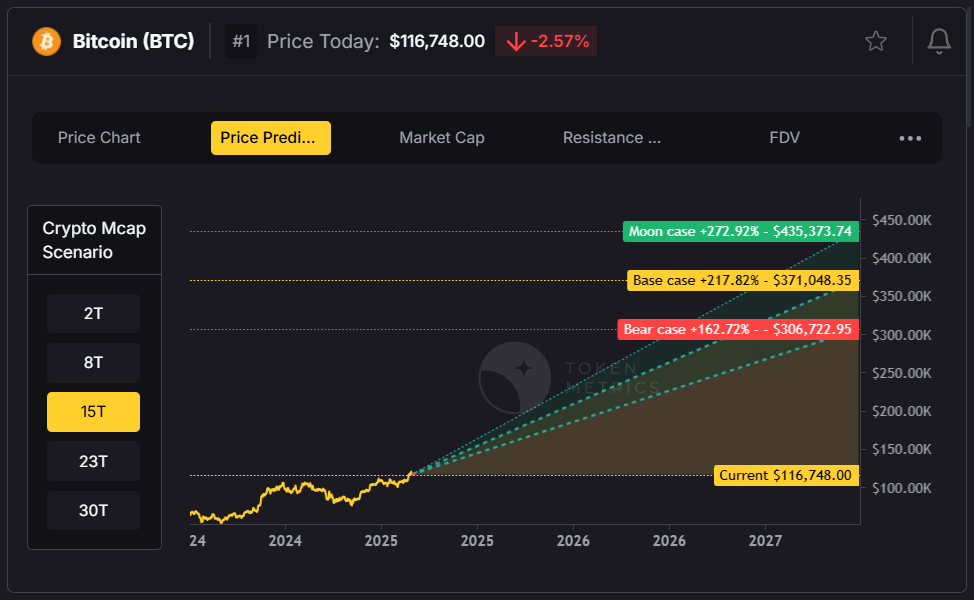
Token Metrics uses machine learning to predict short- and long-term Bitcoin price trends. As of June 28, the AI turned bullish, signaling BTC's breakout past $110,000.

🔹 Exchange Reserve Monitoring

The platform tracks Bitcoin’s exchange reserves, showing a drop from 3.25M to 2.55M BTC—a bullish signal due to reduced sell-side pressure.

🔹 ETF Flow Analysis

Token Metrics integrates on-chain data and fund inflows to measure:

  • How much BTC ETFs are buying
  • Impact on liquidity and price
  • Sentiment shifts among institutional investors

🔹 Alerts and Grades

You can set up custom price alerts for Bitcoin and receive Trader and Investor Grades based on 80+ real-time metrics.

These tools allow you to react faster than ETF investors relying on traditional media or quarterly reports.

📈 Bitcoin ETF Performance So Far

As of July 2025:

  • BlackRock’s iShares Bitcoin Trust (IBIT) holds over $18B in BTC
  • Fidelity’s ETF surpassed $12B in AUM
  • ETF buying pressure is one of the main drivers behind Bitcoin’s 2025 bull run

💡 Pro Tips Before Investing in a Bitcoin ETF

  1. Compare fees across ETFs (lower = better for long-term holdings)
  2. Choose spot ETFs over futures ETFs for more accurate performance
  3. Use Token Metrics to track BTC signals and time your entry
  4. Understand your goals—ETFs are great for passive exposure but not for on-chain crypto utility

🧠 Final Thoughts

A Bitcoin ETF is one of the easiest ways to gain exposure to Bitcoin in 2025. Whether you’re a traditional investor looking to diversify or a crypto-native looking for a regulated option, ETFs offer accessibility, safety, and legitimacy.

But don’t stop at just buying shares—pair your ETF exposure with real-time intelligence from Token Metrics.

With institutional momentum accelerating, regulatory clarity improving, and AI tools like Token Metrics giving you an edge, there’s never been a better time to understand and invest in Bitcoin ETFs.

Crypto Basics

Hot Wallets vs. Cold Wallets: What’s the Difference and Which Crypto Wallet To Use in 2025?

Token Metrics Team
8 min
MIN

As cryptocurrency adoption accelerates globally in 2025, one critical question for both beginners and experienced investors is: Where should you store your crypto assets safely?

The answer lies in understanding the difference between hot wallets and cold wallets — the two main categories of cryptocurrency storage. This highly informative and SEO-optimized blog will help you understand:

  • What hot and cold wallets are
  • Key differences between them
  • Pros and cons of each
  • Which one is right for you
  • How platforms like Token Metrics help you choose and manage your wallet securely

🔐 What Is a Cryptocurrency Wallet?

A crypto wallet stores your private and public keys, enabling you to send, receive, and manage digital assets like Bitcoin, Ethereum, or altcoins. Unlike traditional bank accounts, crypto wallets give you full control over your funds — but with that control comes the responsibility of securing them.

Wallets are typically categorized as:

  • Hot Wallets – connected to the internet
  • Cold Wallets – offline storage solutions

⚡ What Is a Hot Wallet?

A hot wallet is a crypto wallet that is connected to the internet. It’s designed for easy access and quick transactions, making it ideal for active traders and everyday use.

🔹 Examples of Hot Wallets:

  • Web wallets: MetaMask, Trust Wallet, Phantom, Rainbow
  • Desktop wallets: Exodus, Electrum
  • Mobile wallets: Coinbase Wallet, Atomic Wallet
  • Exchange wallets: Binance, Coinbase (custodial)

✅ Pros of Hot Wallets:

  • Instant access to crypto
  • User-friendly interfaces
  • Ideal for frequent trading or DeFi
  • Compatible with most crypto platforms

❌ Cons of Hot Wallets:

  • Vulnerable to hacks and phishing
  • Depends on internet connection
  • Risk of malware or keylogging
  • Not ideal for large holdings

Hot wallets are often recommended for storing smaller amounts of crypto for daily use.

🧊 What Is a Cold Wallet?

A cold wallet refers to any crypto wallet that is not connected to the internet. It’s a form of offline storage designed for maximum security.

🔹 Examples of Cold Wallets:

  • Hardware wallets: Ledger Nano X, Trezor Model T
  • Paper wallets: Printed QR codes with private keys
  • Air-gapped computers: Devices permanently offline

✅ Pros of Cold Wallets:

  • Immune to online attacks
  • Long-term storage for HODLing
  • Control over private keys
  • Ideal for institutional and high-net-worth users

❌ Cons of Cold Wallets:

  • Less convenient for quick access
  • Physical loss or damage is a risk
  • Requires technical knowledge
  • More expensive (hardware wallets can cost $50–$200)

Cold wallets are ideal for long-term investors storing large amounts of crypto.

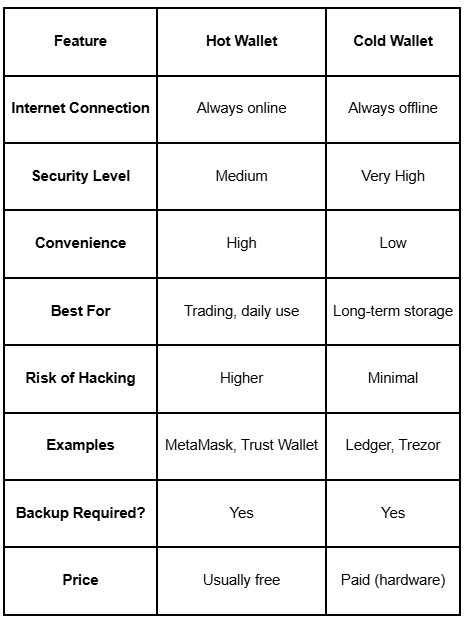
🔄 Hot Wallet vs. Cold Wallet: Key Differences

🔧 How to Use Hot and Cold Wallets Together (Hybrid Strategy)

Many crypto investors in 2025 use a dual-wallet strategy:

  • Hot wallet for trading, staking, and DeFi
  • Cold wallet for long-term storage and high-value assets

This balances convenience and security while minimizing exposure to threats.

For example:

  • Use a hot wallet like MetaMask to access the Token Metrics Moonshots tab and buy trending altcoins.
  • Transfer profits to your cold wallet (e.g., Ledger) for safekeeping.

🧠 How Token Metrics Helps You Manage Wallet Security

🔹 Wallet Integrations

Token Metrics supports:

  • MetaMask, WalletConnect, and other hot wallets
  • Portfolio tracking synced with your wallet
  • Real-time alerts when assets in your wallet are surging or at risk

🔹 Smart Trading with AI

Token Metrics helps reduce the need to frequently move funds by:

  • Identifying only high-quality tokens using AI Trader and Investor Grades
  • Sending price alerts, so you know when to buy/sell
  • Providing in-platform swap tools for direct trades from your hot wallet

🔹 Moonshot Monitoring

For early-stage altcoins, timing is everything. Token Metrics lets you:

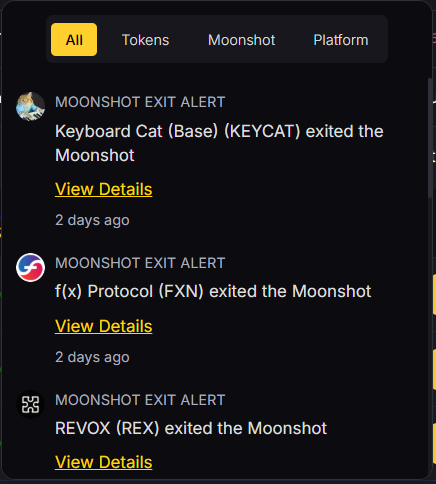
  • Monitor your Moonshot investments
  • Get notified when to take profits or exit
  • Transfer to cold storage with a single click

🔒 Hot Wallet Security Tips (2025 Edition)

If you’re using a hot wallet:

  • Enable 2FA (Two-Factor Authentication)
  • Use a hardware wallet to sign large transactions
  • Avoid clicking suspicious links or connecting to unknown dApps
  • Disconnect wallets after use

Always back up your seed phrase and store it securely offline.

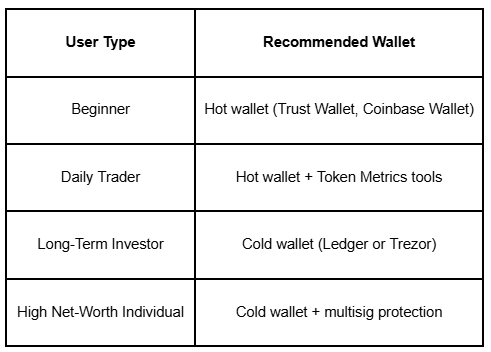
💬 Which Wallet Should You Use?

‍

🧩 Final Thoughts

Whether you’re storing $100 or $100,000 in cryptocurrency, your wallet choice directly impacts your security, accessibility, and peace of mind.

  • Hot wallets offer convenience, but must be used with caution
  • Cold wallets offer security, but come with trade-offs in usability
  • Platforms like Token Metrics bridge the gap by offering real-time insights, wallet integrations, and AI-driven trading tools

In 2025, don’t just store your crypto—store it wisely. Combine hot and cold wallet strategies and leverage tools like Token Metrics to build a secure, intelligent crypto portfolio.

Crypto Basics

How to Trade Cryptocurrency in 2025 – Best Crypto Trading Tools

Token Metrics Team
8 min
MIN

Cryptocurrency trading has rapidly evolved into a global financial movement. With the rise of decentralized finance (DeFi), institutional adoption, and advanced AI tools, trading crypto in 2025 is more accessible—and more profitable—than ever before. But with great opportunity comes great risk, especially if you trade without strategy or insights.

In this highly informative beginner’s guide, we’ll break down how to trade cryptocurrency step by step, the different types of trading strategies, and how platforms like Token Metrics help you make smarter, AI-powered decisions.

🔍 What Is Cryptocurrency Trading?

Cryptocurrency trading involves buying and selling digital assets like Bitcoin (BTC), Ethereum (ETH), Solana (SOL), or thousands of other tokens to profit from price fluctuations. Traders analyze price movements, market trends, and use technical or fundamental data to time their entries and exits.

Unlike traditional stock markets, crypto markets are:

  • Open 24/7
  • Highly volatile
  • Borderless and decentralized
  • Powered by blockchain technology

📊 Types of Cryptocurrency Trading

Understanding the different styles of trading can help you pick a strategy that fits your goals and risk tolerance.

1. Day Trading

  • Involves multiple trades in a single day
  • Aims to profit from short-term price swings
  • Requires constant monitoring and fast decision-making

2. Swing Trading

  • Positions are held for days or weeks
  • Based on momentum and trend reversal patterns
  • Suitable for part-time traders

3. Scalping

  • Ultra-short-term trading
  • Makes small profits on tiny price movements
  • High frequency, high risk

4. Position Trading

  • Long-term holding based on fundamentals
  • Traders buy during dips and hold until a large move
  • Also called "trend trading"

5. Automated Trading / AI Trading

  • Uses bots or AI models to execute trades
  • Ideal for those who want data-driven, emotion-free trading
  • Best when paired with platforms like Token Metrics

🧭 How to Trade Cryptocurrency: Step-by-Step

✅ Step 1: Choose a Crypto Exchange or Trading Platform

Select a reputable platform to execute trades. Popular choices in 2025 include:

  • Token Metrics (for AI-backed trade insights
  • ‍Binance
  • Coinbase Pro
  • Kraken
  • OKX

Each platform offers different tools, liquidity, and trading pairs.

✅ Step 2: Fund Your Account

Deposit funds using:

  • Bank transfer
  • Debit/credit card
  • Stablecoins (USDT, USDC)
  • Crypto from your wallet

Token Metrics integrates wallet access, swap functionality, and DeFi bridges so you can trade directly from your dashboard.

✅ Step 3: Analyze the Market

Before you trade, analyze:

  • Price charts (technical analysis)
  • Volume and momentum
  • News and narratives
  • On-chain data and token grades

🔹 Token Metrics AI Grades:

  • Trader Grade: Measures short-term trading potential
  • Investor Grade: Rates long-term strength

These AI-generated scores help you find the most promising tokens, instantly filtering thousands of coins by risk and opportunity.

✅ Step 4: Place a Trade

Choose your trading pair (e.g., BTC/USDT), then:

  • Market order: Buy/sell immediately at current price
  • Limit order: Set your own buy/sell price
  • Stop-loss: Exit a trade automatically if price drops below a certain level
  • Take profit: Lock in gains once a target is hit

Token Metrics provides real-time buy/sell alerts powered by AI signals, helping you avoid emotional trading.

✅ Step 5: Monitor and Manage Your Trades

Check the performance of your portfolio regularly. Use tools like:

  • Live charts
  • Alerts for price and grade changes
  • Token Fundamentals: Developer activity, community growth, holders

Token Metrics simplifies this with its Token Details Page, offering everything from real-time ROI to whale tracking—all in one view.

✅ Step 6: Exit the Trade & Secure Profits

Sell your position when:

  • You hit your price target
  • A bearish trend begins
  • Token Metrics issues a bearish signal
  • Your risk tolerance is breached

You can transfer funds to a cold wallet or reinvest into new high-potential tokens (like those listed in the Moonshots tab on Token Metrics).

🤖 How Token Metrics Makes Crypto Trading Smarter

Trading is hard. But with Token Metrics AI tools, you can trade based on data, not emotions.

🔹 AI Price Predictions

  • Forecasted prices for thousands of tokens using machine learning
  • Built on 80+ on-chain, technical, sentiment, and fundamental metrics

🔹 Moonshot Finder

  • Discover early-stage altcoins with 10x–100x potential
  • See live ROI, entry date, trader grade changes, and volume shifts

🔹 Trade Alerts

  • Get notified when:

    • Tokens reach your target price
    • Bullish or bearish signals are triggered
    • AI grades update in real time

Alerts are sent via:

  • Telegram
  • Discord
  • Email
  • SMS

🔹 Real-Time Swap Widget

Trade directly on Token Metrics with one click. No need to leave the platform.

💡 Pro Tips for Successful Crypto Trading in 2025

  1. Use AI Tools: Let platforms like Token Metrics do the heavy lifting.
  2. Avoid FOMO: Just because a token is trending doesn’t mean it’s worth buying.
  3. Start Small: Don’t risk your entire capital in one trade.
  4. Keep Learning: Read market news, watch on-chain activity, and follow macro trends.
  5. Stay Safe: Use 2FA, trusted exchanges, and cold wallets.

📈 Top Crypto Trading Trends in 2025

  • AI-Driven Signal Trading
  • Copy Trading and Social Trading
  • Narrative-Based Investing (e.g., AI tokens, DePIN, L2s)
  • Real-World Asset (RWA) Tokenization
  • ETF-driven Institutional Trading

Platforms like Token Metrics sit at the center of these trends, offering users powerful AI infrastructure and deep crypto analytics.

✅ Final Thoughts

Trading cryptocurrency in 2025 is more rewarding—and more competitive—than ever. To succeed, you need:

  • A solid understanding of market dynamics
  • Reliable strategies and discipline
  • Smart tools that give you an edge

That’s where Token Metrics comes in.

Whether you’re day trading, swing trading, or investing long-term, Token Metrics gives you:

  • AI-driven token rankings
  • Real-time price alerts
  • Moonshot altcoin discoveries
  • Easy, integrated trading tools

Don’t just trade crypto—trade with intelligence.

Choose from Platinum, Gold, and Silver packages
Reach with 25–30% open rates and 0.5–1% CTR
Craft your own custom ad—from banners to tailored copy
Perfect for Crypto Exchanges, SaaS Tools, DeFi, and AI Products