Back to blog
Research

Best Cross-Chain Bridges for Crypto Traders (2025)

Explore the 10 best cross-chain bridges for traders and DeFi users in 2025, including pros, security features, fees, and use-case checklists. Compare Stargate, Synapse, and more for safe and fast crypto bridging.
Token Metrics Team
20 min read
Want Smarter Crypto Picks—Free?
See unbiased Token Metrics Ratings for BTC, ETH, and top alts.
Thank you! Your submission has been received!
Oops! Something went wrong while submitting the form.
 No credit card | 1-click unsubscribe

Who this guide is for: Traders, DeFi users, and multichain portfolio managers seeking secure, cost-effective ways to move assets across blockchains.

Top three picks:

  • Stargate Finance — deepest liquidity for stablecoin transfers across major EVM chains and non-EVM networks.
  • Synapse Protocol — fastest routes for traders needing sub-5-minute settlements on 20+ chains.
  • Across Protocol — lowest slippage and optimistic bridging for arbitrageurs and high-frequency movers.

Key caveat: Bridge fees vary by route, liquidity depth, and network congestion; always compare quotes and verify destination addresses before confirming transfers.


Introduction: Why Cross-Chain Bridges Matter in 2025

Cross-chain bridges are infrastructure protocols that enable seamless asset transfers between blockchains, solving fragmented liquidity and allowing traders to access opportunities across ecosystems without holding native tokens on every chain. In 2025, with over 100 active Layer 1 and Layer 2 networks, best cross-chain bridges for traders deliver speed, security, and capital efficiency—critical for arbitrage, yield farming, and portfolio rebalancing. This guide evaluates the top 10 cross-chain bridges based on liquidity depth, security architecture, chain coverage, fee transparency, and user experience, helping you select the right solution for your trading strategy.


How We Picked (Methodology & Scoring)

We evaluated 20+ cross-chain bridges using six weighted criteria:

  • Liquidity & Volume (30%) — Daily transfer volume, pool depth, and slippage on major routes
  • Security Architecture (25%) — Validator model, audit history, exploit record, bug bounties
  • Chain Coverage (15%) — Number of supported networks (EVM, non-EVM, L2s)
  • Costs & Fees (15%) — Bridge fees, gas optimization, hidden slippage
  • User Experience (10%) — Interface clarity, transaction speed, wallet integrations
  • Support & Documentation (5%) — Docs quality, status pages, support channels

Data sources: Official protocol documentation, pricing pages, security audit repositories, and status dashboards. Third-party volume data from CoinGecko and DefiLlama used for cross-checks only.

Last updated: November 2025


Best Cross-Chain Bridges in 2025 (Comparison Table)
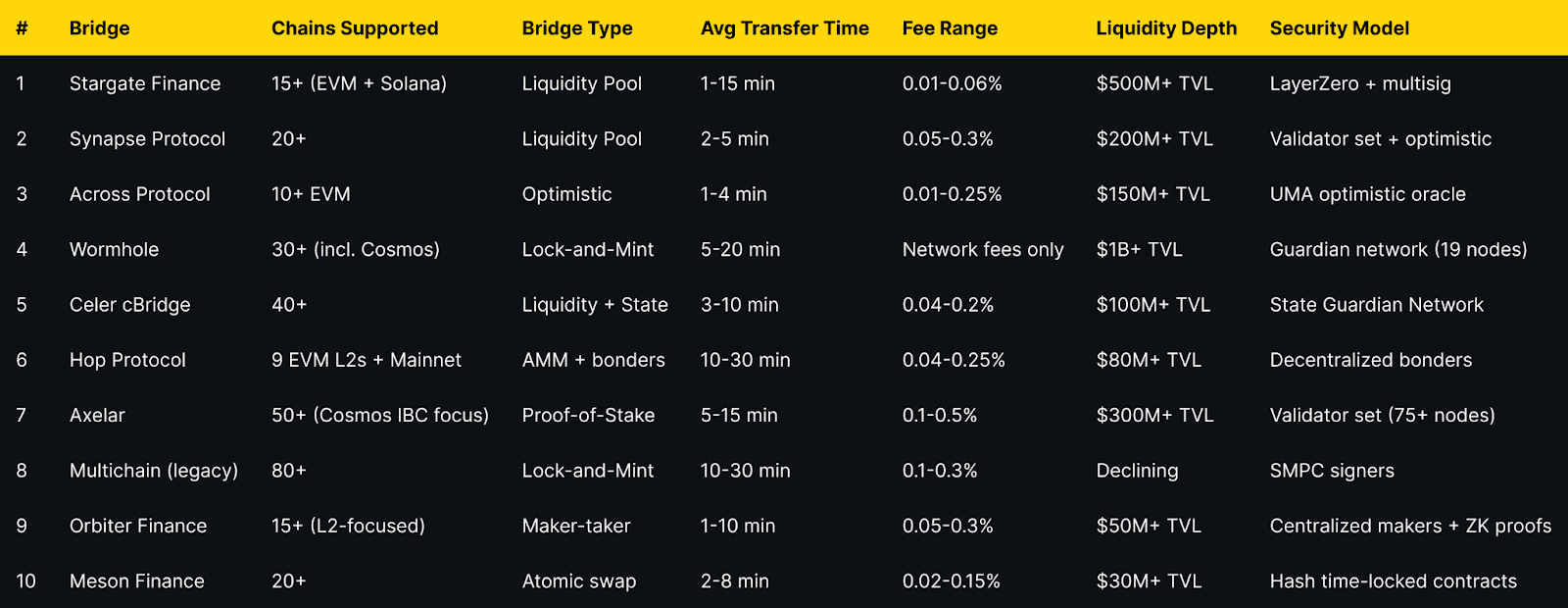
Top 10 Cross-Chain Bridges in 2025

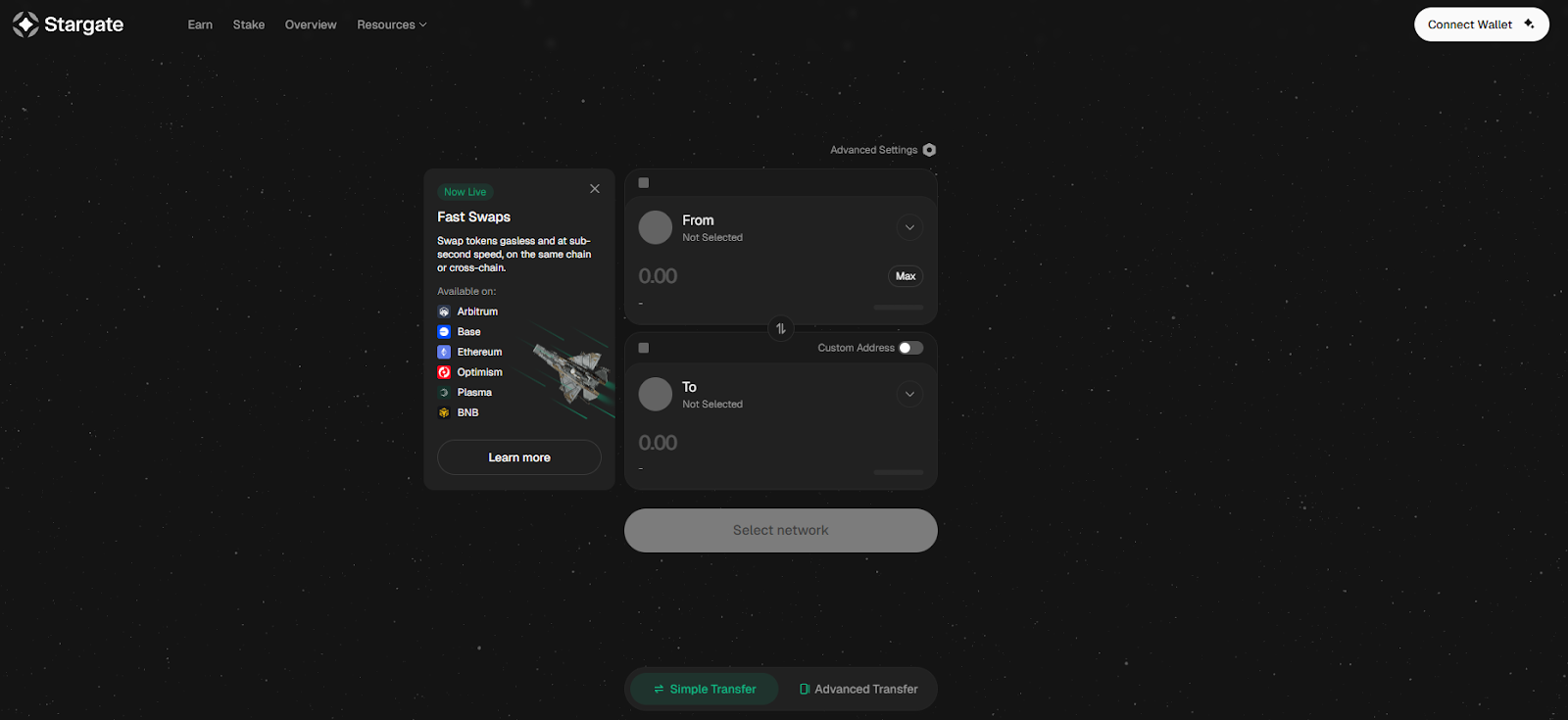
1. Stargate Finance — Best for Stablecoin Transfers

Why Use It: Stargate leverages LayerZero's messaging protocol to offer unified liquidity pools across 15+ chains, ensuring minimal slippage for USDC, USDT, and DAI transfers. Traders benefit from instant guaranteed finality and native asset transfers without wrapped tokens, making it ideal for large stablecoin movements between Ethereum, Arbitrum, Optimism, Polygon, BNB Chain, Avalanche, and Solana.

Best For: DeFi yield farmers, arbitrageurs moving stablecoins, traders rebalancing across chains, institutional desks.

Notable Features:

  • Unified liquidity pools eliminate fragmented routes
  • Delta algorithm prevents pool depletion and maintains balance
  • Native USDC/USDT support on major chains
  • Audited by Quantstamp and Zellic with $25M bug bounty

Consider If: You need to bridge non-stablecoin assets frequently (limited ERC-20 coverage) or require sub-1-minute finality (average 1-15 min).

Alternatives: Synapse Protocol, Across Protocol

2. Synapse Protocol — Best for Speed Across 20+ Chains

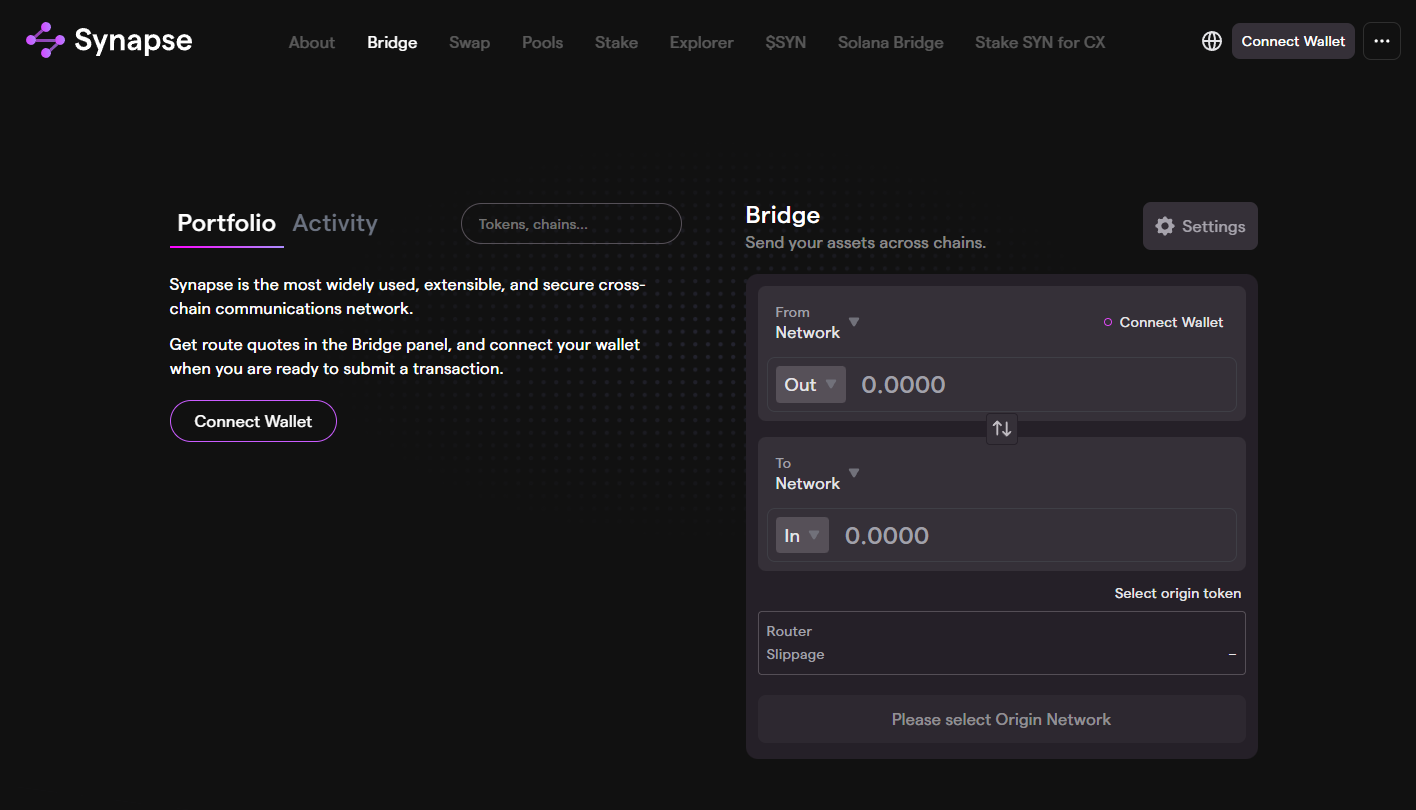
Why Use It: Synapse combines liquidity pools with an optimistic verification model to deliver 2-5 minute average transfer times across 20+ networks, including Ethereum, Arbitrum, Optimism, Base, Polygon, BNB Chain, Avalanche, Fantom, Harmony, Moonbeam, and Aurora. Its nUSD and nETH synthetic assets enable efficient cross-chain swaps with competitive 0.05-0.3% fees, while the Synapse Bridge interface integrates one-click swaps for seamless UX.

Best For: Active traders prioritizing speed, multichain yield optimizers, NFT collectors moving assets, users bridging to emerging L2s.

Notable Features:

  • Sub-5-minute average transfers with optimistic verification
  • 20+ chain support including Base and zkSync Era
  • Integrated DEX for same-transaction swaps
  • Audited by Quantstamp, Certik, and Code4rena

Consider If: You move assets over $100K per transaction (liquidity depth varies by route) or need guaranteed finality before spending (optimistic delays possible).

Alternatives: Stargate Finance, Hop Protocol

3. Across Protocol — Best for Optimistic Bridging & Low Slippage

Why Use It: Across uses UMA's optimistic oracle to facilitate near-instant transfers with relayers fronting capital and settling on the destination chain within 1-4 minutes. Traders enjoy 0.01-0.25% fees—among the lowest for EVM bridges—and minimal slippage on major routes like Ethereum to Arbitrum, Optimism, Polygon, and Base. The protocol's capital efficiency makes it ideal for arbitrageurs and high-frequency movers.

Best For: Arbitrage traders, gas-sensitive users, high-frequency DeFi participants, cost-conscious portfolio managers.

Notable Features:

  • Optimistic verification for 1-4 minute transfers
  • Ultra-low fees (0.01-0.25%) with transparent pricing
  • Relayer network ensures liquidity without pool fragmentation
  • Audited by OpenZeppelin and ABDK with ongoing bug bounty

Consider If: You need non-EVM chain support (currently EVM-only) or prefer liquidity-pool-based bridges for guaranteed execution.

Alternatives: Stargate Finance, Synapse Protocol


4. Wormhole — Best for Cross-Ecosystem Bridging

Why Use It: Wormhole is a generalized messaging protocol supporting 30+ blockchains including Ethereum, Solana, Terra, BNB Chain, Avalanche, Polygon, Fantom, Celo, and Cosmos-based chains. Its Guardian network of 19 validators enables lock-and-mint bridging for tokens and NFTs with no protocol fees beyond network gas costs. The recent Wormhole Connect widget simplifies integrations for traders using multichain dApps.

Best For: Cross-ecosystem traders (EVM to Solana/Cosmos), NFT collectors, developers integrating bridging, users of Wormhole-native dApps.

Notable Features:

  • 30+ chain support including Solana, Terra, and Cosmos IBC
  • Generalized messaging enables cross-chain smart contract calls
  • Guardian network with 19 institutional validators
  • Audited by Neodyme, Kudelski, and OtterSec post-2022 exploit recovery

Consider If: You prioritize speed over security guarantees (5-20 min transfers) or need the deepest liquidity per route (Stargate/Synapse stronger for stables).

Alternatives: Axelar, Celer cBridge


5. Celer cBridge — Best for 40+ Chain Coverage

Why Use It: Celer cBridge supports 40+ blockchains with a hybrid liquidity pool and state channel architecture, enabling 3-10 minute transfers at 0.04-0.2% fees. Its State Guardian Network provides security for cross-chain state verification, while the cBridge UI offers direct wallet integrations and historical transaction tracking. Recent additions include support for zkSync Era, Linea, and Scroll.

Best For: Multichain portfolio managers, traders accessing niche L2s, users bridging to gaming-focused chains, cost-conscious cross-chain swappers.

Notable Features:

  • 40+ chains including zkSync, Linea, Mantle, and Scroll
  • State Guardian Network for optimistic cross-chain verification
  • Integrated liquidity mining for yield on idle bridge assets
  • Audited by Certik, PeckShield, and SlowMist

Consider If: You operate in mainland China (limited access) or need guaranteed sub-5-minute finality (optimistic delays on congested routes).

Alternatives: Synapse Protocol, Axelar


6. Hop Protocol — Best for Ethereum L2 Bridging

Why Use It: Hop specializes in fast transfers between Ethereum mainnet and nine major L2s (Arbitrum, Optimism, Base, Polygon, zkSync Era, Linea, Scroll, Gnosis Chain, and Polygon zkEVM) using AMM-style liquidity pools and decentralized bonders who provide instant liquidity. Traders pay 0.04-0.25% fees and experience 10-30 minute average transfers, with the option to earn yield by providing liquidity or running bonder nodes.

Best For: L2-first traders, Ethereum mainnet to L2 bridgers, liquidity providers, users seeking decentralized bridge architecture.

Notable Features:

  • Native L2 focus with support for 9 Ethereum L2s
  • AMM-based liquidity pools for transparent pricing
  • Decentralized bonder network reduces trust assumptions
  • Audited by Consensys Diligence and OpenZeppelin

Consider If: You need to bridge to non-EVM chains (Ethereum ecosystem only) or require sub-10-minute finality consistently (bonder availability varies).

Alternatives: Synapse Protocol, Across Protocol


7. Axelar — Best for Cosmos & Proof-of-Stake Security

Why Use It: Axelar is a Cosmos SDK-based interoperability network with 75+ validators securing cross-chain transfers via proof-of-stake consensus. Supporting 50+ chains with IBC-native bridging to Cosmos, Osmosis, Injective, and other app-chains, Axelar enables secure general message passing for complex cross-chain dApp interactions at 0.1-0.5% fees. Transfers settle in 5-15 minutes with high finality guarantees.

Best For: Cosmos ecosystem traders, institutional users prioritizing security, developers building cross-chain dApps, users requiring verifiable bridge security.

Notable Features:

  • 75+ decentralized validators with proof-of-stake security
  • Native IBC support for Cosmos ecosystem chains
  • General Message Passing (GMP) for cross-chain smart contracts
  • Audited by NCC Group, OtterSec, and Certik

Consider If: You prioritize speed over security (5-15 min slower than optimistic bridges) or need the lowest fees per transaction (0.1-0.5% higher than Across/Stargate).

Alternatives: Wormhole, Celer cBridge


8. Multichain — Best for 80+ Chain Access (Use With Caution)

Why Use It: Multichain (formerly Anyswap) offers the broadest chain coverage with 80+ supported networks using SMPC (Secure Multi-Party Computation) signers for lock-and-mint bridging. While historically popular for accessing niche chains like Moonriver, Kava, and Metis, the protocol faced security concerns in mid-2023 related to validator key management. Fees range from 0.1-0.3% with 10-30 minute transfer times.

Best For: Users bridging to obscure chains unavailable elsewhere, legacy dApp integrations, traders willing to accept elevated risk for maximum coverage.

Notable Features:

  • 80+ chain support including niche L1s and L2s
  • Long operational history since 2020
  • Cross-chain router for multi-hop transactions
  • SMPC validator network (security incidents reported)

Consider If: Security is your top priority (2023 exploit drained $126M; ongoing validator concerns) or you need active development and transparent disclosures.

Alternatives: Celer cBridge, Axelar


9. Orbiter Finance — Best for L2-to-L2 Transfers

Why Use It: Orbiter uses a maker-taker model where centralized makers provide instant liquidity for L2-to-L2 transfers across 15+ chains including Arbitrum, Optimism, zkSync Era, StarkNet, Linea, Base, and Scroll. Transfers complete in 1-10 minutes at 0.05-0.3% fees, with ZK-proof verification planned for enhanced security. The interface is optimized for mobile and shows real-time maker liquidity status.

Best For: L2-native traders, StarkNet and zkSync users, mobile-first users, traders needing fast L2 exits.

Notable Features:

  • Specialized L2-to-L2 focus with 15+ network support
  • 1-10 minute average transfers via maker liquidity
  • ZK-proof verification roadmap for trustless bridging
  • Real-time liquidity tracking and maker status

Consider If: You prefer fully decentralized bridge models (makers are centralized) or need mainnet-to-L2 bridging exclusively (better alternatives exist).

Alternatives: Hop Protocol, Synapse Protocol


10. Meson Finance — Best for Atomic Swap Security

Why Use It: Meson implements hash time-locked contracts (HTLCs) for trustless atomic swaps across 20+ chains, eliminating validator risk and bridge contract vulnerabilities. Traders benefit from 2-8 minute transfers at 0.02-0.15% fees with cryptographic guarantees that transactions either complete or refund automatically. The protocol is audited by SlowMist and maintains zero-exploit history since launch.

Best For: Security-conscious traders, users burned by bridge exploits, atomic swap enthusiasts, traders moving mid-sized amounts ($1K-$50K).

Notable Features:

  • HTLC-based atomic swaps for trustless bridging
  • Zero-exploit record with cryptographic security guarantees
  • 20+ chain support including major EVM and L2s
  • 0.02-0.15% fees competitive with optimistic bridges

Consider If: You need to bridge large amounts over $100K (liquidity depth limited) or require sub-2-minute finality (HTLC setup adds overhead).

Alternatives: Across Protocol, Stargate Finance


Decision Guide: Best By Use Case

  • Stablecoin arbitrage & DeFi yield: Stargate Finance for deepest USDC/USDT liquidity
  • Fastest cross-chain execution: Synapse Protocol or Across Protocol for sub-5-minute transfers
  • Ethereum L2 specialists: Hop Protocol for native L2 bridging with decentralized bonders
  • Cross-ecosystem traders (EVM + Solana/Cosmos): Wormhole or Axelar for broadest coverage
  • Lowest fees & slippage: Across Protocol for optimistic bridging at 0.01-0.25%
  • Maximum chain coverage: Celer cBridge (40+) or Multichain (80+ with caution)
  • L2-to-L2 focus (zkSync, StarkNet, Arbitrum): Orbiter Finance for maker-taker speed
  • Security-first & trustless: Meson Finance for atomic swap guarantees
  • Institutional security requirements: Axelar for proof-of-stake validator model
  • Mobile-optimized bridging: Orbiter Finance or Synapse Protocol

How to Choose the Right Cross-Chain Bridge (Checklist)

  • [ ] Verify chain support — Confirm both source and destination chains are supported with active liquidity
  • [ ] Check fee transparency — Review total costs including bridge fees, gas, and potential slippage before confirming
  • [ ] Assess security model — Understand validator architecture (optimistic, proof-of-stake, HTLC, multisig) and audit history
  • [ ] Review transfer speed requirements — Match bridge speed (1-30 min) to your trading strategy urgency
  • [ ] Confirm liquidity depth — For large transfers ($50K+), verify pool TVL and recent volume on your specific route
  • [ ] Test with small amounts first — Always bridge test transactions ($10-$100) before moving significant capital
  • [ ] Verify destination address format — Double-check address compatibility and network selection to avoid irreversible losses
  • [ ] Monitor bridge status pages — Check for maintenance, paused routes, or congestion warnings before transacting
  • [ ] Understand finality guarantees — Know if transfers are optimistic (reversible), instant (relayer-based), or cryptographically final
  • [ ] Review regional restrictions — Confirm access from your jurisdiction (most bridges global; check compliance)
  • [ ] Check exploit history — Research past security incidents and protocol responses (Wormhole 2022, Multichain 2023)
  • 🚩 Red flags: Bridges with undisclosed validator sets, paused routes without status updates, or fees significantly higher than quoted

Use Token Metrics With Any Cross-Chain Bridge

Maximize your cross-chain trading strategy by combining bridge infrastructure with Token Metrics intelligence:

  • AI Ratings screen 6,000+ tokens across chains to identify quality assets before bridging capital
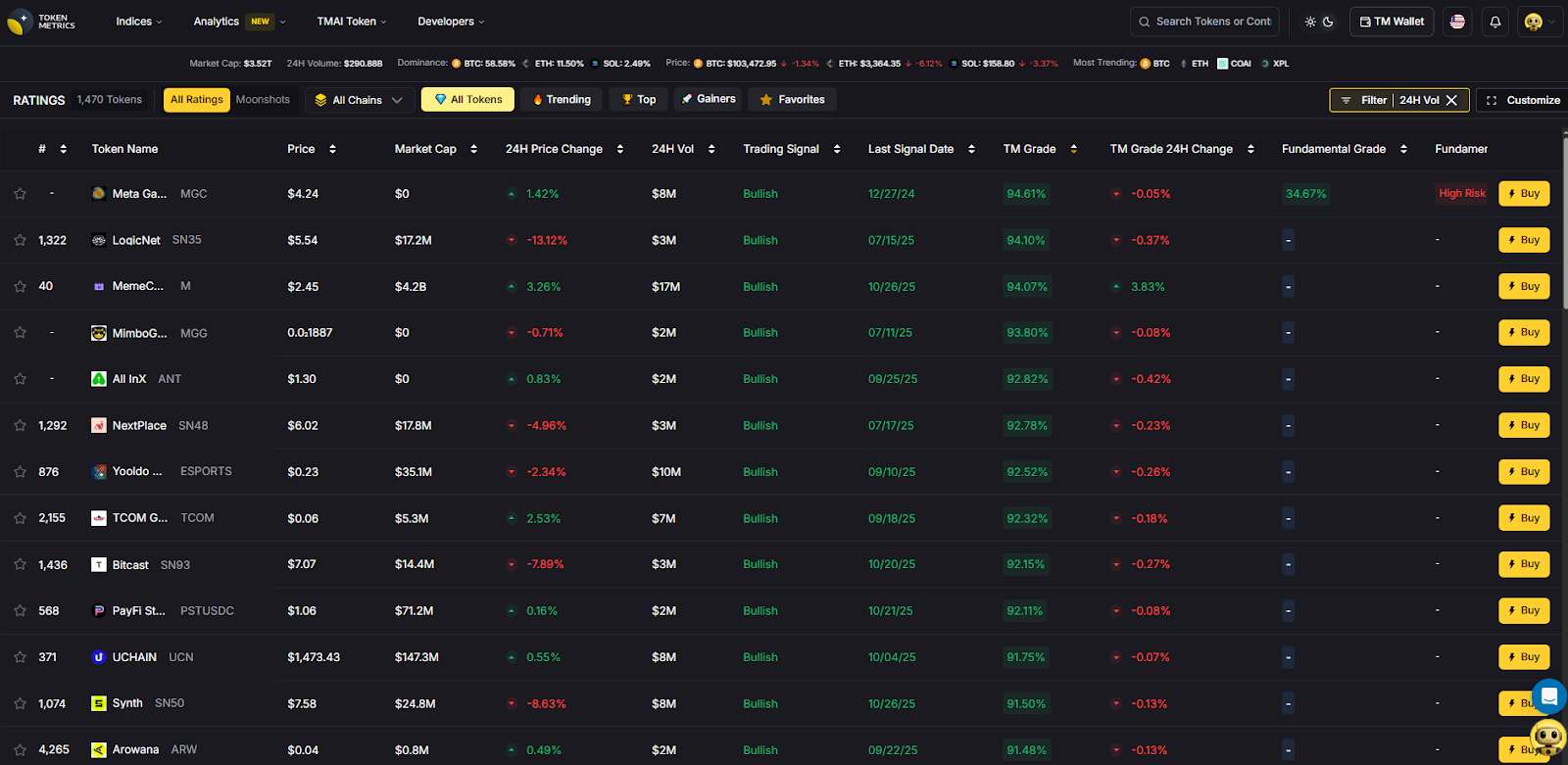
  • Narrative Detection spots emerging themes (e.g., Solana DeFi, Base ecosystem) to inform which chains to bridge into
  • Portfolio Optimization balances risk across chains and suggests rebalancing targets that justify bridge costs
  • Alerts & Signals time bridge transactions around momentum shifts, reducing exposure to unfavorable price action mid-transfer

Workflow: Research asset quality with AI Ratings → Select optimal bridge for your route → Execute transfer → Monitor destination chain with real-time alerts.

Start your free trial to screen assets and time bridge transactions with AI-powered intelligence.

Security & Compliance Tips

  • Verify official URLs — Always access bridges through bookmarked official domains; phishing sites are common
  • Use hardware wallets — Sign bridge transactions with Ledger/Trezor for cold-storage protection
  • Check token approvals — Revoke unlimited approvals after bridging using tools like Revoke.cash
  • Monitor bridge exploits — Follow protocol Twitter accounts and status pages for real-time security alerts
  • Understand validator risks — Multisig and SMPC bridges concentrate risk; optimistic and PoS models distribute trust
  • Avoid bridging during congestion — High gas fees and slippage increase during network congestion; wait for off-peak times
  • Store bridge receipts — Save transaction hashes and screenshots for tax reporting and dispute resolution
  • Test cross-chain contract calls — If using advanced features (e.g., Axelar GMP), test with minimal amounts first
  • Review liquidity provider risks — Impermanent loss and smart contract risk apply to bridge LPs; understand before depositing
  • Know refund procedures — Understand each bridge's failed transaction refund process and timeframes

This article is for research and educational purposes, not financial advice. Conduct your own security due diligence before bridging assets.


Beginner Mistakes to Avoid

  • Bridging to the wrong network — Always triple-check destination chain selection; wrong-network transfers are often irreversible
  • Ignoring slippage on large transfers — Pools with <$10M TVL may experience 1-5% slippage on $100K+ transactions
  • Bridging illiquid tokens — Ensure destination chain has DEX liquidity before bridging obscure tokens
  • Not accounting for gas on destination chain — Bridge enough native tokens (ETH, MATIC, etc.) to pay for transactions on arrival
  • Trusting wrapped tokens blindly — Verify wrapped token contracts are legitimate before swapping (scam tokens common)
  • Bridging during protocol upgrades — Avoid bridging when protocols announce maintenance windows or upgrades
  • Falling for "instant bridge" scams — No legitimate bridge offers instant finality across all chains; be skeptical of unrealistic claims
  • Ignoring bridge insurance options — Services like Nexus Mutual offer bridge exploit coverage for eligible protocols

FAQs

What is a cross-chain bridge?
 A cross-chain bridge is a protocol that enables asset transfers between different blockchains by locking tokens on the source chain and minting or unlocking equivalent tokens on the destination chain. Bridges use various security models including lock-and-mint, liquidity pools, optimistic verification, and atomic swaps to facilitate interoperability.

Are cross-chain bridges safe?
 Bridge security varies significantly by architecture and track record. Bridges secured by proof-of-stake validators (Axelar) or atomic swaps (Meson) offer stronger security than multisig or SMPC models. Historical exploits affecting Wormhole ($325M in 2022) and Multichain ($126M in 2023) highlight risks. Always verify audit reports, exploit history, and validator transparency before bridging significant amounts.

How much do cross-chain bridges cost?
 Bridge fees typically range from 0.01% to 0.5% of transfer amount, plus source and destination chain gas fees. Stargate and Across charge 0.01-0.06% for stablecoins, while Axelar charges 0.1-0.5% for broader coverage. Total costs including gas often range from $5-$50 for typical transactions, but can exceed $100 during Ethereum mainnet congestion.

Can I bridge any token between any chains?
 No—token bridging depends on protocol support and liquidity availability. Major tokens (USDC, USDT, ETH, WBTC) have deep liquidity on most bridges, while obscure tokens may only bridge via wrapped versions or not at all. Always verify token support on both source and destination chains before attempting transfers.

How long do cross-chain bridge transfers take?
 Transfer times range from 1 minute (Across optimistic transfers) to 30+ minutes (Hop during congestion or Multichain on slower chains). Average speeds: Across 1-4 min, Synapse 2-5 min, Stargate 1-15 min, Wormhole 5-20 min. Optimistic bridges are fastest but may delay finality during disputes; lock-and-mint bridges prioritize security over speed.

Do I need native tokens on the destination chain before bridging?
 Not for the bridge transaction itself, but you'll need native tokens (ETH on Ethereum, MATIC on Polygon, etc.) to pay gas for any subsequent transactions on the destination chain. Some bridges offer small gas token bridging or faucet integrations, but plan to bridge sufficient native tokens alongside your primary assets.

What happens if my bridge transaction fails?
 Failed transactions typically result in automatic refunds to the source address within 24-72 hours, though timelines vary by protocol. Optimistic bridges may take longer during dispute periods. Always save transaction hashes and monitor bridge status pages for updates. Contact protocol support via Discord or Telegram for transactions stuck beyond normal timeframes.

Can I use bridges for NFTs or only fungible tokens?
 Most bridges focus on fungible tokens (ERC-20, SPL, etc.), but several support NFT bridging. Wormhole enables NFT transfers across 30+ chains, while specialized solutions like Axelar and Celer support NFT metadata preservation. NFT bridges often charge fixed fees ($5-$20) regardless of NFT value and may take longer than fungible token transfers.


Conclusion + Related Reads

Selecting the right cross-chain bridge depends on your priorities: Stargate Finance delivers the deepest stablecoin liquidity for DeFi-focused traders, Synapse Protocol offers the fastest execution across 20+ chains, and Across Protocol provides the lowest fees for cost-conscious arbitrageurs. Security-first users should consider Meson Finance for atomic swap guarantees or Axelar for institutional-grade proof-of-stake validation. Always test with small amounts, verify destination addresses, and monitor bridge status pages before moving significant capital.

Related Reads:

Build Smarter Crypto Apps &
AI Agents in Minutes, Not Months
Real-time prices, trading signals, and on-chain insights all from one powerful API.
Grab a Free API Key
About Token Metrics
Token Metrics: AI-powered crypto research and ratings platform. We help investors make smarter decisions with unbiased Token Metrics Ratings, on-chain analytics, and editor-curated “Top 10” guides. Our platform distills thousands of data points into clear scores, trends, and alerts you can act on.
30 Employees
analysts, data scientists, and crypto engineers
Daily Briefings
concise market insights and “Top Picks”
Transparent & Compliant
Sponsored ≠ Ratings; research remains independent
Want Smarter Crypto Picks—Free?
See unbiased Token Metrics Ratings for BTC, ETH, and top alts.
Thank you! Your submission has been received!
Oops! Something went wrong while submitting the form.
 No credit card | 1-click unsubscribe
Token Metrics Team
Token Metrics Team

Recent Posts

Research

How to Choose the Right Token Metrics Index: A Complete Decision Guide for 2025

Token Metrics Team
13 min read

The Paradox of Choice

You've decided to invest in crypto through Token Metrics indices—a decision that puts an array of research-backed strategies at your fingertips. But with over 14 unique indices available, the next step can feel daunting: Which index aligns best with your profile and investment objectives?

Choosing without a framework can result in missed opportunities or unintentional risk. Choosing carefully ensures your portfolio is tailored to your goals, risk appetite, and available time.

This guide brings clarity to the selection process. By its end, you'll recognize which Token Metrics index (or blend of indices) most closely fits your circumstances—and appreciate the rationale behind each option.

Understanding the Token Metrics Index Universe

Before choosing, it’s essential to understand what the Token Metrics index platform provides. The suite spans three main categories, each designed for distinct investing approaches:

The Three Primary Index Categories

  • Investor Indices (Long-Term Focus)
    • Designed for buy-and-hold investors who aim for steady appreciation.
    • Rebalance on a quarterly or annual basis.
    • Lower volatility relative to broader crypto markets.
    • Time required: 2-4 hours per quarter.
    • Best for: Retirement accounts or disciplined wealth building.
  • Trader Indices (Active Management)
    • Suited for participants comfortable with portfolio changes and seeking higher momentum.
    • Rebalancing occurs weekly or bi-weekly.
    • Higher volatility with opportunities for enhanced returns.
    • Time required: 1-2 hours per week.
    • Best for: Maximizing returns through active management.
  • Sector-Specific Indices (Thematic Exposure)
    • Targeted exposure to key crypto sectors (AI, DeFi, L1s, etc).
    • Rebalancing frequency varies from weekly to monthly depending on sector dynamics.
    • Volatility reflects the sector (AI: high, DeFi: moderate).
    • Time: 2-3 hours per month.
    • Best for: Tactical allocations or positioning for specific narratives.

Available Token Metrics Indices

  • Broad Market: Global Crypto Index, Large Cap Index, Mid Cap Index
  • Investment Style: Value Investor Index, Growth Investor Index, Balanced Investor Index, Momentum Trader Index
  • Sector Focus: AI Agents Index, DeFi Index, Layer 1 Index, RWA (Real World Assets) Index, Gaming & Metaverse Index, Memecoin Index

These indices are designed with different objectives. The key to successful index selection is matching to your unique profile.

The Five-Factor Decision Framework

Applying a structured framework to your decision can eliminate uncertainty and make index selection evidence-based. Consider the following factors:

Factor #1: Your Investment Time Horizon

How long do you intend to hold your investments?

  • 1–2 Years (Short-Term)
    Options: Trader Indices or Sector-Specific Indices
    Rationale: Capture near-term momentum and trends.
    Examples: Momentum Trader Index, AI Agents Index, Memecoin Index.
    Risk: Higher volatility, potential for outsized moves.
  • 3–5 Years (Medium-Term)
    Options: Balanced Investor Index, Growth Investor Index, Large Cap Index, Layer 1 Index.
    Rationale: Blend of growth and stability.
    Rebalancing: Quarterly, with a mix of established and promising assets.
    Risk: Moderate volatility, progressive growth.
  • 5+ Years (Long-Term)
    Options: Value Investor Index, Global Crypto Index.
    Rationale: Favours fundamentals over market cycles.
    Approach: Annual rebalancing, emphasis on established projects.
    Risk: Relative stability, focus on compounding.

Example: Sarah, age 32, planning to purchase a home in 3 years, uses the Balanced Investor Index for growth with measured risk—helping keep her financial goals on track.

Factor #2: Your Risk Tolerance

How would you react to a 40% portfolio decline?

  • Conservative
    Selection: Value Investor Index + Large Cap Index
    Allocation Strategy: 70% Value, 30% Large Cap.
    Volatility: Maximum 30–50% drawdowns, typically recovers in 3–6 months.
    Focus: Predominantly Bitcoin, Ethereum, major market caps.
  • Moderate
    Selection: Balanced Investor Index + Layer 1 Index
    Allocation Strategy: 60% Balanced, 40% Layer 1.
    Volatility: 40–60% drawdowns possible.
    Focus: Strong mix of large-caps and quality mid-caps.
  • Aggressive
    Selection: Momentum Trader Index + AI Agents Index + Memecoin Index
    Allocation Strategy: 50% Momentum Trader, 30% AI Agents, 20% Memecoin.
    Volatility: High, up to 80% drawdowns possible.
    Focus: Trend and momentum trading, rapid sector rotation.

Example: Mike, 28, high income and an aggressive trading style, allocates heavily to momentum and sector indices, aligning risk with his financial situation.

Factor #3: Your Available Time

How much time each week or month can you realistically dedicate?

  • <1 Hour Monthly
    Selection: Value Investor Index, annual rebalancing.
    Practical for busy professionals seeking minimal upkeep.
  • 2–4 Hours Monthly
    Selection: Balanced Investor Index, quarterly rebalancing.
    Suited to those who want periodic review and minor adjustments.
  • 1–2 Hours Weekly
    Selection: Momentum Trader Index, weekly rebalancing.
    Effective for investors monitoring positions more closely.
  • 5+ Hours Weekly
    Selection: Multiple sector indices, active rotation.
    Geared towards enthusiasts or full-time crypto traders.

Example: Jennifer, a full-time lawyer and parent, uses the Value Investor Index with annual rebalancing—spending only 30 minutes quarterly monitoring but making changes just once a year.

Factor #4: Your Investment Knowledge Level

What’s your current crypto expertise?

  • Beginner (<6 Months)
    Start with: Balanced Investor Index.
    Offers broad exposure and a valuable learning platform.
  • Intermediate (6 Months – 2 Years)
    Approach: Core + Satellite.
    Core: Value or Balanced Investor Index (70%).
    Satellite: 1–2 sector indices matching interests (30%).
  • Advanced (2+ Years)
    Strategy: Multi-index spread.
    Foundation: Value Investor Index (40%).
    Growth: Momentum Trader Index (30%).
    Opportunity: 2–3 sector indices (20%).
    Cash: 10% reserve.
  • Expert (5+ Years)
    Custom blend across all indices for maximum flexibility, with dynamic sector rotation and individual position overlays.

Example: David, new to crypto but with a finance background, starts with the Balanced Investor Index to learn market-specific nuances before layering in sector exposure.

Factor #5: Your Investment Goals

What is your primary investment objective?

  • Wealth Preservation
    Indices: Value Investor Index + Large Cap Index.
    Goal: Stable growth of capital above inflation.
  • Wealth Building
    Indices: Growth Investor Index + Layer 1 Index.
    Goal: Portfolio appreciation over the longer term.
  • Aggressive Growth
    Indices: Momentum Trader + multiple sector indices.
    Goal: Maximum returns, high tolerance for volatility.
  • Income Generation
    Indices: DeFi Index + staking-focused allocations.
    Goal: Passive income in parallel with asset growth.

Example: Robert, 55, aiming for retirement in five years, focuses on the Value Investor Index for stability with a modest allocation to the DeFi Index for passive yield.

The Decision Matrix: Finding Your Match

The framework above can be applied using this practical matrix:

  • Conservative + Long-Term + Limited Time: Value Investor Index (Annual Rebalancing)
  • Conservative + Long-Term + Moderate Time: Balanced Investor Index (Quarterly Rebalancing)
  • Moderate + Medium-Term + Moderate Time: Growth Investor Index + Layer 1 Index (50/50 split, Quarterly)
  • Moderate + Medium-Term + Active Time: Balanced Investor Index + AI Agents Index (60/40 split, Monthly)
  • Aggressive + Short-Term + Active Time: Momentum Trader Index + Sector Indices (40/30/30 split, Weekly)
  • Aggressive + Short-Term + Very Active Time: Multiple Sector Indices with Active Rotation (Weekly)

Common Index Combinations That Work

  • The "Beginner Safe" Combination
    100% Balanced Investor Index—complete diversification, minimal complexity, and a strong learning foundation.
  • The "Core-Satellite" Combination
    70% Value Investor Index (Core) and 30% AI Agents Index (Satellite)—a blend of security and targeted opportunity.
  • The "Aggressive Growth" Combination
    40% Momentum Trader Index, 30% AI Agents Index, 20% Memecoin Index, 10% cash reserve—for systematic, high-upside exposure.
  • The "Sector Rotation" Combination
    50% Large Cap Index and 50% rotating sector indices—stable base with tactical market participation.
  • The "Conservative Income" Combination
    60% Value Investor Index, 30% DeFi Index, 10% RWA Index—focuses on yield and balanced volatility.

Making Your Final Decision

Follow this three-step process to finalize your index strategy:

  1. Complete Your Profile: Note your investment horizon, risk tolerance, available time, knowledge level, and primary goal.
  2. Match Recommended Indices: Use the frameworks above to shortlist 2–3 indices that meet most criteria—do not stress about perfect alignment.
  3. Start Simple, Add Complexity: Begin with a single index or a basic combination. As you gain confidence and insight, add sector allocations or sophisticated blends.

What If You Choose Wrong?

The flexibility of Token Metrics indices means initial choices are not irreversible. Review your selections quarterly and pivot as your goals or circumstances change. Consider reducing or increasing complexity as needed based on your lifestyle and comfort with volatility.

  • Begin cautiously, then dial up risk or sector exposure as your familiarity grows.
  • Start with one index, add more as time and confidence permit.
  • If volatility causes discomfort, shift allocations for greater stability.

Taking Action Today

With this framework, you are ready to decide. Here is a practical action sequence:

  • Today: Define your personal investor profile using the five decision factors.
  • This week: Review Token Metrics and identify the indices that align with your answers.
  • This month: Allocate to your selected index, and set calendar reminders for rebalancing.
  • Next quarter: Review your performance and adjust if appropriate.

The ideal index for your needs is available—begin with your best match, iterate as you learn, and refine your allocation as your investment journey evolves.

Your crypto journey starts here.

Discover Crypto Gems with Token Metrics AI

Token Metrics uses AI-powered analysis to help you uncover profitable opportunities in the crypto market. Get Started For Free

FAQ: Choosing the Right Token Metrics Index

How many Token Metrics indices can I invest in at once?

There is no hard limit on the number of indices you can follow simultaneously. Many investors start with a single index for simplicity, then diversify by layering additional indices as familiarity and confidence grow.

What is the difference between an investor index and a trader index?

Investor indices prioritize long-term growth, utilize infrequent rebalancing, and lower volatility. Trader indices aim for active returns through frequent asset rotation, accepting higher volatility and requiring more hands-on management.

Who should consider sector-specific indices?

Sector-specific indices are suitable for those looking to capitalize on emerging trends and willing to accept higher variance. They are ideal as a tactical addition for investors who already have a stable portfolio base.

Can I change my Token Metrics index selection if my goals or risk tolerance shift?

Yes, you can modify your chosen indices at any time. Tailoring your strategy as your circumstances or market outlook evolve is both possible and encouraged for ongoing alignment with your objectives.

Is it easy to monitor and rebalance Token Metrics indices?

Monitoring and rebalancing is straightforward, with clear instructions provided. Frequency and complexity depend on the indices you select and your availability, making the process adaptable to many investor profiles.

How does Token Metrics support index selection and monitoring?

Token Metrics offers data-driven insights, rankings, and AI-powered analysis to streamline index selection and track performance—empowering investors to make informed, evidence-based decisions.

What if my chosen index performs differently than expected?

All investments carry risk, and index performance can vary year to year. Regularly reviewing your portfolio and adjusting allocations as your experience grows is key to ongoing risk management.

Disclaimer

This guide is for informational and educational purposes only and should not be interpreted as investment, financial, or other advice. All investments, including crypto indices, involve risk. Past performance does not guarantee future results. Please do your own research and consult a qualified advisor before making investment decisions.

Research

Why 2025 Is the Perfect Year to Start Investing with Token Metrics Crypto Indices

Token Metrics Team
11

If you've been waiting for the "right time" to invest in cryptocurrency, 2025 represents a convergence of factors that may never align this perfectly again. Regulatory frameworks are solidifying. Institutional adoption is accelerating. AI technology has matured. Market infrastructure has professionalized. And most importantly, proven systems like Token Metrics AI indices have track records demonstrating consistent success through multiple market cycles.

The question isn't whether to invest in crypto—that ship has sailed as institutional giants commit billions. The question is how to invest smartly, efficiently, and with the best chance of success. Here's why 2025 is your optimal entry point, and why Token Metrics indices offer the ideal vehicle for capturing this opportunity.

Reason #1: Regulatory Clarity Is Finally Here

For years, cryptocurrency existed in regulatory limbo. Investors faced uncertainty about legal status, tax treatment, and government attitudes. That era is ending.

The European MiCA Framework
Europe's Markets in Crypto-Assets (MiCA) regulation, fully implemented in 2025, provides the first comprehensive regulatory framework for crypto markets. This standardization removes legal uncertainty and opens doors for institutional capital that previously stayed on the sidelines.

U.S. Regulatory Evolution
The approval of Bitcoin spot ETFs in 2024 marked a watershed moment. Professional investors now hold $27.4 billion in U.S. Bitcoin ETFs, signaling mainstream acceptance. Further regulatory clarity continues emerging as the SEC and other agencies develop consistent frameworks.

What This Means for You
Regulatory clarity reduces risk. When governments establish clear rules, legitimate projects thrive while scams get eliminated. Token Metrics benefits directly—its AI-powered selection process now operates in a more transparent market where quality projects are easier to identify and verify.

The Token Metrics Advantage: With regulations favoring legitimate projects, Token Metrics' fundamental analysis of team quality, code audits, and regulatory compliance becomes even more valuable. The platform automatically filters for projects meeting evolving regulatory standards.

Reason #2: Institutional Adoption Is Accelerating

Individual retail investors no longer dominate crypto markets. Institutions are entering aggressively, bringing professionalism, liquidity, and validation.

The Numbers Don't Lie
According to a Coinbase institutional survey, 67% of professional investors plan to increase their crypto holdings in 2025, with 24% expecting to "significantly increase" exposure—up from just 16% in 2024.

Family offices and hedge funds are leading this shift, reflecting growing conviction in crypto's performance advantage and structural role in diversified portfolios.

Token Metrics Institutional-Grade Approach
Token Metrics was built with institutional-quality standards from day one. The platform's AI analyzes over 80 data points per token—the same rigorous approach used by professional fund managers.

As institutions flood into crypto, having institutional-grade tools becomes essential for retail investors to compete. Token Metrics democratizes access to professional strategies that previously required million-dollar minimums and expert teams.

Reason #3: AI Technology Has Reached Maturity

Artificial intelligence in crypto investing isn't experimental anymore—it's proven, refined, and delivering consistent results.

From Experiment to Established System
Token Metrics has been developing and refining its AI models since 2017. The platform now has:

Why AI Matters More in 2025
Markets are more complex than ever. With 6,000+ cryptocurrencies, countless narratives, and 24/7 global trading, human analysis can't keep pace. AI processes information at scale, identifies patterns humans miss, and executes decisions without emotional interference.

Real-World Impact: During 2024's market volatility, Token Metrics AI indices automatically adjusted allocations, reducing exposure before major corrections and increasing positions during recoveries. Human investors watching news and making emotional decisions significantly underperformed.

The Learning Advantage
Token Metrics' AI doesn't just analyze—it learns. Every market cycle, token launch, and trend adds to the system's knowledge base. By 2025, the AI has experienced scenarios that new investors have never seen, providing a cumulative learning advantage.

Click here to signup for free trial account!

Reason #4: Market Infrastructure Has Professionalized

Remember when buying crypto meant sketchy exchanges, confusing wallets, and constant security concerns? That era is over.

Modern Crypto Infrastructure

Lower Barriers to Entry
Five years ago, investing in crypto required technical knowledge and tolerance for poor user experiences. Today, the experience matches traditional investing in ease and professionalism.

Token Metrics Simplification: The platform abstracts away remaining complexity. You don't need to understand blockchain technology or navigate confusing interfaces. Token Metrics provides clear guidance—what to buy, when to rebalance, and how to manage risk.

Reason #5: The 4-Year Bitcoin Cycle Timing

Cryptocurrency markets historically follow four-year cycles tied to Bitcoin halving events. Understanding where we are in this cycle provides strategic advantage.

The Halving Impact
Bitcoin halvings occur every four years, reducing new supply and historically triggering major bull markets. The most recent halving occurred in April 2024.

Historical Pattern:

Where We Are Now
We're in the early-to-mid phase of the post-halving bull cycle. Historically, the strongest gains occur 12-18 months after halving events. This positions 2025 as potentially the optimal year within the current cycle.

The Token Metrics Edge: Rather than trying to time individual token purchases, Token Metrics indices automatically adjust allocations based on market phase. During bull markets, the AI increases exposure to high-momentum opportunities. During corrections, it defensively reallocates to preserve capital.

Reason #6: Tokenized Real-World Assets Are Exploding

One of the most significant developments in 2025 is the tokenization of traditional assets onto blockchain infrastructure.

The Tokenization Revolution
Tokenized real-world assets (RWAs) have surged past $22.5 billion on-chain, up nearly 6% in recent months alone. This represents stocks, bonds, real estate, commodities, and other traditional assets moving onto blockchain rails.

Why This Matters: As traditional finance merges with crypto infrastructure, the total addressable market expands. Token Metrics RWA indices provide exposure to this significant emerging sector that bridges conventional and digital finance.

Institutional Bridge
RWAs provide familiar territory institutions need to increase crypto allocations. Rather than purely speculative tokens, these represent ownership in tangible assets with established valuations. This legitimacy accelerates institutional adoption and feeds broader crypto market growth.

Token Metrics RWA Index: Specifically designed to capture the tokenization trend, this index provides diversified exposure to projects building the infrastructure for traditional asset tokenization.

Reason #7: Diversification Has Never Been More Important

2025's macroeconomic environment makes diversification across asset classes essential.

Economic Uncertainty Drivers

Crypto's Diversification Benefits
Research demonstrates that modest crypto allocations of 1-3% have historically improved portfolio efficiency, delivering improved returns, higher Sharpe ratios, and limited drawdown impact when structured appropriately.

Token Metrics Solution: Rather than taking chances on individual crypto picks, indices provide systematic exposure that enhances overall portfolio diversification while actively managing crypto-specific risks through rebalancing and quality screening.

How to Capitalize on This Perfect Timing

Understanding why 2025 is optimal means nothing without action. Here is a practical roadmap for potential investors:

The 2025 Advantage Window
While crypto will exist for decades, specific windows offer optimal entry points. The current convergence of regulatory clarity, institutional adoption, AI maturity, and cycle timing creates a rare alignment.

Historical Precedent: Investors who entered during similar optimal windows in 2016 or early 2020 significantly outperformed those who waited for "more certainty." By the time most people feel comfortable, the biggest gains have already occurred.

Risk Considerations for 2025

No investment comes without risk. Understanding and managing these risks positions you for informed decision-making.

Your 2025 Decision Point

Every historic investment opportunity shares common characteristics: identifiable catalysts, improving fundamentals, and mainstream skepticism that keeps many participants on the sidelines.

In 2025, crypto checks every box. The infrastructure, regulations, and institutional participation that skeptics demanded are now in place. The technology is mature. The track records are established. Yet many investors still wait, searching for more "certainty," which often results in missed opportunities.

Token Metrics removes common barriers:

The question is whether you'll utilize this convergence of favorable factors or watch from the sidelines as another cycle passes.

Take Action Today

Optimal investment windows are rarely obvious in the moment. By the time everyone agrees crypto is "safe," the most significant opportunities may have passed.

Starting with even a modest allocation to Token Metrics indices can offer exposure to 2025's alignment of regulatory clarity, institutional adoption, AI insight, and market cycle timing. Exploring the indices gives you the chance to leverage a historically rare convergence of positive conditions.

Visit Token Metrics today, explore the indices, and take the first step toward capitalizing on this opportunity. The perfect time to invest rarely announces itself—it arrives quietly for those who are prepared.

Click here to signup for free trial account!

Discover Crypto Gems with Token Metrics AI

Token Metrics uses AI-powered analysis to help you uncover profitable opportunities in the crypto market. Get Started For Free

FAQ

What makes 2025 unique for crypto investing?

2025 brings together regulatory clarity, institutional adoption, AI advancements, and a post-halving market cycle, creating an environment with enhanced infrastructure and data-driven tools.

How does Token Metrics support smarter crypto investing?

Token Metrics utilizes AI models analyzing over 80 data points per token, providing index products, research, and automated strategies to help users navigate complex markets without extensive manual research.

Do I need technical knowledge to use crypto indices?

No, platforms like Token Metrics simplify the process, allowing users to access diversified indices and research insights with minimal technical expertise or blockchain knowledge.

What are the main risks associated with crypto investments in 2025?

Risks include market volatility, evolving regulation, technology vulnerabilities, and unpredictable cycles. Systematic, data-informed approaches and risk management strategies can help address these factors.

Can Token Metrics indices help with diversification?

Yes, Token Metrics indices are designed to provide diversified exposure to various segments of the crypto market, aiding overall portfolio risk management and balancing individual token exposure.

Disclaimer

This content is for informational and educational purposes only and does not constitute investment advice or an offer to buy or sell any cryptocurrency or financial product. Always conduct your own research and consult a qualified financial professional before making investment decisions. Past performance is not indicative of future results. Token Metrics does not guarantee any specific outcomes.

Research

5 Costly Crypto Investing Mistakes (And How Token Metrics Indices Fix Them)

Token Metrics Team
8

Billions of dollars vanish from the crypto markets annually, not due to scams or hacks—but simply through common, avoidable mistakes. Recent data reveals that 95% of cryptocurrency traders lose money, and the root causes are rarely market volatility or bad luck. Instead, it’s everyday errors in judgment, strategy, and execution. If you have ever bought a token near its top, held a losing position in hopes of a turnaround, or felt overwhelmed by countless investment choices, you’re far from alone. These patterns impact millions, draining away both capital and peace of mind.

The good news? Token Metrics AI indices are designed to address these exact issues. In this article, we’ll examine the five most costly crypto investing mistakes—and show how Token Metrics’ systematic approach helps mitigate them all.

Mistake #1: Buying Hype Instead of Fundamentals

The Problem
You notice a token trending on social media, backed by massive price gains and hype. FOMO prompts you to invest, even though you don’t fully understand the project. For example, in 2021, the Squid Game Token rocketed 86,000% in just a week due to hype linked to the Netflix series. Investors poured in millions—only for a "rug pull" to destroy its value, leaving those who bought at the top with 99.99% losses.

Why This Happens

How Token Metrics Solves It
Token Metrics uses AI and machine learning to analyze over 80 data points per token, including fundamentals, code quality, sentiment, and market indicators

The result? Only projects passing strict fundamental analysis are included in Token Metrics indices. Hype-driven projects are filtered out, helping protect investors from unreliable assets.

Mistake #2: Poor Timing (Buying High, Selling Low)

The Problem
Emotion-driven timing—buying during surges and selling during dips—is one of the biggest sources of loss for crypto investors. Research indicates the average investor underperforms basic buy-and-hold by 30–50% per year due to such decisions.

Why This Happens

How Token Metrics Solves It
Token Metrics indices rebalance weekly, monthly, or quarterly using algorithmic rules. The platform’s AI features:

Example: If Solana’s strength increases, Token Metrics may raise its allocation; as momentum fades, the index reduces exposure—helping avoid entire declines that manual investors often experience. This systematic, emotion-free timing can produce more consistent results than self-directed trading.

Mistake #3: Dangerous Lack of Diversification

The Problem
Concentrating heavily in a single token exposes investors to severe downside. In 2022, many held over 50% of their portfolio in Luna/UST and suffered disproportionate losses when the protocol collapsed.

Why This Happens

How Token Metrics Solves It
Token Metrics indices deliver automatic diversification:

Sample Portfolio: 30% Bitcoin, 25% Ethereum, 15% Solana, 10% Chainlink, 8% Avalanche, 7% Polygon, 5% other high-quality assets. If one token sees trouble, most of the portfolio remains protected—a proven benefit highlighted by Token Metrics’ multi-year track record of outperformance with diversified baskets.

Mistake #4: Inconsistent Portfolio Management

The Problem
Without regular review, portfolio allocation drifts: winners may become overexposed, losers get neglected, and emotional attachments override discipline. Studies show that investors who fail to rebalance underperform by 15–20% annually due to uncontrolled risk and missed opportunities.

Why This Happens

How Token Metrics Solves It
All Token Metrics indices are systematically rebalanced on a set schedule. For trading indices, rebalancing happens weekly—well-performing tokens are trimmed, underperformers removed, and new opportunities integrated. For investor indices, monthly or quarterly rebalances keep long-term allocations aligned while minimizing transaction costs.

Example: Instead of riding a token from $10 to $100 and back to $30, Token Metrics trims positions in stages, locking in gains before major declines. This systematic process produces more stable outcomes than manual, emotion-driven management.

Mistake #5: Analysis Paralysis and Information Overload

The Problem
With thousands of crypto assets, dozens of exchanges, and endless advice, many investors get stuck researching without ever taking action—or constantly shift strategies without conviction. During recent bull markets, analysis paralysis alone led to missed opportunities for significant growth.

Why This Happens

How Token Metrics Solves It
Token Metrics offers a simple, three-step process:

From there, AI research handles token analysis, portfolio selection, rebalancing, and ongoing risk management—reducing complexity and saving hours each week.

This all-in-one approach makes it possible to manage your crypto allocation in an hour per month—while leveraging systematic, AI-driven best practices.

The Token Metrics Advantage: Five Problems, One Solution

What sets Token Metrics apart for investors seeking robust, repeatable results?

Taking Action: Your Next Steps

Recognizing these mistakes is important, but building sound habits is what drives meaningful outcomes. Most investors have made at least one of these errors. The difference comes from implementing systematic solutions.

Every day of delay or indecision can contribute to preventable loss or missed growth, while proven systems work to manage changing markets with discipline.

Subscription costs, typically $50–200 monthly, are modest compared to the savings from avoiding just a single significant error. Many users note that Token Metrics’ AI prevents multiple costly mistakes each year.

Conclusion: From Mistakes to Mastery

The five mistakes covered—buying hype, poor timing, concentration, inconsistent management, and information overload—are among the most common causes of investor losses in crypto. Token Metrics’ indices offer systematic processes that remove emotion, foster diversification, drive consistent rebalancing, and simplify complex decisions. With tools built on institutional-grade AI, you can transform passive mistakes into active mastery. You don’t need to become a full-time trader or blockchain expert; you need proven systems designed to avoid the most frequent pitfalls.

Move beyond trial and error, and leverage AI-powered intelligence for smarter investing decisions with Token Metrics. Make your next move one of clarity and confidence.

Click here to signup for free trial account!

Discover Crypto Gems with Token Metrics AI

Token Metrics uses AI-powered analysis to help you uncover profitable opportunities in the crypto market. Get Started For Free

FAQs

What are Token Metrics indices, and how do they work?

Token Metrics indices are algorithmically created baskets of cryptocurrencies selected using AI-driven research. They are rebalanced systematically based on market signals, offering diversified exposure and removing emotional bias.

How does Token Metrics help avoid hype-driven mistakes?

Token Metrics rigorously evaluates project fundamentals, code quality, market viability, and liquidity, filtering out projects driven by short-term hype or weak fundamentals. Only tokens passing strict criteria are considered for inclusion in indices.

Can I customize my crypto index with Token Metrics?

Users can choose indices aligned with different investor profiles, timeframes, and styles. While each index follows an algorithmic process, you can select the one that best matches your strategy and goals.

What levels of risk management do Token Metrics indices offer?

Indices are built for risk management, including diversification limits, liquidity filters, systematic rebalancing, and AI-powered detection of changing market conditions to mitigate portfolio risk.

Is Token Metrics suitable for beginners or advanced investors?

Token Metrics is accessible for all experience levels. Beginners benefit from simplified AI-driven selection, while advanced users can access data, detailed reports, and deeper tools for more hands-on analysis.

Disclaimer

This content is for informational and educational purposes only and does not constitute investment advice or a recommendation to buy or sell any digital assets. Cryptocurrencies are volatile and carry risk; always conduct your own research and consider professional advice before making financial decisions.

Click here to signup for free trial account!

Choose from Platinum, Gold, and Silver packages
Reach with 25–30% open rates and 0.5–1% CTR
Craft your own custom ad—from banners to tailored copy
Perfect for Crypto Exchanges, SaaS Tools, DeFi, and AI Products