Back to blog
Crypto Basics

15 Low Cap Crypto Altcoins for the Next Bull Run

Discover the top altcoins to consider for your investment portfolio. Stay informed and make smart decisions in the evolving crypto landscape. Read more now!
Token Metrics Team
9 Minutes
Want Smarter Crypto Picks—Free?
See unbiased Token Metrics Ratings for BTC, ETH, and top alts.
Thank you! Your submission has been received!
Oops! Something went wrong while submitting the form.
 No credit card | 1-click unsubscribe

Click here to buy Cryptocurrencies from Gate.io

Contact us at promo@tokenmetrics.com for marketing and sponsorship programs.

As we move further into 2025, the best crypto altcoins are capturing the attention of both retail investors and professional traders worldwide. While Bitcoin and Ethereum remain dominant assets anchoring the cryptocurrency market, the altcoin market is witnessing a surge of innovation fueled by advancements in AI, decentralized finance (DeFi), and smart contracts. Crypto coins are a fundamental category of digital assets, serving as native currencies on their respective blockchains and playing a crucial role in transactions and ecosystem functions. Altcoins can apply different consensus protocols for transaction verification and may offer unique or better features and functions compared to Bitcoin. This dynamic environment presents unparalleled opportunities for investors seeking to diversify their portfolios beyond the most cryptocurrencies and explore promising altcoin investments with high growth potential.

In this article, we will explore the top 15 best crypto altcoins to watch in 2025. These projects span various sectors such as AI integration, Web3, decentralized compute, and the creator economy. Each altcoin offers unique utilities, competitive advantages, and strong communities, making them attractive options for those interested in long-term investments or active trading. A skilled and capable project team behind an altcoin can indicate its long-term success potential. Understanding these altcoins’ value propositions and market dynamics is essential. It’s important to note the distinction between coins (or crypto coins) and tokens: coins, also referred to as crypto coins, function as the primary currency or utility within their blockchain ecosystems, while tokens often serve specific purposes on top of existing blockchains. This clarification will help investors navigate the crypto ecosystem more effectively while managing risk tolerance in a space known for price fluctuations.

Introduction to the Crypto Space

The cryptocurrency market has rapidly evolved into a global financial ecosystem, with its total market capitalization now exceeding $2 trillion. This vibrant crypto space is home to a wide array of digital currencies, including Bitcoin, altcoins, and various tokens, each offering unique features and use cases. Unlike traditional financial institutions, the crypto market operates on a decentralized platform, enabling peer-to-peer transactions and the execution of smart contracts without intermediaries. While this independence fosters innovation and accessibility, it also introduces significant price fluctuations and volatility. Altcoins carry more risk than Bitcoin and many of the smaller ones may not be trustworthy investments. As a result, investors must conduct thorough research and understand the inherent risks before participating in the cryptocurrency market. Whether you’re exploring Bitcoin or the latest altcoins, staying informed and cautious is essential for navigating this dynamic and often unpredictable market.

The Cryptocurrency Market Landscape

The cryptocurrency market landscape is incredibly diverse, boasting over 10,000 different cryptocurrencies. While Bitcoin remains the most recognized and widely held asset, altcoins such as Ethereum, Binance Coin, and Ripple have carved out substantial market shares and are favored by many investors. Cardano (ADA) is an advocate for proof-of-stake consensus and offers a blockchain solution with low fees and high security. The market capitalization of these altcoins can shift dramatically, often influenced by market sentiment, technological advancements, and broader economic trends. Financial institutions and regulatory bodies like the Securities and Exchange Commission are increasingly engaging with the crypto market—some by investing directly, others by establishing guidelines to ensure investor protection and market integrity. Decentralized finance (DeFi) has emerged as a transformative force within the crypto market, offering innovative platforms for lending, borrowing, and trading that operate independently of traditional banks. As the market continues to mature, understanding the interplay between these elements is crucial for anyone looking to invest or trade in cryptocurrencies.

Altcoin Season and Market Trends

Altcoin season is a phenomenon in the crypto market where altcoins outperform Bitcoin, often resulting in rapid increases in altcoin prices. These periods are typically driven by shifts in market sentiment and emerging trends, making them highly attractive to investors seeking significant returns. However, the crypto market is known for its volatility, and price fluctuations can be swift and unpredictable. Seasoned crypto investors often employ strategies such as diversification and risk management to navigate these turbulent times. For example, Bitcoin Cash has experienced notable price swings during past altcoin seasons, attracting traders looking to capitalize on these movements. Bitcoin Cash (BCH) offers fast transaction times and lower fees compared to Bitcoin, making it a popular choice during these periods. Staying attuned to market trends and sentiment is essential for making informed decisions and maximizing opportunities during altcoin season, while also managing the inherent risks of trading in such a dynamic environment.

1. Token Metrics AI ($TMAI)
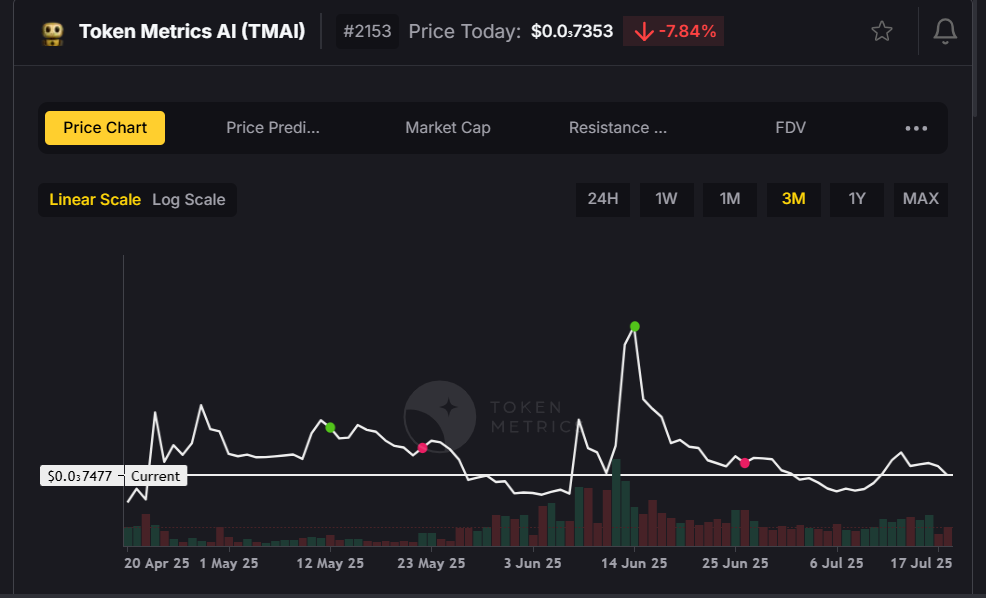
Token Metrics AI ($TMAI) stands out as a groundbreaking project that merges AI with crypto analytics to empower smarter investing decisions. This platform offers an all-in-one AI trading assistant that combines autonomous agent tooling, on-chain infrastructure, and predictive analytics. Users can stake $TMAI tokens to access features like crypto indices, research automation, and trader/investor grading systems.

The Token Metrics AI platform is particularly valuable for seasoned crypto investors and traders who rely on data-driven insights to navigate the volatile crypto market. Its integration with various tools, including Signals and Smart Agents, facilitates seamless trading and investing processes by streamlining the process of executing trades, analyzing data, and managing assets through a clear workflow. With $TMAI, users benefit from a sophisticated ecosystem designed to optimize returns and reduce the guesswork commonly associated with altcoin trading.

2. Suilend ($SEND)
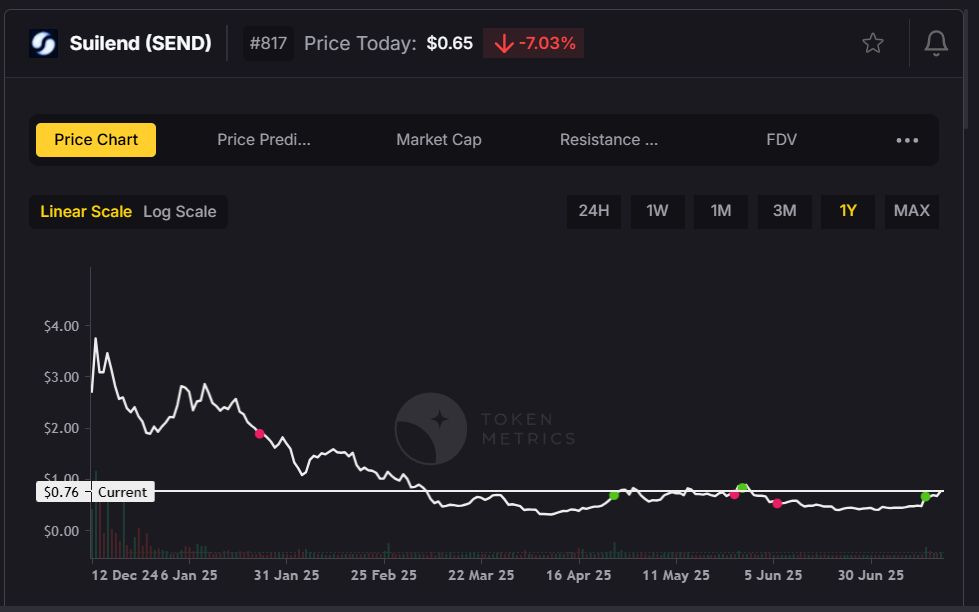
Suilend ($SEND) is a native DeFi lending protocol built on the Sui blockchain, which is gaining traction due to its low transaction fees and innovative parallel transaction processing. The platform's low fees provide a competitive advantage for users, making it especially appealing to cost-conscious traders and investors. As the Sui network expands, Suilend is positioned to capitalize on the growing demand for capital-efficient lending and borrowing services.

The platform supports Sui-native tokens, enabling users to leverage their crypto assets efficiently within a low-competition DeFi environment. This makes $SEND an attractive option for investors seeking exposure to decentralized finance with minimized transaction fees and a scalable infrastructure. Its rapid total value locked (TVL) growth underscores its rising market value and adoption.

3. Blackhole ($BLACK)
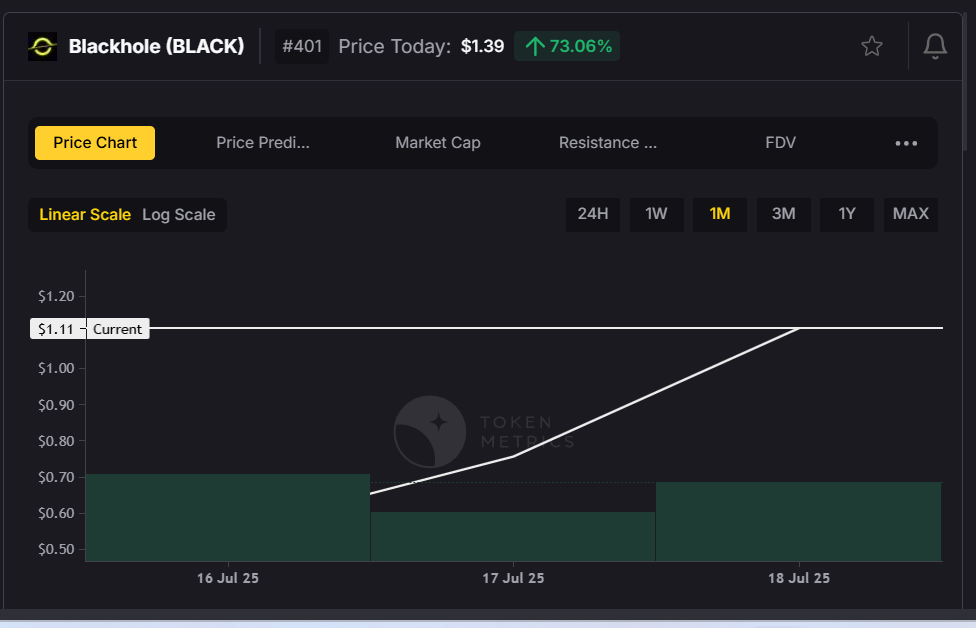
Blackhole ($BLACK) is carving a niche as a decentralized compute platform that provides GPU resources for AI, machine learning, and crypto infrastructure projects. By incentivizing GPU providers and AI developers through its native $BLACK token—the native coin of the Blackhole platform, essential for transaction fees and overall platform operations—the platform fosters a collaborative environment for decentralized AI compute sharing.

This project is pivotal for the evolving decentralized finance and AI sectors, offering a decentralized platform where compute power can be rented and shared securely. For investors interested in the intersection of AI and blockchain technology, Blackhole represents a unique asset with the potential to disrupt traditional centralized compute services.

4. Resolv ($RESOLV)
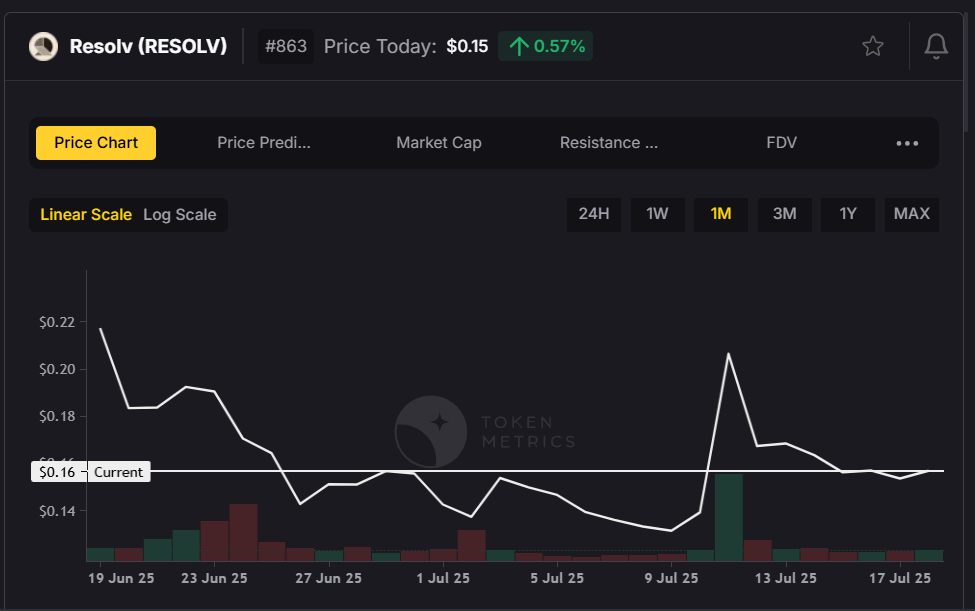
Resolv ($RESOLV) innovates at the crossroads of AI and smart legal contracts by developing AI agents that automate compliance, arbitration, and dispute resolution. This platform empowers decentralized autonomous organizations (DAOs) and dApps with tools for on-chain contract enforcement and legal agreement automation.

As regulatory scrutiny from bodies like the Securities and Exchange Commission increases, projects like Resolv that enhance legal transparency and automation are becoming essential. By integrating large language models (LLMs) into smart contracts, Resolv offers a competitive edge in the crypto space, appealing to users and investors focused on compliance and decentralized finance.

5. Cookie.fun ($COOKIE)
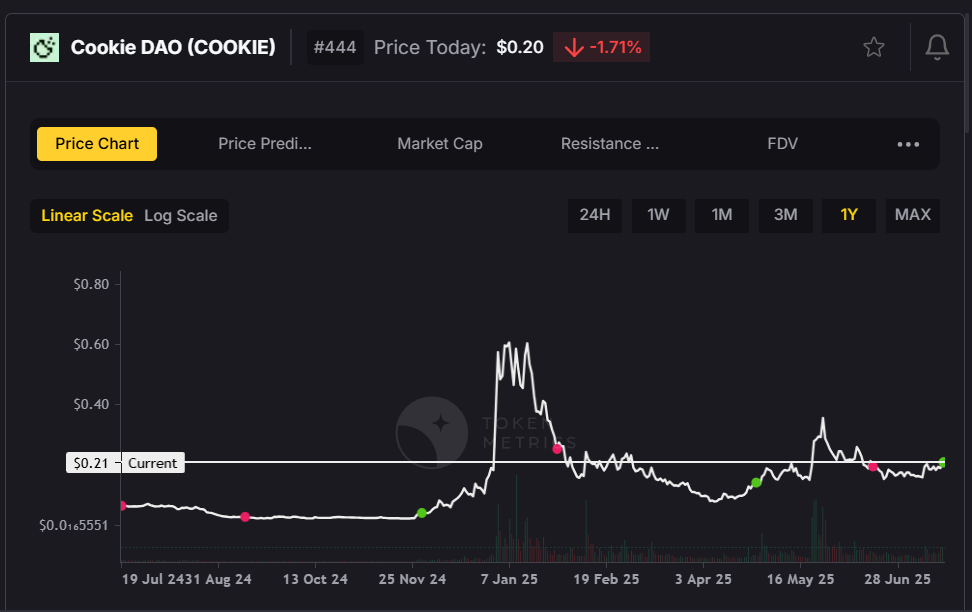
Cookie.fun ($COOKIE) blends social engagement, AI creativity, and entertainment by offering AI-generated animated content and meme NFTs. This platform leverages the virality of meme culture to create a decentralized social environment where creators and fans can monetize digital content.

The unique combination of meme NFTs and community rewards makes Cookie.fun a standout in the creator economy. For crypto enthusiasts looking to participate in the cultural side of the crypto market, $COOKIE offers a novel way to engage with digital assets while benefiting from the rise of AI-generated entertainment.

6. Usual Money ($USUAL)
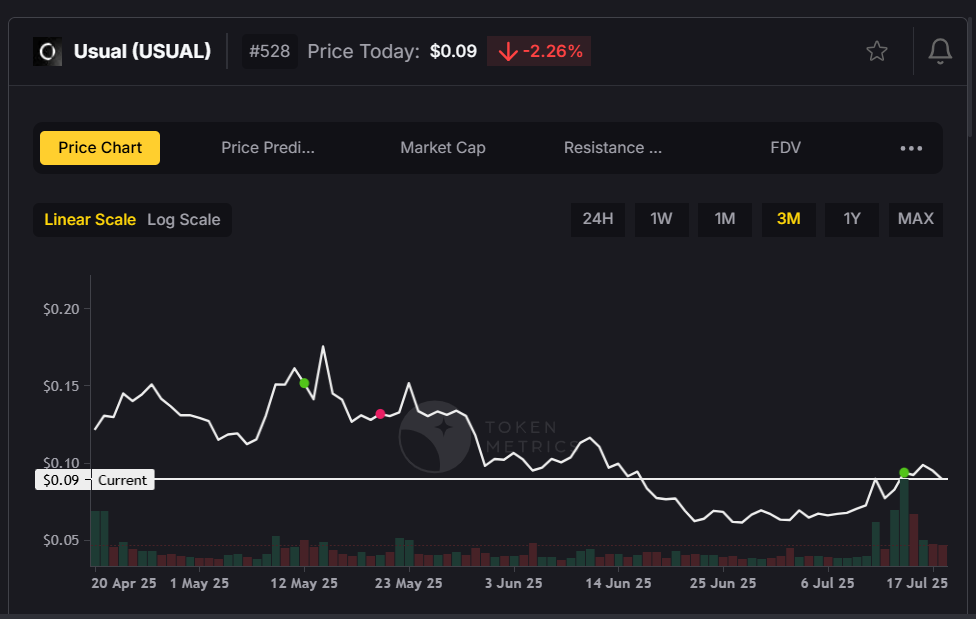
Usual Money ($USUAL) addresses the need for a user-friendly, decentralized stablecoin platform optimized for DeFi payments and yield generation. By combining a seamless user experience with smart routing for capital efficiency, Usual Money enhances the dollar experience for crypto-native users.

This platform’s focus on yield-bearing stablecoins and low transaction fees positions it well within the growing decentralized finance sector. Investors seeking stable, utility-driven tokens with real-world applications in payments and DeFi will find $USUAL an appealing asset.

7. Freysa AI ($FAI)
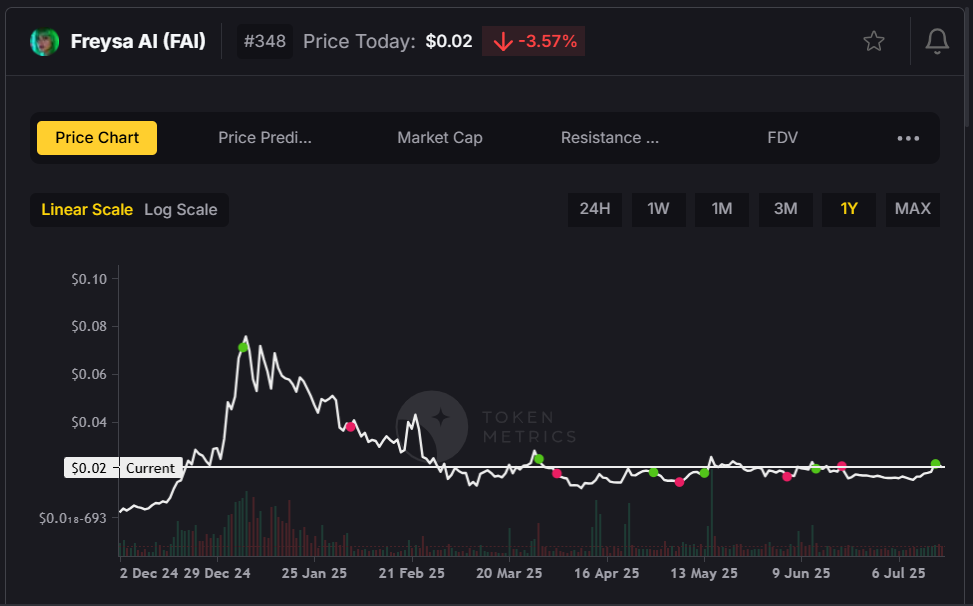
Freysa AI ($FAI) is building a decentralized framework for AI agents capable of interacting with blockchains, decentralized exchanges (DEXes), and dApps. This infrastructure supports on-chain automation and facilitates the development of crypto copilots that enhance user interaction within the crypto ecosystem.

By integrating leading AI models with on-chain APIs, Freysa AI offers a powerful toolset for developers and users aiming to streamline complex processes. Its role in decentralized AI infrastructure makes $FAI a promising token for investors focused on the future of AI-driven blockchain applications.

8. LOFI
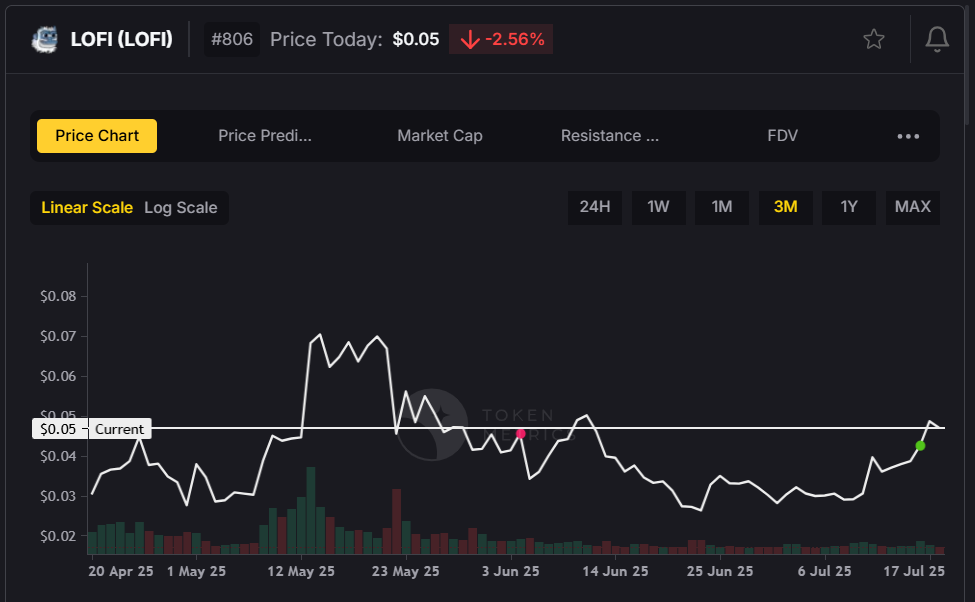
LOFI is an innovative project at the intersection of AI, music, and culture. It enables artists and fans to co-create and monetize AI-generated generative music NFTs, focusing on ambient soundscapes and fan engagement.

This platform taps into the creator economy by facilitating music royalties and fostering fan economies through blockchain technology. LOFI’s unique approach to combining generative music with NFTs offers a fresh avenue for investors interested in cultural and entertainment-related crypto assets.

Click here to buy Cryptocurrencies from Gate.io

‍

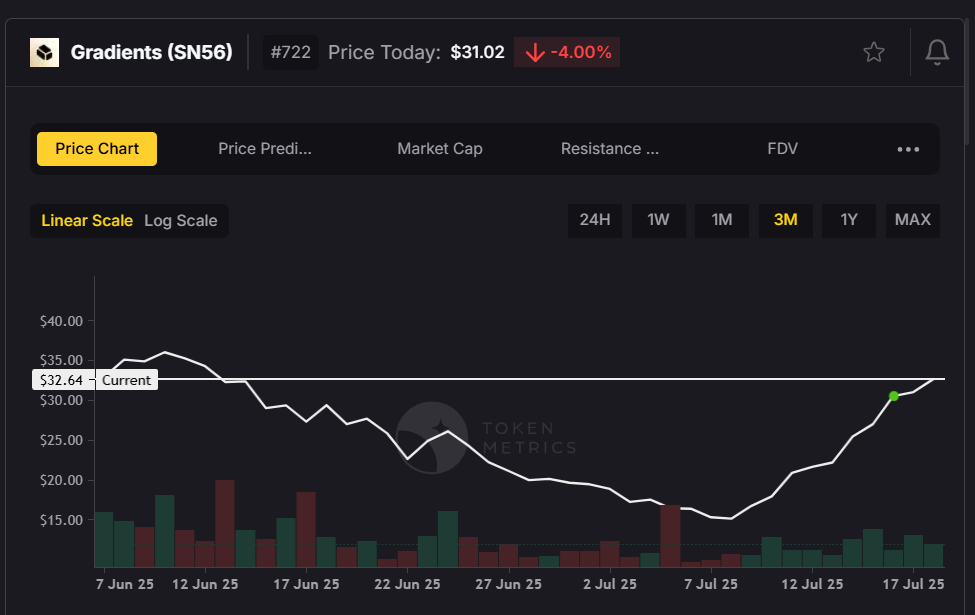
9. Gradients ($SN56)

Gradients ($SN56) operates a token-incentivized data marketplace that crowdsources datasets for AI training and machine learning model development. This decentralized approach to data collection and sharing enhances the quality and accessibility of training data for AI developers.

With token-gated access to proprietary datasets, Gradients empowers users and developers to contribute to and benefit from the growth of AI capabilities. Investors focused on AI and data-driven crypto projects will find $SN56 an intriguing addition to their portfolios.

10. BIO Protocol ($BIO)
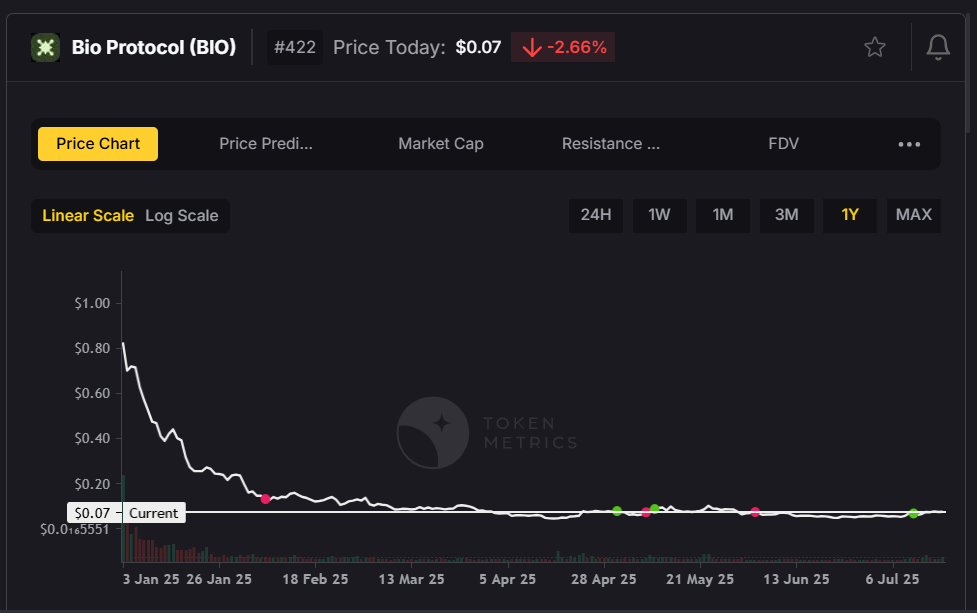
BIO Protocol ($BIO) merges biotechnology with decentralized science (DeSci) by enabling researchers and biotech firms to tokenize experiments and scientific contributions. This platform fosters on-chain reputation systems and data royalties, incentivizing scientific innovation and collaboration.

By facilitating AI-driven drug discovery and scientific data sharing, BIO Protocol addresses real-world challenges through blockchain technology. This project appeals to investors interested in the convergence of biotech, AI, and decentralized finance.

11. Swarms ($SWARMS)
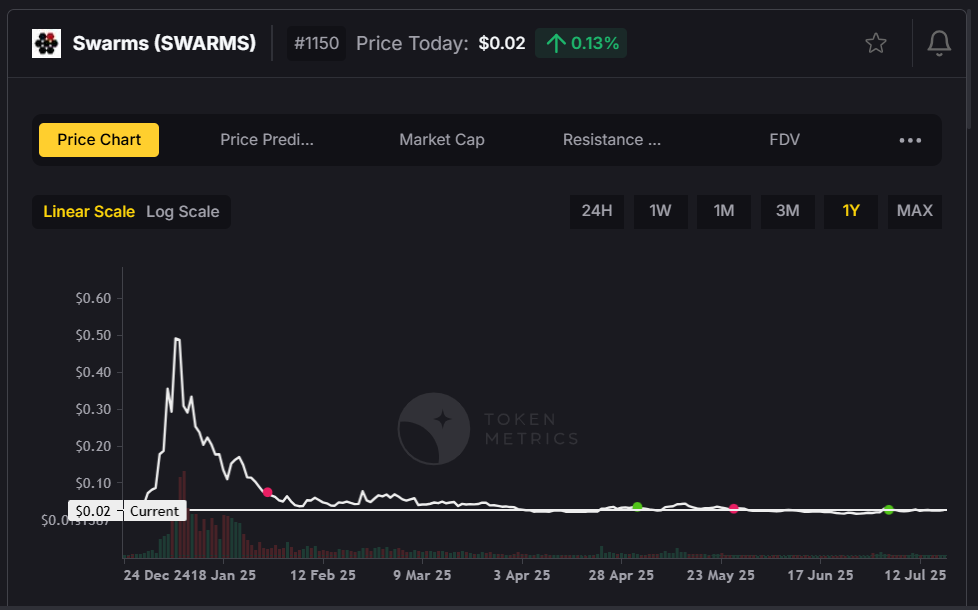
Swarms ($SWARMS) is developing an open-source protocol for multi-agent coordination across decentralized applications. This technology enables smart agents to execute complex tasks such as DAO governance, DeFi arbitrage, and airdrop farming efficiently.

The platform’s swarm AI logic supports parallelized on-chain execution, enhancing scalability and automation. For traders and investors looking at the next wave of decentralized automation, $SWARMS offers compelling utility and growth potential.

12. Creator.bid ($BID)
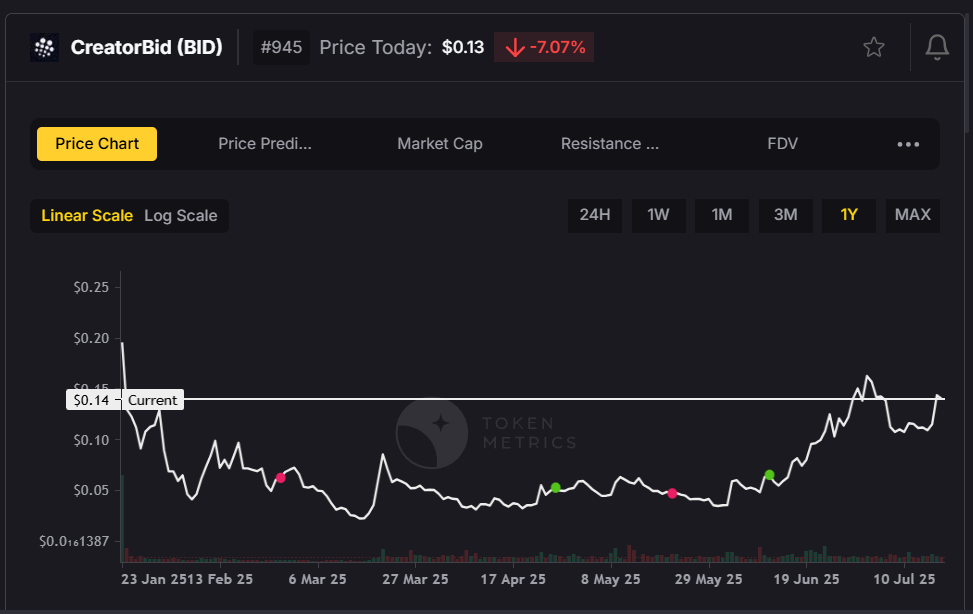
Creator.bid ($BID) is an auction platform where fans can bid on personalized content created by AI-powered influencers and creators. This project combines AI celebrity clones with fan tokens to revolutionize creator monetization.

Its auction dynamics and custom content-generation models provide a unique marketplace within the creator economy. Investors interested in AI-driven social platforms and fan engagement will find $BID an exciting asset.

13. Collaterize ($COLLAT)
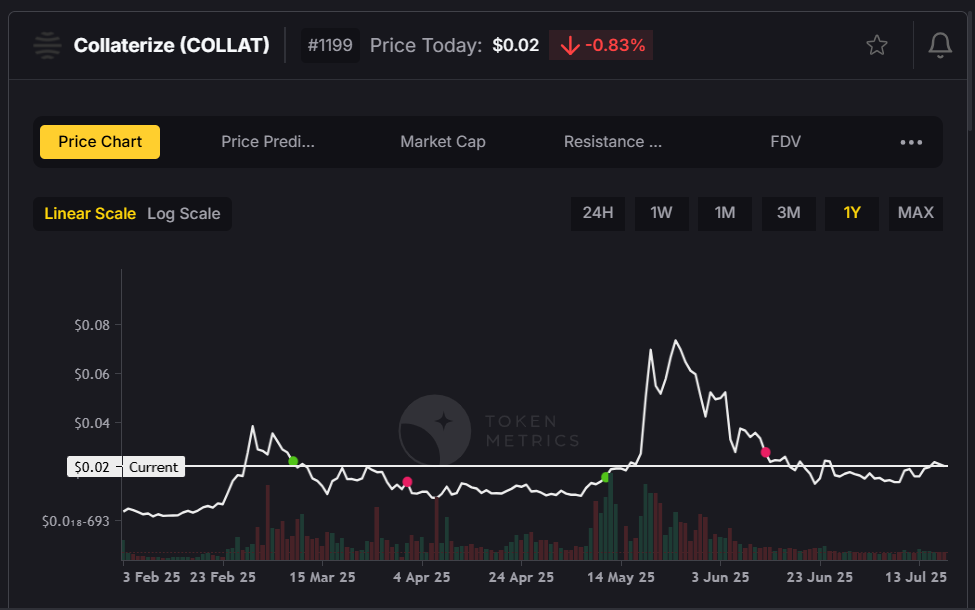
Collaterize ($COLLAT) bridges the gap between real-world assets and decentralized finance by allowing users to tokenize and collateralize assets such as invoices and real estate. This integration facilitates asset-backed lending and yield generation within DeFi.

With transparent smart contracts and real-world audits, Collaterize enhances trust and security for investors. This project is particularly appealing to those seeking exposure to real-world asset (RWA) collateralization in the crypto market.

14. aixbt by Virtuals ($AIXBT)
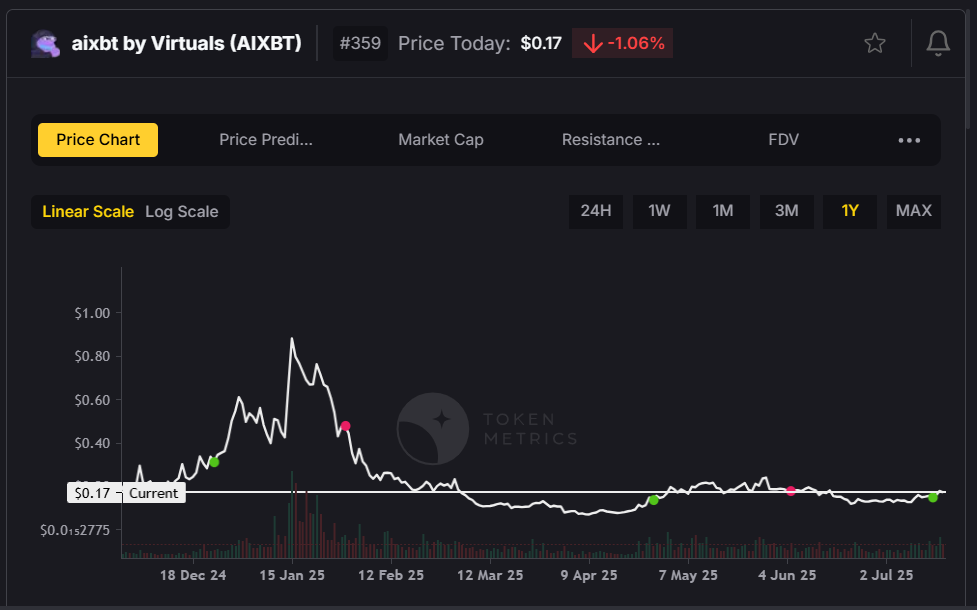
aixbt ($AIXBT) is an AI-powered trading bot platform that leverages both on-chain and off-chain data to execute autonomous crypto trading strategies. The platform enables users to trade altcoins using advanced AI-driven tools, providing flexibility and efficiency in managing a diverse portfolio. It offers real-time trade simulations and leaderboard-based strategy competitions.

This platform caters to traders looking for sophisticated, data-driven tools to navigate price fluctuations and market sentiment. $AIXBT’s innovative approach to AI trading bots makes it a valuable asset in the competitive crypto trading landscape.

15. MyShell AI ($SHELL)
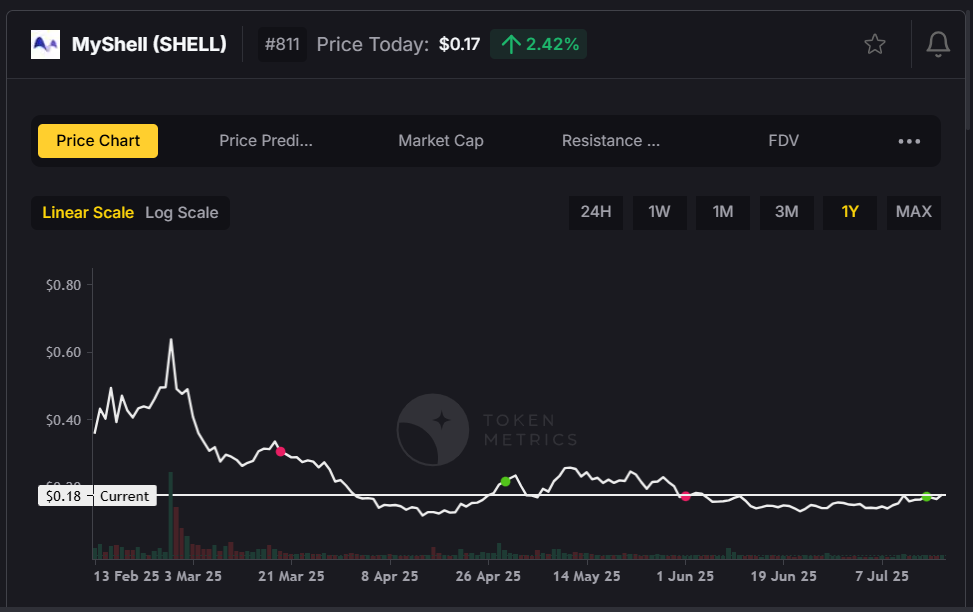
MyShell AI ($SHELL) enables users to create voice-based AI characters that operate across multiple platforms like Discord and Telegram. This project supports voice-to-earn economies and multi-platform bot deployment, enhancing user interaction and customer support.

By combining AI agents with creator studios, MyShell AI taps into the growing demand for personalized, voice-enabled digital experiences. Investors interested in AI-driven user engagement and decentralized platforms will find $SHELL noteworthy.

Trading Strategies for Altcoins

Trading altcoins successfully requires a solid grasp of the crypto market and its ever-changing trends. Professional traders often rely on technical analysis, chart patterns, and market indicators to anticipate price movements and make strategic trades. When trading altcoins, it’s important to consider factors such as trading fees, transaction fees, and the overall volatility of digital currencies. Understanding the underlying technology, use cases, and competitive landscape of each altcoin can provide a significant edge. Many exchanges, including industry leaders like Binance and Kraken, offer robust platforms for trading a wide variety of altcoins, making it easier for investors to access and trade these digital assets. By staying informed and leveraging the right tools, traders can navigate the complexities of the crypto market and optimize their trading strategies for better results.

Risk Management for Altcoin Investors

Investing in altcoins presents unique challenges, including high price volatility, potential market manipulation, and evolving regulatory landscapes. Retail investors must be proactive in managing these risks by diversifying their portfolios and conducting thorough research before making any altcoin investments. Long term investments in altcoins can yield substantial rewards, but they require a deep understanding of the crypto market and its shifting dynamics. The Securities and Exchange Commission has provided guidelines to help investors navigate the regulatory aspects of cryptocurrency investing, and it’s crucial to ensure compliance with these rules. Platforms like Tron Network and Ripple Labs have introduced low-fee structures and stablecoin solutions to help mitigate some of the risks associated with trading and investing in altcoins. By understanding both the risks and potential rewards, investors can make informed decisions and confidently participate in the ever-evolving world of altcoins and digital assets.

Final Thoughts: How to Evaluate Altcoins in 2025

Selecting the best crypto altcoins for 2025 requires thorough research and a strategic approach. Investors should prioritize projects with strong narratives aligned to AI, DeFi, real-world assets, and autonomous agents. Active development and vibrant communities are essential indicators of a project’s sustainability and growth potential. Monitoring new coins entering the market is important, as their supply and circulating supply can impact scarcity and value.

Real token utility and demand mechanisms, such as staking, transaction fee savings, or governance rights, add tangible value to crypto tokens. Interoperability with expanding ecosystems like Sui, Base, and Solana further enhances an altcoin’s market capitalization and market cap stability.

For many investors and traders, platforms like Token Metrics AI ($TMAI) serve as critical tools to analyze market data, track performance, and gauge market sentiment. Crypto prices are influenced by supply, demand, and trading activity, so understanding these factors is crucial for evaluating altcoins. Utilizing such resources can help navigate the complexities of the cryptocurrency market, balancing risk tolerance with the pursuit of high-reward altcoin investments.

In summary, the best crypto altcoins in 2025 are those that combine innovative technology, competitive advantages, and real-world applications within a rapidly evolving crypto ecosystem. When comparing altcoins to other cryptocurrencies, it is important to consider their performance, trading volume, and the platforms they utilize—such as the XRP ledger, which supports fast transactions and differs from traditional blockchains. How actively an altcoin is traded can also indicate its liquidity and investor interest. By staying informed and leveraging cutting-edge platforms, investors can position themselves to capitalize on the rise of new crypto assets and the next altcoin season.

Click here to buy Cryptocurrencies from Gate.io

Contact us at promo@tokenmetrics.com for marketing and sponsorship programs.

Build Smarter Crypto Apps &
AI Agents in Minutes, Not Months
Real-time prices, trading signals, and on-chain insights all from one powerful API.
Grab a Free API Key
About Token Metrics
Token Metrics: AI-powered crypto research and ratings platform. We help investors make smarter decisions with unbiased Token Metrics Ratings, on-chain analytics, and editor-curated “Top 10” guides. Our platform distills thousands of data points into clear scores, trends, and alerts you can act on.
30 Employees
analysts, data scientists, and crypto engineers
Daily Briefings
concise market insights and “Top Picks”
Transparent & Compliant
Sponsored ≠ Ratings; research remains independent
Want Smarter Crypto Picks—Free?
See unbiased Token Metrics Ratings for BTC, ETH, and top alts.
Thank you! Your submission has been received!
Oops! Something went wrong while submitting the form.
 No credit card | 1-click unsubscribe
Token Metrics Team
Token Metrics Team

Recent Posts

Research

AI-Powered Crypto Indices: The Smart Way to Build Diversified Portfolios in 2025

Token Metrics Team
8 min read

The world of cryptocurrency investing has undergone rapid change in recent years. What began as a niche, experimental market is now a $3 trillion asset class that’s attracting interest from institutional investors, hedge funds, and everyday traders. With thousands of cryptocurrencies and NFTs available, building a smart, diversified portfolio is more challenging than ever. Fortunately, new tools are emerging to simplify this process—including crypto indices backed by AI and data-driven analysis.

The Evolution of Crypto Investing

The cryptocurrency market has transformed dramatically since its inception. What started as a niche digital experiment has evolved into a multi-trillion dollar asset class that's capturing the attention of institutional investors, hedge funds, and everyday traders. However, with over 6,000 cryptocurrencies and NFT projects available, portfolio management is becoming increasingly complex.

Crypto indices offer an innovative solution that’s changing how the digital asset market is approached and analyzed.

What Are Crypto Indices?

A crypto index is a curated basket of tokens that provides diversified exposure to a specific segment of the crypto market. Like the S&P 500 for stocks or the NASDAQ for tech, crypto indices bundle multiple assets into a single, navigable investment vehicle.

This structure enables investors to access entire market segments efficiently, bypassing the need to research thousands of individual projects or react to every market move.

The Problem Crypto Indices Solve

  • Information Overload: With thousands of tokens launching monthly, identifying quality projects is complex.
  • Volatility Management: Single-asset exposure can result in extreme price swings.
  • Time Constraints: Active portfolio management demands constant attention and rebalancing.
  • Expertise Barriers: Deep knowledge of blockchain, tokenomics, and market trends is often required.
  • Emotional Decisions: Fear and greed frequently lead to suboptimal timing and mistakes.

Crypto indices address these by providing structured, diversified, and data-backed market exposure.

Why Crypto Indices Are Gaining Traction in 2025

  • Institutional Interest: 67% of institutions plan to increase crypto exposure in 2025, driving demand for diversified vehicles.
  • Regulatory Clarity: Progress in Europe and the U.S. is promoting confidence to build long-term crypto strategies.
  • Diversification Benefits: Even small allocations in crypto have historically delivered improved risk-adjusted returns for mixed portfolios.
  • Automation: Many indices rebalance automatically, saving time and promoting discipline over emotion-driven trading.

Token Metrics: Pioneering AI-Driven Crypto Indices

Token Metrics is a leading cryptocurrency investment research platform utilizing artificial intelligence, machine learning, and research to analyze more than 6,000 digital assets.

The Token Metrics Advantage

What makes Token Metrics unique is its AI-driven approach to crypto index construction and management:

  • Comprehensive Data Analysis: AI models evaluate factors including fundamental data, code quality, sentiment, technical levels, and more to identify trends and anticipate movements.
  • 14+ AI-Powered Indices: Covering strategies like trader, investor, sector-specific (AI, DeFi, RWAs), and risk-adjusted approaches.
  • Active AI Management: Over 80 data points per token inform weekly rebalancing and tactical shifts between market sectors and defensive assets.

How Token Metrics Indices Work

  1. Index Selection: Choose by investor type (Value, Trader, Balanced), time horizon (daily to annual), or investment style (fundamental, technical, balanced).
  2. Portfolio Construction: Only tokens with $500K+ daily trading volume are considered. The AI evaluates market cap, liquidity, code quality, sentiment, and momentum.
  3. Automated Rebalancing: Transparent transaction logs show buying, selling, and rationale.
  4. Performance Tracking: Analytics include holdings, weights, token returns, portfolio results versus benchmarks, and volatility metrics.

Key Benefits of Token Metrics Crypto Indices

  • Diversification: Risk is spread across multiple assets, reducing impact from any single token’s volatility.
  • AI-Driven Selection: AI insights help identify potentially strong performers and filter out lower-quality or risky projects.
  • Time Efficiency: Automated research, selection, and rebalancing save investors substantial time.
  • Dynamic Risk Management: Indices can shift allocations or move to stablecoins based on market signals, supporting capital preservation.
  • Transparency & Education: All index components, changes, and rationale are visible—building both trust and analytical skill.
  • Historical Validation: Past performance (such as AI indices showing significant returns since inception) demonstrates AI’s ability to identify trends. (Note: Future returns are not guaranteed.)

Token Metrics Ecosystem: More Than Just Indices

The Token Metrics suite includes:

  • Analytics Platform: Real-time insights, trader/investor grades, price predictions, technical/fundamental research, sentiment analysis, and code assessments.
  • AI Chatbot: Powered by GPT-3.5, delivering data-driven answers and technical overviews.
  • Trading Bot: Automated trade execution based on user strategy.
  • Research & Education: Tutorials, reports, webinars, and deep insight into blockchain tech, strategy, and risk management.
  • API Access: AI-powered cryptocurrency data with live prices, trading signals, sentiment metrics, and more for advanced integration.

Comparing Token Metrics to Other Crypto Indices

  • Bitwise 10 (BITW): Tracks market cap leaders, rebalance monthly. Limitation: Passive approach, higher fees. Token Metrics: Active AI management, weekly updates.
  • Galaxy Crypto Index: Large-cap focus. Limitation: Limited asset scope. Token Metrics: Multiple strategies and sectors.
  • On-Chain Indices (Index Coop, TokenSets): Decentralized, sector-based. Limitation: Limited cross-market intelligence. Token Metrics: Broad, AI-driven data across all segments.

How to Get Started with Token Metrics Indices

  1. Define Goals: Assess risk tolerance, time horizon, objectives, and preferred sectors (AI, DeFi, etc.).
  2. Access Indices: Indices are informational; users can manually mirror suggested portfolios or use full platform features for analytics, chatbots, and automated strategies.
  3. Select Index: Align with personal style—value, trader, balanced; daily, weekly, or longer-term construction.
  4. Monitor & Adjust: Regularly review strategy to ensure it matches evolving goals and market context.

Best Practices for Crypto Index Investing

  • Start Small: Allocations of 1-3% can improve efficiency with modest risk; scale exposure as comfort grows.
  • Long-Term Commitment: Index strategies often benefit from patience; HODL or weekly-check-in approaches fit different levels of engagement.
  • Diversify Indices: Spread capital across core (large-cap), sector-specific, and tactical trader indices.
  • Understand Updates: Trader ratings adjust frequently; value and tech grades update less often. Match engagement to style.
  • Dollar-Cost Averaging: Regular contribution strategies can help manage timing risk.
  • Stay Informed: Keep up with market, regulatory, and technology trends for strategic insight.

The Future of Crypto Indices

  • Institutional Adoption: Professional investors are entering the market via ETFs and advanced index products.
  • Advanced AI: Next-generation models will use on-chain analytics, cross-market intelligence, and even quantum computing for deeper insights.
  • Real-World Assets: Tokenized RWAs (now exceeding $22B on-chain) are expanding the universe for index inclusion.
  • DeFi Indexes: Fully decentralized, trustless index products are growing with the DeFi space.
  • Personalized Portfolios: AI advisors may soon build and adapt portfolios to suit individual risk tolerance and financial plans.

Risk Considerations and Disclaimers

  • Market Volatility: Crypto indices are still subject to considerable price swings, which can result in significant risk.
  • Smart Contract Risk: On-chain index solutions depend on secure and well-audited smart contracts.
  • Regulatory Change: Evolving laws or guidance may impact accessibility, taxation, or structure of index products.
  • No Insurance: Crypto holdings are not protected by government insurance, meaning capital loss is possible.
  • No Guarantees: As with any investing, historical performance does not assure future results.

Conclusion: The Smart Path to Crypto Wealth

Crypto indices are fundamentally changing the way investors approach digital assets. By blending automation, data-driven research, AI intelligence, and diversification, these tools provide structure for navigating a complex and dynamic marketplace.

Token Metrics stands at the forefront of this evolution—leveraging AI, comprehensive analytics, and transparent methodologies to build indices that adapt dynamically to market conditions. With frequent rebalancing, deep analytical coverage, and a focus on user education and empowerment, Token Metrics offers an advanced toolkit for building and analyzing modern crypto portfolios.

Whether your strategy is conservative, aggressive, or somewhere in between, AI-powered indices can support a framework for managing digital assets thoughtfully and efficiently. As institutional adoption and regulatory clarity grow, diversified crypto indices are set to become an essential part of the digital investing landscape.

Discover Crypto Gems with Token Metrics AI

Token Metrics uses AI-powered analysis to help you uncover profitable opportunities in the crypto market. Get Started For Free

FAQ: What Is a Crypto Index?

A crypto index is a basket of cryptocurrencies assembled to track a particular segment or theme within the digital asset market, providing diversified exposure through a single vehicle.

FAQ: How Do AI-Powered Crypto Indices Work?

AI-powered crypto indices use machine learning algorithms and large-scale data to select, weight, and rebalance a portfolio of tokens automatically, adjusting allocations as market conditions evolve.

FAQ: Are Crypto Indices Safe?

While crypto indices offer diversification and automated risk management, they are still exposed to volatility, regulatory changes, and potential smart contract risks. They are not insured or capital guaranteed.

FAQ: What Makes Token Metrics Indices Different?

Token Metrics indices integrate AI, weekly rebalancing, deep fundamental and technical analysis, and complete transparency—enabling users to follow or replicate high-quality, actively managed strategies built on research.

FAQ: Can I Directly Invest in Token Metrics Indices?

Currently, Token Metrics indices are informational. Users can manually replicate the indices by copying their composition and weights, or leverage the Token Metrics analytics platform for additional strategy, research, and automation help.

Disclaimer

This blog post is for informational and educational purposes only. It does not constitute investment advice, an offer, solicitation, or recommendation to buy, sell, or hold any financial instrument or engage in any specific investment strategy. Always conduct your own due diligence and consult a qualified financial advisor before making investments. The value of digital assets can be volatile, and past performance does not guarantee future results.

Research

Coinbase Index vs Token Metrics Global 100: Regime Switching Makes the Difference

Token Metrics Team
9 min read

The crypto market in 2025 is defined by a new wave of innovative investment tools, making the choice of the right crypto index more crucial than ever. Amid the landscape, the comparison of Coinbase Index vs Token Metrics Global 100 stands out; each reflects fundamentally distinct philosophies about crypto investing. While Coinbase’s COIN50 Index leans on a traditional buy-and-hold strategy reminiscent of the S&P 500, the Token Metrics Global 100 introduces a regime-aware system that reacts to market conditions. This exploration dives into how these indices differ, where they overlap, and why regime switching could reshape the future of crypto investment frameworks.

Introduction to the Crypto Market

The cryptocurrency market has undergone rapid transformation, granting participants access to a diverse portfolio of altcoins and a multitude of fiat currencies supported by major exchanges. Gemini and Coinbase both serve prominent roles in this changing environment, supporting retail and institutional users alike. Gemini, established by Cameron Winklevoss, is lauded for its rigorous security—implementing offline cold storage to protect assets. Meanwhile, Coinbase, founded by Brian Armstrong and Fred Ehrsam, boasts a robust regulatory approach aimed at establishing user trust through compliance and strong protections.

Both platforms facilitate the use of top fiat currencies like USD and EUR, streamlining deposits, withdrawals, and trading for a broad user base. Their mobile apps empower users with mobility for portfolio management and trading. In trading volume, Coinbase leads with significant market participation, while Gemini’s volume has been on the rise, expanding with the broader market growth.

While both exchanges offer a wide array of supported cryptocurrencies and user-friendly services, differences remain. Gemini emphasizes maximum security and insured funds, favored by risk-averse or institutionally minded users. Coinbase appeals strongly to newcomers through interface simplicity, education, and a competitive fee model (albeit with more complex fee structures than Gemini’s straightforward approach). Specialized offerings—like staking rewards at Coinbase, or Gemini’s Earn—cater to different investor interests and strategies, including institutional demands.

Ultimately, the decision between platforms is shaped by individual user needs. Both platforms allow fund transfers between accounts, support in-depth pricing tools, and offer features intended to help users make informed choices. Understanding these foundational aspects sets the stage for effective participation in the crypto market.

Key Comparison of Gemini and Coinbase

Both Gemini and Coinbase earn their reputations from secure, user-focused exchanges with strong regulatory compliance. Nevertheless, their operational nuances, fee structures, and specialized product offerings underscore differences that matter to crypto market participants.

Gemini’s standout security, including a cold storage-first architecture and strict regulatory oversight (notably from NYSDFS), ensures assets are well protected and managed under industry-leading standards. Coinbase, while matching these security efforts, also benefits U.S. customers via insured fiat funds and a wide-ranging regulatory focus, increasing user confidence.

Fees are a key differentiator: Gemini offers clarity with a flat rate tier system, while Coinbase has a variable, sometimes complex fee schedule. These factors can influence total trading costs, making fee structure examination an important research point for users wanting cost transparency.

Currency and asset diversity also separates the two—Coinbase often supports a greater range of fiat currencies and altcoins. In terms of trading volume, Coinbase sits at the top globally, while Gemini’s upward trajectory signals continued growth and institutional interest. Both offer institutional and bulk trading solutions, with Coinbase’s staking rewards and Gemini’s Earn providing income generation features for assets held on-platform.

User experience rounds out the comparison; seamless mobile apps, easy onboarding, and helpful interfaces are core to both platforms, with Gemini praised for beginner-friendly design and Coinbase for supporting both new and advanced investors. Ultimately, Gemini and Coinbase offer robust, but distinct, experiences—a matter of aligning platform strengths with user priorities.

The Traditional Approach: Coinbase 50 Index

Debuting in November 2024, the Coinbase 50 Index (COIN50) introduced new options for mainstream crypto market tracking. In collaboration with MarketVector Indexes, this index targets the top 50 digital assets available on Coinbase, representing around 80% of total crypto market capitalization. Its methodology is deliberately straightforward: a market-cap weighted approach, refreshed every quarter to reflect shifting capitalizations.

Presently, COIN50 is highly concentrated—Bitcoin anchors the index at 50% (maximum permitted), followed by Ethereum, Solana, and other leading assets. This mirrors the top-heavy nature of crypto markets. The approach is simple: buy, hold, rebalance—mirroring passive equity index philosophies that focus on capturing long-term growth despite short-term volatility.

Coinbase’s user-centric ethos is reflected in this index—easy entry for new investors, integrated staking rewards, insured fiat holdings, and a regulated framework. Similar to Gemini’s protective mindset, Coinbase manages asset security with cold storage and progressive regulatory practices, making COIN50 an accessible avenue for those seeking broad crypto exposure via an established platform.

The Intelligence Gap

While COIN50 reliably tracks the market, it shares a critical limitation with traditional stock indices: remaining fully invested regardless of market direction. In stock markets, this risk can often be managed because drawdowns are typically less severe. Crypto markets, however, frequently experience far deeper corrections—drawdowns in excess of 70% occurred during the 2022 crypto winter. In such environments, a fully invested index is vulnerable to significant capital erosion.

This is less a flaw and more a design trade-off inherent to passive strategies. As cycles accelerate in 2025 and volatility persists, crypto market participants are increasingly asking whether a more adaptive approach could offer better outcomes in terms of drawdown mitigation while maintaining growth potential.

Enter Token Metrics Global 100: Regime-Aware Indexing

Token Metrics, a distinguished crypto analytics and trading platform, has forged its reputation through data-driven, transparent methods. Its flagship Global 100 Index blends broad asset coverage with active risk management by employing market regime signals—adjusting asset exposure proactively to changing market environments.

What Makes TM Global 100 Different

  • Broader Market Representation: Spanning the top 100 cryptocurrencies by market capitalization, TM Global 100 captures more of the crypto market, especially during bullish cycles where emerging coins outperform.
  • Weekly Rebalancing: The index rebalances every week, aligning closely with shifting market landscapes—unlike COIN50’s quarterly cadence—ensuring exposures reflect up-to-date asset trends.
  • Regime Switching: At the heart of TM Global 100 is a proprietary market signal that dynamically determines full market participation or a move to stablecoins, based on prevailing risk conditions.

This unique structure allows TM Global 100 to fluidly adapt between market upswings and protective stances, unlike static passive indices.

How Regime Switching Works

  • Bullish Market: The index holds a diversified basket of the top 100 cryptocurrencies, capturing upward momentum across the sector.
  • Bearish Market: The system rotates allocations entirely into stablecoins, emphasizing capital preservation and sidestepping major market downturns until conditions improve.

This methodology is about large-scale, structural market awareness—protecting capital during drawdowns, not chasing every small price swing.

The Power of Protection: Stringent Security Measures

Consider two hypothetical $100,000 portfolios entering a bear phase:

  • COIN50 (Conventional): Remains fully invested, possibly experiencing a 60% drawdown—reducing to $40,000 and requiring a substantial recovery to break even.
  • TM Global 100 (Regime-Aware): Rotates into stablecoins on bearish signals, potentially preserving the original $100,000 for redeployment when conditions turn favorable.

Reducing the impact of large losses is a powerful force—compounding advantages accrue on both risk and return, leading to a smoother overall outcome, especially in a volatile asset class like crypto.

Token Metrics: Built on Data Excellence and Commitment to Regulatory Compliance

  • Institutional Research: Deep analytical coverage of thousands of crypto assets.
  • AI & Quantitative Insights: Advanced models synthesize vast datasets for pattern and trend recognition.
  • Proven Market Navigation: Years of outcomes across multiple crypto cycles.
  • Transparent Methodology: Clear, open documentation and live holdings visibility.

All operations and rebalancing are logged and displayed in real time, reinforcing Token Metrics' commitment to transparency and regulatory-minded practices. This infrastructure allows users to fully understand and monitor index movements and risk controls.

Operational Excellence

  • Streamlined Access: Enable purchases via self-custodial smart wallet in minutes.
  • Portfolio Visibility: Full strategy insights, live holdings data, and transaction records.
  • Transparent Fees: All transaction costs and slippage disclosed pre-confirmation.
  • Real-Time Tracking: “My Indices” dashboard for performance tracking and detailed history.

COIN50, conversely, is available mainly through perpetual futures contracts on Coinbase International Exchange (not accessible to U.S. retail users), necessitating derivatives trading know-how and diminishing its general accessibility for spot investors.

The Right Tool for the Right Investor

Whether to choose the Coinbase Index or Token Metrics Global 100 depends on your investment approach, risk tolerance, and any liquidity limitations. Consider:

  • Choose COIN50 if:
    • You want straightforward exposure to the 50 most liquid crypto assets.
    • A buy-and-hold, quarterly rebalanced strategy aligns with your investment philosophy.
    • You have access to international futures markets and are comfortable with inherent volatility.
    • Liquidity constraints are minimal, and you value market simplicity.
  • Choose TM Global 100 if:
    • You are seeking drawdown protection during adverse market periods.
    • You value weekly rebalancing and agile portfolio management.
    • Broader asset exposure, particularly to emerging altcoins, is crucial to you.
    • You prefer spot over derivatives, or have access limitations to the latter.
    • Risk management and adaptive exposure are part of your strategy.
    • Liquidity features are important, particularly when dealing with less-traded digital assets.

The Future of Crypto Indexing and Trading Volume

The emergence of regime-aware indices like Token Metrics Global 100 reflects the maturing of crypto investment tools and approaches. Market participants increasingly expect dynamic solutions that account for crypto’s inherent volatility and cyclical risks, moving beyond static, one-size-fits-all methodologies borrowed from traditional finance. While passive equity indexing made sense in relatively stable environments, the realities of digital asset cycles often demand greater adaptability. Token Metrics Global 100’s structure—engaging markets when signals are positive and standing aside in downturns—represents this next step in the evolution of crypto index investing.

Ready to Experience the Difference?

For participants looking for broad crypto exposure with carefully managed downside risk, regime switching is no longer a luxury but an essential feature. TM Global 100 combines this with weekly rebalancing, transparent methodologies, and the analytical strength of Token Metrics, offering a compelling new solution for the modern crypto environment. As adaptive tools become standard, the future of crypto indexing looks smarter, more adaptive, and better aligned with real market behavior.

Those interested in experiencing a more responsive, risk-aware indexing approach can join the waitlist for access to future-ready crypto index solutions.

Summary and Conclusion

Both Coinbase Index and Token Metrics Global 100 play pivotal roles in the evolving crypto investment landscape, shaping the choices available to different user types. Security remains paramount across platforms—Gemini and Coinbase emphasize rigorous protections and offer advanced features, from staking and interest rewards to sophisticated interface options. Fee structures, trading volume, asset support, and operational details differ, providing a spectrum of options for market participants. In the bigger picture, the Coinbase Index vs Token Metrics Global 100 comparison encapsulates crypto’s shift from passive, static strategies to data-enhanced, flexible methodologies that recognize and navigate the unique cycles of this global marketplace.

Discover Crypto Gems with Token Metrics AI

Token Metrics uses AI-powered analysis to help you uncover profitable opportunities in the crypto market. Get Started For Free

Frequently Asked Questions

What is the main difference between Coinbase 50 and TM Global 100?

The COIN50 is a market-cap-weighted index of the top 50 cryptocurrencies, with quarterly rebalancing and a passive buy-and-hold approach. TM Global 100 expands coverage to 100 assets, rebalances weekly, and uses regime switching to adjust exposure based on market signals, offering more active risk management.

How does regime switching improve crypto index performance?

Regime switching enables the index to shift out of risk assets and into stablecoins during bearish market conditions, potentially limiting large drawdowns. This approach aims to provide smoother performance across cycles rather than maximization in any single period.

Can I access TM Global 100 if I’m in the US?

The TM Global 100 is structured as a spot index, increasing accessibility for U.S. residents. In contrast, COIN50 is available primarily through derivative products outside of the U.S., requiring access to specific international exchanges and experience with futures contracts.

Are Gemini and Coinbase safe for crypto investors?

Both Gemini and Coinbase implement strong security measures, including offline cold storage, regulatory oversight (such as Gemini’s NYSDFS license), and insurance on fiat funds for U.S. users. They continuously update protocols to align with emerging best practices in digital asset security.

Why choose an AI-powered platform like Token Metrics?

AI-powered platforms such as Token Metrics leverage machine learning and data-driven analytics to provide in-depth asset research, pattern recognition, and risk signals—helping users make more informed, evidence-based decisions in a rapidly evolving market.

Disclaimer

This article is for informational and educational purposes only. It does not constitute investment advice, endorsement, or recommendation of any financial product or strategy. Always conduct your own research and consult a qualified professional before making any investment or trading decisions. Cryptocurrency markets are volatile and involve significant risk; past performance is not indicative of future results.

Research

Beyond HODL: Smart Index Strategies That Protect Capital During Crypto Winters

Token Metrics Team
10 min read

The mantra “HODL” became the rallying cry of the cryptocurrency space during the 2017 bull market. For many crypto investors, the strategy seemed straightforward: buy Bitcoin and promising altcoins, hold through the volatility of crypto markets, and count on their recovery prospects to emerge victorious as prices soared. This approach appeared simple, effective, and proven—until the harsh realities of bear markets exposed its limitations. In 2025, as the crypto market experiences faster oscillations between euphoria and fear, the critical question is no longer whether to HODL, but whether you can afford to. This article explores smart index strategies that protect capital during crypto winters, offering a more resilient approach to crypto investing.

The Hidden Cost of HODL

To understand why HODL can be risky, it’s important to examine what “holding through” truly means in practice, especially during market downturns. The 2021-2022 crypto winter provides a stark example. Bitcoin, after peaking near $69,000 in November 2021, plummeted to approximately $15,500 by November 2022—a staggering 77.5% drawdown over a long period. Ethereum’s descent was even more severe, falling from $4,800 to $880, an 81.7% collapse. Many altcoins suffered losses between 90% and 95%, with some never fully recovering.

An investor who bought $100,000 worth of diversified crypto assets at the peak and chose to HODL through the bottom would have seen their portfolio shrink to roughly $15,000-$25,000. This is not mere volatility; this is capital destruction. Even for those with the fortitude to hold, Bitcoin did not reclaim its previous highs from 2021 until March 2024—more than two years of underwater capital. This prolonged, long period represents not only opportunity cost but also psychological stress, as investors grappled with market sentiment and wondered if recovery was imminent or if “this time is different.”

Moreover, the mathematics behind such losses reveal the compounding problem HODL evangelists often overlook. An 80% loss requires a 400% gain just to break even, while a 90% loss demands a 900% gain. These are not typical fluctuations; they represent portfolio extinction events that can derail an investment journey. Investing heavily in one coin increases the risk of catastrophic losses, while diversification across multiple assets or ecosystems can help mitigate such risks and improve portfolio resilience.

Why Smart Investors Prioritize Capital Preservation

Warren Buffett’s timeless wisdom—“Never lose money” and “Never forget rule number one”—applies even more critically in the cryptocurrency space, where volatility can erase years of gains in a matter of weeks. Professional traders and institutional investors recognize a fundamental truth: protecting capital during market downturns is often more valuable than capturing every incremental percentage point of upside during bull markets.

Consider two hypothetical strategies over a complete market cycle:

  • Strategy A (Pure HODL): In a bull market, the portfolio gains 300%, but during a bear market, it suffers an 80% loss. Starting with $100,000, the peak value reaches $400,000, but the final value after the bear market is $80,000—a net loss of 20%.
  • Strategy B (Defensive Switching): This approach captures slightly less upside (+250%) during bull markets but limits losses to just 10% by moving to stablecoins during downturns. Starting with $100,000, the peak is $350,000, and the final portfolio value is $315,000—a net gain of 215%.

Different portfolio allocations between these strategies—such as shifting assets into stablecoins or diversifying across sectors—can significantly impact outcomes during various phases of the market cycle.

The defensive strategy, which prioritizes capital preservation and risk management, outperforms pure HODL by over 400% in absolute terms. This example underscores the power of protecting capital and managing risk in volatile market cycles. It is also essential to align your chosen strategy with your individual risk tolerance to ensure it matches your comfort with potential losses and market volatility.

Token Metrics: Engineering Smarter Market Participation

Smart index strategies that protect capital during crypto winters rely heavily on data-driven decision-making rather than emotional reactions. Token Metrics, a leading crypto trading and analytics platform in 2025, exemplifies this approach. It has transformed how serious crypto investors navigate the market by combining fundamental analysis, technical analysis, and machine learning.

Token Metrics’ evolution reflects a commitment to informed investment decisions:

  • Phase 1: Research & Ratings: The platform provides institutional-grade analysis across thousands of crypto assets, helping investors move beyond social media hype and make informed decisions about allocations based on intrinsic value, token supply, and other key metrics.
  • Phase 2: Signal Development: Recognizing that asset selection alone isn’t enough, Token Metrics developed proprietary algorithms to detect market regimes by analyzing price structure, volatility, correlation patterns, and momentum indicators. These signals identify when market conditions shift from bullish to bearish or vice versa.
  • Phase 3: Automated Execution: The latest innovation integrates these signals into automated index strategies that dynamically adjust portfolio exposure in real time. This translates analysis into action, enabling crypto investors to protect capital during downturns while maximizing gains in bull markets.

While platforms like Token Metrics provide powerful analytics, investors should always conduct their own research to ensure comprehensive risk management and preparedness for unexpected market events.

Regime Switching: The Technology Behind Capital Protection

At the core of Token Metrics’ smart index strategies is “regime switching,” a systematic approach institutional investors use to adjust portfolio risk based on prevailing market conditions. The primary strategy aims of this approach are to maximize profits and outperform market benchmarks by focusing on trending and emerging market segments. The TM Global 100 Index exemplifies this methodology, deploying capital across the top 100 crypto assets, which include major cryptocurrencies.

Multi-Factor Signal Processing

Token Metrics’ proprietary algorithms continuously monitor a broad set of market indicators, including:

  • Price Action: Assessing trend strength, momentum shifts, and key support or resistance levels.
  • Volatility Metrics: Tracking implied and realized volatility, as well as volatility of volatility.
  • Market Structure: Evaluating market breadth, participation rates, and sector correlations, while also monitoring performance across different sectors. This includes focusing on specific sectors to optimize returns as market trends shift.
  • On-Chain Data: Observing exchange inflows/outflows, whale activity, and miner behavior.
  • Macro Context: Incorporating risk asset correlations, liquidity conditions, regulatory clarity, and macroeconomic factors.

These inputs feed machine learning models trained on years of crypto market history, enabling the identification of patterns that often precede significant regime shifts.

Binary Decision Framework

Rather than attempting to time exact market tops and bottoms—a notoriously difficult task—the system operates on a binary framework:

  • When a bullish regime is detected, capital is fully deployed across the top 100 crypto assets by market capitalization. Investing in multiple cryptocurrencies in this way provides broad diversification and helps spread risk. Additionally, using an index to manage these assets can help reduce transaction fees compared to buying and rebalancing individual assets, making the strategy more cost-effective.
  • When a bearish regime is identified, holdings are moved entirely into stablecoins, preserving capital until clear bullish signals re-emerge.

This method accepts slight delays in market entry and exit but significantly reduces exposure to catastrophic drawdowns.

Backtested Performance

Backtesting the regime-switching strategy against previous crypto market cycles demonstrates compelling results:

  • During the 2021-2022 bear market, while traditional HODL portfolios experienced losses between 75% and 85%, the regime-switching approach limited drawdowns to approximately 12-18%.
  • In the 2023 recovery, re-entry signals allowed investors to capture the majority of the upside, as positive sentiment in the market contributed to rising asset prices and increased trading activity.
  • Throughout volatile periods, automated signals reduced emotional decision-making, removing the guesswork and panic selling that often exacerbate losses.

Beyond Just Bear Markets Protection

The benefits of smart index strategies extend beyond merely avoiding crashes. These strategies can also help protect capital during financial crises, when both traditional and crypto markets may experience significant downturns.

One key advantage is the ability to recover opportunity costs. When the market rebounds, smart index strategies can help investors quickly regain lost ground. Additionally, movements in the stock market can influence crypto investment opportunities, making it important to have a strategy that adapts to changing market conditions.

Psychological Capital Preservation

Financial losses are painful, but the psychological toll of watching a portfolio plunge 70% can be debilitating. Such stress can impair decision-making, erode confidence, and lead to panic selling or complete market exit—often at the worst possible time. Automated risk management strategies alleviate these pressures by systematically managing risk, allowing investors to maintain emotional resilience and stay engaged in their investment journey.

Opportunity Cost Recovery

Capital trapped underwater during prolonged bear markets represents lost opportunities. By shifting assets into stablecoins during downturns, investors preserve purchasing power and maintain the flexibility to deploy capital into emerging trends or promising altcoins as they arise. Notably, rising institutional interest can signal new opportunities in the market, helping investors identify sectors with strong growth potential. This approach avoids forced liquidations and keeps investors mentally and financially prepared to capitalize on new market movements.

Compound Growth Optimization

Long-term wealth accumulation depends on consistent compounding with controlled drawdowns. Comparing hypothetical five-year scenarios illustrates this:

  • HODL Approach: Alternating gains and severe losses result in a net total return of approximately 140%.
  • Regime Switching: By limiting drawdowns and capturing most upside, total returns can approach 987%.

Reducing the severity of losses preserves capital for growth phases, unleashing the true power of compounding.

Real-World Implementation

The TM Global 100 Index makes regime-switching strategies accessible and practical for a wide range of crypto investors:

  • Automated Monitoring: Market signals are checked continuously without requiring investors to monitor charts or news manually.
  • Transparent Rules: Token Metrics’ platform clearly explains regime detection mechanisms, with real-time visualizations of holdings, transactions, and market signals. It is crucial to use trusted platforms like Token Metrics to ensure secure and transparent investing in the crypto market.
  • One-Click Execution: Investors can purchase the entire index through a single transaction using Token Metrics’ embedded self-custodial wallet, eliminating the complexity of managing multiple wallets or executing numerous trades. Decentralized exchanges can also facilitate seamless execution and portfolio management for users seeking additional flexibility.
  • Weekly Rebalancing: Even during bullish regimes, the index rebalances weekly to maintain exposure to top-performing assets, ensuring portfolios stay aligned with evolving market trends and emerging sectors.

In addition to index investing, investors may also consider providing liquidity or engaging in yield farming on decentralized exchanges as complementary strategies to earn passive income and diversify their crypto holdings.

Security and Custody in Crypto Investing

In the fast-evolving crypto market, security and custody are foundational to any successful investment strategy. While the excitement of bull markets often centers on maximizing gains, the reality is that both bull and bear markets expose investors to a unique set of risks—making the protection of digital assets a top priority. The decentralized nature of crypto assets means that investors are often responsible for their own security, and lapses can result in significant losses that are difficult, if not impossible, to recover.

The crypto market is no stranger to high-profile hacks, phishing schemes, and other cyber threats. These risks underscore the importance of choosing reputable exchanges, wallets, and lending platforms that have a proven track record of safeguarding user funds. For those seeking an extra layer of protection, hardware wallets are a popular choice, as they store private keys offline and are far less susceptible to online attacks. Before entrusting any platform with your crypto holdings, conducting thorough due diligence and proper research is essential to minimize potential risks.

Institutional investors, who often manage substantial crypto investments, demand robust security and custody solutions. Established assets like Bitcoin and Ethereum are frequently held with trusted custodians that offer regulatory compliance and advanced security protocols. This institutional approach not only protects capital but also signals growing institutional adoption and confidence in the crypto market.

Risk management extends beyond just security measures. Diversifying across different asset classes, sectors, and even geographic regions can help reduce exposure to any single asset or market downturn. Strategies such as dollar cost averaging—investing a fixed amount at regular intervals—can further smooth out the impact of market volatility and help preserve capital during turbulent periods.

Staying informed is equally important. The crypto market is shaped by rapidly shifting market trends, regulatory developments, and emerging trends such as the rise of decentralized finance (DeFi) and new infrastructure tokens. Identifying emerging trends early can provide a strategic edge, but it’s crucial to approach new opportunities with caution and a commitment to ongoing research.

Ultimately, safeguarding your crypto assets requires a holistic approach that combines robust security practices, sound risk management, and a commitment to staying informed. By prioritizing these elements, investors can navigate the complexities of the crypto market with greater confidence, protect their capital during both bull and bear markets, and position themselves for long-term success in the world of digital assets.

Who Benefits Most

Smart index strategies that protect capital during crypto winters are especially suited for investors who:

  • Have experienced previous crypto winters and want to avoid significant capital destruction.
  • Desire exposure to digital assets but cannot tolerate 80% or greater drawdowns.
  • Lack the discipline or time to manually exit positions during euphoric peaks and re-enter during market bottoms.
  • Seek institutional-grade risk management tools without the high minimums typical of traditional financial markets.
  • Value preserving capital as much as achieving capital appreciation.

The Path Forward

As the cryptocurrency market matures, the era of “just HODL everything” is fading. In 2025, sophisticated investors demand smarter strategies that balance upside participation with active downside risk management. Token Metrics’ TM Global 100 Index embodies this evolution by offering broad market exposure during favorable conditions and capital preservation during crypto winters—all through complete automation that removes emotional biases from investment decisions.

Protecting your capital during crypto winters is not just prudent; it is essential for long-term success in the cryptocurrency space. To maximize the benefits of smart index strategies, stay informed about market trends and regulatory developments as the landscape evolves. To experience crypto investing that works in all market conditions, consider joining the TM Global 100 waitlist and take a step toward smarter, safer crypto investments. Because in the long run, preserving capital matters more than you think.

Discover Crypto Gems with Token Metrics AI

Token Metrics uses AI-powered analysis to help you uncover profitable opportunities in the crypto market. Get Started For Free

FAQs

What is a crypto index strategy?

A crypto index strategy involves creating a diversified portfolio of cryptocurrencies, typically based on market capitalization or other criteria, to reduce risk and track the overall performance of the crypto market, rather than relying on the performance of individual assets.

How does regime switching reduce risk?

Regime switching uses data-driven signals to shift a portfolio’s risk exposure according to prevailing market conditions—investing in a diversified index during bullish trends and moving to stablecoins during bearish periods, thereby limiting drawdowns and emotional decision-making.

How can Token Metrics support crypto investors?

Token Metrics provides advanced analytics, AI-driven ratings, and automated index strategies to help users make informed decisions when navigating crypto market cycles and identifying emerging opportunities.

Are index strategies suitable for crypto beginners?

Yes, crypto index strategies are often well-suited for beginners as they offer broad exposure to digital assets with reduced risk compared to investing in a single coin. Indexing can also help lower transaction fees and promote disciplined investment habits.

How important is security in crypto investing?

Security is foundational in crypto investing, as digital assets can be vulnerable to hacking and fraud. Using reputable platforms, hardware wallets, and sound custody practices is essential for protecting capital in both bull and bear markets.

Disclaimer

This article is for educational and informational purposes only. It does not constitute financial, investment, or legal advice. Cryptocurrency markets are volatile, and past performance is not indicative of future results. Always conduct your own research and consult with a qualified professional before making any investment decisions.

Choose from Platinum, Gold, and Silver packages
Reach with 25–30% open rates and 0.5–1% CTR
Craft your own custom ad—from banners to tailored copy
Perfect for Crypto Exchanges, SaaS Tools, DeFi, and AI Products