Back to blog
Crypto Basics

15 Low Cap Crypto Altcoins for the Next Bull Run

Discover the top altcoins to consider for your investment portfolio. Stay informed and make smart decisions in the evolving crypto landscape. Read more now!
Token Metrics Team
9 Minutes
Want Smarter Crypto Picks—Free?
See unbiased Token Metrics Ratings for BTC, ETH, and top alts.
Thank you! Your submission has been received!
Oops! Something went wrong while submitting the form.
 No credit card | 1-click unsubscribe

Click here to buy Cryptocurrencies from Gate.io

Contact us at promo@tokenmetrics.com for marketing and sponsorship programs.

As we move further into 2025, the best crypto altcoins are capturing the attention of both retail investors and professional traders worldwide. While Bitcoin and Ethereum remain dominant assets anchoring the cryptocurrency market, the altcoin market is witnessing a surge of innovation fueled by advancements in AI, decentralized finance (DeFi), and smart contracts. Crypto coins are a fundamental category of digital assets, serving as native currencies on their respective blockchains and playing a crucial role in transactions and ecosystem functions. Altcoins can apply different consensus protocols for transaction verification and may offer unique or better features and functions compared to Bitcoin. This dynamic environment presents unparalleled opportunities for investors seeking to diversify their portfolios beyond the most cryptocurrencies and explore promising altcoin investments with high growth potential.

In this article, we will explore the top 15 best crypto altcoins to watch in 2025. These projects span various sectors such as AI integration, Web3, decentralized compute, and the creator economy. Each altcoin offers unique utilities, competitive advantages, and strong communities, making them attractive options for those interested in long-term investments or active trading. A skilled and capable project team behind an altcoin can indicate its long-term success potential. Understanding these altcoins’ value propositions and market dynamics is essential. It’s important to note the distinction between coins (or crypto coins) and tokens: coins, also referred to as crypto coins, function as the primary currency or utility within their blockchain ecosystems, while tokens often serve specific purposes on top of existing blockchains. This clarification will help investors navigate the crypto ecosystem more effectively while managing risk tolerance in a space known for price fluctuations.

Introduction to the Crypto Space

The cryptocurrency market has rapidly evolved into a global financial ecosystem, with its total market capitalization now exceeding $2 trillion. This vibrant crypto space is home to a wide array of digital currencies, including Bitcoin, altcoins, and various tokens, each offering unique features and use cases. Unlike traditional financial institutions, the crypto market operates on a decentralized platform, enabling peer-to-peer transactions and the execution of smart contracts without intermediaries. While this independence fosters innovation and accessibility, it also introduces significant price fluctuations and volatility. Altcoins carry more risk than Bitcoin and many of the smaller ones may not be trustworthy investments. As a result, investors must conduct thorough research and understand the inherent risks before participating in the cryptocurrency market. Whether you’re exploring Bitcoin or the latest altcoins, staying informed and cautious is essential for navigating this dynamic and often unpredictable market.

The Cryptocurrency Market Landscape

The cryptocurrency market landscape is incredibly diverse, boasting over 10,000 different cryptocurrencies. While Bitcoin remains the most recognized and widely held asset, altcoins such as Ethereum, Binance Coin, and Ripple have carved out substantial market shares and are favored by many investors. Cardano (ADA) is an advocate for proof-of-stake consensus and offers a blockchain solution with low fees and high security. The market capitalization of these altcoins can shift dramatically, often influenced by market sentiment, technological advancements, and broader economic trends. Financial institutions and regulatory bodies like the Securities and Exchange Commission are increasingly engaging with the crypto market—some by investing directly, others by establishing guidelines to ensure investor protection and market integrity. Decentralized finance (DeFi) has emerged as a transformative force within the crypto market, offering innovative platforms for lending, borrowing, and trading that operate independently of traditional banks. As the market continues to mature, understanding the interplay between these elements is crucial for anyone looking to invest or trade in cryptocurrencies.

Altcoin Season and Market Trends

Altcoin season is a phenomenon in the crypto market where altcoins outperform Bitcoin, often resulting in rapid increases in altcoin prices. These periods are typically driven by shifts in market sentiment and emerging trends, making them highly attractive to investors seeking significant returns. However, the crypto market is known for its volatility, and price fluctuations can be swift and unpredictable. Seasoned crypto investors often employ strategies such as diversification and risk management to navigate these turbulent times. For example, Bitcoin Cash has experienced notable price swings during past altcoin seasons, attracting traders looking to capitalize on these movements. Bitcoin Cash (BCH) offers fast transaction times and lower fees compared to Bitcoin, making it a popular choice during these periods. Staying attuned to market trends and sentiment is essential for making informed decisions and maximizing opportunities during altcoin season, while also managing the inherent risks of trading in such a dynamic environment.

1. Token Metrics AI ($TMAI)
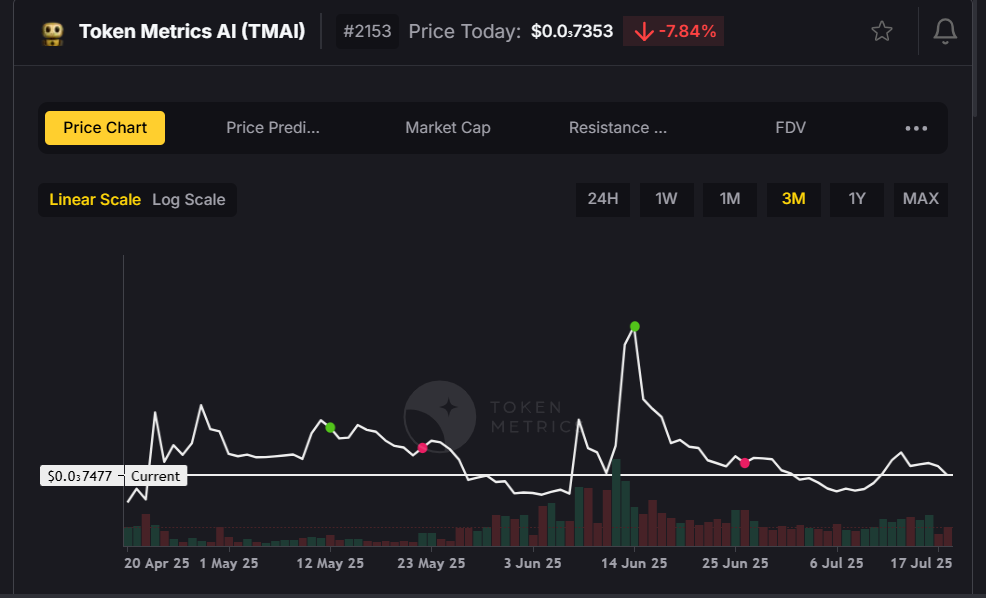
Token Metrics AI ($TMAI) stands out as a groundbreaking project that merges AI with crypto analytics to empower smarter investing decisions. This platform offers an all-in-one AI trading assistant that combines autonomous agent tooling, on-chain infrastructure, and predictive analytics. Users can stake $TMAI tokens to access features like crypto indices, research automation, and trader/investor grading systems.

The Token Metrics AI platform is particularly valuable for seasoned crypto investors and traders who rely on data-driven insights to navigate the volatile crypto market. Its integration with various tools, including Signals and Smart Agents, facilitates seamless trading and investing processes by streamlining the process of executing trades, analyzing data, and managing assets through a clear workflow. With $TMAI, users benefit from a sophisticated ecosystem designed to optimize returns and reduce the guesswork commonly associated with altcoin trading.

2. Suilend ($SEND)
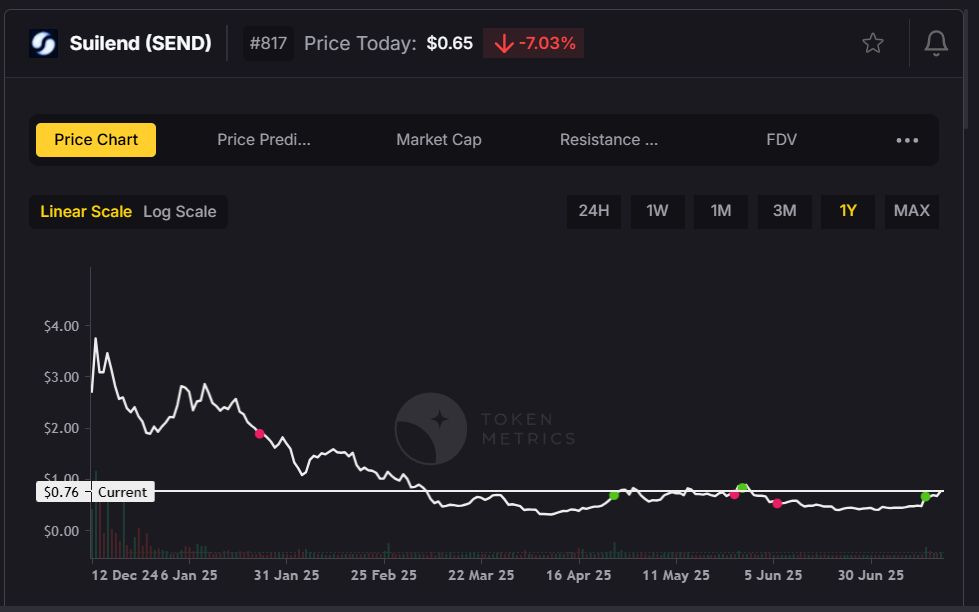
Suilend ($SEND) is a native DeFi lending protocol built on the Sui blockchain, which is gaining traction due to its low transaction fees and innovative parallel transaction processing. The platform's low fees provide a competitive advantage for users, making it especially appealing to cost-conscious traders and investors. As the Sui network expands, Suilend is positioned to capitalize on the growing demand for capital-efficient lending and borrowing services.

The platform supports Sui-native tokens, enabling users to leverage their crypto assets efficiently within a low-competition DeFi environment. This makes $SEND an attractive option for investors seeking exposure to decentralized finance with minimized transaction fees and a scalable infrastructure. Its rapid total value locked (TVL) growth underscores its rising market value and adoption.

3. Blackhole ($BLACK)
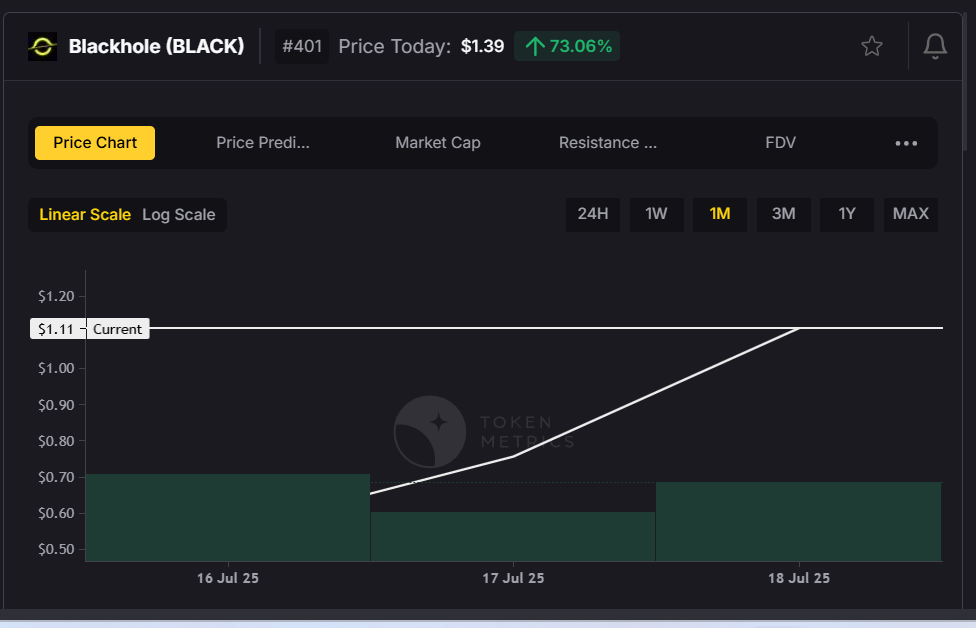
Blackhole ($BLACK) is carving a niche as a decentralized compute platform that provides GPU resources for AI, machine learning, and crypto infrastructure projects. By incentivizing GPU providers and AI developers through its native $BLACK token—the native coin of the Blackhole platform, essential for transaction fees and overall platform operations—the platform fosters a collaborative environment for decentralized AI compute sharing.

This project is pivotal for the evolving decentralized finance and AI sectors, offering a decentralized platform where compute power can be rented and shared securely. For investors interested in the intersection of AI and blockchain technology, Blackhole represents a unique asset with the potential to disrupt traditional centralized compute services.

4. Resolv ($RESOLV)
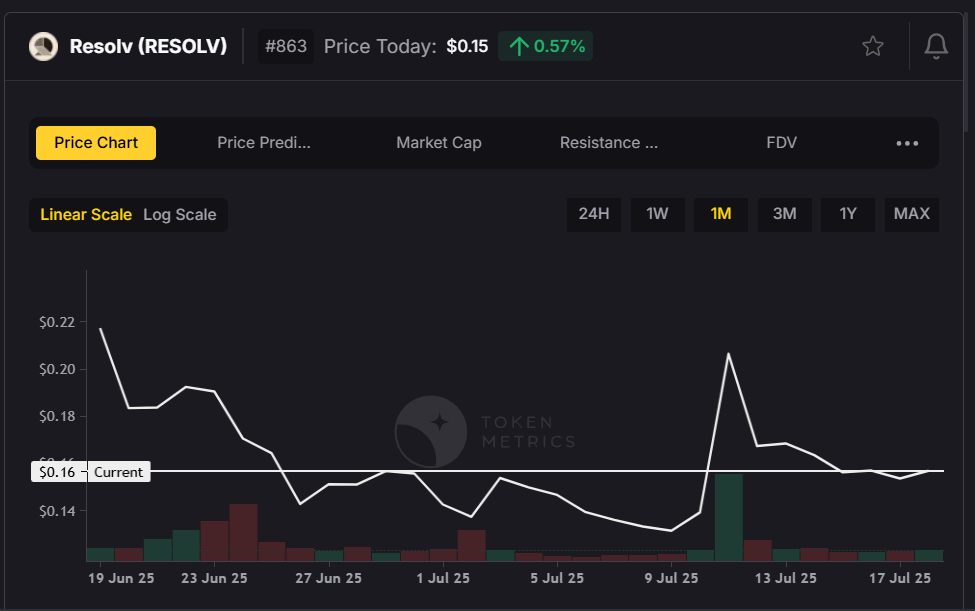
Resolv ($RESOLV) innovates at the crossroads of AI and smart legal contracts by developing AI agents that automate compliance, arbitration, and dispute resolution. This platform empowers decentralized autonomous organizations (DAOs) and dApps with tools for on-chain contract enforcement and legal agreement automation.

As regulatory scrutiny from bodies like the Securities and Exchange Commission increases, projects like Resolv that enhance legal transparency and automation are becoming essential. By integrating large language models (LLMs) into smart contracts, Resolv offers a competitive edge in the crypto space, appealing to users and investors focused on compliance and decentralized finance.

5. Cookie.fun ($COOKIE)
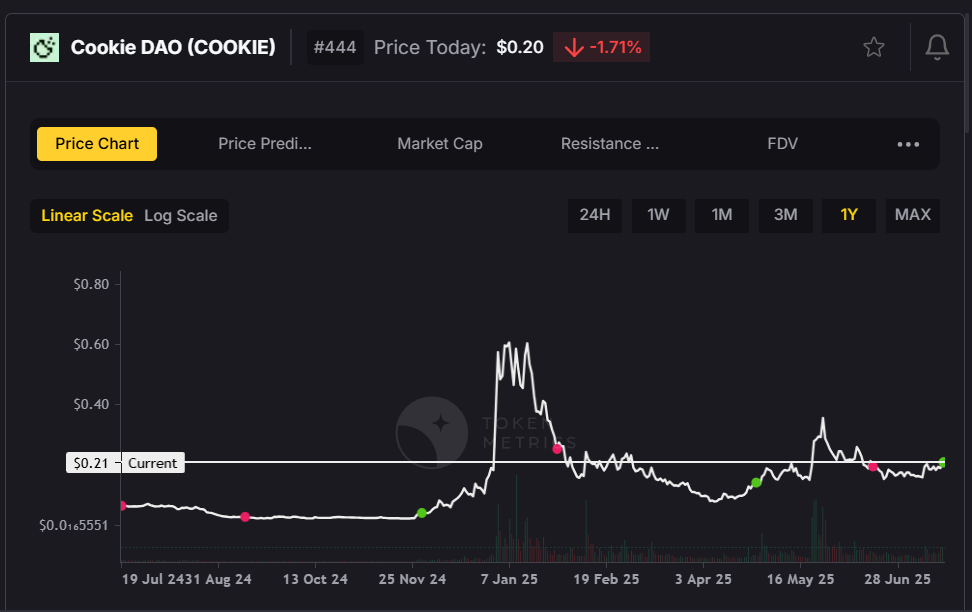
Cookie.fun ($COOKIE) blends social engagement, AI creativity, and entertainment by offering AI-generated animated content and meme NFTs. This platform leverages the virality of meme culture to create a decentralized social environment where creators and fans can monetize digital content.

The unique combination of meme NFTs and community rewards makes Cookie.fun a standout in the creator economy. For crypto enthusiasts looking to participate in the cultural side of the crypto market, $COOKIE offers a novel way to engage with digital assets while benefiting from the rise of AI-generated entertainment.

6. Usual Money ($USUAL)
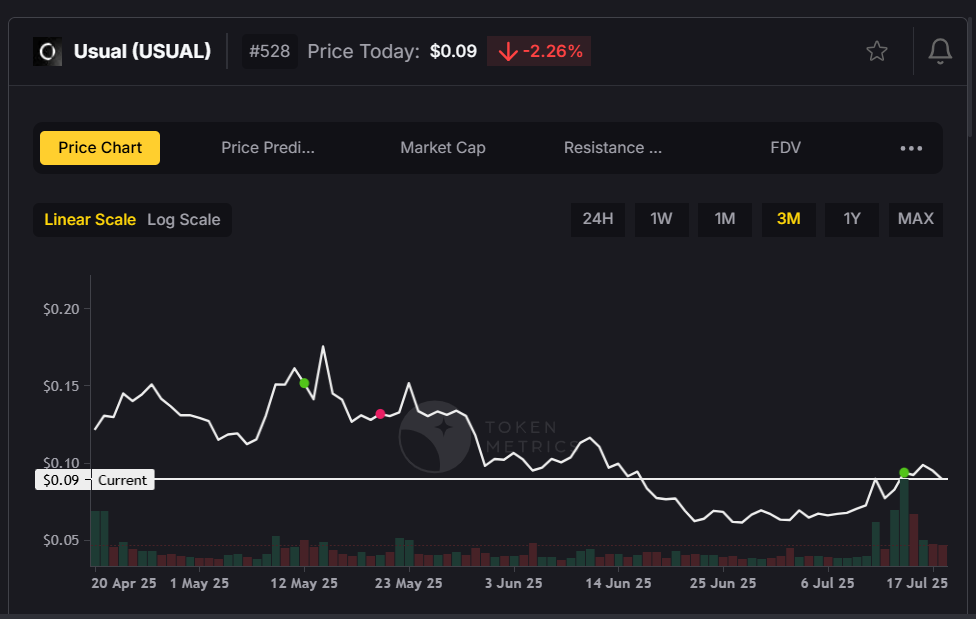
Usual Money ($USUAL) addresses the need for a user-friendly, decentralized stablecoin platform optimized for DeFi payments and yield generation. By combining a seamless user experience with smart routing for capital efficiency, Usual Money enhances the dollar experience for crypto-native users.

This platform’s focus on yield-bearing stablecoins and low transaction fees positions it well within the growing decentralized finance sector. Investors seeking stable, utility-driven tokens with real-world applications in payments and DeFi will find $USUAL an appealing asset.

7. Freysa AI ($FAI)
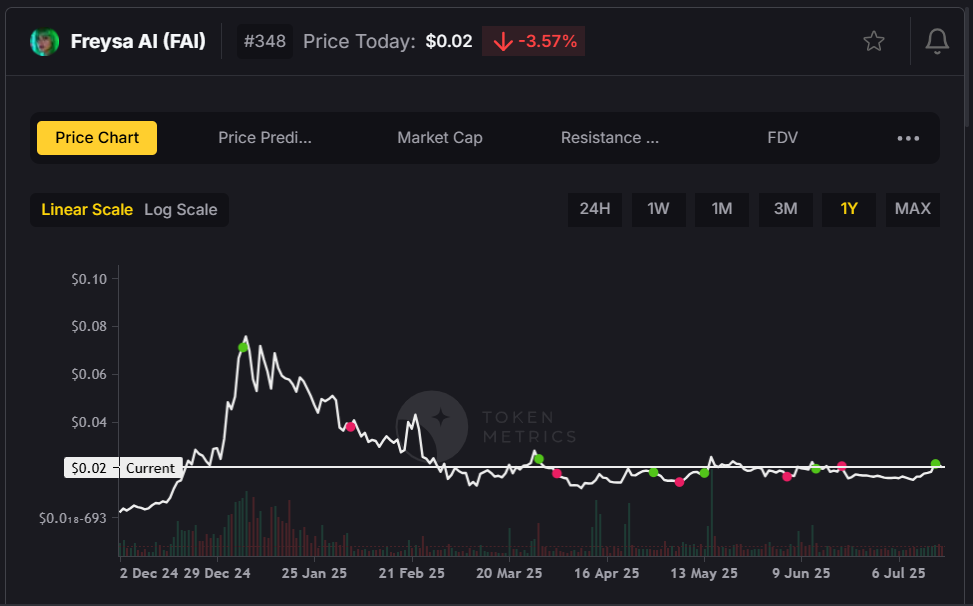
Freysa AI ($FAI) is building a decentralized framework for AI agents capable of interacting with blockchains, decentralized exchanges (DEXes), and dApps. This infrastructure supports on-chain automation and facilitates the development of crypto copilots that enhance user interaction within the crypto ecosystem.

By integrating leading AI models with on-chain APIs, Freysa AI offers a powerful toolset for developers and users aiming to streamline complex processes. Its role in decentralized AI infrastructure makes $FAI a promising token for investors focused on the future of AI-driven blockchain applications.

8. LOFI
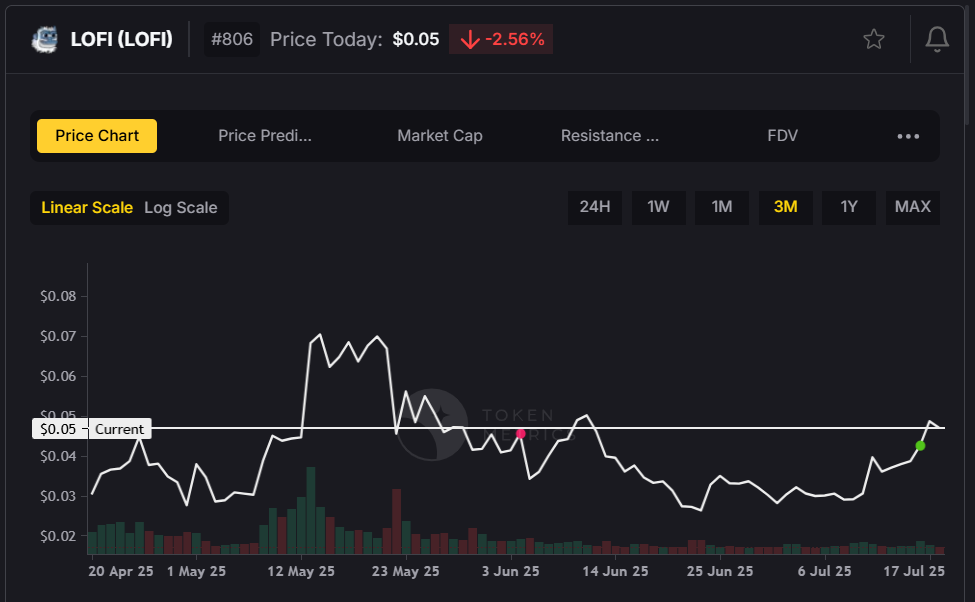
LOFI is an innovative project at the intersection of AI, music, and culture. It enables artists and fans to co-create and monetize AI-generated generative music NFTs, focusing on ambient soundscapes and fan engagement.

This platform taps into the creator economy by facilitating music royalties and fostering fan economies through blockchain technology. LOFI’s unique approach to combining generative music with NFTs offers a fresh avenue for investors interested in cultural and entertainment-related crypto assets.

Click here to buy Cryptocurrencies from Gate.io

‍

9. Gradients ($SN56)

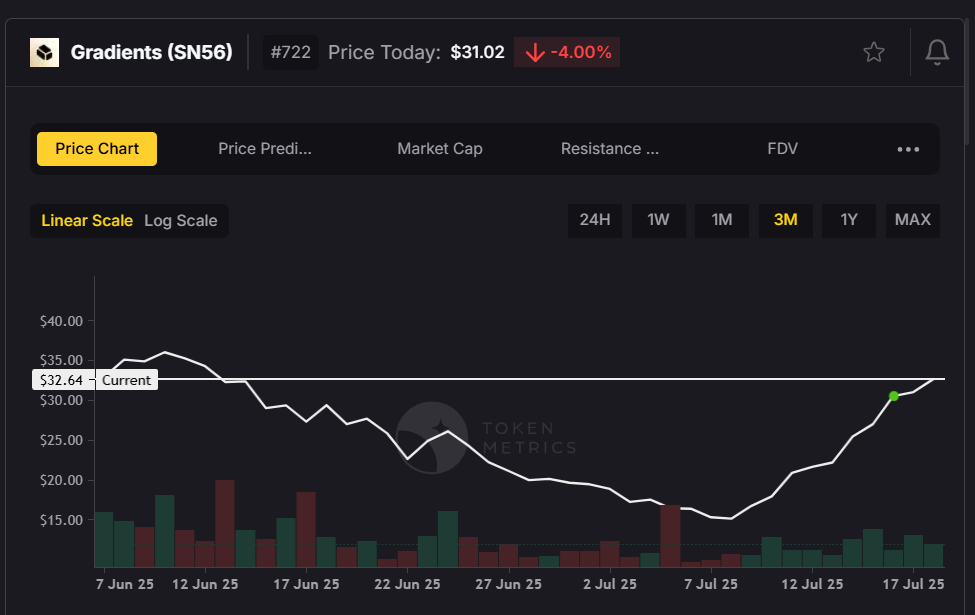
Gradients ($SN56) operates a token-incentivized data marketplace that crowdsources datasets for AI training and machine learning model development. This decentralized approach to data collection and sharing enhances the quality and accessibility of training data for AI developers.

With token-gated access to proprietary datasets, Gradients empowers users and developers to contribute to and benefit from the growth of AI capabilities. Investors focused on AI and data-driven crypto projects will find $SN56 an intriguing addition to their portfolios.

10. BIO Protocol ($BIO)
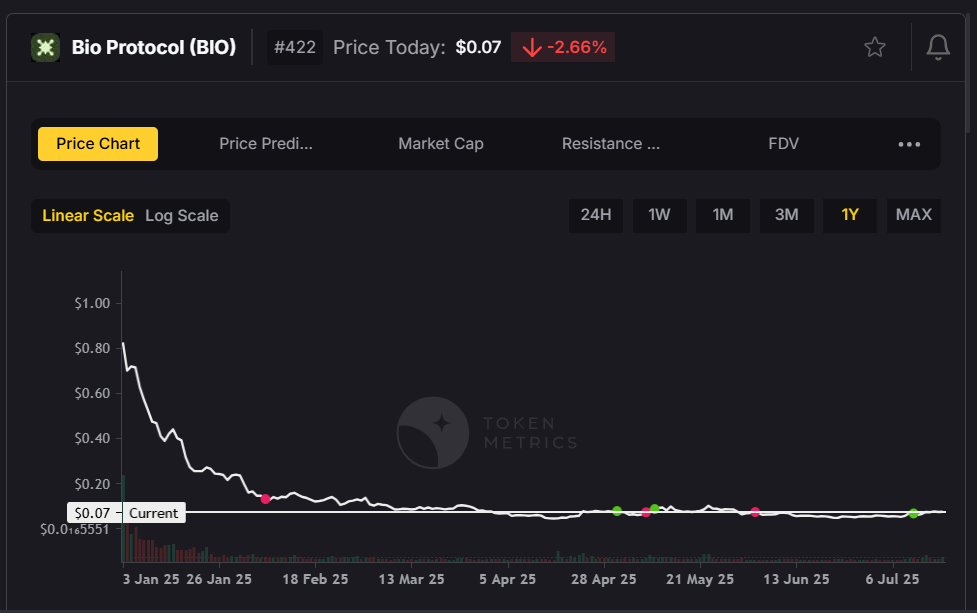
BIO Protocol ($BIO) merges biotechnology with decentralized science (DeSci) by enabling researchers and biotech firms to tokenize experiments and scientific contributions. This platform fosters on-chain reputation systems and data royalties, incentivizing scientific innovation and collaboration.

By facilitating AI-driven drug discovery and scientific data sharing, BIO Protocol addresses real-world challenges through blockchain technology. This project appeals to investors interested in the convergence of biotech, AI, and decentralized finance.

11. Swarms ($SWARMS)
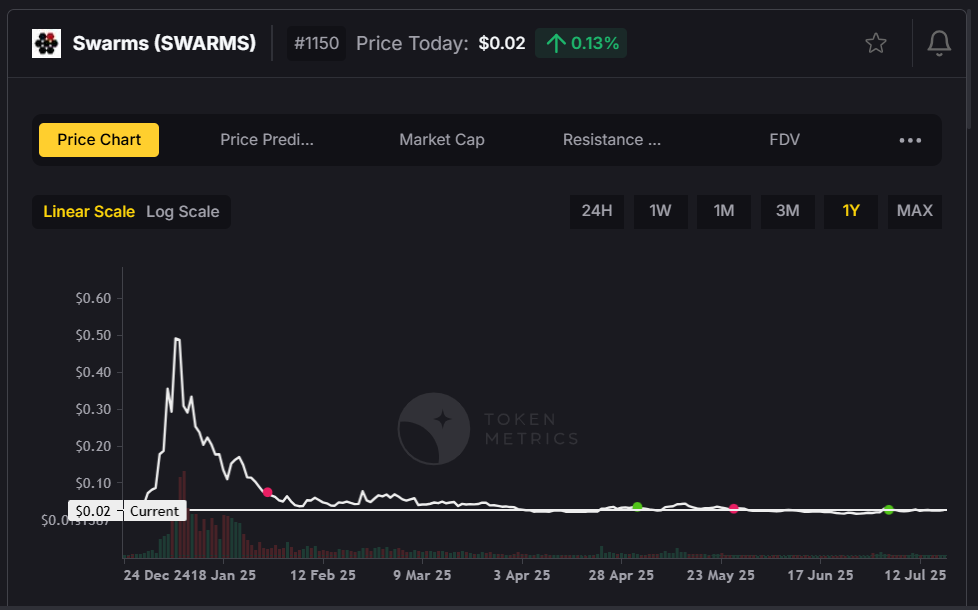
Swarms ($SWARMS) is developing an open-source protocol for multi-agent coordination across decentralized applications. This technology enables smart agents to execute complex tasks such as DAO governance, DeFi arbitrage, and airdrop farming efficiently.

The platform’s swarm AI logic supports parallelized on-chain execution, enhancing scalability and automation. For traders and investors looking at the next wave of decentralized automation, $SWARMS offers compelling utility and growth potential.

12. Creator.bid ($BID)
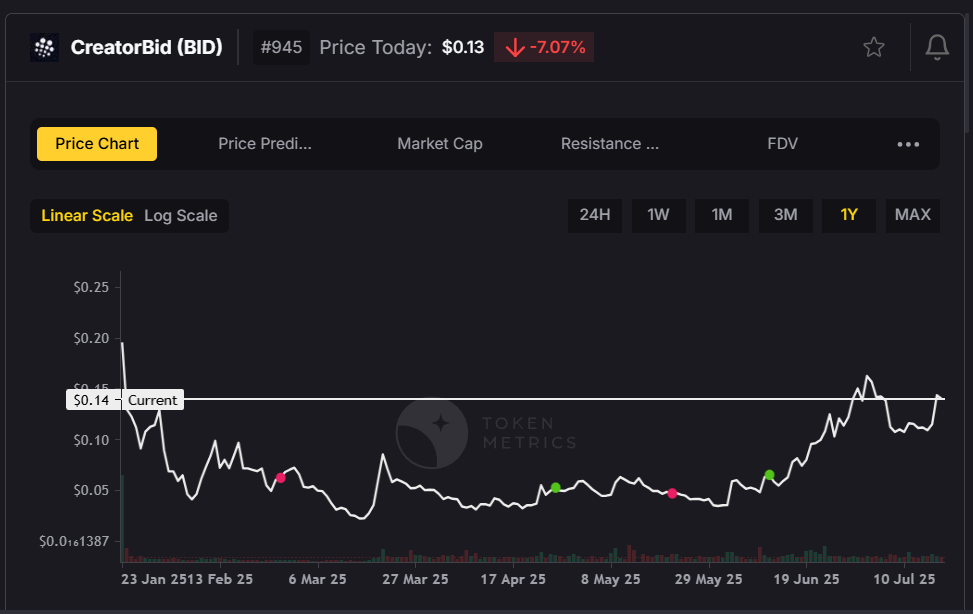
Creator.bid ($BID) is an auction platform where fans can bid on personalized content created by AI-powered influencers and creators. This project combines AI celebrity clones with fan tokens to revolutionize creator monetization.

Its auction dynamics and custom content-generation models provide a unique marketplace within the creator economy. Investors interested in AI-driven social platforms and fan engagement will find $BID an exciting asset.

13. Collaterize ($COLLAT)
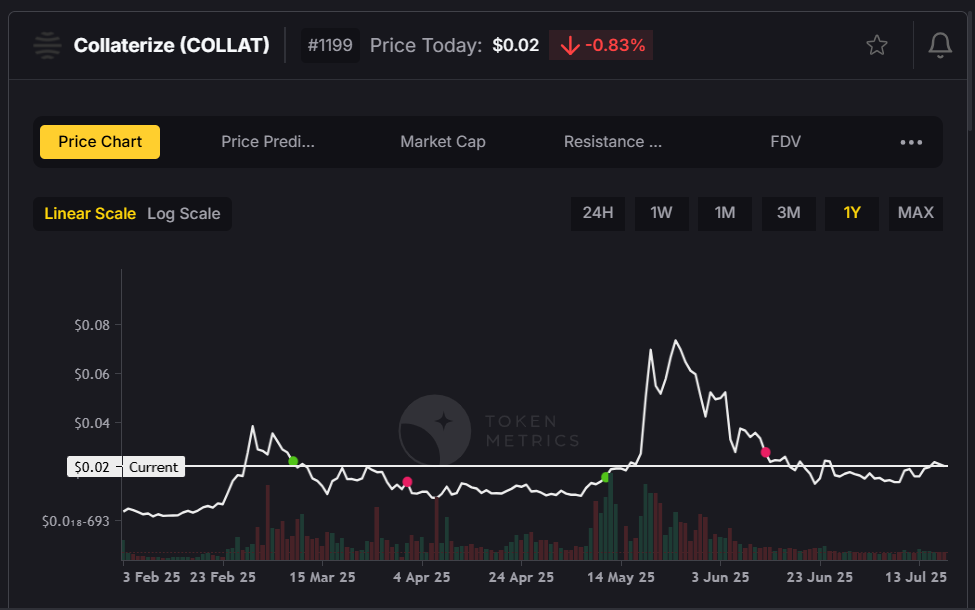
Collaterize ($COLLAT) bridges the gap between real-world assets and decentralized finance by allowing users to tokenize and collateralize assets such as invoices and real estate. This integration facilitates asset-backed lending and yield generation within DeFi.

With transparent smart contracts and real-world audits, Collaterize enhances trust and security for investors. This project is particularly appealing to those seeking exposure to real-world asset (RWA) collateralization in the crypto market.

14. aixbt by Virtuals ($AIXBT)
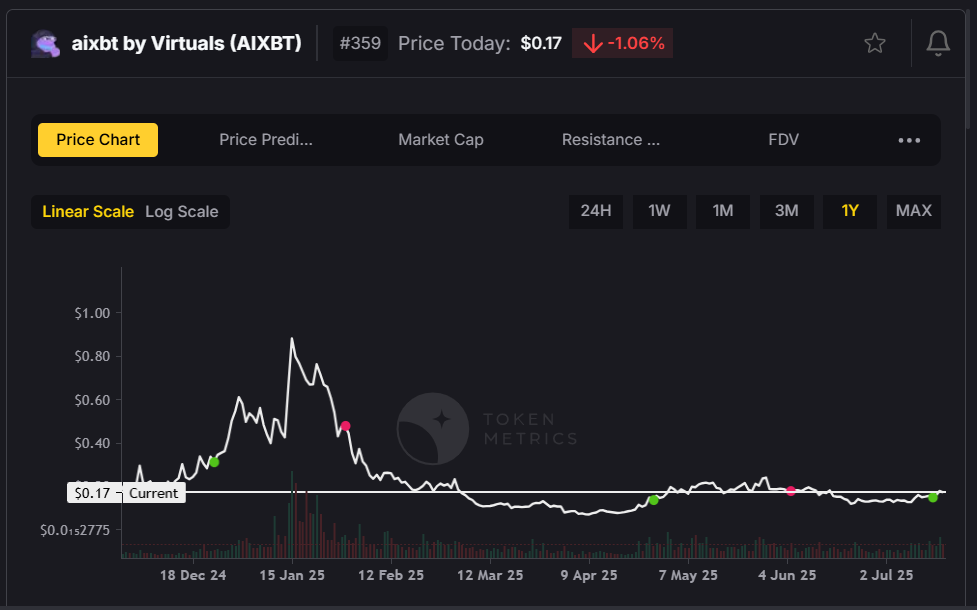
aixbt ($AIXBT) is an AI-powered trading bot platform that leverages both on-chain and off-chain data to execute autonomous crypto trading strategies. The platform enables users to trade altcoins using advanced AI-driven tools, providing flexibility and efficiency in managing a diverse portfolio. It offers real-time trade simulations and leaderboard-based strategy competitions.

This platform caters to traders looking for sophisticated, data-driven tools to navigate price fluctuations and market sentiment. $AIXBT’s innovative approach to AI trading bots makes it a valuable asset in the competitive crypto trading landscape.

15. MyShell AI ($SHELL)
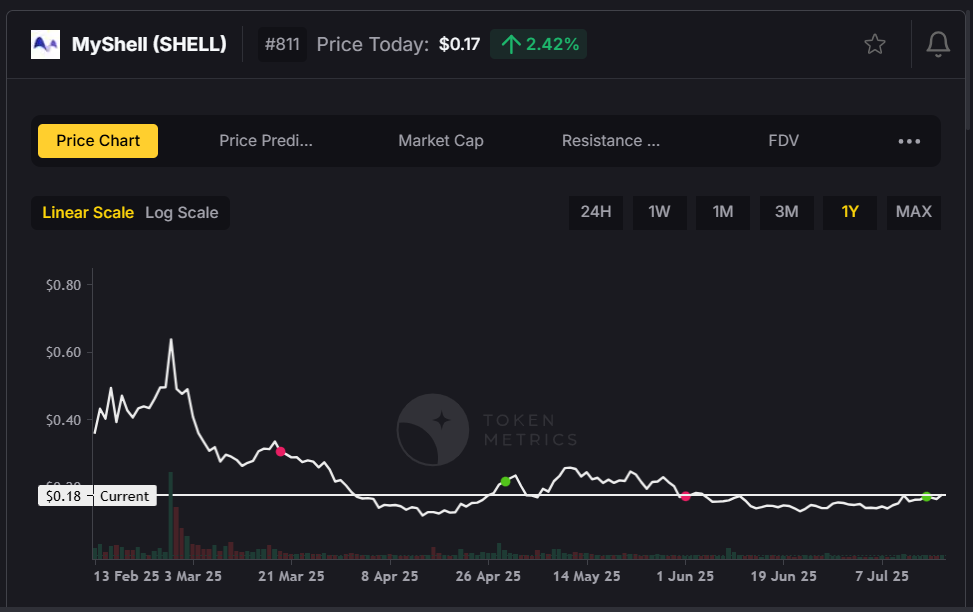
MyShell AI ($SHELL) enables users to create voice-based AI characters that operate across multiple platforms like Discord and Telegram. This project supports voice-to-earn economies and multi-platform bot deployment, enhancing user interaction and customer support.

By combining AI agents with creator studios, MyShell AI taps into the growing demand for personalized, voice-enabled digital experiences. Investors interested in AI-driven user engagement and decentralized platforms will find $SHELL noteworthy.

Trading Strategies for Altcoins

Trading altcoins successfully requires a solid grasp of the crypto market and its ever-changing trends. Professional traders often rely on technical analysis, chart patterns, and market indicators to anticipate price movements and make strategic trades. When trading altcoins, it’s important to consider factors such as trading fees, transaction fees, and the overall volatility of digital currencies. Understanding the underlying technology, use cases, and competitive landscape of each altcoin can provide a significant edge. Many exchanges, including industry leaders like Binance and Kraken, offer robust platforms for trading a wide variety of altcoins, making it easier for investors to access and trade these digital assets. By staying informed and leveraging the right tools, traders can navigate the complexities of the crypto market and optimize their trading strategies for better results.

Risk Management for Altcoin Investors

Investing in altcoins presents unique challenges, including high price volatility, potential market manipulation, and evolving regulatory landscapes. Retail investors must be proactive in managing these risks by diversifying their portfolios and conducting thorough research before making any altcoin investments. Long term investments in altcoins can yield substantial rewards, but they require a deep understanding of the crypto market and its shifting dynamics. The Securities and Exchange Commission has provided guidelines to help investors navigate the regulatory aspects of cryptocurrency investing, and it’s crucial to ensure compliance with these rules. Platforms like Tron Network and Ripple Labs have introduced low-fee structures and stablecoin solutions to help mitigate some of the risks associated with trading and investing in altcoins. By understanding both the risks and potential rewards, investors can make informed decisions and confidently participate in the ever-evolving world of altcoins and digital assets.

Final Thoughts: How to Evaluate Altcoins in 2025

Selecting the best crypto altcoins for 2025 requires thorough research and a strategic approach. Investors should prioritize projects with strong narratives aligned to AI, DeFi, real-world assets, and autonomous agents. Active development and vibrant communities are essential indicators of a project’s sustainability and growth potential. Monitoring new coins entering the market is important, as their supply and circulating supply can impact scarcity and value.

Real token utility and demand mechanisms, such as staking, transaction fee savings, or governance rights, add tangible value to crypto tokens. Interoperability with expanding ecosystems like Sui, Base, and Solana further enhances an altcoin’s market capitalization and market cap stability.

For many investors and traders, platforms like Token Metrics AI ($TMAI) serve as critical tools to analyze market data, track performance, and gauge market sentiment. Crypto prices are influenced by supply, demand, and trading activity, so understanding these factors is crucial for evaluating altcoins. Utilizing such resources can help navigate the complexities of the cryptocurrency market, balancing risk tolerance with the pursuit of high-reward altcoin investments.

In summary, the best crypto altcoins in 2025 are those that combine innovative technology, competitive advantages, and real-world applications within a rapidly evolving crypto ecosystem. When comparing altcoins to other cryptocurrencies, it is important to consider their performance, trading volume, and the platforms they utilize—such as the XRP ledger, which supports fast transactions and differs from traditional blockchains. How actively an altcoin is traded can also indicate its liquidity and investor interest. By staying informed and leveraging cutting-edge platforms, investors can position themselves to capitalize on the rise of new crypto assets and the next altcoin season.

Click here to buy Cryptocurrencies from Gate.io

Contact us at promo@tokenmetrics.com for marketing and sponsorship programs.

Build Smarter Crypto Apps &
AI Agents in Minutes, Not Months
Real-time prices, trading signals, and on-chain insights all from one powerful API.
Grab a Free API Key
About Token Metrics
Token Metrics: AI-powered crypto research and ratings platform. We help investors make smarter decisions with unbiased Token Metrics Ratings, on-chain analytics, and editor-curated “Top 10” guides. Our platform distills thousands of data points into clear scores, trends, and alerts you can act on.
30 Employees
analysts, data scientists, and crypto engineers
Daily Briefings
concise market insights and “Top Picks”
Transparent & Compliant
Sponsored ≠ Ratings; research remains independent
Want Smarter Crypto Picks—Free?
See unbiased Token Metrics Ratings for BTC, ETH, and top alts.
Thank you! Your submission has been received!
Oops! Something went wrong while submitting the form.
 No credit card | 1-click unsubscribe
Token Metrics Team
Token Metrics Team

Recent Posts

Research

What Is the Importance of Stock Market Indices? A 2025 Guide

Token Metrics Team
16

Stock market indices are among the most frequently cited yet least understood aspects of financial markets. You've likely heard phrases like "the Dow is up 200 points" or "the S&P 500 hit a new record," but what do these indices actually represent, and why do they matter so much to investors, economists, and policymakers alike?

In 2025, indices have evolved far beyond simple market thermometers. They've become sophisticated investment vehicles that power trillions of dollars in passive investing, provide benchmarks for performance evaluation, and now—with innovations in crypto markets—offer active risk management through regime-switching strategies.

Understanding the importance of stock market indices is essential whether you're a beginner building your first portfolio or an experienced trader seeking to optimize your strategy. This comprehensive guide explores why indices matter, how they function, and how modern innovations like the Token Metrics indices are extending index benefits to the fast-moving cryptocurrency markets.

What Are Stock Market Indices?

Before exploring their importance, let's establish a clear definition. A stock market index is a statistical measure that tracks the performance of a specific group of stocks, representing a particular market segment, sector, or the entire market.

Think of an index as a carefully curated basket of stocks weighted according to predetermined rules. The S&P 500, for example, tracks 500 of the largest publicly traded U.S. companies weighted by market capitalization. When the S&P 500 rises 1%, it means this basket of 500 stocks collectively gained 1% in value.

Indices don't exist as physical products you can buy directly. Instead, they're measurement tools that investment products like index funds, ETFs, and derivatives replicate to offer investors easy market access.

7 Critical Reasons Why Indices Matter

1. Market Barometers: Understanding Economic Health

Indices serve as thermometers for economic health, providing instant snapshots of market sentiment and economic conditions. When major indices rise, it signals investor optimism about economic prospects. When they fall, it reflects concerns about future growth.

Policymakers, economists, and business leaders watch indices closely to gauge:

  • Consumer and business confidence
  • Corporate earnings trends
  • Economic cycle phases (expansion, peak, contraction, trough)
  • Impact of policy decisions on markets

The Federal Reserve, for instance, monitors market indices when making interest rate decisions. Sharp index declines can influence policy responses, while sustained rallies may signal economic strength that justifies rate increases.

This barometric function extends beyond stock markets. In 2025, crypto indices now provide similar insights into blockchain technology adoption, decentralized finance growth, and digital asset sentiment.

2. Performance Benchmarking: Measuring Investment Success

Perhaps the most critical function of indices is providing objective benchmarks against which to measure investment performance. Without indices, investors lack context to determine whether their returns represent success or failure.

If your portfolio gained 8% last year, should you feel satisfied? The answer depends entirely on your benchmark. If the Token Metrics benchmarked indices like the S&P 500 gained 15%, your 8% represents underperformance despite positive returns. If the index lost 5%, your 8% gain represents significant outperformance.

This benchmarking function matters for several reasons:

  • Evaluating Investment Managers: Mutual fund and hedge fund managers are typically measured against relevant indices. A large-cap U.S. equity fund might benchmark against the S&P 500, while a small-cap fund uses the Russell 2000. Consistently underperforming your benchmark suggests poor management.
  • Personal Portfolio Assessment: Individual investors use indices to evaluate their own stock-picking and asset allocation decisions. If you can't consistently beat index returns, you'd be better served by simply investing in the index itself—a realization that has fueled the massive growth of passive index investing.
  • Risk-Adjusted Performance: Indices enable sophisticated performance metrics like the Sharpe ratio, which measures returns relative to risk taken. An investment might beat the index on raw returns but underperform on a risk-adjusted basis.

3. Diversification Made Easy: Reducing Individual Security Risk

One of the most fundamental principles of investing is diversification—spreading investments across multiple assets to reduce risk. Indices embody this principle by definition.

When you invest in an index fund tracking the Token Metrics S&P 500, you instantly own a piece of 500 companies across diverse sectors: technology, healthcare, finance, consumer goods, energy, and more. This diversification provides powerful risk reduction.

Individual Stock Risk vs. Index Risk: Consider the difference between buying individual stocks and owning an index:

  • Single stock: If you invest $10,000 in one company and it goes bankrupt, you lose everything.
  • Index with 500 stocks: If one company in the index fails, it represents just 0.2% of your holdings (assuming equal weighting).
    Even with market-cap weighting where larger companies dominate, indices spread risk across many holdings. Apple's collapse wouldn't destroy an Token Metrics investment despite Apple's significant weight.

Time Savings: Building a diversified portfolio manually requires researching dozens or hundreds of companies, executing multiple trades, and continuously rebalancing. Indices accomplish this instantly through a single investment.

In crypto markets, this diversification benefit becomes even more crucial. Individual cryptocurrencies can experience 50-90% drawdowns or even go to zero. A crypto index tracking the top 100 assets spreads this risk dramatically while maintaining exposure to the sector's growth potential.

4. Passive Investment Revolution: The Rise of Index Funds

Indices have fundamentally transformed how people invest through the passive investing revolution. The statistics are staggering: passive index funds now account for approximately 50% of U.S. equity fund assets, up from less than 20% just two decades ago.

This shift occurred because of a simple truth: most active managers fail to beat their benchmark indices over the long term. Studies consistently show that 80-90% of active fund managers underperform their benchmark over 10-15 year periods after accounting for fees.

This underperformance led to the realization that for most investors, simply buying the index provides better risk-adjusted returns than trying to beat it. Index funds offer:

  • Lower Costs: Active management fees typically range from 0.5-2% annually, while index funds charge as little as 0.03-0.20%.
  • Tax Efficiency: Index funds trade less frequently than active funds, generating fewer taxable events.
  • Predictable Performance: While you won't beat the market, you won't significantly underperform either. You'll capture whatever returns the market delivers.
  • Simplicity: No need to research individual stocks, time entry/exit points, or worry about manager changes.

The success of index investing has made market indices even more important. When trillions of dollars track these indices, their composition and methodology directly impact capital flows across the entire market.

5. Sector and Style Analysis: Understanding Market Dynamics

Indices enable sophisticated market analysis by breaking down performance into sectors, styles, and factors. This granular analysis helps investors understand what's driving returns and make informed allocation decisions.

Sector Indices: Specialized indices track specific industries:

  • Technology (Nasdaq-100)
  • Healthcare (S&P Healthcare Index)
  • Financial Services (KBW Bank Index)
  • Energy (S&P Energy Index)

By comparing sector index performance, investors identify which industries are leading or lagging. During 2023-2024, technology indices dramatically outperformed energy indices as AI enthusiasm dominated while oil prices stabilized.

Style Indices: Other indices segment markets by investment style:

  • Growth vs. Value
  • Large-cap vs. Small-cap
  • Momentum vs. Quality

These style distinctions help investors understand market cycles. Value stocks might outperform during market recoveries, while growth stocks lead during expansion phases. Style indices make these patterns visible.

Factor Indices: Modern indices isolate specific factors like volatility, profitability, or debt levels. These enable precise exposure to characteristics associated with outperformance.

In crypto markets, specialized indices track DeFi protocols, Layer-1 blockchains, metaverse tokens, or meme coins—allowing targeted exposure to specific crypto narratives while maintaining diversification within those categories.

6. Investment Product Foundation: Enabling Modern Finance

Indices form the foundation for countless investment products worth trillions of dollars:

  • Index Mutual Funds: Traditional mutual funds that replicate index performance, popularized by Vanguard's founder John Bogle.
  • Exchange-Traded Funds (ETFs): Tradeable securities that track indices, offering liquidity and flexibility beyond mutual funds.
  • Futures and Options: Derivatives based on indices enable sophisticated trading strategies, hedging, and leverage.
  • Structured Products: Banks create principal-protected notes and other products linked to index performance.
  • Robo-Advisors: Automated investment platforms build portfolios primarily using index ETFs.

Without indices as standardized measurement tools, this entire ecosystem couldn't exist. The importance of indices extends far beyond information—they're the architectural foundation of modern passive investing.

7. Risk Management: Active Protection Strategies

While traditional indices passively track markets through all conditions, 2025 has seen the emergence of sophisticated regime-switching indices that actively manage risk.

These next-generation indices don't just measure markets—they protect capital by adjusting exposure based on market conditions. When signals indicate high-risk environments, these indices reduce exposure to volatile assets and increase allocation to defensive positions.

This innovation addresses the primary weakness of traditional passive indices: they remain fully invested through devastating bear markets. If the market crashes 40%, your traditional index investment crashes 40% with it.

Regime-switching indices aim to participate in upside during bull markets while limiting downside during bear markets through systematic, rules-based risk management.

The Evolution: From Stock Indices to Crypto Indices

While stock market indices have existed for over a century, cryptocurrency markets have rapidly adopted and innovated on index concepts. Crypto indices matter for all the same reasons as stock indices—but with additional benefits unique to digital assets.

24/7 Market Tracking: Unlike stock indices that only update during market hours, crypto indices track markets that never close.

Complete Transparency: Blockchain technology enables real-time visibility into index holdings and transactions—something impossible with traditional indices.

Faster Rebalancing: Crypto markets move faster than traditional markets. Weekly or even daily rebalancing keeps crypto indices aligned with current market leaders.

Built-in Risk Management: Smart contracts can implement sophisticated regime-switching logic automatically, adjusting allocations without human intervention.

A crypto index is a rules-based basket tracking a defined universe—such as a top-100 market-cap set—with scheduled rebalances. In October 2025, crypto indices have become essential tools for navigating markets where narratives rotate in weeks and individual-coin risk can swamp portfolios.

TM Global 100: Index Innovation for Crypto Markets

The Token Metrics Global 100 index exemplifies how index importance extends and amplifies in cryptocurrency markets. This rules-based index demonstrates all seven critical functions of indices while adding active risk management specifically designed for crypto's volatility.

What It Is: A systematic index that holds the top 100 cryptocurrencies by market capitalization when market conditions are bullish, and moves fully to stablecoins when conditions turn bearish.

Why It Matters for Each Index Function

  • Market Barometer: The TM Global 100's regime signal provides a clear reading of crypto market conditions. When the index holds the top 100, it signals bullish conditions. When it moves to stablecoins, it signals bearish conditions—offering instant insight into systematic market assessment.
  • Performance Benchmark: Crypto investors can measure their portfolios against TM Global 100 to determine whether their active trading or selective holdings outperform systematic, rules-based exposure to the top 100 assets.
  • Diversification: The index spreads risk across 100 cryptocurrencies instead of concentrating in Bitcoin, Ethereum, or a handful of altcoins. This dramatically reduces individual-coin risk while maintaining broad crypto exposure.
  • Passive Investment: Rather than researching hundreds of crypto projects, executing dozens of trades, and constantly rebalancing, investors gain one-click access to a professionally managed, systematic strategy.
  • Market Analysis: Weekly rebalancing reveals which cryptocurrencies are entering or exiting the top 100, providing insights into shifting market leadership and narrative rotation.
  • Investment Product: TM Global 100 functions as a tradeable product with embedded wallet execution, removing the complexity of manually constructing top-100 exposure.
  • Risk Management: The regime-switching mechanism actively protects capital by exiting to stablecoins during bearish conditions—addressing the biggest weakness of traditional buy-and-hold indices.

How TM Global 100 Works

Regime Switching:

  • Bull Market: Hold top 100 cryptocurrencies by market cap
  • Bear Market: Move fully to stablecoins, await bullish re-entry signal

Weekly Rebalancing: Updates weights and constituents to reflect current top-100 rankings. Crypto markets move faster than traditional markets—weekly updates ensure your exposure remains current.

Complete Transparency: Strategy modal explains all rules clearly. Gauge shows live market signal driving allocation. Holders are displayed in treemap and table formats. Transaction log records every rebalance and regime switch.

One-Click Execution: The embedded, self-custodial smart wallet enables purchases in approximately 90 seconds. No need to set up accounts on multiple exchanges, execute dozens of trades, or manually track rebalancing schedules.

→ Join the waitlist to be first to trade TM Global 100.

Why Indices Matter More in 2025 Than Ever Before

Several trends have amplified the importance of indices:

  • Market Complexity: With thousands of stocks globally and thousands of cryptocurrencies, individual security selection has become nearly impossible for retail investors. Indices provide manageable exposure to complex markets.
  • Information Overload: The sheer volume of financial information exceeds human processing capacity. Indices cut through noise with systematic, rules-based approaches.
  • Fee Compression: As active management fees have fallen under pressure from low-cost index funds, the cost advantage of passive investing has grown even stronger.
  • Algorithmic Trading: Machines now execute most trades. Systematic, rules-based index strategies compete more effectively in this environment than discretionary human decisions.
  • Volatility and Uncertainty: In uncertain markets, the discipline imposed by index strategies prevents emotional decision-making that often destroys returns.
  • Technology Enablement: Blockchain technology and smart contracts enable index innovations impossible in traditional finance, like real-time transparency and automatic regime switching.

Practical Applications: How to Use Indices

Understanding why indices matter leads naturally to the question: how should I use them?

  • Core-Satellite Approach: Use index investments as your portfolio core (60-80%), providing diversified market exposure and discipline. Add selective individual positions as satellites (20-40%) where you have specific insights or convictions.
  • Asset Allocation: Use indices representing different asset classes (stocks, bonds, real estate, commodities, crypto) to build diversified portfolios spanning uncorrelated returns.
  • Tax-Loss Harvesting: Indices' diversification makes them excellent vehicles for tax-loss harvesting strategies that lower your tax bill without changing market exposure.
  • Risk Management: Use regime-switching indices like Token Metrics for systematic risk reduction during market downturns.
  • Benchmarking: Regularly compare your returns to appropriate index benchmarks. If you consistently underperform, consider switching to index investments.
  • Dollar-Cost Averaging: Indices' diversification makes them ideal for systematic investment programs where you invest fixed amounts regularly.

Common Questions About Index Importance

If everyone invests in indices, won't they stop working? This concern, often called the "indexing paradox," suggests that if too much money passively tracks indices, markets will become inefficient. In reality, even with 50% of assets indexed, the remaining 50% of active investors still compete to find mispricings. Markets remain quite efficient.

Do indices work in crypto markets? Yes—arguably even better than in traditional markets. Crypto's 24/7 trading, on-chain transparency, and extreme volatility make systematic index strategies particularly valuable. The speed of narrative rotation makes manual portfolio management nearly impossible.

Can I beat index returns? Some investors do beat indices, but the odds are against you. After fees and taxes, 80-90% of active managers underperform over long periods. If you have genuine informational advantages, deep expertise, and significant time to dedicate, you might succeed. Most investors don't.

What's the difference between an index and an ETF? An index is a measurement tool (like the S&P 500 number). An ETF is an investment product that tracks an index. You can't buy "the S&P 500" directly, but you can buy Token Metrics-tracked ETFs that do so.

The Risks and Limitations of Indices

While indices offer powerful benefits, understanding their limitations is equally important:

  • Market Risk Remains: Indices don't eliminate market risk. If the entire market crashes 40%, your index investment crashes 40% (unless it's a regime-switching index that exits to defensive assets).
  • Concentration Risk: Market-cap weighted indices can become heavily concentrated in a few large holdings. The Token Metrics S&P 500's top 10 stocks represent about 30% of the index.
  • Inclusion Effects: When a stock is added to or removed from major indices, it can experience significant price movements unrelated to fundamentals as index funds adjust holdings.
  • International Limitations: Some international markets have limited index availability or liquidity, making index investing more challenging.
  • Sector Rotations: Pure index investing means you'll underperform during sectors' peak performance periods while fully experiencing their declines. Regime-switching indices address some limitations by actively managing risk, but introduce new considerations around signal accuracy and switching costs.

Getting Started with Index Investing

If you're convinced of indices' importance, here's how to begin:

  • Traditional Markets: Open a brokerage account with low fees
  • Choose appropriate index funds or ETFs for your goals
  • Implement regular investment schedule (dollar-cost averaging)
  • Rebalance annually to maintain target allocation
  • Stay invested through market cycles

Crypto Markets with Token Metrics: Visit the Token Metrics Indices hub, review the TM Global 100 strategy and rules, join the waitlist for launch notification. At launch, click Buy Index, review fees, slippage, and holdings, confirm purchase (approximately 90 seconds), and track your position under My Indices with real-time P&L. The embedded, self-custodial smart wallet streamlines execution while maintaining your control over funds.

→ Join the waitlist to be first to trade TM Global 100.

The Future of Indices

Index importance will only grow as markets become more complex and technology enables new innovations:

  • AI-Driven Selection: Machine learning algorithms will optimize index construction and rebalancing.
  • Dynamic Strategies: More indices will implement active risk management through regime switching and factor rotation.
  • Crypto Integration: Traditional finance will increasingly blend with crypto indices as digital assets mature.
  • Personalization: Technology will enable personalized indices tailored to individual tax situations, values, and goals.
  • Real-Time Everything: Blockchain technology will bring instant transparency, rebalancing, and execution to all indices.

TM Global 100 represents this future: systematic rules, active risk management, complete transparency, blockchain-enabled execution, and one-click accessibility.

Conclusion

Stock market indices matter because they serve as economic barometers, performance benchmarks, diversification tools, passive investment foundations, analytical frameworks, investment product cores, and risk management vehicles. These seven critical functions have made indices indispensable to modern finance.

In 2025, crypto indices extend these benefits to digital asset markets with enhanced transparency, faster rebalancing, and sophisticated risk management. The speed and uncertainty defining crypto markets make indices even more valuable than in traditional finance.

TM Global 100 demonstrates index importance through its systematic approach: top-100 breadth in bull markets captures upside, automatic stablecoin switching in bear markets limits downside, weekly rebalancing maintains current exposure, and complete transparency eliminates black-box concerns. If you want broad crypto exposure when it's worth it and stablecoins when it's not—with transparent, rules-based execution—TM Global 100 delivers the time-tested benefits of indices enhanced for modern markets.

Click here to get early access to TM100 indices at Token Metrics.

Research

What Does Indices Mean? A Beginner's Guide to Market Indices in 2025

Token Metrics Team
14

If you've ever heard financial news mention "the Dow is up" or "the S&P 500 reached a new high," you've encountered market indices. But what exactly does "indices" mean, and why do these numbers dominate financial headlines?

The word "indices" (pronounced IN-duh-seez) is simply the plural form of "index"—and in the financial world, it refers to measurement tools that track the performance of groups of assets. Think of an index as a thermometer for a specific market or sector, providing a single number that represents the collective movement of many individual investments.

In 2025, understanding what indices mean has become essential for anyone interested in investing, whether you're building a retirement portfolio or exploring cryptocurrency markets. This comprehensive beginner's guide will demystify indices, explain how they work, and show you how modern innovations like the TM Global 100 crypto index are making sophisticated index investing accessible to everyone.

What Does "Indices" Mean? The Basic Definition

Let's start with the fundamentals. An index (singular) is a statistical measure that tracks the performance of a group of assets. Indices (plural) refers to multiple such measures.

In finance, when someone asks "what does indices mean," they're typically referring to market indices—benchmarks that measure:

  • Stock market performance (like the S&P 500 tracking 500 large U.S. companies)
  • Sector-specific performance (like technology or healthcare stocks)
  • Asset class performance (like bonds, commodities, or real estate)
  • Cryptocurrency market performance (like the top 100 digital assets)

Think of an index like a shopping basket. Instead of tracking the price of individual items separately, you measure the total cost of everything in the basket. If most items in your basket get more expensive, the basket's total value rises. If most items get cheaper, the total value falls.

Market indices work the same way. They combine many individual securities into a single measurement, providing a snapshot of how that particular market or sector is performing overall.

Why We Use the Word "Indices" Instead of "Indexes"

You might wonder: why "indices" and not "indexes"? Both are actually correct plural forms of "index," but they're used in different contexts:

  • Indices is the traditional plural form borrowed from Latin, commonly used in:
    • Financial and economic contexts (stock market indices)
    • Scientific and mathematical contexts (statistical indices)
    • Academic and formal writing
  • Indexes is a more modern English plural, often used for:
    • Book indexes (alphabetical lists at the back of books)
    • Database indexes (organizational structures in computer systems)
    • Casual conversation

In finance and investing, "indices" remains the standard term. When you hear analysts discussing "major indices," "global indices," or "benchmark indices," they're using the traditional financial terminology.

How Do Indices Work? The Mechanics Explained

Understanding what indices mean requires grasping how they're constructed and calculated. While the specific methodology varies, all indices share common elements:

Selection Criteria

Every index defines rules for which assets to include. These criteria might be:

  • Market Capitalization: The S&P 500 includes 500 of the largest U.S. publicly traded companies by market value.
  • Geographic Location: The FTSE 100 tracks the largest companies listed on the London Stock Exchange.
  • Sector Focus: The Nasdaq-100 emphasizes technology and growth companies.
  • Asset Type: Some indices track bonds, commodities, real estate, or cryptocurrencies rather than stocks.
  • Ranking System: A crypto index might track the top 100 digital assets by market capitalization, automatically updating as rankings change.

Weighting Methods

Once assets are selected, indices must determine how much influence each asset has on the overall index value. Common weighting methods include:

  • Market-Cap Weighted: Larger companies have proportionally more influence. If Apple is worth $3 trillion and represents 6% of total market cap, it gets 6% weight in the index. This is the most common method, used by the S&P 500 and most major indices.
  • Price-Weighted: Higher-priced stocks have more influence regardless of company size. The Dow Jones Industrial Average uses this method, meaning a $300 stock moves the index more than a $50 stock.
  • Equal-Weighted: Every asset gets the same weight regardless of size or price, providing more balanced exposure.
  • Factor-Weighted: Assets are weighted by specific characteristics like volatility, momentum, or fundamental metrics rather than just size or price.

Rebalancing Schedule

Markets change constantly. Companies grow or shrink, new companies emerge, and old ones disappear. Indices must periodically rebalance to maintain their intended composition:

  • Quarterly Rebalancing: Many traditional stock indices update four times per year.
  • Annual Rebalancing: Some simpler indices rebalance just once yearly.
  • Weekly Rebalancing: Fast-moving markets like cryptocurrency benefit from more frequent updates to track current market leaders.
  • Event-Driven Rebalancing: Some indices rebalance when specific triggers occur, like a company's market cap crossing a threshold.

A crypto index is a rules-based basket tracking a defined universe—such as a top-100 market-cap set—with scheduled rebalances. The frequency matters greatly in fast-moving markets where leadership changes rapidly.

Types of Indices: Understanding the Landscape

Indices come in many varieties, each serving different purposes:

Broad Market Indices

  • S&P 500: 500 large U.S. companies across all sectors, representing about 80% of U.S. market capitalization.
  • Dow Jones Industrial Average: 30 blue-chip U.S. companies, the oldest and most famous index (created 1896).
  • Russell 2000: 2,000 small-cap U.S. companies, tracking smaller businesses.
  • MSCI World: Large and mid-cap stocks across 23 developed markets globally.

These indices answer the question: "How is the overall market performing?"

Sector and Industry Indices

  • Nasdaq-100: Technology-heavy index of the largest non-financial companies on Nasdaq.
  • S&P Healthcare: Companies in pharmaceutical, biotechnology, medical devices, and healthcare services.
  • Energy Select Sector SPDR: Energy companies including oil, gas, and renewable energy firms.

These indices answer: "How is this specific sector performing?"

International and Regional Indices

  • FTSE 100: 100 largest companies on the London Stock Exchange.
  • Nikkei 225: 225 large companies on the Tokyo Stock Exchange.
  • DAX: 40 major German companies trading on the Frankfurt Stock Exchange.
  • Emerging Markets Index: Stocks from developing economies like China, India, and Brazil.

These indices answer: "How are foreign markets performing?"

Cryptocurrency Indices

  • Top 10 Crypto Index: The largest cryptocurrencies by market cap, typically Bitcoin and Ethereum plus eight others.
  • DeFi Index: Decentralized finance protocol tokens.
  • Top 100 Crypto Index: Broad exposure across the 100 largest digital assets.

These indices answer: "How is the crypto market performing overall?" or "How is this crypto sector doing?"

Real-World Examples: What Indices Mean in Practice

Let's explore what indices mean through concrete examples:

Example 1: The S&P 500

When news reports "the S&P 500 rose 1.5% today," it means: The combined value of 500 large U.S. companies increased 1.5%

Not every company rose—some went up, some down, but the weighted average was +1.5%

Companies like Apple, Microsoft, and Amazon (the largest holdings) influenced this movement more than smaller companies

Example 2: Sector Rotation

When analysts say "technology indices are outperforming energy indices," they mean: Technology stocks as a group are rising faster than energy stocks as a group

Money is flowing from energy sector to technology sector

This often indicates changing economic expectations or investor sentiment

Example 3: International Comparison

When you hear "emerging market indices lagged developed market indices," it means: Stocks in developing countries (like Brazil, India, South Africa) rose less than stocks in developed countries (like U.S., Japan, Germany)

This might reflect currency movements, economic growth differences, or risk sentiment

Example 4: Crypto Market Conditions

When "top 100 crypto indices show bearish signals," it means: The collective performance of the 100 largest cryptocurrencies indicates declining prices or negative momentum

Individual coins might buck the trend, but the overall market sentiment is negative

Why Indices Matter to Investors

Understanding what indices mean becomes important when you recognize how they affect your investments:

  • Performance Benchmarking: Indices provide standards to measure success. If your portfolio gained 8% but the S&P 500 gained 15%, you underperformed despite positive returns. If the S&P 500 fell 10% and you lost only 5%, you outperformed significantly.
  • Investment Products: Trillions of dollars are invested in products that track indices:
  • Index Mutual Funds: Traditional funds that replicate index performance.
  • Exchange-Traded Funds (ETFs): Tradeable securities tracking indices, offering liquidity and low costs.
  • Index Options and Futures: Derivatives enabling sophisticated strategies and hedging.

These products wouldn't exist without indices providing standardized targets to track.

Passive Investing Strategy

The rise of index investing has transformed finance. Rather than picking individual stocks (active investing), many investors simply buy index funds to match market returns (passive investing). This strategy works because:

  • 80-90% of active fund managers underperform their benchmark index over long periods
  • Index funds charge lower fees than actively managed funds
  • Tax efficiency improves through less frequent trading
  • Diversification reduces single-stock risk dramatically

Economic Indicators

Policymakers, economists, and business leaders watch indices to gauge economic health. Rising indices suggest confidence and growth. Falling indices indicate concerns and potential contraction.

The Evolution: Crypto Indices in 2025

While stock market indices have existed for over a century, cryptocurrency has rapidly adopted and innovated on index concepts. Crypto indices demonstrate what indices mean in the digital age:

  • 24/7 Operation: Unlike stock indices that only update during market hours, crypto indices track markets that never sleep.
  • Real-Time Transparency: Blockchain technology enables instant visibility into exact holdings and transactions—impossible with traditional indices.
  • Frequent Rebalancing: Crypto markets move faster than traditional markets. Narratives rotate in weeks, not months. Weekly or daily rebalancing keeps crypto indices aligned with current market leadership.
  • Regime-Switching Intelligence: Advanced crypto indices don't just track markets—they actively manage risk by adjusting allocations based on market conditions.

In October 2025, the question "what does indices mean" increasingly includes understanding these next-generation crypto indices that combine traditional index benefits with modern risk management.

Click here to get early access to TM100 indices at Token Metrics.

TM Global 100: What a Modern Index Means in Practice

The TM Global 100 index exemplifies what indices mean in 2025—especially for cryptocurrency markets. This rules-based index demonstrates how traditional index concepts evolve with technology and smart design.

What It Is

TM Global 100 is a rules-based crypto index that:

  • Holds the top 100 cryptocurrencies by market capitalization when market conditions are bullish
  • Moves fully to stablecoins when conditions turn bearish
  • Rebalances weekly to maintain current top-100 exposure
  • Provides complete transparency on strategy, holdings, and transactions
  • Offers one-click purchase through an embedded wallet

How It Works: Plain English

Regime Switching:

  • Bull Market Signal: The index holds all top 100 crypto assets, capturing broad market upside
  • Bear Market Signal: The index exits entirely to stablecoins, protecting capital until conditions improve

This isn't discretionary trading based on gut feelings. It's a proprietary market signal driving systematic allocation decisions.

Weekly Rebalancing:

  • Every week, the index updates to reflect the current top-100 list
  • If a cryptocurrency rises into the top 100, it gets added
  • If it falls out, it gets removed
  • Weights adjust to reflect current market capitalizations

Complete Transparency:

  • Strategy Modal: Explains all rules clearly—no black boxes
  • Gauge: Shows the live market signal (bullish or bearish)
  • Holdings Treemap & Table: Displays exactly what you own
  • Transaction Log: Records every rebalance and regime switch

What This Means for You

If someone asks you "what does indices mean," you can now point to TM Global 100 as a perfect example that:

  • Tracks a Defined Universe: The top 100 cryptocurrencies by market cap—a clear, objective selection criterion.
  • Uses Systematic Rebalancing: Weekly updates ensure you always hold current market leaders, not last quarter's has-beens.
  • Provides Measurable Performance: The index generates a track record you can analyze and compare against alternatives.
  • Enables Easy Investment: Instead of manually buying and managing 100 cryptocurrencies, one transaction gives you diversified exposure.
  • Implements Risk Management: The regime-switching mechanism addresses a critical weakness of traditional indices—they stay fully invested through devastating bear markets.

‍→ Join the waitlist now and be first to trade TM Global 100.

Benefits of Understanding What Indices Mean

Grasping the concept of indices provides several practical advantages:

  • Simplified Market Monitoring: Instead of tracking hundreds or thousands of individual securities, you can monitor a handful of indices to understand broad market movements. This saves tremendous time and mental energy.
  • Better Investment Decisions: Knowing what indices mean helps you:
    • Choose appropriate benchmarks for your investments
    • Recognize when sectors are rotating
    • Identify potential opportunities or risks
    • Evaluate whether active management adds value
  • Reduced Complexity: Investing through indices dramatically simplifies portfolio construction. Rather than researching individual companies or cryptocurrencies, you gain instant diversification through established baskets.
  • Emotional Discipline: Index investing removes emotional decision-making. You're not tempted to panic sell during downturns or FOMO buy during rallies—the systematic approach enforces discipline.
  • Cost Efficiency: Index products typically charge lower fees than actively managed alternatives. Over decades, fee differences compound significantly, often exceeding 1-2% annually.
  • Click here to get early access to TM100 indices at Token Metrics.

    Common Questions About What Indices Mean

    Can I directly buy an index? No. An index is a measurement tool, not an investment product. However, you can buy index funds, ETFs, or crypto index products that replicate index performance.

    Who creates indices? Various organizations create indices:

    • S&P Dow Jones Indices (S&P 500, Dow Jones)
    • MSCI (international indices)
    • FTSE Russell (U.K. and global indices)
    • Nasdaq (technology indices)
    • Token Metrics (TM Global 100 crypto index)

    How are index values calculated? It depends on the index methodology. Most use market-cap weighting, multiplying each stock's price by shares outstanding, summing all holdings, and dividing by a divisor that adjusts for corporate actions.

    Do indices include dividends? Some do (total return indices), some don't (price return indices). The S&P 500 has both versions. Crypto indices typically track price only since most cryptocurrencies don't pay dividends.

    Can indices go to zero? Theoretically yes, practically no. For a broad market index to reach zero, every constituent would need to become worthless simultaneously—essentially requiring economic collapse.

    What's the difference between indices and indexes? Both are correct plurals, but "indices" is standard in finance while "indexes" is more common in other contexts. They mean the same thing.

    How to Start Using Indices

    Now that you understand what indices mean, here's how to begin incorporating them into your investing:

    For Traditional Markets

    • Choose a brokerage with low fees and good index fund selection
    • Select appropriate indices matching your goals (broad market, international, sector-specific)
    • Implement dollar-cost averaging by investing fixed amounts regularly
    • Rebalance annually to maintain target allocations
    • Stay invested through market cycles for long-term growth

    For Cryptocurrency with TM Global 100

    • Visit the Token Metrics Indices hub to learn about the strategy
    • Join the waitlist for launch notification
    • Review the transparency features (strategy modal, gauge, holdings)
    • At launch, click "Buy Index" for one-click purchase
    • Track your position with real-time P&L under "My Indices"

    The embedded, self-custodial smart wallet streamlines execution while you maintain control over your funds. Most users complete purchases in approximately 90 seconds.

    ‍→ Join the waitlist to be first to trade TM Global 100.

    The Future: What Indices Will Mean Tomorrow

    Index evolution continues accelerating: AI-Driven Construction: Machine learning will optimize index selection and weighting more effectively than human rules. Dynamic Risk Management: More indices will implement active protection strategies like TM Global 100's regime switching. Hyper-Personalization: Technology will enable custom indices tailored to individual tax situations, values, and goals. Real-Time Everything: Blockchain technology brings instant transparency, execution, and rebalancing impossible in legacy systems. Cross-Asset Integration: Future indices might seamlessly blend stocks, bonds, commodities, real estate, and crypto in smart allocation strategies.

    TM Global 100 represents this evolution: combining traditional index benefits (diversification, systematic approach, low cost) with modern innovations (regime switching, weekly rebalancing, blockchain transparency, one-click access).

    Decision Guide: Is Index Investing Right for You?

    Consider index investing if you:

    • Want broad market exposure without constant monitoring
    • Recognize the difficulty of consistently picking winning investments
    • Value transparency and rules-based strategies
    • Seek lower costs than active management
    • Prefer systematic approaches over emotional decision-making
    • Lack time or expertise for deep security analysis

    Consider active investing if you:

    • Possess genuine informational advantages or unique insights
    • Have time and expertise for continuous research
    • Enjoy the active management process
    • Accept concentration risk for potential outsized returns
    • Work in specialized niches where expertise creates edges

    For most investors, index investing provides optimal risk-adjusted returns with minimal time investment. Even professional investors often maintain index core positions while actively managing satellite positions.

    Getting Started: Your Next Steps

    Understanding what indices mean is just the beginning. Here's how to act on this knowledge:

    Education

    • Read more about specific indices that interest you
    • Study index construction methodologies
    • Learn about passive vs. active investing debates
    • Explore factor-based and smart-beta indices

    Action

    • For traditional markets, open a brokerage account and explore index fund options
    • For crypto markets, join the TM Global 100 waitlist to access next-generation index investing
    • Start small and gradually increase allocations as you gain confidence
    • Track performance against appropriate benchmarks

    Refinement

    • Regularly review your index allocations
    • Rebalance when positions drift significantly from targets
    • Consider tax implications of rebalancing decisions
    • Adjust strategies as your goals and timeline change

    Conclusion

    So, what does "indices" mean? In the simplest terms, it's the plural of "index"—measurement tools that track groups of assets. In practical terms, indices represent one of the most important innovations in modern finance, enabling simplified investing, objective benchmarking, and systematic portfolio construction.

    From traditional stock market indices like the S&P 500 to innovative crypto indices like TM Global 100, these tools democratize access to diversified portfolios that once required significant wealth and expertise.

    TM Global 100 demonstrates what indices mean in 2025: not just passive measurement tools, but intelligent investment vehicles with active risk management. By holding the top 100 cryptocurrencies in bull markets and moving to stablecoins in bear markets, it delivers what investors actually want—participation in upside with protection from downside.

    If you want to experience next-generation index investing with weekly rebalancing, transparent holdings, regime-switching protection, and one-click execution, TM Global 100 was built for you.

    Click here to get early access to Token Metrics indices.

    Research

    What Are Indices in Forex? A Complete Guide to Currency Indices in 2025

    Token Metrics Team
    4

    When traders discuss indices in forex, they're referring to measurements that track currency strength relative to a basket of other currencies. Unlike stock market indices that track company shares, forex indices measure the relative value of currencies—with the most famous being the U.S. Dollar Index (DXY), which compares the dollar against six major world currencies. Understanding forex indices is crucial for anyone trading currencies, commodities, or global markets, as currency movements ripple through every asset class. In 2025, the concept of indices has evolved beyond traditional forex into cryptocurrency markets, where innovative products like the TM Global 100 apply systematic index strategies with active risk management. This comprehensive guide will explain what indices mean in forex trading, how they're calculated, why they matter for your investments, and how modern index innovations are transforming both currency and crypto markets.

    ‍→ Join the waitlist to be first to trade TM Global 100.‍

    What Are Indices in Forex? The Basic Definition

    In forex (foreign exchange) markets, an index measures the strength of one currency against a basket of other currencies. Rather than tracking just one currency pair (like EUR/USD), a forex index provides a broader view of how a currency performs against multiple trading partners simultaneously.

    Think of it this way: if you only look at EUR/USD, you see how the dollar performs against the euro. But what about the dollar against the yen, pound, franc, and other currencies? A forex index answers this question by creating a weighted average that captures overall currency strength.

    Key characteristics of forex indices:

    • Basket composition: A selected group of currencies to compare against
    • Weighting methodology: How much influence each currency has in the calculation
    • Base period: A starting point set to 100, with movements measured as percentage changes
    • Real-time calculation: Updated continuously during trading hours

    Forex indices provide currency traders, international businesses, and investors with quick snapshots of currency momentum and trends that would be difficult to discern by watching dozens of individual pairs.

    ‍

    The U.S. Dollar Index (DXY): The Most Important Forex Index

    The U.S. Dollar Index (DXY) stands as the most widely watched forex index globally. Created in 1973 when major currencies began floating freely against the dollar, the DXY measures the dollar's strength against a basket of six major currencies.

    DXY Composition and Weights

    The Dollar Index includes:

    • Euro (EUR): 57.6% weight
    • Japanese Yen (JPY): 13.6%
    • British Pound (GBP): 11.9%
    • Canadian Dollar (CAD): 9.1%
    • Swedish Krona (SEK): 4.2%
    • Swiss Franc (CHF): 3.6%

    The euro's dominant 57.6% weighting means that EUR/USD movements heavily influence the DXY. When the euro weakens against the dollar, the DXY typically rises. When the euro strengthens, the DXY typically falls.

    How to Read the DXY

    The Dollar Index started at 100 in March 1973. Current values compare to this baseline:

    • DXY at 105: The dollar is 5% stronger than the 1973 baseline
    • DXY at 95: The dollar is 5% weaker than the 1973 baseline

    Rising DXY: The dollar is strengthening against the basket. Falling DXY: The dollar is weakening against the basket.

    The DXY has ranged from a low near 70 (2008) to highs above 120 (1980s, 2001), reflecting decades of varying dollar strength driven by interest rates, economic growth, inflation, and geopolitical events.

    ‍

    Other Major Forex Indices

    While the DXY dominates headlines, several other currency indices track different currencies:

    • Euro Index (EUR_I): Measures euro strength against U.S. Dollar (USD), Japanese Yen (JPY), British Pound (GBP), Swiss Franc (CHF). Provides eurozone perspective on currency strength, important for European traders and businesses.
    • Japanese Yen Index (JPY_I): Tracks yen performance against major trading partners, heavily weighted toward U.S. Dollar (USD), Euro (EUR), British Pound (GBP), Australian Dollar (AUD). Critical for Japanese exporters and global supply chains.
    • British Pound Index (GBP_I): Measures pound strength against a basket including U.S. Dollar (USD), Euro (EUR), Japanese Yen (JPY), Swiss Franc (CHF). The pound's movements gained attention during Brexit periods.

    Click here to get early access to Token Metrics indices.

    Choose from Platinum, Gold, and Silver packages
    Reach with 25–30% open rates and 0.5–1% CTR
    Craft your own custom ad—from banners to tailored copy
    Perfect for Crypto Exchanges, SaaS Tools, DeFi, and AI Products