Back to blog
Research

Best Yield Marketplaces for Real-World Assets (RWAs) in 2025

Explore the top real-world asset (RWA) yield marketplaces for 2025, including reviews, key criteria, risks, and practical strategies for safe, sustainable returns.
Token Metrics Team
29 min read
Want Smarter Crypto Picks—Free?
See unbiased Token Metrics Ratings for BTC, ETH, and top alts.
Thank you! Your submission has been received!
Oops! Something went wrong while submitting the form.
 No credit card | 1-click unsubscribe
  • What this guide covers: A comprehensive evaluation of 10 leading platforms that enable tokenized real-world asset trading and yield generation across private credit, treasuries, real estate, and structured finance
  • Quick verdict: Ondo Finance for institutional-grade treasury exposure at ~5% APY, Maple Finance for crypto-collateralized credit facilities delivering 9-12% net yields, Goldfinch Prime for diversified access to private credit funds from Apollo and Ares
  • One key limitation to know: Many RWA platforms enforce strict accreditation requirements (minimum $50K-200K) and geographic restrictions, particularly excluding US investors from certain products due to securities regulations

Why Yield Marketplaces for RWAs Matter in January 2025

The real-world asset tokenization market has experienced explosive growth, surging from $85 million in April 2020 to over $25 billion by mid-2025—representing a staggering 245-fold increase driven primarily by institutional demand for yield, transparency, and regulatory clarity. Private credit dominates at approximately 61% of total tokenized assets, followed by treasuries at 30%, with major asset managers like BlackRock, Apollo, and Franklin Templeton now actively tokenizing institutional-grade products.

The convergence of traditional finance and decentralized infrastructure has created unprecedented opportunities for investors seeking stable, real-world yields without exposure to cryptocurrency volatility. The tokenized RWA market is projected to reach between $9.43 trillion and $18.9 trillion by 2030, with regulatory frameworks in Singapore, Hong Kong, and Dubai providing clear pathways for compliant innovation.

For crypto-native investors, RWA yield marketplaces offer a critical bridge to sustainable income streams backed by productive assets rather than purely speculative token emissions. Traditional allocators gain 24/7 access to fractional ownership, instant settlement, and programmable compliance—advantages impossible in legacy financial infrastructure.


How We Evaluated These Providers

We assessed platforms across six weighted criteria totaling 100 points:

  • Yield Quality & Sustainability (30%): Consistency of returns, asset backing, historical performance, and correlation to traditional markets
  • Security & Risk Management (25%): Custody solutions, audit history, legal recourse, collateralization ratios, and default handling protocols
  • Asset Coverage & Diversity (15%): Range of underlying assets, tranching options, and exposure across credit curves
  • Accessibility & Costs (15%): Minimum investments, fee structures, geographic availability, and KYC requirements
  • Liquidity & Redemption (10%): Secondary market depth, withdrawal timelines, and tokenization standards
  • Infrastructure & Compliance (5%): Regulatory licenses, blockchain integrations, and institutional partnerships

Data sources: Official platform documentation, on-chain analytics from RWA.xyz and DeFiLlama, third-party audits, and regulatory filings. Research conducted October 2024-January 2025.

Verification approach: Every fee structure, yield figure, and regional restriction cited was verified on official platform pages or regulatory disclosures. Unverifiable claims were excluded.


The Contenders: Quick Comparison  

Provider Reviews by Use Case

For Treasury-Backed Stability (4-5% Yield)

Top Pick: Ondo Finance — Institutional Treasury Tokenization Pioneer

Overview
 Ondo Finance manages over $1.6 billion in tokenized assets, offering institutional-grade access to US Treasury exposure through OUSG (backed by BlackRock's BUIDL fund) and USDY (a yield-bearing stablecoin). The platform bridges TradFi stability with DeFi composability through multi-chain deployment across Ethereum, Solana, Base, and XRP Ledger.

Ideal For

  • Institutional allocators seeking low-volatility dollar exposure
  • DeFi protocols requiring yield-bearing collateral
  • Treasuries managing idle stablecoin holdings
  • Investors prioritizing regulatory compliance and brand-name backing

Standout Features

  • Approximately 5% APY from short-term US Treasuries with daily interest payouts via rebasing mechanism
  • Integration with Ripple's RLUSD stablecoin for instant minting and redemption 24/7
  • Comprehensive SEC-registered infrastructure through acquisition of Oasis Pro, including broker-dealer, ATS, and transfer agent licenses
  • Strategic partnerships including anchor position in Fidelity's FDIT tokenized money market fund and launch of Ondo Global Markets for tokenized equities

Pricing
 Management fees embedded in net yield; typical 0.15-0.30% annual fee depending on product. OUSG requires $100K minimum; USDY accessible at lower thresholds with 4.29% APY.

Availability
 Global except US persons for certain products. Ethereum, Solana, Polygon, Aptos, Sei, Base, XRP Ledger, and Sui supported.

Worth Noting
 OUSG designed for qualified purchasers with extended lockup periods; less suitable for retail or high-frequency traders. Platform prioritizes institutional relationships over retail accessibility.

Alternatives to Consider: Franklin Templeton BENJI, OpenEden TBILL  


Runner-Up: Franklin Templeton BENJI — Legacy Asset Manager Innovation

Overview
 Franklin Templeton's $775 million Franklin OnChain U.S. Government Money Fund (BENJI) pioneered tokenized mutual funds in 2021, offering exposure to US government securities across eight blockchains with patent-pending intraday yield calculation.

Ideal For

  • Investors seeking regulated 40 Act fund structure
  • Collateral managers requiring second-by-second yield accrual
  • Multi-chain strategies needing broad blockchain compatibility
  • Users prioritizing traditional asset manager credibility

Standout Features

  • Intraday yield tracking down to the second, enabling proportional earnings even for partial-day holdings
  • Direct stablecoin purchases and redemptions with wallet-to-wallet transfer capability
  • 63% of AUM deployed on Stellar Network for optimal cost efficiency
  • Integrated with DeFi protocols for collateral and leverage applications

Pricing
 7-day current yield approximately 4.5-5.5% gross; 0.25% management fee. No minimum investment restrictions beyond standard mutual fund requirements.

Availability
 Global availability with specific KYC requirements. Active on Stellar, Ethereum, Arbitrum, Base, Avalanche, Polygon, Aptos, Solana, BNB Chain.

Worth Noting
 Traditional mutual fund constraints apply including daily NAV calculations and potential redemption delays during market stress.

Alternatives to Consider: Backed bIB01, Superstate Short Duration Government Securities  

For Institutional Credit Exposure (8-12% Yield)

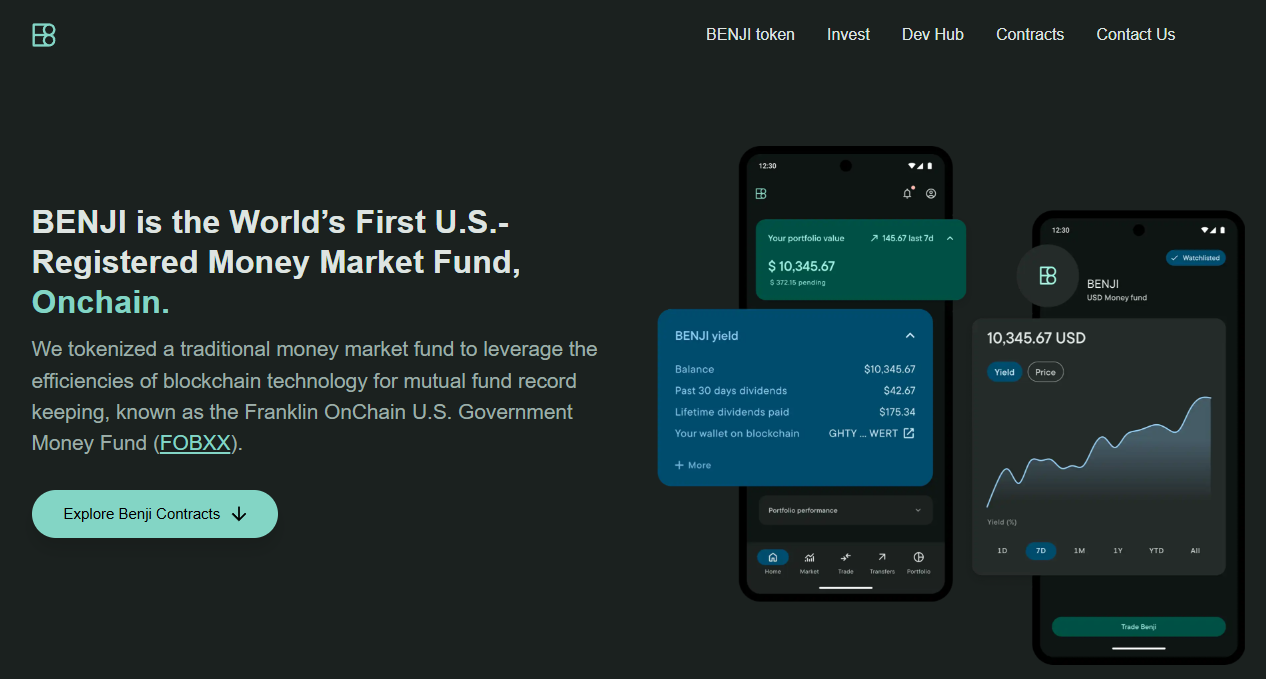
Top Pick: Maple Finance — Premier Crypto-Collateralized Lending

Overview
 Maple Finance manages over $4 billion in assets, specializing in institutional over-collateralized lending backed by Bitcoin, Ethereum, Solana, and XRP, targeting $100 billion in annual loan volume by 2030. The platform introduced SyrupUSDC for permissionless retail access alongside KYC-gated institutional pools.

Ideal For

  • Institutional lenders seeking exposure to cryptocurrency-backed credit
  • Liquidity providers comfortable with smart contract risk
  • Allocators targeting floating-rate, senior-secured structures
  • Investors seeking alternatives to traditional stablecoin farming

Standout Features

  • Consistent 9-12% net yields through undercollateralized institutional facilities and structured credit products
  • Strategic integration with Aave's $40 billion protocol bringing syrupUSDT to Plasma instance and syrupUSDC to core markets
  • Partnerships with Bitwise, Lido Finance (stETH-backed credit lines), and EtherFi (weETH collateral) expanding institutional adoption
  • Robust risk management combining decades of TradFi expertise with real-time on-chain monitoring

Pricing
 Variable by pool; typical effective yields 9-12% after protocol fees. Minimum investments pool-dependent, generally $10K-$50K for retail syrup products.

Availability
 Global with KYC requirements for lending. Institutional Maple requires accreditation; Syrup.fi open to broader participants.

Worth Noting
 Platform transitioned from uncollateralized to over-collateralized model after 2022 market turmoil. Historical defaults impacted certain pools; robust recovery mechanisms now in place.

Alternatives to Consider: Credix (emerging markets), TrueFi (uncollateralized DeFi)  

Runner-Up: Goldfinch Prime — Institutional Private Credit Access

Overview
 Goldfinch Prime aggregates exposure to multi-billion dollar private credit funds from Ares, Apollo, Golub Capital, and KKR, providing on-chain access to institutional-grade senior secured loans with over $1 trillion in collective AUM.

Ideal For

  • Non-US investors seeking diversified private credit exposure
  • Allocators targeting institutional fund performance without direct fund access
  • Participants seeking uncorrelated yield to crypto markets
  • Investors comfortable with longer lockup periods

Standout Features

  • Exposure to 1000+ senior secured loans across industries through vetted fund managers with 10+ years experience
  • Target returns of 9-12% net of fees with strict eligibility criteria including >90% senior secured portfolios and <0.75% target non-accrual rates
  • Heron Finance manages fund selection and vetting while fund managers handle all underwriting and default resolution
  • USDC-based deposits converted to proportional GPRIME tokens for continuous offering structure

Pricing
 Net yields 9-12% after embedded management fees and profit sharing. Minimum investments vary by pool structure; typically institutional minimums apply.

Availability
 Non-US persons only due to regulatory structure. KYC and accreditation verification required.

Worth Noting
 Exposure is indirect through fund shares rather than direct loan origination; fund managers absorb individual borrower default risk into aggregate yields. Liquidity limited compared to Treasury products.

Alternatives to Consider: Centrifuge private credit pools, Credix fintech lending


For Real Estate & Diversified Assets (6-10% Yield)

Top Pick: Centrifuge — Multi-Asset Tokenization Infrastructure

Overview
 Centrifuge operates as a multichain infrastructure platform enabling asset managers to tokenize real estate, trade finance, carbon credits, and structured credit with $1.2 billion TVL and recent 10x growth driven by the first on-chain CLO and tokenized S&P 500 index fund.

Ideal For

  • Investors seeking exposure to asset-backed securities beyond treasuries
  • Allocators comfortable evaluating tranched credit structures
  • Participants prioritizing transparency and on-chain asset verification
  • Portfolio managers wanting diversification across real-world credit types

Standout Features

  • Asset-agnostic architecture supporting structured credit, real estate mortgages, US treasuries, carbon credits, and consumer finance with full collateralization and legal recourse for investors
  • V3 platform enables cross-chain interoperability across Ethereum, Base, Arbitrum, Avalanche, BNB Chain, and Plume with integrated KYC and compliance-as-a-feature
  • Senior/junior tranche structures allowing risk-return customization
  • Partnership with Chronicle Labs for real-time price feeds and integration with Circle for USDC on/off-ramping

Pricing
 Yields vary by pool and tranche: typically 6-8% for senior tranches, 10-14% for junior tranches. Management fees embedded; pool-specific minimums apply.

Availability
 Global with KYC requirements. Pools may have additional jurisdictional restrictions based on underlying asset location.

Worth Noting
 Platform complexity requires understanding of tranched structures and asset-specific risks. Less liquid credit instruments offer less frequent pricing updates than treasury products.

Alternatives to Consider: RealT (US residential real estate focus), Republic (equity crowdfunding)


For Emerging Market Credit (12-18% Yield)

Top Pick: Credix — Latin American Fintech Lending

Overview
 Credix specializes in providing credit facilities to fintech lenders in Latin America, offering high-yield exposure to underserved credit markets with institutional-grade underwriting and local market expertise.

Ideal For

  • Sophisticated investors seeking higher risk-adjusted returns
  • Allocators comfortable with emerging market credit risk
  • Participants with extended investment horizons (12-24 months typical)
  • Investors seeking geographic diversification from US/EU markets

Standout Features

  • Target yields 12-18% reflecting emerging market risk premiums
  • Focus on fintech infrastructure enabling financial inclusion
  • Partnerships with established Latin American credit originators
  • Robust due diligence and monitoring of borrower networks

Pricing
 Pool-dependent yields typically 12-18% gross with management fees of 1-2%. Minimum investments generally $50K+ for accredited investors.

Availability
 Non-US persons primarily; requires accreditation verification and enhanced KYC given emerging market exposure.

Worth Noting
 Higher yields reflect higher credit and currency risk. Platform experienced challenges during regional economic volatility; enhanced risk controls now implemented.

Alternatives to Consider: Goldfinch V1 pools (emerging market focus), TrueFi uncollateralized pools


For Tokenization Infrastructure (Platform Providers)

Top Pick: Securitize — Industry-Leading Issuance Platform

Overview
 Securitize has tokenized over $4.5 billion in assets for 1.2 million investors across 3,000+ clients, operating as an SEC-registered transfer agent with integrated ATS for secondary trading. The platform powers major offerings including BlackRock's BUIDL fund.

Ideal For

  • Asset managers seeking turnkey tokenization solutions
  • Issuers requiring SEC-compliant digital security infrastructure
  • Institutional clients needing integrated custody and compliance
  • Projects prioritizing regulatory alignment and brand credibility

Standout Features

  • DS Protocol automates token issuance, transfer agent functions, and regulated secondary trading with $47 million funding led by BlackRock
  • Recent launch of STAC tokenized AAA CLO fund with BNY custody demonstrating institutional adoption trajectory
  • Comprehensive investor onboarding, KYC/AML, and reporting infrastructure
  • Partnerships with major asset managers and integration with Zero Hash for fiat conversion

Pricing
 Platform fees vary by issuance size and complexity; typically 0.5-2% of AUM plus basis point fees on transactions. White-label solutions available for enterprise clients.

Availability
 Global operations with jurisdiction-specific compliance modules. Primary focus on US, EU, and APAC institutional markets.

Worth Noting
 Securitize is an issuance platform rather than direct investment product; investors access opportunities through partner funds and offerings launched on the infrastructure.

Alternatives to Consider: Tokeny (EU-focused), Polymath/Polymesh (security token specialists)


Complete Provider Directory

  • Backed Finance: European MiCA-compliant tokenization platform offering bIB01 (Swiss government bond exposure) and bC3M (commodity basket). Strong focus on regulatory alignment with modest 3-5% yields and low entry barriers.
  • Swarm Markets: Decentralized platform enabling fractional ownership of real estate and private credit with $1K-$50K minimums. Emphasizes accessibility while maintaining compliance through distributed infrastructure.
  • TrueFi: Uncollateralized lending protocol using on-chain credit scoring and portfolio diversification. Higher risk-return profile (8-15% targets) with full transparency of borrower pools and performance metrics.
  • Archax: UK FCA-regulated platform for institutional tokenization of bonds, funds, and money markets. Focus on traditional finance compatibility with stringent accreditation requirements.

Making Your Selection: Key Questions

  • What yield stability do you require?
     Treasury-backed platforms (Ondo, Franklin Templeton) offer predictable 4-5% returns with minimal volatility. Credit-focused platforms (Maple, Goldfinch) target 9-12% but introduce credit risk and performance variability.
  • What is your risk tolerance for underlying collateral?
     Government securities provide lowest risk; over-collateralized crypto loans add smart contract and liquidation risks; uncollateralized emerging market credit carries highest default potential.
  • Do you meet accreditation and minimum investment thresholds?
     Many institutional products require $50K-$200K minimums and qualified purchaser status. Retail-accessible options like USDY and syrupUSDC lower barriers but may sacrifice yield.
  • What liquidity do you need?
     Treasury tokens generally offer daily liquidity; private credit pools may have quarterly redemption windows; real estate tokenization can involve 12-24 month lockups.
  • How important is regulatory compliance?
     Platforms like Ondo, Franklin Templeton, and Securitize prioritize SEC registration and traditional fund structures. Purely DeFi-native protocols offer less regulatory clarity but greater composability.
  • What blockchain ecosystems do you operate in?
     Multi-chain deployment (Ondo, Centrifuge) provides flexibility; single-chain specialization (some Maple pools) may offer optimization but limits interoperability.
  • Do you have geographic restrictions?
     US persons often excluded from highest-yield opportunities due to securities laws. European investors benefit from MiCA framework; APAC sees growing regulatory clarity.
  • What level of transparency do you require?
     On-chain native protocols offer real-time asset verification; hybrid models may rely on periodic attestations and third-party audits.
  • Are you seeking passive income or active yield strategies?
     Treasury staking provides set-and-forget returns; DeFi integrations enable leverage, collateral strategies, and yield optimization requiring active management.
  • How much operational complexity can you handle?
     Single-platform solutions simplify but limit optionality; multi-protocol strategies maximize returns but require gas management, tax tracking, and security across multiple platforms.

Maximizing Your Setup with Token Metrics

Token Metrics provides critical intelligence for navigating RWA yield opportunities through data-driven analysis and market insights.

Research Phase: Leverage Token Metrics' fundamental analysis to evaluate tokenized asset protocols, comparing on-chain metrics, TVL trends, and yield sustainability indicators. Our RWA sector reports identify emerging platforms and highlight regulatory developments across jurisdictions.

Portfolio Construction: Use quantitative scoring to allocate across risk tiers—balancing stable treasury exposure with higher-yield credit products. Token Metrics' portfolio tools help optimize diversification while monitoring correlation to traditional crypto markets.

Ongoing Monitoring: Real-time alerts notify you of yield changes, protocol upgrades, and risk events. Our dashboard aggregates performance across multiple RWA platforms, tracking your yield-bearing positions alongside broader cryptocurrency holdings.

Risk Management: Token Metrics' risk analytics assess smart contract security, custody arrangements, and counterparty exposure. Our reports flag platforms with concerning yield sustainability metrics or operational red flags before they impact your capital.

Start your Token Metrics free trial to access institutional-grade RWA research and optimize your real-world asset allocation.  

Essential Security Practices

  • Custody Verification: Confirm that platforms use institutional-grade custodians (Coinbase Custody, BitGo, Fireblocks) for underlying assets. Verify proof-of-reserve attestations and third-party audits.
  • Smart Contract Risk: Review audit reports from reputable firms (Trail of Bits, OpenZeppelin, Certora). Understand upgrade mechanisms and timelock protections on protocol contracts.
  • Legal Structure Assessment: Examine SPV formation, bankruptcy remoteness, and investor recourse mechanisms. Ensure tokenization structure provides actual legal claim on underlying assets, not just economic exposure.
  • Regulatory Compliance: Verify platforms maintain necessary licenses (broker-dealer, transfer agent, ATS) in relevant jurisdictions. Confirm offerings comply with securities laws in your domicile.
  • Counterparty Risk: Understand who services loans, manages defaults, and handles liquidations. Evaluate track records of asset originators and credit underwriters.
  • Liquidity Risk Management: Never allocate more than you can afford to lock up for stated redemption periods. Maintain buffer capital for market volatility and potential redemption delays.
  • Tax Implications: Consult tax professionals on treatment of tokenized yield—may be classified as interest income, dividends, or capital gains depending on structure and jurisdiction.
  • Geographic Restrictions: Verify you're eligible to participate based on residency. Using VPNs or misrepresenting location can result in frozen funds and legal liability.
  • Platform Concentration: Diversify across multiple RWA providers to reduce single-point-of-failure risk. No single platform should represent majority of yield allocation.
  • Documentation: Maintain records of all transactions, yield distributions, and platform communications for tax reporting and potential disputes.

This article is for research and educational purposes, not financial advice. RWA investments carry risks including loss of principal.


What to Avoid

  • Ignoring minimum holding periods: Many RWA products enforce lockups or redemption windows. Treating them as liquid positions can leave you unable to access capital when needed.
  • Chasing unsustainably high yields: Promised returns significantly above market rates often indicate excessive risk. Verify underlying asset performance and historical consistency before committing capital.
  • Overlooking platform liquidity: Token existence on-chain doesn't guarantee exit liquidity. Check secondary market depth and historical spread between minting and redemption prices.
  • Neglecting jurisdictional compliance: Accessing platforms not available in your region can result in frozen accounts and regulatory penalties. Always verify eligibility before depositing funds.
  • Underestimating smart contract risk: Even well-audited protocols face exploitation risk. Size positions appropriately and monitor security incident disclosures across the ecosystem.
  • Failing to verify asset backing: Don't rely on marketing claims. Demand proof-of-reserve, third-party attestations, and transparent reporting on underlying collateral.
  • Concentrating in single asset class: Over-allocating to one RWA category (e.g., all private credit) eliminates diversification benefits. Balance across treasuries, credit, and real estate where possible.
  • Ignoring fee structures: Management fees, performance fees, and transaction costs compound over time. Calculate net yields after all costs when comparing platforms.

Reader Questions Answered

What's the difference between tokenized treasuries and yield-bearing stablecoins?

 Tokenized treasuries (like OUSG) represent direct ownership of US Treasury securities with yield passed through to holders. Yield-bearing stablecoins (like USDY) maintain $1 peg while distributing treasury yields via rebasing or airdrops. Treasuries may fluctuate slightly with NAV; yield stablecoins prioritize price stability.

Are RWA yields taxable differently than crypto staking rewards?

 Likely yes, though tax treatment varies by jurisdiction. RWA yields from treasuries or credit facilities often classified as interest income taxed at ordinary rates. Crypto staking may be treated as income at receipt or capital gains at sale depending on location. Consult tax professionals for specific guidance.

Can I use tokenized RWAs as collateral in DeFi protocols?

 Increasingly yes. Platforms like Maple, Ondo (via Flux Finance), and Centrifuge enable using tokenized assets as DeFi collateral. However, support varies by protocol and asset—USDY and OUSG see broader integration than niche real estate tokens. Liquidation risks apply if collateral value drops.

What happens if the platform goes bankrupt?

 Properly structured tokenization isolates assets in bankruptcy-remote SPVs, protecting investor claims even if platform operator fails. However, redemption processes may be delayed and require legal navigation. This is why verifying legal structure and custodial arrangements is critical.

How liquid are RWA tokens compared to stablecoins?

 Significantly less liquid. While stablecoins have billions in daily DEX volume, most RWA tokens trade thinly or only through platform-controlled redemption mechanisms. Treasury tokens offer better liquidity than private credit or real estate, but all lag traditional stablecoins substantially.

Do I need to be an accredited investor?

 Depends on the platform and your location. US-based offerings often require accreditation; international platforms may have lower barriers. Products like USDY, syrupUSDC, and BENJI target broader accessibility, while institutional credit pools restrict to qualified purchasers.

What are the main risks that could cause loss of principal?

 (1) Underlying asset default (credit risk), (2) smart contract exploitation, (3) platform insolvency without proper asset segregation, (4) regulatory action freezing operations, (5) stablecoin de-pegging for yield products denominated in USDC/USDT, (6) liquidation cascades in collateralized structures.

How do yields compare to traditional finance alternatives?

 Tokenized treasuries (4-5%) match conventional money market funds but with 24/7 access. Private credit RWAs (9-12%) offer premiums over corporate bonds due to illiquidity and platform novelty. Emerging market RWA yields (12-18%) comparable to EM debt funds with added smart contract risk.


Bottom Line

Real-world asset yield marketplaces represent the maturation of blockchain infrastructure beyond speculation into productive finance. For investors seeking stable, asset-backed returns uncorrelated to cryptocurrency volatility, platforms like Ondo Finance and Franklin Templeton deliver institutional-grade treasury exposure with DeFi composability. Those comfortable with credit risk can access superior yields through Maple Finance's collateralized institutional lending or Goldfinch Prime's diversified private credit exposure.

The key to success: match platform selection to your specific risk tolerance, liquidity needs, and regulatory constraints. Treasury products suit conservative allocators prioritizing capital preservation; credit platforms reward investors accepting higher risk for enhanced returns; multi-asset infrastructure like Centrifuge offers diversification across real-world credit types.

Start with smaller allocations to understand platform mechanics, redemption processes, and yield consistency before committing substantial capital. The RWA sector's rapid growth will continue creating opportunities, but also attracting lower-quality offerings—due diligence remains paramount.

Related Resources:


About This Research

Methodology: This guide evaluated 20+ RWA platforms through analysis of official documentation, on-chain data, regulatory filings, and third-party audits. Platforms selected represent meaningful TVL (>$100M), regulatory compliance, and operational track record. Final selection prioritized diversity across asset classes and investor accessibility tiers.

Research Sources:

  • Ondo Finance: Product documentation, tokenomics, OUSG/USDY specifications, Oasis Pro acquisition disclosure
  • Maple Finance: Platform whitepaper, syrupUSDC mechanics, Aave integration announcement, CEO interviews
  • Centrifuge: V3 technical documentation, pool analytics, Republic partnership details
  • Goldfinch: Prime pool specifications, fund manager criteria, Heron Finance structure
  • Franklin Templeton: BENJI platform technical details, intraday yield patent documentation, multi-chain deployment
  • Securitize: DS Protocol documentation, STAC fund launch details, BlackRock partnership announcements
  • RWA.xyz: Platform TVL data, tokenization metrics, market growth analysis
  • DeFiLlama: Protocol TVL tracking, historical performance data
  • BCG/Ripple: RWA market projections and industry research
  • VanEck, Coinbase, Binance: Sector research reports on RWA growth trajectories

All data current as of January 2025. Platform features and yields subject to change; verify current terms on official websites before investing.

Build Smarter Crypto Apps &
AI Agents in Minutes, Not Months
Real-time prices, trading signals, and on-chain insights all from one powerful API.
Grab a Free API Key
About Token Metrics
Token Metrics: AI-powered crypto research and ratings platform. We help investors make smarter decisions with unbiased Token Metrics Ratings, on-chain analytics, and editor-curated “Top 10” guides. Our platform distills thousands of data points into clear scores, trends, and alerts you can act on.
30 Employees
analysts, data scientists, and crypto engineers
Daily Briefings
concise market insights and “Top Picks”
Transparent & Compliant
Sponsored ≠ Ratings; research remains independent
Want Smarter Crypto Picks—Free?
See unbiased Token Metrics Ratings for BTC, ETH, and top alts.
Thank you! Your submission has been received!
Oops! Something went wrong while submitting the form.
 No credit card | 1-click unsubscribe
Token Metrics Team
Token Metrics Team

Recent Posts

Research

Portfolio Allocation Mastery: The Complete Guide to Diversification with Token Metrics Crypto Indices

Token Metrics Team
11 min read

Most investors understand that diversification matters—the famous "don't put all your eggs in one basket" principle. However, understanding diversification conceptually differs dramatically from implementing it effectively. Poor diversification strategies create illusions of safety while concentrating risk in hidden ways. True diversification requires sophisticated allocation across multiple dimensions simultaneously.

Token Metrics AI Indices provide professional-grade diversification tools, but maximizing their power requires strategic allocation decisions. How much total capital should you allocate to crypto? How should you split that allocation across different indices? How do you balance crypto with traditional assets? What role should conservative versus aggressive indices play?

This comprehensive guide explores portfolio allocation mastery, examining the principles of effective diversification, specific allocation frameworks for different investor profiles, tactical adjustments for changing conditions, and avoiding common diversification mistakes that undermine portfolio performance.

Understanding True Diversification: Beyond Token Count

Many investors believe diversification simply means holding many assets. True diversification requires deeper strategic thinking.

  • The Correlation Principle: Diversification provides benefits only when assets don't move in lockstep. Holding ten tokens that all rise and fall together provides no more protection than one. Token Metrics addresses correlation through sector diversification (DeFi, Layer-1s, gaming, AI), market cap mixing (large, mid, small caps), geographic diversity across blockchain ecosystems, and use case variety spanning payments to applications.
  • Systematic vs. Unsystematic Risk: Diversification eliminates unsystematic risk (individual token failures) but cannot eliminate systematic risk (overall market crashes). Understanding this prevents unrealistic expectations—diversification protects against individual failures but won't prevent declines during market-wide crashes.
  • Risk-Adjusted Returns: Sophisticated investors focus on risk-adjusted returns rather than absolute returns. A portfolio returning 80% annually with 60% volatility may be inferior to one returning 60% with 30% volatility. The Sharpe ratio measures this—Token Metrics optimizes for superior Sharpe ratios through diversification.

The Total Portfolio Framework: Integrating Crypto with Traditional Assets

Crypto represents one component of comprehensive financial planning. Optimal allocation requires considering how crypto fits within total wealth.

Asset Class Allocation by Life Stage

Appropriate crypto allocation varies dramatically based on age, income stability, and financial obligations.

Ages 20-35 (Aggressive Accumulation Phase):

  • Total Crypto Allocation: 15-30% of investment portfolio
  • Remaining Allocation: 50-60% stocks, 10-15% bonds, 5-10% real estate/alternatives, 5-10% cash
  • Rationale: Long time horizon allows recovering from crypto volatility while capturing maximum growth potential

Ages 35-50 (Balanced Growth Phase):

  • Total Crypto Allocation: 10-20% of investment portfolio
  • Remaining Allocation: 50-60% stocks, 15-20% bonds, 10-15% real estate/alternatives, 5-10% cash
  • Rationale: Maintain growth exposure while gradually increasing stability as retirement approaches

Ages 50-65 (Pre-Retirement Transition):

  • Total Crypto Allocation: 5-10% of investment portfolio
  • Remaining Allocation: 40-50% stocks, 25-30% bonds, 10-15% real estate/alternatives, 10-15% cash
  • Rationale: Preserve accumulated wealth while maintaining modest growth exposure

Ages 65+ (Retirement Distribution):

  • Total Crypto Allocation: 3-5% of investment portfolio
  • Remaining Allocation: 30-40% stocks, 30-40% bonds, 10-15% real estate/alternatives, 15-20% cash
  • Rationale: Capital preservation with modest crypto exposure for continued growth and inflation protection

These frameworks provide starting points—adjust based on individual risk tolerance, wealth level, and financial obligations.

Emergency Funds and Liquidity Reserves

Never invest emergency funds or money needed within 3-5 years in cryptocurrency. Maintain 6-12 months of living expenses in high-yield savings accounts or money market funds completely separate from investment portfolios.

This liquidity buffer prevents forced selling during market crashes. Without adequate emergency reserves, unexpected expenses force liquidating crypto holdings at worst possible times—turning temporary paper losses into permanent realized losses.

Debt Considerations

High-interest debt (credit cards, personal loans above 8-10%) should be eliminated before aggressive crypto investing. The guaranteed "return" from eliminating 18% credit card interest exceeds expected crypto returns on risk-adjusted basis.

However, low-interest debt (mortgages below 4-5%) can coexist with crypto investing—no need to delay investing until mortgage-free. The opportunity cost of waiting decades to invest exceeds the modest interest savings from accelerated mortgage payments.

Allocating Within Crypto: Index Selection Strategy

Once you've determined total crypto allocation, the next decision involves distributing that allocation across Token Metrics' various indices.

The Three-Tier Index Framework

Structure crypto allocation across three risk tiers creating balanced exposure:

Conservative Tier (40-50% of crypto allocation):

Conservative indices emphasizing Bitcoin, Ethereum, and fundamentally strong large-cap tokens. This tier provides stability and reliable exposure to crypto's overall growth while limiting volatility.

Suitable indices: Bitcoin-weighted indices, large-cap indices, blue-chip crypto indices

Balanced Tier (30-40% of crypto allocation):

Balanced indices combining established tokens with growth-oriented mid-caps. This tier balances stability and growth potential through strategic diversification.

Suitable indices: Diversified market indices, multi-sector indices, smart contract platform indices

Aggressive Tier (20-30% of crypto allocation):

Aggressive growth indices targeting smaller-cap tokens with highest upside potential. This tier drives outperformance during bull markets while limited position sizing contains downside risk.

Suitable indices: Small-cap growth indices, sector-specific indices (DeFi, gaming, AI), emerging ecosystem indices

Sector Rotation Within Allocation

Different crypto sectors outperform during different market phases. Tactical sector rotation within your allocation captures these rotations:

  • Early Bull Market: Layer-1 platforms and infrastructure tokens typically lead as smart money accumulates fundamentally strong projects at relative discounts.
  • Mid Bull Market: DeFi and application layer tokens often outperform as adoption accelerates and user activity increases across protocols.
  • Late Bull Market: Speculative sectors like memecoins and high-risk projects experience explosive growth as retail FOMO peaks and risk appetite maximizes.
  • Bear Market: Bitcoin and large-cap "blue chip" tokens typically show relative strength, declining less than smaller alternatives.

Token Metrics indices provide sector-specific options allowing tactical overweighting of sectors positioned for outperformance while maintaining diversified core holdings.

Geographic and Ecosystem Diversity

Blockchain ecosystems exhibit different characteristics and growth trajectories. Diversifying across multiple ecosystems prevents concentration in single platform risk:

  • Ethereum Ecosystem: Largest DeFi infrastructure, most developers, highest liquidity
  • Solana Ecosystem: High performance, growing DeFi and NFT activity
  • Binance Smart Chain: Low costs, high retail adoption in certain markets
  • Polygon and Layer-2s: Scaling solutions with growing adoption
  • Alternative Layer-1s: Avalanche, Cardano, Polkadot offering different technical approaches

Token Metrics indices spanning multiple ecosystems provide automatic geographic and platform diversification preventing single-ecosystem concentration risk.

Rebalancing Strategies: Maintaining Optimal Allocation

Markets move constantly, causing allocations to drift from targets. Systematic rebalancing maintains desired risk exposure and forces beneficial "buy low, sell high" discipline.

Calendar-Based Rebalancing

The simplest approach rebalances on fixed schedules regardless of market conditions:

  • Quarterly Rebalancing: Review and adjust allocations every three months
  • Semi-Annual Rebalancing: Rebalance twice yearly for lower-maintenance approach
  • Annual Rebalancing: Minimal maintenance with once-yearly adjustments

More frequent rebalancing captures opportunities faster but triggers more taxable events in non-retirement accounts. Less frequent rebalancing reduces trading costs but allows greater allocation drift.

Threshold-Based Rebalancing

More sophisticated approaches rebalance when allocations drift beyond predetermined thresholds:

  • Rebalance when any index exceeds target allocation by 25% (e.g., 10% target allocation reaching 12.5%)
  • Rebalance when total crypto allocation exceeds target by 30% (e.g., 15% target reaching 19.5%)
  • Rebalance when conservative/aggressive balance shifts more than 15% from target

Threshold rebalancing responds to actual market movements rather than arbitrary calendar dates, potentially improving timing while reducing unnecessary transactions.

Tax-Optimized Rebalancing

In taxable accounts, coordinate rebalancing with tax considerations:

  • Prioritize rebalancing in retirement accounts where transactions don't trigger taxes
  • Use new contributions to rebalance in taxable accounts rather than selling appreciated positions
  • Harvest tax losses during rebalancing by selling positions at losses to offset gains
  • Delay rebalancing appreciated positions until qualifying for long-term capital gains treatment

This tax awareness preserves more wealth for compounding rather than sending it to tax authorities.

Risk Management: Position Sizing and Stop-Loss Philosophies

Effective diversification includes position sizing rules preventing excessive concentration even within diversified portfolios.

Maximum Position Limits

Establish maximum position sizes preventing any single index from dominating:

  • No single index exceeding 30% of total crypto allocation
  • No single sector exceeding 40% of total crypto allocation
  • Aggressive/speculative indices collectively capped at 30% of crypto allocation
  • Conservative indices minimum 40% of crypto allocation

These guardrails maintain diversification even when particular indices perform extremely well, preventing overconfidence from creating dangerous concentration.

Strategic Loss Limitations

While crypto indices should be held long-term through volatility, establish strategic loss limits for total crypto allocation relative to overall portfolio:

  • If crypto allocation declines to represent less than 50% of target allocation, consider adding capital opportunistically
  • If crypto allocation grows to exceed 200% of target allocation, take systematic profits rebalancing back toward target
  • Never allow crypto losses to exceed 10% of total net worth regardless of initial allocation

These strategic boundaries prevent crypto volatility from creating portfolio-level instability while maintaining beneficial long-term exposure.

Common Allocation Mistakes That Destroy Returns

  • False Diversification Through Correlated Assets: Five Layer-1 tokens or multiple overlapping DeFi indices create illusion without meaningful risk reduction. Analyze correlation ensuring genuine sector, market cap, and use case differences.
  • Over-Diversification Creating "Diworsification": Beyond 5-7 carefully selected indices, additional diversification provides diminishing returns while increasing complexity. Focus on 3-5 core indices providing genuine diversification.
  • Abandoning Allocation During Extremes: The most valuable time to maintain target allocation is when it feels most difficult—severe bear markets or euphoric bull markets. Automate rebalancing through predetermined rules.
  • Ignoring Total Portfolio Context: A 20% crypto allocation might be appropriate with stable income and emergency funds—but reckless with debt and no savings. Evaluate crypto within total financial context.
  • Static Allocations Never Adjusting: Life circumstances change—income, families, risk tolerance, retirement proximity. Review allocation every 2-3 years and after major life events.

Advanced Allocation Strategies for Sophisticated Investors

Beyond basic frameworks, advanced strategies optimize allocation for specific goals and market conditions.

Barbell Strategy

The barbell approach combines extremely conservative and extremely aggressive positions while avoiding middle ground:

  • 60% in ultra-conservative Bitcoin and Ethereum-focused indices
  • 40% in highly aggressive small-cap and emerging sector indices
  • 0% in moderate/balanced middle-ground indices

This approach provides downside protection through conservative core while capturing maximum upside through concentrated aggressive positions—potentially delivering superior risk-adjusted returns versus balanced approaches.

Core-Satellite with Tactical Overlay

Maintain stable core allocation (70% of crypto) in diversified indices while using tactical satellite positions (30%) rotated based on market conditions and opportunities:

  • Core 70% remains constant regardless of market conditions
  • Tactical 30% rotates between sectors showing relative strength or undervaluation
  • Rebalance tactical allocation monthly based on momentum, sentiment, and fundamental factors

This approach combines buy-and-hold stability with active opportunity capture.

Risk Parity Allocation

Rather than allocating by dollar amounts, allocate by risk contribution ensuring each index contributes equally to portfolio volatility:

  • Conservative low-volatility indices receive larger dollar allocations
  • Aggressive high-volatility indices receive smaller dollar allocations
  • Each position contributes approximately equal volatility to total portfolio

This sophisticated approach prevents high-volatility positions from dominating portfolio risk even with modest dollar allocations.

Conclusion: Allocation Excellence Creates Lasting Success

Portfolio allocation represents the most important investment decision you'll make—far more impactful than individual token selection or market timing. Academic research consistently shows asset allocation determines 90%+ of portfolio performance variation, while security selection and timing contribute only marginally.

Token Metrics provides world-class indices, but your allocation strategy determines whether you capture their full potential or undermine them through poor diversification. The frameworks presented here offer starting points—adapt them to your specific situation, risk tolerance, and financial goals.

Remember that optimal allocation isn't static—it evolves with life stages, market conditions, and financial circumstances. Regular review and adjustment keeps strategies aligned with current reality rather than outdated assumptions.

The investors who build lasting wealth aren't those who find magical assets or perfect timing—they're those who implement sound allocation strategies and maintain them through all market conditions. This discipline, more than any other factor, separates successful wealth builders from those whose portfolios underperform despite choosing quality investments.

Begin implementing strategic allocation today. Start with appropriate total crypto allocation for your life stage, distribute across conservative, balanced, and aggressive indices providing genuine diversification, and establish rebalancing discipline maintaining target exposures through market volatility.

Your allocation strategy, properly implemented, will compound into extraordinary wealth over decades. Token Metrics provides the tools—your allocation decisions determine the results.

Start your 7-day free trial today and begin building the optimally allocated portfolio that will drive your financial success for decades to come.

Research

Building True Passive Income with Crypto Indices: The Complete Guide to Automated Wealth Creation

Token Metrics Team
12 min read

The dream of passive income drives millions toward cryptocurrency—earning money while you sleep, building wealth automatically, achieving financial freedom without constant work. Yet most crypto "passive income" strategies require active management, constant monitoring, technical expertise, and significant time investment. They're anything but passive.

Token Metrics AI Indices deliver genuine passive income through systematic wealth accumulation requiring minimal ongoing effort. Once established, your crypto portfolio grows automatically through professional AI management, strategic rebalancing, and compound returns—all without your daily involvement or active trading.

This comprehensive guide explores how crypto indices create true passive income, compares index investing to other passive income strategies, reveals the mathematics of automated wealth compounding, and provides actionable frameworks for building substantial passive income streams through disciplined index allocation.

What True Passive Income Actually Means

Understanding genuine passive income requires distinguishing it from "active income disguised as passive" that dominates crypto discussions.

Active Income Disguised as Passive

Many crypto strategies marketed as "passive income" require substantial ongoing effort:

  • Day Trading/Swing Trading: Requires constant market monitoring, analysis, and execution—full-time active work
  • Yield Farming: Demands daily monitoring of APYs, moving capital between protocols, managing impermanent loss risks
  • NFT Flipping: Requires researching projects, timing mints, managing listings, following trends constantly
  • Staking on Volatile Assets: Needs continuous evaluation of lock-up risks, protocol security, and token price sustainability
  • DeFi Protocol Management: Involves complex smart contract interactions, gas fee optimization, and continuous security monitoring

These strategies generate income but demand active participation—they're jobs, not passive income streams.

Characteristics of Genuine Passive Income

True passive income exhibits specific characteristics:

  • Minimal Time Investment: Requires 1-2 hours monthly maximum after initial setup
  • No Specialized Expertise: Accessible to anyone regardless of technical knowledge
  • Automatic Execution: Operates without your constant involvement or decision-making
  • Predictable Processes: Follows systematic approaches rather than requiring moment-to-moment judgment
  • Scalable Without Additional Time: Can grow substantially without proportionally increasing time commitment
  • Professional Management: Experts handle complexity on your behalf

Token Metrics indices meet all these criteria—once established, your wealth grows automatically through AI-powered management while you focus on other priorities.

How Crypto Indices Create Passive Income

Understanding the mechanisms generating passive returns through indices reveals why this approach delivers superior risk-adjusted income compared to alternatives.

Capital Appreciation Through Systematic Growth

The primary income source from crypto indices is capital appreciation—portfolio value increasing over time as cryptocurrency markets grow and AI optimization captures opportunities.

Unlike stocks requiring decades to double, crypto indices can deliver 50-200% annual returns during favorable market cycles. A $25,000 initial investment growing at 60% annually becomes $100,000 in three years and $400,000 in six years—substantial wealth creation requiring zero active trading.

This appreciation occurs passively through:

  • AI selecting highest-probability opportunities across 6,000+ tokens
  • Automatic rebalancing capturing profits from winners and accumulating losers at discounts
  • Diversification spreading risk while maintaining upside exposure
  • Professional risk management limiting catastrophic losses

You make no trading decisions. You don't research tokens. You don't time markets. The system handles everything while appreciation compounds automatically.

Compound Growth Acceleration

Passive income's true power emerges through compounding—returns generating additional returns in self-reinforcing cycles. Token Metrics indices amplify compounding through systematic profit capture and reinvestment.

When indices rebalance, profits from appreciating tokens are automatically reinvested into new opportunities. This mechanical reinvestment ensures all gains compound rather than sitting idle. Over years and decades, compounding creates extraordinary wealth accumulation.

Example: $10,000 growing at 40% annually with full reinvestment becomes $150,000 in seven years. Without reinvestment—if you withdrew gains annually—the same investment reaches only $38,000. Compounding creates an additional $112,000 in wealth automatically.

Dollar-Cost Averaging Enhancement

Adding regular contributions to index positions creates powerful dollar-cost averaging benefits that enhance passive returns. By investing fixed amounts regardless of market conditions, you automatically buy more tokens when prices are low and fewer when prices are high.

This systematic averaging removes timing pressure—you don't need to identify perfect entry points. Whether markets surge or crash, your regular contributions continue mechanically, building positions that appreciate over complete market cycles.

Combined with compound growth, dollar-cost averaging creates remarkable long-term wealth accumulation requiring minimal effort beyond initial automated contribution setup.

Tax-Efficient Growth Optimization

Token Metrics indices can be held in tax-advantaged retirement accounts where appreciation compounds tax-free (Roth IRA) or tax-deferred (Traditional IRA). This tax optimization dramatically accelerates wealth accumulation compared to taxable accounts.

In taxable accounts, annual rebalancing triggers capital gains taxes that reduce compounding power. In retirement accounts, all gains compound without tax drag—a significant passive income enhancement requiring only initial account setup.

Comparing Index Passive Income to Alternatives

Understanding how index-based passive income compares to other strategies reveals relative advantages.

Vs. Staking/Yield Farming: While staking offers 5-20% APY, it involves token price risk (10% yield means nothing if price drops 50%), lock-up periods preventing selling during crashes, impermanent loss, protocol risks, and constant management overhead. Index capital appreciation typically exceeds staking yields by 40+ percentage points while maintaining complete liquidity.

Vs. Real Estate: Real estate requires $50,000-$500,000+ minimums, involves management burdens despite property managers, suffers from illiquidity (months to sell), concentrates wealth geographically, and carries leverage risks. Indices require minimal capital, zero management, complete liquidity, global diversification, and no leverage risks.

Vs. Dividend Stocks: Dividend yields of 2-4% and appreciation of 6-8% annually pale against crypto potential. Dividends trigger immediate taxation reducing after-tax returns. Crypto indices offer dramatically higher return potential with tax-efficient compounding.

Vs. Bitcoin/Ethereum Only: Concentrated two-asset holdings sacrifice diversification, miss altcoin opportunities, lack rebalancing benefits, and forego professional management. Indices provide superior risk-adjusted returns with equal passivity.

The Mathematics of Automated Wealth Building

Understanding how small initial investments and regular contributions compound into substantial wealth over time makes passive income potential concrete rather than abstract.

Starting Small: The Power of Consistency

You don't need large capital to begin building meaningful passive income. Small amounts invested consistently compound into substantial wealth through time and returns.

Scenario 1: Modest Beginning

  • Initial investment: $1,000
  • Monthly contribution: $250
  • Average annual return: 50%
  • Time horizon: 10 years
  • Ending value: $486,000

This scenario transforms $31,000 in total contributions into nearly half a million through compound growth—passive income requiring only initial setup and automated monthly contributions.

Scenario 2: Aggressive Accumulation

  • Initial investment: $5,000
  • Monthly contribution: $500
  • Average annual return: 50%
  • Time horizon: 10 years
  • Ending value: $972,000

Nearly $1 million from $65,000 in contributions—extraordinary passive wealth creation through systematic index investing.

The Impact of Return Variability

Real returns vary annually—bull markets deliver 100-300% returns while bear markets create 50-80% drawdowns. However, averaging across complete cycles, conservative crypto indices historically achieve 30-60% annualized returns.

  • Even at conservative 30% annual average:
  • $10,000 initial + $300 monthly for 15 years = $1.1 million
  • $25,000 initial + $500 monthly for 15 years = $2.8 million

These projections assume no income from your job increases, which is unrealistic. As your career progresses and income grows, contribution amounts can increase proportionally, accelerating wealth accumulation further.

Retirement Income Generation

Once accumulated, substantial crypto index holdings generate retirement income through systematic withdrawal strategies.

If you accumulate $2 million in crypto indices by age 60, withdrawing 4% annually provides $80,000 passive income while preserving principal. If crypto continues appreciating even modestly at 15% annually, your portfolio grows despite withdrawals, providing inflation-protected lifetime income.

This passive income stream requires no active work—automated monthly withdrawals provide cash flow while remaining capital compounds through continued AI management.

Building Your Passive Income System

Creating effective passive income through crypto indices requires systematic implementation across several phases.

Phase 1: Foundation Setup (Month 1)

  • Open Token Metrics account and explore available indices
  • Determine appropriate total crypto allocation based on age, risk tolerance, and financial situation
  • Select specific indices matching your risk profile (conservative, balanced, aggressive)
  • Open exchange accounts and complete verification processes
  • Link bank accounts for funding transfers
  • Consider opening self-directed IRA for tax-advantaged growth

Complete this foundation work once—all subsequent wealth building occurs automatically.

Phase 2: Automation Implementation (Month 2)

  • Set up automatic recurring bank transfers to exchange accounts
  • Configure automatic index purchases on predetermined schedules (weekly, bi-weekly, or monthly)
  • Enable automatic rebalancing following Token Metrics recommendations
  • Set up portfolio tracking and optional performance alerts
  • Document your strategy and rules in writing for future reference

After automation setup, your system operates independently requiring minimal intervention.

Phase 3: Optimization and Scaling (Months 3-12)

  • Monitor system monthly to ensure automation functions correctly
  • Increase contribution amounts as income grows throughout your career
  • Rebalance between indices quarterly based on Token Metrics guidance
  • Take advantage of market crashes by adding lump sums opportunistically
  • Review and adjust tax strategies annually with professional guidance

Even during optimization phase, time commitment remains minimal—1-2 hours monthly maximum.

Phase 4: Wealth Preservation and Distribution (Years 10+)

  • Gradually shift allocation toward conservative indices as wealth accumulates
  • Implement systematic profit-taking during euphoric bull markets
  • Develop withdrawal strategy for retirement income needs
  • Consider estate planning for accumulated wealth transfer
  • Maintain disciplined approach through all market conditions

Throughout all phases, your involvement remains minimal while wealth compounds automatically through professional AI management.

Maximizing Passive Income Through Strategic Allocation

Optimizing passive income requires strategic decisions about allocation, risk management, and contribution timing.

Allocation Balance: Higher returns come with higher volatility. Conservative approach uses 70% conservative/20% balanced/10% aggressive indices. Moderate uses 50/30/20 split. Aggressive uses 30/30/40 split. All remain completely passive from management perspective.

Contribution Timing: Maintain regular automated contributions always, but keep 10-20% dry powder in stablecoins for crisis deployment during 30%+ market crashes. These fear-driven purchases generate outsized returns.

Tax Location Optimization: Roth IRA provides tax-free growth ideal for aggressive indices. Traditional IRA offers tax-deferred growth suitable for conservative indices. Taxable accounts provide flexibility but trigger annual rebalancing taxes. This optimization happens once but compounds into substantial savings over decades.

Common Passive Income Mistakes to Avoid

Even with automated systems, investors make predictable mistakes that undermine passive income goals.

  • Insufficient Automation: Failing to fully automate contributions and rebalancing introduces friction preventing consistent execution
  • Excessive Monitoring: Checking portfolio daily or weekly increases anxiety without improving results—monthly reviews suffice
  • Abandoning Strategy During Drawdowns: Selling during bear markets destroys passive income system's effectiveness—maintain discipline through downturns
  • Chasing Performance: Constantly switching between indices based on recent performance undermines long-term compounding
  • Withdrawing Gains Prematurely: Taking profits during accumulation phase prevents compounding—let gains reinvest automatically
  • Under-Contributing Relative to Income: Failing to increase contributions as career income grows limits wealth accumulation unnecessarily
  • Neglecting Tax Optimization: Holding crypto in taxable accounts when retirement accounts available costs substantial long-term returns

Conclusion: The Path to Financial Freedom

True passive income through crypto indices isn't mythical—it's mathematically achievable through systematic implementation and patient execution. Token Metrics provides the professional AI management, diversification, and optimization infrastructure transforming crypto from speculation into genuine passive wealth building.

The beauty of this approach is simplicity: establish system once, contribute consistently, trust professional management, and let compound growth work its magic over years and decades. No day trading. No constant monitoring. No technical expertise required. Just disciplined, automated wealth accumulation.

Your action determines outcomes. Those who begin today, implement systematic contributions, and maintain discipline through market cycles build substantial passive income streams funding financial independence. Those who delay, overthink, or abandon strategy during volatility watch opportunities pass without capturing benefits.

Token Metrics indices eliminate complexity and emotion from crypto investing, leaving only systematic wealth accumulation. The technology works. The mathematics favor consistent long-term investors. The only question is whether you'll begin building your passive income system today or postpone financial freedom indefinitely.

Start your 7-day free trial and take the first step toward true passive income through automated, professional crypto index investing. Your future self will thank you for the decision you make today.

Frequently Asked Questions

Research

Why AI Makes All the Difference: The Technology Advantage Behind Token Metrics Crypto Indices

Token Metrics Team
12 min read

When evaluating cryptocurrency index providers, most investors focus on past performance, fees, or token selection. While these factors matter, they miss the fundamental differentiator determining long-term success: the sophistication of artificial intelligence powering portfolio management.

Token Metrics doesn't just use AI as marketing buzzword—the platform employs cutting-edge machine learning systems that fundamentally outperform human decision-making in ways that compound into extraordinary advantages over time. Understanding why AI-driven indices surpass both traditional approaches and human-managed alternatives reveals why this technology represents the future of crypto investing.

This comprehensive guide explores the specific AI technologies powering Token Metrics indices, examines what these systems can do that humans cannot, compares AI-driven approaches to traditional alternatives, and reveals how technological advantages translate into superior investment outcomes.

The Limitations of Human Crypto Portfolio Management

Before understanding AI's advantages, recognize the inherent limitations of human portfolio management in cryptocurrency markets.

Information Processing Constraints

The human brain processes information sequentially and slowly. A skilled analyst might evaluate 10-20 cryptocurrencies daily using 5-10 data points each. This yields 50-200 data points daily—a tiny fraction of available information.

Token Metrics' AI analyzes 6,000+ cryptocurrencies using 80+ data points each—480,000+ data points daily. This 2,400x information processing advantage means the AI identifies opportunities and risks invisible to human analysis.

Cognitive Biases Distort Judgment

Human decision-making suffers from systematic cognitive biases:

  • Confirmation Bias: Seeking information supporting existing beliefs while dismissing contradictory evidence
  • Recency Bias: Overweighting recent events while underweighting historical patterns
  • Anchoring Bias: Fixating on initial information (like purchase price) rather than current reality
  • Herding Bias: Following crowd behavior rather than independent analysis
  • Overconfidence Bias: Believing personal judgment exceeds actual accuracy

These biases cause systematic errors leading to poor timing, holding losers too long, selling winners prematurely, and following crowds into overvalued assets. AI systems have no cognitive biases—they evaluate data objectively based on mathematical relationships.

Emotional Volatility Undermines Discipline

Human portfolio managers experience fear during market crashes and euphoria during rallies. These emotions trigger fight-or-flight responses overwhelming rational analysis, causing panic selling at bottoms and overconfident buying at tops.

AI experiences no emotions. Market crashes don't trigger fear. Rallies don't create euphoria. The system evaluates probabilities and executes strategies mechanically regardless of market sentiment.

Physical and Mental Limitations

Humans require sleep, breaks, vacations, and time for other life activities. Portfolio managers cannot monitor markets 24/7 or maintain consistent attention over years without degradation.

AI operates continuously without fatigue, monitoring global markets across time zones simultaneously. The system never sleeps, never takes vacations, never loses focus—maintaining perpetual vigilance impossible for humans.

Inability to Learn from All Data

Human learning occurs slowly through experience and study. A portfolio manager might learn from hundreds of trades over decades, building intuition from limited personal experience.

AI learns from millions of data points across thousands of assets simultaneously. Every market movement, every token launch, every sentiment shift contributes to model training. The system identifies patterns across entire crypto history that individual humans could never detect.

The Specific AI Technologies Powering Token Metrics

Token Metrics employs an ensemble of sophisticated machine learning models, each serving specific purposes within the investment process.

Gradient Boosting Decision Trees

These models excel at identifying complex, non-linear relationships between variables. In crypto markets, simple linear relationships rarely exist—token performance depends on intricate interactions between multiple factors.

Gradient boosting builds thousands of decision trees, each learning from previous trees' errors. This iterative process creates highly accurate predictions by combining many weak predictors into strong aggregate models.

Application: Identifying which combinations of technical, fundamental, and sentiment factors predict future price movements most accurately.

Recurrent Neural Networks (RNNs)

RNNs specialize in time-series analysis, recognizing patterns in sequential data. Cryptocurrency prices represent time-series data where past patterns influence future movements.

Unlike simple technical analysis looking at individual indicators, RNNs identify complex temporal relationships spanning multiple timeframes simultaneously. The networks detect subtle patterns in how prices, volumes, and other metrics evolve together over time.

Application: Forecasting price trajectories by learning from historical patterns while adapting to changing market dynamics.

Random Forests

Random forest algorithms create multiple decision trees using random subsets of data and features, then aggregate their predictions. This approach reduces overfitting risk—where models perform excellently on historical data but fail on new data.

By training on different data subsets, random forests identify robust patterns that generalize well rather than memorizing specific historical sequences unlikely to repeat exactly.

Application: Robust token classification separating quality projects from low-quality alternatives based on generalizable characteristics.

Natural Language Processing (NLP)

NLP algorithms analyze text data from social media, news articles, developer communications, and community forums. These systems extract sentiment, identify trending topics, detect narrative shifts, and quantify community engagement.

Unlike humans who might read dozens of articles weekly, NLP processes millions of text sources daily, identifying sentiment patterns and narrative changes before they become obvious.

Application: Gauging market sentiment, detecting emerging narratives, identifying coordinated pumps or manipulative campaigns, and assessing community health.

Anomaly Detection Frameworks

Anomaly detection identifies unusual patterns suggesting either opportunities or risks. These systems establish baseline "normal" behavior, then flag deviations warranting attention.

In crypto markets, anomalies might indicate insider trading before announcements, coordinated manipulation schemes, security vulnerabilities, or emerging trends before mainstream recognition.

Application: Early warning systems for security threats, manipulation detection, and identifying breakout candidates showing unusual strength relative to historical patterns.

What AI Can Do That Humans Cannot

Understanding specific capabilities unique to AI reveals why technology-driven approaches surpass traditional methods.

Simultaneous Multi-Asset Analysis

Human portfolio managers analyze assets sequentially—evaluating Bitcoin, then Ethereum, then Solana, one at a time. This sequential processing misses relationships between assets.

AI analyzes all assets simultaneously, identifying correlations, relative strength patterns, sector rotations, and cross-asset opportunities. The system recognizes when DeFi tokens strengthen relative to Layer-1s, when memecoins show coordinated movement, or when specific sectors lead or lag broader markets.

This simultaneous analysis reveals relative value opportunities invisible to sequential human analysis.

Pattern Recognition Across Massive Datasets

Humans excel at recognizing simple patterns—support and resistance levels, head-and-shoulders formations, moving average crossovers. However, complex multi-dimensional patterns exceed human cognitive capacity.

AI identifies patterns involving dozens of variables simultaneously across thousands of assets. These patterns might involve specific combinations of technical indicators, on-chain metrics, sentiment scores, and fundamental factors that human analysts could never process holistically.

Example: The AI might recognize that tokens with specific combinations of technical momentum, developer activity growth, and social sentiment shifts outperform 73% of the time over subsequent 30 days. Humans cannot track and validate such complex multi-factor patterns.

Emotionless Execution During Extremes

The most valuable investment opportunities occur during market extremes when fear or greed overwhelm rational analysis. Humans struggle maintaining discipline during these periods—buying during maximum fear feels terrifying, selling during euphoria seems foolish.

AI executes mechanically based on statistical probabilities regardless of market sentiment. When indicators show extreme fear and historically attractive valuations, the system buys aggressively. When indicators show extreme euphoria and overvaluation, the system takes profits systematically.

This emotionless execution during extremes generates substantial alpha that humans rarely capture despite understanding the principle intellectually.

Continuous Learning and Adaptation

Human learning occurs slowly. Portfolio managers develop strategies based on historical experience, but adapting to new market regimes takes time and often requires painful losses first.

AI learns continuously from every market movement. When strategies underperform, the system adjusts weightings automatically. When new patterns emerge, the AI incorporates them immediately. This perpetual learning ensures strategies evolve with markets rather than becoming obsolete.

Microsecond Response Times

Markets move in milliseconds. By the time humans notice significant price movements and decide how to respond, opportunities have passed.

AI monitors markets continuously and responds within microseconds. When rebalancing signals trigger or new opportunities emerge, execution occurs immediately rather than after human deliberation delays.

This speed advantage proves especially valuable during volatile periods when opportunities appear and disappear rapidly.

Comparing AI-Driven Indices to Traditional Alternatives

Understanding Token Metrics' AI advantages becomes clearer through direct comparison with traditional approaches.

Vs. Market-Cap-Weighted Indices: Traditional indices simply track largest cryptocurrencies by size, overexposing to overvalued bubbles and missing emerging opportunities. Token Metrics' AI evaluates fundamentals, momentum, and valuations, overweighting undervalued opportunities regardless of size.

Vs. Human-Managed Crypto Funds: Traditional funds employ analyst teams covering 50-100 tokens maximum, influenced by cognitive biases, charging 2% management and 20% performance fees. Token Metrics covers 6,000+ tokens without biases or emotions at subscription fees far lower than traditional management costs.

Vs. DIY Individual Selection: Individual investors face time constraints, limited professional tools, emotional attachment preventing objectivity, and FOMO-driven poor timing. AI provides comprehensive analysis using professional data, objective evaluation, and systematic timing based on probabilities.

How AI Advantages Translate to Superior Returns

Understanding theoretical AI advantages is useful, but what matters most is how these translate into actual superior investment performance.

Earlier Opportunity Identification

AI identifies emerging opportunities before they become obvious to human investors. By analyzing on-chain activity, developer engagement, and early sentiment shifts, the system detects promising tokens months before mainstream attention arrives.

Result: Index positions established at significantly lower prices capture maximum appreciation when opportunities materialize.

Superior Risk Management

AI's anomaly detection and comprehensive analysis identify risks earlier than human analysis. Security vulnerabilities, team problems, tokenomics issues, or manipulation schemes trigger early warning systems.

Result: Positions reduced or eliminated before major problems cause catastrophic losses, preserving capital for better opportunities.

Optimal Rebalancing Timing

The system identifies optimal rebalancing timing based on technical signals, sentiment extremes, and volatility patterns. Rather than rebalancing on arbitrary schedules, the AI rebalances when conditions offer maximum advantage.

Result: Systematic "buy low, sell high" execution that human emotion prevents, generating additional alpha through superior timing.

Diversification Optimization

AI constructs portfolios maximizing diversification benefits through correlation analysis across all tokens. Rather than naive diversification holding many similar assets, the system combines tokens with complementary characteristics.

Result: Smoother return profiles with superior risk-adjusted performance through true diversification rather than false variety.

Compound Learning Effects

Every market cycle improves AI performance through additional training data. Each bull market, bear market, and consolidation phase provides data points refining model accuracy.

Result: Performance improving over time rather than degrading as with human strategies that become obsolete when markets evolve.

The Future of AI-Driven Crypto Investing

AI technology continues advancing rapidly, suggesting Token Metrics' advantages will expand over time:

  • Advanced Neural Architectures: Emerging technologies like transformers offer superior pattern recognition capabilities
  • Real-Time On-Chain Analysis: AI analyzing blockchain transactions identifies smart money movements and whale behavior
  • Cross-Market Intelligence: Integration with traditional markets, macroeconomics, and geopolitics creates comprehensive models
  • Personalized Optimization: Future AI could create personalized indices tailored to individual preferences while maintaining professional management

Practical Implications for Investors

Understanding AI advantages has direct practical implications:

  • Accept AI Superiority: Recognize that outperforming sophisticated AI through individual selection is increasingly difficult. Strategic allocation to AI-driven indices becomes increasingly rational.
  • Focus Human Energy Wisely: Concentrate on risk tolerance, emotional discipline, and strategic allocation—areas where humans add value—rather than token selection where AI excels.
  • Trust Uncomfortable Recommendations: The system identifies opportunities before they become obvious. Buy when it feels scary, sell when it feels premature.
  • Recognize Competitive Disadvantage: As capital flows into AI-driven strategies, traditional approaches face increasing disadvantage. Early adoption provides compounding advantages.

Conclusion: The Inevitable Future

Artificial intelligence represents the future of cryptocurrency portfolio management not because it's trendy—because it's fundamentally superior. The information processing, pattern recognition, emotionless execution, and continuous learning capabilities of modern AI exceed human limitations by orders of magnitude.

Token Metrics doesn't just use AI as marketing—the platform employs institutional-grade machine learning providing genuine competitive advantages translating into measurably superior risk-adjusted returns.

The choice facing crypto investors is straightforward: compete against sophisticated AI systems using human limitations, or harness those same AI capabilities through Token Metrics indices. One approach fights the future; the other embraces it.

As AI technology continues advancing and more capital recognizes these advantages, the performance gap between AI-driven and traditional approaches will widen. Early adopters of superior technology capture outsized returns, while late adopters play catch-up from positions of disadvantage.

Your opportunity exists today. Token Metrics provides access to institutional-grade AI previously available only to hedge funds and professional investors. The democratization of artificial intelligence through accessible indices transforms crypto investing from speculation into systematic wealth building.

Begin your 7-day free trial and experience firsthand how artificial intelligence transforms cryptocurrency investing from emotional gambling into disciplined, technology-driven wealth creation.

Choose from Platinum, Gold, and Silver packages
Reach with 25–30% open rates and 0.5–1% CTR
Craft your own custom ad—from banners to tailored copy
Perfect for Crypto Exchanges, SaaS Tools, DeFi, and AI Products