Back to blog
Research

Best Yield Marketplaces for Real-World Assets (RWAs) in 2025

Explore the top real-world asset (RWA) yield marketplaces for 2025, including reviews, key criteria, risks, and practical strategies for safe, sustainable returns.
Token Metrics Team
29 min read
Want Smarter Crypto Picks—Free?
See unbiased Token Metrics Ratings for BTC, ETH, and top alts.
Thank you! Your submission has been received!
Oops! Something went wrong while submitting the form.
 No credit card | 1-click unsubscribe
  • What this guide covers: A comprehensive evaluation of 10 leading platforms that enable tokenized real-world asset trading and yield generation across private credit, treasuries, real estate, and structured finance
  • Quick verdict: Ondo Finance for institutional-grade treasury exposure at ~5% APY, Maple Finance for crypto-collateralized credit facilities delivering 9-12% net yields, Goldfinch Prime for diversified access to private credit funds from Apollo and Ares
  • One key limitation to know: Many RWA platforms enforce strict accreditation requirements (minimum $50K-200K) and geographic restrictions, particularly excluding US investors from certain products due to securities regulations

Why Yield Marketplaces for RWAs Matter in January 2025

The real-world asset tokenization market has experienced explosive growth, surging from $85 million in April 2020 to over $25 billion by mid-2025—representing a staggering 245-fold increase driven primarily by institutional demand for yield, transparency, and regulatory clarity. Private credit dominates at approximately 61% of total tokenized assets, followed by treasuries at 30%, with major asset managers like BlackRock, Apollo, and Franklin Templeton now actively tokenizing institutional-grade products.

The convergence of traditional finance and decentralized infrastructure has created unprecedented opportunities for investors seeking stable, real-world yields without exposure to cryptocurrency volatility. The tokenized RWA market is projected to reach between $9.43 trillion and $18.9 trillion by 2030, with regulatory frameworks in Singapore, Hong Kong, and Dubai providing clear pathways for compliant innovation.

For crypto-native investors, RWA yield marketplaces offer a critical bridge to sustainable income streams backed by productive assets rather than purely speculative token emissions. Traditional allocators gain 24/7 access to fractional ownership, instant settlement, and programmable compliance—advantages impossible in legacy financial infrastructure.


How We Evaluated These Providers

We assessed platforms across six weighted criteria totaling 100 points:

  • Yield Quality & Sustainability (30%): Consistency of returns, asset backing, historical performance, and correlation to traditional markets
  • Security & Risk Management (25%): Custody solutions, audit history, legal recourse, collateralization ratios, and default handling protocols
  • Asset Coverage & Diversity (15%): Range of underlying assets, tranching options, and exposure across credit curves
  • Accessibility & Costs (15%): Minimum investments, fee structures, geographic availability, and KYC requirements
  • Liquidity & Redemption (10%): Secondary market depth, withdrawal timelines, and tokenization standards
  • Infrastructure & Compliance (5%): Regulatory licenses, blockchain integrations, and institutional partnerships

Data sources: Official platform documentation, on-chain analytics from RWA.xyz and DeFiLlama, third-party audits, and regulatory filings. Research conducted October 2024-January 2025.

Verification approach: Every fee structure, yield figure, and regional restriction cited was verified on official platform pages or regulatory disclosures. Unverifiable claims were excluded.


The Contenders: Quick Comparison  

Provider Reviews by Use Case

For Treasury-Backed Stability (4-5% Yield)

Top Pick: Ondo Finance — Institutional Treasury Tokenization Pioneer

Overview
 Ondo Finance manages over $1.6 billion in tokenized assets, offering institutional-grade access to US Treasury exposure through OUSG (backed by BlackRock's BUIDL fund) and USDY (a yield-bearing stablecoin). The platform bridges TradFi stability with DeFi composability through multi-chain deployment across Ethereum, Solana, Base, and XRP Ledger.

Ideal For

  • Institutional allocators seeking low-volatility dollar exposure
  • DeFi protocols requiring yield-bearing collateral
  • Treasuries managing idle stablecoin holdings
  • Investors prioritizing regulatory compliance and brand-name backing

Standout Features

  • Approximately 5% APY from short-term US Treasuries with daily interest payouts via rebasing mechanism
  • Integration with Ripple's RLUSD stablecoin for instant minting and redemption 24/7
  • Comprehensive SEC-registered infrastructure through acquisition of Oasis Pro, including broker-dealer, ATS, and transfer agent licenses
  • Strategic partnerships including anchor position in Fidelity's FDIT tokenized money market fund and launch of Ondo Global Markets for tokenized equities

Pricing
 Management fees embedded in net yield; typical 0.15-0.30% annual fee depending on product. OUSG requires $100K minimum; USDY accessible at lower thresholds with 4.29% APY.

Availability
 Global except US persons for certain products. Ethereum, Solana, Polygon, Aptos, Sei, Base, XRP Ledger, and Sui supported.

Worth Noting
 OUSG designed for qualified purchasers with extended lockup periods; less suitable for retail or high-frequency traders. Platform prioritizes institutional relationships over retail accessibility.

Alternatives to Consider: Franklin Templeton BENJI, OpenEden TBILL  


Runner-Up: Franklin Templeton BENJI — Legacy Asset Manager Innovation

Overview
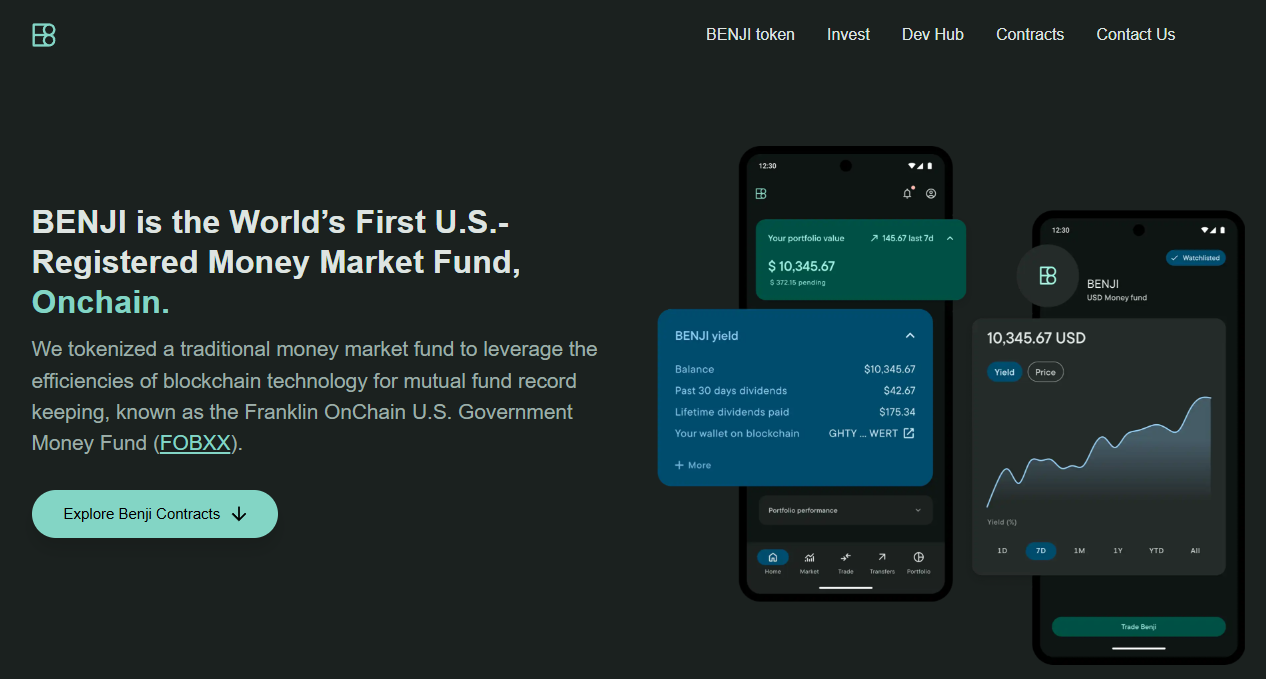
 Franklin Templeton's $775 million Franklin OnChain U.S. Government Money Fund (BENJI) pioneered tokenized mutual funds in 2021, offering exposure to US government securities across eight blockchains with patent-pending intraday yield calculation.

Ideal For

  • Investors seeking regulated 40 Act fund structure
  • Collateral managers requiring second-by-second yield accrual
  • Multi-chain strategies needing broad blockchain compatibility
  • Users prioritizing traditional asset manager credibility

Standout Features

  • Intraday yield tracking down to the second, enabling proportional earnings even for partial-day holdings
  • Direct stablecoin purchases and redemptions with wallet-to-wallet transfer capability
  • 63% of AUM deployed on Stellar Network for optimal cost efficiency
  • Integrated with DeFi protocols for collateral and leverage applications

Pricing
 7-day current yield approximately 4.5-5.5% gross; 0.25% management fee. No minimum investment restrictions beyond standard mutual fund requirements.

Availability
 Global availability with specific KYC requirements. Active on Stellar, Ethereum, Arbitrum, Base, Avalanche, Polygon, Aptos, Solana, BNB Chain.

Worth Noting
 Traditional mutual fund constraints apply including daily NAV calculations and potential redemption delays during market stress.

Alternatives to Consider: Backed bIB01, Superstate Short Duration Government Securities  

For Institutional Credit Exposure (8-12% Yield)

Top Pick: Maple Finance — Premier Crypto-Collateralized Lending

Overview
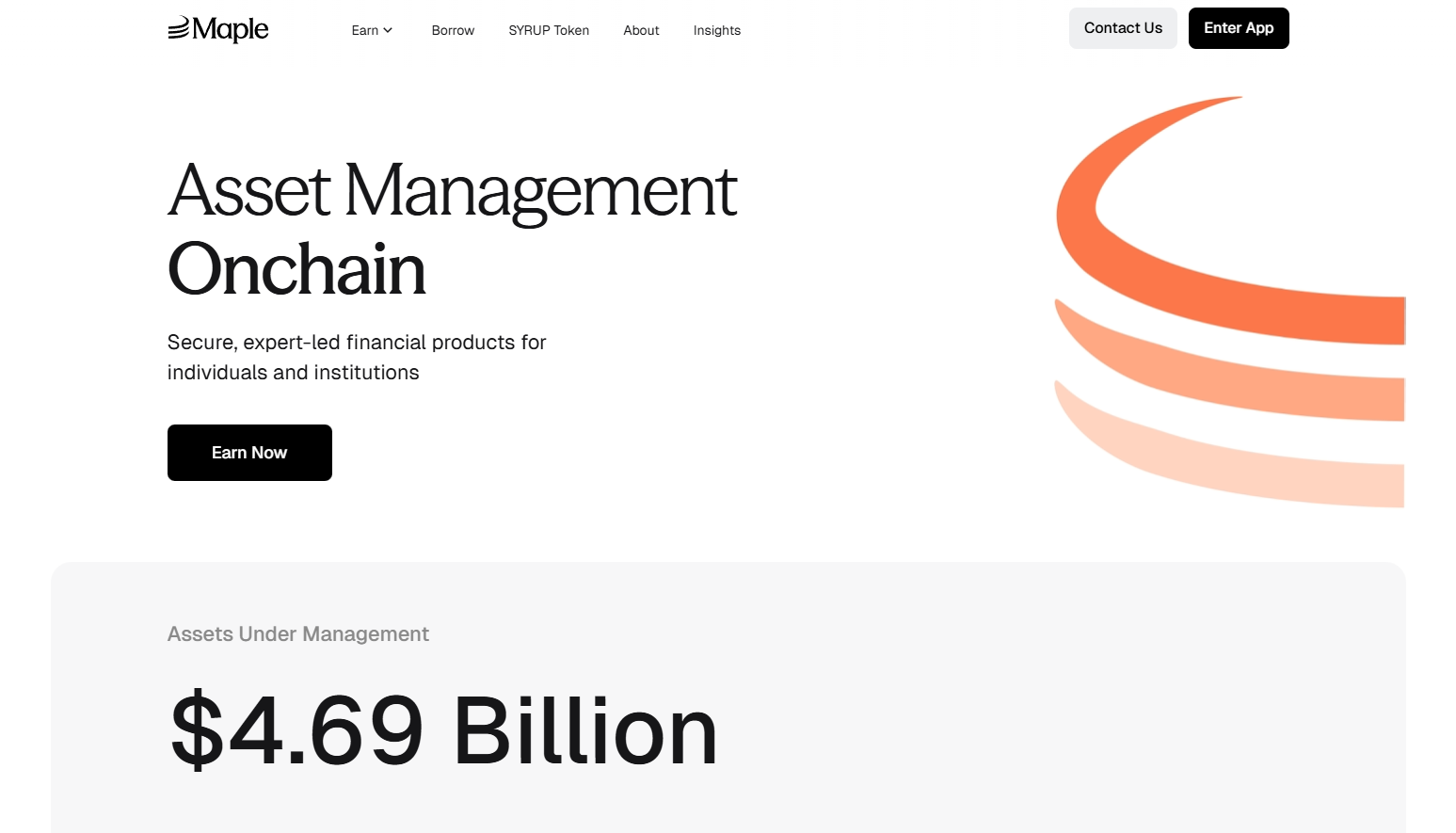
 Maple Finance manages over $4 billion in assets, specializing in institutional over-collateralized lending backed by Bitcoin, Ethereum, Solana, and XRP, targeting $100 billion in annual loan volume by 2030. The platform introduced SyrupUSDC for permissionless retail access alongside KYC-gated institutional pools.

Ideal For

  • Institutional lenders seeking exposure to cryptocurrency-backed credit
  • Liquidity providers comfortable with smart contract risk
  • Allocators targeting floating-rate, senior-secured structures
  • Investors seeking alternatives to traditional stablecoin farming

Standout Features

  • Consistent 9-12% net yields through undercollateralized institutional facilities and structured credit products
  • Strategic integration with Aave's $40 billion protocol bringing syrupUSDT to Plasma instance and syrupUSDC to core markets
  • Partnerships with Bitwise, Lido Finance (stETH-backed credit lines), and EtherFi (weETH collateral) expanding institutional adoption
  • Robust risk management combining decades of TradFi expertise with real-time on-chain monitoring

Pricing
 Variable by pool; typical effective yields 9-12% after protocol fees. Minimum investments pool-dependent, generally $10K-$50K for retail syrup products.

Availability
 Global with KYC requirements for lending. Institutional Maple requires accreditation; Syrup.fi open to broader participants.

Worth Noting
 Platform transitioned from uncollateralized to over-collateralized model after 2022 market turmoil. Historical defaults impacted certain pools; robust recovery mechanisms now in place.

Alternatives to Consider: Credix (emerging markets), TrueFi (uncollateralized DeFi)  

Runner-Up: Goldfinch Prime — Institutional Private Credit Access

Overview
 Goldfinch Prime aggregates exposure to multi-billion dollar private credit funds from Ares, Apollo, Golub Capital, and KKR, providing on-chain access to institutional-grade senior secured loans with over $1 trillion in collective AUM.

Ideal For

  • Non-US investors seeking diversified private credit exposure
  • Allocators targeting institutional fund performance without direct fund access
  • Participants seeking uncorrelated yield to crypto markets
  • Investors comfortable with longer lockup periods

Standout Features

  • Exposure to 1000+ senior secured loans across industries through vetted fund managers with 10+ years experience
  • Target returns of 9-12% net of fees with strict eligibility criteria including >90% senior secured portfolios and <0.75% target non-accrual rates
  • Heron Finance manages fund selection and vetting while fund managers handle all underwriting and default resolution
  • USDC-based deposits converted to proportional GPRIME tokens for continuous offering structure

Pricing
 Net yields 9-12% after embedded management fees and profit sharing. Minimum investments vary by pool structure; typically institutional minimums apply.

Availability
 Non-US persons only due to regulatory structure. KYC and accreditation verification required.

Worth Noting
 Exposure is indirect through fund shares rather than direct loan origination; fund managers absorb individual borrower default risk into aggregate yields. Liquidity limited compared to Treasury products.

Alternatives to Consider: Centrifuge private credit pools, Credix fintech lending


For Real Estate & Diversified Assets (6-10% Yield)

Top Pick: Centrifuge — Multi-Asset Tokenization Infrastructure

Overview
 Centrifuge operates as a multichain infrastructure platform enabling asset managers to tokenize real estate, trade finance, carbon credits, and structured credit with $1.2 billion TVL and recent 10x growth driven by the first on-chain CLO and tokenized S&P 500 index fund.

Ideal For

  • Investors seeking exposure to asset-backed securities beyond treasuries
  • Allocators comfortable evaluating tranched credit structures
  • Participants prioritizing transparency and on-chain asset verification
  • Portfolio managers wanting diversification across real-world credit types

Standout Features

  • Asset-agnostic architecture supporting structured credit, real estate mortgages, US treasuries, carbon credits, and consumer finance with full collateralization and legal recourse for investors
  • V3 platform enables cross-chain interoperability across Ethereum, Base, Arbitrum, Avalanche, BNB Chain, and Plume with integrated KYC and compliance-as-a-feature
  • Senior/junior tranche structures allowing risk-return customization
  • Partnership with Chronicle Labs for real-time price feeds and integration with Circle for USDC on/off-ramping

Pricing
 Yields vary by pool and tranche: typically 6-8% for senior tranches, 10-14% for junior tranches. Management fees embedded; pool-specific minimums apply.

Availability
 Global with KYC requirements. Pools may have additional jurisdictional restrictions based on underlying asset location.

Worth Noting
 Platform complexity requires understanding of tranched structures and asset-specific risks. Less liquid credit instruments offer less frequent pricing updates than treasury products.

Alternatives to Consider: RealT (US residential real estate focus), Republic (equity crowdfunding)


For Emerging Market Credit (12-18% Yield)

Top Pick: Credix — Latin American Fintech Lending

Overview
 Credix specializes in providing credit facilities to fintech lenders in Latin America, offering high-yield exposure to underserved credit markets with institutional-grade underwriting and local market expertise.

Ideal For

  • Sophisticated investors seeking higher risk-adjusted returns
  • Allocators comfortable with emerging market credit risk
  • Participants with extended investment horizons (12-24 months typical)
  • Investors seeking geographic diversification from US/EU markets

Standout Features

  • Target yields 12-18% reflecting emerging market risk premiums
  • Focus on fintech infrastructure enabling financial inclusion
  • Partnerships with established Latin American credit originators
  • Robust due diligence and monitoring of borrower networks

Pricing
 Pool-dependent yields typically 12-18% gross with management fees of 1-2%. Minimum investments generally $50K+ for accredited investors.

Availability
 Non-US persons primarily; requires accreditation verification and enhanced KYC given emerging market exposure.

Worth Noting
 Higher yields reflect higher credit and currency risk. Platform experienced challenges during regional economic volatility; enhanced risk controls now implemented.

Alternatives to Consider: Goldfinch V1 pools (emerging market focus), TrueFi uncollateralized pools


For Tokenization Infrastructure (Platform Providers)

Top Pick: Securitize — Industry-Leading Issuance Platform

Overview
 Securitize has tokenized over $4.5 billion in assets for 1.2 million investors across 3,000+ clients, operating as an SEC-registered transfer agent with integrated ATS for secondary trading. The platform powers major offerings including BlackRock's BUIDL fund.

Ideal For

  • Asset managers seeking turnkey tokenization solutions
  • Issuers requiring SEC-compliant digital security infrastructure
  • Institutional clients needing integrated custody and compliance
  • Projects prioritizing regulatory alignment and brand credibility

Standout Features

  • DS Protocol automates token issuance, transfer agent functions, and regulated secondary trading with $47 million funding led by BlackRock
  • Recent launch of STAC tokenized AAA CLO fund with BNY custody demonstrating institutional adoption trajectory
  • Comprehensive investor onboarding, KYC/AML, and reporting infrastructure
  • Partnerships with major asset managers and integration with Zero Hash for fiat conversion

Pricing
 Platform fees vary by issuance size and complexity; typically 0.5-2% of AUM plus basis point fees on transactions. White-label solutions available for enterprise clients.

Availability
 Global operations with jurisdiction-specific compliance modules. Primary focus on US, EU, and APAC institutional markets.

Worth Noting
 Securitize is an issuance platform rather than direct investment product; investors access opportunities through partner funds and offerings launched on the infrastructure.

Alternatives to Consider: Tokeny (EU-focused), Polymath/Polymesh (security token specialists)


Complete Provider Directory

  • Backed Finance: European MiCA-compliant tokenization platform offering bIB01 (Swiss government bond exposure) and bC3M (commodity basket). Strong focus on regulatory alignment with modest 3-5% yields and low entry barriers.
  • Swarm Markets: Decentralized platform enabling fractional ownership of real estate and private credit with $1K-$50K minimums. Emphasizes accessibility while maintaining compliance through distributed infrastructure.
  • TrueFi: Uncollateralized lending protocol using on-chain credit scoring and portfolio diversification. Higher risk-return profile (8-15% targets) with full transparency of borrower pools and performance metrics.
  • Archax: UK FCA-regulated platform for institutional tokenization of bonds, funds, and money markets. Focus on traditional finance compatibility with stringent accreditation requirements.

Making Your Selection: Key Questions

  • What yield stability do you require?
     Treasury-backed platforms (Ondo, Franklin Templeton) offer predictable 4-5% returns with minimal volatility. Credit-focused platforms (Maple, Goldfinch) target 9-12% but introduce credit risk and performance variability.
  • What is your risk tolerance for underlying collateral?
     Government securities provide lowest risk; over-collateralized crypto loans add smart contract and liquidation risks; uncollateralized emerging market credit carries highest default potential.
  • Do you meet accreditation and minimum investment thresholds?
     Many institutional products require $50K-$200K minimums and qualified purchaser status. Retail-accessible options like USDY and syrupUSDC lower barriers but may sacrifice yield.
  • What liquidity do you need?
     Treasury tokens generally offer daily liquidity; private credit pools may have quarterly redemption windows; real estate tokenization can involve 12-24 month lockups.
  • How important is regulatory compliance?
     Platforms like Ondo, Franklin Templeton, and Securitize prioritize SEC registration and traditional fund structures. Purely DeFi-native protocols offer less regulatory clarity but greater composability.
  • What blockchain ecosystems do you operate in?
     Multi-chain deployment (Ondo, Centrifuge) provides flexibility; single-chain specialization (some Maple pools) may offer optimization but limits interoperability.
  • Do you have geographic restrictions?
     US persons often excluded from highest-yield opportunities due to securities laws. European investors benefit from MiCA framework; APAC sees growing regulatory clarity.
  • What level of transparency do you require?
     On-chain native protocols offer real-time asset verification; hybrid models may rely on periodic attestations and third-party audits.
  • Are you seeking passive income or active yield strategies?
     Treasury staking provides set-and-forget returns; DeFi integrations enable leverage, collateral strategies, and yield optimization requiring active management.
  • How much operational complexity can you handle?
     Single-platform solutions simplify but limit optionality; multi-protocol strategies maximize returns but require gas management, tax tracking, and security across multiple platforms.

Maximizing Your Setup with Token Metrics

Token Metrics provides critical intelligence for navigating RWA yield opportunities through data-driven analysis and market insights.

Research Phase: Leverage Token Metrics' fundamental analysis to evaluate tokenized asset protocols, comparing on-chain metrics, TVL trends, and yield sustainability indicators. Our RWA sector reports identify emerging platforms and highlight regulatory developments across jurisdictions.

Portfolio Construction: Use quantitative scoring to allocate across risk tiers—balancing stable treasury exposure with higher-yield credit products. Token Metrics' portfolio tools help optimize diversification while monitoring correlation to traditional crypto markets.

Ongoing Monitoring: Real-time alerts notify you of yield changes, protocol upgrades, and risk events. Our dashboard aggregates performance across multiple RWA platforms, tracking your yield-bearing positions alongside broader cryptocurrency holdings.

Risk Management: Token Metrics' risk analytics assess smart contract security, custody arrangements, and counterparty exposure. Our reports flag platforms with concerning yield sustainability metrics or operational red flags before they impact your capital.

Start your Token Metrics free trial to access institutional-grade RWA research and optimize your real-world asset allocation.  

Essential Security Practices

  • Custody Verification: Confirm that platforms use institutional-grade custodians (Coinbase Custody, BitGo, Fireblocks) for underlying assets. Verify proof-of-reserve attestations and third-party audits.
  • Smart Contract Risk: Review audit reports from reputable firms (Trail of Bits, OpenZeppelin, Certora). Understand upgrade mechanisms and timelock protections on protocol contracts.
  • Legal Structure Assessment: Examine SPV formation, bankruptcy remoteness, and investor recourse mechanisms. Ensure tokenization structure provides actual legal claim on underlying assets, not just economic exposure.
  • Regulatory Compliance: Verify platforms maintain necessary licenses (broker-dealer, transfer agent, ATS) in relevant jurisdictions. Confirm offerings comply with securities laws in your domicile.
  • Counterparty Risk: Understand who services loans, manages defaults, and handles liquidations. Evaluate track records of asset originators and credit underwriters.
  • Liquidity Risk Management: Never allocate more than you can afford to lock up for stated redemption periods. Maintain buffer capital for market volatility and potential redemption delays.
  • Tax Implications: Consult tax professionals on treatment of tokenized yield—may be classified as interest income, dividends, or capital gains depending on structure and jurisdiction.
  • Geographic Restrictions: Verify you're eligible to participate based on residency. Using VPNs or misrepresenting location can result in frozen funds and legal liability.
  • Platform Concentration: Diversify across multiple RWA providers to reduce single-point-of-failure risk. No single platform should represent majority of yield allocation.
  • Documentation: Maintain records of all transactions, yield distributions, and platform communications for tax reporting and potential disputes.

This article is for research and educational purposes, not financial advice. RWA investments carry risks including loss of principal.


What to Avoid

  • Ignoring minimum holding periods: Many RWA products enforce lockups or redemption windows. Treating them as liquid positions can leave you unable to access capital when needed.
  • Chasing unsustainably high yields: Promised returns significantly above market rates often indicate excessive risk. Verify underlying asset performance and historical consistency before committing capital.
  • Overlooking platform liquidity: Token existence on-chain doesn't guarantee exit liquidity. Check secondary market depth and historical spread between minting and redemption prices.
  • Neglecting jurisdictional compliance: Accessing platforms not available in your region can result in frozen accounts and regulatory penalties. Always verify eligibility before depositing funds.
  • Underestimating smart contract risk: Even well-audited protocols face exploitation risk. Size positions appropriately and monitor security incident disclosures across the ecosystem.
  • Failing to verify asset backing: Don't rely on marketing claims. Demand proof-of-reserve, third-party attestations, and transparent reporting on underlying collateral.
  • Concentrating in single asset class: Over-allocating to one RWA category (e.g., all private credit) eliminates diversification benefits. Balance across treasuries, credit, and real estate where possible.
  • Ignoring fee structures: Management fees, performance fees, and transaction costs compound over time. Calculate net yields after all costs when comparing platforms.

Reader Questions Answered

What's the difference between tokenized treasuries and yield-bearing stablecoins?

 Tokenized treasuries (like OUSG) represent direct ownership of US Treasury securities with yield passed through to holders. Yield-bearing stablecoins (like USDY) maintain $1 peg while distributing treasury yields via rebasing or airdrops. Treasuries may fluctuate slightly with NAV; yield stablecoins prioritize price stability.

Are RWA yields taxable differently than crypto staking rewards?

 Likely yes, though tax treatment varies by jurisdiction. RWA yields from treasuries or credit facilities often classified as interest income taxed at ordinary rates. Crypto staking may be treated as income at receipt or capital gains at sale depending on location. Consult tax professionals for specific guidance.

Can I use tokenized RWAs as collateral in DeFi protocols?

 Increasingly yes. Platforms like Maple, Ondo (via Flux Finance), and Centrifuge enable using tokenized assets as DeFi collateral. However, support varies by protocol and asset—USDY and OUSG see broader integration than niche real estate tokens. Liquidation risks apply if collateral value drops.

What happens if the platform goes bankrupt?

 Properly structured tokenization isolates assets in bankruptcy-remote SPVs, protecting investor claims even if platform operator fails. However, redemption processes may be delayed and require legal navigation. This is why verifying legal structure and custodial arrangements is critical.

How liquid are RWA tokens compared to stablecoins?

 Significantly less liquid. While stablecoins have billions in daily DEX volume, most RWA tokens trade thinly or only through platform-controlled redemption mechanisms. Treasury tokens offer better liquidity than private credit or real estate, but all lag traditional stablecoins substantially.

Do I need to be an accredited investor?

 Depends on the platform and your location. US-based offerings often require accreditation; international platforms may have lower barriers. Products like USDY, syrupUSDC, and BENJI target broader accessibility, while institutional credit pools restrict to qualified purchasers.

What are the main risks that could cause loss of principal?

 (1) Underlying asset default (credit risk), (2) smart contract exploitation, (3) platform insolvency without proper asset segregation, (4) regulatory action freezing operations, (5) stablecoin de-pegging for yield products denominated in USDC/USDT, (6) liquidation cascades in collateralized structures.

How do yields compare to traditional finance alternatives?

 Tokenized treasuries (4-5%) match conventional money market funds but with 24/7 access. Private credit RWAs (9-12%) offer premiums over corporate bonds due to illiquidity and platform novelty. Emerging market RWA yields (12-18%) comparable to EM debt funds with added smart contract risk.


Bottom Line

Real-world asset yield marketplaces represent the maturation of blockchain infrastructure beyond speculation into productive finance. For investors seeking stable, asset-backed returns uncorrelated to cryptocurrency volatility, platforms like Ondo Finance and Franklin Templeton deliver institutional-grade treasury exposure with DeFi composability. Those comfortable with credit risk can access superior yields through Maple Finance's collateralized institutional lending or Goldfinch Prime's diversified private credit exposure.

The key to success: match platform selection to your specific risk tolerance, liquidity needs, and regulatory constraints. Treasury products suit conservative allocators prioritizing capital preservation; credit platforms reward investors accepting higher risk for enhanced returns; multi-asset infrastructure like Centrifuge offers diversification across real-world credit types.

Start with smaller allocations to understand platform mechanics, redemption processes, and yield consistency before committing substantial capital. The RWA sector's rapid growth will continue creating opportunities, but also attracting lower-quality offerings—due diligence remains paramount.

Related Resources:


About This Research

Methodology: This guide evaluated 20+ RWA platforms through analysis of official documentation, on-chain data, regulatory filings, and third-party audits. Platforms selected represent meaningful TVL (>$100M), regulatory compliance, and operational track record. Final selection prioritized diversity across asset classes and investor accessibility tiers.

Research Sources:

  • Ondo Finance: Product documentation, tokenomics, OUSG/USDY specifications, Oasis Pro acquisition disclosure
  • Maple Finance: Platform whitepaper, syrupUSDC mechanics, Aave integration announcement, CEO interviews
  • Centrifuge: V3 technical documentation, pool analytics, Republic partnership details
  • Goldfinch: Prime pool specifications, fund manager criteria, Heron Finance structure
  • Franklin Templeton: BENJI platform technical details, intraday yield patent documentation, multi-chain deployment
  • Securitize: DS Protocol documentation, STAC fund launch details, BlackRock partnership announcements
  • RWA.xyz: Platform TVL data, tokenization metrics, market growth analysis
  • DeFiLlama: Protocol TVL tracking, historical performance data
  • BCG/Ripple: RWA market projections and industry research
  • VanEck, Coinbase, Binance: Sector research reports on RWA growth trajectories

All data current as of January 2025. Platform features and yields subject to change; verify current terms on official websites before investing.

Build Smarter Crypto Apps &
AI Agents in Minutes, Not Months
Real-time prices, trading signals, and on-chain insights all from one powerful API.
Grab a Free API Key
About Token Metrics
Token Metrics: AI-powered crypto research and ratings platform. We help investors make smarter decisions with unbiased Token Metrics Ratings, on-chain analytics, and editor-curated “Top 10” guides. Our platform distills thousands of data points into clear scores, trends, and alerts you can act on.
30 Employees
analysts, data scientists, and crypto engineers
Daily Briefings
concise market insights and “Top Picks”
Transparent & Compliant
Sponsored ≠ Ratings; research remains independent
Want Smarter Crypto Picks—Free?
See unbiased Token Metrics Ratings for BTC, ETH, and top alts.
Thank you! Your submission has been received!
Oops! Something went wrong while submitting the form.
 No credit card | 1-click unsubscribe
Token Metrics Team
Token Metrics Team

Recent Posts

Research

Top Regulatory Compliance/KYC/AML Providers (2025)

Sam Monac
5 min

Why crypto compliance, KYC/AML & blockchain analytics vendors Matters in September 2025

If you operate an exchange, wallet, OTC desk, or DeFi on-ramp, choosing the right KYC/AML providers can be the difference between smooth growth and painful remediation. In 2025, regulators continue to tighten enforcement (Travel Rule, sanctions screening, transaction monitoring), while criminals get more sophisticated across bridges, mixers, and multi-chain hops. This guide shortlists ten credible vendors that help crypto businesses verify users, monitor wallets and transactions, and comply with global rules.
Definition (snippet): KYC/AML providers are companies that deliver identity verification, sanctions/PEP screening, blockchain analytics, transaction monitoring, and Travel Rule tooling so crypto businesses can meet regulatory obligations and reduce financial crime risk.

SECONDARY_KEYWORDS woven below: crypto compliance, blockchain analytics, transaction monitoring, Travel Rule.

How We Picked (Methodology & Scoring)

  • What we scored (weights): Market adoption & scale (liquidity 30 as a proxy for coverage & volume handled), security posture 25 (audits, data protection, regulatory alignment), coverage 15 (chains, assets, jurisdictions), costs 15 (pricing transparency, efficiency), UX 10 (API, case mgmt., automation), support 5 (docs, SLAs).

  • Data sources: Only official product pages, security/trust centers, and documentation; widely cited market datasets used only to cross-check asset/chain coverage. “Last updated September 2025.” Chainalysis+2TRM Labs+2

Top 10 crypto compliance, KYC/AML & blockchain analytics vendors in September 2025

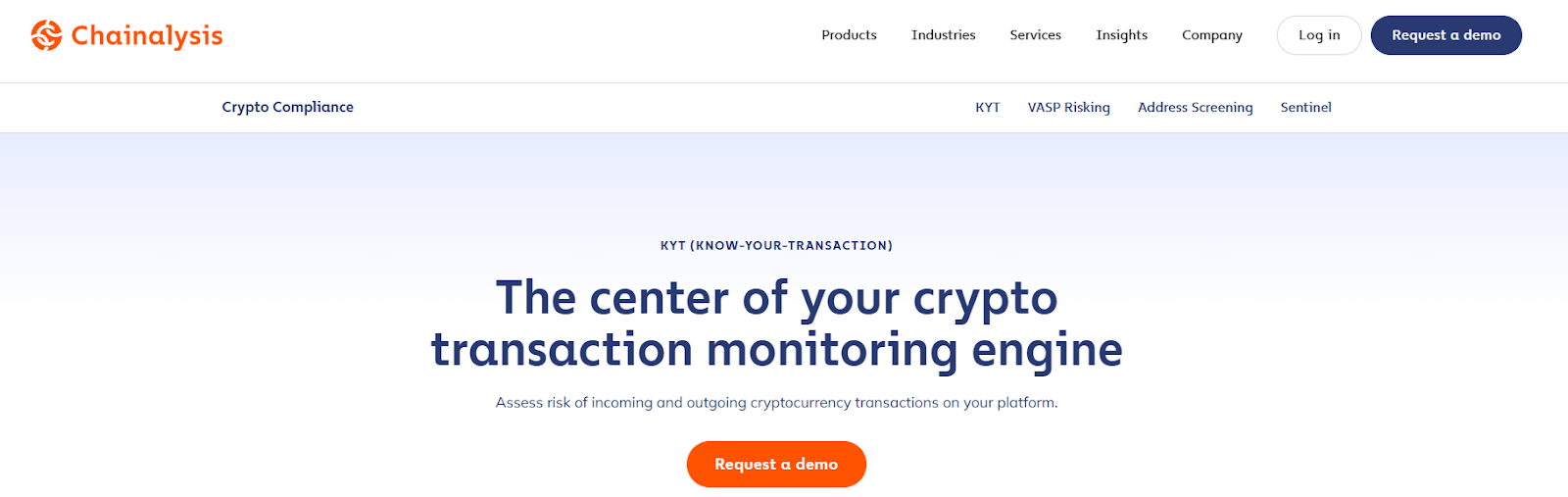
1. Chainalysis — Best for cross-chain transaction risk & investigations

Why Use It: Chainalysis KYT and Reactor pair broad chain/token coverage with real-time risk scoring and deep investigative tooling. If you need automated alerts on deposits/withdrawals and the ability to trace through bridges/mixers/DEXs, it’s a proven, regulator-recognized stack.
Best For: Centralized exchanges, custodians, banks with crypto exposure, law enforcement teams.
Notable Features: Real-time KYT alerts • Cross-chain tracing • Case management & APIs • Attribution datasets.
Consider If: You want an enterprise-grade standard and investigator workflows under one roof.
Alternatives: TRM Labs, Elliptic. Chainalysis+1
Regions: Global • Fees/Notes: Quote-based, volume/seat tiers.

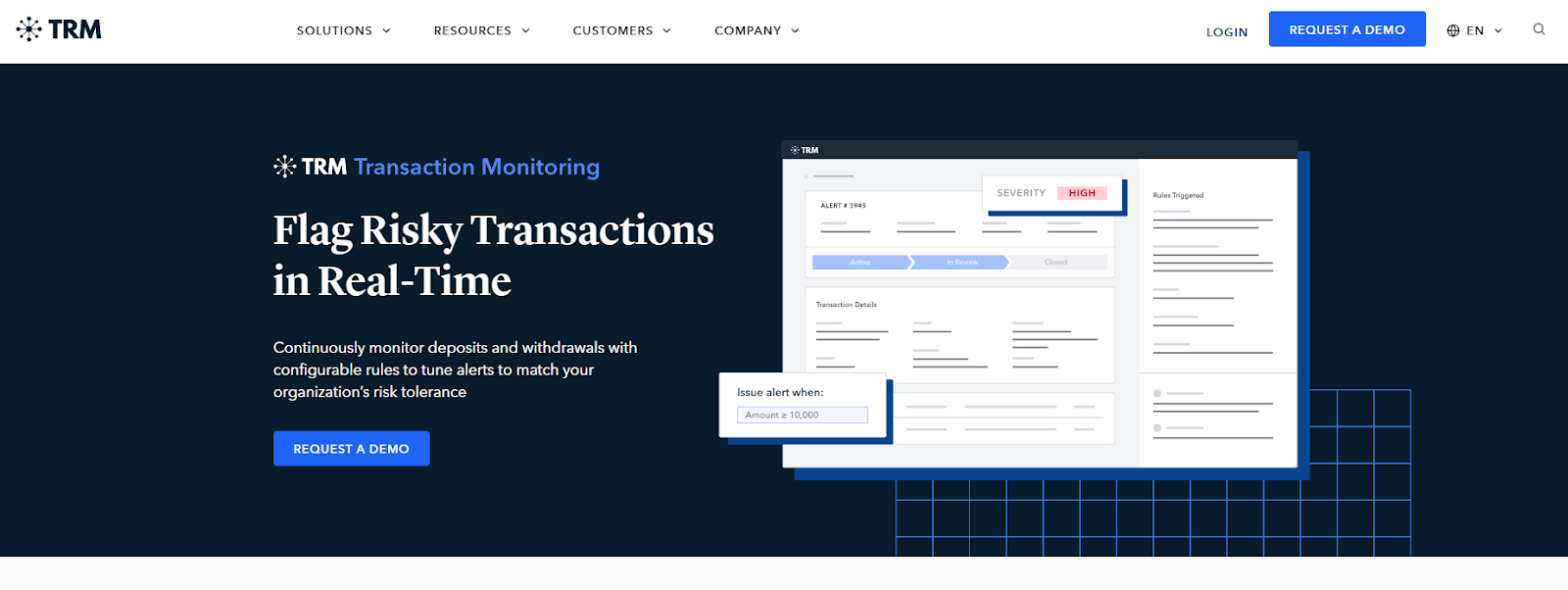
2. TRM Labs — Best for fast-moving threat intel & sanctions coverage

Why Use It: TRM’s transaction monitoring taps a large, fast-growing database of illicit activity and extends screening beyond official lists to include threat actor footprints on-chain. Strong coverage and practical APIs make it easy to plug into existing case systems.
Best For: Exchanges, payment processors, fintechs expanding into web3, risk teams that need flexible rules.
Notable Features: Real-time monitoring • Sanctions & threat actor intelligence • Case mgmt. integrations • Multi-chain coverage.
Consider If: You prioritize dynamic risk models and frequent list updates.
Alternatives: Chainalysis, Elliptic. TRM Labs+1
Regions: Global • Fees/Notes: Enterprise contracts; volume-based.

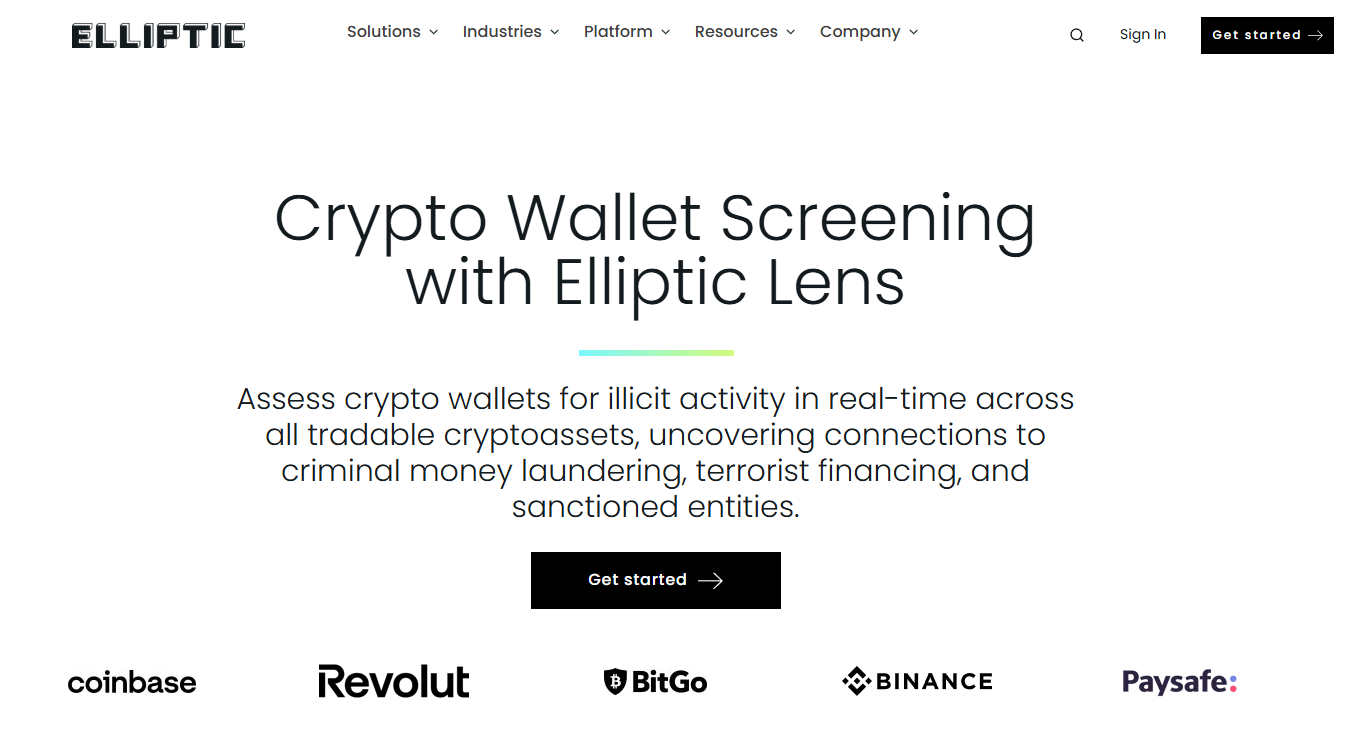
3. Elliptic — Best for scalable wallet screening at exchange scale

Why Use It: Elliptic’s Lens and Screening solutions streamline wallet/transaction checks with chain-agnostic coverage and audit-ready workflows. It’s built for high-volume screening with clean APIs and strong reporting for regulators and internal audit.
Best For: CEXs, payment companies, institutional custody, risk ops needing bulk screening.
Notable Features: Wallet & TX screening • Cross-chain risk detection • Audit trails • Customer analytics.
Consider If: You need mature address screening and large-scale throughput.
Alternatives: Chainalysis, TRM Labs. Elliptic+1
Regions: Global • Fees/Notes: Quote-based; discounts by volume.

4. ComplyAdvantage — Best for sanctions/PEP/adverse media screening in crypto

Why Use It: An AML data powerhouse for KYC and ongoing monitoring that many crypto companies use to meet screening obligations and reduce false positives. Strong watchlist coverage, adverse media, and continuous monitoring help you satisfy banking partners and auditors.
Best For: Exchanges and fintechs that want robust sanctions/PEP data plus transaction monitoring.
Notable Features: Real-time sanctions & watchlists • Ongoing monitoring • Payment screening • Graph analysis.
Consider If: You want a single vendor for screening + monitoring alongside your analytics stack.
Alternatives: Jumio (Screening), Sumsub. ComplyAdvantage+1
Regions: Global • Fees/Notes: Tiered enterprise pricing.

5. Sumsub — Best all-in-one KYC/KYB + crypto monitoring

Why Use It: Crypto-focused onboarding with liveness, documents, KYB, Travel Rule support, and transaction monitoring—plus in-house legal experts to interpret changing rules. Good for teams that need to orchestrate identity checks and AML controls in one flow.
Best For: Global exchanges, NFT/DeFi ramps, high-growth startups entering new markets.
Notable Features: KYC/KYB • Watchlists/PEPs • Device intelligence • Crypto TX monitoring • Case management.
Consider If: You want one vendor for identity + AML + Travel Rule workflow.
Alternatives: Jumio, ComplyAdvantage. Sumsub+1
Regions: Global • Fees/Notes: Per-verification & volume tiers.

6. Jumio — Best for enterprise-grade identity + AML screening

Why Use It: Jumio combines biometric KYC with automated AML screening (PEPs/sanctions) and ongoing monitoring. Its “KYX” approach provides identity insights across the customer lifecycle, helping reduce fraud while keeping onboarding friction reasonable.
Best For: Regulated exchanges, banks, brokerages with strict KYC/AML controls.
Notable Features: Biometric verification • PEPs/sanctions screening • Ongoing monitoring • Single-API platform.
Consider If: You need global coverage and battle-tested uptime/SLA.
Alternatives: Sumsub, Onfido (not listed). Jumio+1
Regions: Global • Fees/Notes: Custom enterprise pricing.

7. Notabene — Best end-to-end Travel Rule platform

Why Use It: Notabene focuses on pre-transaction decisioning, counterparty VASP due diligence, and sanctions screening across multiple Travel Rule protocols. It’s purpose-built for crypto compliance teams facing enforcement of FATF Recommendation 16.
Best For: Exchanges, custodians, and B2B payment platforms needing Travel Rule at scale.
Notable Features: Pre-TX checks • Counterparty VASP verification • Multi-protocol messaging • Jurisdictional rules engine.
Consider If: Your regulators or banking partners expect full Travel Rule compliance today.
Alternatives: Shyft Veriscope, 21 Analytics. Notabene+1
Regions: Global • Fees/Notes: Annual + usage components.

8. Shyft Network Veriscope — Best decentralized, interoperable Travel Rule messaging

Why Use It: Veriscope provides decentralized VASP discovery, secure VASP-to-VASP PII exchange, and “sunrise issue” lookback to help during uneven global rollouts. Pay-as-you-go pricing can be attractive for newer programs.
Best For: Global VASPs that want decentralized discovery and interoperability.
Notable Features: Auto VASP discovery • Secure PII transfer (no central PII storage) • Lookback support • Interoperability.
Consider If: You prefer decentralized architecture and usage-based pricing.
Alternatives: Notabene, 21 Analytics. shyft.network+1
Regions: Global • Fees/Notes: Pay-as-you-go; no setup fees. shyft.network

9. Merkle Science — Best for predictive blockchain risk analytics

Why Use It: Merkle Science’s platform emphasizes predictive risk modeling and DeFi/smart contract forensics, helping compliance teams see beyond static address tags. Good complement when you monitor emerging chains and token types.
Best For: Exchanges and protocols active in DeFi, new L1/L2 ecosystems, or smart-contract risk.
Notable Features: Predictive risk scores • DeFi & contract forensics • Case tooling • API integrations.
Consider If: You need analytics tuned for newer protocols and token standards.
Alternatives: Chainalysis, TRM Labs. merklescience.com+1
Regions: Global • Fees/Notes: Quote-based enterprise pricing.

10. Scorechain — Best EU-born analytics with audit-ready reporting

Why Use It: Based in Luxembourg, Scorechain offers risk scoring, transaction monitoring, and reporting designed to fit EU frameworks—useful for MiCA/TFR-aligned programs. Teams like the straightforward reporting exports for audits and regulators.
Best For: EU-focused exchanges, neobanks, and tokenization platforms.
Notable Features: Risk scoring • Transaction monitoring • Audit-ready reports • Tools for Travel Rule workflows.
Consider If: Your footprint is primarily EU and you want EU-centric vendor DNA.
Alternatives: Crystal (EU), Elliptic. Scorechain+1
Regions: EU/Global • Fees/Notes: Enterprise licenses; fixed and usage options.

Decision Guide: Best By Use Case

  • Regulated U.S. exchange: Chainalysis, TRM Labs

  • Global wallet screening at scale: Elliptic

  • Enterprise KYC + AML screening combo: Jumio, Sumsub

  • Travel Rule (end-to-end ops): Notabene

  • Travel Rule (decentralized, pay-as-you-go): Shyft Veriscope

  • DeFi/smart-contract forensics: Merkle Science

  • EU-centric programs / audit exports: Scorechain

  • Sanctions/PEP data depth: ComplyAdvantage

How to Choose the Right crypto compliance, KYC/AML & blockchain analytics vendors (Checklist)

  • Jurisdiction & licensing: Confirm the vendor supports your countries and regulator expectations (e.g., FATF R.16 Travel Rule).

  • Coverage: Chains/tokens you touch today and plan to touch in 12–18 months.

  • Identity depth: Liveness, device checks, KYB for entities, ongoing monitoring.

  • Analytics & monitoring: Risk models, false-positive rate, sanctions coverage cadence.

  • APIs & workflow: Case management, alert triage, audit trails, BI exports.

  • Costs: Pricing model (per-verification, per-alert, or pay-as-you-go).

  • Security: Data handling, PII minimization, breach history, regional data residency.

  • Red flags: “Black box” risk scores without documentation; no audit logs.

Use Token Metrics With Any crypto compliance, KYC/AML & blockchain analytics vendors

  • AI Ratings: Screen assets and spot structural risks before you list.
  • Narrative Detection: Track shifts that correlate with on-chain risk trends.

  • Portfolio Optimization: Balance exposure as assets pass compliance checks.

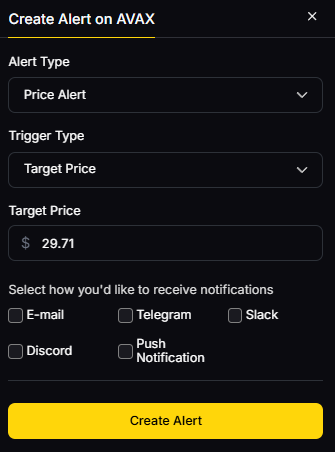
  • Alerts & Signals: Monitor entries/exits once assets are approved.
    Workflow: Research vendors → Select/implement → List/enable assets → Monitor with Token Metrics alerts.

 Primary CTA: Start a free trial of Token Metrics.

Security & Compliance Tips

  • Enforce 2FA and role-based access for compliance consoles.

  • Separate PII from blockchain telemetry; minimize retention.

  • Implement Travel Rule pre-transaction checks where required. FATF

  • Test sanctions list update cadences and backfill behavior.

  • Document SAR/STR processes and case handoffs.

This article is for research/education, not financial advice.

Beginner Mistakes to Avoid

  • Picking a vendor with great KYC but no Travel Rule path.

  • Ignoring chain/token roadmaps—coverage gaps appear later.

  • Under-investing in case management/audit trails.

  • Relying solely on address tags without behavior analytics.

  • Not budgeting for ongoing monitoring (alerts grow with volume).

FAQs

What’s the difference between KYC and KYT (Know Your Transaction)?
KYC verifies an individual or entity at onboarding and during refresh cycles. KYT/transaction monitoring analyzes wallets and transfers in real time (or post-event) to identify suspicious activity, sanctions exposure, and patterns of illicit finance. TRM Labs

Do I need a Travel Rule solution if I only serve retail in one country?
Possibly. Many jurisdictions apply the Travel Rule above certain thresholds and when sending to other VASPs, even domestically. If you interoperate with global exchanges or custodians, you’ll likely need it. Notabene

How do vendors differ on sanctions coverage?
Screening providers update against official lists and, in some cases, extend coverage using intelligence on known threat actors’ wallets. Look for rapid refresh cycles and retroactive screening. TRM Labs

Can I mix-and-match KYC and blockchain analytics vendors?
Yes. Many teams use a KYC/AML screening vendor plus a blockchain analytics platform; some suites offer both, but best-of-breed mixes are common.

What’s a good starting stack for a new exchange?
A KYC/KYB vendor (Jumio or Sumsub), a sanctions/PEP screening engine (ComplyAdvantage or your KYC vendor’s module), a blockchain analytics platform (Chainalysis/TRM/Elliptic), and a Travel Rule tool (Notabene or Veriscope).

Conclusion + Related Reads

Compliance isn’t one tool; it’s a stack. If you’re U.S.-regulated and high-volume, start with Chainalysis or TRM plus Jumio or Sumsub. If you’re EU-led, Scorechain can simplify audits. For Travel Rule, choose Notabene (end-to-end) or Veriscope (decentralized/pay-as-you-go). Pair your chosen stack with Token Metrics to research, monitor, and act with confidence.

Related Reads:

  • Best Cryptocurrency Exchanges 2025

  • Top Derivatives Platforms 2025

  • Top Institutional Custody Providers 2025

Sources & Update Notes

We independently reviewed official product pages, docs, and security/trust materials for each provider (no third-party links in body). Shortlist refreshed September 2025; we’ll revisit as regulations, features, and availability change.

Scorechain — Product pages & glossary resources. Scorechain+1

Research

Best Crypto Law Firms (2025) - Top 10 Crypto Law Firms

Sam Monac
5 min

Why law firms for crypto, blockchain & digital assets matter in September 2025

If you touch tokens, stablecoins, exchanges, DeFi, custody, or tokenized RWAs, your choice of counsel can make or break the roadmap. This guide ranks the best crypto law firms for 2025, with a practical look at who they’re best for, where they operate, and what to consider on fees, scope, and risk. In one line: a crypto law firm is a multidisciplinary legal team that advises on digital asset regulation, transactions, investigations, and disputes.

Macro backdrop: the U.S. regulatory stance is shifting (e.g., an SEC crypto task force and fresh policy signals), while the EU’s MiCA, UK rules, and APAC regimes continue to evolve—raising the stakes for compliant go-to-market and ops.

How We Picked (Methodology & Scoring)

  • Scale (mapped from “liquidity,” 30%): depth of bench across regulatory, corporate, enforcement, litigation, restructuring.

  • Security posture (25%): track record in compliance, investigations, audits, risk, and controls.

  • Coverage (15%): multi-jurisdictional reach (US/EU/APAC), ability to coordinate cross-border matters.

  • Costs (15%): transparency on scoping; ability to structure work efficiently for stage and size.

  • UX (10%): clarity, speed, practical guidance for founders and institutions.

  • Support (5%): responsiveness; client tools (trackers, hubs, resource centers).

Data sources: official firm practice pages, security/regulatory hubs, and disclosures; third-party market datasets used only as cross-checks. Last updated: September 2025.

Top 10 law firms for crypto, blockchain & digital assets in September 2025

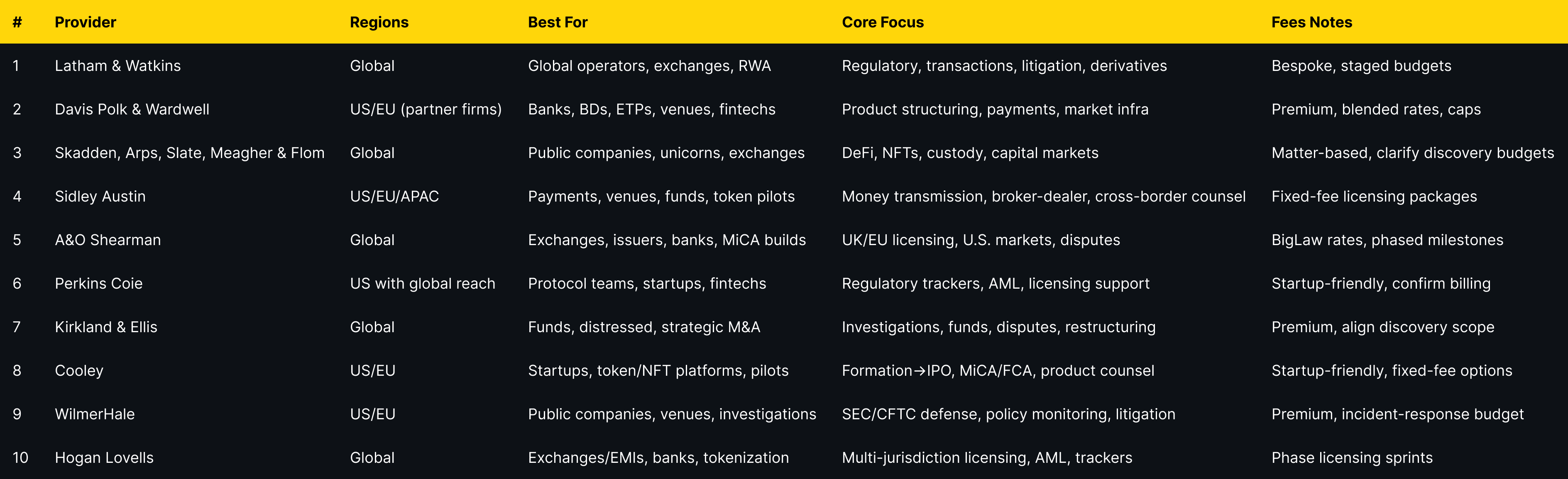
1. Latham & Watkins — Best for full-stack, cross-border matters

  • Why Use It: Latham’s Digital Assets & Web3 team spans regulatory, transactions, and litigation, with dedicated coverage of exchanges, infrastructure providers, miners, DAOs, and tokenization. Deep financial regulatory and tech bench supports complex, global plays.
  • Best For: Global operators; exchanges/market infrastructure; tokenization/RWA; enterprise Web3.
  • Notable Features: Global financial regulatory team; DAO/NFT/DeFi expertise; structured products/derivatives; privacy/cybersecurity support.
  • Consider If: Premium BigLaw pricing; scope thoroughly.
  • Regions: Global
  • Fees Notes: Bespoke; request scoping and staged budgets.
  • Alternatives: Skadden, A&O Shearman

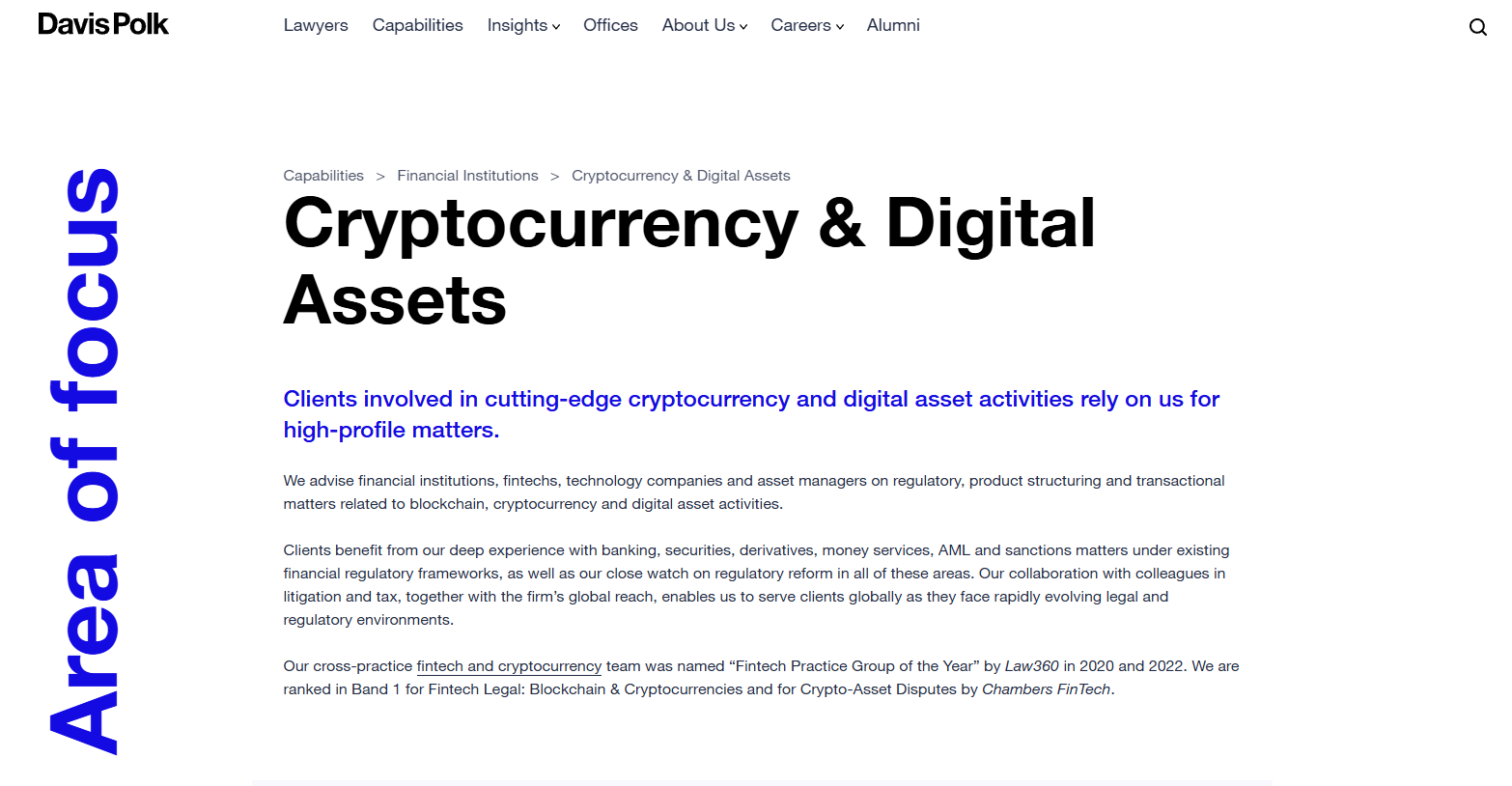
2. Davis Polk & Wardwell — Best for U.S. regulatory strategy & market structure

  • Why Use It: Longstanding financial institutions focus with crypto trading, custody, and product structuring experience; maintains a public Crypto Regulation Hub and frequent client updates. Strong SEC/CFTC/ETP literacy.
  • Best For: Banks/broker-dealers; asset managers/ETPs; trading venues; fintechs.
  • Notable Features: Product structuring; payments & market infra; bank/BD/ATS issues; policy tracking.
  • Consider If: Focus is primarily U.S.; engage local counsel for APAC.
  • Regions: US/EU (with partner firms)
  • Fees Notes: Premium; ask about blended rates and caps for regulatory sprints.
  • Alternatives: Sidley, WilmerHale

3. Skadden, Arps, Slate, Meagher & Flom LLP — Best for complex deals, enforcement & high-stakes disputes

  • Why Use It: Broad digital assets group spanning DeFi, L2s, NFTs, stablecoins, DAOs, and custody—plus capital markets and investigations. Recent materials highlight breadth across technology transactions, privacy, and regulatory.
  • Best For: Public companies; unicorns; exchanges; token/NFT platforms.
  • Notable Features: SEC/NYDFS engagement; funds formation; tax and privacy guidance; M&A/capital markets.
  • Consider If: Suited to complex or contentious matters; pricing reflects that.
  • Regions: Global
  • Fees Notes: Matter-based staffing; clarify discovery/enforcement budgets early.
  • Alternatives: Latham, Quinn Emanuel

4. Sidley Austin LLP — Best for licensing, payments & U.S.–EU regulatory strategy

  • Why Use It: Multidisciplinary fintech/blockchain team with strong money transmission, securities, broker-dealer, and global regulatory capabilities; publishes timely bulletins on fast-moving U.S. policy.
  • Best For: Payments/MTLs; trading venues; funds/advisers; tokenization pilots.
  • Notable Features: Fund formation; AML program design; cross-border counsel (SEC, CFTC, FINRA; UK/HK/EU)
  • Consider If: Heavier on financial-services lens; ensure web3 product counsel is in scope.
  • Regions: US/EU/APAC
  • Fees Notes: Ask about fixed-fee licensing packages.
  • Alternatives: Davis Polk, Hogan Lovells

5. A&O Shearman — Best for multi-jurisdictional matters across US/UK/EU

  • Why Use It: The merged transatlantic firm offers a deep digital assets bench spanning banking, markets, disputes, and restructuring, with active insights on fintech and crypto.
  • Best For: Global exchanges and issuers; banks/EMIs; cross-border investigations; MiCA + U.S. buildouts.
  • Notable Features: UK/EU licensing; U.S. markets issues; contentious & non-contentious coverage under one roof.
  • Consider If: Validate local counsel for non-core APAC jurisdictions.
  • Regions: Global
  • Fees Notes: Expect BigLaw rates; request phased milestones.
  • Alternatives: Latham, Hogan Lovells

6. Perkins Coie LLP — Best for builders & early-stage web3

  • Why Use It: One of the earliest major-firm blockchain groups; counsels across projects, fintech/payments, and enforcement, and maintains public regulatory trackers and timelines.
  • Best For: Protocol teams; startups; marketplaces; payments/fintechs.
  • Notable Features: SEC/CFTC timelines; global regulatory trackers; AML/sanctions and licensing support.
  • Consider If: For late-stage, compare bench size on multi-jurisdiction disputes.
  • Regions: US with global reach
  • Fees Notes: Often startup-friendly scoping; confirm billing model.
  • Alternatives: Cooley, Wilson Sonsini

7. Kirkland & Ellis LLP — Best for funds, M&A and restructuring overlays

  • Why Use It: Market-leading platform for investment funds, M&A, investigations, and restructurings—useful when crypto intersects with bankruptcy, PE, or complex transactions. Global footprint with expanding broker-dealer and exchange experience.
  • Best For: Funds/asset managers; distressed situations; strategic M&A; enterprise pivots.
  • Notable Features: Government/regulatory investigations; investment funds; global disputes and restructuring.
  • Consider If: No single “crypto hub” page—confirm dedicated team for token issues up front.
  • Regions: Global
  • Fees Notes: Complex matters = premium; align on discovery scope.
  • Alternatives: Skadden, Quinn Emanuel

8. Cooley LLP — Best for venture-backed startups & token launches

  • Why Use It: Tech-first firm with robust startup and capital markets DNA; advises on MiCA/FCA regimes in Europe and U.S. compliance for tokenization.
  • Best For: Seed-to-growth startups; token/NFT platforms; enterprise pilots.
  • Notable Features: Company formation to IPO; MiCA/FCA guidance; policy insights; product counseling.
  • Consider If: For heavy U.S. enforcement, compare with litigation-heavy peers.
  • Regions: US/EU
  • Fees Notes: Startup-friendly playbooks; discuss fixed-fee packages.
  • Alternatives: Perkins Coie, Wilson Sonsini

9. WilmerHale — Best for investigations, enforcement & policy engagement

  • Why Use It: Deep securities, futures, and derivatives roots; active “Crypto Currently” news center and webinars reflect policy fluency and regulator-facing experience.
  • Best For: Public companies; trading venues; market infra; sensitive investigations.
  • Notable Features: SEC/CFTC enforcement defense; policy monitoring; litigation and appellate support.
  • Consider If: Suited to complex/contested matters; ensure day-to-day ops support is included.
  • Regions: US/EU
  • Fees Notes: Premium; align on incident response budget.
  • Alternatives: Davis Polk, Sidley

10. Hogan Lovells — Best for global licensing, sanctions & public policy

  • Why Use It: Global digital assets team with dedicated Digital Assets & Blockchain Hub, frequent payments/PSD3/MiCA insights, and public policy depth—useful for cross-border licensing and government engagement.
  • Best For: Global exchanges/EMIs; banks; tokenization programs; policy-heavy strategies.
  • Notable Features: Multi-jurisdiction licensing; sanctions/AML; disputes and arbitration; regulatory trackers.
  • Consider If: BigLaw pricing; clarify deliverables for fast-moving launches.
  • Regions: Global
  • Fees Notes: Ask about phased licensing workstreams.
  • Alternatives: A&O Shearman, Sidley

Decision Guide: Best By Use Case

  • Regulated U.S. market structure (venues, ETPs): Davis Polk, WilmerHale
  • Global, enterprise-grade multi-workstream: Latham, A&O Shearman
  • Complex deals, investigations & disputes: Skadden, Kirkland
  • Payments & money transmission licensing: Sidley, Hogan Lovells
  • Startup & token launch playbooks: Perkins Coie, Cooley
  • Litigation-first backup (if contested): Skadden; consider Quinn Emanuel as an alternative (not listed in Top 10)

How to Choose the Right Law Firm (Checklist)

  • Jurisdictions you operate in (US/EU/APAC) and regulators you’ll face.
  • Scope: corporate, regulatory, enforcement, litigation, restructuring—do they cover your stack?
  • Security & compliance posture: AML/sanctions, custody rules, broker-dealer/adviser obligations.
  • Fees: insist on scoping, budgets, and milestones; ask about blended rates or fixed-fee modules.
  • Team: named partners + day-to-day associates; response times and communication norms.
  • Tooling: client hubs/trackers and policy updates.
  • Red flags: vague scope, no cross-border coordination, or “we’ve never done X in Y jurisdiction.”

Use Token Metrics With Any Law Firm

  • AI Ratings to screen counterparties and venue risk.
  • Narrative Detection to spot flows and policy-driven momentum.

  • Portfolio Optimization to balance risk around regulatory events.

  • Alerts/Signals to time entries/exits when legal catalysts hit.
    Workflow: Research → Select → Execute with your firm → Monitor with alerts.

Start free trial

Security & Compliance Tips

  • Enforce strong 2FA and role-based access on exchange/broker accounts counsel touches.

  • Set custody architecture and segregation early (on/off-exchange, MPC/HSM, signers).

  • Complete KYC/AML and travel rule readiness; map licensure (e.g., MTL, MiCA).

  • Use written RFQs/SOWs; document advice paths for auditability.

  • Maintain wallet hygiene: least-privilege, whitelists, and incident playbooks.

This article is for research/education, not financial advice.

Beginner Mistakes to Avoid

  • Hiring “general corporate” counsel for a regulatory problem.

  • Under-scoping licensing (e.g., money transmission, broker-dealer, MiCA).

  • Treating enforcement as PR—engage litigation/ex-government experience early.

  • Launching tokens without jurisdictional analysis and disclosures.

  • No budget guardrails: failing to phase work or set milestones.

FAQs

What does a crypto law firm actually do?
They advise on token and product structuring, licensing (e.g., money transmission, MiCA), securities/commodities issues, AML/sanctions, and handle investigations, litigation, deals, and restructurings. Many also publish policy trackers and hubs to keep clients current.

How much do top crypto law firms cost?
Rates vary by market and complexity. Expect premium pricing for multi-jurisdictional or contested matters. Ask for detailed scopes, blended rates, and fixed-fee modules for licensing or audits.

Do I need a U.S. firm if I’m launching in the EU under MiCA?
Often yes—especially if you have U.S. users, listings, or investors. Use an EU lead for MiCA, coordinated with U.S. counsel for extraterritorial touchpoints and future expansion.

Which firms are strongest for enforcement risk?
WilmerHale, Davis Polk, Skadden, and Sidley bring deep SEC/CFTC literacy and investigations experience; assess fit by recent publications and team bios.

Can these firms help with tokenization and RWAs?
Yes. Look for demonstrated work on structured products/derivatives, custody, and financial-market infrastructure, plus privacy/cyber overlays.

Conclusion + Related Reads

For U.S. market structure or sensitive investigations, Davis Polk and WilmerHale are hard to beat. For global, multi-workstream matters, start with Latham or A&O Shearman. Builders and venture-backed teams often pair Perkins Coie or Cooley with a litigation-ready option like Skadden. Whatever you choose, scope tightly, budget in phases, and align counsel with your roadmap.
‍

Research

Best Crypto Index Providers & Benchmark Services (2025)

Sam Monac
5 min

Why Crypto Index Providers & Benchmark Services Matter in September 2025

Crypto index providers give institutions and advanced investors rules-based, auditable ways to measure the digital asset market. In one sentence: a crypto index provider designs and administers regulated benchmarks—like price indices or market baskets—that funds, ETPs, quants, and risk teams can track or license. As liquidity deepens and regulation advances, high-integrity benchmarks reduce noise, standardize reporting, and enable products from passive ETPs to factor strategies.

If you’re comparing crypto index providers for portfolio measurement, product launches, or compliance reporting, this guide ranks the best options now—what they do, who they fit, and what to consider across security posture, coverage, costs, and support.

How We Picked (Methodology & Scoring)

  • Liquidity (30%) – Does the provider screen venues/liquidity robustly and publish transparent inclusion rules?
  • Security & Governance (25%) – Benchmark authorization/registration, governance committees, calculation resilience, and public methodologies/audits.
  • Coverage (15%) – Breadth across single-asset, multi-asset, sectors/factors, and region eligibility.
  • Costs (15%) – Licensing clarity, data access models, and total cost to operate products.
  • UX (10%) – Docs, factsheets, ground rules, rebalancing cadence, client tooling.
  • Support (5%) – Responsiveness, custom index build capacity, enterprise integration.

We relied on official product pages, methodologies, and security/governance disclosures; third-party datasets (e.g., venue quality screens) were used only as cross-checks. Last updated September 2025.

Top 10 Crypto Index Providers & Benchmark Services in September 2025

1) CF Benchmarks — Best for regulated settlement benchmarks

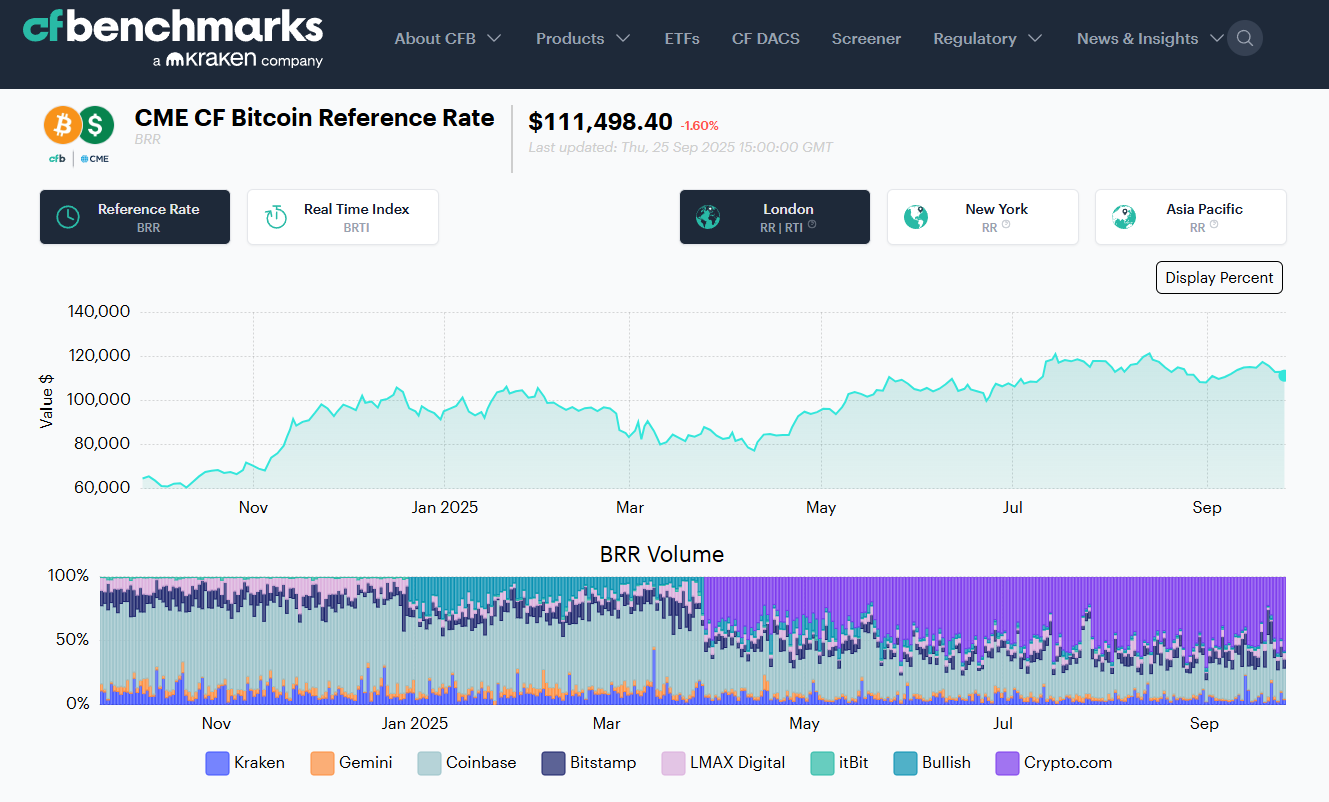
Why Use It: Administrator of the CME CF Bitcoin Reference Rate (BRR) and related benchmarks used to settle major futures and institutional products; UK BMR-registered with transparent exchange criteria and daily calculation since 2016. If you need benchmark-grade spot references (BTC, ETH and more) with deep derivatives alignment, start here. CF Benchmarks+1
Best For: Futures settlement references; fund NAV/pricing; risk; audit/compliance.
Notable Features: BRR/BRRNY reference rates; multi-exchange liquidity screens; methodology & governance docs; broad suite of real-time indices.
Consider If: You need composite market baskets beyond single-assets—pair with a multi-asset provider.
Alternatives: S&P Dow Jones Indices; FTSE Russell.
Regions: Global • Fees/Notes: Licensed benchmarks; enterprise pricing.

2) S&P Dow Jones Indices — Best for broad, institution-first crypto baskets

Why Use It: The S&P Cryptocurrency series (incl. Broad Digital Market) brings index craft, governance, and transparency familiar to traditional asset allocators—ideal for boards and committees that already use S&P. S&P Global+1
Best For: Asset managers launching passive products; OCIOs; consultants.
Notable Features: Broad/large-cap/mega-cap indices; single-asset BTC/ETH; published ground rules; established brand trust.
Consider If: You need highly customizable factors or staking-aware baskets—other vendors may move faster here.
Alternatives: MSCI; MarketVector.
Regions: Global • Fees/Notes: Licensing via S&P DJI.

3) MSCI Digital Assets — Best for thematic & institutional risk frameworks

Why Use It: MSCI’s Global Digital Assets and Smart Contract indices apply MSCI’s taxonomy/governance with themed exposures and clear methodologies—useful when aligning with enterprise risk standards.
Best For: CIOs needing policy-friendly thematics; due-diligence heavy institutions.
Notable Features: Top-30 market index; smart-contract subset; methodology docs; global brand assurance.
Consider If: You need exchange-by-exchange venue vetting or settlement rates—pair with CF Benchmarks or FTSE Russell.
Alternatives: S&P DJI; FTSE Russell.
Regions: Global • Fees/Notes: Enterprise licensing.

4) FTSE Russell Digital Asset Indices — Best for liquidity-screened, DAR-vetted universes

Why Use It: Built in association with Digital Asset Research (DAR), FTSE Russell screens assets and venues to EU Benchmark-ready standards; strong fit for risk-controlled coverage from large to micro-cap and single-asset series.
Best For: Product issuers who need venue vetting & governance; EU-aligned programs.
Notable Features: FTSE Global Digital Asset series; single-asset BTC/ETH; ground rules; DAR reference pricing.
Consider If: You require highly custom factor tilts—MarketVector or Vinter may be quicker to bespoke.
Alternatives: Wilshire; S&P DJI.
Regions: Global (EU-friendly) • Fees/Notes: Licensed benchmarks.

5) Nasdaq Crypto Index (NCI) — Best for flagship, dynamic market representation

Why Use It: NCI is designed to be dynamic, representative, and trackable; widely recognized and replicated by ETPs seeking diversified core exposure—useful as a single “beta” benchmark.
Best For: Core market ETPs; CIO benchmarks; sleeve construction.
Notable Features: Rules-driven eligibility; regular reconstitutions; strong market recognition.
Consider If: You want deep sector/thematic granularity—pair with MSCI/MarketVector.
Alternatives: Bloomberg Galaxy (BGCI); MarketVector MVDA.
Regions: Global • Fees/Notes: Licensing via Nasdaq.

6) MarketVector Indexes — Best for broad coverage & custom builds

Why Use It: Backed by VanEck’s index arm (formerly MVIS), MarketVector offers off-the-shelf MVDA 100 plus sectors, staking-aware, and bespoke solutions—popular with issuers needing speed to market and depth.
Best For: ETP issuers; quants; asset managers needing customization.
Notable Features: MVDA (100-asset) benchmark; single/multi-asset indices; staking/factor options; robust docs.
Consider If: You prioritize blue-chip simplicity—BGCI/NCI might suffice.
Alternatives: Vinter; S&P DJI.
Regions: Global • Fees/Notes: Enterprise licensing; custom index services.

7) Bloomberg Galaxy Crypto Index (BGCI) — Best for blue-chip, liquid market beta

Why Use It: Co-developed by Bloomberg and Galaxy, BGCI targets the largest, most liquid cryptoassets, with concentration caps and monthly reviews—an institutional “core” that’s widely cited on terminals. Best For: CIO benchmarks; performance reporting; media-friendly references.
Notable Features: Capped weights; qualified exchange criteria; Bloomberg governance.
Consider If: You need smaller-cap breadth—MVDA/NCI may cover more names.
Alternatives: NCI; S&P DJI.
Regions: Global • Fees/Notes: License via Bloomberg Index Services.

8) CoinDesk Indices — Best for reference pricing (XBX) & tradable composites (CoinDesk 20)

Why Use It: Administrator of XBX (Bitcoin Price Index) and the CoinDesk 20, with transparent liquidity weighting and growing exchange integrations—including use in listed products. Best For: Reference rates; product benchmarks; quant research.
Notable Features: XBX reference rate; CoinDesk 20; governance/methodologies; exchange selection rules.
Consider If: You require UK BMR-registered BTC settlement—CF Benchmarks BRR is purpose-built.
Alternatives: CF Benchmarks; S&P DJI.
Regions: Global • Fees/Notes: Licensing available; contact sales.

9) Vinter — Best for specialist, regulated crypto index construction

Why Use It: A regulated, crypto-native index provider focused on building/maintaining indices tracked by ETPs across Europe; fast on custom thematics and single-asset reference rates. Best For: European ETP issuers; bespoke strategies; rapid prototyping.
Notable Features: BMR-style reference rates; multi-asset baskets; calc-agent services; public factsheets.
Consider If: You need mega-brand recognition for U.S. committees—pair with S&P/MSCI.
Alternatives: MarketVector; Solactive.
Regions: Global (strong EU footprint) • Fees/Notes: Custom build/licensing.

10) Wilshire (FT Wilshire Digital Asset Index Series) — Best for institutional coverage & governance

Why Use It: The FT Wilshire series aims to be an institutional market standard with transparent rules, broad coverage, and exchange quality screens—supported by detailed methodology documents. Best For: Consultants/OCIOs; plan sponsors; research teams.
Notable Features: Broad Market index; governance via advisory groups; venue vetting; classification scheme.
Consider If: You need media-ubiquitous branding—S&P/Bloomberg carry more name recall.
Alternatives: FTSE Russell; S&P DJI.
Regions: Global • Fees/Notes: Enterprise licensing.

Decision Guide: Best By Use Case

  • Regulated settlement benchmarks: CF Benchmarks.
  • Core market beta (simple, liquid): BGCI or NCI.
  • Broad institution-grade baskets: S&P DJI or FTSE Russell.
  • Thematic exposure (e.g., smart contracts): MSCI Digital Assets.
  • Deep coverage & customization: MarketVector or Vinter.
  • Reference price + tradable composites: CoinDesk Indices (XBX / CoinDesk 20).
  • EU-aligned venue vetting: FTSE Russell (with DAR).

How to Choose the Right Crypto Index Provider (Checklist)

  • Region & eligibility: Confirm benchmark status (e.g., UK/EU BMR) and licensing.
  • Coverage fit: Single-asset, broad market, sectors/factors, staking yield handling.
  • Liquidity screens: How are exchanges qualified and weighted?
  • Rebalance/refresh: Frequency and buffers to limit turnover/slippage.
  • Data quality & ops: Timestamps, outage handling, fallbacks, NAV timing.
  • Costs: Licensing, data access, custom build fees.
  • Support: SLAs, client engineering, custom index services.
  • Red flags: Opaque methodologies; limited venue vetting.

Use Token Metrics With Any Index Provider

  • AI Ratings to screen constituents and spot outliers.
  • Narrative Detection to see when sectors (e.g., L2s, DePIN) start trending.

  • Portfolio Optimization to balance broad index beta with targeted alpha sleeves.

  • Alerts & Signals to monitor entries/exits as indices rebalance.
    Mini-workflow: Research → Select index/benchmark → Execute via your provider or ETP → Monitor with Token Metrics alerts.

‍

Start free trial.

Security & Compliance Tips

  • Enable 2FA and role-based access for index data portals.
  • Map custody and pricing cut-offs to index valuation times.
  • Align with KYC/AML when launching index-linked products.
  • For RFQ/OTC hedging around rebalances, pre-plan execution windows.
  • Staking/bridged assets: verify methodology treatment and risks.

This article is for research/education, not financial advice.

Beginner Mistakes to Avoid

  • Assuming all “broad market” indices hold the same assets/weights.
  • Ignoring venue eligibility—liquidity and data quality vary.
  • Overlooking reconstitution buffers (can drive turnover and cost).
  • Mixing reference rates and investable baskets in reporting.
  • Not confirming licensing scope for marketing vs. product use.

FAQs

What is a crypto index provider?
A company that designs, calculates, and governs rules-based benchmarks for digital assets—ranging from single-asset reference rates to diversified market baskets—licensed for reporting or products.

Which crypto index is best for “core beta”?
For simple, liquid market exposure, many institutions look to BGCI or NCI due to broad recognition and liquidity screens; your use case and region may point to S&P/FTSE alternatives.

How do providers choose exchanges and assets?
They publish ground rules defining eligible venues (liquidity, compliance), asset screening, capping, and rebalances—see S&P, FTSE (with DAR), and CF Benchmarks for examples.

Can I license a custom crypto index?
Yes—MarketVector and Vinter (among others) frequently build bespoke indices and act as calculation agents for issuers.

What’s the difference between a reference rate and a market basket?
Reference rates (e.g., BRR, XBX) target a single asset’s robust price; market baskets (e.g., NCI, BGCI) represent diversified multi-asset exposure.

Are these benchmarks available in the U.S. and EU?
Most are global; for EU/UK benchmark usage, verify authorization/registration (e.g., CF Benchmarks UK BMR) and your product’s country-specific rules.

Conclusion + Related Reads

If you need regulated reference pricing for settlement or NAVs, start with CF Benchmarks. For core market beta, BGCI and NCI are widely recognized. For institution-grade breadth, consider S&P DJI or FTSE Russell (with DAR). If you’re launching custom or thematic products, MarketVector and Vinter are strong build partners.

Choose from Platinum, Gold, and Silver packages
Reach with 25–30% open rates and 0.5–1% CTR
Craft your own custom ad—from banners to tailored copy
Perfect for Crypto Exchanges, SaaS Tools, DeFi, and AI Products