Back to blog
Research

Best Yield Marketplaces for Real-World Assets (RWAs) in 2025

Explore the top real-world asset (RWA) yield marketplaces for 2025, including reviews, key criteria, risks, and practical strategies for safe, sustainable returns.
Token Metrics Team
29 min read
Want Smarter Crypto Picks—Free?
See unbiased Token Metrics Ratings for BTC, ETH, and top alts.
Thank you! Your submission has been received!
Oops! Something went wrong while submitting the form.
 No credit card | 1-click unsubscribe
  • What this guide covers: A comprehensive evaluation of 10 leading platforms that enable tokenized real-world asset trading and yield generation across private credit, treasuries, real estate, and structured finance
  • Quick verdict: Ondo Finance for institutional-grade treasury exposure at ~5% APY, Maple Finance for crypto-collateralized credit facilities delivering 9-12% net yields, Goldfinch Prime for diversified access to private credit funds from Apollo and Ares
  • One key limitation to know: Many RWA platforms enforce strict accreditation requirements (minimum $50K-200K) and geographic restrictions, particularly excluding US investors from certain products due to securities regulations

Why Yield Marketplaces for RWAs Matter in January 2025

The real-world asset tokenization market has experienced explosive growth, surging from $85 million in April 2020 to over $25 billion by mid-2025—representing a staggering 245-fold increase driven primarily by institutional demand for yield, transparency, and regulatory clarity. Private credit dominates at approximately 61% of total tokenized assets, followed by treasuries at 30%, with major asset managers like BlackRock, Apollo, and Franklin Templeton now actively tokenizing institutional-grade products.

The convergence of traditional finance and decentralized infrastructure has created unprecedented opportunities for investors seeking stable, real-world yields without exposure to cryptocurrency volatility. The tokenized RWA market is projected to reach between $9.43 trillion and $18.9 trillion by 2030, with regulatory frameworks in Singapore, Hong Kong, and Dubai providing clear pathways for compliant innovation.

For crypto-native investors, RWA yield marketplaces offer a critical bridge to sustainable income streams backed by productive assets rather than purely speculative token emissions. Traditional allocators gain 24/7 access to fractional ownership, instant settlement, and programmable compliance—advantages impossible in legacy financial infrastructure.


How We Evaluated These Providers

We assessed platforms across six weighted criteria totaling 100 points:

  • Yield Quality & Sustainability (30%): Consistency of returns, asset backing, historical performance, and correlation to traditional markets
  • Security & Risk Management (25%): Custody solutions, audit history, legal recourse, collateralization ratios, and default handling protocols
  • Asset Coverage & Diversity (15%): Range of underlying assets, tranching options, and exposure across credit curves
  • Accessibility & Costs (15%): Minimum investments, fee structures, geographic availability, and KYC requirements
  • Liquidity & Redemption (10%): Secondary market depth, withdrawal timelines, and tokenization standards
  • Infrastructure & Compliance (5%): Regulatory licenses, blockchain integrations, and institutional partnerships

Data sources: Official platform documentation, on-chain analytics from RWA.xyz and DeFiLlama, third-party audits, and regulatory filings. Research conducted October 2024-January 2025.

Verification approach: Every fee structure, yield figure, and regional restriction cited was verified on official platform pages or regulatory disclosures. Unverifiable claims were excluded.


The Contenders: Quick Comparison  

Provider Reviews by Use Case

For Treasury-Backed Stability (4-5% Yield)

Top Pick: Ondo Finance — Institutional Treasury Tokenization Pioneer

Overview
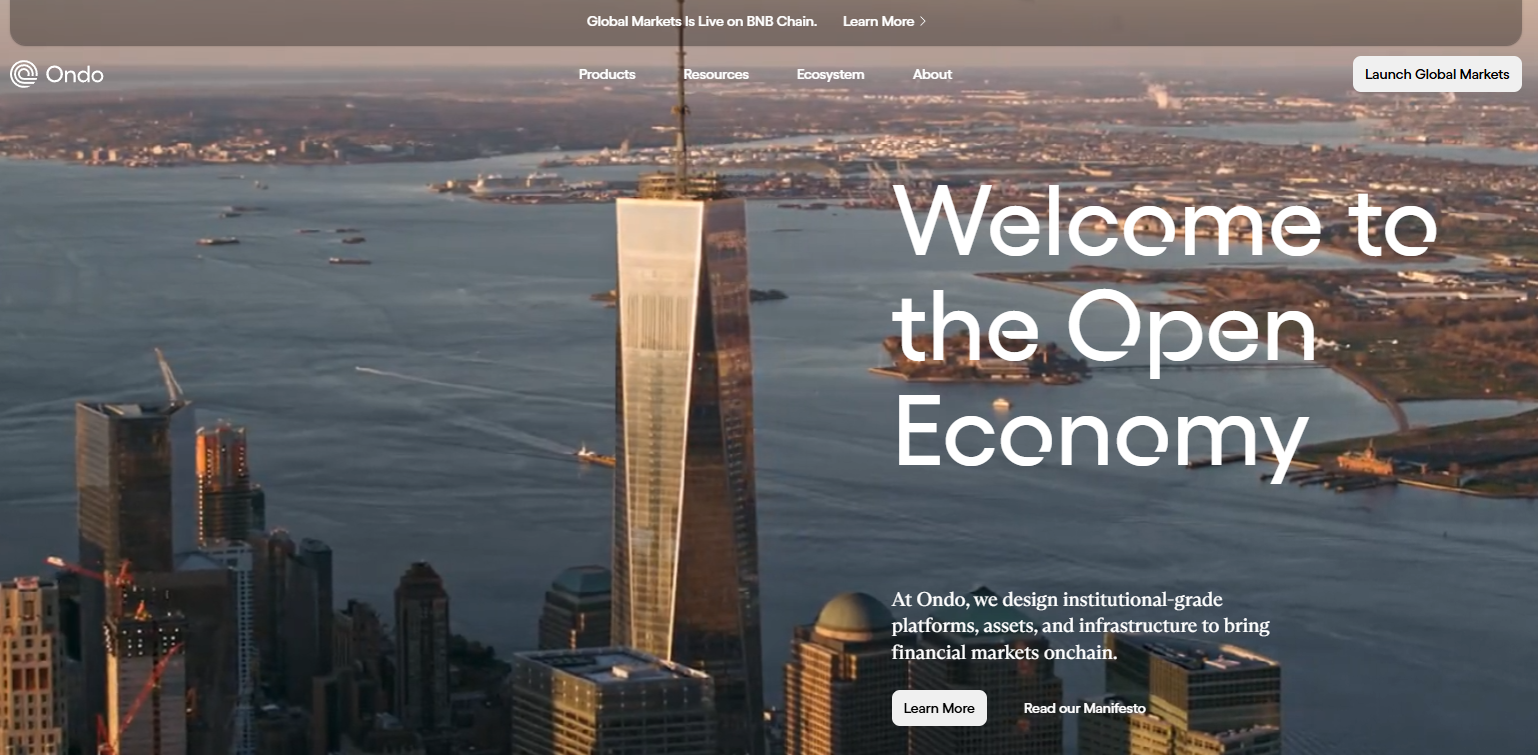
 Ondo Finance manages over $1.6 billion in tokenized assets, offering institutional-grade access to US Treasury exposure through OUSG (backed by BlackRock's BUIDL fund) and USDY (a yield-bearing stablecoin). The platform bridges TradFi stability with DeFi composability through multi-chain deployment across Ethereum, Solana, Base, and XRP Ledger.

Ideal For

  • Institutional allocators seeking low-volatility dollar exposure
  • DeFi protocols requiring yield-bearing collateral
  • Treasuries managing idle stablecoin holdings
  • Investors prioritizing regulatory compliance and brand-name backing

Standout Features

  • Approximately 5% APY from short-term US Treasuries with daily interest payouts via rebasing mechanism
  • Integration with Ripple's RLUSD stablecoin for instant minting and redemption 24/7
  • Comprehensive SEC-registered infrastructure through acquisition of Oasis Pro, including broker-dealer, ATS, and transfer agent licenses
  • Strategic partnerships including anchor position in Fidelity's FDIT tokenized money market fund and launch of Ondo Global Markets for tokenized equities

Pricing
 Management fees embedded in net yield; typical 0.15-0.30% annual fee depending on product. OUSG requires $100K minimum; USDY accessible at lower thresholds with 4.29% APY.

Availability
 Global except US persons for certain products. Ethereum, Solana, Polygon, Aptos, Sei, Base, XRP Ledger, and Sui supported.

Worth Noting
 OUSG designed for qualified purchasers with extended lockup periods; less suitable for retail or high-frequency traders. Platform prioritizes institutional relationships over retail accessibility.

Alternatives to Consider: Franklin Templeton BENJI, OpenEden TBILL  

Runner-Up: Franklin Templeton BENJI — Legacy Asset Manager Innovation

Overview
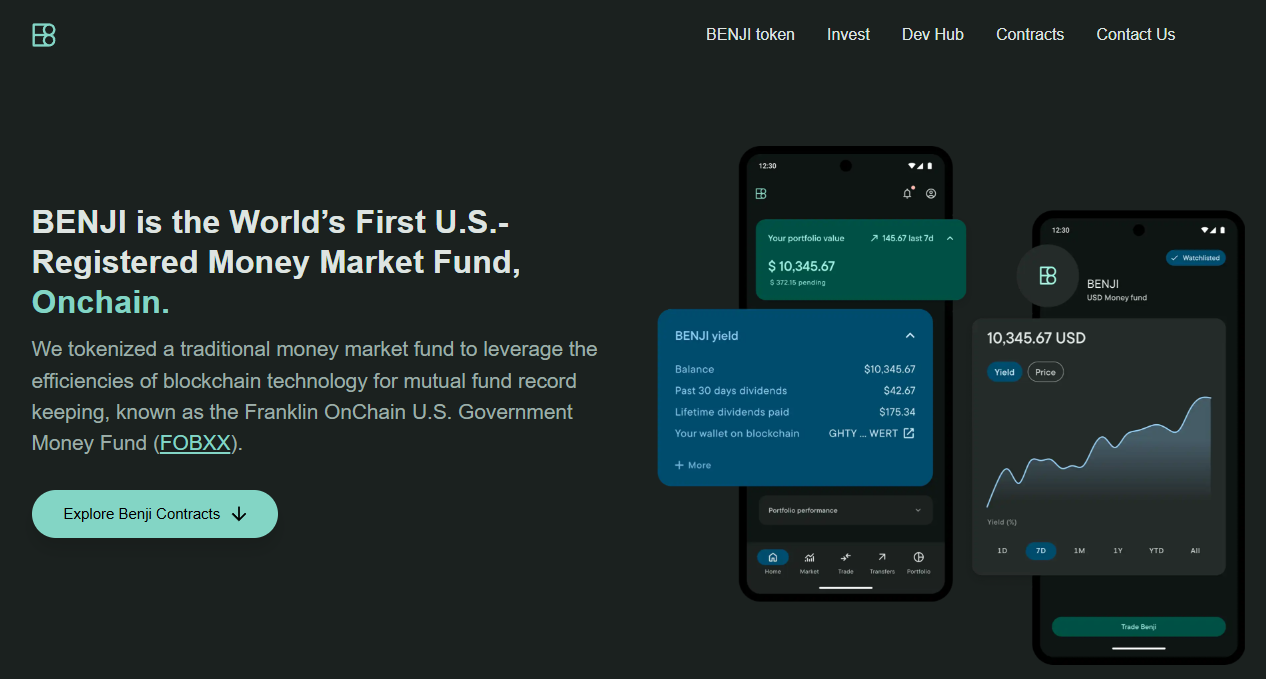
 Franklin Templeton's $775 million Franklin OnChain U.S. Government Money Fund (BENJI) pioneered tokenized mutual funds in 2021, offering exposure to US government securities across eight blockchains with patent-pending intraday yield calculation.

Ideal For

  • Investors seeking regulated 40 Act fund structure
  • Collateral managers requiring second-by-second yield accrual
  • Multi-chain strategies needing broad blockchain compatibility
  • Users prioritizing traditional asset manager credibility

Standout Features

  • Intraday yield tracking down to the second, enabling proportional earnings even for partial-day holdings
  • Direct stablecoin purchases and redemptions with wallet-to-wallet transfer capability
  • 63% of AUM deployed on Stellar Network for optimal cost efficiency
  • Integrated with DeFi protocols for collateral and leverage applications

Pricing
 7-day current yield approximately 4.5-5.5% gross; 0.25% management fee. No minimum investment restrictions beyond standard mutual fund requirements.

Availability
 Global availability with specific KYC requirements. Active on Stellar, Ethereum, Arbitrum, Base, Avalanche, Polygon, Aptos, Solana, BNB Chain.

Worth Noting
 Traditional mutual fund constraints apply including daily NAV calculations and potential redemption delays during market stress.

Alternatives to Consider: Backed bIB01, Superstate Short Duration Government Securities  

For Institutional Credit Exposure (8-12% Yield)

Top Pick: Maple Finance — Premier Crypto-Collateralized Lending

Overview
 Maple Finance manages over $4 billion in assets, specializing in institutional over-collateralized lending backed by Bitcoin, Ethereum, Solana, and XRP, targeting $100 billion in annual loan volume by 2030. The platform introduced SyrupUSDC for permissionless retail access alongside KYC-gated institutional pools.

Ideal For

  • Institutional lenders seeking exposure to cryptocurrency-backed credit
  • Liquidity providers comfortable with smart contract risk
  • Allocators targeting floating-rate, senior-secured structures
  • Investors seeking alternatives to traditional stablecoin farming

Standout Features

  • Consistent 9-12% net yields through undercollateralized institutional facilities and structured credit products
  • Strategic integration with Aave's $40 billion protocol bringing syrupUSDT to Plasma instance and syrupUSDC to core markets
  • Partnerships with Bitwise, Lido Finance (stETH-backed credit lines), and EtherFi (weETH collateral) expanding institutional adoption
  • Robust risk management combining decades of TradFi expertise with real-time on-chain monitoring

Pricing
 Variable by pool; typical effective yields 9-12% after protocol fees. Minimum investments pool-dependent, generally $10K-$50K for retail syrup products.

Availability
 Global with KYC requirements for lending. Institutional Maple requires accreditation; Syrup.fi open to broader participants.

Worth Noting
 Platform transitioned from uncollateralized to over-collateralized model after 2022 market turmoil. Historical defaults impacted certain pools; robust recovery mechanisms now in place.

Alternatives to Consider: Credix (emerging markets), TrueFi (uncollateralized DeFi)  

Runner-Up: Goldfinch Prime — Institutional Private Credit Access

Overview
 Goldfinch Prime aggregates exposure to multi-billion dollar private credit funds from Ares, Apollo, Golub Capital, and KKR, providing on-chain access to institutional-grade senior secured loans with over $1 trillion in collective AUM.

Ideal For

  • Non-US investors seeking diversified private credit exposure
  • Allocators targeting institutional fund performance without direct fund access
  • Participants seeking uncorrelated yield to crypto markets
  • Investors comfortable with longer lockup periods

Standout Features

  • Exposure to 1000+ senior secured loans across industries through vetted fund managers with 10+ years experience
  • Target returns of 9-12% net of fees with strict eligibility criteria including >90% senior secured portfolios and <0.75% target non-accrual rates
  • Heron Finance manages fund selection and vetting while fund managers handle all underwriting and default resolution
  • USDC-based deposits converted to proportional GPRIME tokens for continuous offering structure

Pricing
 Net yields 9-12% after embedded management fees and profit sharing. Minimum investments vary by pool structure; typically institutional minimums apply.

Availability
 Non-US persons only due to regulatory structure. KYC and accreditation verification required.

Worth Noting
 Exposure is indirect through fund shares rather than direct loan origination; fund managers absorb individual borrower default risk into aggregate yields. Liquidity limited compared to Treasury products.

Alternatives to Consider: Centrifuge private credit pools, Credix fintech lending


For Real Estate & Diversified Assets (6-10% Yield)

Top Pick: Centrifuge — Multi-Asset Tokenization Infrastructure

Overview
 Centrifuge operates as a multichain infrastructure platform enabling asset managers to tokenize real estate, trade finance, carbon credits, and structured credit with $1.2 billion TVL and recent 10x growth driven by the first on-chain CLO and tokenized S&P 500 index fund.

Ideal For

  • Investors seeking exposure to asset-backed securities beyond treasuries
  • Allocators comfortable evaluating tranched credit structures
  • Participants prioritizing transparency and on-chain asset verification
  • Portfolio managers wanting diversification across real-world credit types

Standout Features

  • Asset-agnostic architecture supporting structured credit, real estate mortgages, US treasuries, carbon credits, and consumer finance with full collateralization and legal recourse for investors
  • V3 platform enables cross-chain interoperability across Ethereum, Base, Arbitrum, Avalanche, BNB Chain, and Plume with integrated KYC and compliance-as-a-feature
  • Senior/junior tranche structures allowing risk-return customization
  • Partnership with Chronicle Labs for real-time price feeds and integration with Circle for USDC on/off-ramping

Pricing
 Yields vary by pool and tranche: typically 6-8% for senior tranches, 10-14% for junior tranches. Management fees embedded; pool-specific minimums apply.

Availability
 Global with KYC requirements. Pools may have additional jurisdictional restrictions based on underlying asset location.

Worth Noting
 Platform complexity requires understanding of tranched structures and asset-specific risks. Less liquid credit instruments offer less frequent pricing updates than treasury products.

Alternatives to Consider: RealT (US residential real estate focus), Republic (equity crowdfunding)


For Emerging Market Credit (12-18% Yield)

Top Pick: Credix — Latin American Fintech Lending

Overview
 Credix specializes in providing credit facilities to fintech lenders in Latin America, offering high-yield exposure to underserved credit markets with institutional-grade underwriting and local market expertise.

Ideal For

  • Sophisticated investors seeking higher risk-adjusted returns
  • Allocators comfortable with emerging market credit risk
  • Participants with extended investment horizons (12-24 months typical)
  • Investors seeking geographic diversification from US/EU markets

Standout Features

  • Target yields 12-18% reflecting emerging market risk premiums
  • Focus on fintech infrastructure enabling financial inclusion
  • Partnerships with established Latin American credit originators
  • Robust due diligence and monitoring of borrower networks

Pricing
 Pool-dependent yields typically 12-18% gross with management fees of 1-2%. Minimum investments generally $50K+ for accredited investors.

Availability
 Non-US persons primarily; requires accreditation verification and enhanced KYC given emerging market exposure.

Worth Noting
 Higher yields reflect higher credit and currency risk. Platform experienced challenges during regional economic volatility; enhanced risk controls now implemented.

Alternatives to Consider: Goldfinch V1 pools (emerging market focus), TrueFi uncollateralized pools


For Tokenization Infrastructure (Platform Providers)

Top Pick: Securitize — Industry-Leading Issuance Platform

Overview
 Securitize has tokenized over $4.5 billion in assets for 1.2 million investors across 3,000+ clients, operating as an SEC-registered transfer agent with integrated ATS for secondary trading. The platform powers major offerings including BlackRock's BUIDL fund.

Ideal For

  • Asset managers seeking turnkey tokenization solutions
  • Issuers requiring SEC-compliant digital security infrastructure
  • Institutional clients needing integrated custody and compliance
  • Projects prioritizing regulatory alignment and brand credibility

Standout Features

  • DS Protocol automates token issuance, transfer agent functions, and regulated secondary trading with $47 million funding led by BlackRock
  • Recent launch of STAC tokenized AAA CLO fund with BNY custody demonstrating institutional adoption trajectory
  • Comprehensive investor onboarding, KYC/AML, and reporting infrastructure
  • Partnerships with major asset managers and integration with Zero Hash for fiat conversion

Pricing
 Platform fees vary by issuance size and complexity; typically 0.5-2% of AUM plus basis point fees on transactions. White-label solutions available for enterprise clients.

Availability
 Global operations with jurisdiction-specific compliance modules. Primary focus on US, EU, and APAC institutional markets.

Worth Noting
 Securitize is an issuance platform rather than direct investment product; investors access opportunities through partner funds and offerings launched on the infrastructure.

Alternatives to Consider: Tokeny (EU-focused), Polymath/Polymesh (security token specialists)


Complete Provider Directory

  • Backed Finance: European MiCA-compliant tokenization platform offering bIB01 (Swiss government bond exposure) and bC3M (commodity basket). Strong focus on regulatory alignment with modest 3-5% yields and low entry barriers.
  • Swarm Markets: Decentralized platform enabling fractional ownership of real estate and private credit with $1K-$50K minimums. Emphasizes accessibility while maintaining compliance through distributed infrastructure.
  • TrueFi: Uncollateralized lending protocol using on-chain credit scoring and portfolio diversification. Higher risk-return profile (8-15% targets) with full transparency of borrower pools and performance metrics.
  • Archax: UK FCA-regulated platform for institutional tokenization of bonds, funds, and money markets. Focus on traditional finance compatibility with stringent accreditation requirements.

Making Your Selection: Key Questions

  • What yield stability do you require?
     Treasury-backed platforms (Ondo, Franklin Templeton) offer predictable 4-5% returns with minimal volatility. Credit-focused platforms (Maple, Goldfinch) target 9-12% but introduce credit risk and performance variability.
  • What is your risk tolerance for underlying collateral?
     Government securities provide lowest risk; over-collateralized crypto loans add smart contract and liquidation risks; uncollateralized emerging market credit carries highest default potential.
  • Do you meet accreditation and minimum investment thresholds?
     Many institutional products require $50K-$200K minimums and qualified purchaser status. Retail-accessible options like USDY and syrupUSDC lower barriers but may sacrifice yield.
  • What liquidity do you need?
     Treasury tokens generally offer daily liquidity; private credit pools may have quarterly redemption windows; real estate tokenization can involve 12-24 month lockups.
  • How important is regulatory compliance?
     Platforms like Ondo, Franklin Templeton, and Securitize prioritize SEC registration and traditional fund structures. Purely DeFi-native protocols offer less regulatory clarity but greater composability.
  • What blockchain ecosystems do you operate in?
     Multi-chain deployment (Ondo, Centrifuge) provides flexibility; single-chain specialization (some Maple pools) may offer optimization but limits interoperability.
  • Do you have geographic restrictions?
     US persons often excluded from highest-yield opportunities due to securities laws. European investors benefit from MiCA framework; APAC sees growing regulatory clarity.
  • What level of transparency do you require?
     On-chain native protocols offer real-time asset verification; hybrid models may rely on periodic attestations and third-party audits.
  • Are you seeking passive income or active yield strategies?
     Treasury staking provides set-and-forget returns; DeFi integrations enable leverage, collateral strategies, and yield optimization requiring active management.
  • How much operational complexity can you handle?
     Single-platform solutions simplify but limit optionality; multi-protocol strategies maximize returns but require gas management, tax tracking, and security across multiple platforms.

Maximizing Your Setup with Token Metrics

Token Metrics provides critical intelligence for navigating RWA yield opportunities through data-driven analysis and market insights.

Research Phase: Leverage Token Metrics' fundamental analysis to evaluate tokenized asset protocols, comparing on-chain metrics, TVL trends, and yield sustainability indicators. Our RWA sector reports identify emerging platforms and highlight regulatory developments across jurisdictions.

Portfolio Construction: Use quantitative scoring to allocate across risk tiers—balancing stable treasury exposure with higher-yield credit products. Token Metrics' portfolio tools help optimize diversification while monitoring correlation to traditional crypto markets.

Ongoing Monitoring: Real-time alerts notify you of yield changes, protocol upgrades, and risk events. Our dashboard aggregates performance across multiple RWA platforms, tracking your yield-bearing positions alongside broader cryptocurrency holdings.

Risk Management: Token Metrics' risk analytics assess smart contract security, custody arrangements, and counterparty exposure. Our reports flag platforms with concerning yield sustainability metrics or operational red flags before they impact your capital.

Start your Token Metrics free trial to access institutional-grade RWA research and optimize your real-world asset allocation.  

Essential Security Practices

  • Custody Verification: Confirm that platforms use institutional-grade custodians (Coinbase Custody, BitGo, Fireblocks) for underlying assets. Verify proof-of-reserve attestations and third-party audits.
  • Smart Contract Risk: Review audit reports from reputable firms (Trail of Bits, OpenZeppelin, Certora). Understand upgrade mechanisms and timelock protections on protocol contracts.
  • Legal Structure Assessment: Examine SPV formation, bankruptcy remoteness, and investor recourse mechanisms. Ensure tokenization structure provides actual legal claim on underlying assets, not just economic exposure.
  • Regulatory Compliance: Verify platforms maintain necessary licenses (broker-dealer, transfer agent, ATS) in relevant jurisdictions. Confirm offerings comply with securities laws in your domicile.
  • Counterparty Risk: Understand who services loans, manages defaults, and handles liquidations. Evaluate track records of asset originators and credit underwriters.
  • Liquidity Risk Management: Never allocate more than you can afford to lock up for stated redemption periods. Maintain buffer capital for market volatility and potential redemption delays.
  • Tax Implications: Consult tax professionals on treatment of tokenized yield—may be classified as interest income, dividends, or capital gains depending on structure and jurisdiction.
  • Geographic Restrictions: Verify you're eligible to participate based on residency. Using VPNs or misrepresenting location can result in frozen funds and legal liability.
  • Platform Concentration: Diversify across multiple RWA providers to reduce single-point-of-failure risk. No single platform should represent majority of yield allocation.
  • Documentation: Maintain records of all transactions, yield distributions, and platform communications for tax reporting and potential disputes.

This article is for research and educational purposes, not financial advice. RWA investments carry risks including loss of principal.


What to Avoid

  • Ignoring minimum holding periods: Many RWA products enforce lockups or redemption windows. Treating them as liquid positions can leave you unable to access capital when needed.
  • Chasing unsustainably high yields: Promised returns significantly above market rates often indicate excessive risk. Verify underlying asset performance and historical consistency before committing capital.
  • Overlooking platform liquidity: Token existence on-chain doesn't guarantee exit liquidity. Check secondary market depth and historical spread between minting and redemption prices.
  • Neglecting jurisdictional compliance: Accessing platforms not available in your region can result in frozen accounts and regulatory penalties. Always verify eligibility before depositing funds.
  • Underestimating smart contract risk: Even well-audited protocols face exploitation risk. Size positions appropriately and monitor security incident disclosures across the ecosystem.
  • Failing to verify asset backing: Don't rely on marketing claims. Demand proof-of-reserve, third-party attestations, and transparent reporting on underlying collateral.
  • Concentrating in single asset class: Over-allocating to one RWA category (e.g., all private credit) eliminates diversification benefits. Balance across treasuries, credit, and real estate where possible.
  • Ignoring fee structures: Management fees, performance fees, and transaction costs compound over time. Calculate net yields after all costs when comparing platforms.

Reader Questions Answered

What's the difference between tokenized treasuries and yield-bearing stablecoins?

 Tokenized treasuries (like OUSG) represent direct ownership of US Treasury securities with yield passed through to holders. Yield-bearing stablecoins (like USDY) maintain $1 peg while distributing treasury yields via rebasing or airdrops. Treasuries may fluctuate slightly with NAV; yield stablecoins prioritize price stability.

Are RWA yields taxable differently than crypto staking rewards?

 Likely yes, though tax treatment varies by jurisdiction. RWA yields from treasuries or credit facilities often classified as interest income taxed at ordinary rates. Crypto staking may be treated as income at receipt or capital gains at sale depending on location. Consult tax professionals for specific guidance.

Can I use tokenized RWAs as collateral in DeFi protocols?

 Increasingly yes. Platforms like Maple, Ondo (via Flux Finance), and Centrifuge enable using tokenized assets as DeFi collateral. However, support varies by protocol and asset—USDY and OUSG see broader integration than niche real estate tokens. Liquidation risks apply if collateral value drops.

What happens if the platform goes bankrupt?

 Properly structured tokenization isolates assets in bankruptcy-remote SPVs, protecting investor claims even if platform operator fails. However, redemption processes may be delayed and require legal navigation. This is why verifying legal structure and custodial arrangements is critical.

How liquid are RWA tokens compared to stablecoins?

 Significantly less liquid. While stablecoins have billions in daily DEX volume, most RWA tokens trade thinly or only through platform-controlled redemption mechanisms. Treasury tokens offer better liquidity than private credit or real estate, but all lag traditional stablecoins substantially.

Do I need to be an accredited investor?

 Depends on the platform and your location. US-based offerings often require accreditation; international platforms may have lower barriers. Products like USDY, syrupUSDC, and BENJI target broader accessibility, while institutional credit pools restrict to qualified purchasers.

What are the main risks that could cause loss of principal?

 (1) Underlying asset default (credit risk), (2) smart contract exploitation, (3) platform insolvency without proper asset segregation, (4) regulatory action freezing operations, (5) stablecoin de-pegging for yield products denominated in USDC/USDT, (6) liquidation cascades in collateralized structures.

How do yields compare to traditional finance alternatives?

 Tokenized treasuries (4-5%) match conventional money market funds but with 24/7 access. Private credit RWAs (9-12%) offer premiums over corporate bonds due to illiquidity and platform novelty. Emerging market RWA yields (12-18%) comparable to EM debt funds with added smart contract risk.


Bottom Line

Real-world asset yield marketplaces represent the maturation of blockchain infrastructure beyond speculation into productive finance. For investors seeking stable, asset-backed returns uncorrelated to cryptocurrency volatility, platforms like Ondo Finance and Franklin Templeton deliver institutional-grade treasury exposure with DeFi composability. Those comfortable with credit risk can access superior yields through Maple Finance's collateralized institutional lending or Goldfinch Prime's diversified private credit exposure.

The key to success: match platform selection to your specific risk tolerance, liquidity needs, and regulatory constraints. Treasury products suit conservative allocators prioritizing capital preservation; credit platforms reward investors accepting higher risk for enhanced returns; multi-asset infrastructure like Centrifuge offers diversification across real-world credit types.

Start with smaller allocations to understand platform mechanics, redemption processes, and yield consistency before committing substantial capital. The RWA sector's rapid growth will continue creating opportunities, but also attracting lower-quality offerings—due diligence remains paramount.

Related Resources:


About This Research

Methodology: This guide evaluated 20+ RWA platforms through analysis of official documentation, on-chain data, regulatory filings, and third-party audits. Platforms selected represent meaningful TVL (>$100M), regulatory compliance, and operational track record. Final selection prioritized diversity across asset classes and investor accessibility tiers.

Research Sources:

  • Ondo Finance: Product documentation, tokenomics, OUSG/USDY specifications, Oasis Pro acquisition disclosure
  • Maple Finance: Platform whitepaper, syrupUSDC mechanics, Aave integration announcement, CEO interviews
  • Centrifuge: V3 technical documentation, pool analytics, Republic partnership details
  • Goldfinch: Prime pool specifications, fund manager criteria, Heron Finance structure
  • Franklin Templeton: BENJI platform technical details, intraday yield patent documentation, multi-chain deployment
  • Securitize: DS Protocol documentation, STAC fund launch details, BlackRock partnership announcements
  • RWA.xyz: Platform TVL data, tokenization metrics, market growth analysis
  • DeFiLlama: Protocol TVL tracking, historical performance data
  • BCG/Ripple: RWA market projections and industry research
  • VanEck, Coinbase, Binance: Sector research reports on RWA growth trajectories

All data current as of January 2025. Platform features and yields subject to change; verify current terms on official websites before investing.

Build Smarter Crypto Apps &
AI Agents in Minutes, Not Months
Real-time prices, trading signals, and on-chain insights all from one powerful API.
Grab a Free API Key
About Token Metrics
Token Metrics: AI-powered crypto research and ratings platform. We help investors make smarter decisions with unbiased Token Metrics Ratings, on-chain analytics, and editor-curated “Top 10” guides. Our platform distills thousands of data points into clear scores, trends, and alerts you can act on.
30 Employees
analysts, data scientists, and crypto engineers
Daily Briefings
concise market insights and “Top Picks”
Transparent & Compliant
Sponsored ≠ Ratings; research remains independent
Want Smarter Crypto Picks—Free?
See unbiased Token Metrics Ratings for BTC, ETH, and top alts.
Thank you! Your submission has been received!
Oops! Something went wrong while submitting the form.
 No credit card | 1-click unsubscribe
Token Metrics Team
Token Metrics Team

Recent Posts

Research

Can AI and Blockchain Be Combined for IoT? The Revolutionary Convergence Transforming Industries in 2025

Talha Ahmad
5 min

In the rapidly evolving digital landscape of 2025, a groundbreaking convergence is taking place among three transformative technologies: Artificial Intelligence (AI), Blockchain, and the Internet of Things (IoT). This powerful combination is not merely a theoretical possibility—it is actively reshaping industries by redefining how connected devices communicate, how data is managed, and how decisions are made autonomously. Understanding can AI and blockchain be combined for IoT applications is essential for businesses, investors, and technologists aiming to harness the full potential of this technological revolution.

At the forefront, IoT devices generate vast amounts of data from sensors embedded in everything from smart cities to healthcare systems. AI algorithms analyze this real-time data to derive actionable insights, while blockchain technology ensures data integrity and security through decentralized, tamper-proof transaction records. Together, these technologies enable smarter, more secure, and autonomous IoT ecosystems that are transforming how industries operate.

The Foundation: Understanding the Technological Trinity

To appreciate the synergy between AI, blockchain, and IoT, it is important to understand each technology’s role.

Artificial Intelligence refers to computer systems capable of human-like cognition, including reasoning, learning, and decision-making. In 2025, AI systems leverage advanced machine learning and neural networks to process massive datasets generated by IoT sensors in real time. These AI models empower IoT devices to evolve from simple data collectors into autonomous systems capable of predictive maintenance, anomaly detection, and optimized resource allocation.

Blockchain technology acts as a decentralized ledger that records digital transactions securely and transparently without intermediaries. By storing data across distributed blockchain networks, it enhances security features and guarantees data provenance and integrity. Blockchain protocols enable smart contracts—self-executing agreements that automate and secure interactions between IoT devices, ensuring trustworthy digital transactions.

Internet of Things (IoT) encompasses the vast network of connected devices embedded with sensors and software that collect and exchange data. IoT systems span smart grids, smart cities, healthcare devices, and industrial automation. With projections estimating around 30 billion IoT devices worldwide by 2030, the volume of data generated demands robust AI and blockchain integration to optimize data management and security.

The Market Reality: Explosive Growth and Convergence

The convergence of AI, blockchain, and IoT is no longer a futuristic concept but a tangible market phenomenon with significant economic impact. The combined market capitalization of these technologies exceeded $1.362 trillion in 2024 and is expected to grow exponentially as their integration deepens.

The IoT market alone, valued at $300 billion in 2021, is projected to surpass $650 billion by 2026, with estimates reaching $3.3 trillion by 2030. This growth is fueled by the increasing demand for secure, intelligent IoT networks that can handle the massive data flows generated by connected devices.

This convergence addresses practical challenges faced by traditional cloud-based data processing, such as latency, high costs, and vulnerability to cyber threats. Integrating AI and blockchain within IoT ecosystems optimizes data analysis and enhances security protocols, making it an indispensable strategy for modern enterprises.

How the Integration Works: The Technical Symphony

AI as the Intelligence Layer

AI forms the cognitive backbone of IoT systems by transforming raw data collected from IoT sensors into meaningful insights. Through machine learning and neural networks, AI analyzes data generated by connected devices to detect anomalies, predict equipment failures, and optimize energy management in real time.

For example, AI algorithms embedded in smart grids can forecast electricity demand and adjust distribution accordingly, reducing waste and improving sustainability. Similarly, in manufacturing, AI-driven predictive maintenance minimizes downtime by identifying potential faults before they escalate.

By integrating AI processes with IoT data flows, enterprises can automate decision-making and enhance operational efficiency, turning IoT devices into autonomous systems capable of adapting dynamically to changing environments.

Blockchain as the Trust Infrastructure

While AI provides intelligence, blockchain technology offers the trust and security layer vital for IoT networks. Blockchain enhances security by decentralizing data storage and transaction records, making it resistant to tampering and cyber breaches.

Key applications of blockchain in IoT include:

  • Device Authentication: Each IoT device receives a unique digital identity secured cryptographically on the blockchain, ensuring only authorized devices participate in the network. This prevents unauthorized access and exploits of vulnerabilities.
  • Data Provenance and Integrity: Blockchain records the origin and history of data generated by IoT sensors, guaranteeing its authenticity. For instance, blockchain can verify that temperature readings in a cold chain logistics system were not altered during transit.
  • Smart Contracts for Automated Transactions: Blockchain-enabled smart contracts facilitate secure, automated transactions between devices without intermediaries. This capability supports autonomous financial transactions such as toll payments by connected vehicles or peer-to-peer energy trading in smart grids.

By integrating blockchain systems with IoT, enterprises can achieve enhanced security features and maintain data privacy while enabling transparent and tamper-proof data management.

The Convergence in Action

The fusion of AI, blockchain, and IoT technologies creates a new digital operating system where blockchain serves as the secure trust layer, IoT devices provide continuous streams of real-time data, and AI models analyze and act on this data autonomously. This convergence is revolutionizing industries by enabling decentralized AI models to operate securely across blockchain networks, optimizing IoT ecosystems with enhanced data security and operational intelligence.

Real-World Applications Transforming Industries

Smart Supply Chains and Logistics

Supply chains are becoming increasingly complex, requiring flexible, transparent, and adaptive solutions. AI algorithms analyze IoT data from sensors monitoring shipment conditions and locations, predicting delays and optimizing delivery routes. Blockchain technology ensures the authenticity and traceability of goods by securely recording transaction records and device authentication events.

This integration improves inventory management by providing end-to-end visibility, reducing fraud, and preventing data breaches, ultimately enhancing customer trust and operational efficiency.

Autonomous Financial Transactions

The combination of AI and blockchain enables connected devices like autonomous vehicles and drones to conduct financial transactions independently. Smart contracts automate payments for services such as EV charging, tolls, or retail purchases, reducing friction and improving user experience.

For example, an electric vehicle can automatically pay for charging at a smart grid station using blockchain transactions secured by AI-enhanced security protocols. This autonomous system streamlines commerce within the IoT ecosystem.

Energy Management and Sustainability

In smart grids, AI optimizes energy distribution by analyzing real-time data from IoT sensors, forecasting demand, and adjusting supply dynamically. Blockchain facilitates peer-to-peer energy trading between participants, ensuring secure and transparent transactions.

This integration supports sustainability goals by optimizing resource allocation, reducing energy waste, and enabling decentralized energy markets that empower consumers and producers alike.

Healthcare and Medical Devices

IoT medical devices continuously collect sensitive patient data, which AI systems analyze to detect early signs of diseases and personalize treatment plans. Blockchain technology ensures the secure management and privacy of patient data by decentralizing storage and controlling access through smart contracts.

This convergence enhances healthcare system efficiency, enabling seamless and secure sharing of medical records across providers while protecting against data breaches.

The Role of Advanced Analytics: Token Metrics Leading the Way

Navigating the complex intersection of AI, blockchain, and IoT requires sophisticated analytics platforms. Token Metrics, a premier crypto trading and analytics platform, leverages AI technologies to help investors identify promising AI-blockchain-IoT projects early.

Token Metrics integrates AI-driven data analytics, sentiment analysis, and real-time market data across thousands of tokens. Its AI models assign Trader Grades and Investor Grades to tokens, guiding users in making informed decisions within this rapidly evolving market.

By consolidating research, portfolio management, and trading tools, Token Metrics empowers investors to capitalize on the AI blockchain’s role in transforming IoT ecosystems and digital transactions.

Current Challenges and Solutions

Scalability and Data Management

The enormous volume of data generated by IoT devices demands scalable AI processing and blockchain storage solutions. Edge computing addresses latency and bandwidth constraints by processing data closer to the source. Layer-2 blockchain protocols improve transaction throughput, making blockchain operations more efficient and cost-effective.

Security and Privacy

While blockchain enhances security, integrating AI models and IoT networks introduces new vulnerabilities. Enterprises must implement robust security features, including advanced encryption and privacy-preserving AI techniques, to protect sensitive data and comply with data privacy regulations.

Interoperability

Diverse blockchain networks, AI frameworks, and IoT protocols present challenges for seamless integration. Standardized interfaces and cross-platform compatibility solutions are essential to enable smooth data flows and cohesive system operation.

Future Outlook: The 2030 Vision

Looking ahead, the integration of AI, blockchain, and IoT is poised to create an adaptable, interconnected digital ecosystem. By 2030, AI-enhanced blockchain networks combined with 5G connectivity will enable unprecedented real-time data analysis and autonomous decision-making across industries.

Digital wallets, empowered by blockchain protocols, will expand beyond cryptocurrencies to support seamless device authentication and smart contract interactions. The in-car payment market alone is expected to reach $530 billion, with vehicles conducting secure, autonomous transactions via blockchain-linked SIM cards.

This complete ecosystem integration will power smart cities, smart grids, healthcare systems, and autonomous systems, unlocking new efficiencies and innovations.

Strategic Implications for Businesses

In 2025, companies that fail to embrace the convergence of AI, blockchain, and IoT risk falling behind. To remain competitive, organizations must:

  • Develop integrated technology infrastructures that unify AI systems, blockchain networks, and IoT devices.
  • Implement data strategies that leverage AI for data analysis while using blockchain to ensure data integrity and secure management.
  • Establish comprehensive security protocols addressing the unique challenges of interconnected AI-blockchain-IoT environments.
  • Invest in talent capable of navigating the intersection of these technologies rather than isolated specializations.

Conclusion: The Inevitable Future

The question is no longer can AI and blockchain be combined for IoT—the answer is a resounding yes. The real challenge lies in how swiftly organizations can adapt to this convergence that is fundamentally transforming digital ecosystems.

By harnessing AI intelligence, blockchain trust, and IoT connectivity, businesses can create autonomous systems that think, transact, and optimize in real time while maintaining the highest standards of data privacy and security. Platforms like Token Metrics provide the tools to navigate this revolution, identifying opportunities and mitigating risks in the evolving digital economy.

The convergence of AI, blockchain, and IoT is here, the market is responding, and transformation is accelerating. The future belongs to those ready to embrace this revolutionary synergy and lead the next wave of innovation. Are you ready to be part of this transformative journey?

‍

Research

What Are Real-World Assets in Crypto? A Complete Guide

Talha Ahmad
5 min

The cryptocurrency landscape is undergoing a revolutionary transformation as traditional finance converges with blockchain technology. At the forefront of this evolution are Real-World Assets (RWAs) – a groundbreaking innovation bridging the gap between physical assets and digital finance. As we navigate through 2025, understanding what are real world assets in crypto has become essential for investors, institutions, and anyone looking to capitalize on this trillion-dollar opportunity.

Understanding Real-World Assets (RWAs)

Real-World Assets in crypto refer to digital tokens that represent ownership or economic rights to tangible, physical assets or traditional financial instruments. Unlike conventional cryptocurrencies, which derive their value primarily from market speculation or utility within a digital ecosystem, RWA tokens are backed by concrete, verifiable assets existing in the real world. This intrinsic backing provides a level of stability and investor confidence that pure digital assets may lack.

In essence, RWAs are crypto tokens that represent physical assets such as bonds, real estate properties, commodities, machinery, and more. They serve as a bridge bringing traditional financial assets into the realm of decentralized finance (DeFi). Through the tokenization process, these often illiquid assets are transformed into tradeable digital tokens, enabling features like fractional ownership and global access. This innovation opens new doors for asset management, making high-value and previously inaccessible assets available to a broader range of investors.

Types of Real-World Assets Being Tokenized

The scope of real world asset tokenization is vast and continues to expand across various asset classes:

Financial Instruments

Government bonds, treasury bills, and corporate debt are increasingly being tokenized, merging traditional fixed-income investing with blockchain technology. For example, BlackRock’s BUIDL fund, launched in March 2024, commands a dominant 44% market share in tokenized treasuries. These financial assets offer stable yields and introduce a new dimension of financial innovation by making traditional assets accessible via digital tokens.

Real Estate

The real estate industry is one of the most active sectors embracing tokenization. Platforms like Propy and RealT facilitate tokenized real estate investment, allowing investors to acquire fractional ownership in commercial and residential properties. This approach democratizes access to valuable assets that were traditionally out of reach for retail investors, enabling them to benefit from rental income and property appreciation through onchain finance.

Commodities

Commodity-backed tokens, particularly those linked to precious metals like gold, constitute a significant portion of the RWA market. Tokens such as Tether Gold (XAUT) and PAX Gold (PAXG) represent approximately 84% of this sector, which has seen growth of 67.8% since 2024, reaching a market capitalization of $1.9 billion. These tokens provide a secure and liquid means of investing in tangible assets without the need for physical storage.

Art and Collectibles

High-value artworks, vintage wines, and collectibles are being tokenized to increase accessibility and liquidity. Blockchain verification ensures authenticity and provenance, allowing investors to own fractions of unique and intellectual property assets that were once difficult to trade.

Private Credit

Private credit protocols are emerging as a bridge between traditional lending and DeFi, providing loans to real-world businesses, especially in emerging markets. This sector leverages crypto capital to support business growth, offering new investment opportunities and enhancing financial inclusion.

The Technology Behind RWA Tokenization

The process of asset tokenization involves multiple critical steps to ensure security, compliance, and seamless integration with the digital ecosystem:

Asset Selection and Verification

Before tokenization, asset owners and asset issuers conduct thorough evaluations of the underlying asset. This includes legal due diligence to comply with local laws and regulatory compliance, valuation assessments, and verification of ownership. This rigorous process ensures that the tokenized assets represent valuable and legitimate physical or financial assets.

Smart Contract Development

Once the asset is selected, developers create smart contracts that define the token’s specifications. These contracts determine whether the token is fungible or non-fungible, select appropriate token standards (such as ERC20 or ERC721), and choose the blockchain platform best suited for the token’s purpose. Smart contracts automate ownership transfers, dividend distributions, and other functions, streamlining asset management and reducing counterparty risk.

Oracle Integration

A crucial component of RWA tokenization is integrating real world data with blockchain networks. Oracles like Chainlink securely bridge off-chain information to on-chain environments, ensuring that the digital tokens accurately reflect the status and value of the underlying assets. This integration allows tokenized real world assets to function effectively within decentralized finance ecosystems.

Market Growth and Institutional Adoption

The RWA sector has witnessed explosive growth, with overall market capitalization reaching unprecedented levels. By September 2025, top Real World Assets coins collectively boast a market cap of approximately $38.46 billion, driven largely by strong interest from institutional investors and financial institutions.

Forecasts suggest that by the end of 2025, the total value of RWAs on-chain (excluding stablecoins) could surpass $500 billion, with over $50 billion already tokenized. Prominent financial players are spearheading this movement:

  • BlackRock introduced the BUIDL tokenized money market fund, pioneering tokenized treasury investments.
  • Goldman Sachs and BNP Paribas have launched pilot projects on the Canton Network to explore tokenized asset offerings.
  • Fidelity and VanEck announced plans for tokenized funds slated for 2025.
  • HSBC debuted cross-border tokenized deposit products, enhancing global access.

This institutional adoption is a testament to the growing confidence in the digital asset ecosystem and the potential for RWAs to transform traditional finance.

Benefits of RWA Tokenization

The tokenization of real-world assets brings numerous advantages that revolutionize how investors interact with traditional and physical assets:

Enhanced Liquidity

Many traditionally illiquid assets such as real estate and private equity become tradeable 24/7 through tokenization. The ability to buy and sell fractions of assets on secondary markets eliminates lengthy settlement processes and unlocks liquidity pools that were previously inaccessible.

Fractional Ownership

Tokenization enables fractional ownership, allowing investors to purchase small portions of high-value assets. This lowers entry barriers and democratizes access to markets like real estate investment and government bonds, which have traditionally required substantial capital.

Global Accessibility

By leveraging blockchain technology, tokenized assets transcend geographic and regulatory boundaries. Investors worldwide gain global access to diverse asset classes, promoting financial inclusion and broadening the investor base.

Transparency and Security

Blockchain offers immutable records of ownership and transaction history, enhancing transparency in asset management. Coupled with robust security measures, this reduces fraud and increases investor confidence.

Cost Efficiency

Automated processes via smart contracts eliminate intermediaries, reducing transaction fees and administrative overhead. This streamlining leads to faster settlements and improved cost efficiency for both asset managers and investors.

Leveraging Token Metrics for RWA Trading Success

As the RWA market grows, navigating its complexities requires sophisticated tools and analytics. Token Metrics stands out as a premier crypto trading and analytics platform, empowering investors to make informed decisions in the evolving RWA landscape.

Token Metrics uses advanced AI-powered analytics to analyze market trends, token performance, and emerging investment opportunities across thousands of tokens, including those representing RWAs. Its features include:

  • Real-time AI buy and sell signals that help spot winning tokens early.
  • Deep-dive research tools that assess tokenomics, underlying asset quality, and growth potential.
  • AI-curated portfolios optimized for short and long-term gains.
  • Seamless trading integration with API connectivity, enabling users to execute trades based on AI insights.

For investors seeking to capitalize on the growth of RWAs, Token Metrics offers a comprehensive toolkit to enhance decision-making and portfolio management.

Current Challenges and Future Outlook

Despite the promising potential, real world assets rwas face several challenges that must be addressed for widespread adoption:

Regulatory Uncertainty

The legal status of tokenized RWAs remains ambiguous in many jurisdictions, as these tokens do not fit neatly into existing categories like commodities or securities. This regulatory uncertainty complicates compliance and investor protection efforts.

Standardization Issues

The lack of universal protocols for RWA tokens hampers interoperability across different blockchain platforms and ecosystems. Standardization is critical for seamless asset transfer and integration with traditional financial systems.

Security Risks

While blockchain offers enhanced security, the systems remain vulnerable to exploits and hacker attacks. Protecting digital tokens and ensuring the integrity of private blockchain networks are ongoing priorities.

Nevertheless, the outlook is optimistic. Regulatory clarity is expected to improve, with influential appointments such as Paul Atkins as SEC chair signaling a more defined legal framework. Continued innovation in digital technology and onchain finance will further streamline real world asset tokenization, making it more accessible and secure.

Leading RWA Platforms and Projects

Several pioneering projects are shaping the RWA ecosystem by providing infrastructure and innovative solutions:

  • Ondo Finance (ONDO) specializes in tokenizing U.S. Treasuries and traditional financial products, offering institutional clients new avenues for fixed-income investing.
  • Centrifuge (CFG) builds infrastructure that connects real-world assets to DeFi protocols, enabling asset owners to tokenize and finance their holdings.
  • Maple Finance focuses on undercollateralized lending to institutions, bridging traditional finance and crypto capital.
  • TrueFi provides uncollateralized lending protocols aimed at real-world businesses, supporting growth through decentralized credit.

Projects like Ondo, VeChain, and Chromia are recognized as some of the best RWA tokens for diversified portfolios. VeChain, in particular, leverages its experience with mainstream firms to enhance data management and tokenization processes, reinforcing the ecosystem’s robustness.

Conclusion

Real-World Assets represent a paradigm shift in ownership, investment, and financial markets. By converting tangible assets and traditional assets into digital tokens, the financial industry is moving towards a more inclusive, efficient, and transparent system that benefits both retail and institutional investors.

The era of real world asset tokenization is no longer a distant vision but a present reality, with 2025 marking a pivotal year in narrowing the divide between crypto-native communities and traditional finance. For investors eager to harness this revolutionary trend, platforms like Token Metrics provide the essential tools and insights needed to navigate the complex RWA landscape successfully.

Ultimately, the convergence of blockchain technology and traditional financial assets is not just changing how we invest—it is redefining the very nature of asset ownership and participation in the digital economy. Embracing this digital transformation unlocks unparalleled opportunities for financial inclusion, cost efficiency, and enhanced liquidity in the global financial system.

‍

Research

How Does Tokenizing AI Services Work? The Complete Guide to AI Tokenization in 2025

Talha Ahmad
5 min

The convergence of artificial intelligence and blockchain technology has sparked a significant evolution in the digital economy: the tokenization of AI services. As we progress through 2025, this innovative approach is reshaping how AI capabilities are accessed, distributed, and monetized worldwide. By converting AI services into blockchain-based digital tokens, tokenization is democratizing artificial intelligence and creating entirely new economic models that empower users and developers alike.

Tokenizing AI services marks a fundamental shift away from centralized AI platforms toward decentralized, community-owned ecosystems. In these ecosystems, AI capabilities become tradeable assets, enabling broader participation and fostering innovation. This transformation is more than theoretical—it is driving billions of dollars in market activity and redefining the relationship between businesses, individuals, and artificial intelligence.

Understanding AI Service Tokenization

To grasp how does tokenizing AI services work, it’s essential to understand the core concept of AI tokenization. Tokenizing AI services involves converting artificial intelligence capabilities, including AI models and computational resources, into digital tokens that exist on blockchain networks. These tokens represent ownership, access rights, or usage credits for specific AI functionalities, effectively bridging traditional AI services with decentralized finance ecosystems.

Tokenization in AI is the foundational process of converting data, such as text or computational resources, into smaller, manageable tokens that AI models can analyze and utilize.

At its foundation, tokenization is the process of issuing a unique, digital, and anonymous representation of a real-world asset or service. In Web3 applications, tokens operate on blockchains—often private or permissioned—allowing them to be utilized within specific protocols. When applied to AI services, this process creates programmable assets that can be traded, staked, or used to access computational resources securely and transparently. Understanding AI tokenization is crucial for effectively managing and securing data, especially as AI systems handle increasingly large and sensitive datasets.

Tokenization fundamentally transforms AI service operation by introducing several key characteristics:

  • Fractional Ownership: Instead of requiring large upfront investments for AI access, tokenization enables fractional ownership of AI models and services, making advanced AI capabilities accessible to smaller investors and businesses.
  • Programmability: Tokens can embed smart contract functionality, enabling automated execution of AI services based on predefined parameters and conditions.
  • Composability: Tokenized AI services can interact seamlessly with other blockchain-based assets and applications, fostering synergies and unlocking new use cases across decentralized ecosystems.
  • Transparency: All transactions and interactions involving tokenized AI services are immutably recorded on the blockchain, providing accountability and auditability.
  • Building Blocks: Tokens serve as the fundamental building blocks of AI service tokenization, enabling modular and flexible integration of AI capabilities within decentralized systems.

In summary, tokenizing AI services leverages the process of tokenization in AI to create secure, programmable, and accessible digital assets—tokens matter because they directly impact the performance, security, and efficiency of AI service deployment and utilization.

The Tokenization Process: From AI to Asset

Transforming traditional AI services into tokenized assets involves a multi-step tokenization process that ensures both technical functionality and economic viability. Model processes in AI tokenization break down data into tokens, allowing AI models to analyze and process information efficiently within their context window.

Managing tokens effectively is crucial for optimizing model performance, enhancing security, and reducing operational costs in tokenized AI services. Strategic token management helps prevent semantic fragmentation, mitigates security vulnerabilities, and improves computational efficiency.

Asset Identification and Preparation

The initial phase requires identifying which AI services or capabilities are suitable for tokenization. These may include:

  • AI Models: Machine learning models, neural networks, and specialized algorithms that deliver specific functionalities.
  • Computing Resources: GPU power, processing capacity, and storage resources dedicated to AI operations.
  • Data Assets: Curated datasets, training data, and specialized knowledge bases that underpin AI systems.
  • AI Agents: Autonomous software entities capable of performing tasks and making decisions independently.

Smart Contract Development

Smart contracts form the backbone of tokenized AI services. These self-executing agreements define the terms, conditions, and functionalities of tokenized assets. Written as code on a blockchain, smart contracts enable AI algorithms to autonomously execute predefined strategies, eliminating intermediaries and reducing operational costs. In this model, artificial intelligence makes decisions, and the blockchain ensures their execution—creating powerful automation capabilities previously unattainable in traditional AI systems.

Token Creation and Distribution

Following smart contract development, tokens are created according to established blockchain standards. These standards dictate the rules for token creation and management, ensuring interoperability across platforms. Each token is assigned as a unique token or included in a set of unique tokens to represent specific assets or rights. Common standards include:

  • ERC-20: Fungible tokens ideal for utility tokens and currency-like applications.
  • ERC-721: Non-fungible tokens (NFTs) suited for unique AI models or specialized services.
  • ERC-1155: Multi-token standards capable of handling both fungible and non-fungible assets, allowing for the creation and management of multiple tokens within a single contract.

Once created, tokens are distributed to users, investors, or stakeholders, enabling access to AI services or ownership rights. One token can represent a single access right or asset, while multiple tokens can represent broader ownership or usage rights.

Marketplace Integration

The final step involves integrating tokenized AI services into decentralized marketplaces where they can be discovered, evaluated, and utilized by end users. These marketplaces provide infrastructure for trading, governance, and community interaction around tokenized AI assets, facilitating the growth of vibrant AI ecosystems.

Types of Tokenized AI Services

AI Model Tokenization

AI models trained on extensive training data can be tokenized to represent their value and ownership rights.

Large language models (LLMs) use tokenization to process and generate text by breaking input text into smaller units called tokens. These individual tokens can be words, subwords, or even characters, and each is assigned a unique ID by the large language model to represent text as sequences of token IDs. GPT models utilize byte pair encoding (BPE) for efficient subword tokenization, which merges frequent character pairs to handle vocabulary limitations and unknown words. Word tokenization splits text into words, while subword and character-level tokenization break text into even smaller units, each with different trade-offs for handling special characters and out-of-vocabulary terms. Tokenization enables AI models to analyze semantic relationships and patterns in the input sequence, supporting tasks like parsing, translation, and content generation. Breaking text into tokens is essential for processing input text and generating output tokens, as it allows models to understand and generate human language. Input tokens and output tokens are counted for pricing and rate limiting, with the number of tokens and token limits directly affecting model usage and costs. The context window defines the maximum number of tokens a model can process at once, setting a token limit for both input and output. During text generation, models predict the next token to generate human like text and generate responses. Detokenization converts numerical representations of tokens back into textual information for human interpretation. Tokenization methods also handle unknown words using special tokens like <|unk|> and manage special characters during preprocessing. Other tokens can represent data types beyond text, such as when models process images in multimodal AI applications. Tokenization bridges human language and machine processing, and token based methods are fundamental in AI applications for tasks like chatbots, translation, and predictive analytics. Understanding the token limit and token limits is crucial for optimizing AI applications and managing costs.

Tokenized AI models foster innovation and collaboration by allowing researchers, developers, and businesses to monetize their intellectual property. For example, a natural language processing model could be tokenized, enabling multiple organizations to purchase access rights while original developers retain ownership and receive royalties based on token usage.

Computational Resource Tokenization

Computing resources such as GPU power and storage are essential for training AI models and running inference tasks. These resources can be tokenized to represent their availability and utilization in decentralized AI marketplaces. Tokenizing computational resources optimizes resource allocation, reduces operational costs, and increases efficiency. Some platforms leveraging this model report cost reductions of up to 70% compared to traditional cloud computing services.

Data Asset Tokenization

High-quality training data is the foundation of effective AI systems. Tokenizing data assets enables secure sharing and monetization of datasets while protecting sensitive information. Techniques like federated learning and secure multi-party computation allow data owners to monetize tokenized data without compromising privacy or regulatory compliance, thus addressing concerns related to sensitive data and potential data breaches.

AI Agent Tokenization

AI agents—autonomous software entities capable of decision-making—are increasingly tokenized to represent ownership stakes. These tokens facilitate community governance and provide economic incentives for agent development and improvement. Token issuance creates digital tokens on blockchain platforms that encapsulate ownership rights, access privileges, or revenue-sharing potential for AI agents.

Token Metrics: The Premier Example of AI Service Tokenization

Token Metrics exemplifies the successful tokenization of AI services in the cryptocurrency analytics space, demonstrating how sophisticated AI capabilities can be effectively tokenized to create value for both providers and users.

The TMAI Token Ecosystem

Token Metrics AI (TMAI) is a groundbreaking token that empowers the crypto community with advanced AI tools and insights. The TMAI token acts as the gateway to the platform’s comprehensive suite of AI-powered services, including:

  • AI-Powered Trading Bots: Token holders gain access to AI-driven trading bots compatible with various exchanges. These bots leverage machine learning models trained on cryptocurrency market dynamics to automate trading strategies.
  • Comprehensive Analytics Platform: The TMAI Agent provides AI-driven market analysis across platforms such as Twitter (X), Telegram, and Discord, ensuring users receive real-time insights wherever they trade.
  • Tokenized Governance: TMAI holders participate in governance through the Token Metrics DAO, influencing platform development and strategic direction.

Advanced Tokenomics Model

TMAI employs a sophisticated vote-escrowed (veTMAI) system that exemplifies best practices in AI service tokenization:

  • Staking Mechanisms: Holders lock TMAI tokens for durations up to 12 months, earning a Staking Score that determines access to platform benefits. Longer commitments yield higher multipliers, incentivizing long-term engagement.
  • Revenue Sharing: Stakers earn a proportional share of platform revenue, distributed by the Token Metrics DAO, with options for direct payouts or reinvestment.
  • Early Access Benefits: Stakers receive early access to investment deals through Token Metrics Ventures Fund, with larger allocations for higher Staking Scores.

Developer-Friendly Infrastructure

Token Metrics offers a modular, scalable crypto API for real-time ratings, sentiment analysis, indices, and AI signals. The official SDK allows developers to build AI-powered trading agents without extensive AI expertise, democratizing access to advanced AI tools.

Market Performance and Adoption

With over 50% of TMAI’s supply airdropped to the community, Token Metrics emphasizes collective ownership and governance. The platform has raised $8.5 million from over 3,000 investors, reflecting strong market traction and user engagement.

Technical Implementation and Architecture

Blockchain Integration

Tokenizing AI services demands robust blockchain infrastructure capable of handling complex computations securely and at scale. While Ethereum remains dominant due to its mature smart contract ecosystem, emerging layer-2 solutions and AI-focused blockchains are gaining traction for their improved performance and scalability.

Oracle Integration

Oracles connect blockchains to external data sources, providing real-time information essential for AI service execution. Reliable oracle integration ensures smart contracts receive accurate data feeds, enabling AI algorithms to analyze market trends, optimize token pricing, and automate decision-making.

Interoperability Standards

Interoperability is crucial for tokenized AI services to function across diverse platforms. Multi-chain protocols enable AI tokens to operate on different blockchains, maximizing utility and market reach. Standardizing token ids and formats ensures seamless communication between AI systems and blockchain applications.

Market Growth and Economic Impact

Market Size and Projections

The tokenization market is projected to reach $4 trillion by 2025, highlighting the transformative potential of AI tokens. Fueled by advances in machine learning, natural language processing, and blockchain interoperability, tokenized AI services are becoming foundational components of decentralized AI infrastructure.

Investment and Funding Trends

Significant investments from both traditional and crypto-native sources are fueling projects that tokenize AI services. Many have achieved unicorn valuations by pioneering innovative approaches to AI democratization and tokenized data sharing.

Real-World Economic Benefits

Tokenized AI services deliver tangible advantages:

  • Cost Reduction: By eliminating intermediaries and enabling peer-to-peer transactions, tokenization reduces operational costs by 30-70%.
  • Increased Accessibility: Fractional ownership models allow smaller businesses and developers to access enterprise-grade AI capabilities.
  • Revenue Diversification: Developers monetize AI tools and data assets, while users share in economic gains.

Challenges and Solutions

Technical Challenges

  • Scalability: Blockchain networks face scalability limits that can hinder AI-powered smart contracts. Layer-2 solutions and AI-optimized blockchains offer promising remedies.
  • Energy Consumption: Both AI and blockchain are energy-intensive. Innovations in consensus mechanisms and efficient AI algorithms aim to reduce environmental impact.
  • Oracle Reliability: Ensuring accurate data feeds requires multiple oracle providers and AI-driven validation to prevent errors or exploits.

Regulatory Considerations

Legal frameworks around tokenized assets remain uncertain. Regulatory scrutiny, especially concerning securities laws and PCI DSS compliance, poses risks. However, institutions like the Federal Reserve are exploring how tokenization and AI can enhance payment systems, suggesting clearer regulations will emerge.

Security Concerns

Blockchain systems are vulnerable to hacks. Robust security protocols, regular audits, and AI-driven vulnerability detection tools are essential to safeguard tokenized AI services and protect sensitive information.

Future Trends and Developments

Enhanced AI Capabilities

The future will see more advanced AI services tokenized, including:

  • Autonomous AI Agents: Self-improving systems that adapt based on user feedback and market conditions.
  • Specialized Industry Solutions: Tailored AI services for healthcare, finance, manufacturing, and more.
  • Multi-Modal AI: Systems processing text, images, audio, and video through unified tokenized interfaces.

Improved User Experience

User-friendly platforms will emerge, featuring:

  • No-Code Interfaces: Enabling non-technical users to deploy AI services effortlessly.
  • Mobile-First Designs: Accessing tokenized AI tools on smartphones and tablets.
  • Integration with Existing Tools: APIs and plugins connecting tokenized AI services with popular business software.

Cross-Chain Compatibility

Seamless operation across multiple blockchains will become standard, allowing users to leverage AI capabilities regardless of their preferred blockchain ecosystem.

Conclusion: The Future of AI is Tokenized

Understanding how does tokenizing AI services work is essential for anyone engaged in the evolving AI landscape. By converting AI capabilities into blockchain-based assets, tokenization is creating democratic, transparent, and efficient systems that serve a global community rather than a few centralized entities.

Token Metrics exemplifies this transformative potential, showcasing how AI analytics can be tokenized to create value for millions worldwide. Through its TMAI token ecosystem, it provides a blueprint for community-owned, governance-driven AI platforms.

The benefits of AI service tokenization are clear: democratized access, economic efficiency, community governance, revenue sharing, and accelerated innovation. As tokenization becomes the dominant model for AI distribution and monetization, businesses, developers, and investors must engage early to remain competitive.

The future of artificial intelligence is no longer centralized within tech giants. It is tokenized, distributed, and owned by the communities that build and use it. This shift represents one of the most significant technological transformations since the internet’s inception, with profound implications across industries and economies worldwide.

‍

Choose from Platinum, Gold, and Silver packages
Reach with 25–30% open rates and 0.5–1% CTR
Craft your own custom ad—from banners to tailored copy
Perfect for Crypto Exchanges, SaaS Tools, DeFi, and AI Products