Back to blog
Research

Best Yield Marketplaces for Real-World Assets (RWAs) in 2025

Explore the top real-world asset (RWA) yield marketplaces for 2025, including reviews, key criteria, risks, and practical strategies for safe, sustainable returns.
Token Metrics Team
29 min read
Want Smarter Crypto Picks—Free?
See unbiased Token Metrics Ratings for BTC, ETH, and top alts.
Thank you! Your submission has been received!
Oops! Something went wrong while submitting the form.
 No credit card | 1-click unsubscribe
  • What this guide covers: A comprehensive evaluation of 10 leading platforms that enable tokenized real-world asset trading and yield generation across private credit, treasuries, real estate, and structured finance
  • Quick verdict: Ondo Finance for institutional-grade treasury exposure at ~5% APY, Maple Finance for crypto-collateralized credit facilities delivering 9-12% net yields, Goldfinch Prime for diversified access to private credit funds from Apollo and Ares
  • One key limitation to know: Many RWA platforms enforce strict accreditation requirements (minimum $50K-200K) and geographic restrictions, particularly excluding US investors from certain products due to securities regulations

Why Yield Marketplaces for RWAs Matter in January 2025

The real-world asset tokenization market has experienced explosive growth, surging from $85 million in April 2020 to over $25 billion by mid-2025—representing a staggering 245-fold increase driven primarily by institutional demand for yield, transparency, and regulatory clarity. Private credit dominates at approximately 61% of total tokenized assets, followed by treasuries at 30%, with major asset managers like BlackRock, Apollo, and Franklin Templeton now actively tokenizing institutional-grade products.

The convergence of traditional finance and decentralized infrastructure has created unprecedented opportunities for investors seeking stable, real-world yields without exposure to cryptocurrency volatility. The tokenized RWA market is projected to reach between $9.43 trillion and $18.9 trillion by 2030, with regulatory frameworks in Singapore, Hong Kong, and Dubai providing clear pathways for compliant innovation.

For crypto-native investors, RWA yield marketplaces offer a critical bridge to sustainable income streams backed by productive assets rather than purely speculative token emissions. Traditional allocators gain 24/7 access to fractional ownership, instant settlement, and programmable compliance—advantages impossible in legacy financial infrastructure.


How We Evaluated These Providers

We assessed platforms across six weighted criteria totaling 100 points:

  • Yield Quality & Sustainability (30%): Consistency of returns, asset backing, historical performance, and correlation to traditional markets
  • Security & Risk Management (25%): Custody solutions, audit history, legal recourse, collateralization ratios, and default handling protocols
  • Asset Coverage & Diversity (15%): Range of underlying assets, tranching options, and exposure across credit curves
  • Accessibility & Costs (15%): Minimum investments, fee structures, geographic availability, and KYC requirements
  • Liquidity & Redemption (10%): Secondary market depth, withdrawal timelines, and tokenization standards
  • Infrastructure & Compliance (5%): Regulatory licenses, blockchain integrations, and institutional partnerships

Data sources: Official platform documentation, on-chain analytics from RWA.xyz and DeFiLlama, third-party audits, and regulatory filings. Research conducted October 2024-January 2025.

Verification approach: Every fee structure, yield figure, and regional restriction cited was verified on official platform pages or regulatory disclosures. Unverifiable claims were excluded.


The Contenders: Quick Comparison  

Provider Reviews by Use Case

For Treasury-Backed Stability (4-5% Yield)

Top Pick: Ondo Finance — Institutional Treasury Tokenization Pioneer

Overview
 Ondo Finance manages over $1.6 billion in tokenized assets, offering institutional-grade access to US Treasury exposure through OUSG (backed by BlackRock's BUIDL fund) and USDY (a yield-bearing stablecoin). The platform bridges TradFi stability with DeFi composability through multi-chain deployment across Ethereum, Solana, Base, and XRP Ledger.

Ideal For

  • Institutional allocators seeking low-volatility dollar exposure
  • DeFi protocols requiring yield-bearing collateral
  • Treasuries managing idle stablecoin holdings
  • Investors prioritizing regulatory compliance and brand-name backing

Standout Features

  • Approximately 5% APY from short-term US Treasuries with daily interest payouts via rebasing mechanism
  • Integration with Ripple's RLUSD stablecoin for instant minting and redemption 24/7
  • Comprehensive SEC-registered infrastructure through acquisition of Oasis Pro, including broker-dealer, ATS, and transfer agent licenses
  • Strategic partnerships including anchor position in Fidelity's FDIT tokenized money market fund and launch of Ondo Global Markets for tokenized equities

Pricing
 Management fees embedded in net yield; typical 0.15-0.30% annual fee depending on product. OUSG requires $100K minimum; USDY accessible at lower thresholds with 4.29% APY.

Availability
 Global except US persons for certain products. Ethereum, Solana, Polygon, Aptos, Sei, Base, XRP Ledger, and Sui supported.

Worth Noting
 OUSG designed for qualified purchasers with extended lockup periods; less suitable for retail or high-frequency traders. Platform prioritizes institutional relationships over retail accessibility.

Alternatives to Consider: Franklin Templeton BENJI, OpenEden TBILL  


Runner-Up: Franklin Templeton BENJI — Legacy Asset Manager Innovation

Overview
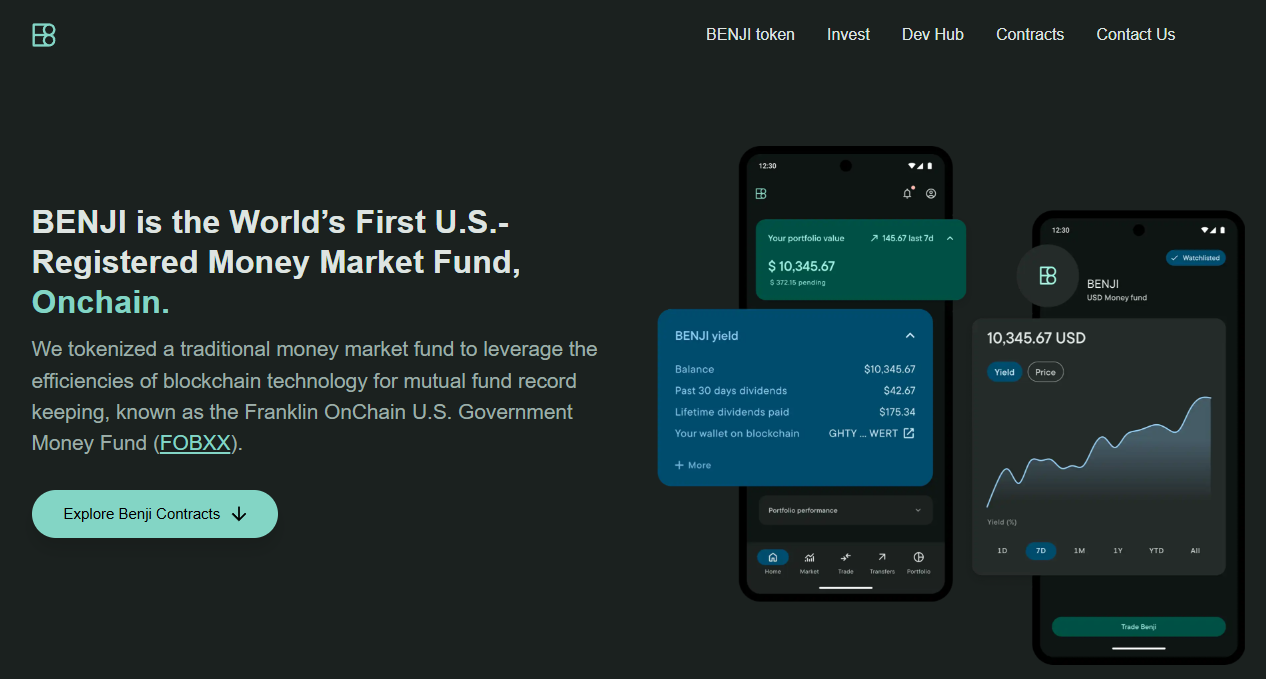
 Franklin Templeton's $775 million Franklin OnChain U.S. Government Money Fund (BENJI) pioneered tokenized mutual funds in 2021, offering exposure to US government securities across eight blockchains with patent-pending intraday yield calculation.

Ideal For

  • Investors seeking regulated 40 Act fund structure
  • Collateral managers requiring second-by-second yield accrual
  • Multi-chain strategies needing broad blockchain compatibility
  • Users prioritizing traditional asset manager credibility

Standout Features

  • Intraday yield tracking down to the second, enabling proportional earnings even for partial-day holdings
  • Direct stablecoin purchases and redemptions with wallet-to-wallet transfer capability
  • 63% of AUM deployed on Stellar Network for optimal cost efficiency
  • Integrated with DeFi protocols for collateral and leverage applications

Pricing
 7-day current yield approximately 4.5-5.5% gross; 0.25% management fee. No minimum investment restrictions beyond standard mutual fund requirements.

Availability
 Global availability with specific KYC requirements. Active on Stellar, Ethereum, Arbitrum, Base, Avalanche, Polygon, Aptos, Solana, BNB Chain.

Worth Noting
 Traditional mutual fund constraints apply including daily NAV calculations and potential redemption delays during market stress.

Alternatives to Consider: Backed bIB01, Superstate Short Duration Government Securities  

For Institutional Credit Exposure (8-12% Yield)

Top Pick: Maple Finance — Premier Crypto-Collateralized Lending

Overview
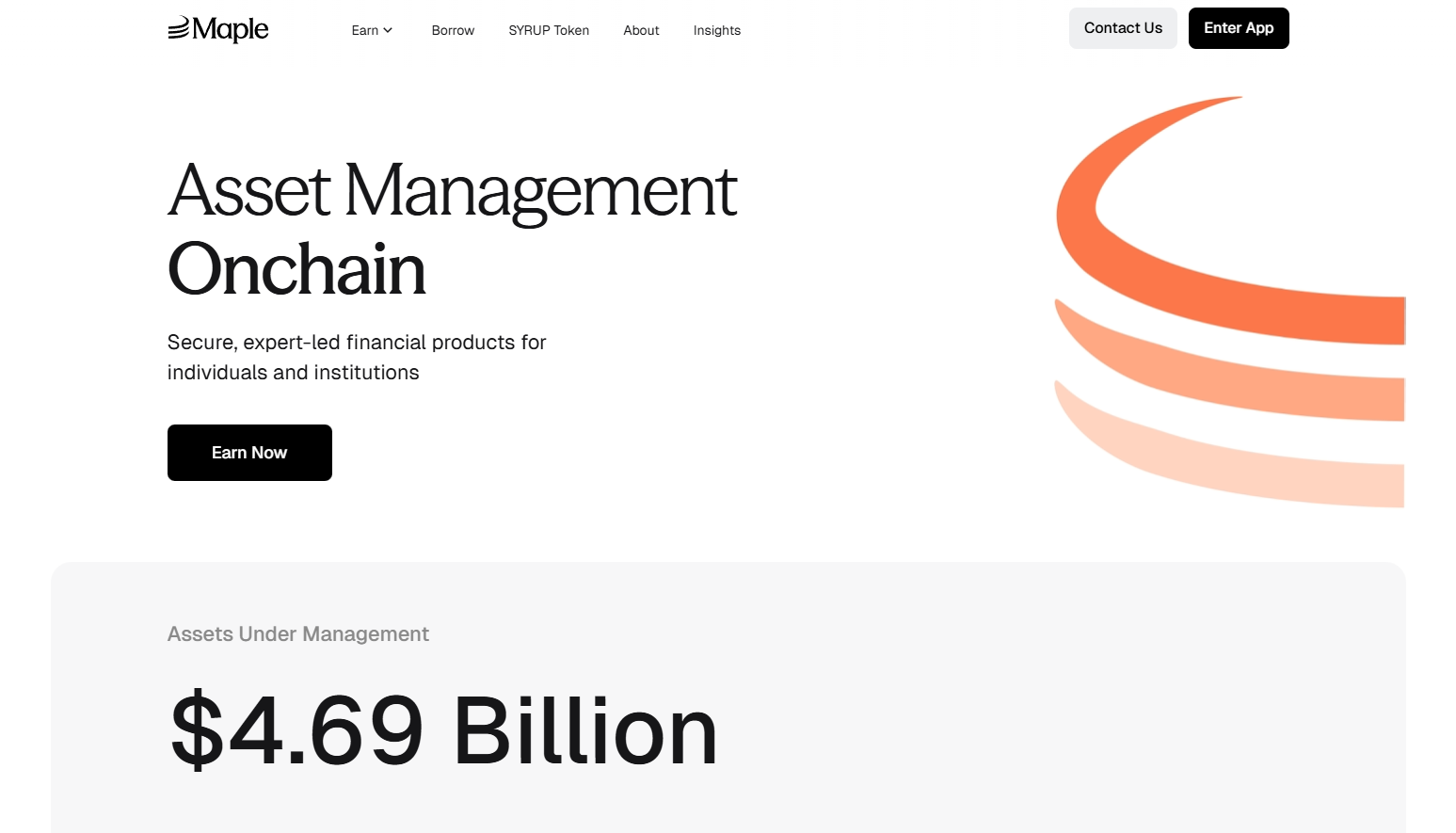
 Maple Finance manages over $4 billion in assets, specializing in institutional over-collateralized lending backed by Bitcoin, Ethereum, Solana, and XRP, targeting $100 billion in annual loan volume by 2030. The platform introduced SyrupUSDC for permissionless retail access alongside KYC-gated institutional pools.

Ideal For

  • Institutional lenders seeking exposure to cryptocurrency-backed credit
  • Liquidity providers comfortable with smart contract risk
  • Allocators targeting floating-rate, senior-secured structures
  • Investors seeking alternatives to traditional stablecoin farming

Standout Features

  • Consistent 9-12% net yields through undercollateralized institutional facilities and structured credit products
  • Strategic integration with Aave's $40 billion protocol bringing syrupUSDT to Plasma instance and syrupUSDC to core markets
  • Partnerships with Bitwise, Lido Finance (stETH-backed credit lines), and EtherFi (weETH collateral) expanding institutional adoption
  • Robust risk management combining decades of TradFi expertise with real-time on-chain monitoring

Pricing
 Variable by pool; typical effective yields 9-12% after protocol fees. Minimum investments pool-dependent, generally $10K-$50K for retail syrup products.

Availability
 Global with KYC requirements for lending. Institutional Maple requires accreditation; Syrup.fi open to broader participants.

Worth Noting
 Platform transitioned from uncollateralized to over-collateralized model after 2022 market turmoil. Historical defaults impacted certain pools; robust recovery mechanisms now in place.

Alternatives to Consider: Credix (emerging markets), TrueFi (uncollateralized DeFi)  

Runner-Up: Goldfinch Prime — Institutional Private Credit Access

Overview
 Goldfinch Prime aggregates exposure to multi-billion dollar private credit funds from Ares, Apollo, Golub Capital, and KKR, providing on-chain access to institutional-grade senior secured loans with over $1 trillion in collective AUM.

Ideal For

  • Non-US investors seeking diversified private credit exposure
  • Allocators targeting institutional fund performance without direct fund access
  • Participants seeking uncorrelated yield to crypto markets
  • Investors comfortable with longer lockup periods

Standout Features

  • Exposure to 1000+ senior secured loans across industries through vetted fund managers with 10+ years experience
  • Target returns of 9-12% net of fees with strict eligibility criteria including >90% senior secured portfolios and <0.75% target non-accrual rates
  • Heron Finance manages fund selection and vetting while fund managers handle all underwriting and default resolution
  • USDC-based deposits converted to proportional GPRIME tokens for continuous offering structure

Pricing
 Net yields 9-12% after embedded management fees and profit sharing. Minimum investments vary by pool structure; typically institutional minimums apply.

Availability
 Non-US persons only due to regulatory structure. KYC and accreditation verification required.

Worth Noting
 Exposure is indirect through fund shares rather than direct loan origination; fund managers absorb individual borrower default risk into aggregate yields. Liquidity limited compared to Treasury products.

Alternatives to Consider: Centrifuge private credit pools, Credix fintech lending


For Real Estate & Diversified Assets (6-10% Yield)

Top Pick: Centrifuge — Multi-Asset Tokenization Infrastructure

Overview
 Centrifuge operates as a multichain infrastructure platform enabling asset managers to tokenize real estate, trade finance, carbon credits, and structured credit with $1.2 billion TVL and recent 10x growth driven by the first on-chain CLO and tokenized S&P 500 index fund.

Ideal For

  • Investors seeking exposure to asset-backed securities beyond treasuries
  • Allocators comfortable evaluating tranched credit structures
  • Participants prioritizing transparency and on-chain asset verification
  • Portfolio managers wanting diversification across real-world credit types

Standout Features

  • Asset-agnostic architecture supporting structured credit, real estate mortgages, US treasuries, carbon credits, and consumer finance with full collateralization and legal recourse for investors
  • V3 platform enables cross-chain interoperability across Ethereum, Base, Arbitrum, Avalanche, BNB Chain, and Plume with integrated KYC and compliance-as-a-feature
  • Senior/junior tranche structures allowing risk-return customization
  • Partnership with Chronicle Labs for real-time price feeds and integration with Circle for USDC on/off-ramping

Pricing
 Yields vary by pool and tranche: typically 6-8% for senior tranches, 10-14% for junior tranches. Management fees embedded; pool-specific minimums apply.

Availability
 Global with KYC requirements. Pools may have additional jurisdictional restrictions based on underlying asset location.

Worth Noting
 Platform complexity requires understanding of tranched structures and asset-specific risks. Less liquid credit instruments offer less frequent pricing updates than treasury products.

Alternatives to Consider: RealT (US residential real estate focus), Republic (equity crowdfunding)


For Emerging Market Credit (12-18% Yield)

Top Pick: Credix — Latin American Fintech Lending

Overview
 Credix specializes in providing credit facilities to fintech lenders in Latin America, offering high-yield exposure to underserved credit markets with institutional-grade underwriting and local market expertise.

Ideal For

  • Sophisticated investors seeking higher risk-adjusted returns
  • Allocators comfortable with emerging market credit risk
  • Participants with extended investment horizons (12-24 months typical)
  • Investors seeking geographic diversification from US/EU markets

Standout Features

  • Target yields 12-18% reflecting emerging market risk premiums
  • Focus on fintech infrastructure enabling financial inclusion
  • Partnerships with established Latin American credit originators
  • Robust due diligence and monitoring of borrower networks

Pricing
 Pool-dependent yields typically 12-18% gross with management fees of 1-2%. Minimum investments generally $50K+ for accredited investors.

Availability
 Non-US persons primarily; requires accreditation verification and enhanced KYC given emerging market exposure.

Worth Noting
 Higher yields reflect higher credit and currency risk. Platform experienced challenges during regional economic volatility; enhanced risk controls now implemented.

Alternatives to Consider: Goldfinch V1 pools (emerging market focus), TrueFi uncollateralized pools


For Tokenization Infrastructure (Platform Providers)

Top Pick: Securitize — Industry-Leading Issuance Platform

Overview
 Securitize has tokenized over $4.5 billion in assets for 1.2 million investors across 3,000+ clients, operating as an SEC-registered transfer agent with integrated ATS for secondary trading. The platform powers major offerings including BlackRock's BUIDL fund.

Ideal For

  • Asset managers seeking turnkey tokenization solutions
  • Issuers requiring SEC-compliant digital security infrastructure
  • Institutional clients needing integrated custody and compliance
  • Projects prioritizing regulatory alignment and brand credibility

Standout Features

  • DS Protocol automates token issuance, transfer agent functions, and regulated secondary trading with $47 million funding led by BlackRock
  • Recent launch of STAC tokenized AAA CLO fund with BNY custody demonstrating institutional adoption trajectory
  • Comprehensive investor onboarding, KYC/AML, and reporting infrastructure
  • Partnerships with major asset managers and integration with Zero Hash for fiat conversion

Pricing
 Platform fees vary by issuance size and complexity; typically 0.5-2% of AUM plus basis point fees on transactions. White-label solutions available for enterprise clients.

Availability
 Global operations with jurisdiction-specific compliance modules. Primary focus on US, EU, and APAC institutional markets.

Worth Noting
 Securitize is an issuance platform rather than direct investment product; investors access opportunities through partner funds and offerings launched on the infrastructure.

Alternatives to Consider: Tokeny (EU-focused), Polymath/Polymesh (security token specialists)


Complete Provider Directory

  • Backed Finance: European MiCA-compliant tokenization platform offering bIB01 (Swiss government bond exposure) and bC3M (commodity basket). Strong focus on regulatory alignment with modest 3-5% yields and low entry barriers.
  • Swarm Markets: Decentralized platform enabling fractional ownership of real estate and private credit with $1K-$50K minimums. Emphasizes accessibility while maintaining compliance through distributed infrastructure.
  • TrueFi: Uncollateralized lending protocol using on-chain credit scoring and portfolio diversification. Higher risk-return profile (8-15% targets) with full transparency of borrower pools and performance metrics.
  • Archax: UK FCA-regulated platform for institutional tokenization of bonds, funds, and money markets. Focus on traditional finance compatibility with stringent accreditation requirements.

Making Your Selection: Key Questions

  • What yield stability do you require?
     Treasury-backed platforms (Ondo, Franklin Templeton) offer predictable 4-5% returns with minimal volatility. Credit-focused platforms (Maple, Goldfinch) target 9-12% but introduce credit risk and performance variability.
  • What is your risk tolerance for underlying collateral?
     Government securities provide lowest risk; over-collateralized crypto loans add smart contract and liquidation risks; uncollateralized emerging market credit carries highest default potential.
  • Do you meet accreditation and minimum investment thresholds?
     Many institutional products require $50K-$200K minimums and qualified purchaser status. Retail-accessible options like USDY and syrupUSDC lower barriers but may sacrifice yield.
  • What liquidity do you need?
     Treasury tokens generally offer daily liquidity; private credit pools may have quarterly redemption windows; real estate tokenization can involve 12-24 month lockups.
  • How important is regulatory compliance?
     Platforms like Ondo, Franklin Templeton, and Securitize prioritize SEC registration and traditional fund structures. Purely DeFi-native protocols offer less regulatory clarity but greater composability.
  • What blockchain ecosystems do you operate in?
     Multi-chain deployment (Ondo, Centrifuge) provides flexibility; single-chain specialization (some Maple pools) may offer optimization but limits interoperability.
  • Do you have geographic restrictions?
     US persons often excluded from highest-yield opportunities due to securities laws. European investors benefit from MiCA framework; APAC sees growing regulatory clarity.
  • What level of transparency do you require?
     On-chain native protocols offer real-time asset verification; hybrid models may rely on periodic attestations and third-party audits.
  • Are you seeking passive income or active yield strategies?
     Treasury staking provides set-and-forget returns; DeFi integrations enable leverage, collateral strategies, and yield optimization requiring active management.
  • How much operational complexity can you handle?
     Single-platform solutions simplify but limit optionality; multi-protocol strategies maximize returns but require gas management, tax tracking, and security across multiple platforms.

Maximizing Your Setup with Token Metrics

Token Metrics provides critical intelligence for navigating RWA yield opportunities through data-driven analysis and market insights.

Research Phase: Leverage Token Metrics' fundamental analysis to evaluate tokenized asset protocols, comparing on-chain metrics, TVL trends, and yield sustainability indicators. Our RWA sector reports identify emerging platforms and highlight regulatory developments across jurisdictions.

Portfolio Construction: Use quantitative scoring to allocate across risk tiers—balancing stable treasury exposure with higher-yield credit products. Token Metrics' portfolio tools help optimize diversification while monitoring correlation to traditional crypto markets.

Ongoing Monitoring: Real-time alerts notify you of yield changes, protocol upgrades, and risk events. Our dashboard aggregates performance across multiple RWA platforms, tracking your yield-bearing positions alongside broader cryptocurrency holdings.

Risk Management: Token Metrics' risk analytics assess smart contract security, custody arrangements, and counterparty exposure. Our reports flag platforms with concerning yield sustainability metrics or operational red flags before they impact your capital.

Start your Token Metrics free trial to access institutional-grade RWA research and optimize your real-world asset allocation.  

Essential Security Practices

  • Custody Verification: Confirm that platforms use institutional-grade custodians (Coinbase Custody, BitGo, Fireblocks) for underlying assets. Verify proof-of-reserve attestations and third-party audits.
  • Smart Contract Risk: Review audit reports from reputable firms (Trail of Bits, OpenZeppelin, Certora). Understand upgrade mechanisms and timelock protections on protocol contracts.
  • Legal Structure Assessment: Examine SPV formation, bankruptcy remoteness, and investor recourse mechanisms. Ensure tokenization structure provides actual legal claim on underlying assets, not just economic exposure.
  • Regulatory Compliance: Verify platforms maintain necessary licenses (broker-dealer, transfer agent, ATS) in relevant jurisdictions. Confirm offerings comply with securities laws in your domicile.
  • Counterparty Risk: Understand who services loans, manages defaults, and handles liquidations. Evaluate track records of asset originators and credit underwriters.
  • Liquidity Risk Management: Never allocate more than you can afford to lock up for stated redemption periods. Maintain buffer capital for market volatility and potential redemption delays.
  • Tax Implications: Consult tax professionals on treatment of tokenized yield—may be classified as interest income, dividends, or capital gains depending on structure and jurisdiction.
  • Geographic Restrictions: Verify you're eligible to participate based on residency. Using VPNs or misrepresenting location can result in frozen funds and legal liability.
  • Platform Concentration: Diversify across multiple RWA providers to reduce single-point-of-failure risk. No single platform should represent majority of yield allocation.
  • Documentation: Maintain records of all transactions, yield distributions, and platform communications for tax reporting and potential disputes.

This article is for research and educational purposes, not financial advice. RWA investments carry risks including loss of principal.


What to Avoid

  • Ignoring minimum holding periods: Many RWA products enforce lockups or redemption windows. Treating them as liquid positions can leave you unable to access capital when needed.
  • Chasing unsustainably high yields: Promised returns significantly above market rates often indicate excessive risk. Verify underlying asset performance and historical consistency before committing capital.
  • Overlooking platform liquidity: Token existence on-chain doesn't guarantee exit liquidity. Check secondary market depth and historical spread between minting and redemption prices.
  • Neglecting jurisdictional compliance: Accessing platforms not available in your region can result in frozen accounts and regulatory penalties. Always verify eligibility before depositing funds.
  • Underestimating smart contract risk: Even well-audited protocols face exploitation risk. Size positions appropriately and monitor security incident disclosures across the ecosystem.
  • Failing to verify asset backing: Don't rely on marketing claims. Demand proof-of-reserve, third-party attestations, and transparent reporting on underlying collateral.
  • Concentrating in single asset class: Over-allocating to one RWA category (e.g., all private credit) eliminates diversification benefits. Balance across treasuries, credit, and real estate where possible.
  • Ignoring fee structures: Management fees, performance fees, and transaction costs compound over time. Calculate net yields after all costs when comparing platforms.

Reader Questions Answered

What's the difference between tokenized treasuries and yield-bearing stablecoins?

 Tokenized treasuries (like OUSG) represent direct ownership of US Treasury securities with yield passed through to holders. Yield-bearing stablecoins (like USDY) maintain $1 peg while distributing treasury yields via rebasing or airdrops. Treasuries may fluctuate slightly with NAV; yield stablecoins prioritize price stability.

Are RWA yields taxable differently than crypto staking rewards?

 Likely yes, though tax treatment varies by jurisdiction. RWA yields from treasuries or credit facilities often classified as interest income taxed at ordinary rates. Crypto staking may be treated as income at receipt or capital gains at sale depending on location. Consult tax professionals for specific guidance.

Can I use tokenized RWAs as collateral in DeFi protocols?

 Increasingly yes. Platforms like Maple, Ondo (via Flux Finance), and Centrifuge enable using tokenized assets as DeFi collateral. However, support varies by protocol and asset—USDY and OUSG see broader integration than niche real estate tokens. Liquidation risks apply if collateral value drops.

What happens if the platform goes bankrupt?

 Properly structured tokenization isolates assets in bankruptcy-remote SPVs, protecting investor claims even if platform operator fails. However, redemption processes may be delayed and require legal navigation. This is why verifying legal structure and custodial arrangements is critical.

How liquid are RWA tokens compared to stablecoins?

 Significantly less liquid. While stablecoins have billions in daily DEX volume, most RWA tokens trade thinly or only through platform-controlled redemption mechanisms. Treasury tokens offer better liquidity than private credit or real estate, but all lag traditional stablecoins substantially.

Do I need to be an accredited investor?

 Depends on the platform and your location. US-based offerings often require accreditation; international platforms may have lower barriers. Products like USDY, syrupUSDC, and BENJI target broader accessibility, while institutional credit pools restrict to qualified purchasers.

What are the main risks that could cause loss of principal?

 (1) Underlying asset default (credit risk), (2) smart contract exploitation, (3) platform insolvency without proper asset segregation, (4) regulatory action freezing operations, (5) stablecoin de-pegging for yield products denominated in USDC/USDT, (6) liquidation cascades in collateralized structures.

How do yields compare to traditional finance alternatives?

 Tokenized treasuries (4-5%) match conventional money market funds but with 24/7 access. Private credit RWAs (9-12%) offer premiums over corporate bonds due to illiquidity and platform novelty. Emerging market RWA yields (12-18%) comparable to EM debt funds with added smart contract risk.


Bottom Line

Real-world asset yield marketplaces represent the maturation of blockchain infrastructure beyond speculation into productive finance. For investors seeking stable, asset-backed returns uncorrelated to cryptocurrency volatility, platforms like Ondo Finance and Franklin Templeton deliver institutional-grade treasury exposure with DeFi composability. Those comfortable with credit risk can access superior yields through Maple Finance's collateralized institutional lending or Goldfinch Prime's diversified private credit exposure.

The key to success: match platform selection to your specific risk tolerance, liquidity needs, and regulatory constraints. Treasury products suit conservative allocators prioritizing capital preservation; credit platforms reward investors accepting higher risk for enhanced returns; multi-asset infrastructure like Centrifuge offers diversification across real-world credit types.

Start with smaller allocations to understand platform mechanics, redemption processes, and yield consistency before committing substantial capital. The RWA sector's rapid growth will continue creating opportunities, but also attracting lower-quality offerings—due diligence remains paramount.

Related Resources:


About This Research

Methodology: This guide evaluated 20+ RWA platforms through analysis of official documentation, on-chain data, regulatory filings, and third-party audits. Platforms selected represent meaningful TVL (>$100M), regulatory compliance, and operational track record. Final selection prioritized diversity across asset classes and investor accessibility tiers.

Research Sources:

  • Ondo Finance: Product documentation, tokenomics, OUSG/USDY specifications, Oasis Pro acquisition disclosure
  • Maple Finance: Platform whitepaper, syrupUSDC mechanics, Aave integration announcement, CEO interviews
  • Centrifuge: V3 technical documentation, pool analytics, Republic partnership details
  • Goldfinch: Prime pool specifications, fund manager criteria, Heron Finance structure
  • Franklin Templeton: BENJI platform technical details, intraday yield patent documentation, multi-chain deployment
  • Securitize: DS Protocol documentation, STAC fund launch details, BlackRock partnership announcements
  • RWA.xyz: Platform TVL data, tokenization metrics, market growth analysis
  • DeFiLlama: Protocol TVL tracking, historical performance data
  • BCG/Ripple: RWA market projections and industry research
  • VanEck, Coinbase, Binance: Sector research reports on RWA growth trajectories

All data current as of January 2025. Platform features and yields subject to change; verify current terms on official websites before investing.

Build Smarter Crypto Apps &
AI Agents in Minutes, Not Months
Real-time prices, trading signals, and on-chain insights all from one powerful API.
Grab a Free API Key
About Token Metrics
Token Metrics: AI-powered crypto research and ratings platform. We help investors make smarter decisions with unbiased Token Metrics Ratings, on-chain analytics, and editor-curated “Top 10” guides. Our platform distills thousands of data points into clear scores, trends, and alerts you can act on.
30 Employees
analysts, data scientists, and crypto engineers
Daily Briefings
concise market insights and “Top Picks”
Transparent & Compliant
Sponsored ≠ Ratings; research remains independent
Want Smarter Crypto Picks—Free?
See unbiased Token Metrics Ratings for BTC, ETH, and top alts.
Thank you! Your submission has been received!
Oops! Something went wrong while submitting the form.
 No credit card | 1-click unsubscribe
Token Metrics Team
Token Metrics Team

Recent Posts

Research

Top Institutional Crypto Custody Providers (2025)

Sam Monac
5 min

Why Institutional Crypto Custody Providers Matter in September 2025

Institutional custody is the backbone of professional digital-asset operations. The right institutional custody provider can safeguard private keys, segregate client assets, streamline settlement, and enable workflows like staking, financing, and governance. In one sentence: an institutional crypto custodian is a regulated organization that safekeeps private keys and operationalizes secure asset movements for professional clients. In 2025, rising ETF inflows, tokenization pilots, and on-chain settlement networks make safe storage and compliant operations non-negotiable. This guide is for funds, treasuries, brokers, and corporates evaluating digital asset custody partners across the US, EU, and APAC. We compare security posture, regulatory status (e.g., qualified custodian where applicable), asset coverage, fees, and enterprise UX—so you can shortlist fast and execute confidently.

How We Picked (Methodology & Scoring)

  • Liquidity (30%): Depth/venues connected, settlement rails, prime/brokerage adjacency.
  • Security (25%): Key management (HSM/MPC), offline segregation, audits/SOC reports, insurance disclosures.
  • Coverage (15%): Supported assets (BTC/ETH + long tail), staking, tokenized products.
  • Costs (15%): Transparent billing, AUC bps tiers, network fee handling, minimums.
  • UX (10%): Console quality, policy controls, APIs, reporting.
  • Support (5%): White-glove ops, SLAs, incident response, onboarding speed.

Data sources: Official product/docs, trust/security pages, regulatory/licensing pages, and custodian legal/fee disclosures. Market size/sentiment cross-checked with widely cited datasets; we did not link third parties in-body.

Last updated September 2025.

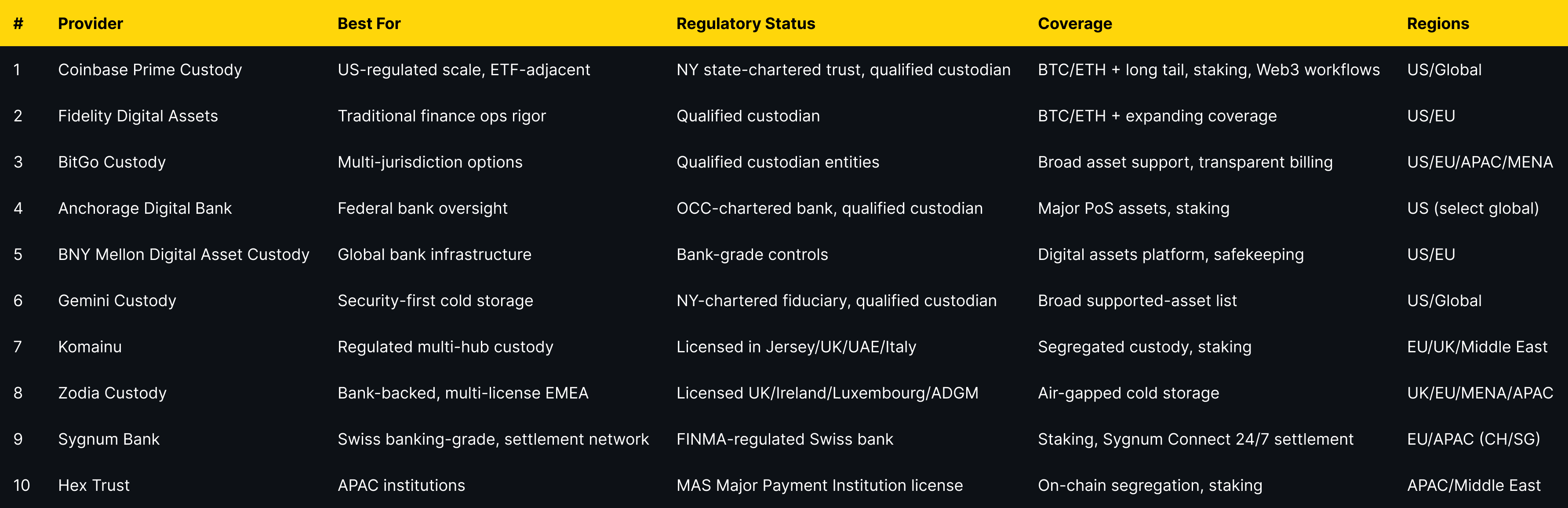
Top 10 Institutional Crypto Custody Providers in September 2025

1. Coinbase Prime Custody — Best for US-regulated scale

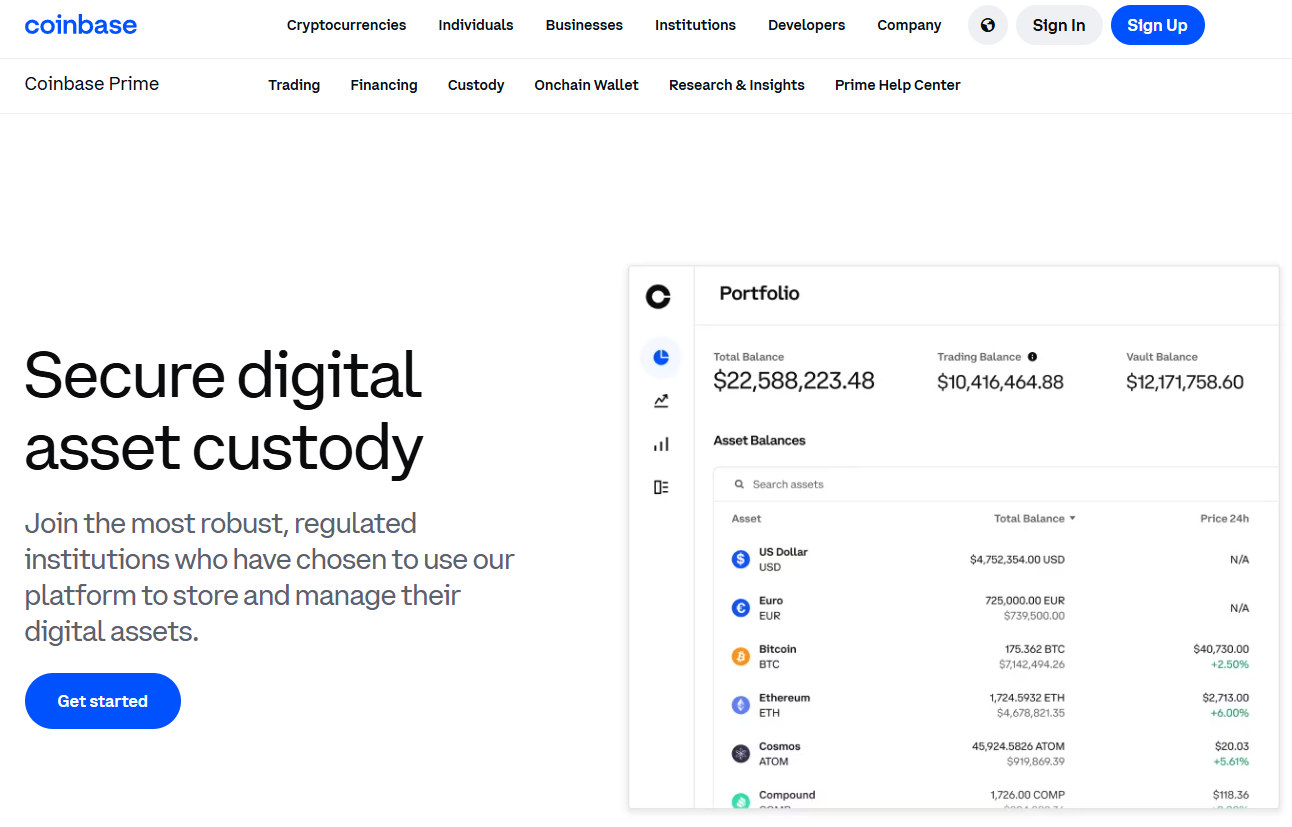
Why Use It: Coinbase Custody Trust Company is a NY state-chartered trust and qualified custodian, integrated with Prime trading, staking, and Web3 workflows. Institutions get segregated cold storage, SOC 1/2 audits, and policy-driven approvals within a mature prime stack.
Best For: US managers, ETF service providers, funds/treasuries that need deep liquidity + custody.

Notable Features:

  • Qualified custodian (NY Banking Law) with SOC 1/2 audits
  • Vault architecture + policy engine; Prime integration
  • Staking and governance support via custody workflows.

Consider If: You want a single pane for execution and custody with US regulatory clarity.
Alternatives: Fidelity Digital Assets, BitGo
Fees/Notes: Enterprise bps on AUC; network fees pass-through.
Regions: US/Global (eligibility varies).

2. Fidelity Digital Assets — Best for traditional finance ops rigor

Why Use It: A division of Fidelity with an integrated custody + execution stack designed for institutions, offering cold-storage execution without moving assets and traditional operational governance.
Best For: Asset managers, pensions, corporates seeking a blue-chip brand and conservative controls.
Notable Features:

  • Integrated custody + multi-venue execution
  • Operational governance and reporting ethos from TradFi
  • Institutional research and coverage expansion.

Consider If: You prioritize a legacy financial brand with institutional processes.
Alternatives: BNY Mellon, Coinbase Prime
Fees/Notes: Bespoke enterprise pricing.
Regions: US/EU (eligibility varies).

3. BitGo Custody — Best for multi-jurisdiction options

Why Use It: BitGo operates qualified custody entities with coverage across North America, EMEA, and APAC, plus robust policy controls and detailed billing methodology for AUC.
Best For: Funds, market makers, and enterprises needing global entity flexibility.
Notable Features:

  • Qualified custodian entities; segregated wallets
  • Rich policy tooling and operational controls
  • Transparent AUC billing methodology (bps)

Consider If: You need multi-region setup or bespoke operational segregation.
Alternatives: Komainu, Zodia Custody
Fees/Notes: Tiered AUC bps; bespoke network ops.
Regions: US/EU/APAC/MENA.

4. Anchorage Digital Bank — Best for federal bank oversight

Why Use It: The only crypto-native bank with an OCC charter in the US; a qualified custodian with staking and governance alongside institutional custody.
Best For: US institutions that want bank-level oversight and crypto-native tech.

Notable Features:

  • OCC-chartered bank; qualified custodian
  • Staking across major PoS assets
  • Institutional console + policy workflows

Consider If: You need federal oversight and staking inside custody.
Alternatives: Coinbase Prime Custody, Fidelity Digital Assets
Fees/Notes: Enterprise pricing; staking terms by asset.
Regions: US (select global clients).

5. BNY Mellon Digital Asset Custody — Best for global bank infrastructure

Why Use It: America’s oldest bank runs an institutional Digital Assets Platform for safekeeping and on-chain services, built on its global custody foundation—ideal for asset-servicing integrations.
Best For: Asset servicers, traditional funds, and banks needing large-scale controls.
Notable Features:

  • Integrated platform for safekeeping/servicing
  • Bank-grade controls and lifecycle tooling
  • Enterprise reporting and governance

Consider If: You prefer a global bank custodian with mature ops.
Alternatives: Fidelity Digital Assets, Sygnum Bank
Fees/Notes: Custom; bank service bundles.
Regions: US/EU (eligibility varies).

6. Gemini Custody — Best for security-first cold storage

Why Use It: Gemini Trust Company is a NY-chartered fiduciary and qualified custodian with air-gapped cold storage, role-based governance, and SOC reports—plus optional insurance coverage for certain assets.
Best For: Managers and corporates prioritizing conservative cold storage.
Notable Features:

  • Qualified custodian; segregated cold storage
  • Role-based governance and biometric access
  • Broad supported-asset list

Consider If: You need straightforward custody without bundled trading.
Alternatives: BitGo, Coinbase Prime Custody
Fees/Notes: Tailored plans; network fees apply.
Regions: US/Global (eligibility varies).

7. Komainu — Best for regulated multi-hub custody (Jersey/UK/UAE/EU)

Why Use It: Nomura-backed Komainu operates regulated custody with segregation and staking, supported by licenses/registrations across Jersey, the UAE (Dubai VARA), the UK, and Italy—useful for cross-border institutions.
Best For: Institutions needing EMEA/Middle East optionality and staking within custody.
Notable Features:

  • Regulated, segregated custody
  • Institutional staking from custody
  • Governance & audit frameworks

Consider If: You require multi-jurisdiction regulatory coverage.
Alternatives: Zodia Custody, BitGo
Fees/Notes: Enterprise pricing on request.
Regions: EU/UK/Middle East (global eligibility varies).

8. Zodia Custody — Best for bank-backed, multi-license EMEA coverage

Why Use It: Backed by Standard Chartered, Zodia provides institutional custody with air-gapped cold storage, standardized controls, and licensing/registrations across the UK, Ireland, Luxembourg, and Abu Dhabi (ADGM).

Best For: Asset managers and treasuries seeking bank-affiliated custody in EMEA.
Notable Features:

  • Air-gapped cold storage & policy controls
  • Multi-region regulatory permissions (EMEA/MENA)
  • Institutional onboarding and reporting

Consider If: You want bank-backed governance and EU/Middle East reach.
Alternatives: Komainu, BNY Mellon
Fees/Notes: Custom pricing.
Regions: UK/EU/MENA/APAC (per license/authorization).

9. Sygnum Bank — Best for Swiss banking-grade custody + settlement network

Why Use It: FINMA-regulated Swiss bank providing off-balance-sheet crypto custody, staking, and Sygnum Connect—a 24/7 instant settlement network for fiat, crypto, and stablecoins.

Best For: EU/Asia institutions valuing Swiss regulation and bank-grade controls.

Notable Features:

  • Off-balance-sheet, ring-fenced custody
  • Staking from custody and asset risk framework
  • Instant multi-asset settlement (Sygnum Connect)

Consider If: You want Swiss regulatory assurances + 24/7 settlement.
Alternatives: AMINA Bank, BNY Mellon
Fes/Notes: AUC bps; see price list. Regions: EU/APAC (CH/SG).

10. Hex Trust — Best for APAC institutions with MAS-licensed stack

Why Use It: A fully licensed APAC custodian offering on-chain segregation, role-segregated workflows, staking, and—in 2025—obtained a MAS Major Payment Institution license to offer DPT services in Singapore, rounding out custody + settlement.
Best For: Funds, foundations, and corporates across Hong Kong, Singapore, and the Middle East.

Notable Features:

  • On-chain segregated accounts; auditability
  • Policy controls with granular sub-accounts
  • Staking & integrated markets services

Consider If: You want APAC-native licensing and operational depth.
Alternatives: Sygnum Bank, Komainu
Fees/Notes: Enterprise pricing; insurance program noted. Regions: APAC/Middle East (licensing dependent).

Decision Guide: Best By Use Case

  • US-regulated & ETF-adjacent: Coinbase Prime Custody; Anchorage Digital Bank; Fidelity Digital Assets.
  • Bank-backed in EMEA: BNY Mellon; Zodia Custody.
  • Multi-jurisdiction flexibility: BitGo; Komainu.
  • Swiss banking model: Sygnum Bank (and consider AMINA Bank).
  • APAC-first compliance: Hex Trust.
  • Cold-storage emphasis with simple pricing: Gemini Custody.

How to Choose the Right Institutional Custody Provider (Checklist)

  • Regulatory fit: Qualified custodian or bank charter where required by your advisors/LPAs.
  • Asset coverage: BTC/ETH + the specific long-tail tokens or staking assets you need.
  • Operational controls: Policy rules, role segregation, whitelists, hardware/MPC key security.
  • Settlement & liquidity: RFQ/OTC rails, prime integration, or instant networks.
  • Fees: AUC bps, network fee handling, staking commissions, onboarding costs.
  • Reporting & audit: SOC attestations, proof of segregated ownership, audit trails.
  • Support: 24/7 ops desk, SLAs, incident processes.
    Red flags: Commingled wallets, unclear ownership/legal structure, limited disclosures.

Use Token Metrics With Any Custodian

  • AI Ratings: Screen assets with on-chain + quant scores to narrow to high-conviction picks.
  • Narrative Detection: Identify sector momentum early (L2s, RWAs, staking).

  • Portfolio Optimization: Balance risk/return before you allocate from custody.

  • Alerts & Signals: Monitor entries/exits and risk while assets stay safekept.

Workflow (1–4): Research in Token Metrics → Select assets → Execute via your custodian’s trading rails/prime broker → Monitor with TM alerts.


Start free trial

Security & Compliance Tips

  • Enforce hardware/MPC key ceremonies and multi-person approvals.
  • Use role-segregated policies and allowlisting for withdrawals.
  • Align KYC/AML and travel-rule workflows with fund docs and auditors.
  • Document staking/airdrop entitlements and slashing risk treatment.
  • Keep treasury cold storage separate from hot routing wallets.

This article is for research/education, not financial advice.

Beginner Mistakes to Avoid

  • Picking a non-qualified entity when your mandate requires a qualified custodian.
  • Underestimating operational lift (approvals, whitelists, reporting).
  • Ignoring region-specific licensing/eligibility limitations.
  • Focusing only on fees without evaluating security controls.
  • Mixing trading and custody without strong policy separation.

FAQs

What is a qualified custodian in crypto?
A qualified custodian is a regulated entity (e.g., trust company or bank) authorized to hold client assets with segregation and audited controls, often required for investment advisers. Look for clear disclosures, SOC reports, and trust/bank charters on official pages.

Do I need a qualified custodian for my fund?
Many US advisers and institutions require qualified custody under their compliance frameworks; your legal counsel should confirm. When in doubt, choose a trust/bank chartered provider with documented segregation and audits.

Which providers support staking from custody?
Anchorage, Coinbase Prime, Komainu, Sygnum, and Hex Trust offer staking workflows from custody (asset lists vary). Confirm asset-by-asset support and commissions.

How are fees structured?
Most providers price custody in annualized basis points (bps) on average assets under custody; some publish methodologies or fee schedules. Network fees are usually passed through.

Can I keep assets off-exchange and still trade?
Yes—prime/custody integrations and instant-settlement networks let you trade while keeping keys in custody, reducing counterparty risk. Examples include Coinbase Prime and Sygnum Connect.

Are there regional restrictions I should know about?
Licensing/availability varies (e.g., Hex Trust operates under MAS MPI in Singapore; Zodia holds permissions across UK/EU/ADGM). Always confirm eligibility for your entity and region.

Conclusion + Related Reads

If you operate in the US with strict compliance needs, start with Coinbase Prime, Fidelity, or Anchorage. For bank-backed EMEA coverage, look to BNY Mellon or Zodia. For Swiss banking controls and instant settlement, Sygnum stands out; in APAC, Hex Trust offers strong licensing and workflows. BitGo and Komainu excel when you need multi-jurisdiction flexibility.

Research

Best Retail Crypto Wallets 2025

Sam Monac
5 min

Why Retail Crypto Wallets (Mobile/Web) Matter in September 2025

Retail-friendly mobile and web wallets make crypto usable—on your phone and in your browser—without relying on a centralized custodian. This guide ranks the best retail crypto wallets for 2025 so you can safely store, send, swap, and explore Web3. A crypto wallet is software that holds your keys and lets you sign transactions; self-custody means you control those keys.
We focus on practical needs: everyday buys, swaps, NFT viewing, multi-chain coverage, and clear fees. Expect mainstream names alongside rising multichain players. Secondary considerations include mobile crypto wallet UX, web3 wallet dapp access, and self-custody wallet security. If you’re new, start with a wallet that offers simple onboarding and robust recovery. If you’re advanced, look for pre-transaction risk checks, multichain swaps, and hardware support.

How We Picked (Methodology & Scoring)

  • Liquidity (30%) – depth and routing quality for in-wallet swaps/bridging; reliable asset movement.

  • Security (25%) – self-custody design, audits, MPC/multisig options, hardware compatibility, recovery.

  • Coverage (15%) – number of supported chains/tokens and NFT handling.

  • Costs (15%) – transparent swap/bridge fees and gas handling.

  • UX (10%) – onboarding, performance, transaction clarity, portfolio/NFT views.

  • Support (5%) – docs, help centers, in-app support channels.

Top 10 Retail Crypto Wallets (Mobile/Web) in September 2025

1. MetaMask — Best for EVM & massive dapp coverage

Why Use It: The most ubiquitous Web3 wallet, MetaMask balances power and familiarity. It’s everywhere dapps are, with mobile + browser extension, good network support, and strong swap/bridge routing in-app. Smart Transactions and built-in security alerts improve reliability for everyday users.

Best For: EVM users, NFT collectors, L2 explorers, DeFi regulars.

Notable Features: Smart Transactions; Swaps/Bridge aggregator; MetaMask Learn; mobile + major browsers.

Consider If: You want explicit fee transparency—MetaMask Swaps includes a 0.875% service fee (plus network gas).

Alternatives: Trust Wallet, OKX Wallet.

Regions: Global.

Fees Notes: Network fees; MetaMask Swaps service fee 0.875%.

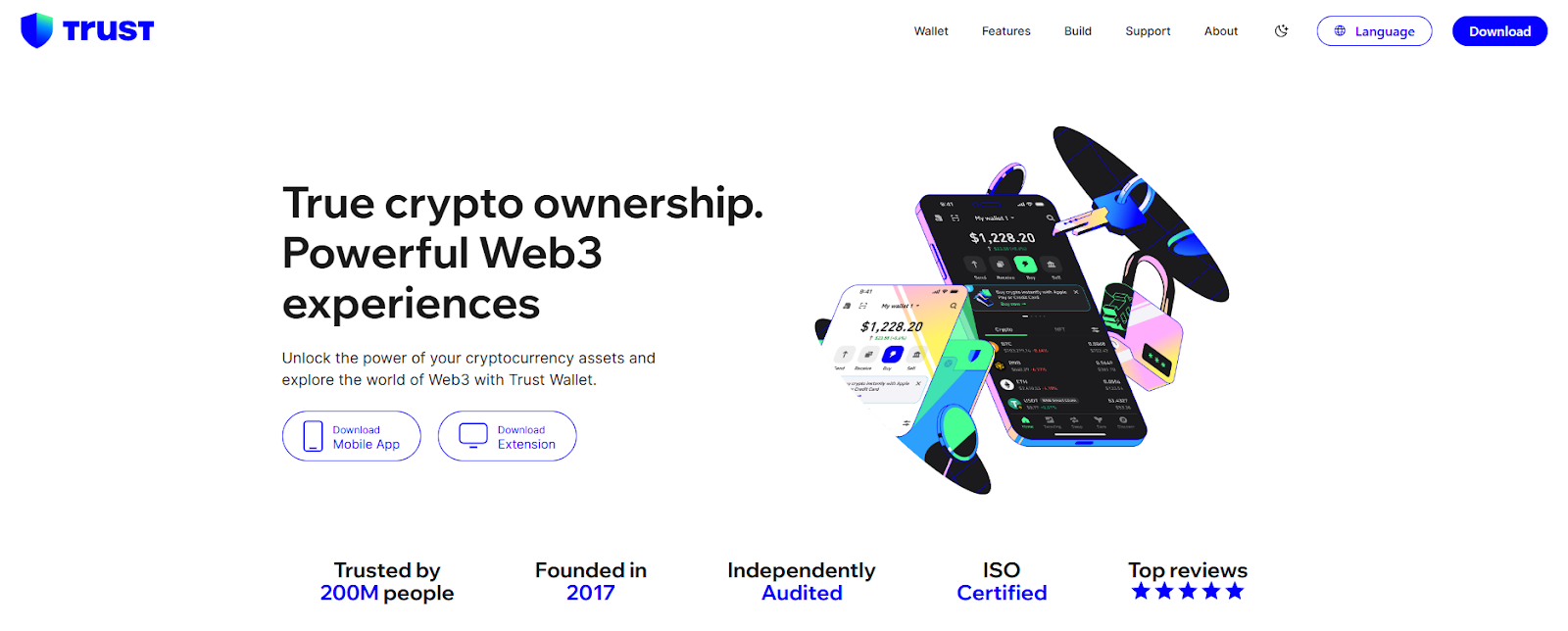
2. Trust Wallet — Best all-rounder for mobile + extension

Why Use It: Trust Wallet offers a simple, one-stop experience: buy, send, swap, stake, and manage NFTs across many chains. Its mobile app is fast, and the extension integrates with popular EVM and non-EVM chains.

Best For: Beginners who want breadth; multichain NFT holders; mobile-first users.

Notable Features: Built-in DApp browser; simplified swaps with gas optimization; staking flows.

Consider If: You want no added swap fee—Trust says it doesn’t charge extra on swaps (you still pay network/third-party fees).

Alternatives: MetaMask, Crypto.com Onchain.

Regions: Global.

Fees Notes: Network/partner fees apply; Trust states no added in-app swap fee.

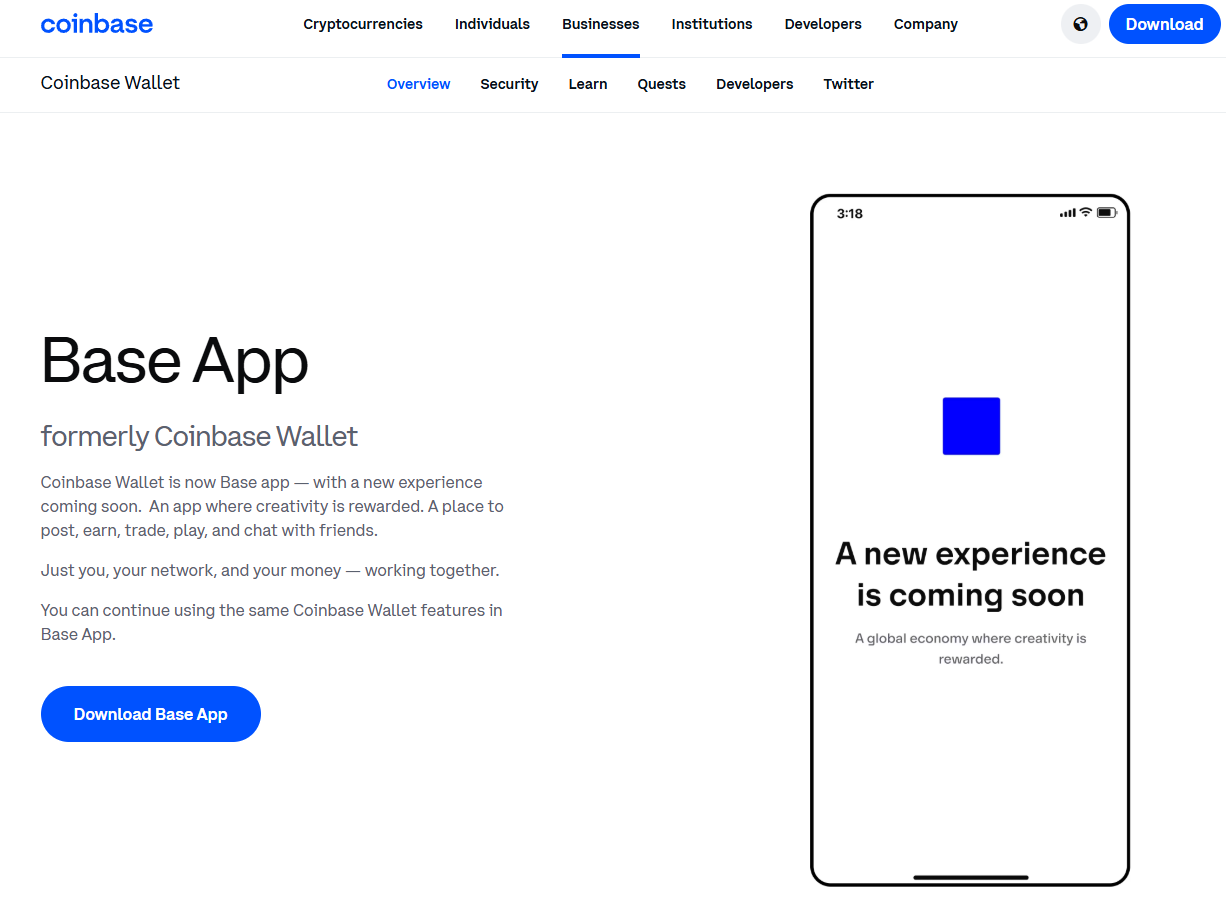
3. Base app (formerly Coinbase Wallet) — Best for Coinbase ecosystem & onchain social

Why Use It: Rebranded as the Base app, the former Coinbase Wallet keeps familiar self-custody features while embracing Base/L2 culture and onchain social/activity. If you already use Coinbase products, onboarding is straightforward while staying self-custodial.

Best For: Coinbase users going self-custody; Base/L2 explorers; web3 social/NFT dabblers.

Notable Features: Self-custody; trading, posting, playing; continuity for Coinbase Wallet users.

Consider If: You prefer chain-agnostic advanced tooling—others may offer deeper multichain utilities today.

Alternatives: MetaMask, Rainbow.

Regions: Global.

Fees Notes: Network fees; third-party swap/partner fees where used.

4. Phantom — Best for Solana + solid multichain UX

Why Use It: Phantom started Solana-first and has grown into a polished multichain wallet (Solana, Ethereum, and more). The interface is clean, with strong NFT views and transaction clarity—great for newcomers to Solana and cross-chain dabblers.

Best For: Solana users, NFT traders, multichain retail.

Notable Features: In-wallet swaps and bridging; gasless swaps on Solana (select cases); robust notifications/history.

Consider If: You want the lowest possible swap fees—Phantom lists 0.85% on select pairs, with separate gas/bridge fees.

Alternatives: OKX Wallet, Trust Wallet.

Regions: Global.

Fees Notes: Network fees; Phantom fee 0.85% on select swaps; gasless-swap fee rules apply on Solana.

5. OKX Wallet — Best for power users who want DEX depth

Why Use It: OKX Wallet (extension + mobile) plugs you into OKX’s DEX aggregator, NFT marketplace, and DeFi. It offers multiple swap modes and solid routing—useful when chasing best execution across chains.

Best For: DeFi users seeking liquidity routing; cross-chain swappers; NFT traders.

Notable Features: Multi-mode swaps; DEX aggregator; marketplace; Earn/Discover sections.

Consider If: You need crystal-clear fee schedules—OKX lists DEX interface fee tiers up to 0.85% depending on pair groups.

Alternatives: MetaMask, Bitget Wallet.

Regions: Global (wallet).

Fees Notes: Network fees; OKX DEX interface fee 0–0.85% by pair category.

6. Exodus — Best for design & easy portfolio views

Why Use It: Exodus is a long-standing, self-custodial wallet with a beautifully designed UI across desktop and mobile. Portfolio tracking and NFT galleries are polished, and its Web3 Wallet extends multichain support.
Best For: Newcomers who want clarity; portfolio-first users; multi-device use.

Notable Features: Multichain Web3 Wallet; thousands of swap pairs; simple buy/sell integrations.
Consider If: You want explicit fee details—Exodus doesn’t charge send/receive wallet fees, but network and partner fees still apply.

Alternatives: Crypto.com Onchain, ZenGo.

Regions: Global.

Fees Notes: No Exodus send/receive fees; network fees + third-party swap/fiat fees may apply.

7. Crypto.com Onchain — Best for simple multichain + Crypto.com tie-ins

Why Use It: Formerly known as the DeFi Wallet experience, Crypto.com Onchain is a self-custodial app with multichain support, in-wallet trading, and dapp access. It’s friendly for users who like Crypto.com’s ecosystem but want self-custody keys.

Best For: Mobile-first users; staking/earn explorers; Crypto.com ecosystem fans.

Notable Features: Local key encryption; import via 12/18/24-word phrases; multichain trading & dapp browser.

Consider If: You prefer a purely chain-agnostic wallet without exchange brand ties—others may feel “lighter.”

Alternatives: Trust Wallet, Exodus.

Regions: Global (feature availability can vary).

Fees Notes: Network/partner fees; self-custody (no custodial withdrawal fees).

8. ZenGo — Best for seed-phrase-free MPC security

Why Use It: ZenGo uses MPC to remove single-point seed phrase risks while keeping you in self-custody. That makes setup and recovery less nerve-wracking for new users, without buying hardware.

Best For: Beginners prioritizing recovery; mobile-only users; security-conscious travelers.

Notable Features: Seed-phrase-free MPC; in-app buy/swap; staking for select assets.

Consider If: You want classic seed control or advanced on-chain tooling—some power features are simpler by design.

Alternatives: Ledger Live (with hardware), Trust Wallet.

Regions: Global.

Fees Notes: Network fees; partner fees for buy/swap as quoted in-app.

9. Bitget Wallet — Best for active swappers & airdrop hunters

Why Use It: Formerly BitKeep, Bitget Wallet has grown into a large multichain wallet with DEX aggregation, dapp discovery, and memecoin-friendly flows. It’s geared for on-chain traders who want routing and token coverage across 65+ chains.

Best For: Power users in DeFi; memecoin and airdrop participants; cross-chain swaps.

Notable Features: Multichain DEX aggregator; dapp hub; iOS/Android + Chrome extension.

Consider If: You prefer a simpler, beginner-first interface—others above are more hand-holding.

Alternatives: OKX Wallet, MetaMask.

Regions: Global.

Fees Notes: Network fees; interface/partner fees vary by route/pair.

10. Ledger Live — Best for hardware-backed mobile/desktop security

Why Use It: Ledger Live is the companion app to Ledger hardware wallets; it brings buy, swap, stake, and portfolio monitoring into a single interface while private keys stay in the hardware device. Great for retail users who want a mobile/desktop app but insist on offline signing.

Best For: Long-term holders; high-value accounts; users planning to add hardware.

Notable Features: Buy/sell/swap/stake modules; multi-asset support; iOS/Android + desktop. Consider If: You don’t own hardware—full security benefits require a Ledger device.

Alternatives: ZenGo (MPC), Trezor Suite (with hardware).

Regions: Global.

Fees Notes: Network fees; partner fees for buy/swap as quoted in-app.

Decision Guide: Best By Use Case

  • Regulated U.S. on-ramp familiarity: Base app (formerly Coinbase Wallet)

  • Global multichain coverage + liquidity routing: OKX Wallet, Bitget Wallet

  • Solana-first with smooth UX: Phantom

  • EVM & dapp coverage: MetaMask

  • Mobile simplicity (no seed phrase): ZenGo

  • Polished design & portfolio tracking: Exodus

  • Exchange-brand ecosystem, self-custody keys: Crypto.com Onchain

  • Hardware-secured flows: Ledger Live

  • Beginner-friendly all-rounder: Trust Wallet

How to Choose the Right Retail Crypto Wallet (Checklist)

  • Confirm eligibility/availability in your region and app store.

  • Verify chain coverage (BTC + your primary L1s/L2s).

  • Decide on custody model: classic seed, MPC (no seed), or hardware-backed.

  • Review fees: swap/bridge interface fees + network gas.

  • Evaluate UX: transaction previews, risk alerts, NFT view, portfolio.

  • Check support: searchable help center, in-app ticketing.

  • Compliance fit: consider your tax/KYC needs with on-ramps.

  • Red flags: fake download pages; apps that ask you to type your seed phrase into a website or pop-up.

Use Token Metrics With Any Wallet

  • AI Ratings to screen assets by quality and momentum.

  • Narrative Detection to spot early theme shifts.

  • Portfolio Optimization to balance risk across chains.

  • Alerts & Signals to monitor entries/exits.

    Workflow: Research → Select wallet → Execute on-chain → Monitor with alerts.

Start free trial

Security & Compliance Tips

  • Enable biometrics + 2FA (where available) and set a strong passcode.

  • Back up recovery materials: seed phrase metal card, or MPC recovery kits.

  • Prefer hardware signing for larger balances.

  • Use transaction previews and simulation/risk checks before signing.

  • Keep software updated; download only from official sites/app stores.

This article is for research/education, not financial advice.

Beginner Mistakes to Avoid

  • Saving seed phrases in cloud notes/screenshots.

  • Sending coins to the wrong chain or address format.

  • Ignoring fee settings or slippage in swaps.

  • Approving unlimited token allowances without review.

  • Falling for phishing domains and fake extensions.

FAQs

What is a retail crypto wallet (mobile/web)?
A mobile/web retail wallet is software that stores your private keys and lets you sign transactions from your phone or browser. Most are self-custodial, meaning you—not an exchange—control your keys.

Is a self-custody wallet safer than keeping coins on an exchange?
Self-custody removes exchange counterparty risk. However, you must protect recovery methods (seed phrase, MPC recovery) and your device. Hardware or MPC-based options can add protection.

Which wallet is best for beginners?
For simplicity: Trust Wallet, Exodus, or ZenGo. They have straightforward onboarding, clear portfolio views, and solid docs. Advanced users might prefer MetaMask, Phantom, or OKX Wallet for deeper on-chain tooling.

What fees should I expect?
You’ll always pay network gas. Some wallets add interface/service fees on swaps/bridges (e.g., MetaMask 0.875%; Phantom 0.85% on select pairs; OKX DEX 0–0.85% depending on token groups).

Do I need hardware for mobile/web wallets?
No. Many work fine without hardware. For higher balances, pairing a mobile/web app with a hardware wallet (e.g., via Ledger Live) can reduce signing risk.

Can I use one wallet across multiple chains?
Yes—most featured wallets are multichain. Check chain lists and NFT support before migrating.

Conclusion + Related Reads

If you want maximum dapp coverage, go MetaMask; Solana-centric with great UX, pick Phantom; for exchange-adjacent simplicity, choose Base app or Crypto.com Onchain; for hardware-backed security, Ledger Live. Power users chasing routing and airdrops may prefer OKX Wallet or Bitget Wallet, while newcomers should consider Trust Wallet, Exodus, or ZenGo.

Research

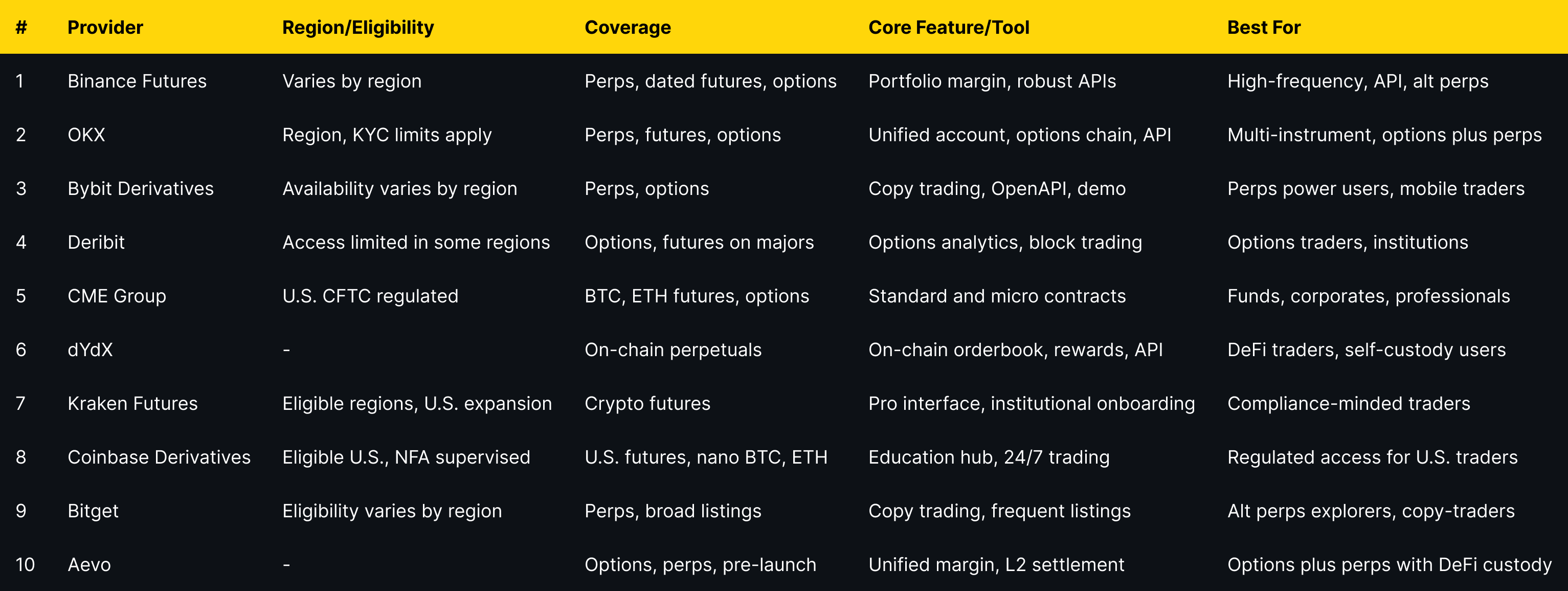
Top Crypto Derivatives Platforms for Futures & Options (2025)

Sam Monac
5 min

If you trade crypto futures and options, picking the right derivatives platforms can make or break your results. In this guide, we sort the top exchanges and on-chain venues by liquidity, security, costs, and product depth so you can match your strategy to the right venue—fast. You’ll find quick answers near the top, deeper context below, and links to official resources. We cover crypto futures, crypto options, and perpetual swaps for both centralized and decentralized platforms.

Quick answer: The best platform for you depends on region/eligibility, contract types (perps, dated futures, options), fee structure, margin system, and support quality. Below we score each provider and map them to common use cases.

How We Picked (Methodology & Scoring)

We scored each provider using the weights below (0–100 total):

  • Liquidity (30%) – Depth, spreads, and market resilience during volatility.

  • Security (25%) – Operational history, custody model, risk controls, and disclosures.

  • Coverage (15%) – Contract variety (BTC/ETH majors, alt perps, dated futures, options).

  • Costs (15%) – Trading/withdrawal fees, funding rates context, rebates.

  • UX (10%) – Execution workflow, APIs, mobile, analytics/tools.

  • Support (5%) – Docs, status pages, client service, institutional access.

Sources: Official platform pages, help centers, and product docs; public disclosures and product catalogs; our hands-on review and long-term coverage of derivatives venues. Last updated September 2025.

Top 10 Crypto Derivatives Platforms in September 2025

Each summary includes why it stands out, who it’s best for, and what to consider. Always check regional eligibility.

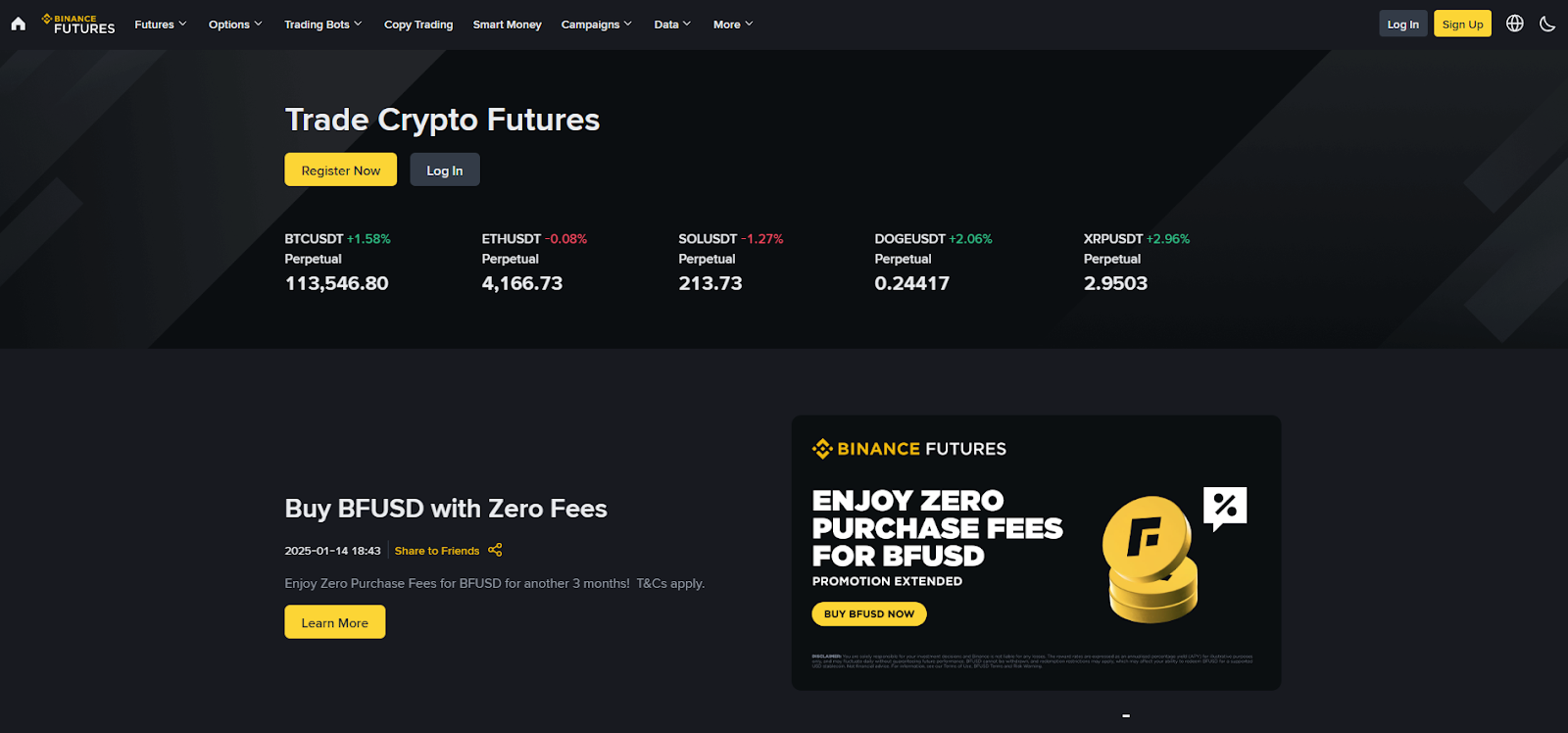
1. Binance Futures — Best for global liquidity at scale

Why Use It: Binance Futures offers some of the deepest books and widest perp listings, with robust APIs and portfolio margin. It’s a go-to for active traders who need speed and breadth.
Best For: High-frequency/active traders; systematic/API users; altcoin perp explorers.
Notable Features: Perpetuals and dated futures, options module, copy trading, portfolio margin.
Consider If: You need U.S.-regulated access—availability may vary by region.
Alternatives: OKX, Bybit.

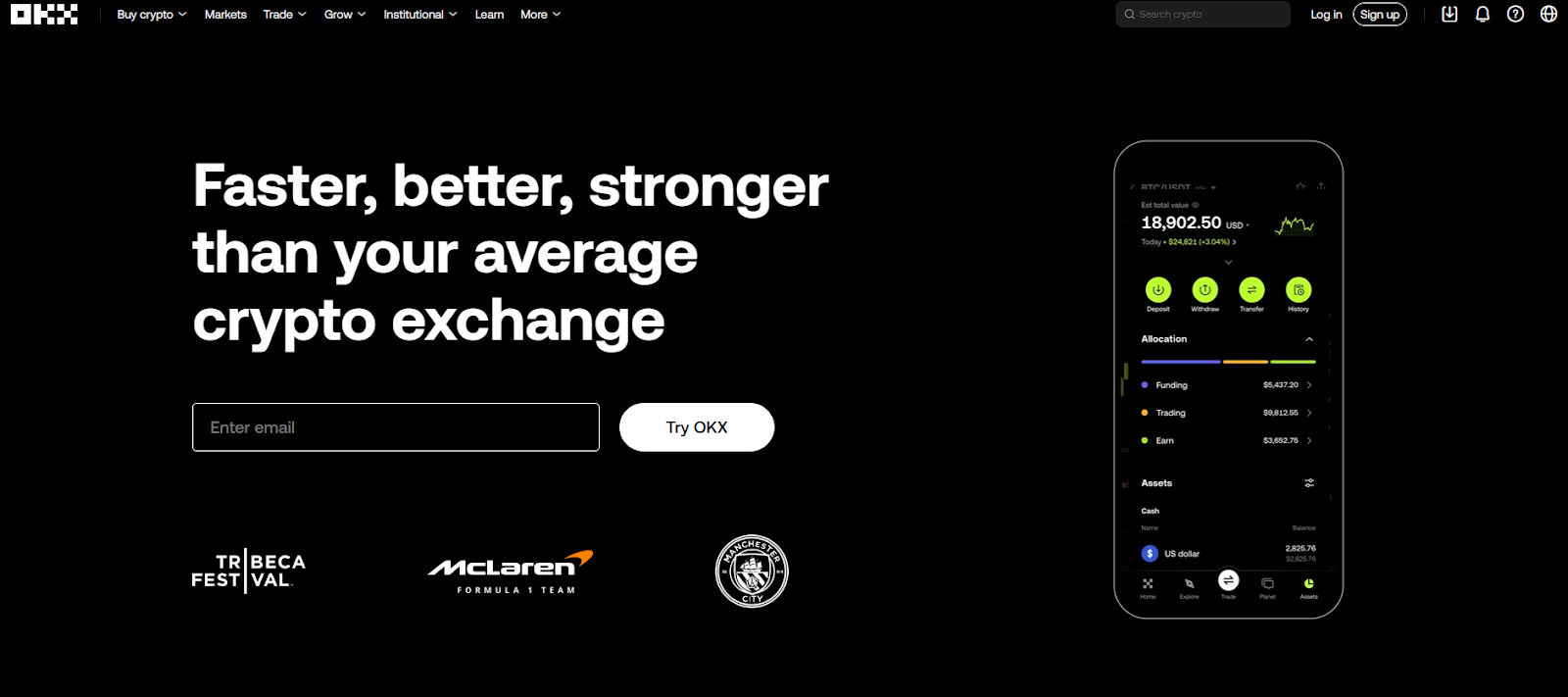
2. OKX — Best for breadth + toolset

Why Use It: Strong product coverage (perps, dated futures, options) with solid liquidity and a polished interface. Good balance of features for discretionary and API traders.
Best For: Multi-instrument traders; users wanting options + perps under one roof.
Notable Features: Unified account, options chain, pre-market perps, apps and API.
Consider If: Region/eligibility and KYC rules may limit access.
Alternatives: Binance Futures, Bybit.

3. Bybit Derivatives — Best for active perps traders

Why Use It: Competitive fees, broad perp markets, solid tooling, and a large user base make Bybit attractive for day traders and swing traders alike.
Best For: Perps power users; copy-trading and mobile-first traders.
Notable Features: USDT/USDC coin-margined perps, options, demo trading, OpenAPI.
Consider If: Check your local rules—service availability varies by region.
Alternatives: Binance Futures, Bitget.

4. Deribit — Best for BTC/ETH options liquidity

Why Use It: Deribit is the reference venue for crypto options on BTC and ETH, with deep liquidity across maturities and strikes; it also offers futures.
Best For: Options traders (directional, spreads, volatility) and institutions.
Notable Features: Options analytics, block trading tools, test environment, 24/7 support.
Consider If: Regional access may be limited; primarily majors vs. broad alt coverage.
Alternatives: Aevo (on-chain), CME (regulated futures/options).

5. CME Group — Best for U.S.-regulated institutional futures

Why Use It: For institutions needing CFTC-regulated access, margin efficiency, and robust market infrastructure, CME is the standard for BTC/ETH futures and options.
Best For: Funds, corporates, and professionals with FCM relationships.
Notable Features: Standard and micro contracts, options, benchmarks, data tools.
Consider If: Requires brokerage/FCM onboarding; no altcoin perps.
Alternatives: Coinbase Derivatives (U.S.), Kraken Futures (institutions).

6. dYdX — Best decentralized perps (self-custody)

Why Use It: dYdX v4 runs on its own chain with on-chain settlement and pro tooling. Traders who want non-custodial perps and transparent mechanics gravitate here.
Best For: DeFi-native traders; users prioritizing self-custody and transparency.
Notable Features: On-chain orderbook, staking & trading rewards, API, incentives.
Consider If: Wallet/key management and gas/network dynamics add complexity.
Alternatives: Aevo (options + perps), GMX (alt DEX perps).

7. Kraken Futures — Best for compliance-minded access incl. U.S. roll-out

Why Use It: Kraken offers crypto futures for eligible regions, with a growing U.S. footprint via Kraken Derivatives US and established institutional services.
Best For: Traders who value brand trust, support, and clear documentation.
Notable Features: Pro interface, institutional onboarding, status and support resources.
Consider If: Product scope and leverage limits can differ by jurisdiction.
Alternatives: Coinbase Derivatives, CME.

8. Coinbase Derivatives — Best for U.S.-regulated access

Why Use It: NFA-supervised futures for eligible U.S. customers and resources that explain contract types. Outside the U.S., Coinbase also offers derivatives via separate entities.
Best For: U.S. traders needing regulated access; Coinbase ecosystem users.
Notable Features: Nano BTC/ETH contracts, 24/7 trading, learn content, FCM/FCM-like flows.
Consider If: Contract lineup is narrower than global offshore venues.
Alternatives: CME (institutional), Kraken Futures.

9. Bitget — Best for alt-perps variety + copy trading

Why Use It: Bitget emphasizes a wide perp catalog, social/copy features, and frequent product updates—useful for traders rotating across narratives.
Best For: Altcoin perp explorers; copy-trading users; mobile-first traders.
Notable Features: USDT/USDC-margined perps, copy trading, frequent listings, guides.
Consider If: Check eligibility and risk—breadth can mean uneven depth in tail assets.
Alternatives: Bybit, OKX.

10. Aevo — Best on-chain options + perps with unified margin

Why Use It: Aevo runs a custom L2 (OP-stack based) and offers options, perps, and pre-launch futures with unified margin—bridging CEX-like speed with on-chain settlement.
Best For: Options/perps traders who want DeFi custody with pro tools.
Notable Features: Unified margin, off-chain matching + on-chain settlement, pre-launch markets, detailed docs and fee specs.
Consider If: On-chain workflows (bridging, gas) and product scope differ from CEXs.
Alternatives: Deribit (options liquidity), dYdX (perps DEX).

Decision Guide: Best By Use Case

  • Deep global perp liquidity: Binance Futures, OKX, Bybit.
  • BTC/ETH options liquidity: Deribit.
  • U.S.-regulated futures (retail/pro): CME (via FCMs), Coinbase Derivatives, Kraken Futures (jurisdiction dependent).
  • Self-custody perps (on-chain): dYdX.
  • On-chain options + unified margin: Aevo.
  • Altcoin perps + copy trading: Bitget, Bybit.
  • Education + tight CEX ecosystem: Coinbase Derivatives.

How to Choose the Right Platform (Checklist)

  • Region & Eligibility: Confirm KYC/AML rules and whether your country is supported.

  • Coverage & Liquidity: Check your contract list (majors vs. alts), order-book depth, and spreads.

  • Custody & Security: Decide CEX custody vs. self-custody (DEX). Review incident history and controls.

  • Costs: Compare maker/taker tiers, funding mechanics, and rebates across your actual volumes.

  • Margin & Risk: Portfolio margin availability, liquidation engine design, circuit breakers.

  • UX & API: If you automate, verify API limits and docs; assess mobile/desktop parity.

  • Support & Docs: Look for status pages, live chat, and clear product specs.

  • Red flags: Vague disclosures; no status page; no detail on risk/liquidation systems.

Use Token Metrics With Any Derivatives Platform

  • AI Ratings & Signals: Spot changing trends before the crowd.
  • Narrative Detection: Track sectors and catalysts that may drive perp flows.

  • Portfolio Optimization: Size positions with risk-aware models and scenario tools.

  • Alerts: Get notified on grade moves, momentum changes, and volatility spikes.

Workflow (1–4): Research with Token Metrics → Pick venue(s) above → Execute perps/options → Monitor with alerts and refine.

Start free trial

Security & Compliance Tips

  • Enable 2FA, withdrawal allow-lists, and API key scopes/rotations.

  • For DEXs, practice wallet hygiene (hardware wallet, clean approvals).

  • Use proper KYC/AML where required; understand tax obligations.

  • If using options or leverage, set pre-trade max loss and test position sizing.

  • For block/OTC execution, compare quotes and confirm settlement instructions.

This article is for research/education, not financial advice.

Beginner Mistakes to Avoid

  • Trading perps without understanding funding and how it impacts P&L.

  • Ignoring region restrictions and onboarding to non-eligible venues.

  • Oversizing positions without a liquidation buffer.

  • Mixing custodial and self-custodial workflows without a key plan.

  • Chasing low-liquidity alts where slippage can erase edge.

FAQs

What’s the difference between perps and traditional futures?
Perpetual swaps have no expiry, so you don’t roll contracts; instead, a funding rate nudges perp prices toward spot. Dated futures expire and may require roll management.

Where can U.S. traders access regulated crypto futures?
Through CFTC/NFA-supervised venues like CME (via FCMs) and Coinbase Derivatives for eligible customers; availability and contract lists vary by account type.

What’s the leading venue for BTC/ETH options liquidity?
Deribit has long been the primary market for BTC/ETH options liquidity used by pros and market makers.

Which DEXs offer serious perps trading?
dYdX is purpose-built for on-chain perps with a pro workflow; Aevo blends options + perps with unified margin on a custom L2.

How do I keep fees under control?
Use maker orders where possible, seek fee tier discounts/rebates, and compare funding rates over your expected holding time. Each venue publishes fee schedules and specs.

Conclusion + Related Reads

If you want deep global perps, start with Binance, OKX, or Bybit. For BTC/ETH options, Deribit remains the benchmark. If you need U.S.-regulated access, look at CME via an FCM or Coinbase Derivatives; Kraken is expanding its futures footprint. Prefer self-custody? dYdX and Aevo are solid on-chain choices. Match the venue to your region, contracts, and risk process—then let Token Metrics surface signals and manage the watchlist.

Choose from Platinum, Gold, and Silver packages
Reach with 25–30% open rates and 0.5–1% CTR
Craft your own custom ad—from banners to tailored copy
Perfect for Crypto Exchanges, SaaS Tools, DeFi, and AI Products