Crypto Basics

What is BscScan and How Does it Work?

Discover the inner workings of BscScan and how it serves as an essential tool for monitoring Binance Smart Chain transactions and assets in this guide.
S. Vishwa
11 Minutes
MIN

Blockchain technology has revolutionized the world of finance and decentralized applications. As the popularity of cryptocurrencies grows, so does the need for reliable tools to navigate and explore different blockchain networks. 

BscScan is a tool designed explicitly for the Binance Smart Chain (BSC). In this comprehensive guide, we will delve into the intricacies of BscScan, its functionalities, and how to make the most of this powerful blockchain explorer.

What is BscScan?

BscScan is the premier blockchain explorer for the Binance Smart Chain (BSC), developed by the same team responsible for creating Etherscan. Launched in 2020, BSC has rapidly gained popularity as a scalable and efficient blockchain network for decentralized applications and digital assets. 

BscScan provides users with a comprehensive view of the BSC ecosystem, allowing them to explore wallet addresses, track transactions, verify intelligent contracts, and analyze token data.

As a blockchain explorer, BscScan acts as a search engine for the BSC network, providing real-time information about transactions, blocks, addresses, and smart contracts. 

It offers a user-friendly interface that makes navigating and extracting valuable insights from the BSC blockchain accessible. Whether you are a developer, investor, or blockchain enthusiast, BscScan is an indispensable tool for interacting with the BSC network.

Understanding BscScan's Features

Real-Time Transaction Tracking

One of the core functionalities of BscScan is its ability to track transactions on the Binance Smart Chain in real time. By entering the transaction hash or wallet address, users can retrieve detailed information about a specific transaction, including the transaction amount, date, block number, balances, transaction fees, and status. 

This feature is handy for individuals who want to monitor the progress of their transactions or verify the authenticity of a particular transaction on the BSC network.

Exploring Wallet Addresses

BscScan allows users to explore wallet addresses on the Binance Smart Chain, providing a comprehensive overview of transaction history, token balances, and other relevant information. 

Users can access details such as BNB balance, BEP-20 token holdings, transaction data, and more by entering a wallet address into the search bar. 

This feature enables users to gain insights into the activity of specific wallets and track the movement of digital assets on the BSC network.

Smart Contract Verification

Smart contracts are an integral part of the Binance Smart Chain ecosystem, enabling the creation and execution of decentralized applications. 

BscScan offers an intelligent contract verification feature, allowing users to verify the authenticity and integrity of smart contracts deployed on the BSC network. 

By comparing the compiled code of a smart contract with the code running on the blockchain, users can ensure that the contract functions as intended and mitigate the risk of potential vulnerabilities or malicious activities.

Token Tracking and Analysis

BscScan allows users to track and analyze tokens on the Binance Smart Chain. Users can access information about the top BEP-20 tokens, including prices, volume, market capitalization, number of holders, and cross-chain compatibility. 

Additionally, BscScan supports ERC-721 and ERC-1155 tokens, making it possible to explore and track non-fungible tokens (NFTs) on the BSC network. 

This feature is invaluable for investors and traders looking to stay updated on the performance and trends of different tokens within the BSC ecosystem.

Gas Price Monitoring

Gas fees are essential to any blockchain network, including Binance Smart Chain. BscScan offers a gas price monitoring feature, allowing users to view real-time information about gas fees on the BSC network. 

By monitoring gas prices, users can make informed decisions about transaction fees and navigate the network efficiently. This feature is handy during periods of high network congestion when gas fees tend to fluctuate.

Using BscScan: Step-by-Step Guide

BscScan provides a user-friendly interface that makes it easy for users to navigate and extract valuable information from the Binance Smart Chain. In this step-by-step guide, we will walk you through using BscScan's key features.
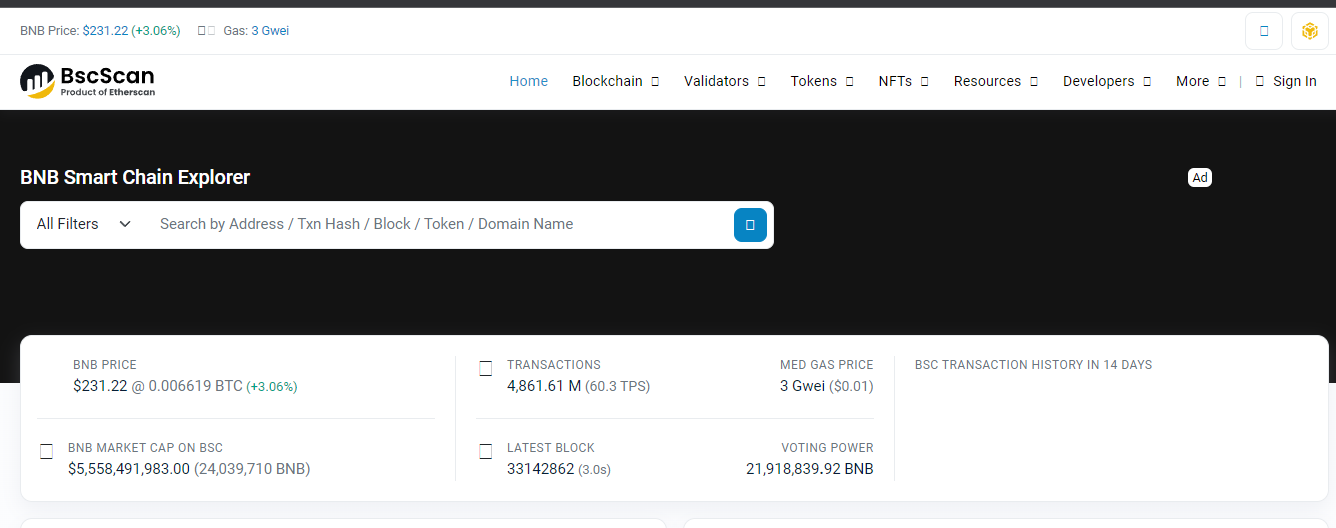
BscScan

Checking Transactions on BscScan

  • Visit the BscScan website at bscscan.com.
  • In the search bar at the top of the page, enter the transaction hash or wallet address you want to investigate.
  • BscScan will query its database and display detailed information about the transaction, including the transaction amount, date, block number, balances, transaction fees, and status.
  • Take note of the transaction status, which can be pending, successful, or failed. This information will help you determine the progress and outcome of the transaction.
  • You can also explore additional details about the transaction by clicking on specific sections, such as the sender's address, recipient's address, or transaction hash.

Exploring Wallet Addresses

  • On the BscScan homepage, locate the search bar at the top of the page.
  • Enter the wallet address that you want to explore and press Enter or click the search icon.
  • BscScan will provide an overview of the wallet address, including the BNB balance and the balances of any BEP-20 tokens held in the wallet.
  • Scroll down to view the transaction history associated with the wallet address, including incoming and outgoing transactions.
  • You can click on individual transactions to access more detailed information, such as the transaction hash, block number, and transaction fee.

Verifying Smart Contracts

  • Navigate to the BscScan website and locate the "Verify Contract" section.
  • Enter the smart contract address that you want to verify.
  • Select the appropriate compiler type and open-source license type.
  • Copy and paste the Solidity contract code into the designated field.
  • Enable optimization by selecting "Yes" in the optimization dropdown menu if applicable.
  • Click the "Verify and Publish" button to initiate the contract verification process.
  • BscScan will compare the submitted code with the code running on the BSC network and provide a verification result indicating whether the contract code matches.

Tracking Tokens on BscScan

  • Access the BscScan website and navigate to the "Tokens" section.
  • Explore the top BEP-20 tokens listed on BscScan, including their prices, volume, market capitalization, and number of holders.
  • Use the search bar to find specific tokens by their contract address or token symbol.
  • Click on individual tokens for more detailed information, such as the token's contract address, token holders, transaction history, and related smart contracts.
  • BscScan also supports ERC-721 and ERC-1155 tokens, allowing users to explore and track non-fungible tokens (NFTs) on the BSC network.

Monitoring Gas Prices

  • Visit the BscScan website and locate the "Gas Tracker" section.
  • Monitor the average gas price displayed on the page.
  • Check the block size and average utilization to understand the current network congestion.
  • Scroll down to view the BSC network's top gas guzzlers and spenders.
  • Use this information to make informed decisions about gas fees and optimize your transactions on the Binance Smart Chain.

BscScan vs. Etherscan: Key Differences

While BscScan and Etherscan share similarities as blockchain explorers, the two platforms have some key differences. Here are the main distinctions:

  • Supported Wallets: BscScan supports a limited number of wallets (e.g., MetaMask, TrustWallet) compared to Etherscan, which supports a broader range of wallets.
  • Features: Etherscan has the advantage of offering Blockchain APIs and Crypto APIs, providing developers with more advanced functionalities for interacting with the Ethereum blockchain.
  • Focus: BscScan is designed explicitly for the Binance Smart Chain, while Etherscan caters to the Ethereum network. Each explorer prioritizes features and data relevant to its respective blockchain.

BscScan and Etherscan are reputable and reliable explorers, offering valuable insights into their respective blockchain networks.

BscScan Alternatives

While BscScan is the leading blockchain explorer for the Binance Smart Chain, several alternative explorers are available for users. Here are a few notable options:

  • Binance Chain Explorer: Developed directly by Binance, this explorer provides information about blocks, transactions, wallet balances, and BNB metadata. It is available both as a web and mobile application.
  • BitQuery Explorer: BitQuery is a comprehensive explorer that supports multiple blockchains, including Binance Smart Chain. It offers advanced search and analytics capabilities for developers and researchers.
  • Binance Explorer: Binance also provides its explorer for the Binance Smart Chain, offering similar functionalities to BscScan. It is a reliable alternative for users seeking a different interface or additional features.

These alternatives provide users with different interfaces and functionalities, allowing them to choose the explorer that best suits their needs.

Is BscScan Safe?

As a leading blockchain explorer, BscScan is developed by the same team behind Etherscan, which has established a strong reputation in the blockchain community. 

BscScan is safe to use, as it does not require a connection to your BSC wallet and cannot access or acquire your funds. However, it is essential to exercise caution and verify that you are using the official BscScan website (bscscan.com) to avoid potential phishing attempts. 

Always double-check the URL and ensure that you are on the correct website before entering any sensitive information.

Is BscScan Compatible with NFTs?

Yes, BscScan is fully compatible with non-fungible tokens (NFTs). Like Ethereum, the Binance Smart Chain hosts various NFT projects, taking advantage of its lower fees and higher efficiency. 

Users can track their NFTs on BscScan using the transaction hash, NFT intelligent contract address, or wallet address. However, it is essential to note that BscScan does not display the artwork contained within an NFT. 

Users must connect to a compatible marketplace or service provider supporting the specific NFT token standard to view the artwork.

Frequently Asked Questions

Q1. How to check if liquidity is locked on BscScan?

To determine if liquidity is locked for a specific token on BscScan, you can follow these steps:

  • Go to the BscScan website and navigate to the "Tokens" section.
  • Search for the token by its contract address or token symbol.
  • Scroll down to the "Transfers" section and click on the transaction hash associated with the liquidity addition.
  • Check if the liquidity pool tokens or a burn address were sent to the development wallet.
  • Verify that the development wallet does not hold any liquidity pool tokens or check if they have been transferred to a burn address.

Q2. Can BscScan be used for other blockchain networks?

No, BscScan is designed explicitly for the Binance Smart Chain and cannot be used to explore other blockchain networks. Each blockchain has its dedicated explorer, such as Etherscan for Ethereum or Blockchain for Bitcoin

If you need to explore a different blockchain, using the corresponding blockchain explorer for accurate and relevant information is recommended.

Q3. What are the advantages of using BscScan for yield farming?

BscScan offers several advantages for users engaged in yield farming on the Binance Smart Chain:

  • Access the latest yield farming opportunities through the "Yield Farms List" feature.
  • Detailed information about different farms, including their locations and how they work.
  • The ability to track your yield farming activities, including the tokens you have staked and the rewards you have earned.
  • Lower transaction fees compared to alternative platforms like Ethereum, making yield farming on BSC more cost-effective.

Q4. Can I revoke token approvals using BscScan?

Yes, BscScan provides the "Token Approval Checker" tool that allows users to review and revoke token approvals for decentralized applications (DApps).

Connecting your wallet to BscScan and using the Token Approval Checker lets you see which DApps can access your tokens and revoke their permissions if desired. This feature gives users more control over their token holdings and helps ensure the security of their assets.

Q5. How does BscScan ensure contract verification?

BscScan's contract verification process involves comparing the source code of a smart contract with the compiled code running on the Binance Smart Chain. 

This process ensures that the code deployed on the blockchain matches the source code provided by the developer. 

BscScan's verification process enhances transparency and security by allowing users to verify intelligent contracts' functionality and integrity independently.

Q6. What are the risks of using BscScan?

While BscScan is a reputable and reliable blockchain explorer, some risks are associated with using any online tool. It is essential to be cautious and follow best security practices when using BscScan or any other blockchain explorer:

  • Ensure you use the official BscScan website (bscscan.com) to avoid phishing attempts.
  • Double-check the URL and ensure that you are on the correct website before entering any sensitive information.
  • Be wary of fake or malicious contracts, tokens, or DApps. Always conduct thorough research and due diligence before interacting with unknown projects.
  • Keep your personal information and wallet details secure. Avoid sharing sensitive information with unknown individuals or platforms.

Q7. How can I contribute to the BscScan community?

If you are interested in contributing to the BscScan community, there are several ways to get involved:

  • Participate in discussions on the BscScan forums or social media channels.
  • Report any bugs or issues you encounter using BscScan to the development team.
  • Provide feedback and suggestions for improving the platform's features and user experience.
  • Contribute to the BscScan open-source project on GitHub if you have programming skills.

Your contributions can help enhance the functionality and usability of BscScan for the entire Binance Smart Chain community.

Conclusion

BscScan is a powerful and essential tool for navigating the Binance Smart Chain ecosystem. Whether you are an investor, developer, or blockchain enthusiast, BscScan provides valuable insights into the BSC network's transactions, smart contracts, tokens, and gas prices. 

By leveraging BscScan's features, you can make more informed decisions, track your investments, and ensure the security of your digital assets. Explore BscScan today and unlock the full potential of the Binance Smart Chain.

Disclaimer

The information provided on this website does not constitute investment advice, financial advice, trading advice, or any other advice, and you should not treat any of the website's content as such.

Token Metrics does not recommend that any cryptocurrency should be bought, sold, or held by you. Conduct your due diligence and consult your financial advisor before making investment decisions.

Build Smarter Crypto Apps &
AI Agents in Minutes, Not Months
Real-time prices, trading signals, and on-chain insights all from one powerful API.
Grab a Free API Key
Token Metrics Team
Token Metrics Team

Recent Posts

Crypto Basics

Understanding the Altcoin Season Index: Your Complete Guide to Altcoin Market Dominance

Token Metrics Team
6 min
MIN

The cryptocurrency market operates in distinct cycles, with periods where Bitcoin dominates and others where alternative cryptocurrencies (altcoins) take center stage. Understanding when these shifts occur is crucial for successful crypto trading and investment. The Altcoin Season Index has emerged as the definitive metric for identifying these market transitions, providing traders and investors with essential insights into optimal timing for altcoin investments.

What is the Altcoin Season Index?

The Altcoin Season Index is a sophisticated metric that measures the relative performance of altcoins compared to Bitcoin over specific time periods. This indicator serves as a market sentiment gauge, helping traders identify when alternative cryptocurrencies are outperforming Bitcoin and whether the market has entered what's known as "Altcoin Season."

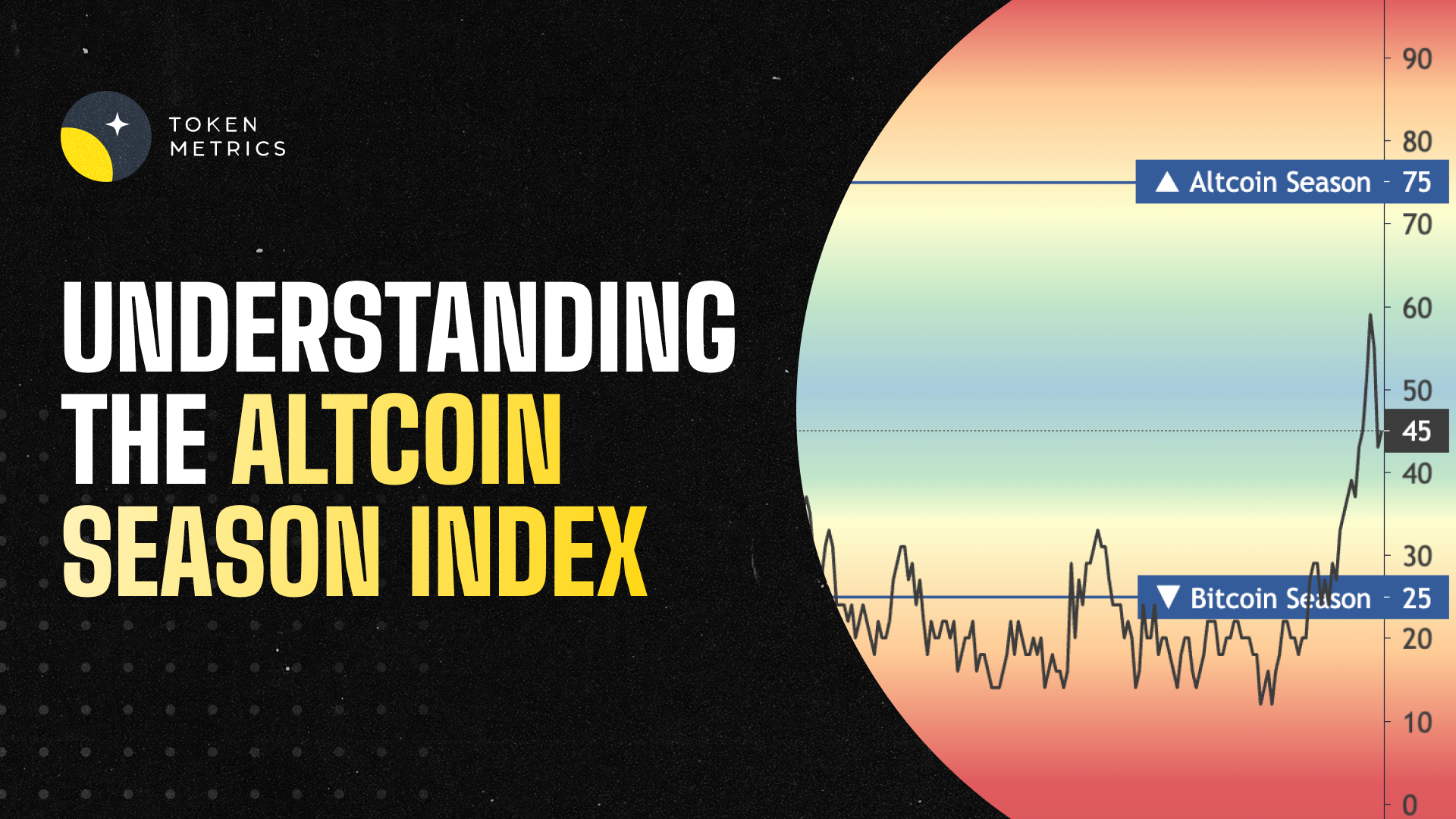
The index uses the top 100 coins ranked on CMC (excluding stablecoins and wrapped tokens) and compares them based on their rolling 90-day price performances. If 75% of the top 100 coins outperform Bitcoin in the last 90 days, it's Altcoin Season. Conversely, if only 25% or fewer altcoins outperform Bitcoin, the market is considered to be in "Bitcoin Season."

The methodology behind this index is straightforward yet effective. By analyzing the performance of the top-ranked cryptocurrencies against Bitcoin's price movements, the index creates a percentage score ranging from 0 to 100. A score above 75 indicates strong altcoin dominance, while a score below 25 suggests Bitcoin is leading the market.

How the Altcoin Season Index Works?

The calculation process involves several key components that ensure accuracy and relevance. Stablecoins like Tether and DAI, as well as asset-backed tokens (e.g., WBTC, stETH, cLINK), are excluded. This exclusion ensures that the index focuses on genuine price appreciation rather than pegged assets or derivatives.

Different platforms may use slightly varying methodologies. If 75% of the Top 50 coins performed better than Bitcoin over the last season (90 days) it is Altcoin Season. Some platforms focus on the top 50 cryptocurrencies, while others extend to the top 100, but the core principle remains consistent across all implementations.

The 90-day rolling window provides sufficient data to identify meaningful trends while remaining responsive to recent market movements. This timeframe helps filter out short-term volatility and focuses on sustained performance patterns that indicate genuine market shifts.

Current Market Status and Recent Trends

As of mid-2025, the cryptocurrency market is experiencing significant dynamics that reflect the utility of the Altcoin Season Index. The cryptocurrency market shows strong bullish momentum halfway through 2025, with Bitcoin reaching record highs near $122,946.00. This unprecedented Bitcoin performance has created interesting market conditions for altcoin investors.

Recent data shows varying altcoin performance across different categories. As of July 21, 2025, Stellar (XLM) is leading the pack, surging 74% for the week to trade at $0.527. Cardano (ADA) is up 23% at $1.004, and Ripple (XRP) has gained 21% this week to reach $3.92. These gains demonstrate that certain altcoins can achieve significant outperformance even during periods of strong Bitcoin dominance.

The market appears to be in a transitional phase. BTC dominance: ~60–61.5%—declining but not yet low enough. There is a strong interest in major alternative cryptocurrencies (alts) and large-cap coins. Into early/mid-phase alt season, not for quick whale-level meme pumps yet. This suggests that while we're not in full altcoin season, the conditions are developing for increased altcoin outperformance.

Historical Context and Market Cycles

Understanding historical altcoin seasons provides valuable context for current market conditions. The most notable altcoin season occurred in 2021, when the convergence of multiple factors created optimal conditions for alternative cryptocurrency growth. During this period, BTC's market dominance dropped from 70% to 38%, while the total market capitalization doubled from 30% to 62%. The altcoin season index hit 98 on April 16, 2021.

This historical precedent demonstrates the potential magnitude of altcoin seasons. When market conditions align, the shift from Bitcoin dominance to altcoin outperformance can be dramatic and sustained. The 2021 altcoin season was fueled by institutional adoption, decentralized finance (DeFi) growth, and the NFT boom, creating a perfect storm for alternative cryptocurrency appreciation.

Recent market activity has shown signs of renewed altcoin interest. The Altcoin Season Index, a widely tracked metric on CoinMarketCap (CMC), surged seven points to reach 84 on December 3, 2024. While this was a temporary spike, it demonstrated that altcoin seasons can emerge quickly when market conditions shift.

The Role of AI and Advanced Analytics in Altcoin Trading

Modern altcoin trading has been revolutionized by artificial intelligence and advanced analytics platforms. Token Metrics stands at the forefront of this technological evolution, providing traders with unprecedented insights into altcoin markets. Trade and invest crypto with Token Metrics—your AI-powered platform for crypto trading, research, and data analytics.

The platform's sophisticated approach to market analysis sets it apart from traditional trading tools. Token Metrics scans 6,000+ tokens daily and gives each one a score based on technical analysis, on-chain data, fundamental metrics, sentiment and social data, and exchange data. This comprehensive analysis ensures that traders have access to multi-dimensional insights that go far beyond simple price movements.

Token Metrics' AI-driven methodology provides particular value during altcoin seasons. Token Metrics has developed an AI-powered rating system that scans the market 24/7, analyzing over 80 data points per token. Their Moonshots tab is designed specifically for users looking to spot early-stage altcoins before they break out. This capability is crucial for capitalizing on altcoin season opportunities, as the window for maximum gains often occurs in the early stages of market shifts.

Strategic Applications for Traders and Investors

The Altcoin Season Index serves multiple strategic purposes for different types of market participants. For swing traders, the index provides timing signals for portfolio rebalancing. When the index begins climbing toward 75, it may signal an opportune time to increase altcoin exposure while reducing Bitcoin allocation.

Long-term investors can use the index to identify accumulation opportunities. During Bitcoin seasons (index below 25), quality altcoins often trade at relative discounts, presenting attractive entry points for patient investors. This contrarian approach can be particularly effective when combined with fundamental analysis of individual projects.

Day traders benefit from understanding index trends to gauge market sentiment and momentum. Token Metrics' AI-driven platform exemplifies this shift, enabling traders to analyze market sentiment and identify patterns that human traders might overlook. Real-time sentiment analysis becomes crucial during transitional periods when the index hovers around the 50 mark.

Portfolio managers can use the index as a risk management tool. Sharp increases in the index during established bull markets may signal overheated conditions, suggesting the need for profit-taking or risk reduction. Conversely, low index readings during bear markets might indicate oversold conditions and potential accumulation opportunities.

Risk Management and Market Considerations

While the Altcoin Season Index provides valuable insights, it should not be used in isolation. Market conditions can change rapidly, and the 90-day rolling window means the index may lag sudden market shifts. Traders should combine index signals with other technical and fundamental analysis tools for comprehensive market assessment.

Regulatory developments, macroeconomic factors, and technological breakthroughs can all influence altcoin performance independently of historical patterns. The index should be viewed as one component of a broader analytical framework rather than a definitive trading signal.

Market manipulation and coordinated activities can temporarily skew individual altcoin performance, potentially affecting index calculations. This risk is mitigated by focusing on the top-ranked cryptocurrencies, but traders should remain aware of potential anomalies in index readings.

The Future of Altcoin Season Analysis

The evolution of altcoin markets continues to accelerate, driven by technological innovation and institutional adoption. AI-powered platforms like Token Metrics are becoming essential tools for navigating this complexity. Token Metrics, an AI-powered platform, consolidates research, portfolio management, and trading signals into a unified ecosystem.

As the cryptocurrency market matures, the dynamics underlying altcoin seasons may evolve. Increased institutional participation, regulatory clarity, and technological developments in blockchain infrastructure could create new patterns in altcoin performance cycles. The Altcoin Season Index will likely adapt to incorporate these changing market dynamics.

The integration of artificial intelligence and machine learning into market analysis represents the next frontier in cryptocurrency trading. These technologies can process vast amounts of data in real-time, identifying subtle patterns and correlations that human analysts might miss. This capability becomes particularly valuable during volatile market conditions when rapid decision-making is crucial.

Conclusion

The Altcoin Season Index has established itself as an indispensable tool for cryptocurrency traders and investors seeking to optimize their market timing and portfolio allocation. By providing clear, quantifiable metrics for measuring altcoin performance relative to Bitcoin, the index removes much of the guesswork from market cycle identification.

Success in altcoin trading requires more than just understanding market cycles; it demands sophisticated analytical tools and real-time data processing capabilities. Token Metrics represents the pinnacle of AI-driven cryptocurrency analysis, offering traders the advanced insights necessary to capitalize on altcoin season opportunities.

As the cryptocurrency market continues to evolve and mature, the combination of proven indicators like the Altcoin Season Index with cutting-edge AI analysis platforms will become increasingly important for sustained trading success. The future belongs to traders who can effectively combine traditional market wisdom with modern technological capabilities, positioning themselves to capture the significant opportunities that altcoin seasons provide.

Whether you're a seasoned trader or new to cryptocurrency markets, understanding and utilizing the Altcoin Season Index, supported by advanced analytics platforms like Token Metrics, will be crucial for navigating the complex and rewarding world of altcoin investing. The key lies in combining these powerful tools with sound risk management principles and a deep understanding of the underlying market dynamics that drive cryptocurrency performance cycles.

Crypto Basics

What Are Altcoins? A Complete Guide to Alternative Cryptocurrencies in 2025

Token Metrics Team
6 min
MIN

The cryptocurrency landscape has evolved dramatically since Bitcoin's inception in 2009. While Bitcoin remains the dominant digital currency, thousands of alternative cryptocurrencies, commonly known as "altcoins," have emerged to challenge its supremacy and offer unique solutions to various blockchain problems. Understanding altcoins is crucial for anyone looking to navigate the complex world of digital assets and cryptocurrency investing.

What Are Altcoins? Definition and Basic Concepts

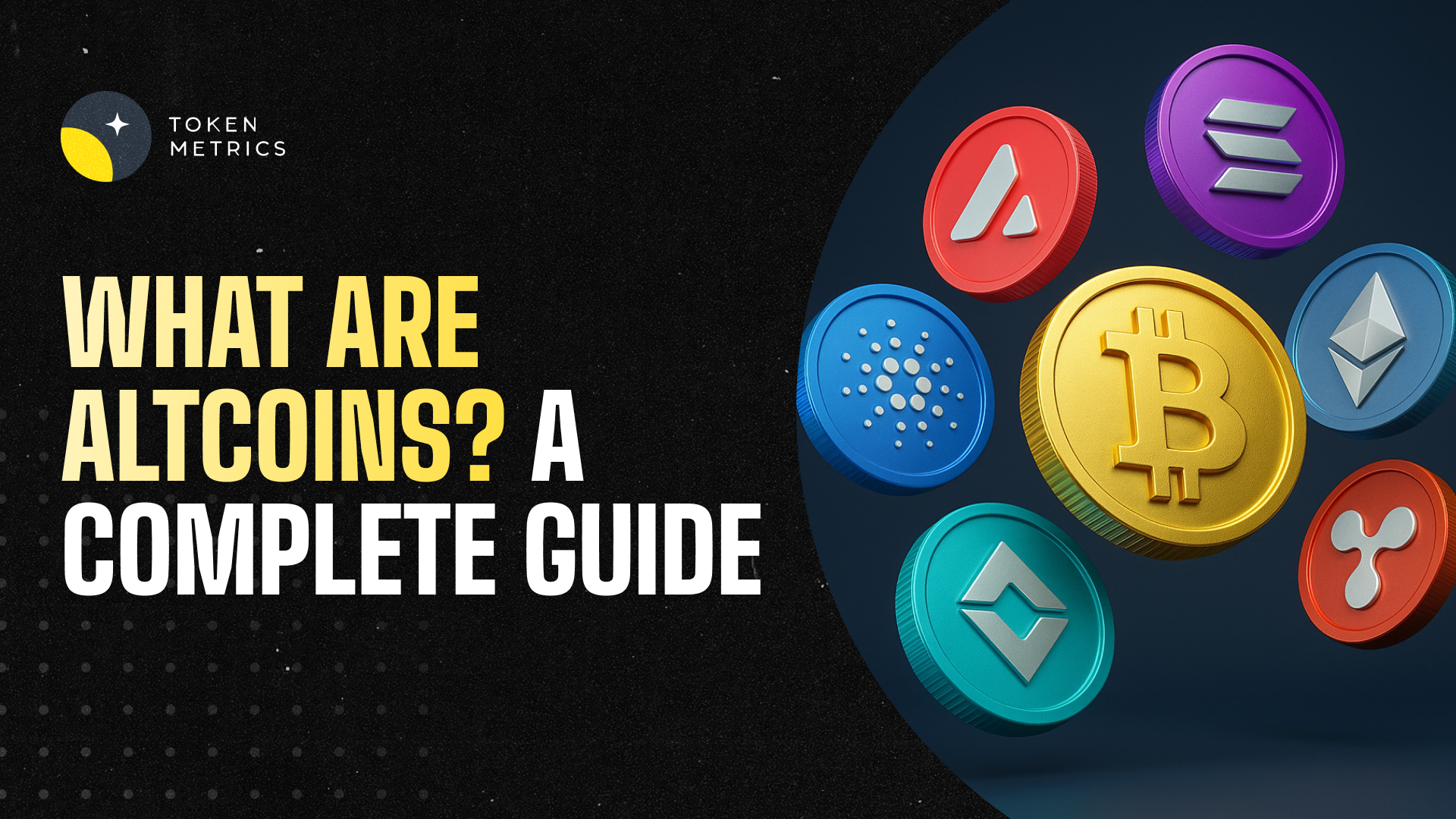
Altcoins, short for "alternative coins," refer to any cryptocurrency that is not Bitcoin. The term encompasses all digital currencies developed after Bitcoin, regardless of their underlying technology, purpose, or market capitalization. From Ethereum's smart contract capabilities to Dogecoin's meme-inspired origins, altcoins represent the diverse evolution of blockchain technology beyond Bitcoin's original peer-to-peer electronic cash system.

The altcoin ecosystem emerged as developers recognized Bitcoin's limitations and sought to create improved versions or entirely different applications of blockchain technology. While Bitcoin established the foundation for decentralized digital currency, altcoins have expanded the possibilities to include smart contracts, faster transaction speeds, enhanced privacy features, and specialized use cases across various industries.

The History and Evolution of Altcoins

The first altcoin, Namecoin, launched in April 2011, introducing the concept of a decentralized domain name system. This marked the beginning of cryptocurrency diversification beyond Bitcoin's monetary focus. Litecoin followed in October 2011, promising faster transaction times and a different mining algorithm, earning the nickname "silver to Bitcoin's gold."

The real altcoin revolution began with Ethereum's launch in 2015, introducing smart contracts and enabling developers to build decentralized applications (dApps) on its blockchain. This innovation sparked the creation of thousands of new altcoins, each attempting to solve specific problems or serve particular market segments. The Initial Coin Offering (ICO) boom of 2017 further accelerated altcoin development, though it also led to numerous failed projects and regulatory scrutiny.

Types of Altcoins: Understanding the Categories

Utility Tokens

Utility tokens provide access to specific services or functions within a blockchain ecosystem. Examples include Chainlink (LINK), which powers decentralized oracle networks, and Basic Attention Token (BAT), used within the Brave browser ecosystem. These tokens derive value from their practical applications rather than serving primarily as stores of value.

Security Tokens

Security tokens represent ownership stakes in real-world assets or companies, similar to traditional securities but issued on blockchain platforms. They're subject to securities regulations and often provide dividends or voting rights to holders.

Stablecoins

Stablecoins are designed to maintain stable value by pegging to external assets like the US dollar, gold, or other commodities. Popular examples include Tether (USDT), USD Coin (USDC), and DAI. These coins serve as bridges between traditional finance and cryptocurrency markets, providing stability for trading and commerce.

Privacy Coins

Privacy-focused altcoins like Monero (XMR) and Zcash (ZEC) offer enhanced anonymity features, making transactions more difficult to trace compared to Bitcoin's pseudo-anonymous nature. These coins use advanced cryptographic techniques to protect user privacy.

Meme Coins

Meme coins like Dogecoin (DOGE) and Shiba Inu (SHIB) originated from internet memes but have gained significant market value and community support. While often dismissed as jokes, some meme coins have developed legitimate use cases and ecosystems.

How Altcoins Differ from Bitcoin

While Bitcoin focuses primarily on being a decentralized digital currency and store of value, altcoins often target specific problems or improvements. Key differences include:

Transaction Speed and Scalability: Many altcoins offer faster transaction processing times than Bitcoin's 10-minute block time. Solana can process thousands of transactions per second, while Bitcoin handles approximately seven.

Energy Efficiency: Bitcoin's Proof-of-Work consensus mechanism requires significant energy consumption. Many altcoins use alternative consensus mechanisms like Proof-of-Stake, which consume far less energy.

Smart Contract Functionality: Unlike Bitcoin's limited scripting capabilities, platforms like Ethereum, Cardano, and Solana enable complex smart contracts and decentralized applications.

Governance Models: Some altcoins incorporate on-chain governance systems, allowing token holders to vote on protocol changes and upgrades directly.

Popular Altcoins and Their Use Cases

Ethereum (ETH)

Ethereum remains the second-largest cryptocurrency by market capitalization and the leading smart contract platform. Its ecosystem hosts thousands of decentralized applications, from decentralized finance (DeFi) protocols to non-fungible token (NFT) marketplaces.

Binance Coin (BNB)

Originally created as a utility token for the Binance exchange, BNB has evolved into the native token of the BNB Chain ecosystem, supporting various DeFi applications and services.

Cardano (ADA)

Cardano positions itself as a research-driven blockchain platform focusing on sustainability, scalability, and peer-reviewed development. It uses a Proof-of-Stake consensus mechanism and emphasizes formal verification methods.

Solana (SOL)

Solana has gained attention for its high-speed, low-cost transactions, making it popular for DeFi applications, NFTs, and Web3 projects. Its unique Proof-of-History consensus mechanism enables exceptional throughput.

Polkadot (DOT)

Polkadot focuses on interoperability, allowing different blockchains to communicate and share information. Its parachain architecture enables specialized blockchains to connect to the main Polkadot network.

Benefits and Advantages of Altcoins

Altcoins offer several advantages over Bitcoin and traditional financial systems:

Innovation and Specialization: Altcoins can focus on specific use cases, from supply chain management to gaming, offering tailored solutions for various industries.

Lower Transaction Costs: Many altcoins provide significantly lower transaction fees compared to Bitcoin, making them more practical for everyday use and microtransactions.

Faster Processing Times: Improved consensus mechanisms and network architectures enable faster transaction confirmation times.

Enhanced Features: Smart contract capabilities, privacy features, and governance mechanisms expand the possibilities beyond simple value transfer.

Investment Opportunities: The altcoin market offers diverse investment opportunities with potentially higher returns, though with correspondingly higher risks.

Risks and Challenges of Investing in Altcoins

While altcoins present exciting opportunities, they also carry significant risks:

Higher Volatility: Altcoins often experience more dramatic price swings than Bitcoin, leading to potential for both substantial gains and losses.

Lower Liquidity: Many altcoins have lower trading volumes, making it potentially difficult to buy or sell large amounts without affecting the price.

Regulatory Uncertainty: Changing regulations could significantly impact altcoin values and usability, particularly for privacy coins and utility tokens.

Technology Risks: Newer blockchain technologies may contain bugs, vulnerabilities, or design flaws that could compromise security or functionality.

Market Manipulation: Smaller market capitalizations make some altcoins susceptible to manipulation by large holders or coordinated trading groups.

How to Evaluate and Choose Altcoins

When considering altcoin investments, several factors deserve careful evaluation:

Project Fundamentals: Examine the underlying technology, use case, and problem the altcoin aims to solve. Strong fundamentals indicate long-term viability.

Development Team: Research the experience and track record of the development team and advisors behind the project.

Community and Adoption: Active communities and real-world adoption indicate healthy project ecosystems and potential for growth.

Market Metrics: Analyze market capitalization, trading volume, and token distribution to understand the project's market position.

Partnerships and Integrations: Strategic partnerships with established companies or platforms can indicate legitimacy and growth potential.

The Future of Altcoins

The altcoin landscape continues evolving as blockchain technology matures and finds new applications. Key trends shaping the future include:

Interoperability Solutions: Projects focusing on connecting different blockchains will likely gain importance as the multi-chain future develops.

Central Bank Digital Currencies (CBDCs): Government-issued digital currencies may compete with or complement existing altcoins.

Environmental Sustainability: Eco-friendly consensus mechanisms and carbon-neutral projects will likely become increasingly important.

Institutional Adoption: As institutions embrace cryptocurrency, they may diversify beyond Bitcoin into altcoins with specific utility or superior technology.

Regulatory Clarity: Clear regulations will help legitimate projects thrive while eliminating fraudulent or non-compliant tokens.

Conclusion

Altcoins represent the innovative frontier of cryptocurrency, offering diverse solutions beyond Bitcoin's original vision of peer-to-peer electronic cash. From Ethereum's smart contracts to Solana's high-speed transactions, altcoins continue pushing the boundaries of blockchain technology and digital asset utility.

While altcoins present exciting opportunities for innovation and investment, they also carry significant risks that require careful consideration. Success in the altcoin space demands thorough research, risk management, and understanding of the underlying technologies and market dynamics.

As the cryptocurrency ecosystem matures, altcoins will likely play crucial roles in shaping the future of finance, technology, and digital interaction. Whether you're an investor, developer, or simply curious about cryptocurrency evolution, understanding altcoins is essential for navigating the digital asset landscape of tomorrow.

Crypto Basics

Crypto Trading: Understanding the Price of Altcoins

Token Metrics Team
6 min
MIN

In the dynamic world of crypto trading, understanding the price of altcoins is crucial for anyone looking to trade cryptocurrency effectively. Altcoins, or alternative cryptocurrencies to Bitcoin, play a significant role in the cryptocurrency market, offering diverse opportunities for traders and investors. Cryptocurrency is a digital or virtual currency that operates on distributed ledger technology called a blockchain and uses cryptography for security. This article will explore the factors influencing altcoin prices, how traders can predict price movements, and the strategies to trade crypto assets successfully on various crypto platforms.

Factors Influencing the Price of Altcoins

The price of altcoins is influenced by multiple factors that interact within the broader cryptocurrency market. Unlike traditional currencies issued by a central bank, altcoins operate on decentralized blockchain technology, which adds a unique layer of complexity to their value changes. One of the primary drivers of altcoin prices is market trends, which reflect the overall sentiment and behavior of traders in the crypto market.

Cryptocurrency trading is notoriously volatile, meaning price trends can shift rapidly due to news, regulatory changes, technological developments, or shifts in market conditions. For example, the launch of new features on a blockchain network or advancements in cryptocurrency mining can create opportunities arise for altcoins to gain value. Additionally, the liquidity of an altcoin on cryptocurrency exchanges affects its price; altcoins with high liquidity tend to have more stable price movements compared to those with low liquidity.

Another critical factor is the comparison to traditional markets and fiat currency values such as the US dollar. Since altcoins are often traded against fiat currencies or major cryptocurrencies like bitcoin and bitcoin cash, fluctuations in these values can directly impact altcoin prices. Traders also need to consider the impact of supply and demand dynamics within the crypto exchange platforms where these digital assets are bought and sold.

Predicting Price Movements in Altcoin Trading

To trade crypto effectively, it is essential to predict price movements accurately. Day traders and other market participants use various methods to recognize patterns and forecast price trends. Technical analysis is one of the most widely used tools, involving the study of historical price data, chart patterns, and indicators to identify optimal entry and exit points in the market.

By analyzing price trends and market conditions, traders can place limit orders on a crypto exchange to buy or sell altcoins at desired prices, helping manage risk and maximize profits. Effective risk management strategies are necessary to mitigate potential losses in trading. A good understanding of how value changes in digital currency markets occur can help traders develop strategies that align with their risk tolerance and investment goals.

Unlike traditional currencies, the crypto market operates 24/7, providing continuous opportunities for trading. This round-the-clock nature, combined with the high volatility of altcoins, means that traders must stay vigilant and informed to capitalize on favorable price movements.

Strategies for Trading Altcoins on Crypto Platforms

Successfully trading altcoins requires a combination of knowledge, strategy, and the right tools. First and foremost, traders need to select a reliable crypto platform or cryptocurrency exchange that offers low fees, high liquidity, and robust security measures to protect their crypto account and digital assets. Trusted platforms like Gemini, Binance, and Coinbase adhere to local and international laws, providing secure and legal trading environments.

Day trading is a popular approach in the crypto market, where traders buy and sell altcoins within short time frames to capitalize on price volatility. Day trading is the business of trading assets within the same day to gain small profits from temporary price fluctuations. This strategy demands a high risk tolerance and the ability to quickly analyze market trends and execute trades efficiently.

For those new to cryptocurrency trading, it is advisable to dive deeper into understanding the fundamentals of blockchain technology and how different altcoins function within their respective blockchain networks. Successful traders often invest in their education and practice to refine their strategies and skills. This knowledge can provide insights into the potential long-term value of various crypto assets.

Moreover, traders should diversify their portfolios by including multiple altcoins alongside well-established cryptocurrencies like bitcoin. This diversification helps mitigate risk and take advantage of different market opportunities.

Conclusion

The price of altcoins in the cryptocurrency market is influenced by a complex interplay of factors ranging from market trends and liquidity to technological developments and regulatory environments. To trade crypto successfully, it is essential to develop a good understanding of these elements, utilize technical analysis to predict price movements, and adopt strategies that suit individual risk tolerance and market conditions.

Whether you are looking to buy cryptocurrencies for the first time or are an experienced trader aiming to optimize your crypto journey, staying informed and choosing the right crypto platform can significantly enhance your ability to earn rewards and profits in this notoriously volatile market. By recognizing patterns, managing risk, and leveraging the unique features of digital currencies, traders can navigate the exciting world of altcoin trading with confidence and success.

Choose from Platinum, Gold, and Silver packages
Reach with 25–30% open rates and 0.5–1% CTR
Craft your own custom ad—from banners to tailored copy
Perfect for Crypto Exchanges, SaaS Tools, DeFi, and AI Products