Research

Build High-Performance APIs with FastAPI

Learn how FastAPI delivers high-performance Python APIs, practical design patterns, async integration with AI and crypto data, deployment tips, and operational best practices.
Token Metrics Team
5
MIN

FastAPI has become a go-to framework for developers building high-performance, production-grade APIs in Python. This article explains how FastAPI achieves speed, practical patterns for building robust endpoints, how to integrate AI and crypto data, and deployment considerations that keep latency low and reliability high.

What is FastAPI and why it matters

FastAPI is a modern Python web framework designed around standard Python type hints. It uses asynchronous ASGI servers (uvicorn or hypercorn) and automatic OpenAPI documentation. The emphasis is on developer productivity, runtime performance, and clear, type-checked request/response handling.

Key technical advantages include:

  • ASGI-based async I/O: enables concurrent request handling without thread-per-request overhead.
  • Automatic validation and docs: Pydantic models generate schema and validate payloads at runtime, reducing boilerplate.
  • Type hints for clarity: explicit types make routes easier to test and maintain.

Performance patterns and benchmarks

FastAPI often performs near Node.js or Go endpoints for JSON APIs when paired with uvicorn and proper async code. Benchmarks vary by workload, but two principles consistently matter:

  1. Avoid blocking calls: use async libraries for databases, HTTP calls, and I/O. Blocking functions should run in thread pools.
  2. Keep payloads lean: minimize overfetching and use streaming for large responses.

Common performance improvements:

  • Use async ORMs (e.g., SQLModel/SQLAlchemy async or async drivers) for non-blocking DB access.
  • Cache repeated computations and database lookups with Redis or in-memory caches.
  • Use HTTP/2 and proper compression (gzip, brotli) and tune connection settings at the server or ingress layer.

Designing robust APIs with FastAPI

Design matters as much as framework choice. A few structural recommendations:

  • Modular routers: split routes into modules by resource to keep handlers focused and testable.
  • Typed request/response models: define Pydantic models for inputs and outputs to ensure consistent schemas and automatic docs.
  • Dependency injection: use FastAPI's dependency system to manage authentication, DB sessions, and configuration cleanly.
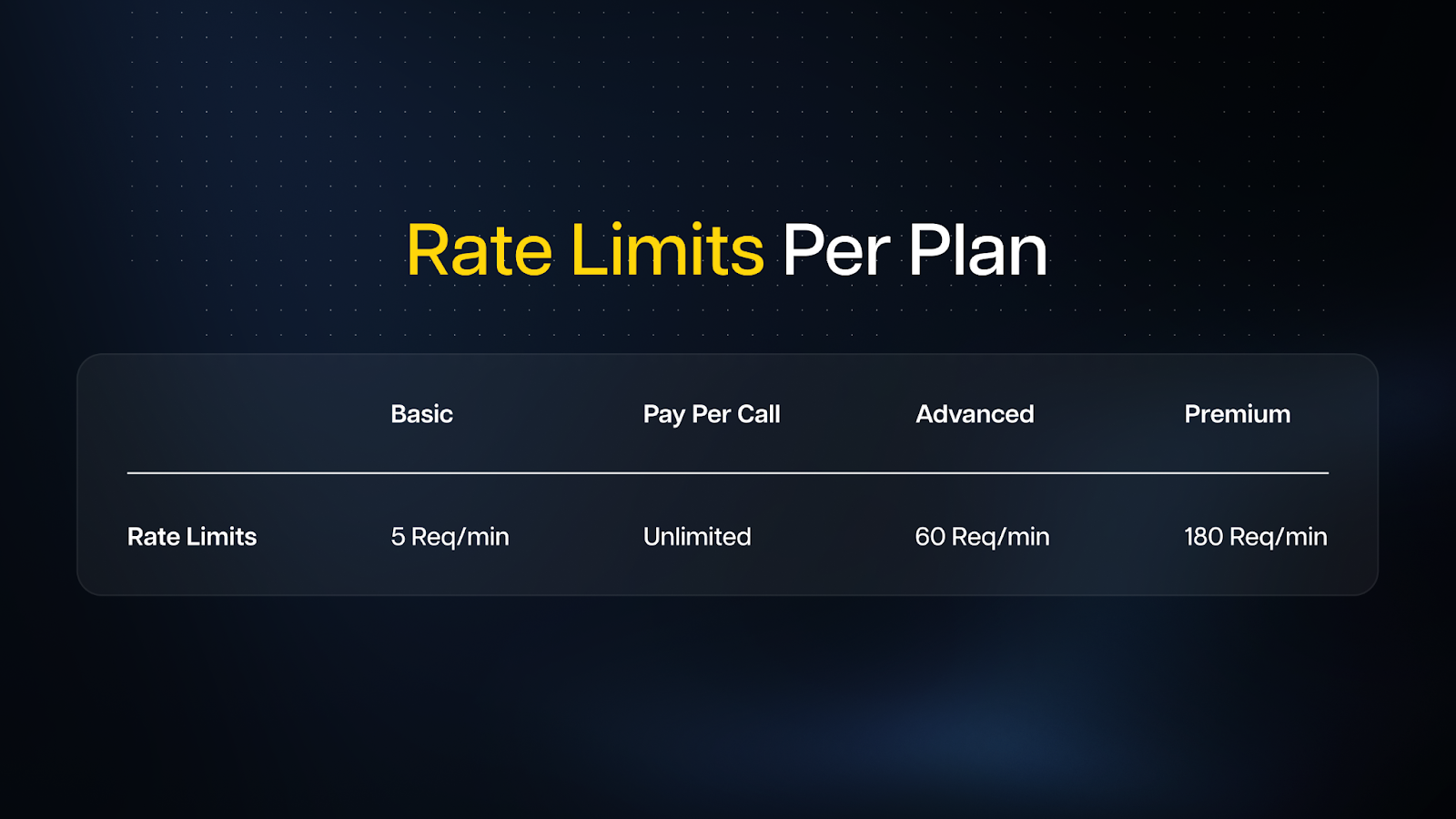
  • Rate limiting and throttling: implement per-user or per-route limits to protect downstream services and control costs.

When building APIs that drive AI agents or serve crypto data, design for observability: instrument latency, error rates, and external API call times so anomalies and regressions are visible.

Integrating AI models and crypto data securely and efficiently

Combining FastAPI with AI workloads or external crypto APIs requires careful orchestration:

  • Asynchronous calls to external APIs: avoid blocking the event loop; use async HTTP clients (httpx or aiohttp).
  • Batching and queuing: for heavy inference or rate-limited external endpoints, queue jobs with background workers (Celery, RQ, or asyncio-based workers) and return immediate task references or websockets for progress updates.
  • Model hosting: serve large AI models from separate inference services (TorchServe, Triton, or managed endpoints). Use FastAPI as a gateway to manage requests and combine model outputs with other data.

For crypto-related integrations, reliable real-time prices and on-chain signals are common requirements. Combining FastAPI endpoints with streaming or caching layers reduces repeated calls to external services and helps maintain predictable latency. For access to curated, programmatic crypto data and signals, tools like Token Metrics can be used as part of your data stack to feed analytics or agent decision layers.

Deployment and operational best practices

Deployment choices influence performance and reliability as much as code. Recommended practices:

  • Use ASGI servers in production: uvicorn with workers via Gunicorn or uvicorn's multi-process mode.
  • Containerize and orchestrate: Docker + Kubernetes or managed platforms (AWS Fargate, GCP Cloud Run) for autoscaling and rolling updates.
  • Health checks and readiness: implement liveness and readiness endpoints to ensure orchestrators only send traffic to healthy instances.
  • Observability: collect traces, metrics, and logs. Integrate distributed tracing (OpenTelemetry), Prometheus metrics, and structured logs to diagnose latency sources.
  • Security: enforce TLS, validate and sanitize inputs, limit CORS appropriately, and manage secrets with vaults or platform-managed solutions.

Build Smarter Crypto Apps & AI Agents with Token Metrics

Token Metrics provides real-time prices, trading signals, and on-chain insights all from one powerful API. Grab a Free API Key

FAQ: How to tune FastAPI performance?

Tune performance by removing blocking calls, using async libraries, enabling connection pooling, caching hotspot queries, and profiling with tools like py-spy or OpenTelemetry to find bottlenecks.

FAQ: Which servers and deployment patterns work best?

Use uvicorn or uvicorn with Gunicorn for multiprocess setups. Container orchestration (Kubernetes) or serverless containers with autoscaling are common choices. Use readiness probes and horizontal autoscaling.

FAQ: What are essential security practices for FastAPI?

Enforce HTTPS, validate input schemas with Pydantic, use secure authentication tokens, limit CORS, and rotate secrets via a secrets manager. Keep dependencies updated and scan images for vulnerabilities.

FAQ: How should I integrate AI inference with FastAPI?

Host heavy models separately, call inference asynchronously, and use background jobs for long-running tasks. Provide status endpoints or websockets to deliver progress to clients.

FAQ: What monitoring should I add to a FastAPI app?

Capture metrics (request duration, error rate), structured logs, and traces. Use Prometheus/Grafana for metrics, a centralized log store, and OpenTelemetry for distributed tracing.

Disclaimer

This article is educational and technical in nature. It does not constitute investment, legal, or professional advice. Always perform your own testing and consider security and compliance requirements before deploying applications that interact with financial or sensitive data.

Build Smarter Crypto Apps &
AI Agents in Minutes, Not Months
Real-time prices, trading signals, and on-chain insights all from one powerful API.
Grab a Free API Key
Token Metrics Team
Token Metrics Team

Recent Posts

Token Metrics API

Fast Crypto API: Real-Time Data Without the Lag

Sam Monac
9 min
MIN

Why Speed Matters in a Crypto API

In crypto, milliseconds can make or break a trade. Whether you’re building a high-frequency bot, a risk management tool, or a market dashboard, slow crypto APIs lead to:

  • Missed trade opportunities during volatility

  • Bots that lag behind signals

  • Dashboards that feel sluggish

  • Risk models that update too late

📌 Example: In a Bitcoin price swing, even a 500 ms delay can translate to thousands in lost value for trading bots. That’s why developers emphasize low latency when choosing best Crypto APIs.

What Defines a “Fast” Crypto API

Not every Crypto API marketed as “fast” is built the same. A truly fast crypto API provides:

  • Low Latency Feeds – Sub-second updates across major tokens and exchanges.

  • WebSocket Support – Push-based data streams instead of slower polling.

  • Scalable Infrastructure – Resilient under heavy traffic spikes.

  • Global Edge Delivery – Reduced latency for users worldwide.

📌 Tip for builders: Always benchmark an API in real market conditions (during volatility) to see if “fast” performance holds up under stress.

Comparing Fast Crypto APIs: Strengths & Limitations

  • CoinGecko / CoinMarketCap


    • Strengths: Broad token coverage, good for price tickers.

    • Limitations: Refresh cycles can lag; not ideal for bots or real-time dashboards.

  • CryptoCompare


    • Strengths: Strong historical data for research.

    • Limitations: Not optimized for ultra-fast live feeds.

  • Glassnode


    • Strengths: On-chain metrics and blockchain health insights.

    • Limitations: Focused on analytics, not real-time trading data.

  • Token Metrics API


    • Strengths: Sub-second updates, fast bull/bear signals, predictive AI, and on-chain metrics.

    • Limitations: Free tier includes rate limits (higher throughput available via X.402 or paid plans).

Token Metrics API: Fast + Intelligent

What sets Token Metrics API apart is that it’s not just fast data—it’s fast intelligence:

  • Real-Time Prices – Thousands of tokens continuously updated.

  • AI Trading Signals – Bull/bear predictions delivered instantly.

  • On-Chain Metrics – Track wallet flows, liquidity, and token behavior in near real time.

  • Scalable Performance – Built to withstand institutional-grade usage during volatility.

📌 Instead of just reacting to prices, developers can anticipate market shifts with AI-driven signals.

Use Cases: From Trading Bots to AI Agents

  • High-Frequency Trading Bots – Execute strategies using low-latency feeds and predictive signals.

  • DeFi Dashboards – Display liquidity flows and token activity in real time.

  • Risk Management Systems – Keep risk models updated second by second.

  • AI Agents – Power intelligent assistants with actionable streaming data.

Best Practices for Building With Fast APIs

  1. Use WebSockets – Relying only on REST endpoints introduces unnecessary delay.

  2. Benchmark During Volatility – Test APIs when the market is busiest.

  3. Optimize Request Handling – Cache where possible to avoid unnecessary calls.

  4. Monitor Latency – Use observability tools like Grafana or New Relic to track delays.

  5. Failover Strategy – Have a backup API (e.g., CoinGecko) if primary data slows.

Beyond Token Metrics: Other Tools to Explore

Token Metrics API excels at fast data + signals, but developers often combine it with other tools for a full-stack setup:

  • DefiLlama API – Best for free DeFi protocol data and yield metrics.

  • Dune Analytics – Query blockchain data in real time with SQL.

  • TradingView Webhooks – Add instant chart-based triggers for front ends.

  • Kaiko / Amberdata – Enterprise-grade APIs for institutional price feeds.

📌 Pro tip: Use Token Metrics for predictive signals, and pair it with TradingView or DefiLlama for visualization and DeFi-specific data.

How to Start Using the Token Metrics Fast API

  1. Sign Up Free – Create a Token Metrics account.

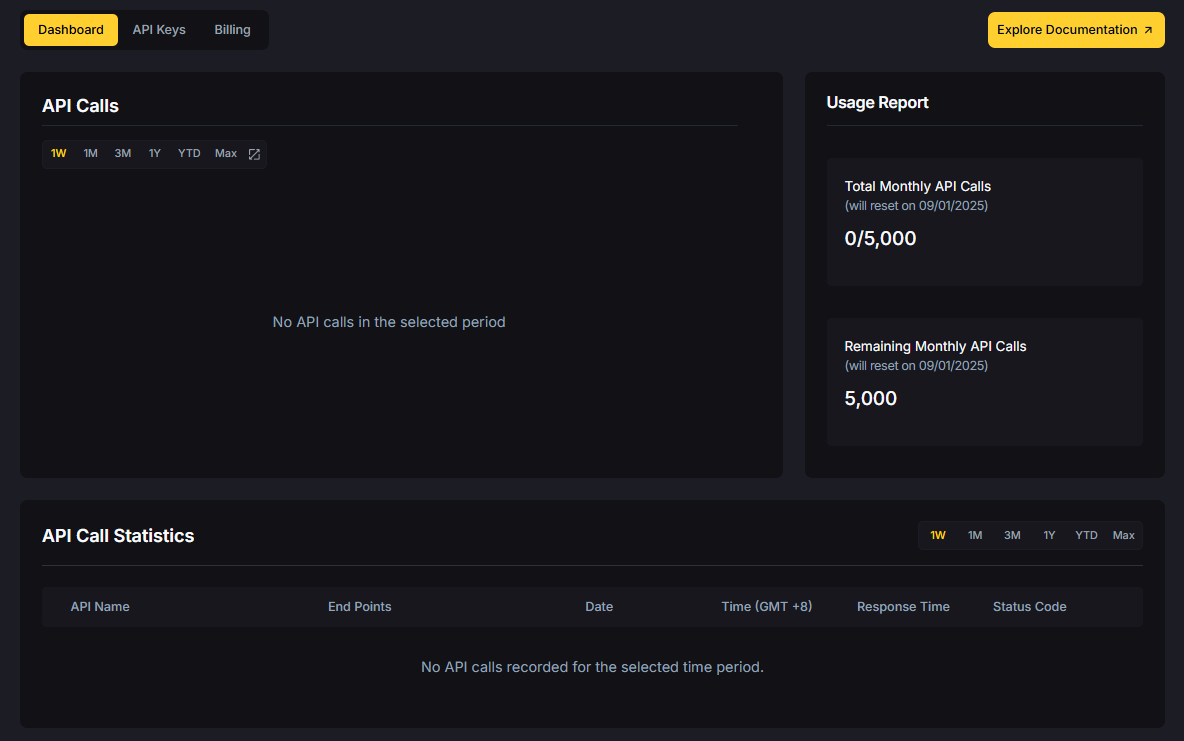
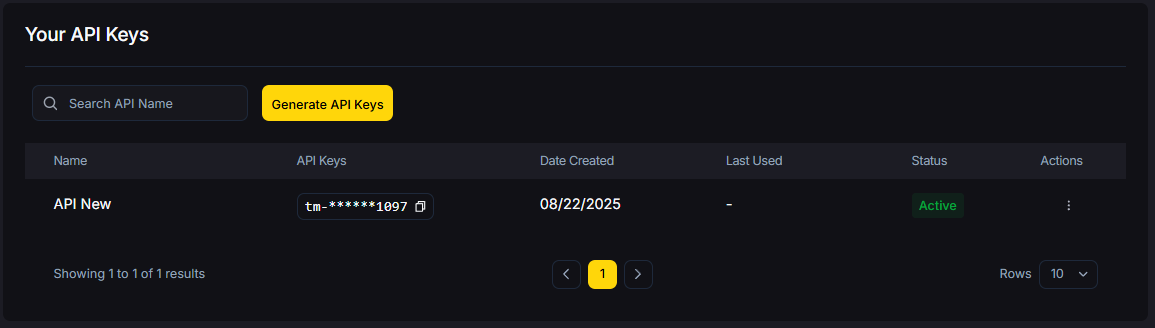
  2. Generate Your API Key – Instantly available in your dashboard.

  3. Choose WebSockets or REST – Based on your use case.

  4. Start Building – Bots, dashboards, or risk models with sub-second data.

👉 Get Your Free Token Metrics API Key

Scaling Fast With Paid Plans & X.402

When free limits aren’t enough, Token Metrics offers:

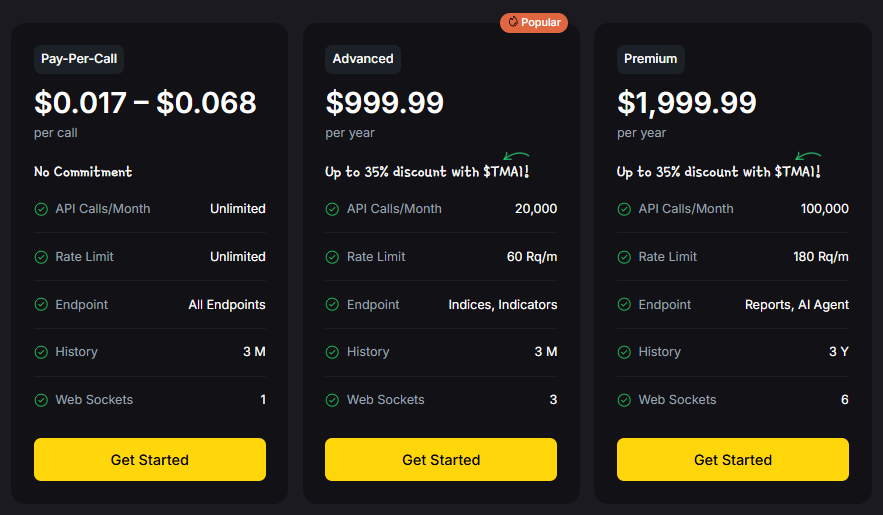
  • Pay-Per-Call (X.402) – From $0.017 per call, unlimited usage, all endpoints, and 3 months of history.

  • Advanced Plan ($999.99/year) – 20,000 calls/month, indices & indicators, 3 WebSockets.

  • Premium Plan ($1,999.99/year) – 100,000 calls/month, AI agent + reports, 3 years of history.

📌 Why X.402 matters: You can start scaling instantly with no upfront cost—just pay per call as you grow.

Build With the Fastest Insights in Crypto

In crypto, speed without intelligence is noise. With Token Metrics Fast Crypto API, you get sub-second price data + AI-driven insights, giving your trading bots, dashboards, and AI agents the real-time edge they need.

👉 Start Free With Token Metrics API

Token Metrics API

Best Crypto Prices API: Accurate, Real-Time, and AI-Enhanced

Sam Monac
8 min
MIN

Why Price Data Is the Core of Every Crypto App

No matter what kind of crypto app you’re building—a trading bot, a DeFi dashboard, or a research tool—the foundation is always accurate price data. Without it:

  • Traders miss entry and exit points.

  • Bots execute late or incorrectly.

  • Dashboards lose credibility with users.

  • Researchers can’t properly backtest models.

The best crypto prices API ensures:

  • Live, accurate prices across thousands of tokens.

  • Deep historical data (OHLC, tick-level) for research and backtesting.

  • Reliable updates even during volatile market swings.

  • Flexibility to support both real-time trading and long-term analytics.

📌 Example: An arbitrage bot relying on stale or inaccurate data won’t just underperform—it could lose money on every trade.

What Makes the Best Crypto Prices API

Not every API marketed for prices is built for precision. Key factors to consider include:

  • Accuracy – Are prices aggregated across multiple exchanges and validated?

  • Latency – Do you get sub-second updates with WebSocket streaming?

  • Historical Depth – Can you access years of OHLC and tick-level data?

  • Coverage – Spot markets, DeFi tokens, stablecoins, and derivatives.

  • Scalability – Rate limits that grow with your application’s user base.

  • Developer Experience – SDKs, documentation, and active support.

📌 Tip for developers: Start by asking, “Do I need accuracy, speed, or depth the most?” The answer often determines which API fits your project.

Comparing Leading Crypto Price APIs: Strengths & Trade-offs

  • CoinGecko & CoinMarketCap


    • Strengths: Excellent breadth—tens of thousands of tokens covered.

    • Trade-offs: Updates refresh more slowly; historical depth limited. Best for tickers and retail dashboards.

  • CryptoCompare


    • Strengths: Solid historical trade-level datasets for backtesting.

    • Trade-offs: Real-time speed is weaker than competitors.

  • Glassnode


    • Strengths: Advanced on-chain insights.

    • Trade-offs: Pricing data isn’t their main strength; better for researchers than traders.

  • Kaiko / Amberdata


    • Strengths: Enterprise-grade accuracy, broad market coverage.

    • Trade-offs: Expensive, geared toward institutions.

  • Token Metrics API
    • Strengths: Combines real-time accuracy, deep history, and AI-enhanced insights—giving more than raw prices.

    • Trade-offs: Free tier has rate limits (higher throughput unlocked via X.402 or paid plans).

Why Token Metrics API Stands Out

Where many crypto APIs stop at providing raw price feeds, Token Metrics API enriches price data with context and intelligence.

  • Real-Time Prices – Sub-second updates for Bitcoin, Ethereum, and thousands of tokens.

  • Deep Historical Data – Tick-level and OHLC datasets ideal for research.

  • Exchange-Aware Accuracy – Prices aggregated from multiple sources and validated for reliability.

  • AI Trading Signals – Bull/bear indicators layered on top of raw prices.

  • Portfolio Ratings – Token Metrics grades and indices for added context.

📌 Most crypto APIs give you numbers. Token Metrics gives you numbers + insights.

Use Cases: From Crypto Trading Bots to Dashboards

  • Trading Bots – Execute trades with accurate, low-latency feeds.

  • Market Dashboards – Provide users with credible, real-time prices and charts.

  • Backtesting Platforms – Use multi-year OHLCV data for strategy validation.

  • DeFi Trackers – Monitor token values and liquidity with precision.

  • AI Agents – Train ML models using validated, exchange-aware price data.

Best Practices for Working With Crypto Price Data

  1. Cross-Verify Prices – Use multiple APIs in parallel during testing.

  2. Cache Effectively – Cache non-volatile data to reduce API load.

  3. Use WebSockets – REST-only setups can introduce delays.

  4. Monitor Latency – Benchmark APIs during volatility (e.g., CPI announcements, Fed decisions).

  5. Plan for Failover – Integrate a secondary API as a backup if your primary feed fails.

📌 Example: Production apps can combine Token Metrics for intelligence + CoinGecko for breadth to balance reliability with insights.

Beyond Token Metrics: Other Crypto Price Data Resources

Developers often mix and match APIs to cover specialized needs:

  • DefiLlama API – For DeFi protocol yields and TVL.

  • Dune Analytics – Run SQL queries for custom blockchain metrics.

  • TradingView Widgets / Webhooks – For embedding charting into front ends.

  • Santiment – Adds sentiment data to complement price feeds.

Pairing Token Metrics with these resources gives developers a multi-layered data stack—accurate prices, predictive signals, and extra DeFi/social context.

How to Get Started With the Best Prices API

  1. Sign Up Free – Create a Token Metrics account.

  2. Generate Your API Key – Available instantly in your dashboard.

  3. Access Price Endpoints – Fetch real-time and historical datasets via REST or WebSockets.

  4. Start Building – Bots, dashboards, or backtesting frameworks.

  5. Upgrade When Ready – Scale throughput and unlock advanced endpoints.

👉 Get Your Free Token Metrics API Key

FAQs on Crypto Price APIs

Which crypto API has the best price accuracy?
Token Metrics validates data from multiple exchanges, ensuring cleaner and more reliable price feeds.

Can I get historical prices with Token Metrics API?
Yes—OHLC and tick-level datasets are available for multi-year backtesting.

Is the Token Metrics API free?
Yes, there’s a free tier for prototypes. Paid plans unlock higher request rates and advanced data.

How fast are Token Metrics updates?
Sub-second latency with WebSocket support for real-time responsiveness.

Scaling Beyond Free: Paid Plans & X.402

As your project scales, Token Metrics makes upgrading simple:

  • Pay-Per-Call (X.402) – From $0.017 per call, unlimited usage, no commitment.

  • Advanced Plan ($999.99/year) – 20,000 calls/month, indices & indicators, 3 WebSockets.

  • Premium Plan ($1,999.99/year) – 100,000 calls/month, AI agent & reports, 3 years of historical data.

📌 Why X.402 matters: Instead of locking into annual costs, you can pay as you grow—ideal for startups and experimental apps.

Build With the Best Crypto Prices API

In crypto, price accuracy is trust. Whether you’re building a bot, a dashboard, or a research tool, Token Metrics provides more than just numbers. With validated prices, deep history, and AI-enhanced insights, you can build applications that stand out.

👉 Start Free With Token Metrics API

‍

‍

Research

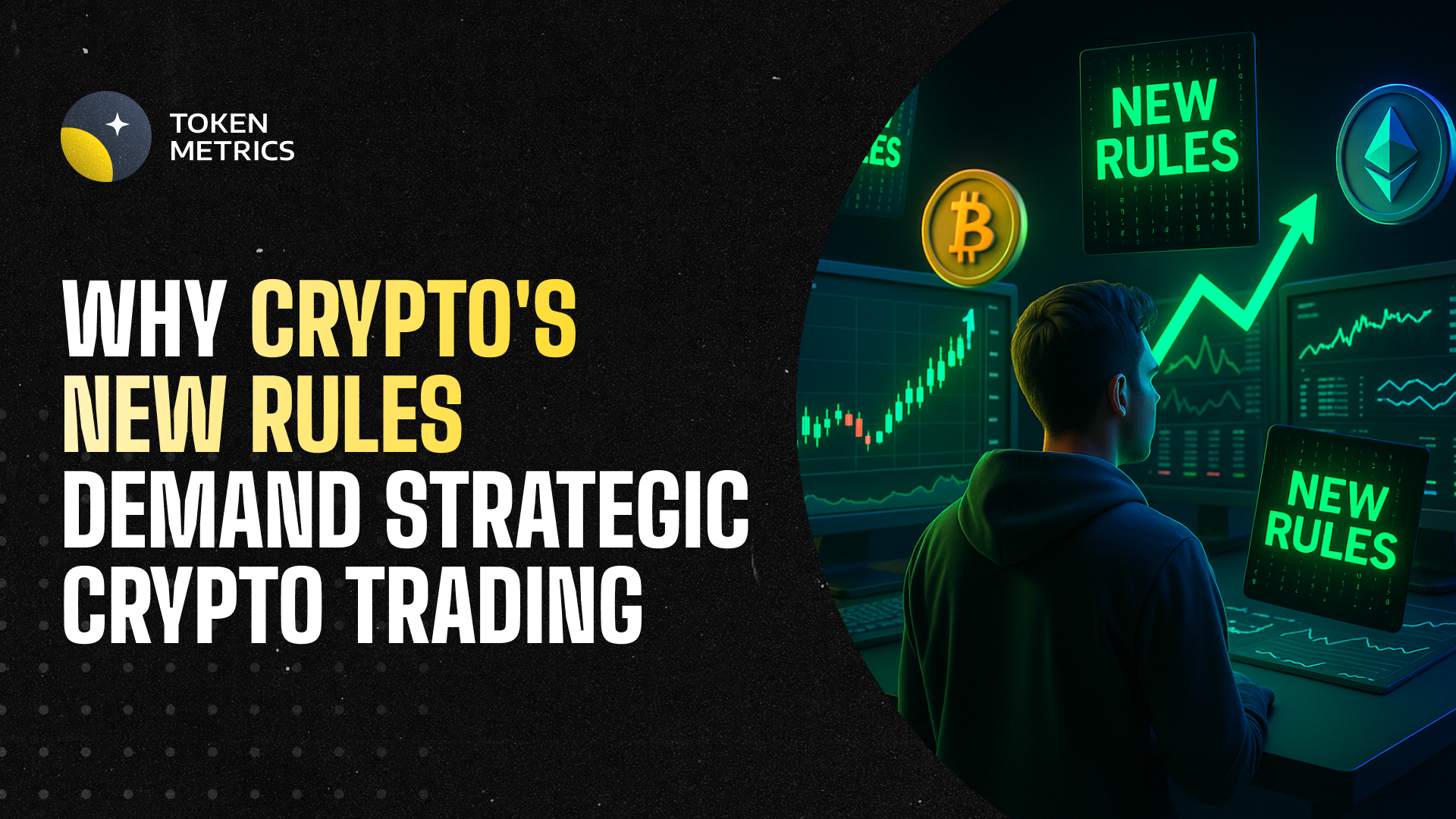
Why Crypto's New Rules Demand Strategic Crypto Trading?

Talha Ahmad
9 min
MIN

The cryptocurrency market has fundamentally changed, and investors clinging to outdated strategies are being left behind. The traditional "buy and hold" approach that created millionaires in previous crypto cycles is no longer viable in today's narrative-driven, attention-economy market. Understanding these new dynamics isn't just advantageous—it's essential for survival.

The Narrative Economy: How Attention Drives Price Action

Modern crypto markets operate on attention cycles that move faster than ever before. Projects gain momentum not through gradual adoption but through sudden narrative capture, social media virality, and ecosystem developments that spark immediate interest. This shift has created what analysts call "crypto's shiny object syndrome," where market attention rapidly moves between tokens based on trending topics and emerging narratives.

The evidence is clear in recent market performance. Tokens that dominated headlines just weeks ago—Pendle, Zora, Aerodrome, and BIO—have all lost momentum despite strong fundamentals. These weren't failed projects; they were victims of attention rotation. Pendle, for instance, had significant technical advantages and partnerships, but once market attention shifted elsewhere, price action followed suit.

The Trending Token Strategy: A New Approach for New Markets

Professional traders have adapted to this environment by developing systematic approaches to narrative trading. Rather than picking long-term winners based solely on fundamentals, successful investors now track trending tokens—projects capturing current market attention regardless of their long-term prospects.

This approach requires discipline and timing. The most effective strategy involves monitoring tokens gaining traction, entering positions when momentum indicators align, and exiting before attention cycles complete. It's not about finding the next Bitcoin; it's about riding successive waves of market interest across multiple projects.

The time horizon for these trades has compressed dramatically. Where previous cycles might have rewarded six-month to two-year holding periods, today's successful trades often last days to weeks. This compression reflects the market's increased efficiency in pricing narrative value and the accelerated pace of information flow in crypto communities.

Gaming and Creator Economy: The Next Frontier

While traditional DeFi projects struggle with attention retention, two sectors are showing sustained growth potential: gaming and creator economies. The gaming narrative, often dismissed after previous disappointments, is experiencing a quiet renaissance backed by substantial venture capital investment and improved product development.

Projects like Star Atlas, previously written off after the FTX collapse, have continued building and recently released gameplay elements that demonstrate genuine progress toward AAA-quality gaming experiences. This persistence during bear market conditions positions gaming tokens for significant upside when broader market sentiment improves.

Simultaneously, the creator economy is evolving through platforms like Pump.fun, which recently distributed $2 million in fees within 24 hours of launching new creator tools. This represents a 20x increase from previous daily averages, indicating massive untapped demand for creator monetization tools in crypto.

The Stablecoin Infrastructure Play

Beyond gaming and creators, the stablecoin infrastructure narrative presents perhaps the most compelling long-term opportunity. Unlike attention-driven meme coins, stablecoin infrastructure addresses genuine utility needs while benefiting from regulatory tailwinds and institutional adoption.

Projects like Plasma, which enables zero-fee USDT transfers, directly compete with established players like Tron while offering superior user experiences. The $1 billion in testnet deposits demonstrates real demand for these services, not just speculative interest.

This infrastructure development occurs alongside broader tokenization trends. Traditional assets—from stocks to treasuries—are increasingly moving on-chain, creating new opportunities for projects facilitating this transition. The convergence of stablecoin infrastructure and real-world asset tokenization could define the next major crypto adoption wave.

Risk Management in the New Paradigm

Success in narrative-driven markets requires sophisticated risk management that extends beyond traditional portfolio allocation. Investors must monitor momentum indicators, social sentiment, and attention metrics alongside fundamental analysis. The goal isn't to predict long-term winners but to identify and capture successive narrative cycles efficiently.

This approach demands emotional discipline that many investors find challenging. Exiting profitable positions while momentum remains positive contradicts natural holding instincts, yet it's essential for consistent returns in attention-driven markets. The most successful traders treat each position as temporary, focusing on momentum preservation rather than conviction-based holding.

The Bottom Line: Adapt or Fall Behind

The crypto market's evolution from speculation to narrative-driven trading represents a maturation process that rewards adaptability over stubbornness. Investors who recognize this shift and develop appropriate strategies will thrive, while those clinging to outdated approaches will struggle.

The new crypto paradigm isn't necessarily better or worse than previous cycles—it's simply different. Success requires understanding these differences and adjusting strategies accordingly. In a market where attention is currency and narratives drive price action, the most important skill isn't picking winners—it's staying flexible enough to ride whatever wave comes next.

The death of "buy and hold" doesn't mean the end of profitable crypto investing. It means the beginning of a more sophisticated, dynamic approach that rewards skill, timing, and market awareness over simple conviction. Those who master these new rules will find opportunities that dwarf traditional investment returns, while those who resist change will watch from the sidelines as markets evolve beyond their understanding.

Choose from Platinum, Gold, and Silver packages
Reach with 25–30% open rates and 0.5–1% CTR
Craft your own custom ad—from banners to tailored copy
Perfect for Crypto Exchanges, SaaS Tools, DeFi, and AI Products