Back to blog
Crypto Basics

Bullish vs Bearish - A Comparative Analysis of Market Trends

Learn about the fundamental differences between bullish and bearish trends, in this descriptive guide.
Sumit Meghani
7 Minutes
Want Smarter Crypto Picks—Free?
See unbiased Token Metrics Ratings for BTC, ETH, and top alts.
Thank you! Your submission has been received!
Oops! Something went wrong while submitting the form.
 No credit card | 1-click unsubscribe

When it comes to investing, bullish and bearish are two terms that investors often come across. These two terms are used to describe the market outlook or individual asset, and understanding their fundamental differences is crucial for making informed investment decisions.

In this article, we will delve deeper into the meanings and differences between Bullish and Bearish trends. So, buckle up and keep reading to learn more about the fundamental differences between the two.

What is the Bullish Trend?

The bullish trend is a term used in financial markets to describe a positive or optimistic outlook on the market or a particular asset like stocks or crypto. In a bullish trend, the market or asset is experiencing a steady increase in value, with buyers outnumbering sellers. 
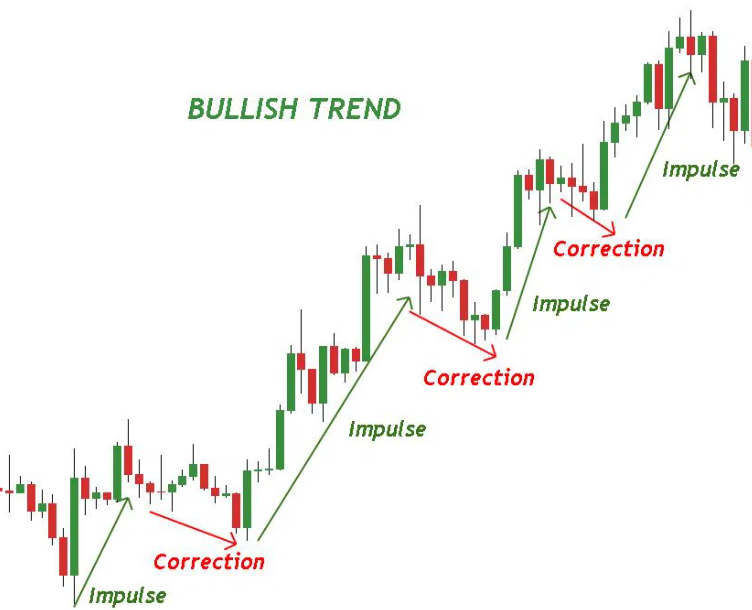
bullish trend
Image Source: https://beincrypto.com/learn/crypto-trading-strategy-based-on-elliott-wave-theory

This often results in higher stock or crypto prices, increased trading volumes, and positive sentiment among investors. The bullish trend can be influenced by a variety of factors, including strong earnings growth, a positive economic outlook, and favorable government policies.

What is the Bearish Trend?

The bearish trend is a term commonly used in financial markets to describe a negative or pessimistic outlook on the market or a particular asset. Unlike the bullish trend, which is characterized by an increase in value, the bearish trend is marked by a decrease in value, lower stock/crypto prices, and negative sentiment among investors. 

bearish trend
Image Source: https://beincrypto.com/learn/crypto-trading-strategy-based-on-elliott-wave-theory

This bearish trend can be influenced by a variety of factors, including economic downturns, declining earnings, and unfavorable policies and regulations.

Bullish vs Bearish - Fundamental Differences

Now that we have understood the basic definitions let's look at the fundamental differences between the two.

1. Market Sentiment - The primary difference between Bullish and Bearish trends is the market sentiment. Bullish trends indicate positive sentiments, whereas Bearish trends indicate negative sentiments. The market sentiment is often driven by various factors such as economic conditions, political events, and company performance.

2. Price Movement - Another significant difference between Bullish and Bearish trends is the direction of price movement. In a Bullish trend, the prices of assets rise steadily, while in a Bearish trend, prices fall.

3. Trading Volume - The trading volume is an important indicator of market trends. A higher trading volume is often associated with Bullish trends, indicating increased investor participation and positive sentiment. On the other hand, a lower trading volume is often associated with Bearish trends, indicating decreased investor participation and negative sentiment.

4. Investor Behavior - Investor behavior is also an important factor that distinguishes Bullish and Bearish trends. In a Bullish trend, investors are more likely to buy digital assets, hoping to sell them at a higher price in the future. In contrast, in a Bearish trend, investors are more likely to sell digital assets, fearing a further decline in prices.

5. Timeframe - The duration of Bullish and Bearish trends can vary significantly. Bullish trends can last for months or even years, while Bearish trends can also last for extended periods.

6. Implications - Bullish and Bearish trends have significant implications for investors. A Bullish trend indicates a positivity for the market, leading to increased investments and higher asset prices. On the other hand, a Bearish trend indicates a negative approach, leading to decreased investments and lower asset prices.

How to Analyze Bullish and Bearish Patterns?

Analyzing bullish and bearish patterns is a key component of successful investing. To identify these patterns, investors use technical analysis, which involves examining charts and data to determine market trends. 

Bullish patterns may include higher highs and higher lows, while bearish patterns may include lower highs and lower lows. Other indicators that investors may look for include support and resistance levels, moving averages, and volume.

It's important to note that these patterns are not foolproof and should be used in conjunction with fundamental analysis, which involves examining a company's financial health and other factors that may impact its future growth prospects.

Examples of Bullish and Bearish Trend

Over time, the market has witnessed numerous bullish and bearish trends, with some being particularly noteworthy. Let's take a look at some real-life examples of such trends in the market.

Example of Bullish Trend - In late 2017, the price of Bitcoin experienced an unprecedented surge, rising from around $1,000 at the beginning of the year to nearly $20,000 by December. This was fueled by increased interest and adoption of cryptocurrencies, particularly by institutional investors. The bullish trend continued into early 2018, with the total market capitalization of all cryptocurrencies reaching an all-time high.

Example of Bearish Trend - One classic example of a bearish trend in Ethereum was the period from January 2018 to December 2018. During this time, the price of Ethereum experienced a significant correction, dropping from an all-time high of around $1,400 in January 2018 to around $85 by December 2018.

This bearish trend was fueled by several factors, including the general market downturn, concerns over scalability and network congestion, and increased competition from other blockchain projects. However, since then, Ethereum has seen a recovery and has undergone significant upgrades, such as the transition to Ethereum 2.0, which has increased interest and adoption of the platform.

Frequently Asked Questions (FAQs)

1. How can I identify a Bullish or Bearish trend?

You can identify a Bullish or Bearish trend by analyzing the price movements and trading volumes of the asset over a specific period. If the prices are rising, and the trading volumes are high, it indicates a Bullish trend. Conversely, if the prices are falling, and the trading volumes are low, it indicates a Bearish trend.

 2. How can I profit from a Bullish or Bearish trend?

You can profit from a Bullish or Bearish trend by buying or selling assets at the right time. In a Bullish trend, you can buy stocks at a lower price and sell them at a higher price when the trend ends. In a Bearish trend, you can sell stocks at a higher price and buy them back at a lower price when the trend ends.

3. Is it possible to have a Bullish and Bearish trend at the same time?

Yes, it is possible to have a Bullish and Bearish trend in different sectors of the market simultaneously. For instance, the technology sector can have a Bullish trend while the energy sector has a Bearish trend.

4. How do market trends impact my investments?

Market trends have a significant impact on your investments. If you invest during a Bullish trend, you are more likely to see positive returns. In contrast, if you invest during a Bearish trend, you may incur losses.

5. How can I prepare for market trends?

You can prepare for market trends by staying updated with economic and political news that impact the market. Additionally, you can diversify your portfolio to minimize risks and invest in long-term assets.

6. Can Bullish and Bearish trends change quickly?

Yes, market trends can change quickly, and it's crucial to stay updated with the latest news and trends. It's advisable to set stop-loss orders to minimize losses during sudden market changes.

The Bottom Line

In conclusion, understanding the fundamental differences between bullish and bearish sentiment can be helpful in making informed investment decisions. By considering economic indicators, company-specific news, and your own investment goals and risk tolerance, you can determine whether you're bullish or bearish on a particular asset or the overall market. 

Remember that while these views can be useful, they are not infallible, and it's important to remain vigilant and adaptable in a constantly evolving market. Investing involves risks, and it's essential to consult a financial advisor before making any investment decisions.

Disclaimer

The information provided on this website does not constitute investment advice, financial advice, trading advice, or any other sort of advice and you should not treat any of the website's content as such.

Token Metrics does not recommend that any cryptocurrency should be bought, sold, or held by you. Do conduct your own due diligence and consult your financial advisor before making any investment decisions.

Build Smarter Crypto Apps &
AI Agents in Minutes, Not Months
Real-time prices, trading signals, and on-chain insights all from one powerful API.
Grab a Free API Key
About Token Metrics
Token Metrics: AI-powered crypto research and ratings platform. We help investors make smarter decisions with unbiased Token Metrics Ratings, on-chain analytics, and editor-curated “Top 10” guides. Our platform distills thousands of data points into clear scores, trends, and alerts you can act on.
30 Employees
analysts, data scientists, and crypto engineers
Daily Briefings
concise market insights and “Top Picks”
Transparent & Compliant
Sponsored ≠ Ratings; research remains independent
Want Smarter Crypto Picks—Free?
See unbiased Token Metrics Ratings for BTC, ETH, and top alts.
Thank you! Your submission has been received!
Oops! Something went wrong while submitting the form.
 No credit card | 1-click unsubscribe
Token Metrics Team
Token Metrics Team

Recent Posts

Research

Top Crypto Prediction Markets: The Complete 2025 Guide to Trading the Future

Token Metrics Team
8

The prediction revolution is transforming crypto investing in 2025. From AI-powered price prediction platforms to blockchain-based event markets, today's tools help investors forecast everything from token prices to election outcomes with unprecedented accuracy. With billions in trading volume and cutting-edge AI analytics, these platforms are reshaping how we predict, trade, and profit from future events. Whether you're forecasting the next 100x altcoin or betting on real-world outcomes, this comprehensive guide explores the top prediction tools dominating 2025.

Understanding Crypto Prediction Tools vs. Prediction Markets

Before diving in, it's crucial to distinguish between two types of prediction platforms:

  • Crypto Price Prediction Platforms (like Token Metrics) use AI and data analytics to forecast cryptocurrency price movements, identify promising tokens, and generate trading signals.
  • Event Prediction Markets (like Polymarket and Kalshi) are blockchain-powered platforms where users trade on real-world event outcomes—elections, sports, economic indicators, and yes, even crypto prices.

Both serve valuable but different purposes. Let's explore the top tools in each category.

The #1 Crypto Price Prediction Platform

Token Metrics - AI-Powered Crypto Intelligence Leader

Token Metrics stands as the premier AI-driven crypto research and investment platform, scanning over 6,000 tokens daily to provide data-backed predictions and actionable insights. With a user base of 110,000+ crypto traders and $8.5 million raised from 3,000+ investors, Token Metrics has established itself as the industry's most comprehensive prediction tool.

What Makes Token Metrics the Top Price Prediction Tool:

  • AI-Driven Analytics Engine: Token Metrics' AI and machine learning algorithms identify potential trends and predict future price movements by analyzing fundamental reports, code quality, sentiment analysis, moving averages, and support/resistance levels. The platform processes massive datasets 24/7 to spot opportunities before they go mainstream.
  • Comprehensive Scoring System: Every token receives both a Trader Grade (for short-term momentum) and Investor Grade (for long-term fundamentals) based on technical analysis, on-chain data, fundamental metrics, sentiment and social data, and exchange data.
  • Moonshot Discovery: The Moonshots feature uses AI to highlight daily tokens with 10x–100x potential before they hit major exchanges, giving investors early access to high-upside opportunities.
  • Real-Time Signals & Alerts: Get instant bullish and bearish alerts for major tokens, with custom notifications via email, Telegram, or Slack. Never miss a sudden market move or grade change.
  • Multi-Strategy Support: Whether you're HODLing long-term, swing trading, narrative investing, or hunting moonshots, Token Metrics provides tailored tools and indices for every strategy.
  • Deep Token Analytics: Access detailed insights including historical performance, wallet holder analysis, exchange listings, code quality assessments, and market sentiment tracking.

Why Token Metrics Ranks #1:

Unlike basic charting tools or single-metric analyzers, Token Metrics combines time series data, media news, regulator activities, coin events like forks, and traded volumes across exchanges to optimize forecasting results. The platform's proven track record and comprehensive approach make it indispensable for serious crypto investors in 2025.

Best For:

Investors and traders seeking AI-powered crypto price predictions, portfolio optimization, and early altcoin discovery.

Top Crypto Event Prediction Markets

1. Polymarket - The Largest Decentralized Prediction Market

Polymarket dominates the event prediction market space with unmatched liquidity and diverse betting opportunities.

  • Over $18.4 billion in trading volume, establishing market leadership
  • Built on Polygon for low fees and fast transactions
  • Trades in USDC stablecoin for price stability
  • Around 40% of sales volume from sports betting, 40% from crypto movement predictions
  • Open interest recently rose to around $170 million
  • No trading fees on transactions

What Sets It Apart: Polymarket proved its forecasting superiority when it accurately predicted election outcomes that traditional polls missed. The platform's user-friendly interface makes blockchain prediction markets accessible to mainstream audiences.

2. Kalshi - The CFTC-Regulated Powerhouse

Kalshi has surged from 3.3% market share last year to 66% by September 2025, overtaking Polymarket as the trading volume leader.

  • First CFTC-regulated prediction market in the United States
  • Monthly trading volume hit approximately $1.3 billion in September 2025
  • Accepts crypto deposits (USDC, Bitcoin, Solana, Worldcoin) via ZeroHash
  • All markets settled in U.S. dollars
  • Fees up to 5% of profit, capped at $0.85 per contract
  • Recent Developments: Kalshi hired John Wang as Head of Crypto in August 2025, plans to expand to major crypto apps, secured $185 million Series C funding, partnered with Robinhood for sports markets.

Best For: U.S. residents seeking regulated prediction markets with crypto deposit options and diverse event contracts.

3. Drift BET - Solana's Speed Champion

For traders demanding instant settlement and minimal fees, Drift BET represents the cutting edge of prediction markets on Solana.

  • Native Solana integration for near-instant finality
  • Multi-collateral support
  • Extremely low transaction costs
  • Growing ecosystem momentum

Why It Matters: Leveraging Solana's near-instant transaction finality, Drift BET solves scalability issues faced by Ethereum-based prediction markets, with low transaction fees making smaller bets feasible across a wider audience.

4. Augur - The Pioneering Protocol

Launched in 2018, Augur was the first decentralized prediction market, pioneering blockchain-based forecasting and innovative settlement methods secured by the REP token.

  • Fully decentralized platform
  • REP token for market creation, rewards, and disputes
  • Augur Turbo version on Polygon for improved efficiency
  • Supports binary, categorical, and scalar markets

Legacy Impact: Augur v1 settled around $20 million in bets—impressive for 2018-19. Though its DAO has dissolved, Augur's technological innovations influence the DeFi sphere.

5. Gnosis - The Infrastructure Powerhouse

With a market cap of $463 million, Gnosis is the biggest prediction market project by market capitalization.

  • Conditional Token Framework for outcome tokenization
  • GNO token for governance and staking
  • Gnosis Chain Layer 2 solution
  • Powers platforms like Omen and Azuro

Ecosystem Approach: Founded in 2015, Gnosis evolved into a multifaceted ecosystem covering decentralized trading, wallet services, and infrastructure tools beyond prediction markets.

6. Emerging Platforms

  • Robinhood Prediction Markets: Facilitated over 4 billion event contracts, integrated into the Robinhood app, with a $0.01 fee structure and user rewards.
  • Crypto.com Prediction Trading: CFTC-regulated, integrated with Crypto.com Derivatives North America, supporting diverse event contracts.

How These Platforms Work Together

Smart investors combine Token Metrics for identifying promising cryptocurrencies and then leverage prediction markets like Polymarket or Kalshi to hedge positions or speculate on specific events.

Example Strategy: Use Token Metrics to identify a token with strong Trader Grade and bullish AI signals. Build a position through AI trading, then use prediction markets to bet on price milestones or events, monitoring alerts for exit points. This blends AI-driven predictions with market-based event forecasting.

Why Prediction Platforms Are Exploding in 2025

  • Market Growth Trajectory: Predictions estimate the sector could reach $95.5 billion by 2035, with derivatives integrating into DeFi.
  • Key Growth Drivers: AI & Machine Learning advancements, regulatory clarity post-2024 elections, proven accuracy in forecasts, institutional interest, and expansion into sports betting.

Real-World Applications

For Crypto Investors:

  • Use Token Metrics to identify high-potential tokens early
  • Access AI-generated buy/sell signals for portfolio management
  • Discover narrative-driven opportunities ahead of the curve

For Event Traders:

  • Hedge crypto positions via prediction markets
  • Speculate on regulatory, listing, or network events
  • Trade sports and political events for diversified income

For Analysts & Institutions:

  • Aggregate market sentiment data for research
  • Access real-time forecasts on economic indicators
  • Build custom strategies with API integrations

Risks and Considerations

  • Price prediction platforms are not 100% accurate; past data isn’t a guarantee of future results.
  • AI models need quality historical data; market manipulation and black swan events can affect predictions.
  • Prediction markets face regulatory uncertainty, liquidity challenges, Oracle failures, and tax complexities.

The Future: AI + Blockchain Convergence

What’s Coming:

  • Deeper AI integration, automated portfolio management, and enhanced moonshot discovery with advanced machine learning.
  • Wider adoption of prediction markets, tokenization of positions, and cross-platform integrations blending AI and event markets.
  • Progress in DeFi integration, creating complex financial products based on collective forecast data.

Getting Started: Platform Recommendations

  • Price Prediction & Portfolio Management: Token Metrics
  • U.S. Residents (Event Betting): Kalshi, Robinhood
  • Maximum Liquidity (Event Betting): Polymarket
  • Speed & Low Fees: Drift BET
  • Developers: Gnosis
  • Maximum Decentralization: Augur

Conclusion: Predicting the Future Is Now Data-Driven

The era of blind speculation is over. Between AI-powered platforms like Token Metrics analyzing thousands of data points per second and blockchain-based prediction markets aggregating collective wisdom, today's investors have unprecedented tools for forecasting the future. Token Metrics leads the charge in crypto price prediction with its comprehensive AI-driven approach, while platforms like Polymarket and Kalshi dominate event-based forecasting. Together, they represent a new paradigm where data, algorithms, and collective intelligence converge to illuminate tomorrow's opportunities.

Whether you're hunting the next 100x altcoin or betting on real-world events, 2025's prediction platforms put the power of foresight in your hands. The question isn't whether to use these tools—it's how quickly you can integrate them into your strategy.

Disclaimer: This article is for informational purposes only and does not constitute financial advice. All investing involves risk, including potential loss of capital. Price predictions and ratings are provided for informational purposes and may not reflect actual future performance. Always conduct thorough research and consult qualified professionals before making financial decisions.

Research

Top Crypto Prediction Markets: The Complete 2025 Guide to Trading the Future

Token Metrics Team
9

The prediction revolution is transforming crypto investing in 2025. From AI-powered price prediction platforms to blockchain-based event markets, today's tools help investors forecast everything from token prices to election outcomes with unprecedented accuracy. With billions in trading volume and cutting-edge AI analytics, these platforms are reshaping how we predict, trade, and profit from future events. Whether you're forecasting the next 100x altcoin or betting on real-world outcomes, this comprehensive guide explores the top prediction tools dominating 2025.

Understanding Crypto Prediction Tools vs. Prediction Markets

Before diving in, it's crucial to distinguish between two types of prediction platforms:

  • Crypto Price Prediction Platforms (like Token Metrics) use AI and data analytics to forecast cryptocurrency price movements, identify promising tokens, and generate trading signals.
  • Event Prediction Markets (like Polymarket and Kalshi) are blockchain-powered platforms where users trade on real-world event outcomes—elections, sports, economic indicators, and yes, even crypto prices.

Both serve valuable but different purposes. Let's explore the top tools in each category.

The #1 Crypto Price Prediction Platform

Token Metrics - AI-Powered Crypto Intelligence Leader

Token Metrics stands as the premier AI-driven crypto research and investment platform, scanning over 6,000 tokens daily to provide data-backed predictions and actionable insights. With a user base of 110,000+ crypto traders and $8.5 million raised from 3,000+ investors, Token Metrics has established itself as the industry's most comprehensive prediction tool.

What Makes Token Metrics the Top Price Prediction Tool:

  • AI-Driven Analytics Engine: Token Metrics' AI and machine learning algorithms identify potential trends and predict future price movements by analyzing fundamental reports, code quality, sentiment analysis, moving averages, and support/resistance levels. The platform processes massive datasets 24/7 to spot opportunities before they go mainstream.
  • Comprehensive Scoring System: Every token receives both a Trader Grade (for short-term momentum) and Investor Grade (for long-term fundamentals) based on technical analysis, on-chain data, fundamental metrics, sentiment and social data, and exchange data.
  • Moonshot Discovery: The Moonshots feature uses AI to highlight daily tokens with 10x–100x potential before they hit major exchanges, giving investors early access to high-upside opportunities.
  • Real-Time Signals & Alerts: Get instant bullish and bearish alerts for major tokens, with custom notifications via email, Telegram, or Slack. Never miss a sudden market move or grade change.
  • Multi-Strategy Support: Whether you're HODLing long-term, swing trading, narrative investing, or hunting moonshots, Token Metrics provides tailored tools and indices for every strategy.
  • Deep Token Analytics: Access detailed insights including historical performance, wallet holder analysis, exchange listings, code quality assessments, and market sentiment tracking.

Why Token Metrics Ranks #1:

Unlike basic charting tools or single-metric analyzers, Token Metrics combines time series data, media news, regulator activities, coin events like forks, and traded volumes across exchanges to optimize forecasting results. The platform's proven track record and comprehensive approach make it indispensable for serious crypto investors in 2025.

Best For:

Investors and traders seeking AI-powered crypto price predictions, portfolio optimization, and early altcoin discovery.

Top Crypto Event Prediction Markets

  1. Polymarket - The Largest Decentralized Prediction Market

  2. Kalshi - The CFTC-Regulated Powerhouse

  3. Drift BET - Solana's Speed Champion

  4. Augur - The Pioneering Protocol

  5. Gnosis - The Infrastructure Powerhouse

  6. Emerging Platforms

Polymarket - The Largest Decentralized Prediction Market

Polymarket dominates the event prediction market space with unmatched liquidity and diverse betting opportunities.

  • Over $18.4 billion in trading volume, establishing market leadership
  • Built on Polygon for low fees and fast transactions
  • Trades in USDC stablecoin for price stability
  • Approximately 40% of sales volume from sports betting, 40% from crypto movement predictions
  • Open interest recently rose to around $170 million
  • No trading fees on transactions

What Sets It Apart: Polymarket proved its forecasting superiority when it accurately predicted election outcomes that traditional polls missed. The platform's user-friendly interface makes blockchain prediction markets accessible to mainstream audiences.

Kalshi - The CFTC-Regulated Powerhouse

Kalshi has surged from 3.3% market share last year to 66% by September 2025, overtaking Polymarket as the trading volume leader.

  • First CFTC-regulated prediction market in the United States
  • Monthly trading volume hit approximately $1.3 billion in September 2025
  • Accepts crypto deposits (USDC, Bitcoin, Solana, Worldcoin) via ZeroHash
  • All markets settled in U.S. dollars
  • Fees up to 5% of profit, capped at $0.85 per contract
  • Recent Developments: Kalshi hired John Wang as Head of Crypto in August 2025 to drive blockchain integration, with plans to be on "every major crypto app and exchange within 12 months." The platform secured a massive $185 million Series C funding round and partnered with Robinhood for sports market expansion.

Drift BET - Solana's Speed Champion

For traders demanding instant settlement and minimal fees, Drift BET represents the cutting edge of prediction markets on Solana.

  • Native Solana integration for near-instant finality
  • Multi-collateral support
  • Extremely low transaction costs
  • Growing ecosystem momentum

Why It Matters: By leveraging Solana's near-instant transaction finality, Drift BET solves many scalability issues faced by Ethereum-based prediction markets, with low transaction fees making smaller bets feasible for wider audiences.

Augur - The Pioneering Protocol

Launched in 2018, Augur was the first decentralized prediction market, pioneering blockchain-based forecasting and innovative methods for settlement secured by the REP token.

  • Fully decentralized platform
  • REP token for market creation, rewards, and disputes
  • Augur Turbo version on Polygon for improved efficiency
  • Binary, categorical, and scalar market support

Legacy Impact: Augur v1 settled around $20 million in bets—impressive for 2018-19. While the DAO has dissolved, Augur's technological innovations now permeate the DeFi sphere.

Gnosis - The Infrastructure Powerhouse

With a market cap of $463 million, Gnosis is the biggest prediction market project by market capitalization.

  • Conditional Token Framework for tokenizing outcomes
  • GNO token for governance and staking
  • Gnosis Chain Layer 2 solution
  • Powers platforms like Omen and Azuro

Ecosystem Approach: Founded in 2015, Gnosis evolved into a multifaceted ecosystem encompassing decentralized trading, wallet services, and infrastructure tools beyond mere prediction markets.

Emerging Platforms

  • Robinhood Prediction Markets: Facilitated over 4 billion event contracts, including 2 billion in Q3 2025 alone. Seamlessly integrated into the Robinhood app, with a $0.01 commission + $0.01 exchange fee structure.
  • Myriad: Built on Abstract with promising points program, focusing on user rewards and engagement.
  • Crypto.com Prediction Trading: CFTC-regulated through Crypto.com Derivatives North America (CDNA). Integrated with existing crypto exchange infrastructure.

How These Platforms Work Together

Smart investors often use Token Metrics for identifying which cryptocurrencies to invest in, then leverage prediction markets like Polymarket or Kalshi to hedge positions or speculate on specific price targets and events.

Example Strategy:

  1. Use Token Metrics to identify a token with strong Trader Grade and bullish AI signals
  2. Build a position in that token through AI trading for crypto or indices of your choice
  3. Use Token Metrics to bet on specific price milestones or related events
  4. Monitor Token Metrics alerts for exit signals

This combines the best of AI-driven price prediction with market-based event forecasting.

Why Prediction Platforms Are Exploding in 2025

Market Growth Trajectory: The prediction market sector is projected to reach $95.5 billion by 2035, with underlying derivatives integrating with DeFi protocols.

Key Growth Drivers:

  • AI & Machine Learning Advancement: Platforms like Token Metrics leverage increasingly sophisticated AI to process millions of data points, delivering predictions that outperform human analysts.
  • Regulatory Clarity: The 2024 U.S. election betting legalization and crypto-friendly policies under the Trump administration have opened floodgates for mainstream adoption.
  • Proven Accuracy: Prediction markets demonstrated superior forecasting during recent elections, while AI platforms like Token Metrics consistently identify moonshot tokens before mainstream discovery.
  • Institutional Interest: Kalshi attracted $1.4 billion in institutional capital in Q2 2025, signaling Wall Street's growing confidence in prediction infrastructure.
  • Sports Betting Expansion: Sports betting now drives significant volume, expanding prediction markets beyond politics and finance into entertainment.

Real-World Applications

For Crypto Investors:

  • Use Token Metrics to identify high-potential tokens before they pump
  • Access AI-generated buy/sell signals for portfolio management
  • Discover narrative-driven investment opportunities early

For Event Traders:

  • Hedge crypto positions using prediction markets
  • Speculate on regulatory outcomes, exchange listings, or network upgrades
  • Trade sports and political events for diversified income

For Analysts & Institutions:

  • Aggregate market sentiment data for research
  • Access real-time forecasting for economic indicators
  • Build custom trading strategies using API integrations

Risks and Considerations

For Price Prediction Platforms:

  • No prediction tool is 100% accurate; past performance doesn't guarantee future results
  • AI models perform best with sufficient historical data
  • Market manipulation and black swan events can invalidate predictions

For Prediction Markets:

  • Regulatory uncertainty remains in many jurisdictions
  • Liquidity challenges can create volatility
  • Oracle failures could compromise settlement integrity
  • Tax implications require careful record-keeping

The Future: AI + Blockchain Convergence

What's Coming: Token Metrics Evolution—Expect deeper AI agent integration, automated portfolio management, and enhanced moonshot discovery as machine learning models become more sophisticated.

Prediction Market Expansion: Kalshi aims to integrate with every major crypto app within 12 months, while tokenization of positions and margin trading will create new financial primitives.

Cross-Platform Integration: Future platforms will likely combine Token Metrics-style AI prediction with Polymarket-style event markets in unified interfaces.

DeFi Integration: The prediction market derivatives layer is set to integrate with DeFi protocols to create more complex financial products.

Getting Started: Platform Recommendations

For Price Prediction & Portfolio Management:

Token Metrics - Unmatched AI analytics, moonshot discovery, and comprehensive scoring

For U.S. Residents (Event Betting):

  • → Kalshi - Regulatory compliance, crypto deposits, diverse contracts
  • → Robinhood - Simplest onboarding through existing app

For Maximum Liquidity (Event Betting):

  • → Polymarket - Largest markets, best pricing, widest selection

For Speed & Low Fees:

  • → Drift BET - Solana-powered efficiency

For Developers:

  • → Gnosis - Infrastructure tools and frameworks

For Maximum Decentralization:

  • → Augur - Censorship-resistant, community-governed

Conclusion: Predicting the Future Is Now Data-Driven

The era of blind speculation is over. Between AI-powered platforms like Token Metrics analyzing thousands of data points per second and blockchain-based prediction markets aggregating collective wisdom, today's investors have unprecedented tools for forecasting the future. Token Metrics leads the charge in crypto price prediction with its comprehensive AI-driven approach, while platforms like Polymarket and Kalshi dominate event-based forecasting. Together, they represent a new paradigm where data, algorithms, and collective intelligence converge to illuminate tomorrow's opportunities.

Whether you're hunting the next 100x altcoin or betting on real-world events, 2025's prediction platforms put the power of foresight in your hands. The question isn't whether to use these tools—it's how quickly you can integrate them into your strategy.

Disclaimer: This article is for informational purposes only and does not constitute financial advice. All investing involves risk, including potential loss of capital. Price predictions and ratings are provided for informational purposes and may not reflect actual future performance. Always conduct thorough research and consult qualified professionals before making financial decisions.

Research

What Are Indices? Your Complete Guide to Index Investing (2025)

Token Metrics Team
7

If you've heard phrases like "the S&P 500 is up today" or "crypto indices are gaining popularity," you've encountered indices in action. But what are indices, exactly, and why do millions of investors rely on them? This guide breaks down everything you need to know about indices, from traditional stock market benchmarks to modern crypto applications.

What Are Indices?

An index (plural: indices or indexes) is a measurement tool that tracks the performance of a group of assets as a single metric. Think of it as a portfolio formula that selects specific investments, assigns them weights, and updates on a regular schedule to represent a market, sector, or strategy.

Indices serve as benchmarks that answer questions like:

Important distinction: An index itself is just a number—like a thermometer reading. To actually invest, you need an index fund or index product that holds the underlying assets to replicate that index's performance.

How Do Indices Work?

Every index follows a systematic approach built on three core components:

Types of Indices

Stock Market Indices

The most established category tracks equity performance:

Bond Indices

Track fixed-income securities:

Commodity Indices

Monitor raw materials and resources:

Cryptocurrency Indices

The newest category tracks digital asset performance:

Why Indices Matter for Investors

Automatic Diversification

Instead of researching and buying dozens of individual stocks or cryptocurrencies, one index investment gives you exposure to an entire market. If you buy an S&P 500 index fund, you instantly own pieces of 500 companies—from Apple and Microsoft to Coca-Cola and JPMorgan Chase.

This diversification dramatically reduces single-asset risk. If one company fails, it represents only a small fraction of your total investment.

Lower Costs

Traditional financial advisors typically charge 1-2% annually to actively pick investments. Index funds charge just 0.03-0.20% because they simply follow preset rules rather than paying expensive analysts and portfolio managers.

Over decades, this cost difference compounds significantly. A 1% fee might seem small, but it can reduce your retirement savings by 25% or more over 30 years.

Consistent Market Returns

Research consistently shows that 80-90% of professional fund managers fail to beat simple index funds over 10-15 year periods. By investing in indices, you guarantee yourself market-average returns—which historically beat most active strategies after fees.

Time Savings

Index investing eliminates the need to:

Emotional Discipline

Markets test investors' emotions. Fear drives selling at bottoms; greed drives buying at tops. Index investing removes these emotional triggers—the formula decides what to own based on rules, not feelings.

The Rise of Crypto Indices

Cryptocurrency markets face unique challenges that make indices particularly valuable:

Modern Innovation: Regime-Switching Indices

Traditional indices stay fully invested through bull and bear markets alike. If the S&P 500 drops 30%, your index fund drops 30%. Regime-switching crypto indices add adaptive risk management:

This approach aims to provide "heads you win, tails you don't lose as much"—participating when conditions warrant while stepping aside when risk turns south.

How to Start Index Investing

For Traditional Markets

Choose your focus: Total stock market, S&P 500, international, or bonds

Select a provider: Vanguard, Fidelity, Schwab, or iShares offer excellent low-cost options

Open a brokerage account: Most platforms have no minimums and free trading

Buy and hold: Invest regularly and leave it alone for years

For Crypto Markets

Identify your strategy: Passive broad exposure or adaptive regime-switching

Research index products: Look for transparent holdings, clear fee structures, and published methodologies

Review the details: Check rebalancing frequency, custody model, and supported funding options

Start small: Test the platform and process before committing large amounts

Monitor periodically: Track performance but avoid overtrading

Example: Token Metrics Global 100 Index

Token Metrics offers a regime-switching crypto index that holds the top 100 cryptocurrencies during bullish market signals and moves fully to stablecoins when conditions turn bearish. With weekly rebalancing, transparent holdings displayed in treemaps and tables, and a complete transaction log, it exemplifies the modern approach to crypto index investing.

The platform features embedded self-custodial wallets, one-click purchasing (typically completed in 90 seconds), and clear fee disclosure before confirmation—lowering the operational barriers that often prevent investors from accessing diversified crypto strategies.

The Bottom Line

Indices are measurement tools that track groups of assets, and index funds make those measurements investable. Whether you're building a retirement portfolio with stock indices or exploring crypto indices with adaptive risk management, the core benefits remain consistent: diversification, lower costs, emotional discipline, and simplified execution.

For most investors, index-based strategies deliver better risk-adjusted returns than attempting to pick individual winners. As Warren Buffett famously recommended, "Put 10% of the cash in short-term government bonds and 90% in a very low-cost S&P 500 index fund."

That advice applies whether you're investing in stocks, bonds, or the emerging world of cryptocurrency indices.

Ready to explore crypto indices? Visit the Token Metrics Indices hub to see regime-switching strategies in action, review transparent holdings, and join waitlists for upcoming index products.

Click here to get early access to TM100 indices at Token Metrics.

Choose from Platinum, Gold, and Silver packages
Reach with 25–30% open rates and 0.5–1% CTR
Craft your own custom ad—from banners to tailored copy
Perfect for Crypto Exchanges, SaaS Tools, DeFi, and AI Products