Back to blog
Research

Cardano (ADA) Price Prediction July 2025: Can ADA Break $100 This Bull Cycle?

Explore Cardano’s 2025 price forecast. Learn how the Plomin Hard Fork, DeFi growth, and ETF potential could push ADA past $1.50—and how Token Metrics AI tools help predict every move.
Token Metrics Team
8 min
Want Smarter Crypto Picks—Free?
See unbiased Token Metrics Ratings for BTC, ETH, and top alts.
Thank you! Your submission has been received!
Oops! Something went wrong while submitting the form.
 No credit card | 1-click unsubscribe

Click here to buy Cryptocurrencies from Gate.io

As of July 12, 2025, Cardano (ADA) is showing renewed strength, climbing toward the critical $0.75 resistance level as Bitcoin soars above $112,000. After months of consolidation, the smart contract platform is gaining attention from investors, driven by key upgrades, growing DeFi activity, and a broader crypto bull market.

But can ADA reclaim the $1.00 milestone—or even surge beyond $1.50—by the end of the year?

In this highly informative and SEO-optimized article, we’ll explore Cardano’s 2025 price outlook, fundamental drivers, potential risks, and how Token Metrics’ AI tools can help you make smarter, data-backed investment decisions.

🔍 Quick Snapshot: Cardano in July 2025

  • Current Price: ~$0.74
  • Resistance: $0.75 (major), $0.80 (breakout trigger)
  • Support: $0.62 (short-term), $0.50 (long-term)
  • Year-to-Date Institutional Inflows: $73M
  • Daily Active Addresses: ~30,000
  • TVL Growth Since April: +21%
  • ETF Approval Probability: 75%

🚀 Key Catalysts for Cardano’s Bullish Momentum

✅ 1. The Plomin Hard Fork: Governance Upgrade

The Plomin Hard Fork, implemented in Q1 2025, marked a turning point in Cardano’s evolution. It introduced:

  • Decentralized on-chain governance
  • Community-driven protocol updates
  • Greater autonomy for ADA holders

This governance upgrade enhanced Cardano’s appeal to long-term investors and DeFi developers by aligning protocol evolution with community consensus.

✅ 2. Rising DeFi Activity on Cardano

Cardano’s DeFi ecosystem is gaining traction, with Total Value Locked (TVL) increasing by 21% since April. Leading protocols like Minswap, Indigo, and LiQwid have seen significant upticks in user activity and liquidity.

This growth signals:

  • Greater developer interest
  • Improved user adoption
  • Strengthening demand for ADA as collateral and transaction gas

✅ 3. Potential Integration of $RLUSD Stablecoin

Cardano could soon integrate Ripple’s newly launched $RLUSD stablecoin, offering:

  • Seamless liquidity for ADA-based DeFi protocols
  • Cross-chain interoperability with Ripple and Ethereum ecosystems
  • Stability for yield-generating DeFi strategies

Stablecoin adoption is a key growth driver for any Layer-1 network aiming to scale its DeFi infrastructure.

✅ 4. Institutional Capital Inflows

Cardano has attracted $73 million in institutional inflows in 2025 so far, according to data from leading asset managers. This shows:

  • Rising confidence in ADA’s long-term value
  • Anticipation of ETF approval in the U.S. or Europe
  • ADA’s inclusion in emerging crypto index products

With a 75% probability of ETF approval, institutional demand could surge further in Q4.

📈 Cardano Price Prediction for 2025

Analysts and machine learning models—including those from Token Metrics—project a bullish range for ADA in 2025, depending on technical and macroeconomic conditions.

Breakout Level to Watch: $0.80
Support to Hold: $0.62

Click here to buy Cryptocurrencies from Gate.io

⚠️ Potential Risks to ADA’s Growth

Despite bullish fundamentals, Cardano still faces several challenges that could cap or delay price gains:

❌ 1. Low Daily Active Users

With only 30,000 daily active addresses, Cardano still lags behind competitors like:

  • Solana (~500,000 DAU)
  • Ethereum (~400,000 DAU)

Low user activity may:

  • Limit dApp growth
  • Weaken DeFi liquidity
  • Lower investor excitement

❌ 2. Strong Competition

Cardano must compete with:

  • Ethereum’s mature DeFi and NFT ecosystems
  • Solana’s blazing-fast, low-cost transactions
  • New entrants like Aptos and Sui

ADA needs to differentiate itself with real-world adoption and enterprise use cases.

❌ 3. Profit-Taking and Macro Uncertainty

Even in a bull market, sharp corrections happen. ADA could:

  • Face sell-offs at key resistance ($0.80, $1.00)
  • React negatively to macro risks like inflation or Fed policy
  • Be impacted by whale liquidation events

🧠 How Token Metrics Helps You Predict ADA’s Next Move

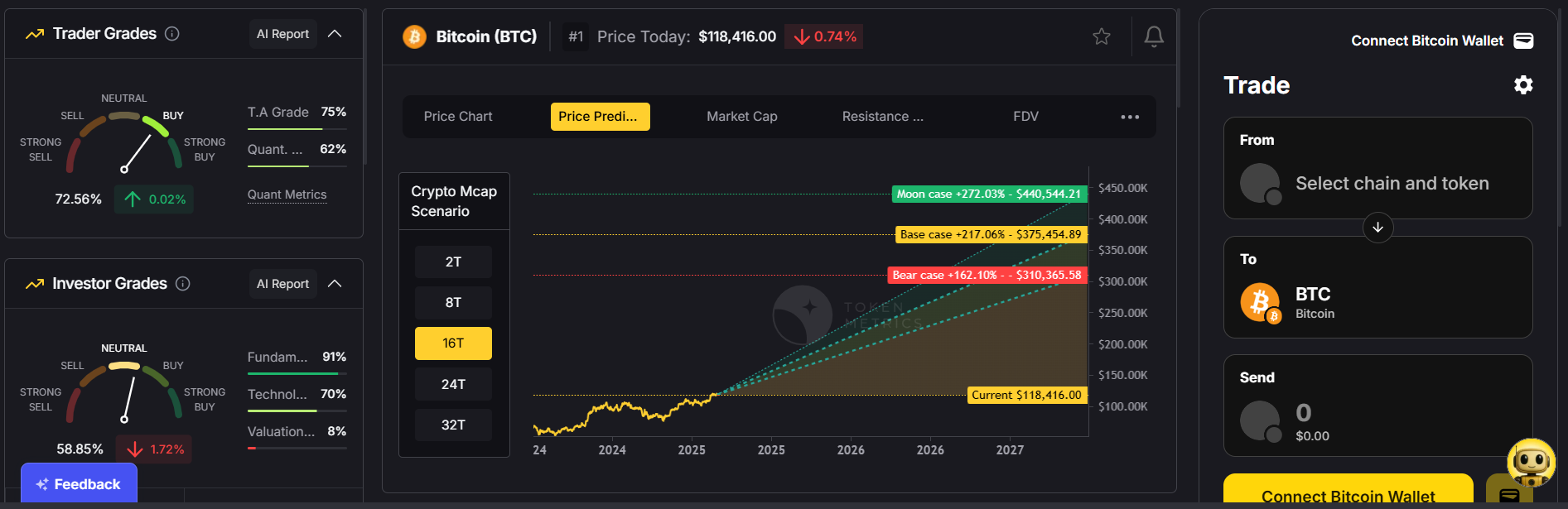
In crypto’s high-volatility environment, AI-driven research tools are essential. Token Metrics empowers ADA investors with real-time signals, grades, and analytics to stay ahead of the market.

✅ 1. AI-Powered Price Predictions

Token Metrics' machine learning models forecast ADA’s short- and long-term price movements based on:

  • Historical trading patterns
  • On-chain data (TVL, active addresses)
  • Market sentiment
  • Exchange flow analysis

These forecasts update in real time as market conditions evolve.

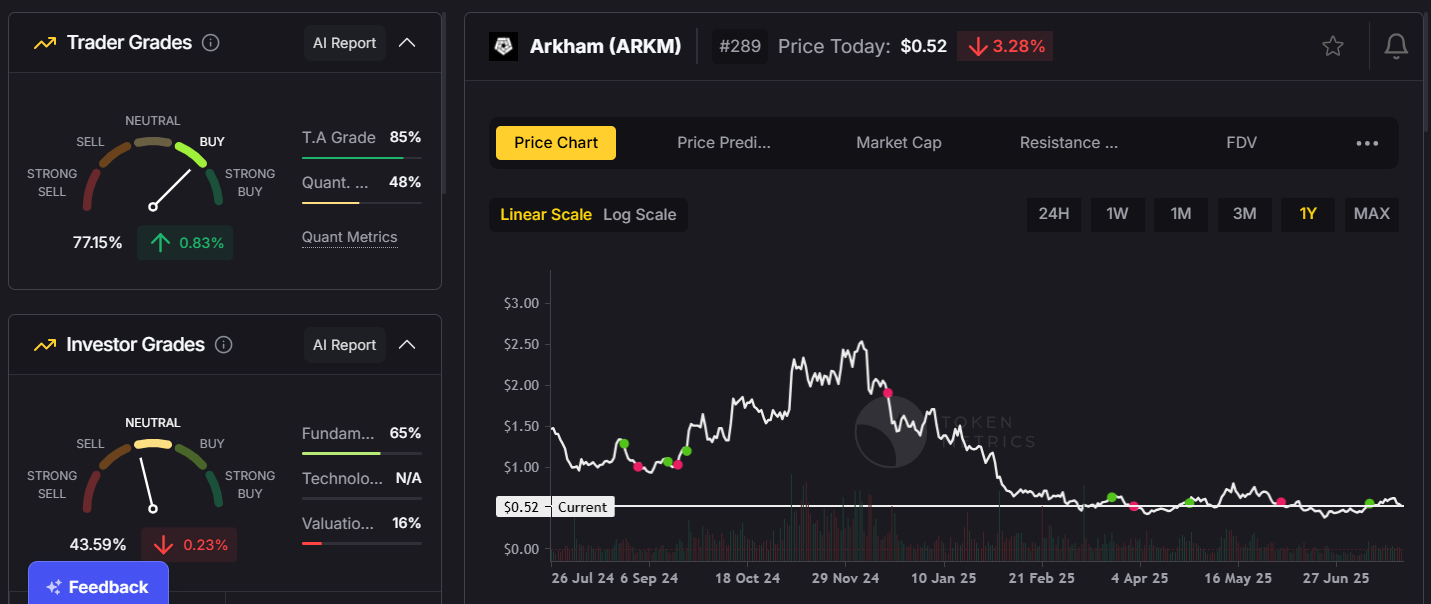
✅ 2. Trader & Investor Grades for ADA

  • Trader Grade: Indicates short-term momentum and technical strength. Ideal for swing traders.
  • Investor Grade: Evaluates ADA’s long-term fundamentals and ecosystem health.

Grades are updated daily, providing clarity even during volatile market swings.

✅ 3. Buy/Sell Signals

Token Metrics issues real-time bullish and bearish signals on ADA, helping users:

  • Avoid emotional trades
  • Enter during early momentum
  • Exit before trend reversals

Each signal is backed by over 80 on-chain and technical data points.

✅ 4. Token Details Page

ADA’s dedicated page includes:

  • Live price chart
  • ROI since listing
  • Exchange and wallet data
  • Historical grading performance
  • AI-based outlooks and narratives

It’s a comprehensive research hub for Cardano investors.

✅ 5. Custom Alerts

Set up personalized alerts for ADA based on:

  • Price targets (e.g., alert me at $1.00)
  • Percentage changes (e.g., +10% move)
  • Grade improvements or downgrades

Receive alerts via email, Discord, Telegram, or Slack, keeping you informed 24/7.

📉 Bearish Scenario: What If ADA Fails to Break Out?

If ADA cannot break above $0.80, it may retrace toward:

  • $0.62 (short-term support)
  • $0.50 (key historical demand zone)

In that case, investors should:

  • Monitor Token Metrics’ bearish signals
  • Look for re-entry setups at lower prices
  • Track DeFi TVL and whale accumulation

✅ Final Thoughts: Is ADA a Strong Buy in 2025?

Cardano is making meaningful strides:

  • Governance decentralization (Plomin Hard Fork)
  • Growing DeFi ecosystem
  • Strong institutional interest
  • Potential ETF approval

If these trends continue and Bitcoin remains in a bull cycle, ADA could reach $1.10–$1.65 by year-end.

However, investors should stay cautious of competition, user activity metrics, and potential volatility.

With Token Metrics, you can:

  • Predict price movements with AI
  • Track technical and fundamental grades
  • Get alerts before the crowd reacts

🔗 Start Using Token Metrics to Trade ADA Smarter

Ready to take advantage of Cardano’s potential?

👉 Visit tokenmetrics.com
🚀 Access AI price predictions, moonshot opportunities, and real-time signals
📲 Set custom alerts so you never miss a breakout

Click here to buy Cryptocurrencies from Gate.io

Build Smarter Crypto Apps &
AI Agents in Minutes, Not Months
Real-time prices, trading signals, and on-chain insights all from one powerful API.
Grab a Free API Key
About Token Metrics
Token Metrics: AI-powered crypto research and ratings platform. We help investors make smarter decisions with unbiased Token Metrics Ratings, on-chain analytics, and editor-curated “Top 10” guides. Our platform distills thousands of data points into clear scores, trends, and alerts you can act on.
30 Employees
analysts, data scientists, and crypto engineers
Daily Briefings
concise market insights and “Top Picks”
Transparent & Compliant
Sponsored ≠ Ratings; research remains independent
Want Smarter Crypto Picks—Free?
See unbiased Token Metrics Ratings for BTC, ETH, and top alts.
Thank you! Your submission has been received!
Oops! Something went wrong while submitting the form.
 No credit card | 1-click unsubscribe
Token Metrics Team
Token Metrics Team

Recent Posts

Research

What’s the Best Time to Trade Cryptocurrency?

Token Metrics Team
8 min

Cryptocurrency trading is a 24/7 market—unlike stocks, there’s no opening or closing bell. This leads many traders to wonder: “When is the best time to trade cryptocurrency?”

The truth is, timing your trades can make a huge difference in profitability. Trading during periods of high liquidity or increased volatility can provide better opportunities, while poorly timed trades can lead to slippage and losses.

In this guide, we’ll explore the best times to trade crypto, how different time zones affect price movements, and how Token Metrics can help you identify the right moments to enter or exit trades using AI-powered insights.

Why Timing Matters in Crypto Trading

Even though the crypto market never sleeps, trading activity is not equal throughout the day.

  • High liquidity: When more traders are active, spreads are tighter, making it easier to enter and exit trades at good prices.
  • Volatility opportunities: Price swings create profit potential—but also risk.
  • Market overlaps: When multiple regions are active, volume surges.

Knowing when the market is most active can help you reduce trading fees, minimize slippage, and maximize your gains.

The Best Times to Trade Cryptocurrency

1. Overlap Between U.S. and European Markets (1:00 PM – 5:00 PM UTC)

The busiest period for crypto trading is when U.S. and European sessions overlap.

  • Why?

    • The U.S. is home to major crypto exchanges and institutional traders.
    • Europe contributes significant trading volume and liquidity.

  • Benefits:

    • Higher volatility for short-term traders.
    • Tighter spreads for efficient execution.

This overlap often sees the biggest price movements of the day—perfect for day traders and scalpers.

2. Early U.S. Trading Hours (12:00 PM – 3:00 PM UTC)

The start of the U.S. session brings increased activity from institutional investors and retail traders waking up to market news.

  • Best for:

    • News-based trades (after U.S. economic announcements).
    • Entering/exiting positions with high liquidity.

3. Weekend Volatility (Saturday & Sunday)

Crypto is unique because weekend trading can be extremely volatile due to:

  • Lower liquidity (fewer institutional players).
  • Retail-driven price movements.

  • Who benefits:

    • Swing traders looking for sharp moves.
    • Those willing to tolerate higher risk for bigger gains.

4. After Major News & Events

The “best time” isn’t always about the clock—it’s about market catalysts.

  • Regulatory updates.
  • Exchange announcements.
  • Macro events (interest rate changes, economic data).

These events can cause instant surges or drops—great for traders who react quickly.

Does the Day of the Week Matter?

Yes. Research shows:

  • Mondays & Fridays: Often more volatile as traders adjust positions before/after the weekend.
  • Midweek (Tuesday–Thursday): Tends to have steady, higher trading volumes.

For swing traders, entering positions midweek may reduce erratic weekend exposure.

How Token Metrics Helps You Trade at the Right Time

Timing trades isn’t just about watching charts—it’s about analyzing multiple data points in real time. That’s where Token Metrics gives you a powerful edge.

1. AI-Powered Trading Signals

Get real-time bullish and bearish alerts based on 80+ data points, helping you know when to enter or exit trades confidently.

2. Narrative Tracking

Our AI monitors emerging crypto narratives (AI tokens, DeFi, RWA, etc.) so you can act before the crowd—crucial for timing market moves.

3. Trader & Investor Grades

Use Trader Grades for short-term opportunities and Investor Grades for long-term positions, aligning your trades with market momentum.

4. AI-Driven Indices

Don’t want to time trades manually? Token Metrics offers auto-managed crypto indices that rebalance based on AI-identified market conditions.

Tips for Timing Crypto Trades

  1. Trade During High Liquidity Windows: Overlaps between U.S. and European sessions are best.
  2. Watch for News: Major announcements can create rapid price moves—be ready.
  3. Avoid Low-Volume Hours: Late-night trading (UTC) often has higher slippage.
  4. Use AI for Precision: Let Token Metrics guide entry and exit points with data-backed insights.
  5. Set Alerts: Use Token Metrics’ customizable alerts for price, grades, and signals so you never miss an opportunity.

Example: Using Token Metrics for Timing

Imagine you’re planning to trade Ethereum. Instead of guessing when to enter:

  • You use Token Metrics Trader Grades to spot when ETH has strong short-term potential.
  • You set AI-powered alerts for price changes and bullish signals.
  • You execute your trade during the U.S.-EU overlap when liquidity is highest—reducing slippage and maximizing efficiency.

This data-driven approach takes the guesswork out of timing.

Final Thoughts

So, what’s the best time to trade cryptocurrency?

  • Weekdays during the U.S.-EU overlap (1:00–5:00 PM UTC) offer the best liquidity and volatility.
  • Early U.S. hours and weekends can also present opportunities—but with higher risks.
  • Major news events often create the best entry/exit windows.

But the truth is, there’s no universal “perfect time.” The real key is using data-driven insights to trade at your best time—when probabilities are in your favor.

That’s why Token Metrics is essential for traders. With AI-powered trading signals, narrative tracking, and portfolio management tools, Token Metrics helps you time the market intelligently, not emotionally.

Whether you’re a day trader chasing volatility or a long-term investor, Token Metrics puts the right data at your fingertips—so you can trade with confidence, anytime.

Research

How Do I Keep My Cryptocurrency Safe?

Token Metrics Team
8 min

The cryptocurrency market has created life-changing wealth for millions, but it has also attracted hackers, scammers, and bad actors. From exchange hacks to phishing scams and rug pulls, billions of dollars in crypto have been lost due to poor security practices.

If you’re serious about trading or investing in crypto, one of your top priorities should be keeping your cryptocurrency safe. In this guide, we’ll walk through the biggest risks to your crypto security, best practices to protect your assets, and how Token Metrics can help you make informed, safe decisions when navigating the crypto market.

Why Is Cryptocurrency Security So Important?

Unlike a traditional bank account, cryptocurrency transactions are irreversible. If your funds are stolen, there’s usually no way to recover them.

  • No centralized authority: There’s no bank to call for refunds.
  • Pseudonymous transactions: It’s nearly impossible to trace funds once they’re moved.
  • High-value targets: Hackers actively target crypto investors due to the potential for large payoffs.

This means you are your own bank—and you’re responsible for protecting your funds.

Common Threats to Your Cryptocurrency

Before learning how to protect your crypto, you need to know what you’re up against:

1. Exchange Hacks

Crypto exchanges are frequent targets for hackers. Even top-tier exchanges like Mt. Gox and FTX have experienced devastating losses.

2. Phishing Attacks

Scammers use fake websites, emails, or social media accounts to trick you into revealing your private keys or login credentials.

3. Malware & Keyloggers

Cybercriminals install malicious software on your devices to steal passwords and seed phrases.

4. Rug Pulls & Scams

Fraudulent projects lure investors with promises of high returns, then disappear with the funds.

5. Human Error

Lost passwords, mishandled private keys, or accidental transfers can lead to permanent loss of funds.

How to Keep Your Cryptocurrency Safe

Here’s a step-by-step approach to safeguarding your crypto:

1. Use a Secure Wallet

Hardware Wallets:

  • The safest option for long-term storage.
  • Devices like Ledger or Trezor keep your private keys offline, out of reach of hackers.

Software Wallets:

  • Convenient for active trading but more vulnerable to attacks.
  • Use reputable wallets like MetaMask or Trust Wallet and enable strong security features.

Pro Tip: Use a hardware wallet for long-term holdings and a software wallet for small, active trading balances.

2. Enable Two-Factor Authentication (2FA)

Always enable 2FA on your exchange accounts, wallets, and email addresses.

  • Use Google Authenticator or Authy, not SMS-based 2FA, which is susceptible to SIM swaps.

3. Beware of Phishing & Fake Websites

  • Double-check URLs before logging into exchanges or wallets.
  • Never click links from suspicious emails or DMs.
  • Bookmark the official websites of your exchanges and platforms.

4. Keep Your Seed Phrase Offline

Your wallet’s seed phrase is the master key to your funds.

  • Write it down on paper and store it securely (safe, vault).
  • Avoid storing it in digital form (cloud storage, photos).
  • Consider splitting the phrase into parts and storing them in separate locations.

5. Research Projects Before Investing

Many scams and rug pulls target uninformed investors chasing hype.

How Token Metrics Helps:

  • Use AI-powered Investor Grades to assess projects for long-term viability.
  • Leverage Moonshot Finder to discover vetted early-stage tokens with real growth potential—not scams.

6. Diversify Your Storage

Don’t keep all your crypto in one place.

  • Use multiple wallets for different purposes (trading vs. holding).
  • Spread funds across hardware, software, and exchange wallets.

7. Stay Updated on Threats

The crypto landscape changes fast.

  • Follow credible crypto news platforms.
  • Monitor regulatory updates and security alerts.
  • Use Token Metrics to stay ahead of market narratives and avoid projects flagged as high-risk.

How Token Metrics Helps You Stay Secure

While Token Metrics isn’t a wallet or exchange, it’s a powerful AI-powered platform designed to help you make safer investment decisions.

1. AI-Powered Risk Analysis

Token Metrics uses AI-driven evaluations to score projects, helping you avoid high-risk tokens and scam projects.

2. Investor & Trader Grades

Our proprietary grading system helps you quickly identify safe, high-quality assets for both short-term trading and long-term holding.

3. Moonshot Finder

Interested in low-cap tokens? The Moonshot Finder helps you spot legitimate early-stage projects before they pump—without falling into scams.

4. Narrative & Market Tracking

Stay ahead of emerging narratives and security concerns with Token Metrics’ real-time AI-driven analysis, helping you dodge risky trends.

Practical Security Checklist for Every Crypto Holder

  1. Use a hardware wallet for long-term holdings.
  2. Enable 2FA on all accounts—never rely on SMS-based security.
  3. Store seed phrases offline and securely.
  4. Avoid suspicious links and verify all URLs.
  5. Research every project using platforms like Token Metrics.
  6. Diversify storage across multiple wallets.
  7. Stay informed about new threats and market risks.

Final Thoughts

So, how do you keep your cryptocurrency safe? It comes down to strong storage practices, personal vigilance, and making informed investment decisions.

While hardware wallets and 2FA secure your assets, knowing where to invest is just as important. That’s where Token Metrics comes in—using AI-powered analysis to help you avoid scams, choose safe projects, and trade with confidence.

In crypto, you are your own bank—so take your security seriously. And with Token Metrics guiding your decisions, you can navigate this high-risk market safely and profitably.

Research

What Are Trading Fees and How Do They Work?

Token Metrics Team
8 min

If you’ve ever bought or sold cryptocurrency, you’ve likely noticed that exchanges charge trading fees. While these fees may seem small at first glance, they can add up significantly over time, especially for frequent traders.

Understanding how trading fees work is essential for maximizing your profits and choosing the right platform and strategy. In this guide, we’ll explain what trading fees are, how they’re calculated, the different types of fees, and how Token Metrics can help you minimize costs while optimizing your trades.

What Are Trading Fees?

Trading fees are charges imposed by cryptocurrency exchanges whenever you execute a trade—whether you’re buying, selling, or swapping digital assets.

  • Purpose:

    • They compensate exchanges for providing liquidity, security, and order-matching services.
    • They discourage spam orders that could overload the exchange.

Example:
If you buy $1,000 worth of Bitcoin with a 0.1% trading fee, you’ll pay $1 in fees for that transaction.

How Are Trading Fees Calculated?

Most crypto exchanges calculate fees based on:

  1. Trade Value (Percentage):

    • The most common model.
    • Fees are a percentage of the total trade amount (e.g., 0.1% per trade).

  2. Flat Fees:

    • Some platforms charge a fixed fee per trade, regardless of trade size.

  3. Tiered Fee Structures:

    • Frequent traders often benefit from lower fees when they reach certain monthly trading volumes.

Maker vs. Taker Fees

Many exchanges use a maker-taker model to incentivize liquidity:

  • Maker Fees:

    • You pay a lower fee (or sometimes nothing) when you add liquidity by placing a limit order that isn’t immediately matched.

  • Taker Fees:

    • You pay a higher fee when you remove liquidity by placing a market order that is filled instantly.

Example:
On Binance, makers might pay 0.08%, while takers pay 0.1%.

Types of Crypto Trading Fees

When trading crypto, you’ll encounter more than just trading fees:

1. Trading (Transaction) Fees

  • Charged when buying or selling crypto.
  • Often range from 0.05%–0.5% depending on the exchange.

2. Deposit Fees

  • Some exchanges charge when funding accounts via credit card, PayPal, or bank transfers.
  • Crypto deposits are typically free.

3. Withdrawal Fees

  • Charged when moving funds off the exchange.
  • Often fixed per withdrawal (e.g., 0.0005 BTC).

4. Network (Gas) Fees

  • Separate from exchange fees, paid to blockchain validators.
  • Ethereum and other networks can have high gas fees during peak demand.

Why Do Trading Fees Matter?

Even small fees can significantly impact your profits, especially if you trade often.

Example:

  • A day trader making 50 trades/month with a 0.1% fee per trade on $1,000 positions will pay $50/month in fees.
  • Over a year, that’s $600 lost to fees—before considering withdrawal or gas costs.

This is why reducing fees is crucial for active traders.

How to Minimize Trading Fees

1. Use Low-Fee Exchanges

Compare platforms—Binance, Bybit, and Kraken often offer competitive rates for high-volume traders.

2. Increase Your Trading Volume

Many exchanges lower fees as your monthly trading volume increases.

3. Use Limit Orders

Save on fees by acting as a maker instead of a taker whenever possible.

4. Pay with Exchange Tokens

Some exchanges offer discounts when fees are paid with their native token (e.g., BNB on Binance).

5. Optimize Your Trading Strategy with AI

Instead of making dozens of small trades, use data-driven insights from Token Metrics to make high-probability trades—reducing overall fee impact.

How Token Metrics Helps You Save on Fees

Token Metrics isn’t an exchange—it’s an AI-powered crypto research and trading platform designed to maximize your profits.

Here’s how it helps with trading fees:

1. AI-Powered Trade Optimization

Token Metrics provides bullish/bearish trading signals based on 80+ technical indicators, helping you enter fewer but higher-quality trades—minimizing unnecessary fees.

2. Trader & Investor Grades

Our proprietary grading system helps you identify top-performing cryptos, reducing guesswork and avoiding costly trial-and-error trading.

3. AI-Managed Indices

Instead of manually rebalancing portfolios (and paying multiple trading fees), use Token Metrics AI-driven crypto indices, which rebalance intelligently while keeping transaction costs low.

4. Narrative Tracking

Our AI detects emerging crypto narratives early, helping you position yourself before the market gets crowded—reducing the need for excessive short-term trading.

Practical Example: Using Token Metrics to Reduce Fees

Imagine you’re trading altcoins manually and make 20 trades/month.

  • At 0.2% per trade on $1,000 positions, you pay $40/month in fees.
  • With Token Metrics AI signals, you cut this down to 8 high-probability trades per month—reducing your fees by 60% while increasing win rates.

This is how data-driven trading saves both money and stress.

Final Thoughts

So, what are trading fees and how do they work? They’re the charges exchanges take for facilitating trades, withdrawals, and transactions—and while they may seem small, they can eat into your profits quickly.

The good news? You can minimize trading fees with the right strategies—and Token Metrics can help.

By providing AI-powered trading signals, long-term Investor Grades, and automated crypto indices, Token Metrics helps you reduce unnecessary trades, make smarter decisions, and maximize your returns—all while minimizing the impact of trading fees.

Whether you’re a beginner or advanced trader, using Token Metrics means trading smarter, not harder.

Choose from Platinum, Gold, and Silver packages
Reach with 25–30% open rates and 0.5–1% CTR
Craft your own custom ad—from banners to tailored copy
Perfect for Crypto Exchanges, SaaS Tools, DeFi, and AI Products