Back to blog
Crypto Basics

Cardano vs Ethereum - Key Differences and Similarities

Explore the differences and similarities between Cardano (ADA) and Ethereum (ETH), two prominent cryptocurrencies in the crypto space.
Marcus K
7 Minutes
Want Smarter Crypto Picks—Free?
See unbiased Token Metrics Ratings for BTC, ETH, and top alts.
Thank you! Your submission has been received!
Oops! Something went wrong while submitting the form.
 No credit card | 1-click unsubscribe

As the world of cryptocurrency evolves, certain projects rise to prominence due to their unique offerings and innovative solutions. Two such juggernauts in the decentralized space are Ethereum and Cardano. 

Both platforms have garnered immense attention, yet their paths, while aligned in ambition, vary in execution. In this comprehensive post, we'll delve deep into the heart of both ecosystems, elucidating their key differences and striking similarities.

Ethereum and Cardano Overview

Ethereum and Cardano are both decentralized platforms that allow developers to create and run smart contracts. 

However, their technical underpinnings, governance structures, and future plans diverge in intriguing ways. Knowing these nuances is vital for crypto enthusiasts, investors, and developers.

Cardano vs Ethereum: Key Differences

While both Cardano and Ethereum lay their foundations on blockchain technology and encrypted transactions, the two platforms diverge notably in their technical and functional aspects. 

Let's delve into the technical and operational differences that set Cardano and Ethereum apart.

Historical Background

Ethereum: Launched in 2015 by a team led by Vitalik Buterin, Ethereum's aim was to build upon the idea of Bitcoin but expand its capabilities significantly. 

It introduced the world to the concept of smart contracts, self-executing contracts with the terms of the agreement between buyer and seller written into code.

Cardano: Spearheaded by Charles Hoskinson, one of Ethereum's co-founders, Cardano began in 2017. Unlike Ethereum, Cardano took a more academic and research-driven approach, emphasizing peer reviews and formal methods in its development process.

Ethereum and Cardano: Consensus Mechanism

Ethereum: Ethereum started with a Proof-of-Work (PoW) consensus mechanism, the same one that Bitcoin employs. However, there's an ongoing shift towards Ethereum 2.0, which will operate on a Proof-of-Stake (PoS) mechanism. This transition is aimed at improving scalability and energy efficiency.

Cardano: Cardano uses a unique PoS mechanism known as Ouroboros. It was one of the first PoS protocols that was mathematically proven to be secure. Its energy efficiency and scalable design make it a formidable alternative to PoW systems.

Development Approach

Ethereum: Ethereum's development can be characterized as rapid and agile, with changes often being implemented in response to arising needs and challenges.

Cardano: Adopting what's called a "first principles" approach, Cardano's development is rigorous, systematic, and rooted in academic research. Every update undergoes extensive peer review, ensuring robustness and long-term stability.

ETH vs ADA: Token Utility

Ethereum: Ether (ETH) is Ethereum's native token. It's used to compensate participants who perform computations and validate transactions, and as "gas" to power smart contracts.

Cardano: ADA is Cardano's native currency. Like ETH, ADA is used to facilitate transactions on its network and as a stake in the PoS consensus mechanism.

Smart Contract Capabilities

Ethereum: Ethereum uses a language called Solidity for its smart contracts. It's Turing complete, which means it can technically compute anything if given enough resources.

Cardano: Cardano's Plutus platform allows for smart contracts to be written using Haskell-based scripting. Cardano’s approach is designed for higher assurance and formal verification, which can lead to more secure and reliable smart contracts.

Governance

Ethereum: Ethereum's governance has largely been informal. Proposals for changes (EIPs) are discussed among the community, with decisions often being made by consensus among core developers.

Cardano: Cardano has a structured governance system called Project Catalyst. It's a community-driven approach where ADA holders can propose changes and vote on them, ensuring more democratic and decentralized decision-making.

Cardano vs Ethereum: Key Similarities

Both Ethereum and Cardano stand as titans in the world of decentralized platforms, underpinned by their native transactional coins, ETH for Ethereum and ADA for Cardano. 

These coins not only represent value within their networks but also play instrumental roles in network operations. At their foundation, both are "Layer 1" blockchain technologies, offering fertile grounds for developers to cultivate decentralized applications (dApps) and bring to life self-executing smart contracts.

Furthermore, they share a common consensus mechanism: proof-of-stake (Ethereum is moving from PoW to PoS). Within the PoS framework, participants, often referred to as "stakers", pledge a portion of their crypto holdings as collateral to help validate and verify transactions. 

This method stands in stark contrast to the energy-intensive proof-of-work model exemplified by Bitcoin, as staking offers a more sustainable and environmentally conscious approach. 

This consensus mechanism not only emphasizes security and decentralization but also represents both projects' commitment to eco-friendly blockchain solutions.

Cardano and Ethereum: Future Outlook

Ethereum: With Ethereum 2.0 on the horizon, the platform seeks to address scalability, security, and sustainability issues. The introduction of shard chains and the Beacon Chain promises a faster, more efficient Ethereum.

Cardano: Having recently launched its smart contract capabilities, Cardano is focused on widening its user base, fostering dApp development, and expanding its ecosystem through partnerships and integrations.

Frequently Asked Questions

Q1. What is the primary programming language for smart contracts on Ethereum and Cardano?

Ethereum primarily uses Solidity for its smart contracts, while Cardano utilizes Plutus, a platform based on the Haskell programming language.

Q2. How do the transaction fees compare between Ethereum and Cardano?

Ethereum transaction fees, known as "gas," can be volatile and are determined by network congestion. Cardano's transaction fees are typically more predictable and are calculated based on the transaction size and necessary computation.

Q3. Are there any major partnerships or collaborations associated with Ethereum and Cardano?

Both platforms have engaged in numerous partnerships. Ethereum's decentralized finance (DeFi) ecosystem is vast, with many collaborations. Cardano, on the other hand, has established partnerships with governments and educational institutions, especially in developing nations.

Q4. How do the staking rewards compare between the two platforms?

Staking rewards vary based on multiple factors, including the amount staked, the total staking pool, and platform-specific inflation rates. Both Ethereum and Cardano offer staking, but the rewards and requirements might differ at any given time.

Q5. Which platform is more scalable in handling a large number of transactions per second?

Cardano, with its Ouroboros PoS protocol, has emphasized scalability from the outset. Ethereum, while originally facing scalability challenges, is working towards enhanced scalability with its transition to Ethereum 2.0.

Q6. Can Ethereum dApps be ported to the Cardano platform easily?

Porting between different platforms usually requires adaptations due to differences in smart contract languages and other technical aspects. However, Cardano is working on solutions and tools to make this transition smoother for developers.

Q7. Are Ethereum and Cardano compliant with regulatory frameworks?

Both Ethereum and Cardano strive to maintain compliance with global regulations, but the decentralized nature of these platforms means that applications built on top of them might vary in compliance. It's essential to research individual projects or tokens for regulatory adherence.

Q8. How do Ethereum and Cardano handle interoperability with other blockchains?

Interoperability is a growing focus in the blockchain world. Cardano has emphasized cross-chain compatibility through its research and partnerships. Ethereum, while primarily operating within its ecosystem, has seen bridging solutions emerge to link it with other chains.

Conclusion

While Ethereum and Cardano both aim to revolutionize the decentralized space with their smart contract capabilities, their approaches differ significantly. 

Ethereum's agile development and first-mover advantage have earned it a vast community and ecosystem. In contrast, Cardano's meticulous, research-driven approach might appeal to those who value rigorous scrutiny and methodical progress.

Actionable Insights

For Investors: Diversifying between both tokens might be a wise strategy, leveraging Ethereum's established dominance and Cardano's promising potential.

For Developers: Assess the nature of your project. If you require rapid deployment with a vast array of existing tools, Ethereum might be preferable. For projects that prioritize high assurance and security, Cardano's ecosystem could be more fitting.

Remember, the crypto space is dynamic, and today's realities might shift tomorrow. Stay updated, stay informed, and always make decisions grounded in research and foresight.

Disclaimer

The information provided on this website does not constitute investment advice, financial advice, trading advice, or any other sort of advice and you should not treat any of the website's content as such.

Token Metrics does not recommend that any cryptocurrency should be bought, sold, or held by you. Do conduct your own due diligence and consult your financial advisor before making any investment decisions.

Build Smarter Crypto Apps &
AI Agents in Minutes, Not Months
Real-time prices, trading signals, and on-chain insights all from one powerful API.
Grab a Free API Key
About Token Metrics
Token Metrics: AI-powered crypto research and ratings platform. We help investors make smarter decisions with unbiased Token Metrics Ratings, on-chain analytics, and editor-curated “Top 10” guides. Our platform distills thousands of data points into clear scores, trends, and alerts you can act on.
30 Employees
analysts, data scientists, and crypto engineers
Daily Briefings
concise market insights and “Top Picks”
Transparent & Compliant
Sponsored ≠ Ratings; research remains independent
Want Smarter Crypto Picks—Free?
See unbiased Token Metrics Ratings for BTC, ETH, and top alts.
Thank you! Your submission has been received!
Oops! Something went wrong while submitting the form.
 No credit card | 1-click unsubscribe
Token Metrics Team
Token Metrics Team

Recent Posts

Research

Best Retail Crypto Wallets (Mobile/Web) 2025

Sam Monac
5 min

Why Retail Crypto Wallets (Mobile/Web) Matter in September 2025

Retail-friendly mobile and web wallets make crypto usable—on your phone and in your browser—without relying on a centralized custodian. This guide ranks the best retail crypto wallets for 2025 so you can safely store, send, swap, and explore Web3. A crypto wallet is software that holds your keys and lets you sign transactions; self-custody means you control those keys.
We focus on practical needs: everyday buys, swaps, NFT viewing, multi-chain coverage, and clear fees. Expect mainstream names alongside rising multichain players. Secondary considerations include mobile crypto wallet UX, web3 wallet dapp access, and self-custody wallet security. If you’re new, start with a wallet that offers simple onboarding and robust recovery. If you’re advanced, look for pre-transaction risk checks, multichain swaps, and hardware support.

How We Picked (Methodology & Scoring)

  • Liquidity (30%) – depth and routing quality for in-wallet swaps/bridging; reliable asset movement.

  • Security (25%) – self-custody design, audits, MPC/multisig options, hardware compatibility, recovery.

  • Coverage (15%) – number of supported chains/tokens and NFT handling.

  • Costs (15%) – transparent swap/bridge fees and gas handling.

  • UX (10%) – onboarding, performance, transaction clarity, portfolio/NFT views.

  • Support (5%) – docs, help centers, in-app support channels.

Top 10 Retail Crypto Wallets (Mobile/Web) in September 2025

1. MetaMask — Best for EVM & massive dapp coverage

Why Use It: The most ubiquitous Web3 wallet, MetaMask balances power and familiarity. It’s everywhere dapps are, with mobile + browser extension, good network support, and strong swap/bridge routing in-app. Smart Transactions and built-in security alerts improve reliability for everyday users.

‍Best For: EVM users, NFT collectors, L2 explorers, DeFi regulars.

Notable Features: Smart Transactions; Swaps/Bridge aggregator; MetaMask Learn; mobile + major browsers.

‍Consider If: You want explicit fee transparency—MetaMask Swaps includes a 0.875% service fee (plus network gas).

‍Alternatives: Trust Wallet, OKX Wallet.

Regions: Global.

‍Fees Notes: Network fees; MetaMask Swaps service fee 0.875%.

2. Trust Wallet — Best all-rounder for mobile + extension

Why Use It: Trust Wallet offers a simple, one-stop experience: buy, send, swap, stake, and manage NFTs across many chains. Its mobile app is fast, and the extension integrates with popular EVM and non-EVM chains.

‍Best For: Beginners who want breadth; multichain NFT holders; mobile-first users.

‍Notable Features: Built-in DApp browser; simplified swaps with gas optimization; staking flows.

‍Consider If: You want no added swap fee—Trust says it doesn’t charge extra on swaps (you still pay network/third-party fees).

‍Alternatives: MetaMask, Crypto.com Onchain.

Regions: Global.

Fees Notes: Network/partner fees apply; Trust states no added in-app swap fee.

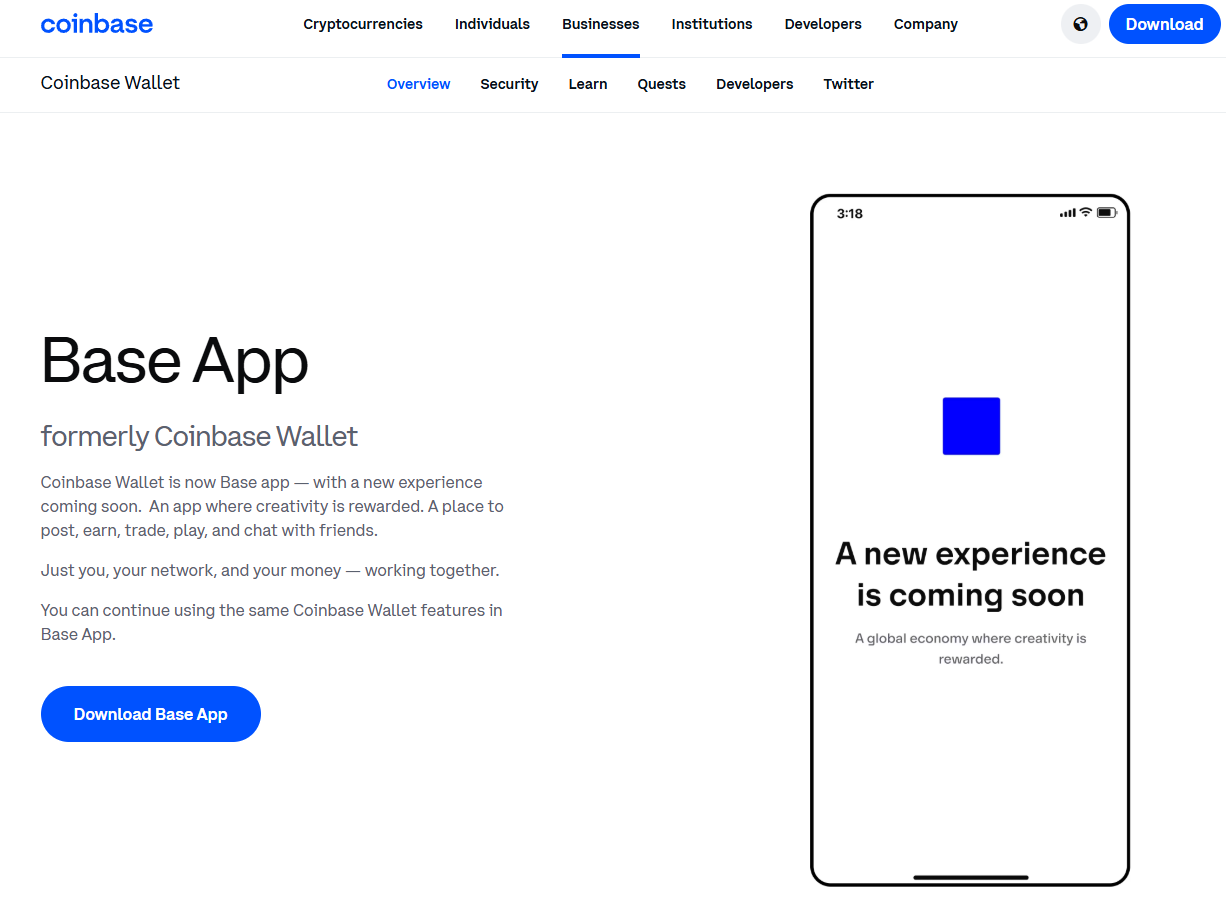
3. Base app (formerly Coinbase Wallet) — Best for Coinbase ecosystem & onchain social

Why Use It: Rebranded as the Base app, the former Coinbase Wallet keeps familiar self-custody features while embracing Base/L2 culture and onchain social/activity. If you already use Coinbase products, onboarding is straightforward while staying self-custodial.

‍Best For: Coinbase users going self-custody; Base/L2 explorers; web3 social/NFT dabblers.

‍Notable Features: Self-custody; trading, posting, playing; continuity for Coinbase Wallet users.

‍Consider If: You prefer chain-agnostic advanced tooling—others may offer deeper multichain utilities today.

‍Alternatives: MetaMask, Rainbow.

‍Regions: Global.

‍Fees Notes: Network fees; third-party swap/partner fees where used.

4. Phantom — Best for Solana + solid multichain UX

Why Use It: Phantom started Solana-first and has grown into a polished multichain wallet (Solana, Ethereum, and more). The interface is clean, with strong NFT views and transaction clarity—great for newcomers to Solana and cross-chain dabblers.
‍
‍Best For: Solana users, NFT traders, multichain retail.

‍Notable Features: In-wallet swaps and bridging; gasless swaps on Solana (select cases); robust notifications/history.
‍
‍Consider If: You want the lowest possible swap fees—Phantom lists 0.85% on select pairs, with separate gas/bridge fees.
‍
‍Alternatives: OKX Wallet, Trust Wallet.

‍Regions: Global.

‍Fees Notes: Network fees; Phantom fee 0.85% on select swaps; gasless-swap fee rules apply on Solana.

5. OKX Wallet — Best for power users who want DEX depth

Why Use It: OKX Wallet (extension + mobile) plugs you into OKX’s DEX aggregator, NFT marketplace, and DeFi. It offers multiple swap modes and solid routing—useful when chasing best execution across chains.
‍
‍Best For: DeFi users seeking liquidity routing; cross-chain swappers; NFT traders.

‍Notable Features: Multi-mode swaps; DEX aggregator; marketplace; Earn/Discover sections.
‍
‍Consider If: You need crystal-clear fee schedules—OKX lists DEX interface fee tiers up to 0.85% depending on pair groups.
‍
‍Alternatives: MetaMask, Bitget Wallet.

‍Regions: Global (wallet).

‍Fees Notes: Network fees; OKX DEX interface fee 0–0.85% by pair category.

6. Exodus — Best for design & easy portfolio views

Why Use It: Exodus is a long-standing, self-custodial wallet with a beautifully designed UI across desktop and mobile. Portfolio tracking and NFT galleries are polished, and its Web3 Wallet extends multichain support.
‍Best For: Newcomers who want clarity; portfolio-first users; multi-device use.

‍Notable Features: Multichain Web3 Wallet; thousands of swap pairs; simple buy/sell integrations.
‍Consider If: You want explicit fee details—Exodus doesn’t charge send/receive wallet fees, but network and partner fees still apply.
‍
‍Alternatives: Crypto.com Onchain, ZenGo.

‍Regions: Global.

‍Fees Notes: No Exodus send/receive fees; network fees + third-party swap/fiat fees may apply.

7. Crypto.com Onchain — Best for simple multichain + Crypto.com tie-ins

Why Use It: Formerly known as the DeFi Wallet experience, Crypto.com Onchain is a self-custodial app with multichain support, in-wallet trading, and dapp access. It’s friendly for users who like Crypto.com’s ecosystem but want self-custody keys.
‍
‍Best For: Mobile-first users; staking/earn explorers; Crypto.com ecosystem fans.

‍Notable Features: Local key encryption; import via 12/18/24-word phrases; multichain trading & dapp browser.

‍Consider If: You prefer a purely chain-agnostic wallet without exchange brand ties—others may feel “lighter.”

‍Alternatives: Trust Wallet, Exodus.

Regions: Global (feature availability can vary).

‍Fees Notes: Network/partner fees; self-custody (no custodial withdrawal fees).

8. ZenGo — Best for seed-phrase-free MPC security

Why Use It: ZenGo uses MPC to remove single-point seed phrase risks while keeping you in self-custody. That makes setup and recovery less nerve-wracking for new users, without buying hardware.

‍Best For: Beginners prioritizing recovery; mobile-only users; security-conscious travelers.

‍Notable Features: Seed-phrase-free MPC; in-app buy/swap; staking for select assets.

‍Consider If: You want classic seed control or advanced on-chain tooling—some power features are simpler by design.

‍Alternatives: Ledger Live (with hardware), Trust Wallet.

‍Regions: Global.

Fees Notes: Network fees; partner fees for buy/swap as quoted in-app.

9. Bitget Wallet — Best for active swappers & airdrop hunters

Why Use It: Formerly BitKeep, Bitget Wallet has grown into a large multichain wallet with DEX aggregation, dapp discovery, and memecoin-friendly flows. It’s geared for on-chain traders who want routing and token coverage across 65+ chains.

‍Best For: Power users in DeFi; memecoin and airdrop participants; cross-chain swaps.
‍
Notable Features: Multichain DEX aggregator; dapp hub; iOS/Android + Chrome extension.
‍
‍Consider If: You prefer a simpler, beginner-first interface—others above are more hand-holding.
‍
Alternatives: OKX Wallet, MetaMask.
‍
Regions: Global.

‍Fees Notes: Network fees; interface/partner fees vary by route/pair.

10. Ledger Live — Best for hardware-backed mobile/desktop security

Why Use It: Ledger Live is the companion app to Ledger hardware wallets; it brings buy, swap, stake, and portfolio monitoring into a single interface while private keys stay in the hardware device. Great for retail users who want a mobile/desktop app but insist on offline signing.
‍
‍
Best For: Long-term holders; high-value accounts; users planning to add hardware.

‍Notable Features: Buy/sell/swap/stake modules; multi-asset support; iOS/Android + desktop. Consider If: You don’t own hardware—full security benefits require a Ledger device.

‍Alternatives: ZenGo (MPC), Trezor Suite (with hardware).

‍Regions: Global.

‍Fees Notes: Network fees; partner fees for buy/swap as quoted in-app.

Decision Guide: Best By Use Case

  • Regulated U.S. on-ramp familiarity: Base app (formerly Coinbase Wallet)

  • Global multichain coverage + liquidity routing: OKX Wallet, Bitget Wallet

  • Solana-first with smooth UX: Phantom

  • EVM & dapp coverage: MetaMask

  • Mobile simplicity (no seed phrase): ZenGo

  • Polished design & portfolio tracking: Exodus

  • Exchange-brand ecosystem, self-custody keys: Crypto.com Onchain

  • Hardware-secured flows: Ledger Live

  • Beginner-friendly all-rounder: Trust Wallet

How to Choose the Right Retail Crypto Wallet (Checklist)

  • Confirm eligibility/availability in your region and app store.

  • Verify chain coverage (BTC + your primary L1s/L2s).

  • Decide on custody model: classic seed, MPC (no seed), or hardware-backed.

  • Review fees: swap/bridge interface fees + network gas.

  • Evaluate UX: transaction previews, risk alerts, NFT view, portfolio.

  • Check support: searchable help center, in-app ticketing.

  • Compliance fit: consider your tax/KYC needs with on-ramps.

  • Red flags: fake download pages; apps that ask you to type your seed phrase into a website or pop-up.

Use Token Metrics With Any Wallet

  • AI Ratings to screen assets by quality and momentum.

  • Narrative Detection to spot early theme shifts.

  • Portfolio Optimization to balance risk across chains.

  • Alerts & Signals to monitor entries/exits.
    ‍
    Workflow: Research → Select wallet → Execute on-chain → Monitor with alerts.

Start free trial

Security & Compliance Tips

  • Enable biometrics + 2FA (where available) and set a strong passcode.

  • Back up recovery materials: seed phrase metal card, or MPC recovery kits.

  • Prefer hardware signing for larger balances.

  • Use transaction previews and simulation/risk checks before signing.

  • Keep software updated; download only from official sites/app stores.

This article is for research/education, not financial advice.

Beginner Mistakes to Avoid

  • Saving seed phrases in cloud notes/screenshots.

  • Sending coins to the wrong chain or address format.

  • Ignoring fee settings or slippage in swaps.

  • Approving unlimited token allowances without review.

  • Falling for phishing domains and fake extensions.

FAQs

What is a retail crypto wallet (mobile/web)?
A mobile/web retail wallet is software that stores your private keys and lets you sign transactions from your phone or browser. Most are self-custodial, meaning you—not an exchange—control your keys.

Is a self-custody wallet safer than keeping coins on an exchange?
Self-custody removes exchange counterparty risk. However, you must protect recovery methods (seed phrase, MPC recovery) and your device. Hardware or MPC-based options can add protection.

Which wallet is best for beginners?
For simplicity: Trust Wallet, Exodus, or ZenGo. They have straightforward onboarding, clear portfolio views, and solid docs. Advanced users might prefer MetaMask, Phantom, or OKX Wallet for deeper on-chain tooling.

What fees should I expect?
You’ll always pay network gas. Some wallets add interface/service fees on swaps/bridges (e.g., MetaMask 0.875%; Phantom 0.85% on select pairs; OKX DEX 0–0.85% depending on token groups).

Do I need hardware for mobile/web wallets?
No. Many work fine without hardware. For higher balances, pairing a mobile/web app with a hardware wallet (e.g., via Ledger Live) can reduce signing risk.

Can I use one wallet across multiple chains?
Yes—most featured wallets are multichain. Check chain lists and NFT support before migrating.

Conclusion + Related Reads

If you want maximum dapp coverage, go MetaMask; Solana-centric with great UX, pick Phantom; for exchange-adjacent simplicity, choose Base app or Crypto.com Onchain; for hardware-backed security, Ledger Live. Power users chasing routing and airdrops may prefer OKX Wallet or Bitget Wallet, while newcomers should consider Trust Wallet, Exodus, or ZenGo.

Research

Top Derivatives Platforms for Futures & Options (2025)

Sam Monac
5 min

If you trade crypto futures and options, picking the right derivatives platforms can make or break your results. In this guide, we sort the top exchanges and on-chain venues by liquidity, security, costs, and product depth so you can match your strategy to the right venue—fast. You’ll find quick answers near the top, deeper context below, and links to official resources. We cover crypto futures, crypto options, and perpetual swaps for both centralized and decentralized platforms.

Quick answer: The best platform for you depends on region/eligibility, contract types (perps, dated futures, options), fee structure, margin system, and support quality. Below we score each provider and map them to common use cases.

How We Picked (Methodology & Scoring)

We scored each provider using the weights below (0–100 total):

  • Liquidity (30%) – Depth, spreads, and market resilience during volatility.

  • Security (25%) – Operational history, custody model, risk controls, and disclosures.

  • Coverage (15%) – Contract variety (BTC/ETH majors, alt perps, dated futures, options).

  • Costs (15%) – Trading/withdrawal fees, funding rates context, rebates.

  • UX (10%) – Execution workflow, APIs, mobile, analytics/tools.

  • Support (5%) – Docs, status pages, client service, institutional access.

Sources: Official platform pages, help centers, and product docs; public disclosures and product catalogs; our hands-on review and long-term coverage of derivatives venues. Last updated September 2025.

Top 10 Derivatives Platforms in September 2025

Each summary includes why it stands out, who it’s best for, and what to consider. Always check regional eligibility.

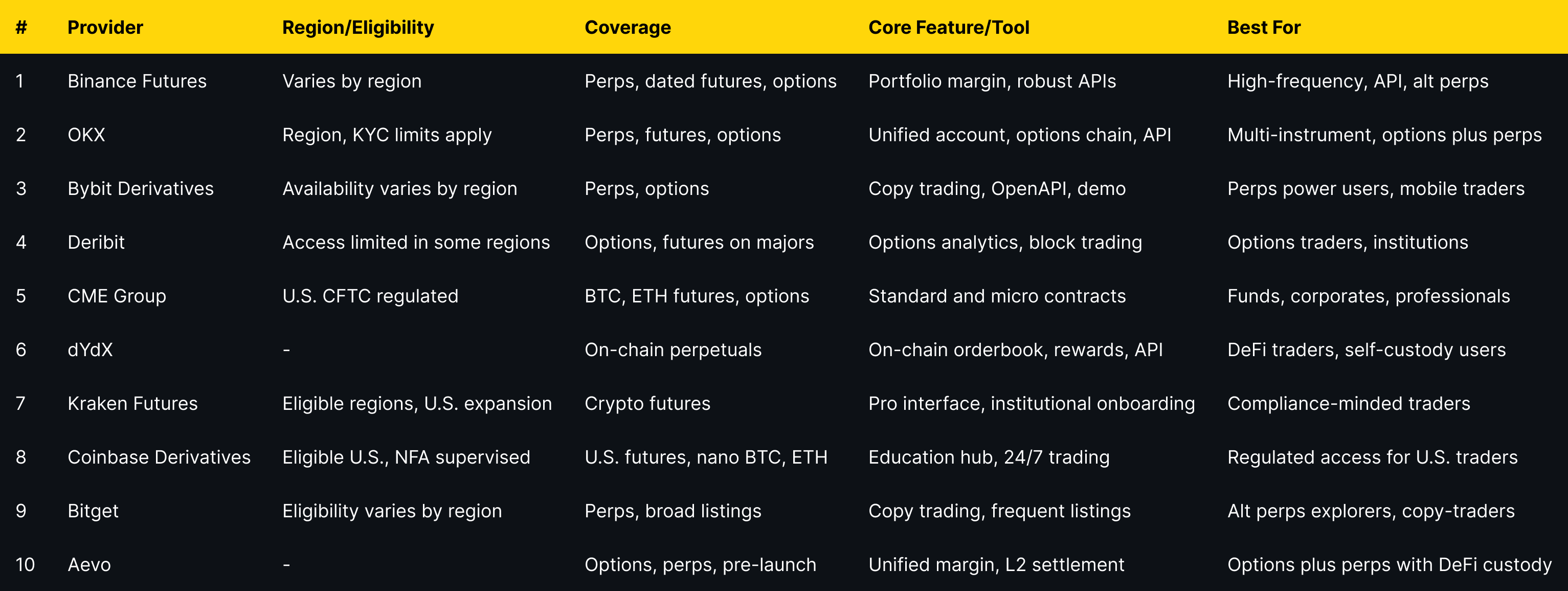
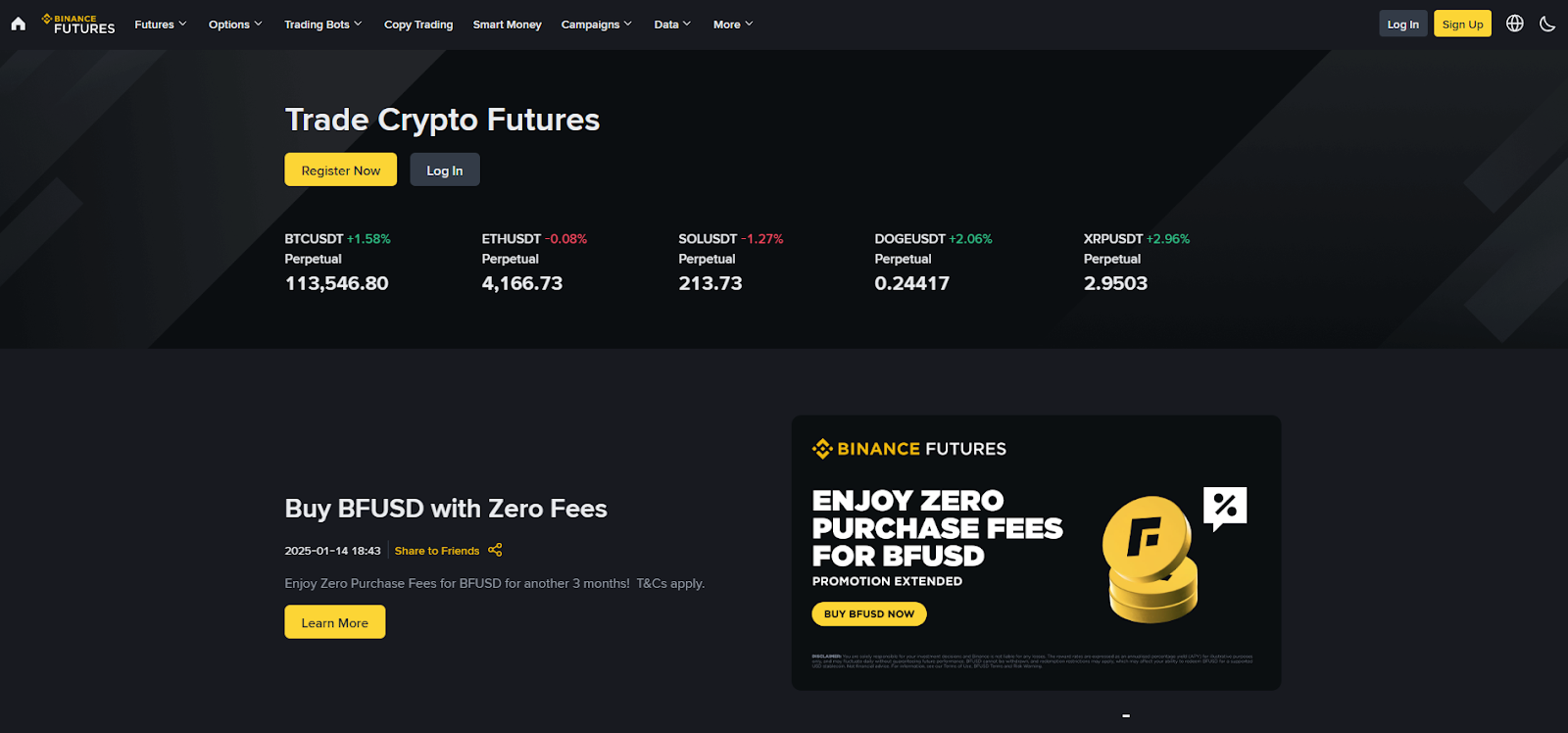
1. Binance Futures — Best for global liquidity at scale

Why Use It: Binance Futures offers some of the deepest books and widest perp listings, with robust APIs and portfolio margin. It’s a go-to for active traders who need speed and breadth.
Best For: High-frequency/active traders; systematic/API users; altcoin perp explorers.
Notable Features: Perpetuals and dated futures, options module, copy trading, portfolio margin.
Consider If: You need U.S.-regulated access—availability may vary by region.
Alternatives: OKX, Bybit.

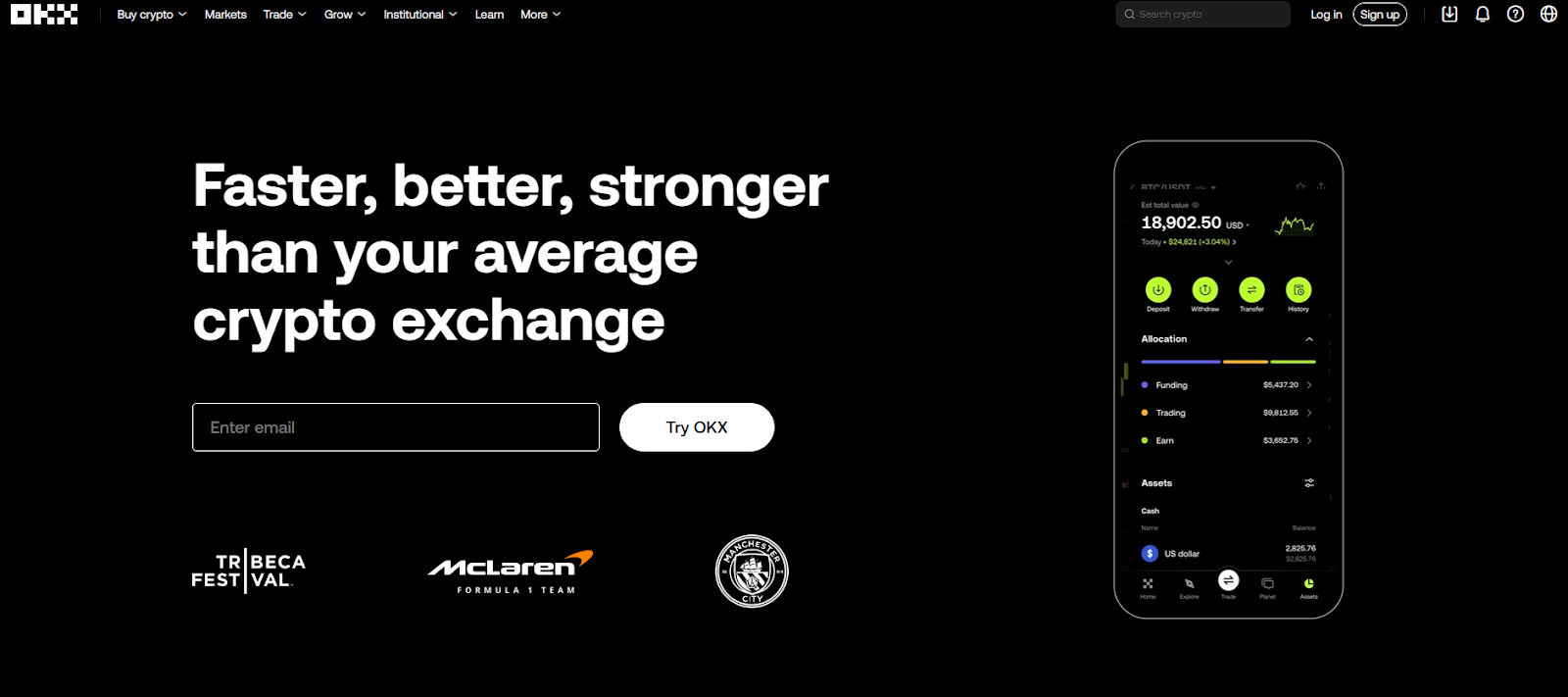
2. OKX — Best for breadth + toolset

Why Use It: Strong product coverage (perps, dated futures, options) with solid liquidity and a polished interface. Good balance of features for discretionary and API traders.
Best For: Multi-instrument traders; users wanting options + perps under one roof.
Notable Features: Unified account, options chain, pre-market perps, apps and API.
Consider If: Region/eligibility and KYC rules may limit access.
Alternatives: Binance Futures, Bybit.

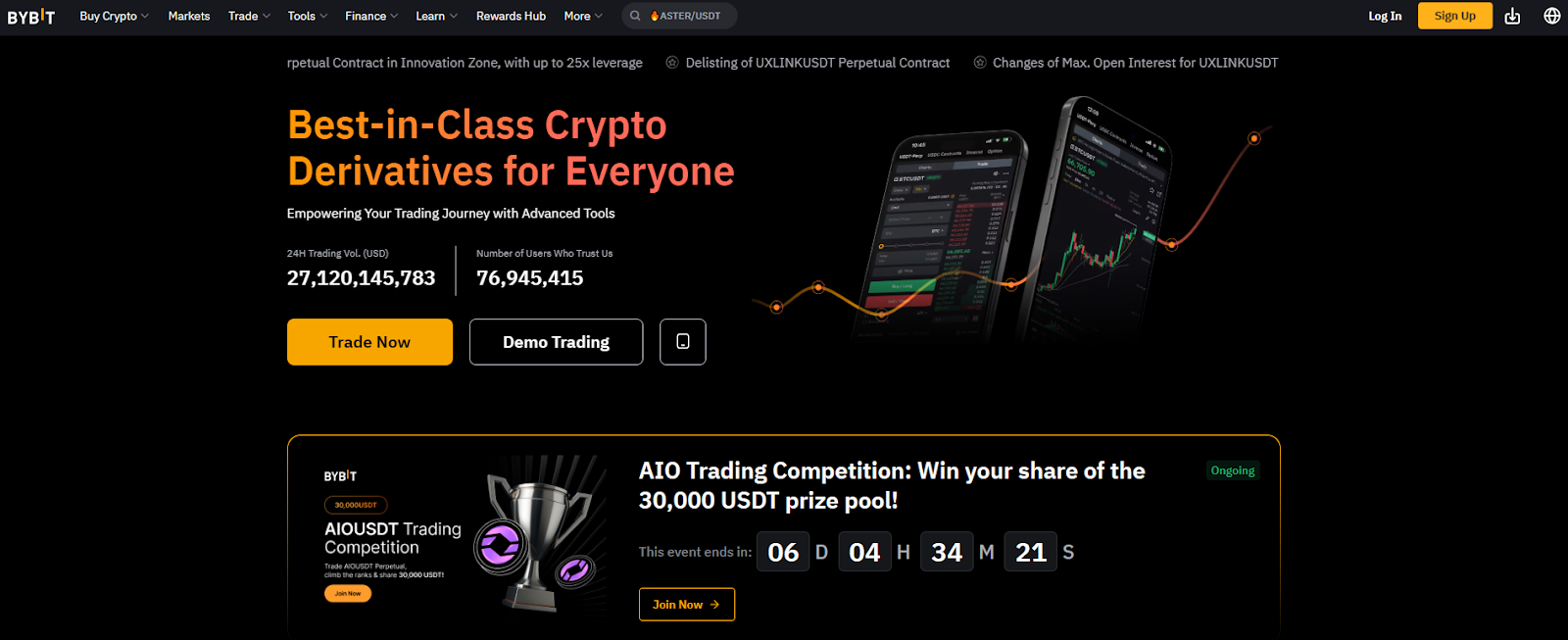
3. Bybit Derivatives — Best for active perps traders

Why Use It: Competitive fees, broad perp markets, solid tooling, and a large user base make Bybit attractive for day traders and swing traders alike.
Best For: Perps power users; copy-trading and mobile-first traders.
Notable Features: USDT/USDC coin-margined perps, options, demo trading, OpenAPI.
Consider If: Check your local rules—service availability varies by region.
Alternatives: Binance Futures, Bitget.

4. Deribit — Best for BTC/ETH options liquidity

Why Use It: Deribit is the reference venue for crypto options on BTC and ETH, with deep liquidity across maturities and strikes; it also offers futures.
Best For: Options traders (directional, spreads, volatility) and institutions.
Notable Features: Options analytics, block trading tools, test environment, 24/7 support.
Consider If: Regional access may be limited; primarily majors vs. broad alt coverage.
Alternatives: Aevo (on-chain), CME (regulated futures/options).

5. CME Group — Best for U.S.-regulated institutional futures

Why Use It: For institutions needing CFTC-regulated access, margin efficiency, and robust market infrastructure, CME is the standard for BTC/ETH futures and options.
Best For: Funds, corporates, and professionals with FCM relationships.
Notable Features: Standard and micro contracts, options, benchmarks, data tools.
Consider If: Requires brokerage/FCM onboarding; no altcoin perps.
Alternatives: Coinbase Derivatives (U.S.), Kraken Futures (institutions).

6. dYdX — Best decentralized perps (self-custody)

Why Use It: dYdX v4 runs on its own chain with on-chain settlement and pro tooling. Traders who want non-custodial perps and transparent mechanics gravitate here.
Best For: DeFi-native traders; users prioritizing self-custody and transparency.
Notable Features: On-chain orderbook, staking & trading rewards, API, incentives.
Consider If: Wallet/key management and gas/network dynamics add complexity.
Alternatives: Aevo (options + perps), GMX (alt DEX perps).

7. Kraken Futures — Best for compliance-minded access incl. U.S. roll-out

Why Use It: Kraken offers crypto futures for eligible regions, with a growing U.S. footprint via Kraken Derivatives US and established institutional services.
Best For: Traders who value brand trust, support, and clear documentation.
Notable Features: Pro interface, institutional onboarding, status and support resources.
Consider If: Product scope and leverage limits can differ by jurisdiction.
Alternatives: Coinbase Derivatives, CME.

8. Coinbase Derivatives — Best for U.S.-regulated access

Why Use It: NFA-supervised futures for eligible U.S. customers and resources that explain contract types. Outside the U.S., Coinbase also offers derivatives via separate entities.
Best For: U.S. traders needing regulated access; Coinbase ecosystem users.
Notable Features: Nano BTC/ETH contracts, 24/7 trading, learn content, FCM/FCM-like flows.
Consider If: Contract lineup is narrower than global offshore venues.
Alternatives: CME (institutional), Kraken Futures.

9. Bitget — Best for alt-perps variety + copy trading

Why Use It: Bitget emphasizes a wide perp catalog, social/copy features, and frequent product updates—useful for traders rotating across narratives.
Best For: Altcoin perp explorers; copy-trading users; mobile-first traders.
Notable Features: USDT/USDC-margined perps, copy trading, frequent listings, guides.
Consider If: Check eligibility and risk—breadth can mean uneven depth in tail assets.
Alternatives: Bybit, OKX.

10. Aevo — Best on-chain options + perps with unified margin

Why Use It: Aevo runs a custom L2 (OP-stack based) and offers options, perps, and pre-launch futures with unified margin—bridging CEX-like speed with on-chain settlement.
Best For: Options/perps traders who want DeFi custody with pro tools.
Notable Features: Unified margin, off-chain matching + on-chain settlement, pre-launch markets, detailed docs and fee specs.
Consider If: On-chain workflows (bridging, gas) and product scope differ from CEXs.
Alternatives: Deribit (options liquidity), dYdX (perps DEX).

Decision Guide: Best By Use Case

  • Deep global perp liquidity: Binance Futures, OKX, Bybit.
  • BTC/ETH options liquidity: Deribit.
  • U.S.-regulated futures (retail/pro): CME (via FCMs), Coinbase Derivatives, Kraken Futures (jurisdiction dependent).
  • Self-custody perps (on-chain): dYdX.
  • On-chain options + unified margin: Aevo.
  • Altcoin perps + copy trading: Bitget, Bybit.
  • Education + tight CEX ecosystem: Coinbase Derivatives.

How to Choose the Right Platform (Checklist)

  • Region & Eligibility: Confirm KYC/AML rules and whether your country is supported.

  • Coverage & Liquidity: Check your contract list (majors vs. alts), order-book depth, and spreads.

  • Custody & Security: Decide CEX custody vs. self-custody (DEX). Review incident history and controls.

  • Costs: Compare maker/taker tiers, funding mechanics, and rebates across your actual volumes.

  • Margin & Risk: Portfolio margin availability, liquidation engine design, circuit breakers.

  • UX & API: If you automate, verify API limits and docs; assess mobile/desktop parity.

  • Support & Docs: Look for status pages, live chat, and clear product specs.

  • Red flags: Vague disclosures; no status page; no detail on risk/liquidation systems.

Use Token Metrics With Any Derivatives Platform

  • AI Ratings & Signals: Spot changing trends before the crowd.
  • Narrative Detection: Track sectors and catalysts that may drive perp flows.

  • Portfolio Optimization: Size positions with risk-aware models and scenario tools.

  • Alerts: Get notified on grade moves, momentum changes, and volatility spikes.

Workflow (1–4): Research with Token Metrics → Pick venue(s) above → Execute perps/options → Monitor with alerts and refine.

Primary CTA: Start free trial

Security & Compliance Tips

  • Enable 2FA, withdrawal allow-lists, and API key scopes/rotations.

  • For DEXs, practice wallet hygiene (hardware wallet, clean approvals).

  • Use proper KYC/AML where required; understand tax obligations.

  • If using options or leverage, set pre-trade max loss and test position sizing.

  • For block/OTC execution, compare quotes and confirm settlement instructions.

This article is for research/education, not financial advice.

Beginner Mistakes to Avoid

  • Trading perps without understanding funding and how it impacts P&L.

  • Ignoring region restrictions and onboarding to non-eligible venues.

  • Oversizing positions without a liquidation buffer.

  • Mixing custodial and self-custodial workflows without a key plan.

  • Chasing low-liquidity alts where slippage can erase edge.

FAQs

What’s the difference between perps and traditional futures?
Perpetual swaps have no expiry, so you don’t roll contracts; instead, a funding rate nudges perp prices toward spot. Dated futures expire and may require roll management.

Where can U.S. traders access regulated crypto futures?
Through CFTC/NFA-supervised venues like CME (via FCMs) and Coinbase Derivatives for eligible customers; availability and contract lists vary by account type.

What’s the leading venue for BTC/ETH options liquidity?
Deribit has long been the primary market for BTC/ETH options liquidity used by pros and market makers.

Which DEXs offer serious perps trading?
dYdX is purpose-built for on-chain perps with a pro workflow; Aevo blends options + perps with unified margin on a custom L2.

How do I keep fees under control?
Use maker orders where possible, seek fee tier discounts/rebates, and compare funding rates over your expected holding time. Each venue publishes fee schedules and specs.

Conclusion + Related Reads

If you want deep global perps, start with Binance, OKX, or Bybit. For BTC/ETH options, Deribit remains the benchmark. If you need U.S.-regulated access, look at CME via an FCM or Coinbase Derivatives; Kraken is expanding its futures footprint. Prefer self-custody? dYdX and Aevo are solid on-chain choices. Match the venue to your region, contracts, and risk process—then let Token Metrics surface signals and manage the watchlist.

Related Reads

  • Best Cryptocurrency Exchanges 2025

  • Top Derivatives Platforms 2025

  • Top Institutional Custody Providers 2025

‍

Research

Best Crypto OTC Desks for Large Block Trades (2025)

Sam Monac
5 min

Why OTC Crypto Desks Matter in September 2025

When you need to move size without moving the market, you use over-the-counter (OTC) trading. The best OTC desks for large block trades aggregate deep, private liquidity, offer quote certainty (via RFQ), and settle securely—often with high-touch coverage. In one sentence: an OTC crypto desk privately matches large buyers and sellers off-exchange to reduce slippage and information leakage. This guide is for funds, treasuries, family offices, market makers, and whales who want discretion, fast settlement, and reliable pricing in 2025. We compared global OTC providers on liquidity depth, security posture, coverage, costs, UX, and support, and selected 10 standouts. Expect clear use-case picks, region notes, and a simple checklist so you can choose faster.

How We Picked (Methodology & Scoring)

  • Liquidity (30%): Can they consistently quote and fill blocks across majors, stables, and liquid alts? Internalization, networked venues, and RFQ performance matter most.
  • Security (25%): Regulatory status/registrations where applicable, segregation/custody design, operational controls, and incident track record.
  • Market Coverage (15%): Spot + (when offered) options/forwards, fiat rails, and breadth of supported assets.
  • Costs (15%): Explicit desk fees, spreads, settlement costs, and financing.
  • UX (10%): RFQ tooling/eOTC portals, API access, reporting.
  • Support (5%): 24/7 desk coverage, onboarding speed, account management.

Data sources: official product/docs and institutional pages; security/transparency pages; and widely cited market datasets only for cross-checks (we do not link third-party sources in body). Last updated September 2025.

Top 10 OTC Crypto Trading Desks in September 2025

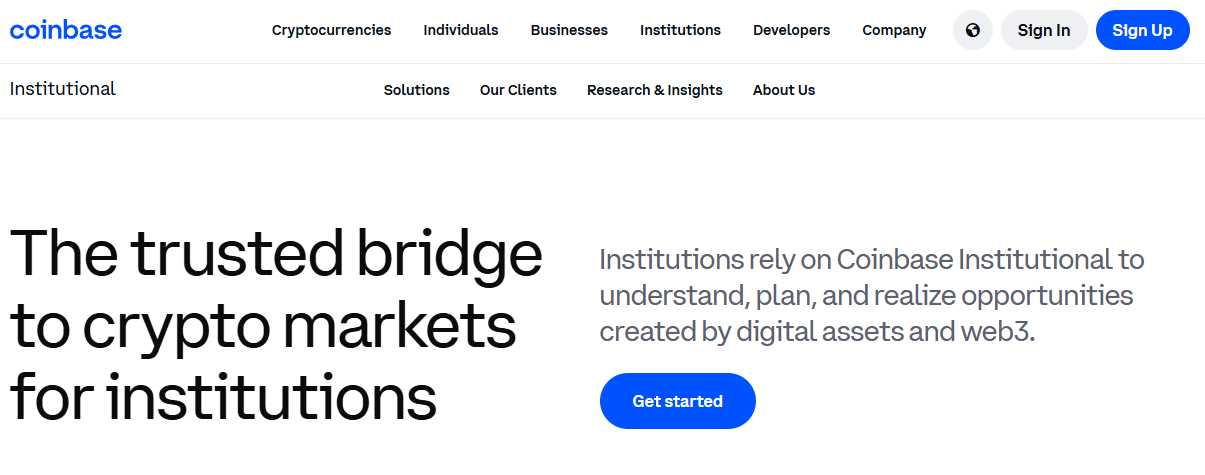
1. Coinbase Institutional — Best for U.S.-regulated agency execution

  • Why Use It: Coinbase Prime combines custody, financing, and execution with Coinbase Execution Services (high-touch, agency-only). You get access to Coinbase Exchange liquidity plus external venues, with desk support for complex orders. Strong brand, strong controls, and U.S. regulatory footprint.
  • Best For: U.S. funds, corporates, RIAs, and institutions needing regulated workflows.
  • Notable Features: Prime brokerage + custody, agency execution desk, 240+ assets access, multi-venue routing.
  • Consider If: You want agency execution and deep U.S. coverage (not principal risk transfer).
  • Regions: Global; strong U.S./EU presence (eligibility varies).
  • Fees Notes: Pricing depends on product/tier; agency execution spreads/fees apply.
  • Alternatives: Kraken OTC, Galaxy Digital.

2. Kraken OTC — Best 24/7 RFQ coverage with derivatives options

  • Why Use It: High-touch OTC for spot, plus an OTC Derivatives offering (options/structured products) and 24/7/365 coverage. The desk is built for discretion and deeper liquidity with competitive settlement.
  • Best For: Funds seeking large spot blocks and optional custom derivatives.
  • Notable Features: Chat/RFQ workflow, options/structured products, private settlement, institutional onboarding.
  • Consider If: You want around-the-clock coverage and occasional options blocks.
  • Regions: Global; availability varies by jurisdiction.
  • Fees Notes: RFQ-based; fees/spreads depend on product and size.
  • Alternatives: Coinbase Institutional, B2C2.

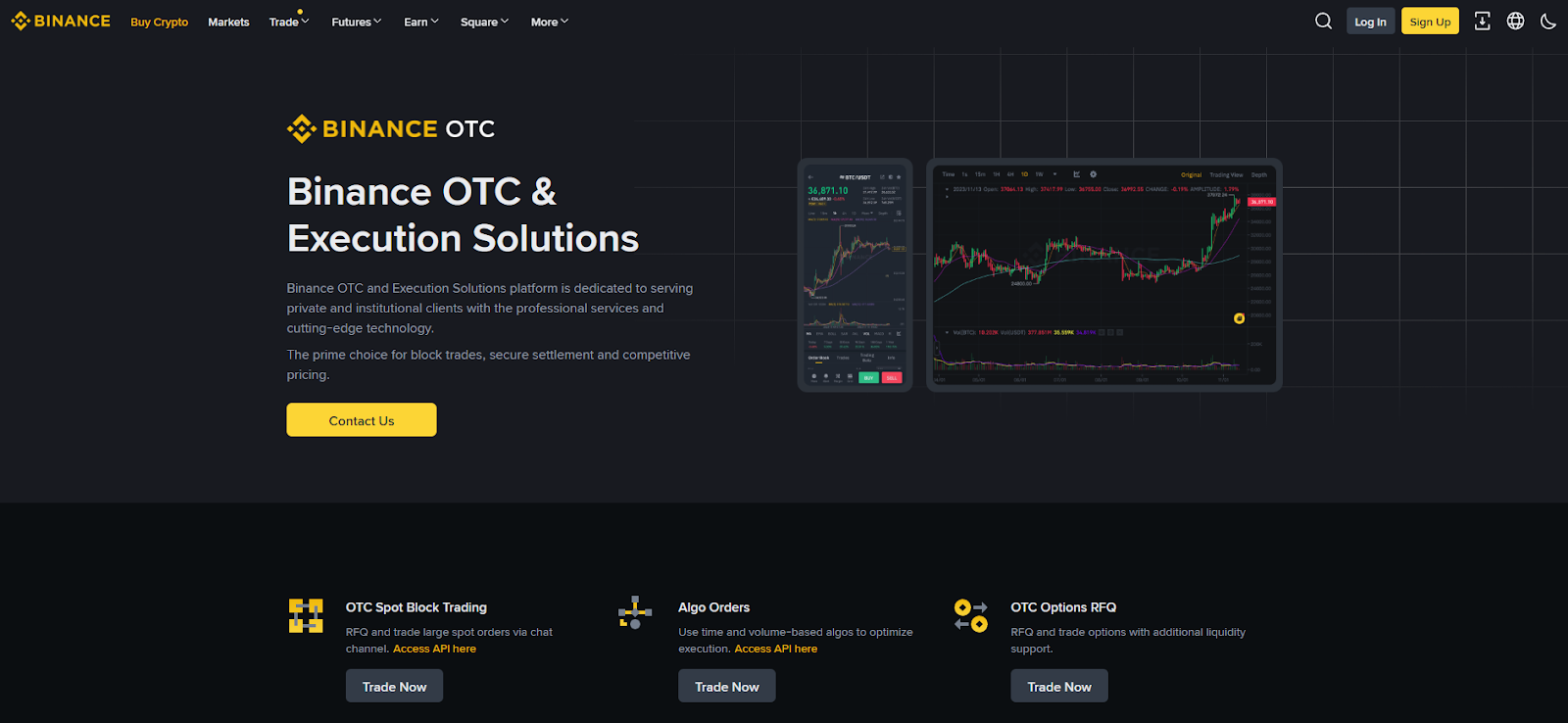
3. Binance OTC & Execution Solutions — Best global liquidity at scale (non-U.S.)

  • Why Use It: For non-U.S. institutions, Binance’s OTC platform offers spot block trades, algos, and options RFQs—tapping one of the deepest liquidity networks. Fast pricing via RFQ and robust portal access.
  • Best For: Global funds, prop firms, market makers outside the U.S.
  • Notable Features: Spot block RFQ, algo orders, options RFQ, API access.
  • Consider If: You’re not a U.S. person; U.S. residents should use Binance.US OTC.
  • Regions: Global (ex-US); regional eligibility and KYC apply.
  • Fees Notes: RFQ-based; programmatic pricing for VIP tiers.
  • Alternatives: OKX Liquid Marketplace, Wintermute.

4. OKX Liquid Marketplace — Best for block trading tools and RFQ hub

  • Why Use It: A purpose-built block trading/RFQ venue with minimum asset requirements and education around block execution. Effective for discreet fills, multi-leg structures, and streaming quotes from LPs.
  • Best For: Non-U.S. institutions needing self-serve block tools.
  • Notable Features: Block/RFQ portal, minimum asset threshold, docs & tutorials, multi-asset coverage.
  • Consider If: U.S. access is limited; check the OKX U.S. site for constraints.
  • Regions: Global (varies); limited U.S. functionality.
  • Fees Notes: RFQ spreads; venue-specific fees may apply.
  • Alternatives: Binance OTC, Bybit Block Trading (alt).

5. Bitstamp Institutional OTC — Best for fiat rails + time-tested venue

  • Why Use It: A long-running exchange with strong fiat on/off-ramps and an institutional OTC workflow led by account managers. Good for conservative treasuries that prioritize settlement reliability.
  • Best For: Corporates, treasuries, conservative funds wanting robust fiat access.
  • Notable Features: Bespoke OTC service, flexible execution, institutional coverage, multi-jurisdiction licenses.
  • Consider If: You want a seasoned, fiat-friendly counterparty over maximum token breadth.
  • Regions: Global (eligibility varies by entity); U.S./EU presence.
  • Fees Notes: RFQ-based; program pricing with account manager.
  • Alternatives: Coinbase Institutional, Gemini eOTC (alt).

6. Cumberland (DRW) — Best principal liquidity for blocks and bespoke risk transfer

  • Why Use It: A pioneer OTC liquidity provider offering spot, listed derivatives blocks, and bilateral options—designed for size and custom risk transfer. Suits funds that want a direct principal counterparty.
  • Best For: Hedge funds, market makers, HNW desks needing principal risk warehousing.
  • Notable Features: Institutional OTC in dozens of assets, no pre-funding for eligible clients, bilateral options, listed blocks.
  • Consider If: You prefer direct LP quotes vs. agency brokers.
  • Regions: Global (KYC/eligibility apply).
  • Fees Notes: Embedded in spread; bespoke terms by relationship.
  • Alternatives: B2C2, Wintermute.

7. B2C2 — Best all-in-one OTC LP (spot + CFDs/NDFs/options)

  • Why Use It: A crypto-native LP trusted by institutions globally, with OTC spot plus institutional-grade derivatives (CFDs, options, NDFs). API/GUI access and tailored settlement make it versatile for funds.
  • Best For: Funds needing flexible products and global coverage.
  • Notable Features: OTC spot streaming, CFD/options/NDFs, tailored settlement, API + GUI.
  • Consider If: You want one counterparty for both spot and derivatives.
  • Regions: Global (eligibility varies).
  • Fees Notes: Spread-based; relationship-driven terms.
  • Alternatives: Cumberland, Galaxy.

8. FalconX — Best prime brokerage + OTC under one roof

  • Why Use It: A leading institutional prime broker with 24/7 electronic and OTC trading, deep pooled liquidity, and financing. Strong for programmatic execution plus high-touch blocks through one relationship.
  • Best For: Quant funds, treasuries, crossover firms wanting prime + OTC.
  • Notable Features: Unified liquidity pool, eTrading + OTC desk, financing, 400+ tokens access (restrictions may apply)
  • Consider If: You want consolidated services (execution + financing).
  • Regions: Global (KYC/eligibility apply).
  • Fees Notes: Spread/financing; custom terms by volume.
  • Alternatives: Coinbase Prime, Galaxy.

9. Wintermute OTC — Best for fast pricing across many assets

  • Why Use It: Algorithmic market maker offering OTC liquidity across spot, options, forwards, and tailored structures—useful when you need instantaneous, competitive quotes on long-tail assets as well as majors.
  • Best For: Funds trading majors and select alts with principal LP quotes.
  • Notable Features: OTC across spot/derivs, broad asset list, tailored products, institutional coverage.
  • Consider If: You value speed and asset breadth with a principal LP.
  • Regions: Global (eligibility applies).
  • Fees Notes: Spread-based; relationship pricing.
  • Alternatives: B2C2, Cumberland.

10. Galaxy Global Markets — Best for high-touch blocks + OTC derivatives at scale

  • Why Use It: Galaxy runs a large OTC operation with electronic trading, block risk transfer, and bespoke derivatives (options/forwards/swaps). Good fit for institutions that want principal liquidity plus broader institutional services.
  • Best For: Hedge funds, crossover managers, corporates needing tailored blocks.
  • Notable Features: OTC/eTrading, derivatives suite, warehouse risk capacity, institutional coverage.
  • Consider If: You want a multi-product institutional counterparty.
  • Regions: Global (KYC/eligibility apply).
  • Fees Notes: Spread/derivatives pricing by mandate.
  • Alternatives: Kraken OTC, FalconX.

Decision Guide: Best By Use Case

  • Regulated U.S. + agency execution: Coinbase Institutional.
  • 24/7 coverage with options: Kraken OTC.
  • Maximum global liquidity (non-U.S.): Binance OTC & Execution Solutions.
  • Self-serve block/RFQ portal: OKX Liquid Marketplace.
  • Fiat rails for treasuries: Bitstamp Institutional OTC.
  • Principal liquidity for size: Cumberland
  • Spot + derivatives in one LP: B2C2
  • Prime + OTC under one roof: FalconX.
  • Fast quotes on many assets: Wintermute.
  • Blocks + derivatives at scale: Galaxy Global Markets

How to Choose the Right Crypto OTC Desk (Checklist)

  • Region & eligibility: Confirm entity onboarding (U.S./EU/APAC) and product permissions.
  • Liquidity fit: Can they quote your typical size across your pairs—majors, stables, alts?
  • Custody & settlement: How are assets custodied/segregated? Fiat rails? Settlement windows?
  • Execution style: Agency vs. principal. RFQ portal vs. chat. Derivatives availability.
  • Costs: Ask for sample RFQs; compare spreads, borrow/financing, and any desk fees.
  • Ops & reporting: Settlement netting, T+ timing, confirmations, and post-trade reports.
  • Support: 24/7 coverage, dedicated manager, escalation paths.
  • Red flags: Vague KYC/AML, unclear settlement instructions, or “too good” pricing without documentation.

Use Token Metrics With Any Crypto OTC Desk

  • AI Ratings to screen narratives and risk across assets before you request quotes.

  • Narrative Detection to spot momentum shifts that affect liquidity and spreads.
  • Portfolio Optimization to size positions and hedge exposures you’ll execute via OTC.
  • Alerts/Signals to monitor entries/exits and rebalance post-trade.

‍
Workflow: Research in Token Metrics → Shortlist assets → Request OTC RFQs/execute → Monitor with Alerts.

Start free trial NOW!

Security & Compliance Tips

  • Enable strong 2FA and restrict desk communications to verified channels.

  • Use segregated, labeled wallets for OTC settlement; test small first.

  • Complete KYC/AML early; pre-clear signers/wallets to speed settlement.

  • Confirm settlement instructions and reference fields to avoid misposts.

  • For derivatives, document payoff, margining, and close-out mechanics.

This article is for research/education, not financial advice.

Beginner Mistakes to Avoid

  • Relying on one counterparty without backups during volatile windows.

  • Forgetting to confirm net vs. gross settlement amounts and deadlines.

  • Ignoring custody/withdrawal timelines when planning fiat legs.

  • Requesting quotes on illiquid alts without warning—expect wide spreads.

  • Disclosing sensitive trade info over unsecured channels.

FAQs

What is an OTC crypto desk?
An OTC desk privately matches large buyers and sellers off public order books to minimize slippage and information leakage. Trades are negotiated via RFQ and settled bilaterally or through an exchange affiliate.

How big is a “block trade” in crypto?
It varies by desk and asset. Many desks treat six-figure USD notional as a starting point; some exchange-affiliated desks list thresholds or minimum asset requirements in portals.

Do U.S. clients have fewer options?
U.S. institutions often prefer regulated venues and agency models (e.g., Coinbase Institutional, Kraken). Some global platforms are limited for U.S. persons; check eligibility before onboarding.

What fees should I expect?
Most OTC pricing is embedded in the spread. Some venues disclose desk or user-to-user OTC fees (e.g., Bitfinex lists 0.1% for certain OTC flows); always request example RFQs.

Is OTC safer than exchanging on-book?
Neither is inherently “safer.” OTC can reduce market impact and information leakage, but you still need strong KYC/custody, verified comms, and clear settlement procedures.

Conclusion + Related Reads

If you’re a U.S.-regulated fund that values agency execution, start with Coinbase Institutional or Kraken. If you need global, principal liquidity and breadth, look at Binance OTC, OKX, Cumberland, B2C2, Wintermute, FalconX, or Galaxy. Match the desk to your region, execution style (agency vs. principal), and settlement needs, then run trial quotes before you scale.

Choose from Platinum, Gold, and Silver packages
Reach with 25–30% open rates and 0.5–1% CTR
Craft your own custom ad—from banners to tailored copy
Perfect for Crypto Exchanges, SaaS Tools, DeFi, and AI Products