Back to blog
Crypto Basics

What is Crypto Arbitrage and How to Start Arbitrage Trading?

Learn everything about crypto arbitrage and how it works, in this descriptive guide.
S. Vishwa
8 Minutes
Want Smarter Crypto Picks—Free?
See unbiased Token Metrics Ratings for BTC, ETH, and top alts.
Thank you! Your submission has been received!
Oops! Something went wrong while submitting the form.
 No credit card | 1-click unsubscribe

As the world of cryptocurrency continues to evolve, new opportunities for investment and profit are emerging. One such opportunity is crypto arbitrage, a trading strategy that can yield significant returns for savvy investors. 

In this article, we'll explain what crypto arbitrage is, how it works, and why it's become an increasingly popular investment strategy in crypto space.

What is Crypto Arbitrage?

Crypto arbitrage involves taking advantage of price differences for a cryptocurrency on different exchanges. Cryptocurrencies are traded on many different exchanges, and the prices for each currency can vary significantly between these exchanges.

This creates an opportunity for arbitrageurs to buy a currency on one exchange where the price is low and then sell it on another exchange where the price is high. The difference between the buy and sell price is the profit.

Types of Crypto Arbitrage

There are several types of crypto arbitrage, each with its own unique characteristics and risks. Let's explore some of them.

Exchange Arbitrage - Exchange arbitrage is the most common type of crypto arbitrage. It involves buying a cryptocurrency on one exchange where it is priced lower and selling it on another exchange where the price is higher. 

This type of arbitrage is possible because different exchanges have different prices for the same cryptocurrency due to differences in supply and demand, trading volumes, and market manipulation.

Triangular Arbitrage - Triangular arbitrage is a more complex type of crypto arbitrage that involves taking advantage of price differences between three cryptocurrencies on different exchanges. 

For example, you could buy Bitcoin on Exchange A, trade it for Ethereum on Exchange B, and then trade the Ethereum for Litecoin on Exchange C, and then sell the Litecoin back for Bitcoin on Exchange A. This type of arbitrage requires a lot of research, expertise, and quick decision-making to execute successfully.

Statistical Arbitrage - Statistical arbitrage involves using mathematical models and statistical analysis to identify mispricing's in the market. This type of arbitrage is often used in the stock market but can also be applied to cryptocurrencies. Statistical arbitrage requires extensive data analysis and algorithmic trading strategies to take advantage of the market inefficiencies.

Inter-Exchange Arbitrage - Inter-exchange arbitrage involves taking advantage of price differences between different exchanges by buying and selling cryptocurrencies simultaneously. 

This type of arbitrage requires access to multiple exchanges, high-speed internet, and advanced trading tools to execute quickly and effectively.

Cross-Currency Arbitrage - Cross-currency arbitrage involves buying and selling different cryptocurrencies denominated in different currencies. 

For example, you could buy Bitcoin in USD on one exchange and sell it for Bitcoin in EUR on another exchange. This type of arbitrage requires a deep understanding of the currency markets and exchange rates.

How Arbitrage Trading Works?

The concept of arbitrage trading is based on the idea that the price of an asset can vary in different markets due to various factors such as supply and demand, transaction costs, and currency exchange rates. 

The goal of arbitrage trading is to purchase an asset in one market at a lower price and sell it in another market at a higher price, making a profit from the price difference. 

To execute an arbitrage trade, traders need to be quick and efficient in analyzing the markets and executing trades. In recent years, technology has played a significant role in enabling traders to execute arbitrage trades in real-time by using automated trading systems that can quickly identify price discrepancies and execute trades. 

Overall, arbitrage trading is a sophisticated trading strategy that requires expertise in analyzing markets and executing trades efficiently.

How to Start Arbitrage Trading?

Arbitrage trading can be a lucrative trading strategy for those with the skills and knowledge to execute it successfully. Here are some important things to know before starting the arbitrage trading -

Understand the concept: Before starting arbitrage trading, it is essential to understand the basic concept of the strategy. This includes understanding the factors that can lead to price differences between markets and the techniques used to exploit them.

Choose the markets: The next step is to identify the markets and exchanges to trade in. This can include different asset classes such as stocks, commodities, and currencies. It is important to research and analyze the markets thoroughly before making any trades.

Analyze the markets: Analyzing the markets involves looking for price discrepancies and opportunities to make a profit. Traders need to use various tools and techniques such as chart analysis, technical indicators, and fundamental analysis to identify potential trades.

Develop a trading strategy: Once traders have identified potential trades, they need to develop a trading strategy. This involves deciding on the entry and exit points, the size of the trade, and the risk management strategy.

Execute the trades: After developing a trading strategy, traders need to execute the trades. This involves using trading platforms and brokers to place the trades and monitor them in real-time.

Monitor the trades: Monitoring the trades is an essential part of arbitrage trading. Traders need to track the prices of the assets in both markets and make adjustments to their trades as needed.

Keep learning and adapting: Arbitrage trading is a complex trading strategy that requires continuous learning and adaptation. Traders need to stay up to date with the latest trends and developments in the markets and adjust their trading strategies accordingly.

Crypto Arbitrage: Benefits and Risks

Here are some detailed pointers to understand the benefits and risks associated with crypto arbitrage trading:

Benefits of Arbitrage Trading

Arbitrage trading offers several benefits to traders, including:

  • Low risk: Arbitrage trading is a low-risk investment strategy as it involves buying and selling assets in different markets simultaneously to profit from the price difference.
  • High returns: Arbitrage trading can offer high returns as the price difference between the two markets represents the profit that the trader can make.
  • Diversification: Arbitrage trading allows traders to diversify their portfolio by investing in different markets simultaneously.
  • Liquidity: Arbitrage trading offers high liquidity as traders can buy and sell assets quickly in different markets.

Risks Associated with Arbitrage Trading

These are few risks, associated with arbitrage trading:

  • Technical issues: Crypto arbitrage requires real-time monitoring of multiple exchanges and execution of trades. Technical issues such as slow execution times or system failures can result in missed opportunities or losses.
  • Security risks: Cryptocurrency exchanges are often targets for cyber attacks, which can result in the loss of funds. Traders need to ensure they use reputable exchanges and implement security measures such as two-factor authentication to protect their assets.
  • Regulatory risks: The lack of regulation in the cryptocurrency markets can lead to regulatory risks. Traders need to be aware of any legal or regulatory issues that may arise and the potential impact on their trades.
  • Market volatility: Cryptocurrency markets are highly volatile, and price discrepancies can change quickly. Traders need to be prepared for sudden market shifts that could result in losses.

Is Crypto Arbitrage Still Profitable?

The profitability of crypto arbitrage depends on various factors such as current market conditions, trading fees charged by exchanges, speed of execution, and the amount of capital available. 

If there are significant price discrepancies between exchanges, traders can potentially make a profit. However, if the price discrepancies are minimal, the potential profit margins may not be worth the effort. 

Additionally, traders need to carefully consider the fees charged by exchanges, execute trades quickly and efficiently, and have enough capital to cover trading fees and take advantage of profitable trades. By continuously monitoring the markets and weighing these factors, traders can increase their chances of success in crypto arbitrage trading.

Is Crypto Arbitrage Legal?

The legality of crypto arbitrage varies from country to country. In general, crypto arbitrage is legal in most countries, but traders should be aware of local regulations and laws governing cryptocurrencies and financial trading. 

In the United States, arbitrage trading is considered legal, and it is even encouraged as it helps to increase market efficiency. In addition to that, arbitrageurs play a crucial role in providing liquidity in different markets and acting as intermediaries between buyers and sellers.

It is recommended that traders consult with legal and financial experts and conduct thorough research before engaging in crypto arbitrage trading to ensure compliance with local laws and regulations.

The Bottom Line

Arbitrage opportunities are commonly found in financial markets, where the same asset is traded at different prices in various locations, including stocks, bonds, and commodities. 

Since the cryptocurrency market is complicated, devising successful arbitrage strategies can be challenging. Nevertheless, the practice is legal, and it has the potential to yield substantial returns, while also exposing investors to significant risks.

With the right knowledge, research and expertise, traders can potentially benefit from crypto arbitrage and contribute to the overall efficiency and liquidity of cryptocurrency markets in 2024 and beyond.

Disclaimer

The information provided on this website does not constitute investment advice, financial advice, trading advice, or any other sort of advice and you should not treat any of the website's content as such.

Token Metrics does not recommend that any cryptocurrency should be bought, sold, or held by you. Do conduct your own due diligence and consult your financial advisor before making any investment decisions.

Build Smarter Crypto Apps &
AI Agents in Minutes, Not Months
Real-time prices, trading signals, and on-chain insights all from one powerful API.
Grab a Free API Key
About Token Metrics
Token Metrics: AI-powered crypto research and ratings platform. We help investors make smarter decisions with unbiased Token Metrics Ratings, on-chain analytics, and editor-curated “Top 10” guides. Our platform distills thousands of data points into clear scores, trends, and alerts you can act on.
30 Employees
analysts, data scientists, and crypto engineers
Daily Briefings
concise market insights and “Top Picks”
Transparent & Compliant
Sponsored ≠ Ratings; research remains independent
Want Smarter Crypto Picks—Free?
See unbiased Token Metrics Ratings for BTC, ETH, and top alts.
Thank you! Your submission has been received!
Oops! Something went wrong while submitting the form.
 No credit card | 1-click unsubscribe
Token Metrics Team
Token Metrics Team

Recent Posts

Research

Best Blockchain RPC Providers 2025: Comparison, Reviews, and How to Choose

Token Metrics Team
13 min read

TL;DR

Who this guide is for. Builders choosing a production-grade blockchain RPC for dapps, bots, wallets, analytics, rollups, or research.

Top three picks.

  • Alchemy — broad chain coverage, strong tooling, predictable CU pricing. (Alchemy)
  • Infura (Consensys) — deep Ethereum ecosystem integrations, enterprise SLAs, MetaMask/Linea alignment. (Infura)
  • QuickNode — performance at scale, rich products (Streams, rollups) for real-time apps. (QuickNode)

Key caveat. Pricing models differ (compute units vs requests vs credits). Check method-based costs, WebSocket bandwidth, and regional throughput before committing. (Alchemy)


Introduction

Choosing the best blockchain RPC providers in 2025 is a commercial-investigational decision: uptime, latency, method limits, and cost models impact everything from swaps and NFT mints to MEV-sensitive trading. An RPC provider is a service that exposes blockchain node methods over HTTPS/WebSocket so your app can read and write on-chain data reliably. The market now spans centralized platforms with SLAs and decentralized networks with distributed gateways. In this guide we compare leading vendors on performance, reliability, coverage, costs, developer experience, and support, then summarize where each one fits. We include a quick table, 10 concise reviews, and a buyer checklist to help you ship safely at lower total cost of ownership.


How We Picked (Methodology & Scoring)

We shortlisted ~20 credible providers, then scored the top 10 using verified claims on official pricing, docs, security/uptime disclosures, and status pages. Third-party datasets were used only for cross-checks.

Scoring Weights (sum = 100).

  • Liquidity/Performance (throughput/latency proxies) — 30%
  • Security/Reliability (SLA, status transparency) — 25%
  • Coverage (chains/testnets, archive, tracing) — 15%
  • Costs (free tier, PAYG, predictability) — 15%
  • UX/DX & Tooling (SDKs, dashboards, streams) — 10%
  • Support (docs, success, enterprise help) — 5%

Freshness. Last updated November 2025.


Notes: “Uptime SLA” reflects availability of SLAs or published uptime claims on official sites; check each plan’s SLA wording and region. Free-tier quotas and pricing change frequently.


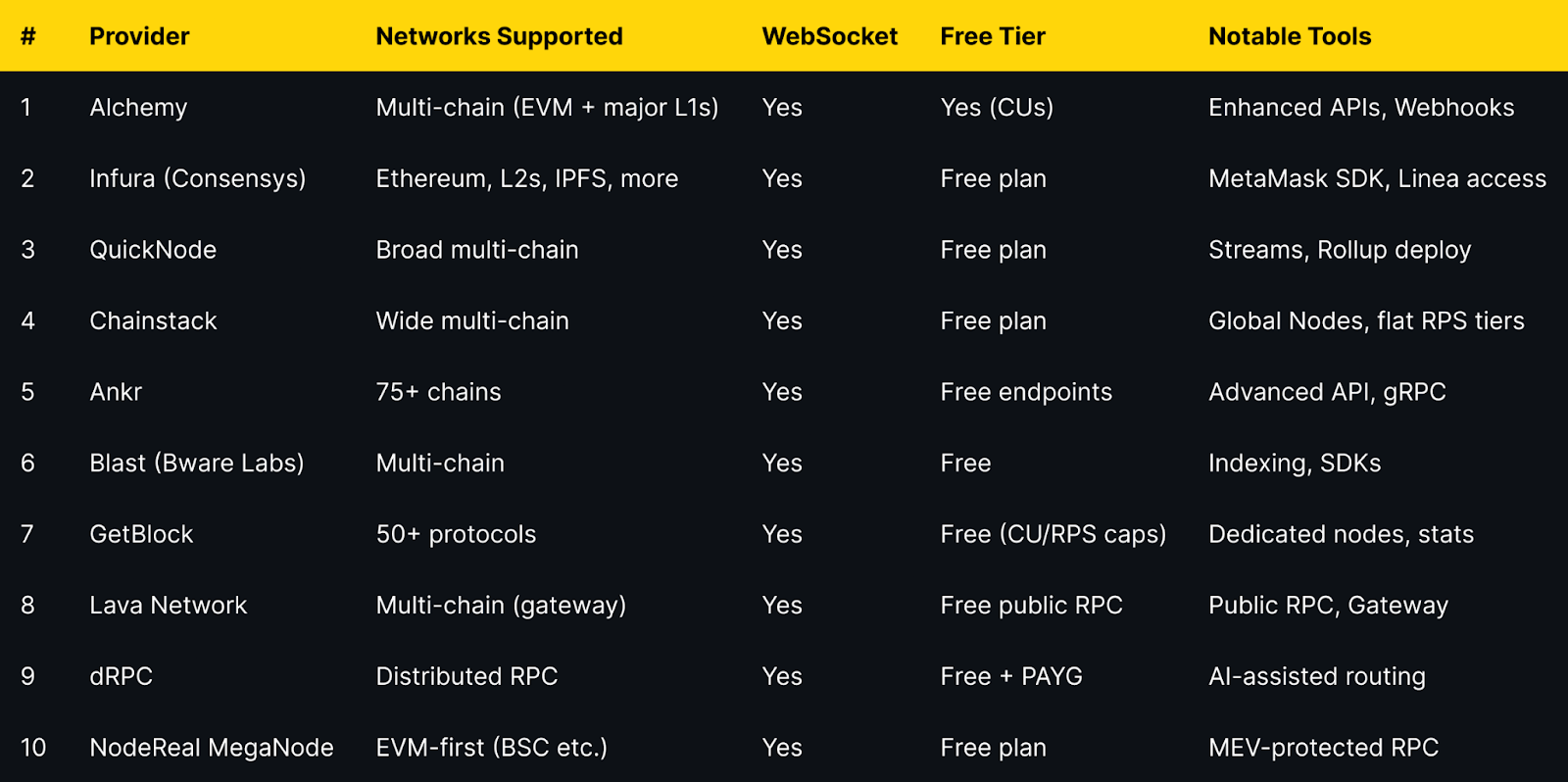
Best RPC Providers in November 2025 (Comparison Table)


Top 10 RPC Providers in November 2025

1. Alchemy — Best for scale + tooling depth

Why Use It. Alchemy pairs broad chain coverage with predictable compute-unit pricing and strong developer tools (Enhanced APIs, Webhooks). The free tier is generous for prototyping, while PAYG scales smoothly to production. (Alchemy)

Best For. High-growth dapps; analytics/bots that need webhooks; multi-chain teams; enterprises.
Notable Features. Enhanced APIs • Webhooks/WS subscriptions • CU-based billing • Status & enterprise support. (Alchemy)
Consider If. You prefer request-based flat pricing over CU accounting.
Fees Notes. Free 30M CU/mo; PAYG from low monthly minimums; bandwidth pricing for WS/webhooks. (Alchemy)
Regions. Global (plan-specific SLAs).
Alternatives. Infura • QuickNode.  


2. Infura (by Consensys) — Best for Ethereum-aligned stacks

Why Use It. Infura integrates tightly with the Consensys ecosystem (MetaMask, Linea) and offers enterprise SLAs and higher throughput via Team/Enterprise plans. (Infura)
Best For. ETH/L2-first products • Teams needing MetaMask/Linea ties • Enterprises.
Notable Features. Credit-based plans • MetaMask SDK access • IPFS APIs • 24/7 support (Enterprise). (Infura)
Consider If. You need explicit per-method cost predictability rather than credits.
Fees Notes. Free, Developer, Team, Enterprise with credits/day and throughput caps. (Infura)
Regions. Global; check plan terms.
Alternatives. Alchemy • Chainstack.  


3. QuickNode — Best for high-performance real-time apps

Why Use It. QuickNode emphasizes speed, global scale, and a growing product suite (Streams for real-time, rollup deployment). It’s a strong fit for trading, gaming, and high-throughput use. (QuickNode)
Best For. Low-latency dapps • Real-time event processing • Rollup pilots.
Notable Features. Streams • Core RPC • Rollup deploy • Robust docs/support. (QuickNode)
Consider If. You require granular per-request pricing transparency across chains.
Fees Notes. Free tier; tiered and enterprise pricing available. (QuickNode)
Regions. Global; enterprise SLAs.
Alternatives. Alchemy • Blast.  


4. Chainstack — Best for flat RPS pricing + predictable bills

Why Use It. Chainstack’s flat monthly, RPS-based model makes costs predictable, with “Global Nodes” and managed infra across many chains. Good for teams who hate surprise overage bills. (Chainstack)
Best For. Multi-env teams • Stable traffic • Dedicated nodes.
Notable Features. Global Nodes • Flat RPS tiers • Dedicated options • Clear storage terms. (Chainstack)
Consider If. You need bursty, PAYG-style pricing without a fixed RPS tier.
Fees Notes. Flat monthly by RPS tier; free plan available. (Chainstack)
Regions. Global.
Alternatives. GetBlock • QuickNode.


5. Ankr — Best for breadth + per-method pricing

Why Use It. Ankr covers 75+ blockchains with transparent API-credit pricing and both HTTPS and WebSocket access, plus advanced APIs and gRPC. Strong for wide chain exposure. (Ankr)
Best For. Multi-chain explorers • Bots/analytics • Cost-aware teams.
Notable Features. RPC/REST/gRPC • Advanced API • Dynamic regions • WSS. (Ankr)
Consider If. You’d rather pay flat per-request than API-credits by method class.
Fees Notes. Free tier; per-method API credits (e.g., EVM 200 credits ≈ $0.00002). (Ankr)
Regions. Global (plan caps/regions vary).
Alternatives. NodeReal • dRPC.


6. Blast API (Bware Labs) — Best for performance + indexing add-ons

Why Use It. Blast focuses on low-latency, high-performance RPC with SDKs and indexing services. Pricing is simple (Free, $50 Dev, $250 Startup, plus PAYG), making it easy to get started. (blastapi.io)
Best For. Web3 apps needing speed • Teams wanting an SDK + RPC bundle.
Notable Features. Indexing • SDKs • Public APIs • Faucets • High-perf infra. (bwarelabs.com)
Consider If. You need explicit enterprise SLA details and multi-region controls.
Fees Notes. Free and fixed monthly tiers, plus PAYG. (blastapi.io)
Regions. Global.
Alternatives. QuickNode • Alchemy.


7. GetBlock — Best for quick multi-protocol access + dedicated nodes

Why Use It. GetBlock provides access to 50+ protocols with JSON-RPC, REST, WebSocket, GraphQL, plus dedicated node options and a clean monitoring dashboard. (GetBlock.io)
Best For. Startups needing fast setup • Projects requiring dedicated nodes.
Notable Features. 50+ chains • Dedicated nodes • Stats/monitoring • WS/GraphQL. (GetBlock.io)
Consider If. You require strict enterprise SLA language across all regions.
Fees Notes. Free tier (CU/RPS caps) and paid tiers; dedicated pricing. (GetBlock.io)
Regions. Global.
Alternatives. Chainstack • Ankr.


8. Lava Network — Best free public RPC + gateway into a decentralized network

Why Use It. Lava offers free public RPC endpoints across popular chains and a Gateway product for managed scale, routing traffic to fast/reliable providers via a protocol. Good for testing and early growth. (lavanet.xyz)
Best For. Hackathons • MVPs • Teams exploring decentralized routing.
Notable Features. Public RPC • Gateway • Protocol routing • Multi-chain. (lavanet.xyz)
Consider If. You need contracted SLAs or guaranteed dedicated capacity.
Fees Notes. Free public endpoints; pay as you scale via Gateway. (lavanet.xyz)
Regions. Global.
Alternatives. dRPC • Ankr.


9. dRPC — Best for flat, transparent request pricing

Why Use It. dRPC operates a distributed RPC with flat-rate PAYG (publicly promoted ~$6 per 1M requests) and free/basic access, plus WebSocket and enterprise options. Attractive for predictable budgets. (drpc.org)
Best For. Cost-sensitive teams • Multi-provider routing • Privacy-minded users.
Notable Features. Distributed endpoints • PAYG • WS • Monitoring. (drpc.org)
Consider If. You need named, contractual SLAs per region.
Fees Notes. Free plan and PAYG; flat pricing guidance published by dRPC. (drpc.org)
Regions. Global.
Alternatives. BlockPI • NodeReal.


10. NodeReal MegaNode — Best for BNB Chain + EVM throughput

Why Use It. NodeReal specializes in EVM (notably BNB Chain) with an accessible free plan, MEV-protected RPC, and published performance/uptime visuals (e.g., 99.8% uptime claim). (nodereal.io)
Best For. EVM-heavy apps • BSC-first projects • Throughput-hungry bots.
Notable Features. MEV-protected RPC • Free plan • Global infra • Builder tools. (nodereal.io)
Consider If. You require multi-ecosystem parity beyond EVM.
Fees Notes. Free plan with paid Growth/Team/Business tiers. (nodereal.io)
Regions. Global.
Alternatives. Ankr • QuickNode.


Decision Guide: Best By Use Case

  • Regulated U.S. enterprise & SLAs: Infura, Alchemy. (Infura)
  • Solana/EVM real-time streams: QuickNode (Streams), Alchemy (Webhooks/WS). (QuickNode)
  • Flat pricing & predictable bills: Chainstack (RPS tiers), dRPC (flat PAYG). (Chainstack)
  • Indexing + SDK bundle: Blast (Bware Labs). (bwarelabs.com)
  • Free public RPC for testing: Lava (Public RPC), Ankr public endpoints. (lavanet.xyz)
  • EVM/BSC throughput: NodeReal, Ankr. (nodereal.io)
  • Dedicated nodes with dashboard: GetBlock, Chainstack. (GetBlock.io)

How to Choose the Right RPC Provider (Checklist)

  • Region eligibility and data residency match your users.
  • Chains/methods you need (archive, traces, eth_getLogs) are supported.
  • WebSocket/streaming limits and bandwidth pricing are transparent. (Alchemy)
  • SLA language and status transparency meet your risk profile.
  • Pricing model fits traffic (CU vs credits vs requests vs RPS tiers). (Alchemy)
  • Docs, SDKs, and dashboards are robust for your stack.
  • Quotas, rate limits, and burst capacity are clear.
  • Support path (tickets/Slack/CSM) matches team needs.
  • Security posture: auth keys, IP allowlists, WAF, MEV/FRP options.
  • Red flags: vague pricing, no status page, no limits disclosed.

Use Token Metrics With Any RPC

  • AI Ratings to screen assets by quality, momentum, and fundamentals.
  • Narrative Detection to spot early theme shifts across chains.


  • Portfolio Optimization to balance risk across L1s/L2s.
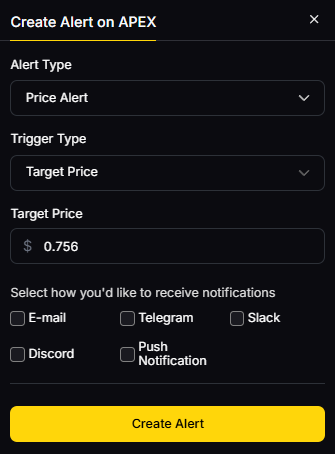
  • Alerts & Signals to time entries/exits.


Workflow: Research with Token Metrics → Choose RPC → Ship → Monitor with alerts.

Start free trial to screen assets and time entries with AI.  


Security & Compliance Tips

  • Prefer provider domains you verify manually; bookmark dashboards and docs.
  • Use separate API keys per environment; rotate keys and restrict by IP/refs.
  • Monitor quotas and errors; set alerts for rate-limit responses and spikes.
  • Validate responses across providers for critical paths (e.g., price-sensitive flows).
  • For WS/streams, budget for bandwidth-based pricing if applicable. (Alchemy)
  • Document SLAs, maintenance windows, and incident comms in your runbooks.
  • Keep a backup provider and failover logic for production.

This article is for research/education, not financial advice.


Beginner Mistakes to Avoid

  • Relying on free public endpoints in production.
  • Ignoring method-level pricing (traces, logs, subscriptions). (Alchemy)
  • Skipping WebSocket bandwidth budgeting for event-heavy apps. (Alchemy)
  • Not testing region latency; users in APAC/EU may see higher p95 without multi-region.
  • Hard-coding a single vendor with no fallback.
  • Forgetting archive/pruned node differences for historical reads.

FAQs

What is a blockchain RPC provider?
 A service that exposes node methods over HTTPS/WS so apps can read/write blockchain data without running their own nodes.

Are free RPC endpoints safe for production?
 They’re fine for testing and small projects, but production needs capacity guarantees, SLAs, and support—typically paid tiers.

How do pricing models differ?
 Vendors use compute units (Alchemy), credits (Infura/Ankr), per-request flat rates (dRPC), or RPS tiers (Chainstack). Map your method mix to each model before choosing. (Alchemy)

Do these providers support WebSockets?
 Yes, most offer WS or streaming. Check per-chain WS limits and bandwidth pricing. (QuickNode)

Which is best for multi-chain coverage?
 Alchemy, QuickNode, Chainstack, Ankr, and GetBlock all offer broad lists; verify specific chains and testnets you need. (Alchemy)


If you want maximum tooling and predictable scaling, start with Alchemy or QuickNode. For Ethereum-aligned stacks and enterprise support, Infura stands out. If you value cost predictability, Chainstack (RPS tiers) or dRPC (flat PAYG) are compelling. Keep Ankr, GetBlock, Blast, Lava, and NodeReal in your shortlist for specific feature/cost needs.

Related Reads:

Research

AAVE Price Prediction 2027: $70-$2,175 Forecast Analysis

Token Metrics Team
9 min read

AAVE Price Prediction 2027: Market Analysis and Scenario-Based Forecasts

Market Context for Aave Price Prediction: The Case for 2027

DeFi protocols are maturing beyond early ponzi dynamics toward sustainable revenue models. Aave operates in this evolving landscape where real yield and proven product-market fit increasingly drive valuations rather than speculation alone. Growing regulatory pressure on centralized platforms creates tailwinds for decentralized alternatives—factors that inform our comprehensive AAVE price prediction framework.

The scenario bands below reflect how AAVE price predictions might perform across different total crypto market cap environments. Each tier represents a distinct liquidity regime, from bear conditions with muted DeFi activity to moon scenarios where decentralized infrastructure captures significant value from traditional finance.


Disclosure

Educational purposes only, not financial advice. Crypto is volatile, do your own research and manage risk.

How to Read This AAVE Price Prediction

Each band blends cycle analogues and market-cap share math with TA guardrails. Base assumes steady adoption and neutral or positive macro. Moon layers in a liquidity boom. Bear assumes muted flows and tighter liquidity.

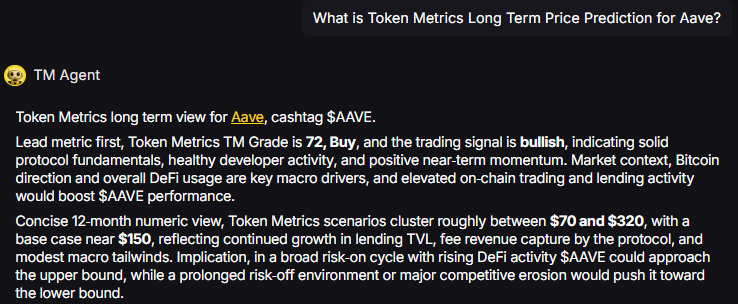
TM Agent baseline: Token Metrics TM Grade is 72, Buy, and the trading signal is bullish, indicating solid protocol fundamentals, healthy developer activity, and positive near-term momentum. Concise twelve-month numeric view, Token Metrics price prediction scenarios cluster roughly between $70 and $320, with a base case near $150, reflecting continued growth in lending TVL, fee revenue capture by the protocol, and modest macro tailwinds.

Live details: Aave Token Details

Affiliate Disclosure: We may earn a commission from qualifying purchases made via this link, at no extra cost to you.

Key Takeaways

  • Scenario driven, outcomes hinge on total crypto market cap, higher liquidity and adoption lift the bands.
  • Fundamentals: Fundamental Grade 75.51% (Community 77%, Tokenomics 100%, Exchange 100%, VC 49%, DeFi Scanner 70%).
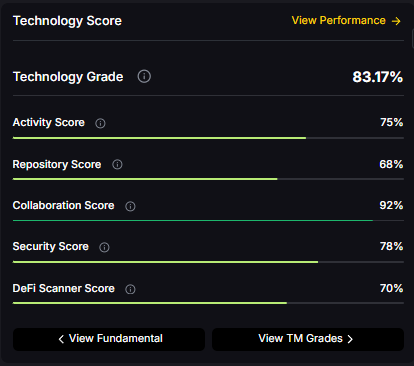
  • Technology: Technology Grade 83.17% (Activity 75%, Repository 68%, Collaboration 92%, Security 78%, DeFi Scanner 70%).
  • TM Agent gist: scenarios cluster between $70 and $320 with base near $150, assuming steady lending TVL growth and neutral macro conditions.
  • Education only, not financial advice.

AAVE Price Prediction Scenario Analysis

Our Token Metrics price prediction framework spans four market cap tiers, each representing different levels of crypto market maturity and liquidity:

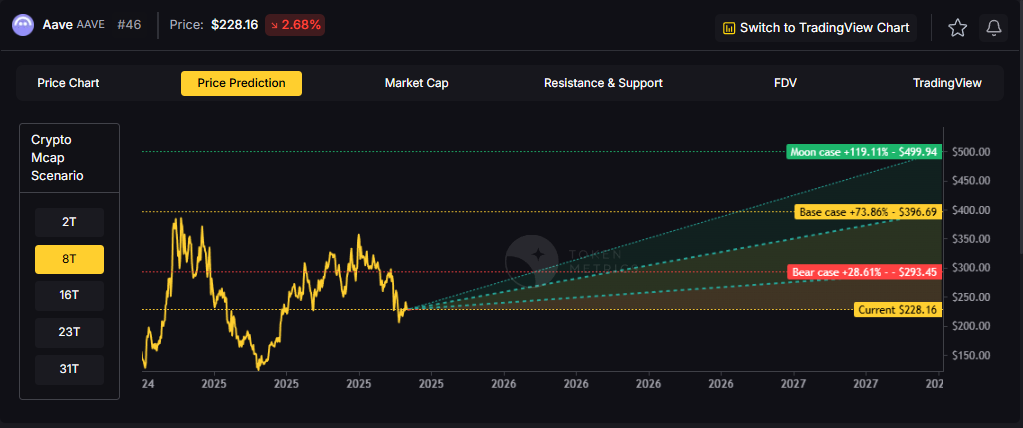
8T Market Cap - AAVE Price Prediction:

At an 8 trillion dollar total crypto market cap, AAVE projects to $293.45 in bear conditions, $396.69 in the base case, and $499.94 in bullish scenarios.

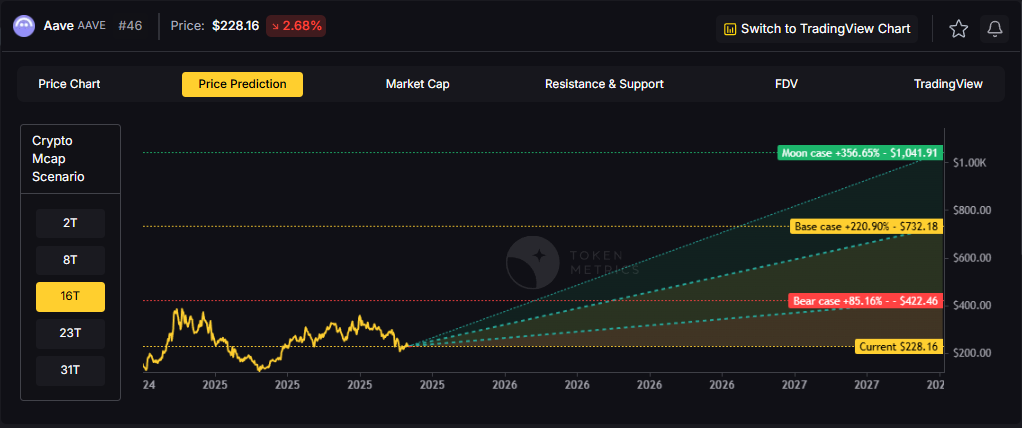
16T Market Cap - AAVE Price Prediction:

Doubling the market to 16 trillion expands the price prediction range to $427.46 (bear), $732.18 (base), and $1,041.91 (moon).

23T Market Cap - AAVE Price Prediction:

At 23 trillion, the price prediction scenarios show $551.46, $1,007.67, and $1,583.86 respectively.

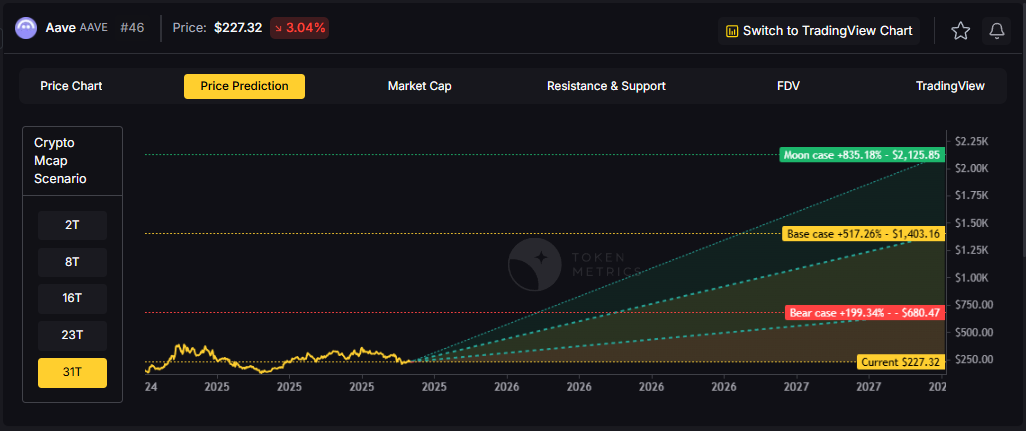
31T Market Cap - AAVE Price Prediction:

In the maximum liquidity scenario of 31 trillion, AAVE price predictions could reach $680.47 (bear), $1,403.16 (base), or $2,175.85 (moon).

Each tier assumes progressively stronger market conditions, with the base case price prediction reflecting steady growth and the moon case requiring sustained bull market dynamics.

Why Consider the Indices with Top-100 Exposure

Aave represents one opportunity among hundreds in crypto markets. Token Metrics Indices bundle AAVE with top one hundred assets for systematic exposure to the strongest projects. Single tokens face idiosyncratic risks that diversified baskets mitigate.

Historical index performance demonstrates the value of systematic diversification versus concentrated positions.

Join the early access list

What Is Aave?

Aave is a decentralized lending protocol that operates across multiple EVM-compatible chains including Ethereum, Polygon, Arbitrum, and Optimism. The network enables users to supply crypto assets as collateral and borrow against them in an over-collateralized manner, with interest rates dynamically adjusted based on utilization.

The AAVE token serves as both a governance asset and a backstop for the protocol through the Safety Module, where stakers earn rewards in exchange for assuming shortfall risk. Primary utilities include voting on protocol upgrades, fee switches, collateral parameters, and new market deployments.

Token Metrics AI Analysis

Token Metrics AI provides comprehensive context on Aave's positioning and challenges.

Vision: Aave aims to create an open, accessible, and non-custodial financial system where users have full control over their assets. Its vision centers on decentralizing credit markets and enabling seamless, trustless lending and borrowing across blockchain networks.

Problem: Traditional financial systems often exclude users due to geographic, economic, or institutional barriers. Even in crypto, accessing credit or earning yield on idle assets can be complex, slow, or require centralized intermediaries. Aave addresses the need for transparent, permissionless, and efficient lending and borrowing markets in the digital asset space.

Solution: Aave uses a decentralized protocol where users supply assets to liquidity pools and earn interest, while borrowers can draw from these pools by posting collateral. It supports features like variable and stable interest rates, flash loans, and cross-chain functionality through its Layer 2 and multi-chain deployments. The AAVE token is used for governance and as a safety mechanism via its staking program (Safety Module).

Market Analysis: Aave is a leading player in the DeFi lending sector, often compared with protocols like Compound and Maker. It benefits from strong brand recognition, a mature codebase, and ongoing innovation such as Aave Arc for institutional pools and cross-chain expansion. Adoption is driven by liquidity, developer activity, and integration with other DeFi platforms. Key risks include competition from newer lending protocols, regulatory scrutiny on DeFi, and smart contract risks. As a top DeFi project, Aave's performance reflects broader trends in decentralized finance, including yield demand, network security, and user trust. Its multi-chain strategy helps maintain relevance amid shifting ecosystem dynamics.

Fundamental and Technology Snapshot from Token Metrics

Fundamental Grade: 75.51% (Community 77%, Tokenomics 100%, Exchange 100%, VC 49%, DeFi Scanner 70%).


Technology Grade: 83.17% (Activity 75%, Repository 68%, Collaboration 92%, Security 78%, DeFi Scanner 70%).

Catalysts That Skew AAVE Price Predictions Bullish

  • Institutional and retail access expands with ETFs, listings, and integrations
  • Macro tailwinds from lower real rates and improving liquidity
  • Product or roadmap milestones such as upgrades, scaling, or partnerships

Risks That Skew AAVE Price Predictions Bearish

  • Macro risk-off from tightening or liquidity shocks
  • Regulatory actions or infrastructure outages
  • Concentration or competitive displacement in lending

AAVE Price Prediction FAQs

Can AAVE reach $1,000?

Yes. Based on our price prediction scenarios, AAVE could reach $1,007.67 in the 23T base case and $1,041.91 in the 16T moon case. Not financial advice.

Can AAVE 10x from current levels?

At current price of $228.16, a 10x would reach $2,281.60. This falls within the 31T moon case price prediction at $2,175.85 (only slightly below), and would require extreme liquidity expansion. Not financial advice.

What price could AAVE reach in the moon case?

Our moon case price predictions range from $499.94 at 8T to $2,175.85 at 31T. These scenarios assume maximum liquidity expansion and strong Aave adoption. Not financial advice.

What is the AAVE price prediction for 2027?

Our comprehensive 2027 price prediction framework suggests AAVE could trade between $293.45 and $2,175.85, depending on market conditions and total crypto market capitalization. The base case scenario clusters around $396.69 to $1,403.16 across different market cap environments. Not financial advice.

Is AAVE a good investment based on price predictions?

AAVE shows strong fundamentals (75.51% grade) and technology scores (83.17% grade), with bullish trading signals. However, all price predictions involve uncertainty and risk. Always conduct your own research and consult financial advisors before investing. Not financial advice.


Next Steps

Track live grades and signals: Token Details 

Join Indices Early Access

Want exposure? Buy AAVE on MEXC 

Disclosure

Educational purposes only, not financial advice. Crypto is volatile, do your own research and manage risk.

Why Use Token Metrics?

  • AI-driven crypto and DeFi grades for risk management and alpha discovery.
  • Quantitative, on-chain signals and robust scenario modeling for tokens like AAVE.
  • Access in-depth research reports, analyst perspectives, auto-grades, and portfolio tools from Token Metrics.
Research

x402 & HTTP 402 Explained: Why Wallet-Paid API Calls Are Winning (and Where Token Metrics Fits)

Token Metrics Team
10 min read

What Is x402?

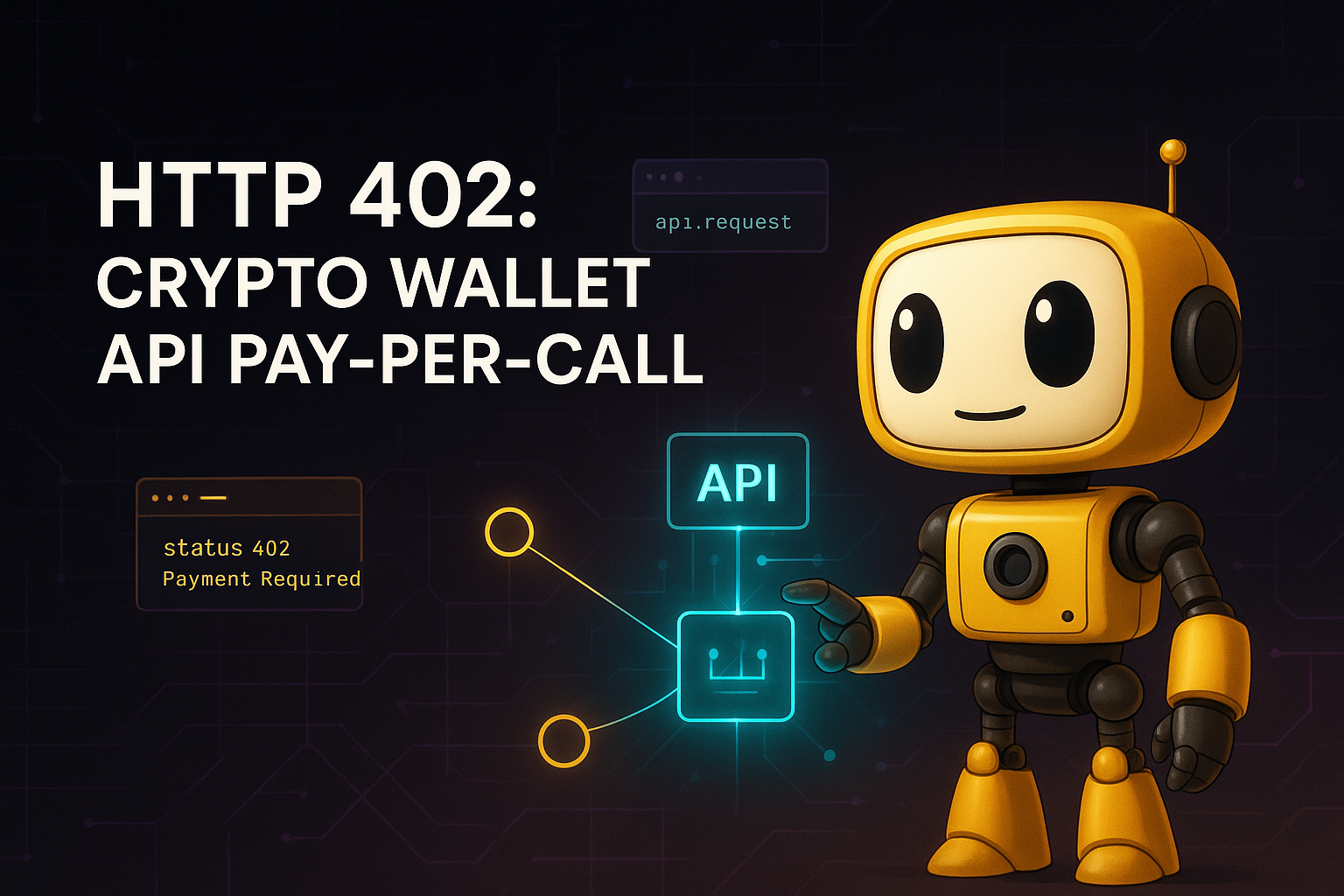
x402 is an open-source, HTTP-native payment protocol developed by Coinbase that enables pay-per-call API access using crypto wallets. It leverages the HTTP 402 Payment Required status code to create seamless, keyless API payments.

It eliminates traditional API keys and subscriptions, allowing agents and applications to pay for exactly what they use in real time. It works across Base and Solana with USDC and selected native tokens such as TMAI.

Start using Token Metrics X402 integration here. https://www.x402scan.com/server/244415a1-d172-4867-ac30-6af563fd4d25 

TLDR — The x402 Value Proposition

x402 transforms API access by making payments native to HTTP requests.

Feature

Traditional APIs

x402 APIs

Authentication

API keys, tokens

Wallet signature

Payment Model

Subscription, prepaid

Pay-per-call

Onboarding

Sign up, KYC, billing

Connect wallet

Rate Limits

Fixed tiers

Economic (pay more = more access)

Commitment

Monthly/annual

Zero, per-call only

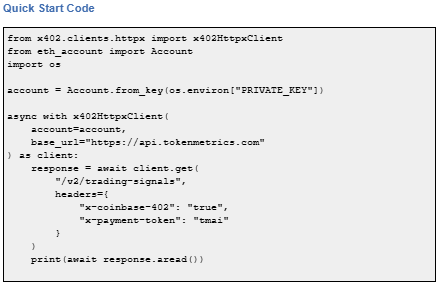
How to use it: Add x-coinbase-402: true header to any supported endpoint. Sign payment with your wallet. The API responds immediately after confirming micro-payment.

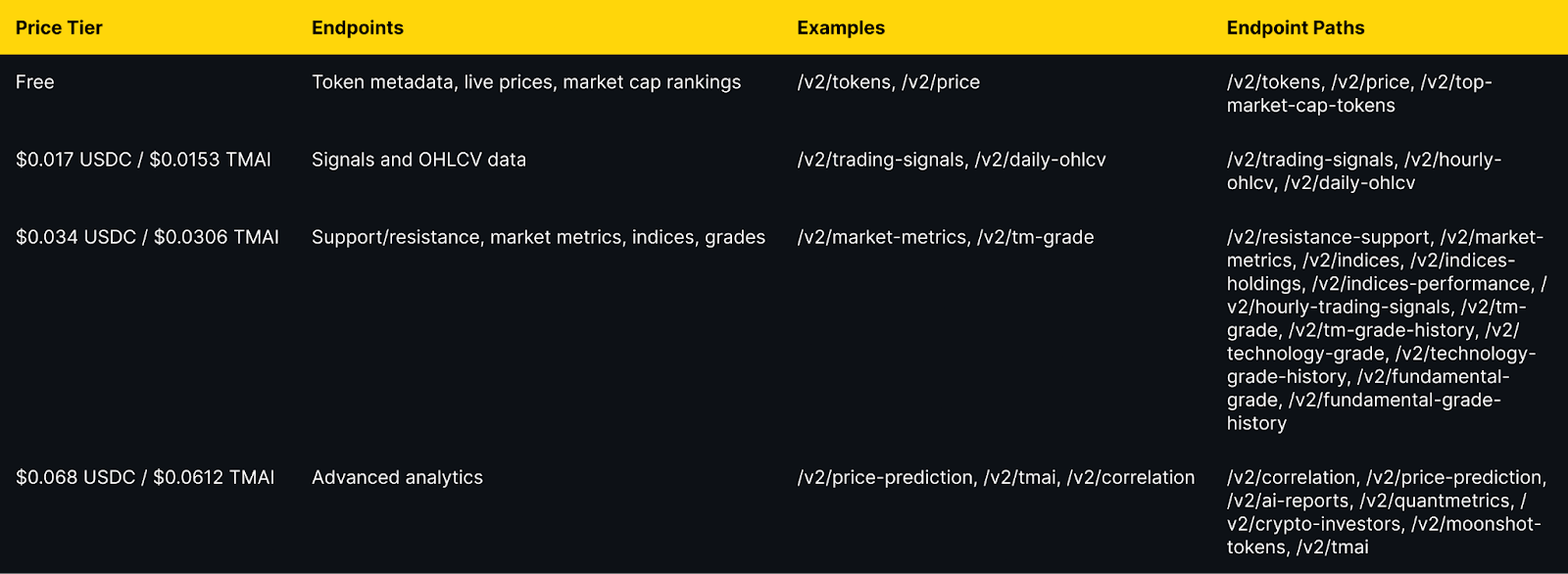
Token Metrics integration: All public endpoints available via x402 with per-call pricing from $0.017 to $0.068 USDC (10% discount with TMAI token).

Explore live agents: https://www.x402scan.com/composer.

How HTTP 402 Payment Required Works — Technical Deep Dive

The Protocol Flow

The HTTP 402 status code was reserved in HTTP/1.1 in 1997 for future digital payment use cases and was never standardized for any specific payment scheme. x402 activates this path by using 402 responses to coordinate crypto payments during API requests.

  1. Step by step: Client makes an API request with the header x-coinbase-402: true.
  2. The server can return 402 with payment details such as amount, recipient, and chain.
  3. The client wallet signs and submits the payment transaction.
  4. The server verifies the payment on-chain, then processes the original request and returns 200 with data.

Why this matters: It eliminates intermediary payment processors, enables true machine-to-machine commerce, and reduces friction for AI agents.

Ecosystem Proof: x402 Is Winning — Three Validation Points

CoinGecko Recognition

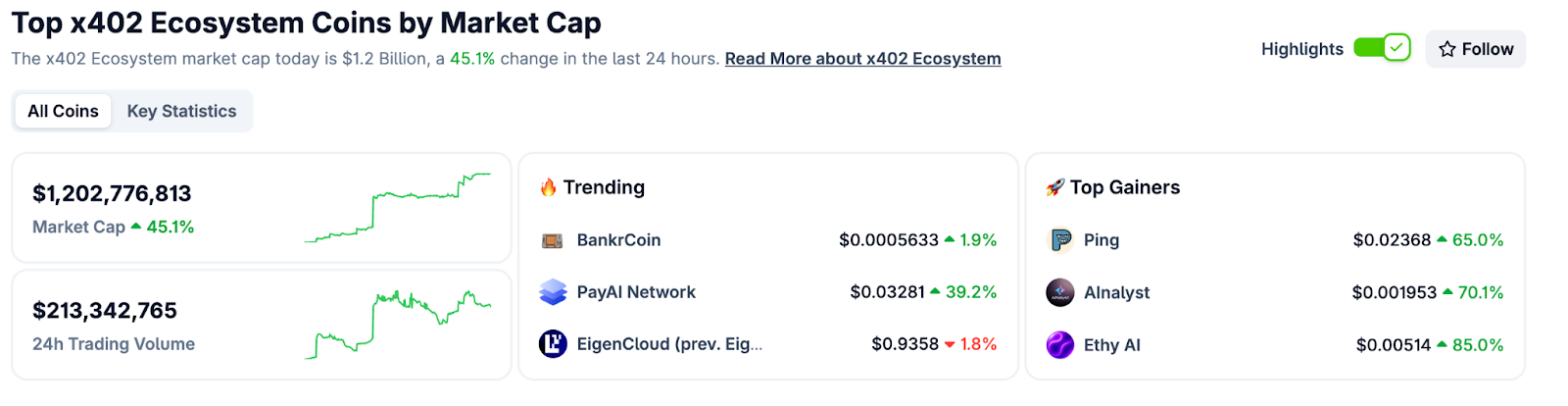
CoinGecko launched a dedicated x402 Ecosystem category in October 2025, tracking 700+ projects with over $1 billion market cap and approximately $213 million in daily trading volume. Top performers include PING and Alnalyst, along with established projects like EigenCloud.


Base Network Adoption

Base has emerged as the primary chain for x402 adoption, with 450,000+ weekly transactions by late October 2025, up from near-zero in May. This growth demonstrates real agent and developer usage.

x402scan Composer — Where Agents Pay in Real Time

Composer is x402scan's sandbox for discovering and using AI agents that pay per tool call. Users can open any agent, chat with it, and watch tool calls and payments stream in real time.

Top agents include AInalyst, Canza, SOSA, and NewEra. The Composer feed shows live activity across all agents.


Explore Composer: https://x402scan.com/composer 

Token Metrics x402 Integration — Concrete Implementation

What We Ship

Token Metrics offers all public API endpoints via x402 with no API key required. Pay per call with USDC or TMAI for a 10 percent discount. Access includes trading signals, price predictions, fundamental grades, technology scores, indices data, and the AI chatbot.

Check out Token Metrics Integration on X402. https://www.x402scan.com/server/244415a1-d172-4867-ac30-6af563fd4d25 


Data as of October, 2025.

Pricing Tiers


Important note: TMAI Spend Limit: TMAI has 18 decimals. Set max payment to avoid overspending. Example: 200 TMAI = 200 * (10 ** 18) in base units.

Full integration guide: https://api.tokenmetrics.com 

Why x402 Changes Everything for AI Agents

  • Eliminates onboarding friction. Agents can discover and use new APIs instantly without human intervention for API key management or billing setup.
  • Enables true agentic commerce. Agents pay for exactly what they use, which makes micro-transactions economically viable. This unlocks composition of multiple specialized services.
  • Aligns incentives. API providers get paid per call, users only pay for value received, and agents can optimize costs by choosing best-fit providers. Network effects accelerate as more endpoints adopt x402.

Use Cases Already Working

  • Crypto analytics agents: Pull Token Metrics data on demand to answer market questions, generate trade signals, or build custom dashboards.
  • Research automation: Chain together x402 endpoints like Twitter search, Tavily extract, Firecrawl, and Token Metrics to gather and structure data.
  • Portfolio management: Agents monitor positions, fetch real-time prices, calculate risk metrics, and execute rebalancing decisions using paid data sources.
  • Trading strategy backtests: Access historical OHLCV, grades, and signals data via x402 without committing to monthly subscriptions.
  • Multi-chain intelligence: Combine Base and Solana x402 services for cross-chain analysis and arbitrage discovery.

Ecosystem Participants and Tools

Active x402 Endpoints

Key endpoints beyond Token Metrics include Heurist Mesh for crypto intelligence, Tavily extract for structured web content, Firecrawl search for SERP and scraping, Twitter or X search for social discovery, and various DeFi and market data providers.

Infrastructure and Tools

  • x402scan: Explorer and analytics platform tracking all x402 activity across chains.
  • Composer: Hosted sandbox for discovering and using x402-enabled agents.
  • x402-axios and x402-httpx: Client libraries for Node.js and Python.
  • Coinbase Agent Kit: SDK integration for building x402-native agents.
  • LangChain connectors: Framework integration for agent workflows.

Common Questions About x402

How is x402 different from traditional API keys?

x402 uses wallet signatures instead of API keys. Payment happens per call rather than via subscription. No sign-up, no monthly billing, no rate limit tiers. You pay for exactly what you use.

Which chains support x402?

Currently Base and Solana. Most activity is on Base with USDC as the primary payment token. Some endpoints accept native tokens like TMAI for discounts.

Do I need to trust the API provider with my funds?

No. Payments are on-chain and verifiable. You approve each transaction amount. No escrow or prepayment is required.

What happens if a payment fails?

The API returns 402 Payment Required again with updated payment details. Your client retries automatically. You do not receive data until payment confirms.

Can I use x402 with existing API clients?

Yes, with x402 client libraries such as x402-axios for Node and x402-httpx for Python. These wrap standard HTTP clients and handle the payment flow automatically.

Getting Started Checklist

  1. Set up a wallet: Create a Base wallet with USDC or TMAI balance.
  2. Install x402 client: npm install x402-axios or pip install x402-httpx.
  3. Choose an endpoint: Browse x402scan or Composer for available APIs.
  4. Write minimal code: Add x-coinbase-402: true header to requests.
  5. Watch payments flow: Monitor transactions in your wallet and on x402scan feed.
  6. Optimize costs: Compare endpoint pricing, use TMAI for 10% discount, cache results when appropriate.

Token Metrics x402 Resources

What's Next for x402

Ecosystem expansion. More API providers adopting x402, additional chains beyond Base and Solana, standardization of payment headers and response formats.

Agent sophistication. As x402 matures, expect agents that automatically discover and compose multiple paid endpoints, optimize costs across providers, and negotiate better rates for bulk usage.

Disclosure

Educational content only, not financial advice. API usage and crypto payments carry risks. Verify all transactions before signing. Do your own research.

Frequently Asked Questions

Choose from Platinum, Gold, and Silver packages
Reach with 25–30% open rates and 0.5–1% CTR
Craft your own custom ad—from banners to tailored copy
Perfect for Crypto Exchanges, SaaS Tools, DeFi, and AI Products