Crypto Basics

What are Crypto ETFs and How it Works?

Learn everything about Crypto ETFs and how they work. Discover whether it is good to invest or not in this comprehensive guide.
Marcus K
7 Minutes
MIN

The ever-evolving world of cryptocurrency has introduced many investment options, with one of the latest being Crypto ETFs. But what exactly are they, and how do they function? 

This comprehensive guide delves into Crypto ETFs, ensuring you're well-equipped with actionable insights and up-to-date knowledge.

What is a Crypto ETF?

A Crypto ETF, or Cryptocurrency Exchange-Traded Fund, bridges traditional finance and the digital currency. At its core, a Crypto ETF is an investment fund and exchange-traded product listed on conventional stock exchanges.

Instead of buying individual cryptocurrencies directly and managing complex wallets and private keys, investors can purchase shares of a Crypto ETF. This fund then invests in and holds cryptocurrencies, mirroring their market performance. 

Whether tracking a single coin like Bitcoin or a diversified array of digital assets, Crypto ETFs offer a more accessible and regulated way for investors to gain exposure to the volatile cryptocurrency markets.

How Crypto ETFs Operate?

Grasping the functionality of Crypto ETFs is pivotal for any prospective investor. These funds, although reminiscent of traditional ETFs, come with their own set of distinct operations:

Cryptocurrency Reserves: Every Crypto ETF has a reserve of the actual digital currencies it represents, safeguarded in highly secure storage solutions. This real-world backing ensures the ETF accurately mirrors its underlying assets' performance.

Price Alignment: Whether representing a single cryptocurrency like Bitcoin or a compilation, these ETFs use well-established crypto indexes to ensure accurate price tracking.

Liquidity Mechanics: Large-scale institutional investors, often termed 'Liquidity Providers,' play a crucial role. They step in to buy or sell the ETF's shares, ensuring its market price stays close to the actual value of the underlying assets.

Dividend Distribution: Unlike direct cryptocurrency holdings, which don't yield dividends, some Crypto ETFs might offer dividend-like distributions sourced from network transaction fees or other avenues.

Types of Crypto ETFs

The landscape of Crypto ETFs is diverse, catering to various investment strategies and appetites.

Single-Crypto ETFs: These ETFs focus exclusively on one cryptocurrency. For instance, an ETF that only tracks Bitcoin would belong to this category. Investors looking to target the performance of a particular digital currency might opt for these.

Basket-Crypto ETFs: Offering a more diversified approach, these ETFs track a group or portfolio of cryptocurrencies. This can help spread risk, as the performance isn't reliant on just one digital asset. This type is ideal for those seeking broader exposure to the crypto market.

Themed Crypto ETFs: Some ETFs are tailored to specific themes or niches within the crypto world. For instance, ETFs focus on the DeFi sector or the burgeoning NFT space. These cater to investors with a specific interest or belief in the potential of particular crypto sectors.

Leveraged and Inverse Crypto ETFs: These are more complex and potentially riskier. Leveraged ETFs aim to amplify returns by using financial derivatives. 

On the other hand, inverse ETFs are designed to profit from a decline in the value of an underlying benchmark. Both types require a deeper understanding of market mechanisms and have heightened risks.

Each ETF type offers a unique risk-reward profile, catering to various investment strategies and objectives.

How to Invest in Crypto ETFs?

Investing in Crypto ETFs might seem daunting, but by following a structured approach, you can simplify the process:

Educate Yourself: Understand the mechanics of Crypto ETFs, their fee structure, and the cryptocurrencies they track. Some ETFs might focus on one crypto, while others offer a diversified portfolio.

Select a Reliable Brokerage: Opt for a trusted brokerage platform that accesses the desired Crypto ETFs. Many traditional brokerages have expanded their offerings to include these funds.

Diversify Wisely: Don't put all your eggs in one basket. Consider a mix of ETFs to balance out potential risks.

Stay Updated: The crypto market is ever-evolving. Regularly review your investments and adjust as market dynamics shift.

Potential Benefits and Risks of Crypto ETFs

Navigating the investment landscape of Crypto ETFs means understanding both the advantages they offer and the pitfalls to be wary of:

Benefits:

  • Simplified Exposure: Crypto ETFs grant investors entry into the digital currency world without the complexities of direct ownership.
  • Instant Diversification: ETFs tracking multiple cryptocurrencies spread risk, reducing the impact of a single asset's downturn.
  • Regulatory Oversight: Traded on conventional stock exchanges, these funds have a regulatory safety net, enhancing trust.
  • Familiar Investment Vehicle: For traditional investors, Crypto ETFs offer a known structure akin to other ETFs they might have encountered.
  • Liquidity: Due to their tradable nature on exchanges, they often provide better liquidity than some crypto assets.

Risks:

  • Market Volatility: Cryptocurrencies are inherently volatile, and ETFs tracking them are not immune to these fluctuations.
  • Operational Fees: Crypto ETFs may carry management fees that could erode returns over time.
  • Regulatory Shifts: The evolving nature of crypto regulations could affect ETF operations or availability.
  • Market Sentiment: Rapid changes in investor sentiment can lead to unpredictable ETF price movements.
  • Limited Track Record: As relatively new instruments, their long-term performance and resilience are yet to be fully established.

Why Crypto ETFs are Gaining Popularity?

Crypto ETFs have gained traction for several reasons:

Accessibility: They provide an entry point for traditional investors to gain exposure to the crypto market without owning digital assets.

Diversification: Some ETFs track multiple cryptocurrencies, providing instant diversification across the volatile crypto market.

Regulation: Being traded on stock exchanges means they fall under traditional financial systems' scrutiny and regulatory framework.

Is It Good to Invest in a Crypto ETF?

Investing in a Crypto ETF offers a balanced entry into the dynamic world of digital currencies. For those wary of direct crypto ownership, these ETFs provide a more regulated and accessible avenue. They combine the diversification benefits of traditional ETFs with the potential growth of the crypto sector. 

However, like all investments, they come with risks—chief among them being the inherent volatility of cryptocurrencies. Investors must thoroughly research their risk tolerance and investment horizon before diving into any Crypto ETF.

Frequently Asked Questions

Q1. How do Crypto ETF fees compare to traditional ETFs?

While fees vary across different ETFs, it's not uncommon for Crypto ETFs to carry slightly higher management fees due to the specialized nature of the asset class and the need for additional security measures.

Q2. Can I redeem my Crypto ETF shares for the actual cryptocurrency?

Individual investors cannot typically redeem Crypto ETF shares for the underlying cryptocurrency. They can, however, sell their ETF shares on the stock market.

Q3. Are there tax implications when investing in a Crypto ETF?

Like other investment vehicles, Crypto ETFs can have tax implications, especially when selling shares or receiving distributions. It's crucial to consult with a tax advisor to understand specifics.

Q4. How secure are the cryptocurrencies held within a Crypto ETF?

Crypto ETFs prioritize security, often employing advanced custody solutions to protect the underlying assets. This might include cold storage, multi-signature wallets, and other advanced security protocols.

Q5. Do Crypto ETFs offer exposure to emerging or lesser-known cryptocurrencies?

While many Crypto ETFs focus on well-known cryptocurrencies like Bitcoin and Ethereum, some ETFs may provide exposure to altcoins or newer projects, depending on the ETF's objective.

Q6. How does the regulatory environment affect Crypto ETFs?

The regulatory landscape for cryptocurrencies is evolving, and any changes can directly impact Crypto ETFs. This might involve approval processes, operational guidelines, or the overall availability of such ETFs.

Q7. Is the performance of a Crypto ETF identical to its underlying assets?

While Crypto ETFs aim to mirror the performance of the underlying assets, there might be minor discrepancies due to fees, tracking errors, or the ETF's management strategies.

Q8. Can I use Crypto ETFs for my retirement or 401(k) plan?

Some retirement accounts and 401(k) plans may allow for ETF investments, including Crypto ETFs. However, consulting with a financial advisor to understand specific allowances and potential benefits is essential.

The Bottom Line

Crypto ETFs offer an exciting bridge between traditional finance and the burgeoning space of cryptocurrencies. They present an accessible avenue for newcomers and seasoned investors to delve into digital assets with the familiar framework of stock exchange trading. As with all investments, understanding the associated risks is paramount.

Remember, the cryptocurrency landscape is dynamic, with frequent shifts and developments. Staying informed and making decisions grounded in research and sound understanding will always be your best strategy.

Disclaimer

The information provided on this website does not constitute investment advice, financial advice, trading advice, or any other sort of advice and you should not treat any of the website's content as such.

Token Metrics does not recommend that any cryptocurrency should be bought, sold, or held by you. Conduct your due diligence and consult your financial advisor before making investment decisions.

Build Smarter Crypto Apps &
AI Agents in Minutes, Not Months
Real-time prices, trading signals, and on-chain insights all from one powerful API.
Grab a Free API Key
Token Metrics Team
Token Metrics Team

Recent Posts

Research

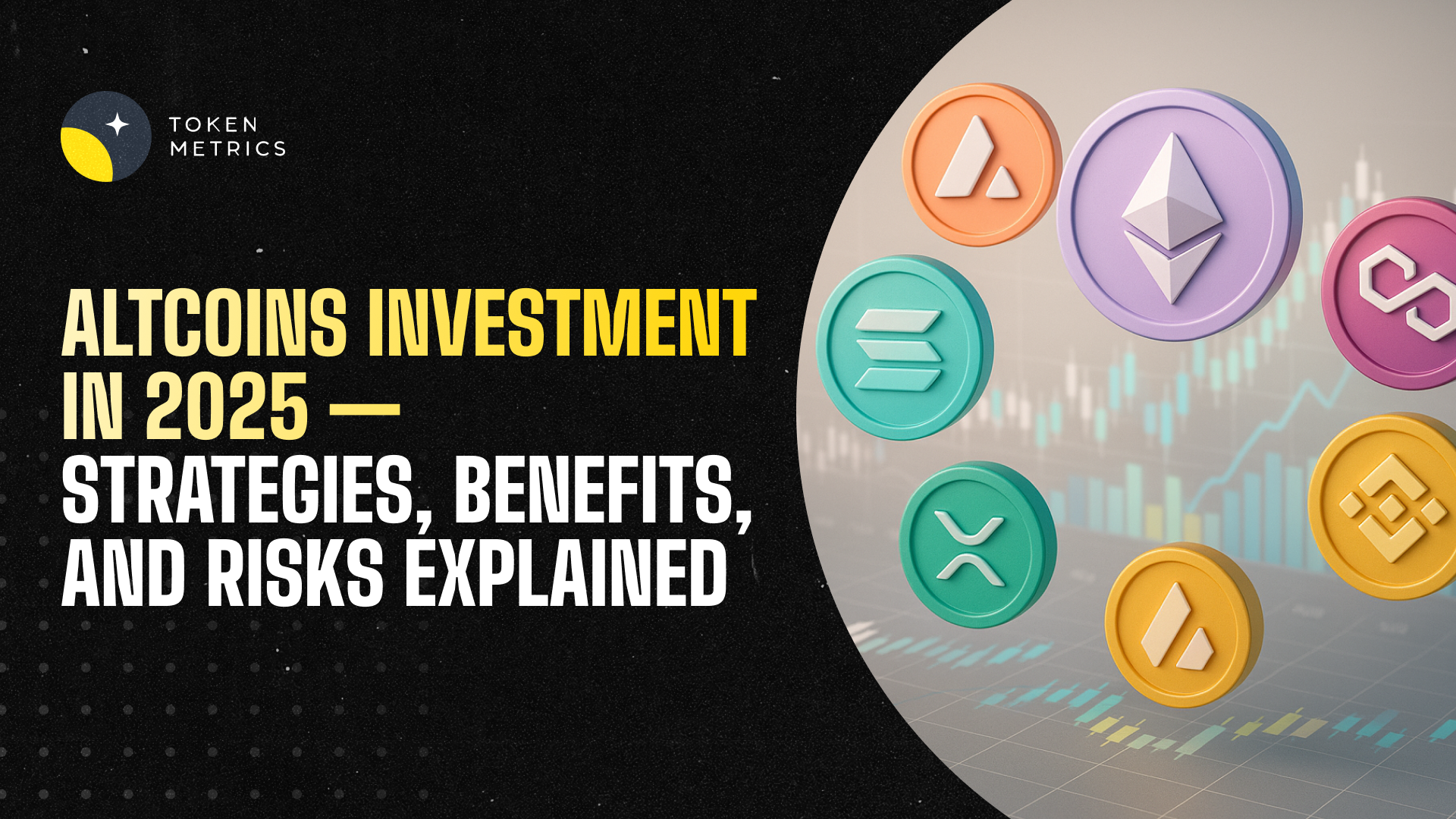
Altcoins Investment: A Comprehensive Guide for 2025

Token Metrics Team
6 min
MIN

Introduction to Altcoin Investment

As the cryptocurrency market evolves, altcoins—cryptocurrencies other than Bitcoin—are becoming increasingly central to the digital asset ecosystem. Investing in altcoins can provide opportunities for higher returns, portfolio diversification, and exposure to innovative blockchain technologies.

Unlike Bitcoin, which is primarily seen as digital gold, altcoins serve varied purposes, such as powering decentralized applications, enabling smart contracts, or facilitating cross-border payments. In 2025, altcoin investments are gaining momentum among both retail and institutional investors, offering unique opportunities in emerging sectors like artificial intelligence (AI), decentralized finance (DeFi), and real-world asset tokenization.

What Are Altcoins?

Altcoins are cryptocurrencies designed as alternatives to Bitcoin. They differ in technology, use case, and governance structure, making them essential to a diversified crypto portfolio.

Categories of Altcoins include:

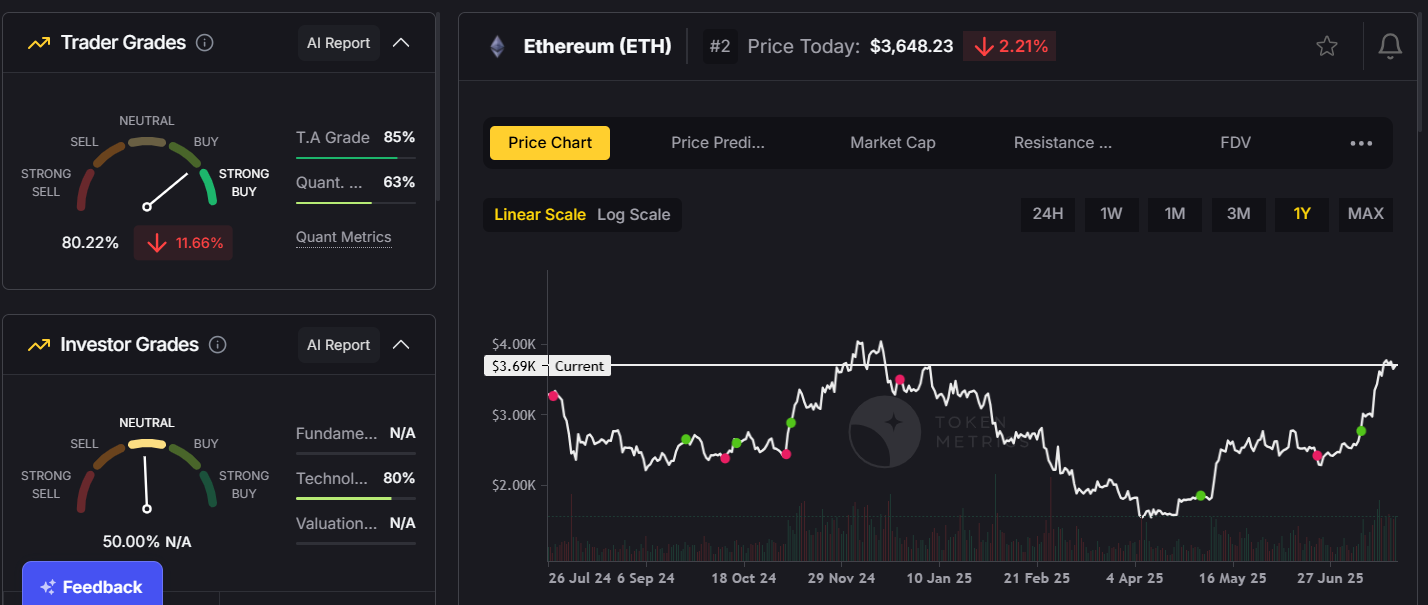
  • Smart Contract Platforms: Examples include Ethereum (ETH), Cardano (ADA), and Solana (SOL), which enable developers to build decentralized applications (dApps).
  • DeFi Tokens: Tokens like Uniswap (UNI) and Aave (AAVE) power decentralized finance ecosystems.
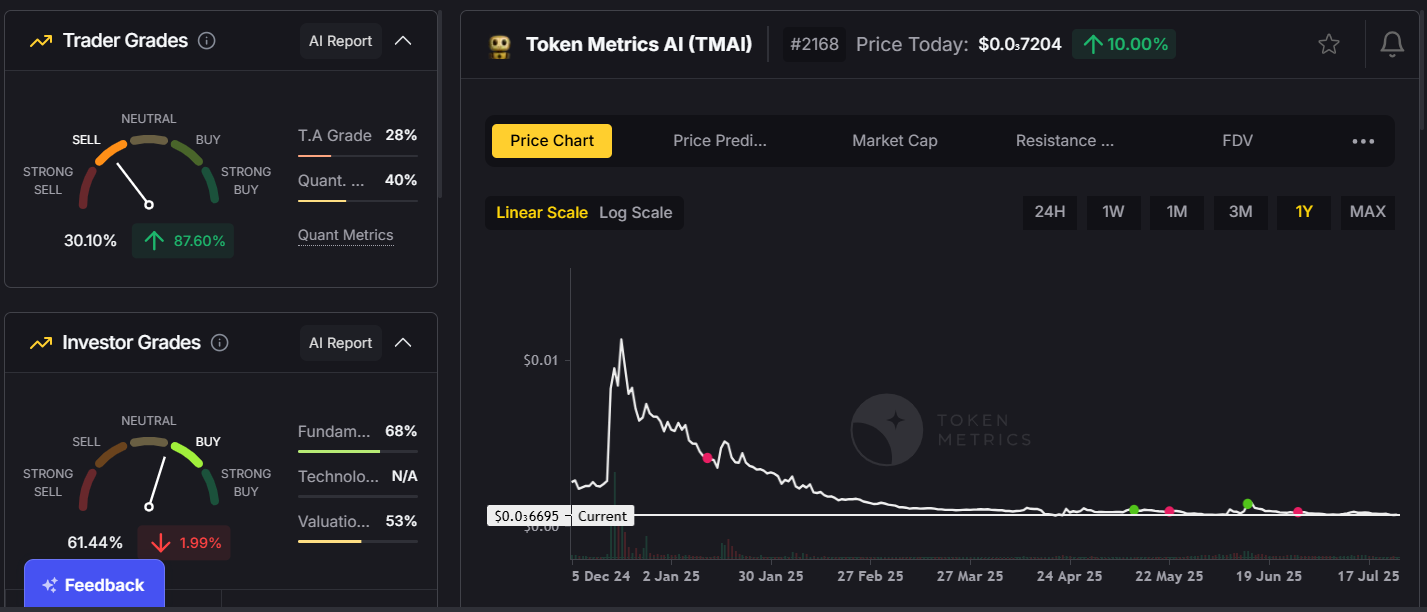
  • AI and Analytics Tokens: Token Metrics AI (TMAI) and Fetch.ai (FET) combine AI with blockchain to deliver insights and autonomous decision-making.
  • Meme Coins: Dogecoin (DOGE) and Shiba Inu (SHIB) often grow based on community support and viral trends.
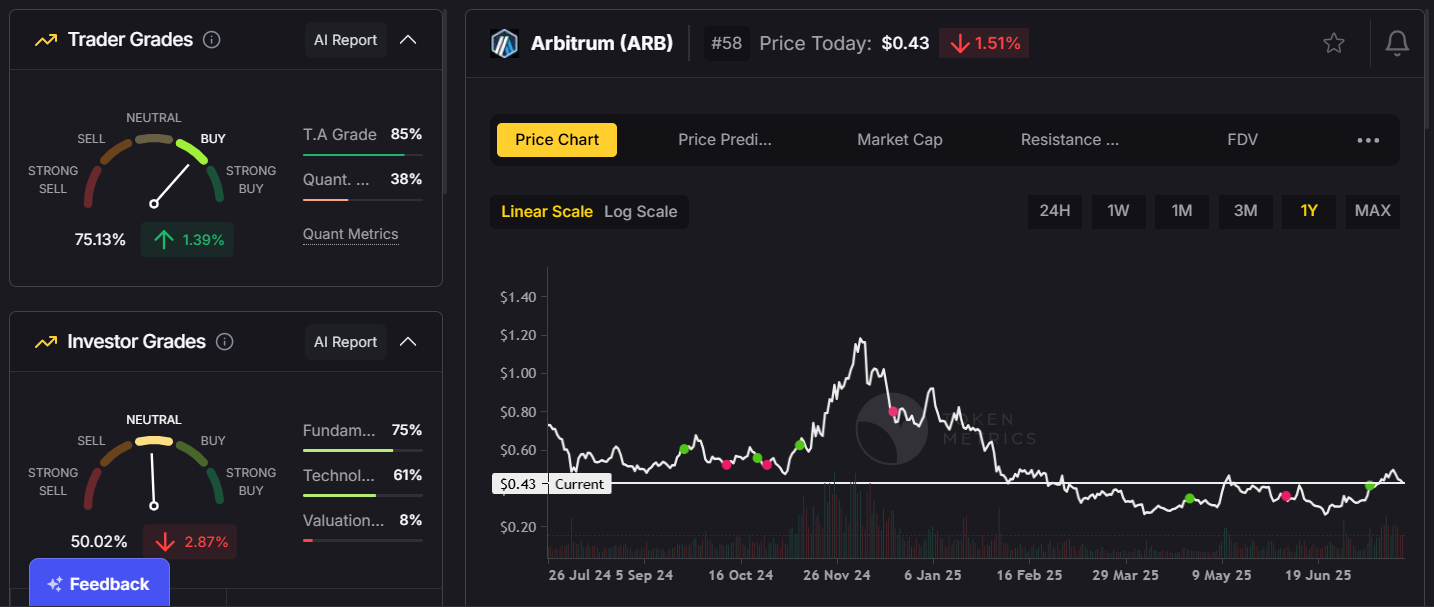
  • Layer 2 Solutions: Polygon (MATIC) and Arbitrum (ARB) improve scalability for existing blockchains.

By investing in a mix of these categories, investors gain exposure to multiple narratives driving the crypto market forward.

How Altcoin Investment Works

Investing in altcoins involves buying and holding tokens, trading them for profit, or staking them for passive income. The process starts with choosing a reliable cryptocurrency exchange, creating a secure wallet, and identifying which tokens fit your portfolio strategy.

Key steps for altcoin investment:

  1. Research & Analysis: Use AI-driven platforms like Token Metrics to analyze project fundamentals, on-chain activity, and sentiment.
  2. Portfolio Allocation: Decide on a mix of large-cap, mid-cap, and small-cap tokens based on risk tolerance.
  3. Execution & Management: Monitor performance regularly and rebalance holdings to align with market conditions.

Benefits of Investing in Altcoins

1. Higher Growth Potential:
Altcoins often outperform Bitcoin during bull markets. Projects in sectors like AI, DeFi, and NFTs can yield outsized returns when demand surges.

2. Diversification:
Altcoins provide exposure to multiple sectors, reducing reliance on Bitcoin’s price movements.

3. Innovation:
Many altcoins drive technological breakthroughs in blockchain scalability, privacy, and decentralized governance.

4. Passive Income Opportunities:
Through staking and yield farming, investors can earn consistent returns on altcoin holdings.

Risks of Altcoin Investment

While altcoins can deliver impressive gains, they also carry significant risks:

  • High Volatility: Prices can fluctuate sharply, leading to rapid gains or losses.
  • Project Failures: Some tokens lack strong fundamentals, increasing the risk of collapse.
  • Security Threats: Hacks and smart contract exploits remain a concern in DeFi ecosystems.
  • Regulatory Uncertainty: Governments worldwide are developing frameworks that may impact certain projects.

Mitigating these risks involves thorough research, diversification, and using analytics tools to assess project viability.

Altcoin Investment vs. Bitcoin Investment

Bitcoin is considered a store of value, while altcoins offer greater utility and innovation. Here’s how they compare:

  • Volatility: Altcoins are more volatile but present higher growth potential.
  • Use Case: Bitcoin’s primary function is as a digital currency and hedge; altcoins cater to smart contracts, DeFi, AI, and more.
  • Portfolio Role: While Bitcoin provides stability, altcoins enhance diversification and upside exposure.

A balanced strategy typically includes Bitcoin for security and altcoins for growth.

Strategies for Successful Altcoin Investing

  1. Long-Term Holding (HODL):
    Invest in fundamentally strong projects and hold through market cycles.

  2. Swing Trading:
    Capitalize on price volatility by buying low and selling high over short- to mid-term periods.

  3. Narrative Investing:
    Focus on sectors driving crypto growth—AI coins, DeFi protocols, and real-world asset tokens—to ride market narratives early.

  4. Staking & Yield Farming:
    Earn passive income by participating in DeFi protocols and securing proof-of-stake networks.

Security Measures for Altcoin Investors

Investing securely in altcoins requires:

  • Cold Wallet Storage: Keep your holdings in hardware wallets to prevent hacks.
  • Two-Factor Authentication (2FA): Add extra security layers to exchange accounts.
  • Smart Contract Audits: Verify that DeFi projects you invest in have undergone reputable audits.
  • Diversified Platforms: Avoid concentrating funds in one exchange or wallet.

Regulatory Considerations

Altcoins often face different regulatory classifications than Bitcoin, especially tokens associated with securities or DeFi platforms. In 2025, governments are increasingly requiring Know Your Customer (KYC) and Anti-Money Laundering (AML) compliance for crypto platforms.

Investors should ensure they use regulated exchanges and stay informed about local laws affecting altcoin trading.

How to Choose the Right Altcoins

When selecting altcoins to invest in:

  • Check Market Cap & Liquidity: Ensure sufficient trading volume.
  • Evaluate the Team & Roadmap: Strong leadership and clear milestones indicate long-term potential.
  • Monitor On-Chain Metrics: Active wallets, transactions, and developer activity signal adoption.
  • Leverage AI Analytics: Use Token Metrics AI to get data-driven coin ratings and insights.

The Future of Altcoin Investment

In 2025, altcoins are poised to play a transformative role in finance, AI integration, and global blockchain adoption. Tokens tied to AI analytics, DeFi platforms, and real-world assets are expected to lead the next wave of growth.

Conclusion

Altcoin investment is more than a high-risk gamble—it’s a way to participate in the future of digital finance. By understanding altcoins’ categories, benefits, risks, and strategies, investors can make informed decisions and unlock substantial growth opportunities.

With the right tools, like AI-powered analytics from Token Metrics, and a disciplined approach, altcoins can become a cornerstone of a well-balanced crypto portfolio in 2025 and beyond.

Crypto Basics

Crypto HODL: The Long-Term Investment Strategy for Building Wealth in 2025

Token Metrics Team
6 min
MIN

Introduction to HODL

If you’ve spent any time in cryptocurrency communities, you’ve likely seen the term HODL. Originally a misspelling of “hold” on an online Bitcoin forum in 2013, HODL has become much more than a typo—it’s now a core investment philosophy for crypto enthusiasts worldwide.

In 2025, HODLing remains one of the most effective long-term strategies for building wealth in cryptocurrency. By holding onto fundamentally strong assets through market volatility, investors can capture long-term gains while avoiding emotional, short-term trading mistakes. This article explores what HODLing means, why it works, the best assets to HODL, and how platforms like Token Metrics can help optimize your strategy.

What Does HODL Mean?

HODL means buying and holding cryptocurrency for an extended period, regardless of short-term price fluctuations. Unlike traders who attempt to time the market, HODLers adopt a long-term mindset, trusting that the value of quality assets will increase over time.

This strategy is rooted in the belief that blockchain technology and digital assets are here to stay, and that short-term market noise shouldn’t derail long-term conviction.

The Psychology Behind HODLing

Crypto markets are notoriously volatile, with sudden price swings that can lead to emotional decision-making. HODLing combats this by:

  • Avoiding Panic Selling: Reducing the risk of selling at a loss during downturns.
  • Maintaining Discipline: Encouraging investors to stick to their long-term plans.
  • Embracing Market Cycles: Understanding that crypto goes through bull and bear phases, but strong assets tend to recover and grow over time.

By committing to HODLing, investors can overcome emotional biases and stay focused on their long-term goals.

Why HODL Works in 2025

  1. Capturing Long-Term Gains:
    Historically, assets like Bitcoin and Ethereum have rewarded long-term holders with substantial returns, despite short-term volatility.

  2. Lower Trading Costs:
    By minimizing active trading, HODLers save on transaction fees and reduce tax implications from frequent trades.

  3. Compounding Growth:
    Holding allows you to benefit from price appreciation and participate in opportunities like staking or earning yield on your crypto.

  4. Simplicity:
    HODLing is straightforward—buy quality assets, store them securely, and wait.

Best Cryptocurrencies to HODL in 2025

While any coin can be HODLed, the best long-term candidates are projects with strong fundamentals, proven track records, and growing ecosystems:

  • Bitcoin (BTC):
    Known as digital gold, Bitcoin remains the most secure and widely adopted cryptocurrency, making it a cornerstone of any HODL portfolio.

‍

  • Ethereum (ETH):
    As the leading smart contract platform, Ethereum powers thousands of decentralized applications and remains a dominant force in DeFi and NFTs.

‍

  • Token Metrics AI (TMAI):
    An innovative AI-driven analytics token that combines blockchain and artificial intelligence, helping investors make smarter decisions.

‍

These coins offer long-term growth potential, making them excellent candidates for a HODL strategy.

How to Build a Successful HODL Strategy

  1. Do Your Research:
    Focus on coins with real-world utility, active development teams, and strong communities.

  2. Diversify Your Holdings:
    Don’t put all your funds into one asset. Balance between large-cap (BTC, ETH) and emerging tokens (AI coins, Layer 2 solutions).

  3. Use Token Metrics for Insights:
    Leverage AI-powered analytics to evaluate assets, get coin ratings, and track portfolio performance. Token Metrics provides data on over 80 key metrics per token, helping you choose the right assets to HODL.

  4. Secure Your Assets:
    Use hardware wallets for long-term storage and enable two-factor authentication (2FA) on exchange accounts.

  5. Rebalance Periodically:
    While HODLing implies holding for the long term, periodic rebalancing ensures your portfolio remains aligned with your investment goals.

HODLing vs. Active Trading

While active trading can generate quick profits, it also comes with higher risks and costs. Here’s how HODLing compares:

  • Less Stressful: You’re not glued to charts or reacting to every market dip.
  • Lower Fees: Fewer transactions mean reduced trading costs.
  • Higher Long-Term Success: Most active traders underperform long-term HODLers over extended periods.

Platforms like Token Metrics can complement both approaches by providing trading signals and long-term portfolio analytics, helping you decide when (and if) you should adjust your positions.

Risks of HODLing

While HODLing is effective, it’s not without challenges:

  • Extended Bear Markets: Prices may stay low for months or years.
  • Project Failures: Some tokens may not survive long term, making research critical.
  • Opportunity Cost: Holding may cause you to miss out on short-term trading opportunities.

To mitigate these risks, rely on data-driven tools like Token Metrics to ensure you’re holding the right mix of assets.

The Role of Token Metrics in HODLing

Token Metrics is a powerful platform for long-term crypto investors, providing:

  • AI-Driven Coin Ratings: Helping you identify which assets are worth holding.
  • Trend Analysis: Detecting when market conditions shift.
  • Portfolio Optimization: Offering insights to keep your HODL strategy on track.

By leveraging AI analytics, Token Metrics makes HODLing smarter, ensuring you’re invested in assets with strong fundamentals and growth potential.

Practical Tips for HODLers

  • Start with Blue Chips: Build a foundation with Bitcoin and Ethereum.
  • Add Growth Assets: Include promising altcoins like TMAI and Layer 2 scaling tokens.
  • Ignore Market Noise: Stay focused on the big picture.
  • Set Clear Goals: Define your time horizon and risk tolerance.
  • Stay Informed: Use platforms like Token Metrics to monitor your portfolio and adjust as needed.

Conclusion

HODLing isn’t just a meme—it’s a time-tested strategy for building wealth in crypto. By holding onto fundamentally strong assets, you can capture long-term growth while avoiding the emotional traps of active trading.

In 2025, pairing HODLing with AI-powered insights from Token Metrics gives you an edge—helping you select the right assets, manage risk, and stay committed to your investment plan. Whether you’re a beginner or a seasoned investor, HODLing remains one of the simplest and most effective ways to build wealth in the dynamic world of cryptocurrency.

Research

AI Crypto Coins: Unlocking the Future of Blockchain and Artificial Intelligence in 2025

Token Metrics Team
6 min
MIN

Introduction to AI Crypto Coins

Artificial intelligence (AI) has become one of the most transformative technologies of our time, reshaping industries from healthcare to finance. In the cryptocurrency space, AI crypto coins are merging blockchain with artificial intelligence, creating powerful ecosystems for data analytics, automated decision-making, decentralized AI marketplaces, and predictive trading.

In 2025, AI-powered tokens are one of the most promising sectors in crypto, attracting retail investors, institutional players, and developers seeking the next wave of technological breakthroughs. This article explores what AI crypto coins are, how they work, their benefits, key risks, and the role of Token Metrics in analyzing and investing in them.

What Are AI Crypto Coins?

AI crypto coins are digital tokens that fuel blockchain platforms integrated with artificial intelligence technologies. These coins serve multiple purposes, including:

  • Powering AI-Driven Platforms: Providing access to AI tools and algorithms.
  • Facilitating Machine Learning: Enabling decentralized model training and data processing.
  • Enabling Predictive Analytics: Supporting platforms that use AI to forecast market trends.
  • Fueling Autonomous Agents: Powering AI agents for decentralized applications (dApps).

By combining the transparency of blockchain with the intelligence of AI, these projects are creating self-sustaining ecosystems where users can buy, sell, and deploy AI services securely.

Top AI Crypto Coins in 2025

The AI crypto sector is diverse, with projects addressing various use cases. Here are some of the leading tokens:

1. Token Metrics AI (TMAI):‍

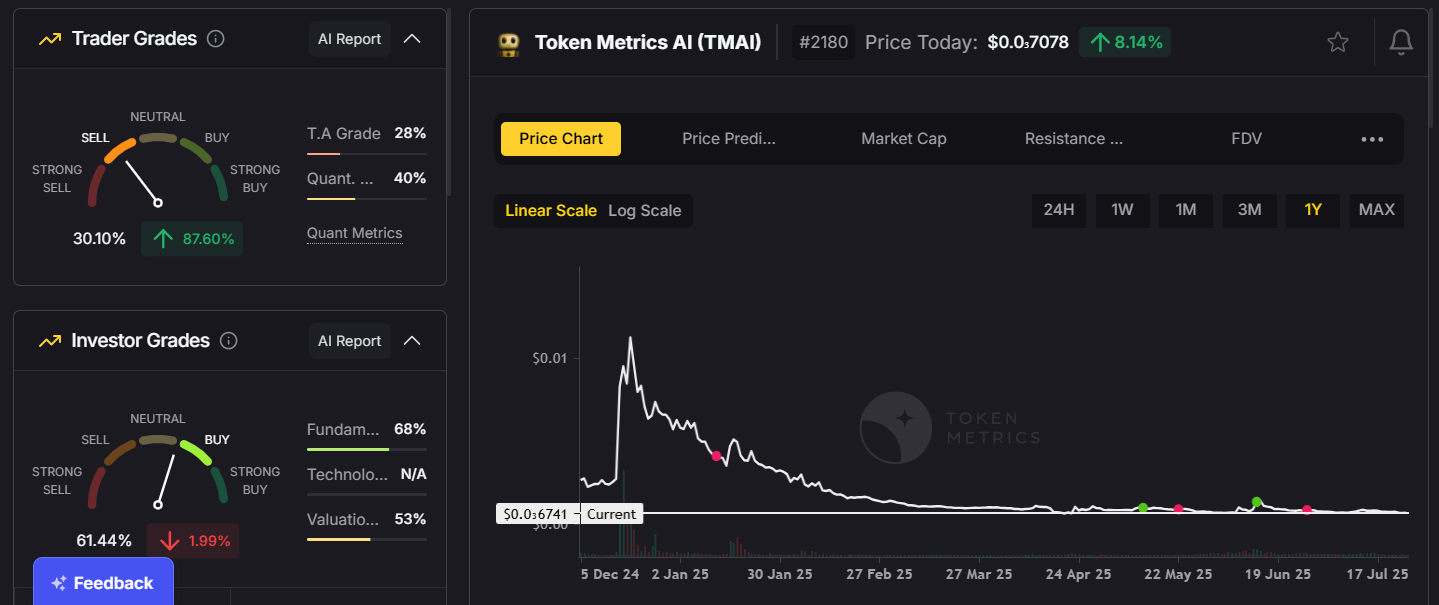
One of the most innovative AI-driven analytics platforms in crypto. TMAI leverages over 80 data points per token, offering AI-generated ratings, trend analysis, and portfolio insights to help traders and investors make data-driven decisions.

‍2. $KAITO Token Utility:

  1. Platform access and insights
  2. Governance voting
  3. Community curation rewards

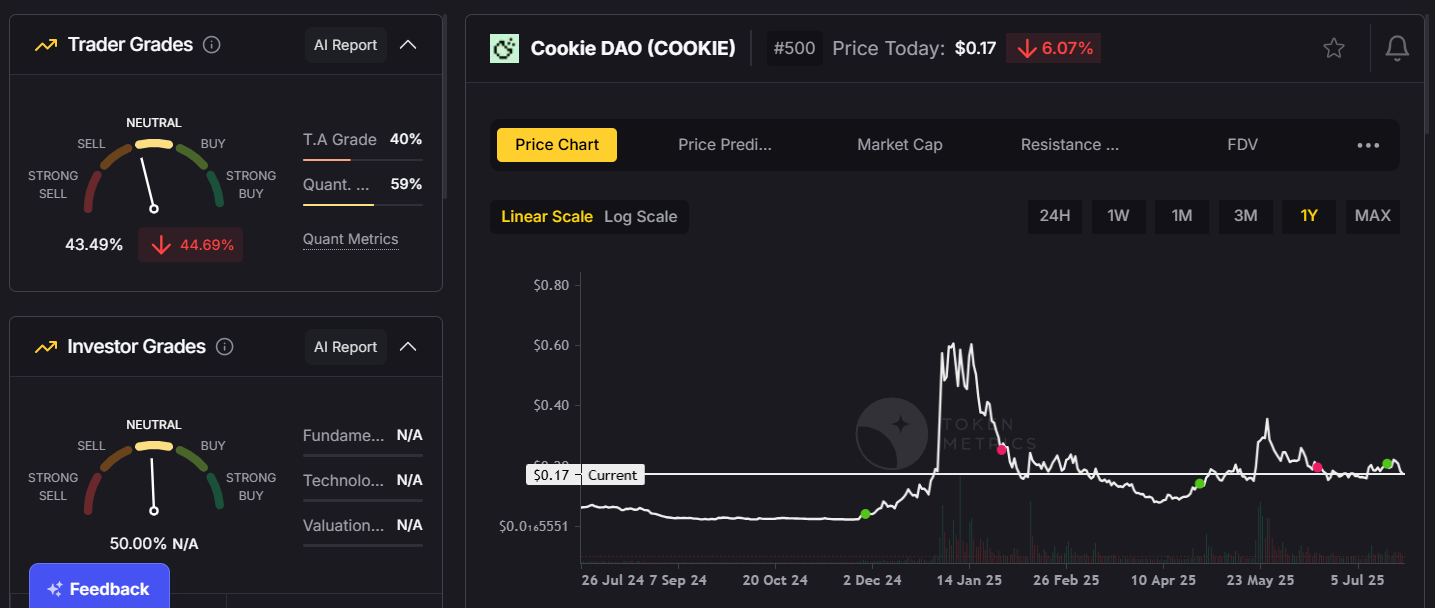
3. Cookie.fun ($COOKIE): Gamified Trading Meets A

‍Cookie.fun is a Gen-Z-targeted platform that fuses AI-powered trading insights with gamified investing experiences.

‍

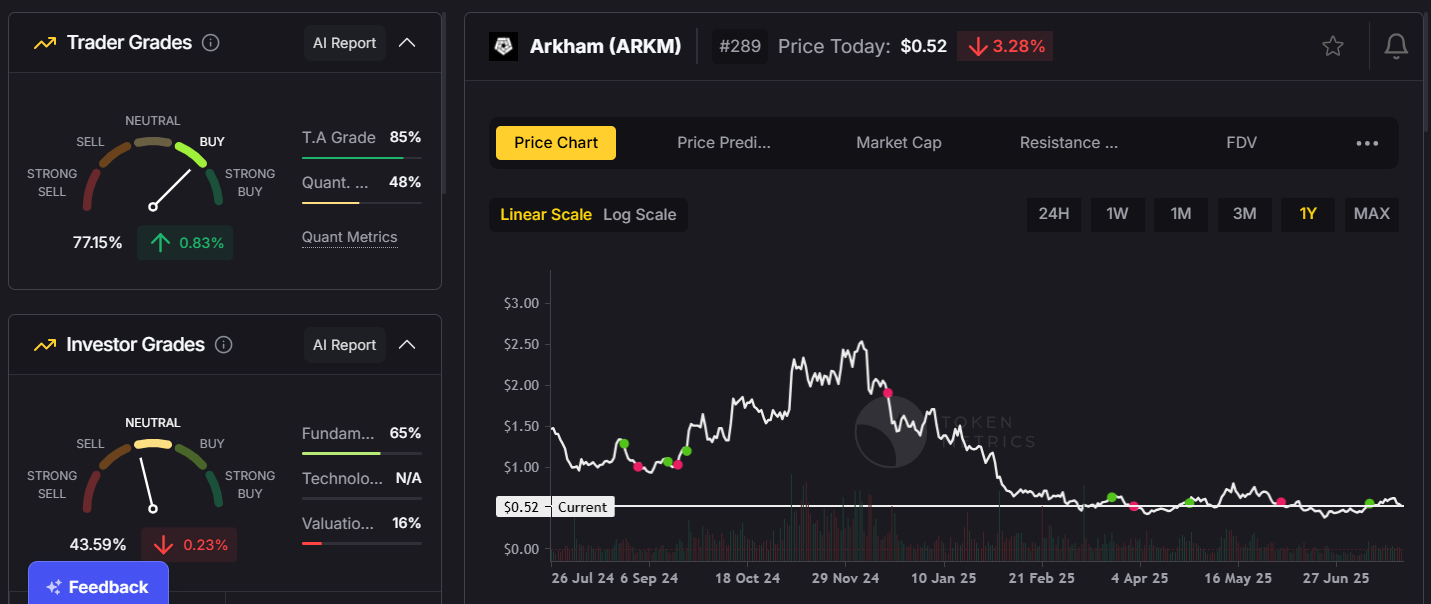
4. Arkham Intelligence (ARKM):
An AI-powered blockchain intelligence platform that analyzes on-chain data for compliance, forensics, and research.

These tokens are part of a fast-growing ecosystem of AI-focused projects poised to disrupt industries ranging from financial trading to decentralized computing.

How Do AI Crypto Coins Work?

AI crypto coins work by integrating machine learning and blockchain to create scalable, secure, and transparent AI ecosystems. Key mechanisms include:

  • Decentralized Data Sharing: AI models can be trained on distributed datasets without compromising user privacy.
  • Smart Contracts: Automated contracts execute AI-powered services securely and transparently.
  • Token Incentives: Users earn rewards for contributing data, computing power, or participating in AI ecosystems.
  • AI-Enhanced Trading: AI-driven trading algorithms generate signals and strategies, which platforms like Token Metrics deliver directly to investors.

This synergy between AI and blockchain creates systems that learn, adapt, and evolve over time, making them highly valuable in the crypto economy.

Benefits of Investing in AI Crypto Coins

1. Exposure to Two Revolutionary Technologies:
Investing in AI tokens means gaining exposure to both the blockchain and AI sectors, which are projected to experience massive growth over the next decade.

2. High Growth Potential:
AI crypto coins often see rapid adoption due to their real-world applications and strong narratives.

3. Diversification:
AI tokens provide a unique asset class within the crypto market, helping diversify a portfolio beyond standard altcoins.

4. Early Access to Innovation:
Investors can be part of groundbreaking projects building the infrastructure for decentralized AI networks.

Risks of AI Crypto Investments

Like all crypto assets, AI coins carry risks:

  • High Volatility: Price swings can be dramatic, especially for small-cap AI projects.
  • Regulatory Uncertainty: Governments are still figuring out how to regulate AI and blockchain integrations.
  • Unproven Technology: Many AI platforms are in early development stages, with uncertain timelines for adoption.
  • Security Concerns: The combination of AI and blockchain increases the attack surface for malicious actors.

Using data-driven platforms like Token Metrics can help mitigate these risks by offering detailed project analysis and ratings.

Investment Strategies for AI Crypto Coins

1. Long-Term Holding (HODL):
Invest in leading AI tokens like TMAI, FET, and AGIX for long-term exposure to this emerging sector.

2. Narrative Investing:
Capitalize on market narratives by entering early when AI projects gain traction or announce major updates.

3. Portfolio Diversification:
Balance AI tokens with large-cap cryptocurrencies like Bitcoin and Ethereum to manage overall portfolio risk.

4. Active Monitoring with Token Metrics:
Use Token Metrics to receive real-time AI-generated ratings, alerts, and trend analyses for AI tokens, helping you optimize entry and exit points.

How Token Metrics Enhances AI Coin Investing

Token Metrics is uniquely positioned at the intersection of AI and crypto. It provides:

  • AI-Generated Coin Ratings: Evaluating tokens across fundamentals, technicals, and market sentiment.
  • Predictive Analytics: Forecasting token movements using advanced AI models.
  • Portfolio Management Tools: Helping investors track and optimize their AI coin allocations.
  • Narrative Detection: Identifying early trends in the AI crypto space before they go mainstream.

For investors seeking to navigate the fast-changing AI crypto sector, Token Metrics delivers data-driven confidence in decision-making.

Practical Tips for Investing in AI Crypto Coins

  1. Do Your Research:
    Focus on projects with clear use cases, strong teams, and growing ecosystems.

  2. Watch for Partnerships:
    AI tokens that collaborate with major blockchain platforms or enterprises often gain faster adoption.

  3. Start Small:
    Begin with a modest allocation to manage risk, especially with early-stage AI projects.

  4. Use Token Metrics Analytics:
    Leverage AI-driven insights to find undervalued tokens and avoid overhyped projects.

The Future of AI Crypto Coins

AI crypto coins are expected to play a transformative role in 2025 and beyond, powering innovations in:

  • Decentralized AI Marketplaces for global algorithm sharing.
  • Autonomous Agents capable of performing complex tasks without human input.
  • AI-Driven DeFi Strategies that optimize yield farming and liquidity provision.

As AI becomes more integrated with blockchain, these coins will likely lead the next technological and financial revolution.

Conclusion

AI crypto coins represent one of the most exciting frontiers in cryptocurrency. By merging the power of blockchain with the intelligence of AI, these tokens are reshaping how we interact with data, trade, and build decentralized systems.

For investors, platforms like Token Metrics provide the insights needed to navigate this dynamic sector—identifying promising projects, managing risk, and seizing opportunities before the market catches up.

In 2025, adding AI tokens to your portfolio isn’t just an investment—it’s a way to participate in the future of intelligent, decentralized finance.

Choose from Platinum, Gold, and Silver packages
Reach with 25–30% open rates and 0.5–1% CTR
Craft your own custom ad—from banners to tailored copy
Perfect for Crypto Exchanges, SaaS Tools, DeFi, and AI Products