Back to blog
Crypto Basics

Crypto Regulation – Opportunities, Challenges and Impact on Market

Learn everything about crypto regulation and its impact on the market, in this descriptive guide.
Token Metrics Team
7 minutes
Want Smarter Crypto Picks—Free?
See unbiased Token Metrics Ratings for BTC, ETH, and top alts.
Thank you! Your submission has been received!
Oops! Something went wrong while submitting the form.
 No credit card | 1-click unsubscribe

Cryptocurrency may be a peer-to-peer digital transactional technology, but without proper regulation or framework, more scams will happen in the digital world. 

What crypto regulations are there in the market? How to understand if a particular crypto asset is an ardent follower of these rules? Does crypto follow any law? If yes, will these laws affect the price of the cryptocurrencies too? Let's find out.

What are Crypto Laws?

Crypto laws refer to the legal regulations and requirements that apply to activities related to cryptocurrencies, such as buying, selling, trading, and using them as a medium of exchange. 

These laws can vary depending on the country or jurisdiction in which the activities occur and can include regulations related to securities, commodities, taxation, anti-money laundering, and consumer protection.

Crypto laws aim to protect investors, consumers, and the financial system from the risks associated with cryptocurrencies, such as volatility, fraud, and money laundering. They are also intended to promote transparency and fairness in the market and to prevent illicit activities such as terrorist financing and the funding of criminal enterprises.

Some common aspects of crypto laws include licensing and registration requirements for crypto businesses, such as exchanges and wallet providers, as well as rules for capital gains, losses, and value-added taxes. Anti-money laundering and know-your-customer regulations are also often included in crypto laws to prevent using cryptocurrencies for illegal activities.

As the crypto market continues to evolve, so will the laws and regulations governing it. It is essential for investors and participants in the crypto market to stay up-to-date with the regulatory landscape in their particular jurisdiction in order to ensure compliance and mitigate risks.

How is Crypto Regulated in the World?

Crypto is somewhat regulated in the United States, but the specific regulations and requirements vary depending on the type of cryptocurrency activity and the state in which it occurs.

The regulation of cryptocurrency in the United States is primarily the responsibility of:

  • The Securities and Exchange Commission (SEC), 
  • The Commodity Futures Trading Commission (CFTC), and 
  • The Financial Crimes Enforcement Network (FinCEN). 

The SEC and CFTC have authority over cryptocurrency exchanges and trading, while FinCEN is responsible for enforcing anti-money laundering (AML) and know-your-customer (KYC) regulations.

In addition to federal regulations, individual states have rules for cryptocurrency activities. Some states, such as New York, have implemented specific licensing requirements for cryptocurrency businesses, while others have yet to develop comprehensive regulations.

In Europe, the European Securities and Markets Authority (ESMA) regulates cryptocurrencies and initial coin offerings (ICOs). Each European country also has its regulatory authority, such as the Financial Conduct Authority (FCA) in the United Kingdom.

In Asia, the regulation of cryptocurrencies varies widely by country. Japan, for example, has implemented a licensing system for cryptocurrency exchanges, while China has banned cryptocurrency exchanges altogether.

Key Regulations that Every Nation Follows

To be honest, there is no one-size-fits-all answer to this question. The laws and regulations needed to regulate the crypto market effectively can vary depending on the specific circumstances of each country or jurisdiction.

However, some key areas that many nations may need to consider when regulating cryptocurrencies include the following:

Definition & Classification

Governments must define and classify cryptocurrencies, including whether they should be considered commodities, securities, or currency.

Licensing & Registration

Governments may need to implement licensing and registration requirements for cryptocurrency businesses, including exchanges, wallets, and other service providers.

Consumer Protection

Laws may need to be developed to protect consumers from fraud, scams, and other risks associated with investing in or using cryptocurrencies.

Taxation

Governments may need to develop tax laws specifically addressing cryptocurrencies, including rules for capital gains and losses and VAT or sales tax.

AML & KYC

Anti-money laundering (AML) and know-your-customer (KYC) regulations are essential to prevent money laundering, terrorist financing, and other illicit activities.

Security Standards

Regulations should be implemented to ensure that crypto businesses and their users adhere to specific security standards to protect against hacking and other security breaches.

International Cooperation

Due to the global nature of cryptocurrencies, nations may need to cooperate in developing consistent regulatory standards. The regulations needed to regulate cryptocurrencies effectively will depend on the specific circumstances of each country or jurisdiction and the evolving nature of the crypto market itself. 

Impact of Regulations on the Crypto Market

The impact of regulation on the crypto market can be significant and affect various aspects of the market. Here are some ways in which law can impact the crypto market:

Market Volatility - The announcement of new regulations can cause market volatility, as investors may become uncertain about the market's future. If the regulations are considered too restrictive, it may lead to a drop in prices, while regulations perceived as beneficial could increase costs.

Investor Confidence - Regulations designed to protect investors can increase confidence in the market, attracting more institutional investors and significant amounts of capital. This can ultimately lead to more stability in the market.

Adoption - Regulations that provide a clear legal framework for cryptocurrencies can encourage more businesses and individuals to adopt them. This can lead to increased demand for cryptocurrencies and, in turn, higher prices.

Innovation - Regulations can also impact innovation in the crypto market. Regulations that are too restrictive or burdensome can stifle innovation, while regulations that are designed to promote innovation can lead to the development of new technologies and use cases.

Compliance Costs - Compliance with regulations can be costly for crypto businesses, particularly smaller ones. This can create barriers to entry and limit the growth of the market.

While regulations can provide excellent protection for investors and encourage adoption, they can create uncertainty and increase business compliance costs. Regulators must balance protecting investors and promoting innovation in the market.

And here’s the million-dollar question!

Will the price of Bitcoin, Ethereum, or your preferred cryptocurrency suddenly drop upon the announcement of the subsequent regulation? 

It's a question worth a million dollars, but the truth is that nobody knows for sure. What we do know is that highly restrictive rules could hurt crypto prices. For instance, a regulation that bans crypto exchanges in the U.S. would make it difficult for U.S. residents to obtain cryptocurrencies, potentially causing a significant decline in the entire market.

Conversely, a regulation that mandates exchanges to maintain accurate records of trades and prevent market manipulation could attract more conservative investors, potentially leading to higher prices. Therefore, the effects of regulations on cryptocurrency prices can be either beneficial or detrimental.

Challenges of Enforcing these Regulations

Enforcing cryptocurrency regulations can be challenging for several reasons:

1. Cross-border nature of cryptocurrencies:

Cryptocurrencies are global, decentralized, and not bound by physical borders or jurisdictions. Therefore, enforcing regulations can be challenging, as different laws and regulations may exist in other countries.

2. Anonymity:

Cryptocurrencies allow users to maintain anonymity, making it difficult to track and identify individuals engaging in illicit activities.

3. Lack of regulatory clarity:

The regulatory framework for cryptocurrencies is still in its early stages, and some areas need more clarity. This can make it tough for businesses and investors to understand their legal obligations and create market uncertainty.

4. Rapidly evolving technology:

The technology behind cryptocurrencies is rapidly changing, creating the need to keep up with the latest developments, and ensure that their regulations are still relevant and practical.

5. Lack of resources:

Regulators may need more resources and expertise to effectively monitor and enforce regulations in the fast-paced and complex world of cryptocurrencies.

The Bottom Line

If you are an active crypto investor, understanding the current and potential future regulations is crucial for your portfolio. These regulations could impact various aspects, including your tax obligations, the types of cryptocurrencies available for purchase, and the procedures required to buy Bitcoin and other cryptocurrencies. 

Keeping tabs of the legislation is critical to becoming a knowledgeable investor.

Build Smarter Crypto Apps &
AI Agents in Minutes, Not Months
Real-time prices, trading signals, and on-chain insights all from one powerful API.
Grab a Free API Key
About Token Metrics
Token Metrics: AI-powered crypto research and ratings platform. We help investors make smarter decisions with unbiased Token Metrics Ratings, on-chain analytics, and editor-curated “Top 10” guides. Our platform distills thousands of data points into clear scores, trends, and alerts you can act on.
30 Employees
analysts, data scientists, and crypto engineers
Daily Briefings
concise market insights and “Top Picks”
Transparent & Compliant
Sponsored ≠ Ratings; research remains independent
Want Smarter Crypto Picks—Free?
See unbiased Token Metrics Ratings for BTC, ETH, and top alts.
Thank you! Your submission has been received!
Oops! Something went wrong while submitting the form.
 No credit card | 1-click unsubscribe
Token Metrics Team
Token Metrics Team

Recent Posts

Research

Crypto Ecosystem: Understanding the Building Blocks of Digital Assets in 2025

Token Metrics Team
6 min

Introduction: What Is the Crypto Ecosystem?

The crypto ecosystem refers to the interconnected network of technologies, platforms, and participants that make up the cryptocurrency space. It’s more than just Bitcoin and altcoins — it includes blockchains, decentralized applications, exchanges, wallets, staking systems, analytics platforms, and communities.

In 2025, the crypto ecosystem has matured significantly, with billions in institutional capital, AI‑driven analytics, and real‑world applications shaping its growth. Understanding this ecosystem is crucial for navigating opportunities and risks in the digital asset space.

The Core Components of the Crypto Ecosystem

  1. Blockchains:
    The foundation of the ecosystem. Public blockchains like Bitcoin and Ethereum support transactions and decentralized applications.

  2. Cryptocurrencies:
    Digital assets like Bitcoin (BTC), Ether (ETH), and Token Metrics AI (TMAI) serve as mediums of exchange, investments, or utility tokens within blockchain networks.

  3. Decentralized Finance (DeFi):
    DeFi platforms enable lending, borrowing, staking, and yield farming without intermediaries. Examples include Uniswap, Aave, and MakerDAO.

  4. Non‑Fungible Tokens (NFTs):
    Digital collectibles and assets tied to unique identifiers, powering art, gaming, and virtual real estate economies.

  5. Layer 2 Solutions:
    Scalability technologies like Polygon and Arbitrum make blockchains faster and cheaper to use.

  6. AI & Analytics Platforms:
    Tools like Token Metrics leverage AI to analyze on‑chain data, provide coin ratings, and optimize portfolios for investors.

  7. Exchanges & Wallets:
    Exchanges and Trading Platforms (Token Metrics, Coinbase, Binance) and decentralized exchanges (Uniswap, SushiSwap) connect buyers and sellers, while wallets (MetaMask, Ledger) store assets.

How the Crypto Ecosystem Works Together

Each component interacts to create a self‑sustaining digital economy:

  • Blockchains provide the base layer for security and transactions.
  • DeFi protocols unlock financial services without traditional banks.
  • AI analytics like Token Metrics guide investors toward smarter decisions.
  • Communities and DAOs (decentralized autonomous organizations) shape project development and governance.

This interconnectedness is why understanding the ecosystem holistically is vital for long‑term success in crypto.

The Role of AI in the Modern Crypto Ecosystem

Artificial intelligence is transforming how investors engage with crypto. Platforms like Token Metrics offer:

  • AI‑Generated Coin Ratings: Evaluating tokens across fundamentals, technicals, and market sentiment.
  • Narrative Detection: Spotting emerging trends like AI coins, DeFi, and real‑world asset tokenization.
  • Portfolio Optimization: Helping users allocate capital efficiently across assets.
  • Trading Signals: Delivering data‑driven entry and exit points for assets.

In 2025, AI is no longer optional — it’s an essential tool for surviving the complexity of the crypto market.

Key Trends in the 2025 Crypto Ecosystem

  1. Institutional Adoption:
    Large financial institutions now hold crypto and offer crypto‑backed products like ETFs.

  2. Real‑World Asset Tokenization (RWA):
    Projects tokenize real estate, commodities, and equities, bridging traditional finance with blockchain.

  3. Layer 2 Expansion:
    Ethereum’s growth is supercharged by Layer 2 solutions that cut fees and speed up transactions.

  4. AI‑Driven Investing:
    Investors use AI platforms like Token Metrics for real‑time analytics and smarter trading strategies.

  5. Regulatory Clarity:
    More countries are implementing clear frameworks for crypto, encouraging responsible growth.

Opportunities in the Crypto Ecosystem

For investors, the ecosystem offers multiple revenue streams:

  • Trading & Investing: Holding and trading cryptocurrencies.
  • Staking & Yield Farming: Earning passive income via Proof of Stake networks or DeFi pools.
  • NFT Markets: Exploring digital art, collectibles, and in‑game assets.
  • Participating in DAOs: Voting on governance decisions for projects you believe in.

Risks in the Crypto Ecosystem

Despite its growth, the crypto ecosystem still carries risks:

  • Volatility: Price swings remain a challenge for investors.
  • Security Threats: Hacks, phishing, and smart contract vulnerabilities persist.
  • Regulatory Uncertainty: Governments continue to refine crypto rules.
  • Market Speculation: Some sectors, especially meme coins, remain driven by hype rather than fundamentals.

Platforms like Token Metrics mitigate these risks by providing real‑time insights, ratings, and AI‑powered alerts.

Practical Tips for Navigating the Ecosystem

  1. Start with Education: Understand how blockchains, tokens, and DeFi work.
  2. Diversify: Spread investments across sectors (e.g., BTC, ETH, DeFi, AI coins like TMAI).
  3. Use Analytics: Leverage Token Metrics for smarter portfolio management and early narrative detection.
  4. Stay Secure: Use hardware wallets and enable two‑factor authentication.

The Future of the Crypto Ecosystem

By 2025, the crypto ecosystem has shifted from speculation to utility‑driven growth. With AI integration, institutional adoption, and real‑world use cases, crypto is evolving into a mainstream part of global finance.

Projects like Token Metrics are leading the charge by making advanced analytics accessible to everyday investors, ensuring they can thrive in this rapidly evolving environment.

Conclusion

The crypto ecosystem in 2025 is a dynamic, interconnected web of technologies, platforms, and communities. To succeed, investors must understand its components and use the right tools to navigate it.

By combining education, diversification, and AI‑powered analytics from Token Metrics, you can confidently explore the ecosystem, capitalize on emerging opportunities, and mitigate risks in this transformative space.

Crypto Basics

What Is Proof of Stake? A Complete Guide to PoS in 2025

Token Metrics Team
6 min

Introduction: Why Proof of Stake Matters

In the world of blockchain, consensus mechanisms are what keep networks secure and functional. One of the most important of these is Proof of Stake (PoS)—a model that has become the standard for next‑generation blockchains like Ethereum, Cardano, and Solana.

In 2025, PoS dominates the crypto landscape, offering a more energy‑efficient, scalable, and inclusive alternative to the older Proof of Work (PoW) model. This article breaks down how PoS works, why it matters, its benefits and risks, and how platforms like Token Metrics can help investors optimize staking strategies.

What Is Proof of Stake?

Proof of Stake is a consensus mechanism that allows blockchains to validate transactions and create new blocks based on the number of tokens held (or “staked”) by network participants.

Instead of using powerful computers to solve complex puzzles (as in Proof of Work), PoS relies on validators—individuals or entities who lock up tokens as collateral to help maintain the network.

In return, these validators earn staking rewards, making PoS not only an essential part of blockchain operations but also a way for investors to generate passive income.

How Does Proof of Stake Work?

  1. Staking Tokens:
    Participants lock up their tokens (e.g., ETH, ADA) in a wallet or staking pool.

  2. Validator Selection:
    The network algorithm selects validators to propose and confirm new blocks based on their stake size and other factors (sometimes including randomness).

  3. Block Validation:
    Validators verify transactions and add new blocks to the chain.

  4. Reward Distribution:
    Validators earn rewards in the form of newly minted tokens or transaction fees.

  5. Penalties (Slashing):
    Misbehavior—such as double‑signing or being offline—can result in losing a portion of the staked tokens, ensuring network security and accountability.

Proof of Stake vs. Proof of Work

Proof of Work (PoW):

  • Used by Bitcoin.
  • Requires high‑energy mining operations.
  • Limited scalability.

Proof of Stake (PoS):

  • Used by Ethereum (post‑Merge), Cardano, Solana, and many others.
  • Energy‑efficient—uses 99% less energy than PoW.
  • More scalable, enabling faster and cheaper transactions.

In 2025, PoS is considered the future of blockchain consensus thanks to its efficiency and accessibility.

Major PoS Blockchains in 2025

  1. Ethereum (ETH):
    Transitioned to PoS in 2022 during The Merge, allowing ETH holders to stake and earn rewards.

  2. Cardano (ADA):
    Pioneered a research‑driven PoS model (Ouroboros) for secure and sustainable blockchain growth.

  3. Solana (SOL):
    Combines PoS with Proof of History for high‑speed, low‑cost transactions.

  4. Polkadot (DOT):
    Uses a Nominated Proof of Stake (NPoS) model, letting token holders nominate validators for network security.

  5. Token Metrics AI (TMAI):
    Integrates PoS into its ecosystem while leveraging AI analytics for blockchain intelligence.

Benefits of Proof of Stake

  1. Energy Efficiency:
    PoS drastically reduces environmental impact compared to PoW mining.

  2. Accessibility:
    Anyone can stake tokens—no need for expensive mining hardware.

  3. Passive Income:
    Token holders earn rewards by participating in staking pools or running validator nodes.

  4. Decentralization & Security:
    PoS encourages broader participation, strengthening network security.

Risks of Proof of Stake

While PoS is revolutionary, it’s not without challenges:

  • Slashing Penalties: Validators who act maliciously or go offline risk losing their stake.
  • Centralization Risks: Large holders may dominate staking pools, reducing decentralization.
  • Liquidity Issues: Staked tokens are often locked for a period, limiting flexibility.
  • Regulatory Uncertainty: As staking becomes more widespread, governments are exploring potential regulations.

Platforms like Token Metrics help mitigate these risks by offering in‑depth analytics on validators, staking pools, and network activity.

How to Earn with PoS: Staking in 2025

1. Solo Staking:
Run your own validator node. This requires technical expertise and meeting minimum staking requirements (e.g., 32 ETH for Ethereum).

2. Pooled Staking:
Join staking pools that combine funds from multiple users, making it easier for beginners to participate.

3. Liquid Staking:
Use platforms like Lido or Rocket Pool to stake while maintaining liquidity through derivative tokens you can trade or use in DeFi.

4. Exchange Staking:
Centralized exchanges (e.g., Coinbase, Binance) offer simple staking options, though they often take a fee.

Using Token Metrics for PoS Insights

Token Metrics empowers PoS investors with:

  • AI‑Driven Analytics: Identify the most profitable staking opportunities.
  • Validator Ratings: Evaluate validators based on performance, uptime, and security.
  • Portfolio Optimization: Balance your staked assets across multiple blockchains.
  • Market Signals: Get alerts when staking yields or network conditions change.

This makes staking easier, safer, and more profitable for both beginners and experienced investors.

Practical Tips for PoS Investors

  1. Diversify: Stake across multiple blockchains to minimize risk.
  2. Research Validators: Choose validators with strong reputations and consistent uptime.
  3. Stay Liquid: Use liquid staking platforms for flexibility.
  4. MonitorRewards: Use Token Metrics to track real‑time staking yields and make adjustments.

The Future of Proof of Stake

In 2025, PoS is expected to power the majority of leading blockchains, supporting innovations in DeFi, NFTs, AI‑driven ecosystems, and real‑world asset tokenization.

Its combination of efficiency, scalability, and accessibility makes it the go‑to consensus mechanism for the next era of Web3 development.

Conclusion

Proof of Stake has redefined how blockchains achieve consensus, making networks more sustainable, secure, and inclusive. For investors, PoS offers an exciting opportunity to earn passive income while supporting blockchain ecosystems.

By leveraging AI‑powered analytics from Token Metrics, you can maximize staking rewards, identify top‑performing validators, and manage risk effectively.

In 2025, understanding PoS isn’t just for developers—it’s an essential tool for every crypto investor.

Research

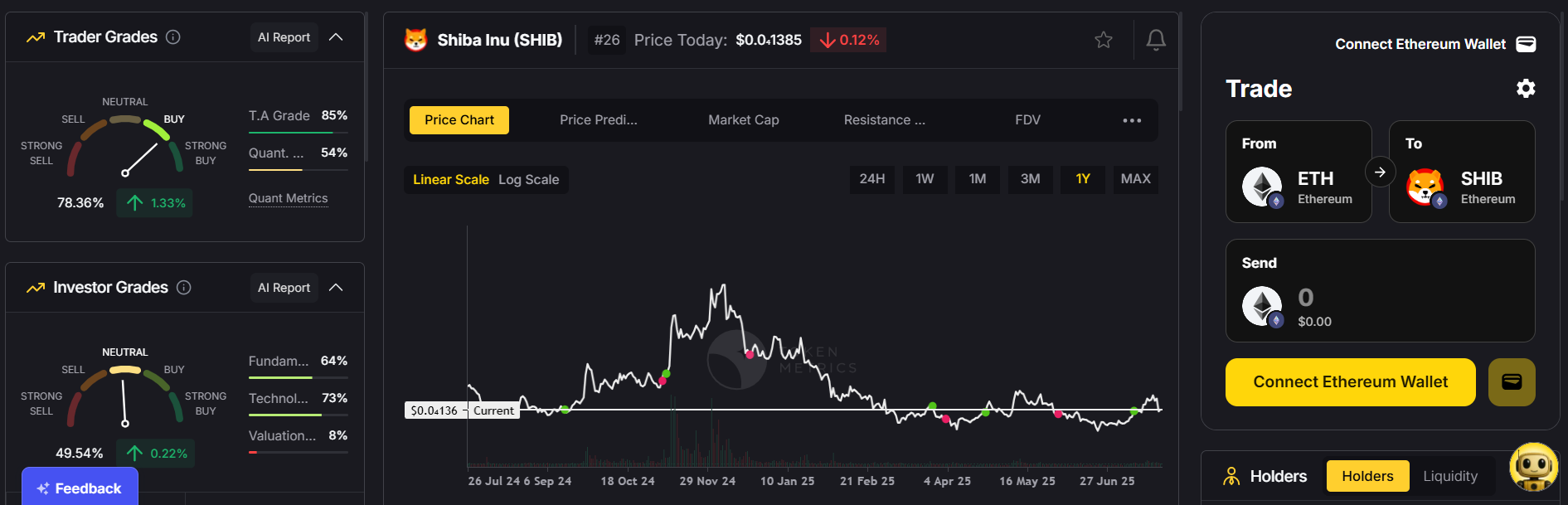
What Is Shiba Inu? A Complete Guide to the Meme Coin in 2025

Token Metrics Team
6 min

Introduction: From Meme to Major Player

Shiba Inu (SHIB) started in 2020 as a meme coin inspired by Dogecoin, but in a few short years, it has evolved into one of the largest and most recognizable cryptocurrencies in the world. Initially dismissed as a joke, Shiba Inu has since built an entire ecosystem of decentralized products, proving that meme coins can grow beyond viral popularity.

In 2025, Shiba Inu continues to maintain a massive community, a growing ecosystem, and a spot among the top cryptocurrencies by market cap. This article explores what Shiba Inu is, how its ecosystem works, its investment potential, and how platforms like Token Metrics can help analyze SHIB effectively.

What Is Shiba Inu (SHIB)?

Shiba Inu (SHIB) is an Ethereum‑based token designed to be an experiment in decentralized community building. Dubbed the “Dogecoin killer,” SHIB quickly gained traction thanks to its strong community (the SHIBArmy), viral marketing, and accessibility across major exchanges.

Unlike Bitcoin or Ethereum, SHIB is not a blockchain in itself—it’s an ERC‑20 token that runs on the Ethereum network.

The Shiba Inu Ecosystem

Since its launch, Shiba Inu has expanded far beyond being just a meme token. Its ecosystem now includes:

  1. ShibaSwap:
    A decentralized exchange (DEX) that allows users to swap, stake, and earn rewards with SHIB and other tokens.

  2. LEASH & BONE Tokens:
  • LEASH: A token with a limited supply, used for providing liquidity and earning rewards.
  • BONE: The governance token for ShibaSwap, giving users voting rights on ecosystem decisions.
  1. Shibarium:
    Shiba Inu’s own Layer 2 blockchain, designed to improve scalability, reduce transaction fees, and expand use cases for SHIB.

  2. NFTs & Metaverse:
    The Shiba Inu Metaverse offers virtual land sales and interactive experiences, expanding the project into Web3.

Why Is Shiba Inu So Popular?

1. Strong Community (SHIBArmy):
One of the most active and loyal crypto communities drives the project’s growth.

2. Accessibility:
Listed on most major exchanges, SHIB is easy for new investors to buy.

3. Low Entry Point:
With its large supply and low price per token, SHIB appeals to retail investors looking for affordable exposure.

4. Viral Marketing:
Its meme‑driven branding keeps it relevant and highly visible in social media trends.

How Shiba Inu Works

As an ERC‑20 token, SHIB benefits from the security and scalability of the Ethereum blockchain. The ecosystem uses:

  • Staking: Users can stake SHIB and earn rewards in BONE or LEASH.
  • Burning Mechanisms: Ongoing SHIB token burns aim to reduce the circulating supply, potentially increasing scarcity over time.
  • Shibarium: This Layer 2 solution significantly reduces gas fees for transactions and dApp activity, making SHIB more practical for real‑world use cases.

Shiba Inu vs. Dogecoin

Although both are dog‑themed meme coins, they differ significantly:

  • Technology: SHIB runs on Ethereum, allowing for smart contracts; Dogecoin uses its own blockchain with limited utility.
  • Ecosystem: SHIB has DeFi (ShibaSwap), governance (BONE), and a metaverse presence; Dogecoin lacks this depth.
  • Tokenomics: SHIB has a massive circulating supply with an active burn program, while Dogecoin does not cap its supply.

In 2025, Shiba Inu’s ecosystem gives it a competitive edge over Dogecoin in terms of utility.

Investment Potential in 2025

Shiba Inu’s price has experienced extreme volatility since launch, but it remains a top‑20 cryptocurrency by market cap.

Growth drivers include:

  • The launch and adoption of Shibarium for cheaper, faster transactions.
  • Increased token burns, reducing supply over time.
  • Expanded ecosystem utility via DeFi, NFTs, and metaverse integrations.

For investors, SHIB offers speculative upside, but it’s best approached as part of a diversified portfolio.

Risks of Investing in Shiba Inu

While SHIB has strong community support, it carries notable risks:

  • High Volatility: Prices can swing wildly in short periods.
  • Speculative Nature: Despite ecosystem growth, much of SHIB’s value still comes from community sentiment.
  • Competition: Other meme coins and new Layer 2 solutions could challenge SHIB’s relevance.
  • Regulatory Concerns: As with other tokens, evolving crypto regulations could impact SHIB’s future.

Using Token Metrics for SHIB Analysis

Investing in Shiba Inu requires data‑driven decision‑making, and that’s where Token Metrics comes in:

  • AI‑Powered Ratings: Evaluates SHIB based on technical, fundamental, and sentiment data.
  • On‑Chain Analytics: Tracks wallet activity, Shibarium growth, and token burns.
  • Narrative Detection: Identifies emerging trends in meme coins and Layer 2 ecosystems.
  • Portfolio Optimization: Helps investors balance SHIB exposure with other assets.

This AI‑driven approach helps investors separate hype from sustainable growth.

Practical Tips for Shiba Inu Investors

  1. Stake Your SHIB: Earn passive income through ShibaSwap.
  2. Monitor Shibarium: Watch for ecosystem growth that can impact SHIB’s value.
  3. Set Realistic Goals: Treat SHIB as a speculative play—take profits when targets are met.
  4. Diversify: Combine SHIB with strong fundamentals like Ether (ETH) or AI‑driven tokens like Token Metrics AI (TMAI).

The Future of Shiba Inu

In 2025, Shiba Inu aims to transition from meme coin to multi‑utility ecosystem, expanding its role in DeFi, metaverse applications, and Layer 2 scaling solutions. Its success will depend on community engagement, continued innovation, and adoption of Shibarium.

Conclusion

Shiba Inu has proven that meme coins can evolve into meaningful projects. With its Layer 2 network, DeFi ecosystem, and strong community, SHIB is more than just internet hype—it’s a project with growing utility and staying power.

For investors, pairing SHIB exposure with AI‑powered insights from Token Metrics provides a smarter way to navigate the volatility of meme coins while capitalizing on their growth potential.

Choose from Platinum, Gold, and Silver packages
Reach with 25–30% open rates and 0.5–1% CTR
Craft your own custom ad—from banners to tailored copy
Perfect for Crypto Exchanges, SaaS Tools, DeFi, and AI Products