Ethereum Vs. Ethereum Classic: What's the Difference?
Know the difference between Ethereum and Ethereum Classic, and find which ones is better.
Token Metrics Team
4 minutes
Want Smarter Crypto Picks—Free?
See unbiased Token Metrics Ratings for BTC, ETH, and top alts.
Thank you! Your submission has been received!
Oops! Something went wrong while submitting the form.
 No credit card | 1-click unsubscribe
Ethereum and Ethereum Classic are two of the most popular cryptocurrencies in the world today. Both of these digital currencies have exploded in value over the past few years and have become some of the most sought-after investments in the crypto market.Â
But what is the key difference between ETH and ETC?Â
Ethereum (ETH) and Ethereum Classic (ETC) are both blockchain networks, but they have a few key differences that make them unique. Ethereum is a newer platform that is designed to be more scalable and secure than Ethereum Classic. Ethereum Classic, on the other hand, is an open source blockchain network that has a focus on decentralization, immutability, and censorship resistance. In this article, we'll compare the two networks and explain why Ethereum is the better choice for most investors.
Overview of Ethereum and Ethereum Classic
Ethereum (ETH) is a decentralized blockchain network that runs smart contracts and enables the development of decentralized applications (dApps). Ethereum was created by Vitalik Buterin and officially released in 2015.Â
Ethereum Classic (ETC) is an extension (not a clone) of the original Ethereum, which was forked away by the Ethereum Foundation by launching a new protocol just an year later in 2016.Â
To be precise, Ethereum Classic was created when the original Ethereum network and currency were split following the DAO hack in 2016. Ethereum and Ethereum Classic are both open source networks that are maintained by their respective development teams. Unlike Bitcoin, both Ethereum and Ethereum Classic use a Proof-of-Work consensus algorithm. Both these networks also use a native digital token to fuel their networks.Â
As Ether is the native token of the Ethereum network, you can use it to pay for transaction or computational services on the Ethereum network. Similarly, ETC tokens are used by participants on the Ethereum Classic network.
But, the majority of the crypto crowd still needs a clean chit over the key differences that make them absolutely distinct.Â
So, let’s get into it.
Differences between Ethereum and Ethereum Classic
Scalability - Ethereum (ETH) and Ethereum Classic (ETC) are both open-source blockchain networks that allow you to build decentralized applications. However, Ethereum has been designed to be more scalable. That means the network can handle more transactions at a higher speed, making it a better choice for everyday applications.Â
Security - While both Ethereum and Ethereum Classic are secure blockchain networks, Ethereum is more scalable and has a better security track record. Ethereum Classic has been dealing with network security issues since its inception.Â
Decentralization - Decentralization is one of the core values offered by blockchain networks like Ethereum and Ethereum Classic. Decentralization on the Ethereum network is slightly better than Ethereum Classic, but both networks have a long way to go before they can be considered decentralized.Â
Immutability - Immutability is another core value offered by blockchain networks. However, the Ethereum and Ethereum Classic networks are still very far from achieving full immutability. Both networks have suffered from various instances of data manipulation.Â
Censorship resistance - Censorship resistance is another core value offered by blockchain networks. However, both Ethereum and Ethereum Classic are far from achieving full censorship resistance. Both networks can be subjected to censorship by governments and other centralized entities.Â
ETH vs ETC - Which is the Better Choice for Investors?
While both Ethereum and Ethereum Classic are great investments, we believe Ethereum is the better choice for most investors for a few reasons. First, Ethereum is more decentralized. Second, Ethereum has been around longer than Ethereum Classic. This means the network is more scalable, secure, and well-established than its competitor. Finally, Ethereum has a wider range of applications than Ethereum Classic.
Overall, Ethereum is the better blockchain network when compared to Ethereum Classic.
The Bottom Line
Ethereum and Ethereum Classic, both of these networks have exploded in value over the past few years and have become some of the most sought-after investments in the crypto market.
When the DAO got hacked and lost $50 million, Ethereum needed a solid technology to replace the old one. So, a hard fork was done. But many traditional supporters of Ethereum did not want to go with the hard fork, and they stayed with the old blockchain technology. As a result, Ethereum Classic was born.
Disclaimer: The information provided on this website does not constitute investment advice, financial advice, trading advice, or any other sort of advice and you should not treat any of the website's content as such.
Token Metrics does not recommend that any cryptocurrency should be bought, sold, or held by you. Do conduct your own due diligence and consult your financial advisor before making any investment decisions.
Build Smarter Crypto Apps & AI Agents in Minutes, Not Months
Real-time prices, trading signals, and on-chain insights all from one powerful API.
Token Metrics: AI-powered crypto research and ratings platform. We help investors make smarter decisions with unbiased Token Metrics Ratings, on-chain analytics, and editor-curated “Top 10” guides. Our platform distills thousands of data points into clear scores, trends, and alerts you can act on.
30 Employees
analysts, data scientists, and crypto engineers
Daily Briefings
concise market insights and “Top Picks”
Transparent & Compliant
Sponsored ≠Ratings; research remains independent
See unbiased Token Metrics Ratings for BTC, ETH, and top alts.
Thank you! Your submission has been received!
Oops! Something went wrong while submitting the form.
 No credit card | 1-click unsubscribe
Token Metrics Team
The Token Metrics Team comprises blockchain and cryptocurrency experts dedicated to providing accurate information and empowering investors. Through our blog, we aim to educate and inspire readers to navigate the world of cryptocurrencies confidently.
Token Metrics Team
The Token Metrics Team comprises blockchain and cryptocurrency experts dedicated to providing accurate information and empowering investors. Through our blog, we aim to educate and inspire readers to navigate the world of cryptocurrencies confidently.
Create Your Free Token Metrics Account
Access our Ratings Page for valuable token insights
Explore our Market Page for a comprehensive market overview
Stay in the loop with exclusive weekly Newsletters filled with insider tips and updates
Join our private Telegram group for exclusive community access
Why Crypto Newsletters & Independent Analysts Matter in September 2025
In a market that never sleeps, the best crypto newsletters 2025 help you filter noise, spot narratives early, and act with conviction. In one line: a great newsletter or analyst condenses complex on-chain, macro, and market structure data into clear, investable insights. Whether you’re a builder, long-term allocator, or active trader, pairing independent analysis with your own process can tighten feedback loops and reduce decision fatigue. In 2025, ETF flows, L2 expansion, AI infra plays, and global regulation shifts mean more data than ever. The picks below focus on consistency, methodology transparency, breadth (on-chain + macro + market), and practical takeaways—blending independent crypto analysts with data-driven research letters and easy-to-digest daily briefs.
Secondary intents we cover: crypto research newsletter, on-chain analysis weekly, and “who to follow” for credible signal over hype.
How We Picked (Methodology & Scoring)
Scale & authority (liquidity = 30%): Reach, frequency, and signals that move or benchmark the market (ETF/flows, L2 metrics, sector heat).
Security & transparency (25%): Clear disclosures, methodology notes, sources of data; links to security/research pages when applicable.
Coverage (15%): On-chain + macro + sector breadth; BTC/ETH plus L2s, DeFi, RWAs, AI infra, and alt cycles.
Costs (15%): Free tiers, reasonable paid options, and clarity on what’s gated.
UX (10%): Digestible summaries, archives, and skim-ability.
Support (5%): Reliability of delivery, community, and documentation.
Data sources used: official sites/newsletter hubs, research/security pages, and widely cited datasets (Glassnode, Coin Metrics, Kaiko, CoinShares) for cross-checks. Last updated September 2025.
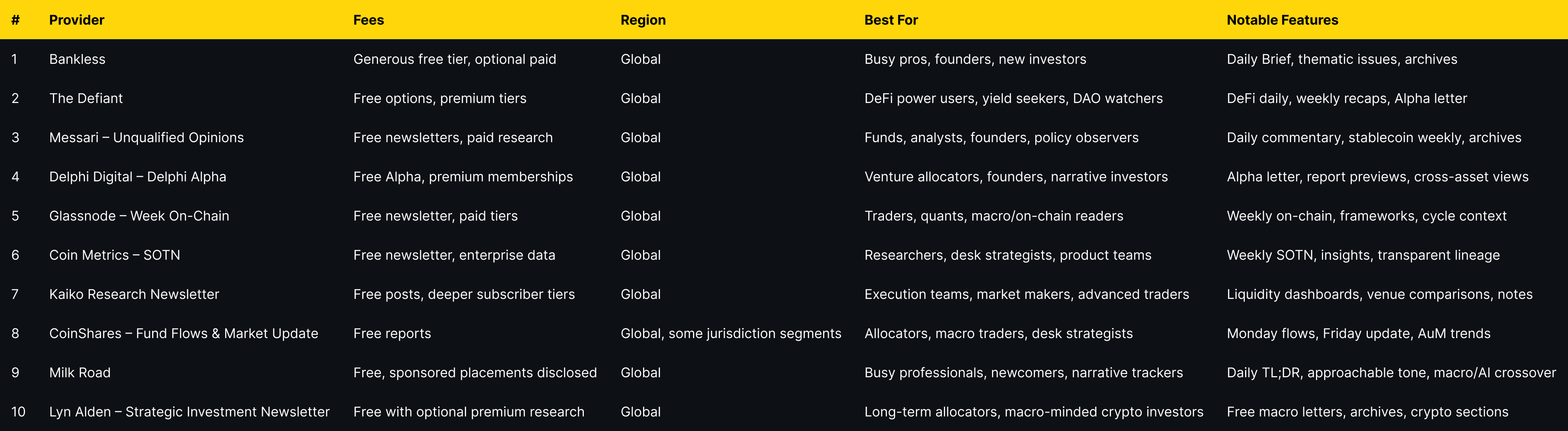
Top 10 Crypto Newsletters & Independent Analysts in September 2025
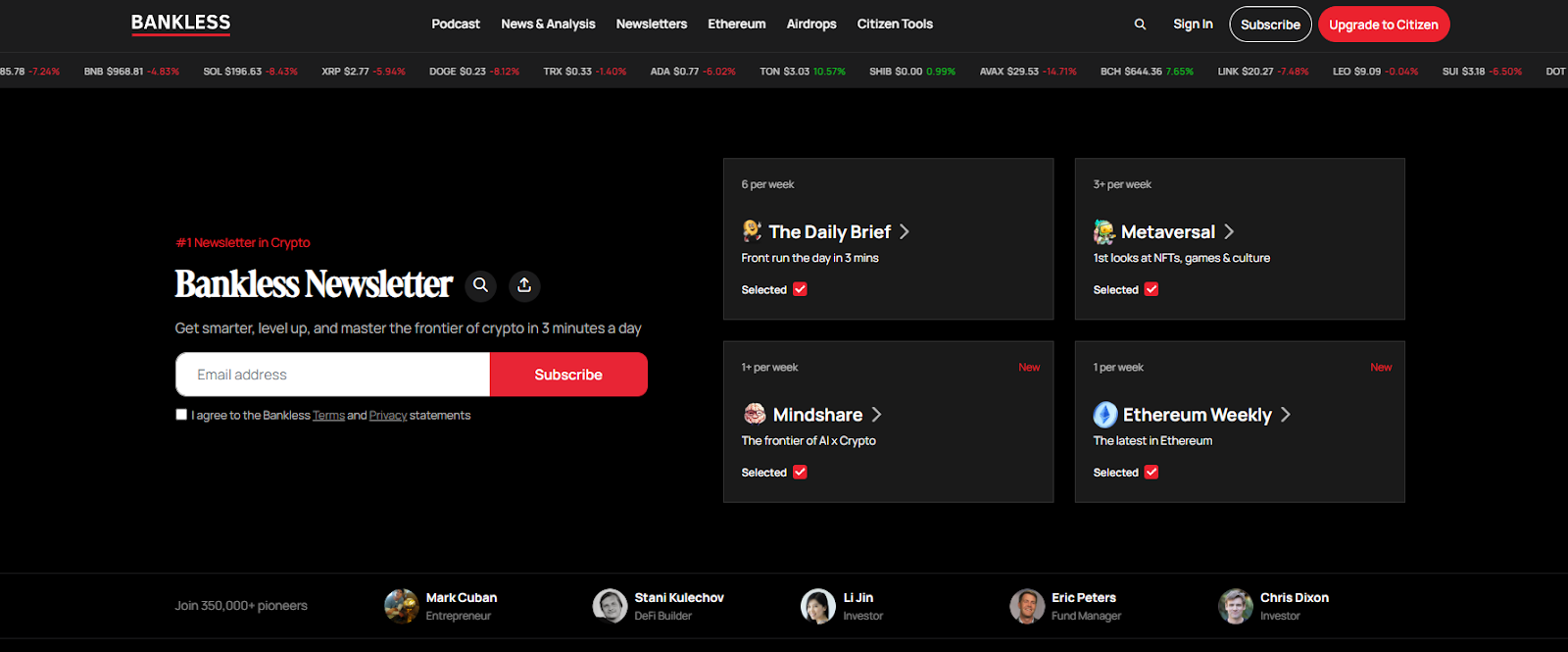
1. Bankless — Best for Daily Crypto & Web3 Digests
Why Use It: Bankless offers an approachable Daily Brief and deeper thematic series that balance top-of-funnel news with actionable context. If you want a consistent, skimmable daily pulse on crypto, DeFi, and Ethereum, this is a staple.
Best For: Busy professionals, founders, new-to-intermediate investors, narrative spotters.
Why Use It: The Defiant’s daily/weekly letters and DeFi Alpha cut straight to on-chain happenings, new protocols, and governance. Expect fast DeFi coverage with practical trader/investor context.
Best For: DeFi power users, yield seekers, DAO/governance watchers.
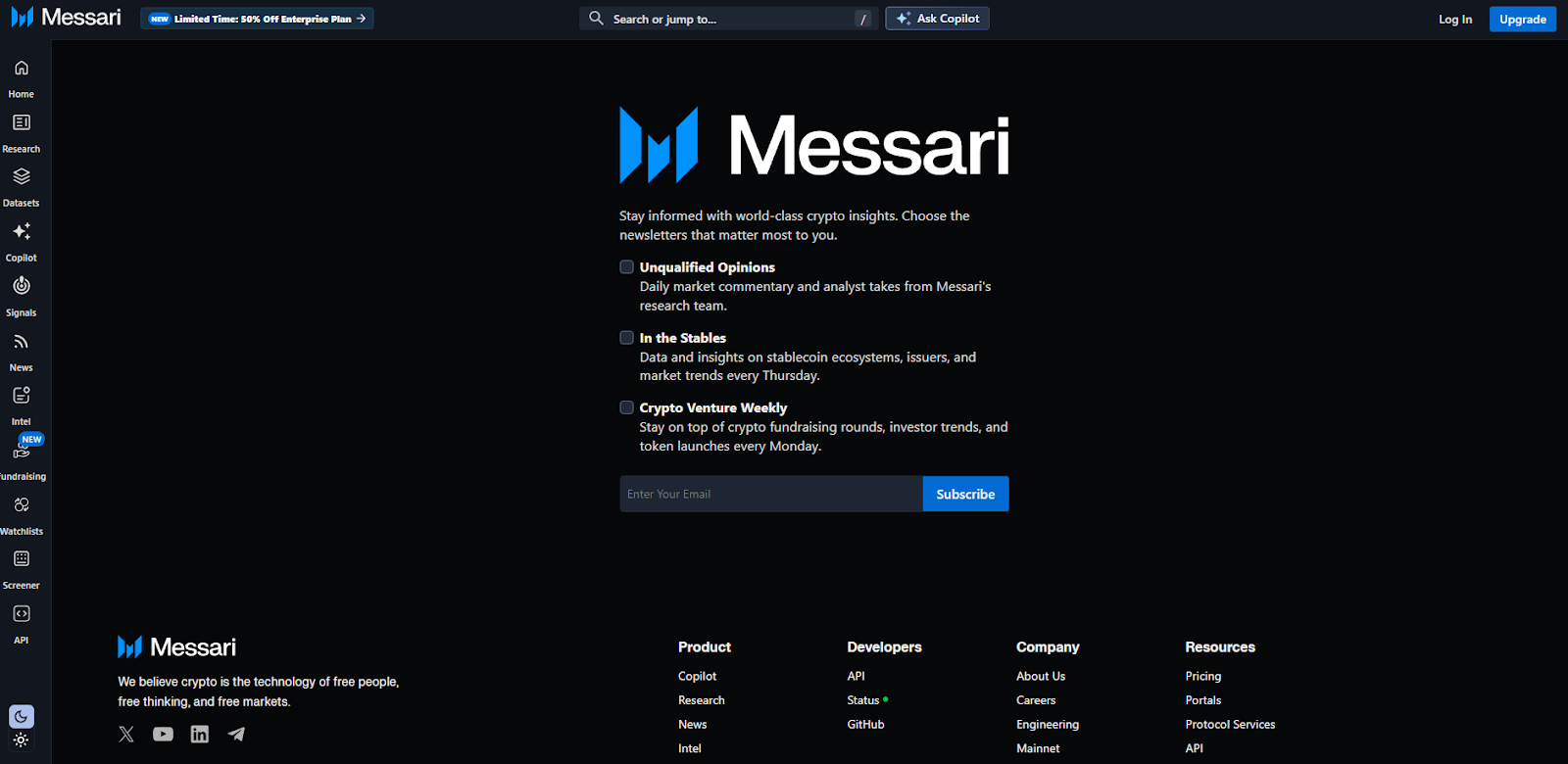
Why Use It: Messari’s daily market commentary and analyst notes are crisp, data-aware, and aligned with institutional workflows. Great for staying current on stablecoins, venture, and macro-market structure.
Best For: Funds, analysts, founders, policy/market observers.
Why Use It: Delphi marries thematic research (AI infra, gaming, L2s) with market updates and timely unlocks of longer reports. Great when you want conviction around medium-term narratives.
Best For: Venture/allocators, founders, narrative investors.
Why Use It: The industry’s flagship weekly on-chain letter explains BTC/ETH supply dynamics, holder cohorts, and cycle health with charts you’ll see cited everywhere.
Best For: Traders, quants, macro/on-chain hybrid readers.
Why Use It: SOTN blends on-chain and market data into weekly essays on sectors like LSTs, stablecoins, and market microstructure. It’s authoritative, neutral, and heavily cited.
Best For: Researchers, desk strategists, product teams.
Notable Features: Weekly SOTN; special insights; transparent data lineage; archives.
Fees Notes: Free newsletter; enterprise data products available.
Regions: Global
Alternatives:Glassnode, Kaiko Research
Consider If: You want clean methodology and durable references.
Why Use It: Kaiko’s research distills exchange liquidity, spreads, and derivatives structure across venues—useful for routing, slippage, and institutional execution context.
Best For: Execution teams, market makers, advanced traders.
Regions: Global (some content segmented by jurisdiction)
Alternatives:Glassnode, Messari
Consider If: You anchor decisions to capital flows and risk appetite.
9. Milk Road — Best for Quick, Conversational Daily Briefs
Why Use It: A fast, witty daily that makes crypto easier to follow without dumbing it down. Great second screen with coffee—good for catching headlines, airdrops, and memes that matter.
Best For: Busy professionals, newcomers, social-narrative trackers.
Why Use It: Not crypto-only—yet hugely relevant. Lyn’s macro letters cover liquidity regimes, fiscal/monetary shifts, and energy/AI cycles that drive risk assets, including BTC/ETH.
Best For: Long-term allocators, macro-minded crypto investors.
Enable 2FA on your email client and any research platform accounts.
Verify newsletter domains and unsubscribe pages to avoid phishing.
Respect KYC/AML and regional rules when acting on research.
For RFQs/execution, confirm venue liquidity and slippage.
Separate reading devices from hot-wallets; practice wallet hygiene.
This article is for research/education, not financial advice.
Beginner Mistakes to Avoid
Treating a newsletter as a signal service—use it as input, not output.
Ignoring methodology and disclosures.
Chasing every narrative without a sizing framework.
Subscribing to too many sources—prioritize quality over quantity.
Not validating claims with primary data (on-chain/flows).
FAQs
What makes a crypto newsletter “best” in 2025? Frequency, methodological transparency, and the ability to translate on-chain/macro signals into practical takeaways. Bonus points for archives and clear disclosures.
Are the top newsletters free or paid? Most offer strong free tiers (daily or weekly). Paid tiers typically unlock deeper research, models, or community access.
Do I need both on-chain and macro letters? Ideally yes—on-chain explains market structure; macro sets the regime (liquidity, rates, growth). Pairing both creates a more complete view.
How often should I read? Skim dailies (Bankless/Milk Road) for awareness; reserve time weekly for deep dives (Glassnode/Coin Metrics/Delphi).
Can newsletters replace analytics tools? No. Treat them as curated insight. Validate ideas with your own data and risk framework (Token Metrics can help).
Which is best for ETF/flows? CoinShares’ weekly Fund Flows is the go-to for institutional positioning, complemented by Glassnode/Coin Metrics on structure.
Conclusion + Related Reads
If you want a quick pulse, pick a daily (Bankless or Milk Road). For deeper conviction, add one weekly on-chain (Glassnode or Coin Metrics) and one thesis engine (Delphi or Messari). Layer macro (Lyn Alden) to frame the regime, and use Token Metrics to quantify what you read and act deliberately.
Why Crypto education platforms & courses Matter in September 2025
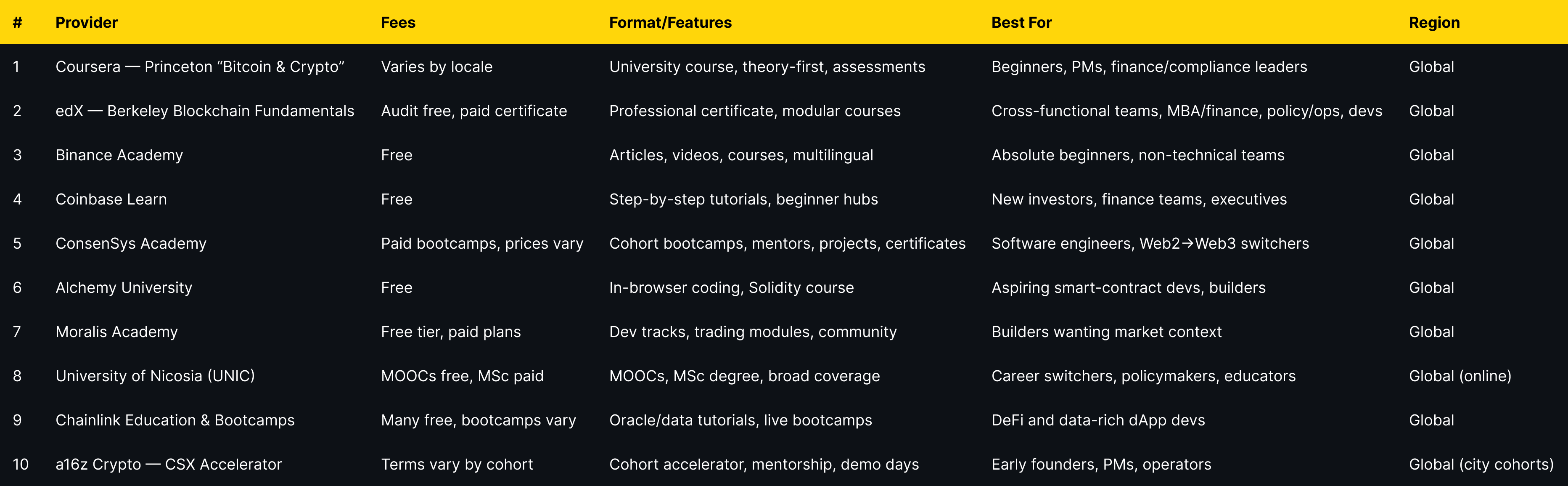
Crypto moves fast—and the gap between hype and real skills can be costly. If you’re evaluating the best crypto courses or structured paths to go from zero to fluent (or from power user to builder), the right program can compress months of trial-and-error into weeks. In short: a crypto education platform is any structured program, course catalog, or academy that teaches blockchain, Web3, or digital-asset topics with clear outcomes (e.g., literacy, developer skills, startup readiness). This guide curates 10 credible options across beginner literacy, smart-contract engineering, and founder tracks. We blend SERP research with hands-on criteria so you can match a course to your goals, time, and budget—without the fluff.
Support & outcomes (5%): Mentorship, career support, community reach.
Data sources: official provider pages (program docs, security/FAQ, curriculum), plus widely cited market datasets for cross-checks only. Last updated September 2025.
Top 10 Crypto education platforms & courses in September 2025
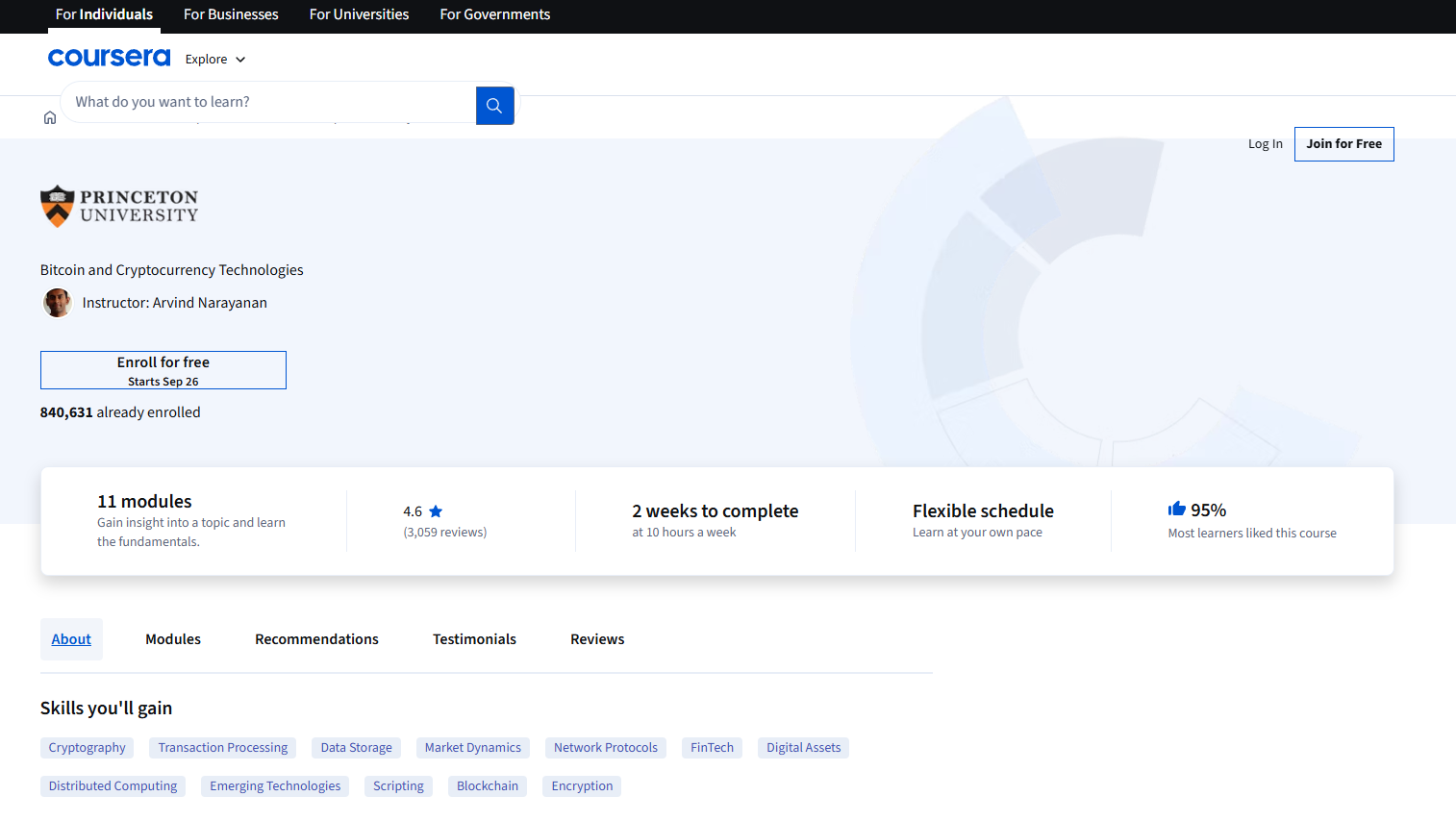
1. Coursera — “Bitcoin and Cryptocurrency Technologies” (Princeton) — Best for academic foundations
Why Use It: A seminal university course that demystifies Bitcoin and core crypto concepts with a rigorous, vendor-neutral lens. Clear lectures and assessments make it ideal for newcomers who want trustworthy fundamentals.
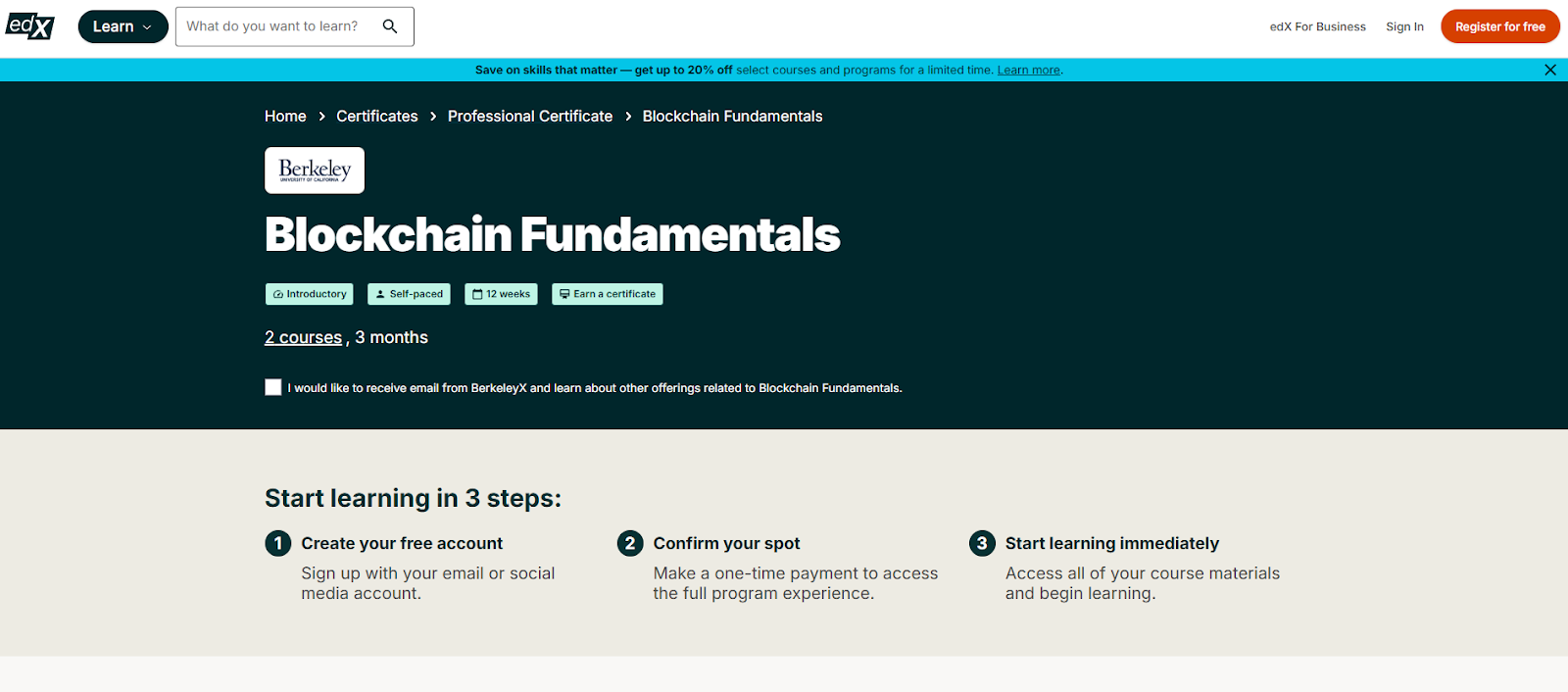
Why Use It: UC Berkeley’s professional certificate pairs an overview of blockchain and crypto with academic rigor and clear learning paths. Good bridge between literacy and technical depth.
Best For: Cross-functional teams, MBA/finance learners, policy/ops, curious devs.
Notable Features: Recognized university credential; modular courses; wide topical span across Bitcoin, Ethereum, and applications.
Consider If: You need coding-heavy, cohort-based Solidity training now.
Why Use It: Friendly entry point with practical “how-to” guides that answer common questions about Bitcoin, Ethereum, NFTs, wallets, and safety. Great for reluctant first-timers.
Best For: New investors, finance teams exploring crypto policy, busy executives.
Why Use It: The training arm of a core Ethereum company, with cohort-based programs, mentor access, and security best practices baked in. Strong for professionalizing Solidity skills.
Best For: Software engineers, Web2 devs crossing to Web3, career switchers.
Why Use It: If you’re building with real-world data, Chainlink’s education hub and instructor-led bootcamps teach oracle patterns, cross-chain messaging, and production-grade smart contracts.
Best For: Devs targeting DeFi, on-chain finance, and data-rich dApps.
Notable Features: Tutorials on NFTs/stablecoins; live bootcamps; developer advocates; ecosystem resources.
Consider If: You want chain-agnostic theory without vendor context.
Why Use It: Beyond coding, founders need go-to-market, legal, and product mentorship. CSX offers a cohort model with capital, expert lectures, and crypto-specific startup support.
Best For: Early-stage founders, PMs, operators validating product-market fit in Web3.
Notable Features: Curated mentorship network; structured curriculum; demo days; evolution of the original Crypto Startup School into a full accelerator.
Consider If: You’re pre-idea or not building a company yet—start with literacy/dev courses first.
Alternatives: Encode Club accelerators, Solana-ecosystem programs.
Regions: Global (programs periodically in specific cities). Fees Notes: Accelerator terms vary by cohort.
Red flags: vague outcomes, hard upsells, no instructor transparency.
Use Token Metrics With Any Crypto education platforms & courses
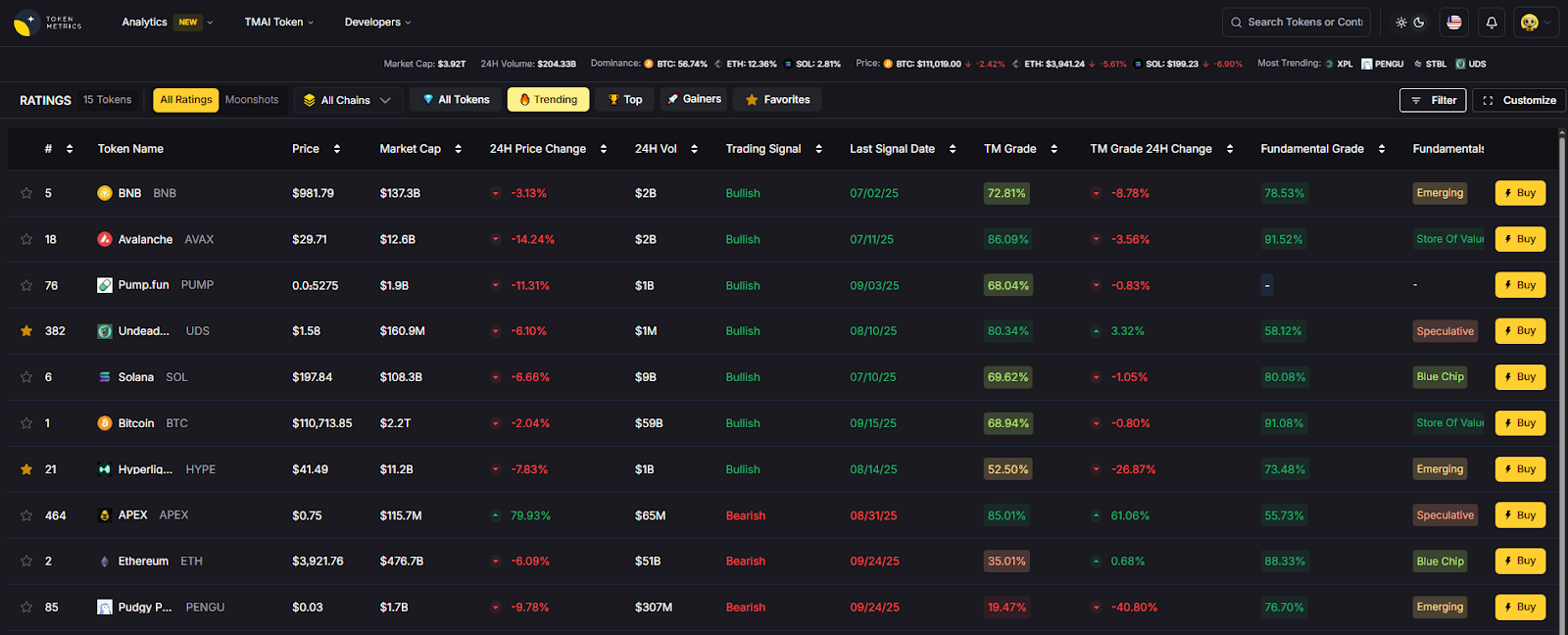
AI Ratings to screen tokens you’ll study or trade.
Narrative Detection to spot momentum across sectors.
Portfolio Optimization to size positions by risk.
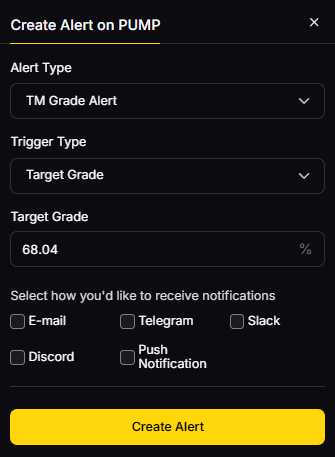
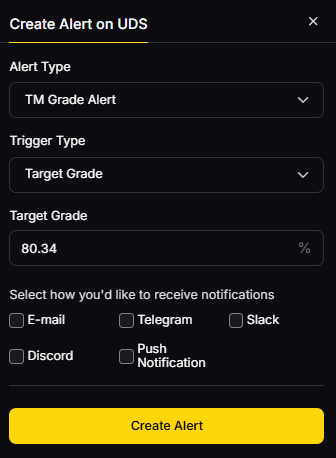
Alerts/Signals to monitor entries/exits as you learn. Workflow: Research → Choose a course → Practice on sandboxes → Execute with a small wallet → Monitor with Alerts.
Enable 2FA and hardware keys on all learning-linked accounts.
Keep a separate practice wallet; never paste seed phrases into course portals.
Use reputable docs for KYC/AML topics; understand regional eligibility.
Practice safe contract deployments on testnets first.
Document RFQ or OTC steps if your course touches institutional flows.
This article is for research/education, not financial advice.
Beginner Mistakes to Avoid
Jumping into paid bootcamps before trying free literacy/prep modules.
Treating dev tutorials as plug-and-play without security reviews.
Chasing certifications without projects to show.
Ignoring region/eligibility notes or program timelines.
Over-indexing on one chain—learn concepts that transfer.
FAQs
What’s the fastest way to start learning crypto in 2025? Start with a free literacy hub (Binance Academy or Coinbase Learn), then audit a university course (Coursera/edX) before committing to a paid bootcamp. This builds intuition and saves money.
Which course is best if I want to become a Solidity developer? Alchemy University is a free, hands-on path with in-browser coding; ConsenSys Academy adds mentor-led structure and team projects for professional polish.
Do I need a formal degree for crypto careers? Not strictly. A portfolio of projects often trumps certificates, but formal programs like UNIC’s MSc can help for policy, compliance, or academia-adjacent roles.
Are these programs global and online? Most are fully online and globally accessible; accelerators like a16z CSX may run cohorts in specific cities, so check the latest cohort details.
Will these courses cover wallet and security best practices? University and dev bootcamps typically include security modules; literacy hubs also publish safety guides. Always cross-check with official docs and practice in testnets.
Conclusion + Related Reads
If your goal is literacy and safe onboarding, start with Binance Academy or Coinbase Learn; for academic depth, layer in Coursera (Princeton) or edX (Berkeley). Builders should choose Alchemy University (free) and consider ConsenSys Academy for mentor-led polish. For credentials, UNIC stands out. Founders ready to ship and raise should explore a16z Crypto’s CSX.
Why Crypto Influencers & KOLs Matter in September 2025
The flood of information in crypto makes trusted voices indispensable. The top crypto influencers 2025 help you filter noise, spot narratives early, and pressure-test ideas across Twitter/X, YouTube, and TikTok. This guide ranks the most useful creators and media brands for research, education, and market awareness—whether you’re an individual investor, a builder, or an institution. Definition: A crypto influencer/KOL is a creator or publication with outsized reach and demonstrated ability to shape attention, educate audiences, and surface on-chain or market insights. We emphasize track record, transparency, and multi-platform presence. Secondary terms like best crypto KOLs, crypto YouTubers, and crypto Twitter accounts are woven in naturally to match search intent.
Security & integrity (25%): Clear disclosures, brand reputation, and risk-aware education (no guaranteed-profit claims).
Coverage & depth (15%): Breadth of topics (macro, on-chain, DeFi, trading, security) and depth of analysis.
Costs (15%): Free content availability; paid tiers optional and transparent.
UX (10%): Clarity, production quality, and beginner-friendliness.
Support (5%): Community resources (newsletters, podcasts, docs, learning hubs).
Data sources: official websites, channels, and about pages; we cross-checked scale and focus with widely cited datasets when needed. Last updated September 2025.
Top 10 Crypto Influencers & KOLs in September 2025
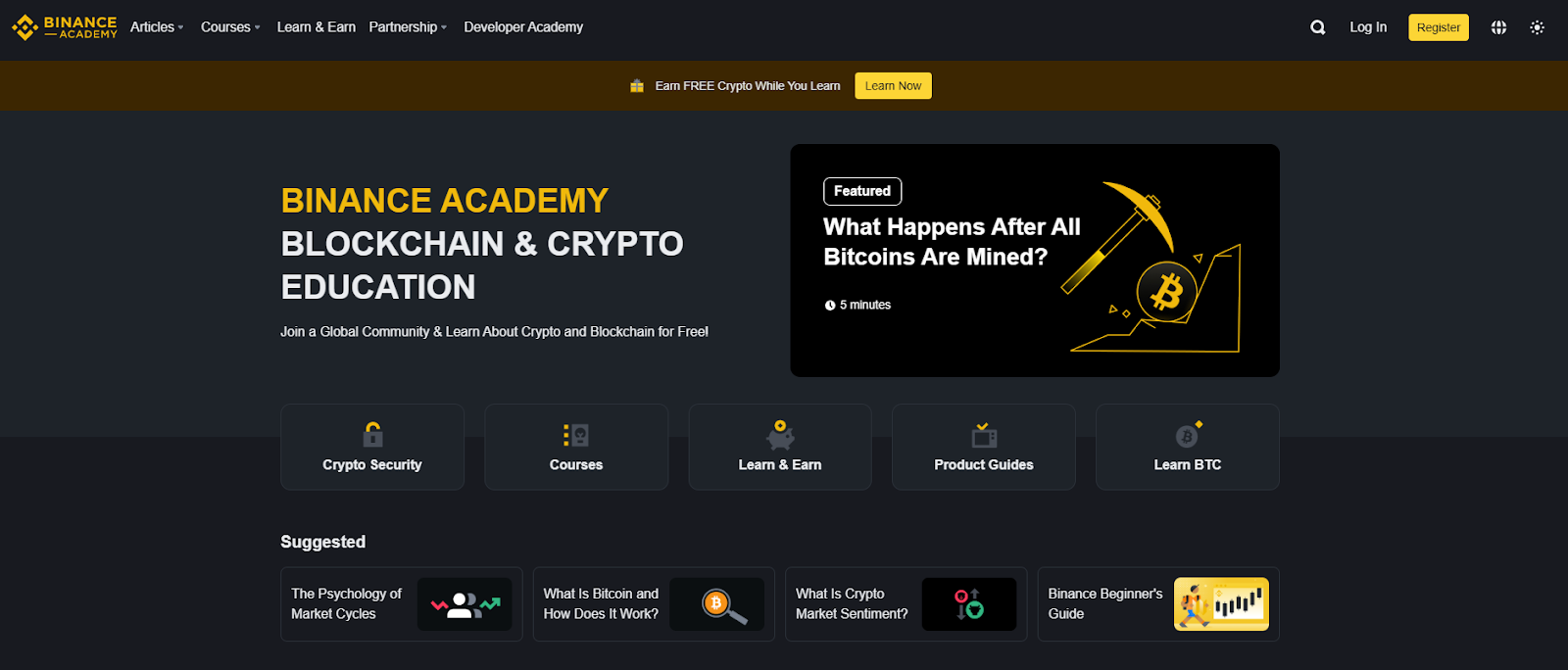
1. Token Metrics — Best for AI-driven research + multi-format education
Why Use It: Token Metrics combines human analysts with AI ratings and on-chain/quant models, packaging insights via YouTube shows, tutorials, and research articles. The mix of data-driven screening and narrative detection makes it a strong daily driver for both retail and pro users. Best For: Retail investors, swing traders, token research teams, and institutions seeking systematic signals. Notable Features: AI Ratings & Signals; narrative heat detection; portfolio tooling; explainers and live shows. Fees Notes: Free videos/reports; paid analytics tiers available. Regions: Global. Alternatives: Coin Bureau, Bankless.
2. Coin Bureau — Best for objective explainers & deep dives
Why Use It: Guy and team are known for accessible, well-structured education across tokens, tech, and regulation—ideal for learning fast without sensationalism. Their site and channel organize guides, analysis, and “what to know before you invest” content. Best For: Beginners, researchers, compliance-minded readers. Notable Features: Long-form explainers; project primers; timely macro/market narratives. Fees Notes: Content is free; optional merchandise/membership. Regions: Global. Alternatives: Finematics, Token Metrics.
3. Bankless — Best for founders, DeFi, and crypto-AI crossover
Why Use It: Bankless blends interviews with founders and policymakers, DeFi primers, and a consistent macro lens. The podcast + YouTube combo and a busy newsletter make it a top “frontier finance” feed. Best For: Builders, protocol teams, power users. Notable Features: Deep interviews; airdrop and ecosystem roundups; policy/regulatory conversations. Fees Notes: Many resources free; paid tiers/newsletters optional. Regions: Global. Alternatives: The Defiant (news), Coin Bureau.
4. Altcoin Daily — Best for daily news hits & narrative scanning
Why Use It: The Arnold brothers deliver high-frequency coverage of market movers, narratives, and interviews, helping you catch headlines and sentiment shifts quickly. Their channel is among the most active for crypto news. Best For: News-driven traders, general crypto audiences. Notable Features: Daily videos; interviews; quick market takes. Fees Notes: Free content; affiliate links may appear with disclosures. Regions: Global. Alternatives: Crypto Banter, Token Metrics.
5. Crypto Banter — Best for live markets & trading-room energy
Why Use It: A live, broadcaster-style format covering Bitcoin, altcoins, and breaking news—with recurring hosts and trader segments. The emphasis is on real-time updates and community participation. Best For: Intraday watchers, momentum traders, community-driven learning. Notable Features: Daily live streams; trader panels; market reaction shows. Fees Notes: Free livestreams; education and partners disclosed on site. Regions: Global. Alternatives: Altcoin Daily, Token Metrics.
Why Use It: Pomp’s daily show and interviews bridge crypto with broader finance and tech. He brings operators, investors, and policymakers into accessible conversations. New original programming on X complements his long-running podcast. Best For: Executives, allocators, macro-minded audiences. Notable Features: Daily investor letter; interviews; X-native programming. Fees Notes: Free content; newsletter and media subscriptions optional. Regions: Global. Alternatives: Bankless, Token Metrics.
Why Use It: Finematics turns complex DeFi mechanics (AMMs, MEV, L2s) into crisp animations and threads—great for leveling up from novice to competent operator. The YouTube channel is a staple for concept mastery. Best For: Students of DeFi, analysts, product managers. Notable Features: Animated explainers; topical primers (MEV, EIPs); extra tutorials on site. Fees Notes: Free videos; optional Patreon/course material. Regions: Global. Alternatives: Coin Bureau, Bankless.
8. Crypto Casey — Best for beginner-friendly, step-by-step guides
Why Use It: Clear, approachable tutorials on wallets, security, and portfolio basics; frequent refreshes for the latest best practices. Great first touch for friends and teammates new to crypto. Best For: Beginners, educators, community managers. Notable Features: Setup walk-throughs; safety tips; series for newcomers. Fees Notes: Free channel; affiliate/sponsor disclosures in video descriptions. Regions: Global. Alternatives: Coin Bureau, Finematics.
9. Rekt Capital — Best for BTC cycle TA & higher-timeframe context
Why Use It: Rekt Capital focuses on disciplined, cycle-aware technical analysis, especially for Bitcoin. The research newsletter and YouTube channel offer a consistent framework for understanding halving cycles, support/resistance, and macro phases. Best For: Swing traders, long-term allocators, TA learners. Notable Features: Cycle maps; weekly newsletters; educational modules. Fees Notes: Free posts + paid tiers; clear membership options. Regions: Global. Alternatives: Willy Woo, Token Metrics.
Why Use It: A pioneer in on-chain analytics, Willy popularized frameworks like NVT and shares models and charts used widely by analysts. His work bridges on-chain data with macro narrative, useful when markets de-correlate from headlines. Best For: Data-driven investors, quant-curious traders. Notable Features: On-chain models; charts (e.g., NVT); newsletter The Bitcoin Forecast. Fees Notes: Free charts; paid newsletter available. Regions: Global. Alternatives: Token Metrics (quant + AI), Rekt Capital.
Decision Guide: Best By Use Case
AI-driven research hub: Token Metrics
Beginner education: Crypto Casey, Coin Bureau
DeFi mechanics & animations: Finematics
Live market energy: Crypto Banter
Daily news & narratives: Altcoin Daily
Macro + business leaders: Anthony Pompliano
BTC cycles & TA: Rekt Capital
On-chain metrics: Willy Woo (Woobull)
How to Choose the Right Crypto Influencer/KOL (Checklist)
Region & eligibility: Is content globally accessible and compliant for your jurisdiction?
Coverage: Do they explain why something matters (not just price)?
Custody & security hygiene: Do they teach self-custody, risk, and safety tools?
Disclosures & costs: Are sponsorships and paid tiers clearly explained?
UX & cadence: Format you’ll actually consume (shorts vs long-form; live vs on-demand).
Community & support: Newsletter, Discord, or docs for deeper follow-up.
Red flags: Guaranteed returns; undisclosed promotions.
Use Token Metrics With Any Influencer/KOL
AI Ratings to screen tokens mentioned on shows.
Narrative Detection to quantify momentum from social chatter to on-chain activity.
Portfolio Optimization to size positions by risk.
Alerts/Signals to monitor entries/exits after a KOL highlight. Mini workflow: Research → Shortlist from a KOL’s mention → Validate in Token Metrics → Execute on your exchange → Monitor with alerts.
Enable 2FA everywhere; use hardware keys for critical accounts.
Separate research and execution (watchlists vs trading wallets).
Understand KYC/AML on platforms you use; avoid restricted regions.
For RFQs/OTC, log quotes and counterparty details.
Practice wallet hygiene: test sends, fresh addresses, and secure backups.
This article is for research/education, not financial advice.
Beginner Mistakes to Avoid
Chasing every call without a plan or position sizing.
Ignoring custody—keeping too much on centralized venues.
Confusing views with validation; always verify claims.
Over-indexing on TikTok “quick tips” without context.
Skipping risk management during high-volatility events.
FAQs
What’s the fastest way to use this list? Pick one education-first creator (Coin Bureau or Crypto Casey) and one market-first feed (Token Metrics, Bankless, or Altcoin Daily). Use Token Metrics to validate ideas before you act.
Are these KOLs region-restricted? Content is generally global, though some platforms may geo-restrict features or embeds. Always follow local rules for trading and taxes. (Check each creator’s site/channel for access details.)
Who’s best for on-chain metrics? Willy Woo popularized several on-chain valuation approaches and maintains public charts on Woobull/WooCharts, useful for cycle context.
I’m brand-new—where should I start? Crypto Casey and Coin Bureau offer step-by-step explainers; then layer in Token Metrics for AI-assisted idea validation and alerts.
How do I avoid shill content? Look for disclosures, independent verification, and multiple sources. Cross-check KOL mentions with Token Metrics’ ratings and narratives before allocating.
Conclusion + Related Reads
KOLs are force multipliers when you pair them with your own process. Start with one education channel and one market channel, then layer Token Metrics to validate and monitor. Over time, you’ll recognize which voices best fit your strategy. Related Reads: