Crypto Basics

The Future of Bitcoin in 2024 and Beyond - Complete Analysis

Explore the potential scenarios and trends for Bitcoin's future in 2024 and beyond. Gain insights into its evolving role in the crypto market.
Marcus K
7 Minutes
MIN

Bitcoin, the world's oldest cryptocurrency, has captured the attention of investors, enthusiasts, and regulators since its inception in 2009.

It has been hailed as a groundbreaking technology that introduced the concept of decentralized currencies and paved the way for a new type of economy - the cryptocurrency market. 

Over the years, Bitcoin's price has experienced extreme volatility, leading to various predictions and speculations about its future.

In this article, we will delve into the future of Bitcoin, exploring industry expert opinions, regulatory implications, technological advancements, and market trends.

Bitcoin Overview

Bitcoin's journey from obscurity to becoming the most valuable cryptocurrency by market capitalization has been extraordinary. 

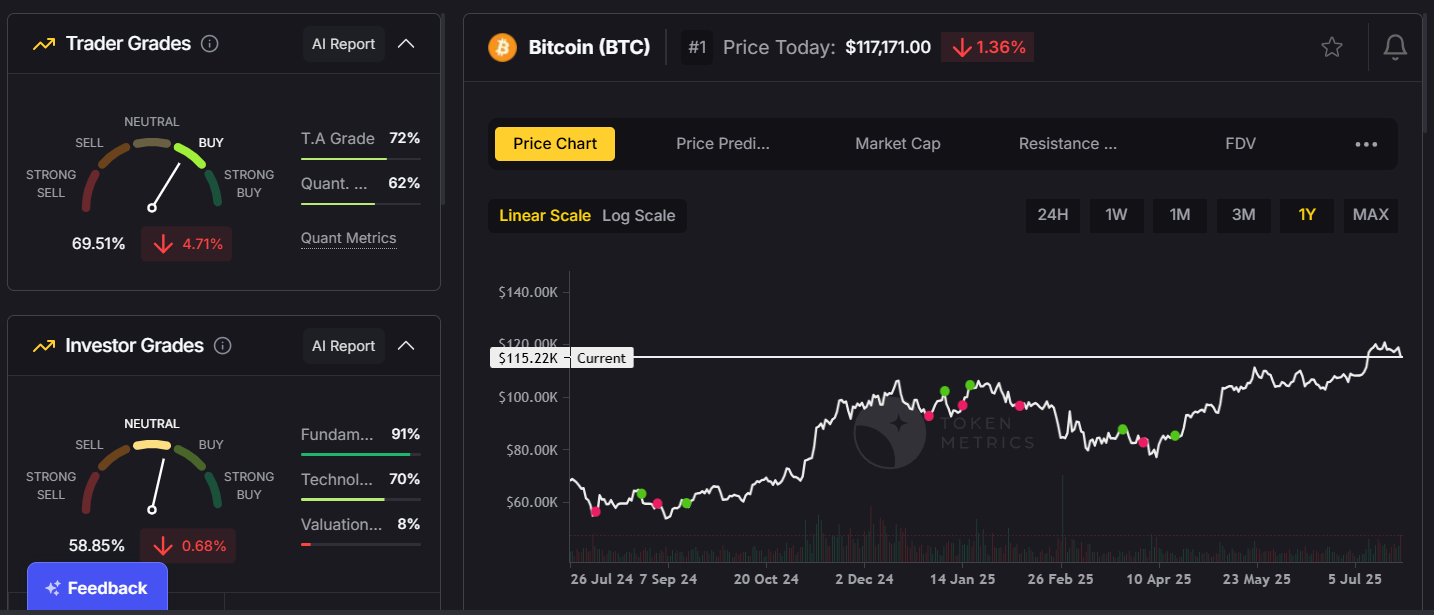
In 2009, Bitcoin was worth less than a cent, but today, it is trading at approximately $33,917 per coin. This meteoric rise reflects the growing confidence and resilience of Bitcoin as it weathered storms and attempts to change its underlying structure.

Significant events, such as hard forks and the halving event, mark Bitcoin's price history. Hard forks, proposed changes to Bitcoin's underlying rules, represent critical historical junctures. 

Despite debates and attempts to change Bitcoin, it has continued in its current format, with forks now accounting for less than 1% of its total market capitalization.

The halving event, roughly every four years, reduces the rate at which new Bitcoins are created. Historically, the halving has catalyzed significant price appreciation, driving Bitcoin to new all-time highs.

Institutional adoption and regulatory developments have also played a crucial role in shaping Bitcoin's future trajectory.

Current Bitcoin Developments

In recent years, Bitcoin has gained increased acceptance and recognition from major institutions and regulators worldwide. BlackRock, the world's largest asset manager, has filed to start an exchange-traded fund (ETF) specifically for Bitcoin, with multiple other institutions following suit. 

While there is yet to be an approved BTC ETF by the US Securities and Exchange Commission (SEC), these applications are a significant step forward in legitimizing cryptocurrencies in the eyes of traditional financial institutions.

Another significant development is the return of Bitcoin payments by Tesla. CEO Elon Musk has stated that once Bitcoin hits 50% renewable energy sources, Tesla will resume accepting Bitcoin payments. This move could spark positive price action and drive further interest and adoption of Bitcoin.

Furthermore, a halt in rising interest rates and a return to lower interest rates could be a significant bullish catalyst for Bitcoin. 

Cryptocurrencies like Bitcoin offer an attractive alternative investment in a low-interest-rate environment due to their perceived hedge against traditional financial systems and increasing scarcity as the halving event approaches.

Bitcoin Future Predictions - Industry Expert Opinion

The future of Bitcoin is a topic of much speculation and debate. Industry experts have offered various predictions and opinions about Bitcoin's potential trajectory. 

One of the most prominent figures in the cryptocurrency space, Cathie Wood, CEO of Ark Invest, has predicted that Bitcoin could reach an astonishing $1.48 million by 2030. 

This prediction highlights the exponential growth and potential of Bitcoin, but it is important to note that it depends on factors such as adoption levels and external market conditions.

Other industry experts emphasize the potential for Bitcoin to become an alternative asset in traditional finance. The growing acceptance of Bitcoin by significant institutions, such as the oldest bank in America, BNY Mellon, rolling out its Digital Asset Custody Platform, further bolsters its credibility as a long-term investment.

Regulatory Implications on Bitcoin

Regulatory developments and government actions can significantly influence the future of Bitcoin. While some governments have embraced cryptocurrencies and blockchain technology, others have taken a more hostile approach.

The United States, in particular, has shown increasing hostility towards cryptocurrencies, potentially impacting Bitcoin's price and adoption.

The US Commodity Futures Trading Commission (CFTC) has filed a civil enforcement action against Binance, one of the largest cryptocurrency exchanges, and its CEO, CZ. 

If the charges against Binance and its CEO escalate or further regulatory crackdowns occur, it could decrease crypto prices and market sentiment.

Environmental concerns surrounding Bitcoin's energy consumption have also attracted regulatory attention. The White House has proposed a tax of up to 30% on Bitcoin miners in the US, citing environmental and political impacts. 

Continued scrutiny and potential regulations related to Bitcoin's environmental footprint could affect its price and overall sustainability.

Repercussions of Bitcoin Halving

The Bitcoin halving event occurs approximately every four years and significantly affects Bitcoin's price and mining activity. The halving reduces the rate at which new Bitcoins are created, decreasing the supply of new coins. Historically, the halving has been followed by periods of significant price appreciation as the market adjusts to the decreased block reward.

The upcoming halving, scheduled for April 2024, could increase Bitcoin's price as the market anticipates the reduced block reward. Investors and traders closely watch the halving event, as it has been a recurring pattern throughout Bitcoin's history.

Will Bitcoin Go Back Up?

Bitcoin's price volatility has led to periods of both euphoria and despair among investors. While Bitcoin has experienced significant market corrections and bearish trends, it has always managed to rebound and reach new all-time highs.

The cyclical nature of Bitcoin's market cycles suggests that the cryptocurrency could go back up after a period of decline. The return of institutional interest, regulatory developments, technological advancements, and macroeconomic trends can all contribute to a potential Bitcoin price recovery.

However, it is essential to note that investing in Bitcoin or any other cryptocurrency carries risks. The market is highly speculative, and prices can fluctuate rapidly. Investors should carefully consider their risk tolerance and investment goals before diving into the world of Bitcoin.

Also Read - Is Bitcoin Dead?

The Future Outlook of Bitcoin

The future outlook of Bitcoin is filled with both promise and uncertainty. The disruptive nature of Bitcoin and its potential to reshape traditional financial systems make it an intriguing investment option. However, some factors could pose challenges to its future growth.

Security concerns arise as Bitcoin's block reward decreases over time, potentially threatening the network's security. The network's security could be compromised if demand and fee revenue are insufficient to incentivize miners to upgrade their hardware and mine new Bitcoins.

Furthermore, Bitcoin's future is closely tied to the broader adoption of blockchain technology and the development of scalable solutions. Innovations like the Lightning Network could enhance Bitcoin's utility as a payment method and drive further adoption.

The role of artificial intelligence (AI) in the crypto space also warrants attention. AI-powered trading bots and algorithms have the potential to impact Bitcoin's price and market dynamics. As AI technology evolves, its influence on the cryptocurrency market will likely grow, introducing new opportunities and challenges.

Frequently Asked Questions

Q1. What will Bitcoin be worth in 2025?

Predicting the exact price of Bitcoin in the future is challenging due to its inherent volatility. However, based on industry expert opinions and historical trends, it is plausible that Bitcoin could reach somewhere near $150,000 to $200,000 by 2025, assuming steady growth. 

It is important to note that these predictions are speculative, and actual future values may vary.

Q2. Is Bitcoin a good long-term investment?

Many investors view Bitcoin as an excellent long-term investment due to its potential for high returns and growing acceptance as a form of payment. However, Bitcoin and other cryptocurrencies are highly volatile and speculative investments. 

Investors should consider their risk tolerance and financial circumstances before investing in Bitcoin. Diversification, thorough research, and consulting with a financial advisor are recommended strategies.

Q3. How to buy Bitcoin?

Buying Bitcoin can be done through reputable cryptocurrency exchanges. The process typically involves setting up an account, verifying identity, funding the account, and then making a purchase. Choosing a reliable exchange and taking necessary security precautions when buying and storing Bitcoin is crucial.

Q4. How much is one Bitcoin?

As of December 26, 2023, one Bitcoin is currently valued at approximately $42,514. However, the price of Bitcoin is subject to rapid fluctuations due to its volatile nature. Interested individuals should check the current price on a reliable cryptocurrency exchange before making any transactions.

Wrapping Up

The future of Bitcoin is a topic of immense interest and speculation. While industry experts offer various predictions and opinions, the market dynamics and external factors will ultimately shape Bitcoin's trajectory. 

Regulatory developments, technological advancements, macroeconomic trends, and investor sentiment will all play a role in determining Bitcoin's future price and adoption levels.

Investing in Bitcoin is not a straightforward decision and should be cautiously approached. It is crucial to conduct thorough research, evaluate risk tolerance, and consider the advice of financial professionals before making any investment decisions.

Disclaimer

The information provided on this website does not constitute investment advice, financial advice, trading advice, or any other advice, and you should not treat any of the website's content as such.

Token Metrics does not recommend that any cryptocurrency should be bought, sold, or held by you. Conduct your due diligence and consult your financial advisor before making investment decisions.

Build Smarter Crypto Apps &
AI Agents in Minutes, Not Months
Real-time prices, trading signals, and on-chain insights all from one powerful API.
Grab a Free API Key
Token Metrics Team
Token Metrics Team

Recent Posts

Crypto Basics

What Is Proof of Stake? A Complete Guide to PoS in 2025

Token Metrics Team
6 min
MIN

Introduction: Why Proof of Stake Matters

In the world of blockchain, consensus mechanisms are what keep networks secure and functional. One of the most important of these is Proof of Stake (PoS)—a model that has become the standard for next‑generation blockchains like Ethereum, Cardano, and Solana.

In 2025, PoS dominates the crypto landscape, offering a more energy‑efficient, scalable, and inclusive alternative to the older Proof of Work (PoW) model. This article breaks down how PoS works, why it matters, its benefits and risks, and how platforms like Token Metrics can help investors optimize staking strategies.

What Is Proof of Stake?

Proof of Stake is a consensus mechanism that allows blockchains to validate transactions and create new blocks based on the number of tokens held (or “staked”) by network participants.

Instead of using powerful computers to solve complex puzzles (as in Proof of Work), PoS relies on validators—individuals or entities who lock up tokens as collateral to help maintain the network.

In return, these validators earn staking rewards, making PoS not only an essential part of blockchain operations but also a way for investors to generate passive income.

How Does Proof of Stake Work?

  1. Staking Tokens:
    Participants lock up their tokens (e.g., ETH, ADA) in a wallet or staking pool.

  2. Validator Selection:
    The network algorithm selects validators to propose and confirm new blocks based on their stake size and other factors (sometimes including randomness).

  3. Block Validation:
    Validators verify transactions and add new blocks to the chain.

  4. Reward Distribution:
    Validators earn rewards in the form of newly minted tokens or transaction fees.

  5. Penalties (Slashing):
    Misbehavior—such as double‑signing or being offline—can result in losing a portion of the staked tokens, ensuring network security and accountability.

Proof of Stake vs. Proof of Work

Proof of Work (PoW):

  • Used by Bitcoin.
  • Requires high‑energy mining operations.
  • Limited scalability.

Proof of Stake (PoS):

  • Used by Ethereum (post‑Merge), Cardano, Solana, and many others.
  • Energy‑efficient—uses 99% less energy than PoW.
  • More scalable, enabling faster and cheaper transactions.

In 2025, PoS is considered the future of blockchain consensus thanks to its efficiency and accessibility.

Major PoS Blockchains in 2025

  1. Ethereum (ETH):
    Transitioned to PoS in 2022 during The Merge, allowing ETH holders to stake and earn rewards.

  2. Cardano (ADA):
    Pioneered a research‑driven PoS model (Ouroboros) for secure and sustainable blockchain growth.

  3. Solana (SOL):
    Combines PoS with Proof of History for high‑speed, low‑cost transactions.

  4. Polkadot (DOT):
    Uses a Nominated Proof of Stake (NPoS) model, letting token holders nominate validators for network security.

  5. Token Metrics AI (TMAI):
    Integrates PoS into its ecosystem while leveraging AI analytics for blockchain intelligence.

Benefits of Proof of Stake

  1. Energy Efficiency:
    PoS drastically reduces environmental impact compared to PoW mining.

  2. Accessibility:
    Anyone can stake tokens—no need for expensive mining hardware.

  3. Passive Income:
    Token holders earn rewards by participating in staking pools or running validator nodes.

  4. Decentralization & Security:
    PoS encourages broader participation, strengthening network security.

Risks of Proof of Stake

While PoS is revolutionary, it’s not without challenges:

  • Slashing Penalties: Validators who act maliciously or go offline risk losing their stake.
  • Centralization Risks: Large holders may dominate staking pools, reducing decentralization.
  • Liquidity Issues: Staked tokens are often locked for a period, limiting flexibility.
  • Regulatory Uncertainty: As staking becomes more widespread, governments are exploring potential regulations.

Platforms like Token Metrics help mitigate these risks by offering in‑depth analytics on validators, staking pools, and network activity.

How to Earn with PoS: Staking in 2025

1. Solo Staking:
Run your own validator node. This requires technical expertise and meeting minimum staking requirements (e.g., 32 ETH for Ethereum).

2. Pooled Staking:
Join staking pools that combine funds from multiple users, making it easier for beginners to participate.

3. Liquid Staking:
Use platforms like Lido or Rocket Pool to stake while maintaining liquidity through derivative tokens you can trade or use in DeFi.

4. Exchange Staking:
Centralized exchanges (e.g., Coinbase, Binance) offer simple staking options, though they often take a fee.

Using Token Metrics for PoS Insights

Token Metrics empowers PoS investors with:

  • AI‑Driven Analytics: Identify the most profitable staking opportunities.
  • Validator Ratings: Evaluate validators based on performance, uptime, and security.
  • Portfolio Optimization: Balance your staked assets across multiple blockchains.
  • Market Signals: Get alerts when staking yields or network conditions change.

This makes staking easier, safer, and more profitable for both beginners and experienced investors.

Practical Tips for PoS Investors

  1. Diversify: Stake across multiple blockchains to minimize risk.
  2. Research Validators: Choose validators with strong reputations and consistent uptime.
  3. Stay Liquid: Use liquid staking platforms for flexibility.
  4. MonitorRewards: Use Token Metrics to track real‑time staking yields and make adjustments.

The Future of Proof of Stake

In 2025, PoS is expected to power the majority of leading blockchains, supporting innovations in DeFi, NFTs, AI‑driven ecosystems, and real‑world asset tokenization.

Its combination of efficiency, scalability, and accessibility makes it the go‑to consensus mechanism for the next era of Web3 development.

Conclusion

Proof of Stake has redefined how blockchains achieve consensus, making networks more sustainable, secure, and inclusive. For investors, PoS offers an exciting opportunity to earn passive income while supporting blockchain ecosystems.

By leveraging AI‑powered analytics from Token Metrics, you can maximize staking rewards, identify top‑performing validators, and manage risk effectively.

In 2025, understanding PoS isn’t just for developers—it’s an essential tool for every crypto investor.

Research

What Is Shiba Inu? A Complete Guide to the Meme Coin in 2025

Token Metrics Team
6 min
MIN

Introduction: From Meme to Major Player

Shiba Inu (SHIB) started in 2020 as a meme coin inspired by Dogecoin, but in a few short years, it has evolved into one of the largest and most recognizable cryptocurrencies in the world. Initially dismissed as a joke, Shiba Inu has since built an entire ecosystem of decentralized products, proving that meme coins can grow beyond viral popularity.

In 2025, Shiba Inu continues to maintain a massive community, a growing ecosystem, and a spot among the top cryptocurrencies by market cap. This article explores what Shiba Inu is, how its ecosystem works, its investment potential, and how platforms like Token Metrics can help analyze SHIB effectively.

What Is Shiba Inu (SHIB)?

Shiba Inu (SHIB) is an Ethereum‑based token designed to be an experiment in decentralized community building. Dubbed the “Dogecoin killer,” SHIB quickly gained traction thanks to its strong community (the SHIBArmy), viral marketing, and accessibility across major exchanges.

Unlike Bitcoin or Ethereum, SHIB is not a blockchain in itself—it’s an ERC‑20 token that runs on the Ethereum network.

The Shiba Inu Ecosystem

Since its launch, Shiba Inu has expanded far beyond being just a meme token. Its ecosystem now includes:

  1. ShibaSwap:
    A decentralized exchange (DEX) that allows users to swap, stake, and earn rewards with SHIB and other tokens.

  2. LEASH & BONE Tokens:
  • LEASH: A token with a limited supply, used for providing liquidity and earning rewards.
  • BONE: The governance token for ShibaSwap, giving users voting rights on ecosystem decisions.
  1. Shibarium:
    Shiba Inu’s own Layer 2 blockchain, designed to improve scalability, reduce transaction fees, and expand use cases for SHIB.

  2. NFTs & Metaverse:
    The Shiba Inu Metaverse offers virtual land sales and interactive experiences, expanding the project into Web3.

Why Is Shiba Inu So Popular?

1. Strong Community (SHIBArmy):
One of the most active and loyal crypto communities drives the project’s growth.

2. Accessibility:
Listed on most major exchanges, SHIB is easy for new investors to buy.

3. Low Entry Point:
With its large supply and low price per token, SHIB appeals to retail investors looking for affordable exposure.

4. Viral Marketing:
Its meme‑driven branding keeps it relevant and highly visible in social media trends.

How Shiba Inu Works

As an ERC‑20 token, SHIB benefits from the security and scalability of the Ethereum blockchain. The ecosystem uses:

  • Staking: Users can stake SHIB and earn rewards in BONE or LEASH.
  • Burning Mechanisms: Ongoing SHIB token burns aim to reduce the circulating supply, potentially increasing scarcity over time.
  • Shibarium: This Layer 2 solution significantly reduces gas fees for transactions and dApp activity, making SHIB more practical for real‑world use cases.

Shiba Inu vs. Dogecoin

Although both are dog‑themed meme coins, they differ significantly:

  • Technology: SHIB runs on Ethereum, allowing for smart contracts; Dogecoin uses its own blockchain with limited utility.
  • Ecosystem: SHIB has DeFi (ShibaSwap), governance (BONE), and a metaverse presence; Dogecoin lacks this depth.
  • Tokenomics: SHIB has a massive circulating supply with an active burn program, while Dogecoin does not cap its supply.

In 2025, Shiba Inu’s ecosystem gives it a competitive edge over Dogecoin in terms of utility.

Investment Potential in 2025

Shiba Inu’s price has experienced extreme volatility since launch, but it remains a top‑20 cryptocurrency by market cap.

Growth drivers include:

  • The launch and adoption of Shibarium for cheaper, faster transactions.
  • Increased token burns, reducing supply over time.
  • Expanded ecosystem utility via DeFi, NFTs, and metaverse integrations.

For investors, SHIB offers speculative upside, but it’s best approached as part of a diversified portfolio.

Risks of Investing in Shiba Inu

While SHIB has strong community support, it carries notable risks:

  • High Volatility: Prices can swing wildly in short periods.
  • Speculative Nature: Despite ecosystem growth, much of SHIB’s value still comes from community sentiment.
  • Competition: Other meme coins and new Layer 2 solutions could challenge SHIB’s relevance.
  • Regulatory Concerns: As with other tokens, evolving crypto regulations could impact SHIB’s future.

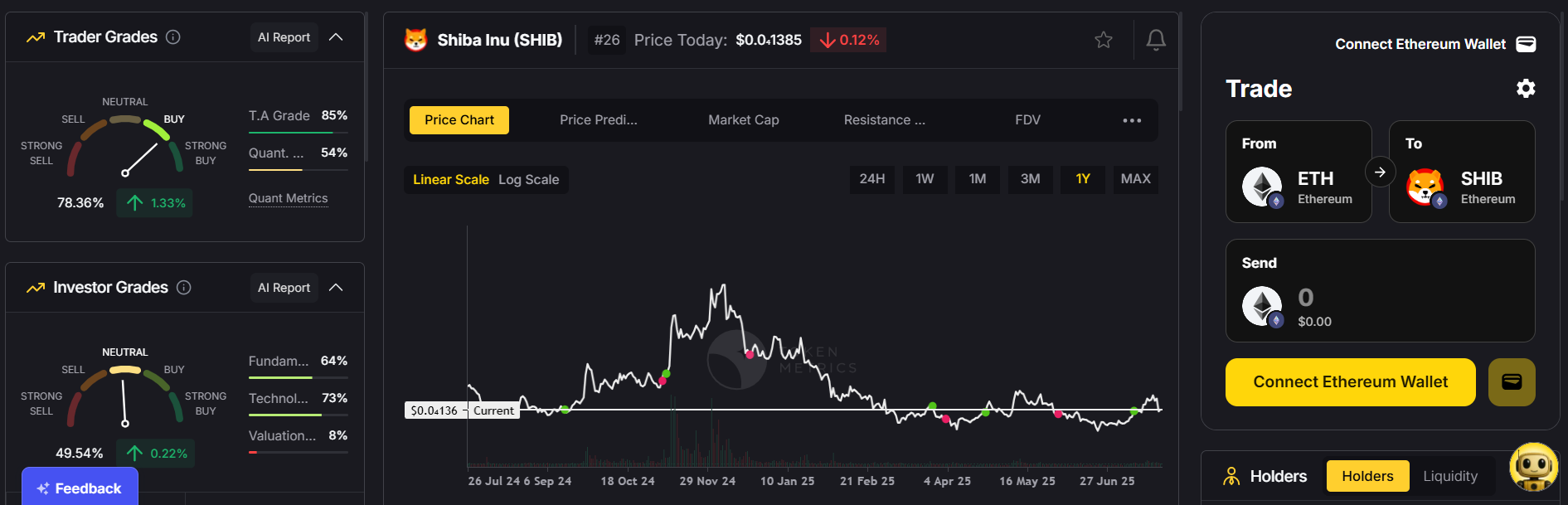
Using Token Metrics for SHIB Analysis

Investing in Shiba Inu requires data‑driven decision‑making, and that’s where Token Metrics comes in:

  • AI‑Powered Ratings: Evaluates SHIB based on technical, fundamental, and sentiment data.
  • On‑Chain Analytics: Tracks wallet activity, Shibarium growth, and token burns.
  • Narrative Detection: Identifies emerging trends in meme coins and Layer 2 ecosystems.
  • Portfolio Optimization: Helps investors balance SHIB exposure with other assets.

This AI‑driven approach helps investors separate hype from sustainable growth.

Practical Tips for Shiba Inu Investors

  1. Stake Your SHIB: Earn passive income through ShibaSwap.
  2. Monitor Shibarium: Watch for ecosystem growth that can impact SHIB’s value.
  3. Set Realistic Goals: Treat SHIB as a speculative play—take profits when targets are met.
  4. Diversify: Combine SHIB with strong fundamentals like Ether (ETH) or AI‑driven tokens like Token Metrics AI (TMAI).

The Future of Shiba Inu

In 2025, Shiba Inu aims to transition from meme coin to multi‑utility ecosystem, expanding its role in DeFi, metaverse applications, and Layer 2 scaling solutions. Its success will depend on community engagement, continued innovation, and adoption of Shibarium.

Conclusion

Shiba Inu has proven that meme coins can evolve into meaningful projects. With its Layer 2 network, DeFi ecosystem, and strong community, SHIB is more than just internet hype—it’s a project with growing utility and staying power.

For investors, pairing SHIB exposure with AI‑powered insights from Token Metrics provides a smarter way to navigate the volatility of meme coins while capitalizing on their growth potential.

Research

What Is Ether? A Complete Guide to Ethereum’s Native Token in 2025

Token Metrics Team
6 min
MIN

Introduction: Understanding Ether (ETH)

Ether (ETH) is the native cryptocurrency of the Ethereum blockchain, powering one of the most influential ecosystems in the crypto world. Since its launch in 2015, Ethereum has evolved from a simple smart contract platform into a global hub for decentralized finance (DeFi), NFTs, real‑world asset tokenization (RWA), and blockchain‑based applications.

In 2025, Ether remains a cornerstone of crypto portfolios, offering not only investment potential but also utility within Ethereum’s constantly expanding network. This article breaks down what Ether is, how it works, why it’s valuable, and how platforms like Token Metrics help investors analyze ETH effectively.

What Is Ether?

Ether (ETH) is the cryptocurrency used to pay for transactions, smart contract execution, and services on the Ethereum network. While Bitcoin is often referred to as “digital gold,” Ether functions as both a digital asset and a fuel (commonly called “gas”) for running decentralized applications (dApps).

Key roles of Ether:

  • Transaction Fees (Gas): Users pay ETH to interact with the blockchain.
  • Smart Contract Execution: Developers use ETH to deploy and run decentralized applications.
  • Staking & Security: ETH powers Ethereum’s Proof of Stake (PoS) consensus, rewarding validators who secure the network.
  • Store of Value: Like Bitcoin, ETH is also held as a long‑term investment by institutions and retail investors.

How Ethereum Works

Ethereum is a decentralized, programmable blockchain that allows developers to create and deploy dApps. It introduced smart contracts—self‑executing agreements that operate without intermediaries.

In 2022, Ethereum completed The Merge, transitioning from Proof of Work (PoW) to Proof of Stake (PoS). This shift reduced energy consumption by over 99% and enabled ETH holders to stake their tokens to earn passive rewards.

Why Ether Matters in 2025

Ether remains one of the most versatile and valuable cryptocurrencies in the market:

  1. DeFi Dominance:
    Ethereum powers most decentralized finance protocols, with billions of dollars locked in apps for lending, borrowing, and yield farming.

  2. NFT Ecosystem:
    Ethereum remains the leading blockchain for non‑fungible tokens (NFTs), supporting major marketplaces and artists.

  3. Enterprise Adoption:
    Businesses use Ethereum for tokenizing real‑world assets, executing private smart contracts, and building blockchain‑based supply chains.

  4. Investment Potential:
    ETH continues to be a top‑performing asset, appealing to long‑term HODLers and institutional investors.

The Role of Ether in DeFi

In 2025, Ethereum continues to dominate the decentralized finance (DeFi) space. DeFi protocols like Uniswap, Aave, and MakerDAO run on Ethereum, using Ether as collateral or for gas fees.

Why this matters for investors:

  • ETH demand grows as DeFi expands.
  • Holding ETH grants access to liquidity pools, lending platforms, and yield farming opportunities.

How to Buy and Store Ether

1. Buying ETH:
Ether is available on major crypto exchanges such as Coinbase, Binance, and decentralized platforms like Uniswap.

2. Storing ETH:
Use:

  • Hot Wallets: Convenient for frequent transactions (e.g., MetaMask).
  • Cold Wallets: Hardware wallets like Ledger or Trezor for secure long‑term storage.

3. Staking ETH:
Stake ETH directly through Ethereum validators or staking platforms to earn rewards while supporting the network.

Ether vs. Bitcoin

While Bitcoin and Ether are both top cryptocurrencies, they serve different purposes:

  • Bitcoin: Primarily a store of value and payment network.
  • Ether: A multi‑purpose token for smart contracts, dApps, and staking.

In 2025, ETH has positioned itself as a growth‑driven crypto asset, while Bitcoin remains the ultimate store of value.

Price Outlook and Market Potential

With Ethereum’s upgrades and institutional adoption, many analysts expect ETH to outperform in the coming cycle. Key growth drivers include:

  • Layer 2 Scaling Solutions: Projects like Polygon (MATIC) reduce gas fees and improve transaction speed.
  • Real‑World Asset Tokenization: Expanding Ethereum’s use in traditional finance.
  • AI‑Driven Analytics: Platforms like Token Metrics help investors identify optimal entry and exit points for ETH.

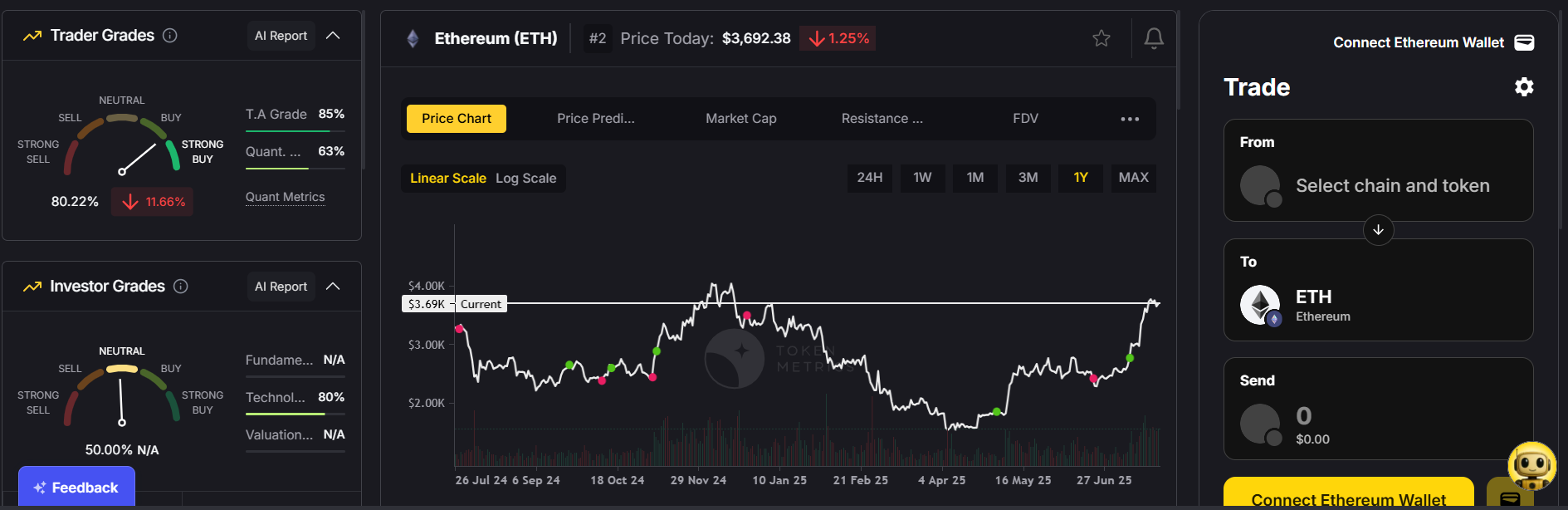
Using Token Metrics for ETH Analysis

Token Metrics offers AI‑powered tools that make investing in ETH smarter:

  • AI‑Generated Ratings: Evaluating ETH based on over 80 data points.
  • On‑Chain Analytics: Tracking active wallets, staking trends, and developer activity.
  • Portfolio Optimization: Helping investors balance ETH exposure with other assets.
  • Market Timing Alerts: AI‑driven signals for buying or taking profits at the right time.

This gives ETH investors a competitive edge in volatile markets.

Risks of Investing in Ether

While ETH has strong fundamentals, risks remain:

  • Network Congestion: Despite Layer 2 solutions, high demand can still lead to expensive gas fees.
  • Regulatory Uncertainty: Ongoing debates about whether ETH could be classified as a security.
  • Competition: Emerging smart contract platforms like Solana and Avalanche challenge Ethereum’s dominance.

Using Token Metrics helps mitigate these risks by providing real‑time analytics and portfolio insights.

Practical Tips for ETH Investors

  1. Stake Your ETH: Earn passive income while contributing to network security.
  2. Diversify Holdings: Balance ETH with other high‑potential altcoins and stablecoins.
  3. Monitor Upgrades: Follow Ethereum roadmap updates (e.g., sharding, scalability improvements).
  4. Use Analytics Tools: Leverage Token Metrics to stay ahead of market trends.

Conclusion

Ether is more than just another cryptocurrency—it’s the lifeblood of the Ethereum ecosystem, powering decentralized applications, DeFi, NFTs, and enterprise solutions.

In 2025, holding ETH offers exposure to one of the most innovative and widely used blockchain platforms, making it a must‑have for serious crypto investors.

By combining long‑term holding strategies with AI‑powered insights from Token Metrics, investors can confidently navigate Ethereum’s growth trajectory and maximize returns in the years ahead.

Choose from Platinum, Gold, and Silver packages
Reach with 25–30% open rates and 0.5–1% CTR
Craft your own custom ad—from banners to tailored copy
Perfect for Crypto Exchanges, SaaS Tools, DeFi, and AI Products