Crypto Basics

Hot Wallets vs. Cold Wallets: What’s the Difference and Which Crypto Wallet To Use in 2025?

Discover the key differences between hot and cold crypto wallets. Learn which one suits your needs and how Token Metrics helps secure and grow your crypto investments.
Token Metrics Team
8 min
MIN

As cryptocurrency adoption accelerates globally in 2025, one critical question for both beginners and experienced investors is: Where should you store your crypto assets safely?

The answer lies in understanding the difference between hot wallets and cold wallets — the two main categories of cryptocurrency storage. This highly informative and SEO-optimized blog will help you understand:

  • What hot and cold wallets are
  • Key differences between them
  • Pros and cons of each
  • Which one is right for you
  • How platforms like Token Metrics help you choose and manage your wallet securely

🔐 What Is a Cryptocurrency Wallet?

A crypto wallet stores your private and public keys, enabling you to send, receive, and manage digital assets like Bitcoin, Ethereum, or altcoins. Unlike traditional bank accounts, crypto wallets give you full control over your funds — but with that control comes the responsibility of securing them.

Wallets are typically categorized as:

  • Hot Wallets – connected to the internet
  • Cold Wallets – offline storage solutions

⚡ What Is a Hot Wallet?

A hot wallet is a crypto wallet that is connected to the internet. It’s designed for easy access and quick transactions, making it ideal for active traders and everyday use.

🔹 Examples of Hot Wallets:

  • Web wallets: MetaMask, Trust Wallet, Phantom, Rainbow
  • Desktop wallets: Exodus, Electrum
  • Mobile wallets: Coinbase Wallet, Atomic Wallet
  • Exchange wallets: Binance, Coinbase (custodial)

✅ Pros of Hot Wallets:

  • Instant access to crypto
  • User-friendly interfaces
  • Ideal for frequent trading or DeFi
  • Compatible with most crypto platforms

❌ Cons of Hot Wallets:

  • Vulnerable to hacks and phishing
  • Depends on internet connection
  • Risk of malware or keylogging
  • Not ideal for large holdings

Hot wallets are often recommended for storing smaller amounts of crypto for daily use.

🧊 What Is a Cold Wallet?

A cold wallet refers to any crypto wallet that is not connected to the internet. It’s a form of offline storage designed for maximum security.

🔹 Examples of Cold Wallets:

  • Hardware wallets: Ledger Nano X, Trezor Model T
  • Paper wallets: Printed QR codes with private keys
  • Air-gapped computers: Devices permanently offline

✅ Pros of Cold Wallets:

  • Immune to online attacks
  • Long-term storage for HODLing
  • Control over private keys
  • Ideal for institutional and high-net-worth users

❌ Cons of Cold Wallets:

  • Less convenient for quick access
  • Physical loss or damage is a risk
  • Requires technical knowledge
  • More expensive (hardware wallets can cost $50–$200)

Cold wallets are ideal for long-term investors storing large amounts of crypto.

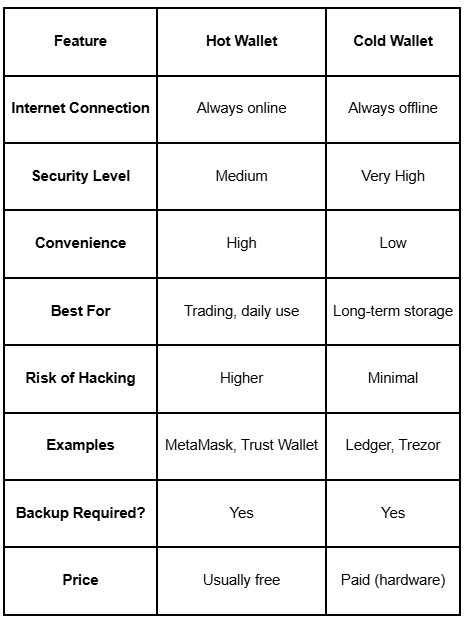
🔄 Hot Wallet vs. Cold Wallet: Key Differences
🔧 How to Use Hot and Cold Wallets Together (Hybrid Strategy)

Many crypto investors in 2025 use a dual-wallet strategy:

  • Hot wallet for trading, staking, and DeFi
  • Cold wallet for long-term storage and high-value assets

This balances convenience and security while minimizing exposure to threats.

For example:

  • Use a hot wallet like MetaMask to access the Token Metrics Moonshots tab and buy trending altcoins.
  • Transfer profits to your cold wallet (e.g., Ledger) for safekeeping.

🧠 How Token Metrics Helps You Manage Wallet Security

🔹 Wallet Integrations

Token Metrics supports:
  • MetaMask, WalletConnect, and other hot wallets
  • Portfolio tracking synced with your wallet
  • Real-time alerts when assets in your wallet are surging or at risk

🔹 Smart Trading with AI

Token Metrics helps reduce the need to frequently move funds by:
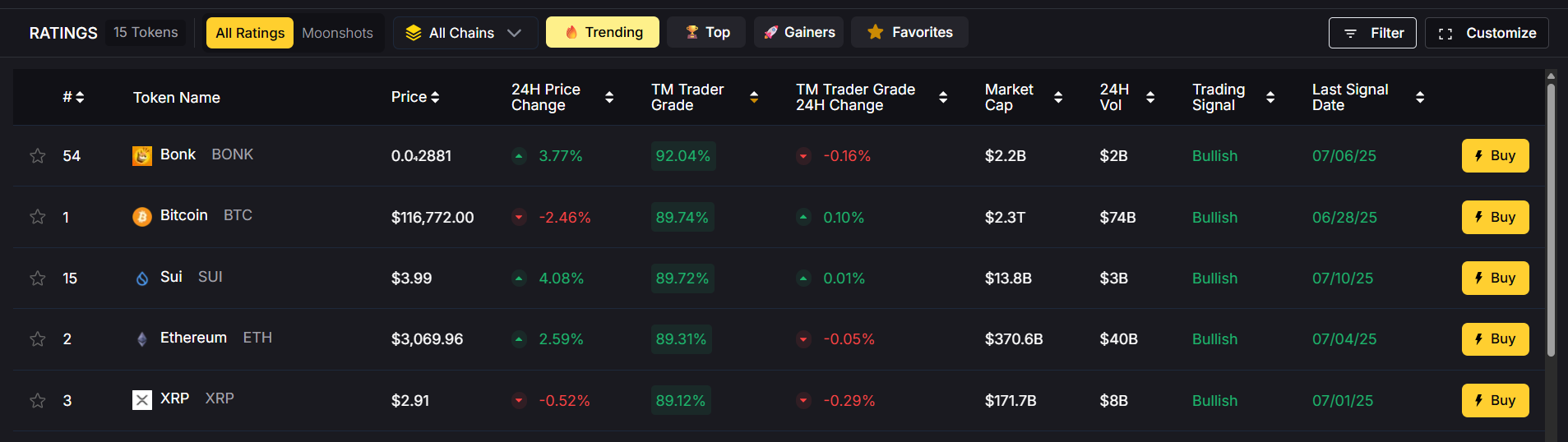
  • Identifying only high-quality tokens using AI Trader and Investor Grades
  • Sending price alerts, so you know when to buy/sell
  • Providing in-platform swap tools for direct trades from your hot wallet

🔹 Moonshot Monitoring

For early-stage altcoins, timing is everything. Token Metrics lets you:
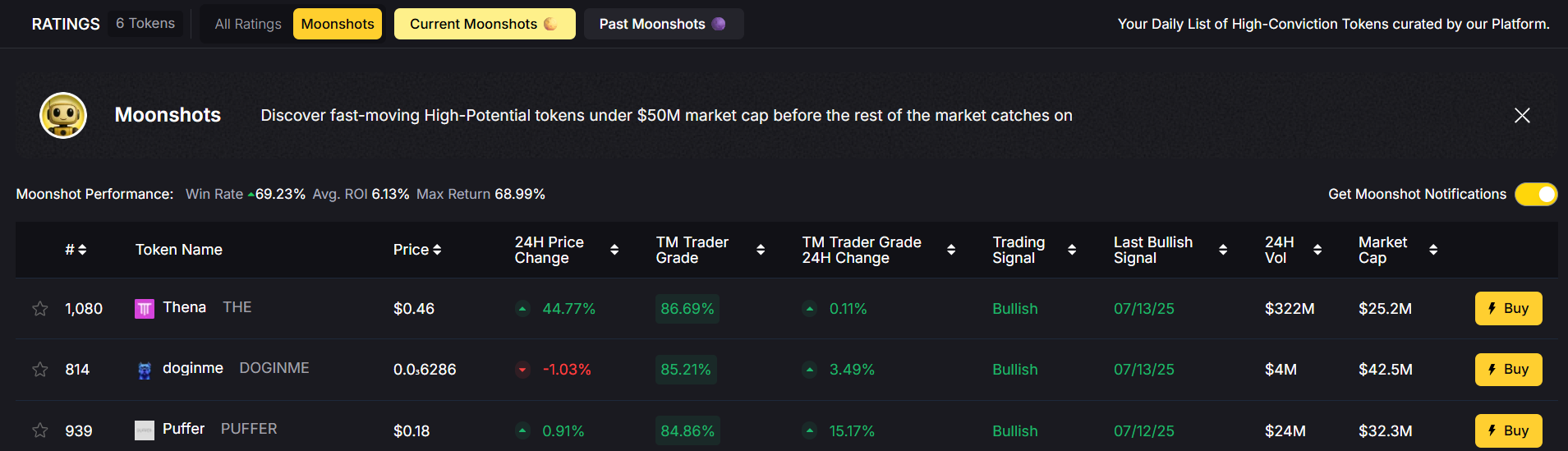
  • Monitor your Moonshot investments
  • Get notified when to take profits or exit
  • Transfer to cold storage with a single click

🔒 Hot Wallet Security Tips (2025 Edition)

If you’re using a hot wallet:

  • Enable 2FA (Two-Factor Authentication)
  • Use a hardware wallet to sign large transactions
  • Avoid clicking suspicious links or connecting to unknown dApps
  • Disconnect wallets after use

Always back up your seed phrase and store it securely offline.

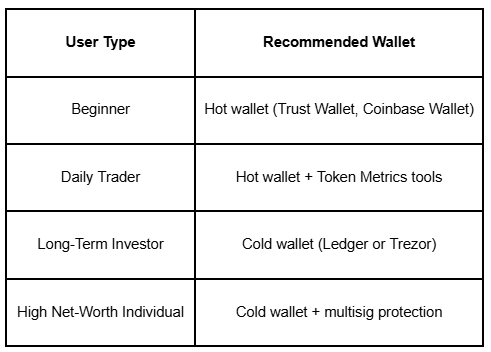
💬 Which Wallet Should You Use?
🧩 Final Thoughts

Whether you’re storing $100 or $100,000 in cryptocurrency, your wallet choice directly impacts your security, accessibility, and peace of mind.

  • Hot wallets offer convenience, but must be used with caution
  • Cold wallets offer security, but come with trade-offs in usability
  • Platforms like Token Metrics bridge the gap by offering real-time insights, wallet integrations, and AI-driven trading tools

In 2025, don’t just store your crypto—store it wisely. Combine hot and cold wallet strategies and leverage tools like Token Metrics to build a secure, intelligent crypto portfolio.

Build Smarter Crypto Apps &
AI Agents in Minutes, Not Months
Real-time prices, trading signals, and on-chain insights all from one powerful API.
Grab a Free API Key
Token Metrics Team
Token Metrics Team

Recent Posts

Research

Harnessing the Power of Free Crypto APIs for Market Insights

Token Metrics Team
5
MIN

Introduction to Free Crypto APIs

In the rapidly evolving cryptocurrency ecosystem, access to reliable and up-to-date data is essential for research, analytics, and trading strategies. Free crypto APIs provide publicly accessible interfaces to gather such data without cost, enabling developers, analysts, and enthusiasts to tap into market metrics, historical data, and blockchain information. This blog post explores the fundamentals of free crypto APIs, their applications, limitations, and how AI-driven platforms like Token Metrics API can enhance data analysis.

What is a Crypto API?

A crypto API is an application programming interface designed to deliver cryptocurrency-related data such as price feeds, market metrics, wallet balances, transaction history, and token fundamentals. Users can integrate these APIs into their applications or systems to automate data retrieval in real-time or on-demand. Several providers offer Token Metrics APIs with varying degrees of access, including free tiers designed for basic usage and experimentation.

Common Features of Free Crypto APIs

Free crypto APIs typically offer a subset of features found in paid versions but remain valuable for a wide range of analytical tasks. Common features include:

Advantages and Limitations of Free Crypto APIs

While free crypto APIs provide accessibility and ease of use, they come with several considerations:

Free crypto APIs serve a diverse spectrum of applications, including but not limited to:

How AI Enhances Crypto API Data Analysis

Artificial Intelligence (AI) technologies combined with crypto APIs elevate data interpretation beyond raw figures. Platforms such as Token Metrics leverage AI-driven models to assess token fundamentals, market sentiment, and technical indicators at scale. By ingesting data from free crypto APIs, AI algorithms can generate actionable insights, ranking tokens based on multi-dimensional factors to support informed decision-making processes.

Criteria for Selecting the Best Free Crypto API

Choosing the most suitable free crypto API depends on your intended application and data requirements. Important evaluation criteria include:

Getting Started with Token Metrics API

Token Metrics API offers a valuable starting point for those seeking insightful token metrics and market data through an AI-powered lens. To begin:

This approach allows users to combine structured data retrieval with sophisticated analytics, providing a foundation for deeper cryptocurrency market understanding.

Best Practices and Risk Considerations

When using free crypto APIs, keep in mind practical measures and potential pitfalls:

Conclusion

Free crypto APIs are indispensable tools for accessing cryptocurrency market data efficiently and at no cost. While limitations in scope and reliability exist, these APIs provide foundational resources for learning, analysis, and developing prototypes. AI-enhanced platforms like Token Metrics paired with free crypto API access further empower users to decode complex market dynamics through algorithmic insights. Whether for academic research, application development, or integration into crypto trading platforms, understanding and leveraging available free crypto APIs is a foundational step in navigating the crypto landscape.

Disclaimer

This article is for educational and informational purposes only and does not constitute financial or investment advice. Users should conduct their own research and consult professionals before making decisions related to cryptocurrency.

Research

Exploring the Launch and History of the Solana Blockchain

Token Metrics Team
3
MIN

Introduction

The blockchain ecosystem has witnessed many innovative platforms since the inception of Bitcoin. Among them, Solana has emerged as a significant player known for its high-performance capabilities. Understanding when Solana was launched provides valuable insight into its development timeline and technological evolution. This article explores the launch date and historical context of the Solana blockchain, its technological foundations, and resources for further research, including analytical tools such as Token Metrics.

Overview of Solana Blockchain

Solana is a high-throughput blockchain platform designed to support decentralized applications and crypto-currencies with a strong emphasis on scalability and low transaction costs. Its architecture leverages unique consensus mechanisms and innovations in cryptographic technology that distinguish it from other platforms. These features aim to solve common blockchain challenges such as network congestion and high fees.

When Was Solana Launched?

Solana's development began several years before its mainnet launch, with foundational research conducted by its creator, Anatoly Yakovenko, starting in 2017. The project's codebase and whitepapers were gradually developed over the next couple of years. The key milestone of Solana’s live network, or mainnet beta, occurred on March 16, 2020.

This mainnet beta launch marked the transition from development and internal testing stages to a public network where users could transact, stake tokens, and deploy applications. However, it is important to note that the label “beta” indicated that the network was still under active development and subject to updates and improvements.

Technological Framework at Launch

At the time of its launch, Solana introduced several novel technological elements, including:

  • Proof of History (PoH): A timestamping mechanism that provides a cryptographically verifiable order of events to improve network throughput.
  • Tower BFT: A consensus algorithm optimized for the PoH clock, enabling faster agreement between validators.
  • Gulf Stream: A protocol enabling transaction caching and forwarding to reduce confirmation times.
  • Sealevel: A parallel smart contract runtime designed to efficiently process multiple transactions simultaneously.

The combination of these technologies aimed to allow Solana to process more transactions per second than many existing blockchains at the time.

Development Timeline Post-Launch

Following the March 2020 mainnet beta launch, Solana's development continued rapidly. The development team released multiple updates enhancing network stability, introducing new features, and scaling capacity. Key phases included the transition from beta to a more stable production environment and expanding ecosystem support through developer tools and partnerships.

Community growth, validator participation, and decentralized application deployment increased steadily, underscoring the network’s rising prominence in the blockchain space.

How to Research Solana Effectively

For those interested in a deeper understanding of Solana’s origins and ongoing development, the following approaches are useful:

  1. Review Official Documentation and Whitepapers: These provide comprehensive details on the technology and development philosophy.
  2. Follow Development Repositories: Platforms like GitHub host the Solana codebase, where updates and contributions are tracked publicly.
  3. Monitor News and Community Channels: Forums, social media, and developer communities offer real-time discussion and announcements.
  4. Utilize Analytical Tools: Data-driven platforms, such as Token Metrics, leverage AI to provide insights into blockchain projects by analyzing various fundamental and technical indicators.

The Role of AI and Token Metrics in Blockchain Research

Artificial intelligence has enhanced the capacity to analyze complex blockchain data and market trends. Tools like Token Metrics apply machine learning algorithms to process large datasets, offering neutral ratings and analytics that can support educational research into platforms like Solana.

While such tools do not provide investment advice, they offer frameworks to understand project fundamentals, technological developments, and market sentiment — all essential elements for comprehensive analysis.

Educational Disclaimer

This article is intended for educational purposes only. It does not provide financial, investment, or trading advice. Readers should conduct thorough research and consider multiple sources before making decisions related to cryptocurrencies or blockchain technologies.

Research

A Comprehensive Guide to Buying Solana Cryptocurrency

Token Metrics Team
4
MIN

Introduction

Solana has emerged as one of the notable projects in the blockchain ecosystem, known for its high-performance capabilities and growing developer community. Understanding how to buy Solana (SOL) requires familiarity with the ecosystem, secure wallets, and the exchanges where the token is available. This guide presents an educational overview on acquiring Solana tokens while highlighting the tools and approaches that can support your research process efficiently.

Understanding Solana and Its Ecosystem

Before proceeding with any acquisition, it helps to understand the fundamentals of the Solana blockchain. Solana is a decentralized network designed to enable fast, scalable decentralized applications (dApps) and crypto assets. Its native token, SOL, is used for transaction fees and interacting with applications on the network.

Awareness of Solana's technological framework, including its unique Proof of History consensus mechanism, provides context that informs the buying process from both a technical standpoint and an operational perspective.

Setting Up a Solana Wallet

Acquiring SOL tokens necessitates having a compatible wallet that supports Solana’s blockchain.

  • Software Wallets: These are applications or browser extensions such as Phantom, Solflare, or Slope. They provide convenient access but require strong security practices like safeguarding private keys and seed phrases.
  • Hardware Wallets: Devices like Ledger or Trezor offer enhanced security by storing private keys offline. Not all hardware wallets natively support Solana yet, so checking compatibility is essential.

Choosing a wallet depends on individual preferences balancing convenience and security considerations.

Selecting a Reliable Exchange to Buy Solana

SOL tokens are available on multiple cryptocurrency exchanges, but purchasing involves selecting a platform based on liquidity, fees, regulatory compliance, and user experience.

Common exchange options include:

  • Centralized Exchanges (CEX): Platforms like Coinbase, Binance, and Kraken allow users to buy SOL using fiat or other cryptocurrencies. These platforms typically streamline the process but require identity verification.
  • Decentralized Exchanges (DEX): Platforms such as Serum operate on Solana’s network enabling peer-to-peer token swaps without intermediaries. Working with DEXs requires connecting your wallet and understanding swap mechanics.

Researching exchange reputation, fee structures, and security protocols is an important step and can be supplemented by analysis tools.

Purchase Process Overview

  1. Create and Secure Your Wallet: Start by setting up a Solana-compatible wallet and securely storing your credentials.
  2. Select an Exchange: Choose a platform that fits your needs, factoring in trading pairs and payment methods.
  3. Deposit Funds: Transfer fiat currency or cryptocurrency to your exchange account or connected wallet.
  4. Place an Order: Use market or limit orders to purchase SOL tokens at your chosen price.
  5. Transfer SOL Tokens to Your Wallet: For security, consider moving purchased tokens from the exchange to your personal wallet.

Researching Solana with AI-Driven Analytical Tools

Utilizing AI-powered research platforms enhances the ability to analyze blockchain projects systematically. Token Metrics is one such platform offering data-driven insights, ratings, and scenario analyses. These tools help decode market trends, evaluate fundamentals, and monitor technical developments, supporting an informed understanding of Solana’s evolving landscape.

While such platforms provide valuable educational support, users should integrate various sources and maintain ongoing research to navigate the dynamic crypto environment responsibly.

Security Considerations

When buying Solana or any cryptocurrency, security is paramount. Consider the following precautions:

  • Use two-factor authentication (2FA) on exchange accounts and wallets.
  • Store wallet recovery phrases offline and securely.
  • Beware of phishing attacks and unsolicited requests for private keys.
  • Stay updated on software and firmware upgrades for wallet devices.

Conclusion

Acquiring Solana tokens involves understanding the blockchain’s underlying technology, selecting the right wallet, choosing a reliable exchange, and practicing robust security measures. Leveraging AI-powered analytical tools like Token Metrics can deepen research capabilities and facilitate a comprehensive approach to exploring the crypto space.

Disclaimer

This content is provided solely for educational and informational purposes. It is not financial, investment, tax, or legal advice. Readers should perform their own research and consult with licensed professionals before making any financial decisions related to cryptocurrencies.

Choose from Platinum, Gold, and Silver packages
Reach with 25–30% open rates and 0.5–1% CTR
Craft your own custom ad—from banners to tailored copy
Perfect for Crypto Exchanges, SaaS Tools, DeFi, and AI Products