Back to blog
Research

How Do I Keep My Cryptocurrency Safe?

Learn how to keep your cryptocurrency safe with wallets, 2FA, and AI-driven research. Discover how Token Metrics helps you make secure, informed crypto decisions.
Token Metrics Team
8 min
Want Smarter Crypto Picks—Free?
See unbiased Token Metrics Ratings for BTC, ETH, and top alts.
Thank you! Your submission has been received!
Oops! Something went wrong while submitting the form.
 No credit card | 1-click unsubscribe

The cryptocurrency market has created life-changing wealth for millions, but it has also attracted hackers, scammers, and bad actors. From exchange hacks to phishing scams and rug pulls, billions of dollars in crypto have been lost due to poor security practices.

If you’re serious about trading or investing in crypto, one of your top priorities should be keeping your cryptocurrency safe. In this guide, we’ll walk through the biggest risks to your crypto security, best practices to protect your assets, and how Token Metrics can help you make informed, safe decisions when navigating the crypto market.

Why Is Cryptocurrency Security So Important?

Unlike a traditional bank account, cryptocurrency transactions are irreversible. If your funds are stolen, there’s usually no way to recover them.

  • No centralized authority: There’s no bank to call for refunds.
  • Pseudonymous transactions: It’s nearly impossible to trace funds once they’re moved.
  • High-value targets: Hackers actively target crypto investors due to the potential for large payoffs.

This means you are your own bank—and you’re responsible for protecting your funds.

Common Threats to Your Cryptocurrency

Before learning how to protect your crypto, you need to know what you’re up against:

1. Exchange Hacks

Crypto exchanges are frequent targets for hackers. Even top-tier exchanges like Mt. Gox and FTX have experienced devastating losses.

2. Phishing Attacks

Scammers use fake websites, emails, or social media accounts to trick you into revealing your private keys or login credentials.

3. Malware & Keyloggers

Cybercriminals install malicious software on your devices to steal passwords and seed phrases.

4. Rug Pulls & Scams

Fraudulent projects lure investors with promises of high returns, then disappear with the funds.

5. Human Error

Lost passwords, mishandled private keys, or accidental transfers can lead to permanent loss of funds.

How to Keep Your Cryptocurrency Safe

Here’s a step-by-step approach to safeguarding your crypto:

1. Use a Secure Wallet

Hardware Wallets:

  • The safest option for long-term storage.
  • Devices like Ledger or Trezor keep your private keys offline, out of reach of hackers.

Software Wallets:

  • Convenient for active trading but more vulnerable to attacks.
  • Use reputable wallets like MetaMask or Trust Wallet and enable strong security features.

Pro Tip: Use a hardware wallet for long-term holdings and a software wallet for small, active trading balances.

2. Enable Two-Factor Authentication (2FA)

Always enable 2FA on your exchange accounts, wallets, and email addresses.

  • Use Google Authenticator or Authy, not SMS-based 2FA, which is susceptible to SIM swaps.

3. Beware of Phishing & Fake Websites

  • Double-check URLs before logging into exchanges or wallets.
  • Never click links from suspicious emails or DMs.
  • Bookmark the official websites of your exchanges and platforms.

4. Keep Your Seed Phrase Offline

Your wallet’s seed phrase is the master key to your funds.

  • Write it down on paper and store it securely (safe, vault).
  • Avoid storing it in digital form (cloud storage, photos).
  • Consider splitting the phrase into parts and storing them in separate locations.

5. Research Projects Before Investing

Many scams and rug pulls target uninformed investors chasing hype.

How Token Metrics Helps:

  • Use AI-powered Investor Grades to assess projects for long-term viability.
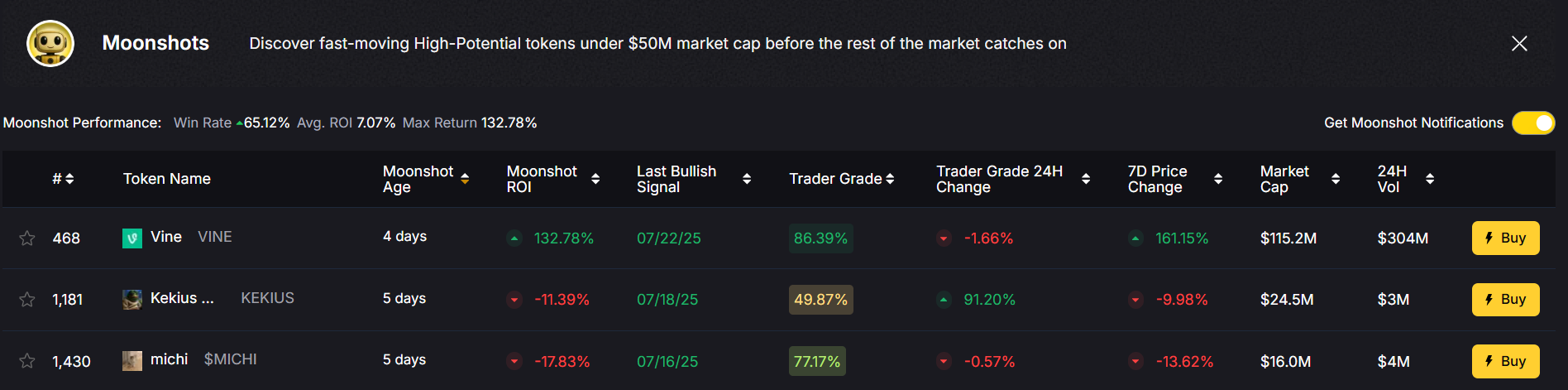
  • Leverage Moonshot Finder to discover vetted early-stage tokens with real growth potential—not scams.

6. Diversify Your Storage

Don’t keep all your crypto in one place.

  • Use multiple wallets for different purposes (trading vs. holding).
  • Spread funds across hardware, software, and exchange wallets.

7. Stay Updated on Threats

The crypto landscape changes fast.

  • Follow credible crypto news platforms.
  • Monitor regulatory updates and security alerts.
  • Use Token Metrics to stay ahead of market narratives and avoid projects flagged as high-risk.

How Token Metrics Helps You Stay Secure

While Token Metrics isn’t a wallet or exchange, it’s a powerful AI-powered platform designed to help you make safer investment decisions.

1. AI-Powered Risk Analysis

Token Metrics uses AI-driven evaluations to score projects, helping you avoid high-risk tokens and scam projects.
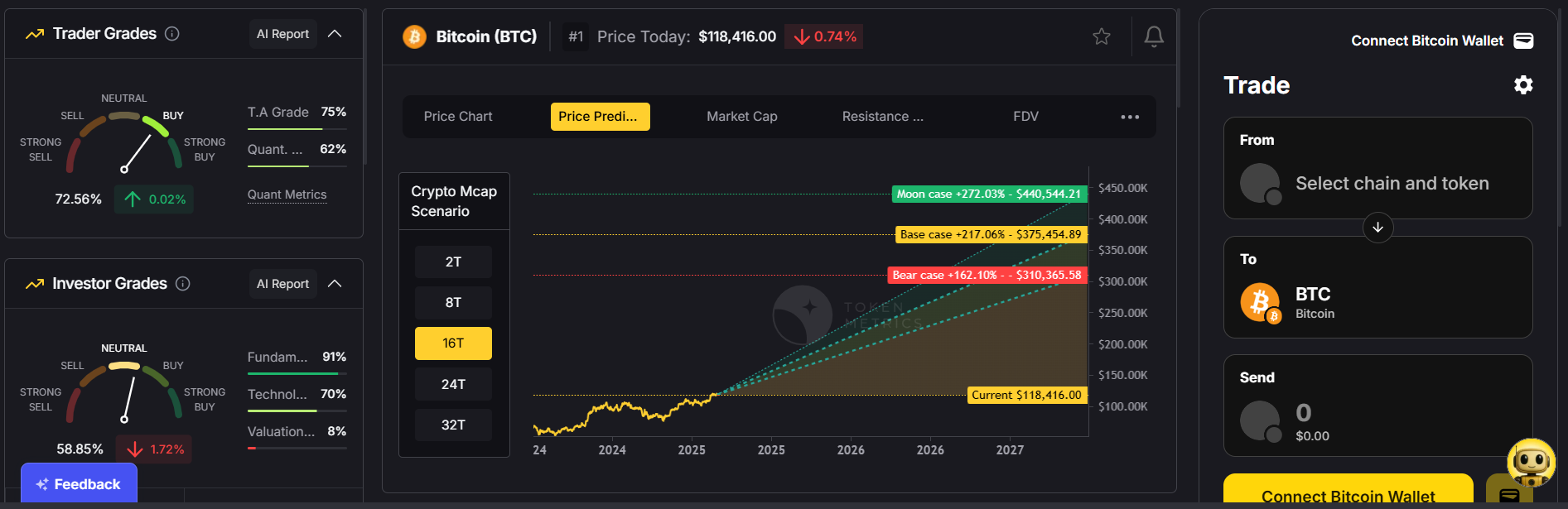
2. Investor & Trader Grades

Our proprietary grading system helps you quickly identify safe, high-quality assets for both short-term trading and long-term holding.

3. Moonshot Finder

Interested in low-cap tokens? The Moonshot Finder helps you spot legitimate early-stage projects before they pump—without falling into scams.
4. Narrative & Market Tracking

Stay ahead of emerging narratives and security concerns with Token Metrics’ real-time AI-driven analysis, helping you dodge risky trends.
Practical Security Checklist for Every Crypto Holder

  1. Use a hardware wallet for long-term holdings.
  2. Enable 2FA on all accounts—never rely on SMS-based security.
  3. Store seed phrases offline and securely.
  4. Avoid suspicious links and verify all URLs.
  5. Research every project using platforms like Token Metrics.
  6. Diversify storage across multiple wallets.
  7. Stay informed about new threats and market risks.

Final Thoughts

So, how do you keep your cryptocurrency safe? It comes down to strong storage practices, personal vigilance, and making informed investment decisions.

While hardware wallets and 2FA secure your assets, knowing where to invest is just as important. That’s where Token Metrics comes in—using AI-powered analysis to help you avoid scams, choose safe projects, and trade with confidence.

In crypto, you are your own bank—so take your security seriously. And with Token Metrics guiding your decisions, you can navigate this high-risk market safely and profitably.

Build Smarter Crypto Apps &
AI Agents in Minutes, Not Months
Real-time prices, trading signals, and on-chain insights all from one powerful API.
Grab a Free API Key
About Token Metrics
Token Metrics: AI-powered crypto research and ratings platform. We help investors make smarter decisions with unbiased Token Metrics Ratings, on-chain analytics, and editor-curated “Top 10” guides. Our platform distills thousands of data points into clear scores, trends, and alerts you can act on.
30 Employees
analysts, data scientists, and crypto engineers
Daily Briefings
concise market insights and “Top Picks”
Transparent & Compliant
Sponsored ≠ Ratings; research remains independent
Want Smarter Crypto Picks—Free?
See unbiased Token Metrics Ratings for BTC, ETH, and top alts.
Thank you! Your submission has been received!
Oops! Something went wrong while submitting the form.
 No credit card | 1-click unsubscribe
Token Metrics Team
Token Metrics Team

Recent Posts

Research

Understanding APIs: What They Are and How They Work

Token Metrics Team
5

APIs (Application Programming Interfaces) are the invisible wiring that lets modern software communicate. From mobile apps fetching data to AI agents orchestrating workflows, APIs enable systems to request services, exchange structured data, and extend functionality without exposing internal implementation. This article unpacks what an API is, how different API styles operate, where they’re used (including crypto and AI contexts), and practical approaches to evaluate, integrate, and secure them.

What an API Is: core concepts and terminology

An API is a set of rules and conventions that allows one software component to interact with another. At its simplest, an API defines:

  • Endpoints: Named access points that accept requests (for example, /users or /price).
  • Methods: Actions supported at an endpoint (common HTTP verbs: GET, POST, PUT, DELETE).
  • Request/Response formats: Structured payloads, typically JSON or XML, that describe inputs and outputs.
  • Authentication and authorization: How clients prove identity and gain access to resources (API keys, OAuth, JWT).
  • Rate limits and quotas: Constraints that protect services from abuse and manage capacity.

Think of an API as a contract: the provider promises certain behaviors and data shapes, and the consumer agrees to use the API according to those rules. That contract enables modular design, reusability, and language-agnostic integration.

How APIs work: protocols, formats, and architectural styles

APIs use protocols and conventions to carry requests and responses. The most common patterns include:

  • REST (Representational State Transfer): Uses standard HTTP methods and resource-oriented URLs. REST favors stateless interactions and JSON payloads.
  • GraphQL: Lets clients request exactly the fields they need in a single query, reducing over- and under-fetching.
  • gRPC: A high-performance RPC framework that uses protocol buffers for compact binary messages—often used for internal microservices.
  • Webhooks: A push model where the API provider sends events to a client URL when something changes.

Choosing an architecture depends on latency needs, payload sizes, versioning strategy, and developer ergonomics. For instance, GraphQL can simplify complex frontend queries, while REST remains straightforward for simple resource CRUD operations.

Common API types and real-world use cases (including crypto and AI)

APIs power an enormous variety of use cases across industries. Representative examples include:

  • Data APIs: Provide access to datasets or market data (weather, financial prices, on-chain metrics).
  • Service APIs: Offer functionality like payments, authentication, or messaging.
  • Platform APIs: Enable third-party apps to extend a core product—social platforms, cloud providers, and exchanges expose platform APIs.
  • AI and ML APIs: Expose model inference endpoints for tasks such as text generation, image recognition, or embeddings.

In the crypto ecosystem, APIs are fundamental: explorers, node providers, exchanges, and analytics platforms expose endpoints for price feeds, order books, trade history, wallet balances, and on-chain events. AI-driven research tools use APIs to combine market data, on-chain signals, and model outputs into research workflows and agents.

How to evaluate and integrate an API: practical steps

Adopting an API requires both technical and operational considerations. A pragmatic evaluation process includes:

  1. Define needs: Identify required data, latency tolerance, throughput, and allowable costs.
  2. Review documentation: Clear docs, example requests, schema definitions, and SDKs accelerate integration.
  3. Test endpoints: Use sandbox keys or Postman to validate payloads, error handling, and edge cases.
  4. Assess SLAs and rate limits: Understand uptime guarantees and throttling behavior; build retry/backoff strategies.
  5. Security and compliance: Check authentication methods, encryption, and data retention policies.
  6. Monitoring and observability: Plan logging, latency monitoring, and alerting to detect regressions post-integration.

When integrating multiple APIs—such as combining market data with model inference—consider a middleware layer that normalizes data shapes, caches frequent responses, and orchestrates calls to minimize latency and cost.

Build Smarter Crypto Apps & AI Agents with Token Metrics

Token Metrics provides real-time prices, trading signals, and on-chain insights all from one powerful API. Grab a Free API Key

FAQ: What is an API — common questions

What is the difference between an API and a web service?

An API is a broader concept that defines interfaces for software interaction. A web service is a type of API that operates over network protocols such as HTTP. In practice, REST and GraphQL are web service styles used to implement APIs.

Are public APIs safe to use?

Public APIs can be safe if they follow security best practices: HTTPS everywhere, proper authentication, input validation, and rate limiting. Consumers should validate responses, handle errors, and avoid exposing credentials in client-side code.

How do API keys differ from OAuth?

API keys are simple tokens that identify a client application and are often used for server-to-server interactions. OAuth is a delegated authorization framework that allows users to grant limited access to their accounts without sharing credentials—common for user-facing integrations.

What is API rate limiting and why does it matter?

Rate limiting constrains how many requests a client can make in a time window. It prevents abuse, protects backend resources, and ensures fair usage. Clients should implement retries with exponential backoff and caching to stay within limits.

When should I use GraphQL instead of REST?

Choose GraphQL when clients need flexible, precise queries that fetch nested or disparate fields in a single request. REST can be simpler for straightforward resource CRUD and when predictable caching semantics are required.

Can APIs be used for real-time data?

Yes. Real-time patterns include WebSockets, Server-Sent Events (SSE), and streaming APIs. Some platforms also provide push notifications or webhooks to deliver near-instant updates to subscribers.

How do I handle versioning in APIs?

Common strategies include using version numbers in the URL (e.g., /v1/) or via headers. Maintain backward compatibility, communicate deprecation timelines, and provide migration guides to minimize friction for integrators.

What monitoring should I implement after integrating an API?

Track uptime, latency percentiles, error rates, and throughput. Instrument retries, logging of failed requests, and alerts for sustained degradation. Observability helps diagnose issues and communicate with API providers when needed.

Disclaimer: This article is for educational and informational purposes only. It explains technical concepts related to APIs and integration practices and does not provide financial, investment, or regulatory advice. Always evaluate tools and services according to your own requirements and compliance needs.

Research

APIs Explained: How They Connect Software and Data

Token Metrics Team
5

APIs — application programming interfaces — are the invisible glue that lets software talk to software. Whether you're building a dashboard, feeding data into an AI model, or fetching market prices for analytics, understanding what an API is and how it works is essential to designing reliable systems. This guide explains APIs in plain language, shows how they’re used in crypto and AI, and outlines practical steps for safe, scalable integration.

What is an API? Core definition and common types

An API (application programming interface) is a defined set of rules and endpoints that lets one software program request and exchange data or functionality with another. Think of it as a contract: the provider defines what inputs it accepts and what output it returns, and the consumer follows that contract to integrate services reliably.

Common API types:

  • REST APIs: Use HTTP verbs (GET, POST, PUT, DELETE) and structured URLs. They are stateless and often return JSON.
  • GraphQL: Allows clients to request exactly the data they need via a single endpoint, improving efficiency for complex queries.
  • WebSocket / Streaming APIs: Provide persistent connections for real-time data flows, useful for live feeds like price updates or chat.
  • RPC & gRPC: Remote procedure calls optimized for low-latency, typed interactions, often used in microservices.

How APIs work: requests, endpoints, and authentication

At a technical level, using an API involves sending a request to an endpoint and interpreting the response. Key components include:

  • Endpoint: A URL representing a resource or action (e.g., /v1/prices/bitcoin).
  • Method: The HTTP verb that signals the intent (GET to read, POST to create, etc.).
  • Headers & Body: Metadata (like authentication tokens) and payloads for requests that change state.
  • Response codes: Numeric codes (200 OK, 404 Not Found, 429 Too Many Requests) that indicate success or error types.
  • Authentication: API keys, OAuth tokens, JWTs, or mutual TLS are common ways to authenticate and authorize consumers.

Understanding these elements helps teams design error handling, retry logic, and monitoring so integrations behave predictably in production.

APIs in crypto and AI: practical use cases

APIs enable many building blocks in crypto and AI ecosystems. Examples include:

  • Market data & price feeds: REST or websocket APIs provide real-time and historical prices, order book snapshots, and trade events.
  • On-chain data: Indexing services expose transactions, balances, and contract events via APIs for analytics and compliance workflows.
  • Model serving: AI inference APIs let applications call trained models to generate predictions, embeddings, or natural language outputs.
  • Wallet & transaction APIs: Abstract common wallet operations like address generation, signing, and broadcasting transactions.

When integrating APIs for data-driven systems, consider latency, data provenance, and consistency. For research and model inputs, services that combine price data with on-chain metrics and signals can reduce the time it takes to assemble reliable datasets. For teams exploring such aggregations, Token Metrics provides an example of an AI-driven analytics platform that synthesizes multiple data sources for research workflows.

Best practices and security considerations for API integration

Secure, maintainable APIs follow established practices that protect data and reduce operational risk:

  1. Authentication & least privilege: Use scoped API keys or OAuth to limit access, rotate credentials regularly, and avoid embedding secrets in client code.
  2. Rate limiting and retries: Respect provider rate limits, implement exponential backoff, and design idempotent operations to avoid duplication.
  3. Input validation and sanitization: Validate incoming data and sanitize outputs to prevent injection and misuse.
  4. Versioning: Use semantic versioning in endpoint paths (e.g., /v1/) and deprecate old versions with clear timelines.
  5. Monitoring and observability: Log requests, latency, errors, and usage patterns. Set alerts for anomalies and integrate telemetry into incident response playbooks.
  6. Data integrity and provenance: When using third-party feeds, capture timestamps, unique identifiers, and proof-of-origin where available so downstream analysis can trace sources.

Following these practices helps teams scale API usage without sacrificing reliability or security.

Build Smarter Crypto Apps & AI Agents with Token Metrics

Token Metrics provides real-time prices, trading signals, and on-chain insights all from one powerful API. Grab a Free API Key

What is an API and why is it useful?

An API is a set of rules that enables software components to interact. It’s useful because it abstracts complexity, standardizes data exchange, and enables modular development across systems and teams.

Which API type should I choose: REST, GraphQL, or streaming?

Choose based on access patterns: REST is simple and widely supported; GraphQL excels when clients need flexible queries and fewer round trips; streaming (WebSocket) is best for low-latency, continuous updates. Consider caching, complexity, and tooling support.

How do I secure API keys and credentials?

Store secrets in secure vaults or environment variables, avoid hardcoding them in source code, rotate keys periodically, and apply principle of least privilege to limit access scopes.

What are rate limits and how should I handle them?

Rate limits restrict how many requests a client can make in a time window. Handle them by respecting limits, implementing exponential backoff for retries, caching responses, and batching requests where possible.

How do I evaluate an API provider?

Assess documentation quality, uptime SLAs, authentication methods, data freshness, cost model, and community or support channels. Test with realistic workloads and review security practices and versioning policies.

Can APIs be used to power AI agents?

Yes. AI agents often call APIs for data ingestion, model inference, or action execution. Reliable APIs for feature data, model serving, and orchestration are key to building robust AI workflows.

Disclaimer

This article is for educational and informational purposes only. It does not constitute financial, investment, legal, or professional advice. Evaluate APIs and data sources independently and consider security and compliance requirements specific to your use case.

Research

APIs Explained: How Application Interfaces Work

Token Metrics Team
6

APIs power modern software by acting as intermediaries that let different programs communicate. Whether you use a weather app, sign in with a social account, or combine data sources for analysis, APIs are the plumbing behind those interactions. This guide breaks down what an API is, how it works, common types and use cases, plus practical steps to evaluate and use APIs responsibly.

What an API Is and Why It Matters

An application programming interface (API) is a contract between two software components. It specifies the methods, inputs, outputs, and error handling that allow one service to use another’s functionality or data without needing to know its internal implementation. Think of an API as a well-documented door: the requester knocks with a specific format, and the server replies according to agreed rules.

APIs matter because they:

  • Enable modular development and reuse of functionality across teams and products.
  • Abstract complexity so consumers focus on features rather than implementation details.
  • Drive ecosystems: public APIs can enable third-party innovation and integrations.

How APIs Work: Key Components

At a technical level, an API involves several elements that define reliable communication:

  • Endpoint: A URL or address where a service accepts requests.
  • Methods/Operations: Actions permitted by the API (e.g., read, create, update, delete).
  • Payload and Format: Data exchange format—JSON and XML are common—and schemas that describe expected fields.
  • Authentication & Authorization: Mechanisms like API keys, OAuth, or JWTs that control access.
  • Rate Limits and Quotas: Controls on request volume to protect stability and fairness.
  • Versioning: Strategies (URI versioning, header-based) for evolving an API without breaking clients.

Most web APIs use HTTP as a transport; RESTful APIs map CRUD operations to HTTP verbs, while alternatives like GraphQL let clients request exactly the data they need. The right style depends on use cases and performance trade-offs.

Common API Use Cases and Types

APIs appear across many layers of software and business models. Common categories include:

  • Public (Open) APIs: Exposed to external developers to grow an ecosystem—examples include mapping, social, and payment APIs.
  • Private/Internal APIs: Power internal systems and microservices within an organization for modularity.
  • Partner APIs: Shared with specific business partners under contract for integrated services.
  • Data APIs: Provide structured data feeds (market data, telemetry, or on-chain metrics) used by analytics and AI systems.

Practical examples: a mobile app calling a backend to fetch user profiles, an analytics pipeline ingesting a third-party data API, or a serverless function invoking a payment API to process transactions.

Design, Security, and Best Practices

Designing and consuming APIs effectively requires both technical and governance considerations:

  1. Design for clarity: Use consistent naming, clear error codes, and robust documentation to reduce friction for integrators.
  2. Plan for versioning: Avoid breaking changes by providing backward compatibility or clear migration paths.
  3. Secure your interfaces: Enforce authentication, use TLS, validate inputs, and implement least-privilege authorization.
  4. Observe and throttle: Monitor latency, error rates, and apply rate limits to protect availability.
  5. Test and simulate: Provide sandbox environments and thorough API tests for both functional and load scenarios.

When evaluating an API to integrate, consider documentation quality, SLAs, data freshness, error handling patterns, and cost model. For data-driven workflows and AI systems, consistency of schemas and latency characteristics are critical.

APIs for Data, AI, and Research Workflows

APIs are foundational for AI and data research because they provide structured, automatable access to data and models. Teams often combine multiple APIs—data feeds, enrichment services, feature stores—to assemble training datasets or live inference pipelines. Important considerations include freshness, normalization, rate limits, and licensing of data.

AI-driven research platforms can simplify integration by aggregating multiple sources and offering standardized endpoints. For example, Token Metrics provides AI-powered analysis that ingests diverse signals via APIs to support research workflows and model inputs.

Discover Crypto Gems with Token Metrics AI

Token Metrics uses AI-powered analysis to help you uncover profitable opportunities in the crypto market. Get Started For Free

What is an API? (FAQ)

1. What does API stand for and mean?

API stands for Application Programming Interface. It is a set of rules and definitions that lets software components communicate by exposing specific operations and data formats.

2. How is a web API different from a library or SDK?

A web API is accessed over a network (typically HTTP) and provides remote functionality or data. A library or SDK is code included directly in an application. APIs enable decoupled services and cross-platform access; libraries are local dependencies.

3. What are REST, GraphQL, and gRPC?

REST is an architectural style using HTTP verbs and resource URIs. GraphQL lets clients specify exactly which fields they need in a single query. gRPC is a high-performance RPC framework using protocol buffers and is suited for internal microservice communication with strict performance needs.

4. How do I authenticate to an API?

Common methods include API keys, OAuth 2.0 for delegated access, and JWTs for stateless tokens. Choose an approach that matches security requirements and user interaction patterns; always use TLS to protect credentials in transit.

5. What are typical failure modes and how should I handle them?

Failures include rate-limit rejections, transient network errors, schema changes, and authentication failures. Implement retries with exponential backoff for transient errors, validate responses, and monitor for schema or semantic changes.

6. Can APIs be used for real-time data?

Yes. Polling HTTP APIs at short intervals can approximate near-real-time, but push-based models (webhooks, streaming APIs, WebSockets, or event streams) are often more efficient and lower latency for real-time needs.

7. How do I choose an API provider?

Evaluate documentation, uptime history, data freshness, pricing, rate limits, privacy and licensing, and community support. For data or AI integrations, prioritize consistent schemas, sandbox access, and clear SLAs.

8. How can I learn to design APIs?

Start with principles like consistent resource naming, strong documentation (OpenAPI/Swagger), automated testing, and security by design. Study public APIs from major platforms and use tools that validate contracts and simulate client behavior.

Disclaimer

This article is for educational and informational purposes only. It does not constitute investment advice, financial recommendations, or endorsements. Readers should perform independent research and consult qualified professionals where appropriate.

Choose from Platinum, Gold, and Silver packages
Reach with 25–30% open rates and 0.5–1% CTR
Craft your own custom ad—from banners to tailored copy
Perfect for Crypto Exchanges, SaaS Tools, DeFi, and AI Products