Crypto Basics

How Does Blockchain Work? A Complete Guide for 2025

Learn how blockchain technology works in 2025. Explore its structure, components, applications, and why it powers the future of digital assets.
Token Metrics Team
5 min
MIN

Introduction to Blockchain Technology

Blockchain is the foundation of modern cryptocurrency and one of the most transformative technologies of the digital age. Initially created to support Bitcoin, blockchain has expanded into countless use cases, from decentralized finance (DeFi) to supply chain tracking, real-world asset tokenization, and artificial intelligence (AI) integration.

In 2025, understanding how blockchain works is essential—not just for crypto investors but for anyone navigating the evolving digital economy. This article explains the structure, components, and applications of blockchain in simple terms and explores how platforms like Token Metrics use blockchain data to help investors make smarter decisions.

What Is Blockchain?

At its core, blockchain is a distributed digital ledger that records transactions across a network of computers. Unlike traditional databases controlled by a single entity, blockchain operates on a decentralized network, making it secure, transparent, and tamper-resistant.

Each entry in this ledger is grouped into a “block,” and these blocks are linked (or chained) together in chronological order—hence the name blockchain.

Key Features of Blockchain

  1. Decentralization:
    No single entity controls the network. Instead, multiple participants (called nodes) maintain the ledger.

  2. Transparency:
    Transactions are visible to all participants, increasing accountability and reducing fraud.

  3. Immutability:
    Once data is recorded on a blockchain, it cannot be altered or deleted.

  4. Security:
    Blockchain uses cryptography to secure transactions and protect user identities.

How Blockchain Works: Step-by-Step

  1. Transaction Creation:
    A blockchain process begins when someone initiates a transaction, such as transferring cryptocurrency or executing a smart contract.

  2. Verification by Nodes:
    The transaction is broadcast to a network of computers (nodes). These nodes verify its validity using consensus mechanisms like Proof of Work (PoW) or Proof of Stake (PoS).

  3. Block Creation:
    Once verified, the transaction is bundled with others into a block.

  4. Adding the Block to the Chain:
    The block is cryptographically linked to the previous one, creating an unbroken chain of data.

  5. Consensus & Finalization:
    The network reaches consensus, confirming the block as part of the permanent ledger.

Consensus Mechanisms: How the Network Agrees

Consensus mechanisms are protocols that ensure all nodes agree on the state of the blockchain.

  • Proof of Work (PoW):
    Used by Bitcoin, this method involves miners solving complex puzzles to validate transactions.

  • Proof of Stake (PoS):
    Used by Ethereum and many other blockchains in 2025, this energy-efficient model requires validators to stake tokens as collateral for transaction verification.

  • Other Models:
    Variants like Delegated Proof of Stake (DPoS) and Proof of Authority (PoA) aim to balance efficiency with security.

Components of a Blockchain

  1. Blocks:
    Contain transaction data, a timestamp, and a cryptographic hash.

  2. Nodes:
    Computers that maintain and validate the blockchain.

  3. Smart Contracts:
    Self-executing agreements coded directly onto the blockchain.

  4. Cryptographic Keys:
    Digital signatures that authenticate participants and secure transactions.

Public vs. Private Blockchains

  • Public Blockchains:
    Open networks like Bitcoin and Ethereum allow anyone to participate.

  • Private Blockchains:
    Restricted networks used by enterprises for applications like supply chain management.

In 2025, hybrid models combining public and private features are increasingly popular for balancing transparency with privacy.

Applications of Blockchain in 2025

  1. Cryptocurrencies:
    The primary use case remains facilitating peer-to-peer transactions with coins like Bitcoin, Ethereum, and Token Metrics AI (TMAI).

  2. Decentralized Finance (DeFi):
    Platforms for lending, borrowing, and trading without intermediaries.

  3. Real-World Assets (RWAs):
    Tokenizing physical assets like real estate or commodities.

  4. AI & Analytics:
    Platforms like Token Metrics use blockchain data to deliver AI-powered investment insights.

  5. Supply Chain Management:
    Tracking goods transparently from production to delivery.

  6. Identity Management:
    Blockchain secures personal identities and reduces fraud in digital interactions.

Benefits of Blockchain

  1. Enhanced Security:
    Blockchain’s cryptographic design makes it nearly impossible to hack or alter.

  2. Reduced Costs:
    Eliminates intermediaries, cutting transaction fees and operational expenses.

  3. Improved Efficiency:
    Enables faster transactions, especially with PoS blockchains.

  4. Global Accessibility:
    Anyone with an internet connection can participate in public blockchain networks.

Challenges Facing Blockchain

  1. Scalability:
    Handling large transaction volumes remains an issue for many networks.

  2. Regulatory Uncertainty:
    Governments are still determining how to regulate blockchain-based assets.

  3. Energy Consumption:
    Though PoS reduces energy use, PoW blockchains still face environmental concerns.

  4. Adoption Barriers:
    Enterprises and individuals need more education and tools for blockchain integration.

How Token Metrics Uses Blockchain Data

Platforms like Token Metrics take blockchain a step further by:

  • Analyzing On-Chain Data: Evaluating wallet activity, transaction volumes, and developer engagement.
  • AI-Driven Ratings: Scoring tokens based on over 80 data points, from technical performance to sentiment analysis.
  • Portfolio Optimization: Helping investors build and manage blockchain-based portfolios effectively.

By combining blockchain transparency with AI-powered analytics, Token Metrics provides a comprehensive view of crypto investments.

Practical Tips for Understanding Blockchain

  1. Experiment with Wallets:
    Set up a wallet to explore how transactions work firsthand.

  2. Use Blockchain Explorers:
    Platforms like Etherscan let you view transactions in real-time.

  3. Follow Blockchain Projects:
    Stay updated on leading networks like Ethereum, Polygon, and Token Metrics AI (TMAI).

  4. Leverage Analytics Tools:
    Use Token Metrics to interpret complex blockchain data in an investor-friendly way.

The Future of Blockchain

In 2025, blockchain continues to evolve beyond cryptocurrencies. With advances in scalability solutions, real-world asset tokenization, and AI integration, blockchain is shaping the next generation of financial systems, digital identity solutions, and decentralized applications.

As enterprises, governments, and investors adopt blockchain, its role in the digital economy will only grow.

Conclusion

Blockchain is more than a buzzword—it’s a transformative technology driving innovation across industries. By understanding how blockchain works—its structure, consensus mechanisms, and applications—you can better navigate the crypto market and the broader digital landscape.

Platforms like Token Metrics make blockchain analysis accessible and actionable, offering AI-driven insights to help investors capitalize on this rapidly expanding technology. In 2025, mastering blockchain fundamentals isn’t just helpful—it’s essential for participating in the future of finance and digital ownership.

Build Smarter Crypto Apps &
AI Agents in Minutes, Not Months
Real-time prices, trading signals, and on-chain insights all from one powerful API.
Grab a Free API Key
Token Metrics Team
Token Metrics Team

Recent Posts

Research

How to Build a Profitable Crypto Portfolio in 2025: Strategies, Tools, and AI Insights

Token Metrics Team
6 min
MIN

Introduction: Why a Smart Portfolio Matters in 2025

The cryptocurrency market in 2025 has matured into a multi‑trillion‑dollar ecosystem, offering opportunities across Bitcoin, altcoins, DeFi platforms, AI‑powered tokens, and real‑world asset tokenization projects. However, with opportunity comes complexity — and building a profitable portfolio requires more than just guessing which coins might pump next.

Success now depends on strategic allocation, data‑driven decision‑making, and leveraging advanced tools like Token Metrics to analyze market trends and optimize performance. This guide will walk you through how to construct and maintain a profitable crypto portfolio in 2025.

Step 1: Define Your Investment Goals

Before choosing any assets, decide on your objectives:

  • Long‑Term Growth (HODLing): Focus on established assets like Bitcoin (BTC), Ether (ETH), and Token Metrics AI (TMAI).
  • Income Generation: Use staking and yield farming to earn passive income on assets like ETH or Cardano (ADA).
  • High‑Risk, High‑Reward: Allocate a smaller portion to emerging altcoins or narrative‑driven tokens (AI, DeFi, or Layer 2 scaling solutions).

Having clear goals will guide how much risk to take and which assets to prioritize.

Step 2: Diversify Your Portfolio

Diversification remains the cornerstone of a strong crypto portfolio. In 2025, this means spreading across:

1. Large‑Cap Coins (40–50%):
Stable, highly liquid assets like BTC and ETH provide security and long‑term growth.

2. Mid‑Cap Coins (25–30%):
Projects like Polygon (MATIC) or Arbitrum (ARB) with strong fundamentals and adoption potential.

3. Small‑Cap Gems (10–20%):
High‑risk projects like AI tokens (TMAI) or early‑stage DeFi protocols with explosive upside.

4. Stablecoins (5–10%):
USDC or USDT for liquidity management, making it easier to buy dips or take profits quickly.

Step 3: Use Narrative‑Driven Investing

In crypto, narratives drive capital flows. Spotting the right trends early can turn modest investments into significant gains.

Hot narratives for 2025 include:

  • AI‑Powered Tokens: Projects like Token Metrics AI (TMAI) and Fetch.ai (FET) at the intersection of blockchain and artificial intelligence.
  • Real‑World Asset Tokenization (RWAs): Platforms bringing real estate, commodities, and traditional assets on‑chain.
  • DeFi 2.0: Next‑gen decentralized finance projects offering lower fees and better yields.
  • Layer 2 Scaling Solutions: Protocols like Polygon and Optimism making Ethereum more scalable and cost‑effective.

Pro Tip: Use Token Metrics’ narrative detection tools to spot these trends early.

Step 4: Leverage AI‑Powered Tools

Building a profitable portfolio requires cutting‑edge analytics, and AI is a game‑changer in 2025.

Token Metrics provides:

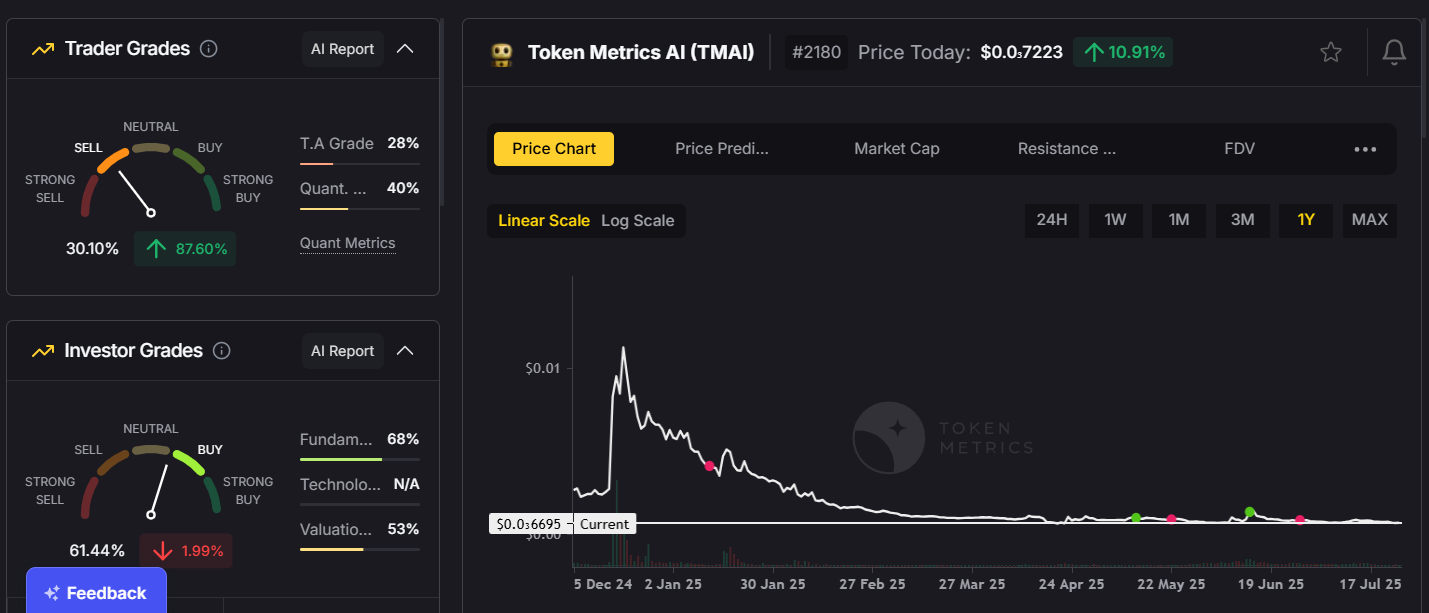
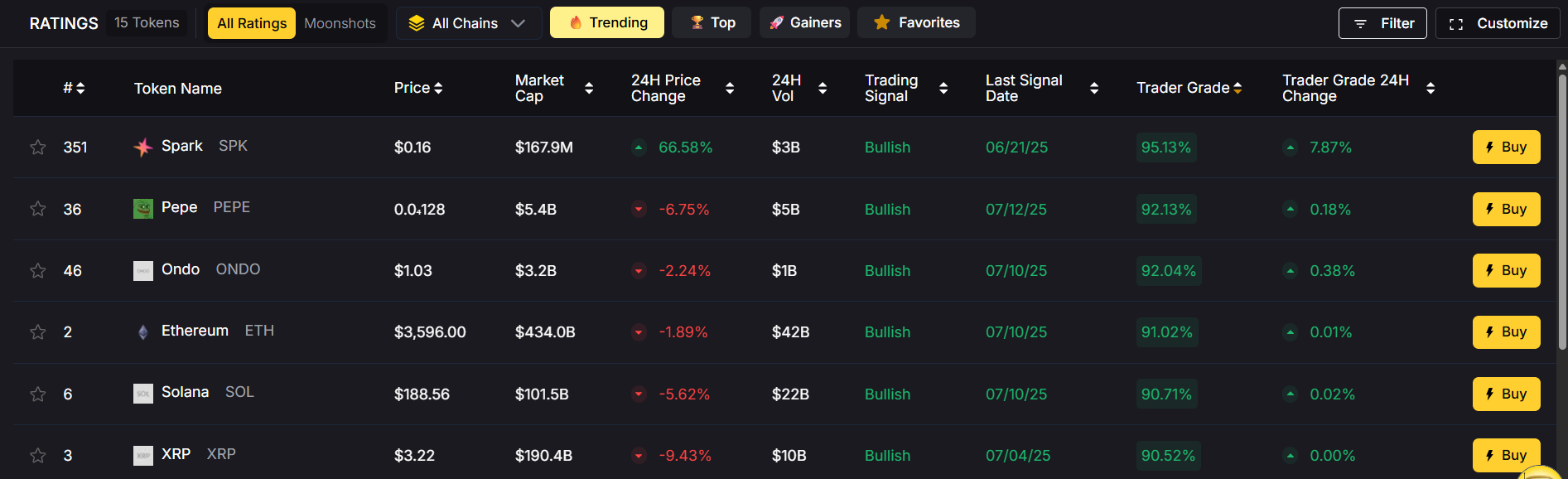
  • AI‑Generated Coin Ratings: Evaluating over 80 data points to rank tokens based on fundamentals, technicals, and sentiment.
  • Portfolio Optimization: Suggesting the best asset mix based on your goals and risk appetite.
  • Trend Analysis & Narrative Detection: Identifying early‑stage market narratives before they go mainstream.
  • Real‑Time Alerts: Helping you react quickly to price swings or emerging opportunities.
    ‍

‍

These insights give you a data‑driven edge in a volatile market.

Step 5: Balance Risk and Reward

Managing risk is as important as chasing gains. Key practices include:

  • Position Sizing: Don’t overallocate to small‑cap coins — keep them to 10–20% of your portfolio.
  • Stop‑Loss Orders: Automate exits to prevent catastrophic losses.
  • Regular Rebalancing: Adjust your portfolio quarterly or when an asset becomes overweight.
  • Take Profits Strategically: Don’t wait for the top — sell portions at set profit targets.

Step 6: Include Income‑Generating Assets

In addition to growth, aim for consistent income streams:

  • Staking: Earn rewards by staking ETH, ADA, or other PoS assets.
    ‍
  • Yield Farming: Participate in DeFi protocols to generate additional returns.
  • Liquid Staking: Use platforms like Lido to stake while keeping tokens tradable.

Token Metrics’ staking analytics help you find the best yields while minimizing risk.

Step 7: Monitor and Adjust Your Portfolio

Crypto markets change fast. What worked six months ago might not work today.

Regularly monitor:

  • On‑Chain Metrics: Wallet activity, transaction volume, and developer contributions.
  • Market Sentiment: Use AI‑driven insights from Token Metrics to track shifts in investor mood.
  • Regulatory Updates: Stay informed on new laws impacting crypto investments.

By actively managing your portfolio, you’ll avoid being caught off guard by market shifts.

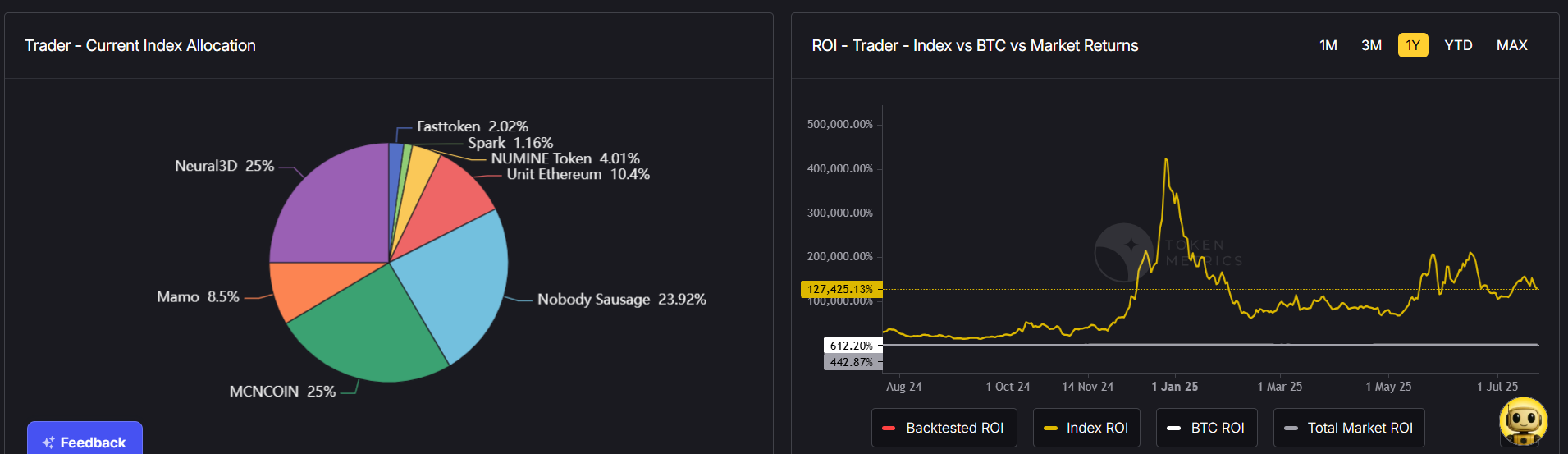
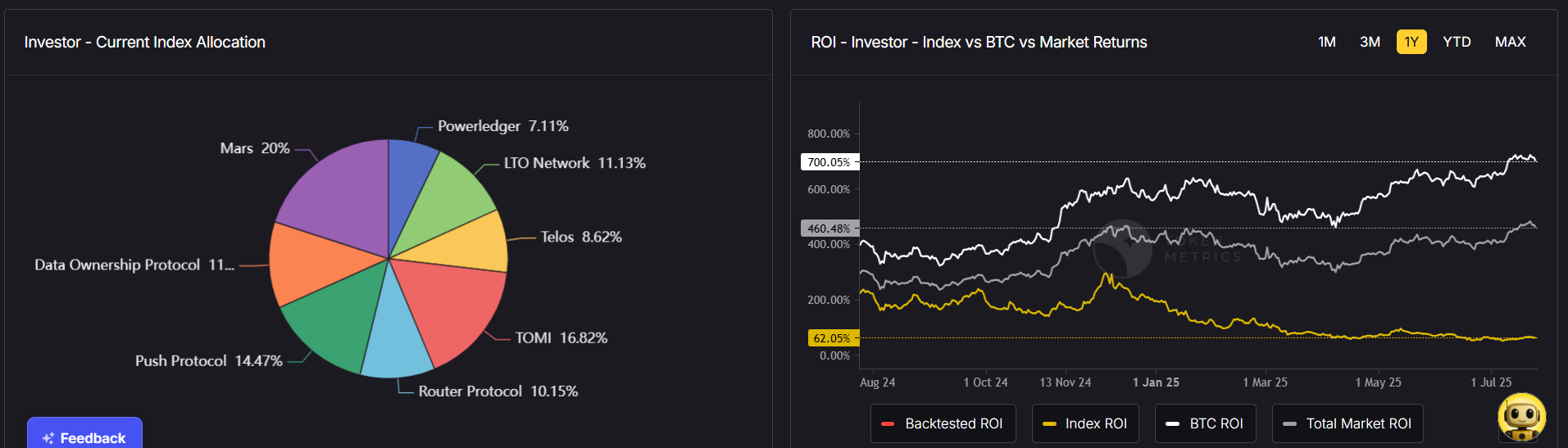
Practical Example of a 2025 Portfolio

Long‑Term Growth Portfolio:

  • 40% Bitcoin (BTC): Stability and long‑term appreciation.
  • 30% Ethereum (ETH): Smart contract exposure + staking income.
  • 15% Narrative‑Driven Tokens (TMAI, FET, MATIC): Growth from AI and Layer 2 solutions.
  • 10% DeFi Protocols (AAVE, UNI): Yield opportunities.
  • 5% Stablecoins (USDC): Liquidity for dips or rebalancing.

‍

This allocation balances security, growth, and flexibility.

Common Mistakes to Avoid

  • Overexposure to Meme Coins: Limit speculative tokens like DOGE or SHIB to a small portion of your portfolio.
  • Ignoring Fundamentals: Don’t buy coins just because they’re trending. Use analytics tools to verify quality.
  • Lack of Exit Plans: Define profit targets and exit strategies in advance.

Conclusion

A profitable crypto portfolio in 2025 combines diversification, narrative‑driven plays, and AI‑powered insights.

By leveraging Token Metrics for analytics, ratings, and portfolio optimization, you can minimize risk, maximize returns, and stay ahead of market trends.

In crypto, knowledge and data are power — and in 2025, those who combine both will lead the next wave of wealth creation.

Research

Crypto Ecosystem: Understanding the Building Blocks of Digital Assets in 2025

Token Metrics Team
6 min
MIN

Introduction: What Is the Crypto Ecosystem?

The crypto ecosystem refers to the interconnected network of technologies, platforms, and participants that make up the cryptocurrency space. It’s more than just Bitcoin and altcoins — it includes blockchains, decentralized applications, exchanges, wallets, staking systems, analytics platforms, and communities.

In 2025, the crypto ecosystem has matured significantly, with billions in institutional capital, AI‑driven analytics, and real‑world applications shaping its growth. Understanding this ecosystem is crucial for navigating opportunities and risks in the digital asset space.

The Core Components of the Crypto Ecosystem

  1. Blockchains:
    The foundation of the ecosystem. Public blockchains like Bitcoin and Ethereum support transactions and decentralized applications.

  2. Cryptocurrencies:
    Digital assets like Bitcoin (BTC), Ether (ETH), and Token Metrics AI (TMAI) serve as mediums of exchange, investments, or utility tokens within blockchain networks.

  3. Decentralized Finance (DeFi):
    DeFi platforms enable lending, borrowing, staking, and yield farming without intermediaries. Examples include Uniswap, Aave, and MakerDAO.

  4. Non‑Fungible Tokens (NFTs):
    Digital collectibles and assets tied to unique identifiers, powering art, gaming, and virtual real estate economies.

  5. Layer 2 Solutions:
    Scalability technologies like Polygon and Arbitrum make blockchains faster and cheaper to use.

  6. AI & Analytics Platforms:
    Tools like Token Metrics leverage AI to analyze on‑chain data, provide coin ratings, and optimize portfolios for investors.

  7. Exchanges & Wallets:
    Exchanges and Trading Platforms (Token Metrics, Coinbase, Binance) and decentralized exchanges (Uniswap, SushiSwap) connect buyers and sellers, while wallets (MetaMask, Ledger) store assets.

How the Crypto Ecosystem Works Together

Each component interacts to create a self‑sustaining digital economy:

  • Blockchains provide the base layer for security and transactions.
  • DeFi protocols unlock financial services without traditional banks.
  • AI analytics like Token Metrics guide investors toward smarter decisions.
  • Communities and DAOs (decentralized autonomous organizations) shape project development and governance.

This interconnectedness is why understanding the ecosystem holistically is vital for long‑term success in crypto.

The Role of AI in the Modern Crypto Ecosystem

Artificial intelligence is transforming how investors engage with crypto. Platforms like Token Metrics offer:

  • AI‑Generated Coin Ratings: Evaluating tokens across fundamentals, technicals, and market sentiment.
  • Narrative Detection: Spotting emerging trends like AI coins, DeFi, and real‑world asset tokenization.
  • Portfolio Optimization: Helping users allocate capital efficiently across assets.
  • Trading Signals: Delivering data‑driven entry and exit points for assets.

In 2025, AI is no longer optional — it’s an essential tool for surviving the complexity of the crypto market.

Key Trends in the 2025 Crypto Ecosystem

  1. Institutional Adoption:
    Large financial institutions now hold crypto and offer crypto‑backed products like ETFs.

  2. Real‑World Asset Tokenization (RWA):
    Projects tokenize real estate, commodities, and equities, bridging traditional finance with blockchain.

  3. Layer 2 Expansion:
    Ethereum’s growth is supercharged by Layer 2 solutions that cut fees and speed up transactions.

  4. AI‑Driven Investing:
    Investors use AI platforms like Token Metrics for real‑time analytics and smarter trading strategies.

  5. Regulatory Clarity:
    More countries are implementing clear frameworks for crypto, encouraging responsible growth.

Opportunities in the Crypto Ecosystem

For investors, the ecosystem offers multiple revenue streams:

  • Trading & Investing: Holding and trading cryptocurrencies.
  • Staking & Yield Farming: Earning passive income via Proof of Stake networks or DeFi pools.
  • NFT Markets: Exploring digital art, collectibles, and in‑game assets.
  • Participating in DAOs: Voting on governance decisions for projects you believe in.

Risks in the Crypto Ecosystem

Despite its growth, the crypto ecosystem still carries risks:

  • Volatility: Price swings remain a challenge for investors.
  • Security Threats: Hacks, phishing, and smart contract vulnerabilities persist.
  • Regulatory Uncertainty: Governments continue to refine crypto rules.
  • Market Speculation: Some sectors, especially meme coins, remain driven by hype rather than fundamentals.

Platforms like Token Metrics mitigate these risks by providing real‑time insights, ratings, and AI‑powered alerts.

Practical Tips for Navigating the Ecosystem

  1. Start with Education: Understand how blockchains, tokens, and DeFi work.
  2. Diversify: Spread investments across sectors (e.g., BTC, ETH, DeFi, AI coins like TMAI).
  3. Use Analytics: Leverage Token Metrics for smarter portfolio management and early narrative detection.
  4. Stay Secure: Use hardware wallets and enable two‑factor authentication.

The Future of the Crypto Ecosystem

By 2025, the crypto ecosystem has shifted from speculation to utility‑driven growth. With AI integration, institutional adoption, and real‑world use cases, crypto is evolving into a mainstream part of global finance.

Projects like Token Metrics are leading the charge by making advanced analytics accessible to everyday investors, ensuring they can thrive in this rapidly evolving environment.

Conclusion

The crypto ecosystem in 2025 is a dynamic, interconnected web of technologies, platforms, and communities. To succeed, investors must understand its components and use the right tools to navigate it.

By combining education, diversification, and AI‑powered analytics from Token Metrics, you can confidently explore the ecosystem, capitalize on emerging opportunities, and mitigate risks in this transformative space.

Crypto Basics

What Is Proof of Stake? A Complete Guide to PoS in 2025

Token Metrics Team
6 min
MIN

Introduction: Why Proof of Stake Matters

In the world of blockchain, consensus mechanisms are what keep networks secure and functional. One of the most important of these is Proof of Stake (PoS)—a model that has become the standard for next‑generation blockchains like Ethereum, Cardano, and Solana.

In 2025, PoS dominates the crypto landscape, offering a more energy‑efficient, scalable, and inclusive alternative to the older Proof of Work (PoW) model. This article breaks down how PoS works, why it matters, its benefits and risks, and how platforms like Token Metrics can help investors optimize staking strategies.

What Is Proof of Stake?

Proof of Stake is a consensus mechanism that allows blockchains to validate transactions and create new blocks based on the number of tokens held (or “staked”) by network participants.

Instead of using powerful computers to solve complex puzzles (as in Proof of Work), PoS relies on validators—individuals or entities who lock up tokens as collateral to help maintain the network.

In return, these validators earn staking rewards, making PoS not only an essential part of blockchain operations but also a way for investors to generate passive income.

How Does Proof of Stake Work?

  1. Staking Tokens:
    Participants lock up their tokens (e.g., ETH, ADA) in a wallet or staking pool.

  2. Validator Selection:
    The network algorithm selects validators to propose and confirm new blocks based on their stake size and other factors (sometimes including randomness).

  3. Block Validation:
    Validators verify transactions and add new blocks to the chain.

  4. Reward Distribution:
    Validators earn rewards in the form of newly minted tokens or transaction fees.

  5. Penalties (Slashing):
    Misbehavior—such as double‑signing or being offline—can result in losing a portion of the staked tokens, ensuring network security and accountability.

Proof of Stake vs. Proof of Work

Proof of Work (PoW):

  • Used by Bitcoin.
  • Requires high‑energy mining operations.
  • Limited scalability.

Proof of Stake (PoS):

  • Used by Ethereum (post‑Merge), Cardano, Solana, and many others.
  • Energy‑efficient—uses 99% less energy than PoW.
  • More scalable, enabling faster and cheaper transactions.

In 2025, PoS is considered the future of blockchain consensus thanks to its efficiency and accessibility.

Major PoS Blockchains in 2025

  1. Ethereum (ETH):
    Transitioned to PoS in 2022 during The Merge, allowing ETH holders to stake and earn rewards.

  2. Cardano (ADA):
    Pioneered a research‑driven PoS model (Ouroboros) for secure and sustainable blockchain growth.

  3. Solana (SOL):
    Combines PoS with Proof of History for high‑speed, low‑cost transactions.

  4. Polkadot (DOT):
    Uses a Nominated Proof of Stake (NPoS) model, letting token holders nominate validators for network security.

  5. Token Metrics AI (TMAI):
    Integrates PoS into its ecosystem while leveraging AI analytics for blockchain intelligence.

Benefits of Proof of Stake

  1. Energy Efficiency:
    PoS drastically reduces environmental impact compared to PoW mining.

  2. Accessibility:
    Anyone can stake tokens—no need for expensive mining hardware.

  3. Passive Income:
    Token holders earn rewards by participating in staking pools or running validator nodes.

  4. Decentralization & Security:
    PoS encourages broader participation, strengthening network security.

Risks of Proof of Stake

While PoS is revolutionary, it’s not without challenges:

  • Slashing Penalties: Validators who act maliciously or go offline risk losing their stake.
  • Centralization Risks: Large holders may dominate staking pools, reducing decentralization.
  • Liquidity Issues: Staked tokens are often locked for a period, limiting flexibility.
  • Regulatory Uncertainty: As staking becomes more widespread, governments are exploring potential regulations.

Platforms like Token Metrics help mitigate these risks by offering in‑depth analytics on validators, staking pools, and network activity.

How to Earn with PoS: Staking in 2025

1. Solo Staking:
Run your own validator node. This requires technical expertise and meeting minimum staking requirements (e.g., 32 ETH for Ethereum).

2. Pooled Staking:
Join staking pools that combine funds from multiple users, making it easier for beginners to participate.

3. Liquid Staking:
Use platforms like Lido or Rocket Pool to stake while maintaining liquidity through derivative tokens you can trade or use in DeFi.

4. Exchange Staking:
Centralized exchanges (e.g., Coinbase, Binance) offer simple staking options, though they often take a fee.

Using Token Metrics for PoS Insights

Token Metrics empowers PoS investors with:

  • AI‑Driven Analytics: Identify the most profitable staking opportunities.
  • Validator Ratings: Evaluate validators based on performance, uptime, and security.
  • Portfolio Optimization: Balance your staked assets across multiple blockchains.
  • Market Signals: Get alerts when staking yields or network conditions change.

This makes staking easier, safer, and more profitable for both beginners and experienced investors.

Practical Tips for PoS Investors

  1. Diversify: Stake across multiple blockchains to minimize risk.
  2. Research Validators: Choose validators with strong reputations and consistent uptime.
  3. Stay Liquid: Use liquid staking platforms for flexibility.
  4. MonitorRewards: Use Token Metrics to track real‑time staking yields and make adjustments.

The Future of Proof of Stake

In 2025, PoS is expected to power the majority of leading blockchains, supporting innovations in DeFi, NFTs, AI‑driven ecosystems, and real‑world asset tokenization.

Its combination of efficiency, scalability, and accessibility makes it the go‑to consensus mechanism for the next era of Web3 development.

Conclusion

Proof of Stake has redefined how blockchains achieve consensus, making networks more sustainable, secure, and inclusive. For investors, PoS offers an exciting opportunity to earn passive income while supporting blockchain ecosystems.

By leveraging AI‑powered analytics from Token Metrics, you can maximize staking rewards, identify top‑performing validators, and manage risk effectively.

In 2025, understanding PoS isn’t just for developers—it’s an essential tool for every crypto investor.

Choose from Platinum, Gold, and Silver packages
Reach with 25–30% open rates and 0.5–1% CTR
Craft your own custom ad—from banners to tailored copy
Perfect for Crypto Exchanges, SaaS Tools, DeFi, and AI Products