





How is Tokenization Used Outside of Finance? Real-World Applications in 2025
%201.svg)
%201.svg)
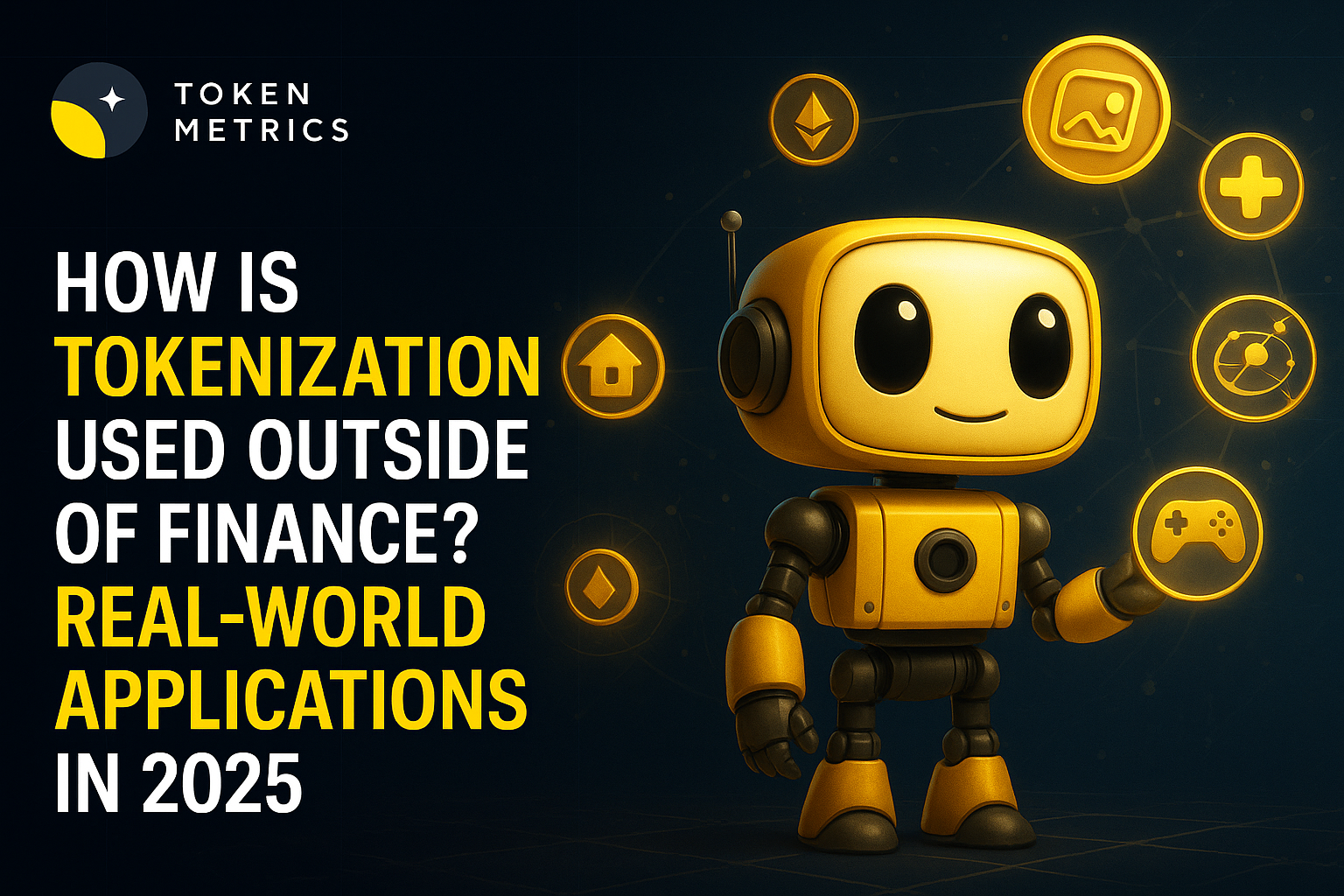

When most people hear the term tokenization, their minds often jump straight to cryptocurrencies and financial assets. However, the benefits of tokenization—such as increased liquidity, improved transparency, and greater efficiency—are now being realized across a wide range of industries. In 2025, tokenization has clearly evolved far beyond its financial roots, reshaping industries as diverse as healthcare, agriculture, supply chain management, and intellectual property, thanks to blockchain networks that provide the secure, decentralized infrastructure enabling this transformation. Understanding how is tokenization used outside of finance is becoming essential not only for investors but also for entrepreneurs and professionals navigating the ongoing digital transformation that is redefining how value is created, managed, and exchanged.
Beyond Finance: The Tokenization Revolution Expands
At its core, tokenization refers to the process of creating a digital representation of real-world assets as a digital token on a blockchain network. A digital token acts as a secure, tradable digital certificate of ownership or rights over assets. Each token represents a specific ownership right or unit of value in an asset, making transfers secure and verifiable. These assets can include financial instruments, physical goods, intangible assets, and other assets, highlighting the broad applicability of tokenization. While the market for tokenized assets—excluding stablecoins—has already reached about $25 billion by mid-2025, projections estimate this figure will soar to $2.08 trillion by the end of the year and an astonishing $13.55 trillion by 2030.
Crucially, the most exciting growth is not confined to traditional finance or financial institutions. As Vlad Tenev, CEO of Robinhood, aptly put it at the Token2049 conference, “Tokenization is like a freight train. It can’t be stopped, and eventually it’s going to eat the entire financial system.” Yet, this freight train is not stopping there—it is transforming every sector it touches by enabling increased liquidity, fractional ownership, enhanced transparency, and operational efficiency.
Healthcare: Transforming Medical Data and Research
The healthcare industry is one of the most promising sectors benefiting from asset tokenization. Tokenization enables healthcare providers to manage assets—both physical and digital—more efficiently by converting them into secure, tradeable digital tokens, simplifying ownership, transfer, and security processes. By leveraging blockchain technology and smart contracts, healthcare providers and researchers can address longstanding challenges related to data security, funding, and intellectual property management.
Medical Records and Data Security
Tokenizing medical records creates a secure, decentralized system for managing sensitive data. Unlike traditional centralized databases that are vulnerable to data breaches and unauthorized access, blockchain-based tokenized records give patients control over their data while allowing authorized healthcare professionals seamless and instant access. This enhanced data security reduces the risk of data breaches and fosters trust, improving patient care coordination without compromising privacy.
Pharmaceutical Research and Development
Pharmaceutical research has traditionally been dominated by large financial firms and venture capitalists, often limiting funding opportunities for innovative projects. Asset tokenization introduces new revenue streams by enabling researchers to raise capital through tokenized investment pools. This democratizes access to funding, accelerates research cycles, and allows smaller investors to participate in promising ventures. Moreover, intellectual property such as pharmaceutical patents and research outcomes can be tokenized, allowing creators to license or sell rights more efficiently. Smart contracts automate royalty payments, ensuring ongoing compensation to patent holders and enhancing transparency compared to conventional licensing agreements.
Medical Equipment and Asset Management
Hospitals and healthcare institutions are also using tokenization to manage high value assets like medical equipment. By tokenizing these assets, institutions can create fractional ownership or leasing arrangements, generating liquidity from otherwise illiquid equipment. Tokenization streamlines asset transfer, making it faster, more transparent, and cost-effective for hospitals and equipment providers by enhancing the traceability and efficiency of ownership changes. Token holders can earn returns from leasing fees, while hospitals benefit from flexible financing options and operational cost savings.
Supply Chain: Transparency from Origin to Consumer
Supply chains are complex and often opaque, making it difficult to verify authenticity, track provenance, and ensure efficiency. Tokenization offers a powerful solution by providing a transparent, immutable record of every step in the supply chain, and, when combined with blockchain technology, it can significantly facilitate faster and more transparent cross border transactions.
Product Authentication and Anti-Counterfeiting
Assigning digital tokens to products enables real-time tracking and verification of authenticity. For instance, the journey of precious metals or diamonds can be fully tokenized, creating a distributed ledger record that proves ethical sourcing and provenance. Luxury goods manufacturers are increasingly adopting this approach to combat counterfeiting, a problem that costs the industry billions annually.
Inventory Management and Trade Finance
Tokenizing inventory and goods in transit enhances transparency and facilitates more efficient trade finance. Platforms such as Centrifuge have pioneered tokenization initiatives that convert invoices and receivables into digital tokens, which financial institutions and asset managers can finance. By enabling instant settlement, tokenization reduces delays typically associated with traditional settlement processes and improves liquidity for businesses. This model transforms traditional invoice financing by reducing transaction costs, improving risk management, and increasing capital efficiency through transparent, decentralized processes.
Agriculture: Democratizing Farm Finance
Agriculture has historically faced challenges in accessing capital and managing risks associated with crop production. Tokenization is changing this by enabling innovative financing and risk management solutions. When tokenizing assets in the agricultural sector, it is crucial to consider legal considerations and regulatory compliance to ensure successful and sustainable implementation.
Crop and Harvest Tokenization
Farmers can now tokenize crops before harvest, offering fractional ownership to investors and unlocking new capital sources. Malaysia’s DatoDurian project, which completed its private sale in early 2025, exemplifies this trend by allowing retail investors to gain exposure to premium durian farms through tokenized assets. This approach provides farmers with upfront capital without resorting to predatory lending and offers investors opportunities to participate in agricultural yields previously inaccessible. Additionally, smart contracts enable automated crop insurance payouts based on verified data such as weather conditions, streamlining risk management and reducing bureaucracy.
Commodity Trading Platforms
Tokenizing commodities like gold, agricultural products, and other raw materials increases liquidity and transparency in global markets. By leveraging blockchain technology, tokenization leads to lower costs for trading and managing commodities, as it reduces expenses related to traditional asset transfers and administrative processes. Fractional ownership through digital tokens allows smaller investors to access these asset classes, improving price discovery and overall market efficiency.
Art and Collectibles: Fractional Ownership for All
The art market has traditionally been exclusive and opaque, limiting access to high-value assets. Tokenization is democratizing this space by enabling fractional ownership and transparent royalty management.
Democratizing Fine Art Investment
High-value artworks can be divided into tokenized shares, allowing multiple investors to own fractions of masterpieces by renowned artists such as Picasso or Warhol. This fractional ownership not only broadens access to blue-chip art investments but also creates liquidity in a historically illiquid market. Platforms specializing in luxury asset tokenization have reported liquidity increases of up to 300% after listing artworks as digital tokens.
Artist Royalties and Intellectual Property
Artists can tokenize their intellectual property rights, including copyrights and future revenue streams. Smart contracts embedded in digital tokens automate royalty payments each time an artwork is resold, a significant improvement over traditional models where artists rarely benefit from secondary sales. The intellectual property tokenization sector is growing rapidly, offering investors uncorrelated, revenue-backed opportunities.
Sports, Entertainment, and Gaming
Tokenization is revolutionizing fan engagement and digital ownership in sports, entertainment, and gaming industries, creating new business models and revenue streams.
Fan Tokens and Team Ownership
Fans can purchase digital tokens representing fractional ownership or voting rights in their favorite sports teams or entertainment projects. These tokens often grant holders influence over team decisions, merchandise designs, or concert setlists, fostering deeper engagement and providing teams and artists with alternative funding sources.
Gaming Assets and Play-to-Earn
In-game items, characters, and entire ecosystems can be tokenized, allowing players true ownership of digital assets transferable across platforms. Play-to-earn models reward gamers with digital tokens that have real-world value, transforming gaming into a source of income and expanding the utility of digital wallets.
Education and Research Funding
Tokenization is also impacting education by enabling decentralized funding of scholarships, research grants, and educational programs. This approach enhances transparency and efficiency in allocating resources, while allowing investors and philanthropists to support causes aligned with their values and potentially earn returns from successful research outcomes.
Token Metrics: Your Intelligence Hub for the Tokenization Economy
As tokenization broadens to encompass real estate, agriculture, healthcare, art, and many other sectors, investors require sophisticated tools to navigate this growing market. Token Metrics, a leading crypto trading and analytics platform, offers comprehensive intelligence to evaluate tokenization initiatives across asset classes.
Discover Crypto Gems with Token Metrics AI
Token Metrics uses AI-powered analysis to help you uncover profitable opportunities in the crypto market. Get Started For Free
The Future: Tokenization Everywhere
The expansion of tokenization beyond finance signifies a fundamental shift in how assets are represented, transferred, and monetized. Digital assets are at the core of this transformation, enabling new ways to create, trade, and regulate value across markets. By creating digital tokens that represent ownership or rights over real world assets, industries are experiencing:
- Increased liquidity in markets traditionally characterized by illiquid assets
- Fractional ownership that democratizes access to high-value assets like real estate, fine art, and precious metals
- Enhanced transparency that reduces fraud and improves trust through distributed ledger technology
- Operational efficiency by automating complex transactions and corporate actions via smart contracts
- Broader access to global investors by breaking down geographic and regulatory barriers
Tokenization is also revolutionizing financial products such as mutual funds, private equity, money market funds, tokenized money market funds, and security tokens, making these digital assets more accessible and efficient. By converting both physical and digital assets into secure, tradeable digital representations, tokenization enables businesses and individuals to better manage assets, streamline transactions, and reduce reliance on traditional intermediaries.
Regulatory frameworks are evolving worldwide to accommodate these innovations, with jurisdictions such as Singapore, Dubai, and the European Union establishing clear guidelines for asset tokenization. As legal experts and financial firms collaborate to address security risks, legal considerations, and regulatory compliance, tokenization is poised to accelerate across asset classes and industries.
Positioning for the Tokenized Economy
To thrive in this rapidly evolving landscape, stakeholders must:
- Commit to continuous education about emerging tokenization use cases and platforms.
- Utilize sophisticated analytics, such as those provided by Token Metrics, to evaluate diverse opportunities.
- Diversify exposure across multiple tokenized asset classes, including traditional assets and intangible assets.
- Stay informed about evolving regulatory frameworks and compliance requirements.
- Conduct thorough due diligence on platforms to ensure security, operational cost savings, and seamless integration.
The tokenization revolution is no longer confined to financial services—it is reshaping business processes, capital markets, and asset ownership globally. With tokenized assets projected to reach trillions of dollars in value over the next decade, understanding how is tokenization used outside of finance is essential for anyone aiming to participate in the future economy.
Ready to navigate the future of tokenization? Visit tokenmetrics.com to access the research, analytics, and insights you need to capitalize on opportunities across the expanding tokenization landscape.
AI Agents in Minutes, Not Months

.svg)


%201.svg)


.png)





.svg)
No Credit Card Required


Online Payment


SSL Encrypted
.png)
Token Metrics Media LLC is a regular publication of information, analysis, and commentary focused especially on blockchain technology and business, cryptocurrency, blockchain-based tokens, market trends, and trading strategies.
Token Metrics Media LLC does not provide individually tailored investment advice and does not take a subscriber’s or anyone’s personal circumstances into consideration when discussing investments; nor is Token Metrics Advisers LLC registered as an investment adviser or broker-dealer in any jurisdiction.
Information contained herein is not an offer or solicitation to buy, hold, or sell any security. The Token Metrics team has advised and invested in many blockchain companies. A complete list of their advisory roles and current holdings can be viewed here: https://tokenmetrics.com/disclosures.html/
Token Metrics Media LLC relies on information from various sources believed to be reliable, including clients and third parties, but cannot guarantee the accuracy and completeness of that information. Additionally, Token Metrics Media LLC does not provide tax advice, and investors are encouraged to consult with their personal tax advisors.
All investing involves risk, including the possible loss of money you invest, and past performance does not guarantee future performance. Ratings and price predictions are provided for informational and illustrative purposes, and may not reflect actual future performance.