Crypto Basics

How to Buy Cryptocurrency in 2025: A Beginner's Step-by-Step Guide - Why Token Metrics Is the Best Crypto Trading and Research Platform to Start

Learn how to buy cryptocurrency step-by-step in 2025. Discover the best crypto trading platform—Token Metrics—for best crypto investing, AI crypto price predictions, and crypto moonshot tokens.
Token Metrics Team
8 min
MIN

Cryptocurrency has gone from niche curiosity to mainstream financial instrument. As of 2025, millions of people across the globe are investing in digital assets like Bitcoin, Ethereum, and thousands of altcoins. But for beginners, the first question remains: How do you buy cryptocurrency safely and smartly?

This highly informative guide walks you through everything you need to know about buying cryptocurrency in 2025 — from setting up your first account to using AI-powered Crypto trading and research platforms like Token Metrics for smarter investing.

🔍 What Is Cryptocurrency?

Cryptocurrency is a form of digital money that uses blockchain technology to enable secure, decentralized transactions. Unlike fiat currencies controlled by central banks, crypto is powered by peer-to-peer networks and verified by cryptographic algorithms.

Popular cryptocurrencies include:

  • Bitcoin (BTC) – The original digital gold
  • Ethereum (ETH) – Smart contract platform
  • Solana (SOL), Cardano (ADA), XRP – High-utility altcoins
  • TMAI – The utility token of Token Metrics

🧭 How to Buy Cryptocurrency: Step-by-Step Guide

Buying crypto in 2025 is easier than ever. Here’s a clear roadmap to help you get started:

✅ Step 1: Choose a Trusted Crypto Platform

The first step is selecting a reliable platform for buying cryptocurrency. You have two main options:

1. Crypto Exchanges

These include centralized platforms like:

  • Token Metrics
  • Coinbase
  • Binance
  • Kraken
  • Bitstamp

2. AI Crypto Platforms (Best Option in 2025)

Token Metrics is a powerful platform that combines AI research, real-time market insights, and trading features in one place. It helps beginners avoid risky coins and focus on data-backed opportunities.

✅ Step 2: Create and Verify Your Account

Once you've chosen a platform:

  • Register with your email and create a strong password
  • Complete KYC (Know Your Customer) verification by uploading an ID
  • Enable 2-Factor Authentication (2FA) for security

Token Metrics also allows wallet integration for seamless tracking and trading.

✅ Step 3: Fund Your Account

You can deposit money using:

  • Bank Transfer (ACH, SEPA)
  • Credit or Debit Card
  • PayPal or Apple Pay (on some platforms)
  • Stablecoins or other crypto (if you already have a wallet)

On Token Metrics, users can also connect their DeFi wallets and use swap integrations to convert assets instantly.
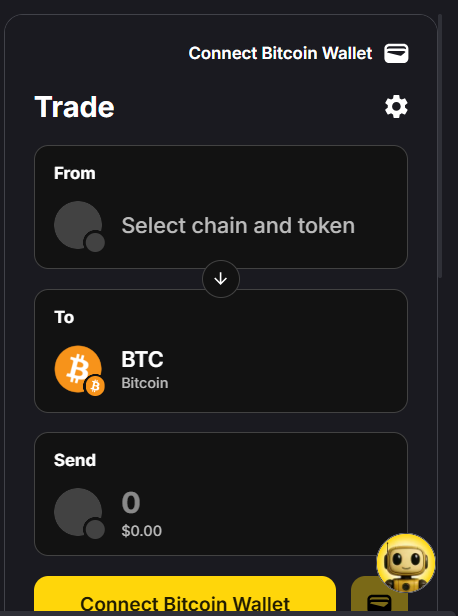
✅ Step 4: Pick the Right Cryptocurrency

With over 20,000 coins on the market, choosing the right one is critical.

That’s where Token Metrics shines:

  • Use the Ratings Page to view AI-generated grades for thousands of tokens
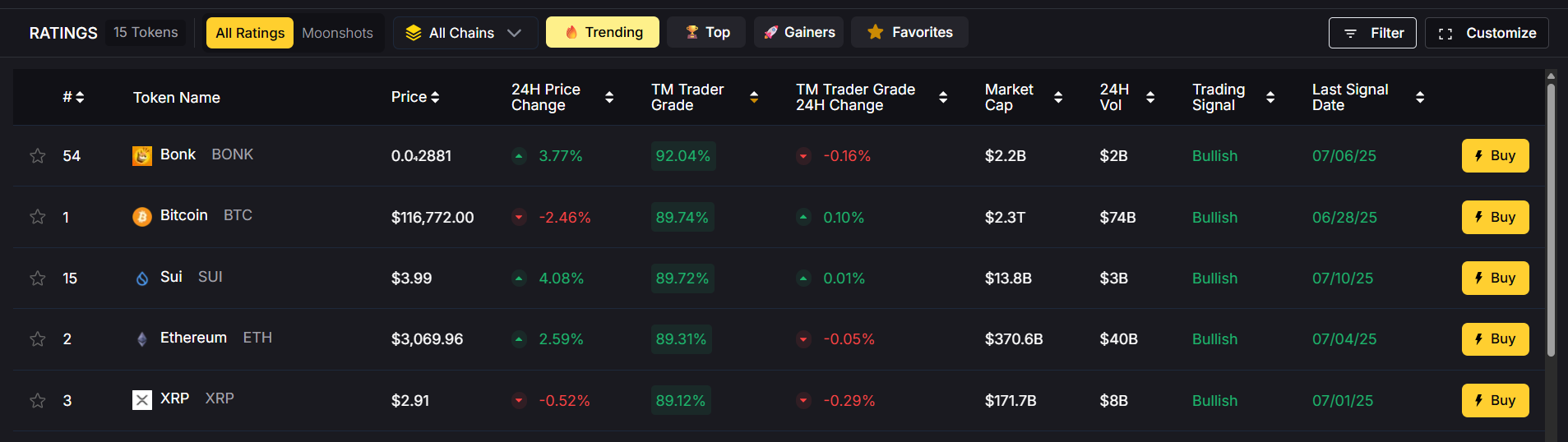

  • Navigate to the Moonshots Tab for under-the-radar altcoins with 10x–100x potential
  • Check the Investor and Trader Grades to compare short-term and long-term opportunities
  • View real-time data on volume, market cap, ROI since entry, and technical signals

✅ Step 5: Make Your Purchase

Once you've chosen your coin:

  • Enter the amount (e.g., $500 worth of ETH)
  • Choose your payment method
  • Review the transaction and confirm

Token Metrics offers a built-in Buy button and Swap Widget so you can trade directly from the Moonshots page — no need to leave the platform.

✅ Step 6: Store Your Cryptocurrency Securely

There are two main storage options:

  • Hot Wallets – Software-based, ideal for active trading
  • Cold Wallets – Hardware devices like Ledger and Trezor for long-term storage

Token Metrics supports integrations with wallets and encourages users to withdraw assets to secure storage after trading.

💡 Tips for Buying Crypto in 2025

  1. Start small – Don’t invest more than you can afford to lose.
  2. Use Dollar-Cost Averaging (DCA) – Invest small amounts regularly instead of going all in.
  3. Diversify – Don’t put all your funds into one coin.
  4. Follow trends – Use Token Metrics to identify top-performing sectors like AI, DeFi, and gaming.

🤖 Why Token Metrics Is the Best Platform for Buying and Trading Crypto

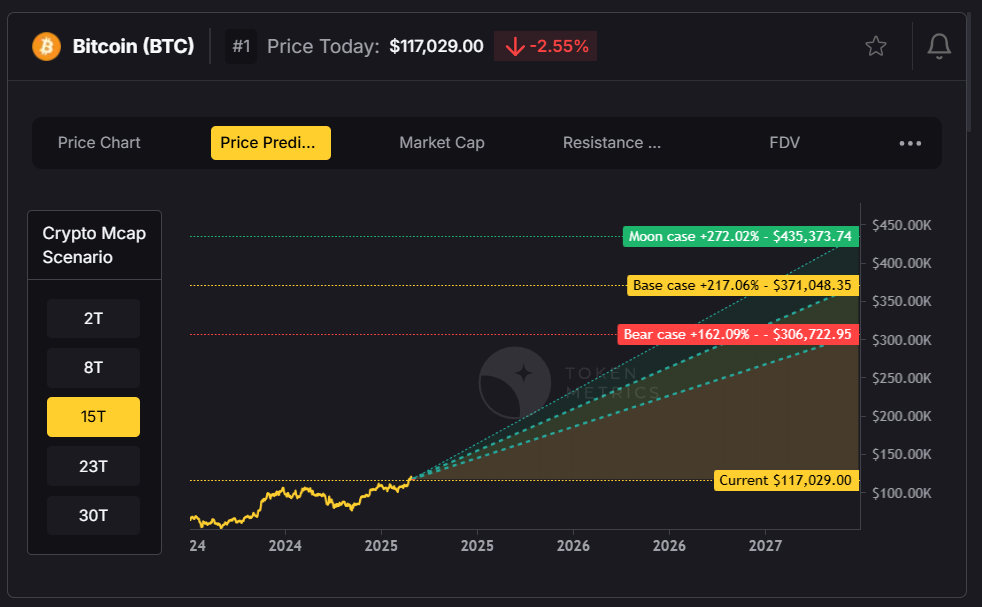
✅ 1. AI-Powered Price Predictions

Token Metrics uses advanced machine learning models trained on 80+ data points to generate real-time price forecasts.
✅ 2. Trader & Investor Grades

Each token is evaluated daily based on:
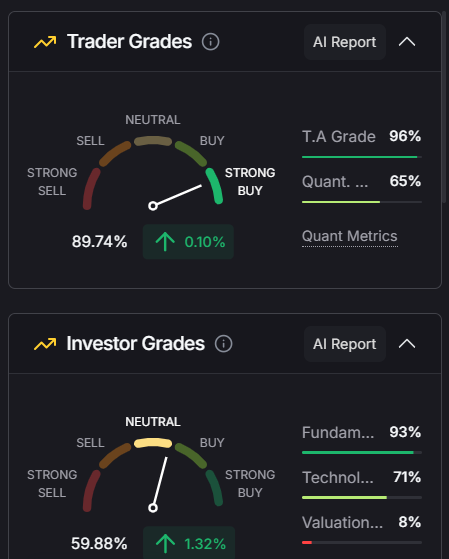
  • On-chain data
  • Technical indicators
  • Sentiment analysis
  • Developer activity

This helps you filter out hype and focus on fundamentals.

✅ 3. Moonshots Finder

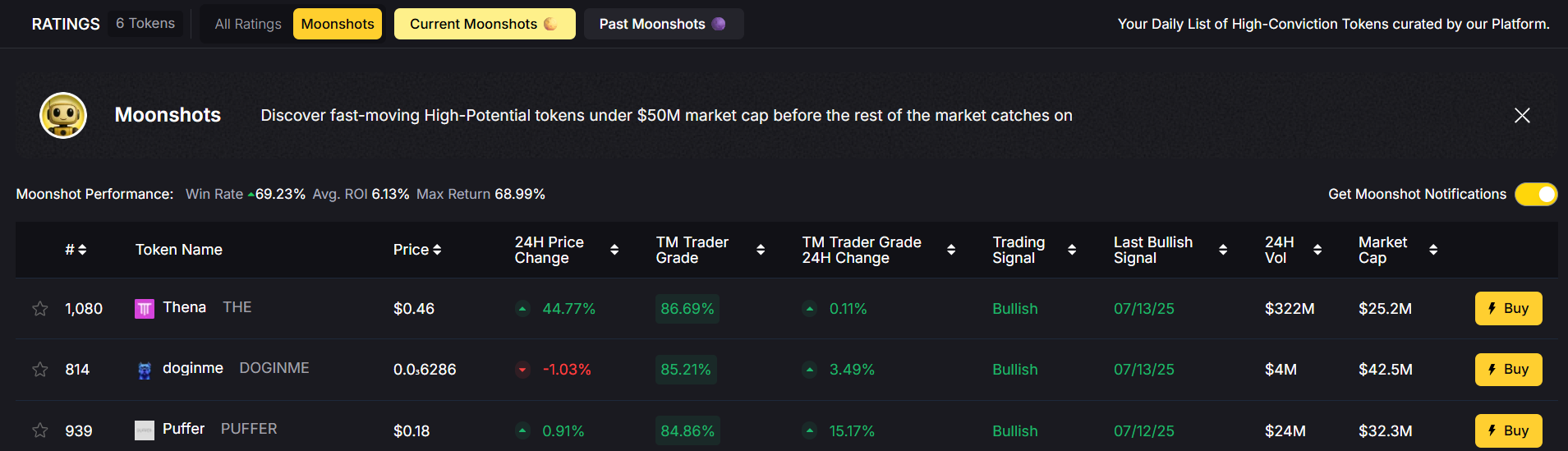
Looking for 100x altcoins? The Moonshots tab curates a list of tokens with the highest potential, based on proprietary AI momentum signals.
✅ 4. Real-Time Alerts

Get notified when:
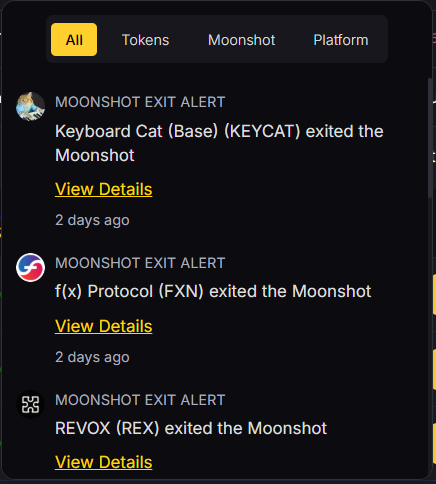
  • A token hits your target price
  • Bullish or bearish signals trigger
  • Grades change rapidly

Alerts are delivered via:

  • Email
  • Telegram
  • Discord
  • SMS

✅ 5. One-Click Trading

No more copy-pasting contract addresses or juggling wallets. Just click Buy directly from the Token Metrics dashboard.

✅ 6. API Access for Advanced Users

Developers and institutions can connect via the MCP Server, which standardizes access across:

  • OpenAI Agents
  • Cursor IDE
  • Claude Desktop
  • GraphQL UIs like Windsurf
  • CLI tools

🔐 How to Stay Safe When Buying Crypto

  1. Avoid phishing links
  2. Use only verified exchanges
  3. Store private keys securely
  4. Double-check recipient addresses before sending crypto

Token Metrics adds a layer of safety by helping you avoid scam tokens and showing real-time AI insights before you buy.

📈 Crypto Investment Trends to Watch in 2025

  • AI-Powered Trading Bots
  • Real-World Asset (RWA) Tokenization
  • Bitcoin and Ethereum ETFs
  • Layer-2 Scaling (Arbitrum, Optimism)
  • Decentralized Social & Gaming Tokens

With so many innovations, it's crucial to use a tool like Token Metrics to stay ahead of the curve.

🏁 Final Thoughts

Buying cryptocurrency in 2025 is simple, but succeeding in crypto requires strategy. Whether you're a beginner or a seasoned trader, using a smart platform like Token Metrics will help you:

  • Avoid rookie mistakes
  • Discover winning tokens
  • Time your entries and exits using AI
  • Maximize your ROI in bull and bear markets

Don’t just buy crypto. Buy it with intelligence.

Build Smarter Crypto Apps &
AI Agents in Minutes, Not Months
Real-time prices, trading signals, and on-chain insights all from one powerful API.
Grab a Free API Key
Token Metrics Team
Token Metrics Team

Recent Posts

Research

APIs Explained: How They Work and Why They Matter

Token Metrics Team
5
MIN

APIs power modern software: they let apps talk to each other, enable mobile experiences, connect to cloud services, and feed AI agents. Understanding what an API is and how it operates helps product builders, researchers, and technical decision-makers evaluate integrations with clarity.

What is an API?

An API, or application programming interface, is a set of rules and contracts that defines how software components communicate. At its core an API exposes functionality or data so that another program can consume it without needing to understand internal implementation. Think of an API as a menu in a restaurant: you don’t need to know how the chef cooks — you just place an order and receive a result according to the menu’s options.

APIs come in many shapes: web APIs (HTTP-based), library or framework APIs (functions callable within code), and system APIs (operating system calls). In web and cloud contexts, developers most often work with REST, GraphQL, gRPC, and WebSocket APIs.

How APIs work: common patterns and protocols

At a technical level, an API defines the request and response pattern. For web APIs this typically involves:

  • Endpoint: a URL that represents a resource or action.
  • Method: an operation such as GET, POST, PUT, DELETE (for REST) or query/mutation in GraphQL.
  • Payload: the data sent with a request (JSON, XML, binary).
  • Response: the data returned, status codes, and error information.

APIs also incorporate metadata: authentication tokens, rate limits, and versioning headers. Protocol choice matters: REST is simple and widely supported; GraphQL offers flexible queries; gRPC is efficient for high-throughput, typed services; WebSockets suit bidirectional, low-latency streams. The right pattern depends on latency, payload size, and developer ergonomics.

API use cases: where APIs add value

APIs are the connective tissue across many domains. Typical use cases include:

  • Web and mobile apps: fetching user profiles, syncing data, and processing payments.
  • Microservices: internal services communicate via APIs to form scalable systems.
  • Data platforms: exposing analytical results, telemetry, and ETL endpoints.
  • AI and agents: models consume APIs for context, data enrichment, and action execution.
  • Crypto and on-chain tooling: price feeds, on-chain analytics, and wallet services often expose crypto APIs so applications can read ledger data and market signals.

These examples highlight how APIs abstract complexity and enable composability: a developer can integrate capabilities from third parties without rebuilding them.

Design and security: best practices to consider

Designing an API involves functionality, but security and reliability are equally important. Key practices include:

  • Authentication and authorization: use tokens, scopes, and role-based access control to limit what callers can do.
  • Input validation: validate and sanitize inputs to prevent injection and abuse.
  • Rate limiting and quotas: protect backends from spikes and enforce fair use.
  • Clear versioning: avoid breaking changes by introducing versioned endpoints or compatibility layers.
  • Observability: log requests, measure latency, and expose metrics to detect failures early.

Security hardening often includes transport encryption (TLS), secure key management, and routine audits. For APIs that touch financial or sensitive data, layered controls and monitoring are essential to reduce operational risk.

How to evaluate and choose an API

When comparing APIs, use a practical checklist:

  1. Documentation quality: clear examples and error descriptions reduce implementation friction.
  2. Latency and throughput: test typical response times and how the API behaves under load.
  3. Data freshness and coverage: confirm how often data updates and whether it covers required assets or regions.
  4. Security model: ensure authentication mechanisms and compliance posture meet your requirements.
  5. Cost and quotas: consider pricing tiers, rate limits, and overage behavior for production use.

For AI-driven workflows, examine whether the API supports batch access, streaming, and programmatic filtering so models can retrieve relevant context efficiently.

Build Smarter Crypto Apps & AI Agents with Token Metrics

Token Metrics provides real-time prices, trading signals, and on-chain insights all from one powerful API. Grab a Free API Key

FAQ: What is an API?

An API is a defined interface that allows software components to communicate. It specifies how to request data or services and what responses to expect, enabling integration without exposing internal code.

FAQ: What are REST, GraphQL, and gRPC?

REST is a resource-oriented, HTTP-based approach. GraphQL lets clients request precisely the data they need via queries. gRPC uses binary protocols and strongly typed contracts for efficient inter-service communication—each fits different performance and flexibility needs.

FAQ: How do APIs handle authentication?

Common methods include API keys, OAuth 2.0 tokens, JWTs (JSON Web Tokens), and mutual TLS. Each balances security and developer convenience differently; choose based on threat model and integration scope.

FAQ: Can APIs be used for AI agents?

Yes. AI agents consume APIs for data enrichment, action execution, and orchestration. APIs that provide structured, low-latency data are particularly useful for agent workflows and real-time decision processes.

FAQ: What are common API failure modes?

Failures include rate-limit rejections, timeouts, partial data, authentication errors, and schema changes. Robust clients implement retries with backoff, graceful degradation, and schema validation to handle such scenarios.

FAQ: How should I test an API before integrating?

Perform functional tests, load tests, and end-to-end scenarios. Validate error handling, latency under expected traffic, and behavior at quota limits. Use sandbox keys when available to avoid impacting production systems.

Disclaimer

This article is for educational and informational purposes only and does not constitute financial, legal, or professional advice. Evaluate technologies and services in the context of your own requirements and constraints.

Research

What Is an API? A Practical Guide

Token Metrics Team
4
MIN

APIs power modern software, enabling apps to share data, automate workflows, and connect services. Whether you use a weather feed, social login, or a crypto data stream, understanding what an API is helps you design, evaluate, and integrate digital products more effectively.

What is an API?

An API, or application programming interface, is a defined set of rules that lets one software system communicate with another. At its simplest, an API specifies how requests are structured, which methods are available, and how responses are returned. Developers use APIs to access functionality or data without needing to know internal implementation details.

Think of an API as a contract: it tells you the inputs required, the outputs to expect, and any constraints or error cases. This separation of concerns enables modular development, third-party integrations, and scalable ecosystems.

How APIs work: components and protocols

Most modern APIs expose endpoints—URLs or functions—that accept requests and return responses. Key components include:

  • Endpoints: Specific URLs or methods that provide a capability or data set.
  • Methods: Actions such as GET, POST, PUT, DELETE in HTTP-based APIs.
  • Payloads: Structured request and response bodies (commonly JSON).
  • Authentication: Keys, tokens, or OAuth flows that control access.
  • Rate limits: Constraints on usage to protect service availability.

Different protocols influence API behavior. REST uses resource-oriented URLs and standard HTTP verbs; GraphQL offers flexible queries over a single endpoint; gRPC supports high-performance, binary-protocol calls suitable for microservices. Choosing a protocol depends on latency requirements, payload complexity, and developer experience.

Common API use cases: web, mobile, and crypto

APIs underpin many real-world scenarios:

  • Web and mobile apps: Fetching user data, processing payments, or embedding maps.
  • Microservices: Internal APIs let services communicate within distributed systems.
  • Third-party integrations: Social logins, analytics platforms, and CRM synchronization.
  • Data feeds and analytics: Market prices, news, and on-chain metrics delivered via APIs enable automated research pipelines.

In the crypto space, APIs expose on-chain data, aggregated price feeds, and derived indicators. Developers can combine multiple APIs to build dashboards, bots, or AI research agents. When evaluating crypto APIs, consider latency, historical coverage, and data provenance.

For example, research teams often use AI-driven platforms to enrich raw feeds with signals and insights. One such platform, Token Metrics, integrates data and models to support comparative analysis and idea generation.

Choosing and evaluating APIs: practical criteria

When selecting an API, use a structured evaluation framework:

  1. Functionality — Does the API provide required endpoints and historical coverage?
  2. Reliability — Look at uptime SLAs, error rates, and redundancy.
  3. Data quality — Verify schemas, sample payloads, and provenance.
  4. Performance — Measure latency and throughput relevant to your use case.
  5. Security and access control — Inspect auth models, encryption, and rate limits.
  6. Costs and licensing — Understand pricing tiers and any usage restrictions.
  7. Documentation and SDKs — Clear docs and client libraries speed integration.

Combine quantitative tests (latency, success rate) with qualitative checks (docs clarity, community support). For complex builds, sandbox environments and trial keys help validate assumptions before full integration.

Build Smarter Crypto Apps & AI Agents with Token Metrics

Token Metrics provides real-time prices, trading signals, and on-chain insights all from one powerful API. Grab a Free API Key

FAQ: What is an API?

An API (application programming interface) is a specification that allows software systems to request and exchange data or trigger actions without exposing internal code. It defines endpoints, parameters, and response formats.

FAQ: How is a REST API different from GraphQL?

REST organizes interactions around resources and uses multiple endpoints; clients request predefined payloads. GraphQL exposes a single endpoint where clients define the shape of the response, reducing over- or under-fetching in many scenarios.

FAQ: What security measures should APIs use?

Common measures include HTTPS/TLS, API keys or OAuth tokens, rate limiting, input validation, and monitoring for unusual patterns. Secure defaults and least-privilege access reduce attack surface.

FAQ: Can I use public APIs for production applications?

Many public APIs are production-ready if they provide SLAs, reliable documentation, and appropriate rate limits. Validate through trials and consider failover strategies and caching for resilience.

FAQ: How do APIs support automation and AI?

APIs provide structured, machine-readable data and endpoints that automation tools and AI agents can call programmatically. Combining APIs with model inference enables workflows like signal generation, backtesting, and report automation.

FAQ: What are rate limits and why do they matter?

Rate limits control how many requests a client can make in a time window to ensure fair usage and protect service availability. Exceeding limits typically leads to temporary blocking or throttled responses.

Disclaimer

This article is educational and informational only. It does not constitute financial, legal, or investment advice. Readers should perform their own research and consult appropriate professionals before making decisions.

Research

APIs Explained: What They Are and How They Work

Token Metrics Team
5
MIN

APIs power much of the software you use daily — from fetching weather data in a mobile app to connecting decentralized exchanges to analytics dashboards. If youve ever wondered what an API is, why developers rely on them, and how they shape the modern web and crypto ecosystems, this guide breaks down the core concepts, common patterns, and practical steps to evaluate and use APIs effectively.

What is an API?

An API (Application Programming Interface) is a set of rules and protocols that lets different software components communicate. At a high level, an API defines how a caller requests data or functionality and how the provider responds. APIs abstract implementation details so developers can use capabilities — like retrieving market prices or sending messages — without needing to understand the providers internals.

Think of an API as a contract: a client sends a request in a specified format, and the service returns structured responses. Contracts can include endpoints, expected parameters, authentication methods, rate limits, error codes, and data schemas.

How APIs Work — a Technical Overview

Most modern APIs use web protocols (HTTP/HTTPS) and standard formats such as JSON. A typical request cycle looks like this:

  1. Client constructs a request URL or payload, optionally including authentication credentials (API key, OAuth token).
  2. Client sends the request to an API endpoint using a method like GET, POST, PUT, or DELETE.
  3. Server validates the request, applies business logic, and returns a response with data or an error code.
  4. Client parses the response and integrates it into the application.

APIs can enforce rate limits, usage quotas, and schema validation. In production systems, observability (logging, traces, metrics) and secure transport (TLS) are standard to ensure reliability and confidentiality.

Types of APIs & Common Patterns

APIs come in several styles, each with trade-offs:

  • REST (Representational State Transfer): Resource-oriented, uses HTTP verbs and status codes; widely adopted and easy to cache.
  • GraphQL: Lets clients request exactly the fields they need; reduces over-fetching but increases server complexity.
  • gRPC / RPC: Binary protocol for high-performance communication, often used for internal microservices.
  • Webhooks: Server-initiated callbacks to notify clients of events, useful for real-time notifications.

In crypto and finance, youll see specialized APIs that provide order book data, historical trades, on-chain events, and wallet actions. Public APIs are accessible with minimal barriers, while private APIs require credentials and stricter access controls.

How to Evaluate and Use an API (Practical Steps)

Choosing and integrating an API involves technical, operational, and security considerations. A concise evaluation framework:

  1. Functionality: Does the API provide the endpoints and data formats you need? Review sample responses and SDKs.
  2. Performance & Reliability: Check latency, uptime SLA, and historical performance metrics if available.
  3. Security: Verify authentication schemes, encryption, data retention policies, and whether the provider supports IP allowlists or role-based access.
  4. Costs & Rate Limits: Understand free tier limits, pricing per request, and billing granularity to budget accordingly.
  5. Documentation & Support: High-quality docs, examples, and community support accelerate integration and troubleshooting.

When prototyping, use tools like Postman or curl to explore endpoints. Automate tests to validate responses and simulate rate limits. For production, incorporate retries with exponential backoff, circuit breakers, and monitoring to handle transient failures gracefully.

AI-driven research tools can speed analysis of API datasets by surfacing patterns and summarizing changes. For instance, applications that combine market or on-chain APIs with AI models can transform raw feeds into signals or structured insights. An example of a research platform often used for crypto analysis is Token Metrics, which demonstrates how analytics layers can complement API outputs without replacing rigorous technical validation.

Build Smarter Crypto Apps & AI Agents with Token Metrics

Token Metrics provides real-time prices, trading signals, and on-chain insights all from one powerful API. Grab a Free API Key

FAQ: What is an API?

An API (Application Programming Interface) is a documented way for software components to request services or data from one another. In web contexts, APIs typically expose endpoints over HTTP that return structured data formats such as JSON.

FAQ: How do APIs stay secure?

Common security practices include using HTTPS/TLS, API keys or OAuth for authentication, rate limiting, input validation to prevent injection attacks, and strong access control policies. Regular audits and logging help detect anomalies.

FAQ: Should I use REST or GraphQL?

REST is simple and cache-friendly; GraphQL is flexible for clients that need selective fields. Choose based on client requirements, caching needs, and team familiarity. Both can coexist in larger systems.

FAQ: How do I test an API integration?

Start with manual exploration (Postman, curl), then write automated tests for schema, error handling, rate limit behavior, and performance. Mock external APIs during unit testing and run contract tests during CI/CD.

FAQ: How are APIs used in crypto applications?

Crypto apps use APIs to fetch market prices, execute orders, read on-chain data, and stream events. Reliable APIs reduce complexity for developers but require careful handling of latency, consistency, and security.

Disclaimer

This article is for educational and informational purposes only and does not constitute investment, legal, or professional advice. Content describes technical concepts and practical evaluation steps for APIs; readers should perform independent research and consult qualified professionals when needed.

Choose from Platinum, Gold, and Silver packages
Reach with 25–30% open rates and 0.5–1% CTR
Craft your own custom ad—from banners to tailored copy
Perfect for Crypto Exchanges, SaaS Tools, DeFi, and AI Products