





Market Cap Weighted Indices Explained: Why Size Matters in Crypto
%201.svg)
%201.svg)
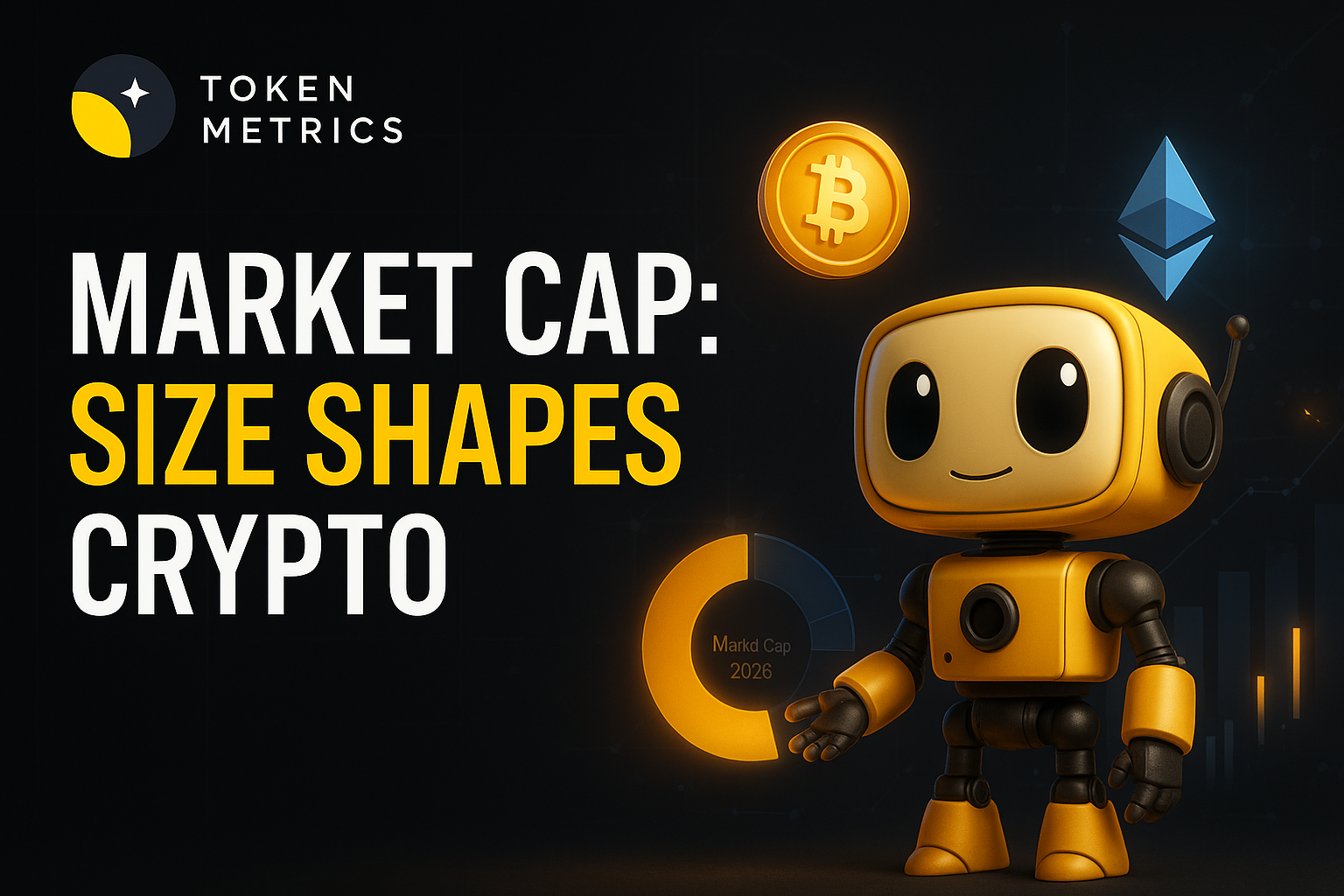

In the rapidly evolving cryptocurrency market of 2025, where total market capitalization has surpassed $4 trillion and over 20,000 digital assets compete for investor attention, understanding how to construct a sensible portfolio has never been more critical. Bitcoin, with its big market cap, continues to set the tone for the industry, highlighting how big assets play a crucial role in shaping the crypto landscape. One of the foundational principles guiding portfolio construction in this space is market cap weighting—a time-tested methodology borrowed from traditional finance that has become the backbone of most crypto index products. When comparing Bitcoin and Ethereum, it's important to note that ether, Ethereum's native asset, stands alongside Bitcoin as a leading digital asset. But what exactly does market cap weighting mean, and why does size matter so much in the digital asset ecosystem?
The total crypto market capitalization, while impressive, is still small compared to other asset classes such as gold, global equities, and real estate. This comparison to other asset classes and established asset classes underscores both the growth potential and the diversification benefits that crypto offers. The market's diversity is further highlighted by the presence of small assets, or small-cap cryptocurrencies, which add to the dynamic set of investment opportunities available. This article explores why size matters in crypto, delving into the importance of market capitalization, the role of institutional investors, and how market cap weighting shapes the crypto market landscape.
Understanding Market Cap Weighting: The Basics
Market capitalization weighting is an investment strategy where each asset in a portfolio is allocated in proportion to its total market value. In the context of crypto, a token’s market cap is calculated by multiplying its current price by the number of coins in its circulating supply. For example, Bitcoin, the largest cryptocurrency by market capitalization, has approximately 19.5 million coins in circulation. If each Bitcoin trades at $125,000, its market cap exceeds $2.4 trillion—making it the undisputed heavyweight of the crypto universe.
In a market cap-weighted index, Bitcoin’s dominant position means it receives the largest allocation in the portfolio. As of October 2025, Bitcoin commands over $2.36 trillion in market capitalization, which is more than five times higher than Ethereum’s $435 billion. These market cap values represent the significant financial weight of these digital assets. This stark concentration highlights how size matters in crypto, as portfolios naturally allocate more weight to the largest and most established assets. Both Bitcoin and Ethereum play a central role as digital currency within the market. This weighting scheme reflects the market consensus about the value and stability of each asset, allowing investors to align their exposure with the overall market structure.
Categories of Crypto Assets: The Building Blocks of Indices
The world of crypto is vast and constantly evolving, with thousands of digital assets competing for attention and investment. For investors seeking to build a diversified portfolio or understand the construction of market cap-weighted indices, it’s crucial to recognize the different categories of crypto assets and the unique roles they play within the market.
At the highest level, crypto assets can be grouped based on their core characteristics and use cases:
- Currencies: These are digital assets designed primarily as a medium of exchange or store of value. Bitcoin remains the most prominent example, often referred to as “digital gold” due to its large market capitalization and established position. Other examples include Litecoin and Bitcoin Cash, which aim to facilitate peer-to-peer transactions.
- Smart Contract Platforms: These assets power programmable blockchains that enable decentralized applications (dApps) and services. Ethereum is the leader in this category, with a significant share of total market capitalization. Other notable platforms include Solana, Avalanche, and Cardano, each offering unique technical features and ecosystems.
- Decentralized Finance (DeFi) Tokens: DeFi assets represent protocols that provide financial services—such as lending, borrowing, and trading—without traditional intermediaries. Examples include Uniswap, Aave, and Maker. These tokens often derive value from the activity and fees generated on their respective platforms.
- Stablecoins: Designed to maintain a stable value, usually pegged to fiat currencies like the US dollar, stablecoins such as USDT (Tether), USDC, and DAI play a critical role in providing liquidity and reducing volatility within the crypto market.
- Utility Tokens: These assets grant holders access to specific services or products within a blockchain ecosystem. For instance, Chainlink’s LINK token is used to pay for data services on its decentralized oracle network.
- Non-Fungible Tokens (NFTs) and NFT Platforms: While NFTs themselves are unique digital collectibles or assets, the platforms that support them—such as Flow or Immutable X—have their own tokens that may be included in broader indices.
Each of these categories contributes differently to the overall market capitalization of the crypto sector. For investors, understanding these distinctions is key to building a balanced portfolio that reflects both the diversity and the dynamic nature of digital assets. When constructing indices, providers often consider these categories to ensure representation across the full spectrum of use cases, from established currencies to emerging DeFi protocols.
By recognizing the building blocks of the crypto market, investors can better navigate the complexities of digital assets, make informed decisions, and respond to new opportunities as the market continues to grow and evolve.
Why Market Cap Weighting Dominates Index Construction
The widespread adoption of market cap-weighted crypto indices in 2025 is no accident. Several compelling reasons explain why platforms ranging from Bitwise to CoinShares and Token Metrics have embraced this methodology:
- Market Consensus Reflection: Market cap weighting inherently captures the collective wisdom of all market participants. When Bitcoin’s valuation reaches $2.36 trillion, that figure represents millions of buy and sell decisions by investors worldwide. A market cap-weighted index automatically incorporates this consensus, eliminating the need for subjective judgment about which projects deserve larger allocations.
- Automatic Rebalancing Benefits: As token prices fluctuate, their market caps adjust proportionally, naturally rebalancing the index. For instance, if Ethereum surges 50% while Bitcoin remains stagnant, Ethereum’s allocation in the index increases without manual intervention. This self-correcting mechanism reduces trading costs and tax implications while ensuring the index continuously reflects current market dynamics. Traders benefit from automatic rebalancing by having their portfolios adapt to market shifts without constant oversight, supporting more efficient trading strategies.
- Lower Volatility Through Size: Larger market cap cryptocurrencies like Bitcoin and Ethereum tend to be more stable and established compared to smaller altcoins, which often exhibit higher volatility. By weighting portfolios toward these bigger players, market cap indices offer investors a more conservative risk profile than equal-weight alternatives, which spread exposure evenly across assets regardless of size.
- Institutional Credibility: Market cap weighting is a familiar principle in traditional finance, used in major indices like the S&P 500. The goal is to provide security and stability for investors, making the approach attractive to institutions. For example, Token Metrics’s advanced index strategies underpin some of the largest regulated crypto products, including six out of eleven spot Bitcoin ETFs in the U.S., referencing over $125 billion in assets. This established market infrastructure supports broader adoption among institutional players.
The results achieved by using market cap weighting include improved index accuracy, reduced tracking error, and better alignment with overall market performance. Through widespread adoption, market cap weighting has achieved greater investor confidence and mainstream acceptance in the crypto space.
Token Metrics: Pioneering Intelligent Market Cap Strategies
While market cap weighting provides a solid foundation, Token Metrics has pushed the methodology further by delivering sophisticated, AI-powered index strategies that maximize its benefits while addressing inherent limitations. The advanced tech underpinning Token Metrics' platform leverages AI, machine learning, and crypto-native analysts to analyze over 6,000 projects, ensuring robust data protection and privacy. Token Metrics understands that effective market cap weighting requires more than simple mathematical calculations.
Their TM Global 100 Index exemplifies next-generation market cap weighting by implementing weekly rebalancing to capture the rapidly shifting market dynamics characteristic of 2024 and 2025. In these years, narrative rotations occur in weeks rather than quarters, with capital flowing swiftly between sectors such as AI agents, gaming tokens, and DePIN protocols. Frequent rebalancing ensures investors maintain optimal exposure to current market leaders.
What truly distinguishes Token Metrics’ approach is the integration of proprietary analytics with market cap methodology. Each token receives a Trader Grade for short-term potential and an Investor Grade for long-term viability. This dual grading system allows the platform to identify which market cap leaders deserve portfolio positions based on fundamental strength rather than speculation alone. Regular review of these analytics and ratings is crucial for making informed investment decisions. By fusing quantitative market cap data with qualitative analysis, Token Metrics creates indices that capture market consensus while filtering for quality.
Additionally, Token Metrics’s March 2025 launch of integrated trading functionality transformed the platform into an end-to-end solution. Investors can now research market cap-weighted opportunities, analyze proprietary ratings, and take action by executing trades directly—all within a single ecosystem. This seamless workflow eliminates friction and complexity that previously complicated index implementation.
The Concentration Question: Addressing Market Cap’s Limitation
Despite its advantages, market cap weighting is not without critics. The primary concern centers on concentration risk. In traditional top-10 crypto indices, Bitcoin and Ethereum typically comprise between 60% and 75% of total holdings due to their market dominance. This concentration means portfolios often move almost entirely with BTC and ETH, potentially missing opportunities in the broader crypto ecosystem. Over-concentration can also create problems, such as reduced diversification and increased vulnerability to market swings driven by just a few assets.
Token Metrics addresses this challenge through strategic index design. The TM Global 100’s broader universe of 100 tokens provides exposure to emerging narratives while maintaining market cap discipline. The set of assets included in the index is carefully selected to balance both established and emerging tokens. Notably, in 2024, the top 100 tokens by market cap outperformed top-10 concentrated indices by an average of 34%, with the performance gap widening during periods of rapid narrative rotation. This demonstrates that thoughtful expansion beyond the largest caps can enhance returns without abandoning market cap’s core principles. For the rest of the market outside the top holdings, this approach ensures that smaller, innovative projects are not left out of scope and can contribute to overall portfolio performance.
Some index providers also implement caps to prevent excessive concentration. For example, WisdomTree’s CF Crypto Market Index caps Bitcoin’s weight at 45% and the combined weight of BTC and ETH at 75%, ensuring meaningful exposure to the broader market. Similarly, the CoinShares-Compass Top 10 Crypto Market Index limits any single asset’s weighting to a maximum of 35%, balancing concentration with diversification.
Alternative Weighting Schemes: When Size Isn’t Everything
While market cap weighting dominates, alternative methodologies offer different trade-offs that investors should understand:
- Equal Weighting: This approach allocates identical percentages to each constituent, such as 10% to each of 10 tokens. Equal weighting provides more exposure to smaller projects but requires frequent rebalancing and can overweight assets with questionable fundamentals.
- Fundamental Weighting: MarketVector’s Token Metrics ’s Token Terminal Fundamental Cap-Weighted Strategy Index combines market capitalization with on-chain activity metrics like daily average fees and active users. This hybrid approach captures assets demonstrating genuine economic activity rather than pure speculation, blending market validation with fundamental data. The values used in fundamental weighting are often observed over time to assess their consistency and reliability.
- Risk-Adjusted Weighting: Some strategies adjust allocations based on volatility, reducing exposure to highly unstable assets even if they have large market caps, thereby managing risk more effectively. Performance and volatility are observed across different periods to refine these allocations.
Token Metrics’s analytical infrastructure supports investors in understanding these alternatives. By leveraging comprehensive on-chain data from multiple channels—including P2P networks, social media, and dApps—sentiment analysis, and trading volume metrics, the platform enables informed decisions about whether pure market cap weighting aligns with specific investment goals or if hybrid approaches are preferable. When categorizing or labeling blockchain data, the use of precise words is crucial for accurate sentiment analysis and data interpretation.
The 2025 Context: Market Cap in a Maturing Ecosystem
As cryptocurrency markets mature in 2025, market cap weighting has gained additional legitimacy. The launch of products like Reserve’s Large Cap Index DTF, which tracks approximately 90% of total cryptocurrency market cap through CF Benchmarks’ diversified-weight methodology, demonstrates strong institutional appetite for broad, market cap-driven exposure.
Regulatory clarity has accelerated this trend. With Bitcoin ETFs commanding billions in assets and clearer frameworks emerging globally, market cap-weighted strategies provide the systematic, rules-based approach that compliance-conscious institutions demand. However, there are still aspects left unaddressed by current methodologies, such as the treatment of certain asset classes or evolving regulatory requirements. The methodology’s transparency—anyone can verify holdings and weights by checking market data, ensuring robust verification of index composition—aligns with regulatory preferences for auditable investment processes. There is also a direct connection between regulatory frameworks and the adoption of market cap weighting, as compliance requirements often dictate the structure and transparency of investment products.
Moreover, frameworks like Grayscale’s Crypto Sectors, which organizes 261 tokens with a combined $3.5 trillion market cap, demonstrate that market cap weighting scales effectively across the entire digital asset universe. Whether tracking large-cap currencies, smart contract platforms, or emerging sectors like DeFi and AI, market cap provides a consistent, replicable methodology that supports growth and adoption.
Practical Implementation: What Investors Should Know
For investors considering market cap-weighted crypto exposure, several practical points are essential:
- Understand Your Universe: The distinction between a top-10 market cap index and a top-100 index is significant in terms of diversification and growth potential. Token Metrics’s analytics help investors identify which universe aligns with their risk tolerance and return objectives. Human judgment remains crucial in evaluating which crypto investments best fit your personal strategy and risk profile.
- Monitor Rebalancing Frequency: The choice between weekly, monthly, or quarterly rebalancing affects cost structures and tax implications. Token Metrics’s TM Global 100 employs weekly rebalancing to capture fast-moving crypto markets while managing transaction costs through systematic execution.
- Consider Regime Switching: Pure market cap weighting maintains constant exposure regardless of market conditions. Token Metrics enhances this methodology by incorporating regime-switching logic that moves allocations to stablecoins during bearish periods, preserving capital while maintaining market cap benefits during bull markets.
- Evaluate Screening Criteria: Not all market cap indices are created equal. Some screen for liquidity, regulatory risk, or technical soundness. Token Metrics’s AI-powered ratings ensure constituents meet quality thresholds beyond simple market size, helping investors avoid problematic assets.
Before proceeding with any investment, ensure you are completing thorough due diligence to verify the legitimacy and security of the assets. Proceeding with caution and a clear strategy can help mitigate risks in the volatile crypto market.
Conclusion: Size Still Matters in 2025
Market capitalization weighting has proven remarkably resilient as cryptocurrency markets have evolved from speculative frenzy to a recognized institutional asset class. The elegance of this methodology lies in its simplicity: allowing the market to determine allocation weights reduces subjective bias while capturing collective intelligence.
However, as Token Metrics demonstrates through its sophisticated index products, the future of market cap weighting is not static replication—it is intelligent enhancement. By combining time-tested market cap principles with AI-powered analytics, regime-switching risk management, and seamless execution, platforms can deliver the benefits of market cap discipline while addressing its limitations.
In 2025’s $4 trillion crypto market with thousands of competing projects, size matters because it represents survival, adoption, and market validation. But as Token Metrics proves, knowing how to intelligently apply market cap principles—through proper universe selection, quality screening, and dynamic risk management—matters even more.
Whether you are a crypto-native trader or a traditional investor exploring digital assets, understanding why size matters in crypto and how market cap weighting functions is fundamental to navigating this transformative asset class with confidence and discipline. The result of applying market cap weighting is a portfolio that reflects the collective market consensus, balancing risk and opportunity in a rapidly evolving landscape.
AI Agents in Minutes, Not Months

.svg)


%201.svg)


.png)










.svg)
No Credit Card Required


Online Payment


SSL Encrypted
.png)
Token Metrics Media LLC is a regular publication of information, analysis, and commentary focused especially on blockchain technology and business, cryptocurrency, blockchain-based tokens, market trends, and trading strategies.
Token Metrics Media LLC does not provide individually tailored investment advice and does not take a subscriber’s or anyone’s personal circumstances into consideration when discussing investments; nor is Token Metrics Advisers LLC registered as an investment adviser or broker-dealer in any jurisdiction.
Information contained herein is not an offer or solicitation to buy, hold, or sell any security. The Token Metrics team has advised and invested in many blockchain companies. A complete list of their advisory roles and current holdings can be viewed here: https://tokenmetrics.com/disclosures.html/
Token Metrics Media LLC relies on information from various sources believed to be reliable, including clients and third parties, but cannot guarantee the accuracy and completeness of that information. Additionally, Token Metrics Media LLC does not provide tax advice, and investors are encouraged to consult with their personal tax advisors.
All investing involves risk, including the possible loss of money you invest, and past performance does not guarantee future performance. Ratings and price predictions are provided for informational and illustrative purposes, and may not reflect actual future performance.