Research

Mastering Binance & Coinbase APIs for Automated Crypto Trading

Discover how to leverage Binance and Coinbase crypto trading APIs for powerful automation. Learn integration steps, security tips, and how AI tools can improve your automated trading.
Token Metrics Team
6
MIN

Automating crypto trading with APIs is revolutionizing how traders and developers interact with digital asset markets. If you've ever wondered how to connect directly to exchanges like Binance and Coinbase, automate your strategies, or build your own trading bots, understanding their APIs is the crucial first step. This guide unpacks the essentials of using the Binance and Coinbase APIs for automated crypto trading—explaining the technology, potential use cases, and important considerations for getting started.

What Are Crypto Trading APIs?

APIs, or Application Programming Interfaces, enable software to interact directly with external services. Within cryptocurrency trading, APIs provide a standardized way for users and programs to connect with exchange platforms, fetch market data, execute trades, manage portfolios, and access account information programmatically.

  • Market Data: Real-time and historical prices, order books, trade volume, and related metrics.
  • Order Placement: Automated buying/selling, stop-loss, take-profit, and other order types.
  • Account Management: Retrieve balances, view transaction history, or monitor active positions and orders.

This seamless integration supports the development of sophisticated trading strategies, algorithmic trading bots, portfolio trackers, and research analytics. The most widely adopted crypto trading APIs are those offered by Binance and Coinbase, two of the largest global exchanges.

Getting Started with Binance API Trading

Binance’s API is well-documented, robust, and supports diverse endpoints for both spot and futures markets.

  1. Create Your Binance Account: Ensure that your account is verified. Navigate to the Binance user center and access the API Management section.
  2. Generate API Keys: Label your key, complete security authentication, and note both your API key and secret. Keep these credentials secure and never share them publicly.
  3. API Permissions: Explicitly select only the API permissions needed (e.g., read-only for analytics, trading enabled for bots). Avoid enabling withdrawal unless absolutely necessary.
  4. Endpoints: The Binance REST API covers endpoints for market data (public), and trading/account management (private). It also offers a WebSocket API for real-time streams.

Popular use cases for Binance API trading include automated execution of trading signals, quantitative strategy deployment, and real-time portfolio rebalancing. The official documentation is the go-to resource for development references. Consider open-source SDKs for Python, Node.js, and other languages to streamline integration.

Unlocking the Power of the Coinbase API

Coinbase provides comprehensive APIs for both its retail platform and Coinbase Advanced Trade (previously Coinbase Pro). These APIs are favored for their security and straightforward integration, especially in regulated environments.

  1. API Creation: Log in to your Coinbase account, go to API settings, and generate an API key. Set granular permissions for activities like account viewing or trading.
  2. Authentication: The Coinbase API uses a combination of API key, secret, and passphrase. All API requests must be authenticated for private endpoints.
  3. Endpoints & Features: The API allows retrieval of wallet balances, transaction histories, live price data, and supports programmatic trading. The Coinbase API documentation offers detailed guides and SDKs.

Use the Coinbase API for automated dollar-cost averaging strategies, portfolio analytics, or to connect external research and trading tools to your account. Always apply IP whitelisting and two-factor authentication for heightened security.

Key Challenges and Considerations in Automated Crypto Trading

While APIs empower sophisticated trading automation, several technical and strategic considerations should be addressed:

  • API Rate Limits: Both Binance and Coinbase restrict the number of API calls per minute/hour. Exceeding limits can lead to throttling or IP bans, so efficient coding and request management are essential.
  • Security First: Secure storage of API keys, use of environment variables, and permission minimization are vital to prevent unauthorized access or loss of funds.
  • Handling Market Volatility: Automated trading bots must account for slippage, API latency, and unexpected market events.
  • Testing Environments: Utilize the exchanges’ testnet or sandbox APIs to validate strategies and avoid live-market risks during development.

For more complex strategies, combining data from multiple APIs—including on-chain analytics and AI-powered research—can provide deeper insights and help navigate uncertain market conditions.

Leveraging AI and Advanced Analytics for Crypto API Trading

The real advantage of programmatic trading emerges when combining API connectivity with AI-driven analytics. Developers can harness APIs to fetch live data and feed it into machine learning models for signal generation, anomaly detection, or portfolio optimization. Tools like Python’s scikit-learn or TensorFlow—paired with real-time data from Binance, Coinbase, and third-party sources—enable dynamic strategy adjustments based on shifting market trends.

AI agents and intelligent trading bots are increasingly built to interface directly with crypto APIs, processing complex data streams to execute trades or manage risk autonomously. Such systems benefit from robust backtesting, frequent monitoring, and a modular design to ensure security and compliance with exchange requirements.

Build Smarter Crypto Apps & AI Agents with Token Metrics

Token Metrics provides real-time prices, trading signals, and on-chain insights all from one powerful API. Grab a Free API Key

FAQ: How Do Binance and Coinbase APIs Compare?

Both Binance and Coinbase offer REST APIs, but Binance has broader asset coverage and advanced trading features, including futures and options support. Coinbase’s APIs prioritize security, are well-suited for U.S. users, and offer streamlined integration for both spot and advanced trade scenarios.

FAQ: What Programming Languages Can Be Used for Crypto Trading APIs?

Python, JavaScript/Node.js, and Java are the most popular choices for building automated trading bots due to the availability of SDKs and community support. Most modern APIs are RESTful and compatible with any language that can perform HTTP requests.

FAQ: How Do I Keep My API Keys Secure?

Best practices include storing API keys in environment variables, never exposing them in source code repositories, limiting permissions, and regularly rotating keys. Also, use IP whitelisting and two-factor authentication if supported by the exchange.

FAQ: Can I Use Multiple Exchange APIs Together?

Yes. Many advanced traders aggregate data and trade across several exchange APIs to increase liquidity access, compare prices, or diversify strategies. This often requires unifying different API schemas and handling each exchange’s unique rate limits and authentication protocols.

FAQ: What Are the Risks of Automated Trading with Crypto APIs?

Automated trading can lead to unintended losses if there are bugs in the code, API changes, or sudden market movements. Proper error handling, backtesting, and initial development in sandbox/testnet environments are key risk mitigation steps.

Disclaimer

This article is for informational and educational purposes only. It does not constitute investment advice or an offer to buy or sell any cryptocurrency. Always implement robust security practices and perform due diligence before integrating or deploying automated trading solutions.

Build Smarter Crypto Apps &
AI Agents in Minutes, Not Months
Real-time prices, trading signals, and on-chain insights all from one powerful API.
Grab a Free API Key
Token Metrics Team
Token Metrics Team

Recent Posts

Crypto Basics

What Is an ETF Fund? A Beginner’s Guide to Exchange-Traded Funds in 2025

Token Metrics Team
6 min
MIN

ETF funds, or Exchange-Traded Funds, have revolutionized investing for both retail and institutional investors. In 2025, ETF funds are more popular than ever—offering a simple, low-cost, and diversified way to invest in everything from tech stocks to cryptocurrencies. But what exactly is an ETF fund, and why is it such a powerful investment tool?

In this article, we’ll explain:

  • What is an ETF fund?
  • How ETF funds work
  • Types of ETFs (including crypto ETFs)
  • Key benefits and risks
  • How Token Metrics, an AI-powered platform, helps you make better ETF investment decisions

Let’s dive in.

📌 What Is an ETF Fund?

An ETF fund (Exchange-Traded Fund) is a type of investment fund that holds a basket of securities—such as stocks, bonds, commodities, or cryptocurrencies—and is traded on a stock exchange, just like individual stocks.

When you buy a share of an ETF fund, you are buying partial ownership of that entire portfolio of assets. This gives you instant diversification without having to purchase each asset individually.

For example, an ETF fund that tracks the S&P 500 allows you to invest in 500 of the largest U.S. companies with just one purchase.

🔍 How Does an ETF Fund Work?

ETF funds are created by financial institutions called fund sponsors (like BlackRock, Fidelity, or Vanguard). These sponsors select and manage a portfolio of underlying assets and list the ETF shares on stock exchanges.

Here's how it works:

  1. Creation – The sponsor assembles a portfolio and forms an ETF.
  2. Listing – Shares of the ETF are listed and traded on exchanges like NYSE or Nasdaq.
  3. Buying/Selling – Investors buy and sell ETF shares throughout the day at market prices.
  4. Price Movement – The price of an ETF share fluctuates based on the value of its underlying assets and market demand.

ETF prices are influenced by a combination of Net Asset Value (NAV) and real-time market supply/demand.

🧩 Types of ETF Funds

In 2025, investors have access to a wide variety of ETF funds based on asset classes, strategies, and markets.

1. Stock ETFs

Track specific sectors (e.g., tech, healthcare), regions (e.g., U.S., Europe), or indices (e.g., S&P 500, NASDAQ-100).

2. Bond ETFs

Provide exposure to government, municipal, or corporate bonds with varying durations and yields.

3. Commodity ETFs

Track physical commodities like gold, silver, oil, or agricultural products.

4. Thematic ETFs

Focus on emerging trends or industries like artificial intelligence, clean energy, space exploration, or blockchain.

5. Crypto ETFs (New in 2025)

Give exposure to digital assets such as Bitcoin, Ethereum, and DeFi tokens—without requiring direct crypto ownership.

💥 What Are Crypto ETF Funds?

In 2025, crypto ETF funds are among the fastest-growing segments in the market. They offer secure, regulated access to cryptocurrencies via traditional brokerages.

Crypto ETFs include:

  • Spot ETFs: Hold actual crypto assets like Bitcoin or Ethereum.
  • Futures ETFs: Track prices of crypto futures contracts.
  • Basket ETFs: Combine multiple crypto assets or themes, like DeFi or Web3.

These ETFs have made it easier for both institutions and retail investors to gain exposure to crypto without managing wallets, keys, or exchanges.

✅ Benefits of Investing in ETF Funds

ETF funds offer several advantages for investors in 2025:

1. Diversification

With just one purchase, you gain exposure to a broad portfolio of assets—reducing risk.

2. Liquidity

ETFs trade on exchanges all day, allowing you to buy or sell quickly at market prices.

3. Low Cost

Most ETFs have expense ratios under 0.20%, much lower than actively managed mutual funds.

4. Transparency

Most ETF funds disclose their holdings daily, so you always know what you’re investing in.

5. Tax Efficiency

Due to their structure, ETFs are generally more tax-efficient than mutual funds.

⚠️ Risks of ETF Funds

Like all investments, ETF funds come with risks:

1. Market Risk

If the market or sector an ETF tracks declines, your investment will also lose value.

2. Liquidity Risk

Some ETFs, especially niche or low-volume ones, can have wider spreads and lower liquidity.

3. Tracking Error

An ETF may not perfectly track the performance of its underlying index due to fees, slippage, or poor replication.

4. Over-Concentration

Some thematic ETFs may be overly concentrated in a few assets, increasing volatility.

🤖 How Token Metrics Enhances ETF Investing with AI

Token Metrics is an AI-powered crypto analytics and trading platform that helps investors research, evaluate, and make smarter decisions—including with crypto ETFs.

Here’s how Token Metrics helps you get ahead:

🔎 1. AI-Powered Ratings

Token Metrics uses advanced AI models to assign Investor Grades and Trader Grades to crypto assets, helping you identify the strongest performers—often held by top ETFs.

📊 2. Predictive Price Forecasts

Get forward-looking price predictions on Bitcoin, Ethereum, and other assets held in ETFs—so you can assess whether an ETF is likely to appreciate.

📈 3. On-Chain + ETF Inflow Analysis

Token Metrics tracks real-time ETF inflows, exchange reserves, and on-chain data, giving you insight into supply-demand dynamics that move prices.

🔔 4. Smart Alerts

Set alerts for key changes in asset ratings, prices, or bullish/bearish signals to stay informed on ETF-related opportunities.

By combining ETF investing with Token Metrics insights, you position yourself ahead of market trends and optimize your portfolio performance.

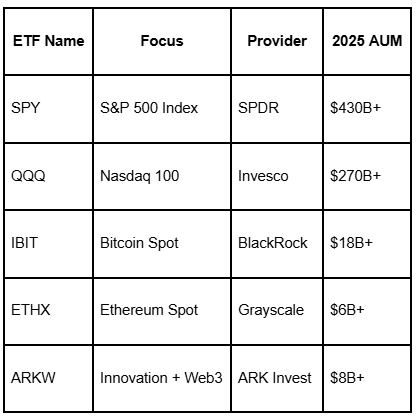
📈 Popular ETF Funds in 2025

Here are some high-performing ETF funds in traditional and crypto markets:

🧠 Final Thoughts

ETF funds are one of the most efficient and flexible ways to build a diversified investment portfolio in 2025. Whether you're targeting long-term growth, passive income, or exposure to emerging markets like crypto—ETF funds offer a secure, low-cost, and easy-to-use investment solution.

And with the rise of crypto ETF funds, platforms like Token Metrics are critical in helping investors evaluate opportunities, manage risk, and time the market using AI.

Whether you're a seasoned investor or just getting started, combining ETF investing with AI-powered insights gives you the edge in today's rapidly evolving financial landscape.

Crypto Basics

Best Crypto Software Wallets for July 2025

Token Metrics Team
6 min
MIN

And How Token Metrics Lets You Trade Securely With Any Wallet

Cryptocurrency adoption continues to rise in 2025, and with it, the demand for secure, user-friendly, and feature-rich crypto software wallets. Whether you're storing Bitcoin, trading Ethereum, or experimenting with altcoins, having a reliable wallet is the foundation of safe crypto ownership.

This guide ranks the top crypto software wallets of July 2025 across different categories, from best security to best for mobile use. We also explore how Token Metrics, the leading AI crypto trading platform, allows users to connect any of these wallets via an encrypted channel—giving you access to powerful AI-driven tools while retaining full custody of your assets.

🔐 What Is a Crypto Software Wallet?

A crypto software wallet is a digital application that stores your private keys and enables you to send, receive, and manage cryptocurrencies. These wallets can be hot (internet-connected) or cold (offline) and often come with trading, staking, and asset management tools. The best wallets balance security, usability, and functionality—and increasingly, they integrate with platforms like Token Metrics to enable AI-powered trading without giving up control of your assets.

🏆 Top Crypto Software Wallets – July 2025

1. Zengo – Best for Security

  • Supported Cryptos: 380
  • Hot or Cold: Hot Wallet
  • Cost: $129.99/year or $19.99/month
  • Hardware Wallet Support:

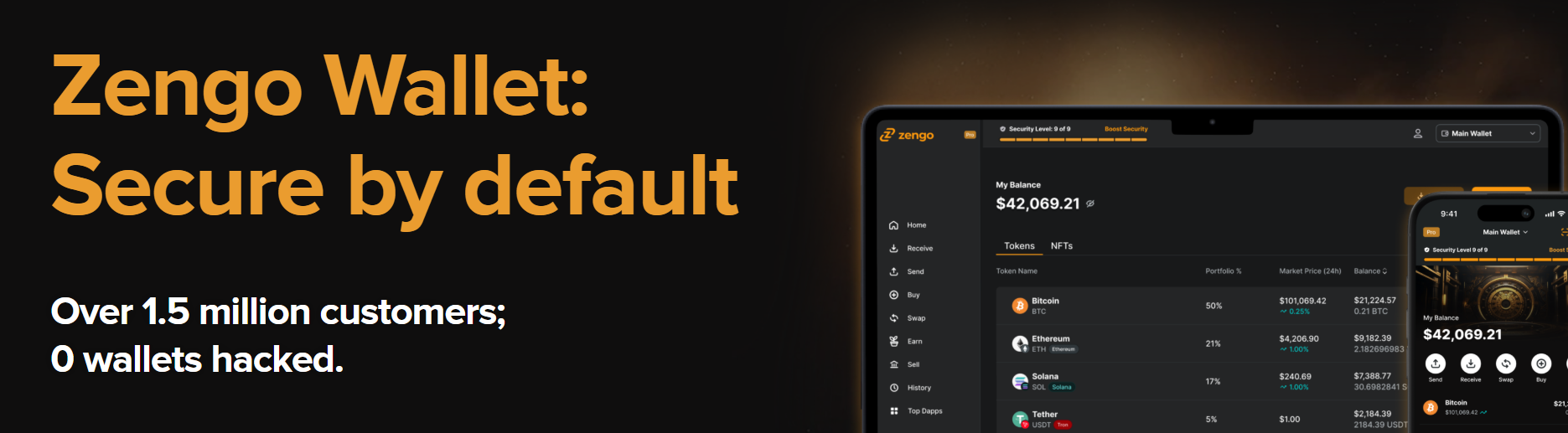
Zengo tops the list for users prioritizing wallet security. With no reported wallet hacks and weekly software updates, Zengo protects over 1.5 million users globally. It also supports buying, selling, and staking, making it ideal for long-term holders.

Pros:
✔️ Industry-leading security measures
✔️ Staking and fiat funding options
✔️ Encrypted backup and biometric authentication

Cons:
❌ Premium pricing
❌ No hardware wallet compatibility

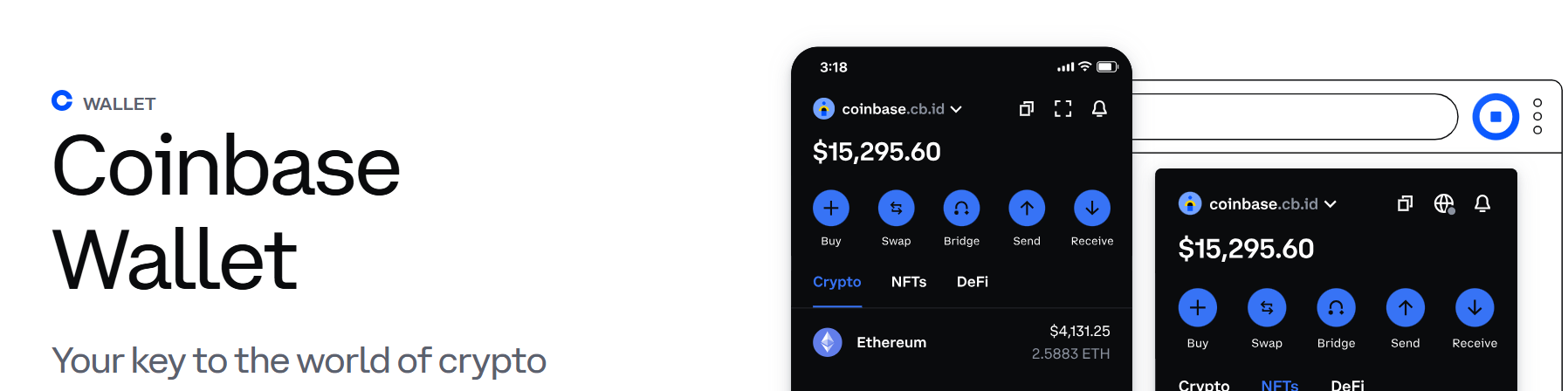
2. Coinbase Wallet – Best for Beginners & Low Costs

  • Support Cryptos: 5,500
  • Hot or Cold: Hot Wallet
  • Cost: Free
  • Hardware Wallet Support: Partial (via Ledger transfer)

Coinbase Wallet is perfect for newcomers. It’s intuitive, completely free to use, and connects seamlessly to the larger Coinbase ecosystem. Users can access over 5,500 tokens and learn the ropes through its built-in educational resources.

Pros:
✔️ Beginner-friendly UI
✔️ Massive token support
✔️ Customizable network fees

Cons:
❌ Code not open source
❌ No address rotation
❌ Doesn’t fully support hardware wallets

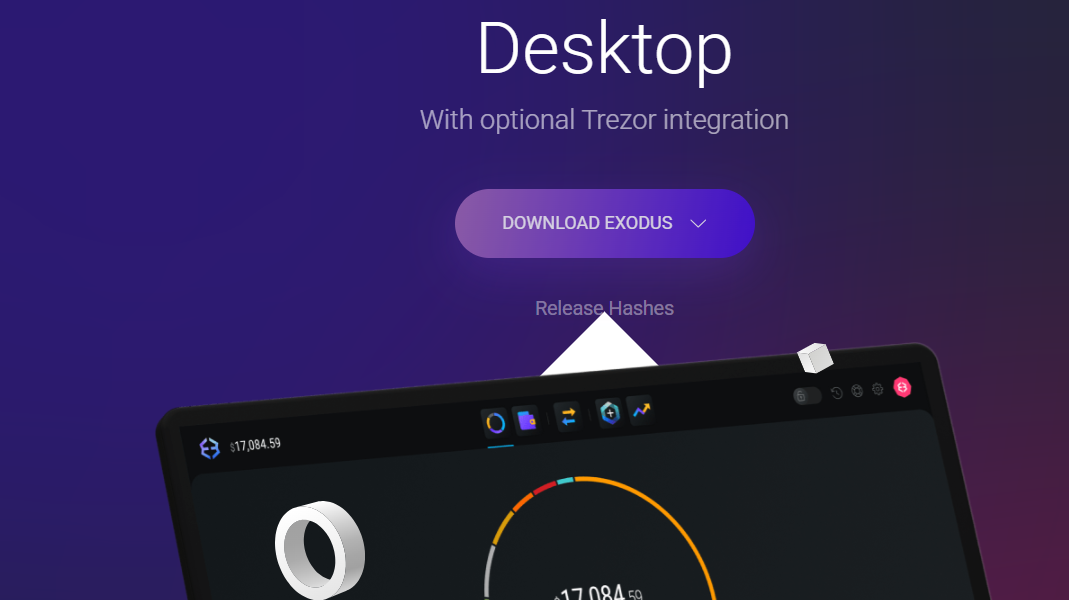
3. Exodus – Best for Mobile

  • Supported Cryptos: 281
  • Hot or Cold: Hot Wallet
  • Cost: Free
  • Hardware Wallet Support: ✅ (Trezor)

Exodus excels on mobile with sleek design and robust functionality. It allows users to buy, sell, stake, and swap directly on their mobile device and integrates with Trezor hardware wallets for additional security.

Pros:
✔️ Cross-platform (desktop, browser, mobile)
✔️ Built-in portfolio tracking
✔️ Trezor integration

Cons:
❌ No in-house exchange
❌ Email-only support
❌ Not open source

4. Electrum – Best for Bitcoin

  • Supported Cryptos: Bitcoin Only
  • Hot or Cold: Both
  • Cost: Free
  • Hardware Wallet Support:

A trusted wallet since Bitcoin’s early days, Electrum is ideal for Bitcoin maximalists. It’s lightweight, fast, and secure, with deep customization options for advanced users.

Pros:
✔️ High performance for BTC
✔️ Cold storage compatible
✔️ Open-source and auditable

Cons:
❌ No support for altcoins
❌ Not user-friendly for beginners
❌ No staking or DeFi features

5. MetaMask – Best for Ethereum

  • Supported Cryptos: 300+ (ETH & ERC-20)
  • Hot or Cold: Both
  • Cost: Free
  • Hardware Wallet Support:

For Ethereum users, MetaMask is the go-to wallet. It enables DeFi, NFTs, and Web3 access with ease. It supports both hot and cold storage and integrates with platforms like OpenSea, Uniswap, and now, Token Metrics.

Pros:
✔️ Built for Ethereum ecosystem
✔️ DeFi-ready
✔️ Cold wallet compatible

Cons:
❌ No Bitcoin support
❌ Limited customer support
❌ Doesn’t rotate addresses automatically

🔍 How Token Metrics Works with Your Crypto Wallet

Token Metrics is not a wallet, exchange, or custodian—it’s an AI-driven crypto research and trading platform. But it seamlessly integrates with your preferred wallet using secure, encrypted wallet connections.

🔐 Secure Wallet Integration

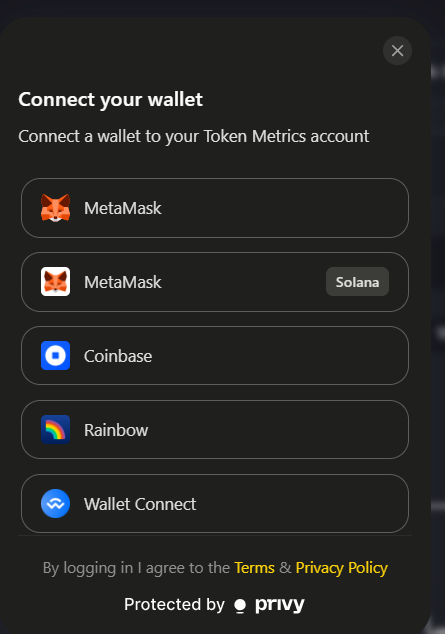
Token Metrics allows users to connect wallets like MetaMask, Coinbase Wallet, Trust Wallet, or any Web3-compatible wallet using industry-standard encryption. You never deposit funds on the platform—instead, you retain full control over your crypto while accessing:

  • AI-generated trading signals
  • Real-time price predictions
  • Altcoin Moonshot picks
  • Portfolio rebalancing tools
  • Custom alerts and automation

🛡️ Why It Matters:

With so many platforms requiring you to deposit crypto into centralized accounts, Token Metrics stands apart by offering non-custodial AI-powered trading. You keep your assets in your chosen wallet while using advanced tools that would normally be reserved for hedge funds or trading desks.

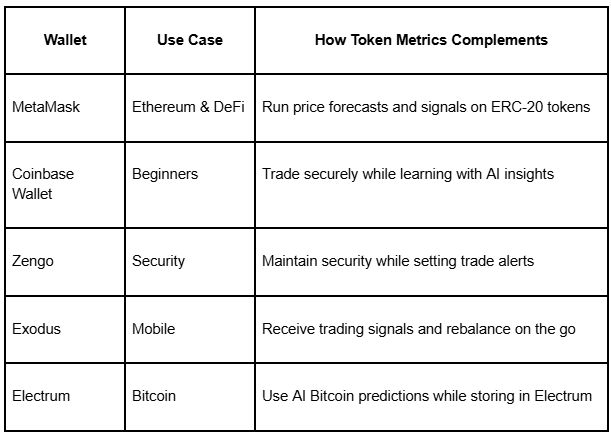
💡 Why Token Metrics + Top Wallets = The Perfect Pair

🚨 A Word of Caution

Crypto is a volatile and speculative market. Even with the best wallet and the most advanced AI platform, there are risks. Always use two-factor authentication, avoid phishing attempts, and never share your seed phrase.

🏁 Final Thoughts

Choosing the best crypto software wallet in July 2025 depends on your priorities: security, mobility, beginner-friendliness, or asset specialization. But if you want to take things further, pairing your wallet with Token Metrics’ AI research and trading tools is the smartest way to stay ahead.

Whether you’re holding Bitcoin in Electrum or swapping altcoins via MetaMask, Token Metrics helps you trade smarter, not harder, without compromising the safety of your assets.

Crypto Basics

Best Crypto Exchanges for July 2025

Token Metrics Team
6 min
MIN

Cryptocurrency adoption has surged in 2025, with Bitcoin reaching over $118,000 and Ethereum climbing above $3,000. Whether you’re a beginner or an advanced trader, choosing the right exchange or trading app is critical. But while exchanges handle your transactions, it’s tools like Token Metrics that give you the edge—using AI to deliver real-time analytics, trading signals, moonshot altcoin picks, and price predictions.

In this guide, we’ll cover the top exchanges and apps for July 2025, along with Token Metrics, the best platform for AI-powered crypto research and trading.

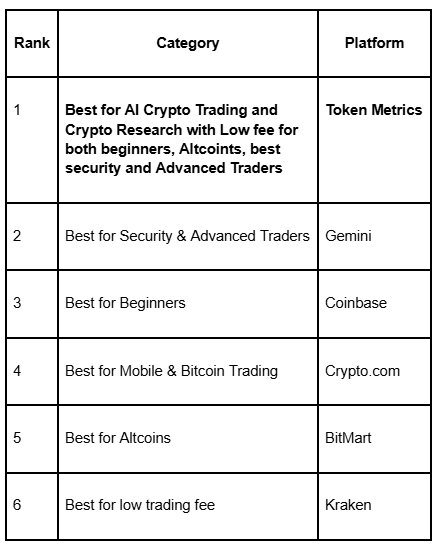
🔝 Top Crypto Platforms for July 2025

🧠 Token Metrics: Best AI Crypto Trading Platform

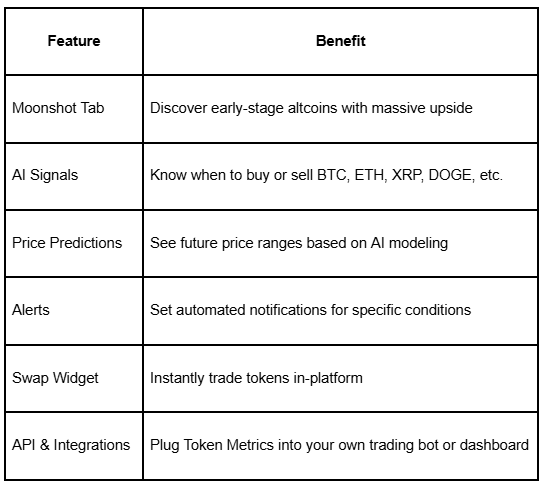
Token Metrics stands out not as an exchange, but as an AI-powered research, analytics, and trading platform. It gives retail and institutional investors data-driven insights to make smarter trades across any exchange.

Why Token Metrics is #1 for AI Crypto Trading:

  • AI-Generated Buy/Sell Signals
    Token Metrics’ signals dashboard uses over 80 data points to issue bullish or bearish calls on top tokens. For example, the AI turned bullish on Bitcoin on June 28, just before it surged past $118,000.


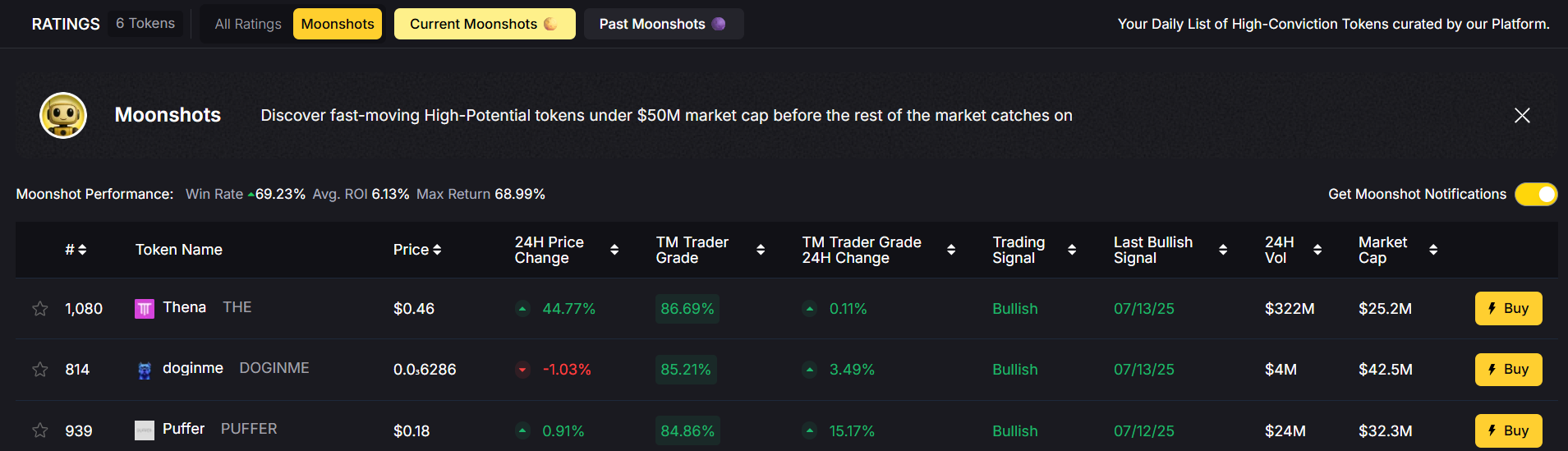
  • Moonshots for Early-Stage Altcoins
    The Moonshots tab identifies low-cap altcoins with 10x–100x potential based on momentum, AI scores, and liquidity—long before they hit mainstream exchanges.


  • Price Forecasting Models
    Token Metrics predicts short-, medium-, and long-term prices for major tokens. Bitcoin’s 2026 forecast, for example, ranges between $150,000–$230,000, based on ETF flows, supply on exchanges, and macroeconomic signals.


  • Custom Alerts
    Users can set alerts based on price, trader grade, or AI signals, delivered instantly via Email, Telegram, SMS, or Slack.


  • Integrated Swap Widget
    You can research, analyze, and buy tokens directly via Token Metrics’ swap widget—all in one dashboard.

Whether you’re trading on Kraken, Coinbase, or Binance, Token Metrics plugs into your strategy and helps you trade with confidence, using real-time AI insights.

⚙️ Top 5 Crypto Exchanges for July 2025

🥇 Kraken – Best for Low Fees

  • Maker Fees: 0.00%–0.25%
  • Taker Fees: 0.10%–0.40%
  • Minimum Deposit: $10
  • Crypto Offered: 300+

Kraken is ideal for fee-sensitive traders. It’s available on web, mobile, desktop, and Kraken Pro. However, it's not available in all U.S. states and lacks FDIC or SIPC insurance.

🥈 Gemini – Best for Security & Experienced Traders

  • Maker Fees: 0.00%–0.20%
  • Taker Fees: 0.03%–0.40%
  • Minimum Deposit: $0
  • Crypto Offered: 70

Gemini is the most secure exchange in 2025, with FDIC insurance, crypto insurance, and advanced features through its ActiveTrader terminal. But it has a complex fee structure and limited assets.

🥉 Coinbase – Best for Beginners

  • Maker Fees: 0.00%–0.40%
  • Taker Fees: 0.05%–0.60%
  • Minimum Deposit: $0
  • Crypto Offered: 240

Coinbase is ideal for newcomers with its clean UI, beginner-friendly tools, and educational content. It’s available in 172 countries, though advanced traders might want more features.

📱 Crypto.com – Best Mobile App & Bitcoin Trading

  • Maker Fees: 0.00%–0.25%
  • Taker Fees: 0.05%–0.50%
  • Minimum Deposit: $20
  • Crypto Offered: 417

With a sleek mobile app and support for Bitcoin options and futures, Crypto.com is perfect for on-the-go traders. However, it only supports a hot wallet and has limited global access.

🪙 BitMart – Best for Altcoins

  • Fees: Varies by tier (0.04%–0.60%)
  • Minimum Deposit: Not disclosed
  • Crypto Offered: 1,700+

BitMart is the best place to find rare altcoins. With copy trading and BitMart Academy, it’s useful for altcoin hunters. But its lack of transparency on security is a concern.

✅ Why Token Metrics Complements These Exchanges

⚠️ Reminder: Crypto Is Risky

Crypto markets are volatile and speculative. While these exchanges and tools can improve your strategy, always do your own research (DYOR) and consult professionals when investing.

Final Thoughts

If you want to trade crypto in July 2025, pair a high-quality exchange like Kraken or Coinbase with a research powerhouse like Token Metrics. Exchanges execute trades—but Token Metrics tells you what to trade, when to trade, and why.

Choose from Platinum, Gold, and Silver packages
Reach with 25–30% open rates and 0.5–1% CTR
Craft your own custom ad—from banners to tailored copy
Perfect for Crypto Exchanges, SaaS Tools, DeFi, and AI Products