Crypto Basics

How to Stake MATIC? - A Comprehensive Guide for Beginners

Explore the step-by-step process of staking MATIC tokens, and start earning rewards in the Polygon network with the help of this detailed guide.
Marcus K
6 Minutes
MIN

The world of cryptocurrencies can seem overwhelming, especially when diving into the specifics of staking, farming, or liquidity pooling. 

Today, we’ll focus on one popular token: MATIC, the native currency of the Polygon network. Our goal is to demystify the process, bringing you a clear and actionable guide to staking MATIC. Let’s get started!

What is Polygon MATIC?

MATIC, now referred to as Polygon, represents a promising solution in the crypto space. Designed as a multi-chain scaling solution, Polygon seeks to provide faster and cheaper transactions. This positions it as a valuable asset for Ethereum-based applications and beyond.

Step-by-Step Guide to Staking MATIC

Acquire MATIC: Purchase MATIC from popular exchanges like Binance, Coinbase, or Huobi.

Transfer MATIC to Your Wallet: Send your MATIC tokens from the exchange to your secure wallet.

Choose a Staking Platform/Validator: Some popular choices are the official Polygon wallet or third-party platforms like Stakefish or Staked and then connect your wallet.

Staking MATIC with MetaMask

Here are the steps to stake MATIC on MetaMask -

1. Set Up MetaMask: Download and install MetaMask as a browser extension from their official site. Choose the right version for your device.

2. Link to Polygon: Navigate to “Networks” in MetaMask. Click “Add Network” and input Polygon's details.

3. Transfer MATIC: Copy your MetaMask address. From your exchange or other wallets, set this as the destination and transfer your MATIC tokens.

4. Connect to Polygon's Wallet: Use this link to integrate: Polygon Wallet. Click the “MetaMask” option there.

5. Start Staking: With the link established, you're set to stake.

6. Choose a Validator: In the dashboard, tap “Apps” then “Staking”. Search for a validator and opt for “Delegate”. Input the MATIC amount you wish to stake and hit “Continue”.

7. Finalize Transaction: A pop-up will prompt you to verify. Click “Confirm”. 

Remember, for the process to go through, you'll need to purchase a voucher and cater for gas fees. After all is set, your delegation is active, and you can further stake or collect rewards as you see fit.

Staking MATIC with Coinbase Wallet

Here are the steps leading to staking MATIC on Coinbase Wallet -

Setting Up Coinbase Wallet:

  • Download the Coinbase Wallet app from the App Store or Play Store.
  • Follow on-screen instructions: agree to terms, select a username, adjust privacy settings, set a passcode, and note down the recovery phrase.

Transferring MATIC to Your Wallet:

  • Open the wallet, tap the bottom right and find "Connect to Coinbase". Authorize the connection.
  • Choose “Buy or transfer”, pick “MATIC wallet”, specify the amount, and confirm with the verification code. Remember, MATIC tokens on Coinbase operate on the Ethereum network.

Staking Your MATIC:

  • Navigate to the Polygon website.
  • Click “Use Polygon”, then “Staking”, and finally “Become a delegator”.
  • Browse through the list of validators. Check details like MATIC staked, commission, and performance.
  • Choose a validator, view their specific details, then log in at the top-right. If new, register on Polygon.
  • Click “Become a Delegator”, specify how much MATIC you'd like to stake, and hit “Continue”. Confirm the action in the pop-up by pressing “Delegate”.

Note: There might be a “cool-down” period where your tokens are locked before you start earning rewards.

Claim Your Rewards: Depending on the platform, rewards may be distributed daily, weekly, or monthly. Check the platform’s policy and claim or reinvest your rewards accordingly.

Benefits of Staking MATIC

Passive Income: Just like earning interest in a traditional bank account, staking MATIC provides holders with a reward for supporting the network.

Network Security: By staking your tokens, you help maintain the integrity and safety of the Polygon network.

Staking Incentives: Often, projects built on Polygon might offer additional rewards to MATIC stakers, multiplying potential returns.

Potential Risks and How to Avoid Them?

Staking, like any investment, comes with risks. Here are a few, along with mitigation strategies:

Slashing: If the validator you choose acts maliciously, a portion of your staked MATIC could be forfeited. 

Solution: Choose reputable validators.

Price Volatility: The value of MATIC can go up or down. While you earn staking rewards, the token’s price might drop. 

Solution: Stay informed and diversify investments.

Liquidity Concerns: Some staking platforms might have a lock-in period, making it hard to access your tokens immediately. 

Solution: Always read the staking terms before committing.

Frequently Asked Questions

Q1. What is the minimum amount of MATIC required to start staking?

The minimum amount varies depending on the platform and validator, but many platforms set a relatively low threshold to encourage broader participation.

Q2. How frequently will I receive staking rewards?

Reward distribution can vary. Some platforms distribute rewards daily, while others might do so weekly or monthly. It's essential to check the specific terms of your chosen validator.

Q3. Are there any fees associated with staking MATIC?

Yes, some fees might be deducted by validators for their services. Always ensure you're clear about any associated fees before delegating your tokens.

Q4. How secure is staking MATIC on Coinbase Wallet?

Coinbase Wallet is known for its emphasis on security, but it's always vital to ensure you keep app updates regular, use strong, unique passwords, and avoid sharing sensitive information.

Q5. Can I unstake my MATIC tokens anytime I want?

There's typically a "bonding" or "unbonding" period in which your tokens are locked after you decide to unstake. The duration can vary, so be sure to understand these terms when staking.

Q6. How does staking MATIC affect its liquidity?

Once you stake MATIC, those tokens are locked and cannot be traded or sold until they are unstaked, affecting their immediate liquidity.

Q7. Is there a risk of losing my staked MATIC tokens?

While staking platforms aim for maximum security, the crypto realm always carries risks. It's rare, but factors like validator misbehavior (slashing) can affect your staked amount.

Q8. Do I maintain ownership of my MATIC tokens while they are staked?

Yes, staking only delegates your tokens to support network operations. You still own them, but they're temporarily locked until you decide to unstake.

Conclusion

Staking MATIC isn’t just about passive income. It's a vote of confidence in the future of the Polygon network. By staking, you’re playing a role in ensuring the system remains robust and decentralized. 

Always remember: with potential rewards come potential risks. Stay informed, choose wisely, and may your staking journey be a prosperous one!

Disclaimer

The information provided on this website does not constitute investment advice, financial advice, trading advice, or any other sort of advice and you should not treat any of the website's content as such.

Token Metrics does not recommend that any cryptocurrency should be bought, sold, or held by you. Do conduct your own due diligence and consult your financial advisor before making any investment decisions.

Build Smarter Crypto Apps &
AI Agents in Minutes, Not Months
Real-time prices, trading signals, and on-chain insights all from one powerful API.
Grab a Free API Key
Token Metrics Team
Token Metrics Team

Recent Posts

Token Metrics API

Best Crypto Prices API: Accurate, Real-Time, and AI-Enhanced

Sam Monac
8 min
MIN

Why Price Data Is the Core of Every Crypto App

No matter what kind of crypto app you’re building—a trading bot, a DeFi dashboard, or a research tool—the foundation is always accurate price data. Without it:

  • Traders miss entry and exit points.

  • Bots execute late or incorrectly.

  • Dashboards lose credibility with users.

  • Researchers can’t properly backtest models.

The best crypto prices API ensures:

  • Live, accurate prices across thousands of tokens.

  • Deep historical data (OHLC, tick-level) for research and backtesting.

  • Reliable updates even during volatile market swings.

  • Flexibility to support both real-time trading and long-term analytics.

📌 Example: An arbitrage bot relying on stale or inaccurate data won’t just underperform—it could lose money on every trade.

What Makes the Best Crypto Prices API

Not every API marketed for prices is built for precision. Key factors to consider include:

  • Accuracy – Are prices aggregated across multiple exchanges and validated?

  • Latency – Do you get sub-second updates with WebSocket streaming?

  • Historical Depth – Can you access years of OHLC and tick-level data?

  • Coverage – Spot markets, DeFi tokens, stablecoins, and derivatives.

  • Scalability – Rate limits that grow with your application’s user base.

  • Developer Experience – SDKs, documentation, and active support.

📌 Tip for developers: Start by asking, “Do I need accuracy, speed, or depth the most?” The answer often determines which API fits your project.

Comparing Leading Crypto Price APIs: Strengths & Trade-offs

  • CoinGecko & CoinMarketCap


    • Strengths: Excellent breadth—tens of thousands of tokens covered.

    • Trade-offs: Updates refresh more slowly; historical depth limited. Best for tickers and retail dashboards.

  • CryptoCompare


    • Strengths: Solid historical trade-level datasets for backtesting.

    • Trade-offs: Real-time speed is weaker than competitors.

  • Glassnode


    • Strengths: Advanced on-chain insights.

    • Trade-offs: Pricing data isn’t their main strength; better for researchers than traders.

  • Kaiko / Amberdata


    • Strengths: Enterprise-grade accuracy, broad market coverage.

    • Trade-offs: Expensive, geared toward institutions.

  • Token Metrics API
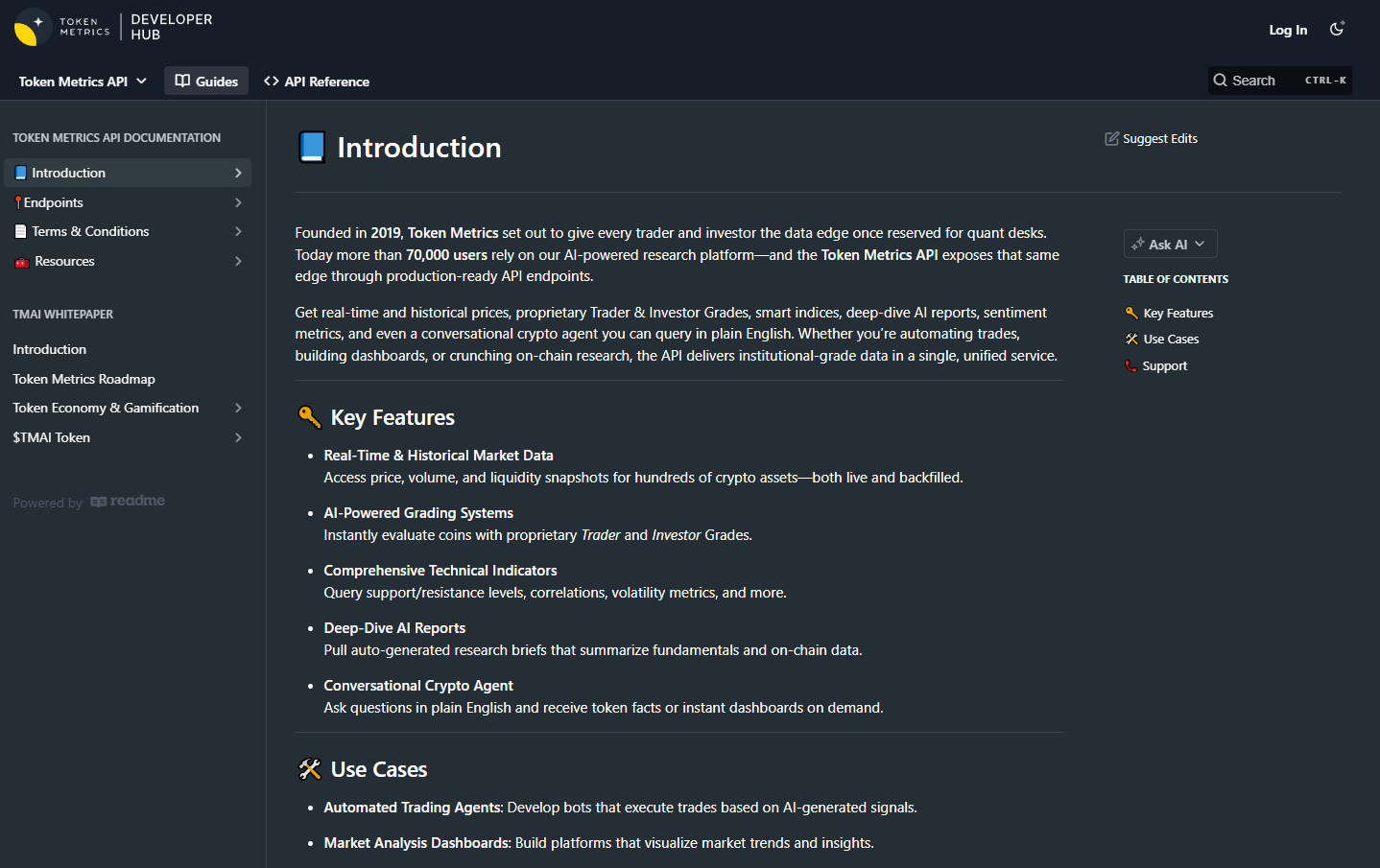
    • Strengths: Combines real-time accuracy, deep history, and AI-enhanced insights—giving more than raw prices.

    • Trade-offs: Free tier has rate limits (higher throughput unlocked via X.402 or paid plans).

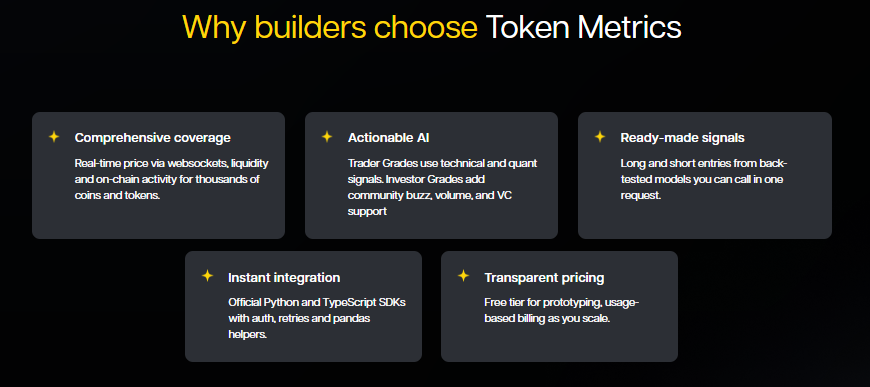
Why Token Metrics API Stands Out

Where many crypto APIs stop at providing raw price feeds, Token Metrics API enriches price data with context and intelligence.

  • Real-Time Prices – Sub-second updates for Bitcoin, Ethereum, and thousands of tokens.

  • Deep Historical Data – Tick-level and OHLC datasets ideal for research.

  • Exchange-Aware Accuracy – Prices aggregated from multiple sources and validated for reliability.

  • AI Trading Signals – Bull/bear indicators layered on top of raw prices.

  • Portfolio Ratings – Token Metrics grades and indices for added context.

📌 Most crypto APIs give you numbers. Token Metrics gives you numbers + insights.

Use Cases: From Crypto Trading Bots to Dashboards

  • Trading Bots – Execute trades with accurate, low-latency feeds.

  • Market Dashboards – Provide users with credible, real-time prices and charts.

  • Backtesting Platforms – Use multi-year OHLCV data for strategy validation.

  • DeFi Trackers – Monitor token values and liquidity with precision.

  • AI Agents – Train ML models using validated, exchange-aware price data.

Best Practices for Working With Crypto Price Data

  1. Cross-Verify Prices – Use multiple APIs in parallel during testing.

  2. Cache Effectively – Cache non-volatile data to reduce API load.

  3. Use WebSockets – REST-only setups can introduce delays.

  4. Monitor Latency – Benchmark APIs during volatility (e.g., CPI announcements, Fed decisions).

  5. Plan for Failover – Integrate a secondary API as a backup if your primary feed fails.

📌 Example: Production apps can combine Token Metrics for intelligence + CoinGecko for breadth to balance reliability with insights.

Beyond Token Metrics: Other Crypto Price Data Resources

Developers often mix and match APIs to cover specialized needs:

  • DefiLlama API – For DeFi protocol yields and TVL.

  • Dune Analytics – Run SQL queries for custom blockchain metrics.

  • TradingView Widgets / Webhooks – For embedding charting into front ends.

  • Santiment – Adds sentiment data to complement price feeds.

Pairing Token Metrics with these resources gives developers a multi-layered data stack—accurate prices, predictive signals, and extra DeFi/social context.

How to Get Started With the Best Prices API

  1. Sign Up Free – Create a Token Metrics account.

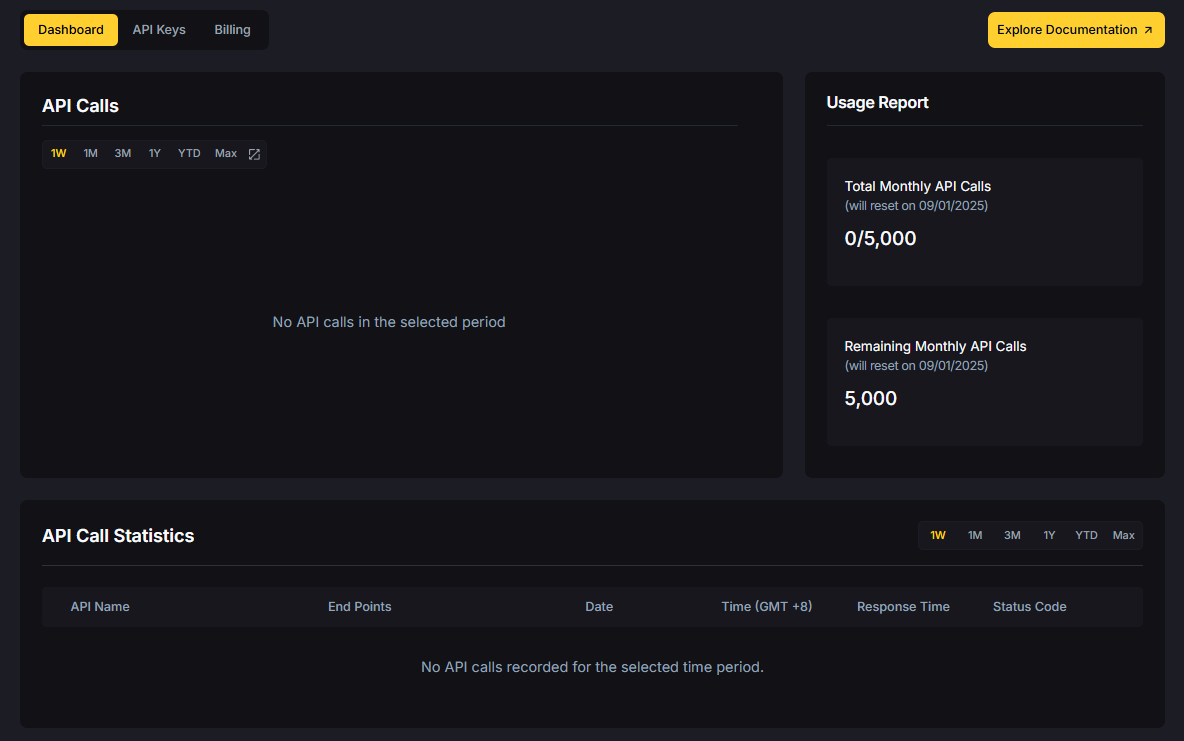
  2. Generate Your API Key – Available instantly in your dashboard.

  3. Access Price Endpoints – Fetch real-time and historical datasets via REST or WebSockets.

  4. Start Building – Bots, dashboards, or backtesting frameworks.

  5. Upgrade When Ready – Scale throughput and unlock advanced endpoints.

👉 Get Your Free Token Metrics API Key

FAQs on Crypto Price APIs

Which crypto API has the best price accuracy?
Token Metrics validates data from multiple exchanges, ensuring cleaner and more reliable price feeds.

Can I get historical prices with Token Metrics API?
Yes—OHLC and tick-level datasets are available for multi-year backtesting.

Is the Token Metrics API free?
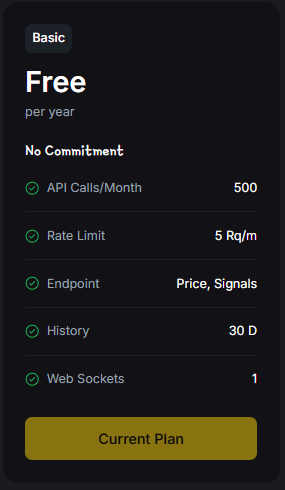
Yes, there’s a free tier for prototypes. Paid plans unlock higher request rates and advanced data.

How fast are Token Metrics updates?
Sub-second latency with WebSocket support for real-time responsiveness.

Scaling Beyond Free: Paid Plans & X.402

As your project scales, Token Metrics makes upgrading simple:

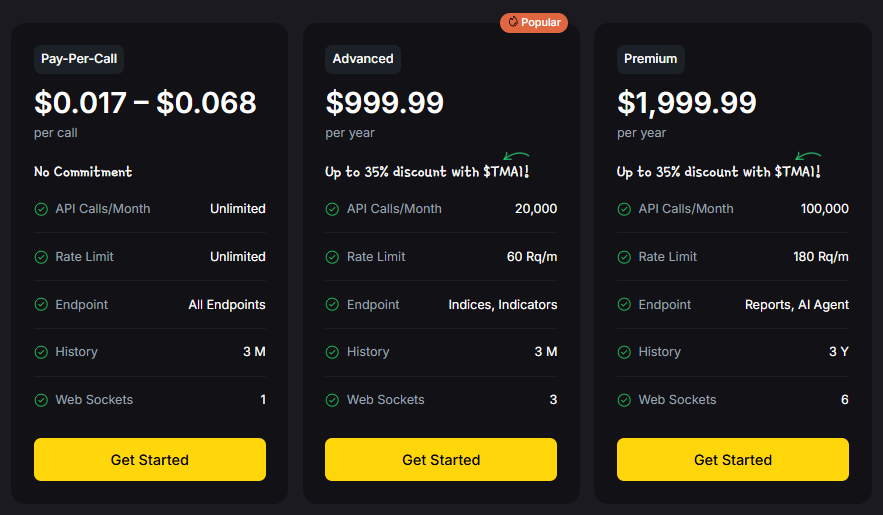
  • Pay-Per-Call (X.402) – From $0.017 per call, unlimited usage, no commitment.

  • Advanced Plan ($999.99/year) – 20,000 calls/month, indices & indicators, 3 WebSockets.

  • Premium Plan ($1,999.99/year) – 100,000 calls/month, AI agent & reports, 3 years of historical data.

📌 Why X.402 matters: Instead of locking into annual costs, you can pay as you grow—ideal for startups and experimental apps.

Build With the Best Crypto Prices API

In crypto, price accuracy is trust. Whether you’re building a bot, a dashboard, or a research tool, Token Metrics provides more than just numbers. With validated prices, deep history, and AI-enhanced insights, you can build applications that stand out.

👉 Start Free With Token Metrics API

‍

‍

Research

Why Crypto's New Rules Demand Strategic Crypto Trading?

Talha Ahmad
9 min
MIN

The cryptocurrency market has fundamentally changed, and investors clinging to outdated strategies are being left behind. The traditional "buy and hold" approach that created millionaires in previous crypto cycles is no longer viable in today's narrative-driven, attention-economy market. Understanding these new dynamics isn't just advantageous—it's essential for survival.

The Narrative Economy: How Attention Drives Price Action

Modern crypto markets operate on attention cycles that move faster than ever before. Projects gain momentum not through gradual adoption but through sudden narrative capture, social media virality, and ecosystem developments that spark immediate interest. This shift has created what analysts call "crypto's shiny object syndrome," where market attention rapidly moves between tokens based on trending topics and emerging narratives.

The evidence is clear in recent market performance. Tokens that dominated headlines just weeks ago—Pendle, Zora, Aerodrome, and BIO—have all lost momentum despite strong fundamentals. These weren't failed projects; they were victims of attention rotation. Pendle, for instance, had significant technical advantages and partnerships, but once market attention shifted elsewhere, price action followed suit.

The Trending Token Strategy: A New Approach for New Markets

Professional traders have adapted to this environment by developing systematic approaches to narrative trading. Rather than picking long-term winners based solely on fundamentals, successful investors now track trending tokens—projects capturing current market attention regardless of their long-term prospects.

This approach requires discipline and timing. The most effective strategy involves monitoring tokens gaining traction, entering positions when momentum indicators align, and exiting before attention cycles complete. It's not about finding the next Bitcoin; it's about riding successive waves of market interest across multiple projects.

The time horizon for these trades has compressed dramatically. Where previous cycles might have rewarded six-month to two-year holding periods, today's successful trades often last days to weeks. This compression reflects the market's increased efficiency in pricing narrative value and the accelerated pace of information flow in crypto communities.

Gaming and Creator Economy: The Next Frontier

While traditional DeFi projects struggle with attention retention, two sectors are showing sustained growth potential: gaming and creator economies. The gaming narrative, often dismissed after previous disappointments, is experiencing a quiet renaissance backed by substantial venture capital investment and improved product development.

Projects like Star Atlas, previously written off after the FTX collapse, have continued building and recently released gameplay elements that demonstrate genuine progress toward AAA-quality gaming experiences. This persistence during bear market conditions positions gaming tokens for significant upside when broader market sentiment improves.

Simultaneously, the creator economy is evolving through platforms like Pump.fun, which recently distributed $2 million in fees within 24 hours of launching new creator tools. This represents a 20x increase from previous daily averages, indicating massive untapped demand for creator monetization tools in crypto.

The Stablecoin Infrastructure Play

Beyond gaming and creators, the stablecoin infrastructure narrative presents perhaps the most compelling long-term opportunity. Unlike attention-driven meme coins, stablecoin infrastructure addresses genuine utility needs while benefiting from regulatory tailwinds and institutional adoption.

Projects like Plasma, which enables zero-fee USDT transfers, directly compete with established players like Tron while offering superior user experiences. The $1 billion in testnet deposits demonstrates real demand for these services, not just speculative interest.

This infrastructure development occurs alongside broader tokenization trends. Traditional assets—from stocks to treasuries—are increasingly moving on-chain, creating new opportunities for projects facilitating this transition. The convergence of stablecoin infrastructure and real-world asset tokenization could define the next major crypto adoption wave.

Risk Management in the New Paradigm

Success in narrative-driven markets requires sophisticated risk management that extends beyond traditional portfolio allocation. Investors must monitor momentum indicators, social sentiment, and attention metrics alongside fundamental analysis. The goal isn't to predict long-term winners but to identify and capture successive narrative cycles efficiently.

This approach demands emotional discipline that many investors find challenging. Exiting profitable positions while momentum remains positive contradicts natural holding instincts, yet it's essential for consistent returns in attention-driven markets. The most successful traders treat each position as temporary, focusing on momentum preservation rather than conviction-based holding.

The Bottom Line: Adapt or Fall Behind

The crypto market's evolution from speculation to narrative-driven trading represents a maturation process that rewards adaptability over stubbornness. Investors who recognize this shift and develop appropriate strategies will thrive, while those clinging to outdated approaches will struggle.

The new crypto paradigm isn't necessarily better or worse than previous cycles—it's simply different. Success requires understanding these differences and adjusting strategies accordingly. In a market where attention is currency and narratives drive price action, the most important skill isn't picking winners—it's staying flexible enough to ride whatever wave comes next.

The death of "buy and hold" doesn't mean the end of profitable crypto investing. It means the beginning of a more sophisticated, dynamic approach that rewards skill, timing, and market awareness over simple conviction. Those who master these new rules will find opportunities that dwarf traditional investment returns, while those who resist change will watch from the sidelines as markets evolve beyond their understanding.

Research

The Great Crypto Rotation - Why Smart Money is Moving from Bitcoin to Ethereum

Talha Ahmad
8 min
MIN

The cryptocurrency market is experiencing a seismic shift that most investors are missing. While Bitcoin has long been the undisputed king of digital assets, institutional money is quietly rotating into Ethereum at an unprecedented pace, signaling a potential altcoin season that could reshape the entire market landscape.

The Numbers Don't Lie: Ethereum's Institutional Takeover

Recent data reveals a striking trend that should have every crypto investor's attention. In August alone, Ethereum ETFs attracted a staggering $3.69 billion in inflows, marking the fourth consecutive month of positive institutional investment. This stands in stark contrast to Bitcoin, which saw $800 million in outflows during the same period.

This isn't just a minor adjustment in portfolio allocation—it's a fundamental shift in how institutional investors view the crypto ecosystem. The rotation from Bitcoin to Ethereum represents more than just diversification; it's a bet on the future of decentralized finance, smart contracts, and blockchain utility beyond simple store-of-value propositions.

The Stablecoin Revolution: Ethereum's Secret Weapon

Behind Ethereum's surge lies a powerful but often overlooked driver: the stablecoin economy. Currently, 3.4% of Ethereum's total circulating supply is held by treasury companies, with this percentage accelerating rapidly since July. This trend reflects a broader recognition that stablecoins represent crypto's "ChatGPT moment"—the application that finally demonstrates blockchain's real-world utility to mainstream users.

The stablecoin narrative extends far beyond simple transfers. New Layer 1 blockchains like Plasma are emerging specifically to facilitate zero-fee USDT transfers, directly challenging Tron's dominance in this space. With over $1 billion in USDT deposits on its testnet alone, Plasma demonstrates the massive demand for efficient stablecoin infrastructure.

Technical Indicators Point to Altcoin Season

Market technicals support the institutional flow narrative. The Bitcoin versus Altcoin season chart shows that 58% of returns are currently coming from altcoins—a surprising figure considering the market's neutral-to-bearish sentiment. Historically, true altcoin season occurs when nearly 90% of returns flow to alternatives, as seen in August 2022 and May 2021.

This data suggests the market hasn't yet experienced the full-blown altcoin euphoria typical of cycle peaks. The implication? The current cycle may extend well into 2026, providing extended opportunities for strategic investors willing to look beyond Bitcoin's dominance.

The Political Crypto Play: World Liberty Financial's Market Impact

The launch of World Liberty Financial (WLFI) adds another layer to the evolving crypto landscape. Amid the ongoing selling pressure, the token's ability to hold above $0.20 will determine its strength in the coming days. The same level where treasury companies accumulated positions indicates underlying institutional support. With the Trump family reportedly owning a third of the supply and generating approximately $3 billion in value at launch, WLFI represents the intersection of politics and crypto in unprecedented ways.

This political backing could provide regulatory tailwinds for the broader crypto market, particularly as other politicians consider similar token launches. California Governor Gavin Newsom's rumored meme coin plans suggest that cryptocurrency fundraising may become a standard tool for political campaigns, bringing mainstream legitimacy to digital assets.

Strategic Implications for Investors

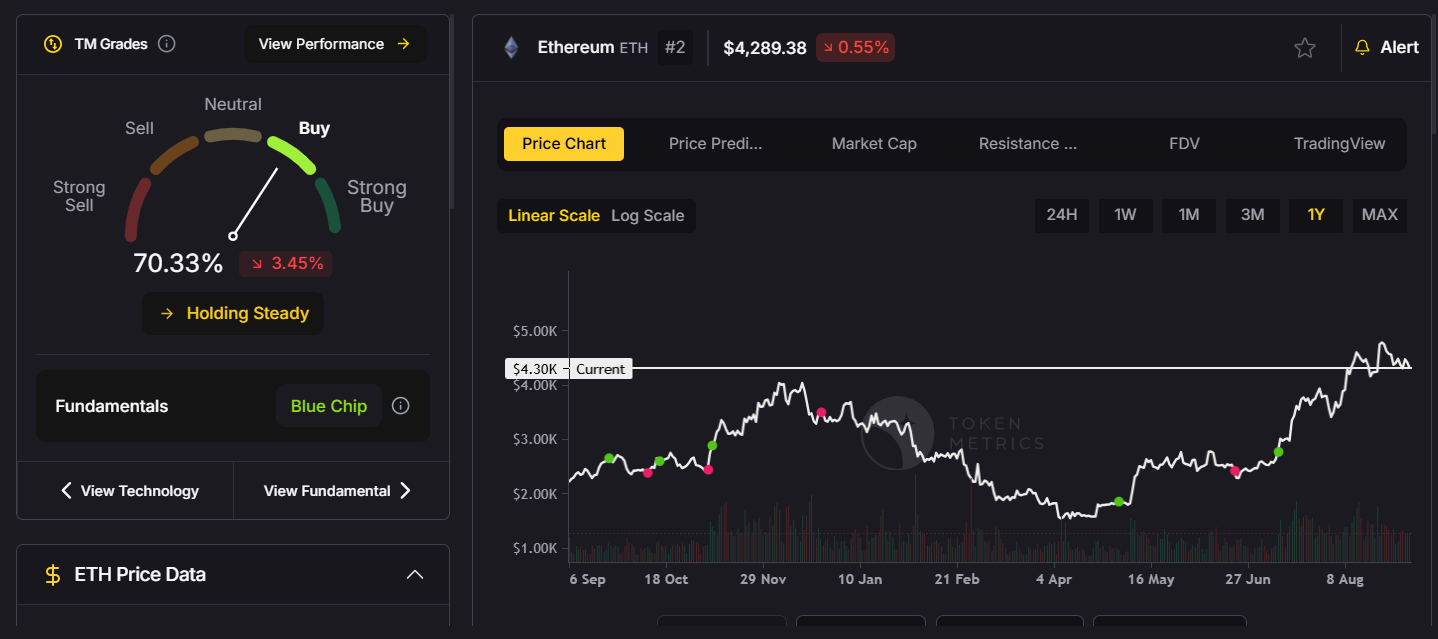
The Ethereum rotation story isn't just about ETH itself—it's about the entire ecosystem of projects built on Ethereum's infrastructure. Base-layer tokens, DeFi protocols, and Ethereum-native projects have already begun showing strength, with tokens like Aerodrome and Zora experiencing significant runs during Ethereum's rally from $2,300 to nearly $5,000.

However, this market requires a different investment approach than previous cycles. The old "buy and hold" strategy shows diminishing returns in today's narrative-driven environment. Instead, successful investors are adapting to shorter holding periods, focusing on trending tokens with strong fundamentals and clear catalysts.

The key insight? We're witnessing the maturation of cryptocurrency from a speculative asset class to a functional financial infrastructure. Ethereum's institutional adoption, stablecoin integration, and smart contract capabilities position it as the backbone of this new financial system. Investors who recognize this transition early stand to benefit from one of the most significant shifts in crypto market dynamics since Bitcoin's inception.

Choose from Platinum, Gold, and Silver packages
Reach with 25–30% open rates and 0.5–1% CTR
Craft your own custom ad—from banners to tailored copy
Perfect for Crypto Exchanges, SaaS Tools, DeFi, and AI Products