Research

How One API Can Streamline Trading Across Multiple Crypto Exchanges

Learn how you can streamline crypto trading across multiple exchanges with a unified API solution, plus the challenges, benefits, and practical integration tips.
Token Metrics Team
6
MIN

Managing crypto trading across several exchanges can be complicated, especially as the digital asset market expands rapidly. For developers, traders, and automated systems, switching between multiple exchange platforms often leads to fragmented workflows, inconsistent data, and increased operational risks. But can you solve this challenge by using a single API to trade across multiple crypto exchanges?

Understanding Crypto APIs and Multi-Exchange Trading

APIs, or Application Programming Interfaces, have become the backbone of modern crypto trading. Most centralized exchanges—like Binance, Coinbase, or Kraken—offer proprietary APIs, enabling users to execute trades, obtain real-time prices, manage portfolios, and stream account activity programmatically. Traditionally, each exchange requires users to generate unique API keys and implement its specific syntax and rules, which makes integrating multiple platforms into a unified workflow an ongoing challenge.

Multi-exchange trading is increasingly common for several reasons:

  • Diversification: Spreading assets across exchanges mitigates counterparty risk.
  • Liquidity: Some pairs or markets may have better availability and tighter spreads on certain exchanges.
  • Arbitrage: Traders seek price differences across exchanges for potential profit opportunities.

Attempting to manage these scenarios manually—or through siloed APIs—can result in lost efficiency and missed opportunities.

The Promise of Unified API Integrations

A unified API for crypto trading consolidates access to multiple exchanges behind a single set of endpoints, abstracting the idiosyncrasies of each platform. This approach offers several potential benefits:

  • Simplified Codebase: Developers write integration logic once, not for every exchange.
  • Consistent Data Structures: The same data model applies regardless of the underlying exchange, improving reliability and analysis.
  • Centralized Authentication: Exchange credentials and API keys can be managed in one secure place.
  • Faster Deployment: Connecting to new exchanges often requires just configuration, not fresh code development.

Several solutions have emerged to deliver this unified experience. Independent aggregator services and open-source libraries—such as CCXT (CryptoCurrency eXchange Trading Library), 1inch (for DEX aggregation), or specialized enterprise APIs—translate commands from a user into the correct format for the targeted exchange and relay responses back to the application.

Challenges and Considerations of Multi-Exchange APIs

Despite their promise, there are important technical and operational considerations when using a unified API to trade across exchanges:

  1. API Limitations and Rate Limits: Each exchange imposes different request/second caps and may throttle or ban aggressive use. Aggregators must intelligently manage these restrictions to avoid disruptions.
  2. Latency and Data Consistency: Real-time price and account data may update at slightly different speeds per exchange, creating opportunities for short-term mismatches.
  3. Security and Credential Management: Centralizing API keys increases both convenience and responsibility. Always adopt best security practices, like encryption, regular key rotation, and principle of least privilege.
  4. Feature Parity: Not all exchanges support the same order types, margin trading, or withdrawal mechanisms—a unified API might expose only a subset of universal features, or try to map advanced functionality via custom logic.
  5. Compliance and KYC: Aggregated services may still require you to verify your identity individually on every exchange, and must comply with relevant jurisdictional regulations.

Before adopting a unified API, carefully evaluate each provider’s support for your target exchanges, ongoing maintenance, customer support, and transparency regarding reliability and uptime.

Use Cases and Scenarios for One-API Multi-Exchange Trading

Unified API approaches are particularly valuable for:

  • Algorithmic and Quantitative Trading: Bots and quant models can arbitrage or implement sophisticated strategies without manual exchange integration.
  • Portfolio Management: Real-time balance checks, PnL tracking, and consolidated analytics across all holdings.
  • AI-Driven Trading Tools: With data aggregated from multiple locations, AI models can train, backtest, and operate on richer, more consistent datasets.
  • Building Crypto Apps and Dashboards: Developers can embed charts, strategies, and actionable tools for users who may deposit assets with many different third-party exchanges.

Choosing the right multi-exchange API solution depends on your operational needs, preferred data formats, scalability goals, and trust in the vendor’s security protocols. Some organizations also combine unified APIs with bespoke integrations for specialized features or liquidity.

The Role of AI and Advanced Analytics in API-Driven Trading

Modern trading strategies are increasingly shaped by AI and predictive analytics. When paired with unified APIs, AI tools can:

  • Automatically identify arbitrage opportunities by detecting real-time price differences across platforms
  • Optimize order routing for best execution and minimal slippage
  • Risk-manage portfolios using aggregated signals—from market data, order books, and on-chain analytics
  • Enable smarter alerting and automated trading logic

For example, platforms like Token Metrics offer AI-powered insights that can be integrated into multi-exchange trading workflows via robust APIs. Access to aggregated signals and analytics enhances decision accuracy and automation capabilities in an increasingly complex trading environment.

Build Smarter Crypto Apps & AI Agents with Token Metrics

Token Metrics provides real-time prices, trading signals, and on-chain insights all from one powerful API. Grab a Free API Key

FAQs About Trading with One API Across Exchanges

What exchanges are supported by unified trading APIs?

Coverage varies by provider, but leading multi-exchange APIs often support integrations with major centralized exchanges—like Binance, Coinbase Pro, Kraken, Bitfinex—as well as some decentralized platforms. Always check providers’ documentation for updated support lists.

Are there security risks with centralized API management?

Yes, consolidating your exchange API keys introduces single points of vulnerability. Use strong authentication, encrypted storage, access controls, and monitor for suspicious access. Select API providers with strong security track records and certifications.

Do unified APIs support advanced order types (like stop loss or OCO)?

Many unified APIs prioritize compatibility with basic order types (e.g., limit, market orders), but advanced orders may be available only if the destination exchange supports them. Some aggregators implement custom logic to approximate complex order types. Review each API’s documentation for order-type coverage.

How do fees work with multi-exchange trading APIs?

Fees are typically passed through transparently to the underlying exchange. Some unified APIs may also levy their own usage or subscription fees. Review the pricing page and terms of service before integrating any multi-exchange API.

Can I use a unified API for both centralized and decentralized exchanges?

Certain unified or aggregator APIs support both exchange types, but you may experience differing levels of feature parity and security requirements. Decentralized exchanges often require wallet-based authentication, which may require additional integration steps.

Disclaimer

This article is intended for informational and educational purposes only. It does not constitute financial, investment, or legal advice. Crypto markets carry risk—always conduct your own research and consider regulatory compliance before using trading APIs or integrating with exchanges.

Build Smarter Crypto Apps &
AI Agents in Minutes, Not Months
Real-time prices, trading signals, and on-chain insights all from one powerful API.
Grab a Free API Key
Token Metrics Team
Token Metrics Team

Recent Posts

Crypto Basics

DEX vs CEX - Key Differences and Similarities

S. Vishwa
7 Minutes
MIN

Cryptocurrency trading has gained immense popularity, offering high potential returns for investors. To enter the world of crypto trading, one must navigate the landscape of exchanges.

The two primary types of exchanges are centralized exchanges (CEX) and decentralized exchanges (DEX). 

In this article, we will explore the key differences and similarities between DEXs and CEXs, helping you make an informed decision when choosing an exchange for your crypto transactions.

What is a Centralized Exchange (CEX)?

A centralized exchange operates as a digital marketplace where users can trade cryptocurrencies. A central authority, similar to traditional stock exchanges, manages these exchanges. Examples of popular CEXs include Binance, Coinbase, and Kraken.

Advantages of CEXs

User-friendly interface: CEXs offer intuitive and beginner-friendly interfaces, making it easier for new traders to navigate the platform.

Higher liquidity: Centralized exchanges generally have higher trading volumes and liquidity, allowing for easier buying and selling of cryptocurrencies.

Faster transactions: CEXs use off-chain matching systems, enabling faster transaction processing than DEXs.

Regulatory assurances: CEXs often comply with regulations and have more robust regulatory frameworks, offering users security and trust.

Additional trading features: Many CEXs provide advanced trading options such as margin trading, futures, and options contracts, catering to experienced traders.

Disadvantages of CEXs

Lack of privacy: CEXs typically require users to complete a Know Your Customer (KYC) verification process, compromising user privacy

Security risks: As centralized platforms, CEXs hold users' funds in centralized wallets, making them susceptible to hacking attempts and theft.

Dependency on a central authority: Users must trust the centralized exchange to handle their funds securely and maintain the platform's stability.

Potential downtime and restrictions: CEXs can experience downtime due to maintenance or regulatory interventions, limiting users' access to funds and trading activities.

What is a Decentralized Exchange (DEX)?

Decentralized exchanges, on the other hand, operate without a central authority and intermediaries. DEXs leverage blockchain technology and smart contracts to facilitate peer-to-peer transactions. Notable DEXs include Uniswap and PancakeSwap.

Advantages of DEXs

Self-custody: DEXs allow users to retain control of their funds by utilizing non-custodial wallets, eliminating the need to trust a centralized authority.

Anonymity: DEXs often do not require users to complete KYC processes, preserving user anonymity and privacy.

Reduced security risks: DEXs eliminate the risk of a single point of failure, as assets are not stored in a centralized location, minimizing the potential for hacks and thefts.

Permissionless trading: DEXs enable anyone to participate in trading without facing barriers such as KYC requirements.

Access to unique tokens: DEXs often support early-stage projects, providing users access to unique tokens before they are listed on centralized exchanges.

Disadvantages of DEXs

Limited trading options: DEXs primarily support basic token swaps and lack the advanced trading features offered by CEXs, such as margin trading and derivatives.

Slower transaction speed: Transactions on DEXs occur on-chain and require confirmation by miners, resulting in slower transaction processing than CEXs.

Lower liquidity: DEXs generally have lower trading volumes and liquidity compared to CEXs, which can lead to higher slippage and less favorable trading conditions for larger orders.

Complexity for beginners: DEXs often have more complex user interfaces and require users to interact with smart contracts, making them less beginner-friendly than CEXs.

DEX vs CEX - A Comparison

Let's delve deeper into the specific aspects of DEXs and CEXs, comparing their features and functionalities.

Security

Security is a crucial consideration when choosing an exchange. While both DEXs and CEXs have security measures in place, there are differences in the level of risk.

CEXs: Centralized exchanges are more susceptible to hacking attempts due to their centralized nature. If a CEX's security measures are compromised, users' funds could be at risk. However, reputable CEXs invest heavily in security measures to mitigate these risks.

DEXs: DEXs, being decentralized, offer a higher level of security. Since funds are not stored in a centralized manner, hackers have a harder time compromising user assets. However, it's essential to choose DEXs with robust smart contract security audits and protocols to ensure the safety of your funds.

Liquidity

Liquidity plays a vital role in the ease and efficiency of trading. Higher liquidity allows for better price discovery and reduces the impact of larger orders.

CEXs: Centralized exchanges generally have higher liquidity due to their larger user bases and established market presence. This makes it easier to buy and sell cryptocurrencies at desired prices.

DEXs: DEXs, especially those utilizing automated market maker (AMM) protocols, rely on users' liquidity. While DEX liquidity has been growing steadily, it is still lower than CEXs. Consequently, larger orders on DEXs may experience slippage and impact the execution price.

Fees

Trading fees can significantly impact the profitability of your trades. Let's compare the fee structures of DEXs and CEXs.

CEXs: Centralized exchanges often charge trading fees, which can vary depending on factors such as trading volume, order type, and market maker/taker status. These fees typically range from 0.1% to 0.5% per trade.

DEXs: DEXs generally have lower trading fees compared to CEXs. Many DEXs charge a flat fee per transaction, typically ranging from 0.1% to 0.5%. However, it's important to consider that DEXs may also charge additional network fees for transactions on the underlying blockchain.

User Experience

The user experience (UX) of an exchange can greatly influence your trading journey, particularly for beginners.

CEXs: Centralized exchanges often prioritize user-friendly interfaces and provide intuitive features, making them more accessible for users with limited trading experience. Additionally, CEXs offer customer support services to assist users with their trading needs.

DEXs: DEXs, particularly those utilizing AMM protocols, can have a steeper learning curve. Interacting with smart contracts and managing non-custodial wallets may require some technical understanding. However, DEXs continuously improve their UX to enhance accessibility for users of all experience levels.

CEX vs DEX: Which Is Better?

Determining whether a CEX or a DEX is better depends on your specific needs and preferences as a trader.

Choosing a CEX

You might prefer a CEX if:

  • You are a beginner trader looking for a user-friendly platform.
  • High liquidity and a wide range of trading options are important to you.
  • You value regulatory assurances and trust in a centralized authority.
  • Margin trading and advanced trading features are essential to your trading strategy.

Opting for a DEX

You might choose a DEX if:

  • You prioritize self-custody and control over your funds.
  • Privacy and anonymity are important to you.
  • You are interested in early-stage projects and unique token offerings.
  • Lower trading fees and reduced dependence on a central authority are appealing.

Conclusion

In conclusion, both DEXs and CEXs have their advantages and disadvantages. When choosing an exchange, it's important to consider factors such as security, liquidity, fees, user experience, and the specific needs of your trading strategy. 

CEXs offer user-friendly interfaces, higher liquidity, and advanced trading features, but they come with potential security risks and require users to trust a centralized authority. 

DEXs provide self-custody, anonymity, and lower fees, but they may have lower liquidity and a steeper learning curve for beginners. Ultimately, finding the right exchange depends on your preferences and trading requirements.

Frequently Asked Questions

Q1. What is the difference between a CEX and a DEX?
A CEX is a centralized exchange where a central authority manages transactions, while a DEX is a decentralized exchange that operates without intermediaries.

Q2. What are some of the best CEX and DEX platforms?
Popular CEX platforms include Binance, Coinbase, and Kraken, while notable DEX platforms include Uniswap, PancakeSwap, and SushiSwap.

Q3. Do I need to provide personal information to trade on a DEX?
DEXs often allow users to trade anonymously without needing KYC checks or personal information.

Q4. Which is better for a new trader, a CEX or a DEX?
CEXs are generally more beginner-friendly and offer higher liquidity, making them a better option for new traders. However, DEXs can suit those prioritizing privacy and control over their funds.

Disclaimer

The information provided on this website does not constitute investment advice, financial advice, trading advice, or any other advice, and you should not treat any of the website's content as such.

Token Metrics does not recommend buying, selling, or holding any cryptocurrency. Conduct your due diligence and consult your financial advisor before making investment decisions.

Crypto Basics

GRASS Airdrop 2024 - Eligibility, Process and Rewards

Token Metrics Team
4 Minutes
MIN

Are you looking to earn passive income while ensuring your privacy? Look no further than the GRASS Airdrop. This comprehensive guide will walk you through all the essential details you need to know about this exciting opportunity. From the concept behind GRASS to the step-by-step process of participating in the airdrop, we've got you covered. So, let's dive right in!

What is Grass?

Grass is a revolutionary blockchain-based web scraping protocol that enables sustainable and scalable data collection. 

Unlike traditional networks that rely on exploitative intermediaries, Grass offers an equitable solution where both parties have an active stake in the network. 

By selling your unused bandwidth through GRASS, you can earn passive income while keeping your privacy intact.

The GRASS Airdrop

The GRASS Airdrop allows participants to earn GRASS tokens for free. These tokens hold significant potential value and can be converted into other cryptocurrencies or used within the GRASS ecosystem. 

The airdrop is expected to attract many participants with a total value of over $4.5 million.

Airdrop Details

  • Platform: GRASS's own chain
  • Deadline: 8th March 2024
  • Investment: GRASS has raised $4.5 million from investors like Polychain Capital and Tribe Capital.

$4.5M In Funding - 3 Weeks Left To Farm!

  • Cost: $0
  • Time: 20 min
  • Potential gain: $10,000+

Please note that while the GRASS Airdrop has been confirmed for March 2024, there is no guarantee that it will happen. However, the high possibility of an airdrop makes it an exciting opportunity to explore.

Also Read - Top Upcoming Confirmed Crypto Airdrops

How to Participate in the GRASS Airdrop?

Participating in the GRASS Airdrop is a straightforward process. Follow the step-by-step guide below to ensure you are eligible for the airdrop:

Step 1: Register

To register for the GRASS Airdrop, visit the GRASS registration page. Enter your email and username, and create a password. Confirm the password, agree to the terms, complete the captcha, and click Register.

Step 2: Download the GRASS Extension

Next, download the GRASS extension by visiting the Chrome Web Store. This extension is essential for earning GRASS points and participating in the airdrop.

Step 3: Connect to GRASS

Once you have downloaded the extension, login to the GRASS extension using the registration details you provided earlier. This will connect your account to the GRASS network, enabling you to start earning GRASS points.

Click Refresh if you still can't see your connected device in the top right corner.
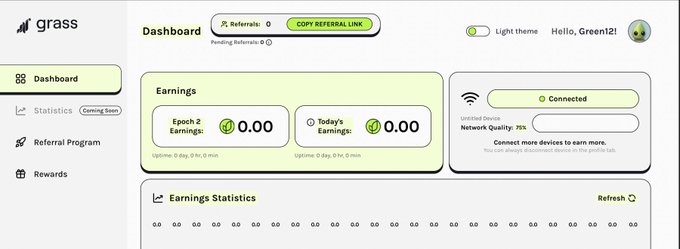
◈ Once you've successfully connected, you'll see the Connected button and your Uptime.

GRASS Airdrop Connect

Step 4: Referral Program

Maximize your earnings by taking advantage of the GRASS referral program. Copy your unique referral link and share it with your friends. You will receive 20% of your referred friends' points, 10% of the secondary referee's points, and 5% of the tertiary referees' points.

Step 5: Farm Tokens

To earn more tokens, stay active on the GRASS network for an extended period. You can also connect additional networks by clicking on "Add Network" within the GRASS extension, boosting your token earnings.

Add Network

Potential Value and Benefits of GRASS Tokens

While the exact value of GRASS tokens is yet to be determined, they hold significant potential for future growth. As GRASS continues to develop its ecosystem, the tokens may gain value and become tradable on various cryptocurrency exchanges

Furthermore, GRASS has plans to launch a governance token in the future, allowing users to participate in network decision-making processes.

Conclusion

The GRASS Airdrop presents a fantastic opportunity to earn passive income by selling your unused bandwidth through a sustainable and privacy-focused protocol. With a total funding of $4.5 million and the possibility of an airdrop, the potential value of GRASS tokens is substantial. 

By following the step-by-step guide, you can ensure your eligibility for the airdrop and maximize your earnings. Take advantage of this exciting opportunity to be part of the GRASS network and start earning today!

Disclaimer

The information provided on this website does not constitute investment advice, financial advice, trading advice, or any other advice, and you should not treat any of the website's content as such.

Token Metrics does not recommend buying, selling, or holding any cryptocurrency. Conduct your due diligence and consult your financial advisor before making investment decisions.

Crypto Basics

Top Crypto Podcasts in 2024 - Token Metrics Moon Awards

Token Metrics Team
8 Minutes
MIN

Welcome to the Token Metrics Moon Awards, a prestigious accolade in the cryptocurrency industry, honoring platforms, projects, and initiatives that have significantly impacted the industry.

Today, we are thrilled to introduce a new category of Moon Awards - the top crypto podcast of 2024. These podcasts have garnered substantial support from crypto enthusiasts and investors in our survey.

Selection Process of the Top Crypto Podcasts

At Token Metrics, we prioritize our audience and consider them our most valuable asset. Our community-driven approach ensures the awards reflect crypto enthusiasts' real-world opinions and experiences.

Through the Moon Awards, Token Metrics amplifies the voice of its community, providing a transparent and user-centric evaluation of platforms shaping the industry's progress.

In collaboration with our community members and users' votes, we have compiled a comprehensive list of the top crypto podcasts in 2024 based on survey input and votes.

List of Top Crypto Podcasts in 2024

These podcasts have been meticulously selected based on content quality, host expertise, guest lineup, production value, and community votes. We will thoroughly examine each podcast, spotlighting its unique features and why they deserve your attention.

Best Crypto Podcasts 2024
Source - Token Metrics Moon Awards

Token Metrics Podcast

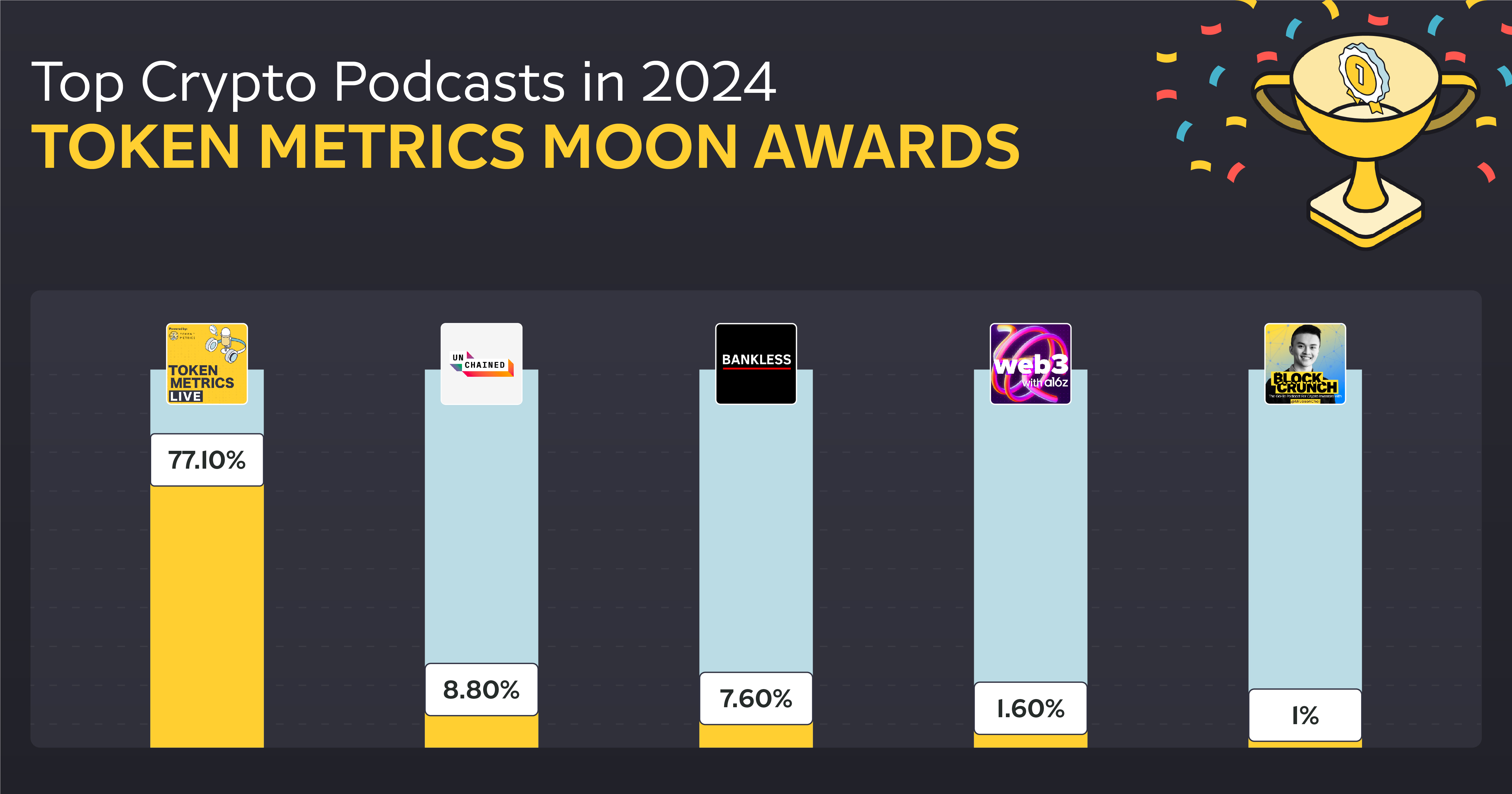
In the Moon Awards survey, Token Metrics Podcast secured the top position with 77.10% of the total votes.

The Token Metrics Podcast is a treasure trove of valuable information for crypto investors. This podcast is hosted by Ian Balina, Founder of Token Metrics, and provides in-depth analysis, insights, and interviews with industry experts. Whether you're a seasoned investor or starting out, the Token Metrics Podcast offers something for everyone.

What Sets the Token Metrics Podcast Apart?

The Token Metrics Podcast stands out for its data-driven approach to crypto investing. The team at Token Metrics leverages artificial intelligence and machine learning algorithms to analyze and evaluate cryptocurrencies.

 This data-driven approach helps investors make informed decisions based on real-time market data and insights.

Key Features of the Token Metrics Podcast

  1. Market Analysis: The Token Metrics Podcast provides regular market updates and analysis, helping listeners stay informed about the latest trends and developments in the crypto market.
  2. Project Reviews: The podcast features in-depth reviews of various crypto projects, giving listeners valuable insights into their potential and investment opportunities.
  3. Investment Strategies: The team at Token Metrics shares their investment strategies and tips, helping listeners navigate the complex world of crypto investing.
  4. Guest Interviews: The podcast invites industry experts and thought leaders as guests, offering listeners the opportunity to learn from the best in the field.

How to Access the Token Metrics Podcast?

The Token Metrics Podcast is available on all major podcast platforms, including Apple, Spotify, and Google Podcasts. Simply search for "Token Metrics Podcast" and start listening to gain valuable insights into crypto investing.

Unchained Podcast

In the Moon Awards survey, Unchained Podcast secured the 2nd position with 8.80% of the total votes.

The Unchained Podcast, hosted by Laura Shin, is a must-listen for anyone interested in blockchain and cryptocurrencies. With a focus on industry trends, innovations, and thought-provoking discussions, this podcast offers a wealth of knowledge for beginners and seasoned crypto enthusiasts.

What Makes the Unchained Podcast Unique?

The Unchained Podcast stands out for its journalistic approach and in-depth interviews. An experienced journalist, Laura Shin asks thought-provoking questions and uncovers insights from industry leaders and experts. The podcast provides a platform for open and honest discussions about the latest developments in the crypto space.

Key Features of the Unchained Podcast

  1. Expert Interviews: Laura Shin invites a wide range of guests, including blockchain founders, investors, regulators, and academics. These interviews provide listeners with diverse perspectives and insights into the world of blockchain and cryptocurrencies.
  2. Industry Trends: The podcast covers the latest trends and innovations in the crypto industry, including topics such as DeFi, NFTs, and regulatory developments. Listeners can stay up-to-date with the rapidly evolving world of blockchain technology.
  3. Educational Content: The Unchained Podcast provides educational content for beginners, helping them understand the basics of blockchain and cryptocurrencies. Laura Shin breaks down complex topics into easily digestible information.
  4. Thought Leadership: The podcast features thought leaders who share their visions for the future of blockchain and cryptocurrencies. Listeners can gain valuable insights into the potential impact of these technologies on various industries.

How to Listen to the Unchained Podcast?

The Unchained Podcast is available on popular podcast platforms like Apple, Spotify, and Google. Simply search for "Unchained Podcast" and explore the fascinating world of blockchain and cryptocurrencies.

Bankless Podcast

In the Moon Awards survey, Bankless Podcast secured the 3rd position with 7.60% of the total votes.

If you're interested in decentralized finance (DeFi) and want to stay on top of the latest developments, the Bankless Podcast is a must-listen. 

Hosted by David Hoffman and Ryan Adams, this podcast explores the world of DeFi, providing valuable insights for beginners and experienced investors.

What Makes the Bankless Podcast Stand Out?

The Bankless Podcast stands out for its focus on the DeFi revolution. David and Ryan dive deep into the world of decentralized finance, exploring concepts such as yield farming, liquidity mining, and governance. The podcast comprehensively explains how DeFi is reshaping the financial landscape.

Key Features of the Bankless Podcast

  1. DeFi Explained: The Bankless Podcast provides educational content to help listeners understand the intricacies of decentralized finance. David and Ryan break down complex concepts and explain them in a way that is accessible to everyone.
  2. Interviews with Experts: The podcast invites industry experts and thought leaders as guests, allowing listeners to learn from the best in the DeFi space. These interviews provide valuable insights and perspectives on the latest trends and developments.
  3. Investment Strategies: David and Ryan share their investment strategies and tips for navigating the world of DeFi. Whether you're a beginner or an experienced investor, the podcast offers valuable advice to help you make informed decisions.
  4. Community Building: The Bankless Podcast fosters a strong community of like-minded individuals passionate about DeFi. Listeners can connect with others who share their interests and exchange ideas and knowledge.

How to Tune into the Bankless Podcast?

The Bankless Podcast is available on popular platforms like Apple, Spotify, and Google. Simply search for "Bankless Podcast" and start exploring the world of decentralized finance.

Web3 with a16z Podcast

In the Moon Awards survey, Web3 with a16z Podcast secured the 4th position with 1.60% of the total votes.

The Web3 with a16z Podcast, hosted by the team at Andreessen Horowitz, delves into the intersection of technology, culture, and decentralized networks. 

With a focus on the future of the web and the impact of blockchain technology, this podcast offers valuable insights for anyone interested in the evolving digital landscape.

What Makes the Web3 with a16z Podcast Unique?

The Web3 with a16z Podcast stands out for exploring the broader implications of blockchain technology beyond cryptocurrencies. 

The podcast dives into topics such as decentralized applications, tokenization, and the potential of Web3. Listeners gain a deeper understanding of how blockchain is reshaping industries and challenging traditional paradigms.

Key Features of the Web3 with a16z Podcast

  1. Thought-Provoking Discussions: The podcast features thought leaders and industry experts who share their visions for the future of the web and blockchain technology. Listeners gain insights into emerging trends and the potential impact of these technologies.
  2. Cultural Implications: The Web3 with a16z Podcast explores the cultural implications of blockchain technology and decentralized networks. The hosts discuss how these technologies reshape trust, ownership, and collaboration.
  3. Investment Opportunities: The podcast highlights investment opportunities in the blockchain space, helping listeners identify promising projects and navigate the rapidly evolving landscape of Web3.
  4. Entrepreneurial Insights: The hosts of the Web3 with a16z Podcast delve into the entrepreneurial aspects of blockchain technology, providing valuable insights for startups and innovators looking to leverage the power of decentralized networks.

How to Access the Web3 with a16z Podcast?

The Web3 with a16z Podcast is available on major podcast platforms such as Apple, Spotify, and Google. Simply search for "Web3 with a16z Podcast" and start exploring the future of the web and blockchain.

Blockcrunch Podcast

In the Moon Awards survey, Blockcrunch Podcast secured the 5th position with 1.00% of the total votes.

The Blockcrunch Podcast, hosted by Jason Choi, is a valuable resource for anyone interested in crypto investing and blockchain startups. 

With a focus on the intersection of finance and technology, this podcast explores the latest trends, investment strategies, and startup opportunities in the crypto space.

What Sets the Blockcrunch Podcast Apart?

The Blockcrunch Podcast stands out for its in-depth analysis of crypto projects and its exploration of the entrepreneurial side of the blockchain industry. Jason Choi interviews industry leaders and experts to uncover valuable insights and investment opportunities.

Key Features of the Blockcrunch Podcast

  1. Investment Insights: The podcast provides valuable insights into crypto investing, helping listeners navigate the volatile world of cryptocurrencies. Jason Choi shares his investment strategies and tips for evaluating crypto projects.
  2. Startup Spotlights: The Blockcrunch Podcast features interviews with blockchain startup founders, offering listeners a glimpse into the challenges and opportunities of building a successful project in the crypto space.
  3. Regulatory Analysis: The podcast explores the regulatory landscape surrounding cryptocurrencies and blockchain technology. Listeners gain a deeper understanding of the legal and regulatory challenges that the industry faces.
  4. Industry Trends: The Blockcrunch Podcast covers the latest trends and developments in the crypto industry, including topics such as NFTs, decentralized exchanges, and blockchain scalability solutions.

How to Listen to the Blockcrunch Podcast?

The Blockcrunch Podcast is available on popular podcast platforms like Apple, Spotify, and Google. Simply search for "Blockcrunch Podcast" and start exploring the world of crypto investing and blockchain startups.

Also Read - Top Bitcoin ETFs in 2024

Conclusion

Crypto podcasts provide valuable information, insights, and discussions for anyone interested in the cryptocurrency industry. Whether you're a beginner looking to learn the basics or an experienced investor seeking the latest trends and investment opportunities, these podcasts have you covered. 

From the Token Metrics Podcast's data-driven approach to the Unchained Podcast's journalistic interviews, each podcast offers a unique perspective on the world of crypto. So, tune in, stay informed, and join the conversation!

Disclaimer

The information provided on this website does not constitute investment advice, financial advice, trading advice, or any other advice, and you should not treat any of the website's content as such.

Token Metrics does not recommend buying, selling, or holding any cryptocurrency. Conduct your due diligence and consult your financial advisor before making investment decisions.

Choose from Platinum, Gold, and Silver packages
Reach with 25–30% open rates and 0.5–1% CTR
Craft your own custom ad—from banners to tailored copy
Perfect for Crypto Exchanges, SaaS Tools, DeFi, and AI Products