Back to blog
Research

Our x402 Integration Is Live: Pay-Per-Call Access to Token Metrics—No API Key Required

Use your crypto wallet to call Token Metrics endpoints on demand. Pay per call with USDC or get a 10% discount with TMAI. No monthly subscriptions, no API keys, just headers and code.
Token Metrics Team
7 min read
Want Smarter Crypto Picks—Free?
See unbiased Token Metrics Ratings for BTC, ETH, and top alts.
Thank you! Your submission has been received!
Oops! Something went wrong while submitting the form.
 No credit card | 1-click unsubscribe

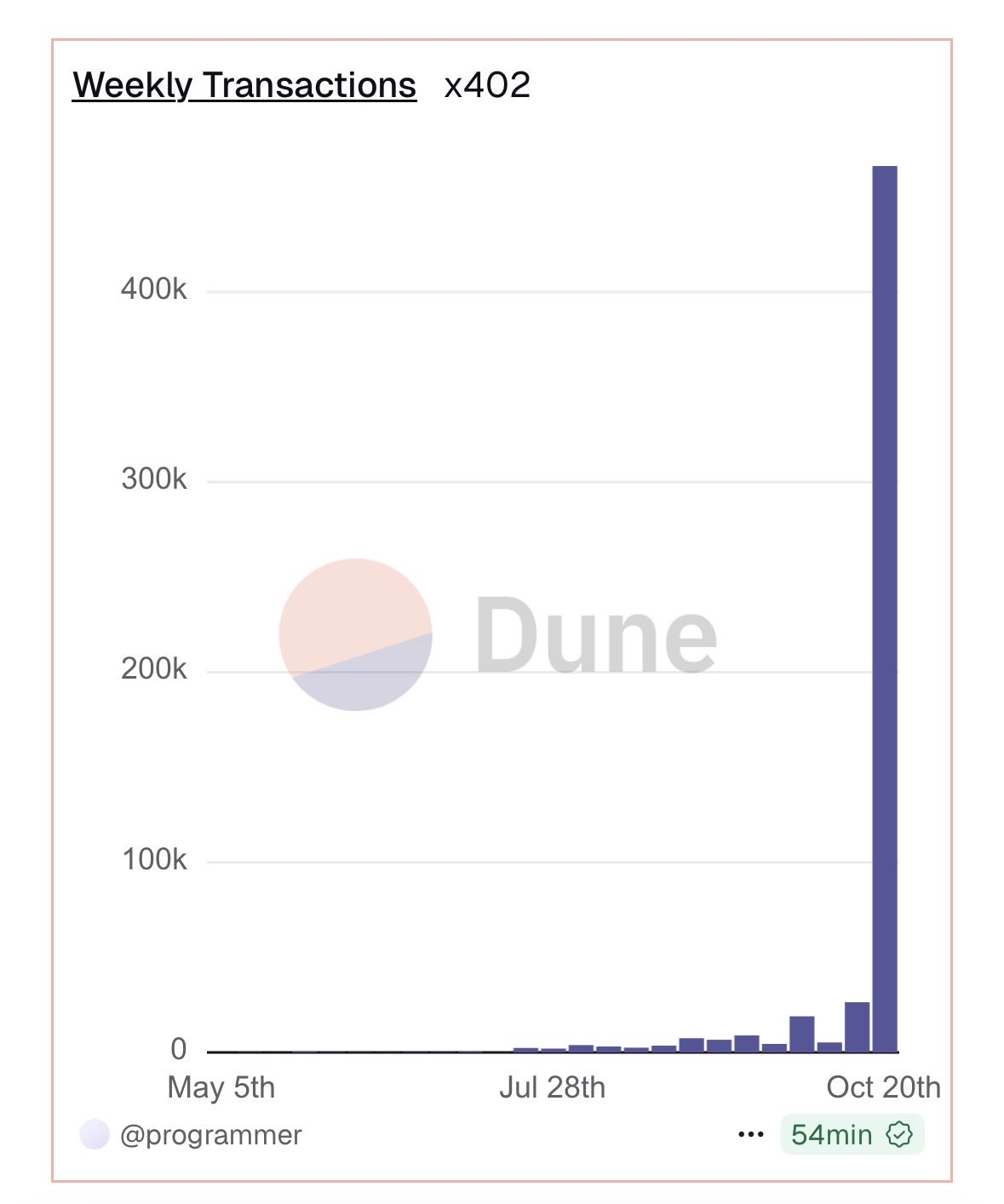
Developers are already shipping with x402 at scale: 450,000+ weekly transactions, 700+ projects. This momentum is why our Token Metrics x402 integration matters for agents and apps that need real crypto intelligence on demand. You can now pay per API call using HTTP 402 and the x-coinbase-402 header, no API key required.
   _ 

Summary: Pay per API call to Token Metrics with x402 on Base using USDC or TMAI, set x-coinbase-402: true, and get instant access to trading signals, grades, and AI reports.

Check out the x402 ecosystem on Coingecko.


What You Get

Token Metrics now supports x402, the HTTP-native payment protocol from Coinbase. Users can call any public endpoint by paying per request with a wallet, eliminating API key management and upfront subscriptions. This makes Token Metrics data instantly accessible to AI agents, researchers, and developers who want on-demand crypto intelligence.

x402 enables truly flexible access where you pay only for what you use, with transparent per-call pricing in USDC or TMAI. The integration is live now across all Token Metrics public endpoints, from trading signals to AI reports. Here's everything you need to start calling Token Metrics with x402 today.

Quick Start

Get started with x402 + Token Metrics in three steps.

  1. Create a wallet client: Follow the x402 Quickstart for Buyers to set up a wallet client (Node.js with viem or Python with eth-account). Link: https://docs.cdp.coinbase.com/x402/docs/quickstart-buyers
  2. Set required headers: Add x-coinbase-402: true to any Token Metrics request. Optionally set x-payment-token: tmai for a 10% discount (defaults to usdc). Do not send x-api-key when using x402.
  3. Call any endpoint: Make a request to https://api.tokenmetrics.com/v2/[endpoint] with your wallet client. Payment happens automatically via x402 settlement.

That is it. Your wallet pays per call, and you get instant access to Token Metrics data with no subscription overhead.

Required Headers


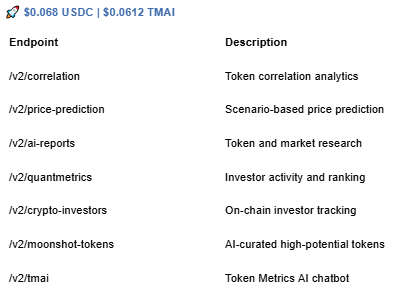
Endpoint Pricing

Transparent per-call pricing across all Token Metrics public endpoints. Pay in USDC or get 10% off with TMAI.
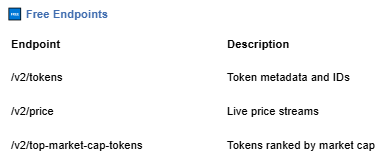


All prices are per single call. Paying with TMAI automatically applies a 10% discount.

Try It on x402 Composer

If you want to see x402 + Token Metrics in action without writing code, head to x402 Composer. Composer is x402scan's playground for AI agents that pay per tool call. You can open a Token Metrics agent, chat with it, and watch real tool calls and USDC/TMAI settlements stream into the live Feed.

Composer surfaces active agents using Token Metrics endpoints like trading signals, price predictions, and AI reports. It is a great way to explore what is possible before you build your own integration. Link: https://x402scan.com/composer

Why x402 Changes the Game

Traditional API access requires upfront subscriptions, fixed rate limits, and key management overhead. x402 flips that model by letting you pay per call with a crypto wallet, with no API keys or monthly commitments. This is especially powerful for AI agents, which need flexible, on-demand access to external data without human intervention.

For Token Metrics, x402 unlocks agentic commerce where agents can autonomously pull crypto intelligence, pay only for what they use, and compose our endpoints with other x402-enabled tools like Heurist Mesh, Tavily, and Firecrawl. It is HTTP-native payments meeting real-world agent workflows.

What is x402?

x402 is an open-source HTTP-native payment protocol developed by Coinbase. It uses the HTTP 402 status code (Payment Required) to enable pay-per-request access to APIs and services. When you make a request with the x-coinbase-402 header, the server returns a payment challenge, your wallet signs and submits payment, and the server fulfills the request once settlement is verified.

The protocol runs on Base and Solana, with USDC and TMAI as the primary payment tokens. x402 is designed for composability, agents can chain multiple paid calls across different providers in a single workflow, paying each service directly without intermediaries. Learn more at the x402 Quickstart for Buyers: https://docs.cdp.coinbase.com/x402/docs/quickstart-buyers

FAQs

Do I need an API key to use x402 with Token Metrics?

No. When you set x-coinbase-402: true, your wallet signature replaces API key authentication. Do not send x-api-key in your requests.

Can I use x402 with a free trial or test wallet?

Yes, but you will need testnet USDC or TMAI on Base Sepolia (testnet) for development. Production calls require mainnet tokens.

How do I see my payment history?

Check x402scan for transaction logs and tool call history. Your wallet will also show outgoing USDC/TMAI transactions. Visit https://www.x402scan.com.

What happens if my wallet balance is too low?

The x402 client will return a payment failure before making the API call. Top up your wallet and retry.

Can I use x402 in production apps?

Yes. x402 is live on Base mainnet. Set appropriate spend limits and handle payment errors gracefully in your code.

Next Steps

Disclosure

Educational and informational purposes only. x402 involves crypto payments on public blockchains. Understand the risks, manage your wallet security, and test thoroughly before production use. Token Metrics does not provide financial advice.

Powered by Token Metrics

Your AI-powered crypto research experience is made possible by Token Metrics. Discover data-driven insights and advanced analytics on your favorite coins and tokens.

Build Smarter Crypto Apps &
AI Agents in Minutes, Not Months
Real-time prices, trading signals, and on-chain insights all from one powerful API.
Grab a Free API Key
About Token Metrics
Token Metrics: AI-powered crypto research and ratings platform. We help investors make smarter decisions with unbiased Token Metrics Ratings, on-chain analytics, and editor-curated “Top 10” guides. Our platform distills thousands of data points into clear scores, trends, and alerts you can act on.
30 Employees
analysts, data scientists, and crypto engineers
Daily Briefings
concise market insights and “Top Picks”
Transparent & Compliant
Sponsored ≠ Ratings; research remains independent
Want Smarter Crypto Picks—Free?
See unbiased Token Metrics Ratings for BTC, ETH, and top alts.
Thank you! Your submission has been received!
Oops! Something went wrong while submitting the form.
 No credit card | 1-click unsubscribe
Token Metrics Team
Token Metrics Team

Recent Posts

Research

Best Practices for Storing and Accessing API Keys in Your Applications

Token Metrics Team
6

API keys are a critical part of modern application development—enabling powerful third-party integrations while also presenting potential security risks. As APIs become the backbone of fintech, crypto, AI, and data applications, developers must ask: what are the safest and most scalable ways to store and access API keys? Let’s explore essential strategies, tools, and risks when handling sensitive API credentials.

Why API Key Security Matters

API keys function like digital passports, granting your application access to valuable services—from price feeds and SMS messaging to trading platforms and blockchain analytics. An exposed API key can lead to data leaks, unauthorized transactions, inflated bills, or even broader system compromise. High-profile data breaches, such as those resulting from public code repositories exposing secrets, underline the real-world impact of poor API key management.

Moreover, regulations and best practices in the crypto and AI industries demand robust security measures. Protecting API keys is not just about your own infrastructure—it’s about the trust your users and partners have in your platform.

Common API Key Storage Mistakes

Many security mishaps stem from common mistakes that are easy to avoid with the right protocols. These include:

  • Hardcoding API keys in source code – This exposes keys in version control (e.g., GitHub), making them potentially public.
  • Storing keys in client-side code – Any key shipped to the browser or mobile app can be extracted, leading to unauthorized API use.
  • Committing .env or config files with secrets – Failing to exclude sensitive files from repositories is a frequent culprit in breaches.
  • Sharing keys over unsecured channels – Email, chat, or shared docs aren’t secure environments for exchanging sensitive credentials.

Avoiding these pitfalls is a foundational step in API key security, but more sophisticated controls are often necessary as your application scales.

Proven Methods for Secure API Key Storage

To shield your API keys from breach and misuse, modern applications should utilize several technical best practices and tools:

  1. Environment Variables:
    • Environment variables keep secrets outside of your source code and can be managed per deployment (development, testing, production).
    • Most frameworks (Node.js, Python, Java, etc.) support loading variables from a .env file not checked into git.
  2. Secrets Management Platforms:
    • Enterprise-grade solutions like AWS Secrets Manager, HashiCorp Vault, Google Secret Manager, or Azure Key Vault offer encrypted secret storage, fine-grained access control, and audit logs.
    • Automate credential rotation and tightly restrict which services/components can access keys.
  3. Server-Side Storage Only:
    • Never expose sensitive API keys in client-side or public code. Keys should reside on a backend server that acts as a proxy or securely facilitates the necessary logic.
  4. Configuration Management:
    • Utilize configuration files for parameters but reference secrets via environment variables or secret manager APIs.

Additionally, always use least privilege principles: grant API keys only the permissions required for specific actions, and leverage IP allowlists or referrer checks where supported by the API provider.

Secure Methods for Accessing API Keys in Your Applications

How your application retrieves and uses API keys can be just as important as where they’re stored. Consider these approaches:

  • Runtime Injection: Use secure deployment workflows (like CI/CD platforms) to inject secrets as runtime environment variables, ensuring they’re not embedded in disk snapshots.
  • API Secrets Fetching: Advanced orchestration tools allow your app to fetch secrets at startup from a remote vault using temporary, tightly-scoped access tokens.
  • Encrypted Storage: If secrets must reside on disk (e.g., for legacy apps), encrypt both the file and filesystem, and restrict OS-level permissions.
  • Monitoring Access: Enable audit logging for each secret access, and set up alerts for anomalies like rapid key usage/rotation attempts.

Developers can further reduce risk by implementing rate limiting, automated key revocation/rotation, and zero trust policies—especially in large-scale or multi-developer environments.

Frameworks and Tools for API Key Management

Choosing the right tools can simplify and strengthen your API key security model. Some popular frameworks and services include:

  • dotenv (Node.js), python-dotenv: Read environment variables from files excluded from version control.
  • AWS Secrets Manager, Google Secret Manager, Azure Key Vault, HashiCorp Vault: Automated secrets storage, encryption, and access control, ideal for production-scale environments.
  • Kubernetes Secrets: Manage secrets in containerized environments with role-based access control and workload isolation.
  • CI/CD Secret Management: GitHub Actions, GitLab CI, and similar services let you define secret variables outside your repository for safe deployment workflows.

When connecting to crypto or AI services via API—such as Token Metrics—these tools make safe integration straightforward while maintaining regulatory compliance and auditability.

Build Smarter Crypto Apps & AI Agents with Token Metrics

Token Metrics provides real-time prices, trading signals, and on-chain insights all from one powerful API. Grab a Free API Key

FAQs on API Key Storage and Access

What happens if my API key is exposed?

If an API key is leaked, attackers could exploit your account to perform unauthorized transactions, scrape data, or exhaust your API limits. It’s essential to immediately revoke and regenerate compromised keys, audit usage, and identify the exposure vector.

Should I use the same API key in development and production?

No. Always generate separate API keys for each environment. This limits the impact of a potential leak and helps with auditing and troubleshooting.

Is it safe to store API keys in a database?

Only if the keys are encrypted at rest and the database access is strictly controlled. Prefer specialized secrets managers over general-purpose databases for handling sensitive keys.

How often should API keys be rotated?

Regular key rotation reduces risk from undetected exposures. The frequency depends on the sensitivity of the APIs in use—critical infrastructure often rotates every 90 days or less. Always rotate keys after a possible leak.

Can I share API keys with my team?

Share only through secure, auditable channels and never through unsecured messaging or docs. Use role-based permissions so each person has only the access they need, and revoke keys if team members leave.

Disclaimer

This content is provided for educational and informational purposes only. It does not constitute software security advice or an offer to buy or sell any financial product. Always perform your own due diligence and consult with appropriate professionals before implementing sensitive system changes.

Research

Why Nonces Matter in Crypto API Requests: Security Explained

Token Metrics Team
6

Every second, millions of API requests zip across the crypto ecosystem. From automated trading bots to portfolio trackers, these requests are the lifeblood of decentralized finance and digital asset management. But what stops attackers from copying—or replaying—old requests to manipulate sensitive operations? Enter the ‘nonce’: a small but mighty concept that powers security behind the scenes.

What Is a Nonce in Crypto API Requests?

A nonce—short for “number used once”—is a unique value included in every API request sent to a crypto service or exchange. The purpose of a nonce is simple yet vital: it guarantees that each request is unique and can’t be processed more than once.

Think of a nonce as a one-time security token. When a crypto API receives a request (like placing an order or checking your account balance), it checks the nonce. If the same nonce has been seen before, the request is rejected. This prevents ‘replay attacks’ where bad actors try to trick the system by resending (replaying) previous valid requests.

Nonces are especially important in crypto and blockchain applications, where secure, programmatic access is essential and funds or sensitive data are directly at stake.

Why Do Crypto APIs Require Nonces?

APIs are gateways for interacting with exchanges, wallets, and on-chain data. Because API requests may initiate financial transactions or access confidential information, security is paramount. Here’s why nonces matter so much in this context:

  • Prevents Replay Attacks: If an attacker intercepts an API request, they might seek to send it again to perform the same action. Nonces prevent this by making each request unique.
  • Ensures Idempotency: APIs often require actions (like withdrawals or trades) to execute only once. The nonce acts as a transaction counter, stopping duplicates.
  • Supports Authentication and Authorization: Nonces often join API keys and signatures in multi-layer authentication, adding a further safeguard for account and data integrity.
  • Protects Programmatic Trades: Automated trading bots and applications rely on secure APIs. The nonce helps ensure their actions are immune to interception-based fraud.

Practically, if a request using an old or duplicate nonce is sent, it will be denied—even if the signature and other details are correct. This adds a crucial layer of defense for both users and API providers.

Different crypto APIs implement nonces in slightly different ways, but the fundamental principle is the same: no nonce, no action. Here’s how nonces typically function:

  • Incremental Counter: Many APIs require nonces to be monotonically increasing numbers (often timestamps in milliseconds or a simple incrementing integer). Each new request uses a bigger value than the last.
  • Unique Strings: Some systems accept any unique value for each request. This can include random UUIDs or hash values for extra unpredictability.
  • Nonce and Time-based: Combining a nonce with a timestamp tightens security, making it harder for attackers to replay requests even if they manage to guess a valid nonce.

For example, suppose you run a crypto trading bot accessing an exchange’s private API. After every successful order, your bot updates the nonce (say, using timestamp or ordering sequence). If it accidentally reuses an old nonce, the server will return an error, ensuring only fresh, intentional actions are completed.

Some exchanges or providers, such as Binance, Kraken, or Token Metrics, may reject entire request batches if a single nonce breaks the expected pattern. This underscores the need for careful nonce management in automated workflows.

Security Risks and Best Practices for Nonce Management

Although nonces dramatically improve security, they’re not foolproof if implemented poorly. The most common risks and solutions include:

  • Nonce reuse: Accidentally recycling a nonce allows attackers to replay requests. Always ensure a strictly increasing or unique nonce each time.
  • Out-of-sync counters: If an application crashes or multiple scripts access the same API credentials, nonces can become mismatched. Store the current nonce securely and synchronize across all scripts or instances.
  • Guessable nonces: Using predictable nonces (like simple counting) can be risky if other attack vectors exist. Prefer time-based or random nonces where supported.
  • Stale requests: Long-lived or delayed requests might have expired nonces by the time they reach the API. Use real-time values and handle errors gracefully.

For enhanced protection, always combine nonces with API signatures, HTTPS communication, and well-managed API keys. Audit and monitor account activity through your provider’s dashboard or automated alerts.

Role of Nonces in AI-Driven Crypto Tools

AI-powered crypto bots, trading apps, and research agents depend on secure and reliable APIs. Nonces are foundational to these security practices. Reliable nonce management ensures that sophisticated models can safely execute trades, access real-time data, and manage assets without interruption or vulnerability to replay fraud.

For teams building custom AI agents or analytics dashboards integrating with multiple crypto exchanges and data vendors, establishing a robust nonce strategy is as important as optimizing trading algorithms. Without it, even the most advanced AI workflows could be compromised by something as simple as a replayed API request.

Build Smarter Crypto Apps & AI Agents with Token Metrics

Token Metrics provides real-time prices, trading signals, and on-chain insights all from one powerful API. Grab a Free API Key

What is a nonce in crypto APIs?

A nonce is a number or unique value included with each crypto API request to guarantee the request’s uniqueness and prevent replay attacks. Without a unique nonce, malicious actors could potentially resend old API requests to repeat previous transactions.

How do I generate a secure nonce?

Most APIs accept an incrementing counter, a high-precision timestamp, or a cryptographically-random UUID as a nonce. Always check your provider’s documentation to determine the required format and update your nonce on every request.

What happens if I reuse a nonce?

If a nonce is reused, the API will typically reject the entire request to prevent accidental or malicious actions from being repeated. Reuse can interrupt automated workflows and, if not handled, introduce vulnerabilities.

Can I use the same nonce across different APIs?

No. Nonces should be specific to each API and user session. Even APIs on the same platform may expect unique nonces, and reusing nonces across systems can lead to synchronization errors and rejected requests.

Why are nonces necessary if APIs use signatures?

Digital signatures authenticate the origin and integrity of data, but they don’t prevent replay attacks on their own. A nonce, combined with a signature, ensures that even a perfectly signed old request cannot be reused—sharpening your security.

Disclaimer

This material is for informational and educational purposes only. It does not constitute financial, investment, or regulatory advice. Please consult official documentation and relevant experts before integrating any security or API best practices. Token Metrics is referenced here as an educational resource only.

Research

Accessing Real-Time Market Data with WebSocket APIs: A Step-by-Step Guide

Token Metrics Team
7

Imagine being able to monitor price changes, trades, and order books as they happen—delivered straight to your application or dashboard, with minimal latency. For traders, developers, and analysts, accessing real-time market data can bring tremendous technical and strategic advantages. The secret weapon? Subscribing to WebSocket feeds directly from exchanges or crypto data providers.

What Are WebSockets and Why Are They Used for Market Data?

WebSockets are a modern web technology that enables full-duplex, bi-directional communication between a client and a server over a single, persistent connection. Unlike conventional HTTP requests—which require continuous polling for new data—WebSockets allow servers to push timely data updates instantly to clients.

This makes WebSockets ideal for streaming live financial data such as ticker prices, trade events, and order book movements. In volatile markets like cryptocurrencies, seconds matter, and having access to real-time updates can provide a more accurate market snapshot than delayed REST API queries. Most major exchanges and crypto data providers—such as Binance, Coinbase, and Token Metrics—offer WebSocket APIs precisely to cater to these real-time scenarios.

How WebSocket Market Data Subscriptions Work

Subscribing to real-time market data via WebSocket typically involves the following fundamental steps:

  1. Establish a WebSocket Connection: Open a persistent connection to the exchange's or data provider's WebSocket server via an endpoint URL (e.g., wss://stream.example.com/ws).
  2. Authenticate (if required): Some APIs require an API key or token to access secured or premium data feeds.
  3. Send Subscription Messages: Once connected, send a JSON-formatted message indicating which data streams you're interested in (e.g., trades for BTC/USD, the full order book, or price tickers).
  4. Process Incoming Messages: The server continuously 'pushes' messages to your client whenever new market events occur.
  5. Handle Disconnections and Reconnects: Implement logic to gracefully handle dropped connections, resubscribe when reconnecting, and back up important data as needed.

Here's a simplified example (in Python, using the websockets library) to subscribe to BTC/USD ticker updates on a typical crypto exchange:

import asyncio
import websockets
import json

async def listen():
    url = 'wss://exchange.com/ws'
    async with websockets.connect(url) as ws:
        subscribe_msg = {
            "type": "subscribe",
            "channels": ["ticker_btcusd"]
        }
        await ws.send(json.dumps(subscribe_msg))

        while True:
            msg = await ws.recv()
            print(json.loads(msg))

asyncio.get_event_loop().run_until_complete(listen())

Most exchanges have detailed WebSocket API documentation specifying endpoints, authentication, message formats, and available data channels.

Choosing the Right Market Data WebSocket API

The crypto industry offers a broad range of WebSocket APIs, provided either directly by trading venues or specialized third-party data aggregators. Here are important selection criteria and considerations:

  • Coverage: Does the API cover the markets, trading pairs, and networks you care about? Some APIs, like Token Metrics, offer cross-exchange and on-chain analytics in addition to price data.
  • Latency and Reliability: Is the data real-time or delayed? Assess reported update frequency and uptime statistics.
  • Supported Endpoints: What specific data can you subscribe to (e.g., trades, tickers, order books, on-chain events)?
  • Authentication & API Limits: Are there rate limits or paid tiers for higher throughput, historical access, or premium data?
  • Ease of Use: Look for robust documentation, sample code, and language SDKs. Complex authentication and message formats can slow integration.
  • Security: Check for secure connections (wss://), proper authentication, and recommended best practices for key handling.

Some popular choices for crypto market data WebSocket APIs include:

  • Binance WebSocket API: Offers granular trade and order book data on hundreds of pairs.
  • Coinbase Advanced Trade WebSocket Feed: Live updates for major fiat/crypto pairs, trades, and market depth.
  • Token Metrics API: Supplies real-time prices, trading signals, and on-chain insights from dozens of blockchains and DEXs, ideal for analytics platforms and AI agents.

Common Use Cases for Real-Time WebSocket Market Data

Subscribing to live market data via WebSocket fuels a wide range of applications across the crypto and finance sectors. Some of the most prominent scenarios include:

  • Crypto Trading Bots: Automated trading systems use low-latency feeds to react instantly to market changes, execute strategies, and manage risk dynamically.
  • Market Data Dashboards: Streaming updates power web and mobile dashboards with live tickers, charts, heatmaps, and sentiment scores.
  • AI Research & Analytics: Machine learning models consume real-time pricing and volume patterns to detect anomalies, forecast trends, or identify arbitrage.
  • Alert Systems: Users set price, volume, or volatility alerts based on live data triggers sent over WebSockets.
  • On-Chain Event Monitoring: Some APIs stream on-chain transactions or contract events, providing faster notification for DeFi and DEX platforms than conventional polling.

Tips for Implementing a Secure and Reliable WebSocket Feed

Building a production-grade system to consume real-time feeds goes beyond simply opening a socket. Here are practical best practices:

  • Connection Management: Monitor connection state, implement exponential back-off on reconnects, and use heartbeats or ping/pong to keep connections alive.
  • Data Integrity: Reconcile or supplement real-time data with periodic REST API snapshots to recover from missed messages or out-of-sync states.
  • Efficient Storage: Store only essential events or aggregate data to minimize disk usage and improve analytics performance.
  • Security Practices: Secure API keys, restrict access to production endpoints, and audit incoming/outgoing messages for anomalies.
  • Scalability: Scale horizontally for high throughput—especially for dashboards or analytics platforms serving many users.
  • Error Handling: Gracefully process malformed or out-of-order messages and observe API status pages for scheduled maintenance or protocol changes.

Following these guidelines ensures a robust and resilient real-time data pipeline, a foundation for reliable crypto analytics and applications.

Build Smarter Crypto Apps & AI Agents with Token Metrics

Token Metrics provides real-time prices, trading signals, and on-chain insights all from one powerful API. Grab a Free API Key

Frequently Asked Questions

What kind of market data can you stream via WebSocket?

Most crypto WebSocket APIs allow subscriptions to real-time trades, price tickers, full order books (level 2/3), candlestick updates, and often even on-chain events. The precise channels and data fields depend on the provider's documentation.

Is WebSocket market data faster or more accurate than REST API?

WebSocket market data is generally lower-latency because updates are pushed immediately as market events occur, rather than polled at intervals. This leads to both more timely and often more granular data. For most trading, analytics, or alerting use-cases, WebSocket is preferred over REST for live feeds.

Do you need an API key for WebSocket market data?

Not always. Public endpoints (such as price tickers or trades) are often accessible without authentication, while premium or private user data (like order management or account positions) will require an API key or token. Always review the provider's authentication requirements and security best practices.

Which providers offer the most reliable crypto market data WebSocket feeds?

Reliability varies by provider. Leading exchanges like Binance and Coinbase provide extensive documentation and global infrastructure. Aggregated services like the Token Metrics API combine cross-exchange data with analytics and on-chain insights, making them valuable for research and AI-driven crypto tools.

How can AI and analytics tools enhance WebSocket market data applications?

AI-driven analytics layer additional value onto live data streams—for example, detecting anomalous volume, recognizing patterns across exchanges, or issuing smart alerts. Platforms like Token Metrics offer machine learning-powered signals and research, streamlining complex analysis on live feeds for professional and retail users alike.

Disclaimer

This article is for informational and educational purposes only. It does not constitute investment advice, financial recommendation, or an offer to buy or sell any assets. Please consult official documentation and do your own research when integrating with APIs or handling sensitive financial data.

Choose from Platinum, Gold, and Silver packages
Reach with 25–30% open rates and 0.5–1% CTR
Craft your own custom ad—from banners to tailored copy
Perfect for Crypto Exchanges, SaaS Tools, DeFi, and AI Products