Crypto Basics

What are Real World Assets (RWA) and Its Importance in Crypto?

Learn everything about Real World Assets (RWA) in crypto and know how they bridge traditional finance with blockchain for enhanced security and liquidity.
S. Vishwa
5 Minutes
MIN

In cryptocurrency and blockchain technology, real world assets (RWAs) are becoming increasingly popular. These assets represent tangible items of value, whether physical or digital, that are tokenized and stored on the blockchain. 

This article will explore real-world assets, their importance in crypto, and how they are used in various applications.

Understanding Real World Assets

Real world assets can encompass a wide range of items, including physical assets like real estate, commodities, and precious metals, as well as digital assets such as stocks, bonds, and intellectual property. These assets derive their value from outside of the blockchain, but by tokenizing them, they can be represented digitally on the blockchain.

Tokenization is the process of converting real-world assets into digital tokens. These tokens are then stored on the blockchain, which provides transparency, security, and immutability. Tokenization allows for fractional ownership, meaning that high-value assets can be divided into smaller units, allowing more people to invest in and benefit from them.

The Importance of Real World Assets in the Crypto Space

Real world assets play a crucial role in crypto for several reasons. Firstly, they bring liquidity to traditionally illiquid assets. Assets like real estate or fine art can be challenging to buy or sell quickly, but by tokenizing them, they become more liquid and accessible to a broader range of investors.

Secondly, real world assets provide diversification opportunities for crypto investors. Investors can hedge against the volatility of purely crypto-related assets by including real world assets in their portfolios. This diversification can reduce risk and increase stability in investment strategies.

Thirdly, real world assets bridge the gap between traditional finance and decentralized finance (DeFi). DeFi platforms allow for the lending, borrowing, and trading of real world assets, providing similar investment opportunities to traditional financial institutions. This integration of real world assets into DeFi expands the reach and functionality of the decentralized financial system.

Use Cases of Real World Assets in Crypto

Real world assets are being used in various applications within the crypto space. One prominent use case is in lending and borrowing platforms. These platforms allow users to use their tokenized real world assets as collateral. 

Borrowers receive stablecoins or other tokens while lenders earn interest on their holdings. This use case provides an alternative to traditional lending and borrowing services, offering flexibility and accessibility.

Another use case is in the creation of index funds. DeFi platforms enable the creation of pooled investments that provide passive exposure to a basket of real world asset tokens. These index funds diversify risk across different asset classes and tokens, allowing investors to gain exposure to a broader range of assets.

Asset management is another area where real world assets are utilized in the crypto space. Autonomous fund protocols can deploy capital by trading real world asset tokens, aiming to generate returns for investors. This approach allows for the active management of assets and the potential for higher yields.

Lastly, real world assets on the blockchain can be used for less risky investments. Assets like real estate, commodities, and fine art are typically less volatile than purely crypto-related assets. By tokenizing these assets, investors can gain exposure to alternative asset classes while potentially reducing risk.

Tokenization Process for Real World Assets

The tokenization process for real world assets involves several steps. First, an asset that holds value and could benefit from blockchain exposure and tokenization is identified. It could be a physical asset like real estate or a digital asset like a stock.

Next, regulatory approval must be sought to ensure that the tokens representing the asset are legally recognized and enforceable. Compliance procedures may need to be followed depending on the jurisdiction and type of asset being tokenized.

Once regulatory approval is obtained, a blockchain network must be selected to represent the asset. Algorand, for example, offers a cost-effective and scalable blockchain infrastructure for managing real world assets. Its smart contract functionality and role-based asset controls make it an ideal choice for projects issuing and managing digital representations of physical items.

After selecting a blockchain, digital tokens representing shares of the asset are created and issued. These tokens contain underlying asset information that links them to real world items. Ownership and transaction details are recorded on the blockchain, providing transparency and trust.

Once the tokens are issued, they can be traded on decentralized applications and cryptocurrency exchanges. Smart contracts automate processes like transferring ownership and distributing revenue as the tokens are bought and sold. It creates a secondary market for real world asset investments, increasing liquidity and accessibility.

Examples of Real World Assets in Crypto

Several projects are already tokenizing real world assets in the crypto space. 

One example is TravelX, which is tokenizing airline seats. Users can purchase airplane tickets as non-fungible tokens, which can be traded or resold in a liquid secondary market. It provides greater flexibility and efficiency when buying travel tickets.

Ctrl Alt is another project focusing on diversifying portfolios through alternative asset classes. By partnering with organizations that manage various underlying opportunities, Ctrl Alt represents fractional ownership as digital assets. This allows everyday investors to access niche investments that were previously out of reach.

Koibanx is a platform that enables tokenizing assets like real estate and stocks. Users can transform these assets into digital tokens on the blockchain, providing increased liquidity and accessibility.

Evident offers a multifaceted platform for financial activities, including establishing Special Purpose Vehicles (SPVs) and co-investment opportunities. It also provides tools for companies to raise capital through asset tokenization.

Realio is a platform that brings private equity, real estate, and other real world assets to DeFi. It allows investors to gain exposure to these asset classes typically reserved for accredited or institutional investors.

These examples demonstrate the versatility and potential of real world assets in the crypto space. By tokenizing these assets, they can be made more accessible, liquid, and tradable, opening up new investment opportunities for a broader range of individuals.

Conclusion

Real world assets are an important and growing trend in the crypto space. These items can be represented digitally on the blockchain by tokenizing physical and digital assets, providing increased liquidity, accessibility, and diversification opportunities. 

Real world assets are used in various crypto applications, from lending and borrowing platforms to asset management and index funds. The tokenization process involves identifying valuable assets, seeking regulatory approval, selecting a blockchain network, creating and issuing tokens, and facilitating their trading on decentralized platforms. 

As the crypto industry continues to evolve, real world assets can play a significant role in shaping the future of finance.

Disclaimer

The information provided on this website does not constitute investment advice, financial advice, trading advice, or any other advice, and you should not treat any of the website's content as such.

Token Metrics does not recommend buying, selling, or holding any cryptocurrency. Conduct your due diligence and consult your financial advisor before making investment decisions.

Build Smarter Crypto Apps &
AI Agents in Minutes, Not Months
Real-time prices, trading signals, and on-chain insights all from one powerful API.
Grab a Free API Key
Token Metrics Team
Token Metrics Team

Recent Posts

Crypto Basics

How to Create a Crypto Wallet: A Complete Beginner’s Guide (2025)

Token Metrics Team
6 min
MIN

As the popularity of cryptocurrencies continues to grow in 2025, more people are seeking safe and secure ways to manage their digital assets. The first step in your crypto journey? Creating a crypto wallet.

In this guide, we’ll explain:

  • What a crypto wallet is
  • Different types of wallets
  • How to create one (step-by-step)
  • Tips for securing your wallet
  • How Token Metrics can help you trade smarter after setup

đŸȘ™ What Is a Crypto Wallet?

A crypto wallet is a digital tool that allows you to store, receive, and send cryptocurrencies like Bitcoin, Ethereum, and thousands of altcoins. Instead of holding physical money, it stores your private and public keys, giving you access to your blockchain assets.

Two Major Types:

  1. Hot Wallets – connected to the internet (ideal for active users)
  2. Cold Wallets – offline and more secure (ideal for long-term storage)

Whether you're buying Bitcoin for the first time or diving into DeFi tokens, you'll need a crypto wallet to safely store and manage your coins.

đŸ”„ Hot Wallets vs. 🧊 Cold Wallets

‍

‍

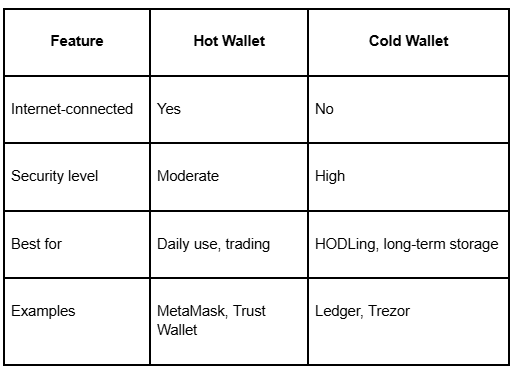
Hot wallets are easier to set up and use, while cold wallets offer greater protection against hacks and malware.

đŸ› ïž How to Create a Crypto Wallet (Step-by-Step)

Option 1: Creating a Hot Wallet (e.g., MetaMask or Trust Wallet)

Step 1: Download the App or Browser Extension

Step 2: Create a New Wallet

  • Click “Create a Wallet”
  • Set a strong password

Step 3: Backup Your Recovery Phrase

  • Write down the 12 or 24-word seed phrase
  • Store it offline (NOT on your phone or computer)

Step 4: Confirm Your Recovery Phrase

  • MetaMask will ask you to re-enter it to ensure it's saved correctly

Step 5: Wallet is Ready

  • You can now receive, send, and store ETH, ERC-20 tokens, and NFTs

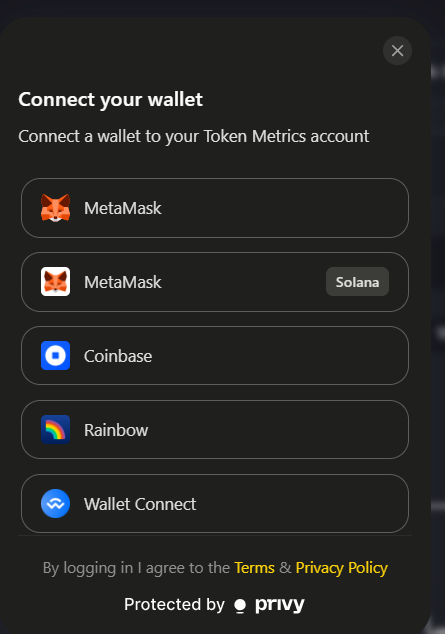
✅ Pro Tip: Connect your wallet to Token Metrics to explore trading signals, moonshots, and AI analytics directly.

Option 2: Creating a Cold Wallet (e.g., Ledger Nano X)

Step 1: Buy a Ledger or Trezor device

  • Always order from the official website to avoid tampered devices

Step 2: Install Wallet Software

  • Download Ledger Live or Trezor Suite

Step 3: Set Up Device and PIN

  • Follow the on-screen instructions
  • Create a secure PIN code

Step 4: Write Down Your Recovery Phrase

  • The device will show a 24-word seed phrase
  • Write it down and store it in a fireproof safe

Step 5: Start Receiving Crypto

  • Use Ledger Live or Trezor Suite to generate wallet addresses
  • Send crypto from exchanges or other wallets

✅ Pro Tip: Use your cold wallet to store moonshots and long-term assets, then analyze performance using Token Metrics Portfolio tools.

đŸ›Ąïž Tips for Securing Your Crypto Wallet

  1. Never share your seed phrase
    Anyone with your seed phrase can steal your funds

  2. Enable Two-Factor Authentication (2FA)
    For added protection on wallet apps and exchange accounts

  3. Use a strong, unique password
    Avoid reusing passwords across multiple accounts

  4. Avoid phishing sites
    Always double-check URLs before connecting your wallet

  5. Keep backups offline
    Use metal seed plates or paper stored in multiple safe locations

🔎 How Token Metrics Supports Your Wallet Journey

While Token Metrics doesn't create wallets, it integrates seamlessly with your Web3 wallets to help you maximize profits and minimize risks.

1. AI-Powered Ratings

Once your wallet is set up, use Token Metrics to find top-rated tokens across risk levels, market caps, and sectors.

2. Moonshots Dashboard

Explore early-stage tokens with massive upside using the Moonshots tab—only available to Premium members.

3. Real-Time Alerts

Set up alerts for price, investor grade, or bullish/bearish signals—and receive them directly to your connected wallet’s contact info.

4. Track Your Portfolio

Monitor wallet performance across tokens with a real-time dashboard powered by on-chain data.

📩 What Can You Store in Your Crypto Wallet?

Different wallets support different blockchains, so always check compatibility before sending assets.

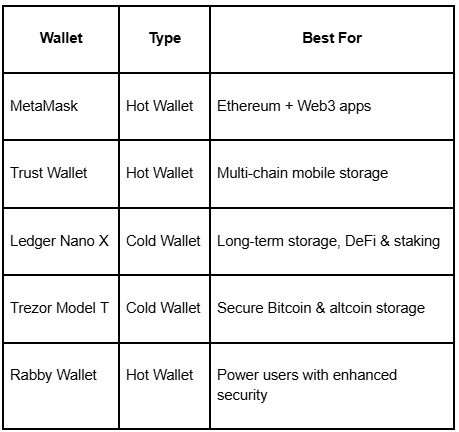
đŸ“Č Best Wallets to Use in 2025

‍

🔄 Wallet Creation FAQs

Q: Is creating a crypto wallet free?
Yes, most wallet apps like MetaMask or Trust Wallet are free.

Q: Can I create multiple wallets?
Absolutely. Many investors use different wallets for different purposes (e.g., trading, staking, savings).

Q: What happens if I lose my recovery phrase?
You lose access to your wallet permanently. Always store it securely.

Q: Do I need a wallet to use Token Metrics?
No, but connecting a wallet enhances your experience by allowing you to monitor portfolios, moonshots, and alerts in real time.

🧠 Final Thoughts

Creating a crypto wallet is your gateway to the decentralized world of digital finance. Whether you’re a seasoned trader or a beginner buying your first token, having a secure wallet is non-negotiable.

By choosing the right wallet (hot or cold), securing your keys, and combining it with powerful tools like Token Metrics, you can build a smart, secure, and profitable crypto journey.

Crypto Basics

How to Store Cryptocurrency Safely in 2025 | Hot vs Cold Wallets

Token Metrics Team
6 min
MIN

Cryptocurrency offers unmatched freedom, but with that freedom comes responsibility—especially when it comes to how to store cryptocurrency securely. Unlike traditional banking, crypto is self-custodied. If you lose access to your wallet, your funds are gone forever.

This guide explains everything you need to know about storing crypto in 2025, including:

  • Why crypto storage matters
  • Types of crypto wallets
  • Hot wallets vs. cold wallets
  • Tips for securing your assets
  • How platforms like Token Metrics can help protect your investment

đŸȘ™ Why Is Storing Cryptocurrency Important?

When you buy crypto—whether it’s Bitcoin, Ethereum, or a promising moonshot altcoin—you receive private keys that give you access to your funds. Anyone with that key can spend your coins.

That’s why safe storage is critical. Without it, your assets are vulnerable to:

  • Hacks and phishing scams
  • Lost devices or forgotten passwords
  • Exchange collapses or rug pulls

You are your own bank, and your security strategy is your vault.

🔐 What Is a Crypto Wallet?

A crypto wallet is a digital tool that stores your private and public keys. It lets you send, receive, and manage your crypto.

There are two main types:

  1. Hot wallets – connected to the internet
  2. Cold wallets – offline and physically secured

Let’s explore both.

🌐 Hot Wallets: Convenience Meets Risk

Hot wallets are always online, making them easy to use for trading, DeFi, or daily transactions.

Types of Hot Wallets:

  • Web wallets (e.g., MetaMask, Trust Wallet)
  • Mobile apps (e.g., Coinbase Wallet, Phantom)
  • Desktop wallets (e.g., Exodus, Electrum)

Pros:

  • Quick access to funds
  • Easy integration with DApps and exchanges
  • Great for beginners and active traders

Cons:

  • Higher risk of hacks, malware, and phishing
  • Device or browser compromise can expose keys

Best Practices for Hot Wallets:

  • Use 2FA (Two-Factor Authentication)
  • Never store large amounts
  • Double-check URLs to avoid fake websites
  • Avoid public Wi-Fi while transacting

🧊 Cold Wallets: Ultimate Security

Cold wallets are offline storage solutions, ideal for long-term investors or large holdings.

Types of Cold Wallets:

  • Hardware wallets (e.g., Ledger Nano X, Trezor)
  • Paper wallets (QR code + private key printed on paper)
  • Air-gapped devices (old smartphones with no internet access)

Pros:

  • Immune to online hacks
  • Best for HODLing and large sums
  • You own full control

Cons:

  • Less convenient for daily use
  • Loss or damage without backups = permanent loss

Best Practices for Cold Wallets:

  • Buy hardware wallets directly from the manufacturer
  • Backup your seed phrase on metal plates or offline storage
  • Keep backups in secure, separate locations

🔄 Custodial vs. Non-Custodial Wallets

🏩 Custodial Wallets

Managed by exchanges (e.g., Binance, Coinbase). You don’t own the private keys.

Pros:

  • Easy to use
  • Ideal for beginners

Cons:

  • Not your keys, not your crypto
  • Vulnerable to hacks or platform failures

🔓 Non-Custodial Wallets

You own the keys. Wallets like MetaMask, Trust Wallet, or hardware devices.

Pros:

  • Full control and ownership
  • Safer long-term storage

Cons:

  • Losing your seed phrase = permanent loss
  • Requires more responsibility

Tip: Token Metrics recommends non-custodial wallets for storing long-term holdings and moonshot tokens.

🔐 How Token Metrics Enhances Crypto Security

Token Metrics is an AI-powered crypto research and trading platform trusted by thousands of investors. While it doesn’t store your crypto directly, it helps you manage risk and store assets wisely by:

1. Identifying Safe Assets

Token Metrics gives you AI-generated grades for tokens—helping you avoid scams and invest in credible projects worth storing long-term.

2. Trading Tools with Wallet Integration

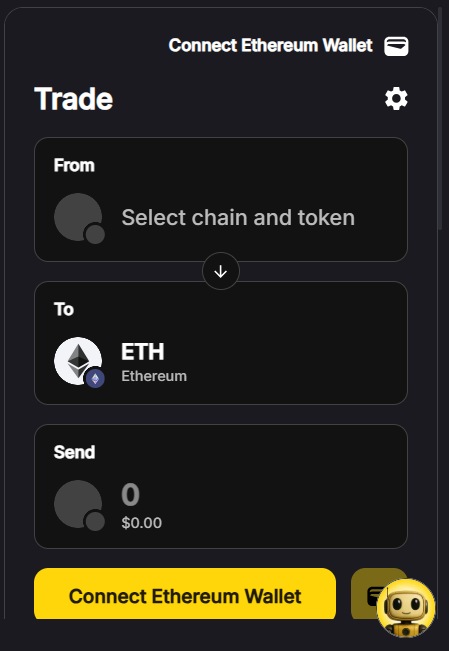
You can explore tokens, assess moonshots, and initiate trades directly from your connected Web3 wallet without leaving the platform.

3. Portfolio Tracking with Security

Token Metrics allows you to track wallets and portfolio performance without requiring access to your private keys.

4. Educational Guidance

Through webinars, blog content, and investor resources, Token Metrics educates users on how to safely store their crypto in hot and cold wallets.

🧠 Tips to Keep Your Crypto Safe in 2025

✅ Use Hardware Wallets for Large Amounts

Your long-term Bitcoin, Ethereum, and moonshot tokens should live on a hardware wallet, not on an exchange.

✅ Store Your Seed Phrase Offline

Do NOT keep your recovery phrase in Google Docs or your phone. Use metal seed phrase storage or write it down and lock it in a safe.

✅ Use Multiple Wallets

Diversify storage:

  • Hot wallet for daily use
  • Cold wallet for savings
  • Separate wallet for DeFi

✅ Avoid Suspicious Links and Apps

Phishing is the #1 crypto threat. Double-check URLs, don’t sign unknown transactions, and avoid shady browser extensions.

✅ Monitor Wallet Activity

Use platforms like Token Metrics Alerts or Etherscan to track your wallet and get notified of suspicious activity.

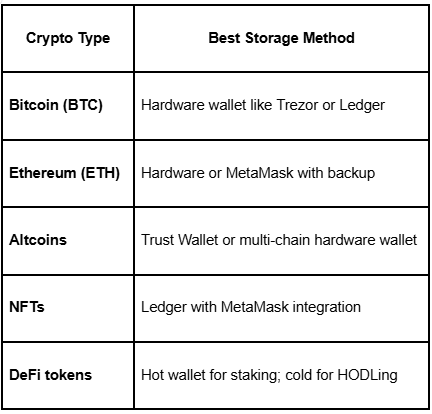
đŸȘ™ How to Store Different Types of Crypto

‍

🧭 Final Thoughts

Storing cryptocurrency securely is just as important as choosing the right tokens to invest in. Whether you’re a day trader, long-term investor, or moonshot hunter, knowing when and where to store your crypto is key to protecting your wealth.

In 2025, the best strategy combines:

  • Cold wallets for large, long-term holdings
  • Hot wallets for convenience and trading
  • Non-custodial options to retain full control
  • AI tools like Token Metrics to identify trustworthy assets and avoid scams

When you store your crypto properly, you don’t just protect your assets—you gain peace of mind.

Token Metrics API

How to Build Crypto Trading Dashboard Using the Token Metrics Crypto Data API on Dune

Token Metrics Team
8 min
MIN

In today’s fast-paced crypto world, real-time data isn’t a luxury—it’s a necessity. For traders, analysts, and developers, being able to access live, actionable insights can mean the difference between profit and loss. That’s why the integration of the Token Metrics Crypto Data API with Dune is a game-changer for anyone seeking to create live dashboards backed by intelligent trading data.

In this post, we’ll walk through how to use this top crypto API to build dynamic dashboards on Dune. Whether you’re tracking bullish signals, backtesting trading strategies, or identifying top-performing tokens, this integration makes it possible—without any paid license.

Let’s dive into how you can use the best free crypto API available today to transform your trading.

What Is the Token Metrics Crypto Data API?

The Token Metrics Crypto Data API is a developer-focused gateway to powerful, AI-driven crypto data. It’s one of the top crypto APIs in 2025, giving you access to:

  • Real-time and historical trading signals
  • Proprietary trader and investor grades
  • Alpha metrics comparing trading vs. holding performance
  • Bullish and bearish token flags

This API is used by both professional quant traders and beginners seeking to automate insights. And the best part? Token Metrics provides free crypto API access to selected datasets, allowing you to create powerful dashboards without spending a dime.

Why Dune + Token Metrics API = Power Tools for Traders

Dune is a blockchain analytics platform that allows you to write SQL queries and create dashboards using on-chain and off-chain data. Now that Token Metrics datasets are available on Dune, you can combine the best of both worlds:

  • Free access to high-signal proprietary metrics
  • Real-time data visualizations via Dune’s drag-and-drop dashboard builder
  • Actionable insights based on AI-driven trading intelligence

This integration unlocks a whole new level of transparency and utility for crypto analysts, portfolio managers, and DeFi enthusiasts.

Getting Started: Accessing Token Metrics Data on Dune

To begin, create a free Dune account. Once logged in, navigate to the Token Metrics datasets. These are publicly accessible and updated regularly. You’ll find tables for:

  • trading_signals
  • trader_grades
  • investors_grades
  • tokens

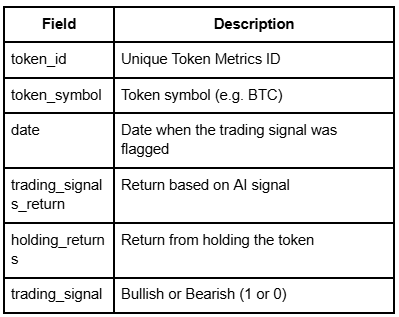
Start a new SQL query and choose the dataset you want to explore. Here’s what you’ll find in the trading signals table:

‍

‍

Step-by-Step: Creating an Actionable Dashboard with Token Metrics Data

1. Query the Trading Signal Returns

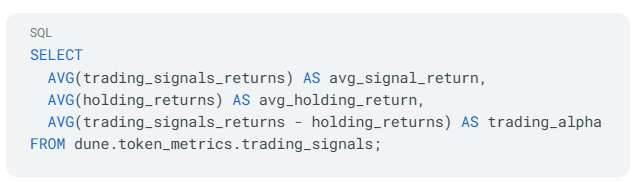
Write a SQL query to calculate the average return of trading vs. holding strategies. For example:

This gives you the alpha—how much better the Token Metrics strategy performs compared to just HODLing.

In one real example, the average signal return across all tokens was 1630%, while holding returned just 400%. That’s a 12X improvement powered by this top crypto API.

2. Identify Top-Performing Tokens

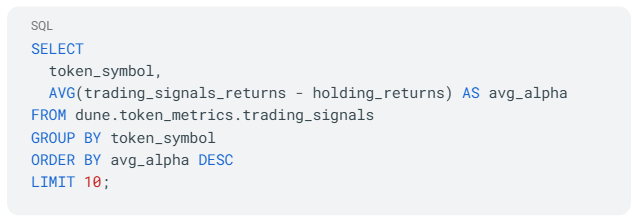
Now let’s list tokens with the highest average alpha:

Tokens like BTC, ETH, BNB, and even newer ones like Virtuals stand out due to exceptional alpha performance.

3. Visualize Trader Grades vs. Alpha

The trader grade is a proprietary score from Token Metrics that predicts how favorable a token is for short-term traders.

Use a scatter plot to correlate trader grades with average alpha:

  • X-axis: Trader Grade
  • Y-axis: Average Alpha
  • Group by: Token Symbol

This helps you visually determine which tokens score high and offer exceptional returns—an essential tool for making actionable trading decisions.

4. Track the Latest Bullish Signals

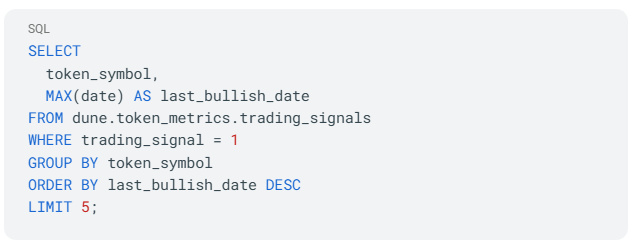
Want to know which tokens are bullish right now? Here’s a query to find the most recent tokens flagged as bullish:

For example, on July 4th, tokens like BNB, XRP, and BTC were among the most recent bullish signals—perfect for immediate trade setups.

5. Build and Share Your Dashboard

Once you’ve run your queries:

  • Click “Add Visualization” in Dune
  • Choose from chart types (bar, scatter, progress bar, etc.)
  • Customize colors and filters
  • Combine multiple charts into a single dashboard

Your final product will be a real-time dashboard powered by the best crypto API, delivering insights that you—and your team—can act on instantly.

Why Token Metrics Is the Best Free Crypto API for Traders

Here’s why Token Metrics stands out among other APIs:

✅ AI-Driven Signals

Most APIs deliver raw data. Token Metrics provides curated signals, generated from machine learning models trained on market cycles, indicators, and price action.

✅ Proprietary Metrics

Access unique indicators like trader grade and investor grade, unavailable anywhere else.

✅ Real Historical Alpha

Use the API to backtest strategies. In the example shown, the AI strategy outperformed the market by over 1000X for some tokens.

✅ Seamless Integration

Whether you're using Dune, Zapier, OpenAI, or Eliza OS, Token Metrics is easy to integrate and query—making it the top crypto API for developers and analysts alike.

Final Thoughts

The combination of Token Metrics’ intelligent data and Dune’s visualization tools puts immense power in your hands. Whether you’re tracking market trends, building bots, or guiding portfolio decisions, this integration gives you everything you need to trade smarter.

With free access to real-time trading signals, alpha comparisons, and powerful visualizations, Token Metrics proves why it's the best crypto API for today’s data-driven investor.

Ready to try it out?
👉 Explore the Free Crypto API
👉 Start Building on Dune

Choose from Platinum, Gold, and Silver packages
Reach with 25–30% open rates and 0.5–1% CTR
Craft your own custom ad—from banners to tailored copy
Perfect for Crypto Exchanges, SaaS Tools, DeFi, and AI Products