Back to blog
Research

REST API Explained: Design, Use Cases & Best Practices

Understand REST API fundamentals, design patterns, security, and observability. Practical guidance for engineers building scalable APIs and integrating services using modern best practices.
Token Metrics Team
5
Want Smarter Crypto Picks—Free?
See unbiased Token Metrics Ratings for BTC, ETH, and top alts.
Thank you! Your submission has been received!
Oops! Something went wrong while submitting the form.
 No credit card | 1-click unsubscribe

In today's interconnected digital ecosystem, REST APIs have become the backbone of modern web applications, mobile apps, and data exchange platforms. Whether you're building a cryptocurrency trading platform, integrating blockchain data, or developing any web service, understanding REST API architecture is essential for creating scalable and efficient applications. This comprehensive guide explores REST API design principles, real-world use cases, and best practices that developers need to master.

Understanding REST API Architecture

REST, which stands for Representational State Transfer, is an architectural style that defines a set of constraints for creating web services. A REST API, also known as a RESTful API, allows different software applications to communicate with each other over HTTP protocols. The beauty of REST lies in its simplicity and stateless nature, making it the preferred choice for developers building everything from social media platforms to cryptocurrency APIs.

When a client makes a request to a REST API, it transfers a representation of the state of the requested resource to the client. This representation can be delivered in various formats, with JSON being the most popular choice in modern applications, especially in crypto APIs and blockchain data services. The stateless nature of REST means that each request from a client contains all the information needed to process that request, without relying on stored context on the server.

Core Components of REST API Design

The foundation of effective REST API design rests on several key components that work together to create a cohesive system. Resources represent the fundamental concept in REST architecture, where everything is considered a resource that can be accessed through a unique identifier known as a URI or Uniform Resource Identifier. For instance, in a cryptocurrency API, resources might include digital assets, market data, trading pairs, or wallet addresses.

HTTP methods form the second pillar of REST API design, providing the verbs that define actions on resources. GET requests retrieve data without modifying it, making them perfect for fetching crypto market data or blockchain information. POST requests create new resources, such as submitting a new transaction or creating a wallet. PUT requests update existing resources completely, while PATCH requests modify specific fields. DELETE requests remove resources from the system. Understanding when to use each method is crucial for building intuitive and predictable APIs.

The URI structure in a well-designed REST API should be logical, consistent, and self-documenting. Rather than using verbs in URLs, REST APIs rely on nouns to represent resources, with HTTP methods conveying the action. For example, a crypto API endpoint might look like /api/v1/cryptocurrencies/bitcoin/price rather than /api/v1/getCryptocurrencyPrice. This approach creates cleaner, more maintainable code that developers can understand intuitively.

REST API Best Practices for Production Systems

Implementing version control in your REST API is not optional but essential for maintaining backward compatibility as your service evolves. Including the version number in the URL path, such as /api/v1/ or /api/v2/, allows you to introduce breaking changes in new versions while supporting legacy clients. This practice is particularly important for cryptocurrency APIs where trading bots and automated systems depend on consistent endpoints.

Authentication and security stand as paramount concerns in REST API development, especially when dealing with sensitive data like cryptocurrency transactions or blockchain information. Token-based authentication using JSON Web Tokens (JWT) has emerged as the industry standard, providing secure, stateless authentication that scales well. For crypto APIs handling financial data, implementing API keys, rate limiting, and encryption becomes non-negotiable to protect user assets and maintain system integrity.

Error handling deserves careful attention in REST API design. Your API should return appropriate HTTP status codes that clearly communicate what happened during request processing. A 200 status indicates success, 201 signifies successful resource creation, 400 indicates a bad request from the client, 401 means unauthorized access, 404 signals that a resource wasn't found, and 500 indicates a server error. Accompanying these status codes with clear, actionable error messages in the response body helps developers debug issues quickly.

Cryptocurrency APIs and REST Architecture

The cryptocurrency industry has embraced REST APIs as the primary method for accessing blockchain data, market information, and trading functionality. Crypto APIs built on REST principles enable developers to integrate real-time cryptocurrency prices, historical market data, trading volumes, and blockchain analytics into their applications seamlessly. Token Metrics, a leader in crypto analytics and data services, offers one of the most comprehensive cryptocurrency APIs in the market, providing developers with access to advanced metrics, AI-driven insights, and real-time market data through a well-designed RESTful interface.

When building or consuming crypto APIs, developers must consider the unique challenges of blockchain technology. Cryptocurrency market data requires high-frequency updates due to the volatile nature of digital assets. A robust crypto API must handle thousands of requests per second while maintaining low latency and high availability. Token Metrics addresses these challenges by providing a scalable REST API infrastructure that delivers accurate cryptocurrency data, token ratings, and market analytics to developers, traders, and institutional clients.

The integration of blockchain APIs with REST architecture has opened new possibilities for decentralized applications and financial technology. Developers can now query blockchain transactions, check wallet balances, monitor smart contract events, and access DeFi protocols through simple HTTP requests. This accessibility has accelerated innovation in the crypto space, allowing developers to build sophisticated trading platforms, portfolio trackers, and analytics dashboards without managing blockchain nodes directly.

Real-World Use Cases of REST APIs

REST APIs power countless applications across industries, demonstrating their versatility and reliability. In the financial technology sector, cryptocurrency exchanges rely on REST APIs to provide trading functionality to their users. These APIs enable programmatic trading, allowing algorithmic traders to execute strategies, monitor positions, and manage risk across multiple markets. Token Metrics leverages REST API technology to deliver cryptocurrency intelligence, offering endpoints for token grades, trader grades, market predictions, and comprehensive crypto market analysis.

Mobile applications represent another significant use case for REST APIs. Every time you check cryptocurrency prices on your phone, post on social media, or stream music, REST APIs work behind the scenes to fetch and deliver that data. The lightweight nature of REST makes it ideal for mobile environments where bandwidth and battery life are concerns. Crypto portfolio tracking apps, for instance, use REST APIs to aggregate data from multiple exchanges and blockchain networks, presenting users with a unified view of their digital asset holdings.

Enterprise systems increasingly adopt REST APIs for integration and automation. Companies use REST APIs to connect customer relationship management systems, payment processors, inventory databases, and analytics platforms. In the blockchain and cryptocurrency domain, businesses integrate crypto payment APIs to accept digital currencies, use blockchain APIs to verify transactions, and leverage analytics APIs like those offered by Token Metrics to make data-driven investment decisions.

Designing Scalable REST APIs

Scalability should be a primary consideration when designing REST APIs, particularly for services that may experience rapid growth or traffic spikes. Implementing pagination for endpoints that return large datasets prevents overwhelming clients and servers. Instead of returning thousands of cryptocurrency listings in a single response, a well-designed crypto API returns a manageable subset along with pagination metadata, allowing clients to request additional pages as needed.

Caching strategies significantly improve REST API performance and reduce server load. By including proper cache-control headers in API responses, you enable clients and intermediary proxies to cache responses appropriately. For cryptocurrency APIs where some data like historical prices rarely changes, aggressive caching can dramatically reduce the number of database queries and API calls. However, real-time data such as current market prices requires careful cache invalidation to ensure accuracy.

Rate limiting protects your REST API from abuse and ensures fair resource allocation among all users. By implementing rate limits based on API keys or IP addresses, you prevent individual clients from monopolizing server resources. Token Metrics implements sophisticated rate limiting in its cryptocurrency API, offering different tiers of access that balance the needs of casual developers, professional traders, and enterprise clients.

Documentation and Developer Experience

Comprehensive documentation transforms a good REST API into a great one. Developers evaluating whether to use your API need clear, accurate documentation that explains endpoints, parameters, authentication methods, and response formats. Interactive API documentation tools like Swagger or Postman collections allow developers to test endpoints directly from the documentation, reducing friction in the integration process.

For cryptocurrency APIs, documentation should include specific examples relevant to the crypto ecosystem. Token Metrics provides extensive API documentation covering everything from basic cryptocurrency price queries to advanced analytics endpoints, complete with code samples in multiple programming languages. This approach accelerates integration and reduces support requests, benefiting both API providers and consumers.

Providing SDKs and client libraries in popular programming languages further improves developer experience. Rather than forcing every developer to handle HTTP requests manually, offering pre-built libraries for Python, JavaScript, Java, and other languages enables faster integration and reduces the likelihood of implementation errors. These libraries can handle authentication, request formatting, error handling, and response parsing automatically.

Monitoring and Maintaining REST APIs

Once your REST API is in production, ongoing monitoring becomes critical to maintaining quality of service. Implementing comprehensive logging allows you to track API usage patterns, identify performance bottlenecks, and detect anomalies. For cryptocurrency APIs handling financial data, monitoring is especially crucial as downtime or data inaccuracies can result in significant financial losses for users.

Performance metrics such as response times, error rates, and throughput provide insights into API health. Setting up alerts for unusual patterns enables proactive problem resolution before users are significantly affected. Token Metrics maintains rigorous monitoring of its crypto API infrastructure, ensuring that developers and traders have reliable access to critical cryptocurrency market data and analytics.

Maintaining backward compatibility while evolving your API requires careful planning and communication. Deprecation policies should give developers adequate time to migrate to new versions or endpoints. For crypto APIs, this is particularly important as trading bots and automated systems may run unattended for extended periods and need time to adapt to API changes.

Security Considerations for REST APIs

Security forms the foundation of trustworthy REST APIs, especially when handling sensitive information like cryptocurrency transactions or personal data. Implementing HTTPS encryption for all API communications prevents man-in-the-middle attacks and protects data in transit. This is non-negotiable for crypto APIs where a single compromised API call could result in unauthorized fund transfers.

Input validation and sanitization protect against injection attacks and malformed requests. Your REST API should validate all incoming data against expected formats and ranges before processing. For cryptocurrency APIs, this includes validating wallet addresses, transaction amounts, and trading parameters to prevent errors and potential exploits.

Implementing proper access controls ensures that authenticated users can only access resources they're authorized to view or modify. Role-based access control (RBAC) provides a flexible framework for managing permissions in complex systems. Token Metrics implements enterprise-grade security in its cryptocurrency API, protecting sensitive market data and ensuring that clients can trust the integrity of the information they receive.

The Future of REST APIs in Cryptocurrency

As the cryptocurrency industry continues to mature, REST APIs will remain central to how developers interact with blockchain data and trading platforms. The evolution of decentralized finance, non-fungible tokens, and Web3 applications creates new opportunities and challenges for API design. REST APIs must adapt to handle increasingly complex queries, provide real-time updates for rapidly changing market conditions, and integrate with emerging blockchain protocols.

Token Metrics continues to innovate in the crypto API space, expanding its offerings to include advanced analytics, AI-powered market predictions, and comprehensive blockchain data. By maintaining a robust REST API infrastructure, Token Metrics enables developers, traders, and institutions to build sophisticated cryptocurrency applications that leverage cutting-edge market intelligence.

The convergence of traditional finance and cryptocurrency creates demand for APIs that can bridge both worlds seamlessly. REST APIs that provide unified access to crypto market data, traditional financial information, and cross-market analytics will become increasingly valuable. As regulatory frameworks evolve, APIs will also need to incorporate compliance features, reporting capabilities, and audit trails to meet institutional requirements.

Conclusion

REST APIs have proven themselves as the most practical and widely adopted approach for building web services that are scalable, maintainable, and developer-friendly. Understanding REST API design principles, implementing best practices, and focusing on security and performance creates APIs that developers love to use and rely on for their applications.

In the cryptocurrency space, REST APIs serve as the critical infrastructure that connects developers to blockchain data, market information, and trading functionality. Token Metrics exemplifies how a well-designed crypto API can empower developers and traders with the data and insights they need to succeed in the dynamic digital asset markets. Whether you're building a new cryptocurrency application or integrating blockchain data into existing systems, mastering REST API principles and leveraging powerful crypto APIs like those offered by Token Metrics will accelerate your development and enhance your capabilities.

As technology continues to evolve, REST APIs will adapt and improve, but their fundamental principles of simplicity, scalability, and statelessness will continue to guide the design of systems that power our increasingly connected digital world.

Build Smarter Crypto Apps &
AI Agents in Minutes, Not Months
Real-time prices, trading signals, and on-chain insights all from one powerful API.
Grab a Free API Key
About Token Metrics
Token Metrics: AI-powered crypto research and ratings platform. We help investors make smarter decisions with unbiased Token Metrics Ratings, on-chain analytics, and editor-curated “Top 10” guides. Our platform distills thousands of data points into clear scores, trends, and alerts you can act on.
30 Employees
analysts, data scientists, and crypto engineers
Daily Briefings
concise market insights and “Top Picks”
Transparent & Compliant
Sponsored ≠ Ratings; research remains independent
Want Smarter Crypto Picks—Free?
See unbiased Token Metrics Ratings for BTC, ETH, and top alts.
Thank you! Your submission has been received!
Oops! Something went wrong while submitting the form.
 No credit card | 1-click unsubscribe
Token Metrics Team
Token Metrics Team

Recent Posts

Crypto Basics

Will Ethereum Go Up in the Next Bull Run? - Complete Analysis

S. Vishwa
5 Minutes

Click here to buy Cryptocurrencies from Gate.io

Ethereum, a trailblazer in the blockchain technology space, has established itself as the second-largest cryptocurrency by market capitalization. 

However, its journey hasn't been without its fair share of ups and downs. Investors are now looking towards the future, wondering if Ethereum will experience a surge in the next bull run. 

This blog post will comprehensively analyze Ethereum's current state, potential driving forces, and what it could mean for its future value.

Ethereum Overview

Launched in 2015 by Vitalik Buterin, Ethereum is a decentralized platform powered by blockchain technology. Its native token, ETH, fuels various activities within the network, such as running decentralized applications (dApps) and executing smart contracts.

Ethereum is significant in the DeFi (decentralized finance) space, enabling various financial instruments like lending, borrowing, and trading without relying on traditional financial institutions.

Current Performance of Ethereum

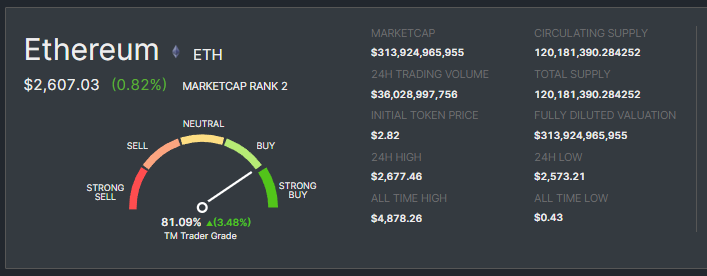
As of today, the price of Ethereum sits at around $2600, representing an 86% increase year-to-date. This growth comes after a significant dip, with the price falling from its peak of $4800 in November 2021 to around $1200 in October 2022.

ETH Price Chart
Start Your Free Trial Today and Uncover Your Token's Price Prediction and Forecast on Token Metrics.

The recent price increase can be attributed to several factors, including the successful completion of "The Merge" in September 2022, which transitioned Ethereum from a proof-of-work to a proof-of-stake consensus mechanism.

What Pushed Ethereum Down?

While the current trend shows optimism, it's essential to understand the forces that caused Ethereum's previous decline. The cryptocurrency market, along with other financial markets, faced a downturn in 2022 due to several key factors:

  • Global economic downturn: Rising interest rates and inflation dampened investor sentiment and led to a broader sell-off in the cryptocurrency market.
  • The collapse of major crypto institutions: The bankruptcy of FTX, a leading crypto exchange, shook investor confidence and caused widespread panic in the market.
  • Concerns about Ethereum's scalability: The Ethereum network faced scalability issues, leading to high transaction fees and slow transaction processing times.
  • Increased regulatory scrutiny: Regulatory uncertainty surrounding cryptocurrencies created a sense of unease among investors.

What Factors Could Cause Ethereum to Go Up?

Despite the recent downtrend, several factors suggest that Ethereum could experience significant growth in the next bull run:

  • The successful transition to Proof-of-Stake: The merger significantly improved Ethereum's energy efficiency and environmental sustainability, making it more appealing to investors.
  • Growing adoption of DeFi and dApps: The DeFi and dApp ecosystem on Ethereum continues to grow rapidly, with new applications and use cases emerging constantly. This increased demand for ETH could drive up its price.
  • Institutional adoption: More and more institutional investors are entering the cryptocurrency space, and Ethereum is often seen as a more reliable and mature option than other altcoins.
  • Upgrades and scaling solutions: The Ethereum team is actively working on upgrades and scaling solutions like sharding to address scalability issues and improve transaction speed. This could make Ethereum more attractive to users and developers.

Click here to buy Cryptocurrencies from Gate.io

Impact of Next Crypto Bull Run on Ethereum

While predicting the exact timing of the next bull run is difficult, many experts believe it is on the horizon, and Ethereum is poised to reap substantial benefits. 

Here are a few factors that can significantly impact Ethereum.

Direct Price Increase: Historically, bull runs have led to significant price surges across the crypto market, and Ethereum is no exception. The combined effect of increased market demand, investor confidence, and heightened media attention could propel Ethereum's price significantly higher. 

Market experts predict price targets to a potential peak of $8,000 by 2026 and even higher in the long run.

Booming DeFi and dApp Ecosystem: The DeFi and dApp ecosystem on Ethereum is already thriving, but a bull run could fuel its exponential growth. This growth would directly translate to increased demand for ETH, further pushing its price upward. 

Moreover, new projects and innovative use cases will likely emerge, attracting even more users and capital to the Ethereum network.

Enhanced Liquidity and Trading Volume: Bull runs typically lead to increased trading activity and higher liquidity in the market. This translates to buying easier and selling orders for investors, creating favorable conditions for opportunistic trading and capitalizing on short-term price movements.

Institutional Investment: During bull runs, institutional investors tend to allocate a portion of their portfolios to cryptocurrencies, recognizing their potential for high returns. This influx of institutional capital would provide significant backing to Ethereum, further solidifying its position as a leading cryptocurrency and potentially driving its price higher.

Also Read - Is Ethereum Dead?

Investment Strategies for New Investors

1. Diversification: Consider allocating a portion of your portfolio to Ethereum to capitalize on its potential growth, but remember to diversify your investments to mitigate risk.

2. Dollar-Cost Averaging: Invest gradually over time to smooth out price fluctuations and reduce the risk of buying at a peak.

3. Research and Due Diligence: Conduct your research and due diligence before investing in any cryptocurrency project.

4. Long-Term Perspective: Consider investing for the long term, as the full potential of Ethereum might not be realized in the short term.

5. Stay Informed: Remain informed about key developments in the cryptocurrency market and Ethereum's progress to make informed investment decisions.

When Will Ethereum Go Back Up?

While it's impossible to predict the future with certainty, several factors suggest that Ethereum could see a significant price recovery in the next bull run. Experts offer varying predictions:

Techopedia: Estimates an average price of $9,800 by the end of 2030, with highs of $12,200 and lows of $7,400.

Changelly: Changelly predicts a potential peak of $7,200 by 2026.

Standard Chartered: Offers the most optimistic outlook, forecasting a possible fivefold increase to $8,000 by the end of 2026, with a long-term target of $26,000-$35,000.

Note - Start Your Free Trial Today and Uncover Your Token's Price Prediction and Forecast on Token Metrics.

The Bottom Line

Ethereum is a complex and dynamic ecosystem with numerous factors influencing its price. While the recent downtrend may raise concerns, its strong fundamentals, ongoing development, and potential for future growth suggest that Ethereum is well-positioned to thrive in the next bull run.

Investors should carefully consider their risk tolerance and investment goals before making decisions.

Remember:

1. Investing in cryptocurrencies carries inherent risks.

2. Always conduct your own research and due diligence before investing.

3. Never invest more than you can afford to lose.

Disclaimer

The information provided on this website does not constitute investment advice, financial advice, trading advice, or any other advice, and you should not treat any of the website's content as such.

Token Metrics does not recommend buying, selling, or holding any cryptocurrency. Conduct your due diligence and consult your financial advisor before making investment decisions.

Click here to buy Cryptocurrencies from Gate.io

Crypto Basics

What is the Domino Effect in Crypto and How Does It Work?

Marcus K
5 Minutes

The crypto market is a dynamic and interconnected landscape, where one event can trigger a chain reaction of consequences throughout the entire ecosystem. This phenomenon, known as the domino effect, poses risks and opportunities for investors and enthusiasts alike.

Understanding the domino effect is crucial for navigating the complexities of the crypto market and making informed decisions. 

This comprehensive post will delve into the intricate workings of this phenomenon, exploring its potential impact and providing you with actionable insights to mitigate risks and maximize opportunities.

What is the Domino Effect in Crypto?

Imagine a line of dominoes standing upright. When a single domino falls, it knocks over the next domino, which in turn knocks over another, and so on, creating a chain reaction. This is analogous to the domino effect in crypto.

In the crypto world, a single negative event, such as a major exchange hack or a regulatory crackdown, can trigger a wave of panic and selling pressure.

As investors lose confidence, they sell their crypto holdings, causing prices to plummet. This sell-off can lead to further negative consequences, such as the insolvency of crypto lending platforms or the collapse of poorly-capitalized projects.

How Does the Domino Effect Work?

Several factors contribute to the domino effect in crypto:

  • Interconnectedness: The crypto market is highly interconnected, with various projects, exchanges, and platforms relying on each other for liquidity and stability. A problem in one area can quickly spread and affect others.
  • Leverage: Many participants in the crypto market use leverage, borrowing funds to amplify their positions. When prices fall, they are forced to sell their holdings to repay their debts, further accelerating the price decline.
  • Panic Selling: When negative news or events occur, investors often react emotionally and sell their holdings without considering the long-term implications. This panic selling can create a self-fulfilling prophecy, driving prices down even further.
  • Lack of Regulation: The nascent nature of the crypto market means it lacks the robust regulatory frameworks of traditional financial markets. This can exacerbate the impact of negative events and make it harder to contain the fallout.

Factors that Contribute to the Domino Effect

Several factors contribute to this interconnectedness. First, market sentiment plays a crucial role. Positive news or a significant development in the crypto industry can create a positive ripple effect, boosting the confidence and value of other cryptocurrencies. 

Conversely, negative news or market downturns can trigger a panic sell-off, causing a decline in the value of multiple cryptocurrencies. Second, market liquidity is another contributing factor. 

When investors try to cash out their holdings in a specific cryptocurrency, it can lead to a chain reaction of sell orders that also affect other cryptocurrencies. 

Finally, regulatory actions and government policies can significantly impact the crypto market. If there are new regulations or bans imposed on cryptocurrencies in one country, it can create fear and uncertainty, leading to a domino effect across the global crypto market. 

Examples of the Domino Effect in Crypto

Mt. Gox Hack (2014): The hack of the Mt. Gox exchange, which resulted in the loss of over 850,000 bitcoins, triggered a major sell-off that sent the price of Bitcoin plummeting by 50%.

The DAO Hack (2016): A smart contract exploit on The DAO, a decentralized autonomous organization, led to the theft of approximately $150 million worth of ETH. This event eroded investor confidence and contributed to a broader market downturn.

TerraUSD Collapse (2022): The collapse of the TerraUSD stablecoin triggered a domino effect that ultimately led to the bankruptcy of crypto hedge fund Three Arrows Capital and the suspension of withdrawals on the Celsius Network.

How to Protect Yourself from the Domino Effect?

While the domino effect can be unpredictable and difficult to control, there are steps you can take to protect yourself:

  • Invest wisely: Do your research and only invest in projects you believe have long-term potential.
  • Diversify your portfolio: Don't put all your eggs in one basket. Spread your investments across different crypto assets and asset classes to minimize risk.
  • Set stop loss: set stop-loss orders to automatically sell your cryptocurrencies if their value drops below a certain threshold. This can help limit your losses and prevent further damage to your portfolio. 
  • Choose less risky assets: Consider investing in stablecoins or other less volatile assets than cryptocurrencies. These assets can act as a hedge and stabilize your portfolio during market downturns. 
  • Stay informed: Keep yourself up-to-date on the latest developments in the crypto market and be aware of potential risks.
  • Develop a sound trading plan: Don't make impulsive decisions based on emotions. Stick to your trading plan and avoid panic selling.
  • Use a secure wallet: Keep your crypto assets in a secure wallet that is not connected to the internet.

By implementing these strategies, you can protect yourself from the Domino Effect and minimize the risks associated with cryptocurrency investments.

Expert Opinions on the Domino Effect in Crypto

Expert opinions on the future of the Domino Effect in crypto vary. Some experts believe that as the cryptocurrency market becomes more mature and diversified, the impact of the Domino Effect will diminish. 

They argue that with the increasing adoption of blockchain technology and the emergence of various use cases, cryptocurrencies will become less correlated, reducing the likelihood of a widespread collapse. 

On the other hand, some experts caution that the interconnectedness of cryptocurrencies and the market's overall volatility make it susceptible to a Domino Effect. 

They argue that the lack of regulation and the potential for speculative behavior can exacerbate the impact of a major cryptocurrency's downfall. 

Overall, the future of the Domino Effect in crypto remains uncertain, but it is clear that market dynamics and regulatory measures will play crucial roles in shaping its impact.

Conclusion

The domino effect is a powerful force in the crypto market, and it's crucial to understand its potential impact. By taking the necessary precautions and adopting a prudent approach, you can navigate the complexities of the crypto landscape and maximize your chances of success.

Disclaimer

The information provided on this website does not constitute investment advice, financial advice, trading advice, or any other advice, and you should not treat any of the website's content as such.

Token Metrics does not recommend buying, selling, or holding any cryptocurrency. Conduct your due diligence and consult your financial advisor before making investment decisions.

Crypto Basics

What is Tokenization in Crypto and How it Works?

S. Vishwa
7 Minutes

Tokenization is a groundbreaking concept that has gained significant traction in recent years. It has transformed how we perceive ownership, protect valuable assets, and engage in cryptocurrency investments. 

In this comprehensive guide, we will delve into the fundamentals of tokenization, explore its inner workings, and unravel its practical applications. So, let's embark on this journey to understand the power of tokenization and its potential to reshape the future.

Understanding Tokenization

Tokenization is the process of converting the ownership rights of an asset into unique digital units called tokens. These tokens are digital representations of tangible or intangible assets, ranging from artwork and real estate to company shares and voting rights. 

By tokenizing assets, individuals and businesses can unlock new avenues of ownership and transfer, facilitating seamless transactions and enhancing liquidity.

Tokenization originally emerged as a data security technique businesses employ to safeguard sensitive information. It involves replacing the original data with tokens, which do not contain the actual data but share similar characteristics or formatting.

This method ensures that the sensitive information remains protected, as access to the tokens alone is insufficient to decipher the original data.

The Mechanics of Tokenization

Tokens essentially serve as substitutes for real assets or information. They hold no inherent value or purpose other than securing data or representing ownership. 

Tokens can be created through various techniques, such as reversible cryptographic functions, non-reversible functions, or randomly generated numbers. 

These tokens are then linked to transactional data stored on a decentralized ledger known as the blockchain. This integration with blockchain technology ensures the immutability and transparency of asset ownership, as all transactions can be easily verified using blockchain data.

In the context of payment information security, tokenization involves using a payment gateway that automates the token creation process and stores the original data separately. 

The token is then transmitted to a payment processor, which can be traced back to the original information stored in the seller's token vault. 

This approach eliminates the need to provide sensitive payment details during transactions, enhancing security and reducing the risk of data breaches.

Types of Tokenization

Tokenization encompasses various forms, with each type serving distinct purposes and applications. Let's explore the different categories of tokenization:

Blockchain Tokenization

Fungible Tokenization - Fungible tokens are standard blockchain tokens with identical values, making them interchangeable. Think of it as swapping one dollar bill for another dollar bill.

Non-Fungible Tokenization - Non-fungible tokens (NFTs) represent ownership of unique assets, such as digital art pieces or real estate properties. Unlike fungible tokens, NFTs do not have a set value and derive their worth from the underlying asset they represent.

Governance Tokenization - Governance tokens grant voting rights to token holders, enabling them to participate in decision-making processes within a blockchain ecosystem. These tokens are crucial in blockchain systems' governance and collaborative aspects.

Utility Tokenization - Utility tokens serve as access keys to specific products and services within a particular blockchain network. They facilitate actions like paying transaction fees, operating decentralized market systems, or accessing certain functionalities of the blockchain platform.

Non-Blockchain Tokenization

Vault Tokenization - Vault tokenization is a conventional method to protect payment information. It involves generating tokens that can be used for payment processing without divulging sensitive card numbers or other data. The original data is securely stored in a token vault.

Vaultless Tokenization - Vaultless tokenization is an alternative approach to payment processing that eliminates the need for a token vault. Instead, cryptographic devices and algorithms are utilized to convert data into tokens, ensuring secure transactions without centralized storage.

Natural Language Processing Tokenization - Natural language processing tokenization involves breaking down information into simpler terms, enabling computers to understand better and process the data. This technique encompasses word, subword, and character tokenization to enhance computational efficiency.

Advantages of Tokenization

Tokenization offers many benefits that revolutionize asset ownership, financial transactions, and data security. Let's explore the advantages of tokenization:

Improved Liquidity and Accessibility - Tokenization opens asset ownership to a broader audience, enhancing liquidity and accessibility. 

By dividing assets into tokens, investment opportunities become more inclusive, allowing individuals with limited capital to participate in previously exclusive markets. 

Moreover, digitizing assets through tokenization eliminates many traditional barriers associated with investing in tangible assets, streamlining the investment process and reducing costs.

Faster and Convenient Transactions - Tokenization enables faster and more convenient transactions by eliminating intermediaries and minimizing the complexities of traditional financial processes. Assets can be easily transferred through tokenization, and blockchain data can seamlessly verify ownership. 

This streamlined approach significantly reduces transaction times and eliminates the need for intermediaries such as lawyers, banks, escrow accounts, and brokerage commissions.

Enhanced Security and Transparency - Tokenization leverages blockchain technology to ensure the security and transparency of transactions. Blockchain's decentralized nature and immutability make it an ideal platform for storing transaction data and verifying asset ownership. 

The transparency of blockchain transactions allows for increased trust among potential buyers, as the entire transaction history can be audited and verified. Additionally, tokenization eliminates the risk of fraudulent activities and ensures the integrity of asset ownership records.

Tokenization in Enterprise Systems

Tokenization holds immense potential for transforming enterprise systems across various industries. Let's explore how tokenization can benefit businesses:

Streamlined Transactions and Settlements - Tokenization can greatly reduce transaction times between payments and settlements, enabling faster and more efficient financial processes. 

By tokenizing intangible assets such as copyrights and patents, businesses can digitize and enhance the value of these assets, facilitating shareholding and improving the overall valuation process. 

Additionally, tokenized assets like stablecoins can be utilized for transactions, reducing reliance on traditional banking systems and intermediaries.

Loyalty Programs and Incentives - Tokenization enables businesses to create loyalty-based tokens incentivizing customers to engage with their products and services. 

These tokens can be used to reward customer loyalty, facilitate seamless transactions, and even participate in decision-making processes within decentralized autonomous organizations (DAOs). 

Loyalty tokens enhance transparency and efficiency in loyalty reward systems, benefiting businesses and customers.

Renewable Energy Projects and Trust Building - Tokenization can play a vital role in financing renewable energy projects. Project developers can expand their investor pool and build trust within the industry by issuing tokens backed by renewable energy assets. 

Tokenization allows investors to participate in renewable energy initiatives, contributing to a sustainable future while enjoying the benefits of asset ownership.

Challenges and Future of Tokenization

While tokenization presents numerous advantages, it also faces challenges that must be addressed for widespread adoption and growth. Let's explore some of these challenges:

Regulatory Considerations - As tokenization gains prominence, regulatory frameworks must evolve to accommodate this emerging technology. 

Different countries have varying regulations and policies regarding tokenization, creating a fragmented landscape that hinders seamless transactions and investments. Regulatory clarity is essential to ensure compliance and foster trust within the tokenization ecosystem.

Asset Management and Governance - Managing tokenized assets, especially those backed by physical assets, poses challenges regarding ownership and governance. 

For instance, determining the entity responsible for managing the property becomes complex if multiple foreign investors collectively own a tokenized hotel. 

Tokenization platforms must establish clear rules and governance structures to address such scenarios and ensure the smooth operation of tokenized assets.

Integration of Real-World Assets with Blockchain - Integrating real-world assets with blockchain technology presents technical and logistical challenges. 

For example, ensuring the availability and authenticity of off-chain assets like gold when tokenizing them requires robust mechanisms and trusted external systems. 

The overlap between the physical world and the blockchain environment necessitates the establishment of defined rules and protocols to govern the interaction between the two realms.

Despite these challenges, tokenization continues to gain momentum as a powerful financial tool. Increased regulatory clarity, technological advancements, and growing awareness drive the adoption and recognition of tokenization's potential. 

As governments and industries embrace tokenization, new investment opportunities and innovative ways of asset ownership will emerge, shaping the future of finance.

Conclusion

Tokenization has emerged as a transformative force in the realm of ownership, asset security, and financial transactions. By converting assets into unique digital tokens, tokenization enables seamless transfers, enhances liquidity, and ensures the integrity of ownership records. 

Through blockchain or non-blockchain methods, tokenization provides businesses and individuals unprecedented opportunities to engage in secure transactions, access new investment avenues, and revolutionize traditional systems. 

With its potential to unlock value, improve accessibility, and streamline processes, tokenization is poised to shape the future of finance and redefine the concept of ownership. Embrace the power of tokenization and be future-ready in this dynamic landscape of digital assets and decentralized economies.

Disclaimer

The information provided on this website does not constitute investment advice, financial advice, trading advice, or any other advice, and you should not treat any of the website's content as such.

Token Metrics does not recommend buying, selling, or holding any cryptocurrency. Conduct your due diligence and consult your financial advisor before making investment decisions.

Choose from Platinum, Gold, and Silver packages
Reach with 25–30% open rates and 0.5–1% CTR
Craft your own custom ad—from banners to tailored copy
Perfect for Crypto Exchanges, SaaS Tools, DeFi, and AI Products