Back to blog
Research

Solana vs Bitcoin vs Ethereum: The Ultimate 2025 Cryptocurrency Showdown

Explore the strengths and weaknesses of Solana, Bitcoin, and Ethereum in 2025. Discover which crypto could lead the market—read the article now!
Talha Ahmad
5 min
Want Smarter Crypto Picks—Free?
See unbiased Token Metrics Ratings for BTC, ETH, and top alts.
Thank you! Your submission has been received!
Oops! Something went wrong while submitting the form.
 No credit card | 1-click unsubscribe

As we navigate through 2025, the cryptocurrency landscape continues to evolve at a breakneck speed, with three giants dominating the conversation: Solana, Bitcoin, and Ethereum. These crypto coins represent distinct visions for the future of blockchain technology, each offering unique features and advantages that appeal to different segments of the market. Cryptocurrencies are increasingly viewed as an alternative to traditional currencies and assets, providing new options for storing and transferring value.

Understanding the key differences between Solana vs Bitcoin vs Ethereum is crucial for investors, developers, and crypto enthusiasts who want to stay ahead in this rapidly changing industry. Recent developments, such as the SEC approval of a Bitcoin ETF, have made Bitcoin more accessible to a broader audience, encouraging easier entry into cryptocurrency investing.

Introduction to Cryptocurrencies

Cryptocurrencies are decentralized digital currencies that leverage cryptography to ensure secure and transparent transactions across a global network. Since the inception of Bitcoin, the crypto market has expanded rapidly, introducing a diverse range of crypto coins that serve various purposes. While many investors are drawn to trading crypto for its potential returns, others see cryptocurrencies as a way to participate in decentralized finance (DeFi) protocols or to buy Bitcoin as a long-term store of value.

Unlike Bitcoin, which primarily functions as a decentralized digital currency and a hedge against traditional financial systems, other blockchain platforms like Ethereum and Solana have evolved to power decentralized applications and smart contracts. The Solana blockchain, for example, is renowned for its high-speed, low-cost transactions, making it a popular choice among developers and investors seeking scalable solutions. As the crypto market matures, these platforms continue to drive innovation, offering new ways to store, transfer, and create value in a secure and decentralized manner.

Current Market Position: September 2025 Snapshot

The crypto market in 2025 has matured significantly, marked by increased institutional adoption and broader mainstream acceptance. As of September 15, 2025, Solana (SOL) is trading at an impressive price of $235.69, boasting a market capitalization of $138.75 billion. This represents remarkable growth from its previous lows and highlights Solana’s rise as a serious competitor in the blockchain space.

Meanwhile, Bitcoin (BTC) remains solidly above $118,000, reinforcing its status as digital gold and a reliable store of value. Ethereum (ETH), on the other hand, is on track for a consistent recovery, driven by ongoing upgrades and expanding use cases. This overall bullish sentiment reflects the growing confidence investors have in these leading blockchain platforms.

For traders and analysts seeking comprehensive insights into the crypto market, Token Metrics stands out as a premier crypto trading and analytics platform. It offers advanced AI-driven analysis, price predictions, and portfolio optimization tools that help thousands of investors navigate the volatile cryptocurrency market with confidence.

Bitcoin: The Digital Gold Standard

Bitcoin continues to reign as the undisputed king of cryptocurrencies, widely regarded as the original decentralized digital currency and a trusted store of value. Unlike traditional currencies, Bitcoin operates independently of any central bank, further emphasizing its decentralized nature. Its primary value proposition lies in its role as digital gold—a decentralized store of value that serves as a hedge against the traditional banking system and fiat currencies like the dollar.

Institutional adoption of Bitcoin has accelerated in 2025, with an increasing number of corporations adding BTC to their treasury reserves. This growing acceptance underscores Bitcoin’s reputation as a safe haven asset in times of economic uncertainty. The Bitcoin decentralized network enables secure, peer-to-peer transactions, which are fundamental to its accessibility and resilience.

Bitcoin’s strength is rooted in its simplicity and security. The Bitcoin network has operated without major issues for over 15 years, building unmatched trust among investors worldwide. In 2025, Bitcoin’s development continues with new commits for Taproot++ features, including experimentation with vault primitives, demonstrating ongoing commitment to improving security and functionality despite its mature status. As a store of value, Bitcoin is often compared to precious metals like gold, with both serving as safe haven assets and stores of wealth.

However, Bitcoin’s limitations are well-known. Its consensus mechanism, Proof of Work (PoW), demands significant energy consumption, raising environmental concerns. Additionally, Bitcoin processes roughly 7 transactions per second, resulting in slower transaction speeds compared to newer blockchain platforms. This makes Bitcoin less suitable for applications requiring high-frequency transactions but reinforces its role as a secure and decentralized store of value and as a form of digital money used for both storing value and as a medium of exchange.

Unlike some other cryptocurrencies that may be classified as securities, Bitcoin is generally considered a commodity, which subjects it to lighter regulatory oversight and has important implications for its adoption and ETF approval prospects.

Ethereum: The Smart Contract Pioneer

Ethereum stands as the second largest cryptocurrency by market capitalization, trailing only Bitcoin. Unlike Bitcoin, Ethereum functions as a versatile blockchain platform designed to power decentralized applications (DApps) and decentralized finance (DeFi) protocols through its smart contract capabilities.

Ethereum’s ecosystem has expanded rapidly in 2025. Notably, Layer 2 scaling solutions like StarkNet and zkSync have attracted contributions from over 1,100 developers, enhancing Ethereum’s performance and addressing scalability challenges. These advancements enable Ethereum to support a wide range of Solana vs Bitcoin vs Ethereum: The Ultimate 2025 Cryptocurrency Showdown

As we navigate through 2025, the cryptocurrency landscape continues to evolve at a breakneck speed, with three giants dominating the conversation: Solana, Bitcoin, and Ethereum. These crypto coins represent distinct visions for the future of blockchain technology, each offering unique features and advantages that appeal to different segments of the market. Understanding the key differences between Solana vs Bitcoin vs Ethereum is crucial for investors, developers, and crypto enthusiasts who want to stay ahead in this rapidly changing industry.

Current Market Position: September 2025 Snapshot

The crypto market in 2025 has matured significantly, marked by increased institutional adoption and broader mainstream acceptance. As of September 15, 2025, Solana (SOL) is trading at an impressive price of $235.69, boasting a market capitalization of $138.75 billion. This represents remarkable growth from its previous lows and highlights Solana’s rise as a serious competitor in the blockchain space.

Meanwhile, Bitcoin (BTC) remains solidly above $118,000, reinforcing its status as digital gold and a reliable store of value. Ethereum (ETH), on the other hand, is on track for a consistent recovery, driven by ongoing upgrades and expanding use cases. This overall bullish sentiment reflects the growing confidence investors have in these leading blockchain platforms.

For traders and analysts seeking comprehensive insights into the crypto market, Token Metrics stands out as a premier crypto trading and analytics platform. It offers advanced AI-driven analysis, price predictions, and portfolio optimization tools that help thousands of investors navigate the volatile cryptocurrency market with confidence.

Bitcoin: The Digital Gold Standard

Bitcoin continues to reign as the undisputed king of cryptocurrencies, widely regarded as the original decentralized digital currency and a trusted store of value. Its primary value proposition lies in its role as digital gold—a decentralized store of value that serves as a hedge against the traditional banking system and fiat currencies like the dollar.

Institutional adoption of Bitcoin has accelerated in 2025, with an increasing number of corporations adding BTC to their treasury reserves. This growing acceptance underscores Bitcoin’s reputation as a safe haven asset in times of economic uncertainty.

Bitcoin's strength is rooted in its simplicity and security. The Bitcoin network has operated without major issues for over 15 years, building unmatched trust among investors worldwide. In 2025, Bitcoin's development continues with new commits for Taproot++ features, including experimentation with vault primitives, demonstrating ongoing commitment to improving security and functionality despite its mature status.

However, Bitcoin’s limitations are well-known. Its consensus mechanism, Proof of Work (PoW), demands significant energy consumption, raising environmental concerns. Additionally, Bitcoin processes roughly 7 transactions per second, resulting in slower transaction speeds compared to newer blockchain platforms. This makes Bitcoin less suitable for applications requiring high-frequency transactions but reinforces its role as a secure and decentralized store of value.

Ethereum: The Smart Contract Pioneer

Ethereum stands as the second largest cryptocurrency by market capitalization, trailing only Bitcoin. Unlike Bitcoin, Ethereum functions as a versatile blockchain platform designed to power decentralized applications (DApps) and decentralized finance (DeFi) protocols through its smart contract capabilities.

Ethereum’s ecosystem has expanded rapidly in 2025. Notably, Layer 2 scaling solutions like StarkNet and zkSync have attracted contributions from over 1,100 developers, enhancing Ethereum’s performance and addressing scalability challenges. These advancements enable Ethereum to support a wide range of decentralized services while maintaining security and decentralization.

Ethereum’s versatility is its greatest strength. It hosts the majority of blockchain innovation, from DeFi protocols and NFT marketplaces to enterprise blockchain solutions and tokenization platforms. However, Ethereum remains volatile, with its price potentially rising above $5,000 or falling below $2,000 depending on market trends, regulatory developments, and technological upgrades such as Ethereum ETFs and institutional investments.

Token Metrics’ advanced analytics platform offers real-time tracking of Ethereum’s extensive DeFi ecosystem, helping investors and developers identify emerging opportunities and assess risks across hundreds of Ethereum-based protocols.

Solana: The High-Speed Challenger

Solana has emerged as the most formidable challenger to Ethereum’s smart contract dominance. In 2024 and continuing into 2025, Solana experienced a significant rise in new token launches, accounting for over 87% of all tokens created across tracked platforms. This surge is largely attributed to Solana’s low transaction fees and exceptional speed.

The Solana blockchain boasts technical specifications that enable thousands of transactions per second with minimal fees, making it ideal for high-frequency trading, gaming, and consumer applications that demand fast, cheap transactions. However, Solana is considered more centralized than Bitcoin because running nodes on its network requires higher hardware specifications, which limits the number of participants who can operate nodes. Nodes in Solana are responsible for validating transactions, maintaining the ledger, and supporting the network’s speed and scalability, but the higher requirements for nodes can impact the overall decentralization of the network. Its unique consensus mechanism combines Proof of History (PoH) with Proof of Stake (PoS), enabling parallel transaction processing and remarkable scalability without relying on traditional Layer 2 solutions.

Looking ahead to 2026, Solana is poised to continue its upward trajectory, with price projections ranging between $400 and $450. This growth is expected to be fueled by further advancements in blockchain scalability and increasing adoption across DeFi and NFT sectors.

Solana’s ecosystem has flourished in niches where Ethereum’s higher fees create barriers to entry. It has become a hub for memecoin trading, gaming, and decentralized applications that require faster speeds and lower costs.

Consensus Mechanisms: How They Secure the Network

At the heart of every cryptocurrency lies a consensus mechanism—a system that ensures all transactions are validated and recorded securely across the network. In the crypto market, the most common consensus mechanisms are Proof of Work (PoW), Proof of Stake (PoS), and Proof of History (PoH), each with its own approach to maintaining trust and security.

Bitcoin relies on Proof of Work, where miners use computational power to solve complex puzzles, validate transactions, and create new blocks. This process is energy-intensive but has proven effective in securing the Bitcoin network. Solana, on the other hand, combines Proof of Stake with its innovative Proof of History, allowing validators to process transactions in parallel and achieve much faster speeds with greater energy efficiency. Ethereum has transitioned from PoW to PoS, enabling the network to scale more efficiently while reducing its environmental impact. Understanding these consensus mechanisms is crucial for anyone looking to invest in or use cryptocurrencies, as they directly influence the network’s security, scalability, and overall performance.

Technical Comparison: Architecture and Performance

When comparing Solana vs Bitcoin vs Ethereum, the differences in their underlying architecture and consensus mechanisms are key to understanding their unique strengths. Block creation and validation play a crucial role in determining transaction throughput and network speed, with each blockchain handling blocks differently to optimize performance.

Bitcoin uses Proof of Work (PoW), prioritizing security and decentralization over speed. Its conservative approach ensures immutability but limits transaction throughput. Bitcoin’s consensus mechanism gains unmatched security and resistance to attacks, but at the cost of efficiency.

Ethereum transitioned to Proof of Stake (PoS) with Ethereum 2.0, significantly improving energy efficiency while maintaining decentralization. Additionally, Layer 2 solutions like Arbitrum and Optimism offer scalability enhancements without compromising the security of the Ethereum main chain. Ethereum gains scalability and reduced energy consumption through its PoS upgrade and Layer 2 integrations.

Solana’s innovative Proof of History (PoH) consensus mechanism, combined with PoS, allows for parallel transaction processing, resulting in much faster speeds and higher scalability. Unlike Bitcoin and Ethereum, Solana achieves these speeds without relying on Layer 2 scaling, setting it apart as a high-performance blockchain platform. The robust code underlying each blockchain is essential for ensuring both security and optimal performance, making software implementation a critical factor in their ongoing development.

Tokenomics and Use Cases

Tokenomics—the economic design and distribution of cryptocurrency tokens—plays a pivotal role in shaping the value and utility of each crypto asset. Bitcoin’s tokenomics are defined by its fixed supply of 21 million coins, making it a secure store of value and a popular hedge against inflation. This scarcity is a key reason why many investors choose to buy Bitcoin as a long-term investment.

Solana’s tokenomics are more dynamic, with a variable supply and a focus on incentivizing network participation and powering decentralized applications. The Solana blockchain is designed to support a wide range of use cases, from high-frequency trading to gaming and DeFi protocols, making it a versatile platform for developers and users alike.

Ethereum stands out for its robust support of smart contracts and decentralized finance. Its token, ETH, is essential for executing transactions and interacting with DeFi protocols, NFT marketplaces, and other decentralized applications. As a result, Ethereum has become a cornerstone of the crypto market, driving innovation and enabling new forms of value creation. For investors and developers, understanding the tokenomics and use cases of each cryptocurrency is key to navigating the rapidly evolving market.

Cryptocurrency Regulation and Security

As the crypto market grows, regulation and security have become top priorities for investors and users. The regulatory landscape for cryptocurrency is still developing, with some countries embracing clear guidelines while others impose stricter controls or outright bans. This patchwork of regulations can create uncertainty and contribute to the market’s volatility.

Security is another critical concern, as the decentralized nature of crypto makes it a target for hackers and scammers. High-profile breaches of exchanges and wallets have underscored the importance of robust security measures. Investors are encouraged to use secure wallets, enable two-factor authentication, and stay informed about the latest security practices to protect their assets. As the industry matures, both regulation and security are expected to play increasingly important roles in shaping the future of the crypto market, helping to build trust and stability for all participants.

Investment Perspective: Risk and Reward Analysis

In 2025, the primary reason for investing in cryptocurrencies is long-term growth potential, cited by 49% of respondents, while

investors can purchase cryptocurrencies using various methods, including bank transfer, which allows for secure and direct funding from their bank accounts.

Cryptocurrencies enable secure transactions over the internet, making them accessible to a global audience.

Making an Informed Decision

Choosing which cryptocurrency to invest in or use requires a thoughtful and informed approach. Investors should carefully research each asset’s tokenomics, consensus mechanism, and real-world use cases, as well as consider the security and regulatory environment surrounding the crypto market. Staying updated with the latest news and market trends is essential, given the volatile nature of cryptocurrencies.

It’s also important for investors to assess their own financial goals and risk tolerance before making any decisions. Whether you’re interested in decentralized finance, trading, or using crypto as a store of value, taking the time to understand the unique features of Bitcoin, Solana, and Ethereum can help you make confident choices. By prioritizing research and security, investors can better navigate the dynamic world of crypto and position themselves for long-term value and success.

Build Smarter Crypto Apps &
AI Agents in Minutes, Not Months
Real-time prices, trading signals, and on-chain insights all from one powerful API.
Grab a Free API Key
About Token Metrics
Token Metrics: AI-powered crypto research and ratings platform. We help investors make smarter decisions with unbiased Token Metrics Ratings, on-chain analytics, and editor-curated “Top 10” guides. Our platform distills thousands of data points into clear scores, trends, and alerts you can act on.
30 Employees
analysts, data scientists, and crypto engineers
Daily Briefings
concise market insights and “Top Picks”
Transparent & Compliant
Sponsored ≠ Ratings; research remains independent
Want Smarter Crypto Picks—Free?
See unbiased Token Metrics Ratings for BTC, ETH, and top alts.
Thank you! Your submission has been received!
Oops! Something went wrong while submitting the form.
 No credit card | 1-click unsubscribe
Token Metrics Team
Token Metrics Team

Recent Posts

Research

Top Influencers/KOLs (Twitter, YouTube, TikTok) 2025

Sam Monac
7 min

Why Crypto Influencers & KOLs Matter in September 2025

The flood of information in crypto makes trusted voices indispensable. The top crypto influencers 2025 help you filter noise, spot narratives early, and pressure-test ideas across Twitter/X, YouTube, and TikTok. This guide ranks the most useful creators and media brands for research, education, and market awareness—whether you’re an individual investor, a builder, or an institution.
Definition: A crypto influencer/KOL is a creator or publication with outsized reach and demonstrated ability to shape attention, educate audiences, and surface on-chain or market insights. We emphasize track record, transparency, and multi-platform presence. Secondary terms like best crypto KOLs, crypto YouTubers, and crypto Twitter accounts are woven in naturally to match search intent.

How We Picked (Methodology & Scoring)

  • Scale & reach (30%): Multi-platform presence; consistent engagement on X/Twitter, YouTube, and/or TikTok.

  • Security & integrity (25%): Clear disclosures, brand reputation, and risk-aware education (no guaranteed-profit claims).

  • Coverage & depth (15%): Breadth of topics (macro, on-chain, DeFi, trading, security) and depth of analysis.

  • Costs (15%): Free content availability; paid tiers optional and transparent.

  • UX (10%): Clarity, production quality, and beginner-friendliness.

  • Support (5%): Community resources (newsletters, podcasts, docs, learning hubs).

Data sources: official websites, channels, and about pages; we cross-checked scale and focus with widely cited datasets when needed. Last updated September 2025.

Top 10 Crypto Influencers & KOLs in September 2025

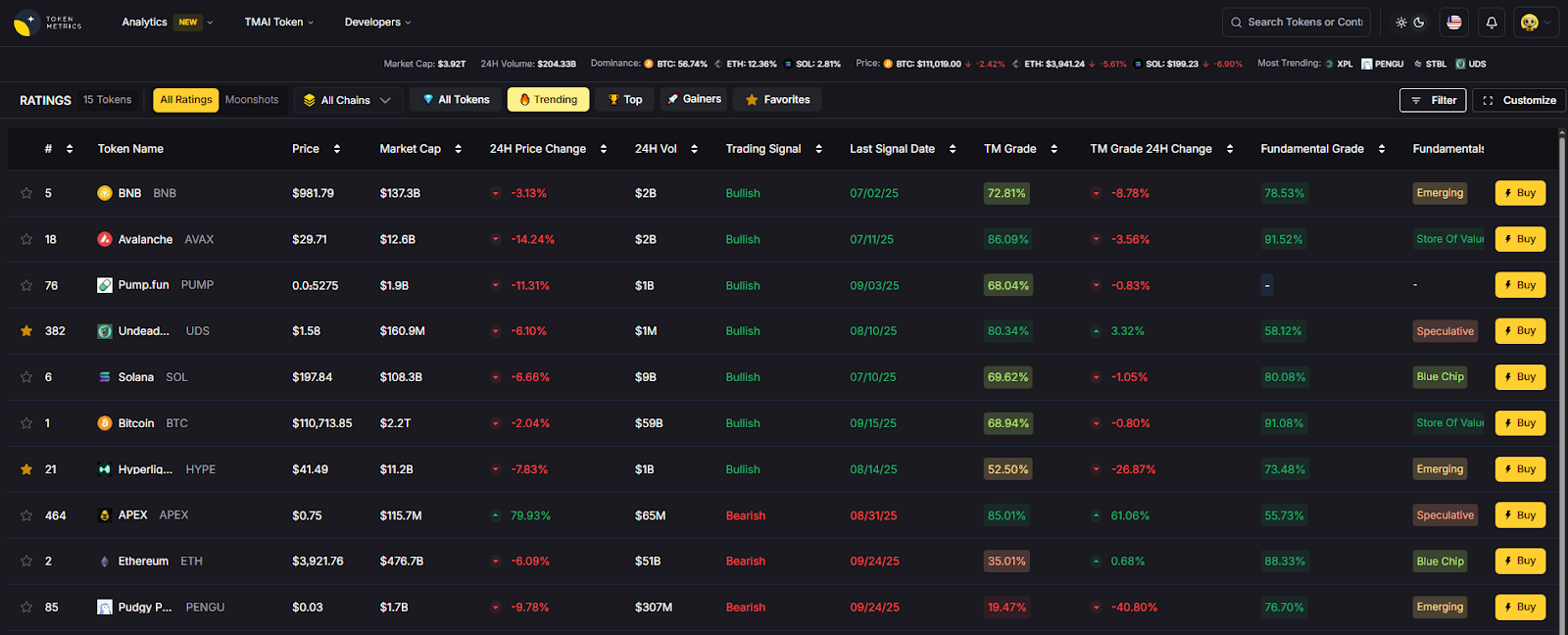
1. Token Metrics — Best for AI-driven research + multi-format education

Why Use It: Token Metrics combines human analysts with AI ratings and on-chain/quant models, packaging insights via YouTube shows, tutorials, and research articles. The mix of data-driven screening and narrative detection makes it a strong daily driver for both retail and pro users. Best For: Retail investors, swing traders, token research teams, and institutions seeking systematic signals.
Notable Features: AI Ratings & Signals; narrative heat detection; portfolio tooling; explainers and live shows.
Fees Notes: Free videos/reports; paid analytics tiers available.
Regions: Global.
Alternatives: Coin Bureau, Bankless.

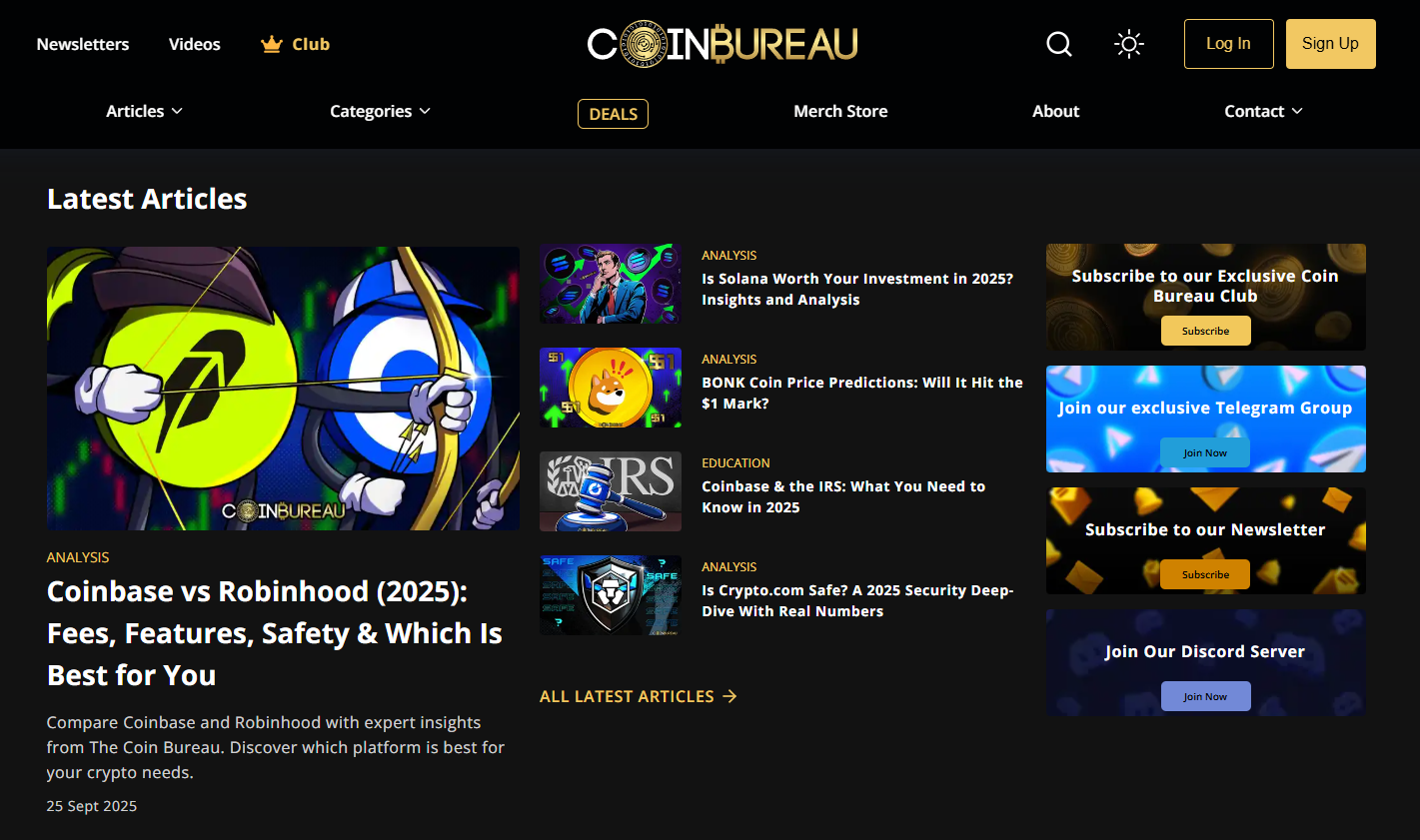
2. Coin Bureau — Best for objective explainers & deep dives

Why Use It: Guy and team are known for accessible, well-structured education across tokens, tech, and regulation—ideal for learning fast without sensationalism. Their site and channel organize guides, analysis, and “what to know before you invest” content. Best For: Beginners, researchers, compliance-minded readers.
Notable Features: Long-form explainers; project primers; timely macro/market narratives.
Fees Notes: Content is free; optional merchandise/membership.
Regions: Global.
Alternatives: Finematics, Token Metrics.

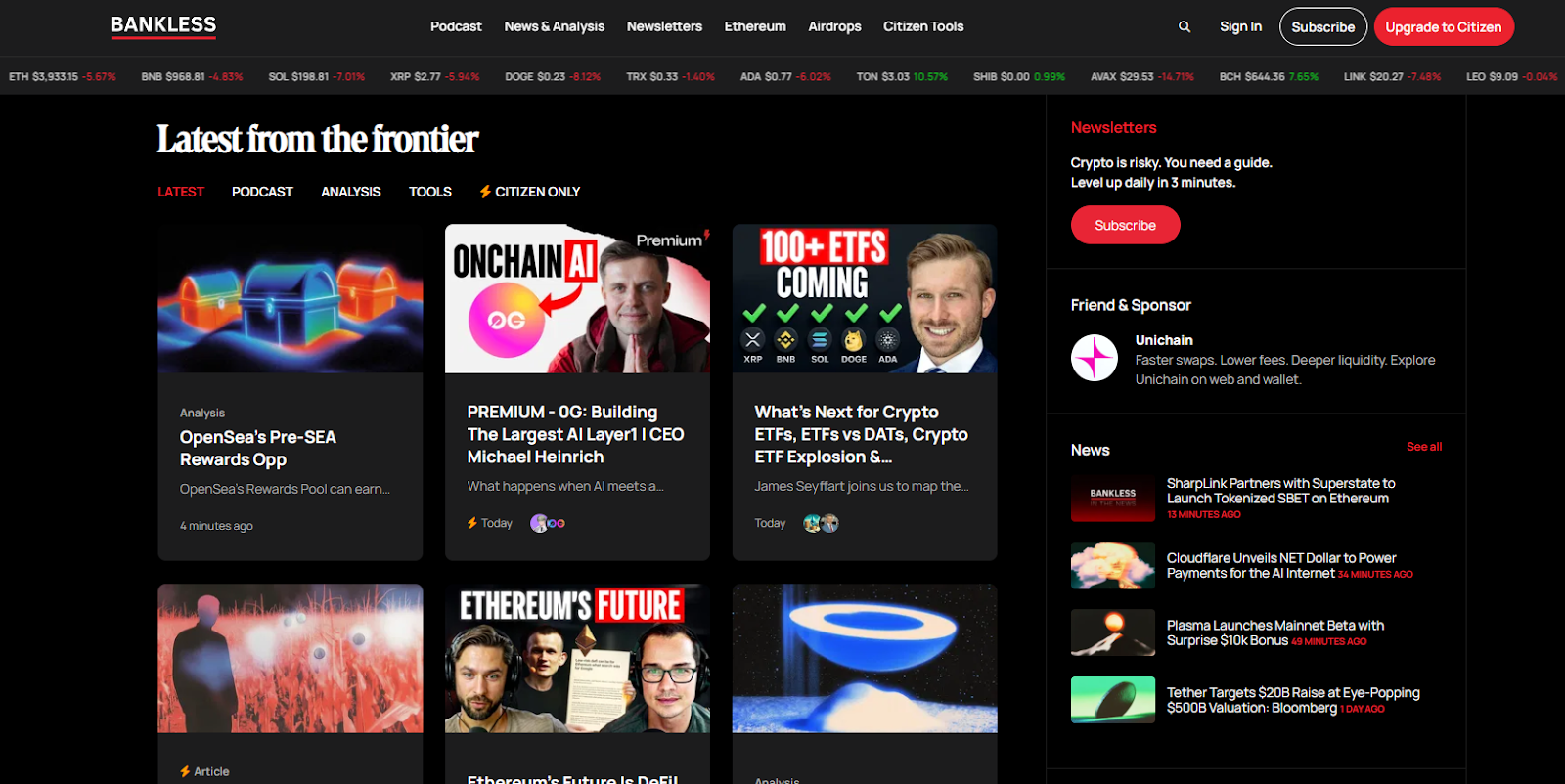
3. Bankless — Best for founders, DeFi, and crypto-AI crossover

Why Use It: Bankless blends interviews with founders and policymakers, DeFi primers, and a consistent macro lens. The podcast + YouTube combo and a busy newsletter make it a top “frontier finance” feed. Best For: Builders, protocol teams, power users.
Notable Features: Deep interviews; airdrop and ecosystem roundups; policy/regulatory conversations.
Fees Notes: Many resources free; paid tiers/newsletters optional.
Regions: Global.
Alternatives: The Defiant (news), Coin Bureau.

4. Altcoin Daily — Best for daily news hits & narrative scanning

Why Use It: The Arnold brothers deliver high-frequency coverage of market movers, narratives, and interviews, helping you catch headlines and sentiment shifts quickly. Their channel is among the most active for crypto news. Best For: News-driven traders, general crypto audiences.
Notable Features: Daily videos; interviews; quick market takes.
Fees Notes: Free content; affiliate links may appear with disclosures.
Regions: Global.
Alternatives: Crypto Banter, Token Metrics.

5. Crypto Banter — Best for live markets & trading-room energy

Why Use It: A live, broadcaster-style format covering Bitcoin, altcoins, and breaking news—with recurring hosts and trader segments. The emphasis is on real-time updates and community participation. Best For: Intraday watchers, momentum traders, community-driven learning.
Notable Features: Daily live streams; trader panels; market reaction shows.
Fees Notes: Free livestreams; education and partners disclosed on site.
Regions: Global.
Alternatives: Altcoin Daily, Token Metrics.

6. Anthony Pompliano (“Pomp”) — Best for macro + business leaders

Why Use It: Pomp’s daily show and interviews bridge crypto with broader finance and tech. He brings operators, investors, and policymakers into accessible conversations. New original programming on X complements his long-running podcast. Best For: Executives, allocators, macro-minded audiences.
Notable Features: Daily investor letter; interviews; X-native programming.
Fees Notes: Free content; newsletter and media subscriptions optional.
Regions: Global.
Alternatives: Bankless, Token Metrics.

7. Finematics — Best for visual DeFi explainers

Why Use It: Finematics turns complex DeFi mechanics (AMMs, MEV, L2s) into crisp animations and threads—great for leveling up from novice to competent operator. The YouTube channel is a staple for concept mastery. Best For: Students of DeFi, analysts, product managers.
Notable Features: Animated explainers; topical primers (MEV, EIPs); extra tutorials on site.
Fees Notes: Free videos; optional Patreon/course material.
Regions: Global.
Alternatives: Coin Bureau, Bankless.

8. Crypto Casey — Best for beginner-friendly, step-by-step guides

Why Use It: Clear, approachable tutorials on wallets, security, and portfolio basics; frequent refreshes for the latest best practices. Great first touch for friends and teammates new to crypto. Best For: Beginners, educators, community managers.
Notable Features: Setup walk-throughs; safety tips; series for newcomers.
Fees Notes: Free channel; affiliate/sponsor disclosures in video descriptions.
Regions: Global.
Alternatives: Coin Bureau, Finematics.

9. Rekt Capital — Best for BTC cycle TA & higher-timeframe context

Why Use It: Rekt Capital focuses on disciplined, cycle-aware technical analysis, especially for Bitcoin. The research newsletter and YouTube channel offer a consistent framework for understanding halving cycles, support/resistance, and macro phases. Best For: Swing traders, long-term allocators, TA learners.
Notable Features: Cycle maps; weekly newsletters; educational modules.
Fees Notes: Free posts + paid tiers; clear membership options.
Regions: Global.
Alternatives: Willy Woo, Token Metrics.

10. Willy Woo (Woobull) — Best for on-chain metrics & valuation models

Why Use It: A pioneer in on-chain analytics, Willy popularized frameworks like NVT and shares models and charts used widely by analysts. His work bridges on-chain data with macro narrative, useful when markets de-correlate from headlines. Best For: Data-driven investors, quant-curious traders.
Notable Features: On-chain models; charts (e.g., NVT); newsletter The Bitcoin Forecast.
Fees Notes: Free charts; paid newsletter available.
Regions: Global.
Alternatives: Token Metrics (quant + AI), Rekt Capital.

Decision Guide: Best By Use Case

  • AI-driven research hub: Token Metrics

  • Beginner education: Crypto Casey, Coin Bureau

  • DeFi mechanics & animations: Finematics

  • Live market energy: Crypto Banter

  • Daily news & narratives: Altcoin Daily

  • Macro + business leaders: Anthony Pompliano

  • BTC cycles & TA: Rekt Capital

  • On-chain metrics: Willy Woo (Woobull)

How to Choose the Right Crypto Influencer/KOL (Checklist)

  • Region & eligibility: Is content globally accessible and compliant for your jurisdiction?

  • Coverage: Do they explain why something matters (not just price)?

  • Custody & security hygiene: Do they teach self-custody, risk, and safety tools?

  • Disclosures & costs: Are sponsorships and paid tiers clearly explained?

  • UX & cadence: Format you’ll actually consume (shorts vs long-form; live vs on-demand).

  • Community & support: Newsletter, Discord, or docs for deeper follow-up.

  • Red flags: Guaranteed returns; undisclosed promotions.

Use Token Metrics With Any Influencer/KOL

  • AI Ratings to screen tokens mentioned on shows.
  • Narrative Detection to quantify momentum from social chatter to on-chain activity.

  • Portfolio Optimization to size positions by risk.

  • Alerts/Signals to monitor entries/exits after a KOL highlight.
    Mini workflow: Research → Shortlist from a KOL’s mention → Validate in Token Metrics → Execute on your exchange → Monitor with alerts.

 Primary CTA: Start free trial.

Security & Compliance Tips

  • Enable 2FA everywhere; use hardware keys for critical accounts.

  • Separate research and execution (watchlists vs trading wallets).

  • Understand KYC/AML on platforms you use; avoid restricted regions.

  • For RFQs/OTC, log quotes and counterparty details.

  • Practice wallet hygiene: test sends, fresh addresses, and secure backups.

This article is for research/education, not financial advice.

Beginner Mistakes to Avoid

  • Chasing every call without a plan or position sizing.

  • Ignoring custody—keeping too much on centralized venues.

  • Confusing views with validation; always verify claims.

  • Over-indexing on TikTok “quick tips” without context.

  • Skipping risk management during high-volatility events.

FAQs

What’s the fastest way to use this list?
Pick one education-first creator (Coin Bureau or Crypto Casey) and one market-first feed (Token Metrics, Bankless, or Altcoin Daily). Use Token Metrics to validate ideas before you act.

Are these KOLs region-restricted?
Content is generally global, though some platforms may geo-restrict features or embeds. Always follow local rules for trading and taxes. (Check each creator’s site/channel for access details.)

Who’s best for on-chain metrics?
Willy Woo popularized several on-chain valuation approaches and maintains public charts on Woobull/WooCharts, useful for cycle context.

I’m brand-new—where should I start?
Crypto Casey and Coin Bureau offer step-by-step explainers; then layer in Token Metrics for AI-assisted idea validation and alerts.

How do I avoid shill content?
Look for disclosures, independent verification, and multiple sources. Cross-check KOL mentions with Token Metrics’ ratings and narratives before allocating.

Conclusion + Related Reads

KOLs are force multipliers when you pair them with your own process. Start with one education channel and one market channel, then layer Token Metrics to validate and monitor. Over time, you’ll recognize which voices best fit your strategy.
Related Reads:

  • Best Cryptocurrency Exchanges 2025

  • Top Derivatives Platforms 2025

  • Top Institutional Custody Providers 2025

Research

Best Crypto Media Outlets (2025)

Sam Monac
7 min

Why Crypto Media Outlets Matter in September 2025

If you trade, build, or invest in digital assets, your edge starts with information. The PRIMARY_KEYWORD—“best crypto media outlets”—are the publishers and platforms that break market-moving stories, explain complex narratives, and surface on-chain trends fast enough to act. In one line: A crypto media outlet is a specialized publisher that reports, analyzes, and contextualizes digital-asset markets and technology for investors and builders.
This guide is for retail traders, crypto-native professionals, and institutions comparing crypto news websites and blockchain news sites to build a trustworthy daily stack. We synthesized public info from official publisher pages and cross-checked coverage breadth, depth, and consistency. Below, you’ll find concise picks, a decision guide by use case, and a practical checklist so you can choose confidently.

How We Picked (Methodology & Scoring)

  • Scale & reach (30%): publishing cadence, breadth of coverage across assets/sectors, market relevance.

  • Security & integrity (25%): disclosures, editorial standards, conflicts-handling, reputation.

  • Coverage depth (15%): investigative work, explainers, data/indices, multimedia (podcasts/video).

  • Costs & access (15%): free vs. paid offerings, newsletter value, archives, tools.

  • User experience (10%): site speed, navigation, categorization, mobile experience.

  • Support (5%): newsletters, alerts, community channels.

We relied on official sites, about/trust pages, product pages, and disclosures; we used widely cited market datasets (e.g., CoinGecko/Kaiko/CCData) only to sanity-check scale claims. Last updated September 2025.

Top 10 Crypto Media Outlets in September 2025

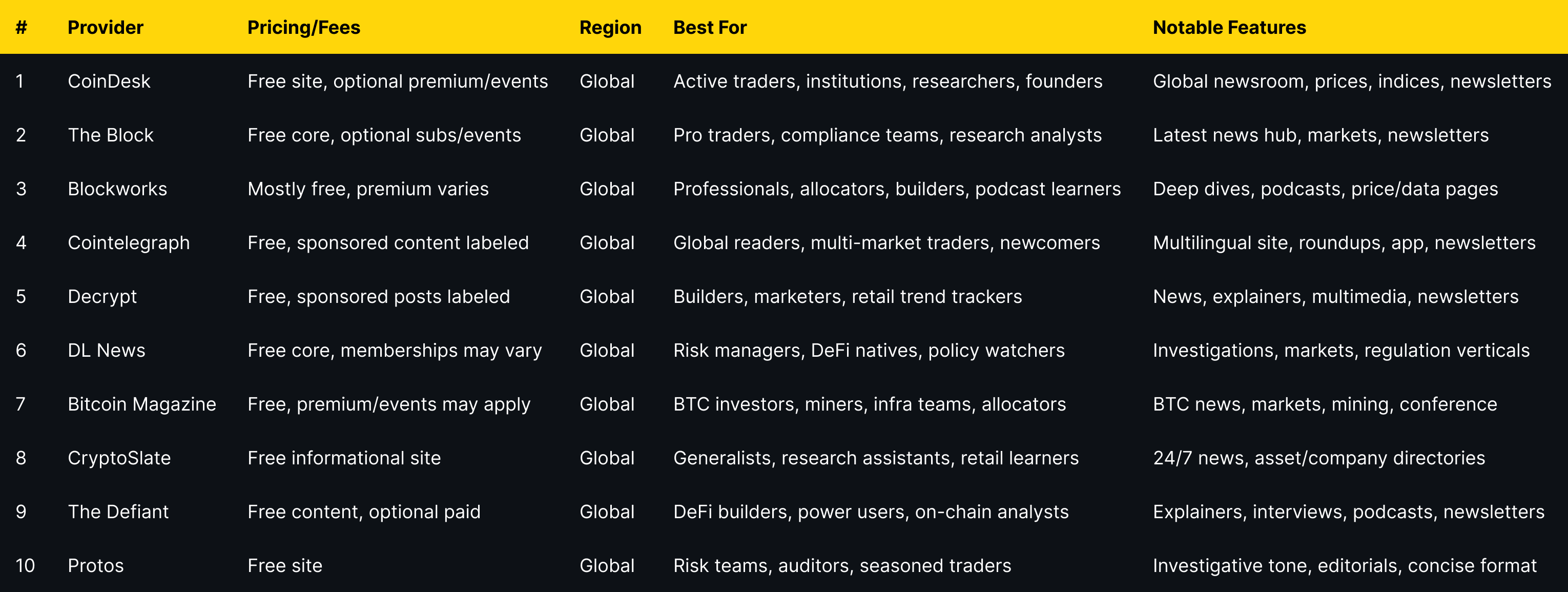
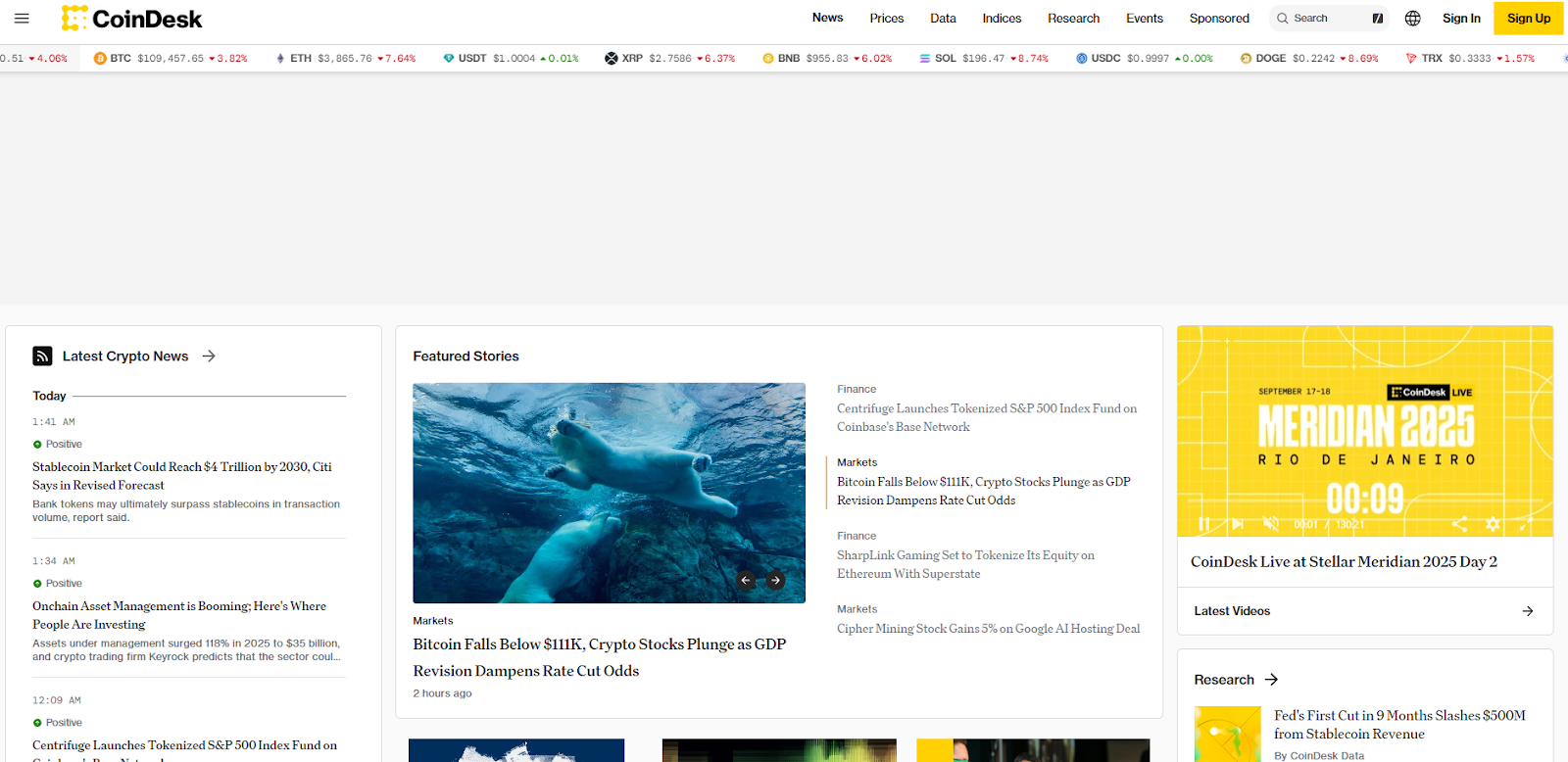
1. CoinDesk — Best for market-wide coverage & benchmarks

  • Why Use It: Longstanding leader with high-volume daily reporting across markets, policy, and tech. Its indices arm adds a data-backed lens that helps translate headlines into benchmark context.

  • Best For: Active traders, institutions, researchers, founders.

  • Notable Features: Newsroom with global scope; real-time prices; CoinDesk Indices benchmarks; newsletters & events.

  • Consider If: You want one primary feed that balances speed with breadth.

  • Regions: Global

  • Fees Notes: Free site; optional premium/event products.

  • Alternatives: The Block, Blockworks

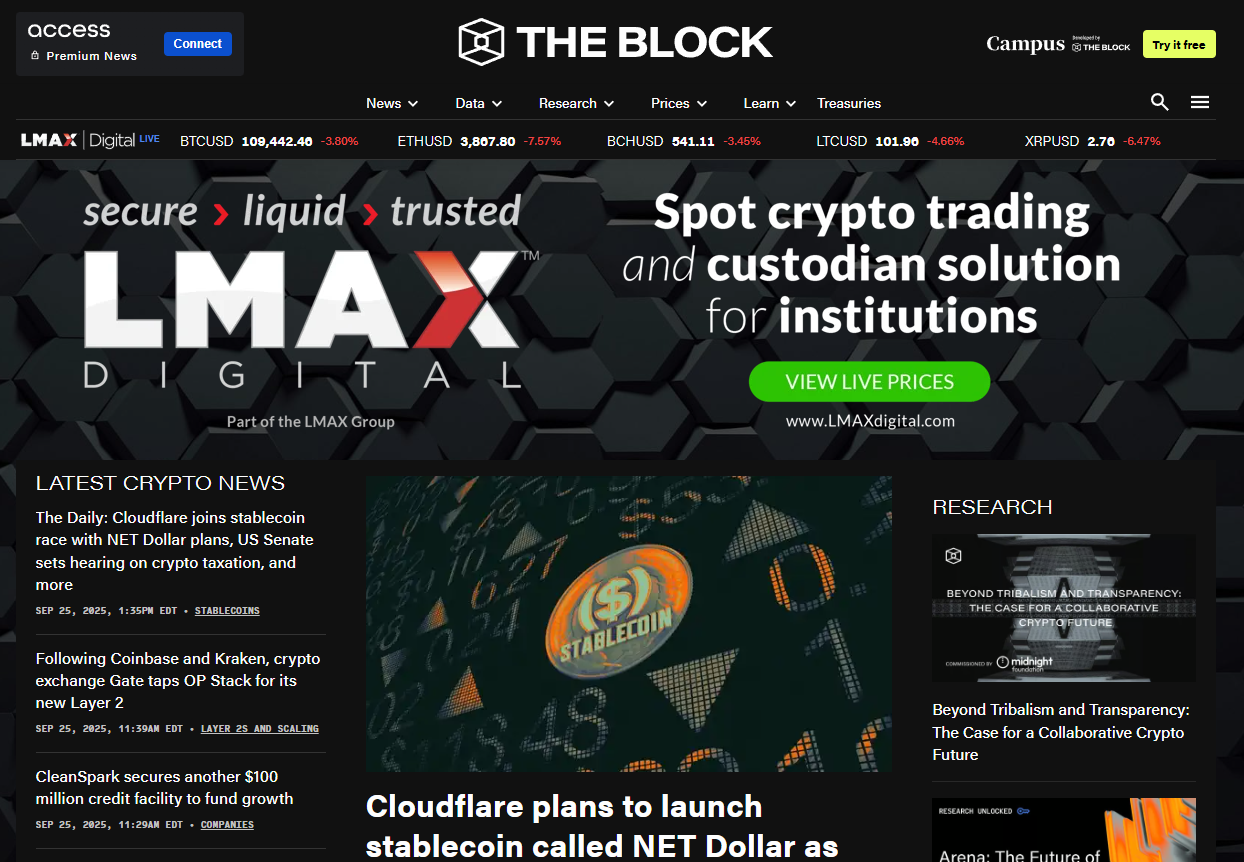
2. The Block — Best for market and policy scoops

  • Why Use It: Known for quick market and regulatory coverage with a professional tone, plus companion price pages. It’s a strong second screen for intraday context and breaking items.

  • Best For: Pro traders, compliance teams, venture & research analysts.

  • Notable Features: Latest-crypto-news hub; market sections; newsletters; headlines geared to execution decisions.

  • Consider If: You want fast, concise reporting that’s easy to scan during volatile sessions.

  • Regions: Global

  • Fees Notes: Free core content; optional subscriptions/events.

  • Alternatives: CoinDesk, DL News

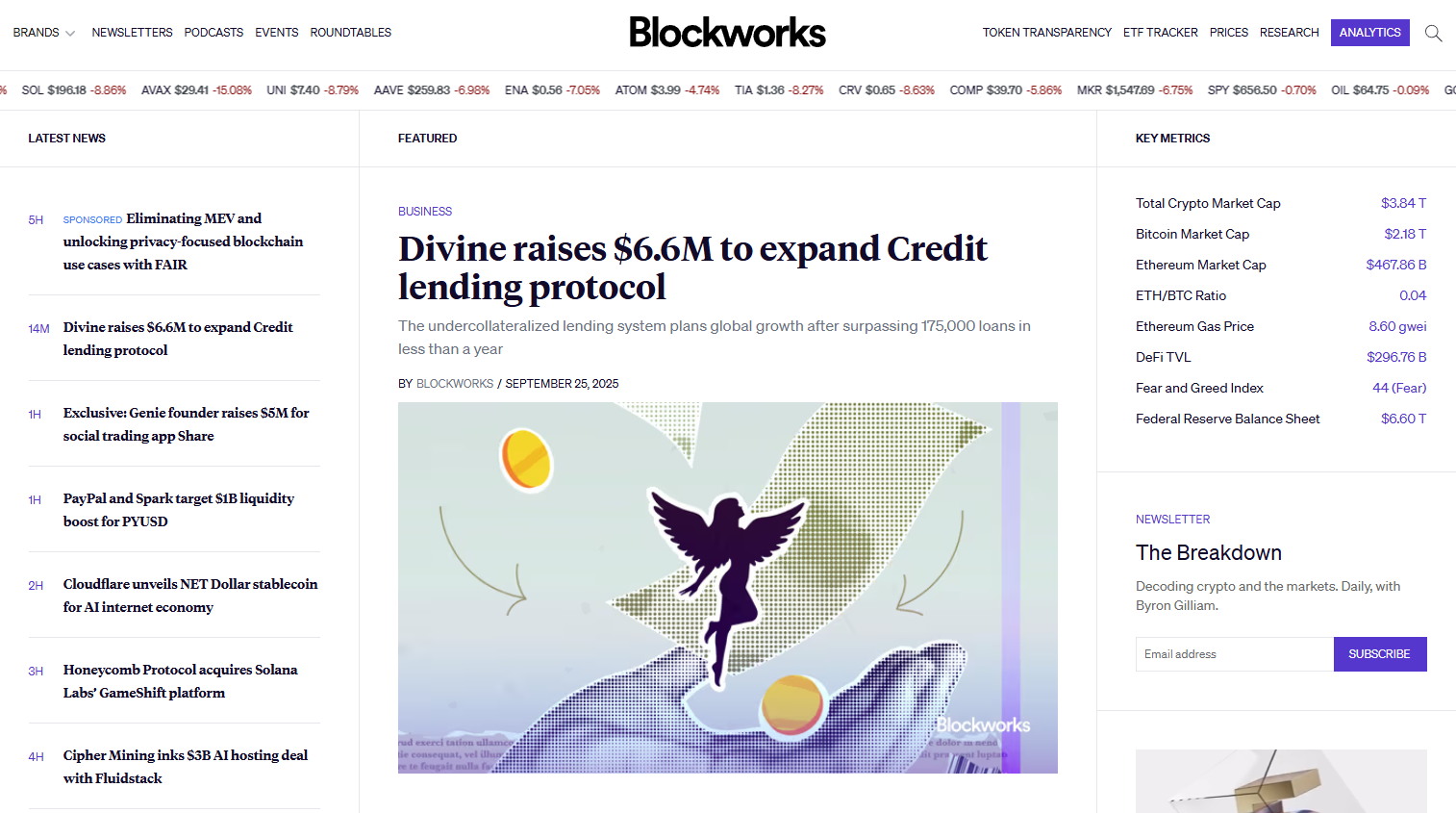
3. Blockworks — Best for pro-grade analysis & podcasts

  • Why Use It: Bridges media and markets with insightful explainers, a strong podcast lineup, and clean price/data pages—useful for macro-to-micro synthesis.

  • Best For: Professionals, allocators, builders, podcast-first learners.

  • Notable Features: Deep-dive articles; daily/weekly shows; conference heritage; tidy category navigation; coin price pages.

  • Consider If: You prefer long-form insights and audio alongside headlines.

  • Regions: Global

  • Fees Notes: Mostly free; premium experiences may vary.

  • Alternatives: CoinDesk, The Defiant

4. Cointelegraph — Best for global/multilingual news flow

  • Why Use It: Large, global newsroom with multi-language publishing and consistent cadence across Bitcoin, Ethereum, DeFi, NFTs, and regulation.

  • Best For: Global audiences, multi-market traders, newcomers seeking regular updates.

  • Notable Features: Multilingual site; daily roundups; app; newsletters; opinion/education content.

  • Consider If: You want wide geographic and thematic coverage in one destination.

  • Regions: Global

  • Fees Notes: Free site; branded content clearly labeled.

  • Alternatives: Decrypt, CryptoSlate

5. Decrypt — Best for culture-meets-crypto storytelling

  • Why Use It: Combines markets and tech with culture, gaming, and emerging tech angles—useful to understand adoption narratives, UX shifts, and mainstream crossovers.

  • Best For: Builders, marketers, retail investors tracking user-facing trends.

  • Notable Features: News + explainers; multimedia; creator/vertical experimentation; active newsletters.

  • Consider If: You value context on how crypto meets consumer internet and media.

  • Regions: Global

  • Fees Notes: Free site; sponsored posts labeled.

  • Alternatives: Cointelegraph, Blockworks

6. DL News — Best for investigations & DeFi/regulation depth

  • Why Use It: Independent outlet with a reputation for original reporting on markets, DeFi, and policy. A strong pick when you need more than a headline.

  • Best For: Risk managers, DeFi natives, legal & policy watchers.

  • Notable Features: Investigations; markets/regulation verticals; newsletters; in-depth articles.

  • Consider If: You want rigorous follow-through on complex stories.

  • Regions: Global

  • Fees Notes: Free core content; memberships may vary.

  • Alternatives: The Defiant, Protos

7. Bitcoin Magazine — Best for Bitcoin-only depth

  • Why Use It: OG Bitcoin publication with dedicated coverage of BTC markets, mining, policy, and culture; ideal as a specialized complement to broader feeds.

  • Best For: Bitcoin investors, miners, infra teams, macro allocators watching BTC cycles.

  • Notable Features: News & analysis; mining/market sections; conference heritage; op-eds from BTC experts.

  • Consider If: You want focused BTC-first reporting without altcoin noise.

  • Regions: Global

  • Fees Notes: Free site; premium/events may apply.

  • Alternatives: CoinDesk, Cointelegraph

8. CryptoSlate — Best for directory-style context + news

  • Why Use It: Combines daily news with handy project/company directories and market pages, making it a useful jumping-off point when researching unfamiliar tickers.

  • Best For: Generalists, research assistants, retail learners.

  • Notable Features: News 24/7; asset/company directories; insights sections; categories by chain and sector.

  • Consider If: You like to pivot from headlines to directories for quick diligence.

  • Regions: Global

  • Fees Notes: Free informational site.

  • Alternatives: Cointelegraph, Decrypt

9. The Defiant — Best for DeFi-native explainers & interviews

  • Why Use It: DeFi-first outlet with explainers, newsletters, and podcasts/videos that decode protocols, tokenomics, and governance for practitioners.

  • Best For: DeFi builders, power users, on-chain analysts.

  • Notable Features: News; interviews; education; strong newsletter cadence; multimedia formats.

  • Consider If: You want builder-grade clarity on DeFi narratives.

  • Regions: Global

  • Fees Notes: Free content; optional paid products may appear.

  • Alternatives: DL News, Blockworks

10. Protos — Best for skeptical takes & accountability reporting

  • Why Use It: Delivers clear, skeptical, “cut-through-the-noise” reporting—useful as a counterbalance to hype cycles and for accountability coverage.

  • Best For: Risk teams, auditors, seasoned traders who value contrarian perspectives.

  • Notable Features: Investigative tone; editorials; market-moving tidbits; concise format.

  • Consider If: You want a critical lens alongside bullish feeds.

  • Regions: Global

  • Fees Notes: Free site.

  • Alternatives: DL News, The Block

Decision Guide: Best By Use Case

  • One primary daily feed: CoinDesk

  • Fast policy/market scoops: The Block

  • Pro-grade audio + analysis: Blockworks

  • Global/multilingual coverage: Cointelegraph

  • Consumer/culture angles: Decrypt

  • Investigations & DeFi policy: DL News

  • Bitcoin-only depth: Bitcoin Magazine

  • Headlines with directories: CryptoSlate

  • DeFi explainers & interviews: The Defiant

  • Skeptical/forensic lens: Protos

How to Choose the Right Crypto Media Outlet (Checklist)

  • Region & language: Does it serve your market and preferred language(s)?

  • Coverage fit: Generalist vs. Bitcoin-only vs. DeFi-native.

  • Depth: Are there explainers, investigations, indices, or data to go beyond headlines?

  • Access & costs: Free vs. paid tiers; newsletter value; RSS/alerts.

  • UX & speed: Mobile performance, category navigation, price pages.

  • Integrity: Disclosures, labeled sponsored content, clear editorial standards.

  • Support/community: Podcasts, newsletter cadence, socials.

  • Red flags: Vague sourcing; unlabeled ads; sensational claims without links.

Use Token Metrics With Any Crypto Media Outlet

Pair trusted news with quant and AI to act with conviction:

  • AI Ratings to screen narratives and assets quickly.
  • Narrative Detection to spot momentum in sectors (L2s, RWA, DeFi).

  • Portfolio Optimization to size bets with risk constraints.

  • Alerts & Signals to time entries/exits as headlines hit.

Workflow: Research → Shortlist → Execute with your chosen venue → Monitor via TM alerts.


Primary CTA: Start free trial

Security & Compliance Tips

  • Enable 2FA on all publisher and newsletter logins to protect account access.

  • Treat media as input, not instruction—cross-check with official project docs and disclosures.

  • Keep a research journal: link sources, note dates, and log what changed your mind.

  • Separate ad/sponsored content from editorial and verify claims before acting.

  • Use wallet hygiene and a risk budget when headlines tempt FOMO.

This article is for research/education, not financial advice.

Beginner Mistakes to Avoid

  • Relying on a single outlet; diversify your media stack.

  • Confusing sponsored posts with editorial.

  • Acting on headlines without checking primary sources/on-chain data.

  • Ignoring regional policy context that changes risk.

  • Chasing every narrative without a portfolio plan.

FAQs

What is a crypto media outlet?
A publisher focused on digital-asset markets and technology—covering news, analysis, and explainers for traders, investors, and builders. Many also offer newsletters, podcasts, and events.

How many outlets should I follow daily?
Two to three complementary sources usually balance speed and depth (e.g., one generalist, one investigative/DeFi, one podcast). Add specialized feeds (e.g., Bitcoin-only) as needed.

Are paid crypto news subscriptions worth it?
They can be if you use the added depth (investigations, research notes, data). For most traders, a free stack plus one targeted premium product is sufficient.

Which outlet is best for U.S. regulatory coverage?
Generalists like CoinDesk and The Block cover U.S. policy closely; DL News and The Defiant provide strong DeFi/regulation analysis. Cross-check with official agency releases.

Where can I get crypto news in multiple languages?
Cointelegraph runs multilingual editions and apps; several outlets offer newsletters and region-specific writers. Verify language availability and local relevance.

Do these sites move markets?
Major scoops, enforcement actions, or exchange/security stories can move prices, especially in thin-liquidity hours. Use alerts and confirm via official disclosures.

Conclusion + Related Reads

The “best” outlet depends on your role and the decisions you make. If you need one primary feed, start with CoinDesk; add The Block for scoops and Blockworks for pro-grade audio. Layer DL News/The Defiant for DeFi and Bitcoin Magazine for BTC focus. As always, pair news with structured research and disciplined risk.
Related Reads:

  • Best Cryptocurrency Exchanges 2025

  • Top Derivatives Platforms 2025

  • Top Institutional Custody Providers 2025

Research

Leading Metaverse Platforms (2025)

Sam Monac
5 min

Why Metaverse Platforms Matter in September 2025

The metaverse has evolved from hype to practical utility: brands, creators, and gamers now use metaverse platforms to host events, build persistent worlds, and monetize experiences. In one line: a metaverse platform is a shared, real-time 3D world or network of worlds where users can create, socialize, and sometimes own digital assets. In 2025, this matters because cross-platform tooling (web/mobile/VR), better creator economics, and cleaner wallet flows are making virtual worlds useful—not just novel. Whether you’re a creator monetizing UGC, a brand running virtual activations, or a gamer seeking interoperable avatars and items, this guide compares the leaders and helps you pick the right fit. Secondary focus areas include web3 metaverse ownership models, virtual worlds with events/tools, and NFT avatars where relevant.

How We Picked (Methodology & Scoring)

  • Liquidity (30%): Active user activity, creator economy health, and tradable asset depth for worlds/items.

  • Security (25%): Platform transparency, custody/ownership model, documentation, audits, and brand safeguards.

  • Coverage (15%): Breadth of supported devices (web/mobile/XR), toolchains (Unity, SDKs), and asset standards.

  • Costs (15%): Fees on mints, marketplace trades, land, or subscriptions; fair creator revenue splits.

  • UX (10%): Onboarding, performance, no-code tools, creator pipelines.

  • Support (5%): Docs, community, and partner success resources.

Data sources: official product/docs pages, security/transparency pages, and (for cross-checks) widely cited market datasets. Last updated September 2025.

Top 10 Metaverse Platforms in September 2025

1. Decentraland — Best for open, browser-based social worlds

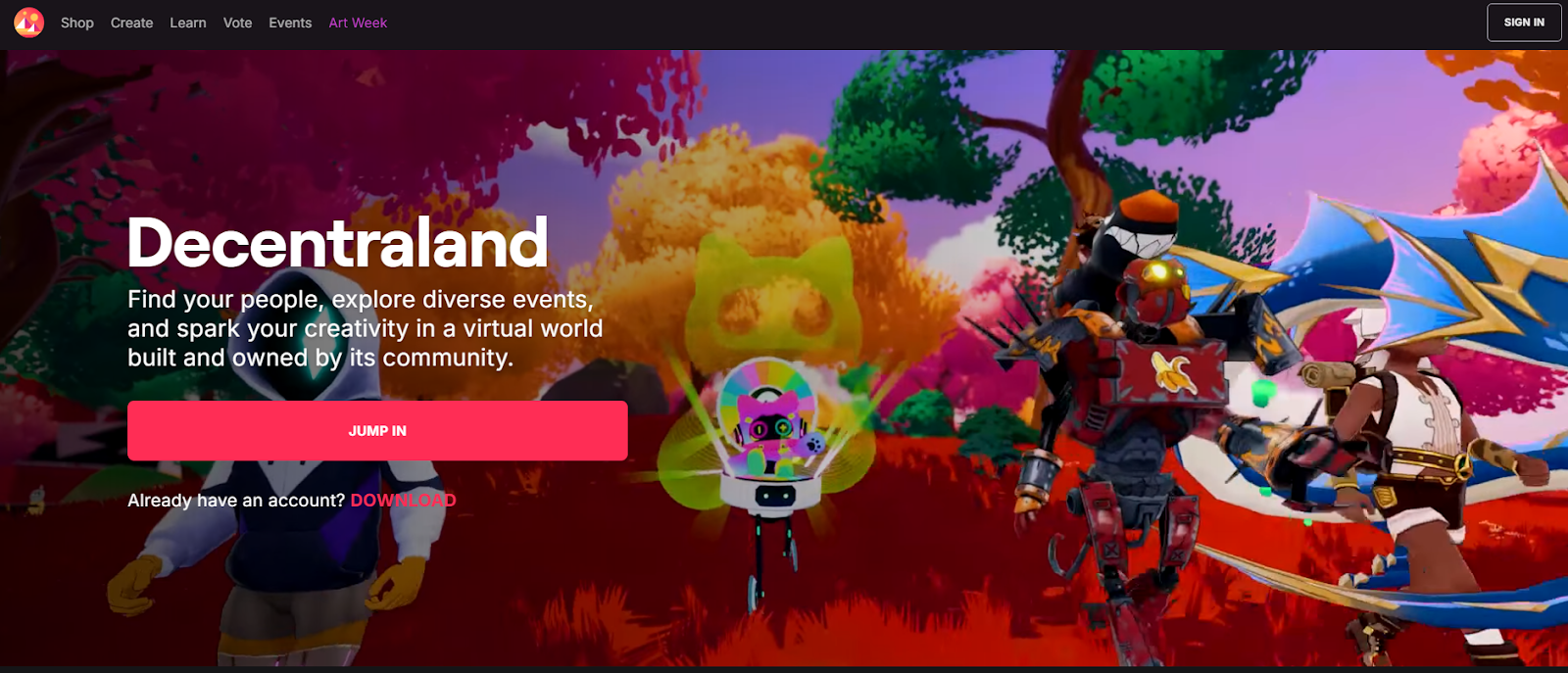
  • Why Use It: One of the earliest browser-native 3D virtual worlds with user-owned land and a strong events culture (conferences, fashion, art). DAO-governed features and open tooling make it a steady choice for brand activations and community hubs. Decentraland

  • Best For: Web-first events; brand galleries; creator storefronts; DAO communities.

  • Notable Features: Land & wearables as NFTs; events calendar; builder & SDK; DAO governance. Decentraland

  • Fees/Notes: Marketplace fees on assets vary; gas applies for on-chain actions.

  • Regions: Global (browser-based).

  • Consider If: You want open standards and long-running community tooling over cutting-edge graphics.

  • Alternatives: The Sandbox, Spatial.

2. The Sandbox — Best for branded IP and UGC game experiences

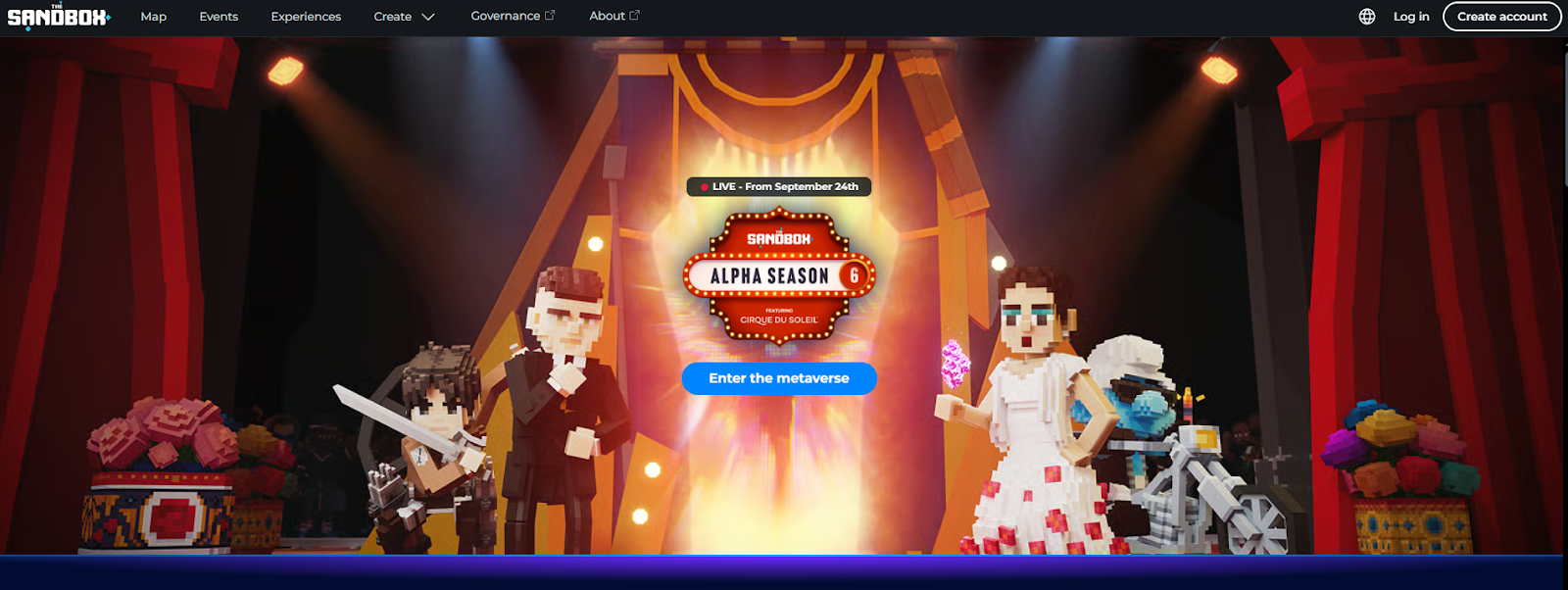
  • Why Use It: A UGC-driven game world with heavy brand participation and seasonal campaigns that reward play and creation. Strong toolchain (VoxEdit, Game Maker) and high-profile partnerships attract mainstream audiences. The Sandbox+2Vogue Business+2

  • Best For: Brands/IP holders; creators building mini-games; seasonal events.

  • Notable Features: No-code Game Maker; avatar collections; brand hubs; seasonal reward pools. The Sandbox+1

  • Fees/Notes: Asset and land marketplace fees; seasonal reward structures.

  • Regions: Global.

  • Consider If: You want strong IP gravity and structured events more than fully open worldbuilding.

  • Alternatives: Decentraland, Upland.

3. Somnium Space — Best for immersive VR worldbuilding

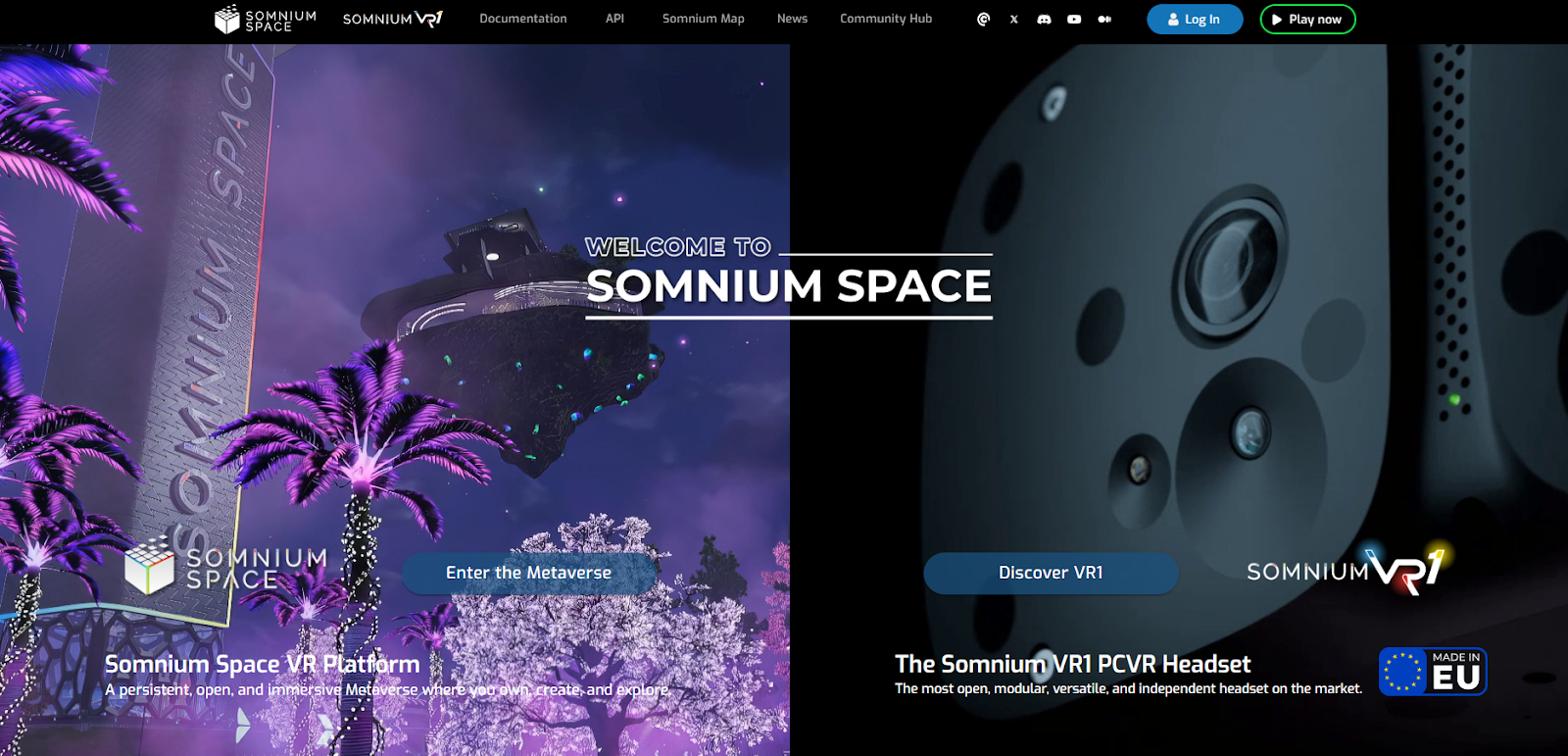
  • Why Use It: A persistent, open VR metaverse with land ownership and deep creator tools—great for immersive meetups, galleries, and simulations. Hardware initiatives (e.g., VR1) signal a VR-first roadmap. somniumspace.com+2somniumspace.com+2

  • Best For: VR-native communities; immersive events; simulation builds.

  • Notable Features: Persistent VR world; land & parcels; robust creator/SDK docs; hardware ecosystem. somniumspace.com+1

  • Fees/Notes: Marketplace and gas fees apply for on-chain assets.

  • Regions: Global.

  • Consider If: VR performance and hardware availability fit your audience.

  • Alternatives: Spatial, Mona.

4. Voxels — Best for lightweight, linkable spaces

  • Why Use It: A voxel-style world (formerly Cryptovoxels) known for easy, link-and-share parcels, fast event setups, and a strong indie creator scene. Great for galleries and casual meetups. Voxels+1

  • Best For: NFT galleries; indie events; rapid prototyping.

  • Notable Features: Parcels & islands; simple building; events; browser-friendly access. Voxels

  • Fees/Notes: Asset/parcel markets with variable fees; gas for on-chain actions.

  • Regions: Global.

  • Consider If: You prefer simplicity over realism and AAA graphics.

  • Alternatives: Hyperfy, Oncyber.

5. Spatial — Best for cross-device events and no-code worlds

  • Why Use It: Polished, cross-platform creation: publish to web, mobile, and XR; strong no-code templates plus a Unity SDK for advanced teams. Used by creators, educators, and brands for scalable events. Spatial+1

  • Best For: Brand activations; classrooms & training; cross-device showcases.

  • Notable Features: No-code world templates; Unity SDK; web/mobile/XR publishing; multiplayer. Spatial

  • Fees/Notes: Freemium with paid tiers/features; no crypto requirement to start.

  • Regions: Global.

  • Consider If: You want frictionless onboarding and device coverage without mandatory wallets.

  • Alternatives: Mona, Somnium Space.

6. Mona (Monaverse) — Best for high-fidelity art worlds

  • Why Use It: Curated, visually striking worlds favored by digital artists and institutions; interoperable assets and creator-forward tools make it ideal for exhibitions and premium experiences. monaverse.com+1

  • Best For: Galleries & museums; premium showcases; art-led communities.

  • Notable Features: High-fidelity scenes; curated drops; creator tools; marketplace. monaverse.com

  • Fees/Notes: Marketplace fees for assets; gas where applicable.

  • Regions: Global.

  • Consider If: You prioritize aesthetics and curation over mass-market gamification.

  • Alternatives: Spatial, Oncyber.

7. Oncyber — Best for instant NFT galleries & creator “multiverses”

  • Why Use It: Easiest way to spin up personal worlds/galleries that showcase NFTs, with simple hosting and sharable links; now expanding creator tools (Studio) for interactive spaces. oncyber.io+1

  • Best For: Artists/collectors; quick showcases; brand micro-experiences.

  • Notable Features: One-click galleries; wallet connect; customizable spaces; creator studio. oncyber.io

  • Fees/Notes: Free to start; marketplace/transaction fees where applicable.

  • Regions: Global.

  • Consider If: You need speed and simplicity, not complex game loops.

  • Alternatives: Voxels, Mona.

8. Nifty Island — Best for creator-led islands & social play

  • Why Use It: A free-to-play social game world where communities build islands, run quests, and bring compatible NFTs in-world; expanding UGC features and events. Nifty Island+1

  • Best For: Streamers & communities; UGC map makers; social gaming guilds.

  • Notable Features: Island builder; quests; NFT avatar/item support; leaderboards. Nifty Island+1

  • Fees/Notes: Free to play; optional marketplace economy.

  • Regions: Global.

  • Consider If: You want a fun, social loop with creator progression over real-estate speculation.

  • Alternatives: Worldwide Webb, The Sandbox.

9. Upland — Best for real-world-mapped city building

  • Why Use It: A city-builder mapped to real-world geographies, emphasizing digital property, development, and an open economy—popular with strategy players and brand pop-ups. Upland

  • Best For: Property flippers; city sim fans; brand tie-ins tied to real locations.

  • Notable Features: Real-world maps; property trading; dev APIs; avatar integrations. Upland

  • Fees/Notes: Marketplace fees; token/withdrawal rules vary by region.

  • Regions: Global (availability varies).

  • Consider If: You want geo-tied gameplay and an economy centered on property.

  • Alternatives: The Sandbox, Decentraland.

10. Otherside — Best for large-scale, interoperable metaRPGs

  • Why Use It: Yuga Labs’ metaRPG in development aims for massive, real-time multiplayer with NFT interoperability—suited to large communities seeking events and game loops at scale. otherside.xyz+1

  • Best For: Big communities; interoperable avatar projects; large-scale events.

  • Notable Features: MetaRPG vision; NFT-native design; real-time massive sessions. otherside.xyz

  • Fees/Notes: Economy details evolving; expect on-chain transactions for assets.

  • Regions: Global (under development; access windows vary).

  • Consider If: You’re comfortable with active development and staged releases.

  • Alternatives: Nifty Island, The Sandbox.

Decision Guide: Best By Use Case

  • Regulated/corporate events, low friction: Spatial

  • Open web3 land & wearables: Decentraland

  • Brand/IP campaigns & UGC seasons: The Sandbox

  • High-fidelity art exhibitions: Mona

  • VR-native immersion: Somnium Space

  • Instant NFT galleries: Oncyber

  • Social UGC gameplay: Nifty Island

  • Geo-tied city building/economy: Upland

  • Massive interoperable metaRPG (developing): Otherside

  • Lightweight, link-and-share worlds: Voxels

How to Choose the Right Metaverse Platform (Checklist)

  • Confirm region/eligibility (and any content or cash-out restrictions).

  • Match your use case: events vs. galleries vs. UGC games vs. VR immersion.

  • Check device coverage (web, mobile, XR) and tooling (no-code, Unity/SDK).

  • Review ownership/custody of assets; does it require a wallet?

  • Compare costs: land, mints, marketplace fees, subscriptions.

  • Evaluate performance & UX for your target hardware and connection speeds.

  • Look for support/docs and active community channels.

  • Red flags: locked ecosystems with poor export options; unclear TOS on IP/royalties.

Use Token Metrics With Any Metaverse Platform

  • AI Ratings to screen tokens and ecosystems tied to these platforms.
  • Narrative Detection to spot momentum in metaverse, gaming, and creator-economy sectors.

  • Portfolio Optimization to balance exposure across platform tokens and gaming assets.

  • Alerts & Signals to monitor entries/exits as narratives evolve.
    Workflow: Research on Token Metrics → Select a platform/asset → Execute in your chosen world → Monitor with alerts.


Primary CTA: Start free trial

Security & Compliance Tips

  • Enable 2FA on marketplaces/accounts; safeguard seed phrases if using wallets.

  • Separate hot vs. cold storage for valuable assets; use hardware wallets where appropriate.

  • Follow KYC/AML rules on fiat on-/off-ramps and regional restrictions.

  • Use official clients/links only; beware spoofed mints and fake airdrops.

  • For events/UGC, implement moderation and IP policies before going live.

This article is for research/education, not financial advice.

Beginner Mistakes to Avoid

  • Buying land/assets before validating actual foot traffic or event needs.

  • Ignoring device compatibility (mobile/XR) for your audience.

  • Underestimating build time—even “no-code” worlds need iteration.

  • Skipping wallet safety and permissions review.

  • Chasing hype without checking fees and creator revenue splits.

FAQs

What is a metaverse platform?
A shared, persistent 3D environment where users can create, socialize, and sometimes own assets (via wallets/NFTs). Some focus on events and galleries; others on UGC games or VR immersion.

Do I need crypto to use these platforms?
Not always. Spatial and some worlds allow non-crypto onboarding. Web3-native platforms often require wallets for asset ownership and trading.

Which platform is best for branded events?
The Sandbox (IP partnerships, seasons) and Spatial (cross-device ease) are top picks; Decentraland also hosts large community events.

What about VR?
Somnium Space is VR-first; Spatial also supports XR publishing. Confirm device lists and performance requirements.

Are assets portable across worlds?
Interoperability is improving (avatars, file formats), but true portability varies. Always check import/export support and license terms.

How do these platforms make money?
Typically via land sales, marketplace fees, subscriptions, or seasonal passes/rewards. Review fee pages and terms before committing.

What risks should I consider?
Platform changes, token volatility, phishing, and evolving terms. Start small, use official links, and secure wallets.

Conclusion + Related Reads

If you’re brand-led or IP-driven, start with The Sandbox or Spatial. For open web3 communities and DAO-style governance, consider Decentraland. Creators seeking premium visuals may prefer Mona, while Somnium Space fits VR die-hards. Social UGC gamers can thrive on Nifty Island; geo-builders on Upland; galleries on Oncyber; lightweight events on Voxels; and large NFT communities should watch Otherside as it develops.

Related Reads:

  • Best Cryptocurrency Exchanges 2025

  • Top Derivatives Platforms 2025

  • Top Institutional Custody Providers 2025

Sources & Update Notes

We validated claims on official product/docs pages and public platform documentation, and cross-checked positioning with widely cited datasets when needed. Updated September 2025; we’ll refresh as platforms ship major features or change terms.

Otherside — Home, Yuga overview. otherside.xyz+1

Choose from Platinum, Gold, and Silver packages
Reach with 25–30% open rates and 0.5–1% CTR
Craft your own custom ad—from banners to tailored copy
Perfect for Crypto Exchanges, SaaS Tools, DeFi, and AI Products