Back to blog
Research

What is the Difference Between Solidity and Vyper? Complete 2025 Guide

Explore the key differences between Solidity and Vyper for Ethereum smart contracts, and learn how to choose the right language for your project in 2025.
Token Metrics Team
7
Want Smarter Crypto Picks—Free?
See unbiased Token Metrics Ratings for BTC, ETH, and top alts.
Thank you! Your submission has been received!
Oops! Something went wrong while submitting the form.
 No credit card | 1-click unsubscribe

Smart contracts have revolutionized the blockchain ecosystem, enabling self-executing code that automatically enforces agreed-upon terms and conditions. As decentralized applications continue growing in sophistication and value, the programming languages used to create these contracts become increasingly critical. Two languages dominate Ethereum smart contract development: Solidity and Vyper. Token Metrics.

Understanding Smart Contract Languages

Before diving into Solidity vs Vyper comparison, it's essential to understand what smart contract languages do and why they matter. Smart contracts are programs that run on blockchain platforms like Ethereum, executing predetermined actions when specific conditions are met. These contracts facilitate secure, transparent, and trustless interactions between parties, eliminating intermediaries and enhancing efficiency.

Smart contract languages enable developers to define the logic and behavior of these contracts, which are immutable and executed on the blockchain. By leveraging smart contract languages, businesses can automate processes including supply chain management, financial transactions, governance systems, and much more.

High-Level vs Low-Level Languages

Smart contract programming requires converting human-readable code into machine-executable bytecode that the Ethereum Virtual Machine (EVM) can process. Developers must first choose between high-level and low-level languages based on their use case and expertise.

High-level languages abstract away granular implementation details, allowing developers to create smart contracts without deep bytecode knowledge. Solidity and Vyper are both high-level languages designed for EVM-compatible blockchains, making them accessible to developers from traditional programming backgrounds.

After compilation, both Solidity and Vyper smart contracts execute using the same bytecode language, meaning they can be used concurrently in the same application despite their different source code appearances.

Solidity: The Industry Standard

Solidity is the most widely used programming language for developing smart contracts on the Ethereum blockchain and EVM-compatible chains. Designed specifically for blockchain applications, Solidity enables developers to create secure, decentralized, and automated agreements that run on distributed networks.

Origins and Design Philosophy

Proposed by Ethereum CTO Gavin Wood, Solidity was developed to meet demand for a flexible smart contract-based developer platform. The language draws heavily on inspiration from C++, JavaScript, and Python, making it familiar to developers from various programming backgrounds.

Solidity is a high-level, Turing-complete, statically typed language where developers must explicitly declare variable types. This allows the compiler to have knowledge of data types, ensuring deterministic application behavior—a critical requirement for blockchain applications where predictability is paramount.

Key Features of Solidity

  • Object-Oriented Programming: Supports inheritance, libraries, and complex data structures for sophisticated smart contracts with reusable components.
  • Rich Feature Set: Includes function overloading, multiple inheritance, user-defined types, and complex data structures.
  • Extensive Ecosystem: Benefits from a large community support, documentation, and development tools like Remix, Hardhat, and Foundry.
  • Blockchain-Specific Commands: Built-in commands for addresses, transactions, and block data interactions.
  • Wide Adoption: Most Ethereum projects, including Uniswap, Aave, and OpenSea, are developed using Solidity.

Advantages of Solidity

  • Market Dominance: Secures 87% of DeFi TVL, making it the dominant language for decentralized finance.
  • Robust Tooling: Mature ecosystem with testing, debugging, and analysis tools.
  • Versatility: Enables implementation of complex protocols, financial instruments, and governance procedures.
  • Learning Resources: Abundant tutorials, courses, and community support.

Disadvantages of Solidity

  • Security Vulnerabilities: Increased attack surface with risks like reentrancy and integer overflows, requiring thorough audits.
  • Complexity: Extensive features can lead to harder-to-audit contracts and hidden vulnerabilities.
  • Steeper Learning Curve: Requires understanding blockchain-specific security considerations.

Vyper: The Security-First Alternative

Vyper is a contract-oriented programming language that targets the EVM with a focus on security, simplicity, and auditability. Introduced in 2018 by Ethereum co-founder Vitalik Buterin, Vyper was specifically developed to address security issues prevalent in Solidity.

Design Philosophy: Security Through Simplicity

Vyper's fundamental philosophy is that security comes from simplicity and readability. The language intentionally limits features and enforces stricter syntax to make contracts more secure and easier to audit. By reducing what’s possible, Vyper minimizes opportunities for mistakes and vulnerabilities.

Using Pythonic syntax—hence the serpentine name—Vyper code prioritizes readability so developers can easily detect bugs and vulnerabilities before deploying contracts. This approach makes code auditable by humans, not just machines.

Key Features of Vyper

  • Python-Like Syntax: Familiar for Python developers, with indentation-based structure and clear syntax.
  • Security-First Design: Eliminates object-oriented features, such as inheritance and function overloading, to reduce attack vectors.
  • Strong Typing: Variables require explicit type declaration, catching errors early.
  • Bounds Checking & Overflow Protection: Built-in safety features prevent common vulnerabilities.
  • Decidability & Gas Optimization: Ensures predictable gas consumption and avoids infinite loops, making contracts more efficient.

Advantages of Vyper

  • Enhanced Security: Designed specifically to prevent common vulnerabilities, leading to more secure contracts.
  • Readable & Audit-Friendly: Clear syntax facilitates quicker reviews and lower audit costs.
  • Concise Code: Fewer lines and simpler syntax streamline contract development.
  • Python Background: Eases onboarding for Python programmers.
  • Potential Gas Savings: Simple design can lead to more efficient contracts in specific cases.

Disadvantages of Vyper

  • Limited Adoption: Only about 8% of DeFi TVL, with a smaller ecosystem and community.
  • Fewer Features: Lack of inheritance, modifiers, and function overloading limits architectural options.
  • Smaller Tooling Ecosystem: Development tools and libraries are less mature compared to Solidity.
  • Less Industry Traction: Major projects predominantly use Solidity, limiting existing examples for Vyper development.

Differences: Solidity vs Vyper

  • Syntax & Structure: Solidity resembles JavaScript and C++, with curly braces and semicolons; Vyper uses Python-like indentation and syntax, omitting object-oriented features.
  • Feature Completeness: Solidity offers inheritance, modifiers, and dynamic data structures; Vyper is minimalist, focusing on security with fixed-size arrays and no inheritance.
  • Security Approach: Solidity relies on developer diligence and testing; Vyper enforces limitations to inherently prevent vulnerabilities.
  • Development Philosophy: Solidity emphasizes flexibility, while Vyper emphasizes security and auditability.

Choosing Between Solidity and Vyper

The decision depends on project needs, team expertise, and security priorities. Large, feature-rich DeFi protocols and complex dApps typically require Solidity's extensive capabilities. Conversely, systems demanding maximum security, or contracts that need to be highly auditable, may benefit from Vyper’s simplicity and security-focused design.

Many projects effectively combine both, using Vyper for security-critical core components and Solidity for peripheral features. This hybrid approach leverages the strengths of each language.

Leveraging Token Metrics for Smart Contract Analysis

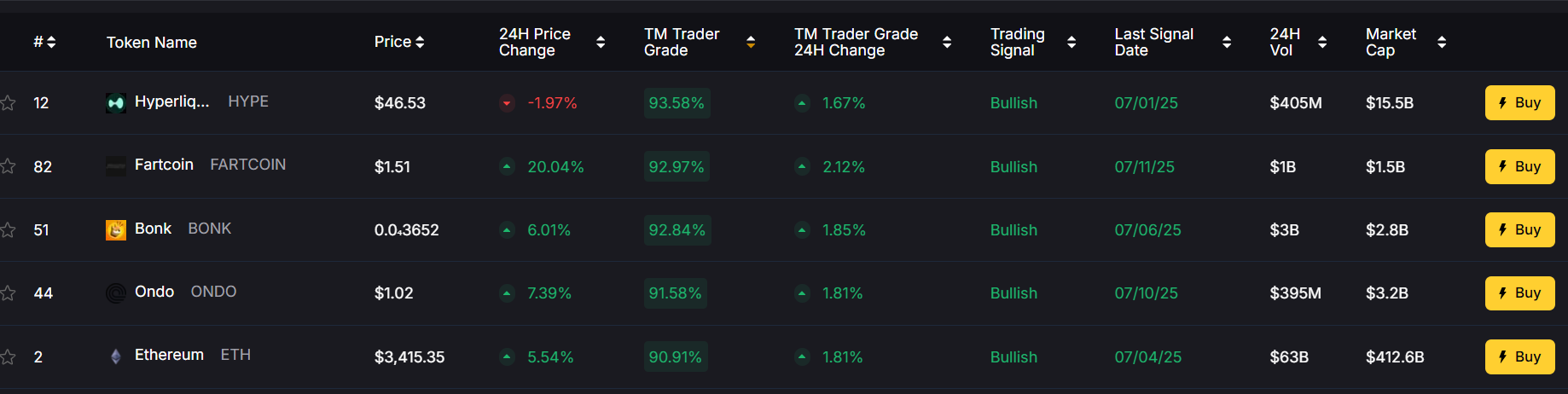
While understanding the distinctions between Solidity and Vyper is valuable for developers, investors should also evaluate the projects' underlying code quality, security track record, and development activity. Token Metrics offers AI-powered analytics that examine code repositories, audit statuses, and project activity levels.

The platform reviews security vulnerabilities, audit history, and real-time security incidents, providing a comprehensive view that helps identify projects with strong technical foundations, regardless of their chosen language.

Furthermore, Token Metrics tracks project development activity via GitHub, helping gauge ongoing commitment and progress. Market intelligence and performance analysis reveal success patterns and areas of risk, supporting informed decision-making.

Token Metrics assists investors in balancing portfolios across projects built with different languages, offering risk assessments and alerts that enhance proactive management amid evolving blockchain security landscapes.

The Future of Smart Contract Languages

Both Solidity and Vyper are actively evolving to meet new challenges and security needs. Solidity continues enhancing security features, error handling, and optimization, driven by its large ecosystem. Vyper development emphasizes expanding capabilities while maintaining its core security principles.

Emerging languages and cross-language development strategies are beginning to complement established techniques. Combining secure core contracts in Vyper with the flexibility of Solidity is an increasingly common pattern.

Best Practices for Smart Contract Development

  • Thorough Testing: Implement comprehensive testing, including formal verification and audits, before deployment.
  • Security Audits: Engage reputable security firms to review code vulnerabilities.
  • Continuous Monitoring: Use platforms like Token Metrics for real-time risk detection post-deployment.
  • Upgradeability: Adopt upgrade patterns that allow fixing issues without losing funds or functionality.

Conclusion: Making the Right Choice

Solidity and Vyper offer distinct approaches to smart contract development. Solidity’s comprehensive features and robust ecosystem make it suitable for complex, feature-rich applications. Vyper's security-oriented, Python-like syntax is ideal for systems where auditability, simplicity, and security are top priorities.

Both languages will continue to play vital roles throughout 2025, with many projects adopting hybrid strategies. Evaluating project needs, security considerations, and team expertise will guide optimal language selection. AI analytics platforms like Token Metrics provide critical insights to support this decision, ensuring better understanding and risk management in the ever-evolving ecosystem.

Build Smarter Crypto Apps &
AI Agents in Minutes, Not Months
Real-time prices, trading signals, and on-chain insights all from one powerful API.
Grab a Free API Key
About Token Metrics
Token Metrics: AI-powered crypto research and ratings platform. We help investors make smarter decisions with unbiased Token Metrics Ratings, on-chain analytics, and editor-curated “Top 10” guides. Our platform distills thousands of data points into clear scores, trends, and alerts you can act on.
30 Employees
analysts, data scientists, and crypto engineers
Daily Briefings
concise market insights and “Top Picks”
Transparent & Compliant
Sponsored ≠ Ratings; research remains independent
Want Smarter Crypto Picks—Free?
See unbiased Token Metrics Ratings for BTC, ETH, and top alts.
Thank you! Your submission has been received!
Oops! Something went wrong while submitting the form.
 No credit card | 1-click unsubscribe
Token Metrics Team
Token Metrics Team

Recent Posts

Crypto Basics

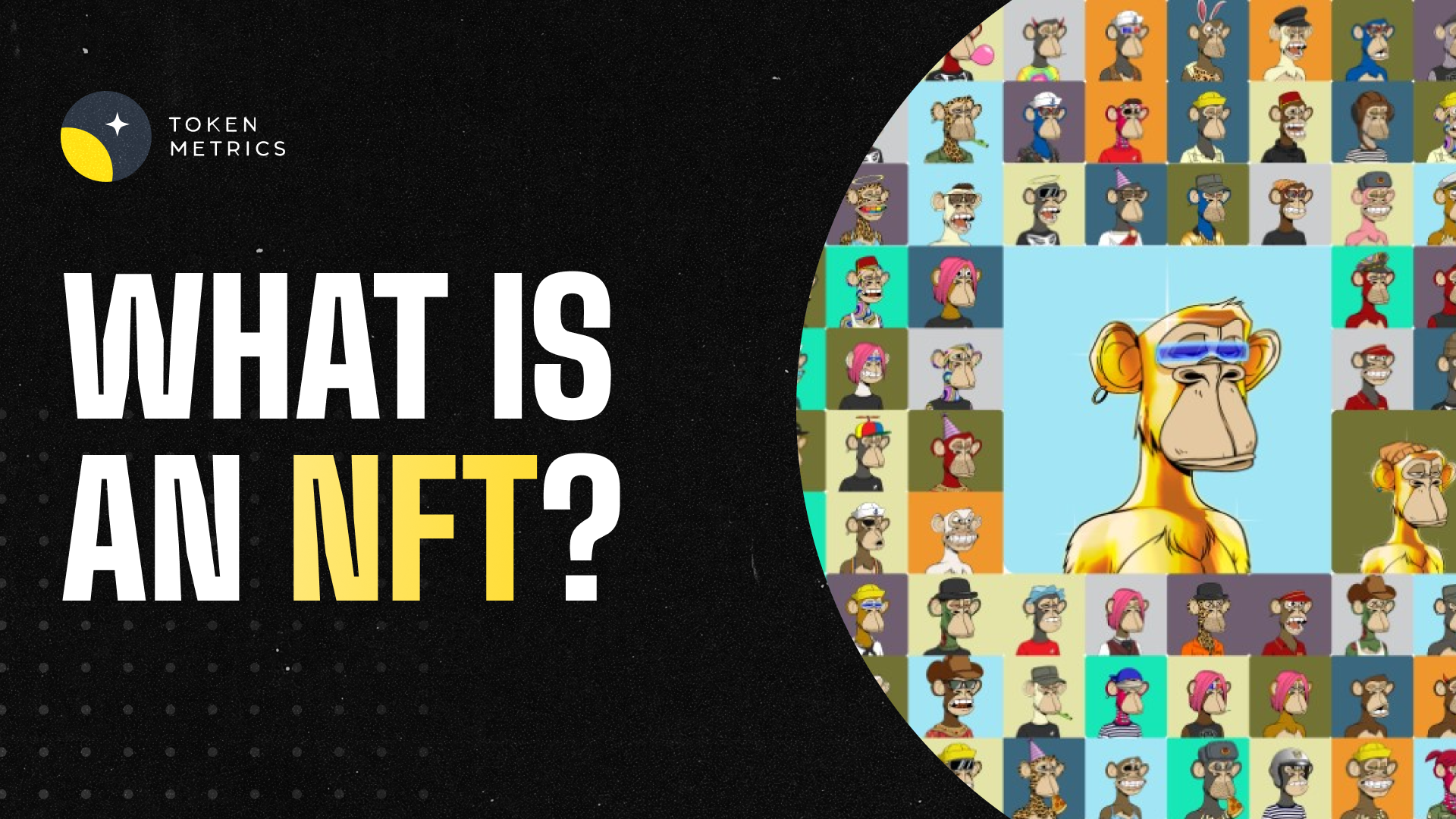
What Is an NFT? Complete Guide to Non-Fungible Tokens (2025)

Token Metrics Team
6 min

Over the past few years, NFTs (Non-Fungible Tokens) have exploded in popularity—revolutionizing the way we think about digital ownership, art, gaming, collectibles, and more. In 2025, NFTs continue to shape the future of the internet, transforming everything from music rights to virtual real estate.

If you're wondering “What is an NFT?” or how they actually work, this guide breaks it down for you. We’ll also explore how AI-powered tools like Token Metrics can help you identify high-value NFT-related tokens and investment opportunities.

🔍 What Does NFT Stand For?

NFT stands for Non-Fungible Token. Let’s break that down:

  • Token: A digital asset that exists on a blockchain.
  • Non-Fungible: It’s unique and cannot be replaced with something else of equal value. (Unlike cryptocurrencies like Bitcoin, where each BTC is the same.)

So, an NFT is a unique digital asset stored on a blockchain, representing ownership of a specific item—like artwork, music, a tweet, a game character, or a piece of virtual land.

🎹 What Can Be an NFT?

NFTs aren’t just limited to pixelated apes or JPEGs. In 2025, NFTs power a broad range of digital assets:

  • Digital Art: Artworks, animations, and generative art
  • Collectibles: Rare items like trading cards or profile picture (PFP) projects
  • Gaming Assets: In-game skins, weapons, characters, and land (e.g., in The Sandbox or Decentraland)
  • Music and Media: Songs, albums, and exclusive content drops
  • Virtual Real Estate: Land parcels in the metaverse
  • Domain Names: Blockchain-based domain ownership
  • Identity & Access: Membership passes, event tickets, or certification credentials

Each NFT has a unique identifier and metadata that distinguish it from any other asset.

đŸ› ïž How Do NFTs Work?

NFTs are built and recorded on blockchains, most commonly on Ethereum using ERC-721 or ERC-1155 standards. Here’s how they work:

  1. Minting: Turning a digital file into a token on the blockchain
  2. Metadata: Storing details like title, creator, image URL, and traits
  3. Ownership: A smart contract verifies the wallet that owns the NFT
  4. Transferability: NFTs can be sold, traded, or gifted using marketplaces

Because of blockchain immutability, ownership is transparent, verifiable, and permanent.

📈 Why Are NFTs Valuable?

Several reasons explain the rising value and popularity of NFTs:

  • Digital Ownership: You own the asset—not a platform
  • Proven Scarcity: Many NFTs are limited in supply
  • Creator Royalties: Artists earn fees on secondary sales
  • Utility & Access: Some NFTs unlock real-world benefits, games, or private groups
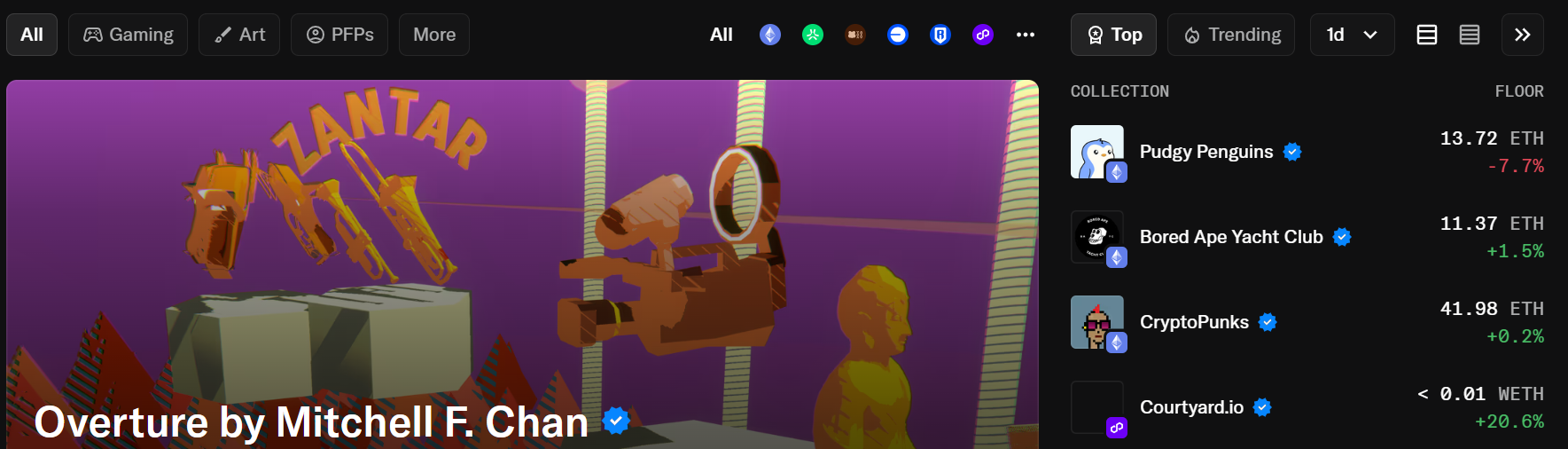
  • Social Status: PFPs like CryptoPunks or Bored Ape Yacht Club are digital status symbols
  • Speculation: Many treat NFTs as investments, betting on future appreciation

In 2025, NFTs have gone beyond hype to form the foundation of Web3 identity and ownership.

💰 How to Buy an NFT

To buy an NFT, you’ll need:

  1. A crypto wallet (like MetaMask)
  2. Some ETH or other supported crypto for payment and gas fees
  3. An NFT marketplace like OpenSea, Blur, Magic Eden, or Rarible

Steps to Buy:

  • Fund your wallet
  • Connect to a marketplace
  • Browse collections
  • Click “Buy Now” or place a bid
  • Approve the transaction

Once purchased, the NFT is transferred to your wallet and viewable on your profile.

⚠ Are NFTs Safe?

NFTs are secure if you follow best practices. However, scams and phishing attacks are common.

Security Tips:

  • Never share your seed phrase
  • Verify contract addresses before minting
  • Don’t connect your wallet to unknown sites
  • Use hardware wallets for high-value NFTs
  • Bookmark official sites

🧠 How Token Metrics Helps You Identify NFT-Related Investments

NFTs are not just collectibles—they’re tied to blockchain ecosystems and tokens. Platforms like Token Metrics help you identify high-potential NFT projects, gaming ecosystems, and utility tokens powering the space.

✅ How Token Metrics Helps:

  • AI-powered Grades: See which NFT-related tokens are trending with Trader & Investor Grades
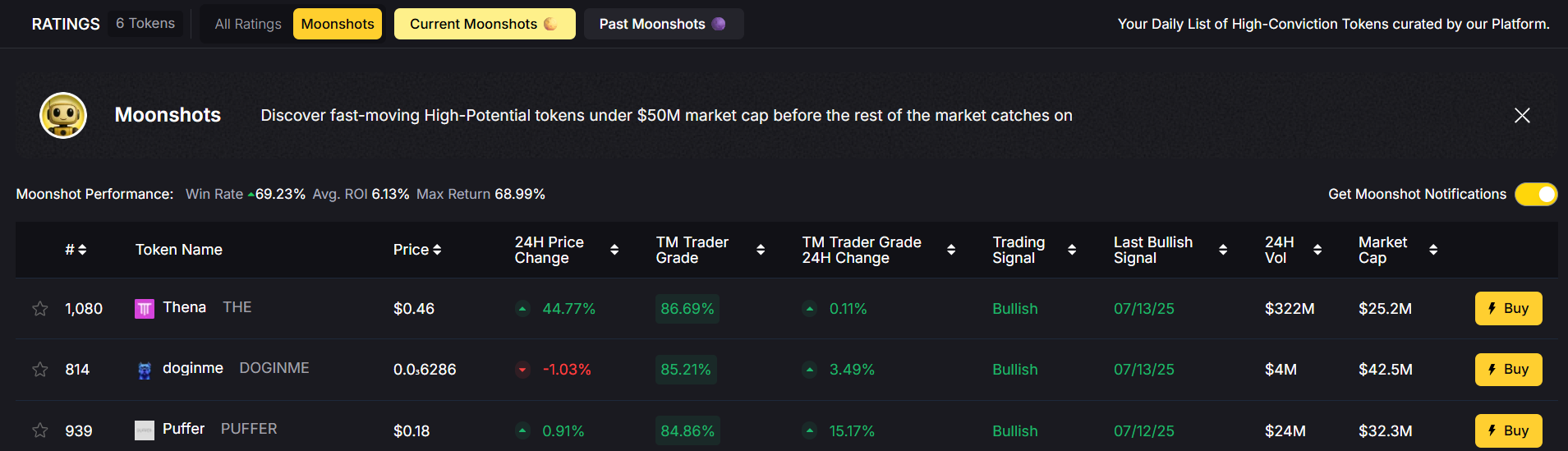
  • Moonshots Tab: Find small-cap NFT tokens with 10x–100x potential
  • Thematic Indices: Invest in curated NFT indices powered by Token Metrics AI
  • Token Details Page: Dive deep into any NFT-related token’s fundamentals, holders, and performance

Whether it’s $IMX, $MAGIC, $APE, or a metaverse play like $MANA, Token Metrics gives you a data-driven edge.

đŸ§© Popular NFT Blockchains in 2025

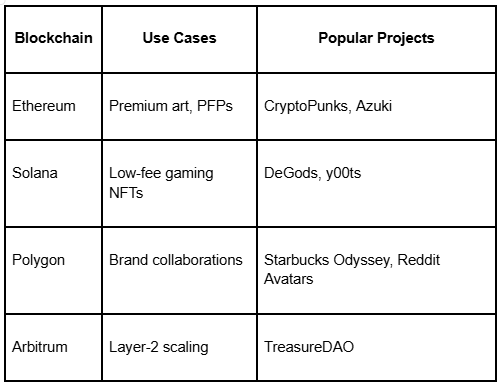
NFTs are no longer limited to Ethereum. In 2025, several chains offer faster, cheaper minting and trading:

Token Metrics tracks all these chains, offering a cross-chain perspective for NFT investing.

đŸȘ™ What Are NFT Tokens?

Many NFT ecosystems have their own fungible tokens used for governance, staking, or ecosystem rewards. Examples include:

  • $APE (Bored Ape Yacht Club)
  • $MAGIC (TreasureDAO)
  • $IMX (Immutable X)
  • $LOOKS (LooksRare)
  • $BLUR (Blur marketplace)

These tokens can rise in value based on NFT trading volume, user adoption, and staking incentives. Token Metrics’ analytics help traders spot breakout opportunities early.

🚀 Future of NFTs in 2025 and Beyond

NFTs are evolving fast. In 2025, they’re used for more than art and gaming:

  • NFTs as IDs: Used for logging into apps and verifying reputation
  • Real-world assets: Tokenizing real estate, music royalties, and legal contracts
  • DeFi integrations: NFTs used as collateral in lending protocols
  • Event access: NFTs as tickets for IRL and virtual experiences
  • AI x NFTs: Generative AI tools minting and managing NFT metadata autonomously

Expect continued innovation, and stay ahead using tools like Token Metrics.

🧠 Final Thoughts: Are NFTs Worth It?

NFTs are more than a trend — they represent the digitization of ownership in the Web3 era. From art and identity to games and finance, NFTs unlock new possibilities for creators and collectors alike.

If you're looking to explore NFT opportunities beyond collectibles—Token Metrics gives you the data, AI tools, and insights you need to invest intelligently.

Crypto Basics

How to Create a Crypto Wallet: A Complete Beginner’s Guide (2025)

Token Metrics Team
6 min

As the popularity of cryptocurrencies continues to grow in 2025, more people are seeking safe and secure ways to manage their digital assets. The first step in your crypto journey? Creating a crypto wallet.

In this guide, we’ll explain:

  • What a crypto wallet is
  • Different types of wallets
  • How to create one (step-by-step)
  • Tips for securing your wallet
  • How Token Metrics can help you trade smarter after setup

đŸȘ™ What Is a Crypto Wallet?

A crypto wallet is a digital tool that allows you to store, receive, and send cryptocurrencies like Bitcoin, Ethereum, and thousands of altcoins. Instead of holding physical money, it stores your private and public keys, giving you access to your blockchain assets.

Two Major Types:

  1. Hot Wallets – connected to the internet (ideal for active users)
  2. Cold Wallets – offline and more secure (ideal for long-term storage)

Whether you're buying Bitcoin for the first time or diving into DeFi tokens, you'll need a crypto wallet to safely store and manage your coins.

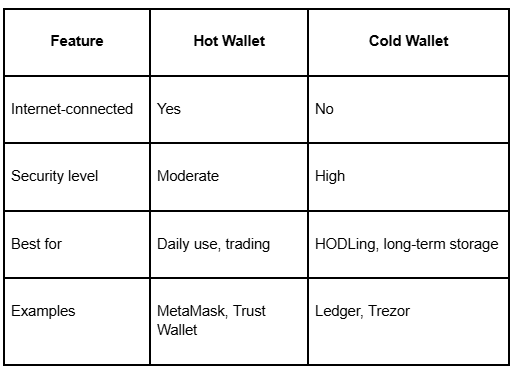
đŸ”„ Hot Wallets vs. 🧊 Cold Wallets

‍

‍

Hot wallets are easier to set up and use, while cold wallets offer greater protection against hacks and malware.

đŸ› ïž How to Create a Crypto Wallet (Step-by-Step)

Option 1: Creating a Hot Wallet (e.g., MetaMask or Trust Wallet)

Step 1: Download the App or Browser Extension

Step 2: Create a New Wallet

  • Click “Create a Wallet”
  • Set a strong password

Step 3: Backup Your Recovery Phrase

  • Write down the 12 or 24-word seed phrase
  • Store it offline (NOT on your phone or computer)

Step 4: Confirm Your Recovery Phrase

  • MetaMask will ask you to re-enter it to ensure it's saved correctly

Step 5: Wallet is Ready

  • You can now receive, send, and store ETH, ERC-20 tokens, and NFTs

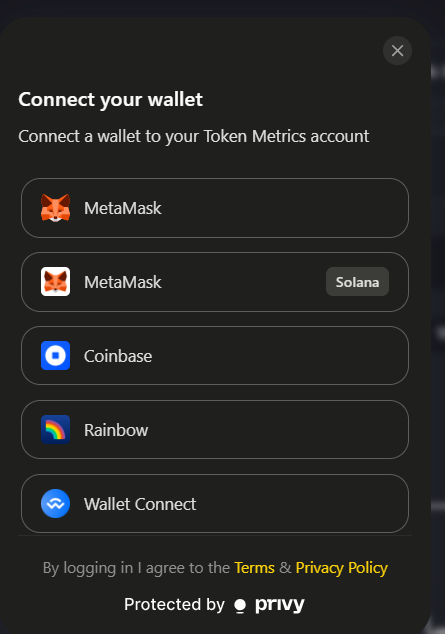
✅ Pro Tip: Connect your wallet to Token Metrics to explore trading signals, moonshots, and AI analytics directly.

Option 2: Creating a Cold Wallet (e.g., Ledger Nano X)

Step 1: Buy a Ledger or Trezor device

  • Always order from the official website to avoid tampered devices

Step 2: Install Wallet Software

  • Download Ledger Live or Trezor Suite

Step 3: Set Up Device and PIN

  • Follow the on-screen instructions
  • Create a secure PIN code

Step 4: Write Down Your Recovery Phrase

  • The device will show a 24-word seed phrase
  • Write it down and store it in a fireproof safe

Step 5: Start Receiving Crypto

  • Use Ledger Live or Trezor Suite to generate wallet addresses
  • Send crypto from exchanges or other wallets

✅ Pro Tip: Use your cold wallet to store moonshots and long-term assets, then analyze performance using Token Metrics Portfolio tools.

đŸ›Ąïž Tips for Securing Your Crypto Wallet

  1. Never share your seed phrase
    Anyone with your seed phrase can steal your funds

  2. Enable Two-Factor Authentication (2FA)
    For added protection on wallet apps and exchange accounts

  3. Use a strong, unique password
    Avoid reusing passwords across multiple accounts

  4. Avoid phishing sites
    Always double-check URLs before connecting your wallet

  5. Keep backups offline
    Use metal seed plates or paper stored in multiple safe locations

🔎 How Token Metrics Supports Your Wallet Journey

While Token Metrics doesn't create wallets, it integrates seamlessly with your Web3 wallets to help you maximize profits and minimize risks.

1. AI-Powered Ratings

Once your wallet is set up, use Token Metrics to find top-rated tokens across risk levels, market caps, and sectors.

2. Moonshots Dashboard

Explore early-stage tokens with massive upside using the Moonshots tab—only available to Premium members.

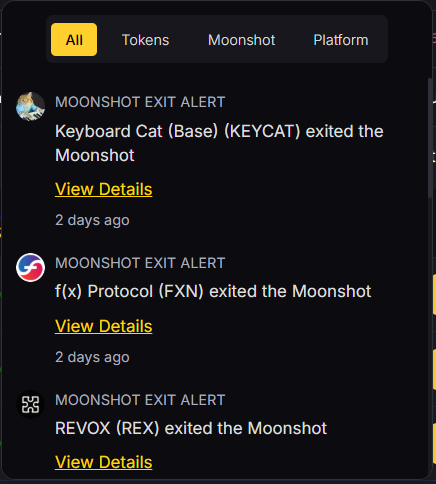
3. Real-Time Alerts

Set up alerts for price, investor grade, or bullish/bearish signals—and receive them directly to your connected wallet’s contact info.

4. Track Your Portfolio

Monitor wallet performance across tokens with a real-time dashboard powered by on-chain data.

📩 What Can You Store in Your Crypto Wallet?

Different wallets support different blockchains, so always check compatibility before sending assets.

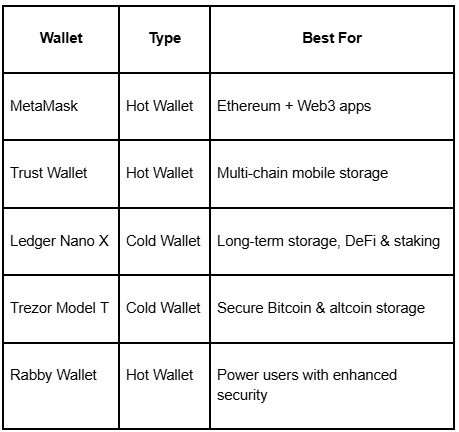
đŸ“Č Best Wallets to Use in 2025

‍

🔄 Wallet Creation FAQs

Q: Is creating a crypto wallet free?
Yes, most wallet apps like MetaMask or Trust Wallet are free.

Q: Can I create multiple wallets?
Absolutely. Many investors use different wallets for different purposes (e.g., trading, staking, savings).

Q: What happens if I lose my recovery phrase?
You lose access to your wallet permanently. Always store it securely.

Q: Do I need a wallet to use Token Metrics?
No, but connecting a wallet enhances your experience by allowing you to monitor portfolios, moonshots, and alerts in real time.

🧠 Final Thoughts

Creating a crypto wallet is your gateway to the decentralized world of digital finance. Whether you’re a seasoned trader or a beginner buying your first token, having a secure wallet is non-negotiable.

By choosing the right wallet (hot or cold), securing your keys, and combining it with powerful tools like Token Metrics, you can build a smart, secure, and profitable crypto journey.

Crypto Basics

How to Store Cryptocurrency Safely in 2025 | Hot vs Cold Wallets

Token Metrics Team
6 min

Cryptocurrency offers unmatched freedom, but with that freedom comes responsibility—especially when it comes to how to store cryptocurrency securely. Unlike traditional banking, crypto is self-custodied. If you lose access to your wallet, your funds are gone forever.

This guide explains everything you need to know about storing crypto in 2025, including:

  • Why crypto storage matters
  • Types of crypto wallets
  • Hot wallets vs. cold wallets
  • Tips for securing your assets
  • How platforms like Token Metrics can help protect your investment

đŸȘ™ Why Is Storing Cryptocurrency Important?

When you buy crypto—whether it’s Bitcoin, Ethereum, or a promising moonshot altcoin—you receive private keys that give you access to your funds. Anyone with that key can spend your coins.

That’s why safe storage is critical. Without it, your assets are vulnerable to:

  • Hacks and phishing scams
  • Lost devices or forgotten passwords
  • Exchange collapses or rug pulls

You are your own bank, and your security strategy is your vault.

🔐 What Is a Crypto Wallet?

A crypto wallet is a digital tool that stores your private and public keys. It lets you send, receive, and manage your crypto.

There are two main types:

  1. Hot wallets – connected to the internet
  2. Cold wallets – offline and physically secured

Let’s explore both.

🌐 Hot Wallets: Convenience Meets Risk

Hot wallets are always online, making them easy to use for trading, DeFi, or daily transactions.

Types of Hot Wallets:

  • Web wallets (e.g., MetaMask, Trust Wallet)
  • Mobile apps (e.g., Coinbase Wallet, Phantom)
  • Desktop wallets (e.g., Exodus, Electrum)

Pros:

  • Quick access to funds
  • Easy integration with DApps and exchanges
  • Great for beginners and active traders

Cons:

  • Higher risk of hacks, malware, and phishing
  • Device or browser compromise can expose keys

Best Practices for Hot Wallets:

  • Use 2FA (Two-Factor Authentication)
  • Never store large amounts
  • Double-check URLs to avoid fake websites
  • Avoid public Wi-Fi while transacting

🧊 Cold Wallets: Ultimate Security

Cold wallets are offline storage solutions, ideal for long-term investors or large holdings.

Types of Cold Wallets:

  • Hardware wallets (e.g., Ledger Nano X, Trezor)
  • Paper wallets (QR code + private key printed on paper)
  • Air-gapped devices (old smartphones with no internet access)

Pros:

  • Immune to online hacks
  • Best for HODLing and large sums
  • You own full control

Cons:

  • Less convenient for daily use
  • Loss or damage without backups = permanent loss

Best Practices for Cold Wallets:

  • Buy hardware wallets directly from the manufacturer
  • Backup your seed phrase on metal plates or offline storage
  • Keep backups in secure, separate locations

🔄 Custodial vs. Non-Custodial Wallets

🏩 Custodial Wallets

Managed by exchanges (e.g., Binance, Coinbase). You don’t own the private keys.

Pros:

  • Easy to use
  • Ideal for beginners

Cons:

  • Not your keys, not your crypto
  • Vulnerable to hacks or platform failures

🔓 Non-Custodial Wallets

You own the keys. Wallets like MetaMask, Trust Wallet, or hardware devices.

Pros:

  • Full control and ownership
  • Safer long-term storage

Cons:

  • Losing your seed phrase = permanent loss
  • Requires more responsibility

Tip: Token Metrics recommends non-custodial wallets for storing long-term holdings and moonshot tokens.

🔐 How Token Metrics Enhances Crypto Security

Token Metrics is an AI-powered crypto research and trading platform trusted by thousands of investors. While it doesn’t store your crypto directly, it helps you manage risk and store assets wisely by:

1. Identifying Safe Assets

Token Metrics gives you AI-generated grades for tokens—helping you avoid scams and invest in credible projects worth storing long-term.

2. Trading Tools with Wallet Integration

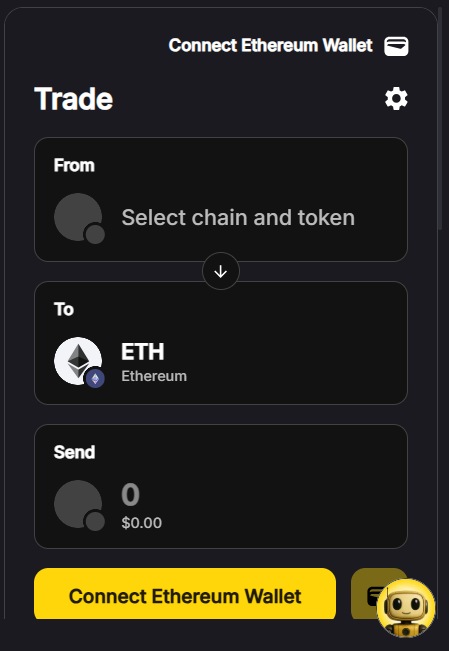
You can explore tokens, assess moonshots, and initiate trades directly from your connected Web3 wallet without leaving the platform.

3. Portfolio Tracking with Security

Token Metrics allows you to track wallets and portfolio performance without requiring access to your private keys.

4. Educational Guidance

Through webinars, blog content, and investor resources, Token Metrics educates users on how to safely store their crypto in hot and cold wallets.

🧠 Tips to Keep Your Crypto Safe in 2025

✅ Use Hardware Wallets for Large Amounts

Your long-term Bitcoin, Ethereum, and moonshot tokens should live on a hardware wallet, not on an exchange.

✅ Store Your Seed Phrase Offline

Do NOT keep your recovery phrase in Google Docs or your phone. Use metal seed phrase storage or write it down and lock it in a safe.

✅ Use Multiple Wallets

Diversify storage:

  • Hot wallet for daily use
  • Cold wallet for savings
  • Separate wallet for DeFi

✅ Avoid Suspicious Links and Apps

Phishing is the #1 crypto threat. Double-check URLs, don’t sign unknown transactions, and avoid shady browser extensions.

✅ Monitor Wallet Activity

Use platforms like Token Metrics Alerts or Etherscan to track your wallet and get notified of suspicious activity.

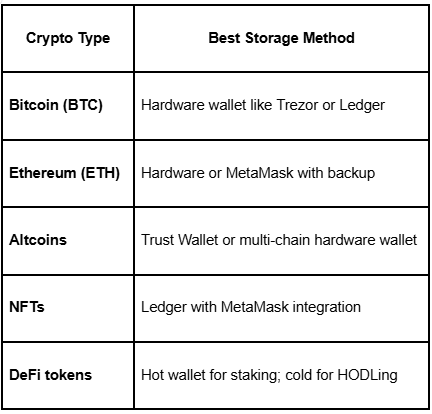
đŸȘ™ How to Store Different Types of Crypto

‍

🧭 Final Thoughts

Storing cryptocurrency securely is just as important as choosing the right tokens to invest in. Whether you’re a day trader, long-term investor, or moonshot hunter, knowing when and where to store your crypto is key to protecting your wealth.

In 2025, the best strategy combines:

  • Cold wallets for large, long-term holdings
  • Hot wallets for convenience and trading
  • Non-custodial options to retain full control
  • AI tools like Token Metrics to identify trustworthy assets and avoid scams

When you store your crypto properly, you don’t just protect your assets—you gain peace of mind.

Choose from Platinum, Gold, and Silver packages
Reach with 25–30% open rates and 0.5–1% CTR
Craft your own custom ad—from banners to tailored copy
Perfect for Crypto Exchanges, SaaS Tools, DeFi, and AI Products