Back to blog
Research

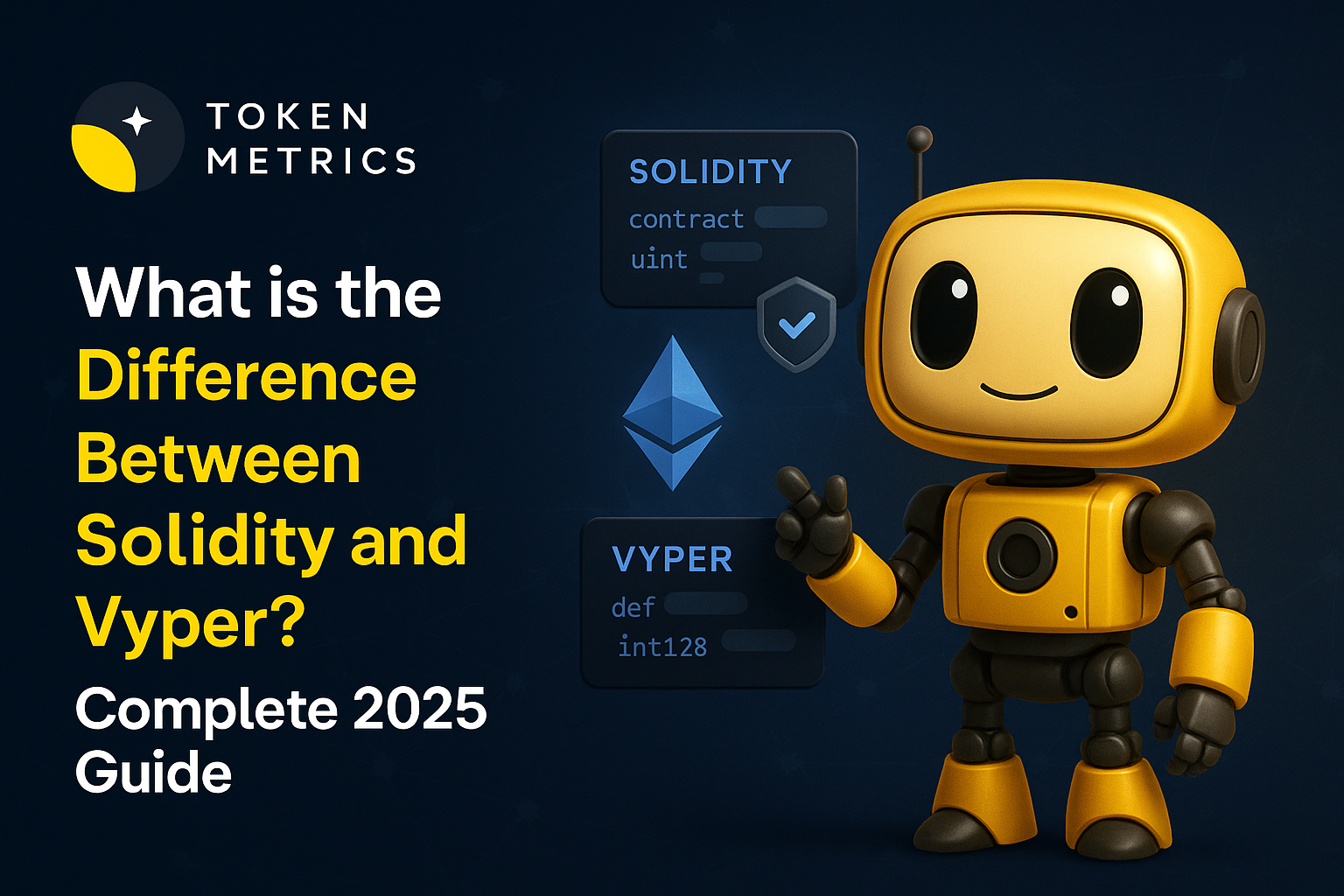
What is the Difference Between Solidity and Vyper? Complete 2025 Guide

Explore the key differences between Solidity and Vyper for Ethereum smart contracts, and learn how to choose the right language for your project in 2025.
Token Metrics Team
7
Want Smarter Crypto Picks—Free?
See unbiased Token Metrics Ratings for BTC, ETH, and top alts.
Thank you! Your submission has been received!
Oops! Something went wrong while submitting the form.
 No credit card | 1-click unsubscribe

Smart contracts have revolutionized the blockchain ecosystem, enabling self-executing code that automatically enforces agreed-upon terms and conditions. As decentralized applications continue growing in sophistication and value, the programming languages used to create these contracts become increasingly critical. Two languages dominate Ethereum smart contract development: Solidity and Vyper. Token Metrics.

Understanding Smart Contract Languages

Before diving into Solidity vs Vyper comparison, it's essential to understand what smart contract languages do and why they matter. Smart contracts are programs that run on blockchain platforms like Ethereum, executing predetermined actions when specific conditions are met. These contracts facilitate secure, transparent, and trustless interactions between parties, eliminating intermediaries and enhancing efficiency.

Smart contract languages enable developers to define the logic and behavior of these contracts, which are immutable and executed on the blockchain. By leveraging smart contract languages, businesses can automate processes including supply chain management, financial transactions, governance systems, and much more.

High-Level vs Low-Level Languages

Smart contract programming requires converting human-readable code into machine-executable bytecode that the Ethereum Virtual Machine (EVM) can process. Developers must first choose between high-level and low-level languages based on their use case and expertise.

High-level languages abstract away granular implementation details, allowing developers to create smart contracts without deep bytecode knowledge. Solidity and Vyper are both high-level languages designed for EVM-compatible blockchains, making them accessible to developers from traditional programming backgrounds.

After compilation, both Solidity and Vyper smart contracts execute using the same bytecode language, meaning they can be used concurrently in the same application despite their different source code appearances.

Solidity: The Industry Standard

Solidity is the most widely used programming language for developing smart contracts on the Ethereum blockchain and EVM-compatible chains. Designed specifically for blockchain applications, Solidity enables developers to create secure, decentralized, and automated agreements that run on distributed networks.

Origins and Design Philosophy

Proposed by Ethereum CTO Gavin Wood, Solidity was developed to meet demand for a flexible smart contract-based developer platform. The language draws heavily on inspiration from C++, JavaScript, and Python, making it familiar to developers from various programming backgrounds.

Solidity is a high-level, Turing-complete, statically typed language where developers must explicitly declare variable types. This allows the compiler to have knowledge of data types, ensuring deterministic application behavior—a critical requirement for blockchain applications where predictability is paramount.

Key Features of Solidity

  • Object-Oriented Programming: Supports inheritance, libraries, and complex data structures for sophisticated smart contracts with reusable components.
  • Rich Feature Set: Includes function overloading, multiple inheritance, user-defined types, and complex data structures.
  • Extensive Ecosystem: Benefits from a large community support, documentation, and development tools like Remix, Hardhat, and Foundry.
  • Blockchain-Specific Commands: Built-in commands for addresses, transactions, and block data interactions.
  • Wide Adoption: Most Ethereum projects, including Uniswap, Aave, and OpenSea, are developed using Solidity.

Advantages of Solidity

  • Market Dominance: Secures 87% of DeFi TVL, making it the dominant language for decentralized finance.
  • Robust Tooling: Mature ecosystem with testing, debugging, and analysis tools.
  • Versatility: Enables implementation of complex protocols, financial instruments, and governance procedures.
  • Learning Resources: Abundant tutorials, courses, and community support.

Disadvantages of Solidity

  • Security Vulnerabilities: Increased attack surface with risks like reentrancy and integer overflows, requiring thorough audits.
  • Complexity: Extensive features can lead to harder-to-audit contracts and hidden vulnerabilities.
  • Steeper Learning Curve: Requires understanding blockchain-specific security considerations.

Vyper: The Security-First Alternative

Vyper is a contract-oriented programming language that targets the EVM with a focus on security, simplicity, and auditability. Introduced in 2018 by Ethereum co-founder Vitalik Buterin, Vyper was specifically developed to address security issues prevalent in Solidity.

Design Philosophy: Security Through Simplicity

Vyper's fundamental philosophy is that security comes from simplicity and readability. The language intentionally limits features and enforces stricter syntax to make contracts more secure and easier to audit. By reducing what’s possible, Vyper minimizes opportunities for mistakes and vulnerabilities.

Using Pythonic syntax—hence the serpentine name—Vyper code prioritizes readability so developers can easily detect bugs and vulnerabilities before deploying contracts. This approach makes code auditable by humans, not just machines.

Key Features of Vyper

  • Python-Like Syntax: Familiar for Python developers, with indentation-based structure and clear syntax.
  • Security-First Design: Eliminates object-oriented features, such as inheritance and function overloading, to reduce attack vectors.
  • Strong Typing: Variables require explicit type declaration, catching errors early.
  • Bounds Checking & Overflow Protection: Built-in safety features prevent common vulnerabilities.
  • Decidability & Gas Optimization: Ensures predictable gas consumption and avoids infinite loops, making contracts more efficient.

Advantages of Vyper

  • Enhanced Security: Designed specifically to prevent common vulnerabilities, leading to more secure contracts.
  • Readable & Audit-Friendly: Clear syntax facilitates quicker reviews and lower audit costs.
  • Concise Code: Fewer lines and simpler syntax streamline contract development.
  • Python Background: Eases onboarding for Python programmers.
  • Potential Gas Savings: Simple design can lead to more efficient contracts in specific cases.

Disadvantages of Vyper

  • Limited Adoption: Only about 8% of DeFi TVL, with a smaller ecosystem and community.
  • Fewer Features: Lack of inheritance, modifiers, and function overloading limits architectural options.
  • Smaller Tooling Ecosystem: Development tools and libraries are less mature compared to Solidity.
  • Less Industry Traction: Major projects predominantly use Solidity, limiting existing examples for Vyper development.

Differences: Solidity vs Vyper

  • Syntax & Structure: Solidity resembles JavaScript and C++, with curly braces and semicolons; Vyper uses Python-like indentation and syntax, omitting object-oriented features.
  • Feature Completeness: Solidity offers inheritance, modifiers, and dynamic data structures; Vyper is minimalist, focusing on security with fixed-size arrays and no inheritance.
  • Security Approach: Solidity relies on developer diligence and testing; Vyper enforces limitations to inherently prevent vulnerabilities.
  • Development Philosophy: Solidity emphasizes flexibility, while Vyper emphasizes security and auditability.

Choosing Between Solidity and Vyper

The decision depends on project needs, team expertise, and security priorities. Large, feature-rich DeFi protocols and complex dApps typically require Solidity's extensive capabilities. Conversely, systems demanding maximum security, or contracts that need to be highly auditable, may benefit from Vyper’s simplicity and security-focused design.

Many projects effectively combine both, using Vyper for security-critical core components and Solidity for peripheral features. This hybrid approach leverages the strengths of each language.

Leveraging Token Metrics for Smart Contract Analysis

While understanding the distinctions between Solidity and Vyper is valuable for developers, investors should also evaluate the projects' underlying code quality, security track record, and development activity. Token Metrics offers AI-powered analytics that examine code repositories, audit statuses, and project activity levels.

The platform reviews security vulnerabilities, audit history, and real-time security incidents, providing a comprehensive view that helps identify projects with strong technical foundations, regardless of their chosen language.

Furthermore, Token Metrics tracks project development activity via GitHub, helping gauge ongoing commitment and progress. Market intelligence and performance analysis reveal success patterns and areas of risk, supporting informed decision-making.

Token Metrics assists investors in balancing portfolios across projects built with different languages, offering risk assessments and alerts that enhance proactive management amid evolving blockchain security landscapes.

The Future of Smart Contract Languages

Both Solidity and Vyper are actively evolving to meet new challenges and security needs. Solidity continues enhancing security features, error handling, and optimization, driven by its large ecosystem. Vyper development emphasizes expanding capabilities while maintaining its core security principles.

Emerging languages and cross-language development strategies are beginning to complement established techniques. Combining secure core contracts in Vyper with the flexibility of Solidity is an increasingly common pattern.

Best Practices for Smart Contract Development

  • Thorough Testing: Implement comprehensive testing, including formal verification and audits, before deployment.
  • Security Audits: Engage reputable security firms to review code vulnerabilities.
  • Continuous Monitoring: Use platforms like Token Metrics for real-time risk detection post-deployment.
  • Upgradeability: Adopt upgrade patterns that allow fixing issues without losing funds or functionality.

Conclusion: Making the Right Choice

Solidity and Vyper offer distinct approaches to smart contract development. Solidity’s comprehensive features and robust ecosystem make it suitable for complex, feature-rich applications. Vyper's security-oriented, Python-like syntax is ideal for systems where auditability, simplicity, and security are top priorities.

Both languages will continue to play vital roles throughout 2025, with many projects adopting hybrid strategies. Evaluating project needs, security considerations, and team expertise will guide optimal language selection. AI analytics platforms like Token Metrics provide critical insights to support this decision, ensuring better understanding and risk management in the ever-evolving ecosystem.

Build Smarter Crypto Apps &
AI Agents in Minutes, Not Months
Real-time prices, trading signals, and on-chain insights all from one powerful API.
Grab a Free API Key
About Token Metrics
Token Metrics: AI-powered crypto research and ratings platform. We help investors make smarter decisions with unbiased Token Metrics Ratings, on-chain analytics, and editor-curated “Top 10” guides. Our platform distills thousands of data points into clear scores, trends, and alerts you can act on.
30 Employees
analysts, data scientists, and crypto engineers
Daily Briefings
concise market insights and “Top Picks”
Transparent & Compliant
Sponsored ≠ Ratings; research remains independent
Want Smarter Crypto Picks—Free?
See unbiased Token Metrics Ratings for BTC, ETH, and top alts.
Thank you! Your submission has been received!
Oops! Something went wrong while submitting the form.
 No credit card | 1-click unsubscribe
Token Metrics Team
Token Metrics Team

Recent Posts

Crypto Basics

What Is ETF Trading? A Beginner’s Guide to Exchange-Traded Funds in 2025

Token Metrics Team
8 min

In today’s fast-paced financial markets, ETF trading has become one of the most popular and accessible investment strategies. Whether you're a traditional investor or a crypto enthusiast, understanding how ETF trading works can help you make smarter, more diversified investment decisions.

📈 What Is an ETF?

An ETF (Exchange-Traded Fund) is an investment fund that trades on stock exchanges, similar to individual stocks. Each ETF holds a collection of assets, such as:

  • Stocks (like the S&P 500)
  • Bonds
  • Commodities (like gold or oil)
  • Currencies
  • Cryptocurrencies (Bitcoin, Ethereum, etc.)

When you buy a share of an ETF, you're buying a fractional interest in the entire basket of assets. This makes ETFs a powerful tool for diversification, even for beginners.

đŸ’č What Is ETF Trading?

ETF trading refers to the buying and selling of ETF shares on an exchange—just like you would with Apple or Tesla stock. The value of an ETF changes throughout the trading day, based on the underlying value of its assets.

ETF trading is commonly used for:

  • Portfolio diversification
  • Hedging strategies
  • Thematic investing (e.g., AI, clean energy, DeFi)
  • Speculating on short-term price movements

You can trade ETFs via your online brokerage, investment app, or even through certain retirement accounts (like IRAs).

🔄 How Does ETF Trading Work?

Here’s a simplified version of how ETF trading works:

  1. ETF Provider Creates the Fund
    A company like BlackRock or Fidelity creates an ETF that holds a specific basket of assets.

  2. ETF Listed on an Exchange
    The ETF is listed on public stock exchanges such as the NYSE or Nasdaq.

  3. Investors Buy and Sell Shares
    Investors trade ETF shares just like stocks—prices fluctuate throughout the day.

  4. Market Makers Maintain Liquidity
    Authorized participants ensure ETF prices closely match the value of the underlying assets (called the Net Asset Value or NAV).

đŸȘ™ What About Crypto ETFs?

In 2025, crypto ETFs have emerged as one of the fastest-growing segments of the ETF market.

Crypto ETFs allow investors to gain exposure to cryptocurrencies without owning the actual coins. These ETFs are regulated, secure, and accessible through traditional finance platforms.

There are two types:

  • Spot Crypto ETFs (hold actual crypto assets like Bitcoin or Ethereum)
  • Futures Crypto ETFs (track the price of crypto futures contracts)

Example: BlackRock’s iShares Bitcoin Trust (IBIT) is a spot Bitcoin ETF with billions in assets under management (AUM) in 2025.

✅ Benefits of ETF Trading

ETF trading offers unique advantages for both retail and institutional investors:

1. Diversification

Instead of buying dozens of individual stocks, ETFs offer broad exposure to sectors, themes, or markets in a single trade.

2. Liquidity

ETFs trade like stocks—buy or sell at any time during market hours. This makes them more flexible than traditional mutual funds.

3. Cost Efficiency

Many ETFs have low expense ratios, often under 0.25%. You avoid the high fees associated with actively managed funds.

4. Accessibility

Trade ETFs using any brokerage account. You don’t need to be an accredited investor or a crypto expert.

5. Tax Advantages

ETFs are generally more tax-efficient than mutual funds due to the in-kind creation/redemption process.

⚠ Risks of ETF Trading

ETF trading, like all investing, carries risks:

1. Market Risk

ETF prices can go up or down depending on market conditions.

2. Liquidity Risk

Not all ETFs are highly traded. Low volume can lead to wide bid/ask spreads and slippage.

3. Tracking Error

Some ETFs fail to perfectly mirror their benchmark, especially futures-based crypto ETFs.

4. Sector Risk

Thematic ETFs (e.g., blockchain, AI) can be highly concentrated and volatile.

🧠 How Token Metrics Enhances ETF Trading with AI

Whether you're trading traditional ETFs or crypto-focused ones, Token Metrics provides AI-powered tools to help you trade with confidence.

🔍 1. Real-Time Signals

Token Metrics offers AI-generated bullish/bearish signals for Bitcoin, Ethereum, and other assets—helping you identify the best time to enter or exit.

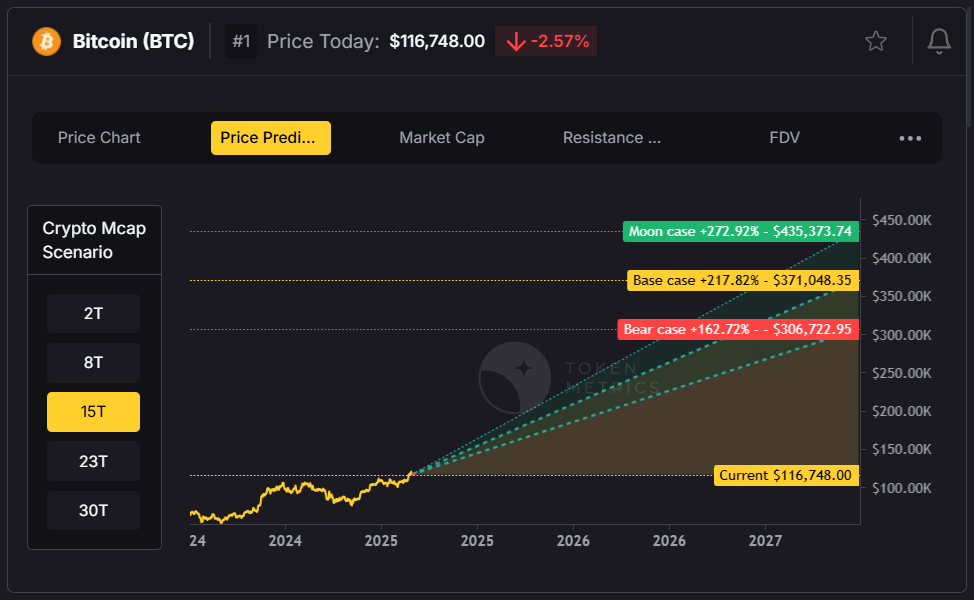
📊 2. Price Predictions

The platform generates short- and long-term price forecasts, using 80+ data points. This can help you anticipate ETF price movements, especially for crypto ETFs.

📈 3. On-Chain Data + ETF Flows

Token Metrics tracks exchange reserves, ETF inflows, and blockchain metrics—giving traders a unique edge not available on traditional brokerage platforms.

📣 4. Alerts and Custom Grades

Set up alerts based on trader grades, investor grades, and signal changes to react to market moves instantly.

đŸ”„ Example: Trading Bitcoin ETFs Using Token Metrics

Let’s say you want to trade the BlackRock Bitcoin ETF in July 2025. Here’s how Token Metrics can help:

  • AI signaled bullish BTC trend on June 28
  • Price surged from $106,000 to $118,000
  • ETF inflows increase as institutional demand grows
  • You receive a buy alert from Token Metrics
  • You enter the ETF early and ride the momentum

This combination of real-time AI alerts + institutional trend analysis gives you a significant advantage over traditional investors.

🧭 Final Thoughts

ETF trading has changed the game for investors. Whether you're looking to diversify your portfolio, gain exposure to crypto, or automate your trading strategy—ETFs provide a flexible, affordable, and efficient solution.

And in 2025, combining ETF trading with Token Metrics' AI-powered platform is one of the smartest ways to stay ahead.

With features like real-time signals, crypto ETF tracking, price predictions, and custom alerts, Token Metrics transforms how you approach modern ETF markets.

Crypto Basics

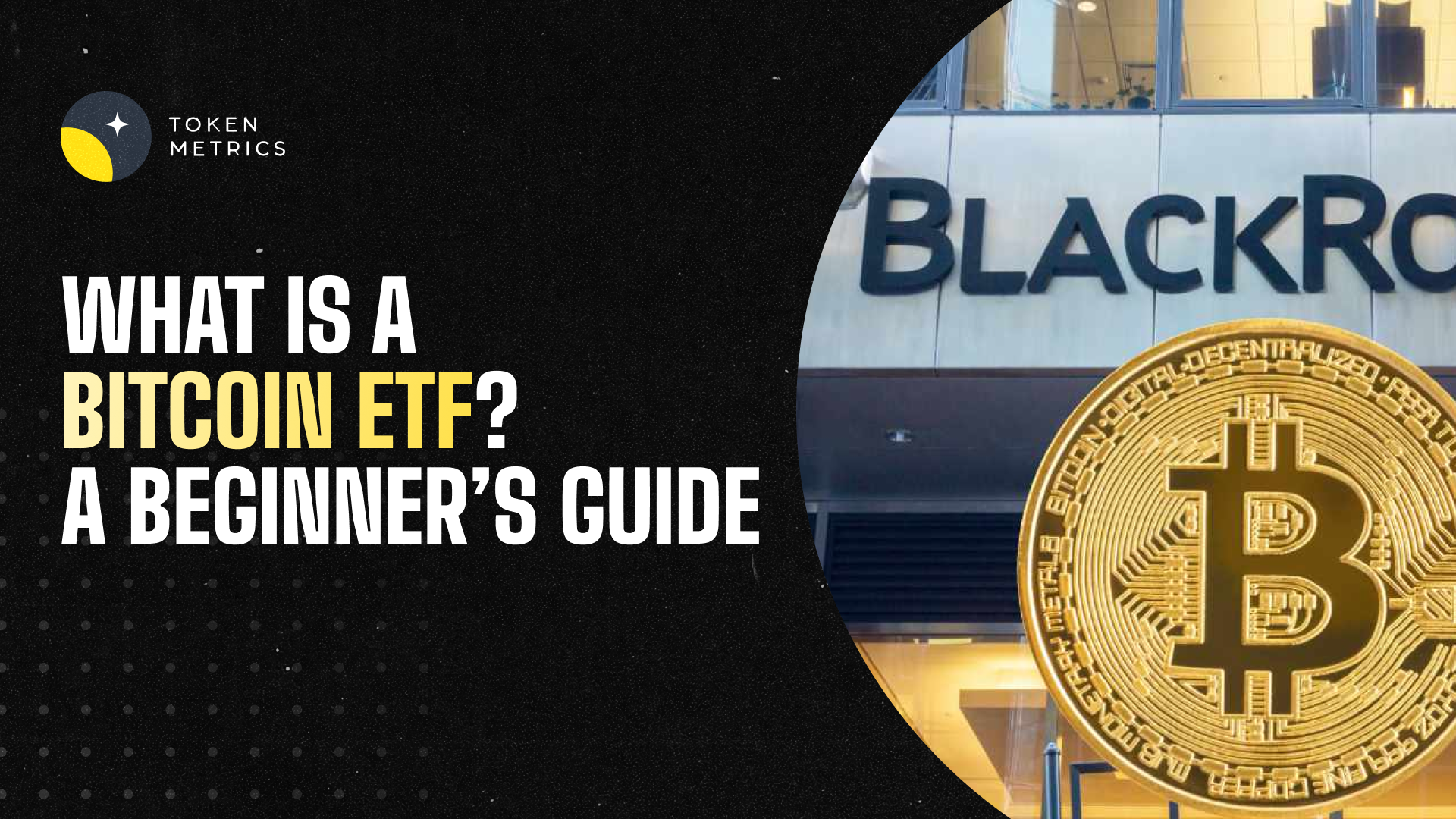
What Is a Bitcoin ETF? A Beginner’s Guide to Understanding Bitcoin Exchange-Traded Funds in 2025

Token Metrics Team
8 min

The cryptocurrency world continues to evolve rapidly, and one of the most significant milestones in recent years has been the approval and rise of Bitcoin ETFs. If you’ve ever wondered, “What is a Bitcoin ETF and why is it important?” — this guide breaks it down in simple terms.

In this highly informative blog, we’ll explore:

  • What a Bitcoin ETF is
  • Types of Bitcoin ETFs
  • Benefits and risks
  • Why Bitcoin ETFs matter for crypto adoption
  • How to analyze Bitcoin ETFs using Token Metrics tools

📈 What Is a Bitcoin ETF?

A Bitcoin ETF (Exchange-Traded Fund) is a financial product that allows investors to gain exposure to the price movements of Bitcoin without having to own or manage actual Bitcoin.

Just like buying a stock, investors can purchase shares of a Bitcoin ETF through traditional brokerage accounts. These shares represent ownership in a fund that tracks the price of Bitcoin.

In essence, a Bitcoin ETF bridges the gap between traditional finance and crypto investing.

🔄 How Does a Bitcoin ETF Work?

Bitcoin ETFs are created and managed by large financial institutions or asset managers. These funds:

  1. Buy Bitcoin directly (in spot ETFs), or
  2. Invest in Bitcoin futures contracts (in futures ETFs)
  3. Issue ETF shares that track the price performance of Bitcoin

These shares are then listed on stock exchanges like the NYSE, Nasdaq, or CBOE, where they can be bought or sold just like regular stocks.

🔍 Types of Bitcoin ETFs

There are two main types of Bitcoin ETFs:

1. Spot Bitcoin ETFs

  • Hold actual Bitcoin in custody
  • Track the real-time market price of Bitcoin
  • Provide direct exposure to Bitcoin’s price
  • Approved in the U.S. starting in early 2024 (e.g., BlackRock’s iShares Bitcoin Trust)

2. Futures-Based Bitcoin ETFs

  • Track Bitcoin futures contracts (derivatives)
  • Do not hold actual Bitcoin
  • Subject to contango and tracking errors
  • Were the first type approved (e.g., ProShares BITO)

In 2025, spot ETFs are considered superior due to their more accurate and direct exposure.

✅ Benefits of Bitcoin ETFs

Bitcoin ETFs offer several key advantages:

1. Accessibility

Investors can buy Bitcoin exposure through traditional brokerage platforms like Fidelity, Schwab, or Robinhood—no need for crypto wallets or private keys.

2. Regulation and Security

ETFs are regulated by institutions like the SEC and are managed by trusted financial firms, offering greater transparency and investor protection.

3. Tax Efficiency

Buying and selling ETFs may provide more favorable tax treatment compared to transacting in physical Bitcoin directly.

4. Institutional Adoption

Bitcoin ETFs enable pension funds, hedge funds, and banks to legally and easily gain exposure to BTC. Inflows from these entities have driven billions into Bitcoin in 2024 and 2025.

⚠ Risks of Bitcoin ETFs

Despite their benefits, Bitcoin ETFs come with a few risks:

1. Price Tracking Errors

Futures ETFs may deviate from Bitcoin’s spot price due to volatility and contract rollover costs.

2. Management Fees

ETF providers charge an annual fee (0.20%–1.00%), which can reduce long-term returns.

3. Lack of Custody Control

You don’t actually own Bitcoin when you hold an ETF—so you can’t transfer it or use it for DeFi or crypto payments.

4. Market Volatility

Bitcoin remains a highly volatile asset. ETF shares may still experience massive price swings.

đŸ›ïž Why Bitcoin ETFs Matter in 2025

The approval and adoption of Bitcoin ETFs mark a turning point in mainstream crypto acceptance. Here’s why:

  • Over $60 billion has flowed into U.S.-listed Bitcoin ETFs since January 2024
  • Institutions like BlackRock, Fidelity, and ARK Invest now actively manage Bitcoin exposure
  • Bitcoin ETF holdings reduce circulating supply, contributing to BTC’s price surge past $118,000 in mid-2025
  • Countries outside the U.S., including Canada and Hong Kong, are expanding their Bitcoin ETF offerings

đŸ€– How Token Metrics Helps You Analyze Bitcoin ETFs

While traditional investors focus on ETF tickers, smart crypto investors turn to platforms like Token Metrics to get deeper insights.

đŸ”č AI-Powered Bitcoin Forecasts

Token Metrics uses machine learning to predict short- and long-term Bitcoin price trends. As of June 28, the AI turned bullish, signaling BTC's breakout past $110,000.

đŸ”č Exchange Reserve Monitoring

The platform tracks Bitcoin’s exchange reserves, showing a drop from 3.25M to 2.55M BTC—a bullish signal due to reduced sell-side pressure.

đŸ”č ETF Flow Analysis

Token Metrics integrates on-chain data and fund inflows to measure:

  • How much BTC ETFs are buying
  • Impact on liquidity and price
  • Sentiment shifts among institutional investors

đŸ”č Alerts and Grades

You can set up custom price alerts for Bitcoin and receive Trader and Investor Grades based on 80+ real-time metrics.

These tools allow you to react faster than ETF investors relying on traditional media or quarterly reports.

📈 Bitcoin ETF Performance So Far

As of July 2025:

  • BlackRock’s iShares Bitcoin Trust (IBIT) holds over $18B in BTC
  • Fidelity’s ETF surpassed $12B in AUM
  • ETF buying pressure is one of the main drivers behind Bitcoin’s 2025 bull run

💡 Pro Tips Before Investing in a Bitcoin ETF

  1. Compare fees across ETFs (lower = better for long-term holdings)
  2. Choose spot ETFs over futures ETFs for more accurate performance
  3. Use Token Metrics to track BTC signals and time your entry
  4. Understand your goals—ETFs are great for passive exposure but not for on-chain crypto utility

🧠 Final Thoughts

A Bitcoin ETF is one of the easiest ways to gain exposure to Bitcoin in 2025. Whether you’re a traditional investor looking to diversify or a crypto-native looking for a regulated option, ETFs offer accessibility, safety, and legitimacy.

But don’t stop at just buying shares—pair your ETF exposure with real-time intelligence from Token Metrics.

With institutional momentum accelerating, regulatory clarity improving, and AI tools like Token Metrics giving you an edge, there’s never been a better time to understand and invest in Bitcoin ETFs.

Crypto Basics

Hot Wallets vs. Cold Wallets: What’s the Difference and Which Crypto Wallet To Use in 2025?

Token Metrics Team
8 min

As cryptocurrency adoption accelerates globally in 2025, one critical question for both beginners and experienced investors is: Where should you store your crypto assets safely?

The answer lies in understanding the difference between hot wallets and cold wallets — the two main categories of cryptocurrency storage. This highly informative and SEO-optimized blog will help you understand:

  • What hot and cold wallets are
  • Key differences between them
  • Pros and cons of each
  • Which one is right for you
  • How platforms like Token Metrics help you choose and manage your wallet securely

🔐 What Is a Cryptocurrency Wallet?

A crypto wallet stores your private and public keys, enabling you to send, receive, and manage digital assets like Bitcoin, Ethereum, or altcoins. Unlike traditional bank accounts, crypto wallets give you full control over your funds — but with that control comes the responsibility of securing them.

Wallets are typically categorized as:

  • Hot Wallets – connected to the internet
  • Cold Wallets – offline storage solutions

⚡ What Is a Hot Wallet?

A hot wallet is a crypto wallet that is connected to the internet. It’s designed for easy access and quick transactions, making it ideal for active traders and everyday use.

đŸ”č Examples of Hot Wallets:

  • Web wallets: MetaMask, Trust Wallet, Phantom, Rainbow
  • Desktop wallets: Exodus, Electrum
  • Mobile wallets: Coinbase Wallet, Atomic Wallet
  • Exchange wallets: Binance, Coinbase (custodial)

✅ Pros of Hot Wallets:

  • Instant access to crypto
  • User-friendly interfaces
  • Ideal for frequent trading or DeFi
  • Compatible with most crypto platforms

❌ Cons of Hot Wallets:

  • Vulnerable to hacks and phishing
  • Depends on internet connection
  • Risk of malware or keylogging
  • Not ideal for large holdings

Hot wallets are often recommended for storing smaller amounts of crypto for daily use.

🧊 What Is a Cold Wallet?

A cold wallet refers to any crypto wallet that is not connected to the internet. It’s a form of offline storage designed for maximum security.

đŸ”č Examples of Cold Wallets:

  • Hardware wallets: Ledger Nano X, Trezor Model T
  • Paper wallets: Printed QR codes with private keys
  • Air-gapped computers: Devices permanently offline

✅ Pros of Cold Wallets:

  • Immune to online attacks
  • Long-term storage for HODLing
  • Control over private keys
  • Ideal for institutional and high-net-worth users

❌ Cons of Cold Wallets:

  • Less convenient for quick access
  • Physical loss or damage is a risk
  • Requires technical knowledge
  • More expensive (hardware wallets can cost $50–$200)

Cold wallets are ideal for long-term investors storing large amounts of crypto.

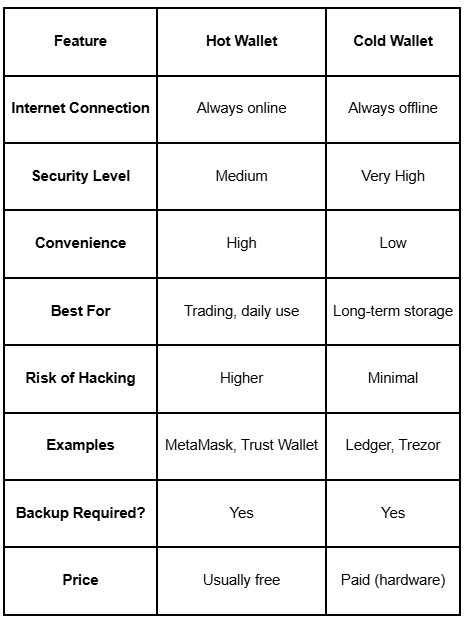
🔄 Hot Wallet vs. Cold Wallet: Key Differences

🔧 How to Use Hot and Cold Wallets Together (Hybrid Strategy)

Many crypto investors in 2025 use a dual-wallet strategy:

  • Hot wallet for trading, staking, and DeFi
  • Cold wallet for long-term storage and high-value assets

This balances convenience and security while minimizing exposure to threats.

For example:

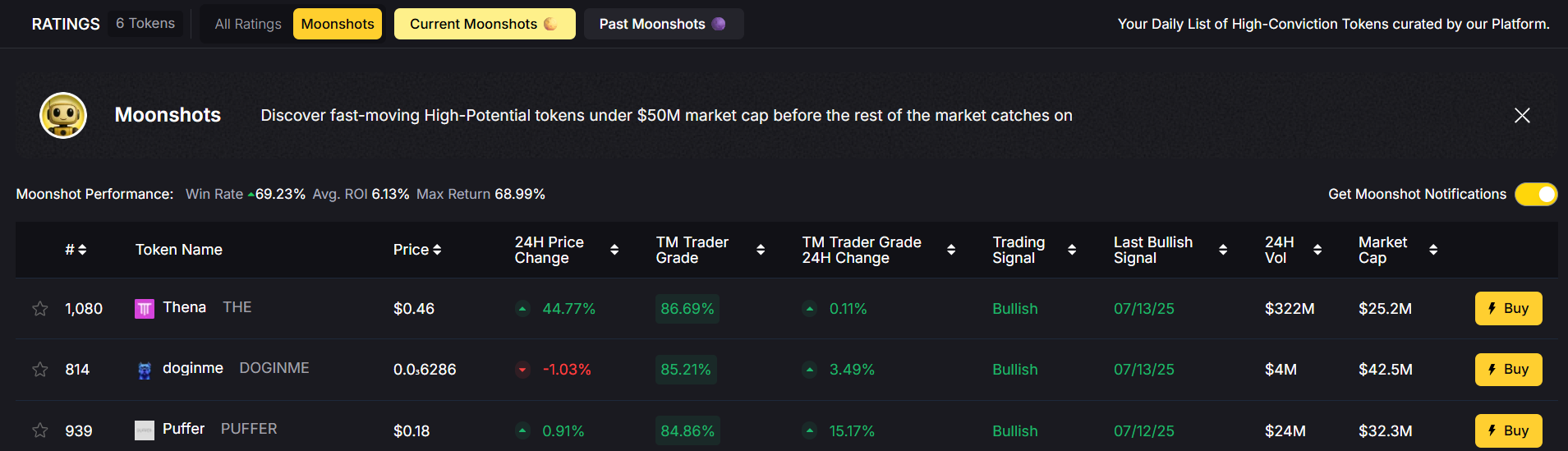
  • Use a hot wallet like MetaMask to access the Token Metrics Moonshots tab and buy trending altcoins.
  • Transfer profits to your cold wallet (e.g., Ledger) for safekeeping.

🧠 How Token Metrics Helps You Manage Wallet Security

đŸ”č Wallet Integrations

Token Metrics supports:

  • MetaMask, WalletConnect, and other hot wallets
  • Portfolio tracking synced with your wallet
  • Real-time alerts when assets in your wallet are surging or at risk

đŸ”č Smart Trading with AI

Token Metrics helps reduce the need to frequently move funds by:

  • Identifying only high-quality tokens using AI Trader and Investor Grades
  • Sending price alerts, so you know when to buy/sell
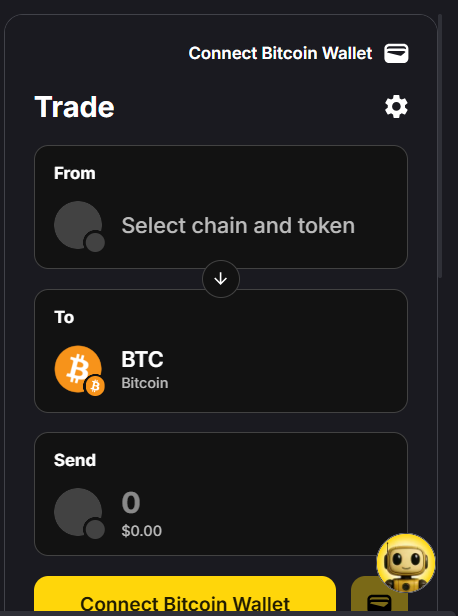
  • Providing in-platform swap tools for direct trades from your hot wallet

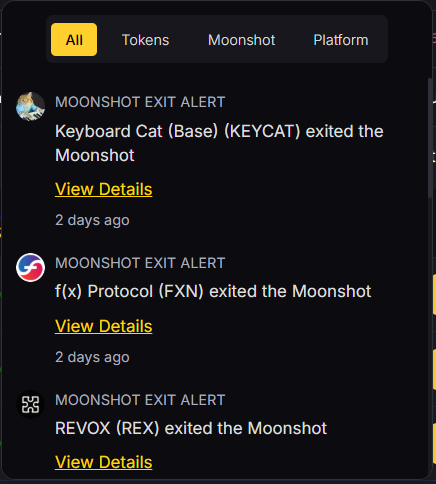
đŸ”č Moonshot Monitoring

For early-stage altcoins, timing is everything. Token Metrics lets you:

  • Monitor your Moonshot investments
  • Get notified when to take profits or exit
  • Transfer to cold storage with a single click

🔒 Hot Wallet Security Tips (2025 Edition)

If you’re using a hot wallet:

  • Enable 2FA (Two-Factor Authentication)
  • Use a hardware wallet to sign large transactions
  • Avoid clicking suspicious links or connecting to unknown dApps
  • Disconnect wallets after use

Always back up your seed phrase and store it securely offline.

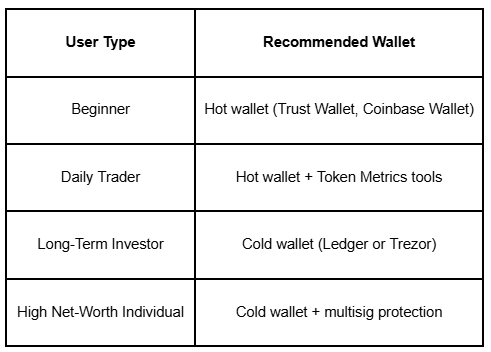
💬 Which Wallet Should You Use?

‍

đŸ§© Final Thoughts

Whether you’re storing $100 or $100,000 in cryptocurrency, your wallet choice directly impacts your security, accessibility, and peace of mind.

  • Hot wallets offer convenience, but must be used with caution
  • Cold wallets offer security, but come with trade-offs in usability
  • Platforms like Token Metrics bridge the gap by offering real-time insights, wallet integrations, and AI-driven trading tools

In 2025, don’t just store your crypto—store it wisely. Combine hot and cold wallet strategies and leverage tools like Token Metrics to build a secure, intelligent crypto portfolio.

Choose from Platinum, Gold, and Silver packages
Reach with 25–30% open rates and 0.5–1% CTR
Craft your own custom ad—from banners to tailored copy
Perfect for Crypto Exchanges, SaaS Tools, DeFi, and AI Products