Back to blog
Research

Top Gold & Commodity-Backed Tokens (2025)

Learn how gold-backed and commodity tokens offer on-chain ownership and redemption for vaulted assets. See our top 2025 token picks with compliant custody, fee transparency, and global access.
Token Metrics Team
12 min read
Want Smarter Crypto Picks—Free?
See unbiased Token Metrics Ratings for BTC, ETH, and top alts.
Thank you! Your submission has been received!
Oops! Something went wrong while submitting the form.
 No credit card | 1-click unsubscribe

Who this guide is for. Crypto investors and treasurers comparing gold-backed tokens and other commodity-backed assets that can be audited and, in many cases, redeemed for metal.
Top three picks. PAX Gold (PAXG) for regulated, bar-linked redemption; Tether Gold (XAUt) for broad awareness and simple fees; Kinesis (KAU/KAG) for spend-and-yield use cases.
Key caveat. Redemption minimums, custody locations, and fees vary by issuer; always confirm regional eligibility and schedules on the official pages.


Introduction: Why Commodity-Backed Tokens Matter in 2025

Gold-backed tokens give on-chain ownership exposure to vaulted bullion with transparent allocation and, often, physical redemption, blending the inflation hedge of metals with crypto liquidity. In 2025, they’re used for hedging, collateral, cross-border settlement, and “digital cash” backed by tangible assets. A commodity-backed token is a blockchain token that represents title to a specific quantity of a real-world commodity (for example, 1 troy ounce or 1 gram of gold) held by a custodian, typically with published fees, vault locations, and redemption rules. Our picks prioritize liquidity, security controls, breadth of metals, cost transparency, and global accessibility.


Best Commodity-Backed Tokens in November 2025 (Comparison Table)


We excluded defunct or sunset projects (e.g., PMGT; CACHE Gold ceased backing CGT on Sept 30, 2025). (perthmint.com)


Top 10 Gold & Commodity-Backed Tokens in November 2025

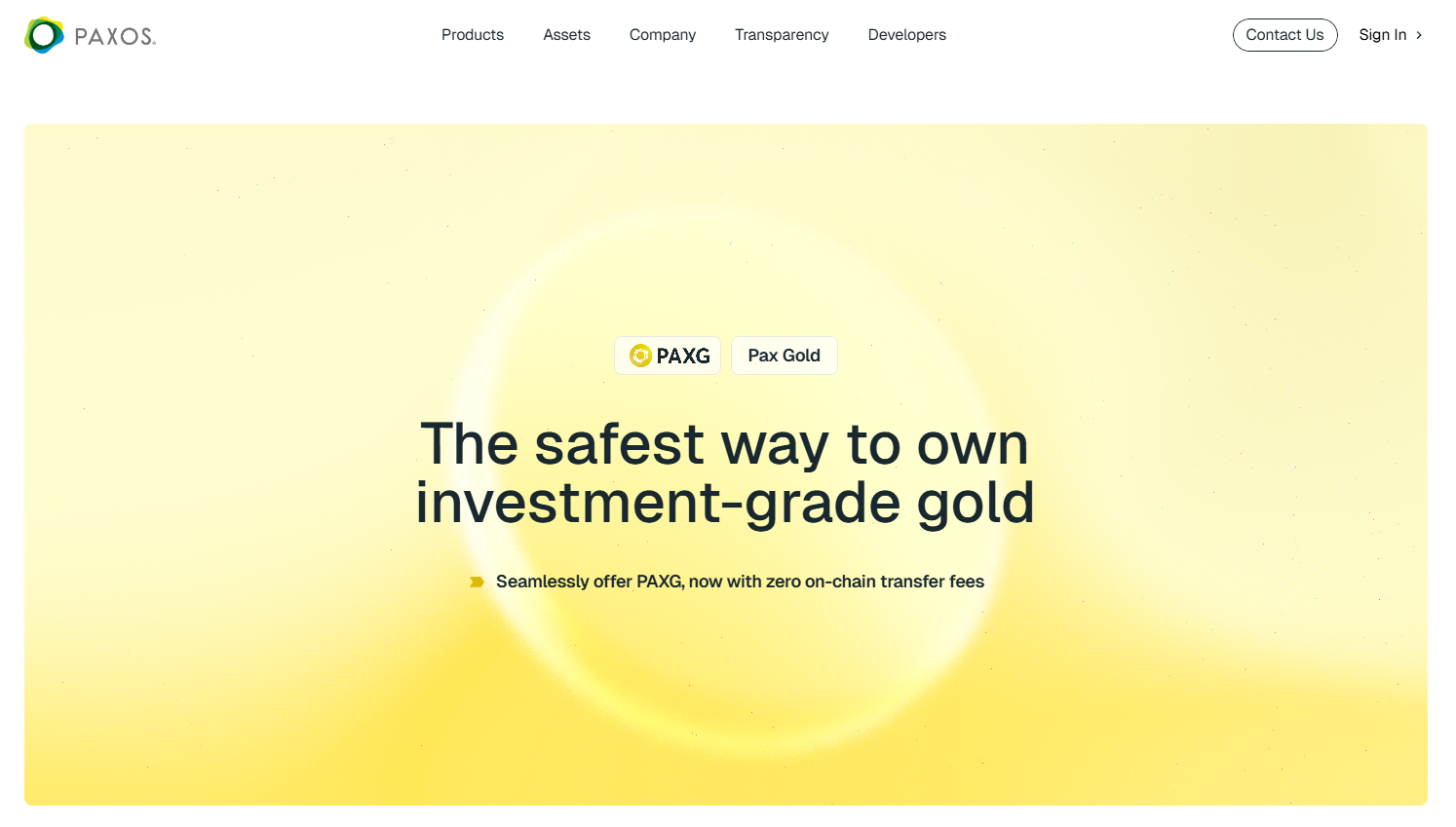
1) PAX Gold (PAXG) — Best for bar-linked redemption & regulatory posture

Why Use It. PAXG links each token to specific LBMA Good Delivery bars stored in London, offering direct bar redemption (institutional minimums apply) or USD redemption at spot. Paxos publishes fee schedules and notes no storage fee charged to customers at this time. (paxos.com)
Best For. Institutions; HNW hedgers; DeFi users needing reputable collateral.
Notable Features. LBMA bars; serial-number linkage; custodied in London; fiat redemption option. (paxos.com)
Fees Notes. Creation/destruction fees; no storage fee currently per issuer help center. (help.paxos.com)
Regions. Global (issuer KYC).
Consider If. You can meet bar redemption minimums and UK vault logistics. (help.paxos.com)
Alternatives. Tether Gold (XAUt); VNX Gold (VNXAU).  

2) Tether Gold (XAUt) — Best for simple pricing & broad availability

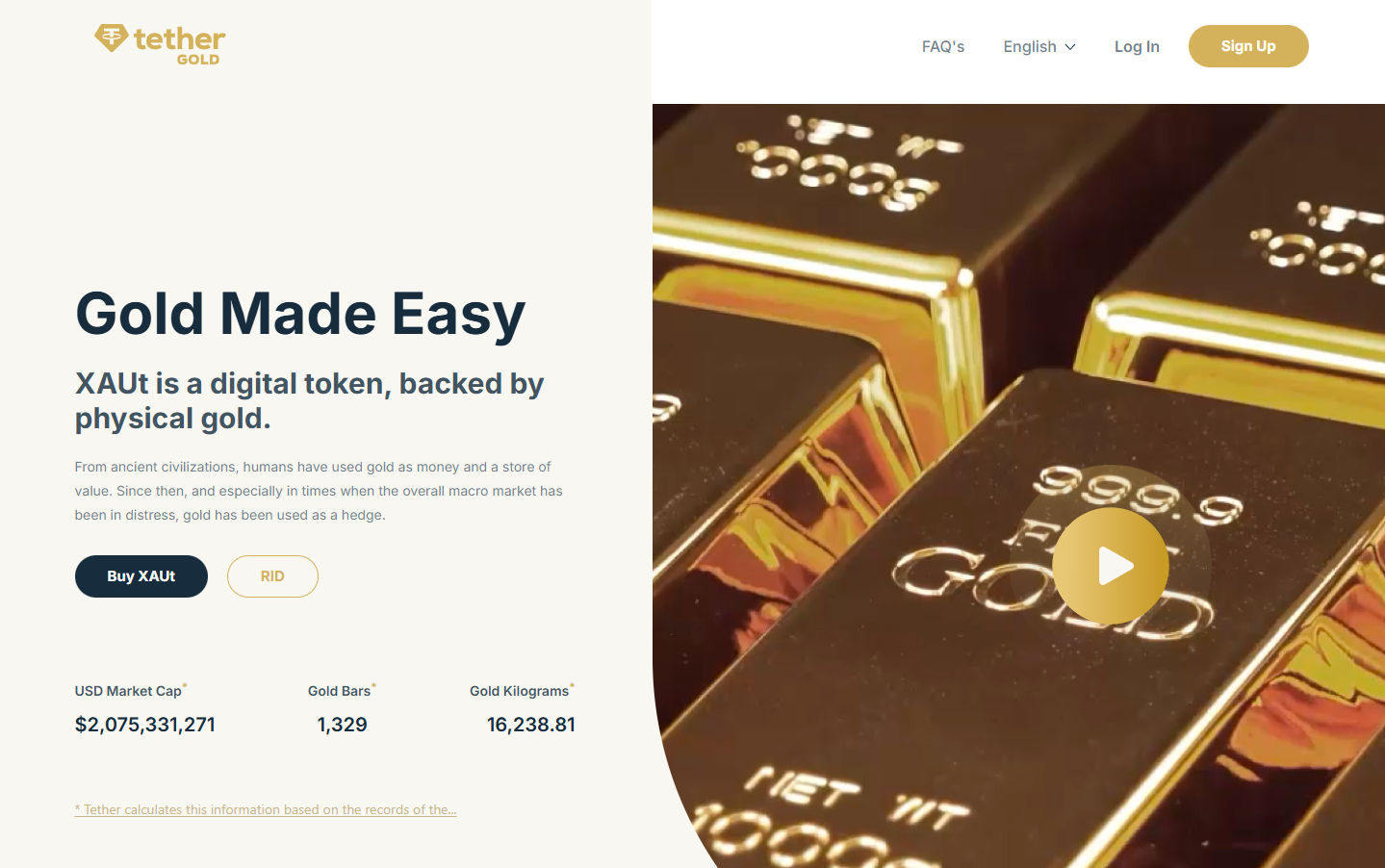
Why Use It. XAUt represents allocated gold and can be redeemed for physical gold or USD; Tether publishes a straightforward 0.25% creation/redemption fee and a one-time verification fee for onboarding. FAQs outline redemption mechanics and bar specifics. (Tether)
Best For. Traders seeking brand familiarity; cross-chain users (ETH/TRON).
Notable Features. Bar metadata; physical or USD redemption; no custody fee disclosed beyond the transaction fee. (Tether)
Fees Notes. 25 bps create/redeem; separate KYC verification fee. (Tether)
Regions. Global (issuer KYC).
Consider If. You need clear fee math but don’t require bar-specific allocation like PAXG.
Alternatives. PAX Gold (PAXG); Kinesis (KAU).  

3) Kinesis KAU (Gold) / KAG (Silver) — Best for spend-and-yield utility

Why Use It. Kinesis combines metal-backed tokens with an exchange, cards, and yields funded from platform fees (published yield-share). Trading and precious metals transactions show ~0.22% execution fees on official schedules. (Kinesis)
Best For. Users wanting to spend gold/silver, earn monthly yields, and keep fees predictable.
Notable Features. Fee-share yield (published); exchange, card rails; gold & silver pairs. (Kinesis)
Fees Notes. ~0.22% buy/sell/trade; other fees per schedule. (Kinesis)
Regions. Global (platform KYC/availability).
Consider If. You prefer an integrated platform over a standalone token.
Alternatives. VNX (VNXAU/VNXAG); Aurus (tXAU/tXAG).  


4) Comtech Gold (CGO) — Best for XDC ecosystem & Shariah-compliant framework

Why Use It. CGO tokenizes 1g gold units on the XDC (XRC-20) network, with a published fee structure for mint/redeem (0.50%), transfers (0.50%), and custody notes in FAQs. Documentation details creation/redemption and delivery fees. (comtechgold.com)
Best For. XDC builders; users needing Shariah-compliant structuring.
Notable Features. On-chain proofing; fee schedule; vault delivery options. (comtechgold.com)
Fees Notes. 0.50% mint/redeem; 0.50% transfer; custody terms disclosed. (comtechgold.com)
Regions. Global (issuer terms apply).
Consider If. You’re comfortable with XDC rails and issuer fee model.
Alternatives. PAXG; VNXAU.


5) VNX Gold (VNXAU) — Best for EEA vaulting & multi-chain issuance

Why Use It. VNXAU gives direct ownership of allocated bars stored in Liechtenstein with a public allocation lookup tool. VNX runs on Ethereum, Polygon, Q, and Solana, and has communications on redemption and delivery. (VNX)
Best For. EEA users; diversification across chains.
Notable Features. Allocation lookup by serial; segregated AAA-jurisdiction vault; multi-chain. (VNX)
Fees Notes. See VNX pricing and product pages for current schedules.
Regions. EEA emphasis; global availability varies by KYC.
Consider If. You want EEA custody and serial-level transparency.
Alternatives. PAXG; XAUt.


6) Aurus tGOLD (tXAU) / tSILVER (tXAG) — Best for gram-denominated multi-metal exposure

Why Use It. Aurus issues 1-gram tokens backed by vaulted gold and silver with insured, audited storage. tGOLD and tSILVER support multi-chain DeFi integrations and a mobile app, with ecosystem partners for mint/redeem. (AURUS)
Best For. DeFi users; small-denomination accumulation; multi-metal portfolios (includes platinum via tXPT).
Notable Features. 1g units; insured vaulted metals; app & dashboard; partner network. (AURUS)
Fees Notes. Exchange/network fees; issuer/partner fees may apply.
Regions. Global (partner KYC where required).
Consider If. You want gram-level flexibility and cross-chain access.
Alternatives. Kinesis; VNX.


7) Gold Silver Standard (AUS/AGS) — Best for Australia-based custody & simple redemption

Why Use It. Tokens AUS (gold) and AGS (silver) are backed by allocated bullion held in Australian high-security vaults with $0 storage and transfer at the issuer level and partner-facilitated redemptions. (goldsilverstandard.com)
Best For. AUD-centric investors; straightforward physical pickup/delivery via partners.
Notable Features. 1g linkage; local redemption via Ainslie partners; Australia-first focus. (goldsilverstandard.com)
Fees Notes. Issuer lists $0 storage/transfer; exchange and redemption partner fees may apply. (goldsilverstandard.com)
Regions. Australia focus; global varies.
Consider If. You need straightforward redemption in Australia.
Alternatives. PAXG; VNXAU.


8) VNX Silver (VNXAG) — Best for EEA silver allocation & transparency tools

Why Use It. VNXAG mirrors the VNXAU model for silver, backed by allocated metal with the same allocation lookup tooling and multi-chain issuance. (VNX)
Best For. EEA investors prioritizing silver in segregated storage.
Notable Features. Allocation lookup; EEA custody; multi-chain support. (VNX)
Fees Notes. See VNX site for current schedules.
Regions. EEA emphasis; global varies.
Consider If. You want EEA-vaulted silver with serial-level transparency.
Alternatives. KAG; tXAG.


9) VeraOne (VRO) — Best for euro-area buyers wanting 1-gram ERC-20

Why Use It. VRO is an ERC-20 token pegged to 1 gram of LBMA-standard gold, issued by a long-standing French precious-metal group; materials describe secured storage and regular audits. (VeraOne)
Best For. EU users; gram-based savings; euro on-ramps.
Notable Features. 1g linkage; audited storage; EU presence. (VeraOne)
Fees Notes. Issuer materials outline model; confirm current fees on site.
Regions. EU focus; global access varies.
Consider If. You want EU branding and ERC-20 simplicity.
Alternatives. PAXG; VNXAU.


10) AgAu — Best for Swiss custody & peer-to-peer design

Why Use It. AgAu outlines 1:1 backed gold and silver tokens with Swiss custody and a peer-to-peer payment focus; docs and reports describe convertibility and audited reserves. (agau.io)
Best For. Users seeking Swiss jurisdiction and payments-style UX.
Notable Features. Swiss issuer; P2P spend; audit & documents hub. (agau.io)
Fees Notes. See issuer documentation for fees and redemption steps.
Regions. Global (jurisdictional checks apply).
Consider If. You want Swiss custody with payments emphasis.
Alternatives. VNXAU; AUS.


Decision Guide: Best by Use Case

  • Regulated, bar-specific redemption: PAX Gold (PAXG). (paxos.com)
  • Simple fee schedule & brand familiarity: Tether Gold (XAUt). (Tether)
  • Spend metals + monthly fee-share yield: Kinesis (KAU/KAG). (Kinesis)
  • XDC network users: Comtech Gold (CGO). (comtechgold.com)
  • EEA custody & allocation lookup: VNX (VNXAU/VNXAG). (VNX)
  • Gram-based, multi-metal DeFi: Aurus (tXAU/tXAG). (AURUS)
  • Australia-centric custody & pickup: Gold Silver Standard (AUS/AGS). (goldsilverstandard.com)
  • EU 1-gram ERC-20: VeraOne (VRO). (VeraOne)
  • Swiss custody & P2P payments: AgAu. (agau.io)

How to Choose the Right Commodity-Backed Token (Checklist)

  • ☐ Region eligibility and KYC match your profile.
  • ☐ Underlying metal type and unit (ounce vs gram).
  • Redemption rules: minimums, delivery locations, timelines.
  • Custody: vault jurisdiction, insurer, LBMA accreditation.
  • Fee transparency: creation, redemption, storage, transfer, network.
  • Audit/attestation cadence and allocation lookup tools.
  • Chains supported and DeFi integration needs.
  • ☐ Support channels and documentation depth.
    Red flags: vague custody details, unclear redemption, or discontinued programs.

Use Token Metrics With Any Commodity-Backed Token

  • AI Ratings to screen metal-linked assets and related ecosystem tokens.
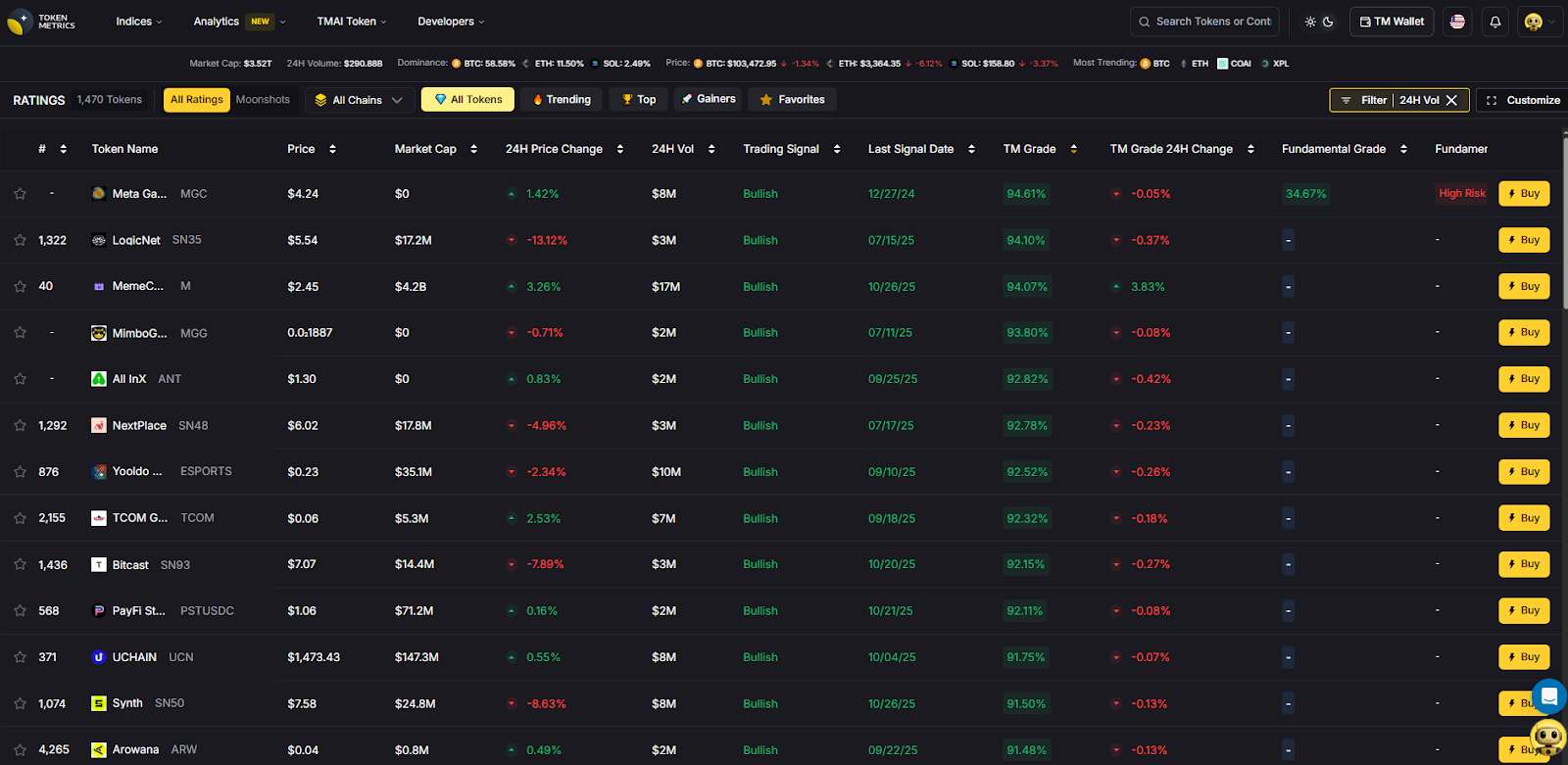
  

  • Narrative Detection to spot inflows to on-chain RWAs.
  • Portfolio Optimization to size metal exposure vs. crypto beta.
  • Alerts & Signals to time entries/exits around macro prints.
    Workflow: Research → Select issuer → Execute on-chain or via platform → Monitor with alerts.


CTA: Start free trial to screen assets and time entries with AI.  

Security & Compliance Tips

  • Use official issuer URLs only; beware look-alikes.
  • Confirm fee schedules and redemption procedures before buying. (Tether)
  • Verify vaulting jurisdiction and any bar-serial lookup tools. (VNX)
  • Mind network fees, bridge risks, and exchange withdrawal rules.
  • Keep custody keys secure; whitelist issuer addresses.
  • If staking or yielding, confirm source of yield and counterparty exposure. (Kinesis)
    This article is for research/education, not financial advice.

Beginner Mistakes to Avoid

  • Treating all metal tokens as equal—redemption and custody differ widely.
  • Ignoring region and KYC limits until you try to redeem.
  • Overlooking minimums (e.g., full LBMA bars vs. gram redemptions). (help.paxos.com)
  • Confusing defunct tokens with active ones (e.g., PMGT sunset; CGT backing ceased). (perthmint.com)
  • Forgetting network/transfer fees when arbitraging across chains.
  • Using unofficial contracts on the wrong chain.

How We Picked (Methodology & Scoring)

  • Liquidity — 30%. Exchange presence, on-chain activity, practical tradability.
  • Security — 25%. Custody details, audits/attestations, LBMA alignment, redemption design.
  • Coverage — 15%. Metals (gold/silver/platinum), chains, tooling.
  • Costs — 15%. Creation/redemption/storage/transfer and transparency of schedules.
  • UX — 10%. Apps, dashboards, redemption flows.
  • Support — 5%. Docs, status pages, human support.
    We relied on official product, docs, fees, FAQ, and disclosure pages, cross-checking market datasets only for context. Last updated November 2025.

FAQs

What are gold-backed tokens?
 They are blockchain tokens that represent ownership of a specific quantity of vaulted, insured gold, typically with published fees and, in some cases, physical redemption options.

Are gold-backed tokens safer than stablecoins?
 They can diversify away from fiat risk, but introduce custody and redemption dependencies. Safety depends on the issuer’s vaulting, audits, legal structure, and your ability to redeem.

What fees should I expect?
 Common fees include creation/redemption, possible storage, transfer, and network fees. Examples: XAUt lists 0.25% create/redeem; Paxos publishes creation/destruction fees and notes no storage fee currently. Always check the live schedules. (Tether)

Can I redeem tokens for a real gold bar?
 Some issuers support bar redemption with minimum sizes and location constraints (e.g., LBMA bar logistics in London for PAXG). Others support gram-level redemption via partners. (help.paxos.com)

Which chains are supported?
 Varies: PAXG (Ethereum), XAUt (Ethereum/TRON), VNX (Ethereum/Polygon/Q/Solana), Aurus (multi-chain), CGO (XDC), Kinesis (native + exchange listings). (paxos.com)

Are there discontinued tokens I should avoid?
 Yes. PMGT has been discontinued; CACHE Gold (CGT) ceased backing as of Sept 30, 2025. Verify project status before buying. (perthmint.com)


Conclusion + Related Reads

Choose PAXG for bar-linked redemption and strong disclosures, XAUt for simple fees and brand reach, or Kinesis if you want to spend metals and earn fee-share yields. For EEA vaulting with allocation lookup, VNX is compelling; for gram-based DeFi exposure, Aurus is versatile.

Related Reads:

Build Smarter Crypto Apps &
AI Agents in Minutes, Not Months
Real-time prices, trading signals, and on-chain insights all from one powerful API.
Grab a Free API Key
About Token Metrics
Token Metrics: AI-powered crypto research and ratings platform. We help investors make smarter decisions with unbiased Token Metrics Ratings, on-chain analytics, and editor-curated “Top 10” guides. Our platform distills thousands of data points into clear scores, trends, and alerts you can act on.
30 Employees
analysts, data scientists, and crypto engineers
Daily Briefings
concise market insights and “Top Picks”
Transparent & Compliant
Sponsored ≠ Ratings; research remains independent
Want Smarter Crypto Picks—Free?
See unbiased Token Metrics Ratings for BTC, ETH, and top alts.
Thank you! Your submission has been received!
Oops! Something went wrong while submitting the form.
 No credit card | 1-click unsubscribe
Token Metrics Team
Token Metrics Team

Recent Posts

Research

APIs Explained: How They Work and Why They Matter

Token Metrics Team
5

APIs sit at the center of modern software. Whether a mobile app fetches weather data, a dashboard queries on-chain activity, or an AI agent calls a language model, an API is the bridge that enables machines to communicate. This article breaks down what an API is, how it works, common types and use cases, and practical steps to evaluate and use one safely and effectively.

What Is an API?

An API (Application Programming Interface) is a defined set of rules and protocols that allow software components to communicate. It specifies the methods available, the expected inputs and outputs, and the underlying conventions for transport and encoding. In web development, APIs typically include endpoints you can call over HTTP, request and response formats (commonly JSON), and authentication rules.

Think of an API as a contract: the provider promises certain functionality (data, computations, actions) and the consumer calls endpoints that adhere to that contract. Examples include a weather API returning forecasts, a payment API creating transactions, or a blockchain data API exposing balances and transactions.

How APIs Work: The Technical Overview

At a technical level, most web APIs follow simple request/response patterns:

  • Client issues an HTTP request to an endpoint (URL).
  • Request includes a method (GET, POST, PUT, DELETE), headers, authentication tokens, and optionally a body.
  • Server processes the request and returns a response with a status code and a body (often JSON).

Key concepts to understand:

  • HTTP methods: indicate intent—GET to read, POST to create, PUT/PATCH to update, DELETE to remove.
  • Authentication: can use API keys, OAuth tokens, JWTs, or mutual TLS. Authentication defines access and identity.
  • Rate limits: providers throttle calls per unit time to protect infrastructure.
  • Versioning: APIs use versioned endpoints (v1, v2) so changes don’t break consumers.
  • Webhooks: push-style endpoints that let providers send real-time events to a consumer URL.

Types of APIs and Common Use Cases

APIs come in many shapes tailored to different needs:

  • REST APIs: resource-oriented, use HTTP verbs and stateless requests. Widely used for web services.
  • GraphQL: provides a flexible query layer so clients request exactly the fields they need.
  • gRPC: high-performance, binary protocol ideal for internal microservices.
  • WebSocket/APIs for streaming: support continuous two-way communication for real-time data.

Use cases span industries: integrating payment gateways, building mobile backends, connecting to cloud services, feeding analytics dashboards, and powering crypto tools that stream price, order book, and on-chain data. AI systems also consume APIs—calling models for text generation, embeddings, or specialized analytics.

How to Build, Evaluate and Use an API

Whether you are a developer integrating an API or evaluating a provider, use a systematic approach:

  1. Read the docs: good documentation should include endpoints, example requests, error codes, SDKs, and usage limits.
  2. Test quickly: use tools like curl or Postman to make basic calls and inspect responses and headers.
  3. Check authentication and permissions: ensure tokens are scoped correctly and follow least-privilege principles.
  4. Evaluate performance and reliability: review SLA information, latency benchmarks, and historical uptime if available.
  5. Understand pricing and quotas: map expected usage to cost tiers and rate-limits to avoid surprises.
  6. Security review: watch for sensitive data exposure, enforce transport encryption (HTTPS), and rotate keys regularly.

For domain-specific APIs, such as those powering crypto analytics or trading signals, additional considerations include data freshness, source transparency (e.g., direct node reads vs. indexers), and on-chain coverage. Tools that combine data feeds with AI analytics can speed research—one example of a platform in that space is Token Metrics, which layers model-driven insights on top of market and on-chain inputs.

Build Smarter Crypto Apps & AI Agents with Token Metrics

Token Metrics provides real-time prices, trading signals, and on-chain insights all from one powerful API. Grab a Free API Key

FAQ — What Is an API?

Q: What is the difference between an API and an SDK?

A: An API is a set of rules for communicating with a service. An SDK (Software Development Kit) is a bundled set of tools, libraries, and often an API wrapper that helps developers integrate with that service more easily in a specific programming language.

FAQ — REST vs GraphQL: Which to use?

Q: When is GraphQL preferable to REST?

A: GraphQL is useful when clients need flexible queries and want to avoid over- or under-fetching data. REST remains a strong default for simple, cache-friendly resource-based services and broad interoperability.

FAQ — API Security

Q: What are basic security best practices for APIs?

A: Require HTTPS, enforce strong authentication (OAuth, signed tokens), validate and sanitize inputs, implement rate limits, use scopes for permissions, and log access for auditability. Rotate credentials and monitor anomalous usage.

FAQ — Using Crypto APIs

Q: How do I get started with crypto or market data APIs?

A: Begin by identifying the data you need (prices, order books, on-chain events), locate providers with clear documentation and sample code, test endpoints in a sandbox, and account for latency and historical coverage. Combining raw feeds with analytics tools can help accelerate research.

FAQ — API Keys and Rate Limits

Q: What is an API key and why are rate limits important?

A: An API key is a token that identifies and authenticates a client. Rate limits prevent abuse and keep shared services stable—exceeding limits typically returns 429 errors and may incur additional costs or temporary blocks.

Disclaimer

This content is for informational and educational purposes only. It does not constitute investment, legal, tax, or professional advice. Evaluate tools, APIs, and services according to your own research and risk tolerance.

Research

Understanding APIs: How They Work and Why They Matter

Token Metrics Team
5

APIs are the invisible glue that connects software, data, and services. Whether you use a weather widget, log into an app with a social account, or power AI agents with external data, APIs make those interactions possible. This guide explains what an API is, how it works, common types, and practical steps to evaluate and use them effectively.

What an API Is — Core Concept

An API (Application Programming Interface) is a set of rules and definitions that lets one software program communicate with another. At a conceptual level, an API defines the inputs, outputs, and behavior expected when you request a resource or action from a service. It abstracts implementation details so developers can use functionality without needing to understand the underlying code.

Key elements:

  • Endpoints: URLs or addresses that expose resources or actions.
  • Requests & Responses: Clients send requests (often HTTP) and receive responses, typically in JSON or XML.
  • Methods/Verbs: Common operations (e.g., GET, POST, PUT, DELETE) indicate intent.
  • Contracts: Documentation specifies parameters, data formats, and error codes.

How APIs Work — Technical Overview

Most modern APIs use web protocols. RESTful APIs use standard HTTP methods and resource-oriented URLs. GraphQL exposes a single endpoint that accepts queries describing exactly what data the client needs. WebSockets and streaming APIs enable persistent connections for real-time updates, and webhooks allow services to push events to registered endpoints.

Practical components developers encounter:

  • Authentication: API keys, OAuth tokens, JWTs, and mutual TLS verify identity and scope access.
  • Rate limits: Protect providers by limiting request frequency; plan for retries and backoff.
  • Versioning: Maintain backward compatibility by versioning endpoints.
  • Schemas: OpenAPI/Swagger and GraphQL schemas document shapes and types to reduce integration friction.

Common API Use Cases and Patterns

APIs power a wide range of applications across industries. Typical use cases include:

  • Data aggregation: Combining price feeds, social metrics, or on-chain data from multiple providers.
  • Microservices: Breaking systems into modular services that communicate over APIs for scalability and maintainability.
  • Third-party integrations: Payments, identity providers, analytics, and cloud services expose APIs for developers to extend functionality.
  • AI and agents: Models use APIs to fetch external context, perform lookups, or execute actions when building intelligent applications.

Evaluating and Using an API — Practical Checklist

Choosing or integrating an API involves technical and operational considerations. Use this checklist when researching options:

  1. Documentation quality: Clear examples, error codes, SDKs, and interactive docs accelerate adoption.
  2. Latency & reliability: Test response times and uptime; review SLAs where applicable.
  3. Security & compliance: Inspect authentication schemes, encryption, data retention, and regulatory controls.
  4. Costs & limits: Understand free tiers, metering, and rate limits to model consumption and budget.
  5. Error handling: Standardized error responses and retry guidance reduce integration surprises.
  6. SDKs and tooling: Official libraries, Postman collections, and CLI tools shorten development cycles.

When testing an API, start with a sandbox or staging environment, use automated tests for core flows, and instrument monitoring for production use. For AI projects, prioritize APIs that offer consistent schemas and low-latency access to keep pipelines robust.

Build Smarter Crypto Apps & AI Agents with Token Metrics

Token Metrics provides real-time prices, trading signals, and on-chain insights all from one powerful API. Grab a Free API Key

FAQ: What Is an API?

Q: What is the difference between an API and a library?

A library is a collection of code you include in your project; an API describes interaction rules exposed by a service. Libraries run in-process, while APIs often operate over a network and imply a contract between client and provider.

FAQ: REST vs GraphQL — which to use?

REST is simple and cache-friendly for resource-oriented designs. GraphQL is useful when clients need flexible queries that reduce over- or under-fetching. The choice depends on payload patterns, caching needs, and team expertise.

FAQ: How do API keys and OAuth differ?

API keys are simple tokens tied to an account and scope; OAuth provides delegated access, user consent flows, and finer-grained permissions. For user-authorized actions, OAuth is typically preferable.

FAQ: Are public APIs secure?

Security depends on provider implementation. Public APIs can be secure when they enforce authentication, use HTTPS, validate inputs, and apply rate limiting. Always follow security best practices and assume any external interface could be targeted.

FAQ: Can APIs be used for real-time data?

Yes. Streaming APIs, WebSockets, server-sent events, and publish/subscribe webhooks deliver real-time data. Evaluate connection limits, reconnection logic, and message ordering guarantees for production systems.

FAQ: What is an SDK and why use one?

An SDK (Software Development Kit) wraps API calls in language-specific code, handling authentication, retries, and serialization. SDKs speed integration and reduce boilerplate, but it's still useful to understand raw API behavior.

Disclaimer

This article is for educational and informational purposes only. It does not constitute legal, financial, investment, or professional advice. Evaluate APIs and tools independently and consult appropriate professionals for specific use cases.

Research

APIs Explained: How Application Programming Interfaces Work

Token Metrics Team
5

APIs are the invisible glue that connects modern software: they let apps talk to services, fetch data, and automate workflows. Understanding what an API is and how it operates helps developers, analysts, and product teams design integrations that are robust, secure, and scalable.

What is an API? Definition, scope, and common types

An API, or application programming interface, is a defined set of rules and contracts that allow one software component to interact with another. At a basic level an API specifies the inputs (requests), outputs (responses), and the behavior expected when an operation is invoked. APIs can be exposed within a single application, between services inside a private network, or publicly for third-party developers.

Common API types include:

  • Web APIs (HTTP/HTTPS based, using REST or GraphQL) for browser, server, and mobile communication.
  • RPC and gRPC for high-performance binary communication between microservices.
  • Library or SDK APIs that surface methods within a language runtime.
  • Hardware APIs that expose device functionalities (e.g., sensors, GPU).
  • On-chain and crypto APIs that provide blockchain data, transaction broadcasting, and wallet interactions.

How APIs work: requests, endpoints, and protocols

APIs typically operate over a transport protocol with defined endpoints and methods. In HTTP-based APIs a client sends a request to an endpoint (URL) using methods like GET, POST, PUT, DELETE. The server processes that request and returns a response, often encoded as JSON or XML.

Key components to understand:

  • Endpoint: A specific URL or route that exposes a resource or operation.
  • Method: The action type (read, create, update, delete).
  • Schema / Contract: The shape of request and response payloads, headers, and status codes.
  • Authentication: How the API verifies the caller (API keys, OAuth tokens, signed requests).
  • Rate limits: Rules that prevent abuse by limiting request volume.

Protocols and styles (REST, GraphQL, gRPC) trade off simplicity, flexibility, and performance. REST emphasizes resource-based URLs and uniform verbs. GraphQL offers flexible queries from a single endpoint. gRPC uses binary protocols for lower latency and stronger typing.

Use cases and real-world examples (web, mobile, crypto, AI)

APIs appear in nearly every digital product. Typical use cases include:

  • Web & Mobile Apps: Fetching user profiles, submitting forms, or streaming media from cloud services.
  • Third-party Integrations: Payment providers, identity, and analytics platforms expose APIs to connect services.
  • Crypto & Blockchain: Nodes, indexers, and market data providers expose APIs to read chain state, broadcast transactions, or retrieve price feeds.
  • AI & Data Pipelines: Models and data services expose inference endpoints and training data APIs to enable programmatic access.

For analysts and product teams, APIs make it possible to automate data collection and combine signals from multiple services. AI-driven research tools such as Token Metrics rely on API feeds to aggregate prices, on-chain metrics, and model outputs so users can build informed analytics workflows.

Design, security, and operational best practices

Well-designed APIs are predictable, versioned, and documented. Consider these practical guidelines:

  1. Design for clarity: Use consistent naming, predictable status codes, and clear error messages.
  2. Versioning: Provide v1/v2 in paths or headers so breaking changes don’t disrupt clients.
  3. Rate limiting and quotas: Protect backend resources and provide transparent limits.
  4. Authentication & Authorization: Use proven schemes (OAuth2, signed tokens) and enforce least privilege.
  5. Input validation and sanitization: Defend against injection and malformed payloads.
  6. Observability: Implement logging, metrics, and distributed tracing to monitor performance and troubleshoot failures.
  7. Documentation and SDKs: Publish clear docs, example requests, and client libraries to reduce integration friction.

Security in particular requires ongoing attention: rotate credentials, monitor for anomalous traffic, and apply patching for underlying platforms. For teams building systems that depend on multiple external APIs, plan for retries, exponential backoff, and graceful degradation when a provider is slow or unavailable.

Build Smarter Crypto Apps & AI Agents with Token Metrics

Token Metrics provides real-time prices, trading signals, and on-chain insights all from one powerful API. Grab a Free API Key

FAQ: What is an API?

Q1: What is the difference between an API and an SDK?

An API is a contract that defines how to interact with a service. An SDK is a packaged set of tools, libraries, and helpers that implement or wrap that API for a specific language or platform.

How do REST and GraphQL differ?

REST uses multiple endpoints and standard HTTP verbs to model resources; GraphQL exposes a single endpoint where clients request exactly the fields they need. REST is simpler; GraphQL can reduce over-fetching but adds query complexity.

Can APIs return real-time data?

Yes. Real-time patterns include WebSockets, server-sent events, or streaming gRPC. Polling a REST endpoint is simpler but less efficient for high-frequency updates.

What are common API security measures?

Common measures include strong authentication (OAuth2, API keys), TLS encryption, rate limiting, input validation, signed requests, and robust monitoring for abuse or anomalies.

How should teams evaluate third-party APIs?

Assess uptime history, SLAs, documentation quality, rate limits, pricing model, security posture, and whether the API provides the required schemas and latency characteristics for your use case.

Can APIs be used with AI applications?

Yes. AI models often expose inference APIs for serving predictions, and research tools consume multiple APIs to aggregate training data, features, or market signals. Designing for reproducibility and input validation is important when feeding models with API-derived data.

Disclaimer

This article is educational and informational in nature. It does not provide investment, legal, or professional advice. Implementations and integrations described here are technical examples and should be validated in your environment before deployment.

Choose from Platinum, Gold, and Silver packages
Reach with 25–30% open rates and 0.5–1% CTR
Craft your own custom ad—from banners to tailored copy
Perfect for Crypto Exchanges, SaaS Tools, DeFi, and AI Products