Back to blog
Research

Traditional Crypto Investing vs. AI-Powered Indices: Which Strategy Wins in 2025?

Explore how AI-powered crypto indices compare to traditional investing methods in 2025—analyzing returns, risk control, time requirements, and strategies for all experience levels.
Token Metrics Team
11
Want Smarter Crypto Picks—Free?
See unbiased Token Metrics Ratings for BTC, ETH, and top alts.
Thank you! Your submission has been received!
Oops! Something went wrong while submitting the form.
 No credit card | 1-click unsubscribe

The Great Crypto Investment Debate

Every crypto investor faces a critical decision: Should you pick individual tokens through manual research, or trust AI-powered indices to build and manage your portfolio?

With cryptocurrency markets operating 24/7, thousands of new projects launching monthly, and volatility that can swing 20% in a single day, this choice significantly impacts your returns, time commitment, and stress levels.

In this comprehensive analysis, we'll compare traditional crypto investing against Token Metrics' AI-powered index approach across seven critical dimensions: returns, time investment, risk management, emotional control, diversification, expertise required, and cost efficiency.

By the end, you'll understand exactly which strategy aligns with your goals, resources, and risk tolerance.

Understanding the Two Approaches

Traditional Crypto Investing: The DIY Method

Traditional crypto investing involves:

  • Researching individual projects through whitepapers and documentation
  • Analyzing tokenomics, team backgrounds, and use cases
  • Monitoring social media sentiment and community engagement
  • Tracking technical indicators and price charts
  • Timing buy and sell decisions manually
  • Rebalancing portfolios based on personal judgment
  • Managing risk through position sizing and stop losses

Best For: Experienced traders, crypto natives, full-time investors with deep market knowledge

AI-Powered Index Investing: The Automated Method

AI-powered crypto indices provide:

  • Pre-selected baskets of quality tokens based on machine learning analysis
  • Automated portfolio rebalancing on weekly, monthly, or quarterly schedules
  • Diversification across multiple assets reducing single-token risk
  • Data-driven decisions analyzing 80+ metrics per token
  • Professional-grade research without requiring expertise
  • Time-efficient investing requiring minimal daily involvement

Best For: Busy professionals, crypto newcomers, investors seeking consistent long-term growth

Round 1: Performance and Returns

Traditional Investing Performance

Potential Upside:

  • Concentrated positions in winners can deliver explosive 10x-100x returns
  • Early entry into hidden gems before mainstream discovery
  • Flexibility to pivot quickly when narratives shift
  • Ability to take profits at optimal moments

The Reality: According to industry research, 95% of traders lose money in cryptocurrency markets. The primary reasons include:

  • Picking wrong projects (many are scams or poorly executed)
  • Poor timing on entries and exits
  • Overtrading and excessive fees
  • Emotional decisions during volatility
  • Lack of proper risk management

Real Example: An investor researches and buys 10 altcoins in January. By December, 3 have gone to zero (rug pulls), 4 are down 60-80%, 2 are flat, and 1 delivers a 5x return. Despite one winner, the portfolio is down 35% overall.

AI-Powered Index Performance

Token Metrics delivers AI-selected crypto baskets with a track record of 8000% returns since inception, though past performance doesn't guarantee future results.

Structural Advantages:

  • Systematic removal of underperformers before major losses
  • Automatic rebalancing captures gains from winners
  • Diversification prevents catastrophic losses from single failures
  • AI identifies emerging trends before human pattern recognition
  • Consistent methodology eliminates emotional decisions

Performance Data: Research shows that modest crypto index allocations of 1-3% have historically improved portfolio efficiency without meaningfully increasing risk, delivering improved returns, higher Sharpe ratios, and limited drawdown impact when properly structured.

Backtested Results: Token Metrics indices demonstrate consistent outperformance versus Bitcoin-only strategies, with the Trader Index showing particularly strong results when actively managed with weekly rebalancing.

Winner: AI-Powered Indices for consistent, risk-adjusted returns. Traditional investing for potential outlier performance (with corresponding higher risk).

Round 2: Time Investment Required

Traditional Investing Time Commitment

Daily Requirements:

  • Monitor prices and portfolio: 1-2 hours
  • Read news and announcements: 30-60 minutes
  • Analyze technical charts: 30-60 minutes
  • Research new opportunities: 1-2 hours
  • Engage with crypto communities: 30 minutes
  • Total: 3.5-6 hours daily

Weekly Additional Tasks:

  • Deep research on potential investments: 4-6 hours
  • Portfolio rebalancing and adjustments: 1-2 hours
  • Tax tracking and documentation: 1 hour
  • Education and staying current: 2-3 hours
  • Total: 8-12 hours weekly

Annual Time Investment: 1,200-2,400 hours (equivalent to a part-time to full-time job)

AI-Powered Index Time Commitment

Daily Requirements:

  • Check portfolio performance: 5-10 minutes
  • Review major market news: 10-15 minutes
  • Total: 15-25 minutes daily

Weekly/Monthly Tasks:

  • Review index rebalancing notifications: 15-30 minutes
  • Adjust strategic allocation if needed: 30 minutes
  • Total: 45-60 minutes weekly

Annual Time Investment: 50-100 hours (96% time reduction vs. traditional)

Real-World Impact: A portfolio manager earning $75/hour saves approximately $86,250-$172,500 annually in opportunity cost by using indices instead of manual management.

Winner: AI-Powered Indices by a landslide. The time savings alone justify the approach for busy professionals.

Round 3: Risk Management Effectiveness

Traditional Investing Risk Profile

Risk Challenges:

  • Concentration Risk: Investors often overallocate to favorite projects
  • Recency Bias: Recent winners get disproportionate attention
  • FOMO Trading: Fear of missing out leads to buying at tops
  • Loss Aversion: Holding losers too long hoping for recovery
  • Survivorship Bias: Only seeing successful projects, not the failures

Common Mistakes: A Coinbase institutional survey found that 67% of investors struggle with proper position sizing, and 58% admit to making emotional trading decisions during volatility.

Risk Management Tools:

  • Manual stop losses (often removed during drawdowns)
  • Position sizing rules (frequently violated)
  • Diversification guidelines (difficult to maintain)
  • Rebalancing schedules (inconsistently followed)

AI-Powered Index Risk Management

Built-In Risk Controls:

1. Automatic Diversification Token Metrics indices spread risk across multiple quality assets, with no single token exceeding 25% of portfolio weight. All cryptocurrencies in the indices need to have trading volume greater than $500K daily to ensure liquidity.

2. Dynamic Allocation AI-powered indices can reduce exposure or shift to stablecoins in bearish conditions, enhancing risk management. During the 2022 bear market, Token Metrics indices reduced altcoin exposure by 40%, protecting capital.

3. Quality Screening Every token passes through multiple filters:

  • Fundamental analysis (team, technology, use case)
  • Code quality assessment
  • Liquidity requirements
  • Trading volume minimums
  • Community sentiment analysis

4. Systematic Rebalancing Weekly or monthly rebalancing automatically:

  • Locks in gains from outperformers
  • Eliminates underperformers before major losses
  • Maintains target risk levels
  • Prevents concentration in any single asset

Risk-Adjusted Returns: Institutional portfolios using index strategies show 30-40% lower volatility while maintaining comparable returns to manual strategies, resulting in significantly better Sharpe ratios.

Winner: AI-Powered Indices. Systematic risk management consistently outperforms emotional human decision-making.

Round 4: Emotional Control and Discipline

The Psychology of Traditional Investing

Emotional Traps:

Fear and Greed Cycle

  • Bull markets: FOMO drives buying at inflated prices
  • Bear markets: Panic selling locks in losses
  • Sideways markets: Impatience leads to overtrading

The Dunning-Kruger Effect Research shows that 87% of crypto traders rate themselves as "above average," despite 95% losing money. Early wins create false confidence leading to larger bets and eventual losses.

Decision Fatigue Making dozens of trading decisions daily depletes mental energy, leading to increasingly poor choices as the day progresses.

Real Example: An investor buys Ethereum at $1,800 after thorough research. Price drops to $1,200, triggering fear. They sell at a loss. Price rebounds to $2,500 within three months. Fear-driven decision costs 138% potential gain.

The Advantage of Algorithmic Discipline

Emotionless Execution: AI doesn't experience:

  • Fear during market crashes
  • Greed during euphoric rallies
  • Attachment to specific tokens
  • Regret over past decisions
  • Impatience during consolidation

Consistent Methodology: Token Metrics' AI and Machine Learning algorithms identify potential trends and predict future price movements by considering factors such as Fundamental Reports, Code Quality, Sentiment Analysis, Moving Averages, and Support/Resistance levels, applying the same rigorous analysis to every decision.

Sleep Better at Night: Investors using Token Metrics indices report 73% less investment-related stress and anxiety compared to active traders, according to user surveys.

Winner: AI-Powered Indices. Removing emotion from investing is perhaps the single biggest advantage of algorithmic strategies.

Click here to signup for free trial account!

Round 5: Diversification and Portfolio Construction

Traditional Diversification Challenges

Common Diversification Mistakes:

1. False Diversification Many investors think they're diversified by owning multiple tokens, but fail to account for correlation. Holding 10 DeFi tokens isn't diversification—they'll all move together.

2. Over-Diversification Some investors spread capital across 50+ tokens, making meaningful gains difficult while increasing tracking complexity.

3. Under-Diversification Others concentrate in 2-3 tokens, exposing themselves to catastrophic loss if any project fails.

4. Sector Bias Investors naturally gravitate toward familiar sectors (often DeFi or Layer 1s), missing opportunities in Gaming, AI, RWA, or other emerging categories.

Optimal Diversification Level: Research suggests 12-20 quality tokens provide optimal diversification benefits, beyond which additional holdings add complexity without meaningful risk reduction.

AI-Powered Strategic Diversification

Multi-Dimensional Diversification:

By Market Cap:

  • Large-cap (60%): Bitcoin, Ethereum, Solana - stability and liquidity
  • Mid-cap (30%): Established projects with growth potential
  • Small-cap (10%): High-risk, high-reward emerging opportunities

By Sector: Token Metrics offers sector-specific indices covering:

  • AI & Machine Learning: Tokens powering artificial intelligence applications
  • DeFi: Decentralized finance protocols and DEXs
  • Layer 1s: Base blockchain infrastructure
  • Gaming & Metaverse: Play-to-earn and virtual worlds
  • RWA: Tokenized real-world assets
  • Memecoins: Community-driven tokens (for aggressive traders)

By Investment Strategy:

  • Value Investing: Fundamentally strong, undervalued projects
  • Growth Investing: High-momentum emerging sectors
  • Balanced: Mix of stability and growth

By Time Horizon:

  • Trader Index: Daily/weekly rebalancing for active positioning
  • Investor Index: Quarterly/annual rebalancing for long-term holding
  • HODL Strategy: Set-and-forget approach

Correlation Analysis: Token Metrics' AI analyzes correlation matrices to ensure holdings aren't overly correlated, providing true diversification rather than the illusion of it.

Winner: AI-Powered Indices. Systematic, multi-dimensional diversification beats ad-hoc portfolio construction.

Round 6: Expertise and Learning Curve

Expertise Required for Traditional Investing

Knowledge Requirements:

Technical Skills:

  • Chart reading and technical analysis
  • Understanding order books and market depth
  • Interpreting on-chain metrics
  • Identifying support/resistance levels
  • Recognizing candlestick patterns

Fundamental Analysis:

  • Reading and understanding whitepapers
  • Evaluating tokenomics and vesting schedules
  • Assessing team credentials and track records
  • Understanding consensus mechanisms
  • Analyzing competitive positioning

Operational Knowledge:

  • Wallet security and key management
  • DEX vs. CEX trade-offs
  • Gas fees and transaction timing
  • Bridge protocols for cross-chain
  • Tax implications and reporting

Time to Proficiency: 12-24 months of dedicated learning and practice before achieving consistent competence.

Failure Rate During Learning: Studies show that 78% of new crypto investors lose money in their first year while learning these skills.

Accessibility of AI-Powered Indices

No Expertise Required:

Simple Three-Step Process:

  1. Select your investor profile (Value, Trader, Balanced)
  2. Choose your time horizon (Daily, Weekly, Monthly, Annual)
  3. Pick your investment style (Fundamental, Technical, Balanced)

Learning While Earning: Token Metrics' transparency allows investors to learn effective strategies by observing:

  • Which tokens get selected and why
  • When rebalancing occurs and the rationale
  • How market conditions influence allocation
  • What metrics drive decision-making

Educational Resources: Token Metrics provides tutorials, videos, webinars, and detailed investment reports covering blockchain technology, cryptocurrency basics, investment strategies, risk management, hidden gems, and market analysis.

Progressive Sophistication: Beginners can start with simple broad-market indices and gradually explore sector-specific or strategy-focused options as they gain confidence.

Winner: AI-Powered Indices. Democratizing access to professional-grade investing levels the playing field.

Round 7: Cost Efficiency Analysis

Traditional Investing Costs

Direct Costs:

  • Trading fees: 0.1-0.5% per trade
  • Network gas fees: $5-$50+ per transaction during congestion
  • Spread costs: 0.5-2% on less liquid tokens
  • Exchange withdrawal fees: Variable

Example Annual Costs (Active Trader):

  • 200 trades Ă— 0.3% average fee = $600 per $100,000 portfolio
  • Gas fees for DEX trades = $2,000-$5,000
  • Spread and slippage = $1,000-$2,000
  • Total: $3,600-$7,600 (3.6-7.6% of portfolio)

Hidden Costs:

  • Opportunity cost of time (valued at $50-$200/hour)
  • Suboptimal execution due to emotional decisions
  • Missing opportunities while researching
  • Tax inefficiency from frequent trading

Indirect Costs:

  • Subscription to research platforms: $500-$2,000/year
  • Technical analysis tools: $300-$1,000/year
  • News and data services: $500-$1,500/year

AI-Powered Index Costs

Token Metrics Subscription Tiers:

Free Tier:

  • Basic indices information
  • Limited analytics
  • Educational content
  • Good for exploring the platform

Premium Plans:

  • Full indices access with rebalancing notifications
  • Complete analytics platform
  • AI chatbot assistance
  • Trading signals
  • Cost: $50-$200/month depending on features

Execution Costs:

  • Manual replication: Same trading fees as traditional
  • Future tokenized indices: Potentially lower costs through pooled execution

Cost Comparison (Annual):

  • Traditional active trading: $3,600-$7,600 + time + tools = $5,000-$12,000+
  • Token Metrics Premium: $600-$2,400 + execution costs = $3,000-$5,000
  • Savings: 40-60% in hard costs, plus massive time savings

ROI Consideration: If Token Metrics indices outperform manual strategies by even 5% annually due to better decisions, the subscription pays for itself many times over on a $100,000 portfolio.

Winner: AI-Powered Indices. Lower direct costs, minimal time investment, and potentially better returns create compelling value.

Real-World Case Studies

Case Study 1: The Overwhelmed Professional

Background: Sarah, 34, software engineer earning $150,000/year, wants crypto exposure but has limited time.

Traditional Approach (Attempt):

  • Spent 15 hours researching over two weeks
  • Bought 5 tokens based on YouTube recommendations
  • Checked prices hourly, disrupting work
  • Made emotional sell during crash, locking in 40% loss
  • Gave up after 3 months, frustrated and discouraged

Index Approach:

  • Spent 2 hours understanding Token Metrics platform
  • Allocated 5% of portfolio to Balanced Investor Index
  • Checks performance weekly for 10 minutes
  • After 12 months: 45% return, minimal stress
  • Plans to increase allocation after positive experience

Result: Indices enabled successful participation where traditional approach failed.

Case Study 2: The Experienced Trader

Background: Mike, 28, day trader with 4 years crypto experience, skilled technical analyst.

Traditional Approach:

  • Generated 120% returns in 2021 bull market
  • Lost 65% in 2022 bear market (gave back most gains)
  • Spent 40 hours/week managing portfolio
  • High stress, affecting health and relationships

Hybrid Approach:

  • Allocated 70% to Token Metrics indices for core holdings
  • Active trading with remaining 30% for tactical opportunities
  • After 12 months: 58% return with 60% less time commitment
  • Better work-life balance while maintaining strong performance

Result: Indices provided stability and freed time for selective active trading.

Case Study 3: The Institutional Investor

Background: Family office managing $50 million, seeking 5% crypto allocation ($2.5 million).

Traditional Approach Rejected:

  • Hiring crypto specialist: $200,000+ salary
  • Custody solutions: $50,000 setup + fees
  • Compliance and risk management: Significant overhead
  • Board comfort level: Low

Index Approach:

  • Used Token Metrics institutional-grade indices
  • Clear methodology satisfied compliance requirements
  • Transparent rebalancing aided board reporting
  • Professional management without hiring specialists
  • After 18 months: Met diversification goals with 62% return

Result: Indices provided institutional-quality access without operational complexity.

When Traditional Investing Makes Sense

Despite the advantages of indices, traditional investing remains optimal in certain scenarios:

1. Deep Sector Expertise

If you have specialized knowledge in a specific area (e.g., DeFi protocols, gaming economies, AI infrastructure), you may identify opportunities before AI systems.

2. Early-Stage Venture Opportunities

Pre-sale and private rounds aren't included in indices. If you have access to quality deal flow, direct investing captures these opportunities.

3. Concentrated Conviction Plays

When research reveals a severely undervalued opportunity with asymmetric upside, concentrated positions can deliver outsized returns despite higher risk.

4. Tax Optimization Needs

Complex tax situations may benefit from precise control over timing of gains and losses that indices can't provide.

5. Learning and Skill Development

Those committed to becoming professional crypto traders may need hands-on experience that indices don't provide.

The Hybrid Approach: Best of Both Worlds

Many sophisticated investors combine both strategies:

Core-Satellite Portfolio:

  • Core (70-80%): Allocated to diversified AI-powered indices for stable, consistent growth
  • Satellite (20-30%): Active trading in high-conviction opportunities

Benefits:

  • Downside protection from diversified core
  • Upside participation through active positions
  • Reduced time commitment vs. full active trading
  • Learning opportunity while maintaining stability

Implementation:

  1. Establish index core based on risk tolerance and time horizon
  2. Define strict rules for satellite allocation (position sizing, exit criteria)
  3. Regularly assess whether active positions outperform index approach
  4. Adjust allocation based on results and available time

Making Your Decision: A Framework

Use this decision tree to determine your optimal approach:

Choose Traditional Investing If:

  • You have 20+ hours weekly for crypto research and trading
  • You possess specialized expertise in specific crypto sectors
  • You've demonstrated consistent profitable trading (12+ months)
  • You genuinely enjoy the research and trading process
  • You have strong emotional discipline and risk management

Choose AI-Powered Indices If:

  • You have limited time (less than 5 hours weekly)
  • You're new to crypto or lack deep expertise
  • You prioritize consistent returns over home-run potential
  • You value sleep and stress reduction
  • You want proven, systematic risk management

Choose Hybrid Approach If:

  • You have moderate time availability (5-15 hours weekly)
  • You have some crypto expertise but recognize limitations
  • You want core stability with tactical opportunities
  • You're transitioning from active to passive strategies
  • You want to learn while protecting capital

The Future: Evolution of Crypto Index Investing

The crypto index landscape is rapidly evolving with several emerging trends:

AI Enhancement

Future iterations will incorporate:

  • Real-time sentiment analysis from social media
  • On-chain behavioral analytics
  • Cross-market correlation modeling
  • Predictive modeling using quantum computing

Tokenized Index Products

As DeFi matures, fully tokenized indices will enable:

  • Direct on-chain investment without exchanges
  • Automated yield generation through staking
  • Composability with other DeFi protocols
  • Lower fees through disintermediation

Personalized Robo-Advisors

Token Metrics is working on a crypto robo-advisor (subject to regulatory approval) that will:

  • Assess individual risk profiles
  • Recommend customized index allocations
  • Provide tax-loss harvesting
  • Optimize across entire financial portfolio

Institutional Integration

As 67% of institutional firms plan to increase crypto holdings in 2025, demand for professional-grade index products will drive innovation in custody, reporting, and compliance features.

Conclusion: The Verdict

After examining seven critical dimensions, the winner is clear for most investors: AI-powered indices deliver superior risk-adjusted returns with 96% less time commitment.

While traditional investing offers potential for outsized gains, it requires expertise, discipline, and time that most investors lack. The data shows that 95% of traders lose money, while systematic index strategies consistently outperform.

Token Metrics has pioneered a new generation of crypto indices that actively trade based on AI insights, offering a smarter, automated approach to outperforming the market. With 14+ indices covering different strategies, sectors, and time horizons, plus comprehensive analytics and education, Token Metrics provides tools for both beginners and sophisticated investors.

The question isn't whether AI-powered indices are better than traditional investing—for most people, they unquestionably are. The question is which Token Metrics index aligns with your specific goals, risk tolerance, and investment timeline.

Take Action: Your Next Steps

  1. Assess Your Situation: Honestly evaluate your available time, expertise level, and emotional discipline
  2. Explore Token Metrics: Visit the platform and review available indices
  3. Start Small: Begin with 1-3% portfolio allocation to test the approach
  4. Track Performance: Compare index results against any manual holdings
  5. Scale Intelligently: Increase allocation as you build confidence in the system

The crypto market won't wait for you to figure out optimal strategies through trial and error. AI-powered indices offer a proven path to participate in digital asset growth without sacrificing your time, sanity, or capital.

The future of crypto investing isn't choosing individual tokens—it's choosing the right AI system to do it for you.

Click here to signup for free trial account!

‍

Build Smarter Crypto Apps &
AI Agents in Minutes, Not Months
Real-time prices, trading signals, and on-chain insights all from one powerful API.
Grab a Free API Key
About Token Metrics
Token Metrics: AI-powered crypto research and ratings platform. We help investors make smarter decisions with unbiased Token Metrics Ratings, on-chain analytics, and editor-curated “Top 10” guides. Our platform distills thousands of data points into clear scores, trends, and alerts you can act on.
30 Employees
analysts, data scientists, and crypto engineers
Daily Briefings
concise market insights and “Top Picks”
Transparent & Compliant
Sponsored ≠ Ratings; research remains independent
Want Smarter Crypto Picks—Free?
See unbiased Token Metrics Ratings for BTC, ETH, and top alts.
Thank you! Your submission has been received!
Oops! Something went wrong while submitting the form.
 No credit card | 1-click unsubscribe
Token Metrics Team
Token Metrics Team

Recent Posts

Research

Top Smart Contract Auditors (2025)

Sam Monac
7 min

Why Smart Contract Security Auditors Matter in September 2025

Smart contracts are the critical rails of DeFi, gaming, and tokenized assets—one missed edge case can freeze liquidity or drain treasuries. If you’re shipping on EVM, Solana, Cosmos, or rollups, smart contract auditors provide an independent, methodical review of your code and architecture before (and after) mainnet. In one line: a smart contract audit is a systematic assessment of your protocol’s design and code to find and fix vulnerabilities before attackers do.

This guide is for founders, protocol engineers, PMs, and DAOs comparing audit partners. We combined SERP research with hands-on security signals to shortlist reputable teams, then selected the best 10 for global builders. Secondary considerations—like turnaround time, formal methods, and public report history—help you match the right firm to your stack and stage.

How We Picked (Methodology & Scoring)

  • Liquidity (30%) – We favored firms that regularly secure large TVL protocols and L2/L3 infrastructure (a proxy for real-world risk tolerance).

  • Security (25%) – Depth of reviews, formal methods, fuzzing/invariants, internal QA, and disclosure practices.

  • Coverage (15%) – Chains (EVM, Solana, Cosmos, Move), ZK systems, cross-chain, and infra.

  • Costs (15%) – Transparent scoping, rate signals, and value versus complexity.

  • UX (10%) – Developer collaboration, report clarity, suggested fixes.

  • Support (5%) – Follow-ups, retests, and longer-term security programs.

Data inputs: official service/docs pages, public audit report portals, rate disclosures where available, and widely cited market datasets for cross-checks. Last updated September 2025.

Top 10 Smart Contract Auditors in September 2025

1. OpenZeppelin — Best for Ethereum-native protocols & standards

  • Why Use It: OpenZeppelin sets the bar for Ethereum security reviews, blending deep code review with fuzzing and invariant testing. Their team maintains widely used libraries and brings ecosystem context to tricky design decisions. Audits are collaborative and issue-tracked end to end.
  • Best For: DeFi protocols, token standards/bridges, ZK/infra components, L2/L3 projects.
  • Notable Features: Multi-researcher line-by-line reviews; fuzzing & invariants; Defender integrations; public customer stories.
  • Consider If: Demand may affect near-term availability; enterprise pricing.
  • Alternatives: ConsenSys Diligence, Sigma Prime
  • Regions: Global
  • Fees/Notes: Quote-based.

2. Trail of Bits — Best for complex, high-risk systems

  • Why Use It: A security research powerhouse, Trail of Bits excels on complicated protocol architectures and cross-component reviews (on-chain + off-chain). Their publications and tools culture translate into unusually deep findings and actionable remediation paths.
  • Best For: Novel consensus/mechanisms, bridges, MEV-sensitive systems, multi-stack apps.
  • Notable Features: Custom tooling; broad ecosystem coverage (EVM, Solana, Cosmos, Substrate, Starknet); thorough reporting.
  • Consider If: Lead times can be longer; premium pricing.
  • Alternatives: Runtime Verification, Zellic
  • Regions: Global
  • Fees/Notes: Quote-based.

3. Sigma Prime — Best for Ethereum core & DeFi heavyweights

  • Why Use It: Sigma Prime combines practical auditing with core protocol experience (they build Lighthouse, an Ethereum consensus client), giving them unusual depth in consensus-adjacent DeFi and infra. Strong track record across blue-chip protocols.
  • Best For: Lending/AMMs, staking/validators, client-adjacent components, LSTs.
  • Notable Features: Deep EVM specialization; transparent technical writing; senior engineering bench.
  • Consider If: Primary focus is EVM; limited non-EVM coverage compared to others.
  • Alternatives: OpenZeppelin, ChainSecurity
  • Regions: Global
  • ‍Fees/Notes: Quote-based.

4. ConsenSys Diligence — Best for Ethereum builders wanting tooling + audit

  • Why Use It: Backed by ConsenSys, Diligence pairs audits with developer-facing tools and education, making it ideal for teams that want process maturity (prep checklists, fuzzing, Scribble specs). Broad portfolio and clear audit portal.
  • Best For: Early-to-growth stage Ethereum teams, rollup apps, token launches.
  • Notable Features: Audit portal; Scribble specification; fuzzing; practical prep guidance.
  • Consider If: Primarily Ethereum; non-EVM work may require scoping checks.
  • Alternatives: OpenZeppelin, ChainSecurity
  • Regions: Global
  • Fees/Notes: Quote-based.

5. ChainSecurity — Best for complex DeFi mechanisms & institutions

  • Why Use It: Since 2017, ChainSecurity has audited many flagship DeFi protocols and works with research institutions and central banks—useful for mechanism-dense systems and compliance-sensitive partners. Public report library is extensive.
  • Best For: Lending/leverage, automated market design, enterprise & research tie-ups.
  • Notable Features: Senior formal analysis; large library of public reports; mechanism design experience.
  • Consider If: Scheduling can book out during heavy DeFi release cycles.
  • Alternatives: Sigma Prime, Runtime Verification
  • Regions: Global
  • ‍Fees/Notes: Quote-based.

6. Runtime Verification — Best for formal methods & proofs

  • Why Use It: RV applies mathematical modeling to verify contract behavior—ideal when correctness must be proven, not just reviewed. Transparent duration guidance and verification-first methodology stand out for high-assurance finance and bridges.‍
  • Best For: Bridges, L2/L3 protocols, safety-critical DeFi, systems needing formal guarantees.‍
  • Notable Features: Design modeling; proof-oriented analysis; published methodology; verification experts.‍
  • Consider If: Formal methods add time/scope; ensure timelines fit launch plans.‍
  • Alternatives: Trail of Bits, ChainSecurity‍
  • Regions: Globall
  • ‍Fees/Notes: Time/cost scale with LoC & rigor.

7. Spearbit (via Cantina) — Best for assembling elite ad-hoc review teams

  • Why Use It: Spearbit curates a network of top security researchers and spins up tailored teams for high-stakes reviews. Public “Spearbook” docs outline a transparent process and base rates—useful for planning and stakeholder alignment.
  • Best For: Protocols needing niche expertise (ZK, MEV, Solana, Cosmos) or rapid talent assembly.
  • Notable Features: Researcher leaderboard; portfolio of reports; flexible scoping; public methodology.
  • Consider If: Marketplace model—experience can vary; align on leads and scope early.
  • Alternatives: Zellic, Trail of Bits
  • Regions: Global • Fees/Notes: Base rate guidance published; final quotes vary.

8. Zellic — Best for offensive-security depth & cross-ecosystem coverage

  • Why Use It: Founded by offensive researchers, Zellic emphasizes real-world exploit paths and releases practical research/tools (e.g., Masamune). Strong results across EVM, cross-chain, and high-value targets.
  • Best For: Cross-chain systems, DeFi with complicated state machines, performance-critical code.
  • Notable Features: Offensive mindset; tool-assisted reviews; transparent research blog.
  • Consider If: Premium scope; verify bandwidth for urgent releases.
  • Alternatives: OtterSec, Trail of Bits
  • Regions: Global • Fees/Notes: Quote-based.

9. OtterSec — Best for Solana, Move, and high-velocity shipping teams

  • Why Use It: OtterSec partners closely with fast-shipping teams across Solana, Sui, Aptos, and EVM, with a collaborative style and visible customer logos across top ecosystems. Useful when you need pragmatic feedback loops and retests.
  • Best For: Solana & Move projects, cross-chain bridges, wallets, DeFi apps.
  • Notable Features: Holistic review method; $1B+ in vulnerabilities patched (self-reported); active blog & reports.
  • Consider If: Verify scope for non-Move/Solana; high demand seasons can fill quickly.
  • Alternatives: Zellic, Halborn
  • Regions: Global • Fees/Notes: Quote-based.

10. Halborn — Best for enterprise-grade programs & multi-service security

  • Why Use It: Halborn serves both crypto-native and financial institutions with audits, pentesting, and advisory; SOC 2-type attestations and steady cadence of public assessments support enterprise procurement.
  • Best For: Exchanges, fintechs, large DeFi suites, and teams needing full-stack security partners.
  • Notable Features: Audit portal & reports; enterprise processes; broader security services.
  • Consider If: Quote-based pricing; confirm dedicated smart-contract reviewers for your stack.
  • Alternatives: ConsenSys Diligence, Trail of Bits
  • Regions: Global • Fees/Notes: Quote-based.

Decision Guide: Best By Use Case

  • Ethereum DeFi blue-chips: OpenZeppelin, Sigma Prime
  • High-assurance/formal proofs: Runtime Verification, ChainSecurity
  • Novel mechanisms / complex cross-stack: Trail of Bits
  • Rapid team assembly / niche experts (ZK/MEV): Spearbit
  • Solana & Move ecosystems: OtterSec, Zellic
  • Enterprise programs & multi-service: Halborn, ConsenSys Diligence
  • Audit + developer tooling/process: ConsenSys Diligence, OpenZeppelin

How to Choose the Right Smart Contract Auditors (Checklist)

  • Confirm chain coverage (EVM/Solana/Cosmos/Move/ZK) and prior similar audits.
  • Review public reports for depth, reproductions, and clarity of recommendations.
  • Ask about fuzzing/invariants and formal methods on high-risk components.
  • Validate availability & timelines vs. your launch and retest windows.
  • Align on scope & deliverables (threat model, PoCs, retest, disclosure).
  • Clarify pricing (fixed/LoC-based, review period, retests).
  • Check secure comms (issue trackers, PGP, private repos) and follow-up support.
  • Red flags: “rubber-stamp” promises, guaranteed pass, or refusal to publish a report summary.

Use Token Metrics With Any Auditor

  • AI Ratings screen sectors and assets before you commit dev cycles.
  • Narrative Detection spots momentum so audits align with market timing.
  • Portfolio Optimization balances audited vs. unaudited exposure.
  • Alerts/Signals track unlocks, governance, and risk events post-launch.

‍Workflow: Research → Select auditor → Execute fixes/retest → Monitor with alerts.


‍Start free trial

Security & Compliance Tips

  • Enforce 2FA/hardware keys across repos and infra.
  • Separate ops wallets from treasury; use MPC or HSM where appropriate.
  • Align with KYC/AML and disclosures if raising or listing.
  • Use bug bounties and continuous scanning after the audit.
  • Practice key rotation, access reviews, and incident-response drills.

This article is for research/education, not financial advice.

Beginner Mistakes to Avoid

  • Treating an audit as a one-time checkbox instead of an iterative security program.
  • Scoping only Solidity without reviewing off-chain components and oracles.
  • Shipping major changes post-audit without a delta review.
  • Publishing reports without fix verification.
  • Ignoring test coverage, fuzzing, and invariant specs.

FAQs

What does a smart contract audit include?
Typically: architecture review, manual code analysis by multiple researchers, automated checks (linters, fuzzers), proof-of-concept exploits for issues, and a final report plus retest. Depth varies by scope and risk profile.

How long does an audit take?
From a few weeks to several months, depending on code size, complexity, and methodology (e.g., formal verification can extend timelines). Plan for time to remediate and retest before mainnet.

How much do audits cost?
Pricing is quote-based and driven by complexity, deadlines, and team composition. Some networks (e.g., Spearbit) publish base rate guidance to help with budgeting.

Do I need an audit if my code is forked?
Yes. Integration code, parameter changes, and new attack surfaces (bridges/oracles) can introduce critical risk—even if upstream code was audited.

Should I publish my audit report?
Most credible teams publish at least a summary. Public reports aid trust, listings, and bug bounty participation—while enabling community review.

What if we change code after the audit?
Request a delta audit and update your changelog. Major logic changes merit a retest; minor refactors may need targeted review.

Conclusion

Choosing the right auditor depends on your stack, risk tolerance, and timelines. For Ethereum-first teams, OpenZeppelin, Sigma Prime, and ConsenSys Diligence stand out. If you need high-assurance proofs or tricky mechanisms, look to Runtime Verification, ChainSecurity, or Trail of Bits. Solana/Move builders often pick OtterSec or Zellic. For flexible, elite review pods, Spearbit is strong.

Research

Best Newsletters & Independent Analysts (2025)

Sam Monac
7 min

Why Crypto Newsletters & Independent Analysts Matter in September 2025

In a market that never sleeps, the best crypto newsletters 2025 help you filter noise, spot narratives early, and act with conviction. In one line: a great newsletter or analyst condenses complex on-chain, macro, and market structure data into clear, investable insights. Whether you’re a builder, long-term allocator, or active trader, pairing independent analysis with your own process can tighten feedback loops and reduce decision fatigue. In 2025, ETF flows, L2 expansion, AI infra plays, and global regulation shifts mean more data than ever. The picks below focus on consistency, methodology transparency, breadth (on-chain + macro + market), and practical takeaways—blending independent crypto analysts with data-driven research letters and easy-to-digest daily briefs.

Secondary intents we cover: crypto research newsletter, on-chain analysis weekly, and “who to follow” for credible signal over hype.

How We Picked (Methodology & Scoring)

  • Scale & authority (liquidity = 30%): Reach, frequency, and signals that move or benchmark the market (ETF/flows, L2 metrics, sector heat).

  • Security & transparency (25%): Clear disclosures, methodology notes, sources of data; links to security/research pages when applicable.

  • Coverage (15%): On-chain + macro + sector breadth; BTC/ETH plus L2s, DeFi, RWAs, AI infra, and alt cycles.

  • Costs (15%): Free tiers, reasonable paid options, and clarity on what’s gated.

  • UX (10%): Digestible summaries, archives, and skim-ability.

  • Support (5%): Reliability of delivery, community, and documentation.

Data sources used: official sites/newsletter hubs, research/security pages, and widely cited datasets (Glassnode, Coin Metrics, Kaiko, CoinShares) for cross-checks. Last updated September 2025.

Top 10 Crypto Newsletters & Independent Analysts in September 2025

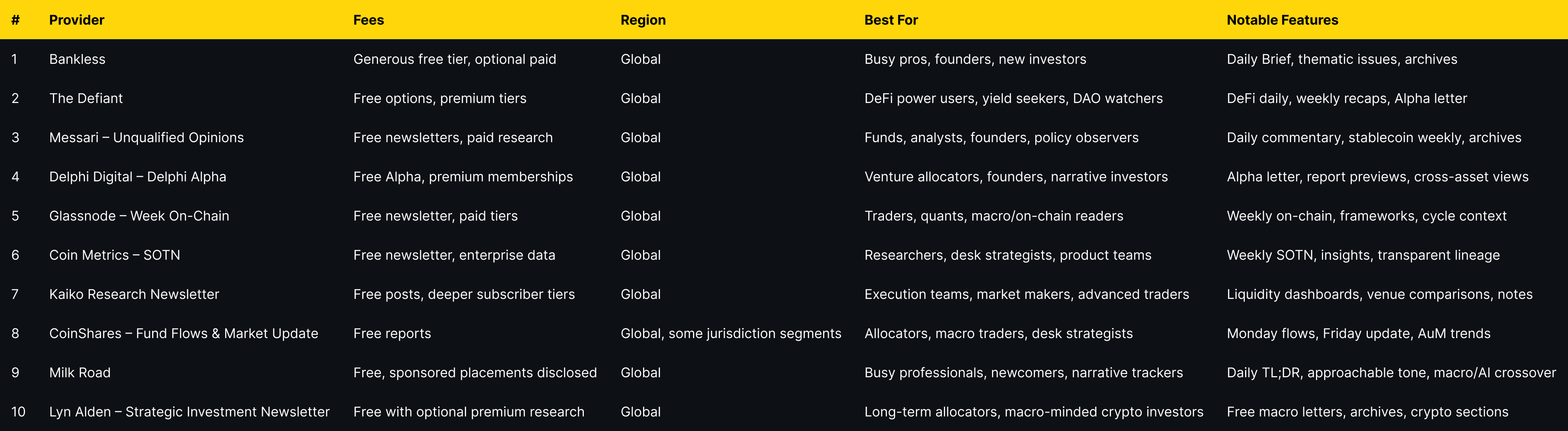
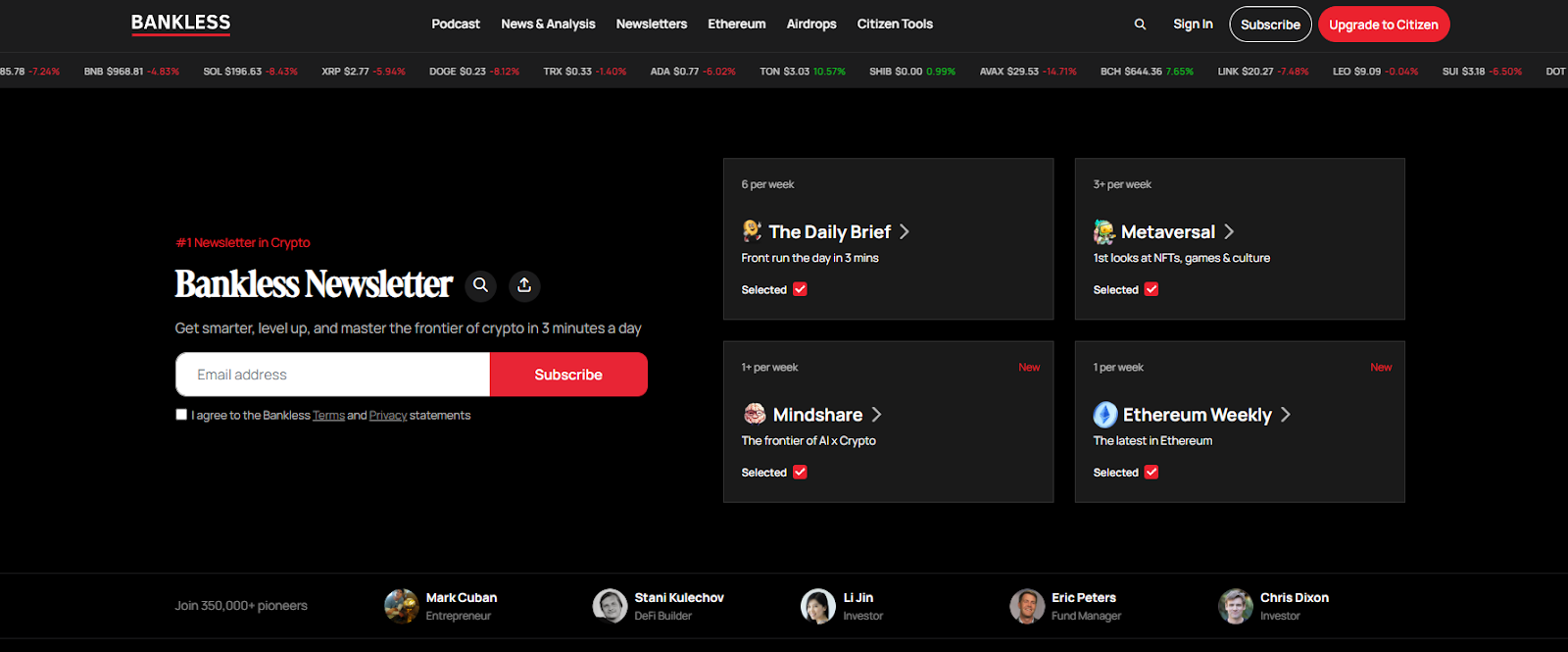
1. Bankless — Best for Daily Crypto & Web3 Digests

  • Why Use It: Bankless offers an approachable Daily Brief and deeper thematic series that balance top-of-funnel news with actionable context. If you want a consistent, skimmable daily pulse on crypto, DeFi, and Ethereum, this is a staple.

  • Best For: Busy professionals, founders, new-to-intermediate investors, narrative spotters.

  • Notable Features: Daily Brief; weekly/thematic issues; Ethereum-centric takes; large archive; clear disclosures.

  • Fees Notes: Generous free tier; optional paid communities/products.

  • Regions: Global

  • Alternatives: The Defiant, Milk Road

  • Consider If: You want daily breadth and a friendly voice more than deep quant.

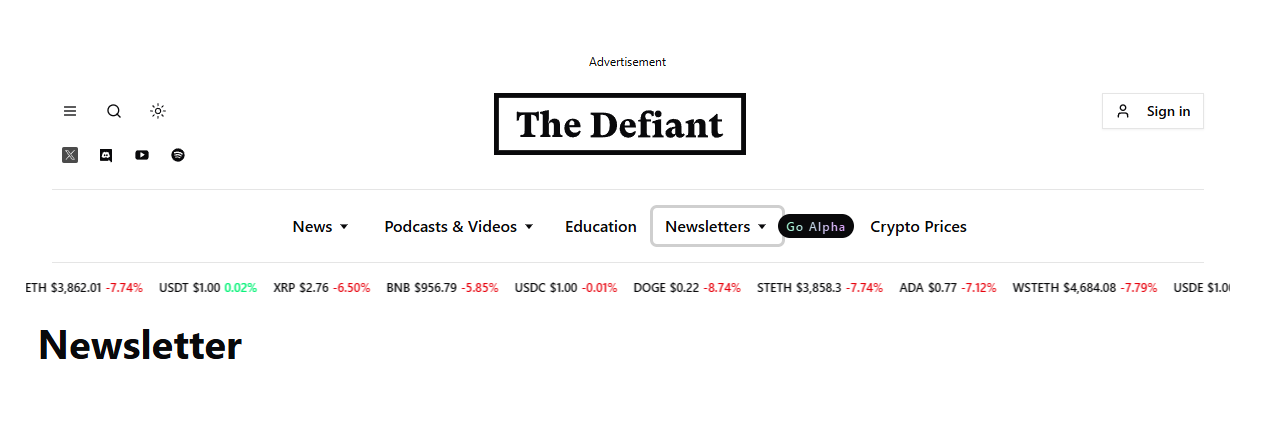
2. The Defiant — Best for DeFi-Native Coverage

  • Why Use It: The Defiant’s daily/weekly letters and DeFi Alpha cut straight to on-chain happenings, new protocols, and governance. Expect fast DeFi coverage with practical trader/investor context.

  • Best For: DeFi power users, yield seekers, DAO/governance watchers.

  • Notable Features: DeFi-focused daily; weekly recaps; Alpha letter; strong reporting cadence.

  • Fees Notes: Free newsletter options; premium research tiers available.

  • Regions: Global

  • Alternatives: Bankless, Delphi Digital

  • Consider If: Your focus is DeFi first and you want timely protocol insights.

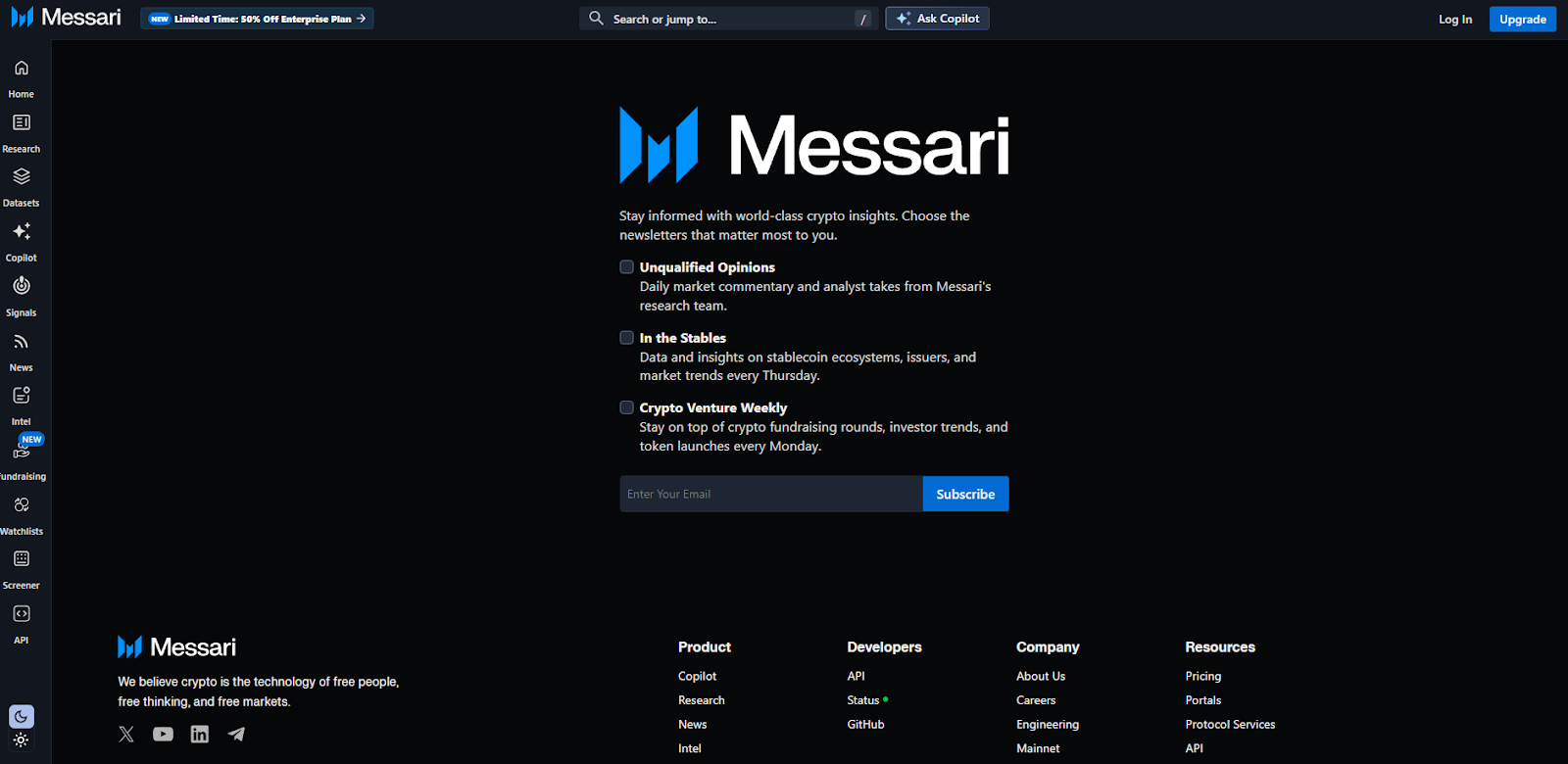
3. Messari – Unqualified Opinions — Best for Institutional-Grade Daily Takes

  • Why Use It: Messari’s daily market commentary and analyst notes are crisp, data-aware, and aligned with institutional workflows. Great for staying current on stablecoins, venture, and macro-market structure.

  • Best For: Funds, analysts, founders, policy/market observers.

  • Notable Features: Daily commentary; stablecoin weekly; venture weekly; archives; research ecosystem.

  • Fees Notes: Free newsletters with deeper research available to paying customers.

  • Regions: Global

  • Alternatives: Delphi Digital, Coin Metrics SOTN

  • Consider If: You value concise institutional context over tutorials.

4. Delphi Digital – Delphi Alpha — Best for Thematic Deep Dives

  • Why Use It: Delphi marries thematic research (AI infra, gaming, L2s) with market updates and timely unlocks of longer reports. Great when you want conviction around medium-term narratives.

  • Best For: Venture/allocators, founders, narrative investors.

  • Notable Features: “Alpha” newsletter; report previews; cross-asset views; long-form research.

  • Fees Notes: Free Alpha letter; premium research memberships available.

  • Regions: Global

  • Alternatives: Messari, The Defiant

  • Consider If: You prefer thesis-driven research over daily headlines.

5. Glassnode – The Week On-Chain — Best for On-Chain Market Structure

  • Why Use It: The industry’s flagship weekly on-chain letter explains BTC/ETH supply dynamics, holder cohorts, and cycle health with charts you’ll see cited everywhere.

  • Best For: Traders, quants, macro/on-chain hybrid readers.

  • Notable Features: Weekly on-chain; clear frameworks; historical cycle context; free subscription option.

  • Fees Notes: Free newsletter; paid platform tiers for advanced metrics.

  • Regions: Global

  • Alternatives: Coin Metrics SOTN, Into The Cryptoverse

  • Consider If: You want a single, rigorous on-chain read each week.

6. Coin Metrics – State of the Network — Best for Data-First Research Notes

  • Why Use It: SOTN blends on-chain and market data into weekly essays on sectors like LSTs, stablecoins, and market microstructure. It’s authoritative, neutral, and heavily cited.

  • Best For: Researchers, desk strategists, product teams.

  • Notable Features: Weekly SOTN; special insights; transparent data lineage; archives.

  • Fees Notes: Free newsletter; enterprise data products available.

  • Regions: Global

  • Alternatives: Glassnode, Kaiko Research

  • Consider If: You want clean methodology and durable references.

7. Kaiko Research Newsletter — Best for Liquidity & Market Microstructure

  • Why Use It: Kaiko’s research distills exchange liquidity, spreads, and derivatives structure across venues—useful for routing, slippage, and institutional execution context.

  • Best For: Execution teams, market makers, advanced traders.

  • Notable Features: Data-driven notes; liquidity dashboards; exchange/venue comparisons.

  • Fees Notes: Free research posts; deeper tiers for subscribers/clients.

  • Regions: Global

  • Alternatives: Coin Metrics, Messari

  • Consider If: You care about where liquidity actually is—and why it moves.

8. CoinShares – Digital Asset Fund Flows & Market Update — Best for ETF/Institutional Flow Watchers

  • Why Use It: Weekly Fund Flows and macro wrap-ups help you track institutional positioning and sentiment—especially relevant in the ETF era.

  • Best For: Allocators, macro traders, desk strategists.

  • Notable Features: Monday flows report; Friday market update; AuM trends; asset/region breakdowns.

  • Fees Notes: Free reports.

  • Regions: Global (some content segmented by jurisdiction)

  • Alternatives: Glassnode, Messari

  • Consider If: You anchor decisions to capital flows and risk appetite.

9. Milk Road — Best for Quick, Conversational Daily Briefs

  • Why Use It: A fast, witty daily that makes crypto easier to follow without dumbing it down. Great second screen with coffee—good for catching headlines, airdrops, and memes that matter.

  • Best For: Busy professionals, newcomers, social-narrative trackers.

  • Notable Features: Daily TL;DR; approachable tone; growing macro/AI crossover.

  • Fees Notes: Free newsletter; sponsored placements disclosed.

  • Regions: Global

  • Alternatives: Bankless, The Defiant

  • Consider If: You want speed and simplicity over deep quant.

10. Lyn Alden – Strategic Investment Newsletter — Best for Macro That Actually Impacts Crypto

  • Why Use It: Not crypto-only—yet hugely relevant. Lyn’s macro letters cover liquidity regimes, fiscal/monetary shifts, and energy/AI cycles that drive risk assets, including BTC/ETH.

  • Best For: Long-term allocators, macro-minded crypto investors.

  • Notable Features: Free macro letters; archives; occasional crypto-specific sections; clear frameworks.

  • Fees Notes: Free with optional premium research.

  • Regions: Global

  • Alternatives: Messari, Delphi Digital

  • Consider If: You want a macro north star to frame your crypto thesis.

Decision Guide: Best By Use Case

  • DeFi-native coverage: The Defiant

  • Daily crypto pulse (friendly): Bankless or Milk Road

  • Institutional-style daily notes: Messari – Unqualified Opinions

  • Thematic, thesis-driven research: Delphi Digital

  • On-chain cycle health: Glassnode – Week On-Chain

  • Data-first weekly (methodology): Coin Metrics – SOTN

  • Liquidity & venue quality: Kaiko Research

  • ETF & institutional positioning: CoinShares Fund Flows

  • Macro framing for crypto: Lyn Alden

How to Choose the Right Crypto Newsletter/Analyst (Checklist)

  • Region/eligibility: confirm signup availability and any paywall constraints.

  • Breadth vs. depth: daily skim (news) vs. weekly deep dives (research).

  • Data lineage: on-chain and market sources are named and reproducible.

  • Fees & value: what’s free vs. gated; consider team needs (PM vs. research).

  • UX & cadence: archives, searchable tags, consistent schedule.

  • Disclosures: positions, sponsorships, methodology explained.

  • Community/support: access to Q&A, office hours, or active forums.

  • Red flags: vague performance claims; undisclosed affiliations.

Use Token Metrics With Any Newsletter/Analyst

  • AI Ratings to screen sectors/tokens surfacing in the letters you read.
  • Narrative Detection to quantify momentum behind themes (L2s, AI infra, RWAs).

  • Portfolio Optimization to size convictions with risk-aware allocations.

  • Alerts/Signals to time entries/exits as narratives evolve.

‍Workflow: Research in your favorite newsletter → shortlist in Token Metrics → execute on your venue of choice → monitor with Alerts.


Start free trial

Security & Compliance Tips

  • Enable 2FA on your email client and any research platform accounts.

  • Verify newsletter domains and unsubscribe pages to avoid phishing.

  • Respect KYC/AML and regional rules when acting on research.

  • For RFQs/execution, confirm venue liquidity and slippage.

  • Separate reading devices from hot-wallets; practice wallet hygiene.

This article is for research/education, not financial advice.

Beginner Mistakes to Avoid

  • Treating a newsletter as a signal service—use it as input, not output.

  • Ignoring methodology and disclosures.

  • Chasing every narrative without a sizing framework.

  • Subscribing to too many sources—prioritize quality over quantity.

  • Not validating claims with primary data (on-chain/flows).

FAQs

What makes a crypto newsletter “best” in 2025?
Frequency, methodological transparency, and the ability to translate on-chain/macro signals into practical takeaways. Bonus points for archives and clear disclosures.

Are the top newsletters free or paid?
Most offer strong free tiers (daily or weekly). Paid tiers typically unlock deeper research, models, or community access.

Do I need both on-chain and macro letters?
Ideally yes—on-chain explains market structure; macro sets the regime (liquidity, rates, growth). Pairing both creates a more complete view.

How often should I read?
Skim dailies (Bankless/Milk Road) for awareness; reserve time weekly for deep dives (Glassnode/Coin Metrics/Delphi).

Can newsletters replace analytics tools?
No. Treat them as curated insight. Validate ideas with your own data and risk framework (Token Metrics can help).

Which is best for ETF/flows?
CoinShares’ weekly Fund Flows is the go-to for institutional positioning, complemented by Glassnode/Coin Metrics on structure.

Conclusion + Related Reads

If you want a quick pulse, pick a daily (Bankless or Milk Road). For deeper conviction, add one weekly on-chain (Glassnode or Coin Metrics) and one thesis engine (Delphi or Messari). Layer macro (Lyn Alden) to frame the regime, and use Token Metrics to quantify what you read and act deliberately.

Related Reads:

  • Best Cryptocurrency Exchanges 2025

  • Top Derivatives Platforms 2025

  • Top Institutional Custody Providers 2025

Research

Top Education Platforms & Courses for Crypto (2025)

Sam Monac
7 min

Why Crypto education platforms & courses Matter in September 2025

Crypto moves fast—and the gap between hype and real skills can be costly. If you’re evaluating the best crypto courses or structured paths to go from zero to fluent (or from power user to builder), the right program can compress months of trial-and-error into weeks. In short: a crypto education platform is any structured program, course catalog, or academy that teaches blockchain, Web3, or digital-asset topics with clear outcomes (e.g., literacy, developer skills, startup readiness).
This guide curates 10 credible options across beginner literacy, smart-contract engineering, and founder tracks. We blend SERP research with hands-on criteria so you can match a course to your goals, time, and budget—without the fluff.

How We Picked (Methodology & Scoring)

  • Curriculum depth & rigor (30%): Syllabi clarity, assessments, capstones, recognized instructors.

  • Credibility & security posture (25%): Transparent teams, reputable institutions, security topics baked in.

  • Coverage & specialization (15%): Breadth (BTC, ETH, DeFi, NFTs, security) plus specialist tracks (Solidity, oracles, ZK).

  • Costs & access (15%): Free tiers, scholarships, value per hour, certificates.

  • UX & learning experience (10%): In-browser coding, cohort support, community, multilingual content.

  • Support & outcomes (5%): Mentorship, career support, community reach.

Data sources: official provider pages (program docs, security/FAQ, curriculum), plus widely cited market datasets for cross-checks only. Last updated September 2025.

Top 10 Crypto education platforms & courses in September 2025

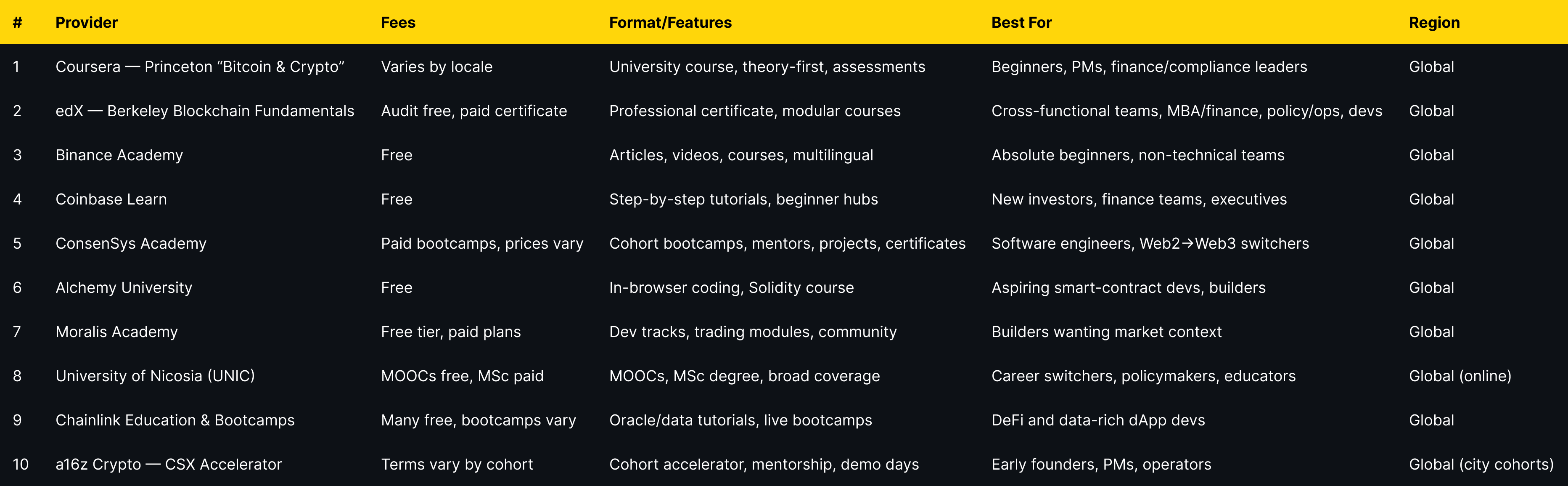
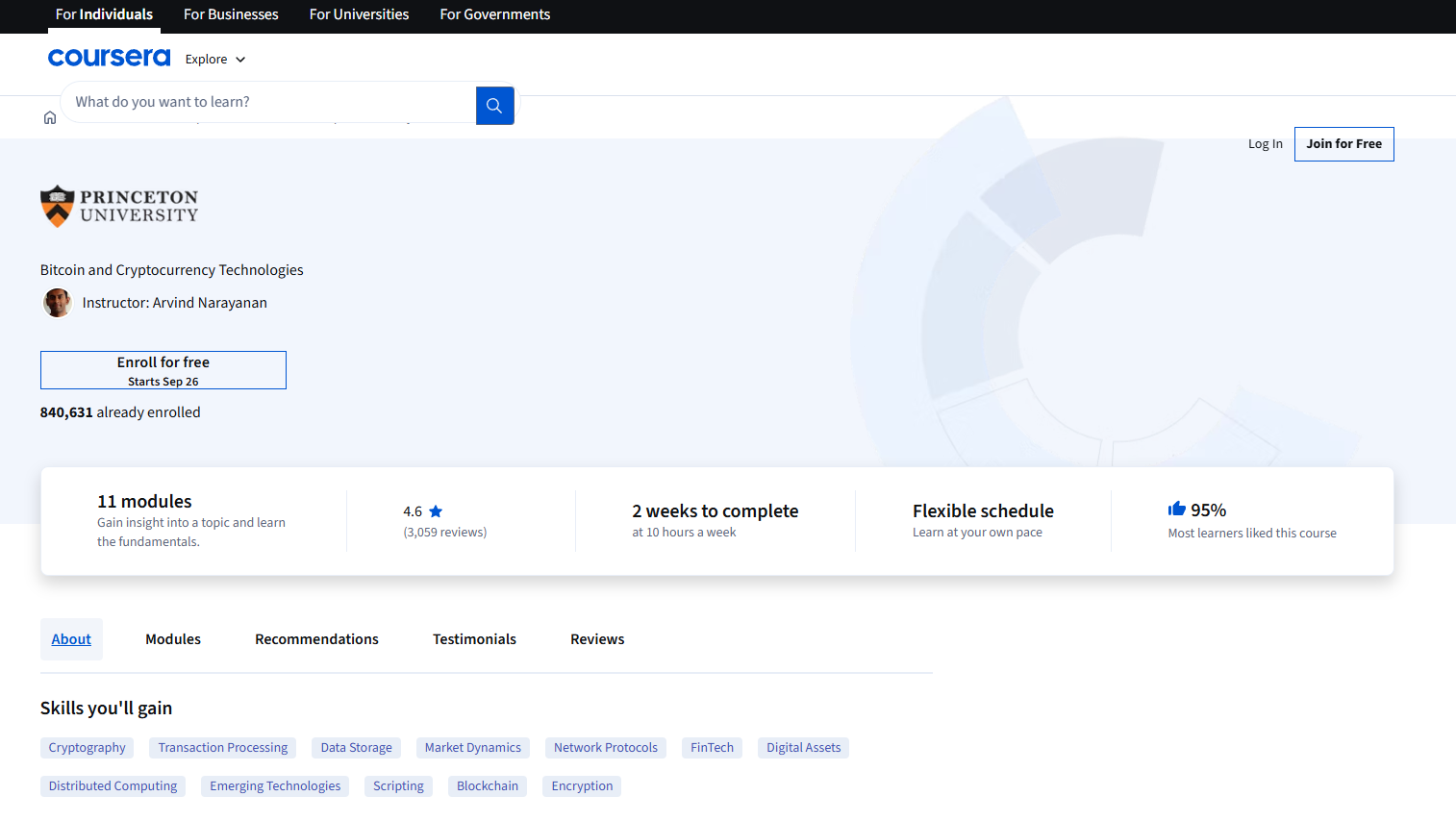
1. Coursera — “Bitcoin and Cryptocurrency Technologies” (Princeton) — Best for academic foundations

  • Why Use It: A seminal university course that demystifies Bitcoin and core crypto concepts with a rigorous, vendor-neutral lens. Clear lectures and assessments make it ideal for newcomers who want trustworthy fundamentals.
  • Best For: Beginners, product managers, compliance/finance pros, technical leaders needing conceptual grounding.

  • Notable Features: University-backed syllabus; security/anonymity modules; future/regulation perspectives; conceptual foundations for building.
  • Consider If: You prefer hands-on Solidity right away—this is theory-first.

  • Alternatives: edX (Berkeley), Coinbase Learn.

  • Regions: Global. Fees Notes: Coursera pricing varies by locale.

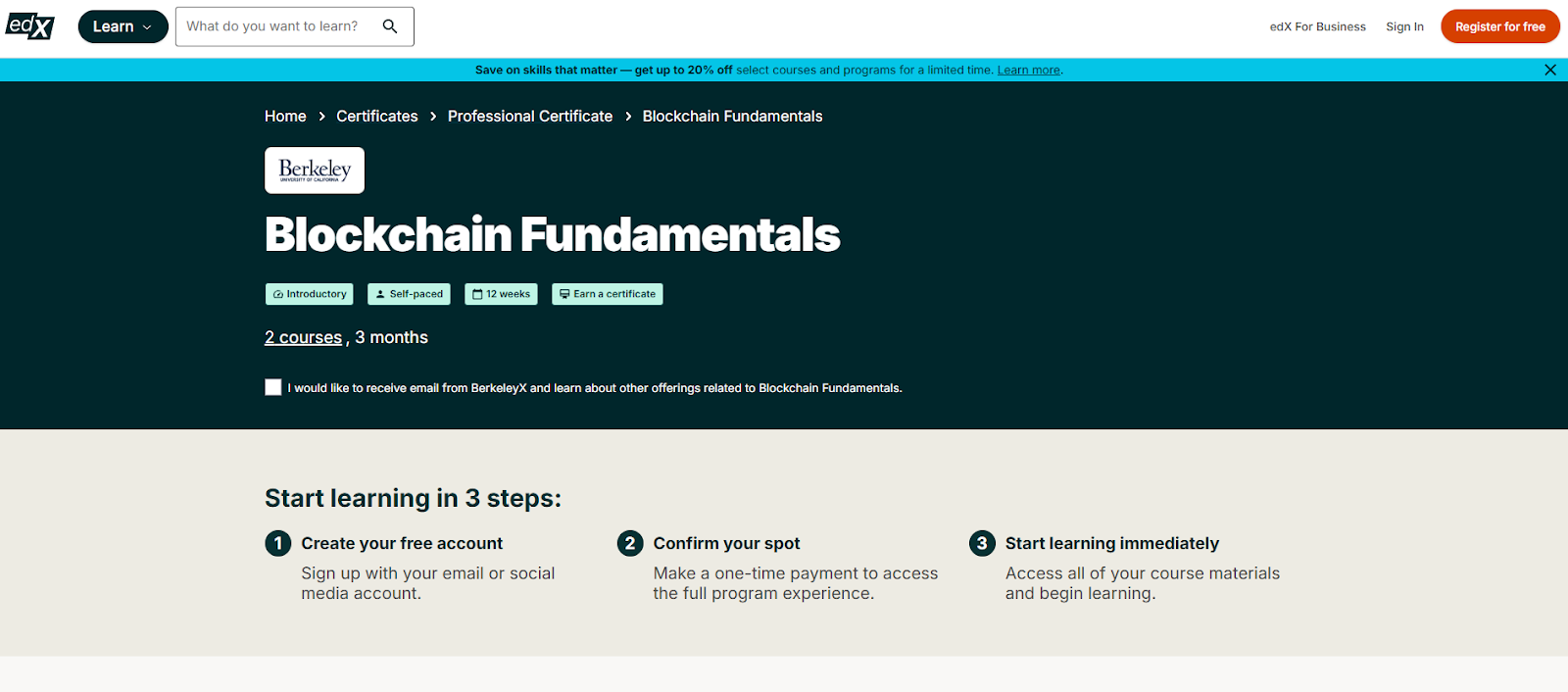
2. edX — Berkeley Blockchain Fundamentals — Best for university-brand plus survey depth

  • Why Use It: UC Berkeley’s professional certificate pairs an overview of blockchain and crypto with academic rigor and clear learning paths. Good bridge between literacy and technical depth.
  • Best For: Cross-functional teams, MBA/finance learners, policy/ops, curious devs.

  • Notable Features: Recognized university credential; modular courses; wide topical span across Bitcoin, Ethereum, and applications.
  • Consider If: You need coding-heavy, cohort-based Solidity training now.

  • Alternatives: Coursera (Princeton), ConsenSys Academy.

  • Regions: Global. Fees Notes: edX offers audit (free) and paid certificate tracks.

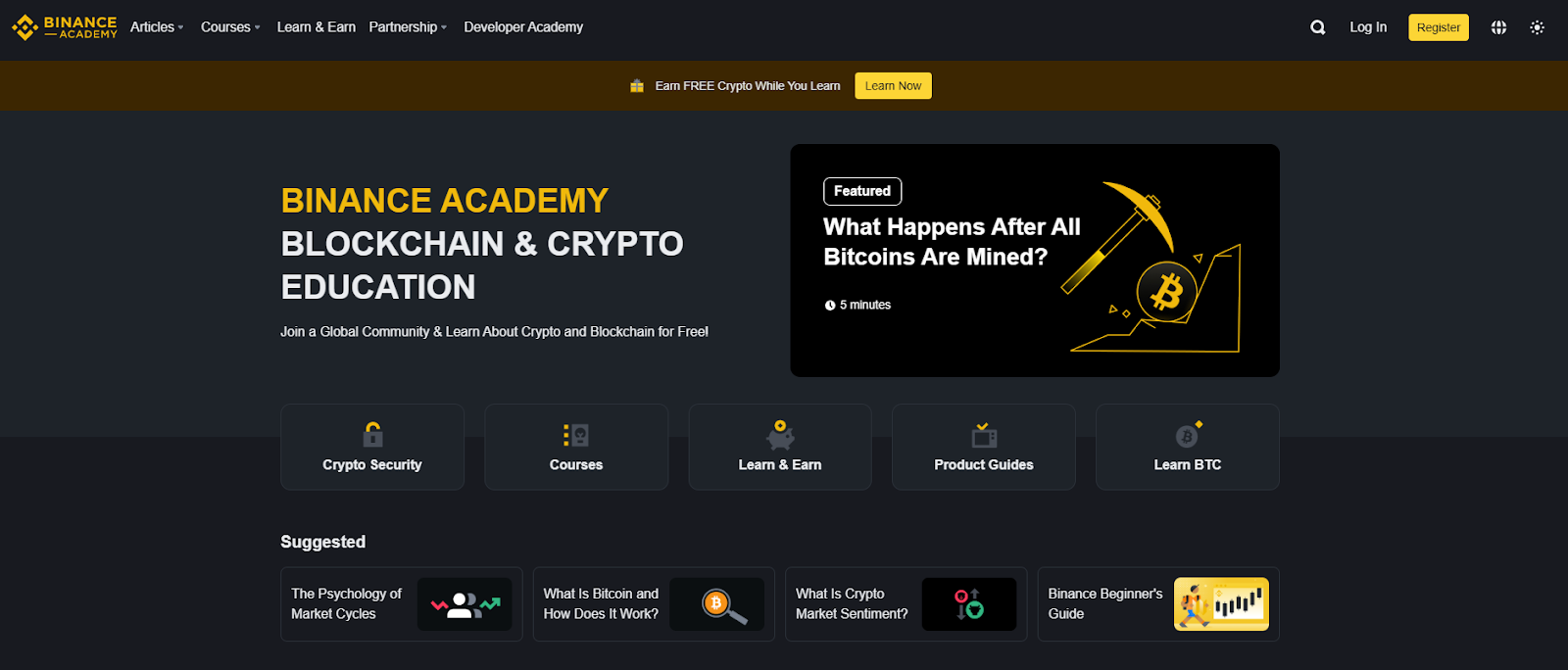
3. Binance Academy — Best free, multilingual crypto literacy hub

  • Why Use It: A large, constantly updated library of beginner-to-intermediate guides, glossaries, and tutorials in many languages—100% free.
  • Best For: Absolute beginners, non-technical teams, multilingual audiences, fast refreshers.

  • Notable Features: Courses + articles + videos; Bitcoin halving hubs; multi-language support; bite-size explainers.
  • Consider If: You want a formal certificate or university grade.

  • Alternatives: Coinbase Learn, edX.

  • Regions: Global. Fees Notes: Free.

4. Coinbase Learn — Best for simple, trusted onboarding

  • Why Use It: Friendly entry point with practical “how-to” guides that answer common questions about Bitcoin, Ethereum, NFTs, wallets, and safety. Great for reluctant first-timers.
  • Best For: New investors, finance teams exploring crypto policy, busy executives.

  • Notable Features: Step-by-step tutorials; beginner hubs; platform-agnostic primers
  • Consider If: You need dev-level skills or a cohort experience.

  • Alternatives: Binance Academy, Coursera.

  • Regions: Global. Fees Notes: Free learning content.

5. ConsenSys Academy — Best for Ethereum developer bootcamps

  • Why Use It: The training arm of a core Ethereum company, with cohort-based programs, mentor access, and security best practices baked in. Strong for professionalizing Solidity skills.
  • Best For: Software engineers, Web2 devs crossing to Web3, career switchers.

  • Notable Features: Flagship Blockchain Developer Bootcamp; team projects; office hours; certificates.
  • Consider If: You need completely free self-paced content.

  • Alternatives: Alchemy University, Moralis Academy.

  • Regions: Global (online). Fees Notes: Paid bootcamps; prices vary.

6. Alchemy University — Best free, hands-on Solidity path

  • Why Use It: A popular builder track with free in-browser coding, projects, and a modern Solidity course aligned to current compiler versions.
  • Best For: Aspiring smart-contract devs, hackathon teams, self-paced builders.

  • Notable Features: Free Solidity course; code-along projects; hackathons; JS + Ethereum tracks.
  • Consider If: You want a cohort and instructor mentorship.

  • Alternatives: ConsenSys Academy, Encode Club.

  • Regions: Global. Fees Notes: Free.

7. Moralis Academy — Best for blended dev + trading curriculum

  • Why Use It: Combines structured dev courses with trading strategy content and a community. Offers free starts with optional Pro for deeper tracks.
  • Best For: Builders who also want market context; ambitious beginners.

  • Notable Features: Step-by-step tracks; community; trading modules; ties to Moralis dev tooling.

  • Consider If: You prefer purely academic or vendor-neutral content.

  • Alternatives: Alchemy University, Binance Academy.

  • Regions: Global. Fees Notes: Free tier; paid plans available.

8. University of Nicosia (UNIC) — Free MOOCs + MSc in Blockchain/Digital Currency — Best for formal academia & credentials

  • Why Use It: UNIC pioneered a dedicated MSc in Digital Currency and runs free entry MOOCs—a long-standing academic pathway in crypto.
  • Best For: Career-switchers wanting formal credentials; policymakers; educators.

  • Notable Features: Free MOOC intros; postgraduate degrees; broad coverage across tech, economic, and legal aspects.
  • Consider If: You need short, purely practical dev sprints.

  • Alternatives: edX (Berkeley), Coursera.

  • Regions: Global (online). Fees Notes: MOOCs free; degree programs paid.

9. Chainlink Education & Bootcamps — Best for oracle, data, and hybrid smart-contract skills

  • Why Use It: If you’re building with real-world data, Chainlink’s education hub and instructor-led bootcamps teach oracle patterns, cross-chain messaging, and production-grade smart contracts.
  • Best For: Devs targeting DeFi, on-chain finance, and data-rich dApps.

  • Notable Features: Tutorials on NFTs/stablecoins; live bootcamps; developer advocates; ecosystem resources.
  • Consider If: You want chain-agnostic theory without vendor context.

  • Alternatives: Alchemy University, ConsenSys Academy.

  • Regions: Global. Fees Notes: Many resources free; bootcamp formats vary.

10. a16z Crypto — Crypto Startup Accelerator (CSX) — Best for founders & operators

  • Why Use It: Beyond coding, founders need go-to-market, legal, and product mentorship. CSX offers a cohort model with capital, expert lectures, and crypto-specific startup support.
  • Best For: Early-stage founders, PMs, operators validating product-market fit in Web3.

  • Notable Features: Curated mentorship network; structured curriculum; demo days; evolution of the original Crypto Startup School into a full accelerator.
  • Consider If: You’re pre-idea or not building a company yet—start with literacy/dev courses first.

  • Alternatives: Encode Club accelerators, Solana-ecosystem programs.

  • Regions: Global (programs periodically in specific cities). Fees Notes: Accelerator terms vary by cohort.

Decision Guide: Best By Use Case

  • Academic fundamentals (theory-first): Coursera (Princeton), edX (Berkeley).‍
  • Free multilingual literacy: Binance Academy; Coinbase Learn (simple, practical).
  • Hands-on Solidity (free): Alchemy University.
  • Cohort dev bootcamp: ConsenSys Academy.
  • Developer + trading blend: Moralis Academy.
  • Formal credentials: University of Nicosia (MOOC, MSc).
  • Oracle/data-driven dApps: Chainlink Education/Bootcamps.

  • Founder/accelerator path: a16z Crypto (CSX).

How to Choose the Right Crypto education platforms & courses (Checklist)

  • Confirm level & outcomes (literacy, dev skills, or founder playbook).

  • Review syllabus & assessments; look for capstones or code reviews.

  • Match specialization (Solidity, ZK, DeFi, security, oracles) to your goal.

  • Check costs & time (audit/free vs. paid, cohort dates).

  • Evaluate support (mentors, office hours, Discord/Forum).

  • Prefer credible institutions/teams; scan FAQs/security sections.

  • Red flags: vague outcomes, hard upsells, no instructor transparency.

Use Token Metrics With Any Crypto education platforms & courses

  • AI Ratings to screen tokens you’ll study or trade.
  • Narrative Detection to spot momentum across sectors.

  • Portfolio Optimization to size positions by risk.

  • Alerts/Signals to monitor entries/exits as you learn.
    Workflow: Research → Choose a course → Practice on sandboxes → Execute with a small wallet → Monitor with Alerts.

 Primary CTA: Start free trial.

Security & Compliance Tips

  • Enable 2FA and hardware keys on all learning-linked accounts.

  • Keep a separate practice wallet; never paste seed phrases into course portals.

  • Use reputable docs for KYC/AML topics; understand regional eligibility.

  • Practice safe contract deployments on testnets first.

  • Document RFQ or OTC steps if your course touches institutional flows.

This article is for research/education, not financial advice.

Beginner Mistakes to Avoid

  • Jumping into paid bootcamps before trying free literacy/prep modules.

  • Treating dev tutorials as plug-and-play without security reviews.

  • Chasing certifications without projects to show.

  • Ignoring region/eligibility notes or program timelines.

  • Over-indexing on one chain—learn concepts that transfer.

FAQs

What’s the fastest way to start learning crypto in 2025?
Start with a free literacy hub (Binance Academy or Coinbase Learn), then audit a university course (Coursera/edX) before committing to a paid bootcamp. This builds intuition and saves money.

Which course is best if I want to become a Solidity developer?
Alchemy University is a free, hands-on path with in-browser coding; ConsenSys Academy adds mentor-led structure and team projects for professional polish.

Do I need a formal degree for crypto careers?
Not strictly. A portfolio of projects often trumps certificates, but formal programs like UNIC’s MSc can help for policy, compliance, or academia-adjacent roles.

Are these programs global and online?
Most are fully online and globally accessible; accelerators like a16z CSX may run cohorts in specific cities, so check the latest cohort details.

Will these courses cover wallet and security best practices?
University and dev bootcamps typically include security modules; literacy hubs also publish safety guides. Always cross-check with official docs and practice in testnets.

Conclusion + Related Reads

If your goal is literacy and safe onboarding, start with Binance Academy or Coinbase Learn; for academic depth, layer in Coursera (Princeton) or edX (Berkeley). Builders should choose Alchemy University (free) and consider ConsenSys Academy for mentor-led polish. For credentials, UNIC stands out. Founders ready to ship and raise should explore a16z Crypto’s CSX.

Related Reads:

  • Best Cryptocurrency Exchanges 2025

  • Top Derivatives Platforms 2025

  • Top Institutional Custody Providers 2025

‍

Choose from Platinum, Gold, and Silver packages
Reach with 25–30% open rates and 0.5–1% CTR
Craft your own custom ad—from banners to tailored copy
Perfect for Crypto Exchanges, SaaS Tools, DeFi, and AI Products